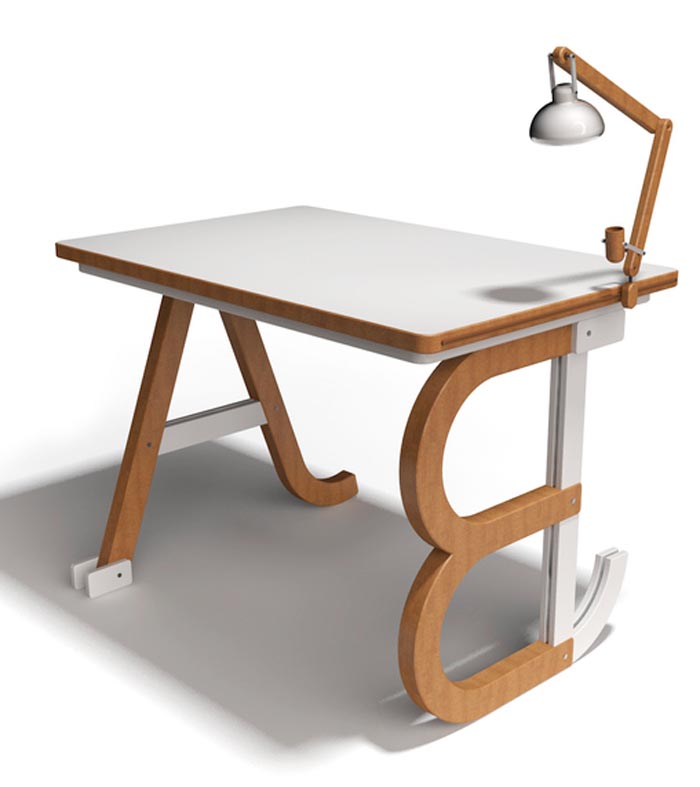
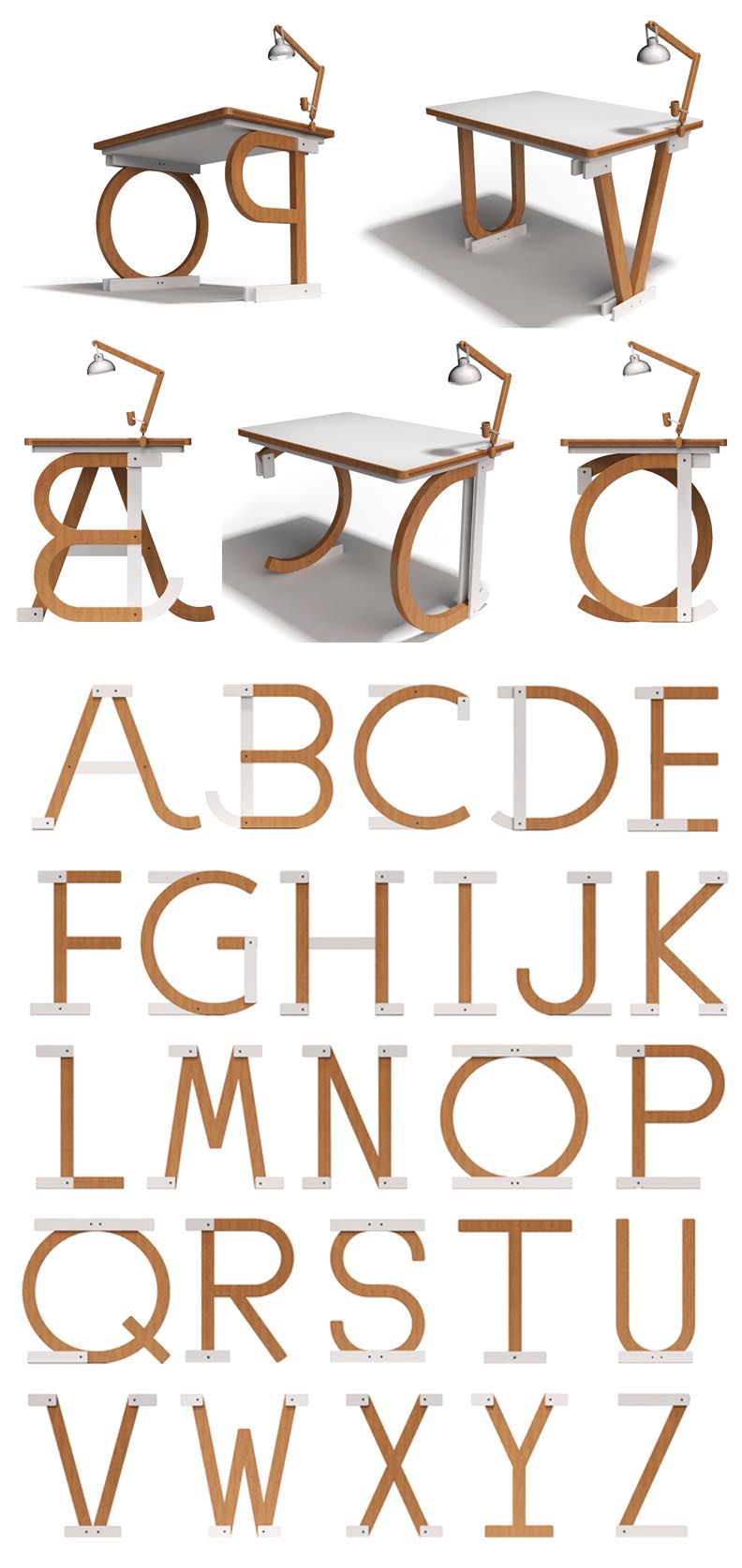
Listen up all you type lovers! How does a desk with your favorite letters of the alphabet, or maybe your initials, as its legs grab you? Romanian graphic designer Liviu Avasiloiei, now living in Washington D.C., has a design in the works making it a reality. So smart and clever! Even the lamp has been integrated into the design. I think Ikea needs to get in touch with Avasiloiei ASAP…
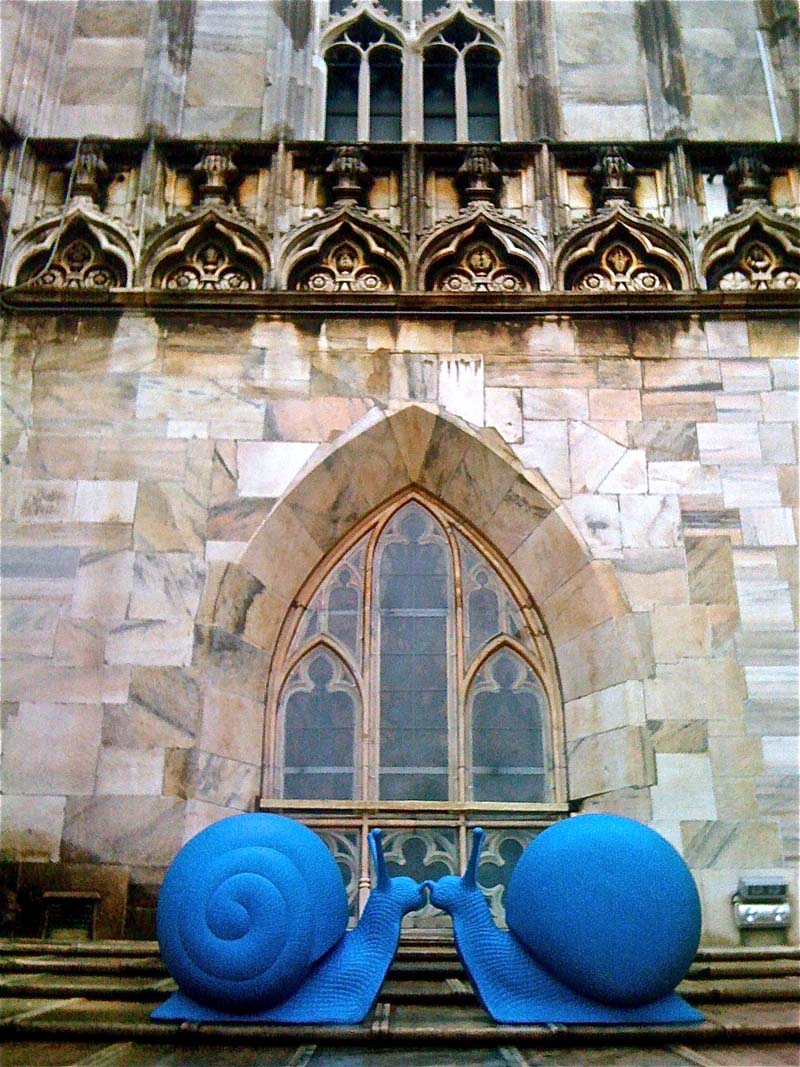
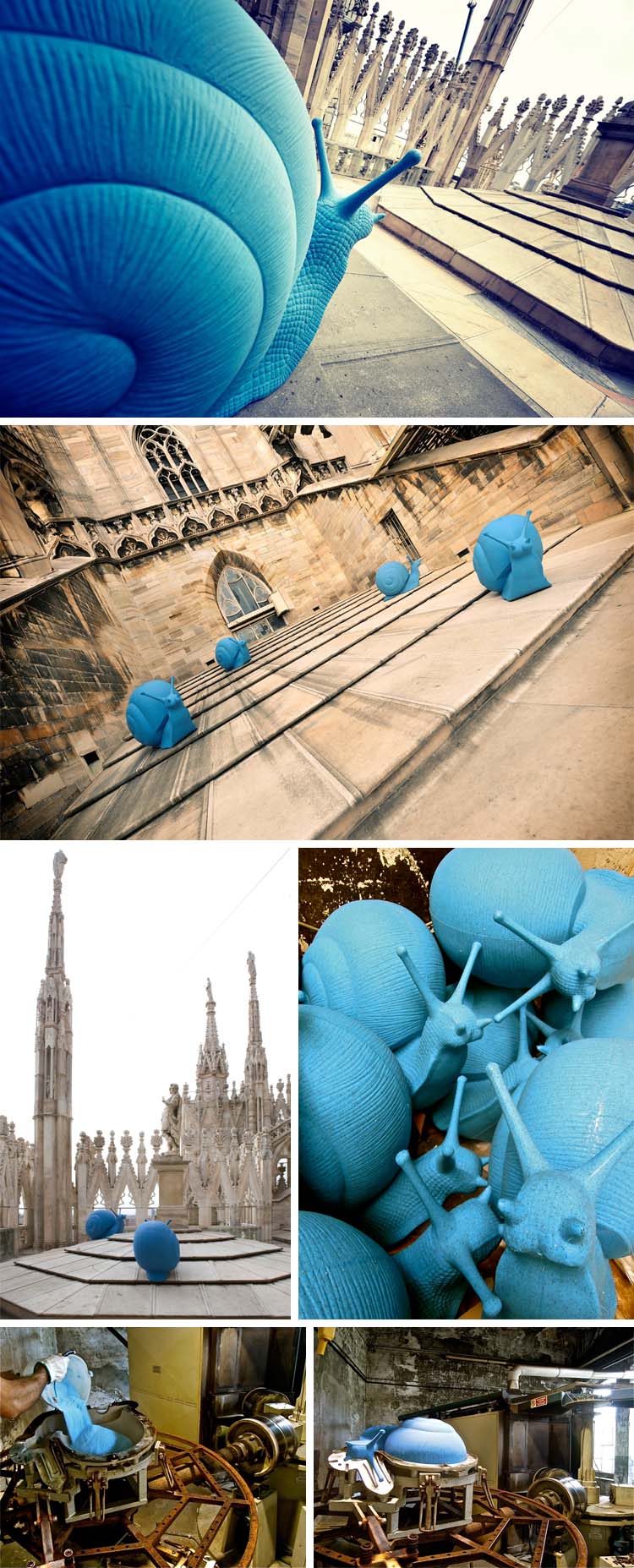
Cracking Art Group is a collective made up of 6 international artists that was formed in 1993. The group considers “cracking” the process which transforms the natural into artificial; organic into synthetic. Their interventions involve huge colored plastic animals invading spaces, usually as a cry for awareness. By selecting recycled plastic and adapting it to their own purpose, Cracking Art Group is attempting to hold back control of the process and turn it towards fulfilling the movement’s social and environmental commitment to reinstating humanity as part of nature, not apart from it.
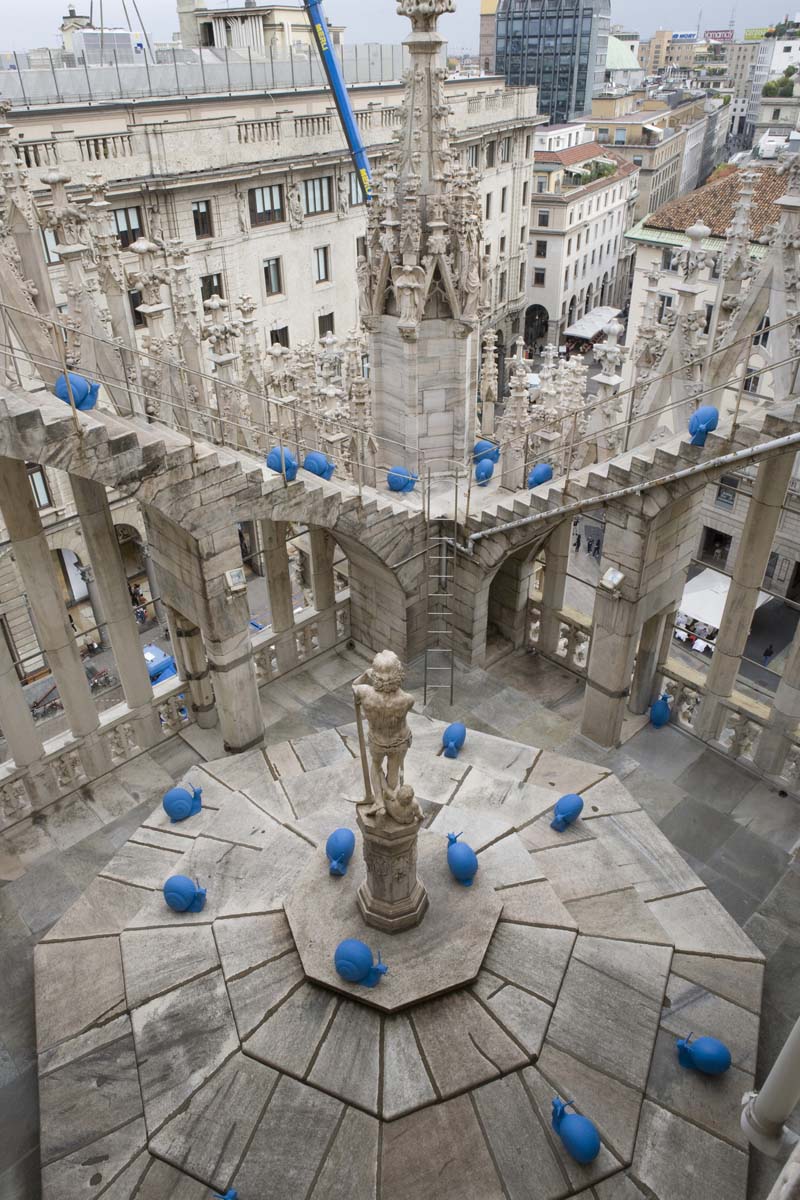
Their most recent intervention titled REgeneration took place earlier this month (October 5th through 13th) in Milan at the Duomo. In collaboration with the cathedral and Opera d’Arte, Cracking Art Group created and placed 50 blue snail sculptures on the Duomo’s roof to call attention to the much-needed repairs and restoration. 100 smaller limited edition snails were also created and sold at the Glauco Cavaciuti Gallery with net proceeds going towards to the restoration of the cathedral.
I’m not going to deny that these are a little disturbing, but they’re also pretty incredible. Australian artist Freya Jobbins takes her inspiration from artists such as Guiseppe Archimboldo’s and his fruit & veggie paintings, Ron Mueck’s oversized humans, and Gunther Von Hagen’s plastinated corpses. Add to that her interest in the relationship between consumerist fetishism and the emerging recycling culture within the visual arts and the result are her humanoid faces and busts made of pre-used dolls and toys.
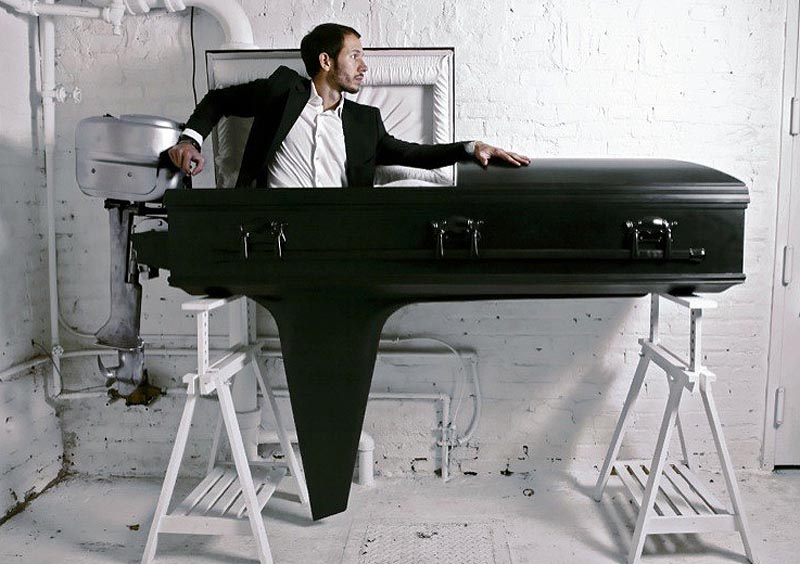
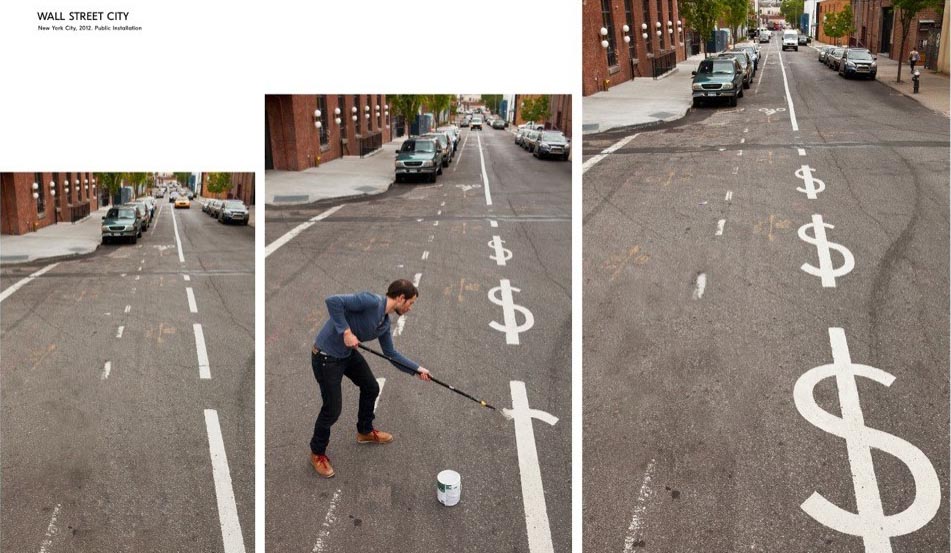
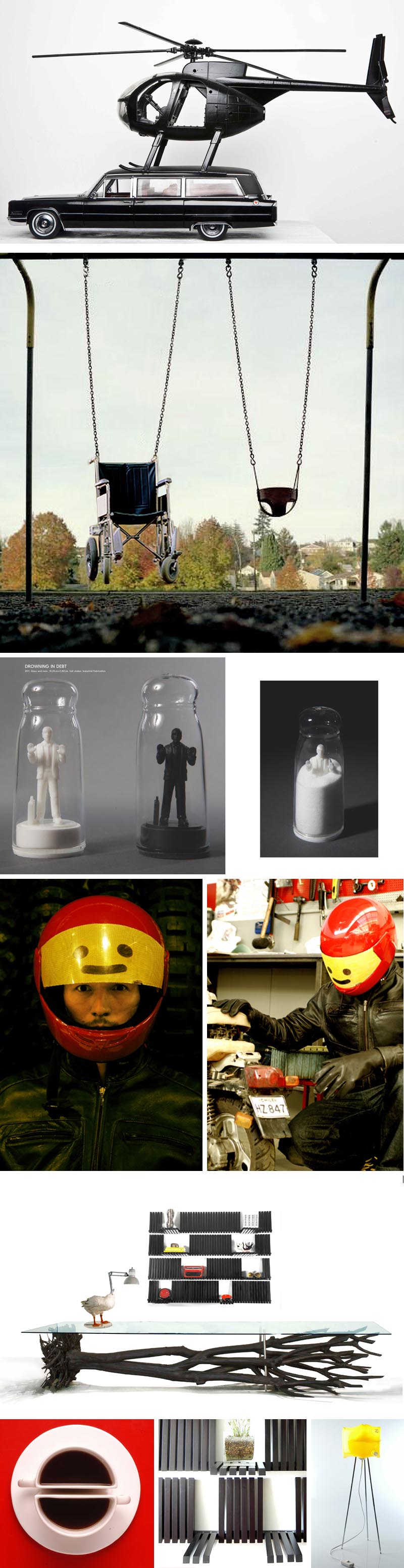
Chilean born, New York based, Sebastien Errazuriz (previously here) is both artist and designer, often blurring the lines between the two. His work is always smart, innovative and humorous, as well as often political. It ranges from public urban art installations to sculpture and furniture/product design. He even has a few outrageous fashion items. His obsession with the dichotomies of life and death is expressed through his various series on death and religion, and his criticism of Wall Street comes into play in his street installations, amazing Drowning in Debt salt & pepper shakers as well as his Occupy Chairs.
There’s plenty more to see on his website and you can watch the interview below for even more. A book on his work was published last month by Gestalten and available here.
With Halloween just around the corner, these seemed appropriate. Dutch designer Bertjan Pot has a fascination for textiles and materials in general. While working and playing with materials and ideas he designed a collection of furniture and lighting with fellow friend and designer Daniel White. In similar fashion, these masks were initially the result of a materials experiment.
From Pot’s website:
I wanted to find out if by stitching a rope together I could make a large flat carpet. Instead of flat, the samples got curvy. When I was about to give up on the carpet, Vladicame up with the idea of shaping the rope into masks. The possibilities are endless, I’m meeting new faces every day.
The masks, which started in 2010, have become an ongoing project and are available for purchase.
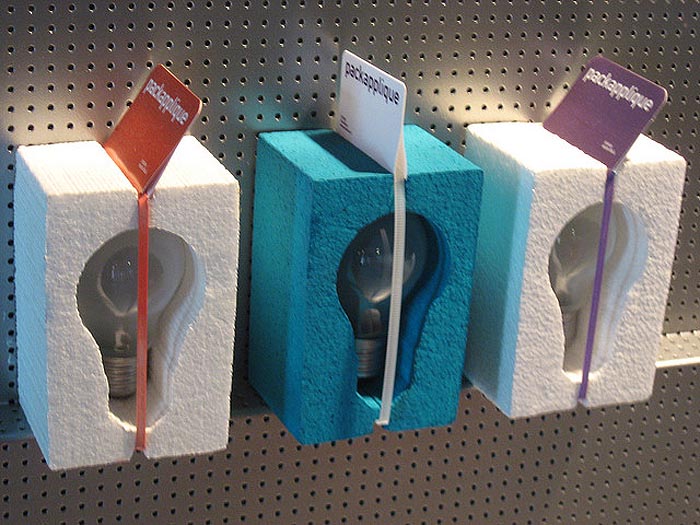
Packapplique is a simple and clever lamp design by the Italian product and communications design firm Studio Boca. The foam packaging doubles as a functional part of the lamp, separating the cord and bulb from the wall as well as adding a touch of color.
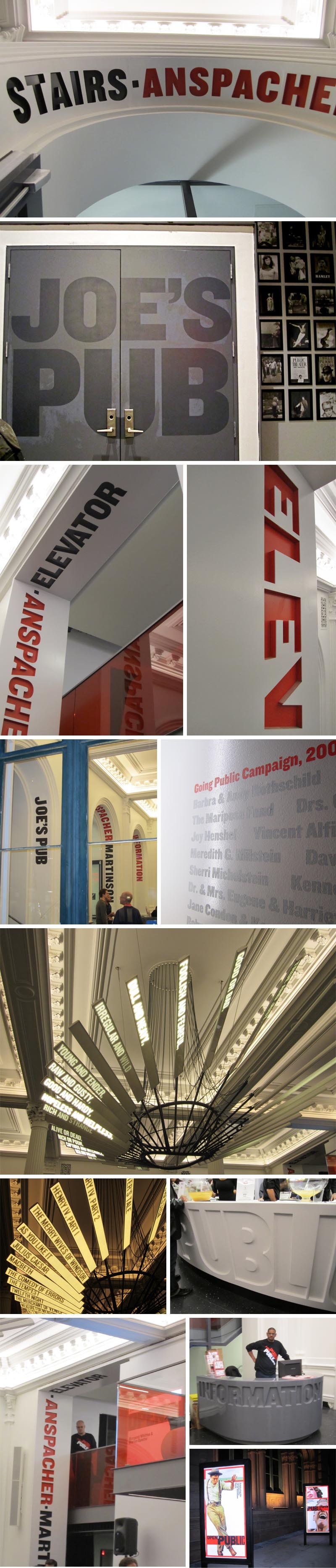
I signed up to see Ben Rubin present his Shakespeare Machine (previously here) at the newly renovated Public Theater last night and was surprised by a number of things: the beautiful lobby; the impressive and perfectly displayed multimedia sculpture in the center; the spectacular collage of Paula Scher-designed Public Theater posters on the wall behind the ticket booths (I’ve been wanting to do something like this at home forever); all this with an amazing party including a open bar and tasty food, to boot!
The Public has created what they describe as a “welcoming piazza” with extended steps out front that lure you in to the new lobby. The bar at the entrance is very striking with the chandelier-like Shakespeare Machineabove it. And, in Pentragram partner Paula Scher’s signature style, it’s a typography lover’s delight. The bar, the information booth, the archways, the staff t-shirts all play with the Public’s chunky variants on the Akzidenz Grotesk typeface. Talking with someone at the party, I learned that the sunken type on the arches was particularly challenging. The asymmetric positioning of the signage type adds to the uplifting quality of it all.
Oh, and we can’t forget the Shakespeare Machine, which was the main reason for my visit. A couple of technical glitches in the beginning were quickly ironed out and the sculpture played with the Shakespeare text as humorously and cleverly as the space that surrounds it. Close to a million words are shuffled by statistician Mark Hansen’s algorithms that choreograph the text into situations such as a series of “To be or’s” that are followed by unexpected, alternative, and smile-inducing, Shakespearean text rather than the expected “not to be” which also makes an appearance later. The cycle runs roughly 5 to 10 minutes with variations in visual effects, from inverted type to such high-speed text that it becomes abstract. The Shakespeare Machine will be on full-time during the theater’s hours of operation.
Kudos to all involved in the revitalization: Ennead Architects, Paula Scher and her team at Pentagram, Ben Rubin and Mark Hansen, as well as many, many more, I’m sure.
You can see a snippet of the sculpture in action below. The voices are not part of the sculpture, but, rather, actors for the event:
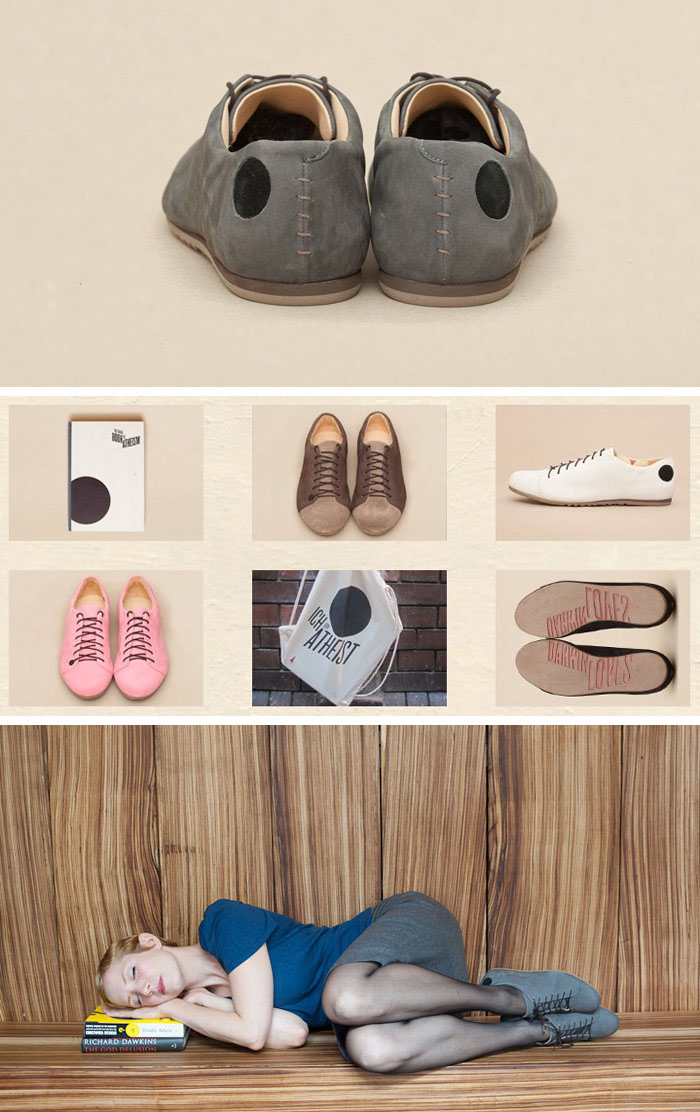
Continuing with her recent interest in shoe design, Daniela pointed me to the Atheist Shoes website which a friend had told her about. Probably one of the things we liked best is the catchy line on their impressively over-funded kickstarter page: “Now atheists have soles too!”
What seems to have started as a semi-goof, took off on reddit and then kickstarter, taking the prototype of the godless, Bauhaus-inspired shoe and making it a reality. Sure, the handmade, nice quality leather shoes look nice, but the concept is what really appeals to us. From the atheist soles to the black hole logo (“an inviting void, an exquisite blank canvas, begging to be filled with something meaningful to you”), to the idea of donating 10% of their profits to secular charities, demonstrating that you don’t need god to be good.
You can find out more about the background story on their kickstarter page and video, and if you’d like to buy a pair, you can do that here.
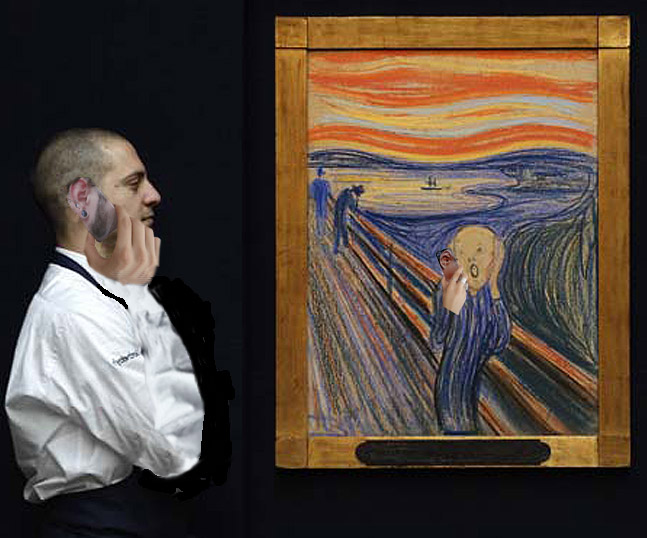
(And, yes, we are well aware that the Sotheby’s art handler above has a freakishly large hand coming out of his collarbone…but, hey, he’s got an EARonic!)
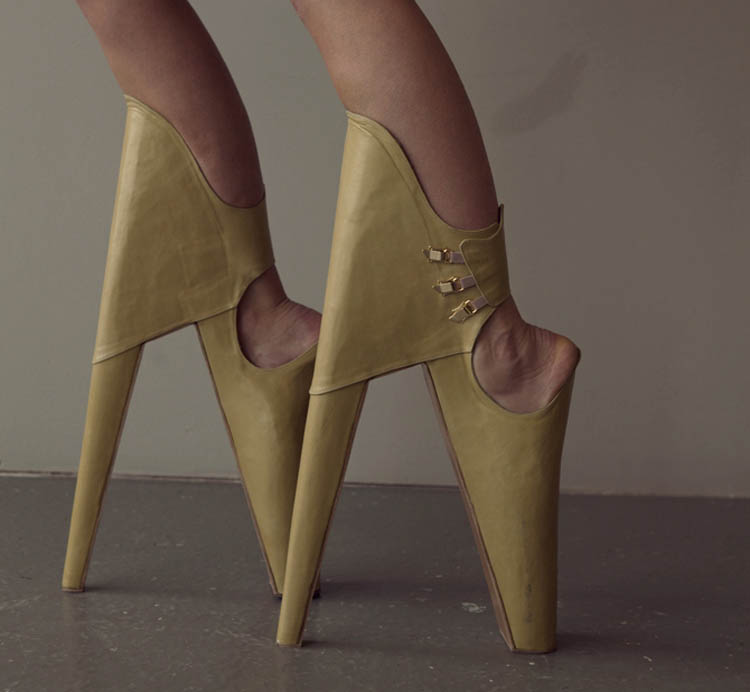
This post is dedicated to Daniela who called yesterday and mentioned that designing shoes in Rome for a month is the latest on her to-do list. Not being much of a shoe person myself, I foolishly questioned why that would be cool. I get it now. Though judging from this list, The Netherlands might be the place to go.
From top to bottom, left to right: Czech designer Pavlina Miklasova draws inspiration from wooden models of the Hellenic History Museum of Athens.
Dutch designer Leanie van der Vyver’s Scary Beautiful forces a new way of walking, leaning forward while refining a painfully fragile balance. See the walking video here.
French shoe designer Benoît Méléard designs for many designers but these crazy wooden platforms are from his collection.
All of Dutch designer Marloes ten Bhömer’s collections are pretty radical. Beigefoldedshoe uses the tanned leather from the soles as the uppers too. Bottom photos are hers as well: Noheelshoe.
RISD alum Martha Davis designed the sculptural wooden sandals, second from bottom.
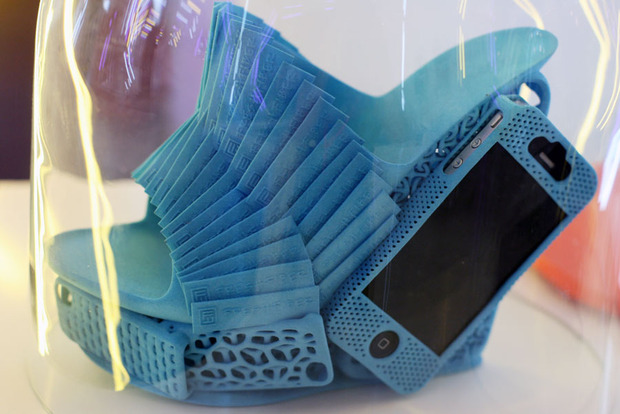
Oooh, and there’s also this 3D printed Macedonia Shoe designed by Finnish designer Janne Kyattenen. Wild.
This is a fun way to ‘dress up’ your old chairs. Dutch designers Anke Bernotat and Jan Jacob Borstlap, along with their team, look to “heighten the contrast between the mundane and surprising.” Their challenge is to recombine the old with the new. Their Chair Wear line is the solution. From pockets to turtlenecks, these old, classic chairs, come to life with their new outfits. Very clever.
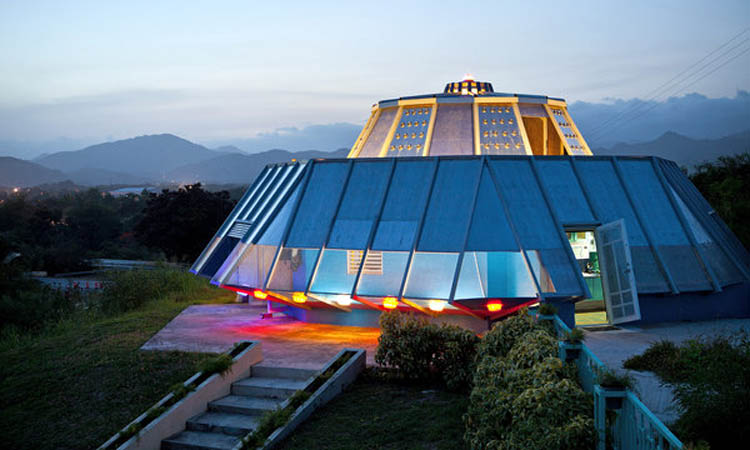
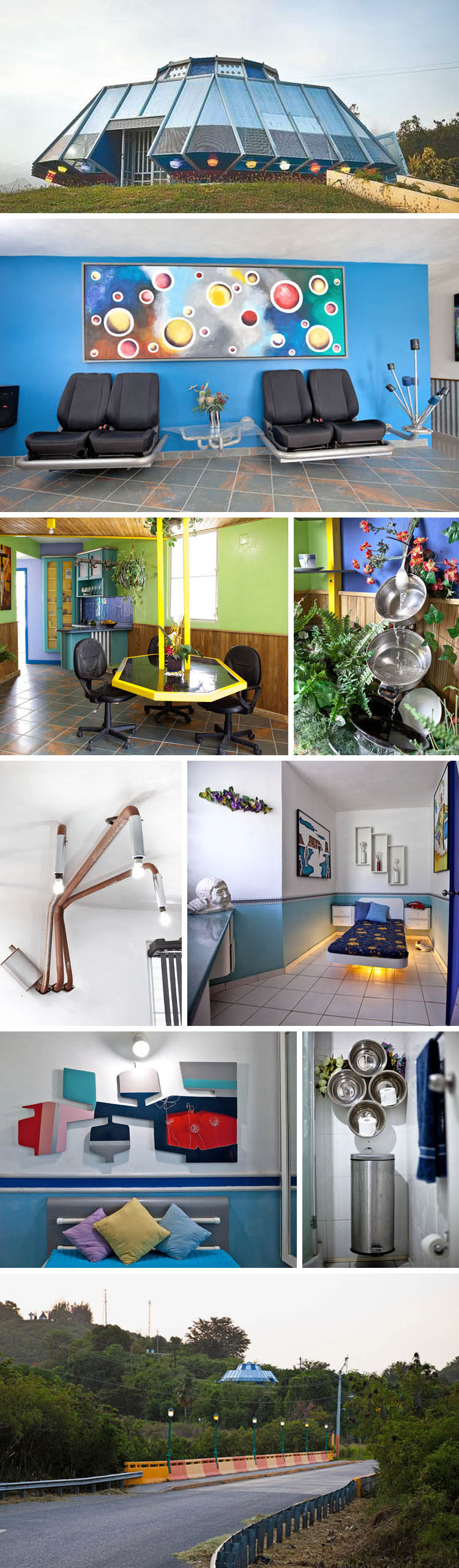
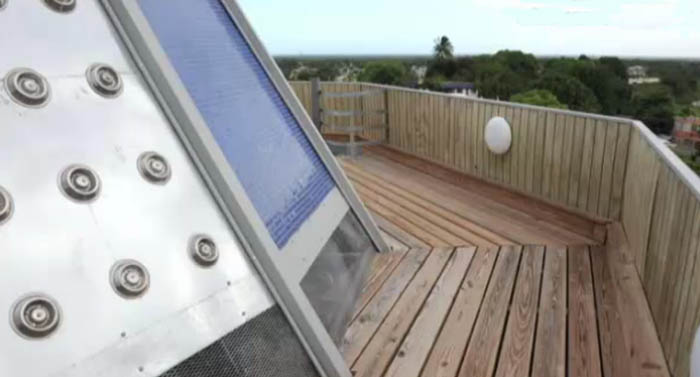
This is not just an interesting-looking home, but also has an interesting story behind it. Retired teacher of industrial arts, Roberto Sanchez Rivera, who lives on the south side of the island of Puerto Rico, built his home to look like a spaceship, complete with lights and audio effects that sometimes play the tune from Close Encounters of the Third Kind and other times salsa. The three-bedroom, two-bathroom house was built for about $150,000 and almost everything in it has been ingeniously created from discount store knickknacks and discarded auto parts. Objects such as the kitchen table and bathroom garbage can were designed to hover above the ground, while lamps are made from objects such as stove burners and lead pipes. Each room has a different personality and color scheme.
What possessed Rivera to design such a home? Love. As a teenager he had a girlfriend that left him after three months. From that moment he decided to build a home like no other to impress this girl. Even the location, up on a hill, visible from the main road, was chosen with the hopes that she would inevitably pass the house and notice it. You can read the whole story here but, in the meantime, needless to say Rivera has a new girlfriend and one unique home.
The Sing! Karaoke Kiosk is an interactive multilingual installation designed by the Urban Republic Arts Society in Vancouver to encourage more interaction between the various culturally distinct communities within the city. The outdoor booth allows users to choose songs from a touch screen display and sing on the red carpet to the public. The custom player offers thousands of songs in Vancouver’s most widely spoken languages: Cantonese, English, Filipino, French, Japanese, Hindi, Mandarin and Spanish. Karaoke’s cross-cultural popularity makes it a perfect choice to get everyone interacting, or at least laughing.
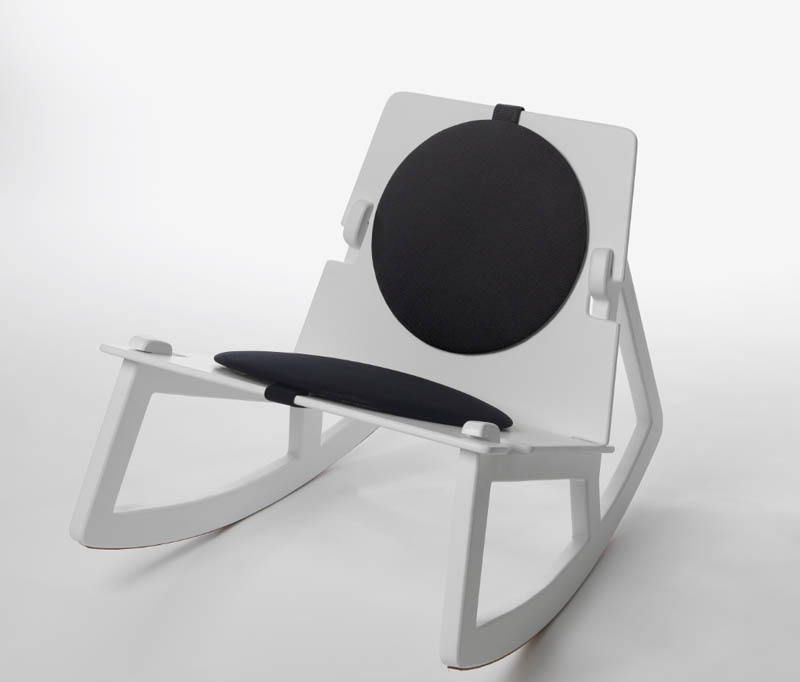
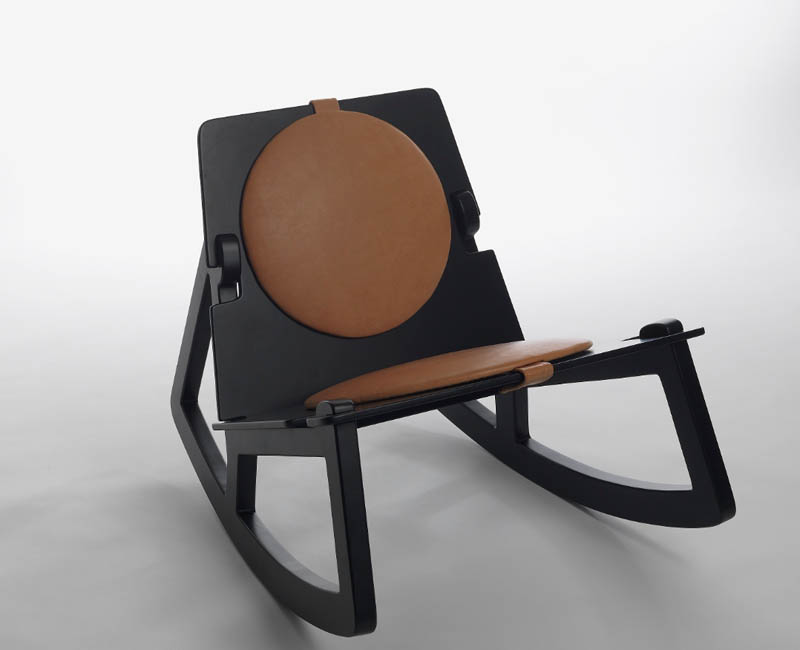
I love this contemporary rocking chair. Designed by Swedish designer Fredrik Färg, The Rock Chair (I even like the name) combines the classic rocking chair with modern design. The chair comes in 5 easy-to-fit-together pieces, packed flat that, when assembled, reveal all aspects of how the chair holds together. The circular cushions add that circle-in-the-trapezoid geometric quality that’s just great. Simple, elegant, and clever!
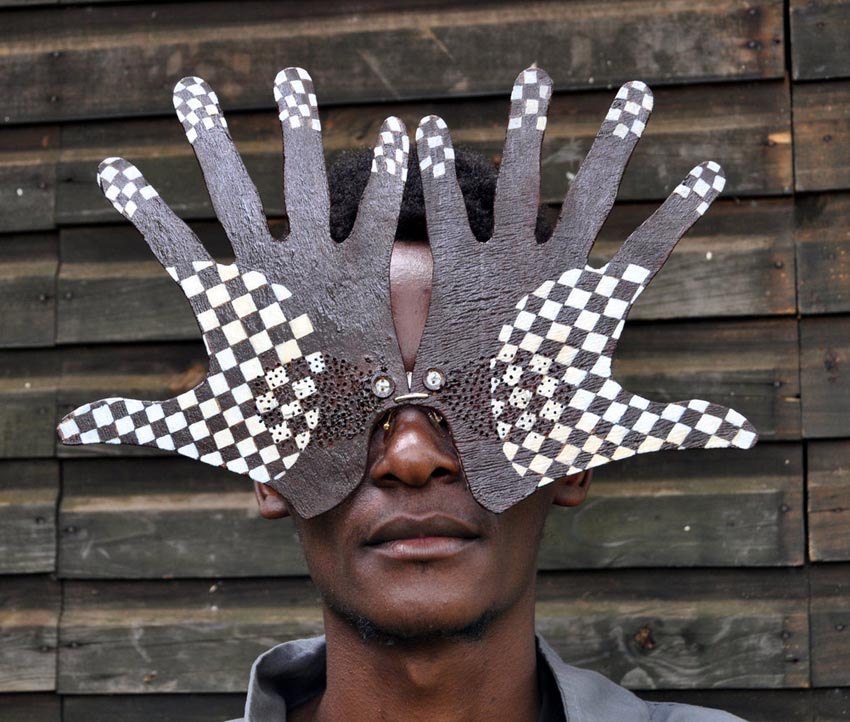
Not sure I’ll be picking any of these when I finally take the plunge and get a pair of much-needed glasses, but they certainly are fun. Nairobi artist Cyrus Kabiru has been into making frames from a very young age, grabbing some scrap copper wire and making his own set, having been inspired by a playmate’s real ones. Kabiru is a painter and a sculptor and started making his CStunners just for fun out of found objects, wire, mesh, pierced copper and steel, as well as other unused, leftover scrap. From fun to the Istanbul Design Biennial, where Kabiru’s specs will be featured next month; not bad! I wouldn’t be the least bit surprised if these start cropping up on the fashion runways very soon, if they haven’t already.
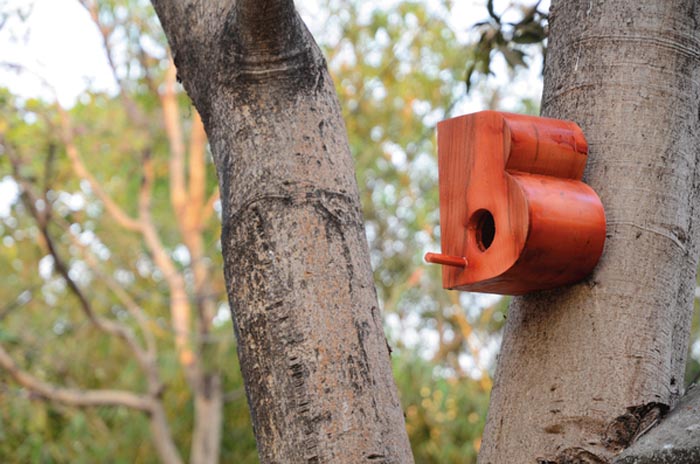
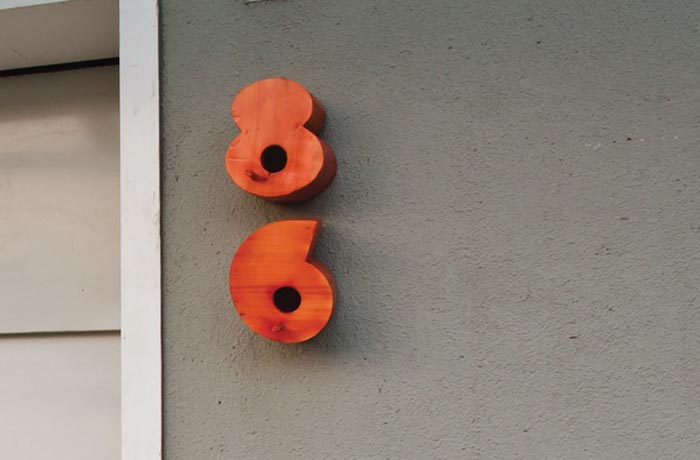
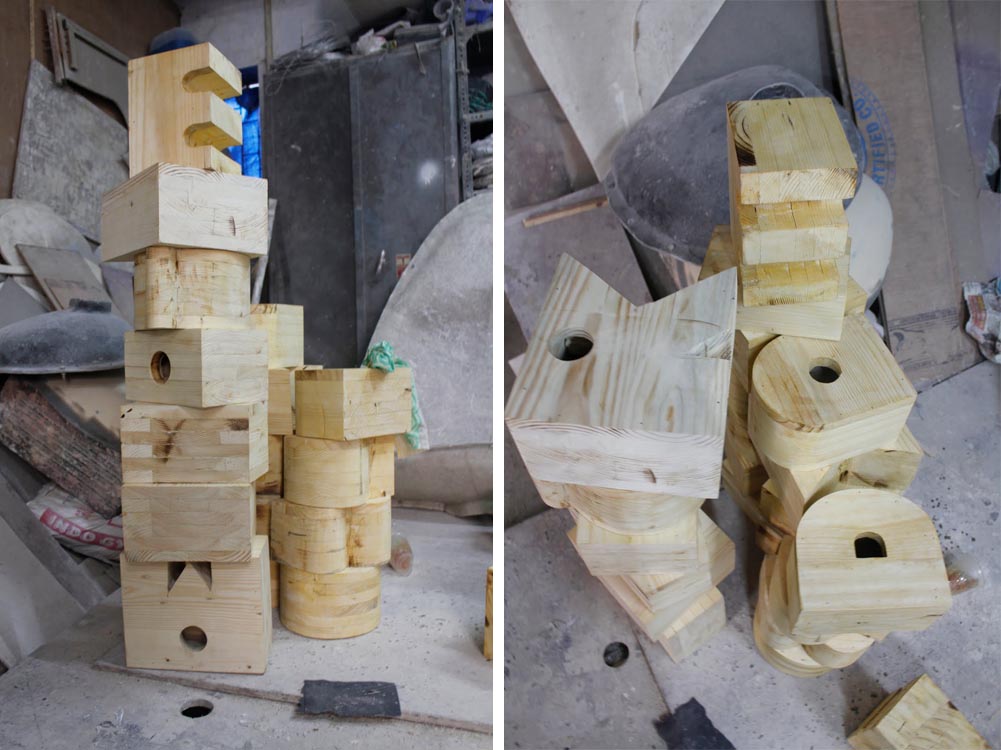
Typography and industrial design combine in these fun typographic bird houses. Designer Nishant Jethi of Mumbai created these hollow wooden 3D letters (the complete alphabet) that double as bird houses. Living Typography, as the project is titled, can be used as nameplates and/or house numbers while providing shelter to the many sparrows that have lost their homes with the recent construction of new high-rises and malls. If those sparrows enjoy type even half as much as I do, they’ll be happy to call one of these letters or numbers their home!
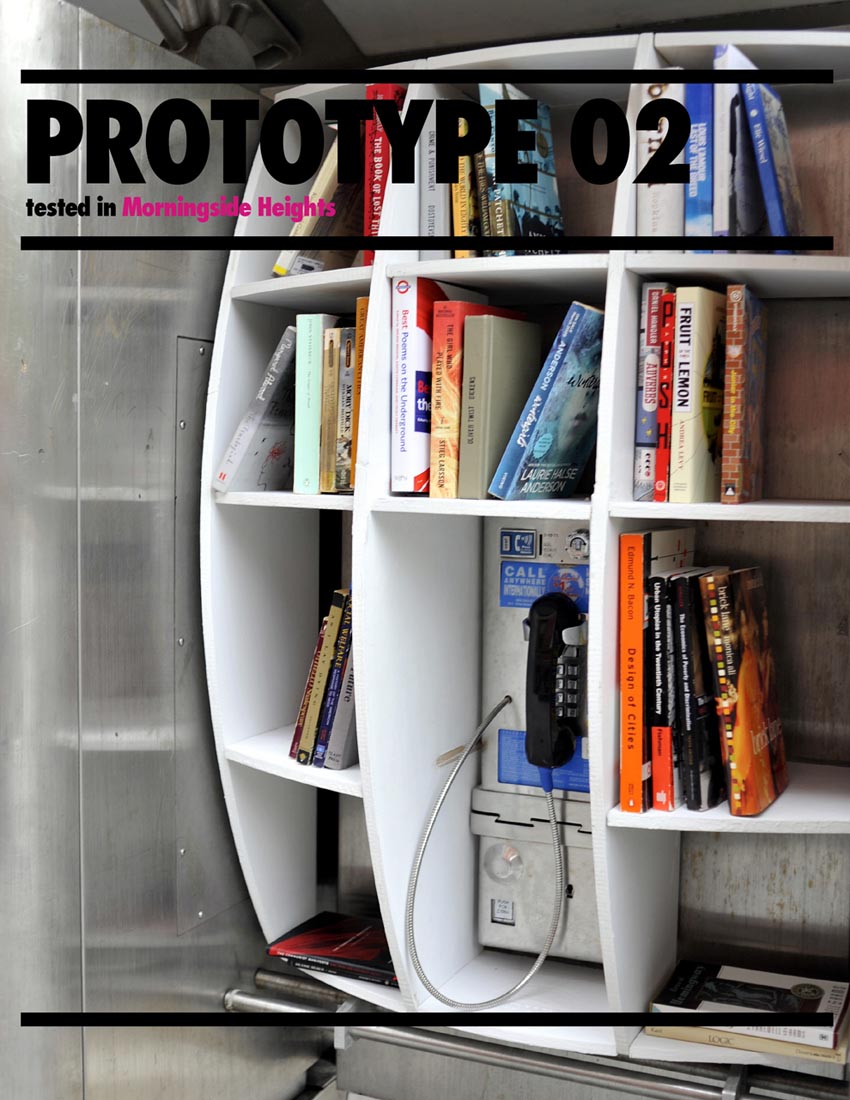
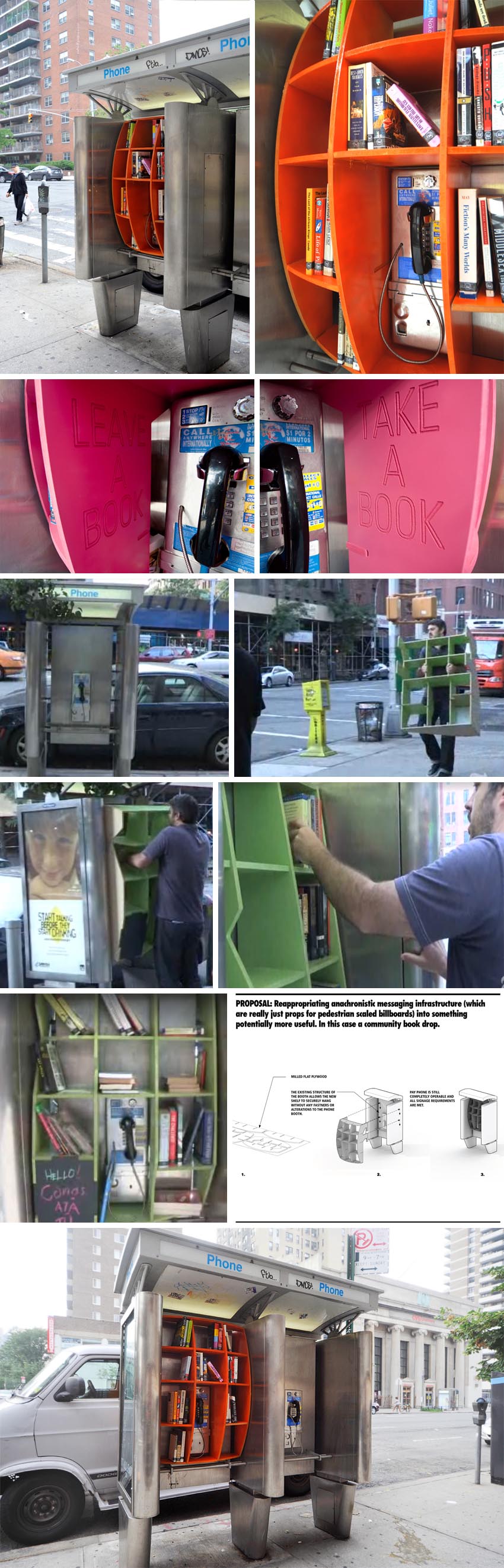
Architect John H. Locke, who lives and works in NYC, has come up with a clever idea for repurposing the underused pay phone booths that adorn the streets of the city. Locke designed a set of lightweight bookshelves, made of milled plywood,to fit inside a standard booth. Hooks on the shelves allow the units to be easily and quickly snapped into place without the use of hardware. Locke has so far installed four of these shelves on the Upper West Side, and finds the reactions interesting. In some cases the shelves (and books) have lasted merely a few hours, in others a few days.
It’s a great, forward-thinking concept that makes for fun street art as well. Presently, John Locke’s project is being featured as part of the U.S.’s contribution to the Venice Architectural Biennale.
You can see Locke speak about the project here. Some of his other interesting projects here. And here’s a link to the class he teaches at Columbia: Hacking the Urban Experience.
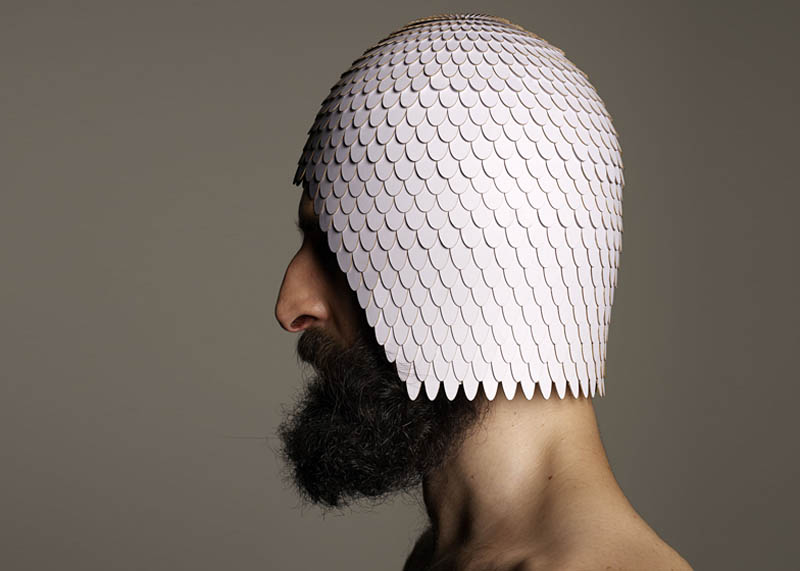
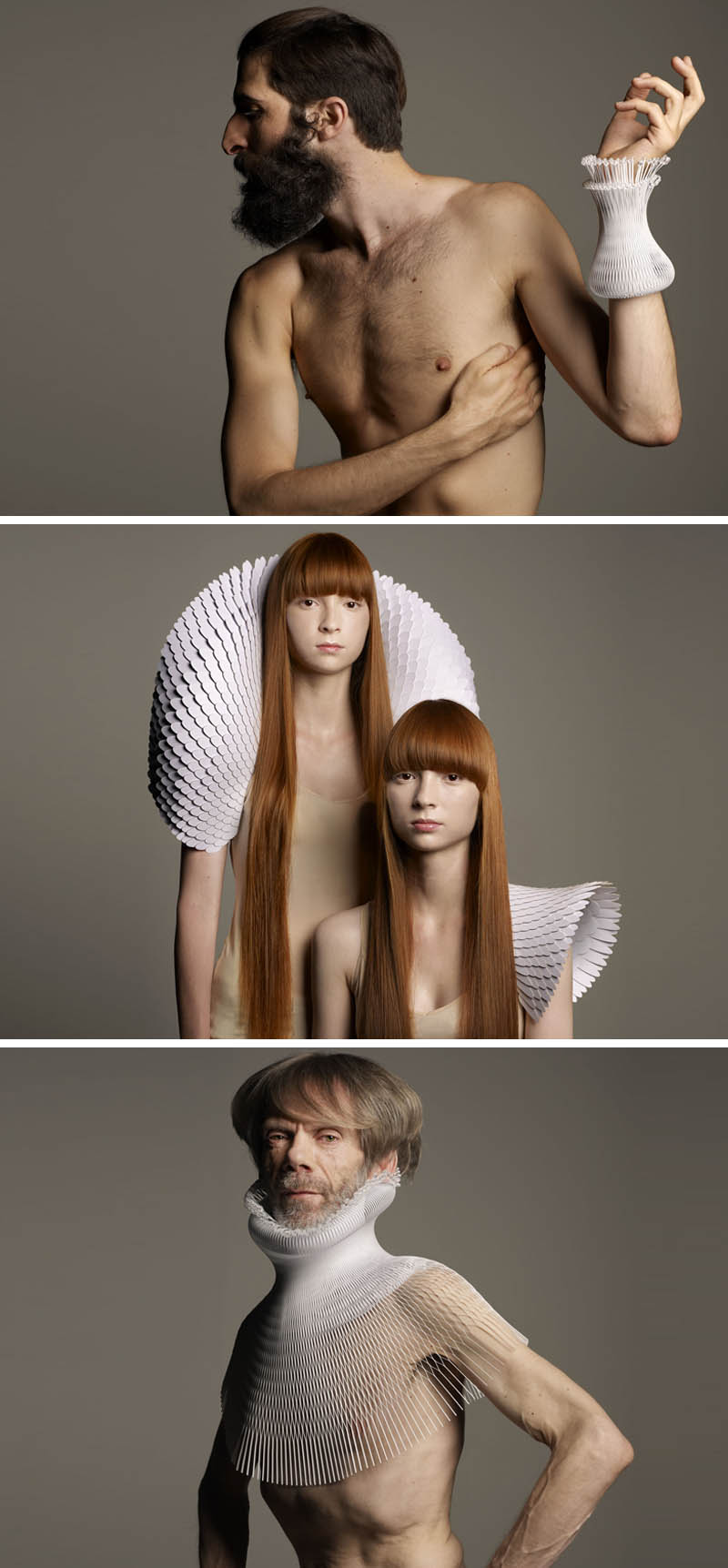
In celebration of their 10th anniversary a few months back, Swiss company Atelier XJC launched an onsite laboratory to study new components and materials in order to create original, offbeat objects. As you can see, they certainly succeeded in their goal. Working in collaboration with various prestigious manufacturers, Xavier Perrenoud and his team have pushed the boundaries on the definition of jewelry and accessories design.






















 CollabCubed