
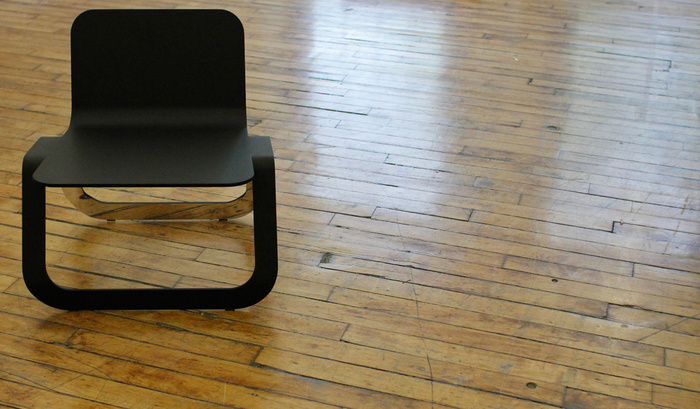
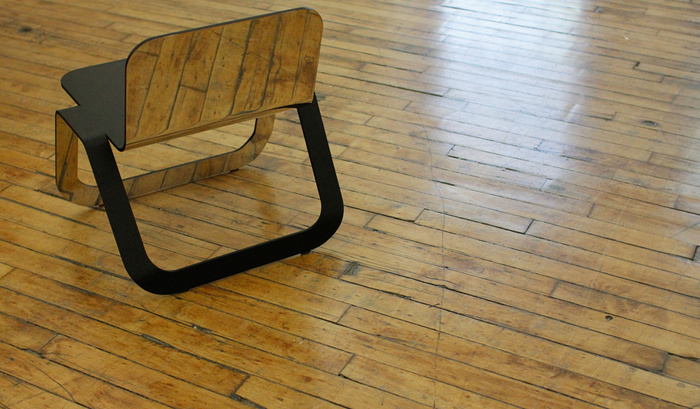
 Norwegian industrial designer Marius Myking’s Pow Pow Chair is the first in a family of furniture loosely inspired by the famous Brooklyn based electronica band LCD Soundsystem and their song: “Pow Pow”. The front part, or seating area, of the chair is powder coated, while the outside is mirror polished, reflecting the environment surrounding it. Made out of one aluminum sheet.
Category Archives: Industrial Design
Theda Schoppe: Product Trees
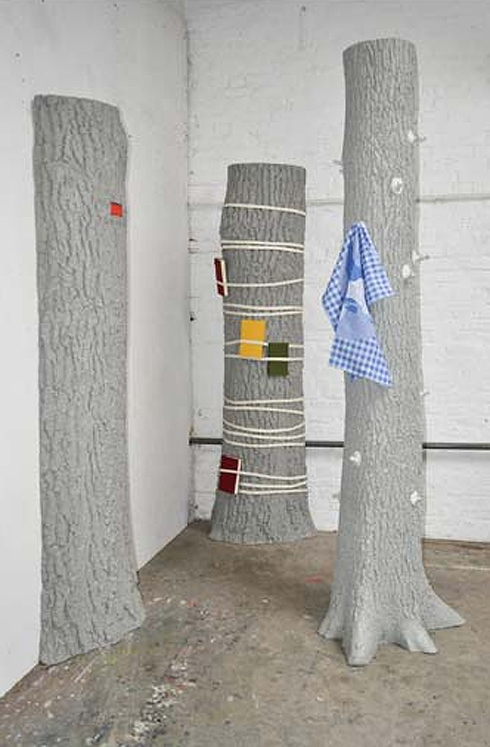
 These Product Trees by Dutch artist/designer Theda Schoppe made me chuckle. Imagine having one of these trunks in your home as a coat rack or bookcase/magazine rack? Definitely wouldn’t go unnoticed.
Made of acrylic plaster, the individual trees each have their own name: Tree O’clock, Gummibaum, and Hang Up Tree.
You can see more of Theda Schoppe’s work on her site.
Side/Beside Clock
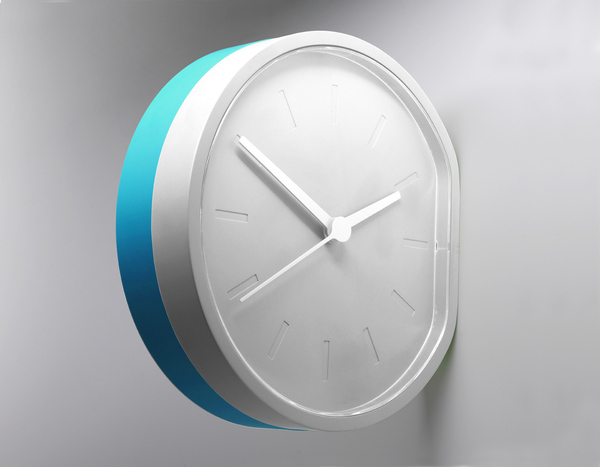
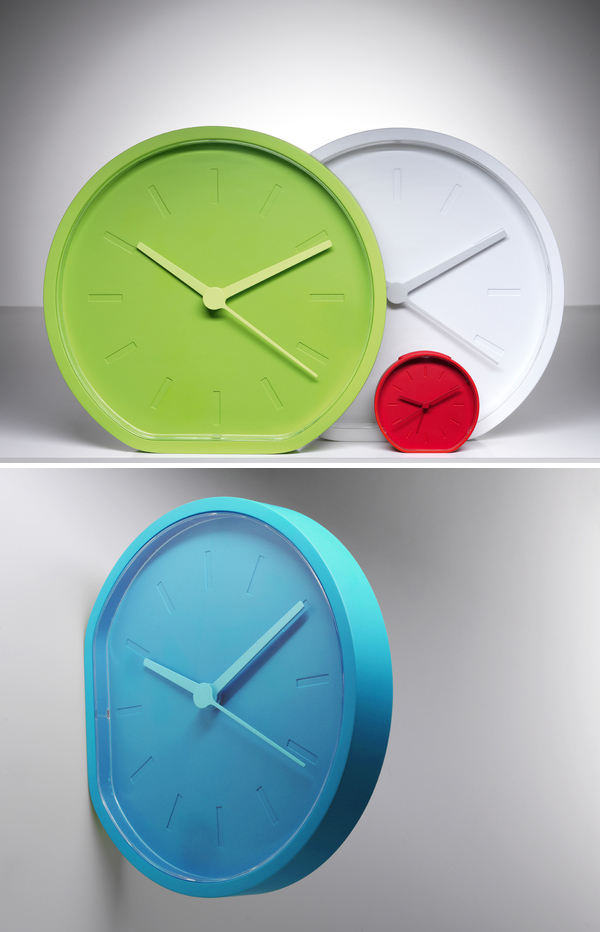 Really love the smushed side of the Side/Beside Clock designed by Ludovic Roth and Alexandre Dubreuil.
via Muuuz
Aesop’s Grand Central Terminal Kiosk

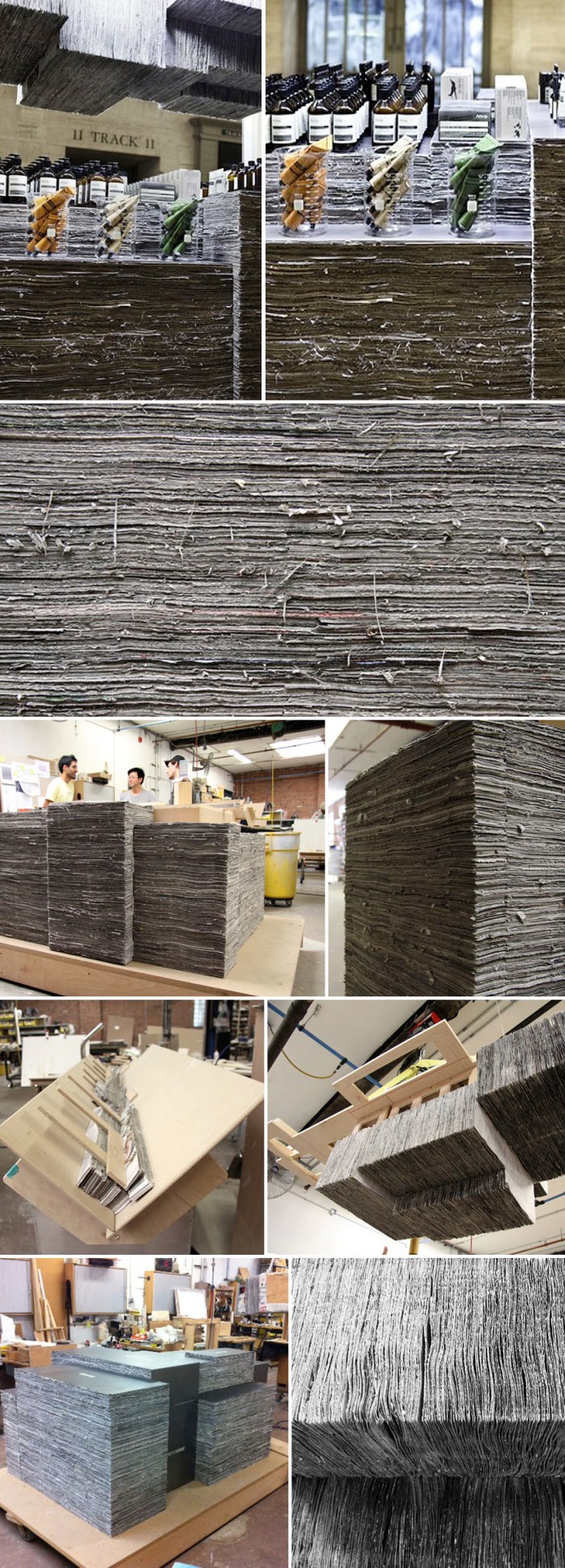 Click to enlarge.


I have to admit that the Australian skincare company Aesop is completely new to me. Not until the plywood went up across the street from our place here in NYC with the “Coming Soon” signs was I aware of its existence. But I’m not here to discuss the company or their products, instead about the very interesting and cool kiosk that they have unveiled in Grand Central Station.
The architect behind the stand – built out of 1,800 back issues of the New York Times – is Jeremy Barbour of Tacklebox. In solidarity with the newspaper-reading commuters, Barbour stacked and pressed the papers into chunky blocks and combined the blocks with complementing powder-coated steel blocks and countertops. Apparently, there will be a similar design in the upcoming Nolita store. It will be interesting to see what they come up with for the third NYC shop that will be going up in our Greenwich Village neighborhood.
You can see more of Tacklebox’s work here and the fabrication process on their blog.
Stretch Chairs: Carnevale Studio
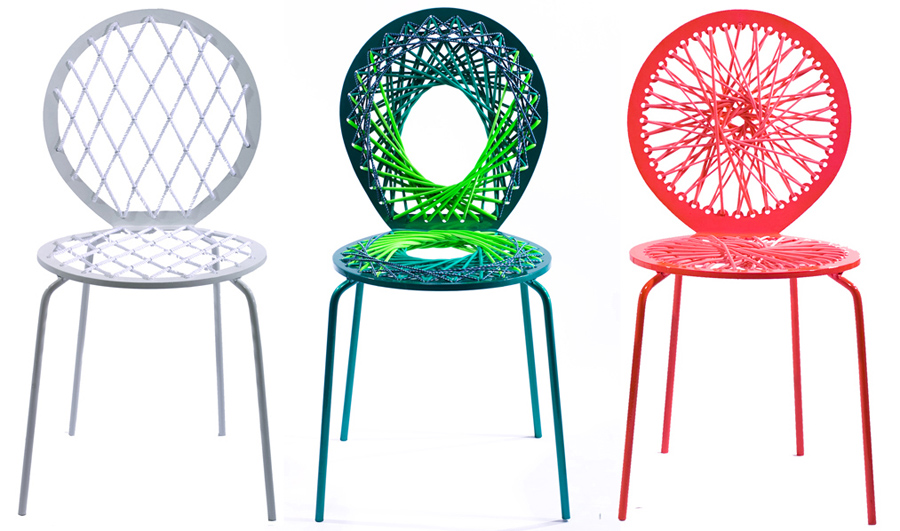
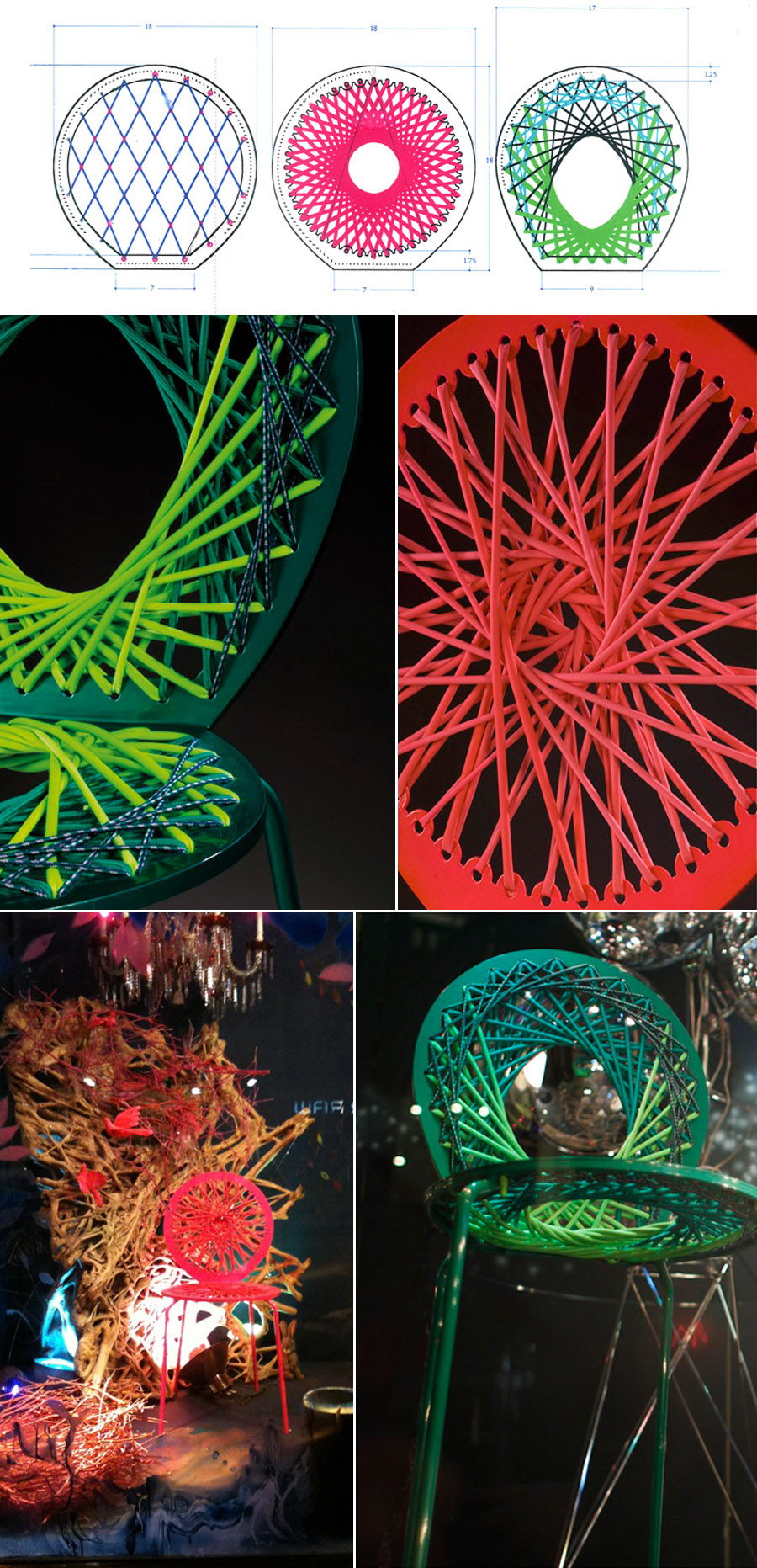 We were reminded of these Stretch Collection chairs by Carnevale Studio the other day when we popped into the Future Perfect. We had seen and liked them last year at the 2010 ICFF.
Inspired by the corset-like pieces of the fashion world, Jessica Carnevale used latex, bungee and rope to create these bright colored (our favorite is the hot pink) and fun chairs.
Available at The Future Perfect and ABC Carpet & Home.
Bottom left photo by Louis Filosa. Bottom right photo by Robert Carnevale
Laszlo Rozsnoki: Rope Shelf
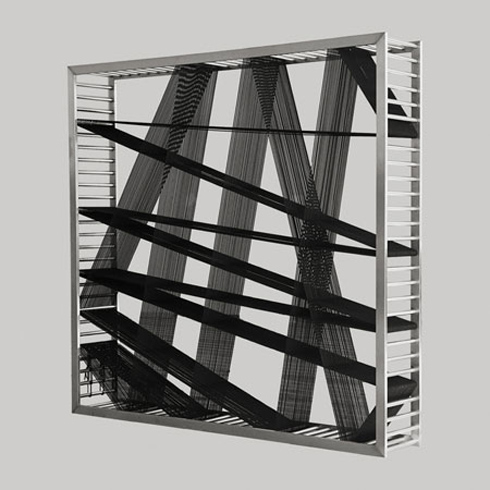
 Laszlo Rozsnoki is a product designer, originally from Budapest, who studied design in the Netherlands. He has designed a series of furniture pieces under the title Questioning the Established, of which this Rope Shelf is a part of. As with the other pieces in the series, the Rope Shelf has a certain twist. Where there are usually solid, horizontal shelves, Rozsnoki has replaced them with diagonal ones made of rope attached to a frame. From certain angles the stretched rope, overlapping another layer, creates a moiré pattern.
I’d love to see what the bookcase looks like with books in it.
Jacinto Moros: Balletic Sculpture


 Click to enlarge.
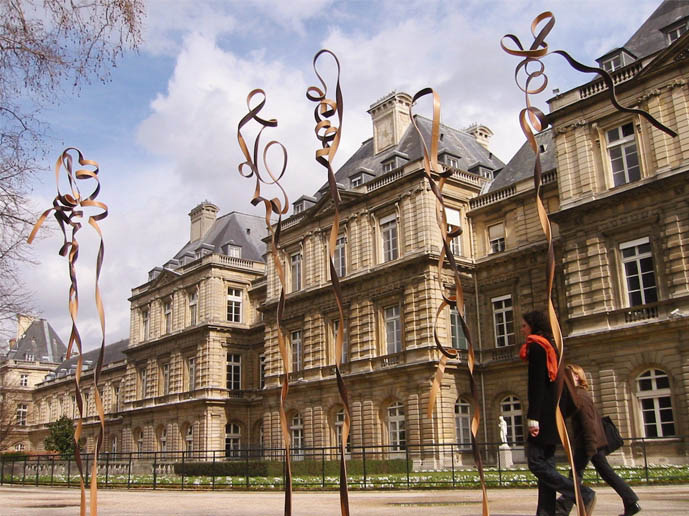

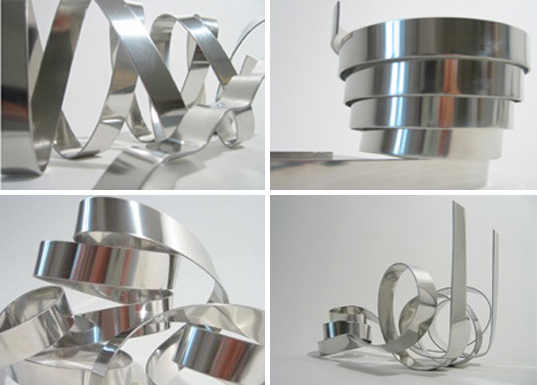
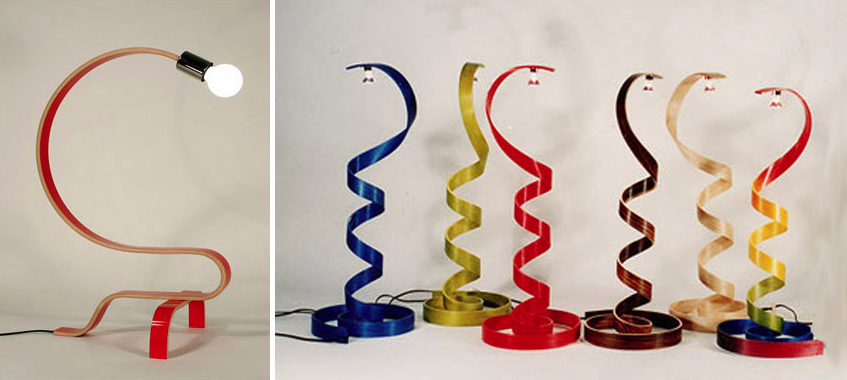
The Spanish artist Jacinto Moros, who we had the good fortune of befriending during his years in NYC, takes wood and makes it dance. His ability to bend and curl the material into beautiful sculptures that, while static, are full of movement, is really amazing.
Though a fan of all of his work, I especially like how his Movimientos Liquidos (Liquid Movements) piece worked in its space, this being the Luxembourg Gardens in Paris. As if abstract flowers or trees fitting in perfectly, yet uniquely, into the park landscape. (Top three images.)
His Architecture Series, designed in wood and cast in stainless steel, is inspired by well-known structures, captured using a continuous line to render the buildings as sculpture. (See stainless steel sculptures in photos, clockwise from top left image are: Guggenheim, Bilbao; Guggenheim, NYC; Reina Sofia, Madrid; Pompidou Centre, Paris.) The series is open-ended with more buildings to follow.
Moros has also designed some products in his curved wood method, including lamps and jewelry.
You can see more of Jacinto Moros’s work on his website, as well as at the Victor Lope Gallery, and OA Madrid online shop.
Knog: Bicycle Locks

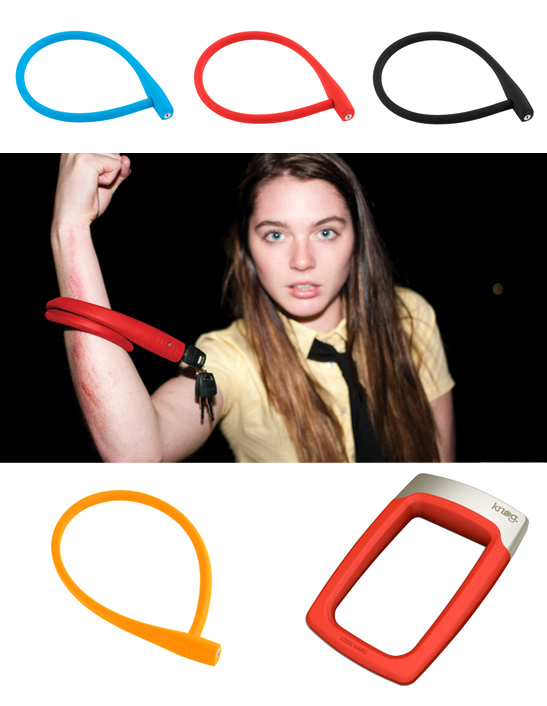 On a walk through Tribeca yesterday afternoon, here in NYC, the three of us wandered over to Adeline Adeline – as their tag line states: “a very nice bicycle shop” – in search of this bicycle helmet. Though we left empty-handed, we fell in love with these Knog bicycle locks. It may be hard to appreciate how nice these colorful silicone locks are from the photos but, trust us, in person, they’re beautiful design objects. There are different thicknesses and prices, but they’re all really nice. The U-lock on the bottom right is due out in November and we did not actually see that one, but I’m liking the look of it on their site.
Knog is an Australian company that sells all kinds of bike accessories. The lights seem to be very popular, based on my google search of Knog. You can check it all out here.
LAVA
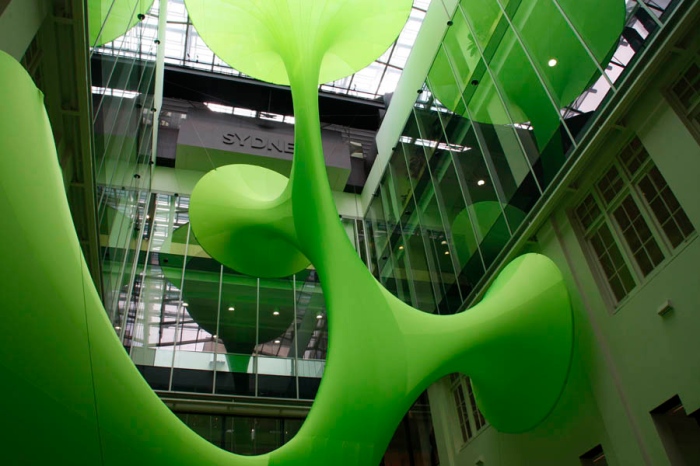
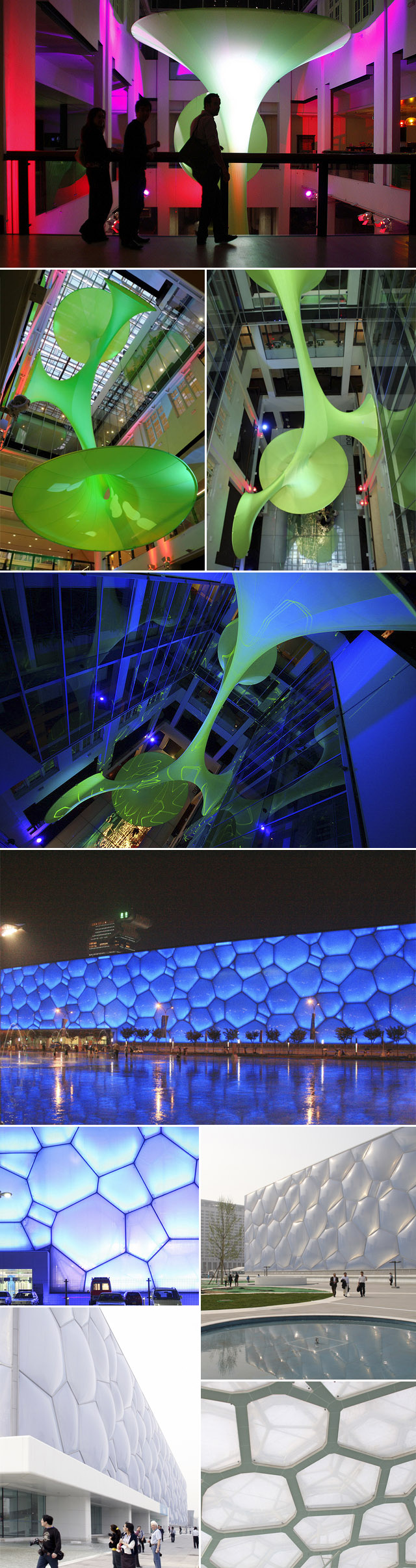
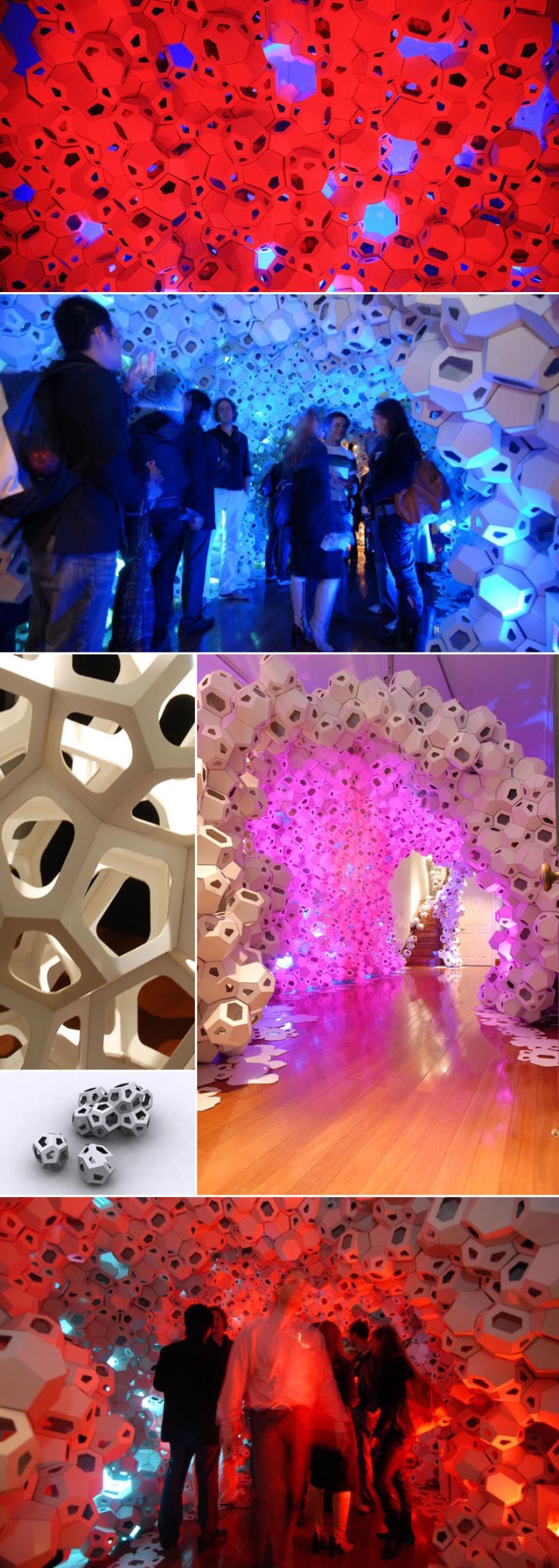 Click to enlarge


With its two main offices in Sydney and Stuttgart, LAVA – Laboratory for Visionary Architecture – functions as a think tank generating inventive architecture that “bridges the gap between the dream and the real world.” Founded as recently as 2007 by Chris Bosse and Tobias Wallisser, LAVA has already produced an impressive body of work. Using nontraditional methodologies and advanced technology, LAVA’s structures and city planning are part of a new and cutting edge, as well as sustainable, generation of architecture. Here are just three of their projects:
Top to bottom – The Green Void, a tensile fabric installation in the central atrium of the Sydney Customs House.
The Water Cube or National Aquatics Center in Beijing, originally designed for the 2008 Olympics has since been converted into a water park.
Digital Origami, an installation created in a masterclass taught by Chris Bosse at the University of Technology Sydney. Made from 3500 recycled cardboard molecules of only two different shpaes.
You can see more of LAVA’s amazing work at their website as well as on Chris Bosse’s flickr.
Typographied Objects II

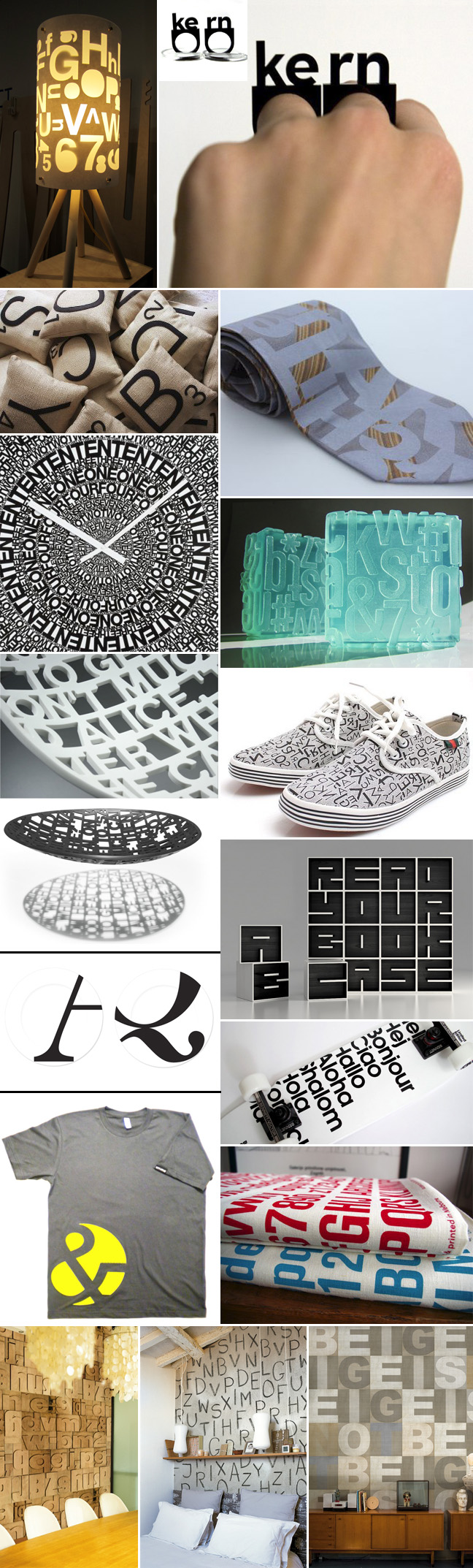 Click to enlarge.
After the first roundup of objects that utilize typography, I’ve come across several more items, so here is a second roundup of typographied objects:
Clockwise from top image:
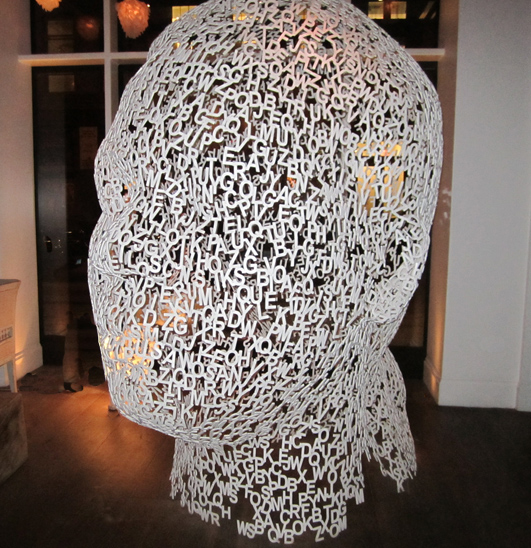
Jaume Plensa sculpture; Kern ring set; Architecture/Art Tie; Typography Soap; Type Sneakers; Saporiti Alphabet Bookcase; Hello Skateboard; Akzidenz Printed Fabric; WD Collections (wallpaper in 3 bottom pics); Ampersand Tee; Typography Tableware; Diego Grandi Lullaby Plate; Type Clock; Scrabble Type Pillows; Keenan Keeley Alphabet Lamp
Diego Gutierrez Hermosillo

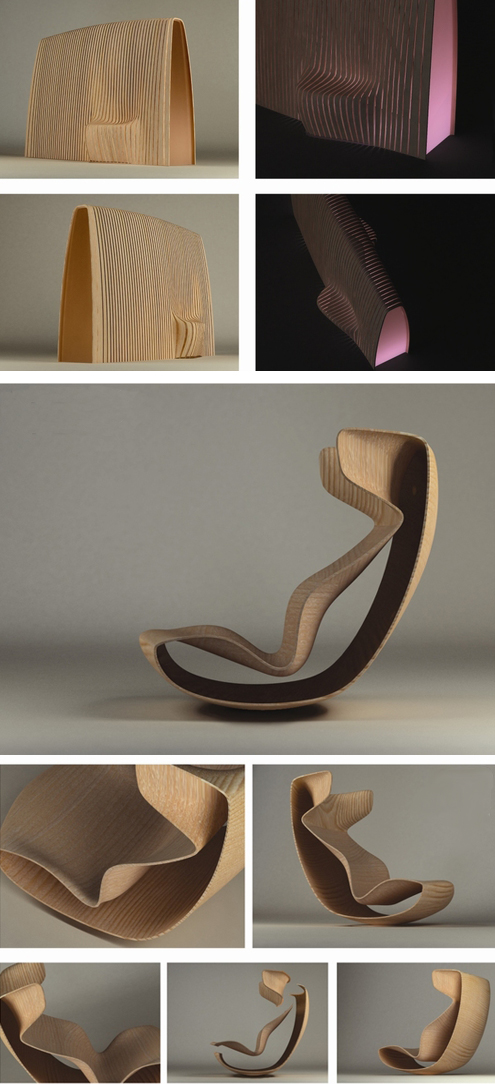 Diego Gutierrez Hermosillo is an industrial designer with several nice pieces in his portfolio. Two of these are the Zebra room divider and the Uno lounge chair. Both designed to be sculpted in wood.
DMFD: Furniture Design
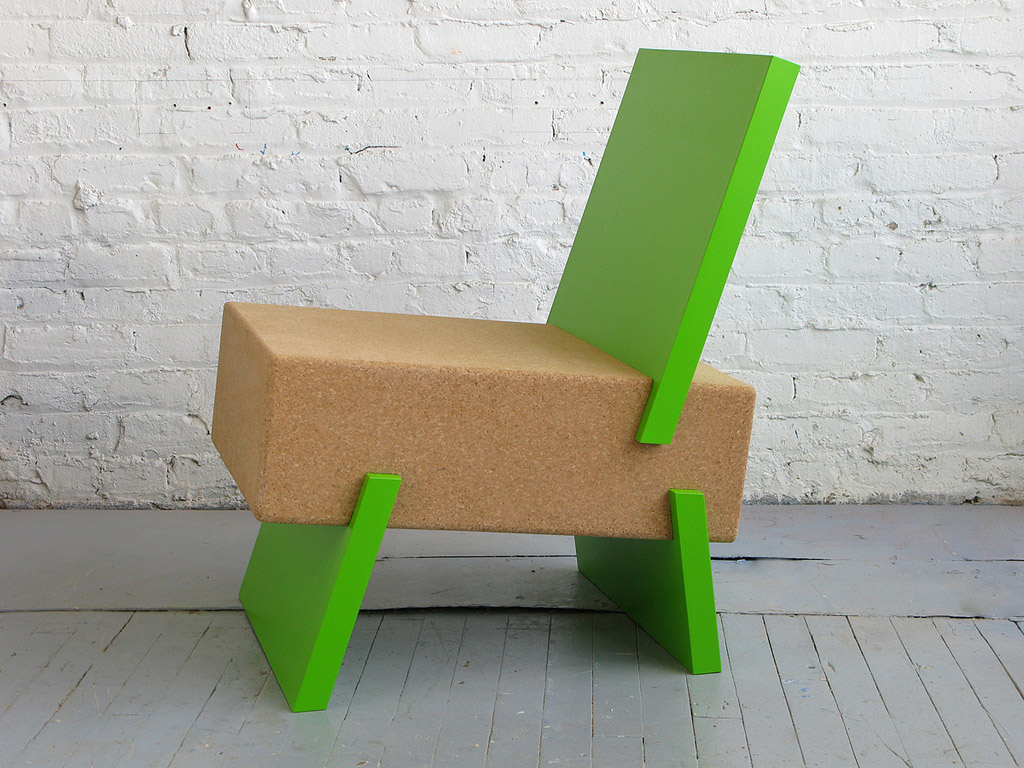
 We’ve been noticing DMFD’s (Daniel Michalik Furniture Design) fun cork furniture and tableware designs since NY Design Week a few months back, but we were reminded again when we popped by the Makers Market last weekend (love that logo and really wanted one of the worker’s t-shirts, but, alas, they were not for sale) at Socrates Sculpture Park. DMFD’s pieces really stood out with their bold colors and fun shapes. And though we didn’t lie down on the cork chaise longue, it did look quite striking on the park’s lawn.
From the site:
My work focuses on researching and expanding the uses of underutilized, unconventional material. Investigation of new materials can only lead to innovative methods of production and new ways of interacting with our environment. My recent work taps the rich potential of cork, an engaging, environmentally responsible material which is completely sustainable, recyclable, and plentiful.
You can see more DMFD work on the website.
Ctrl-Alt-Delete Cup Set

Esther Derkx: Raamtekens
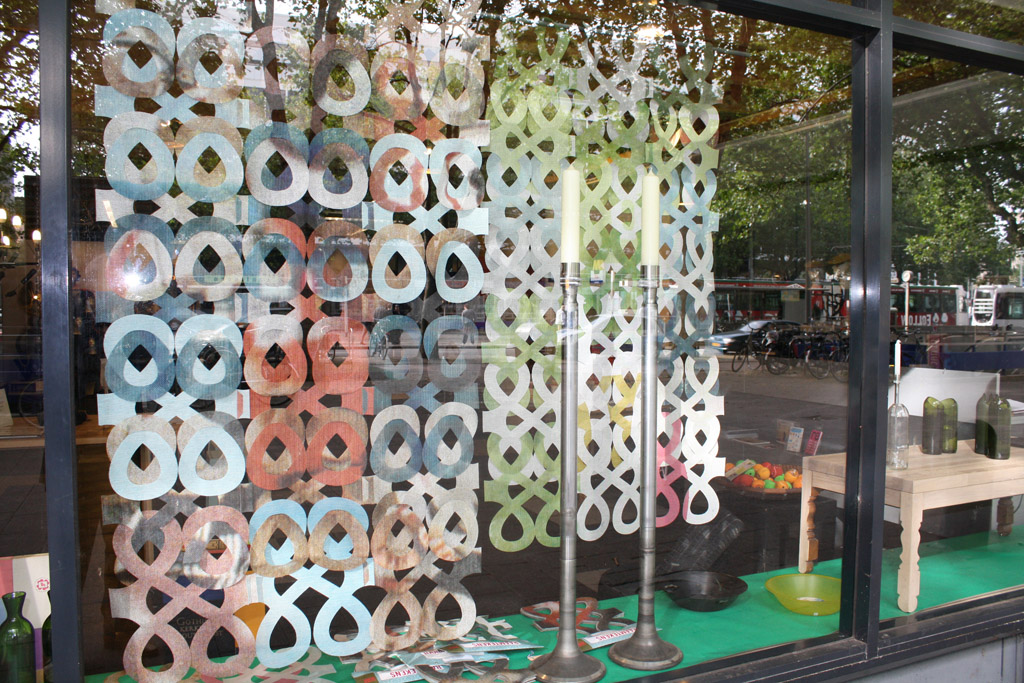
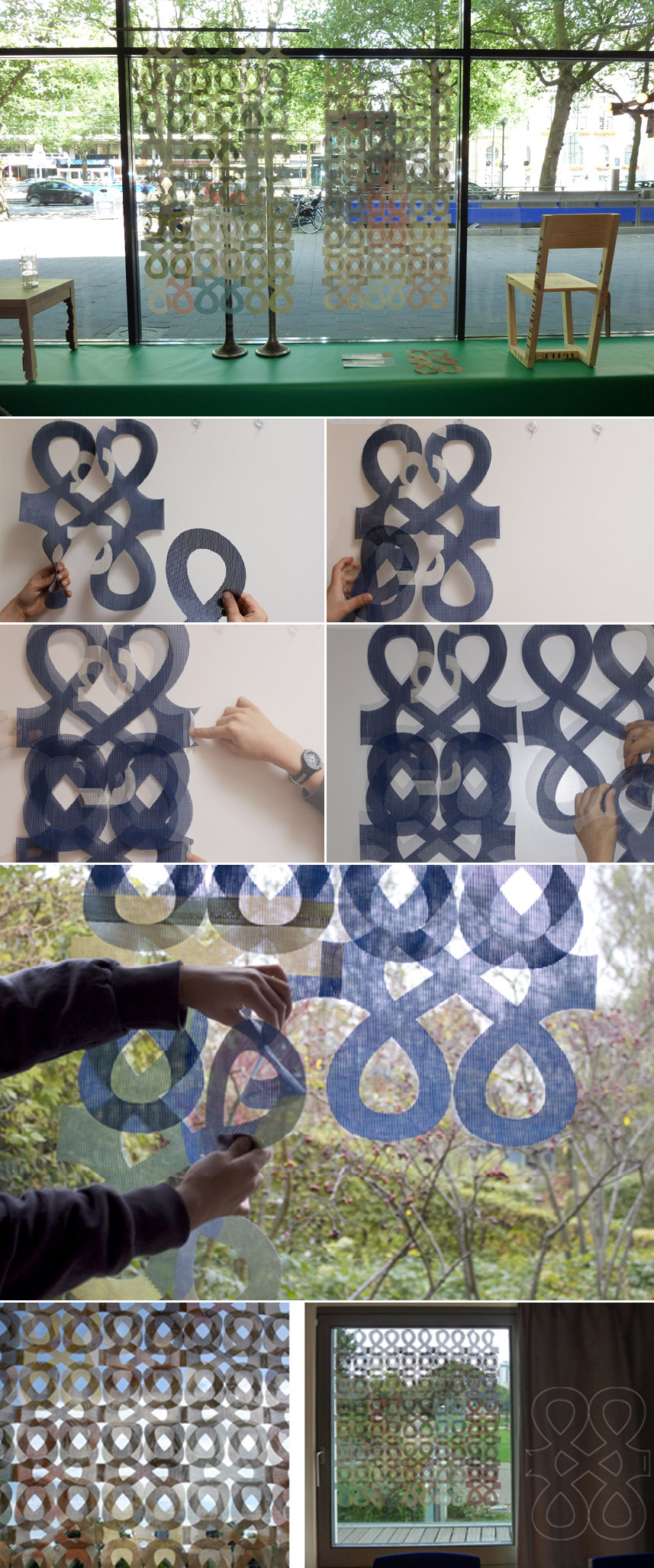 Raamtekens (or WindowSigns) are curtains or room dividers that come in cut-up loops that can be intertwined to the width and length of your choice. Because they are made from cast-off advertising canvases or mesh, no two Raamtekens are the same with all their different colors and patterns. The effect in the end is a mostly transparent curtain that obstructs visibility looking in, but still leaves open visibility looking out.
Designed by product designer Esther Derkx in the Netherlands, known for her collage-like ceramics, and most likely available through her site, though not currently in the online shop.
Inga Liksaite: Textile Art
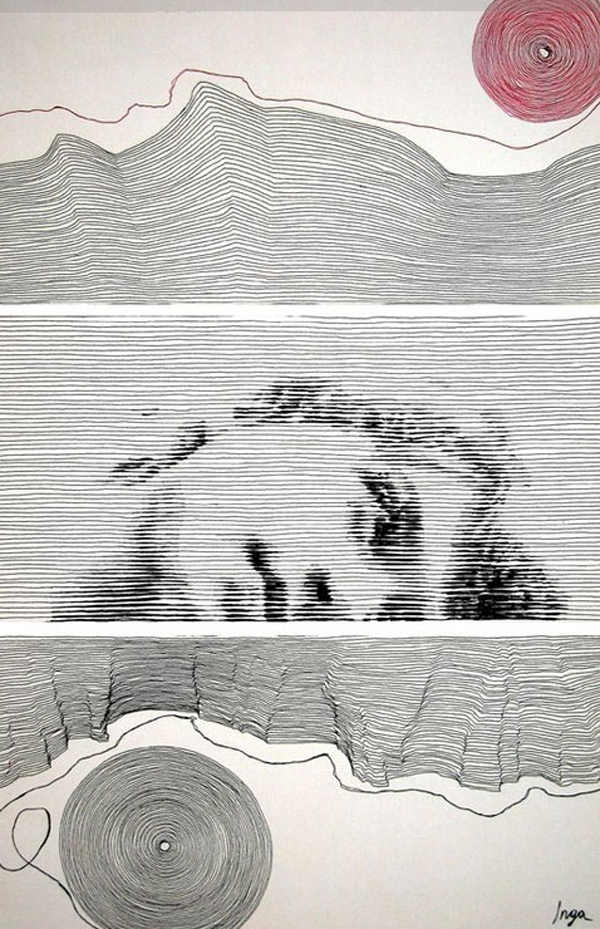
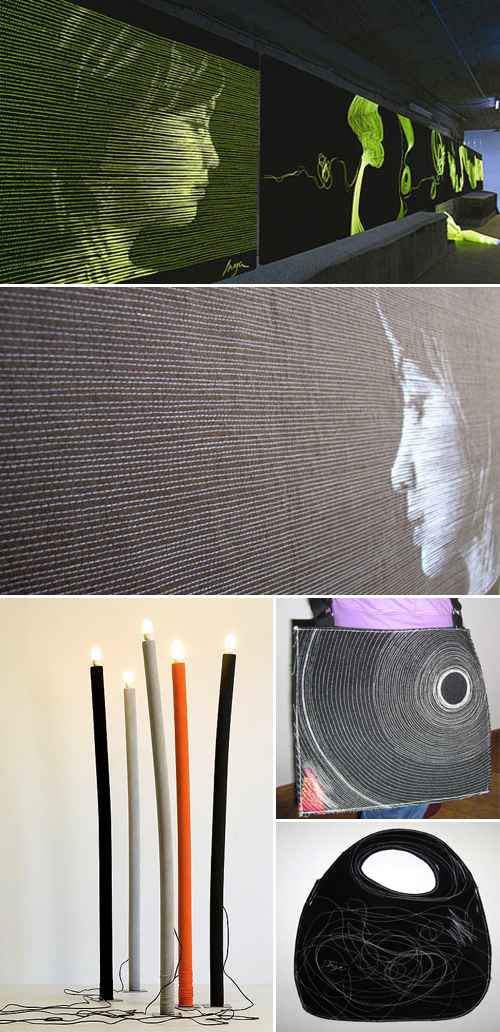 Inga Liksaite, a Lithuanian artist, works wonders with thread, fabric, and cardboard. She has even participated in videos for set designs of stage performances. In addition to her artworks, Inga has designed bags and – possibly my favorite – lamps that look like very tall spools of thread.
You can see more of her work here and here.
via the not-so-losery loserlife
Ineke Hans: CITO Tree
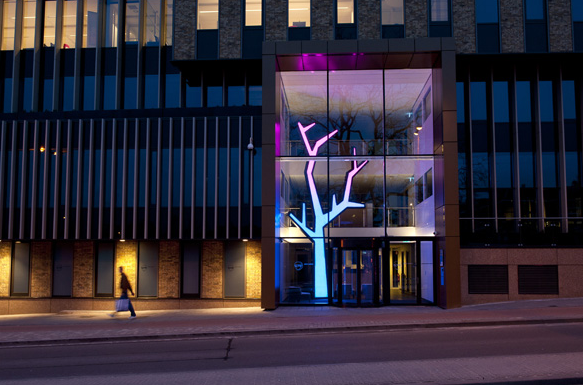
 Ineke Hans, a designer and artist in the Netherlands, recently designed a tree light sculpture for the entrance of CITO’s building, a leading testing and assessment company.
The tree stands 12 meters tall and acts as a symbol for growth and the acquisition of knowledge. It changes colors throughout the day, and night, and acts as the “heart” in the center of the building. I especially like how it works in perfectly with the reflection of the trees in the glass from across the street.
Picnic Bench by Tomasz Chmielewski
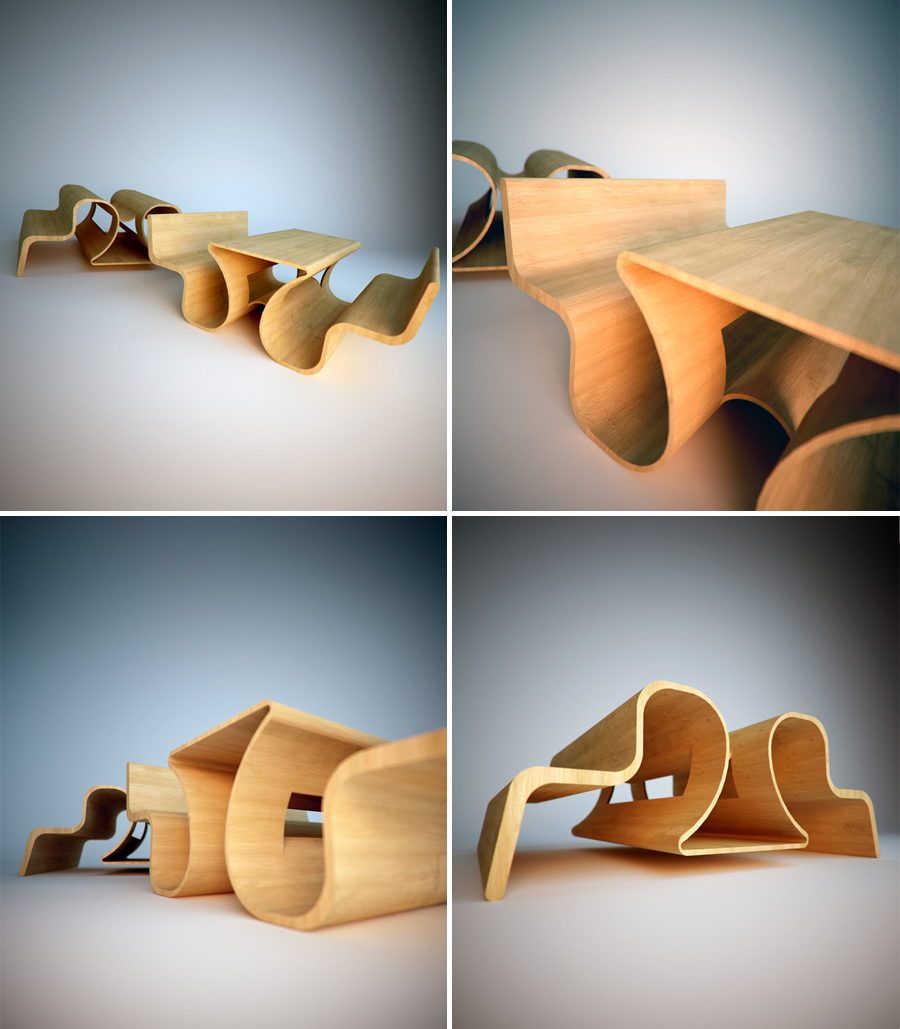 Clever dual purpose design by Polish designer Tomasz Chmielewksi.
via Behance
d.lab: Objects Around the Tablescape
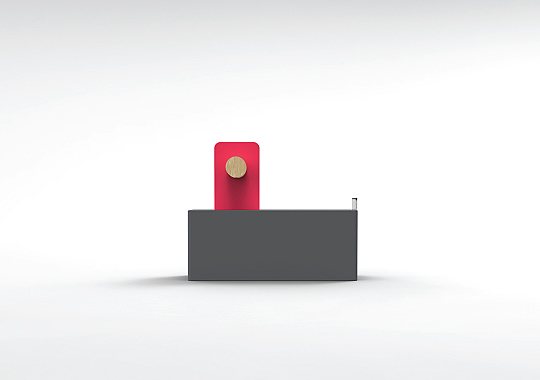
 I love this collection of table accessories and lamps from d.lab, a workshop created by the Design Incubation Centre in Singapore for material exploration. The collection is titled the Objects Around the Tablescape and combines Corian, maple and balau wood as well as copper and Delrin in some of the pieces. Simple and beautiful.
Check out the rest here.
via Abitare
 CollabCubed