Nicole Dextras: Ice Typography

Ice Typography, letters, Typography installations, Environmental Art, Vancouver, collabcubedIce Typography, letters, Typography installations, Environmental Art, Vancouver, collabcubedIce Typography, letters, Typography installations, Environmental Art, Vancouver, collabcubedIce Typography, letters, Typography installations, Environmental Art, Vancouver, collabcubedClick to enlarge

I’m not a fan of the cold or ice or even snow, but if I were to come across one of Nicole Dextras’ Ice Typography installations, I think I could bear the frigid temps a little more.

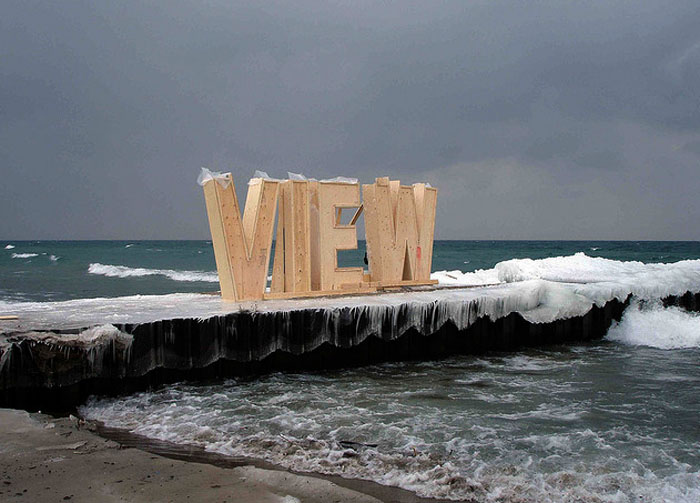
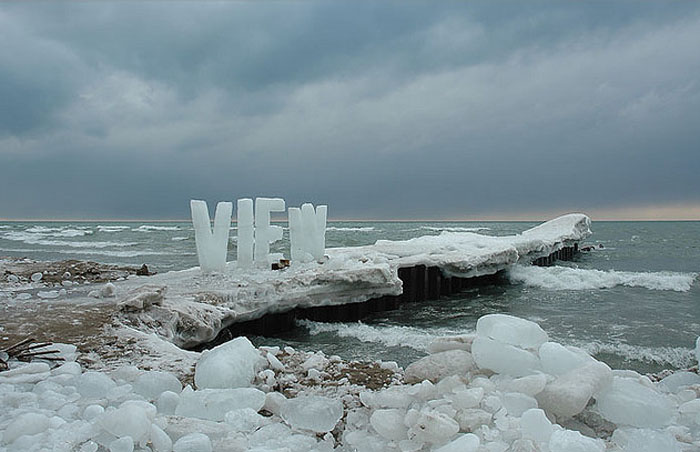
Nicole Dextras is an environmental artist from Vancouver who works in a multitude of media including sculpture, interactive public art and photography. Her Ice Typography series consists of three-dimensional words fabricated in ice ranging in size from 8-foot high letters to 18-inch high. Apart from the striking aspect of these frozen letters standing tall in the outdoors, whether in a rural or urban landscape, is their shifting and transient quality.

From the artist’s statement:
The visual poetry in this series aims to subvert the authority of the English language and the commerce of signage by representing words as vulnerable and shifting. Ice Typography absorbs light, melts and eventually leaves no trace; these words have more in common with dreams and oral stories than linear language. Words cast in ice interrupt our literal narratives, allowing a more integrated reading of the land we inhabit, as opposed to the past and current commodification of land as limitless resource. This fundamental split in perception lies at the crux of our environmental crisis. I therefore choose to create within an ephemeral vernacular to accentuate the collective physical and psychological experience of flux and change.

There are many more of these installations on Nicole Dextras’ site here, and you can see time lapse videos of her Signs of Change series as they melt here.

via artsy forager
Zadok Ben David: Blackfield

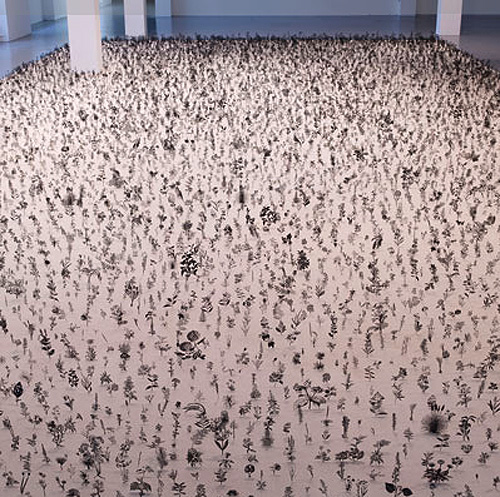
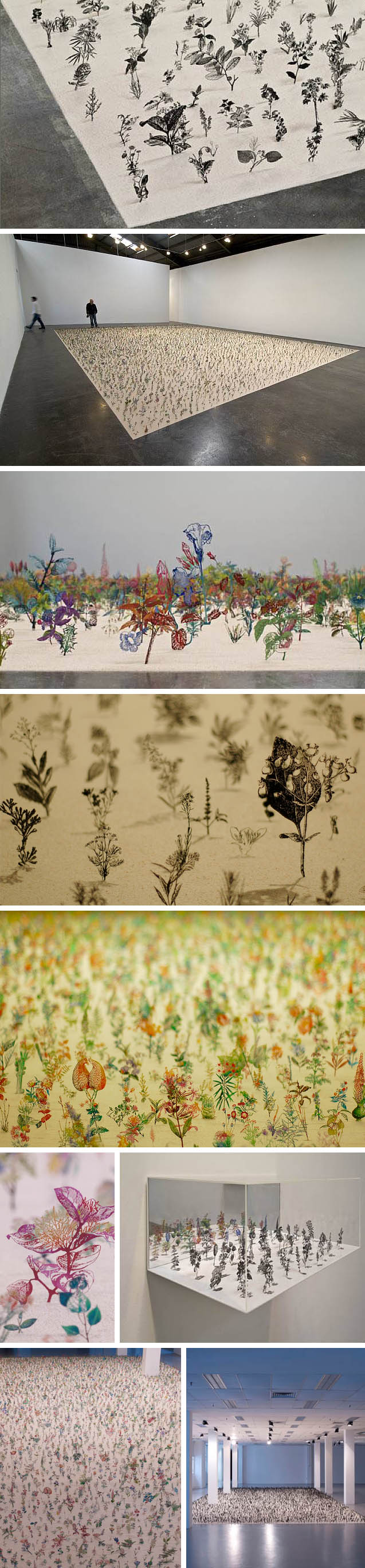
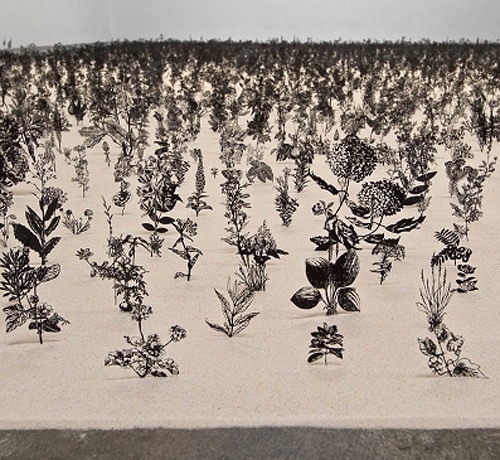
contemporary art installation, Israeli artist, Botanical sculptures, metal flower cutoutscontemporary art installation, Israeli artist, Botanical sculptures, metal flower cutoutscontemporary art installation, Israeli artist, Botanical sculptures, metal flower cutoutsIsraeli artist Zadok Ben David, who lives and works in London, created this interesting installation titled Blackfield. Made up of more than 12,000 small steel cut plant sculptures that spring out from a blanket of sand covering the gallery floor, there is a surprise element as one walks around the installation; what initially appears to be all black reveals itself as color on the other side.

Each plant sculpture takes its form from Victorian botanical illustrations which Ben David finds in old text books. The detail on these is quite amazing. The miniature boxed version of the installation, in the next to last row of photos above, shows the two-sided quality of the plants in the mirrored wall.

Here’s a video taken while circumambulating the installation. The effect is even better than I imagined.


Photos courtesy of the artist; artnet; and lemOn’s flickr.

via lemOn’s flickr

Spa House: Metropolis Design

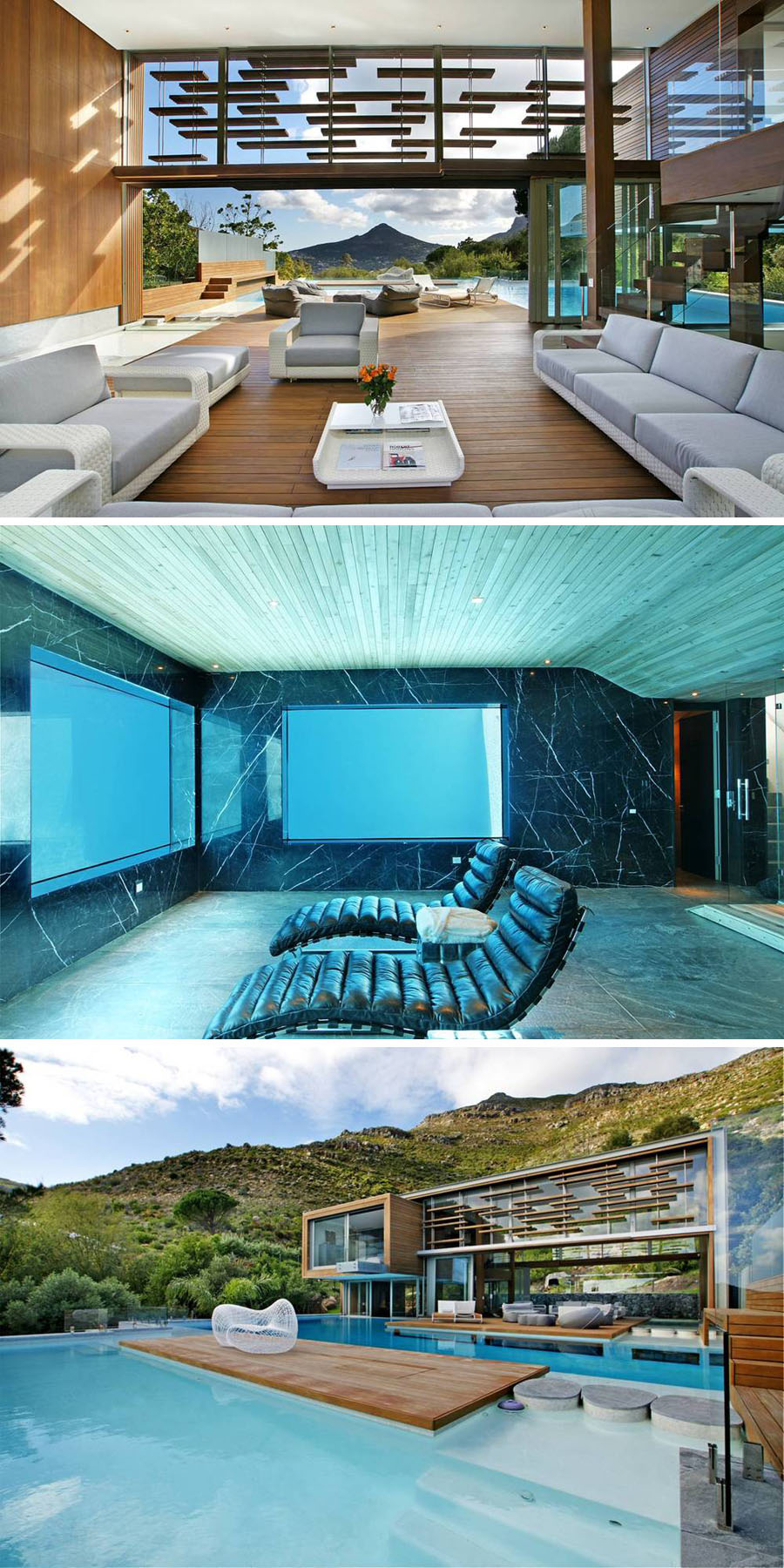
Guest house and entertainment center, spa, pool, contemporary architecture, Cape TownGuest house and entertainment center, spa, pool, contemporary architecture, Cape TownGuest house and entertainment center, cool underwater room, contemporary architectureClick to enlarge

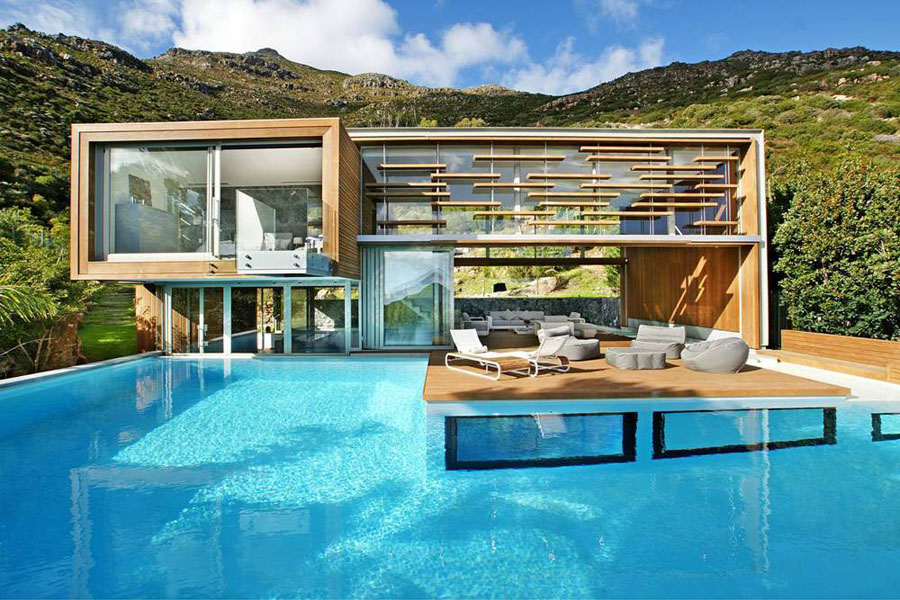
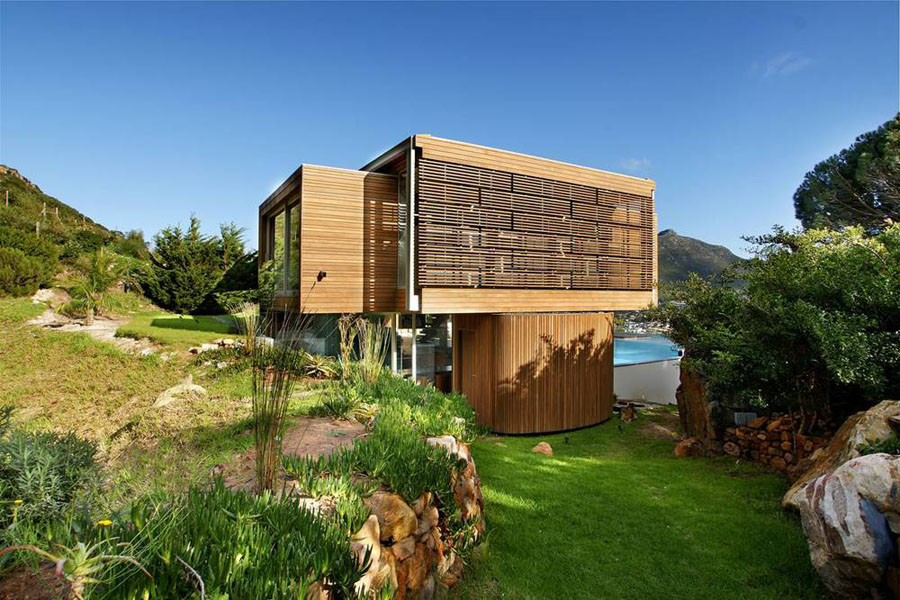
The Spa House designed by Metropolis Design in Cape Town, South Africa, is set on the mountainside on the urban edge of Hout Bay overlooking the bay and harbour, and integrated with the beautiful landscape that surrounds it.

The house functions as the guest house and entertainment facility of a larger house – separated by a hill but connected by footpaths – incorporating swimming pools, spa, and guest accommodations. Let the record show that I, for one, would not mind being a guest. I especially like the room with the underwater views, though I’m sure I would spend much more time on the sunny deck.
The house is quite dramatic, with its separate sculptural forms dynamically combined into one superstructure made of steel construction and clad in afromosia shiplap boards on timber studwork.

via world skyscaper

David Mach: Matchheads

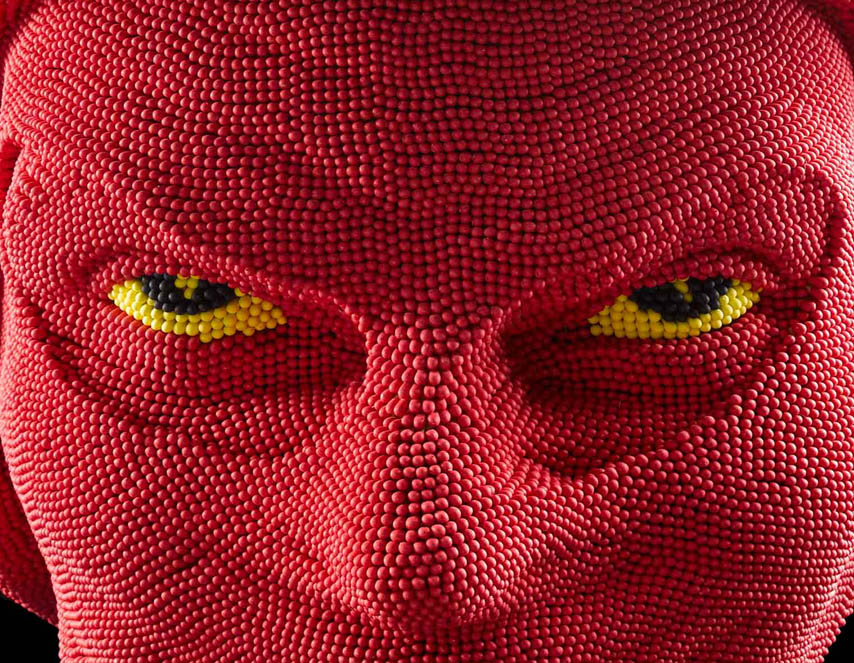
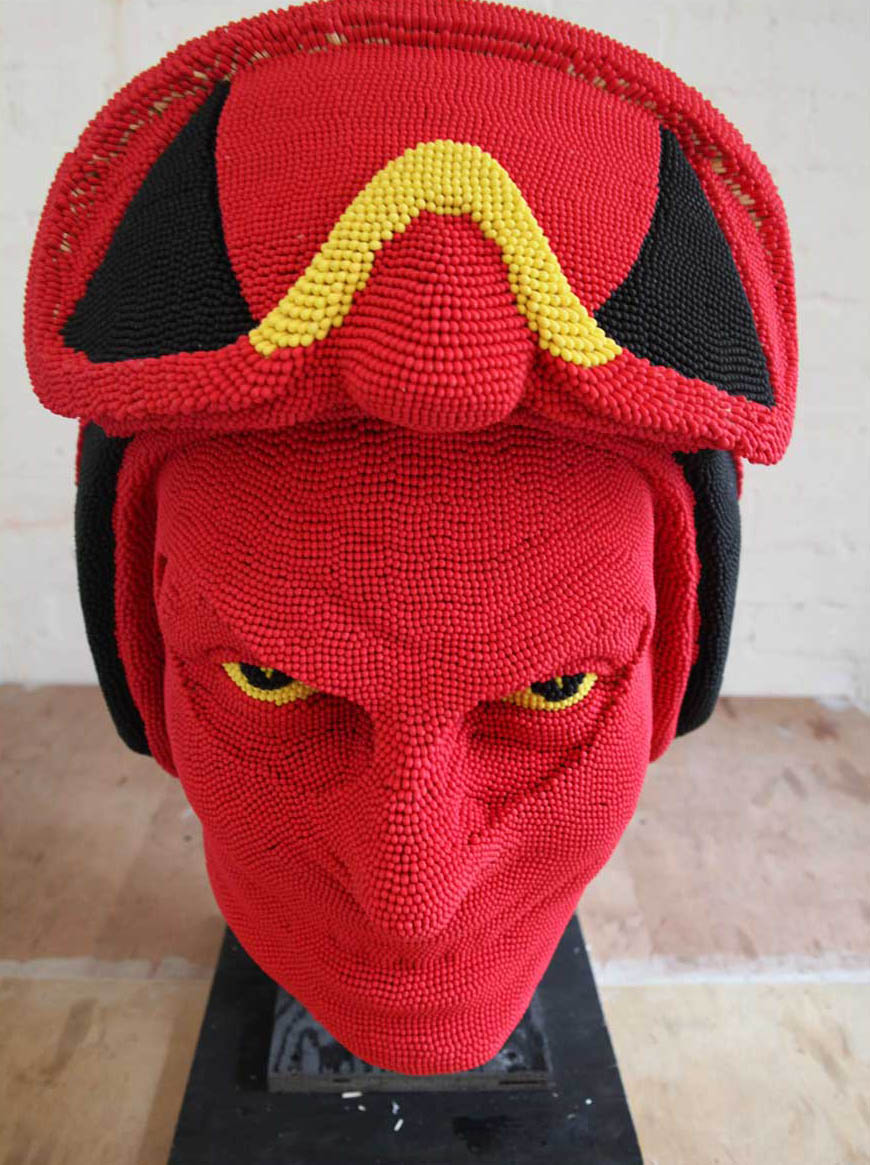
sculptures made of matches, sculptures that are lit and burned, heads made up of matchessculptures made of matches, sculptures that are lit and burned, heads made up of matchessculptures made of matches, sculptures that are lit and burned, heads made up of matchesClick to enlarge

Yes, I just finished posting about David Mach’s coat hanger sculptures, but this artist has so many incredible works that it merits two consecutive posts, and still there is so much more to see! In his Matchheads, Mach uses thousands of live matches to create heads of famous people, not-so-famous people, busts in the style of Roman sculptures, Asian and African style masks, Picassoesque and Warholian influenced heads as well as many animal heads. Some are monochromatic and others use multiple colors. And if these aren’t  impressive enough in their non-lit form, David Mach also lights them on fire resulting in a charred blackish-gray hue.

Photos from the artists’s site, piglicker’s flickr, Opera Gallery, and Galerie Jerome de Noirmont.

There is so much of David Mach’s work worth checking out. You can see his postcard collages here, his amazing brick train sculpture here, and even more installations here. Oh, and there’s a dominatrix made of dominoes here!

David Mach: Coat Hanger Sculptures

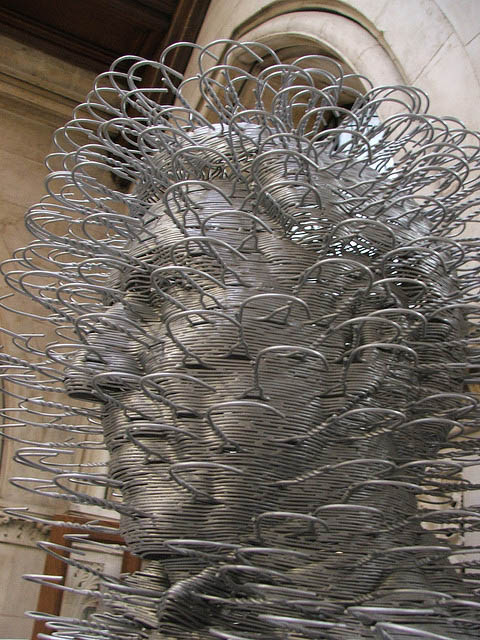
cool sculptures made of wire coat hangers, David Mach, Scottish artistcool sculptures made of wire coat hangers, David Mach, Scottish artistcool sculptures made of wire coat hangers, David Mach, Scottish artistClick to enlarge

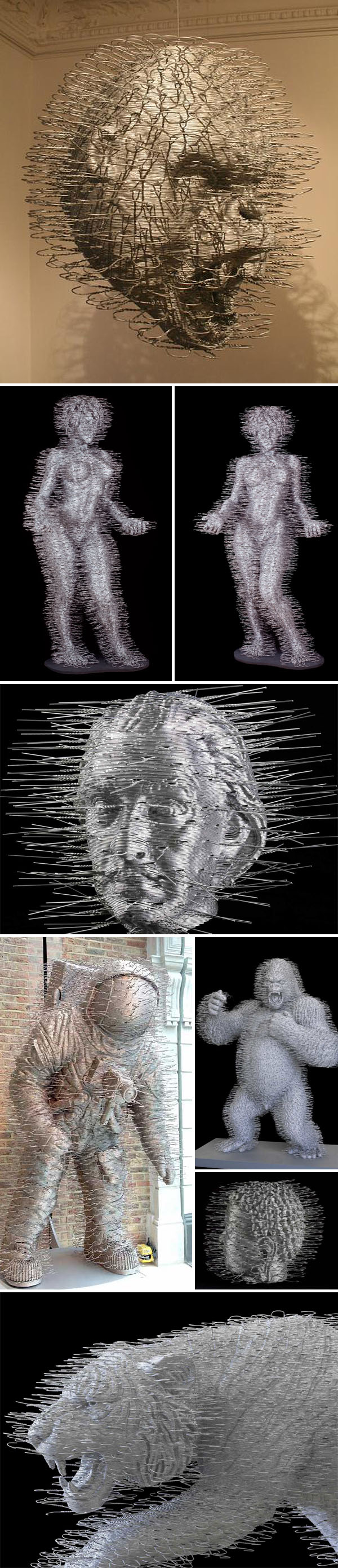
Scottish sculptor David Mach is a master at creating assemblages of mass-produced objects such as magazines, bricks, books, dominoes, matches, and, as illustrated in this post, wire coat hangers. Though new to me, Mach has received major honors and recognition for his work since the 80s including a nomination for the Turner Prize in 1988 as well as being a Fellow of the Royal Academy of the Arts.

His coat hanger sculptures range from busts to large scale animals. The detail on these pieces is incredible. I wish I knew what the process was like.

Photos from the artist’s site, Malcolm Edward’s flickr, Galerie Jerome de Noirmont, and Aaron Sweeney.

via flickrhivemind

Sculptural Poems by Ragnhildur Johanns

Book art, text, collage, contemporary sculpture, Iceland, Reykyavik, Weird Girls projectBook art, text, collage, contemporary sculpture, Iceland, Reykyavik, Weird Girls projectBook art, text, collage, contemporary sculpture, Iceland, Reykyavik, Weird Girls projectIt’s interesting to note the rise of book- and text-related art taking place during the unfortunate decline of book printing and publishing. As one who has designed many a book, I am very aware of this phenomenon. For the most part, these works seem to be paying homage to books, literature, text, typography, and bookbinding. A repurposing of the objects while highlighting their beauty.

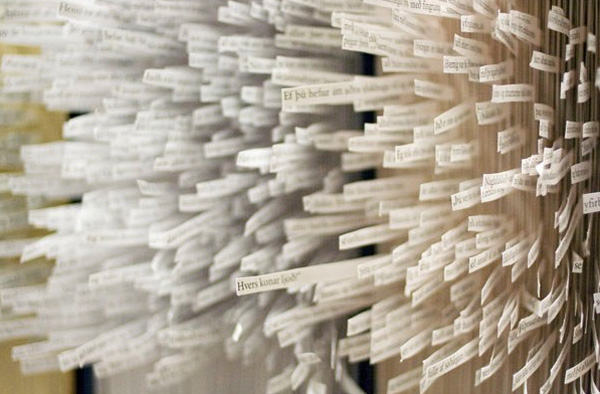
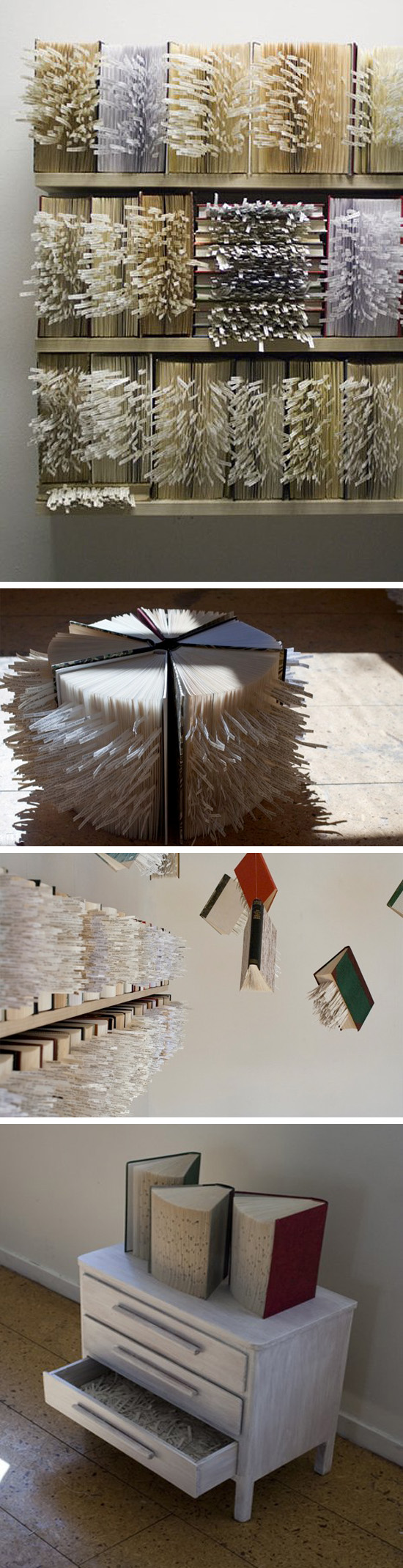
Icelandic artist Ragnhildur Jóhanns is one of these artist. Based in Reykyavik, this young visual and performance artist works books and poetry into most of her work. From text collages to sculptural pieces and performance works that include readings, Jóhanns takes the already beautiful books and makes interesting and beautiful artworks by painstakingly cutting strips of text and extending them past the book pages, or conversely, creating gaps and indents in the pages with the cutouts. The names of two of these series of works are Sculptural Poems and Visual Poetry.

AND if these artworks aren’t quirky enough for you, she’s also one of the Weird Girls from The Weird Girls Project!

AIIM P&D Building: SKM-S2F Architects

Timber design, Australia, Innovation Campus, SKM-S2F Architects, University WollongongTimber design, Australia, Innovation Campus, SKM-S2F Architects, University WollongongTimber design, Australia, Innovation Campus, SKM-S2F Architects, University WollongongClick to enlarge

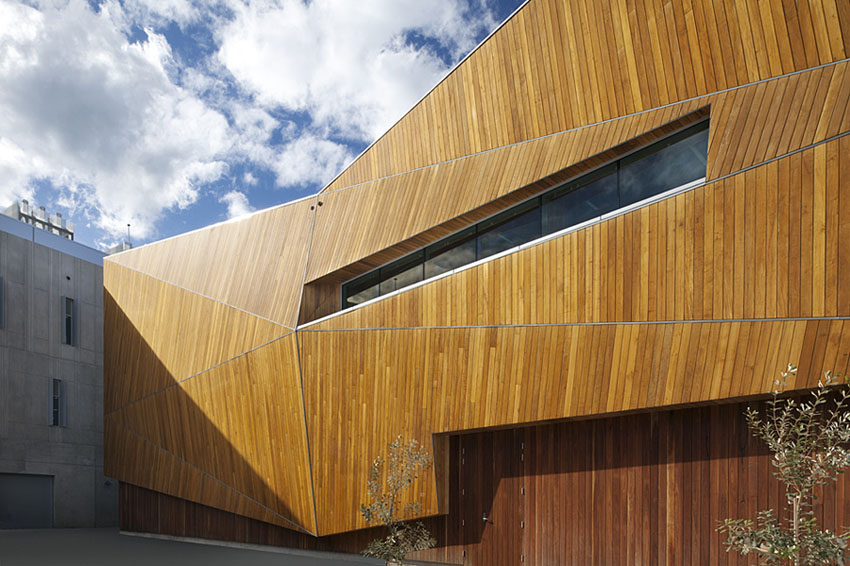
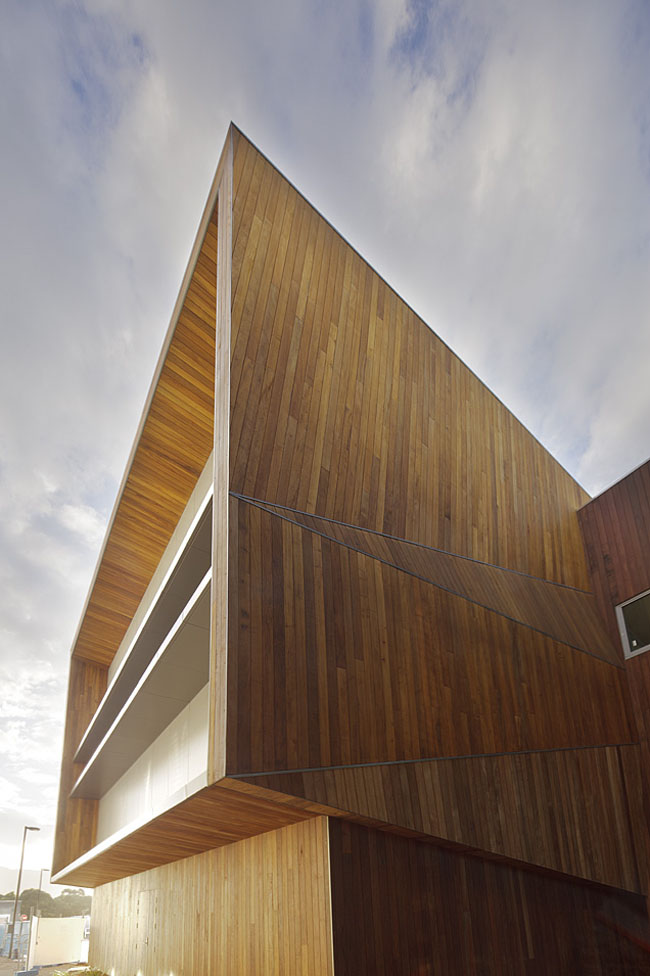
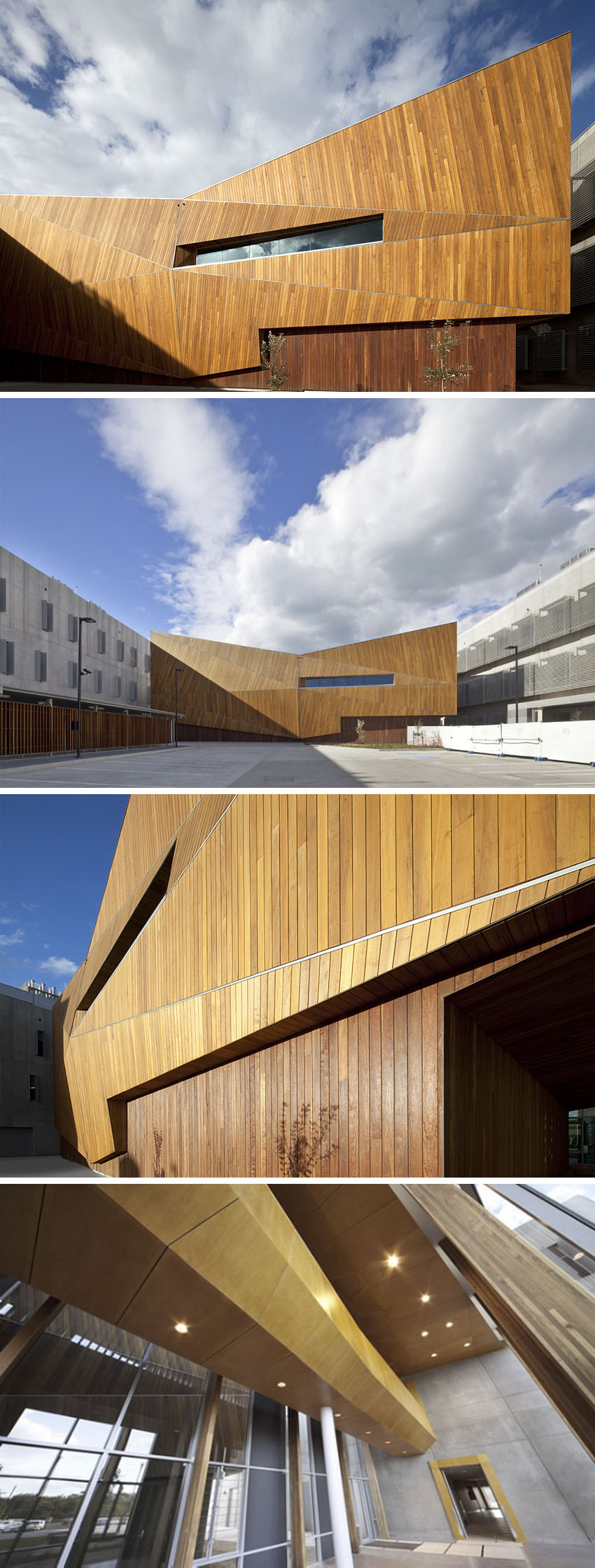
The beautiful timber design of the University of Wollongong Australian Institute for Innovative Materials (AIIM) Processing and Devices (P&D) Building (now you understand the need for initials) is the work of SKM-S2F Architects with construction by Baulderstone. Located in North Wollongong, Australia (between Sydney and Canberra), the AIIM building links two state-of-the-art research buildings and houses the University’s Electron Microscopy Center. In addition to being aesthetically pleasing the timber design is also functional in that the electron microscopes that it houses are very sensitive to their operating environment. In order to avoid electromagnetic interference, the structural elements had to be non-ferrous, being the reason that a timber structure was chosen for the design. And what a great design it is!

Pacific Teak wood was used on the top half of the building while Spotted Gum was used on the bottom. The intention is for the building to weather and grey by Summer 2012.

Photos: John Gollings

via woodform architectural

Sang Sik Hong: Straw Sculptures

Amazing sculptures made of drinking straws, Korean art, contemporary art, lips, scope miamiAmazing sculptures made of drinking straws, Korean art, contemporary art, face, scope miamiAmazing sculptures made of straws, Korean art, contemporary art, scope miami

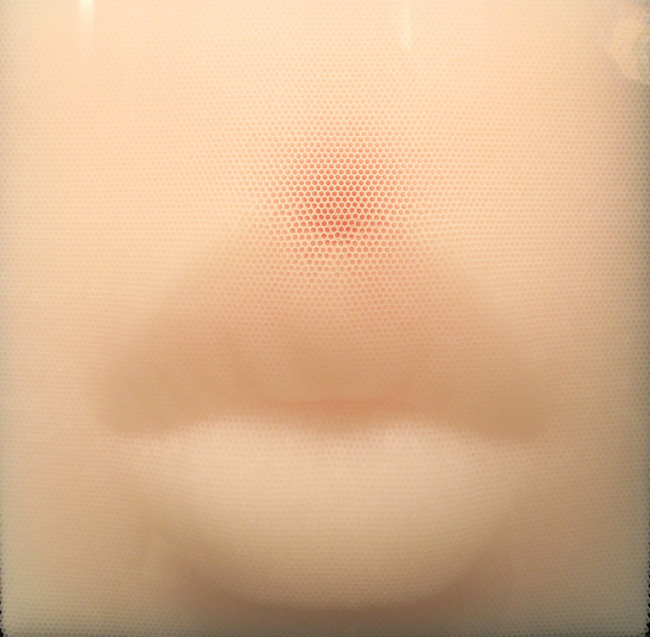
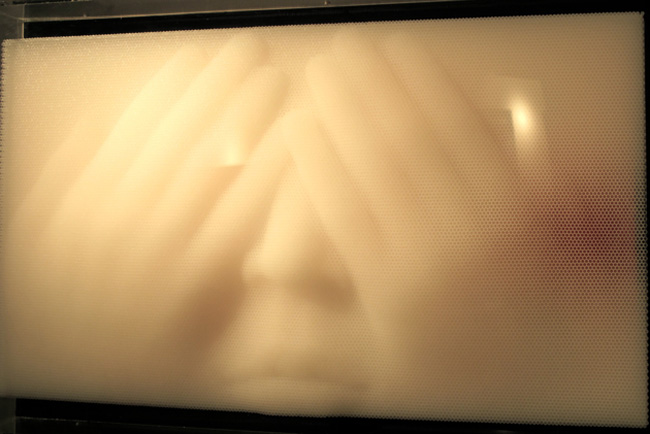
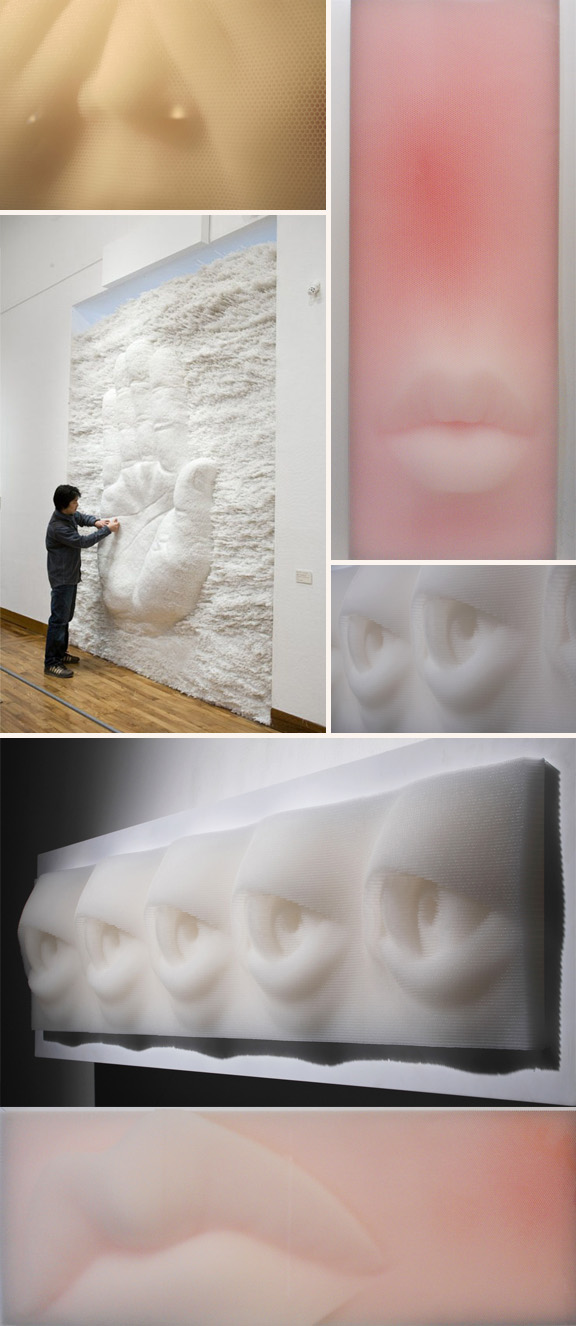
Korean artist Sang Sik Hong works magic with drinking straws. His large-scale sculptures, made up of thousands of straws, focus on human desires, namely: power and sex. He likes the irony in using straws, a weak structure and disposable item by itself, to create the contrasting strength of power and desire.

Photos courtesy Patrajdas Gallery; Amaretto Girl; and ArtChicago’s flickr.

via Zanthi

Claire Fontaine: Matchstick Art

matchstick art, burned, Consumption commentary, French contemporary art, collabcubedmatchstick art, burned, Consumption commentary, French contemporary art, collabcubedmatchstick art, burned, Consumption commentary, French contemporary art, collabcubedClaire Fontaine is a Paris-based collective artist who lifted her name from a popular school notebook brand. Her work often looks like other people’s work and she defines it as ‘readymade art’. Working in several mediums including neon, video, sculpture and painting as well as text, Fontaine’s works comment on the “political impotence and the crisis of singularity that seem to define contemporary art today.”

In the two recent works above, Fontaine used matchsticks both new and burnt on the word Consumption and on the Map of France: Burnt or Unburnt.

Images courtesy Helena Papadopoulos Gallery and Air de Paris.

via arte al dia

Augusto Esquivel: Button Sculptures

buttons, sculptures, Art Basel Miami, Augusto Esquivel, piano, contemporary art, coolbuttons, sculptures, Art Basel Miami, Augusto Esquivel, piano, fire hydrant, contemporary art, coolbuttons, sculptures, Art Basel Miami, Augusto Esquivel, toilet sculpture, contemporary art, coolClick to enlarge

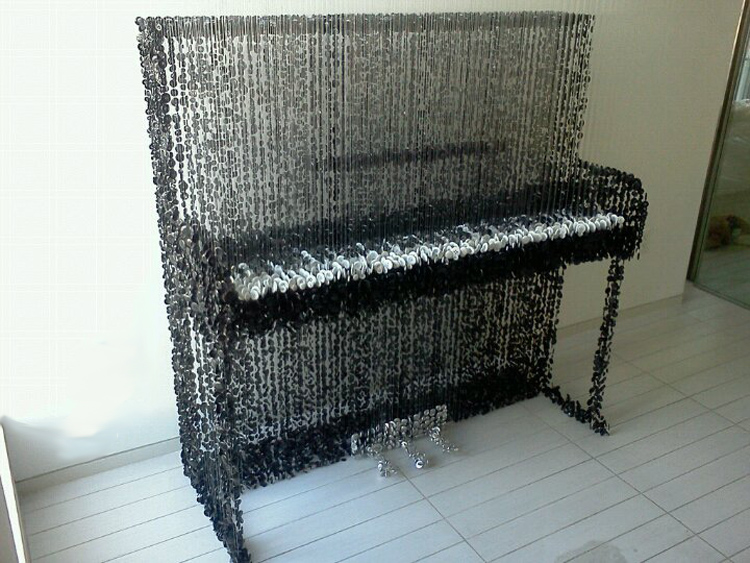
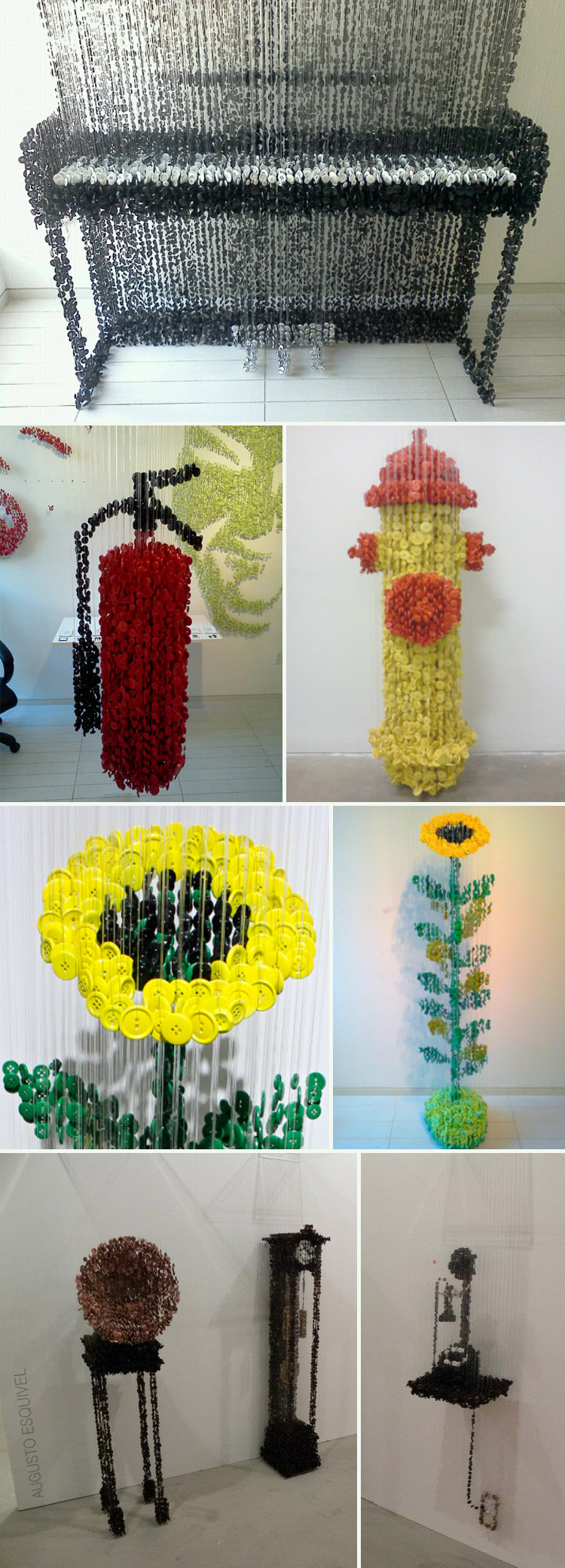
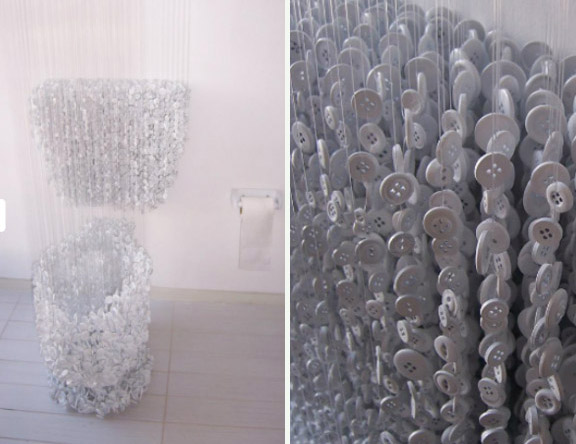
Miami-based artist Augusto Esquivel is apparently quite a showstopper at Art Basel Miami this year, and it’s no wonder. His impressive sculptures made by  hanging sewing buttons from, what looks like, fishing line to create a piano, harp, gramophone, toilet and more, definitely seem difficult to go unnoticed.

From the artist’s statement:
I realize how insignificant and small a simple sewing button can be as it lays in my grandmother’s sewing box, but at the same time how unique and precious it can become as part of a work of art. Like an atom in a molecule, each button serves and shapes the whole. I hold the button to my ear and it whispers to me, “I want to be…..”

via coolhunting

Love Motel for Insects: NYC

Science, entomology, light installation, art, bugs, insects, teaching, ballengee, collabcubedScience, entomology, light installation, art, bugs, insects, teaching, ballengee, collabcubedClick to enlarge

Both an art installation and a life science project, Love Motel for Insects is an innovative interactive outdoor educational event created by Brandon Ballengée. Since 2001 Ballengée has been exhibiting his Love Motels worldwide including India, Ireland, and Italy, and now, along with Urban Art Projects, he’s hoping to bring Love Motel for Insects to New York City.

Using ultra-violet lights on large black canvases these installations attract insects and create an opportunity for viewers to interact with rarely seen nocturnal arthropods. This event, combined with ancillary educational programming referred to as Bug Love, hopes to inform the general NYC public about important environmental issues as well as inspiring kids and getting them excited about science, art, and the environment.

If this sounds like something you’d like to see or be a part of, head on over to their kickstarter page and watch the video, heck, maybe even make a donation. They have four days to go to reach their goal and are so close to it!

via luminapolis

Pietro D’Angelo: Paperclip Sculptures

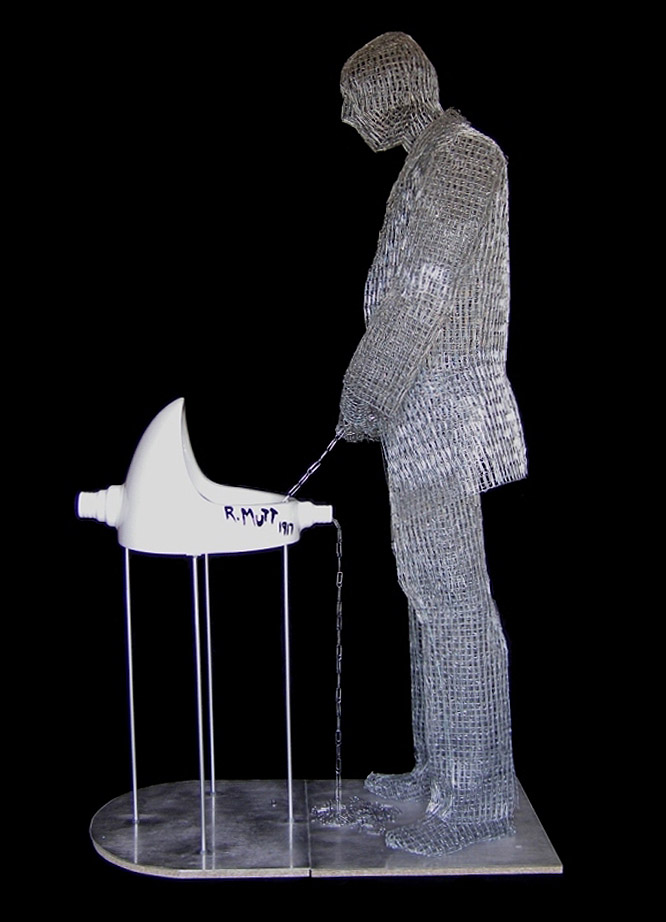
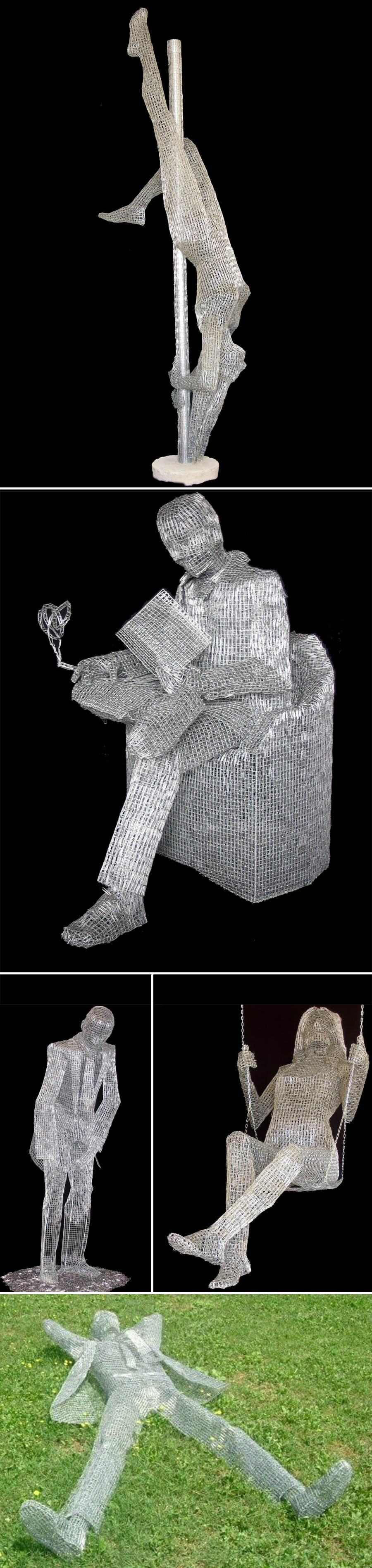
Wire sculpture, paperclip sculpture, urinal, suited man, Italian artWire sculpture, paperclip sculpture, woman, Italian artWire sculpture, paperclip sculpture, pole dancer, suited man, swing, Italian artWire sculpture, paperclip sculpture, trumpet, pietro d'angelo, Italian artistClick photos to enlarge

Originally from Palermo, Italy, and later studying in Bologna, artist Pietro D’Angelo started his career as a sculptor working in marble and stone. Clearly, a radical change in materials has taken place in more recent years. His life-size sculptures, from what I could gather, are made by creating a wire frame and attaching large quantities of paperclips. They are not only very cool, but full of humor and character as well.

You can see more of D’Angelo’s work here, here, and here.

via ermanno tedeschi gallery

Matthew Picton: Map Sculptures

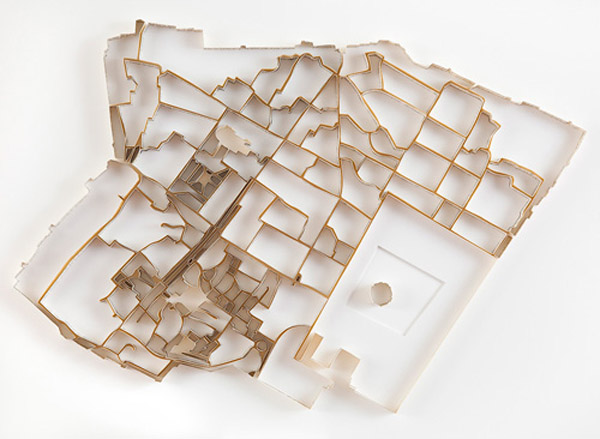
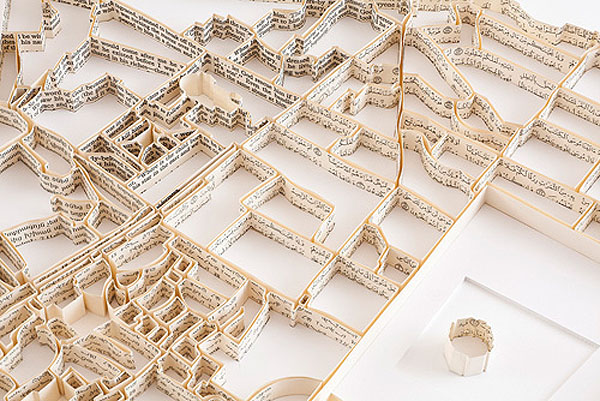
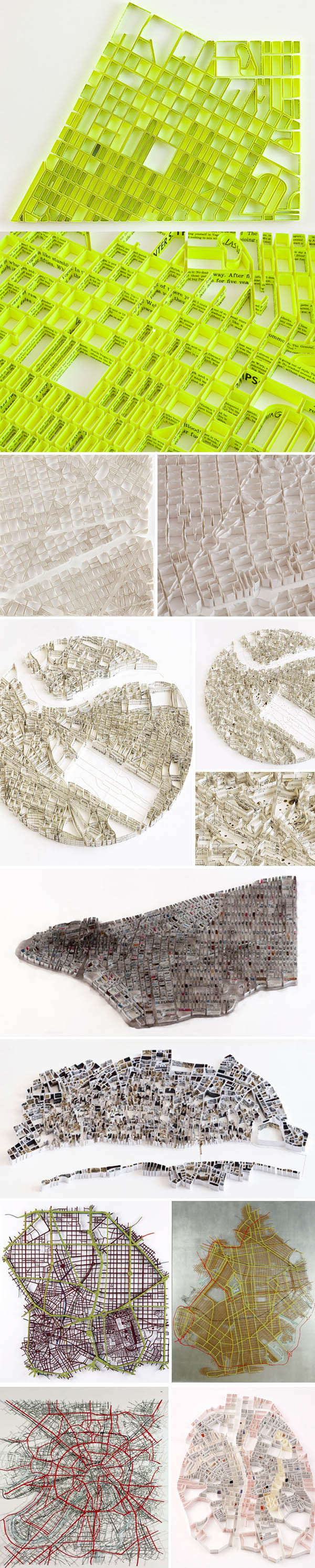
Map sculptures, maps made from text pages, contemporary artMaps, Map sculpture, maps made from folded book pagesMaps, Map sculpture, maps made from folded book pagesClick for slight enlargement

From collages made with maps, to maps made with paper, some of them anyway. British artist Matthew Picton, who presently lives and works in Oregon, creates map sculptures. His most recent works are made of paper; not just any paper, but texts or sheet music that is significant to each city in some way.  A few examples include: Jerusalem created from The New Testament, The Torah, The Armenian Bible and The Koran; Las Vegas in 1972 created from texts from Hunter S Thompson’s “Fear and Loathing in Las Vegas” (and luminescent paint); Dresden in 1945 using sheet music of the score of “The Ring” by Wagner; and Lower Manhattan created from headlines that accompanied the 2001 World Trade center bombing and DVD covers of the film “Towering Inferno” also book covers of the novel “The Plot Against America” by Philip Roth, just to name a few.

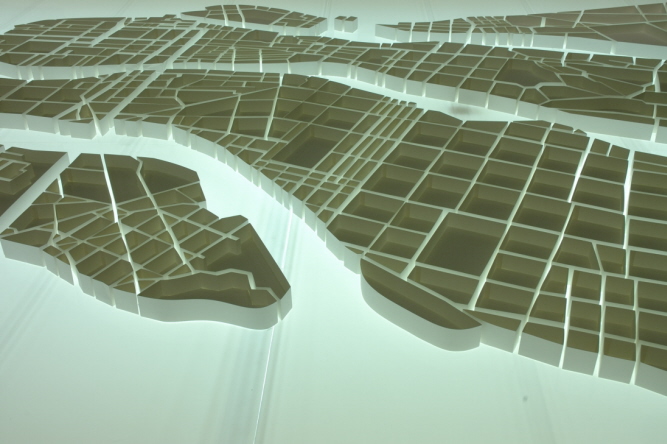
Picton’s earlier city map sculptures are mostly made from duralar, enamel paint, and pins with several layers depicting streets and roads at the micro level in addition to the city’s evolution over time. Each layer showing a layer of history in the city’s transformation. Beautiful on “multiple levels”: cartographically, artistically, and textually.

You can see more of Matthew Picton’s maps here.

via Summaria Lunn Gallery

Pharmacophore: Architectural Placebo

modern dance, inflatable sculpture, storefront for art and architecture, HAt, Silas Reinermodern dance, inflatable sculpture, storefront for art and architecture, HAt, Silas Reinermodern dance, inflatable sculpture, storefront for art and architecture, HAt, Silas ReinerClick to enlarge

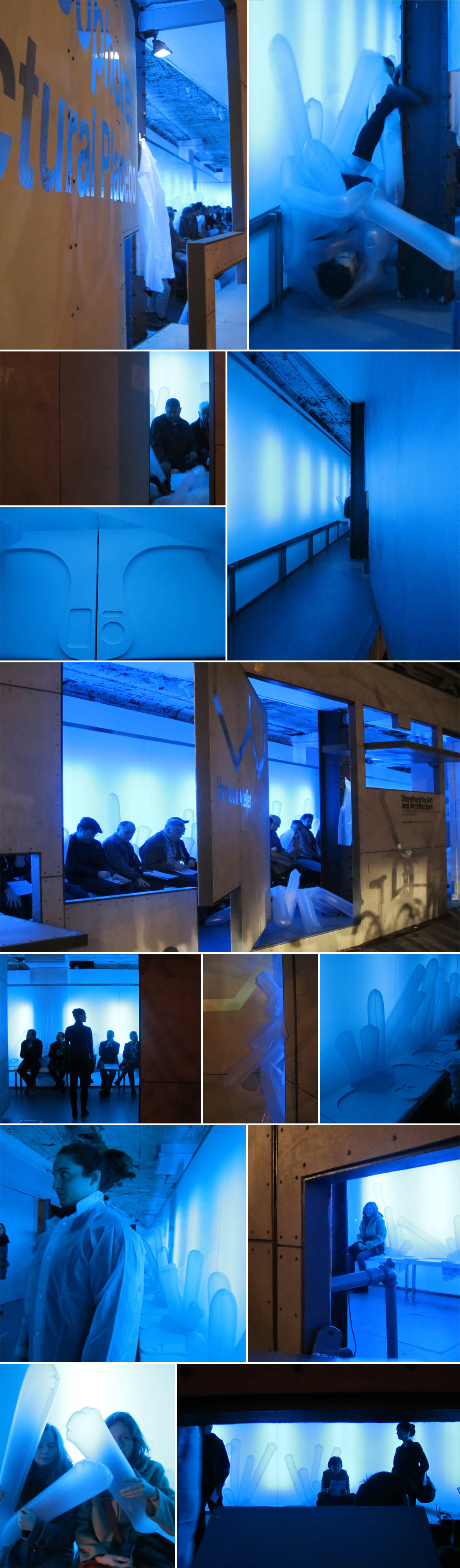
Last night, the three of us strolled over to the Storefront for Art and Architecture here on Kenmare Street in NYC, to catch the last 20 minutes of the sold-out dance performance Pharmacophore: Architectural Placebo from the street. Storefront’s fun cut-out façade, which opens the small sliver of a space to the sidewalk, allowed us to enjoy the rather unique dance performance. A collaboration between designers Seth Harrison and Ariane Lourie Harrison of Harrison Atelier (HAt) and choreographer Silas Riener. The third installment in HAt’s Pharmacophore series, the performance, along with the installation, explore the cultural and philosophical economy that surrounds medicine technology and the human prospect in the 21st century.

From the creators:
The installation at Storefront, incorporating set and costumes, evokes a hybrid pharmaceutical-cultural landscape: both a medical waiting room with inflatable “plants” and a radiological suite in which the audience sits apposed to translucent glass. The installation consists of 24 eight-foot, laminated glass and stainless steel structures, arrayed along the back wall of the gallery. Contoured seats are dotted with inflatable forms that, when unfurled, become spatializations of pharmacophores. The inflatable set pieces are used as costumes and props, and audience members use them as cushions.

Truthfully, we did not see enough of the dance performance to justify an opinion, but what we did see, we liked. The Merce Cunningham dancers pranced, tumbled and gracefully walked with their fun inflatable tubular costumes that match the props and seat cushions in the beautifully glowing blue setting. We loved everything about the installation: the appropriately sterile pharmaceutical feeling evoked by the lighting and plastic inflatables; the clear Muji raincoats that acted as lab coats and were worn by staff; the seats with their mod-waiting-room feel; but most of all, the way it all worked so well together and successfully integrated with the space. And if that wasn’t enough, Baryshnikov was in the small audience!

Pharmacophore: Architectural Placebo will be performed twice a night through this Wednesday, November 30th. Tickets are free, but reservations necessary. And then there’s always the street view, too, if you want to use the stroll-by approach. The installation, sans performance, will continue on view through December 3rd.

For those who can’t attend, below is a short video of the previous performances in the Pharmacophore series:

Architects of Air: Luminaria

Mirazozo, Miracoco, Light installation, inflatable structuresMirazozo, Miracoco, Light installation, inflatable structuresLuminaria, Light installation, inflatable structuresClick to enlarge

The British company Architects of Air is based in Nottingham UK in a 4000 sq ft former textile workshop. There, since 1992, they spend 6 months out of the year creating luminariums and the other 6 months touring to several countries exhibiting them. “What is a luminarium?” you may be asking yourself right about now. Luminaria are monumental inflatable structures that contain a maze of winding tunnels and soaring domes displaying the beauty of light and color. There are six different designs each made up of about 20 elements zipped together on site to occupy a 1000 sq. meter area. The most recent design is Miracoco which was launched this past summer, 2011, but there were 4 other models that toured this summer as well.

They all look spectacular to me. Architects of Air have mounted these  structures at 500 exhibits in 37 countries. Though I see on their timeline that they’ve had installations in New York in the 1990s, being that I missed those I vote for a summer 2012 NYC installation. Or maybe as part of next year’s Bring to Light Festival.

You can see many more photos on their site and on flickr.

The Twist Bridge: West 8 Architects

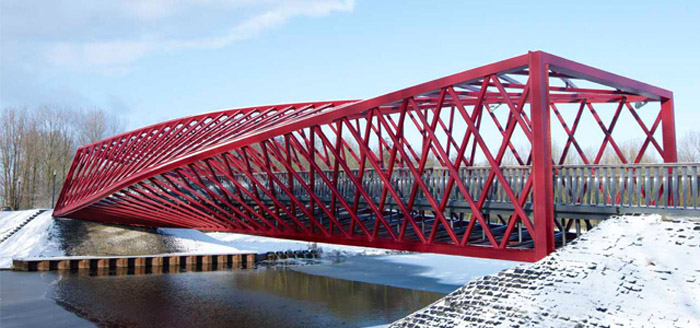
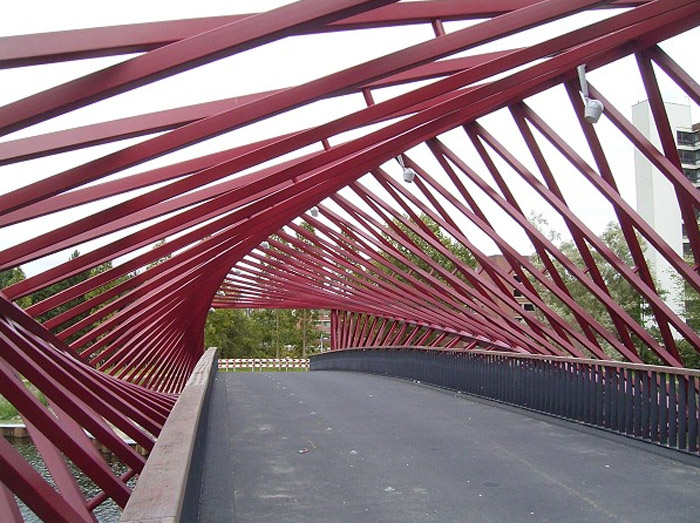
De Twist Brug, Vlaardingse Vaart, Netherlands, 8 West Architects, ABTDe Twist Brug, Vlaardingse Vaart, Netherlands, 8 West Architects, ABTDe Twist Brug, Vlaardingse Vaart, Netherlands, 8 West Architects, ABTSpanning roughly 42 meters, this bicycle and pedestrian bridge called ‘The Twist’ bridge for its contorted and sculptural lines, connects the Holy-Zuid district and the Broekpolder over Vlaardingse Vaart in The Netherlands. Designed by West 8 Architects with structural engineers ABT, the bright red bridge makes for a lovely and striking surprise in the natural green setting.

And if you like this bridge you might also enjoy West 8’s three previous red undulating Bridges Borneo-Sporenburg.

Photos © Jeroen Musch

Kees Goudzwaard: Amazing Tape Paintings

amazing oil paintings of taped collages, trompe d'oeui, Kees Goudzwaardamazing oil paintings of taped collages, trompe d'oeui, Kees GoudzwaardClick to enlarge

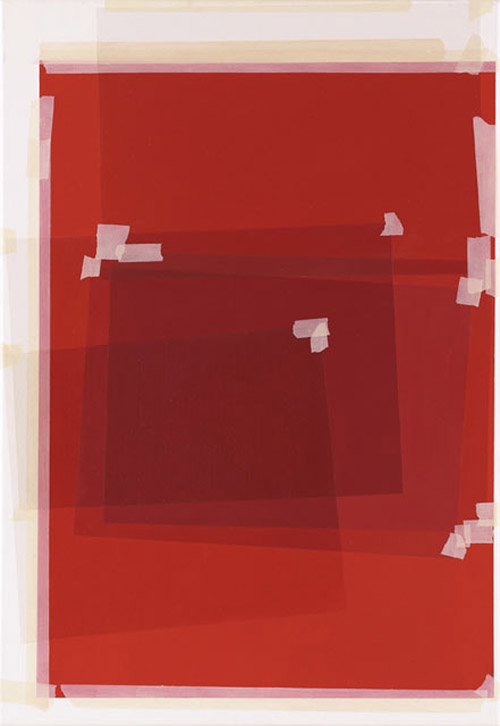
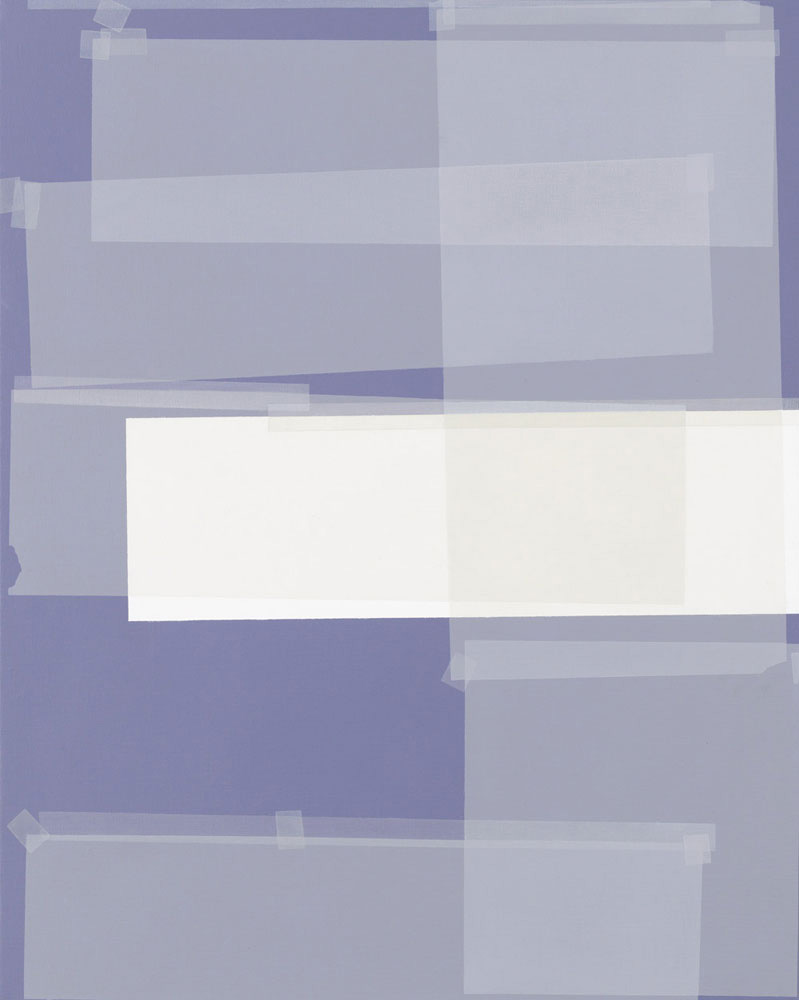
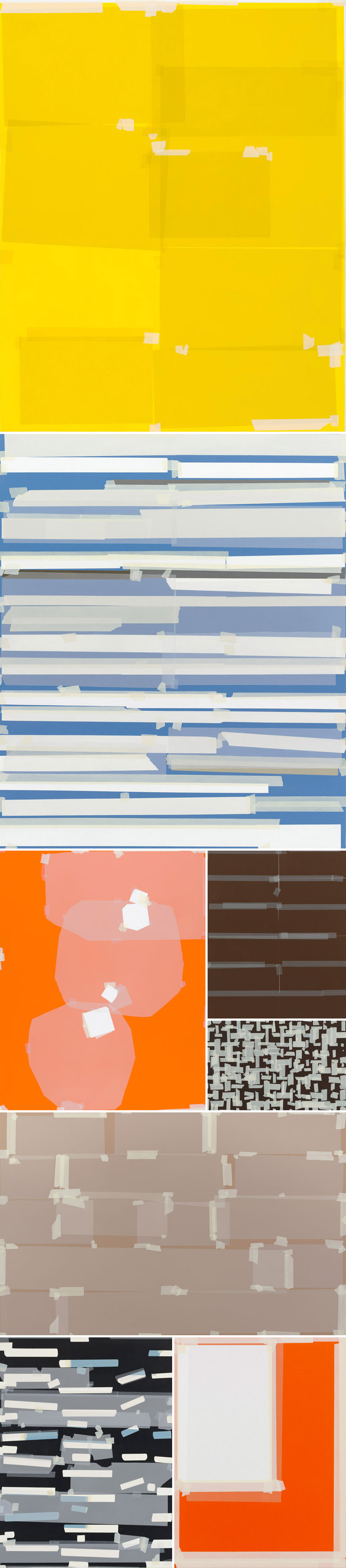
I saw a couple of Kees Goudzwaard’s paintings a few years ago and absolutely loved them. The Dutch artist who lives and works in Belgium, creates oil paintings that look like taped pieces of paper, but in fact are smooth surfaced paintings of taped pieces of paper. Not only is the trickery of it all fun, but the paintings themselves are beautiful. The seemingly overlapping layers are so skillfully reproduced – with subtle differences in color recreating the translucency of the layers – that you can’t help but stare in disbelief. The result: a lovely (and surprising) combination of abstract and realistic painting with a textural quality conveyed on a smooth canvas. Here’s a bit on his process:

Kees Goudzwaard commences by creating a collage of cut-out square and rectangular pieces of coloured paper, acetate and transparent foil, which he composes in more or less regular grids by fixing them with paper masking-tape. This process is slow and complex, and develops gradually as it implies numerous decisions and a lot of looking and waiting until the artist finds he has achieved the desired composition and atmosphere. At this point Kees Goudzwaard decides he can paint his original collage, meticulously reproducing it on canvas at a scale of 1:1, thus transforming the creative act of painting into a time-consuming work of transposition.

In case you didn’t notice, I’m a fan.

You can see many more of Kees Goudzwaard’s paintings on his website.

Zero Collection by DoroDesign

contemporary italian furniture design, zero collection, chair, collabcubedcontemporary italian furniture design, zero collection, chair, collabcubedcontemporary italian furniture design, zero collection, chair, coat rackClick to enlarge

DoroDesign, an Italian design firm founded by Dario Olivero and Stefano Ollino, aims to work with creative minds from a variety of cultures and backgrounds and make their visions reality in all design mediums from graphic to interior. Their Zero Collection represents the essence of the firm:

Zero Collection is the essence of the DORODESIGN lifestyle. Designed entirely around the Aluminum linear and clean material able to transform into tangible shapes the soul of the studio.Precise cuts, lines that suddenly find themselves`s soft, simple but full of vital energy, the Collection reflects the fusion between the sophisticated and urban, luxury and metropolitan.

With just three cuts and two folds on a sheet of aluminum, the Zero Chair is a beautiful example of simple and minimalist design. The chaise longue and coat rack follow the same cut-out simplicity with beautiful lines. The product photos aren’t too shabby, either.

via behance