Youth Factory: Selgas Cano Architects

Mérida, Youth Center, skateboarding, rock climbing, Spain, contemporary architectureMérida, Youth Center, skateboarding, rock climbing, Spain, contemporary architectureMérida, Youth Center, skateboarding, rock climbing, Spain, contemporary architectureMérida, Youth Center, skateboarding, rock climbing, Spain, contemporary architectureClick to enlarge

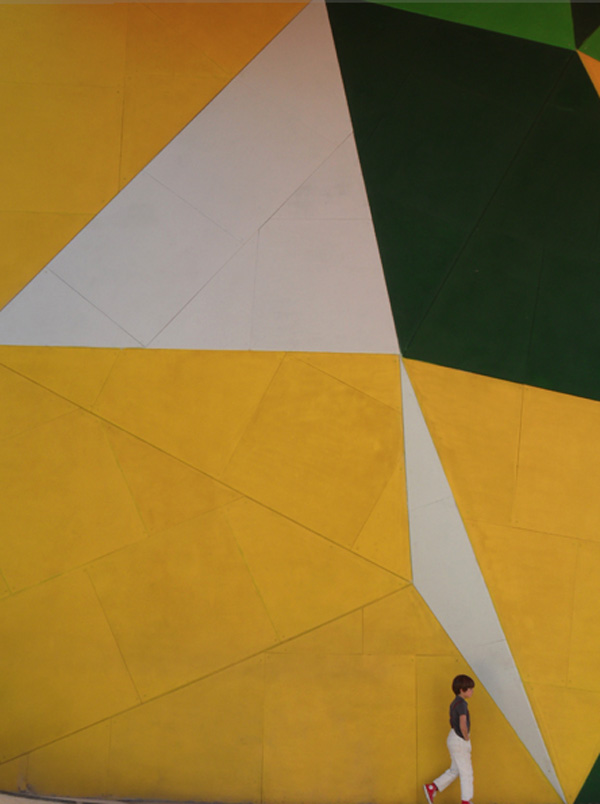
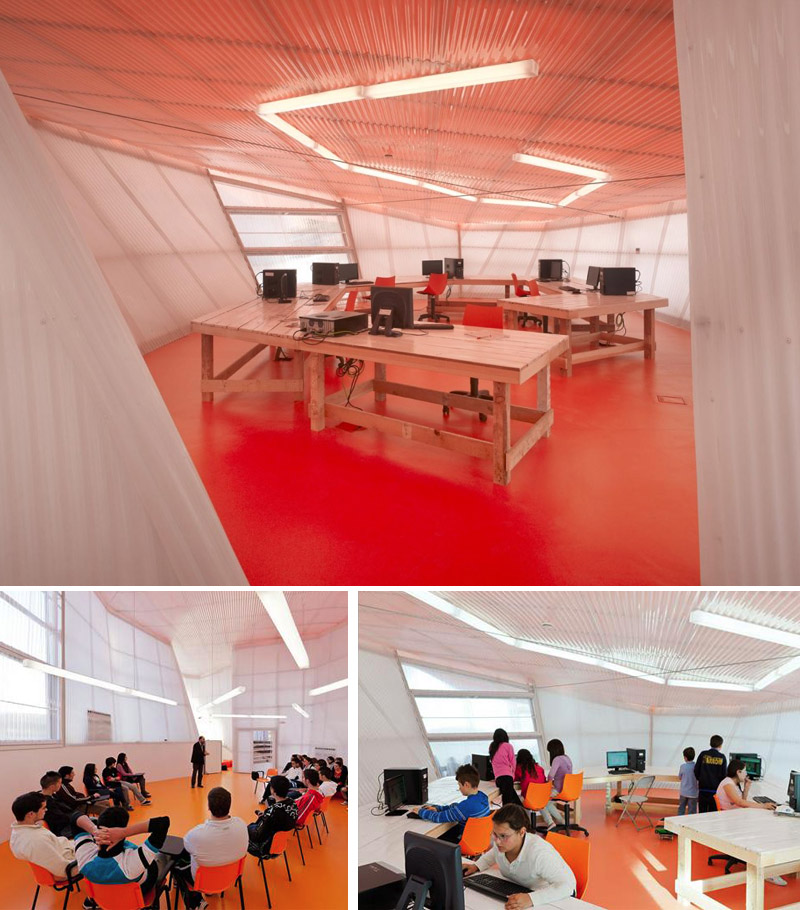
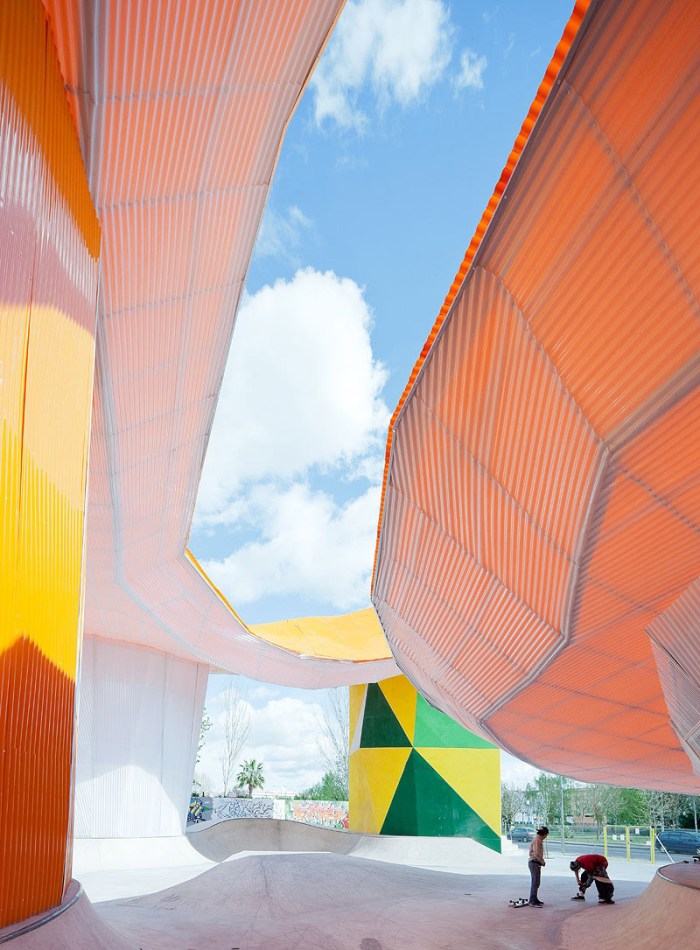
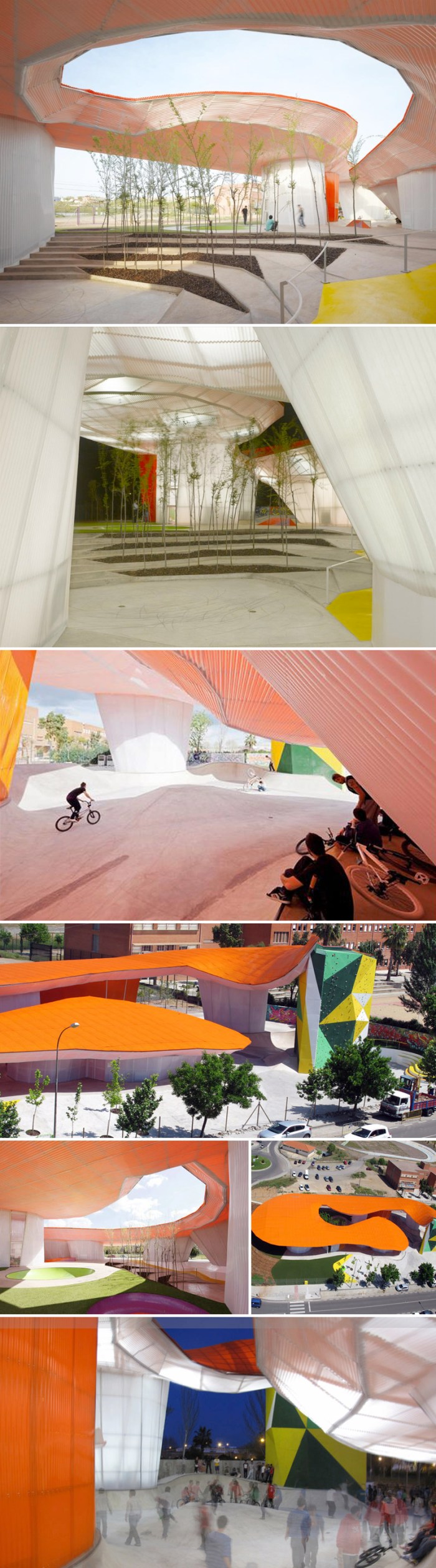
SelgasCano Architects’ design for the new Youth Factory (Factoría Joven) in Mérida, Spain is all about welcoming and protecting. The colorful youth center is very open with its, possibly, most notable feature being a huge orange, organically shaped canopy that protects from rain and the strong hot rays of the sun, typical of Mérida. The architects refer to this prominent aspect as a plastic ‘cloud’.

With a curvaceous skate park that can be used for skateboarding, rollerblading, or cycling, a large climbing wall, an open amphitheater encouraging shows, as well as music and dancing, what teenager would stay away? The open and inviting structure, meant to welcome all, is supported by the oval pods that house the activity rooms as well as the offices.

I’d say the whole edifice screams fun.

via the archhive and architectural review

Jonathan Brilliant: “Have Sticks Will Travel”

cool art installations, coffee stir sticks, coffee sleeves, coffee covers, amorphic, collabcubedcool art installations, coffee stir sticks, coffee sleeves, coffee covers, amorphic, collabcubedClick to enlarge

I have, coincidentally, come across several artists working with coffee-related objects in the past two weeks. First Christian Ducharme’s cool lamps, then Matthew Parker’s coffee filter window installation, and now Jonathan Brilliant’s incredible coffee stir sticks installations. Totally living up to his name, Brilliant creates enormous, and amorphous,  site-specific installations using thousands of coffee stir sticks woven in place and held together only by tension! This series of installations is collectively known as Have Sticks Will Travel. Brilliant likes to activate the gallery space as part of the work, usually creating the work onsite hoping to dissolve the boundary between the space where the art is created and displayed.

In addition to using the coffee stir sticks, Jonathan Brilliant utilizes the coffee cup sleeves to create the tube formations, as well as the coffee cup covers for yet other, wall-mounted, works.

Living and working in Columbia, South Carolina Brilliant started working with these materials in 2006 with his Goldsworthy of the Coffee Shop Project, taking his cue from the British artist Andy Goldsworthy who gathers materials from his natural environment and uses them in his site-specific installations. Brilliant’s natural environment? The coffee shop, of course, with the take-out coffee cup and all its accessories!

For the Have Sticks Will Travel World Tour, Jonathan created multiple installations, entirely in situ, during the course of 8 to 10 days at each location. You can watch the video below for a sample installation.

You can see more of Brilliant’s amazing work on his website.

Mark Wagner: Currency Collages

art, collage, currency, dollar bill, art and economy, paper art, moneyart, collage, currency, dollar bill, art and economy, paper art, moneyart, collage, currency, dollar bill, art and economy, paper art, moneyClick to enlarge for detail

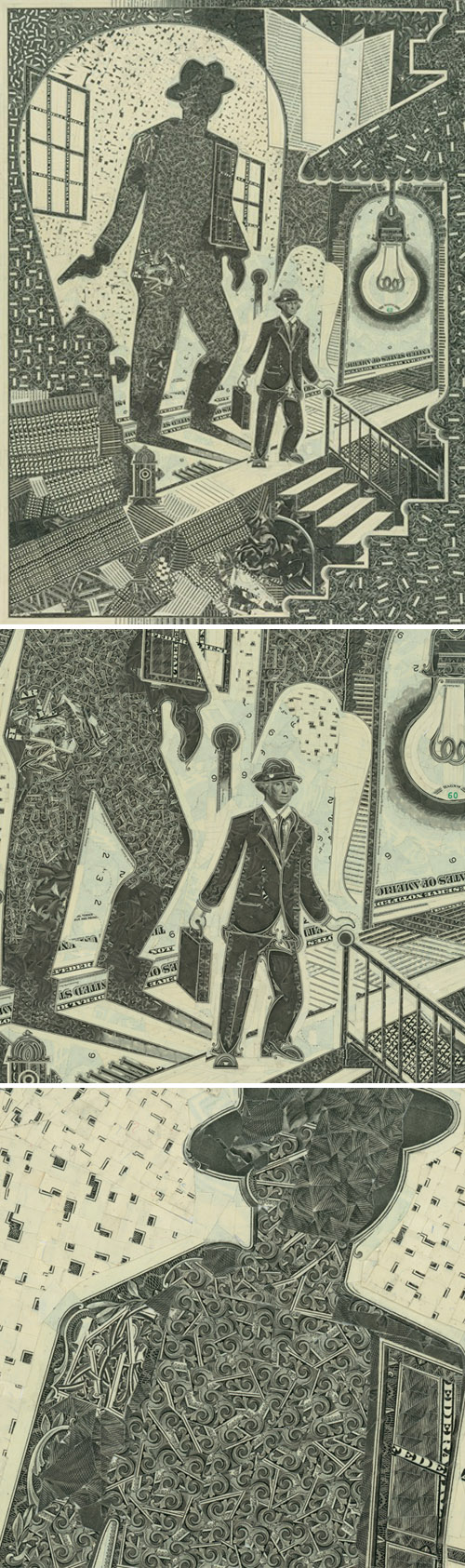
My friend Eric introduced me to Mark Wagner’s currency collages a few years ago in Chelsea. It seems to me that today’s economic climate is a perfect time to share them. These collages, made exclusively with the U.S. Dollar, speak to the cultural, social and political roles that money plays in our society.

Mark Wagner, originally from the Midwest, is a Brooklyn based artist who writes and makes books in addition to his collages. His statement on his currency collages is as follows:

The one dollar bill is the most ubiquitous piece of paper in America. Collage asks the question: what might be done to make it something else? It is a ripe material: intaglio printed on sturdy linen stock, covered in decorative filigree, and steeped in symbolism and concept. Blade and glue transform it-reproducing the effects of tapestries, paints, engravings, mosaics, and computers-striving for something bizarre, beautiful, or unbelievable… the foreign in the familiar.

The detail on these collages is amazing. The second and third collages above also show zoomed-in sections to appreciate even the tiniest image.

All images courtesy of Mark Wagner and Pavel Zoubok Gallery.

Typographied Objects III

typography objects, letterforms, type on sheets, type on clothes, type jewelry, collabcubedtypography objects, letterforms, type on sheets, type on clothes, type jewelry, collabcubedClick to enlarge

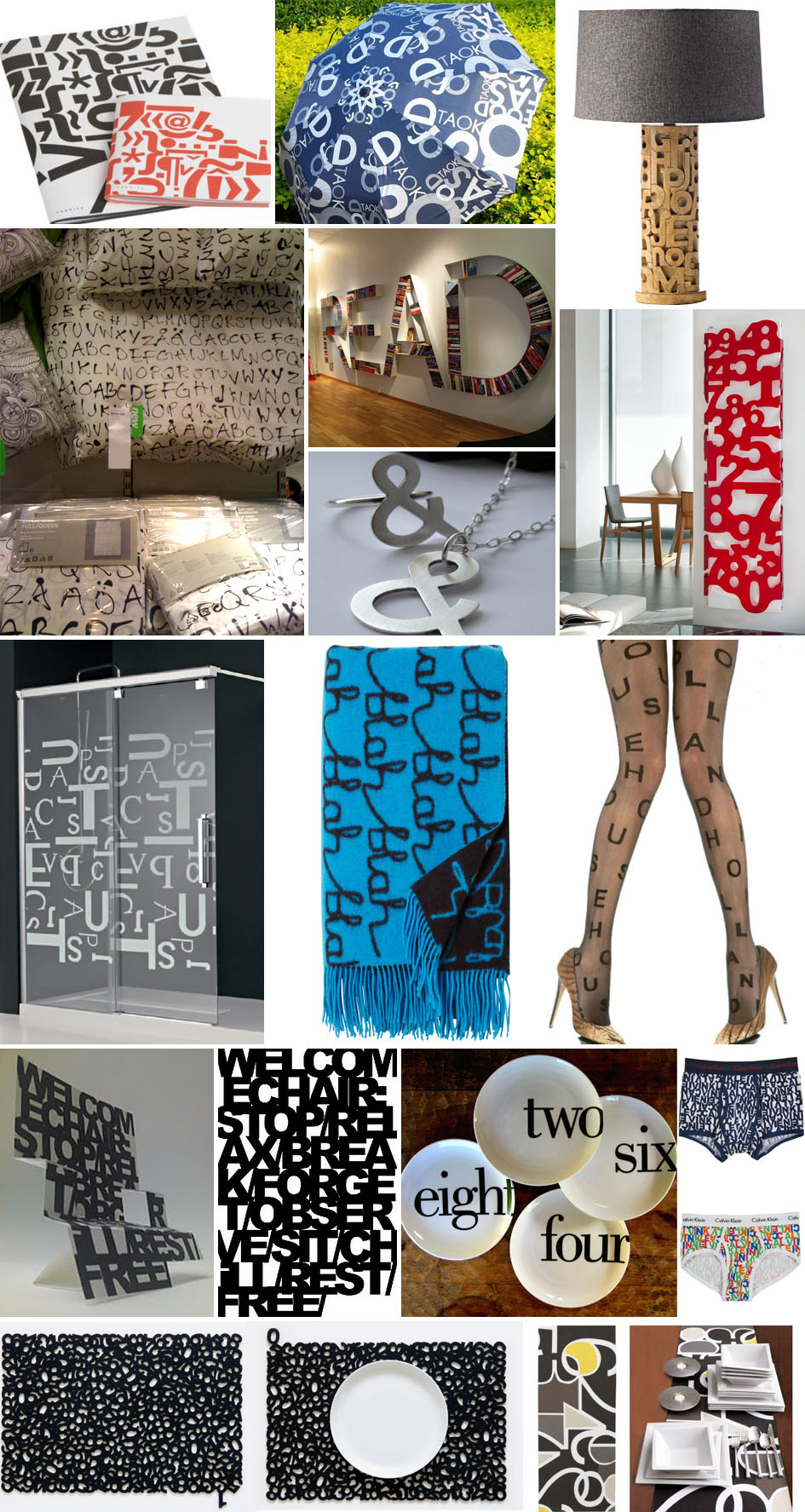
Our latest roundup of objects with type. See our previous posts Typographied Objects and Typographied Objects II for more.

From left to right, top to bottom:
Typeshelf by Thirtyfive Creative Works; Punctuation Journals; Lucky Letters Umbrella; Letter Lamp; Eivor Ord Duvet cover and pillow cases; READ book shelf; Ampersand Jewelry; Caleido Digit Radiator; Profiltek Vetro Shower Door; Blah Blah Throw; Alphabet Stockings; Welcome Letter Concept Chair; Even Little Number Plates; Calvin Klein Briefs; Number Placemats; Numbers Runner

The Comedy Carpet in Blackpool

Typography, England, installation, art, sculpture, letterforms, why not associatesTypography, Blackpool, England, Why Not Associates, comedy tributeTypography, England, installation, art, sculpture, letterforms, why not associatesClick to enlarge

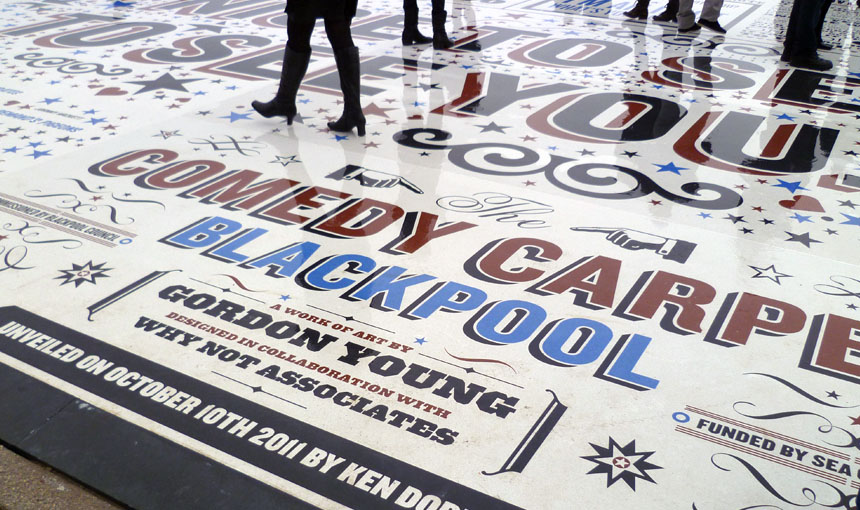
The Comedy Carpet in Blackpool – a seaside resort town in the Northwest of England – is a typographic celebration of comedy in a grand way. The 2,200 sq. meter installation contains over 160,000 granite letters embedded into concrete, making it virtually impossible not to tip toe through the type.

A super-sized homage to those who have made the nation laugh, as well as to wood type, the amazing sculpture, that will also act as a stage, was designed by Gordon Young with typography by Why Not Associates (both previously mentioned in Architypeture I) and inspired by old theater posters and playbills. The jokes span a full range including one-liners, catchphrases, gags and sketches, with something for everyone’s sense of humor…or not.

via typetoken

Matthew Parker: Event Installations

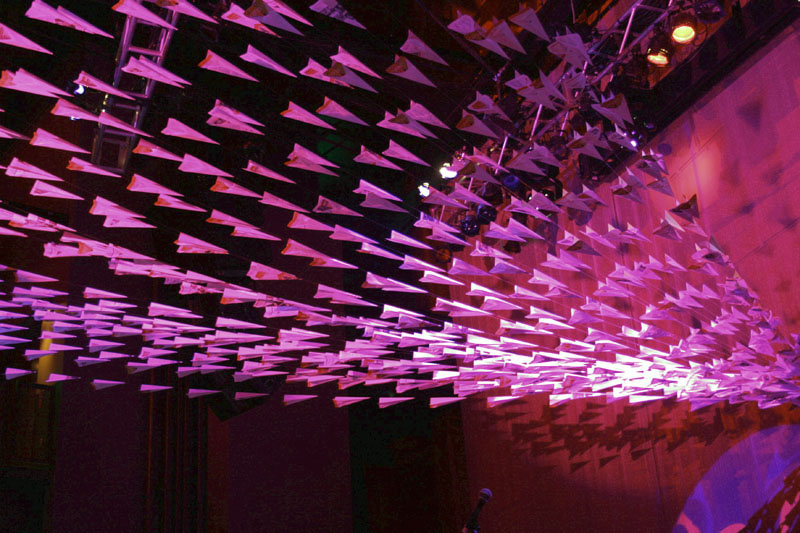
event installation, paper airplanes, EMP, Seattle, Boeing, partyevent installation, paper airplanes, EMP, Seattle, Boeing, partyevent installation, coffee filters, store window decor, Seattle, displayClick to enlarge

Matthew Parker Events is a boutique design studio from Seattle, WA that produces custom event decor, paper art, and prop styling. Most recently, Parker’s design for the Design*Sponge Book Tour backdrop has been popping up on various design blogs, but he’s got other interesting work as well, that ranges from window displays to event installations to a custom wedding altar.

Using common elements such as paper and  cardboard in combination with influences that include typography, tessellation origami, pop art and the future, Matthew Parker creates original handmade decor.

Top two photos: Paper airplane installation at the EMP for an Artsfund event. Photos by Jena Lacomis Garcia.
Other photos: Coffee filter sculpture/installation in collaboration with Sam Trout. Photos by Kip Beelman.

Ariane Roesch: Electroluminescent

cool installations, Electroluminescent art, Kenmore, Path of least resistancecool installations, Electroluminescent art, Kenmore, collabcubedClick to enlarge

Originally from Germany, artist Ariane Roesch currently lives and works in Houston, Texas. Interested in how we situate ourselves in today’s mechanized society, Roesch uses color, light, and textiles to create a sensory experience that often questions both physical and psychological structures; how people communicate and behave as much as the structures that are a part of their everyday. Sustainability is turned inward, addressing the viewer, rather than examining the external.

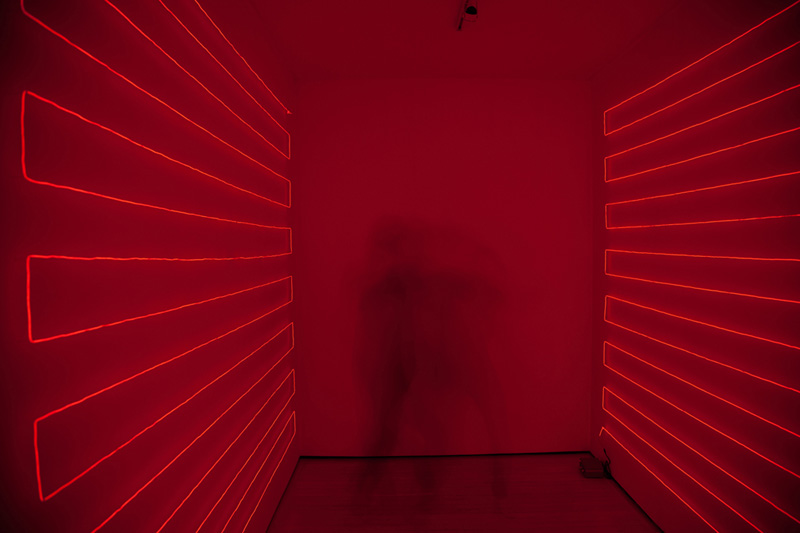
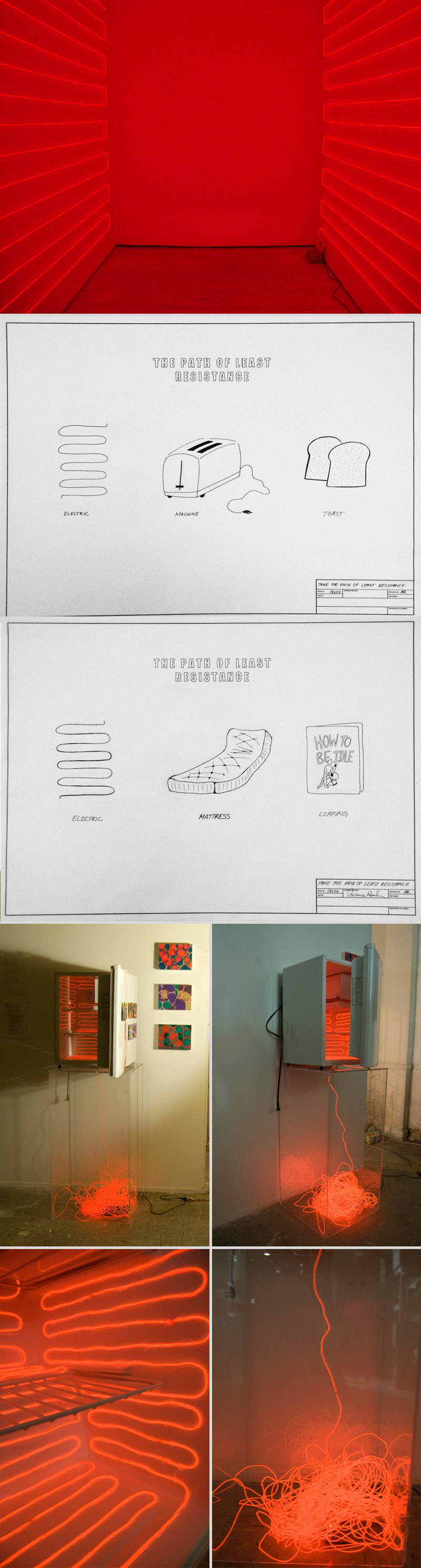
Top four photos: Take the Path of Least Resistance, installation. An investigation that takes shape as series of drawings and a light installation. The heating coil shape is transformed into a diving board for visual analysis of what it means to take the path of least resistance and its social implications.
Bottom four photos: More Heat, installation. Part of The Kenmore, a project at Box 13 ArtSpace in Houston.

If you’re in Houston, Texas next week, be sure to visit Ariane Roesch’s site-specific installation Going Undercover at the TX Contemporary Fair. If you’re anywhere else, you might want to visit her site and see the rest of her work.

London 2012 Shooting Venue: Woolwich

Magma Architecture, 2012 Olympics, Royal Artillery Barracks, collabcubedMagma Architecture, 2012 Olympics, Royal Artillery Barracks, collabcubed

Magma Architecture, 2012 Olympics, Royal Artillery Barracks, collabcubed

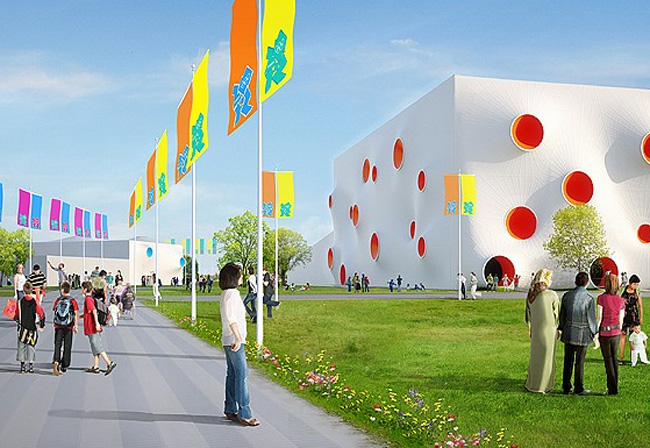
Architect’s rendering

I’m not one to understand the appeal of shooting, as a sport or otherwise, but the design of the new London 2012 Shooting Venue at the Woolwich Royal Artillery Barracks definitely piqued my interest. Designed by German studio Magma Architecture, the three enclosures are clad in a fun and colorful 18,000 sq m phthalate-free pvc membrane. The bright colored openings contrast nicely against the white in addition to providing tension, ventilation and light.

The exteriors are just about completed, with the installation of seating and back-of-house facilities to come shortly. The venue will be dismantled immediately after the Games.

All images courtesy of the ODA.

via World Architecture

Liam Gillick: Type, Color & Light …Trifecta!

color art installation, contemporary art, typographycolor art installation, contemporary art, typographyYes siree, three of my favorite elements all combined by one artist: Liam Gillick. The British artist is based both in London and New York. He has published a number of texts that function in parallel to his artwork, and the artwork itself often incorporates typography. In addition to Gillick‘s installations, he has collaborated with architects on the façades and interiors of many buildings including the Fairmont Pacific Rim Hotel in Vancouver, Canada (see our Architypeture II post) and the Marsham Street Home Office in London.

Gillick’s installations are at once minimalist, conceptual and ironic. They are often seen as abstract representations of the various social projects that he participates in. Definitely would love to see one of these in person.

via artnet

Barbara Licha: Wire Figures

Wire figures, Australian artist, Licha, contemporary sculptureWire figures, Australian artist, Licha, contemporary sculptureClick to enlarge

Polish artist Barbara Licha, based in Australia, is interested in the complexity of the human condition and explores parallels between actual people and the ones in her imagination. I particularly like her wire figure sculptures with their gestures in their tangled worlds or boxes. In her work, Licha tries to convey what she sees inside people: their wishes, dreams and desires.

You can see more of Licha’s work here and here.

via Brenda May Gallery

Rebecca Baumann: Automated Colour Field

Art installation, Australian artist, flip-clocks, contemporary artArt installation, Australian artist, flip-clocks, contemporary art

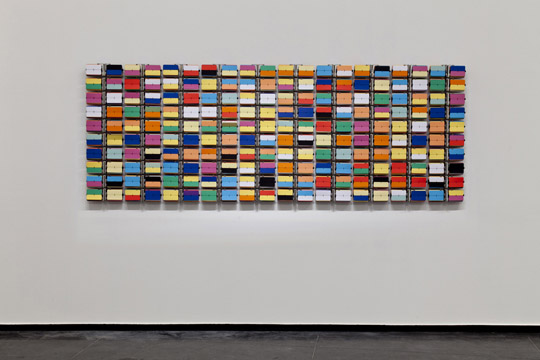
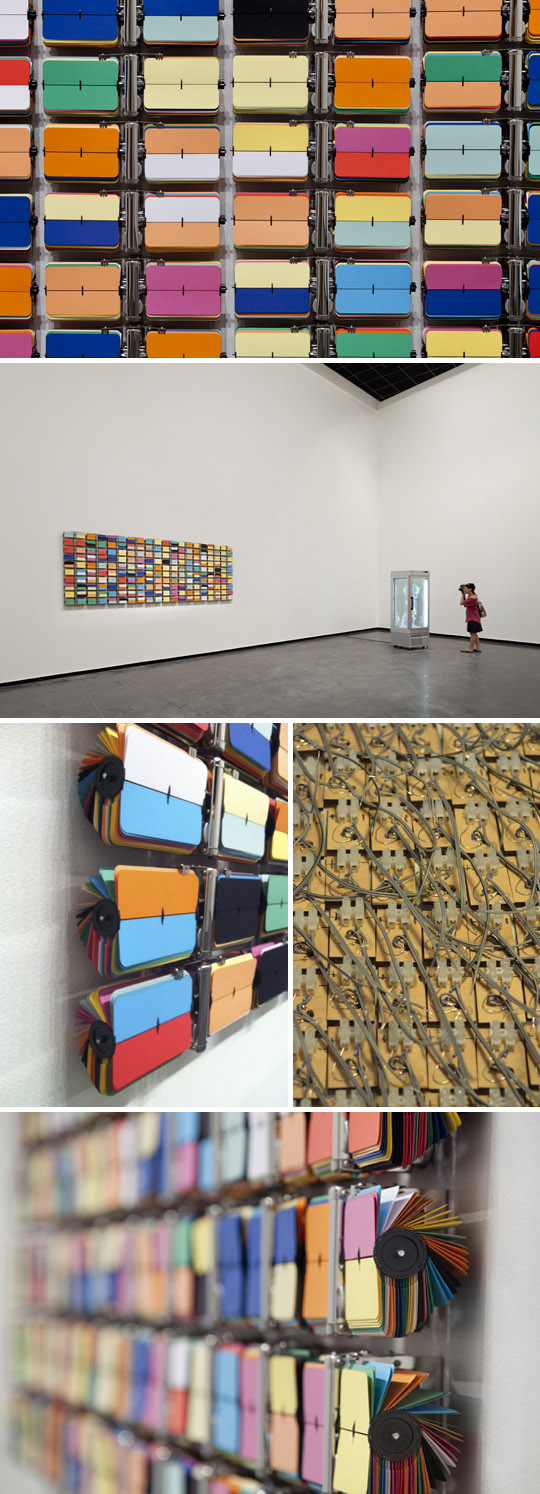
I love this installation by Australian artist Rebecca Baumann. Automated Colour Field, originally commissioned by the Australian Centre for Contemporary Art, is made up of 100 flip-clocks, laser cut colored paper, and batteries (a later version replaced the over 100 batteries with over 100 power regulating circuit boards designed by Cake Industries.) Such a clever and simple concept beautifully executed. Who wouldn’t want one of these in their home?

You can see the piece in action in the video above and you can see it being installed in the video below.

Photos by Andrew Curtis, courtesy of the artist. Circuit Board photo courtesy of Cake.

via acca

Jaume Secondary School: Ramón Esteve

Colorful architecture, Spain, Ramon Esteve, School DesignColorful architecture, Spain, Ramon Esteve, School DesignColorful architecture, Spain, Ramon Esteve, School DesignColorful architecture, Spain, Ramon Esteve, School DesignClick to enlarge

When I started middle school, one of the things I was most excited about were the rows of colorful lockers that alternated between yellow, red and orange. I mean, the concept of just having a locker was pretty exciting too, but the bright colors that lined the walls were part of the appeal.

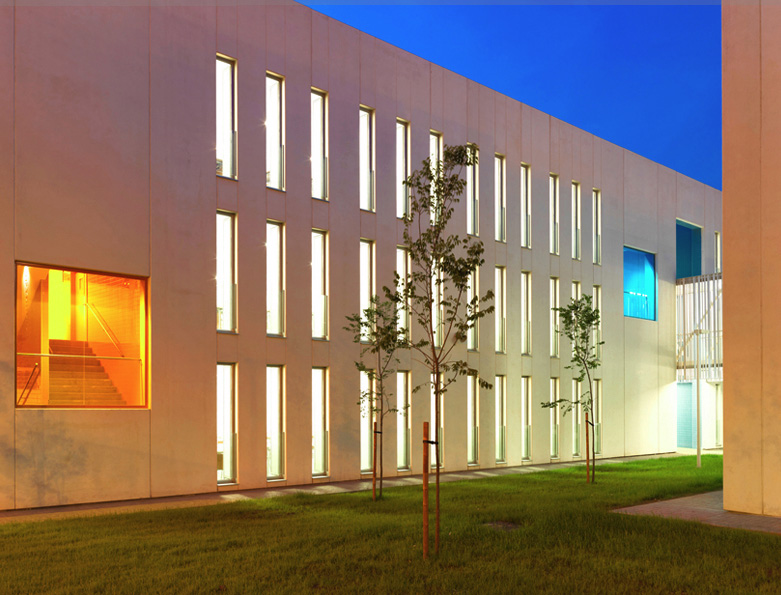
The Jaume Secondary School in Ontinyent, Valencia, Spain takes the color concept way beyond. Designed ever-so-smartly by Ramón Esteve Architects (Estudio de Arquitectura), what could have been a rather straightforward high school is lively and welcoming by contrasting the white, prefabricated concrete panels of the exterior with colored glass and tiles, as well as paint. That combined with the use of light, both natural and artificial, enhance the building scheme and bring relief, brightness and dynamism to the interiors and exteriors.

All four buildings that complete the complex, creating outdoor spaces including the sports ground, garden and parking, enclosing them with the architecture and working harmoniously. The solid volumes are ventilated and lighted through the cut-out openings with different color tiles in each.

Definitely a school I would have enjoyed attending, based on the look anyway.

Photos by Xavi Mollá, courtesy of Ramón Esteve and The Archhive.

via the archhive

Yvette Cohen: Sculptural Paintings

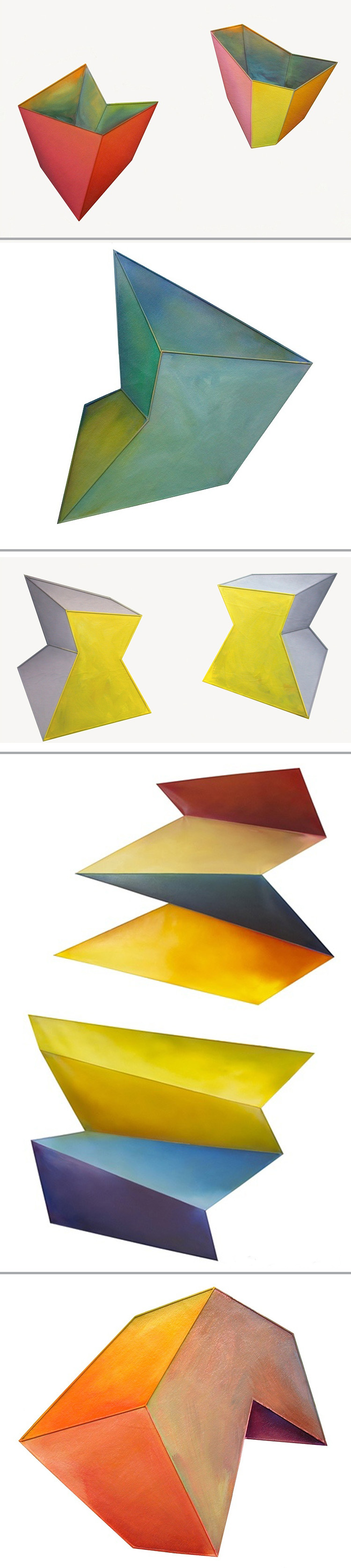
Yvette Cohen, NY artist, 3-D Paintings, Cassina exhibitYvette Cohen, NY artist, 3-D Paintings, Cassina exhibitYvette Cohen, NY artist, 3-D Paintings, Cassina exhibitNew York City based artist Yvette Cohen was born in Cairo, Egypt and grew up in Paris and Montreal. In her art, Cohen seeks to create a balance of calm and intrigue. Her Ara Pacis Series (from the Latin meaning ‘altar to peace’) consists of richly colored oil paintings on shaped canvases with wood dowels. They appear three-dimensional, but in reality mount flat to the wall and sometimes floor. It’s amazing how the illusion of depth is created through her use of geometric shapes and painting technique.

Groupings of two, three or more of these oil paintings seemingly defy gravity and appear to exist in a boundless space, activating entire walls.

Hence the name of Cohen’s upcoming exhibit in NYC: Defying Gravity.

Defying Gravity: Sculptural Paintings will be shown at Cassina in Soho (151 Wooster Street) from November 8 to December 20, 2011. If you can’t make it to the exhibit, be sure to check out the rest of Yvette Cohen’s work on her website.

Molly Hunker & Gregory Corso: Sports

Molly Hunker, Gregory Corso, Sports Practice, art installation, collabcubedMolly Hunker, Gregory Corso, Sports Practice, art installation, collabcubedMolly Hunker, Gregory Corso, Sports Practice, art installation, collabcubedMolly Hunker, Gregory Corso, Sports Practice, art installation, collabcubedClick to enlarge

Designers Molly Hunker and Gregory Corso – whose talents range from interior and installation design to products and graphics – started their own design collaborative in 2010 called SPORTS. They believe in design and its ability to easily and immediately change a person’s spatial and visual experience of a place.

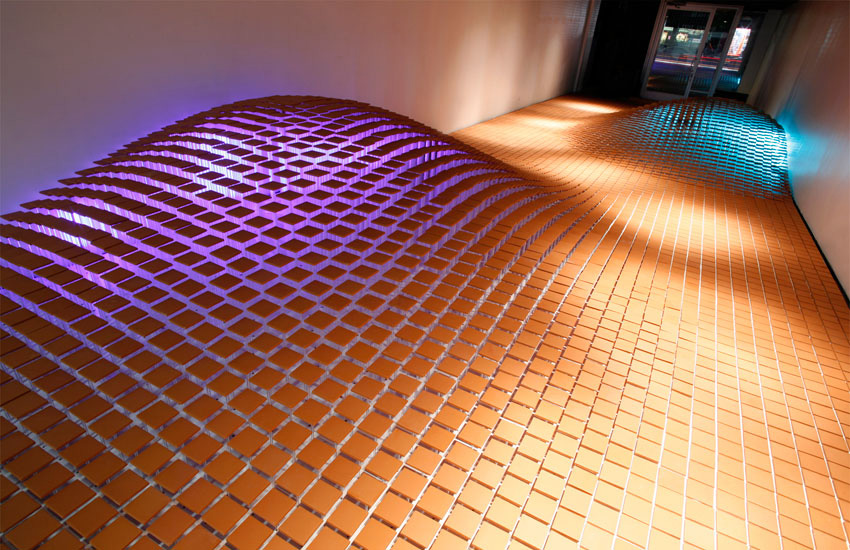
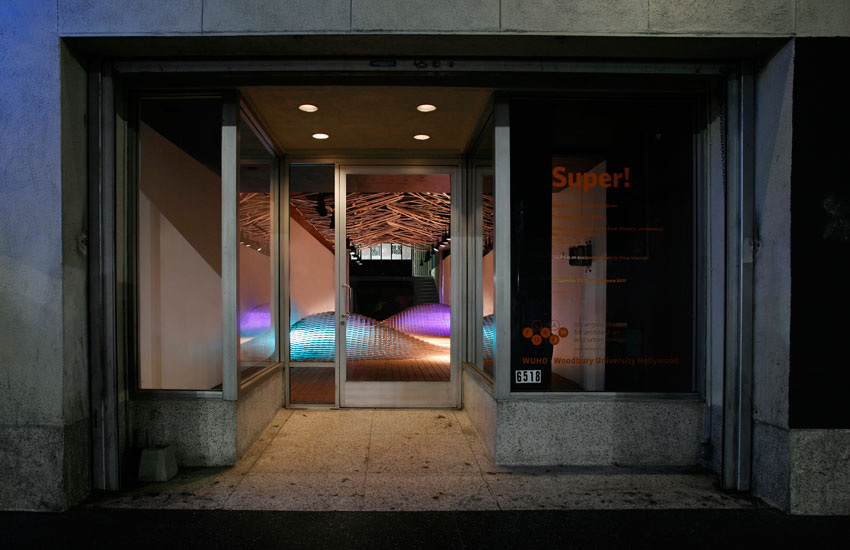
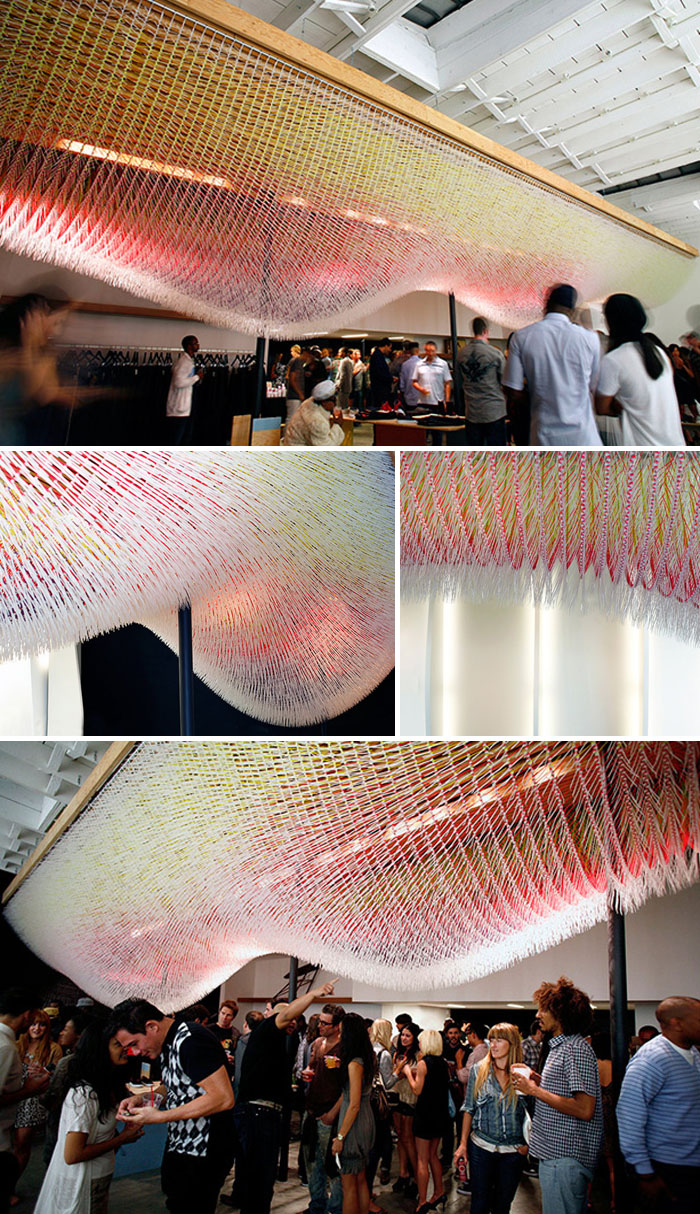
Within the past year they have put that belief into action with two very cool installations in L.A. California: Stay Down Champion, Stay Down and Life Will Kill You. Stay Down Champion, Stay Down (photos at top) was installed at the Woodbury University Hollywood Gallery. Focusing on the ground plane, the piece was comprised of terracotta tiles creating a flowing and colorful interior landscape with bulging areas elevated by transparent acrylic supports highlighted by vibrantly colored lighting.

The earlier installation (bottom images) Life Will Kill You was installed temporarily at the Revolve Clothing showroom in West Hollywood. The cloud-like piece was created using over 100,000 zip ties with the exterior surface composed of longer white zip ties, and the interior levels of shorter colored ones, resulting in a richly textured effect.

Photos by Justin Harris

Aaron De La Cruz

Aaron de la cruz street art, graffiti, LA street art, Honolulu, collabcubedAaron de la cruz street art, graffiti, LA street art, Honolulu, collabcubedAaron de la cruz street art, graffiti, LA street art, Honolulu, collabcubedClick to enlarge

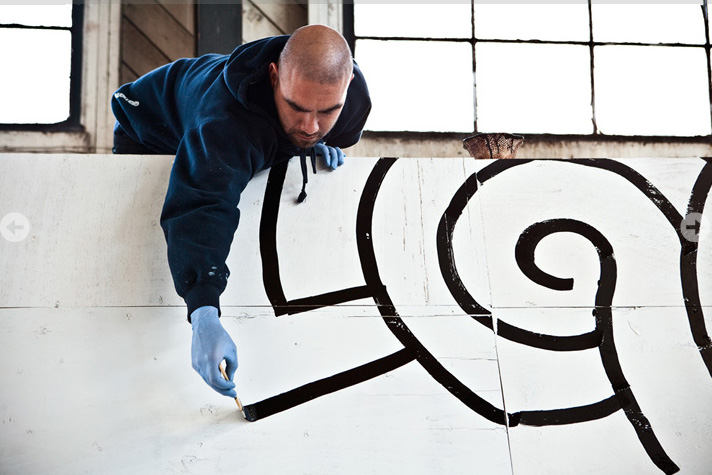
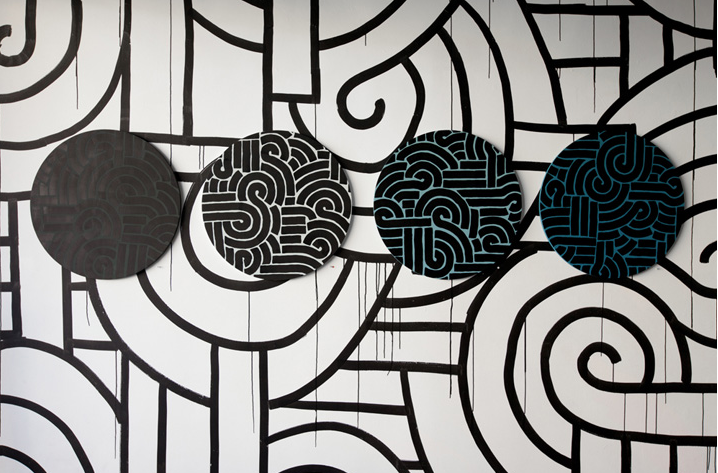
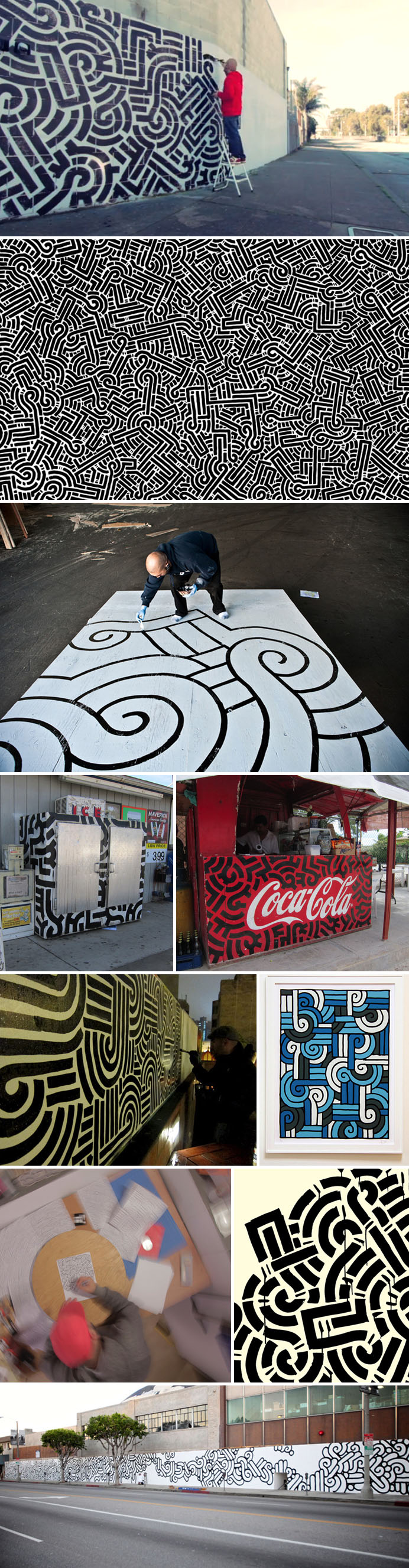
Illustrator, street artist, graffiti artist, designer Aaron De La Cruz started drawing on everything, including the walls of his bedroom, from a very young age. Much of his street art appears in California, from L.A. to San Francisco. His work, “though minimal and direct at first, tends to overcome barriers of separation and freely steps in and out of the realms of design, graffiti, and illustration.”

Next Saturday, October 15th, 2011, De La Cruz will be showing past, present, and future work at his exhibit Long Walk Home at Loft in Space in Honolulu. Included in the exhibit will be a room created to look like his childhood bedroom… the one where he drew on the walls.

via Arktip

Anekit Bhagwat: The Drum House

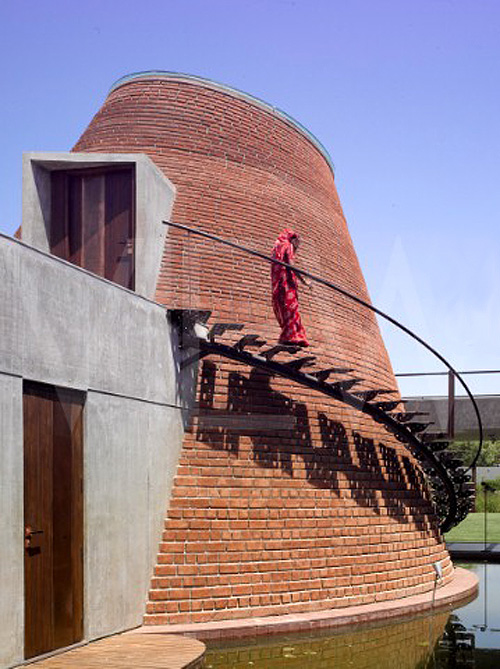
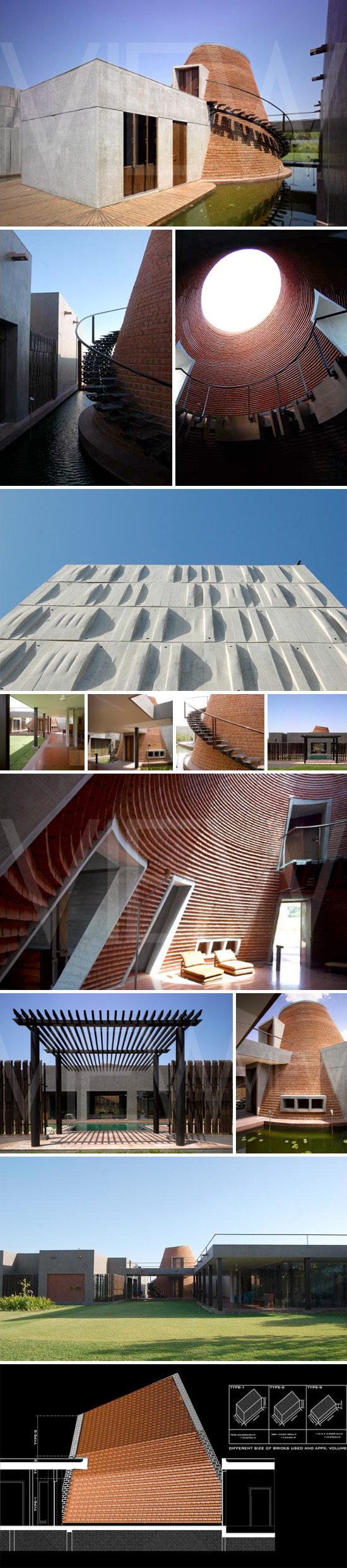
Drum House, Ahmedebad, India, Anekit Bhagwat, Bricks, collabcubedDrum House, Ahmedebad, India, Anekit Bhagwat, Bricks, collabcubedThe House with Drum or Drum House designed by Anekit Prabhakar B. Bhagwat is a weekend residence on the outskirts of Ahmedebad in Gujurat, India. Composed of three main sections – the drum, the veranda and the stockade – each space was sited with respect to the larger landscape of the project. Brick was used innovatively, with specially made extra flat styles and different sizes, to create the ‘vault’ that is the main living area. The veranda includes a glass dining pavilion at one end that faces the gardens and the stockade houses two rooms and a pool at the back. Other facilities include a projection room, a shaded deck, a water tank with lilies, and an India garden with an elevated trampoline. Definitely lots to keep a person busy for the weekend.

Photos ©Edmund Sumner via View and Prabhakar B. Bhagwat
Cecilia Vissers: Minimalist Sculpture

minimalism, sculpture, steel, aluminum, contemporary artminimalism, sculpture, steel, aluminum, contemporary artminimalism, sculpture, steel, aluminum, contemporary artClick to enlarge

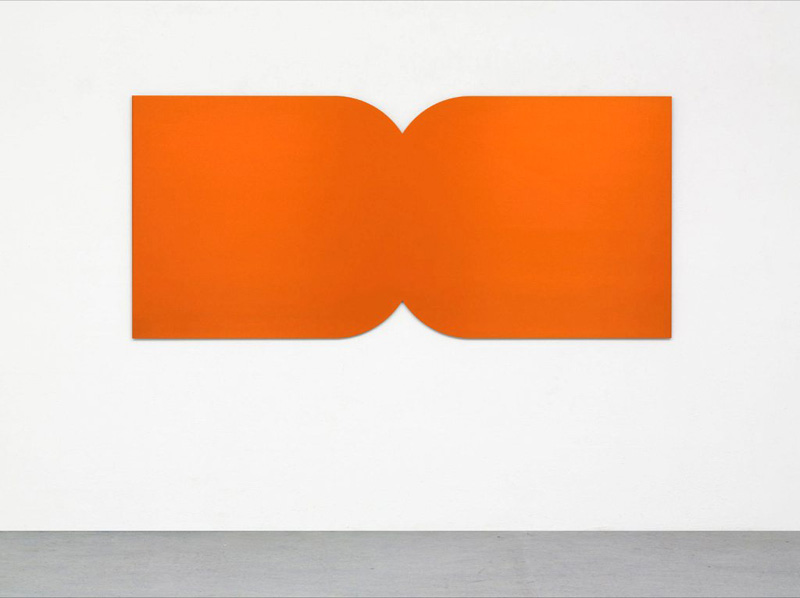
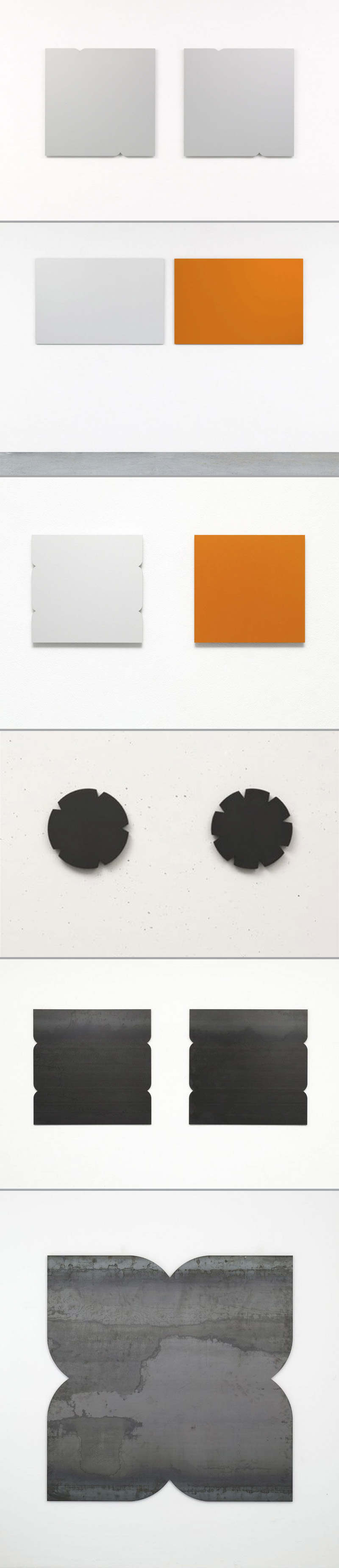
Dutch sculptor Cecilia Vissers’ minimalist steel and aluminum flat sculptures are inspired by the Scottish and Irish landscapes.

From the artist:
I want my sculptures to be entirely simple, to be viewed quickly, the focus is on the smooth and flat surface, my abstractions are grounded in the landscapes of Scotland and Ireland, the remoteness and silence.
From top to bottom: Orange Tide III, aluminum; Very Likely L, two-part, aluminum; Silent Light, two-part, aluminum; Very Likely I, two-part, aluminum; Medardus, aluminum; Blacksod Bay, steel; Follow the River, steel.

Cecilia Vissers’ work will be on exhibit as part of a  group show at Acquire Space in London from November 13-27, 2011 and in a solo show at Masters & Pelavin Gallery in New York, February 23 to April 5, 2012. If you can’t make either of those you can always visit her website to see more of her work.