Peace Bridge: Santiago Calatrava

Santiago Calatrava, Peace Bridge, Helix, Contemporary Bridge Design, Calgary, CanadaSantiago Calatrava, Peace Bridge, Helix, Contemporary Bridge Design, Pedestrian Bridge,Calgary, CanadaSantiago Calatrava, Peace Bridge, Helix, Contemporary Bridge Design, Pedestrian Bridge,Calgary, CanadaClick to enlarge

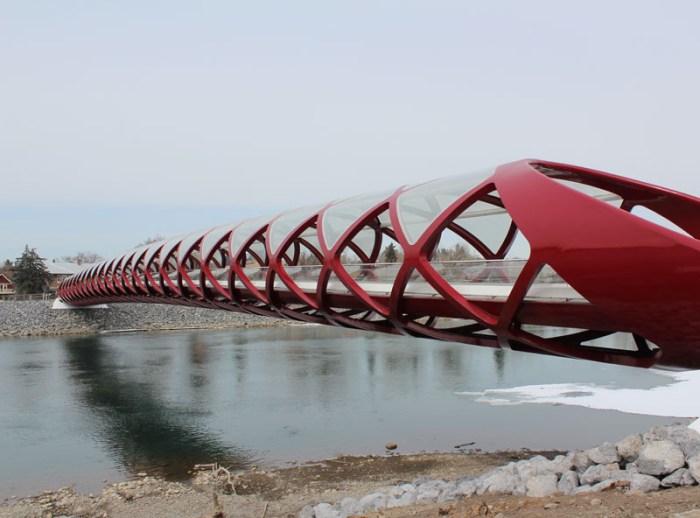
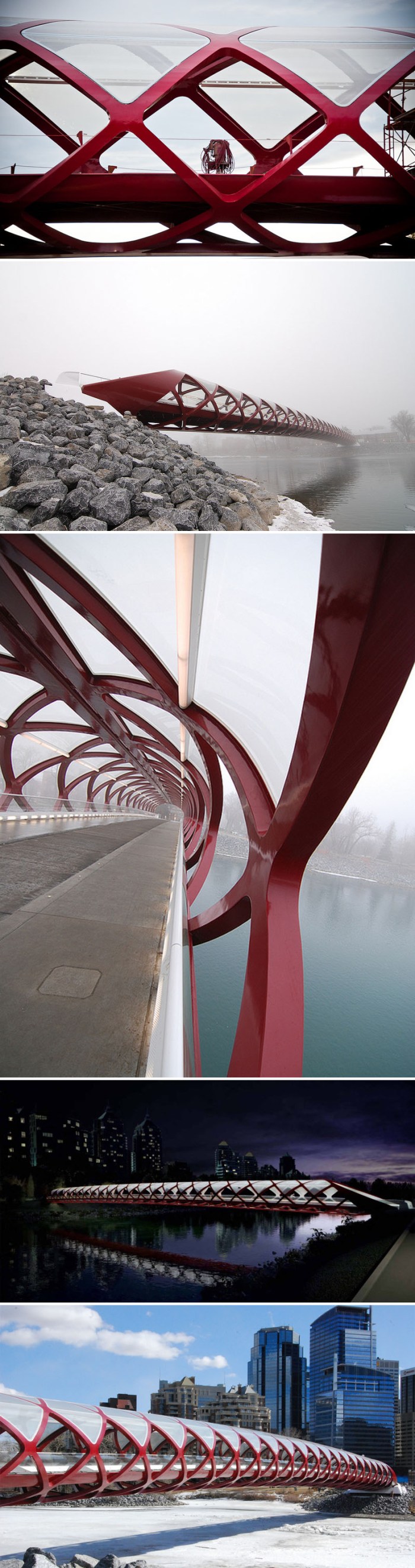
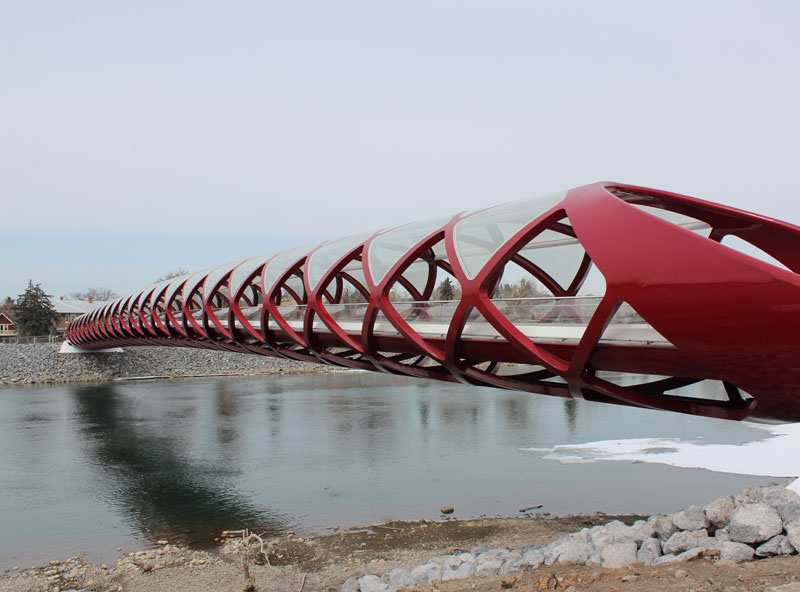
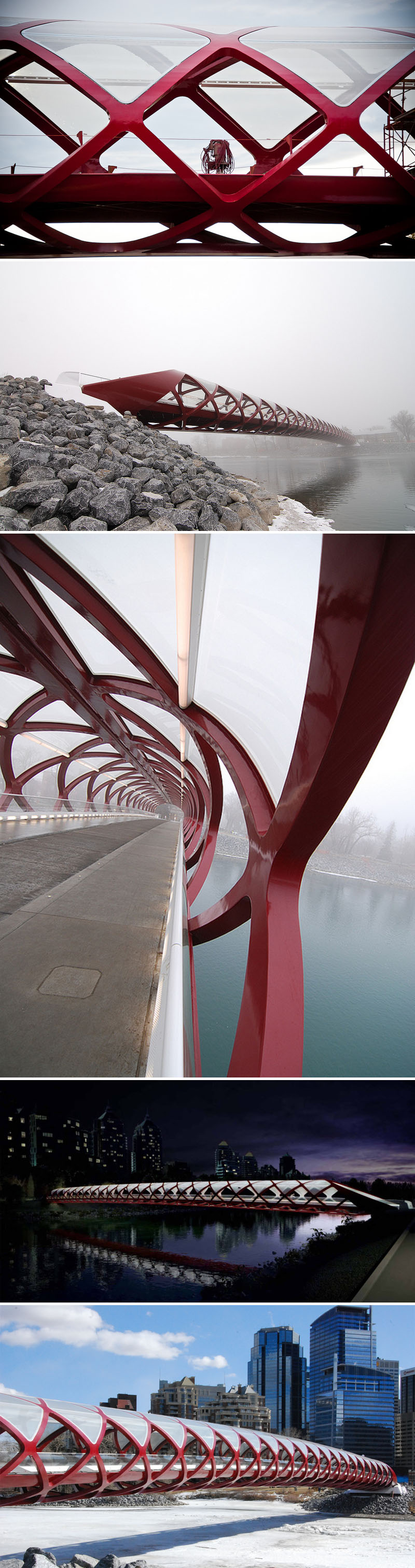
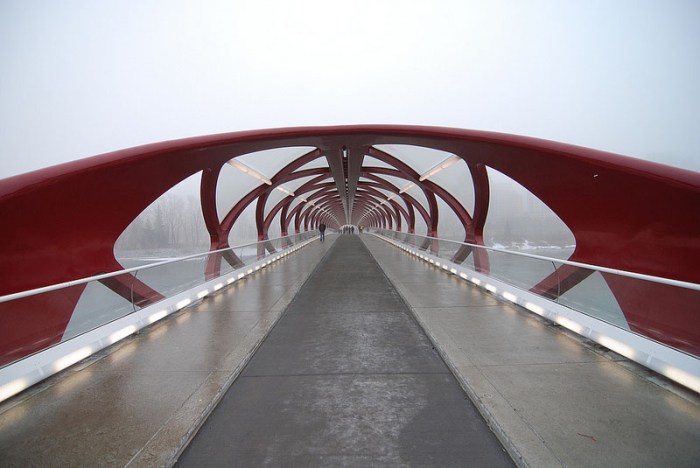
Not a typical design for Spanish architect Santiago Calatrava, the Peace Bridge in Calgary, Canada, was inaugurated at the end of this past March. A red twisting helix-shaped pedestrian bridge, the Peace Bridge is a low single-span bridge without Calatrava’s usual soaring vertical accents because of a no-fly zone above due to a nearby heliport. In addition, to minimize impact on the local environment, the bridge was constructed without supporting piers in the riverbed. The result is a striking tubular steel-truss bridge, with enough coverage to protect against the winter elements, yet open enough to keep cool in the summer. Beautiful!

Photos: Robert Coxwell; City of Calgary; CarlCarl; and Incremental Photo’s flickrs, as well as Santiago Calatrava.

via Canadian Architect

Evol: Repeat Offender

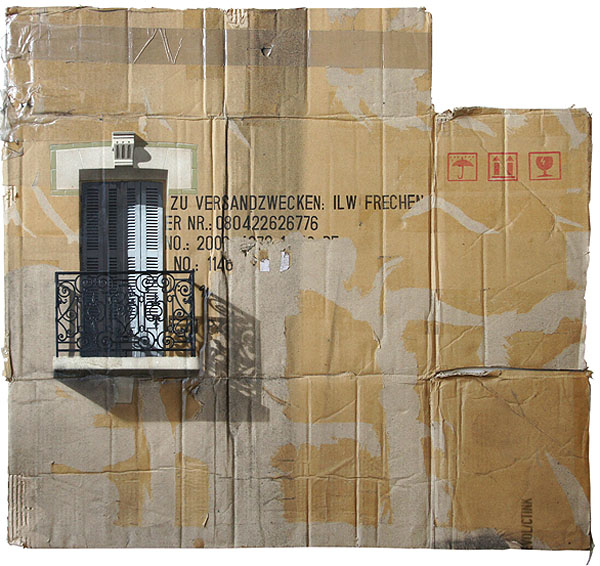
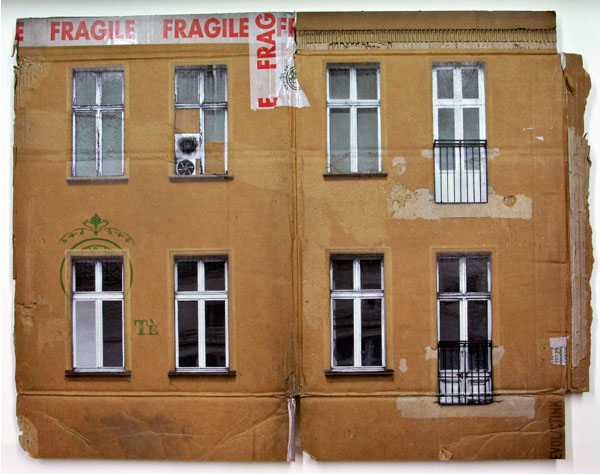
Cardboard paintings of buildings in Berlin, spray paint on cardboard, EVOL, Repeat Offender exhibit at Jonathan Levine GalleryCardboard paintings of buildings in Berlin, spray paint stenciled on cardboard, Evol, Repeat Offender exhibit at Jonathan Levine GalleryCardboard paintings of buildings in Berlin, spray paint stenciled on cardboard, Evol, Repeat Offender exhibit at Jonathan Levine GalleryBerlin-based artist Evol – known best for his street art interventions of scale models of abandoned and decaying buildings left on electrical boxes and cement blocks in cities around the world – currently has his first solo show in the United States at the Jonathan LeVine Gallery in Chelsea. Repeat Offender, as the exhibition is titled, is a collection of Evol’s recent work of multi-layered stencil paintings on used and flattened cardboard boxes, as well as other paintings on scrap metal. These works continue to convey general urban decay and, more specifically, the walls and façades of pre-gentrified East Berlin. Incredibly realistic (I thought they were photo-silkscreened), these spray-painted pieces work beautifully on their chosen canvases. The combination of the painted façades with the type, tape, and icons on the original boxes gives them a wonderful texture. Though they photograph well, seeing these in person, as with most art, adds another dimension.

Repeat Offender will be at the Jonathan LeVine Gallery through this Saturday, May 5th.

You can watch a video of Evol’s process here.

Photos courtesy Jonathan LeVine Gallery.

Henrique Oliveira: Labyrinthine Installations

Amazing bursting labyrinthine wood installations, Brazilian contemporary art installations by Henrique OliveiraAmazing bursting labyrinthine wood installations, Brazilian contemporary art installations by Henrique OliveiraAmazing bursting labyrinthine wood installations, Brazilian contemporary art installations by Henrique OliveiraClick to enlarge

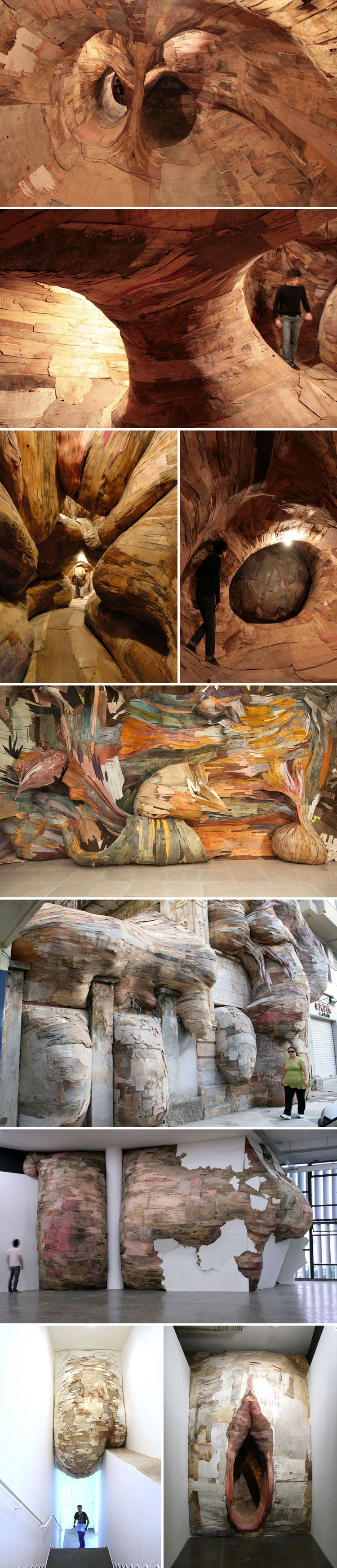
Brazilian artist Henrique Oliveira, based in São Paulo, started as a traditional painter, but after some time he started experimenting with scraps of wood found in his father’s woodworking shop as well as on the streets. In many ways his installations are seen as his own unique style of painting. With these splintered  scraps of wood as his pictorial material, Oliveira evolved from a painter and sculptor to simply an artist.

His large-scale, labyrinth-like installations burst through walls and façades in a sculptural, painterly, and collagey way. Inside, these works resemble the interiors of caves and, in some ways, the inside of the human body as entered through a vaginal-like entrance. The gigantic and jammed quality of these ‘paintings’ sprawl out of exhibition spaces and buildings in a beastial and amazing manner.

Oliveira’s most recent exhibit just closed yesterday at the Offenes Kulturhaus in Linz, Austria, but coming up in July he will be having another show in Galeria Millan in São Paulo.

via ok-centrum

Liu Wei: Cityscape Installations

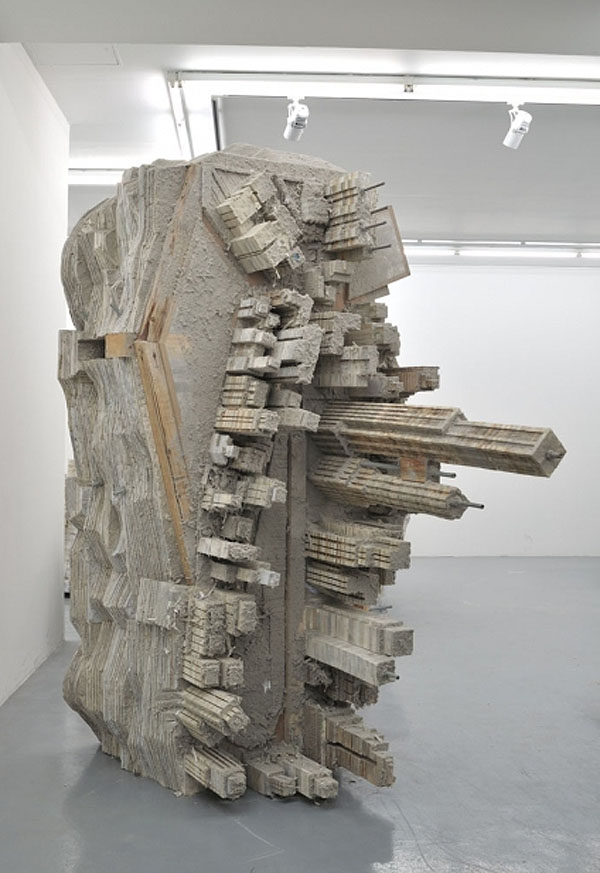
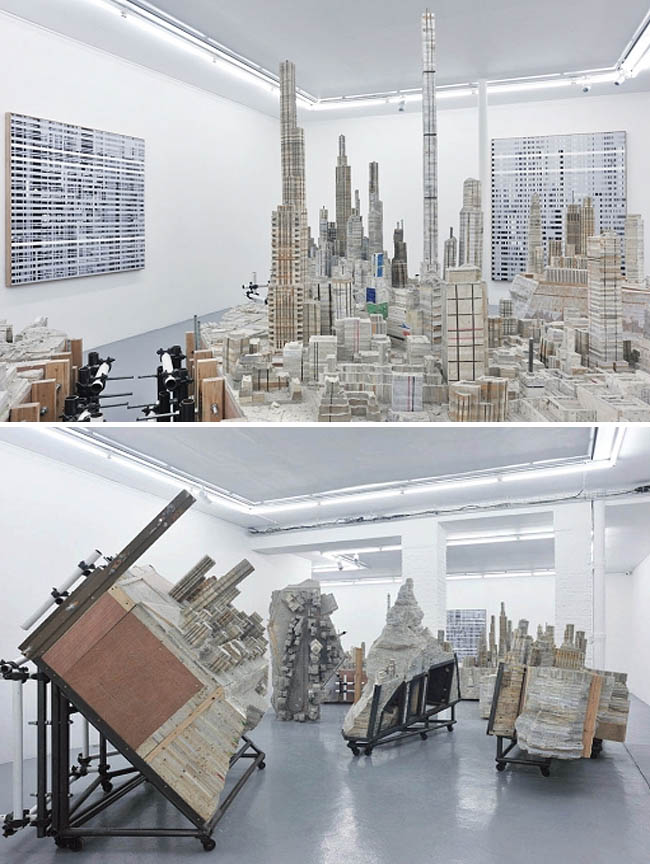
sculptures of cities made from books, steel and wood, Foreign, Almine Rech Gallery, Liu Weisculptures of cities made from books, steel and wood, Foreign, Almine Rech Gallery, Liu Weisculptures of cities made from books, steel and wood, dog chews, Foreign, Almine Rech Gallery, Liu WeiChinese artist Liu Wei is a man to watch in the new Chinese art scene. He creates installations, paintings and videos oscillating between order and disorder. His installations/cityscape sculptures are at times sprawling and depict cities in a state of metamorphosis, something he can relate to in the development of his native city, Beijing.

Presently, Liu Wei has his first solo exhibit, Foreign, at the Almine Rech Gallery in Paris. The installations in this exhibit are, once again, cityscapes made from stacks of schoolbooks, held together by steel rods and wood clamps. These are unidentifiable skylines, including a range of iconic buildings from the Pentagon to Saint Peter’s Basilica.

His hanging installation above, is titled Don’t Touch and was exhibited at the Farschou Foundation in Beijing last year. That work is made of oxhide, wood, and metal. His earlier work Love It! Bite It! was made of edible dog chews.

Liu Wei’s exhibit at Almine Rech Gallery will be on view through May 16, 2012.

via saatchi gallery

cartonLAB: Cardboard Furniture and more

Cardboard lamps, flatpacked cardboard construction, industrial design, clever designCardboard furniture, cardboard bench and recycled tires, flatpacked cardboard construction, industrial design, clever designCardboard furniture, cardboard bench and recycled tires, flatpacked cardboard construction, industrial design, clever designJust when you think they couldn’t possibly come up with more cardboard objects and designs, the fine folks at the Spanish studio cartonLAB (previously here), come out with a whole bunch of clever and innovative designs. All made from cardboard and flatpacked for easy shipping and transport. From their lovely lamps to their recent collaboration with Ecological Drive – a green company that recycles tires – where cartonLAB incorporated recycled tires as cushions for the company’s benches and displays.

But it doesn’t stop there. They’ve got uniquely designed chairs, bookcases, headboards and much more; all fun, sustainable, and stylish.

Check out the entire collection at their website, or download a pdf of their new catalogue on the upper left corner of their home page, to see the very reasonable prices. Can you tell I’m a fan?

A Building in the Hand…

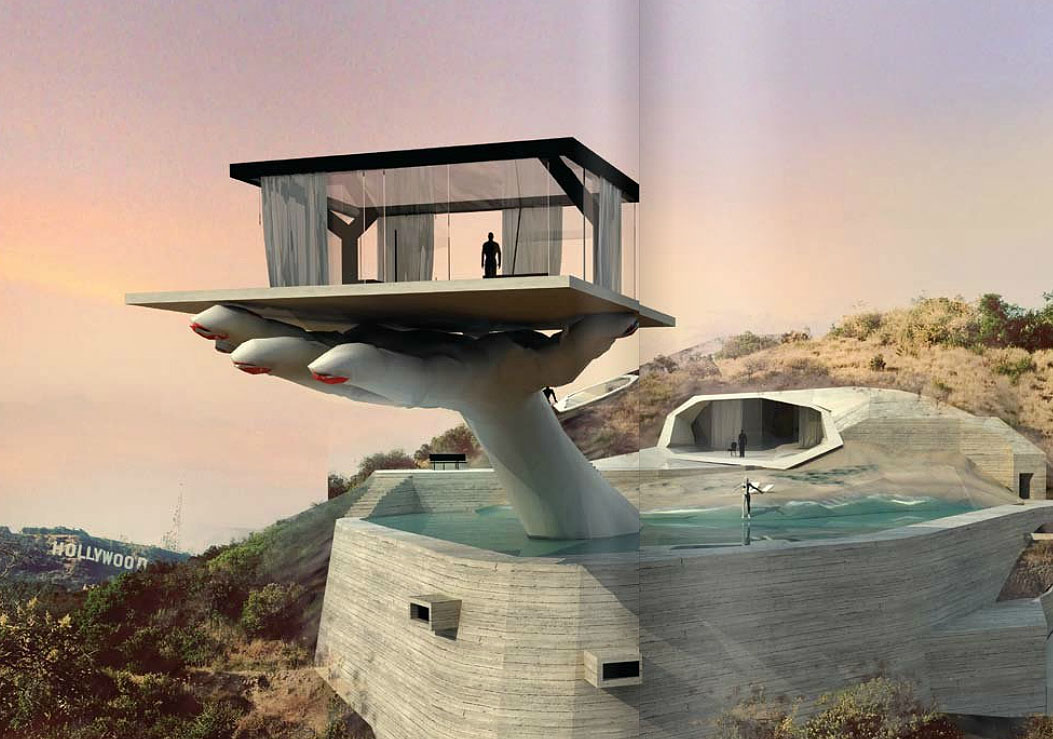
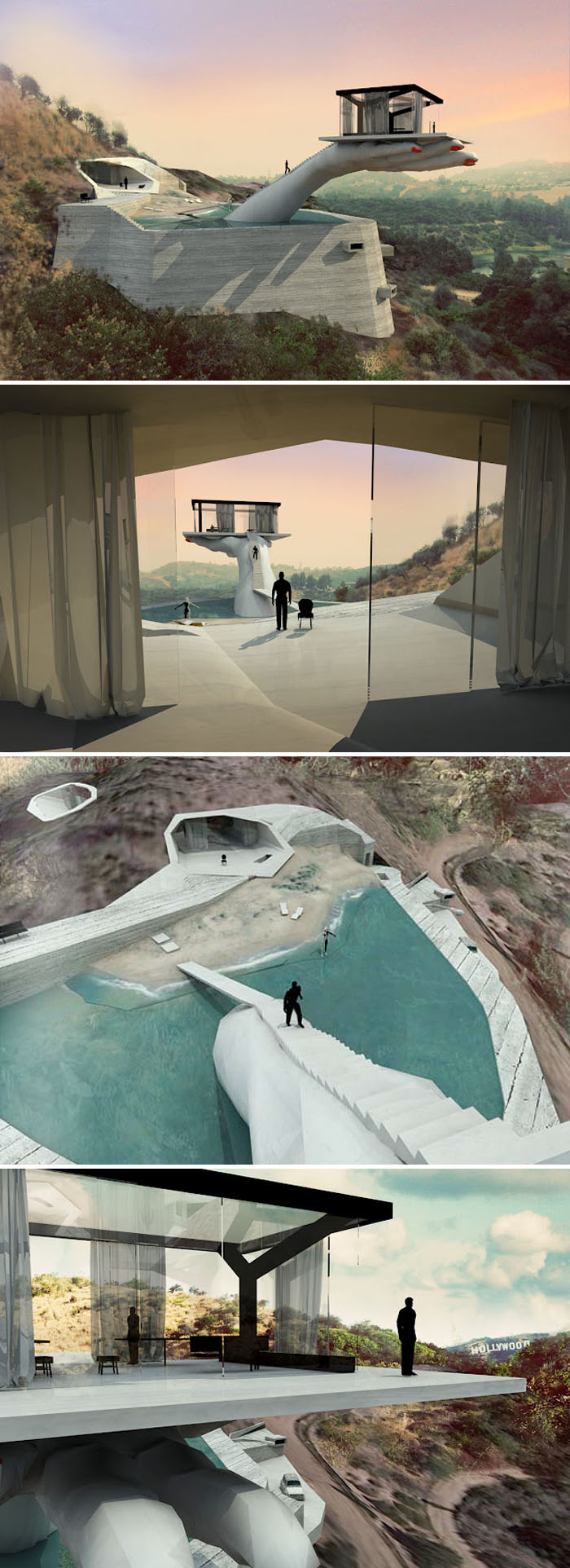
Casino Valencia, VLC, Student Project, Vicente Ortuno, Escuela de diseno Barreira, collabcubedCasino with large hand sculpture, Student Project, Vicente Ortuno, Escuela de diseno Barreira, collabcubedCasino Valencia, VLC, Student Project, Vicente Ortuno, Escuela de diseno BarreiraHand House by Andreas Angelidakis, Proposal, Case Study House, Los Angeles, Hollywood, collabcubedHand House by Andreas Angelidakis, Proposal, Case Study House, Los Angeles, Hollywood, collabcubedClick to enlarge

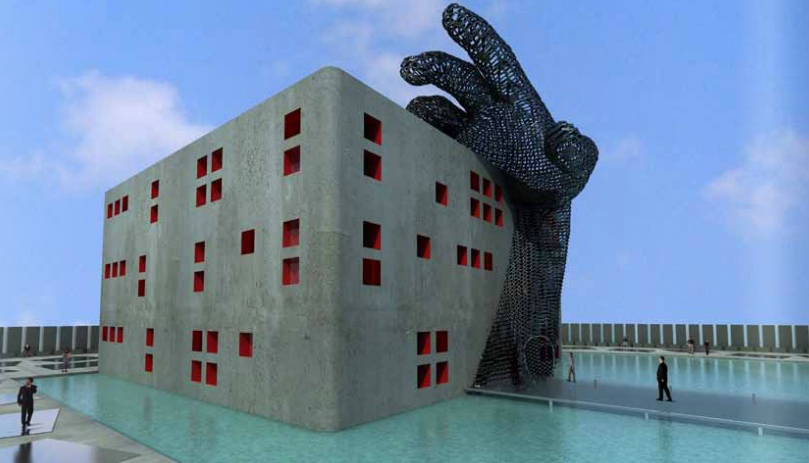
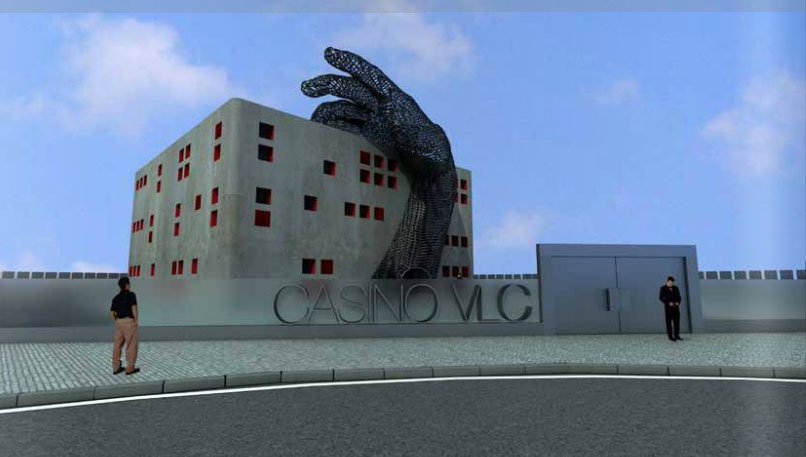
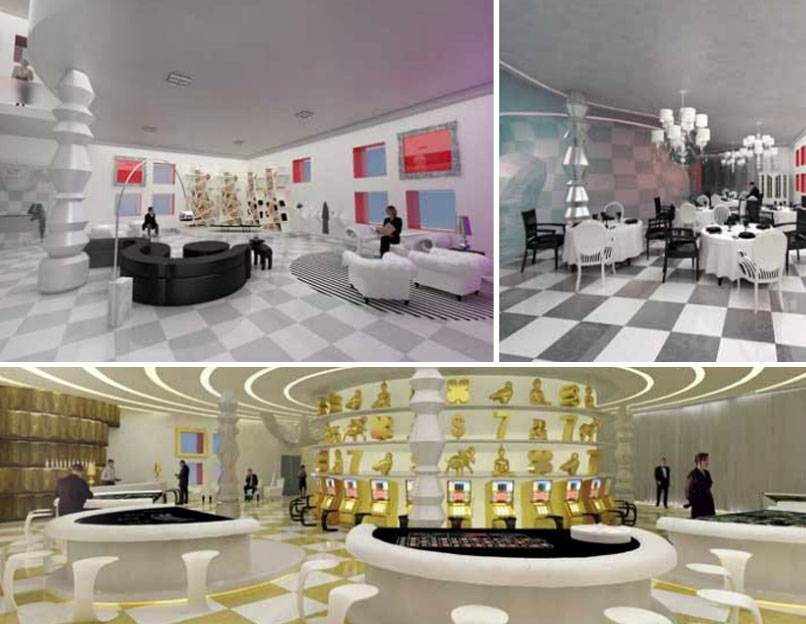
Awhile back I came across a student project for a redesign of the Casino VLC in Valencia Spain, by interior design student Vicente Ortuño at Escuela de diseño Barreira. The design features a large sculpture of a hand wrapping around the building as if grabbing it. Ortuño’s design is meant to break with the traditional Roman architecture approach to casino design. He opted for a surrealist vision, with a dreamlike quality in a place where people hope for dreams of winning and wealth to come true. The hand was specifically chosen for its presence in such game-playing phrases as “a good hand” or “sleight of hand” as well as for its strength, not to mention making a clear indicator as the main entrance.

Shortly after, I came across a case study for a house in Los Angeles by Greek architect Andreas Angelidakis who maintains an experimental practice in Athens which involves “building, designing and speculating the contemporary ecosystem of screens and landscapes. He usually operates at the intersection of systems: Art and Architecture, Virtual and Real, Building and Nature, Ruin and Construction.” Angelidakis’ design for the Hollywood Hand House has an involved story behind it. Basically, a concrete hand of a giant girl punches through a mountain off Wetona Drive from the direction of the Hollywood sign. After the anger subsides the hand comes out of a reservoir water basin and elegantly holds a glass box building on a serving tray, perched over the cliff like a billboard. The punched-out cave and glass house are connected via the reservoir which is converted to a swimming pool…it’s quite a fictionalized and surreal story which you can continue to read about on Angelidakis’ blog.

Obviously, they seemed like natural projects to group together…you know, with the giant hands and all. Both projects have a creepy quality, but then, I think that’s what each designer was going for.

Images courtesy of the architects.

via Di* and PINUP

One Chair a Week

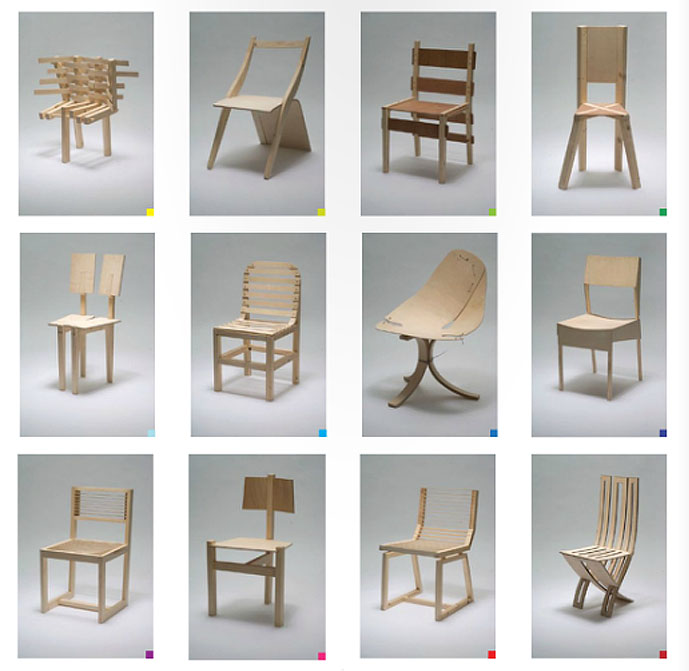
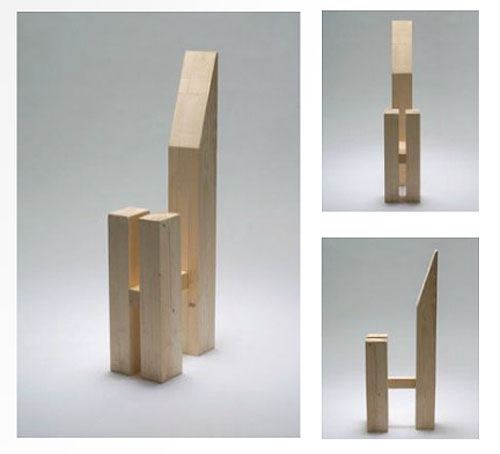
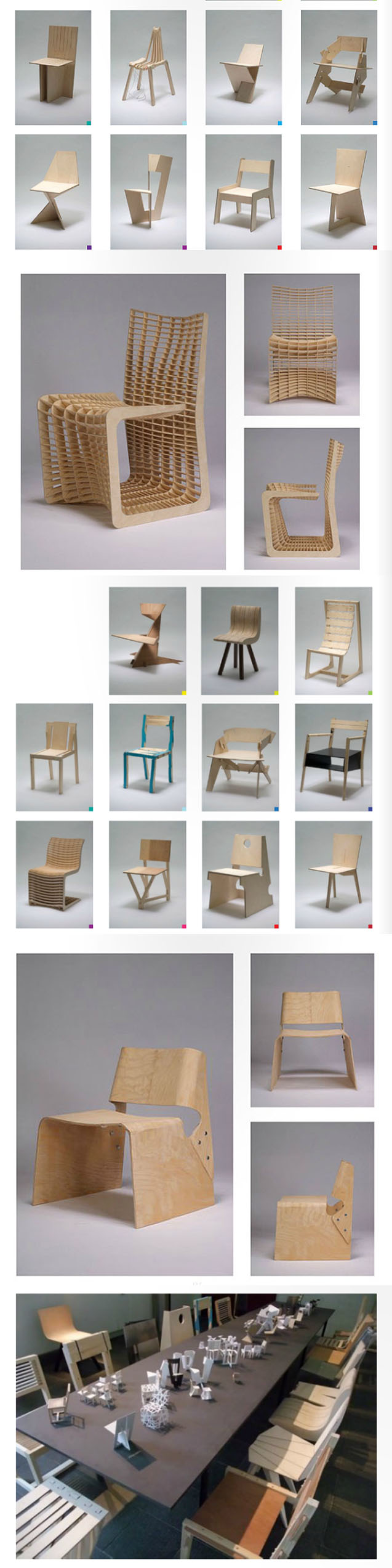
One Chair a Week, Royal Danish Academy of Fine Arts, Architecture School, Students built Full-scale chairsOne Chair a Week, Royal Danish Academy of Fine Arts, Architecture School, Students built Full-scale chairsOne Chair a Week, Royal Danish Academy of Fine Arts, Architecture School, Students built Full-scale chairsThis is the kind of course my daughter Daniela would really enjoy. Associate Professor and architect Nicolai de Gier, along with Deane Simpson and Jesper Pagh taught a chair design course at the Royal Danish Academy of Fine Arts Architecture School. Noting that usually students spend much of course time on sketching and making small-scale models of their chairs, not allowing time to confront the limitations and challenges of the actual building at a 1 to 1 scale, de Gier decided to have his students design and build one chair – one to one – once a week. Each week a new material was assigned so that students would have new experiences and challenges. The emphasis was on quality of concept more than final finish of the chair. The result? You be the judge. The students made 78 chairs in 6 different workshops. I’d say impressive, with some very unique designs, for sure.

You can see the rest of the chairs here, and you can see an unrelated but also interesting project, 100 Chairs in 100 Days, using discarded chairs in London, (via@mrfidalgo) here.

via DDC

GAUD12: Pratt Institute Exhibit

Pratt Institute, Graduate Architecture and Urban Studies Exhibit, GAUD12, SOFTlab, cool cardboard installationPratt Institute, Graduate Architecture and Urban Studies Exhibit, GAUD12, SOFTlab, cool cardboard installationPratt Institute, Graduate Architecture and Urban Studies Exhibit, GAUD12, SOFTlab, cool cardboard installationClick to enlarge

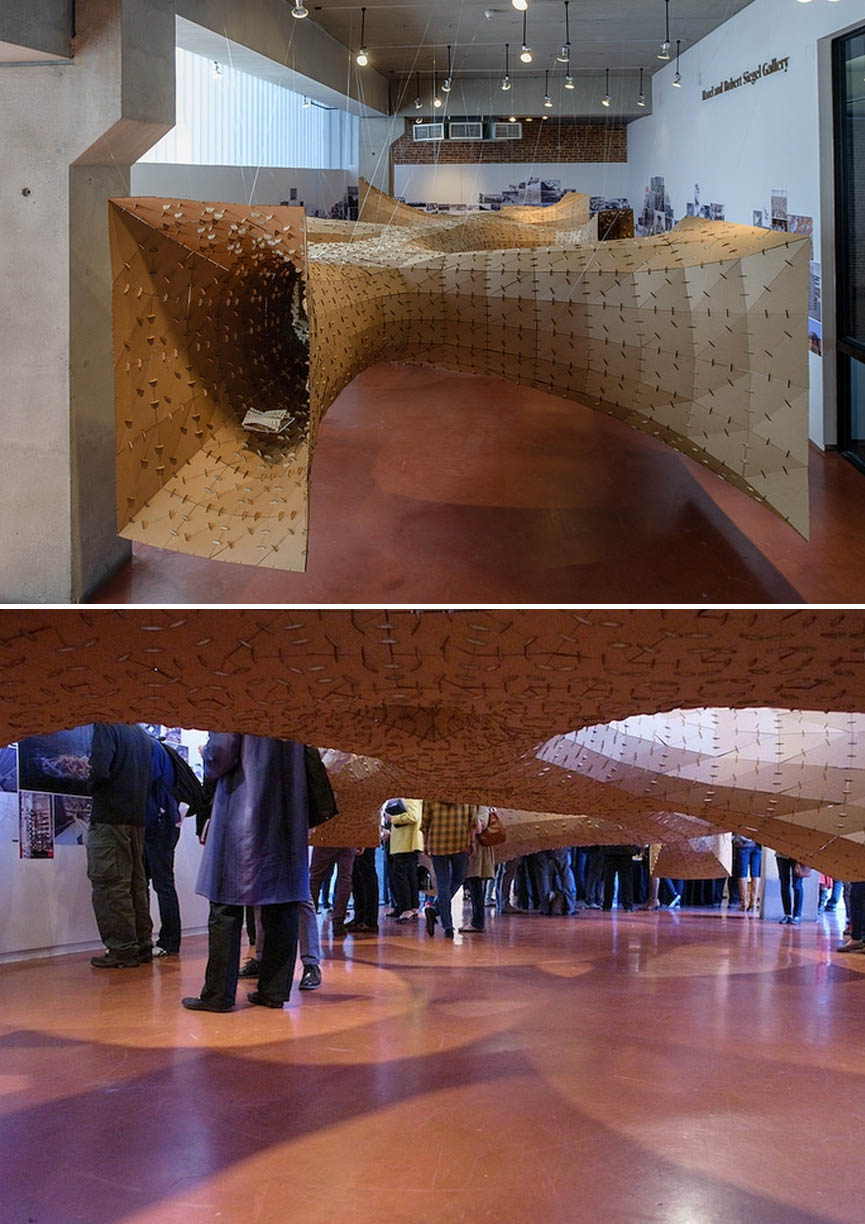
For their Graduate Architecture & Urban Design Student Exhibition, the students at Pratt Institute, under the tutelage of their professors Michael Szivos and Carrie McKnelly of SOFTlab (previously here), created this series of suspended tubular tunnels made up of over 2,400 lasercut cardboard triangles interconnected with 6,000 thin plywood clips, taking over the Robert H. Siegel Gallery. The walls of the gallery are papered with five years worth of student work which can be seen through the portals created by the cardboard installation, which are also used to display models by the students.

You can see the installation in progress in the time lapse video below.

via designboom

Architect’s Eye: Speech Tchoban & Kuznetsov

Interni Legacy 2012, Milan Design Week 2012, cool Sculpture, Installation, Russian ArchitectsInterni Legacy 2012, Milan Design Week 2012, cool Sculpture, Installation, Russian ArchitectsInterni Legacy 2012, Milan Design Week 2012, cool Sculpture, Installation, Russian ArchitectsClick to enlarge

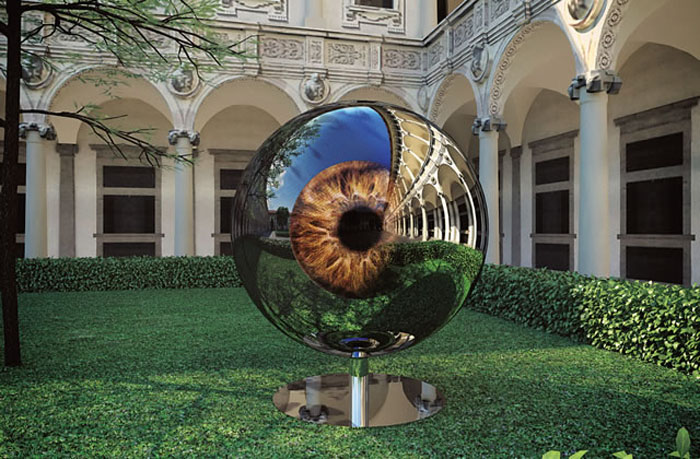
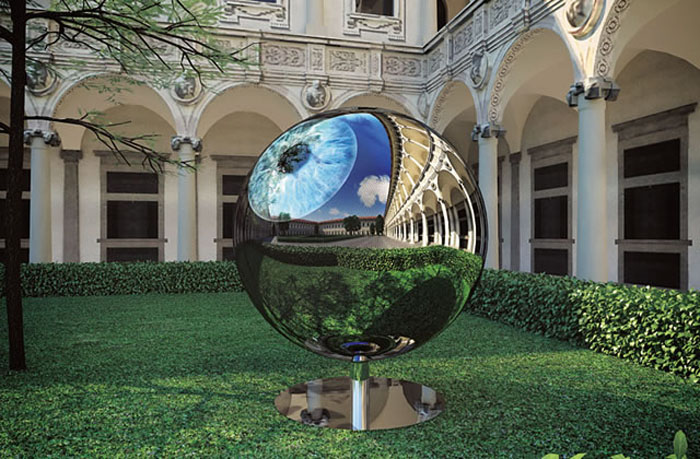
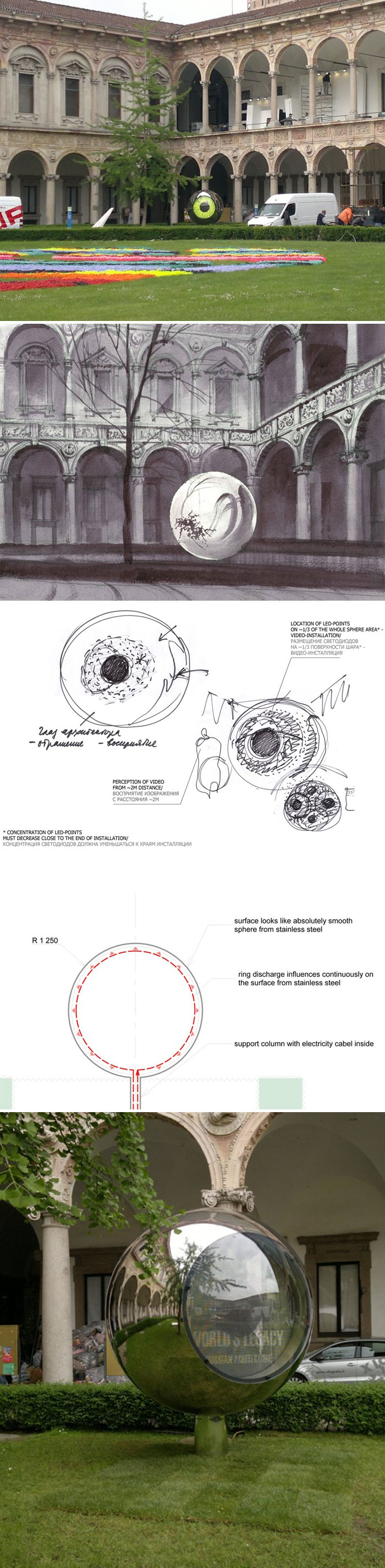
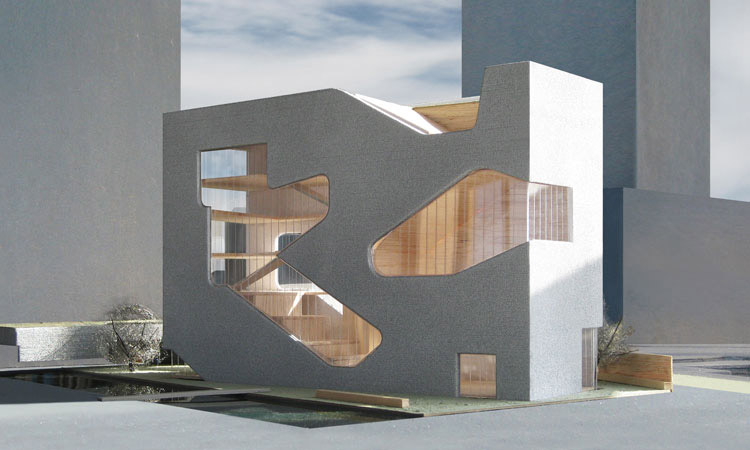
As part of this year’s Interni Legacy event at the Università Statale in Milan, in conjunction with Milan Design Week, Sergei Tschoban and Sergey Kuznetsov, partners of the Moscow based architecture studio SPEECH Tchoban & Kuznetsov, have designed a high-tech sculpture titled The Architect’s Eye. A stainless steel sphere, completely smooth and reflecting, features an LED system to create the image of a huge human eyeball that rotates to look to the sky as well as at visitors and the ground. The iris changes color and the pupil increases and decreases in size. Very cool.

The theme of Interni Magazine’s event is ‘legacy’ and SPEECH’s sculpture dutifully works that in by including images and video of abandoned monuments of the Russian avant-garde, commenting on the importance of preserving our history and cultural legacy.

Steven Holl Architects: Queens Library

NYC architecture, New Architecture, Contemporary Architecture, Libary Design, Queens, Steven HollNYC architecture, New Architecture, Contemporary Architecture, Libary Design, Queens, Steven HollNYC architecture, New Architecture, Contemporary Architecture, Libary Design, Queens, Steven HollClick to enlarge

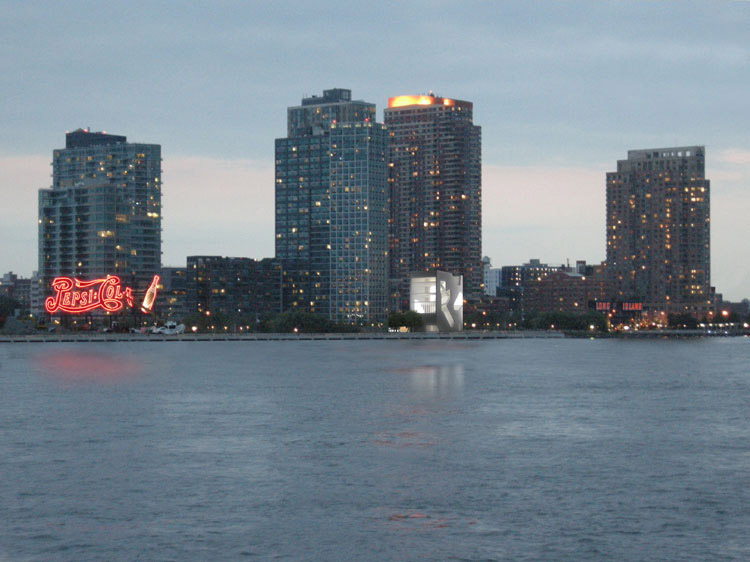
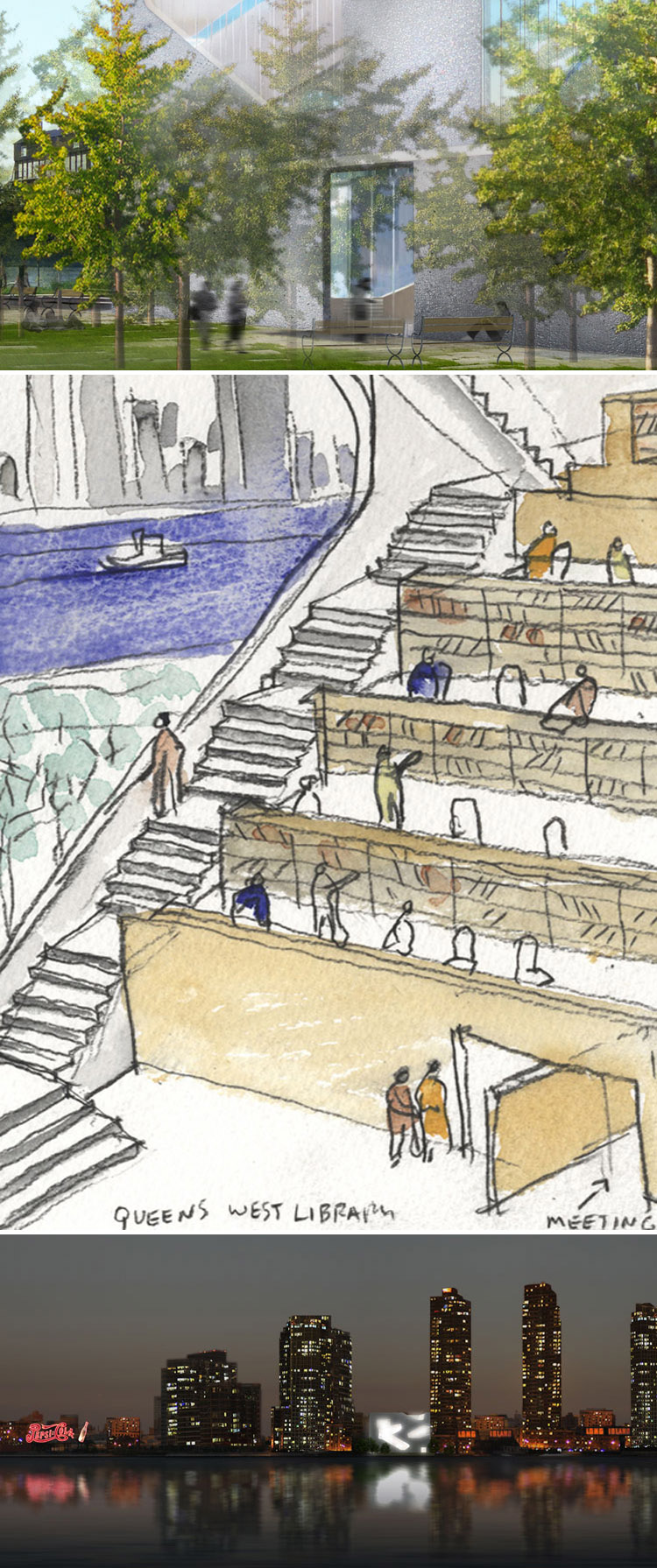
Daniela went to hear New York based architect Steven Holl speak in Providence the other day and sent me a link to his Queens Library in Long Island City, here in NYC, due to be completed in 2013. What a lovely addition to the currently not-very-interesting Queens waterfront. Plus, designed so that a “Manhattan view” stair rises up from the open arrival space, visitors are greeted both with a view of books and the Manhattan skyline over the East River. Not bad.

The 21,000 sq. foot library will be broken up into three separate areas: children, teen, and adult. The plan integrates energy-efficient design and a great amount of public space, including a public reading garden with a bosque of ginko trees, and a rooftop reading garden with amazing panoramic views.

The concrete structure is painted white inside while the exterior insulation and foamed 100% recycled aluminum rainskin give it a bit of sparkle. At night, the building will have a glowing presence on the Queens waterfront, joining the iconic Pepsi sign.

Nuovo Teatro dell’Opera Firenze: ABDR

New Florence Opera House, ABDR architects, contemporary architecture in Italy, TravelNew Florence Opera House, ABDR architects, contemporary architecture in Italy, TravelNew Florence Opera House, ABDR architects, contemporary architecture in Italy, TravelClick to enlarge

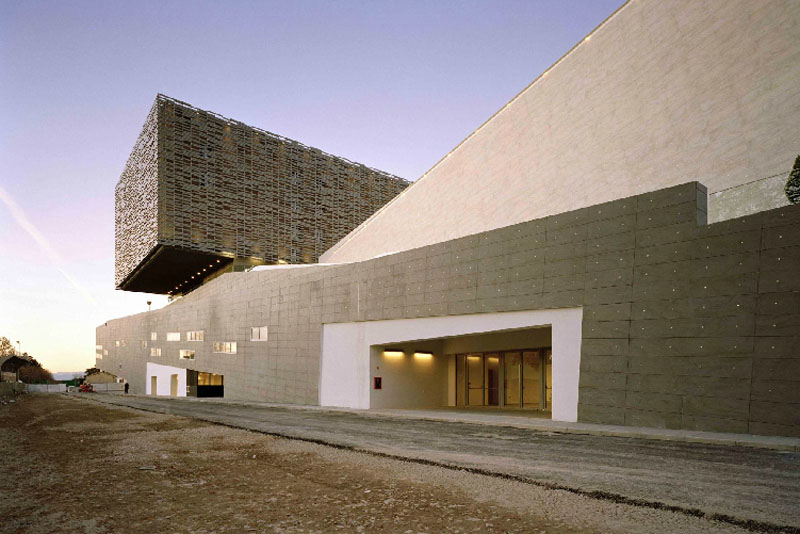
Well, if Michelangelo’s David, Botticelli’s Venus or Tuscan cuisine wasn’t enough of a lure to get you to Florence, as of this past December there’s a new opera house, as well. Designed by the Italian architecture firm ABDR, il Nuovo Teatro dell’Opera di Firenze is only one of the projects included in a new music and cultural district linking the city with Cascine Park referred to as Parco della Musica.

The 1800-seat opera house also includes a smaller hall that seats 1100 and will be used for concerts and recitals. The design intertwines many outdoor terraces and spaces with the interior ones, using pathways to connect these areas. There is a 2000- seat open air facility as well. The large complex is decidedly modern with dramatic angles and curves, with a nocturnal glow caused by the dramatic lighting that shines through the woven exterior. The interior includes smooth geometric lines and warm wood panels.

via floornature

Good Design Lasts

2804 Pencils to create signage, typography, signage design, office design, Spagnola and Associates2804 Pencils to create signage, typography, signage design, office design, Spagnola and Associates
Click to enlarge

New York design office Spagnola & Associates faced the challenge of designing their new office space. They created a 20′ wide dimensional wall to stimulate ideas and complete the office. 2804 pencils were hammered into pre-drilled holes in the panels. The completed wall reads, in custom designed letters, “good design lasts”. The entire process is documented in the stop motion video above.

Nidos Urbanos: Urban Nests

Bird Houses on side of building in Barcelona, Dom Architects, Sparrows come back to nestBird Houses on side of building in Barcelona, Dom Architects, Sparrows come back to nestBird Houses on side of building in Barcelona, Dom Architects, Sparrows come back to nestClick to enlarge

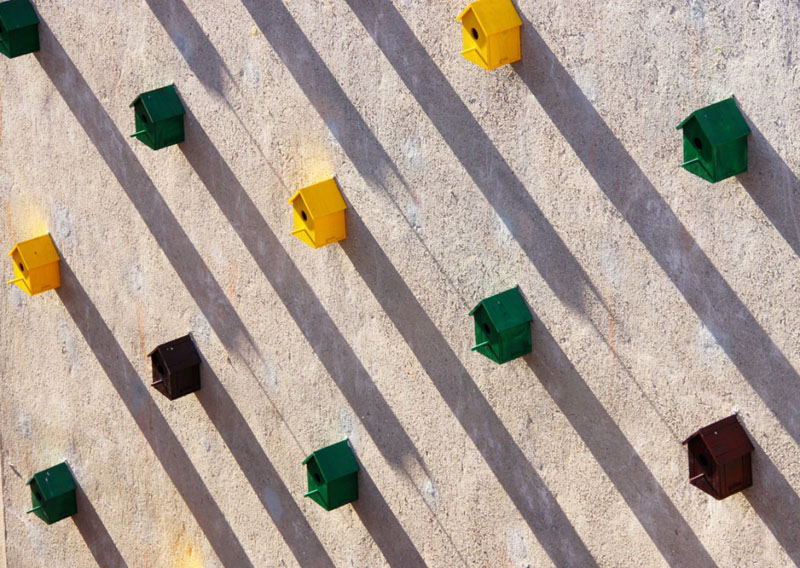
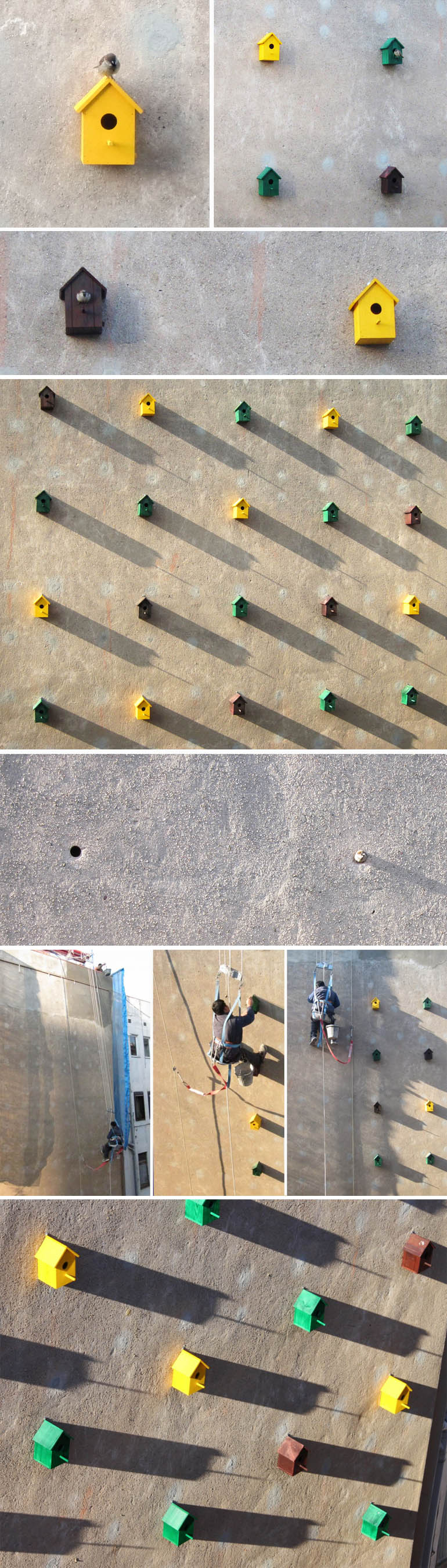
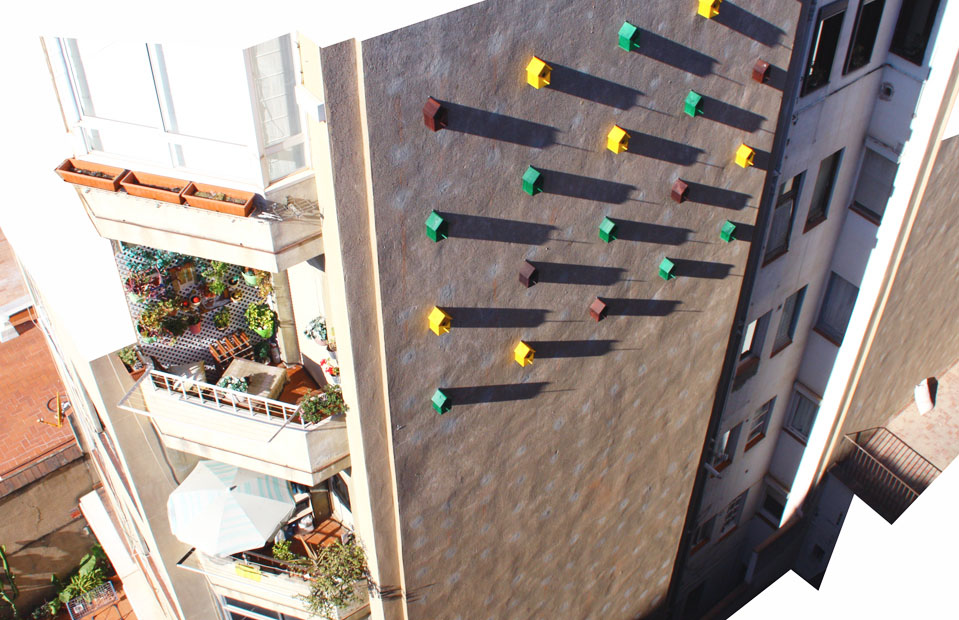
In Barrio de Gracia, Barcelona, a bare concrete wall on the side of a building had been occupied by sparrows, nesting in random holes in the wall. Eventually the wall was repaired, plugging up all the holes, and the sparrows disappeared. In an effort to bring the sparrows back, Dom Arquitectura placed colorful birdhouses equally spaced in rows on the same wall. Not only do the birdhouses bring joyful color to the wall, but the sparrows returned adding life, flight and song to the neighborhood. Nice!

via plataforma arquitectura

Cairns Botanic Gardens Visitors Centre

Sustainable architecture, Australia, Charles Wright Architects, reflective facade, collabcubedSustainable architecture, Australia, Charles Wright Architects, reflective facade, collabcubedSustainable architecture, Australia, Charles Wright Architects, reflective facade, collabcubedcool architecture, sustainable architecture, rainforest, reflective facade, visitor center in AustraliaClick to enlarge

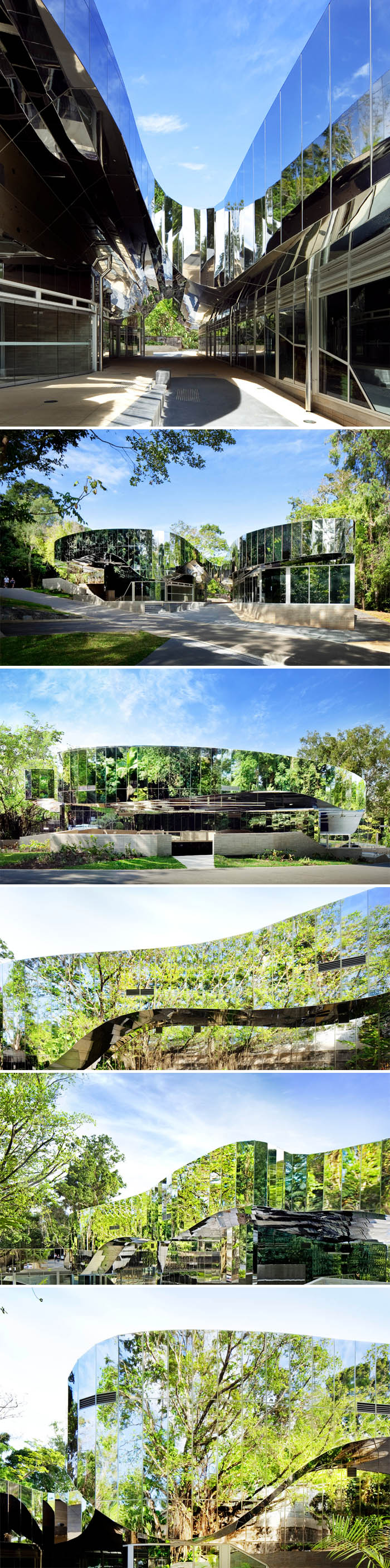
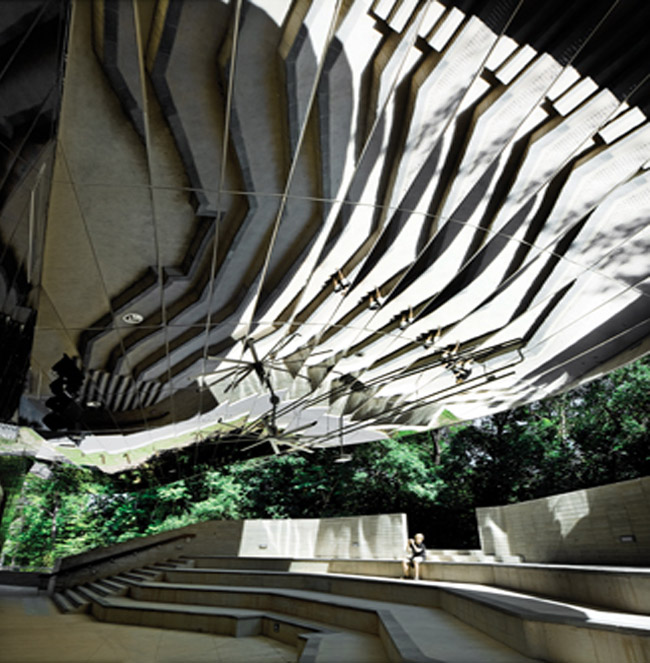
Situated in the midst of the rainforest in Far North Queensland, Australia is the cleverly camouflaged Cairns Botanic Gardens Visitors’ Centre designed by Charles Wright Architects. The mirrored – almost prismatic – façade, walls and soffits of the recently completed building reflect the lush green surroundings adding a coolness to the tropical location.

Met with the challenge of designing an iconic “green” building, Wright Architects responded by producing an ESD canopy as a gateway into the gardens. The structure is a sustainable solution that doesn’t rely on complex technology yet provides thermal convection, water harvesting for reuse, chilled thermal massing for cooling, and renewable energy generation. The Cairns Botanic Gardens Visitors’ Centre is an example of a new progressive direction for tropical design. Plus, it has a very sci-fi look, to boot.

If you like the look of this building, check out Rob Mulholland’s Vestige Installation too.

Photos: Patrick Bingham-Hall

via australian design review

Studio 400: White

Cal Poly San Luis Obispo College of Architecture and Environmental Design, Thesis book show installation, cool and fun art installation, student work, collabcubedCal Poly San Luis Obispo College of Architecture and Environmental Design, Thesis book show installation, cool and fun art installation, student work, collabcubedCal Poly San Luis Obispo College of Architecture and Environmental Design, Thesis book show installation, cool and fun art installation, student work, collabcubedClick to enlarge

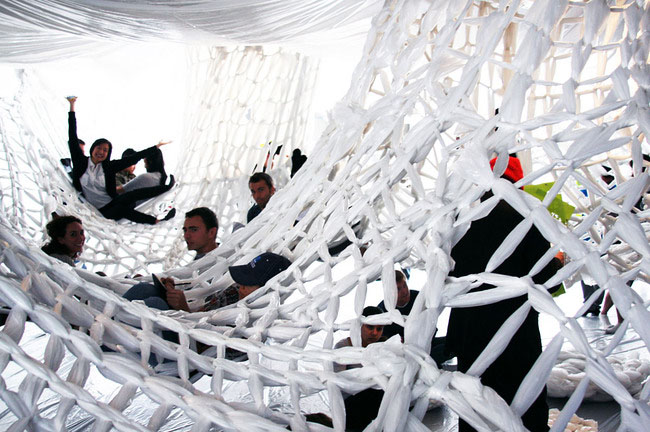
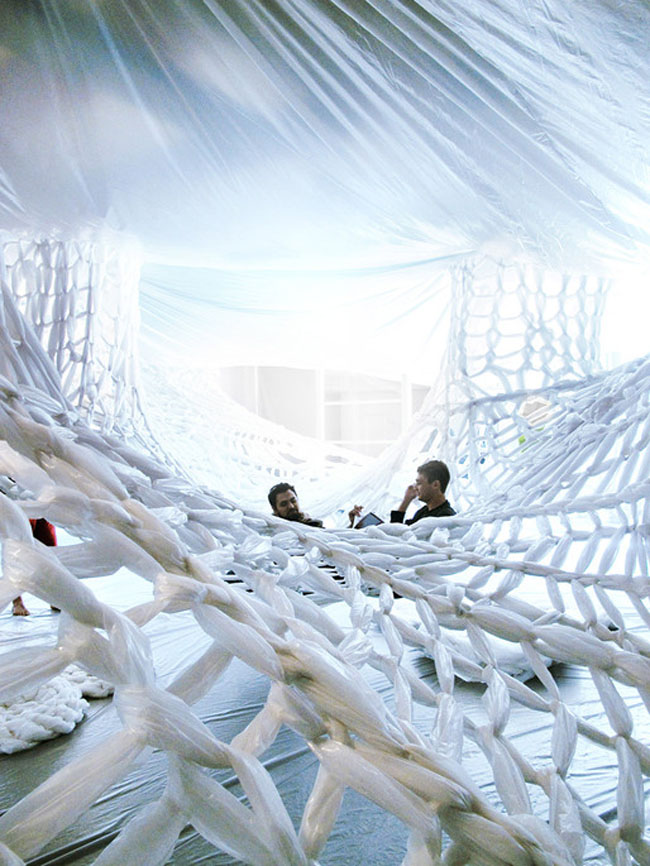
Now this looks like a fun class! Design, developed and installed by students in Professor Karen Lange’s Studio 400 class at Cal Poly San Luis Obispo College of Architecture and Environmental Design, White is their recent book show installation. White served as a showcase for Studio 400’s thesis books, filling the gallery with 80,000 square feet of plastic sheeting that was loomed, crocheted, stapled, bent, and tied over a 4-day period. The result was a fun, comfortable net, creating hammock-like reading spaces within which to peruse the hanging books. Must have been a blast.

You can watch the process in the video below:

If you like this you might also enjoy Ernesto Neto’s installations and For Use.

via sinbadesign/archinect

AVPD: Spatial Works

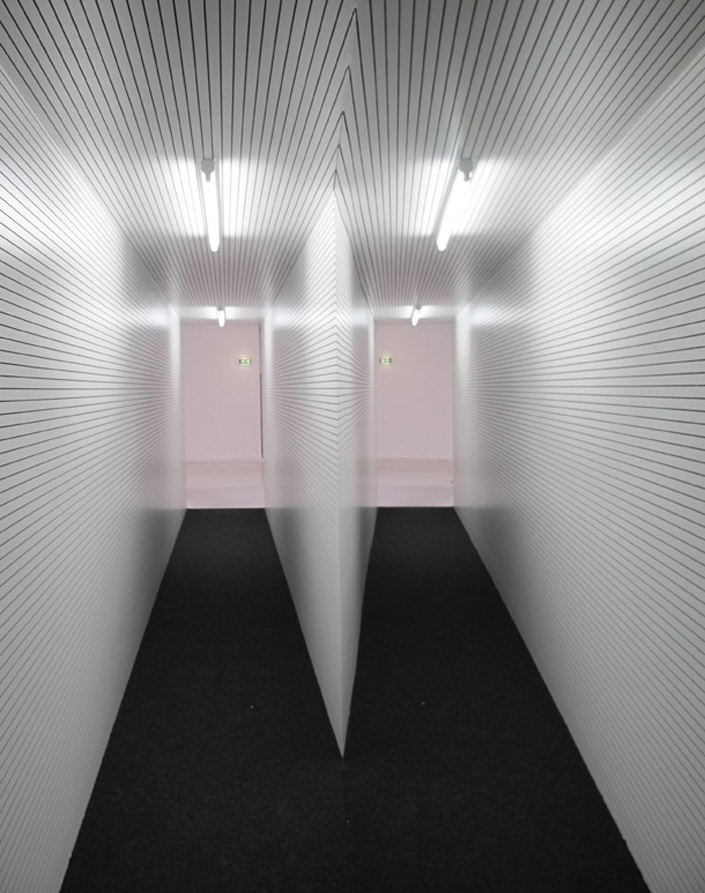
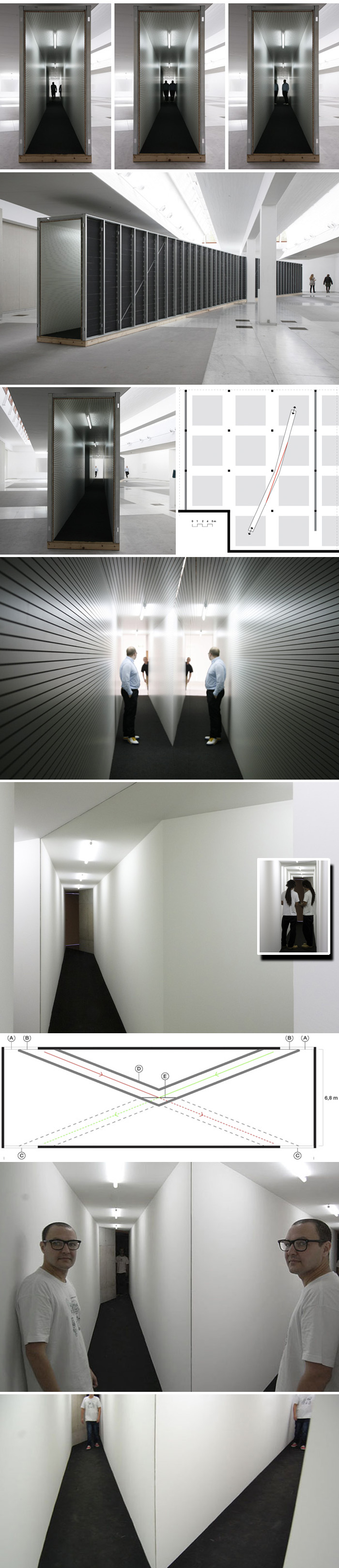
Spatial installations, cool art installations, multiple doors, Aslak Vibæk and Peter Døssing, Hitchcock HallwaySpatial installations, cool art installations, mirrored hallway, Aslak Vibæk and Peter Døssing, Broken View, collabcubedSpatial installations, cool art installations, mirrored hallway, Aslak Vibæk and Peter Døssing, Broken View, collabcubedClick to enlarge

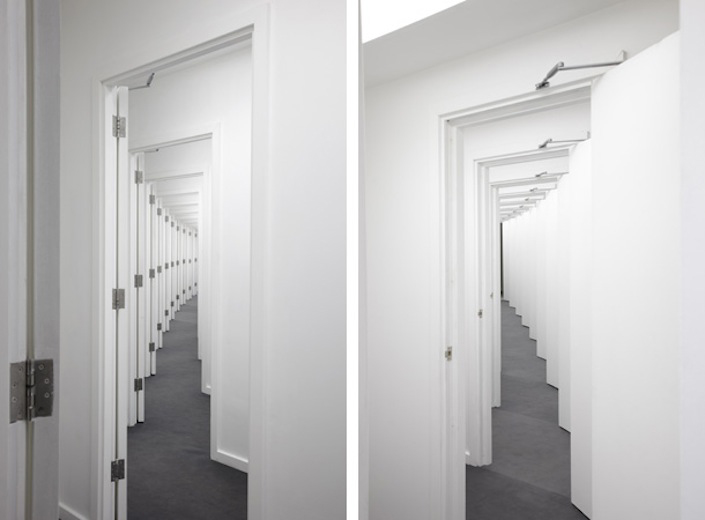
AVPD, a Danish studio created by visual artists Aslak Vibaek and Peter Døssing, unites knowledge from fine arts, architecture, science and the humanities to create works that focus on the perceptual relation between man and space. These installations or spatial works have a fun house quality to them, with their mirrored hallways and infinite doors. The top photo shows their installation aptly named Hitchcock Hallway, while the next five images below are from their Broken View installation where a single corridor appears to become two. The bottom four images are from Diagonal View, which has an equally deceiving hallway.

From AVPD’s website:
We define our spatial works as meta-architectures where the normal perception of the spectator is challenged and displaced and a new experience of space is made possible. In our works, we try to rethink the triangular constellation of the subject, the object and the context. We are interested in how spatial constructions effect the perception of the spectator and how she/he grasps the space in a cognitive, emotional and intellectual way.
Our domain is reality and our artistic praxis is a spatial laboratory.

There are many, many more of these works to be seen on their site as well as videos and plans that explain each one, though I’m quite sure that nothing beats walking through them live.

via galeria leme

Delancey Underground: the “LowLine”

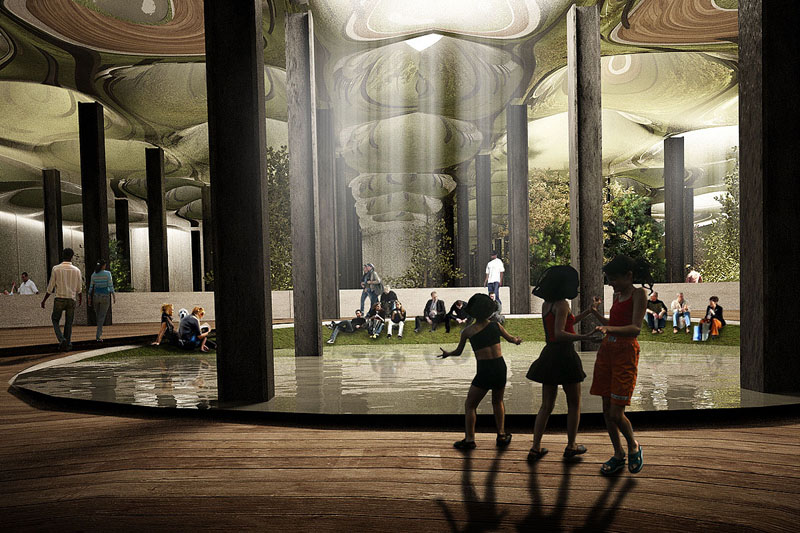
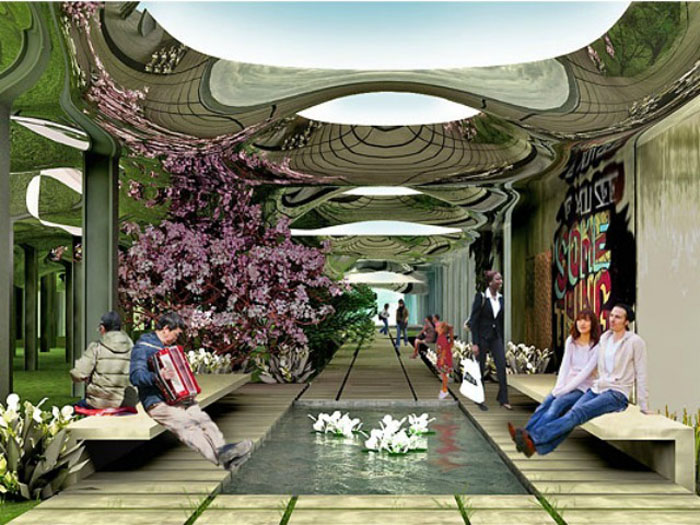
James Ramsey, RAAD, Dan Barasch, PopTech, Arup Engineers, Lower East Side Underground Park Proposal, Kickstarter Project, Delancey Trolley StationJames Ramsey, RAAD, Dan Barasch, PopTech, Arup Engineers, Lower East Side Underground Park Proposal, Kickstarter Project, Delancey Trolley StationJames Ramsey, RAAD, Dan Barasch, PopTech, Arup Engineers, Lower East Side Underground Park Proposal, Kickstarter Project, Delancey Trolley StationClick to enlarge

This is a project that I’m very excited about. Being a big fan of the High Line, the idea of revitalizing another set of unused train tracks to create an additional public park space in NYC sounds great. The Delancey Underground project (a.k.a. the LowLine) is the brainchild of James Ramsey (RAAD) and Dan Barasch (PopTech). They propose to convert the former Williamsburg Trolley Terminal – opened in 1903 but not in use since 1948 – into a 60,000 square foot underground green space beneath Delancey Street in the Lower East Side. They have found beautiful architectural details in the abandoned space such as cobblestones, vaulted ceilings and crisscrossing train tracks.

Dark and gloomy you say? Well, Ramsey has designed a new technology that would direct sunlight below ground via fiber optic cables. Solar collectors would be placed at street level, collecting sunlight throughout the day which would then be reflected below ground. This light would not emit the ultraviolet harmful rays, but would support photosynthesis enabling the growth of plants and trees.

Arup Engineers are now working with the team on a series of feasibility studies as well as on the sunlight irrigation prototype.

The project has a Kickstarter page with three more days to go and information straight from the creators. They have met their initial goal but, as always, a project like this could use more money. In addition, from now until the end of April, the Mark Miller Gallery on Orchard Street has an exhibit previewing the LowLine Park titled Let there be light, with large renderings, a 3D model of the space, animated video and protoypes of the solar reflectors.

via lowdownny and inhabitat
Bikeway Belém: P-06 Atelier

Bikeway Belém, Lisbon, Portugal, Typographic bike routes, wayfinding, symbols, collabcubedBikeway Belém, Lisbon, Portugal, Typographic bike routes, wayfinding, symbols, collabcubedBikeway Belém, Lisbon, Portugal, Typographic bike routes, wayfinding, symbols, collabcubedClick to enlarge

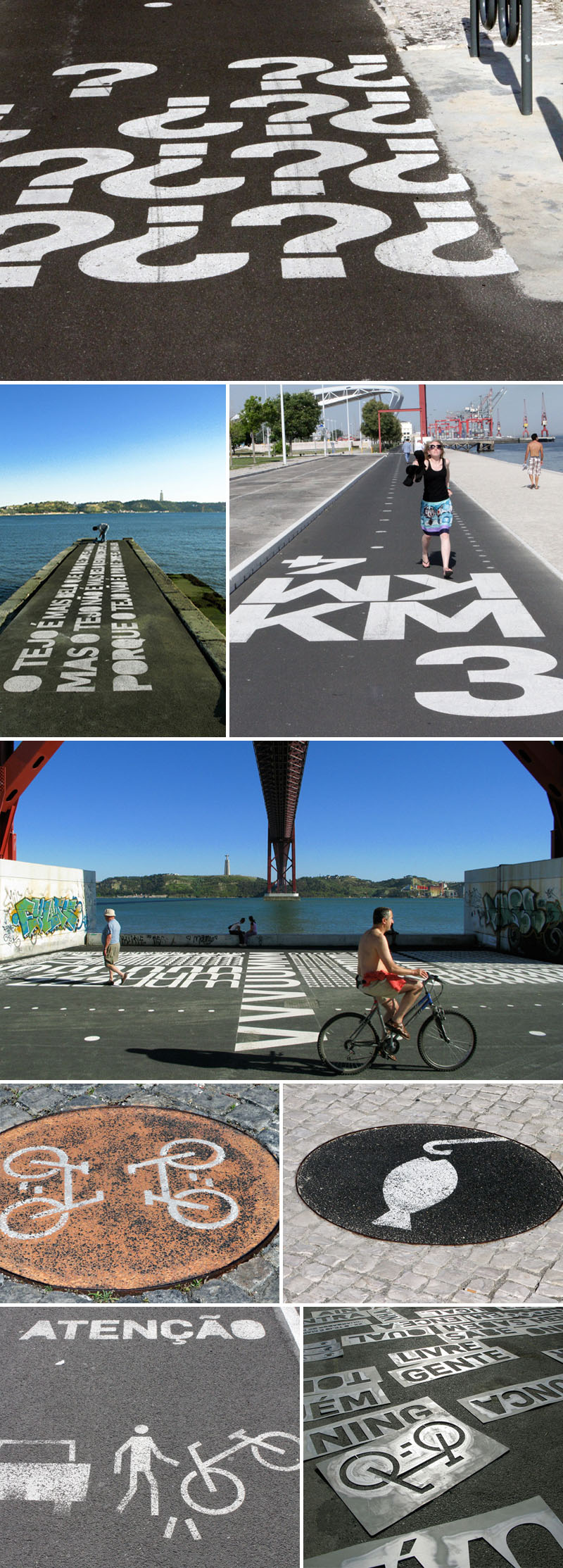
The way I see it, most everything is improved with a little typography. Bicycle paths included. The Bikeway Belém in Lisbon is a prime example. The 7,362-meter bike route along the river Tagus has bold white wayfinding text and symbols painted directly on the pavement which, apart from its practical purposes such as providing direction and measuring distances, is also fun and engaging. There are some ‘zuuuums’ and ‘vuuuums’ printed around as well as arrows and questionmarks that always look good. In addition, along one of the piers, there’s a verse by Portuguese poet Alberto Caeiro about the river Tagus. The project was a collaboration between the Lisbon-based communication and environmental graphics studio P-06 Atelier (previously here) and Global Landscape Architects.
As much as I love the Hudson River bike path, I think a project like this would only enhance it even more.

Photos courtesy P-06 Atelier and Decorating the Duck.

via segd