Haus der Essener Geschichte

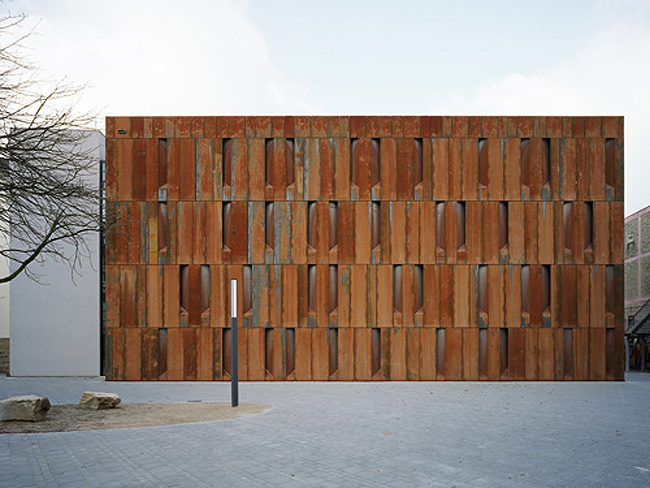
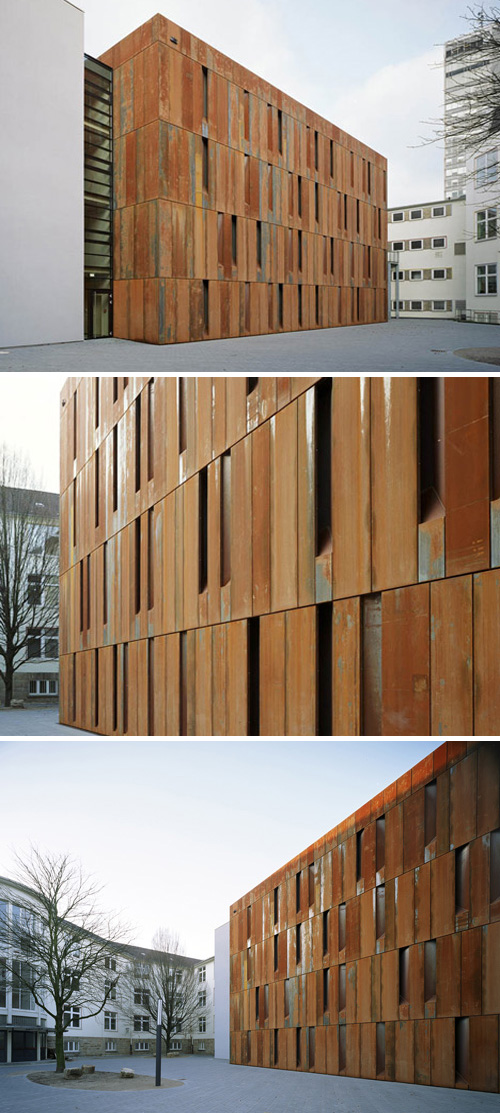
rusted facade building, Germany, weathered steel, Essen, collabcubedrusted facade building, Germany, weathered steel, Essen, collabcubedI’m a fan of rust.  Not so much on the inside of a toilet or behind a drippy faucet, but a nice slab of rusted steel à la Richard Serra offers such a great combination of rich color and texture.

Not surprising, then, that I really love this building by German studio Scheidt Kasprusch Architeckten. The four-story Haus der Essener Geschicte, in Essen, Germany, is clad in corten (weathered steel) which constantly alters and protects itself by corrosion. It demonstrates the change of time as well as alluding to the background of Essen. The building was built to house archives as an extension of the Luisesnschool which is used as a library and exhibition space.

Photos: Deimel & Wittmar

via e-architect

Centro Cultural Oscar Niemeyer

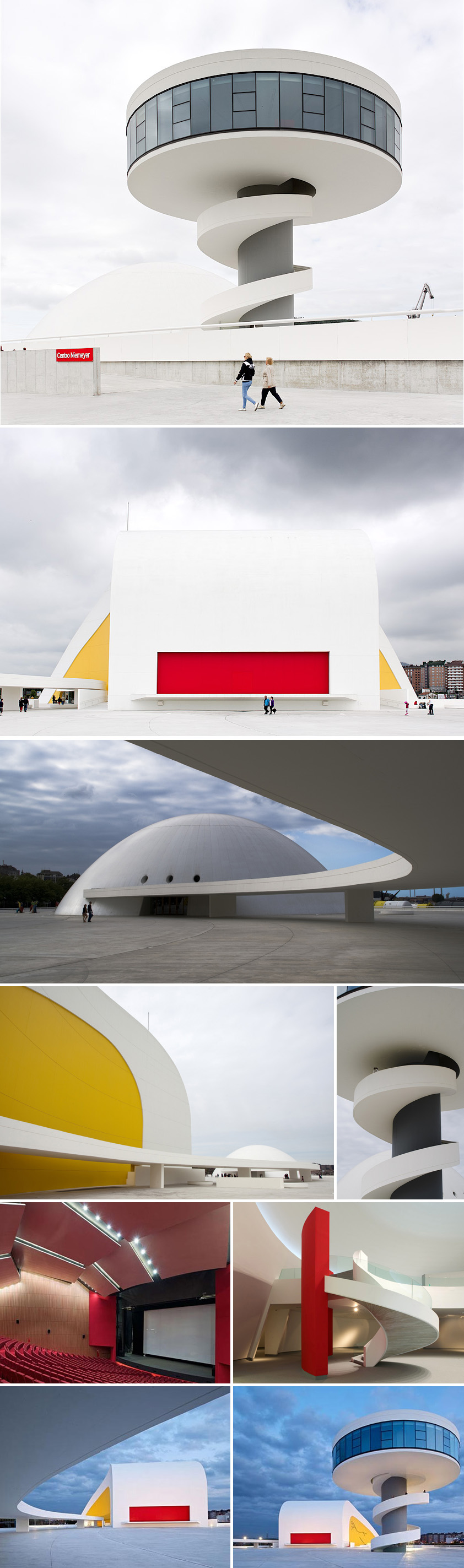
Oscar Niemeyer, Asturias, Aviles, Spain, Architecture, collabcubedOscar Niemeyer, Asturias, Aviles, Spain, Architecture, collabcubedClick on images to enlarge.

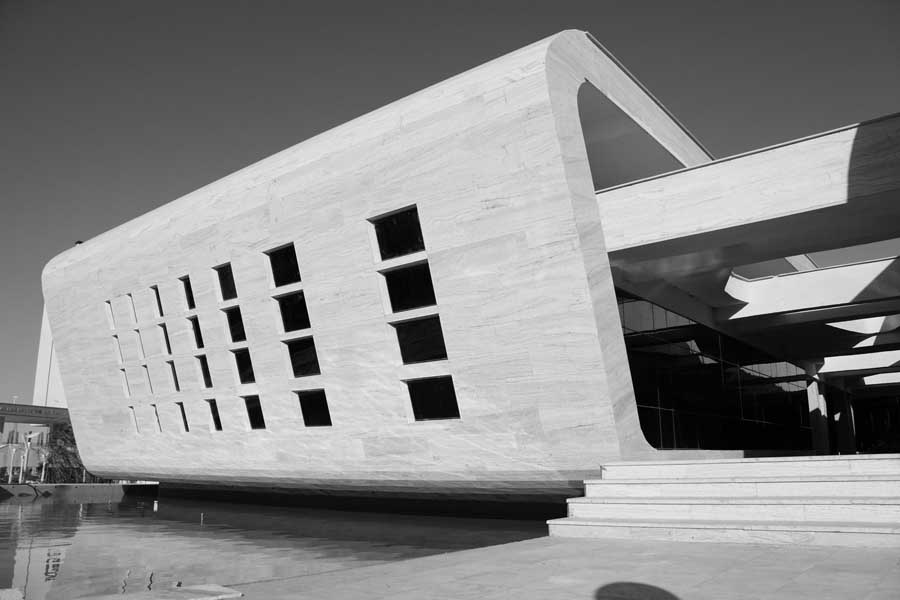
Brazilian architect Oscar Niemeyer is probably best known for his public office buildings in Brasilia, as well as the UN Building in NYC. A pioneer in using reinforced concrete for aesthetic purposes, emphasizing curves and contrasting volumes with empty spaces, Niemeyer donated the design for the Oscar Niemeyer International Cultural Center in Asturias, Spain in gratitude for having been awarded the Prince of Asturias Award of Art in 1989. The center opened this past spring, clearly thrilling photographers for the opportunity to take some beautiful shots.

Photos courtesy of Centro Niemeyer, Avilés, Spain, by Oscar Niemeyer, Photography by © Inigo Bujedo Aguirre, © David Busto Méndez, and enemigo_80’s flickr.

via e-architect

Jean Nouvel: Jane’s Carousel in DUMBO

Jean Nouvel, Jane Walentas, Brooklyn Bridge Park, Dumbo, collabcubedJean Nouvel, Jane Walentas, Brooklyn Bridge Park, Dumbo, collabcubedClick to enlarge.

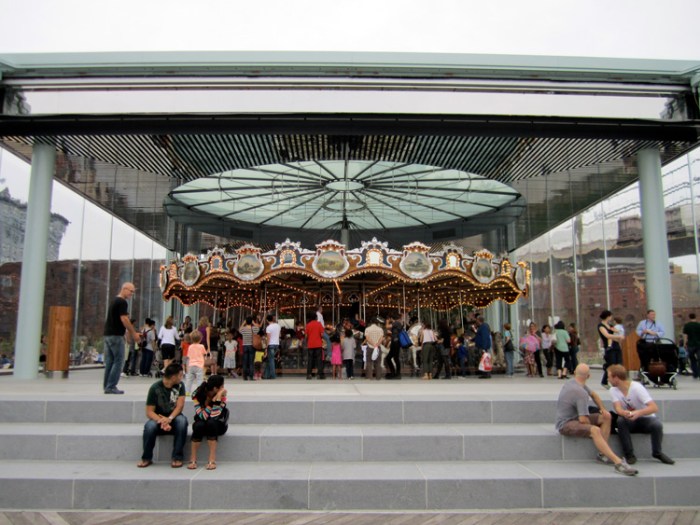
I went over to the DUMBO Arts Festival in Brooklyn last Saturday and visited many an open studio, as well as new (to me) designy shops, the crazy sale at Desigual’s Pop-up Shop, and the large bubble-making contraption in the tobacco factory. All were fun to see, but the star of the festival was the recently opened Jane’s Carousel housed within a pavilion designed by architect Jean Nouvel, as he describes it: the jewelry box for the precious jewel.

The carousel and its box are a gift to the city from the Walentas family. Jane Walentas had been restoring the exceptionally elaborate 1922 carousel since 1984. Positioned on the edge of the East River between the Manhattan and Brooklyn Bridges, the views from the carousel are priceless, whether direct with the retractable doors folded open, or through the impressively thick acrylic walls that add a wavy, almost drippy, distorted quality to the Manhattan skyline. At night, the box acts as a magic lantern with curtains that come down and become screens, allowing the projectors in the middle of the carousel to project the horses’ shadows onto all four sides of the pavilion. I would imagine that to be a lovely sight from either bridge, the water, or Manhattan.

I have to confess that I was not initially impressed by the design when I saw it in the NY Times, but after speaking with one of the structural engineers involved in the project (Gilsanz Murray Steficek) I was assured that the photos did not do it justice. That may be the case here as well, so if you happen to be in NYC, I highly recommend taking a stroll over to Brooklyn Bridge Park and experiencing the size and majesticness of the carousel in person. If nothing else, you’ll get a spectacular view of both bridges and the skyline across the way.
X-TU Architects: Social Housing in Paris

X-tu architects, social housing, Paris, modern architecture, collabcubedX-tu architects, social housing, Paris, modern architecture, collabcubedClick to enlarge.

French architects X-TU have designed a building for social housing on rue Marcadet in Paris. The modern structure is clad in a soft gray aluminum skin, with (seemingly) randomly placed boxed extrusions lined in bright green that frame the windows. In addition to the windows that project off the façade, there are smaller ones that lie flat within the aluminum. The result is a contemporary, bright building with coordinating bright green interiors in the mailroom and entrance staircase, as well as in the tiled bathrooms. And, of course, the bright green folding shutters, both within the exterior boxes and lying flat against the building’s skin.

The building is thermally insulated as per the new regulations and has solar panels placed on the roof, so clearly X-TU architects have taken sustainability into consideration…thus adding even a little more ‘green’ to the project.

via miesarch

Sarah Crowley & Michael Ong: Jewelry

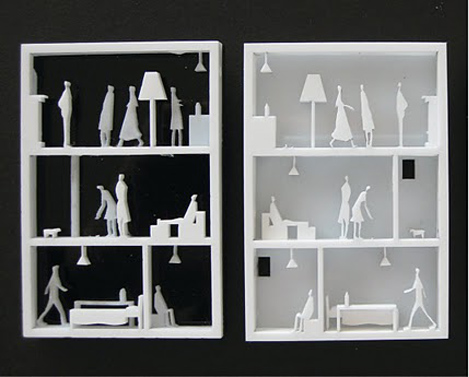
Perspex Brooches, Architecture jewelry, doll house, Australian designPerspex Brooches, Architecture jewelry, doll house, Australian design, laser cut ringsMelbourne based architects Sarah Crowley and Michael Ong have collaborated on a series of jewelry pieces with an architectural twist. The Little Houses brooches, laser cut from perspex, are an ode to the childhood dollhouse. The House rings (white, two-piece photos) are laser cut in layers from plywood into the shape of a house and painted with white acrylic paint. The Godsiller and Dinner rings are similar to the House ring, in that they are layered and laser cut from plywood as well, but painted black.

You can see more of Sarah Crowley’s work on her blog and Michael Ong’s work on his site.

AnnMarie van Splunter: Rubbertree

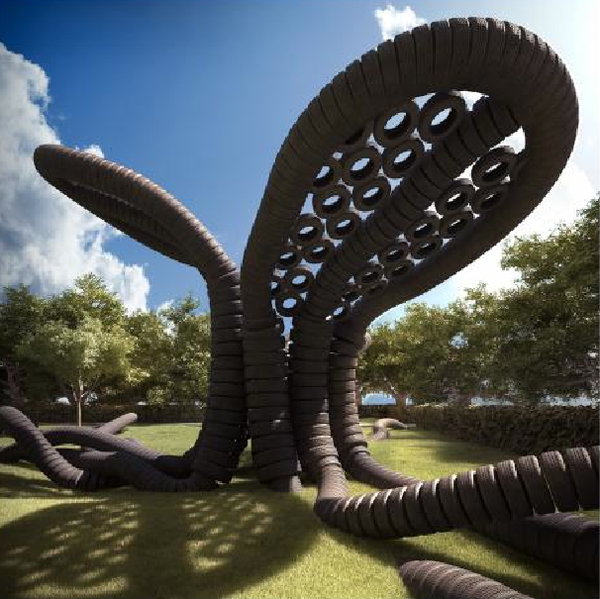
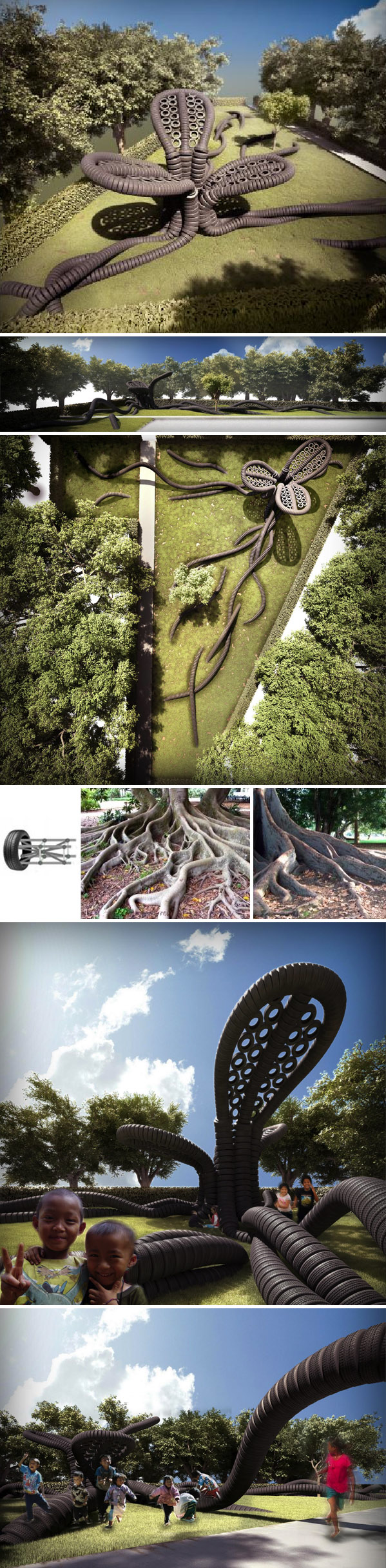
Tire Installation, playground, Thailand, Tree sculpture, collabcubedTire Installation, playground, Thailand, Tree sculpture, refugeesHere’s an interesting concept for reuse of tires in a positive way. Rubbertree, designed by Dutch designer AnnMarie van Splunter, is a proposal for a school playground for refugee children in Thailand. By constructing an oversized sculpture of a rubber tree made of recycled rubber tires, the tires, in a sense, come full circle.

Imitating the long and expanding roots of a real rubber tree, this installation would be relatively easy to build requiring only local materials including motorbike tires, bamboo and rope. No metal parts are necessary. The frame would be made from the bamboo and the tires could safely hug the frame (see small illustration of tire and bamboo above.)

From the designer:
This tree with long and expanding roots offers an open and inviting landscape on different levels: spaces to roam and explore, for spontaneous play.
It provides shelter and shadow and places where children can sit in, on, under, or lean against and find a place where they can make a den and find privacy or can be alone with friends.

Nice!

via Open Architecture Network

Keith Sonnier: Light Installations + Sculptures

Light sculptures, installations, lumen, architecture, collabcubedLight sculptures, installations, lumen, architecture, collabcubedLight sculptures, installations, lumen, architecture, collabcubedClick to enlarge.

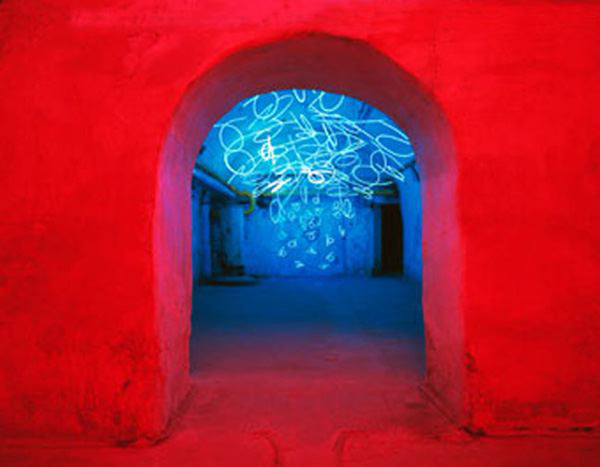
Originally from Louisiana, Keith Sonnier has been working with fluorescent light bulbs and neon since the late 1960s. He has many series of light sculptures with different names such as ‘Ba-O-Ba’,  ‘Sel’, ‘Blatt’ and ‘Chandelier’ each with its own distinctive style and twist. Some more minimalist and geometric, while others busier and loopy.

In addition to his extensive sculptural work, Sonnier has created many installations over the years in public spaces including working with architects such as Morphosis on the Caltrans headquarters building in Los Angeles, an installation in the Lever House, and others in various airports.

Quite the body of beautiful work.

Photos courtesy of Keith Sonnier, Mary Boone GalleryNational Gallery of Australia and the Ace Gallery. All of which are sites where you can see more of Sonnier’s work.

Chrome Hotel in Kolkatta, India

cool hotel design, kolkatta, india, mod, hospitality design, collabcubedcool hotel design, kolkatta, india, mod, hospitality design, collabcubedcool hotel design, kolkatta, india, mod, hospitality design, collabcubedClick to enlarge

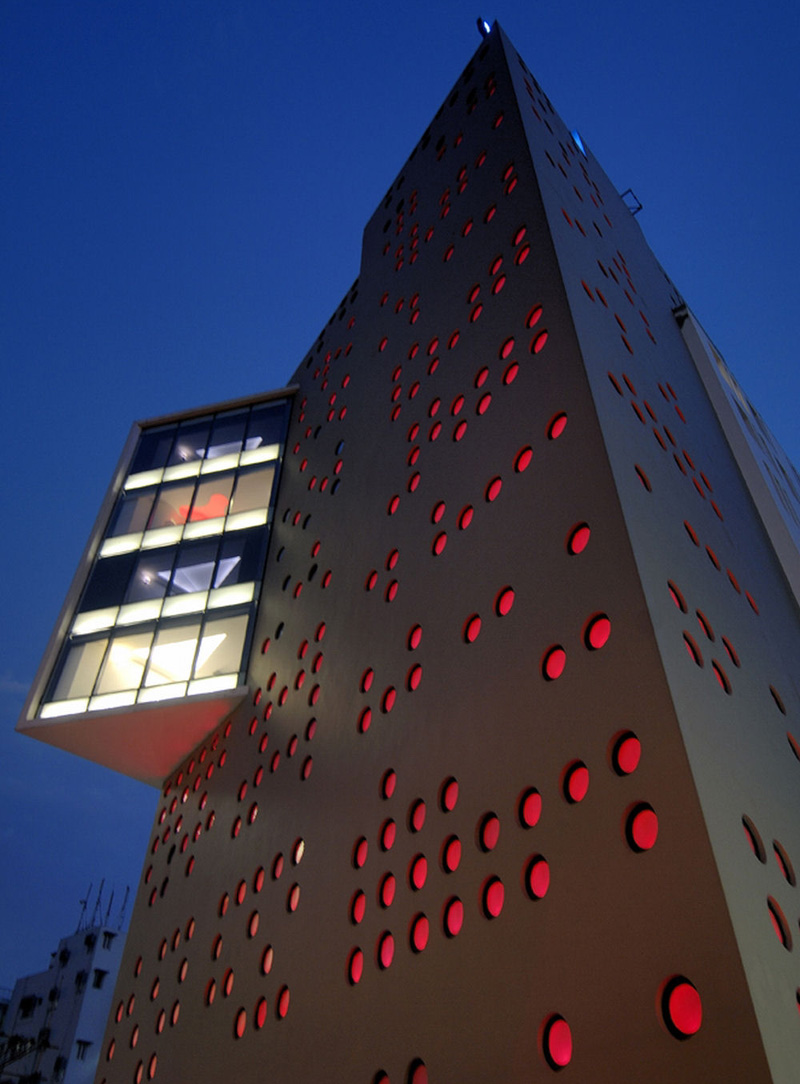
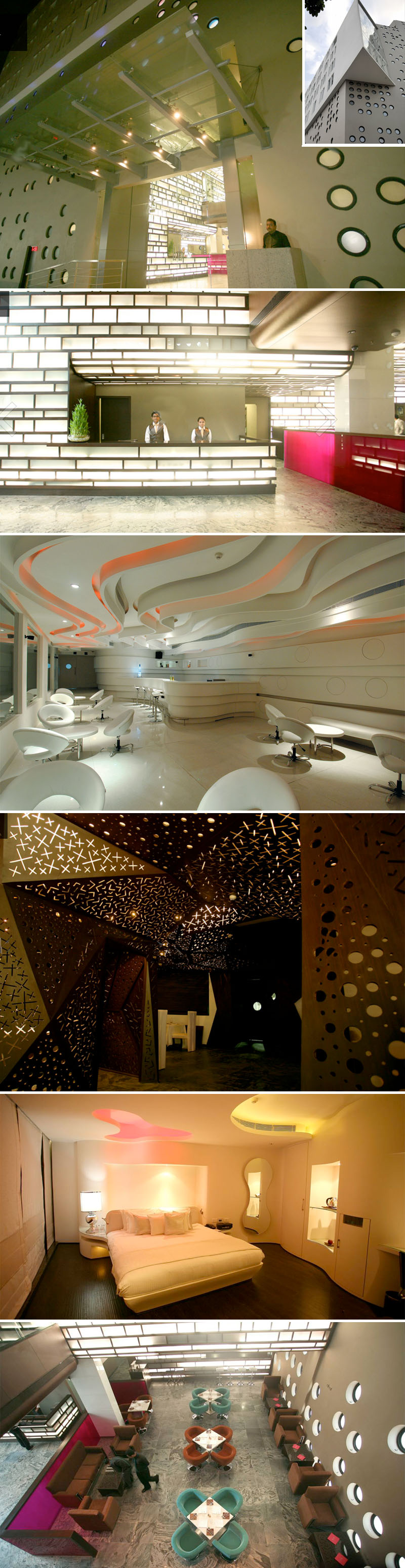
Continuing with Sanjay Puri Architects (I told you I liked their work), the Chrome Hotel in Kolkatta, India looks like a hotel I’d enjoy checking out if I were to be in Kolkatta one day. The circular cutout windows in the skin are arranged in a graphic pattern and are deliberately created in an opaque glass to allow the interior public spaces to have an ambiance of their own, allowing only the light to come through and not the view. In addition, the windows are shaded by concrete fins that surround them which offers privacy as well as acting as a heat barrier, reducing the amount of air conditioning necessary to cool the hotel by a quarter.

The hotel was designed so that each space has its own distinct identity: the sculpted free flowing entrance lobby, the abstract design of the restaurant, a variety of room designs and the fluid shape of the bar offer the guest a series of experiences. Personally, they had me at polka-dotted façade.

Triose: Sanjay Puri Architects

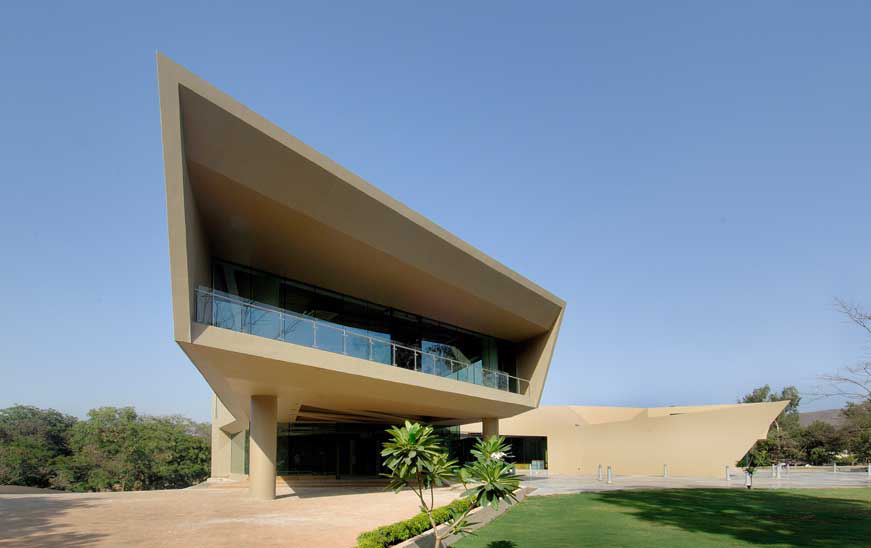
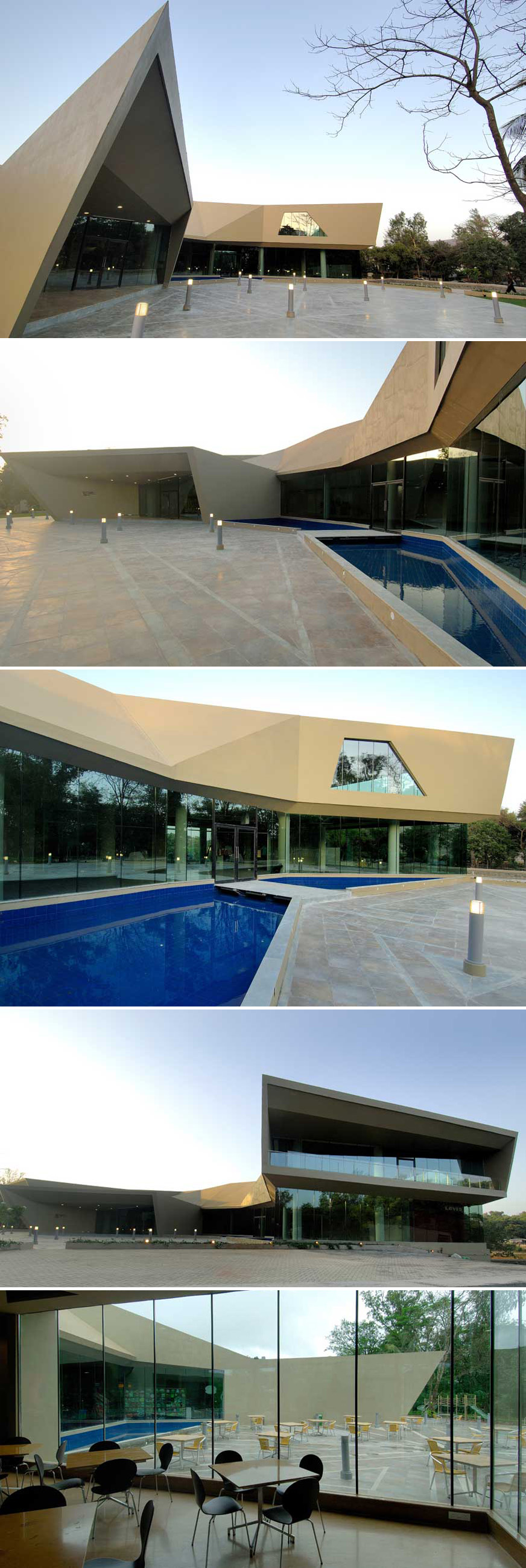
contemporary architecture, India, retail design, collabcubedmodern architecture, lonavala, india, collabcubedSanjay Puri Architects in India were recently shortlisted for the LEAF Awards 2011 on their Triose building in Lonavala, India.

This dramatically angled, folded concrete skin structure houses a few retail shops, a food court, two restaurants, a large bar and an entertainment gaming area. The building is comprised of three volumes that jut out from the core circulation section that interconnects them. There are several trapezoidal windows, including the large balcony area that cantilevers out offering an impressive view from one of the restaurants housed in that section. In fact, the sculptural quality of the building integrates the external surroundings seamlessly with its interiors throughout the edifice.

It’s well worth checking out the rest of Sanjay Puri’s work. Very interesting architecture that pushes boundaries. You can visit their site here.

via e-architect

BP Refinery in Rotterdam

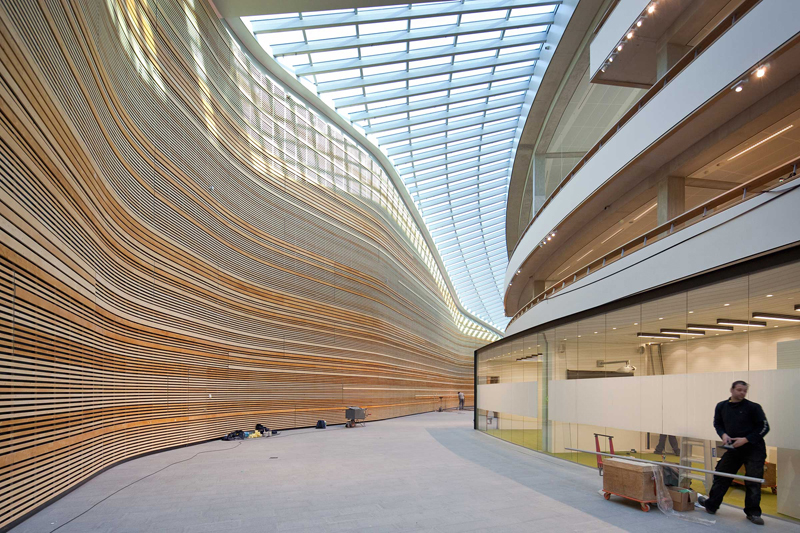
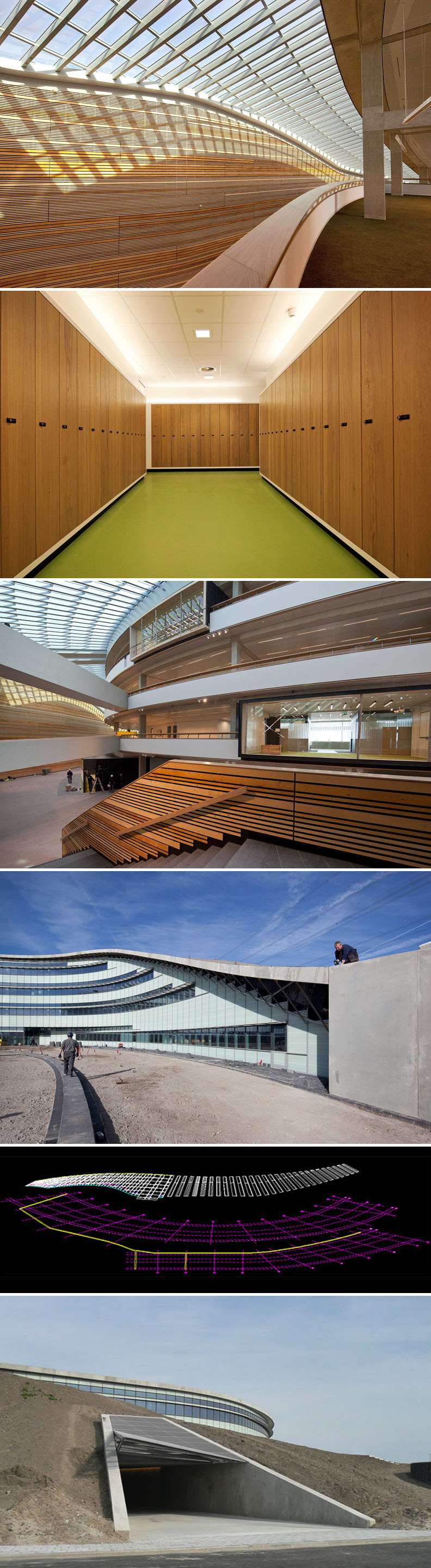
Group A Architects, Rotterdam, Refinery, Atrium, contemporary architectureGroup A Architects, Rotterdam, Refinery, Atrium, contemporary architecturecollabcubed, Rotterdam, Refinery, Atrium, contemporary architectureClick to enlarge.

It may not be PC to feature an oil refinery, especially BP’s with its recent history, but we’re here to talk about design and this is a rather stunning structure. Designed by Dutch architects Group A in Rotterdam, this 10,500 square meter building takes into consideration sustainability and safety in addition to aesthetics.

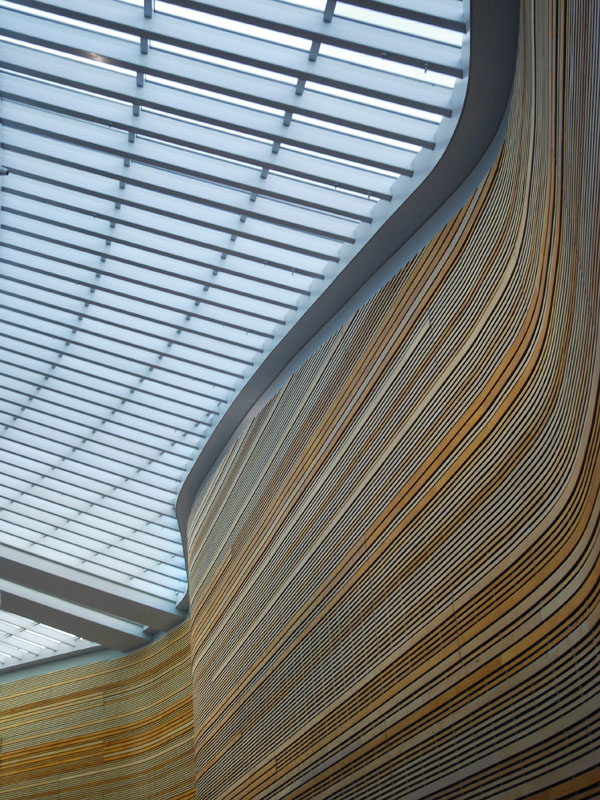
The beautiful and dramatic curved glass atrium wasn’t without its challenges. To keep the costs down, rectangular glass panels were used in as few different sizes as possible. By using the geometric primitive of the cone the architects were able to bend and twist the roof while the panels remained normal rectangles within a structure of tapered aluminum and steel profiles.

The building is hidden in an artificial dune which adds to the dramatic look as well as helping to meet safety requirements.

From the Group A:
On the north side the building is hidden in a new artificial dune, while it appears to be ‘crawling’ out of the dune on the south side. By embedding the building in the landscape, safety measures against the explosion hazard posed by the refineries are being met with. The head office is a dynamic expression of the connection between landscape and building mass.
The dune is also actively and dynamically part of the interior. A large atrium is situated between the offices and the dune. The efficient and flexible offices can be connected to each other, and open up towards the atrium, creating a dynamic and interactive environment.

The expansive timber clad wall enhances the presence of the dune landscape on the interior of the office. The varying wood tones echo the qualities of rock and sand formations. At the same time, the curved front facade emerges from the artificial dune, while the grassy hill hides the building from the road.

via The Archhive

Just Fold It by Kutarq

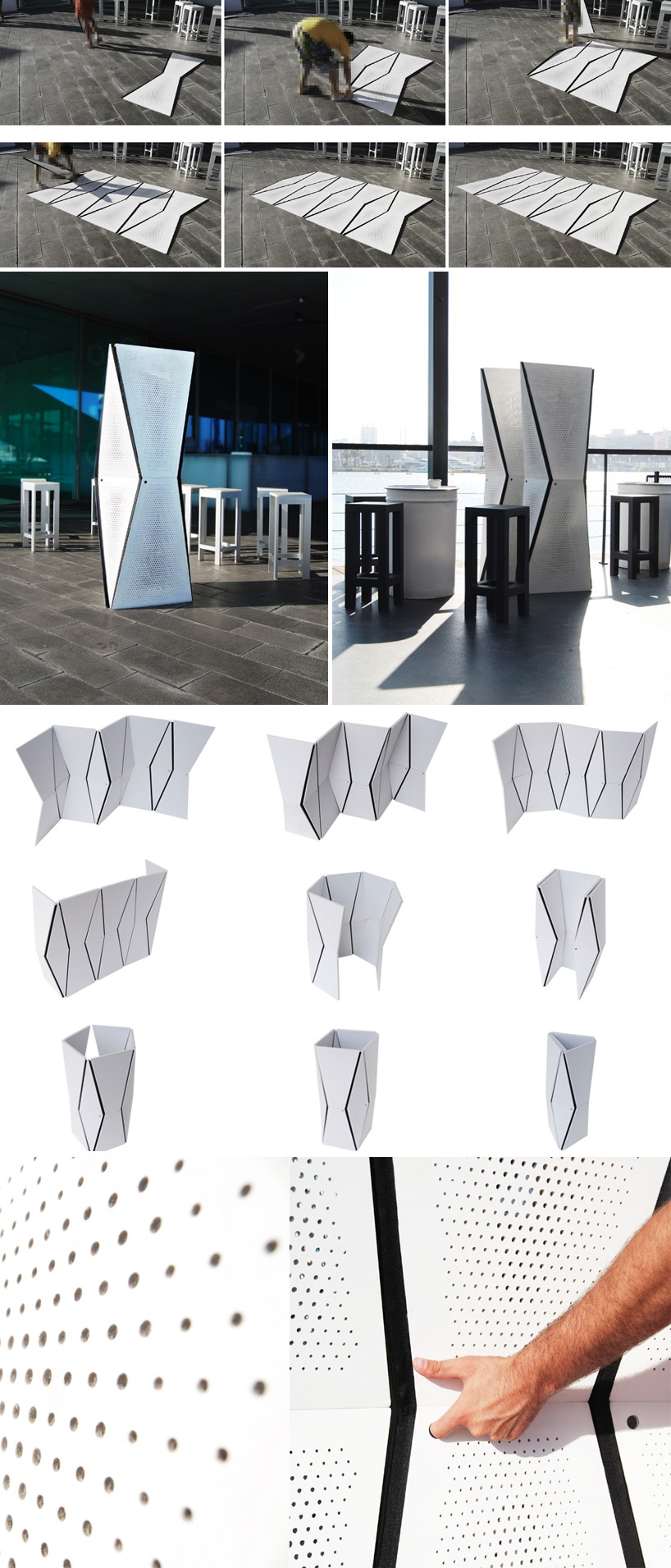
room dividers, partition, architectural, pleated, contemporary designroom dividers, partition, architectural, pleated, contemporary designKutarq, a multidisciplinary firm led by Jordi López Aguiló in Valencia, Spain, has just come out with an interesting design for a room divider. “Just Fold It” is flexible, easy to assemble and disassemble, and the individual models fold compactly making them convenient to store or transport. The length of the screen can be adjusted by adding or subtracting the number of modules. Perforations on the surface increase stability by counteracting wind resistance in addition to varying the porosity which creates a nice visual effect that varies depending on the angle and distance from which it is viewed.

Be sure to check out the rest of Kutarqs products and projects on their site.

PSLAB: Mybar

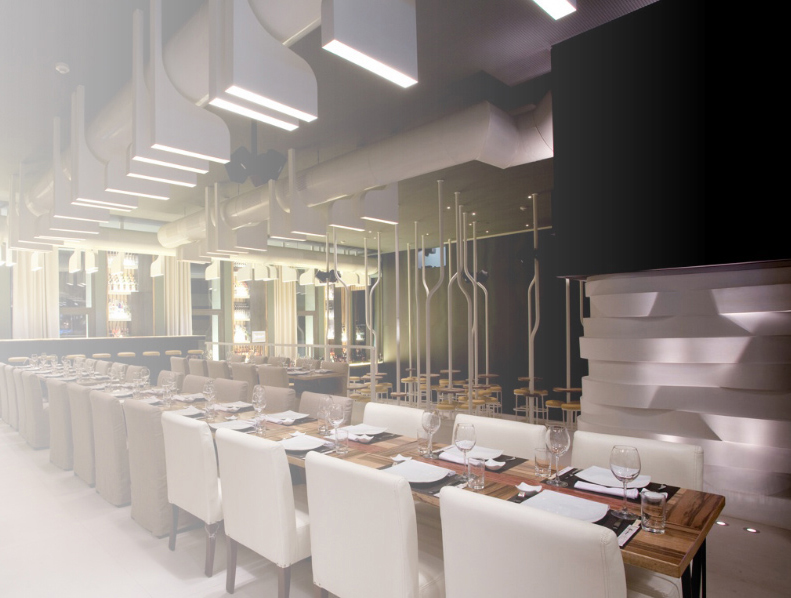
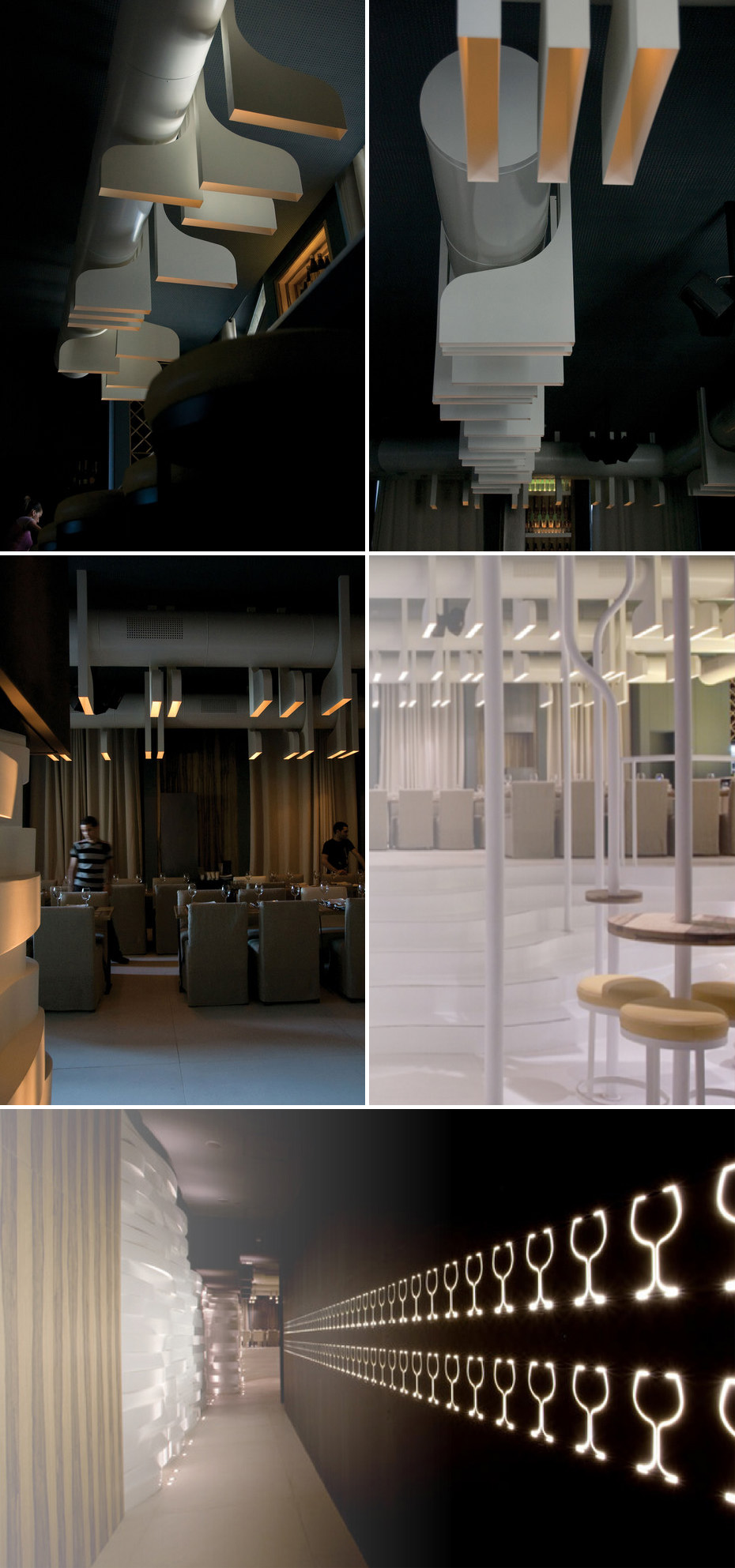
Cool bar, interior design, lighting, Beirut, Lebanon, light fixturesCool bar, interior design, lighting, Beirut, Lebanon, light fixturesLebanese design firm PSLAB designed the lighting concept and fixtures for HGroup Architects on the restaurant/bar project MyBar in downtown Beirut.

Three distinct areas needed to be addressed: the long entrance corridor; the bar; and the dining area. The challenge was to provide a trendy and edgy atmosphere for the evening crowd while keeping it sophisticated to avoid alienating the business professionals who work in the same building and have lunch there.
All the lighting and decor is quite striking, especially the oddly shaped hanging lights. I’d say they succeeded in mixing trendy and sophisticated.

via restaurant and bar design awards

University of Sistan & Baluchestan Restaurant

New Wave Architecture, Iran, Contemporary design, Sistan & Baluchestan Restaurant New Wave Architecture, Iran, Contemporary design, Sistan & Baluchestan Restaurant Click to enlarge.
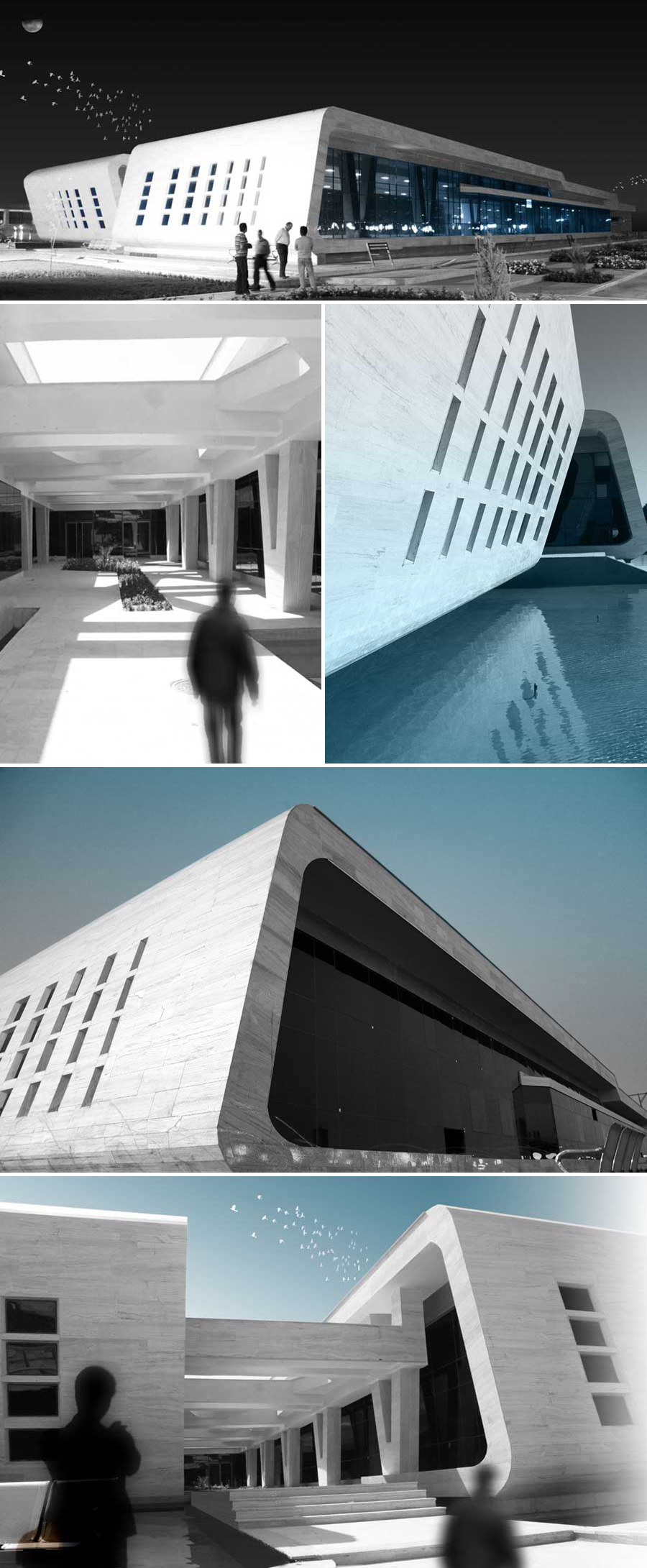
Located in Zahedan, Iran, as part of the Sistan & Baluchestan University, this restaurant, designed by Lida Almassian and Shahin Heidari of New Wave Architecture, has a dramatic folded skin that works beautifully sitting over the water. By breaking the mass into two volumes, the architects were able to make the building communicate nicely with the surrounding landscape.
Consisting of two dining halls, each seating 400 people, deliberately separating the two genders. The total built area is 3000 sq. meters. The building was originally designed in 2006 but was just completed in 2010.

via e-architect

Cuarto Pensante: Interior Design

Hidrosalud Offices, Cub Arquitectura, interior design, cool office design, lightingHidrosalud Offices, Cub Arquitectura, interior design, cool office design, lighting

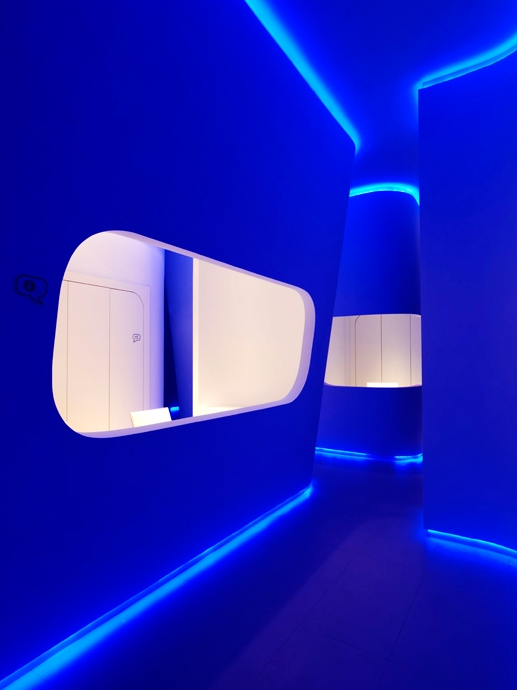
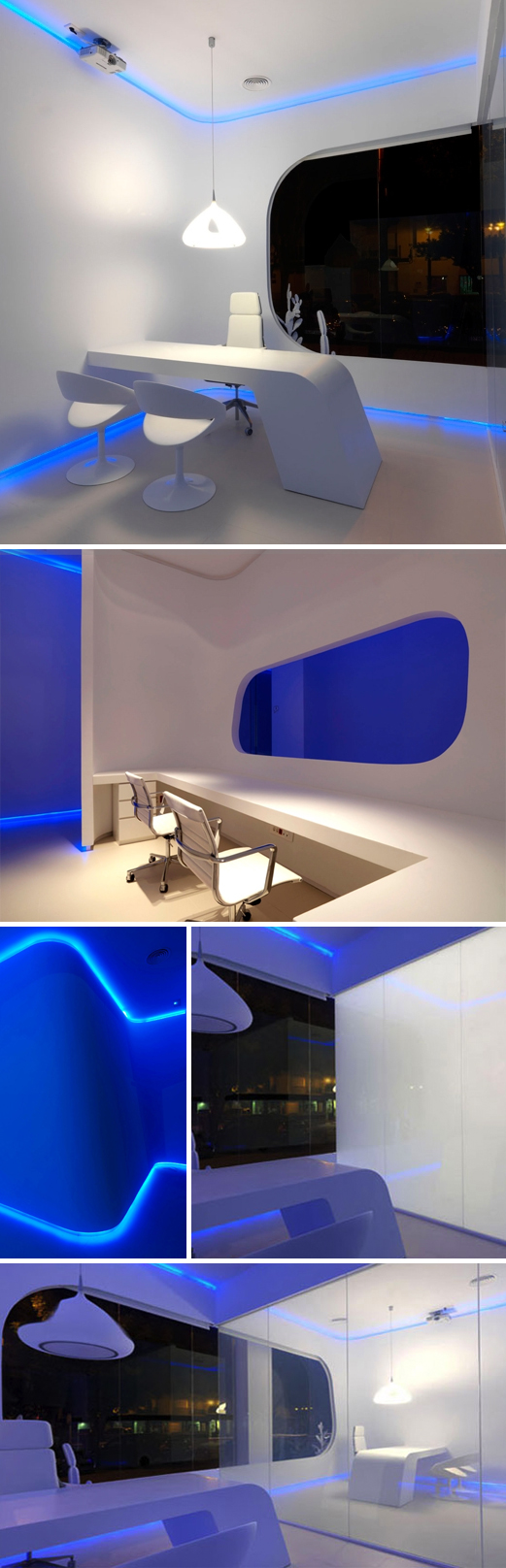
Spanish architects Cuarto Pensante like to say (at least on their website) that they are “creators of spaces and emotions.” Seems to be especially true in their design for the offices of Hidrosalud, a water treatment company in Spain. Everything about the space, from the white walls tinted blue by the winding recessed lights, to the shapes and curves of the walls, has a very flow-y, water-like feel. In addition, some  of the glass walls/windows utilize an Xray lighting system that, when off, allows the glass to be transparent and, when the electric current is on, makes the glass opaque. (Very Bar89-bathroom.)

You can see more of Cuarto Pensante’s projects on their site.

Bosphorus Bridge Nightly Light Show

Light show, LEDs, Lighting, Istanbul, Turkey, BosphorusLight show, LEDs, Lighting, Istanbul, Turkey, BosphorusWhen we were in Istanbul last month we spotted the Bosphorus Bridge on multiple occasions, usually during the day. One night, however, we passed and witnessed a sort of LED light show with changing colors and animation. We wondered if it was a Ramadan-related occasion or some other special event, but as it turns out it’s more of a we-just-like-our-bridge nightly event.

Built in 1973 and linking Europe to Asia, the 1500 meter bridge has been illuminated at night since 2007. It’s a pretty impressive show. Watch it in action in the video below. The light show begins midway into the video.

Photos: Wikipedia and Stockholm Lighting

Jan Henrik Hansen: Music Materialization

sculpture, music into space, digital, architectural facades, cool artsculpture, music into space, digital, architectural facades, cool artsculpture, music into space, digital, architectural facades, cool artsculpture, music into space, digital, architectural facades, cool artClick to enlarge.

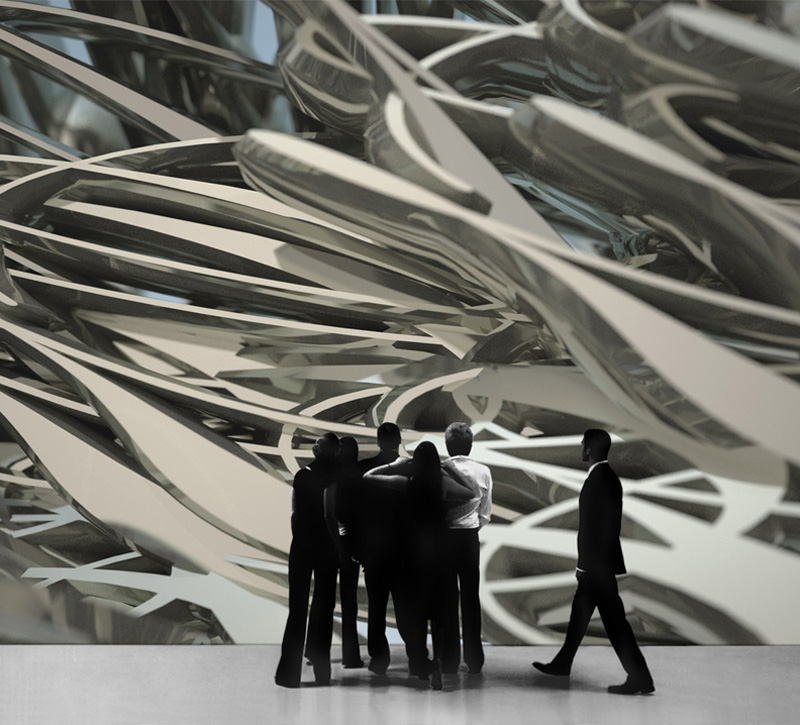
Swiss artist and architect Jan Henrik Hansen has been transforming music into space with his unique digital technique for the past 12 years. It’s not completely clear to me what that exactly means, but the results are singular and impressive. Working with all types of materials ranging from metal to wood to plastic and glass, Hansen creates both spectacular sculptures as well as architectural collaborations that include structural façades, window screens, and interior sculptural walls. He even has a proposal for a Vertical Park based on the USA National Anthem for New York City.

Yes, so back to the music aspect: all these works and structures are based on individual pieces of music from Bach Fugues to Michael Jackson’s “Billie Jean”.

From the artist’s site:
“…His music sculptures relate to their musical source on a subjective as well as on an objective level, dealing with the wide spectrum of music, from single sounds to whole arrangements.”

I would be interested to understand how the transformation from music to artwork takes place, but even without that understanding Jan Henrik Hansen’s work is amazing enough to stand on its own.

Casanueva Pharmacy (Farmacia)

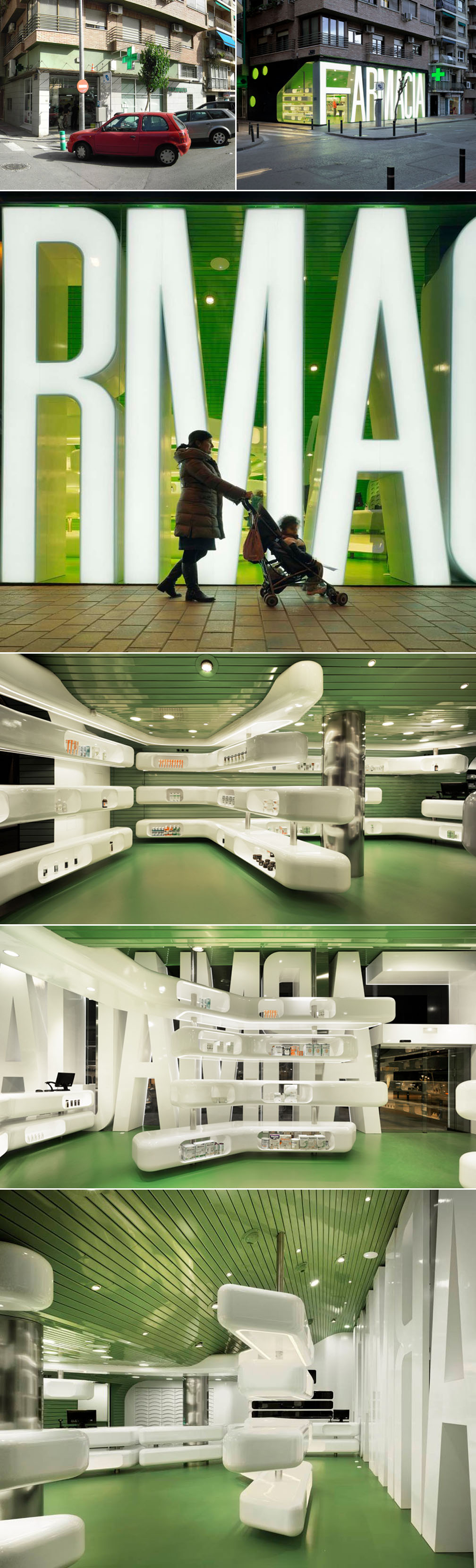
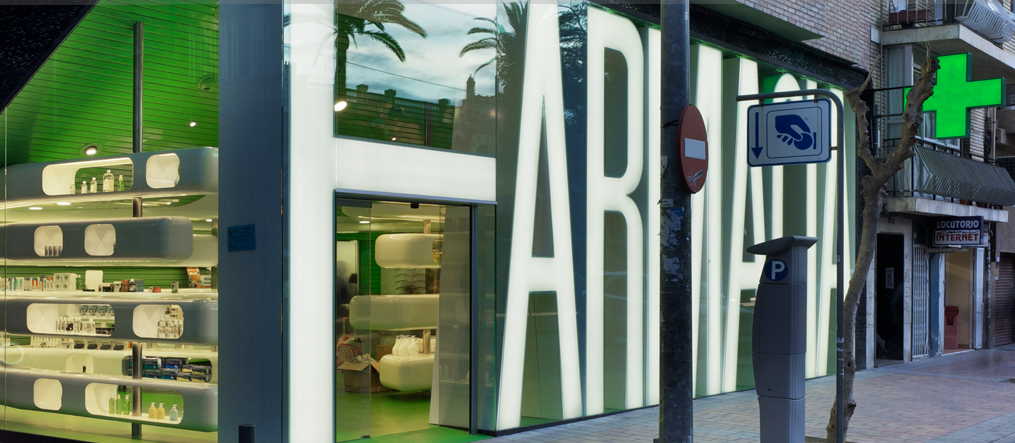
Renovation, Pharmacy, Murcia, Spain, Type, Architecture, Store designRenovation, Pharmacy, Murcia, Spain, Type, Architecture, Store designRenovation, Pharmacy, Murcia, Spain, Type, Architecture, Store designClavel Architects led by Manuel Clavel Rojo, took on the renovation of the Casanueva Pharmacy in Murcia, Spain. (See before and after photos second row from top.) One of the major challenges of the project was that it had to be completed in two months and the store remained open during the first month. Because of this, 95% of the project was prefabricated.

The amazing façade (who wouldn’t want a façade made of type? And one that lights up to boot!) not only spells out the store’s identity but serves as a shading mechanism from the hot afternoon sun. The façade and all the interior furnishings were prefabricated in a workshop, and the slat cladding was also a quick-to-build solution.

I think Duane Reade with all their constant renovations would do well to pick up a pointer or two from Clavels cool redesign.

BMW Guggenheim Lab (follow-up)

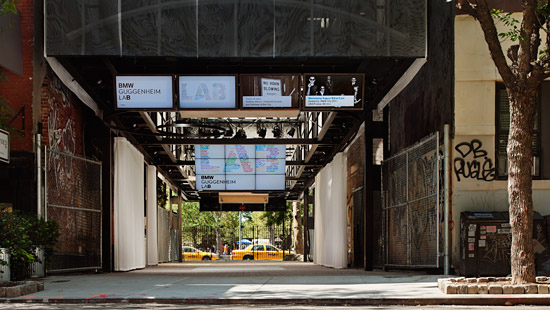
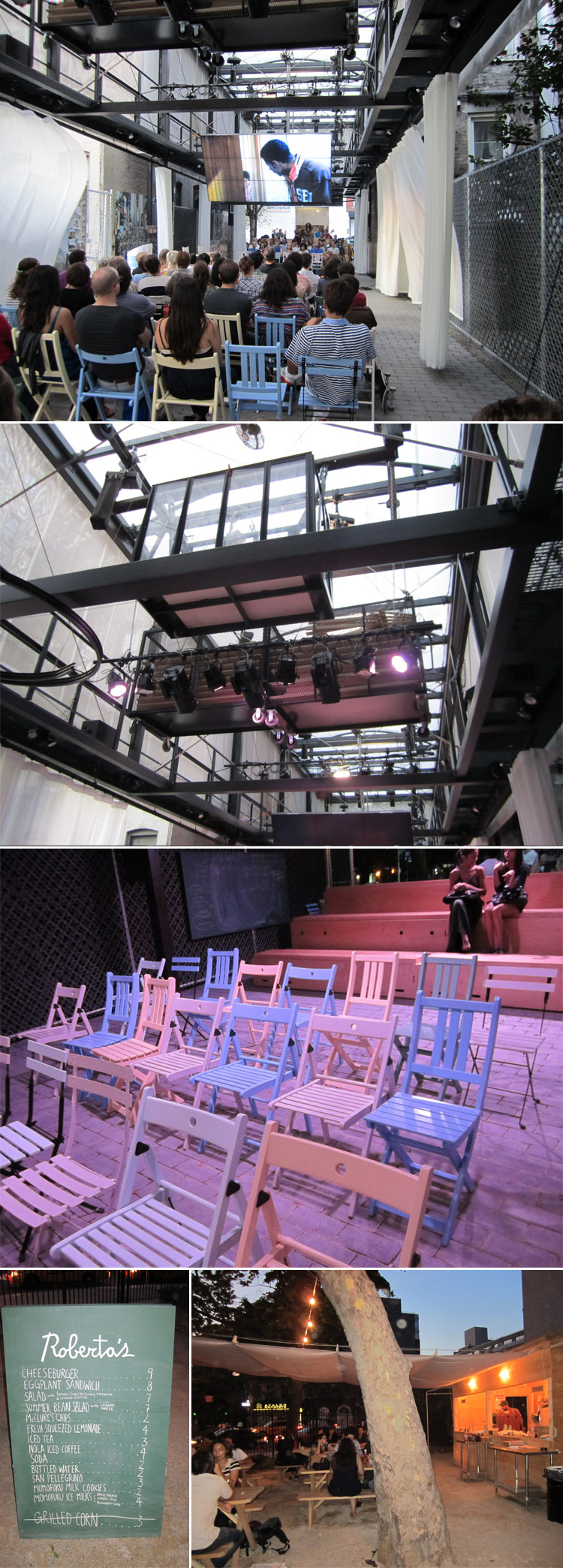
NYC events, think tank, film screenings, architecture series, sustainabilityNYC events, think tank, film screenings, architecture series, sustainabilityI finally made it over to the BMW Guggenheim Lab earlier tonight to see a screening of Garbage Dreams, a film about the Zaballeen (garbage people) living in the outskirts of Cairo. The film was very good, but what I was most excited about was the Lab itself.

For a description of what the BMW Guggenheim Lab is, and is setting out to do, you can see our previous post. What the BMW Guggenheim Lab felt like, was an oasis of tranquility off the bustling, hectic thoroughfare that is Houston Street, especially at rush hour. The minimalist structure (designed by Atelier Bow-Wow from Japan) is surprisingly cozy, and remarkably quiet considering its few steps from Houston Street and Second Ave. Only the occasional mufflerless motorcycle disrupted the film and/or speakers. Also surprising was how well the screen projected even in the daylight. And once the sun did go down, the Lab was warmly lit by spotlights.

It’s these sort of things that make NYC such a wonderful place. Free, interesting events in a lovely setting, open to everyone, with something for most everyone. There are lectures on architecture-related topics and sustainability. There are family-oriented events. There are screenings of films as well as guest speakers that range from authors to television directors to inventors and much more. The BMW Guggenheim Lab is open Wednesdays through Sundays until October 16th in NYC before moving on to Berlin. Check their site for the calendar of events. Oh, and there’s a café run by Roberta’s and bathrooms on the premises as well, so there’s really no excuse for not stopping by if you’re in New York.

Top photo: Paul Warchol from the BMW Guggenheim Lab site.