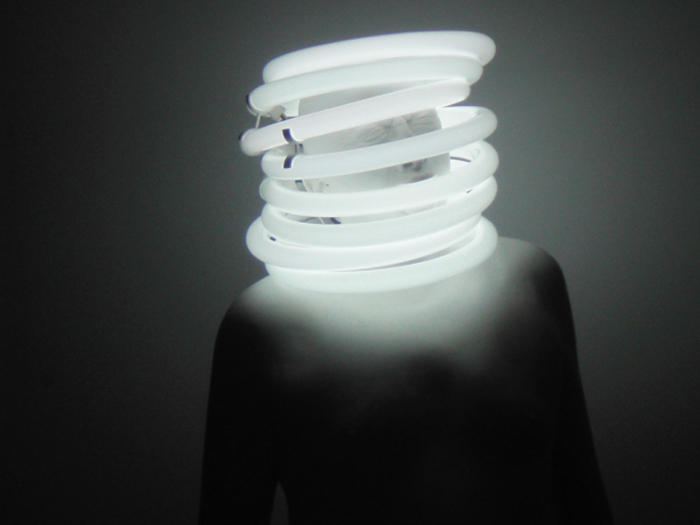
 Bernardi Roig’s white sculptures—casts of real people—are typically blinded or encumbered by light. Obsessed with death, immortality, and human desire, Roig’s solitary men are a bit disturbing and sad, but intriguing at the same time.
Category Archives: Art
Rose Nolan: Typographic Art

 Click to enlarge
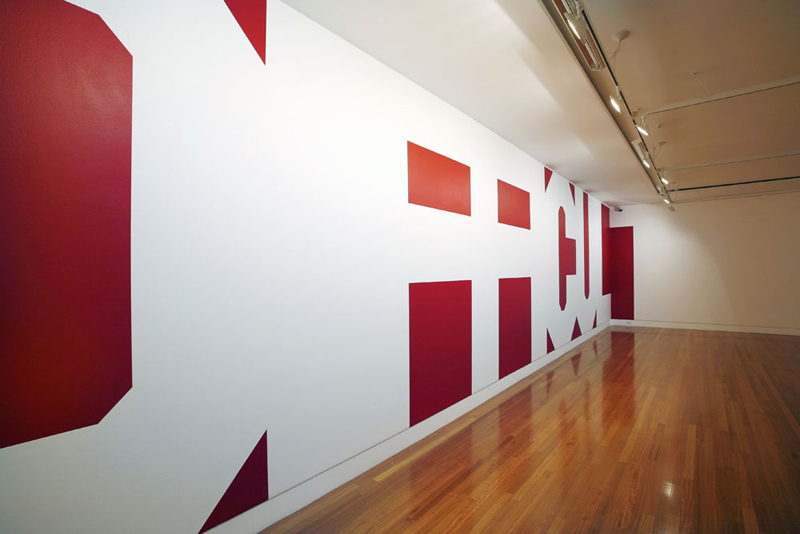

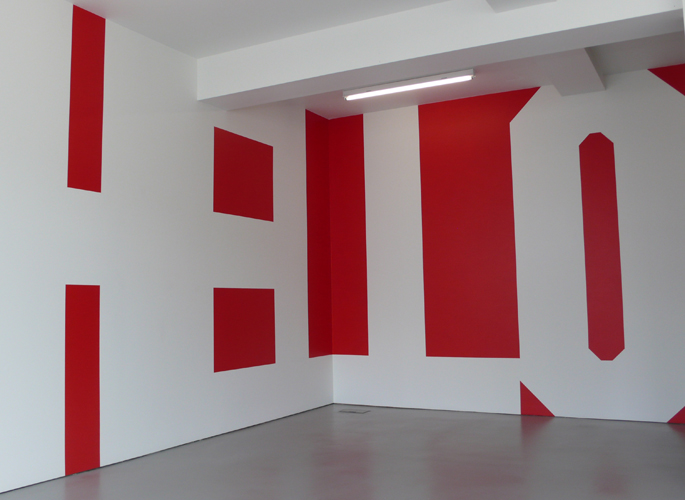
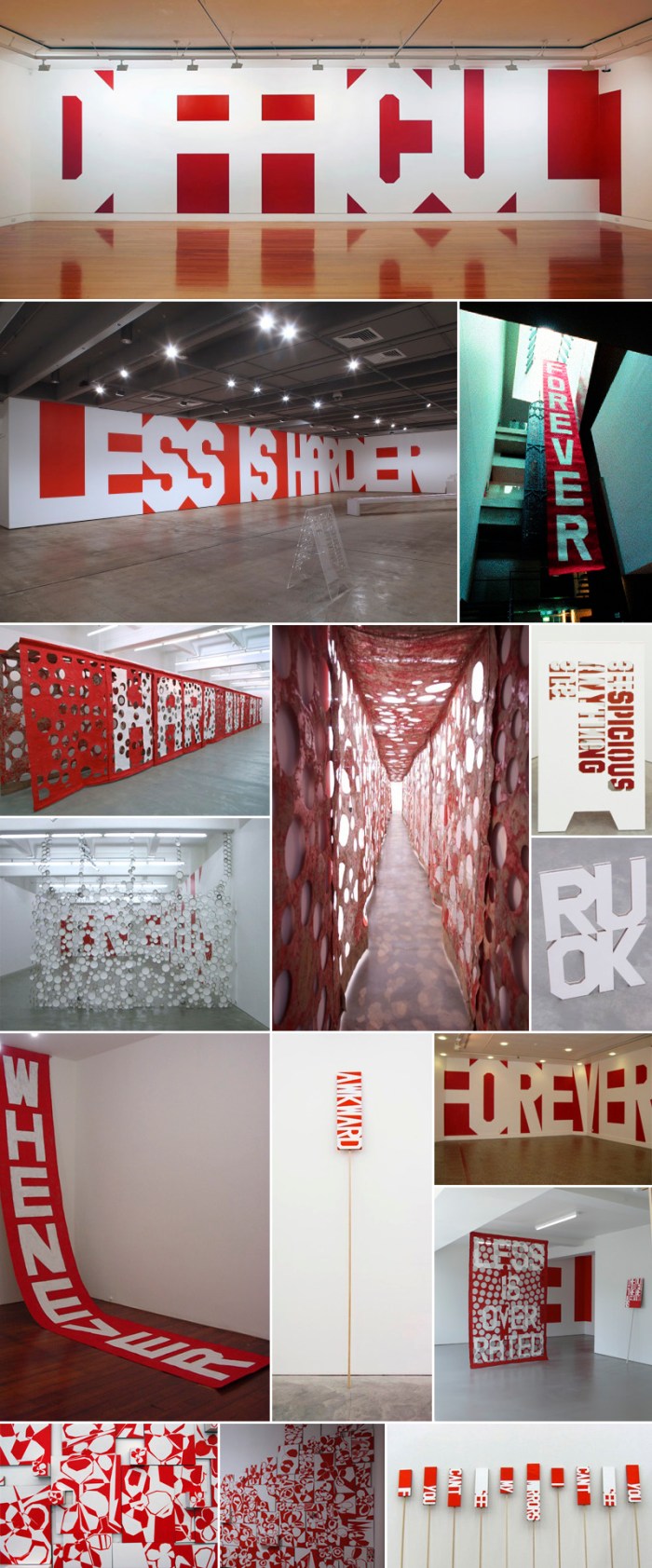
Australian artist Rose Nolan has been painting words onto walls, pennants, banners, and cardboard for 20 years. Her work is playful and oscillates between confident and self-deprecating, as well as bold and humble. Some seem to refer to herself and her reflections on what is art and what it is to be an artist.
Being a fan of type and especially large, bold type on a wall, this work is right up my alley. The red, Constructivist style only adds to its appeal, though I have to admit that the pennants and their humorous statements are also pretty great.
All photos courtesy the Anna Schwartz Gallery.
Ponte City: Subotzky & Waterhouse
 Click images to enlarge
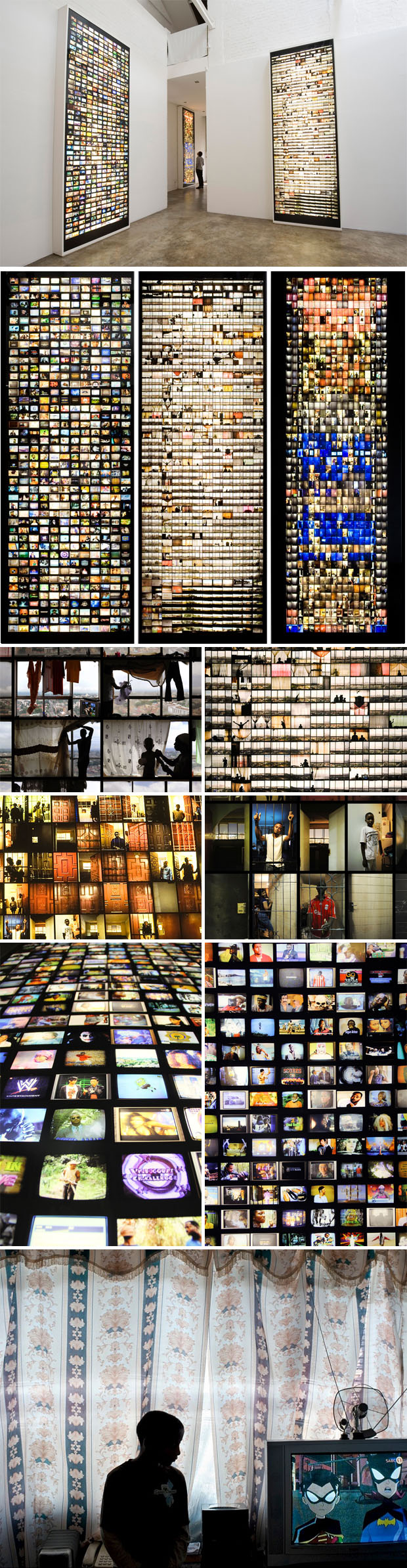
As Wikipedia will tell you, Ponte City is a 54-story cylindrical building, the tallest residential skyscraper in Africa, set in the Hillbrow neighborhood of Johannesburg, South Africa and built in 1975. At the time it was an extremely desirable address due to its views. Starting in the late 80s and into the 90s gang activity in and around the building caused the crime rate to soar in the tower as well as the rest of the neighborhood. Ponte City became symbolic of the crime and urban decay taking over the area.
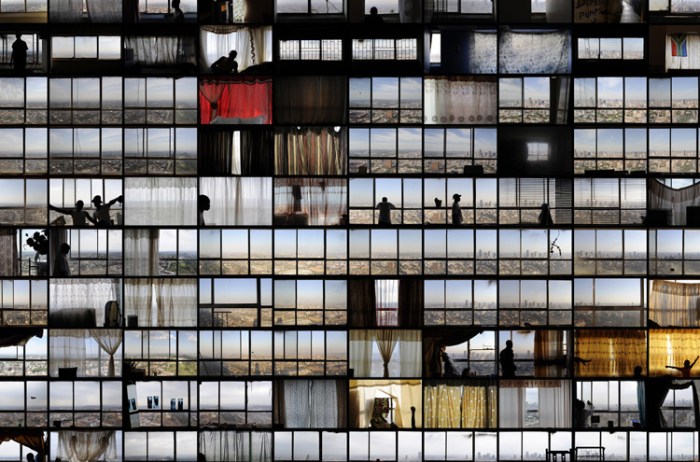
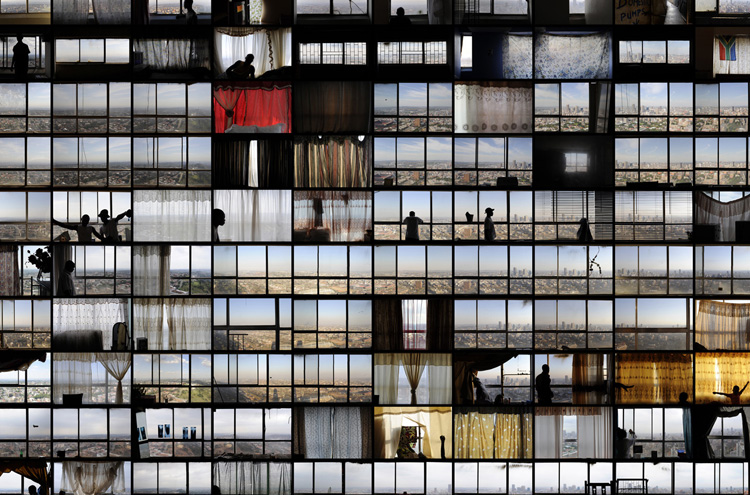
Enter Mikhael Subotzky and Patrick Waterhouse (finally). Together they collaborated (from 2008-2010) on a series of photographic tableaux in the form of contact sheets on lightboxes, depicting the life at Ponte City titled: Ponte City. The three panels are broken down by theme: doors, windows and TVs. Though I like all three, and the individual photos are all very striking, I find the Windows series particularly interesting and beautiful. Maybe in part because it looks most like a traditional building façade in its light box—which isn’t necessarily important, since the abstraction is interesting—or maybe it’s the openness and the light that I’m drawn to, but also, individually the photos are “windows” into the tenants’ lives, where we can see a bit of the apartment along with personal decor and artifacts.
From Mikhael Subotky’s website:
Ponte has always been a place of myth, illusion and aspiration. This is what we seek to evoke in these preparatory pages. Perhaps this task is best left to the images that we have found there – both in the abandoned flats, and in the marketing material and advertising that we have collected from 1976 and 2008. When these documents are seen next to the dystopian appearance of the building and its surroundings, one begins to project an image of this city during this time. It is a place of dust and dreams, befitting the land on which it sits, which has attracted millions of migrants since gold was discovered in the 1880s.
via Goodman Gallery
Zebra: Spanish Street Art

 Zebra adds his stripes around Spain. Also behind the previously posted about Tiritas Malditas.
See more on his blog.
Carlo Bernardini: Spatial Drawings

 Italian artist Carlo Bernardini has been working with optic fiber since 1996. He creates light sculptures or, more precisely, spatial drawings using optical fibers and in a sense sculpts the darkness, reconfiguring the space with his light architecture.
He currently has an exhibit at MACRO in Rome called The Corner’s Revenge appearing in the elevator shafts of the building, on different floors, in his trademark style of spatial light drawing.
Bernardini’s work has also appeared at the Milan Trienniale, the Naples Quadriennale, as well as at the Palazzo Bertalazone in Torino, and Domaquarèe, Berlin, just to name a few in the past couple of years.
You can see more of Carlo Bernardini’s work at his site, as well as here, and in these two flickr photostreams: here and here.
Camilo Rojas: Consumption
 Click to enlarge


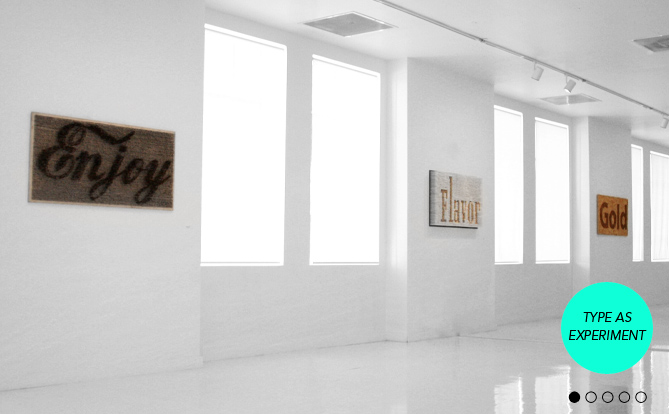
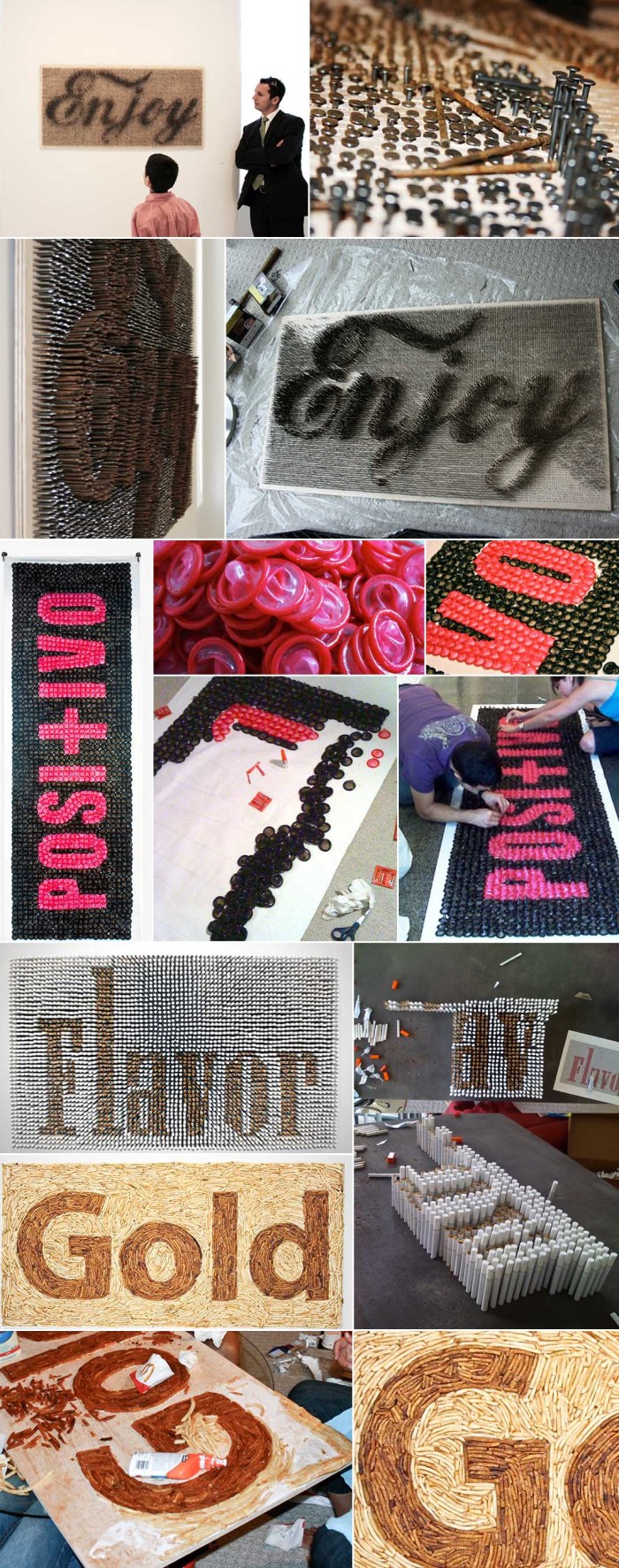
Camilo Rojas and his Create Studio in Miami presented an installation of typographic messages using nontraditional methods in place of the more classic screen-print-on-paper style. Soda-rusted nails, condoms, cigarettes, and french fries were just some of the materials used to convey powerful statements, as well as raising awareness, about health issues such as obesity, lung cancer and STDs.
You can see the rest of them at his site.
via Quipsologies
eCLOUD

 Click to enlarge
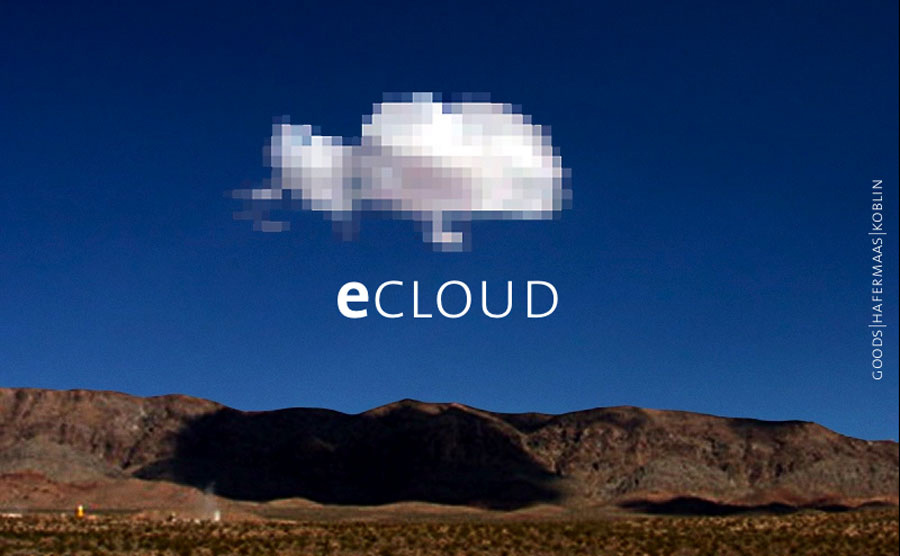
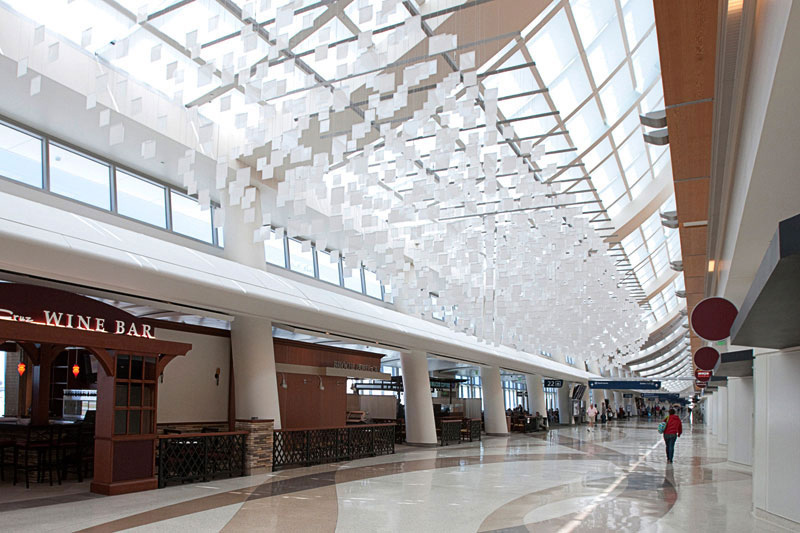
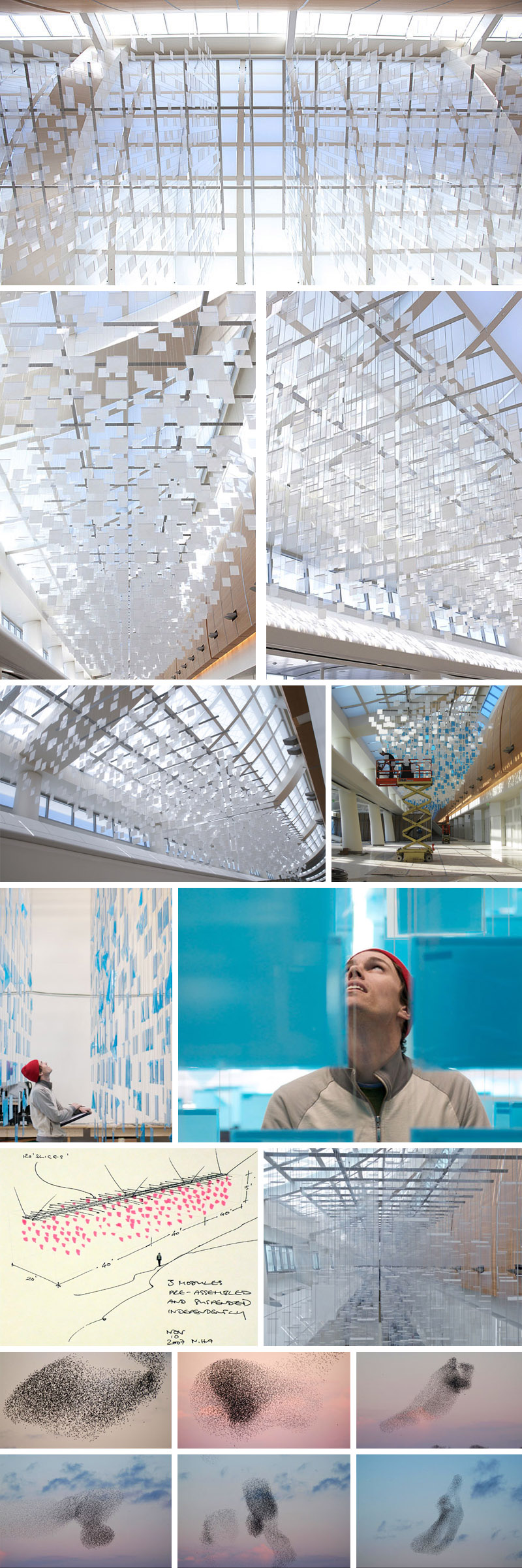
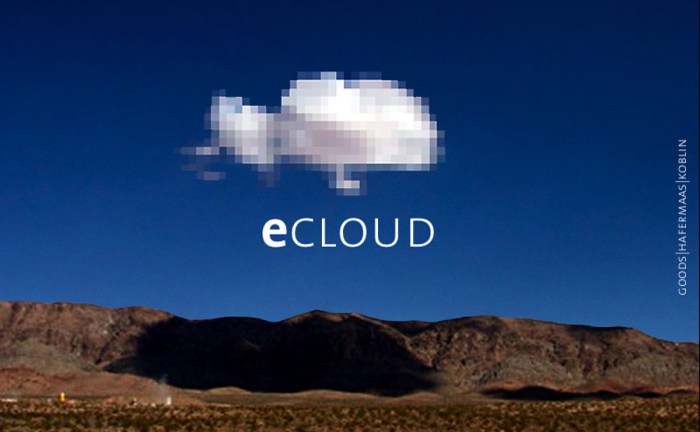
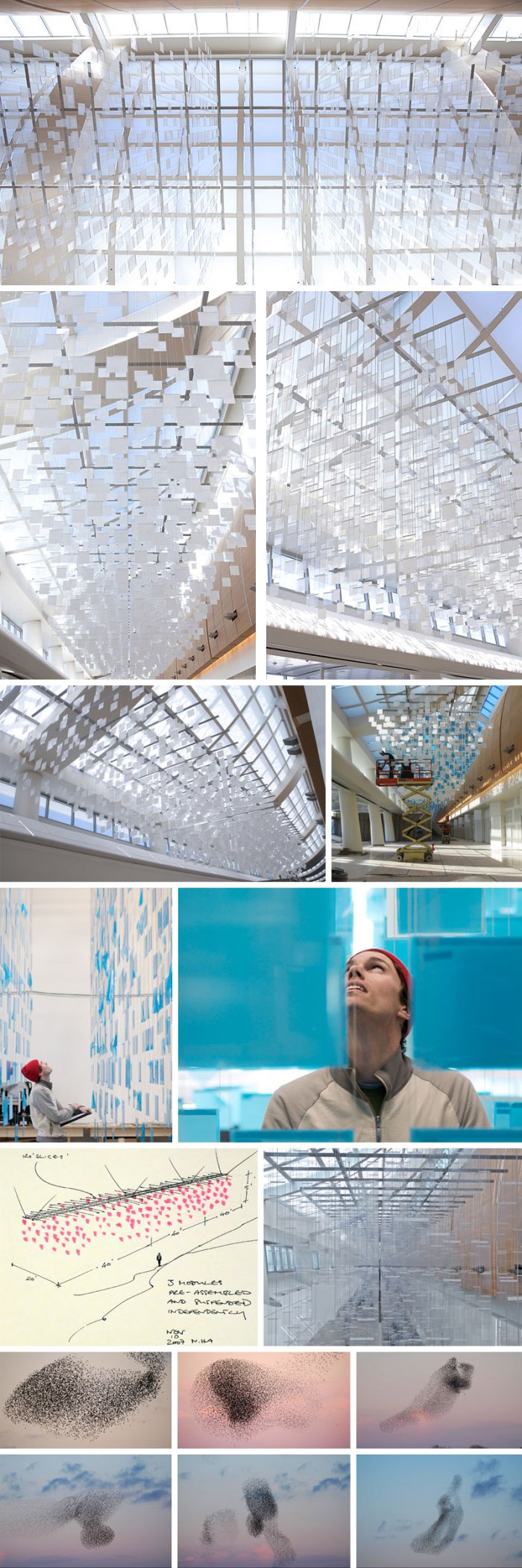
The eCloud is a digital sculpture designed by UeBersee as a permanent installation for the Norman Y. Mineta International Airport in San José, California. The thousands of small square panels of electrically switchable laminated plexiglass act as pixels which imitate the behavior, as well as the volume, of an idealized cloud. The plexiglass (or Smart Glass) has the ability to graduate opacity with the transmission of an electrical charge. The panels are opaque in their neutral state and can become transparent with the charge.
108ft long and 16ft wide, the panels are arranged to simulate a cloud suspended from the ceiling from a tensile structure. The animations that move through the eCloud are based on actual weather data via a live feed of conditions for all airports in the U.S. (see bottom photo.) You can see a video of the eCloud in action below.
(indirectly) via LovelyPackage
Photos: Spencer Lowell
Inga Liksaite: Textile Art
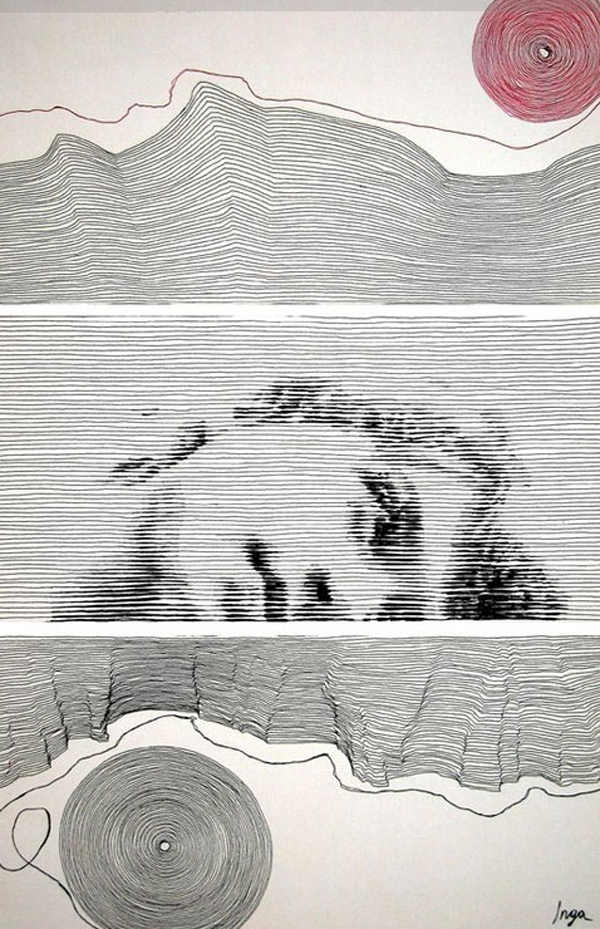
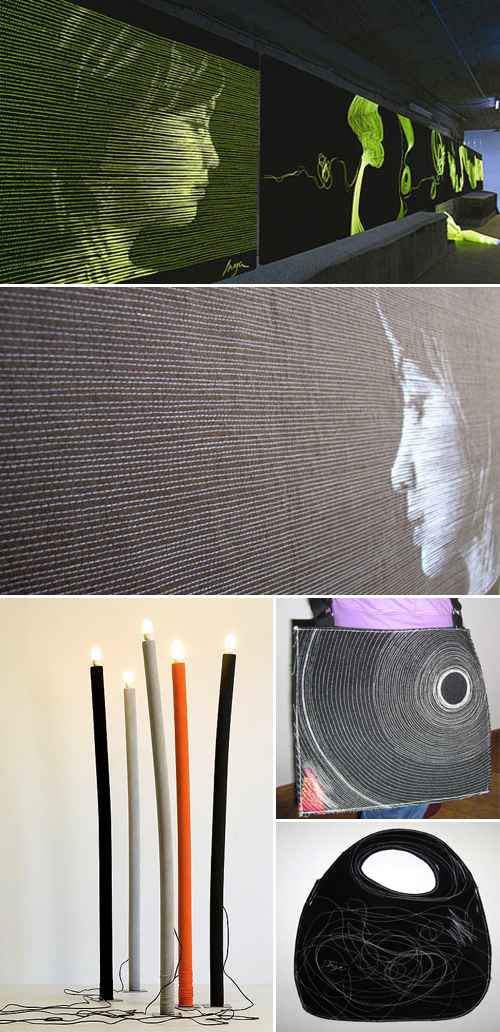 Inga Liksaite, a Lithuanian artist, works wonders with thread, fabric, and cardboard. She has even participated in videos for set designs of stage performances. In addition to her artworks, Inga has designed bags and – possibly my favorite – lamps that look like very tall spools of thread.
You can see more of her work here and here.
via the not-so-losery loserlife
Kader Attia: Ghost
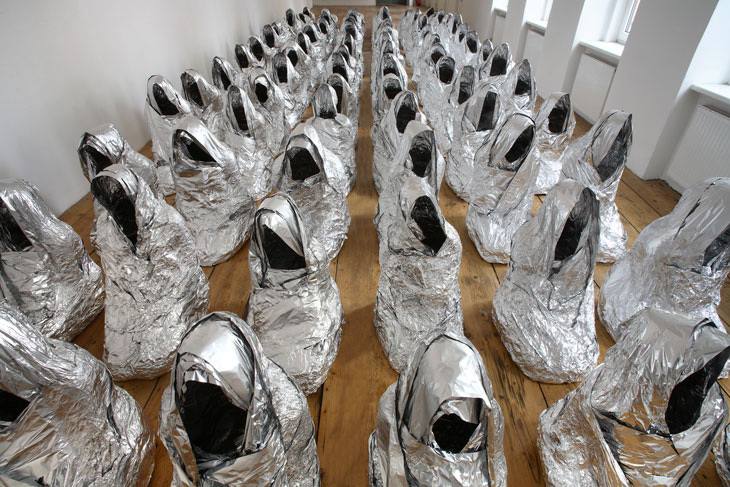
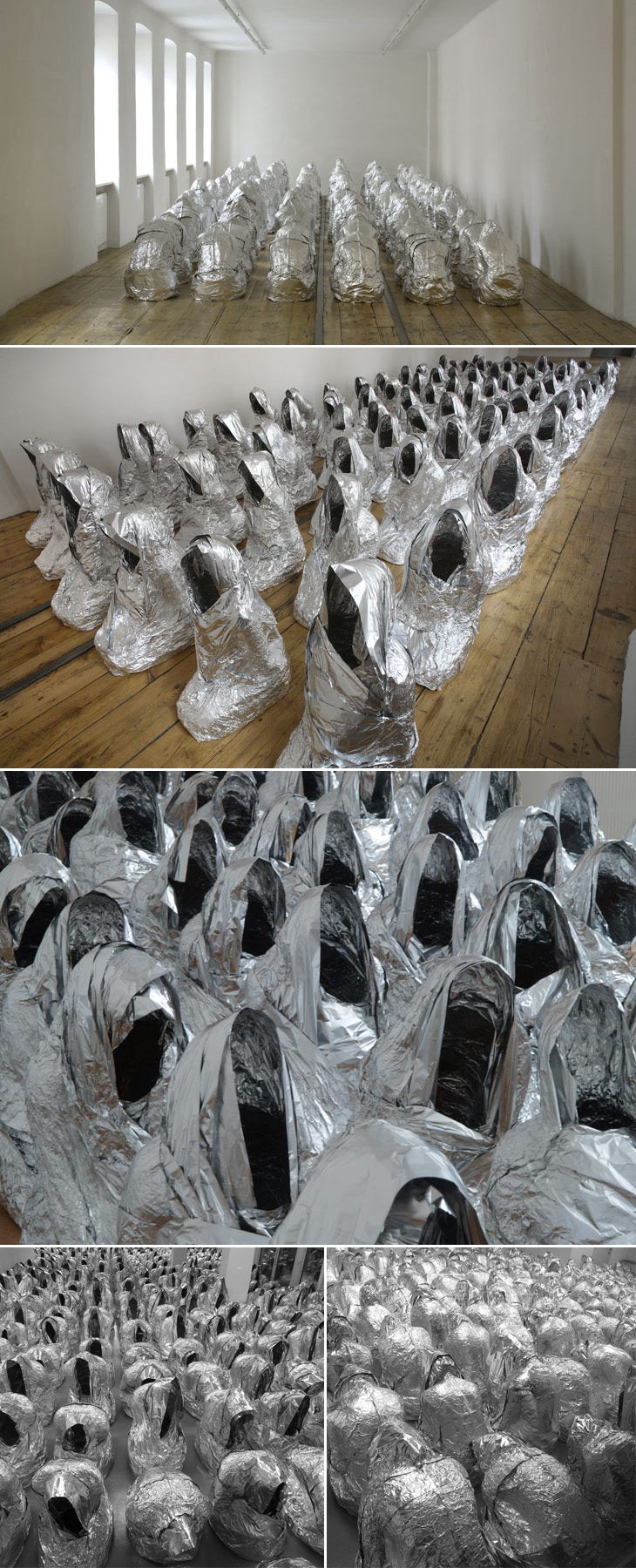 Ghost, a large installation by the French artist, of Algerian descent, Kader Attia, displays a roomful of Muslim women in prayer. The bodies are rendered as empty shells and hoods made of tin foil, not coincidentally a standard disposable domestic material. These figures become at once alien and futuristic. Bowing in shimmering meditation, their ritual is equally seductive and hollow, questioning modern ideologies – from religion to nationalism and consumerism – in relation to individual identity, social perception, devotion and exclusion. Attia’s Ghost evokes contemplation of the human condition as vulnerable and mortal.
Attia’s work explores questions of community, diversity, belonging and exile. There is an emotional, as well as sympathetic, impact in all of his work.
Ineke Hans: CITO Tree
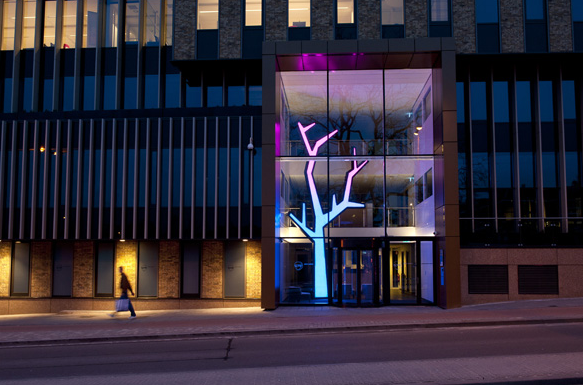
 Ineke Hans, a designer and artist in the Netherlands, recently designed a tree light sculpture for the entrance of CITO’s building, a leading testing and assessment company.
The tree stands 12 meters tall and acts as a symbol for growth and the acquisition of knowledge. It changes colors throughout the day, and night, and acts as the “heart” in the center of the building. I especially like how it works in perfectly with the reflection of the trees in the glass from across the street.
Have a Nice Day: Jennis Li Cheng Tien
 Click to enlarge
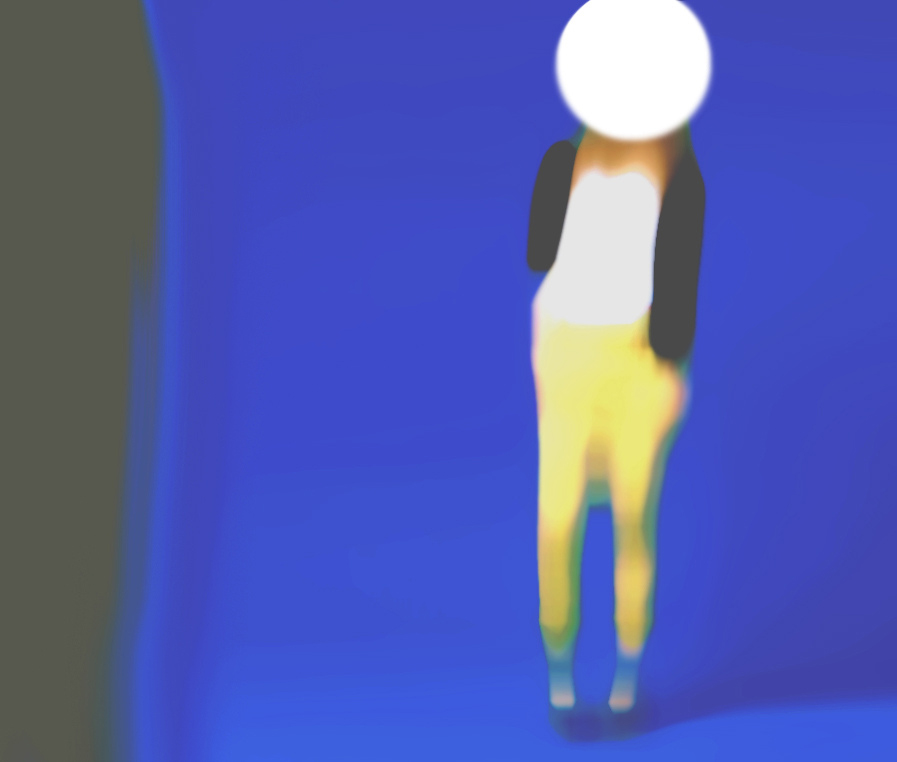
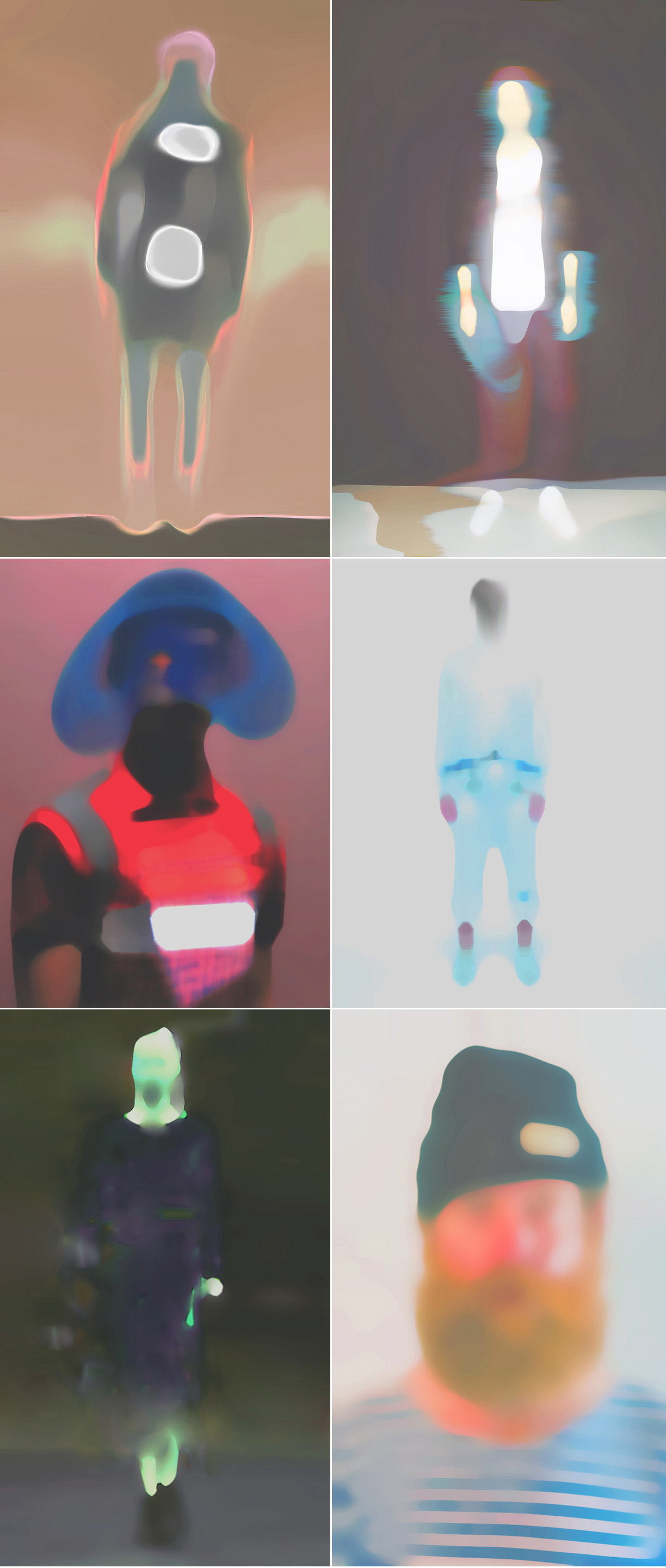
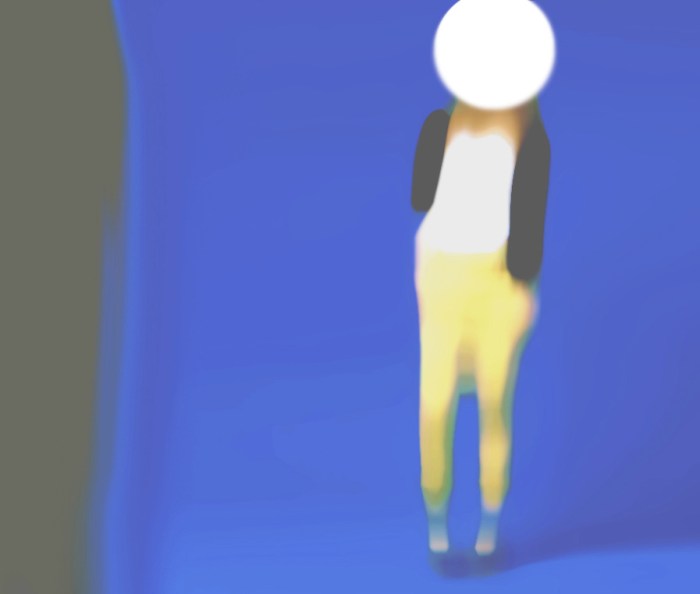
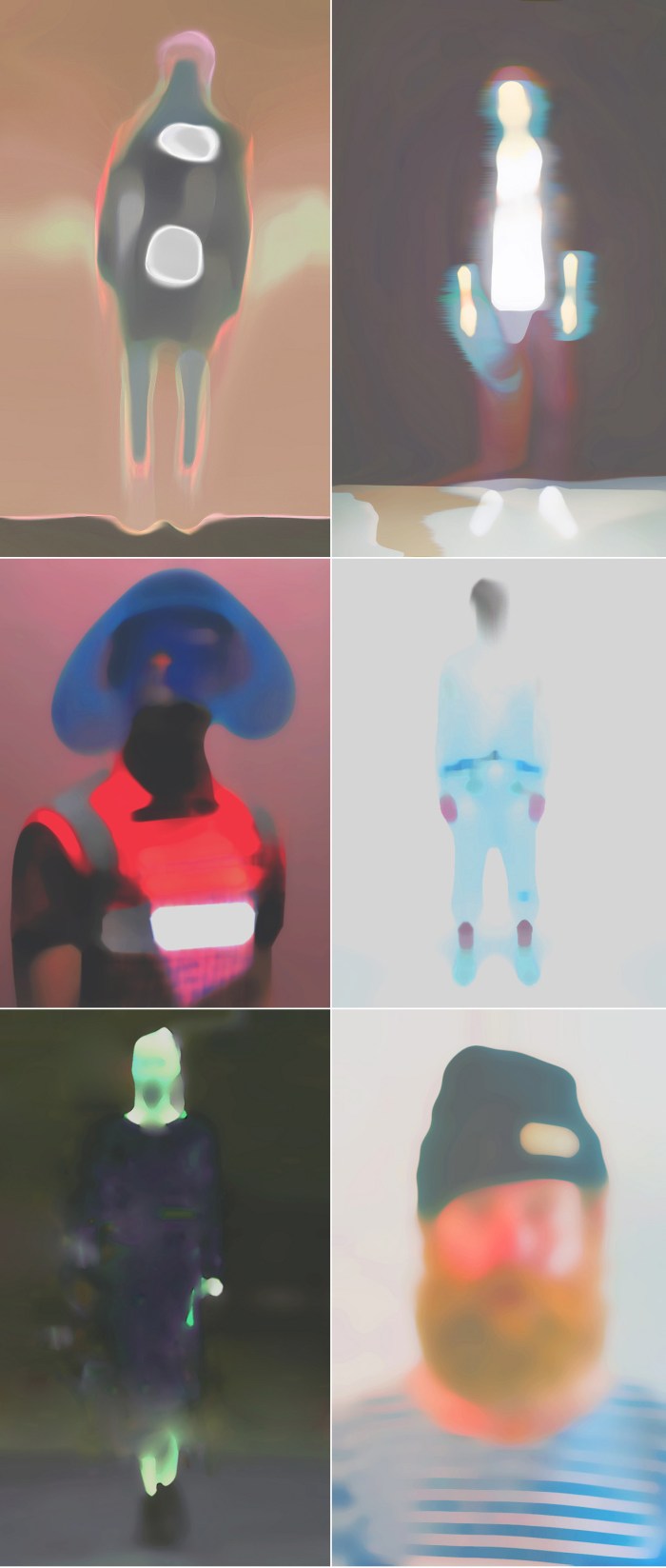
Berlin-based, Taiwanese artist Jennis Li Cheng Tien’s online personal project Have a Nice Day is a work in progress where she takes lost images from the internet and reprocesses them with digital filters distorting them to create somewhat eerie and ethereal images. A very interesting effect, I think.
You can see more of the Have a Nice Day series here, and more of Li Cheng Tien’s other artwork here.
Junky Projects: Street Art in Melbourne
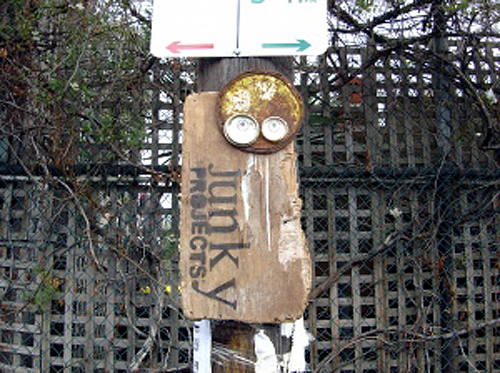
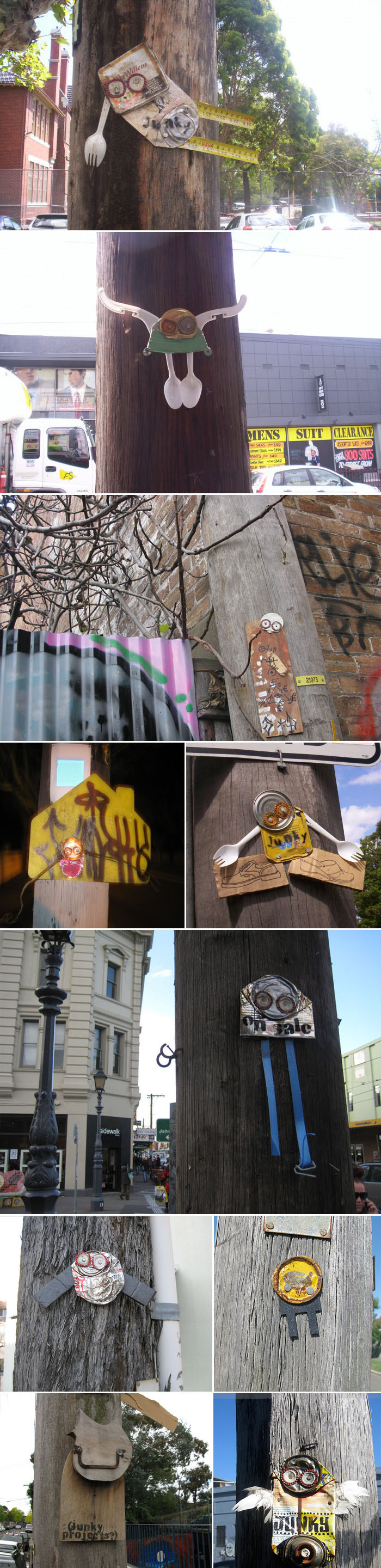 Sentinels made from found junk or garbage are the essence behind Junky Projects, a street art crusade around the streets of Melbourne, Australia. A reminder to the public that creating excess waste will come back to haunt them in the future.
Truthfully, they are more cute than menacing. It was hard to pick which ones to post because I liked them all.
Ayse Erkmen

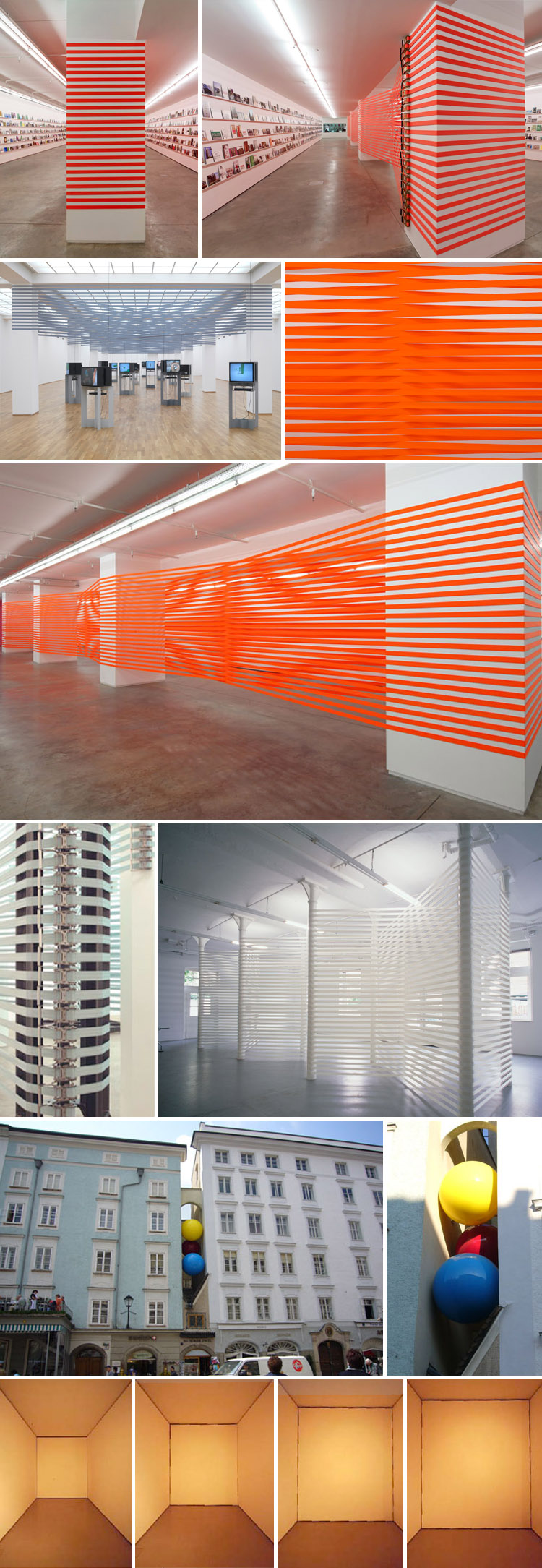
 Germany-based Turkish artist Ayse Erkmen has been creating interesting installations for years. She is currently exhibiting a piece called Plan B in the Turkish Pavillion at the Venice Biennale. Earlier this year she had a show, On Its Own, at Rampa in Istanbul that at its center featured the above, quite dramatic, orange seat belt installation, Easy Jet.
Erkmen is impressively prolific and all her work is worth a look, but above is a sampling.
From top to bottom:
Easy Jet – Rampa, Istanbul, 2011
Gezeiten – Weggefaehrten, Berlin, 2008
Tidvatten – Konsthall Magasin, Stockholm, 2004
The Gap – Kontracom06, Salzburg, 2006 (love this!)
9’45”- Kunsthalle Museum, Kassel, Germany, 1999 (a long corridor whose rear wall moves slowly towards the viewer, electronically, and the procedure lasts nine minutes and forty-five seconds, hence the name.)
Bluish – Kunstuerien Freiburg, Freiburg, 2009
You can see more of Ayse Erkmen’s work on her site as well as additional work at Rampa’s site.
via ArtAsiaPacific
Ralf Kempken: Stencils to Screens

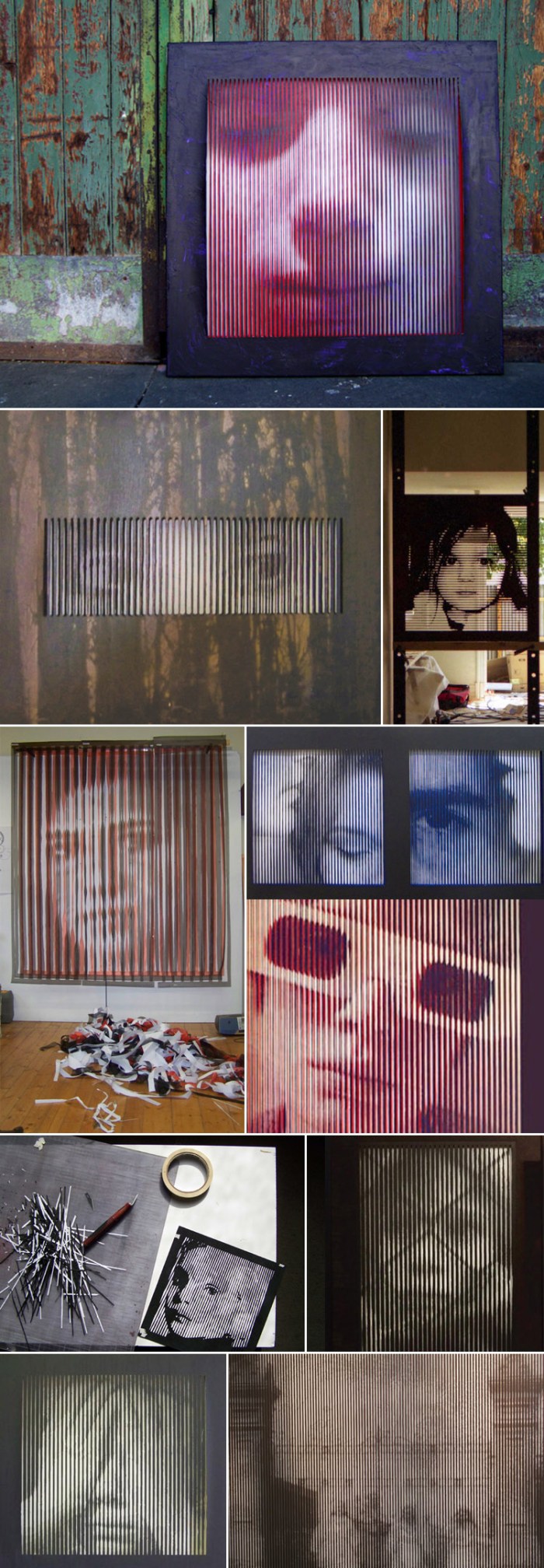 Click to enlarge
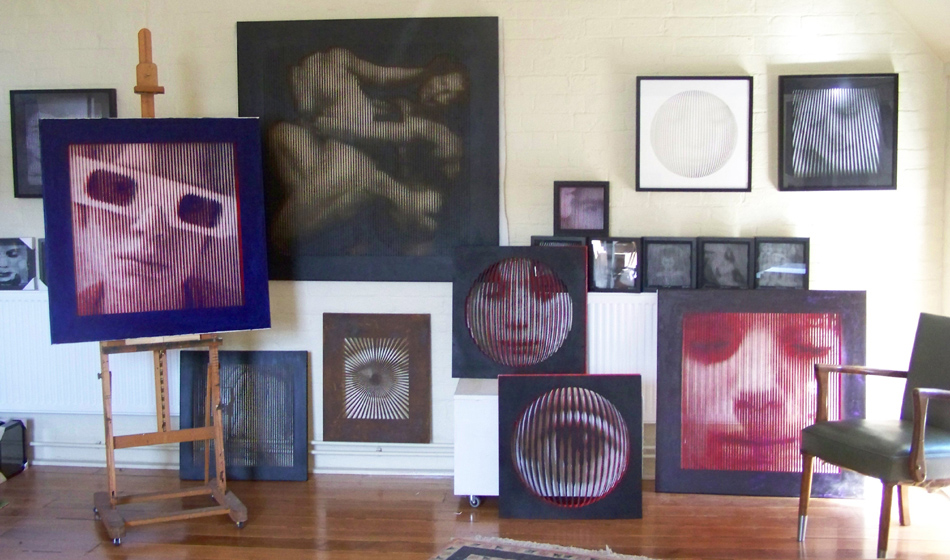

Australian artist Ralf Kempken hand cuts stencils and screens from paper, acetate, canvas, timber, and sometimes even steel. In some cases he layers multiple stencils and in others he spray paints as well.
From his artist statement:
…the stencil is used to spray images in countless variations. The underlying concept has always been that we filter all we see through past experiences and memories. Thus followed the evolution of the stencil, which up until now has been used as the tool to produce the painting, into the artwork itself. We all screen and frame our personal view of the world and with this in mind the stencils have turned into screens. Artwork that can be seen through and create optical illusions.The screens are intended as daily reminders that we have a conscious choice in how to look at the world around us.
You can see more of Ralf Kempken’s incredible X-actoing skills and other work on his site as well as here.
Tomas Saraceno

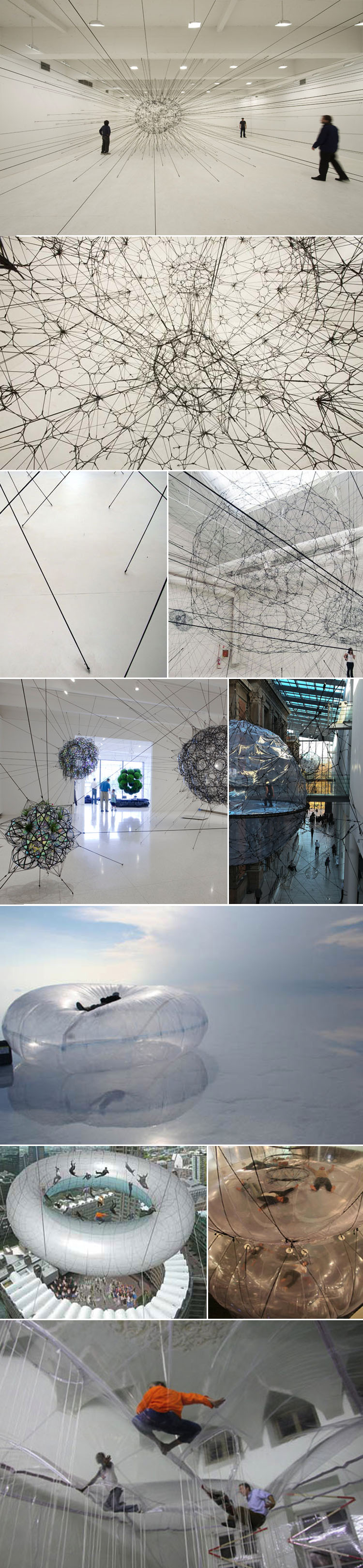 Tomas Saraceno, an Argentinean-born artist living and working in Frankfurt, combines sculpture, science, and installation-based art to create unique spaces. Much of his work is experimenting with solutions for airborne habitation and ecological sustainability, as well as other alternatives for living.
From Andersens Contemporary Gallery website:
…For many years the natural was seen as the antithesis of the constructed, but according to Saraceno we may have to alter this view and understand that whatever is handmade is also a part of nature because we are a part of nature….Saraceno is conceiving objects, images, and installation, in order to communicate and anticipate this possibility. Imagine, living in the sky in a bubble shaped city that floats around. There are no boundaries of place nor nationality…He creates grand scale airborne balloons sometimes with their own eco-system.
Installations from top to bottom and left to right:
14 Billions (Working Title), Elastic black rope and hooks. Photo: Bonniers Konsthall.
(2nd – 4th rows): Galaxies Forming along Filaments, Like Droplets along the Strands of a Spider Web. Photos©Tanya Bonakdar
Installation View, Walker Art Center.
Installation View Statens Museum Kunst, Copenhagen.
Transparent Soil and the Gardens of Tomorrow
Airborne photo: don’t know source.
How to Live Together, Sao Paolo Biennale
Installation View, Pinksummer Gallery, Genoa.
Saraceno just showed at the arteBA 2011 fair in Buenos Aires last month, and has several upcoming solo exhibitions, including one at the Kemper Museum of Contemporary Art in St. Louis this year and another one in Tokyo in 2012.
More of Tomas Saraceno’s work can be seen here, here, and here.
via arteBA 2011
Street Art: Buenos Aires

 Click on images to enlarge
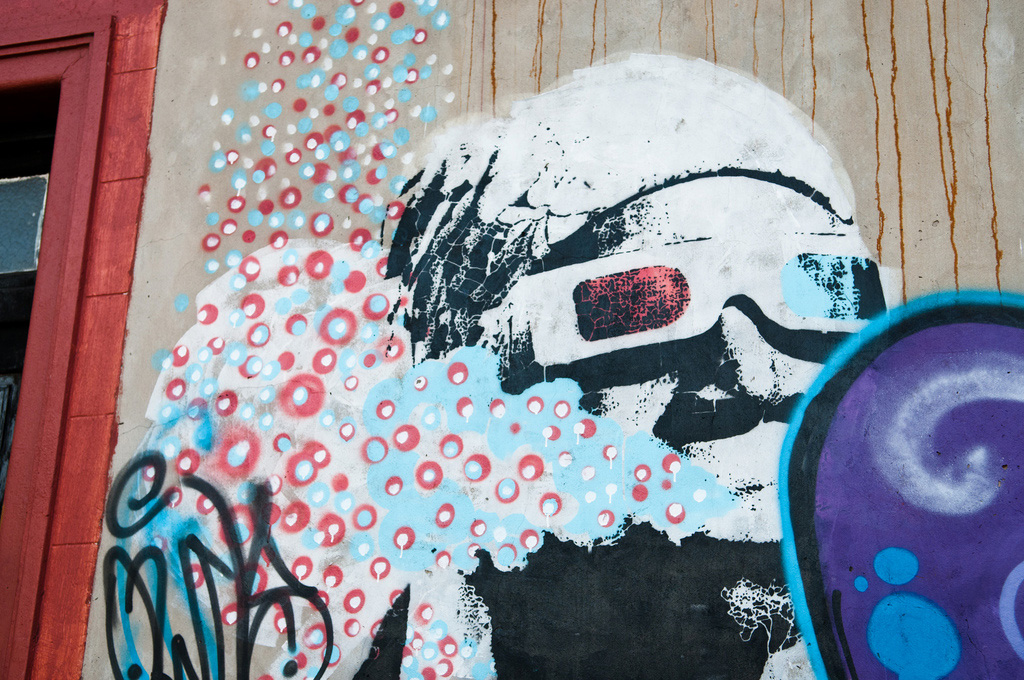

A random collection of street art from las calles of Buenos Aires.
via scorbette37
The Portrait Building
 Click images to enlarge
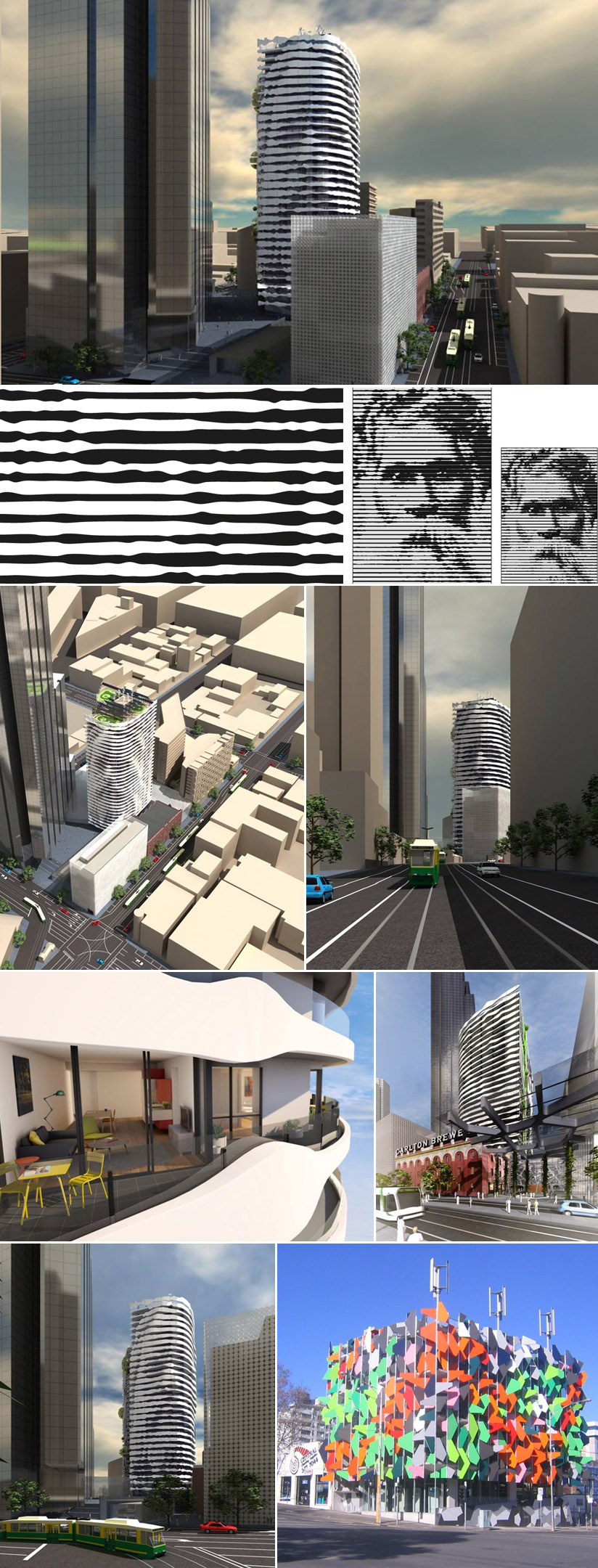
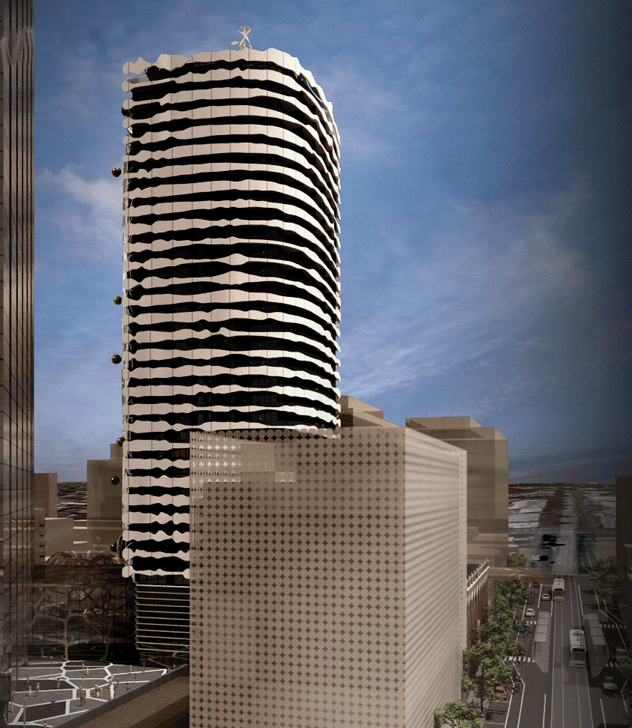
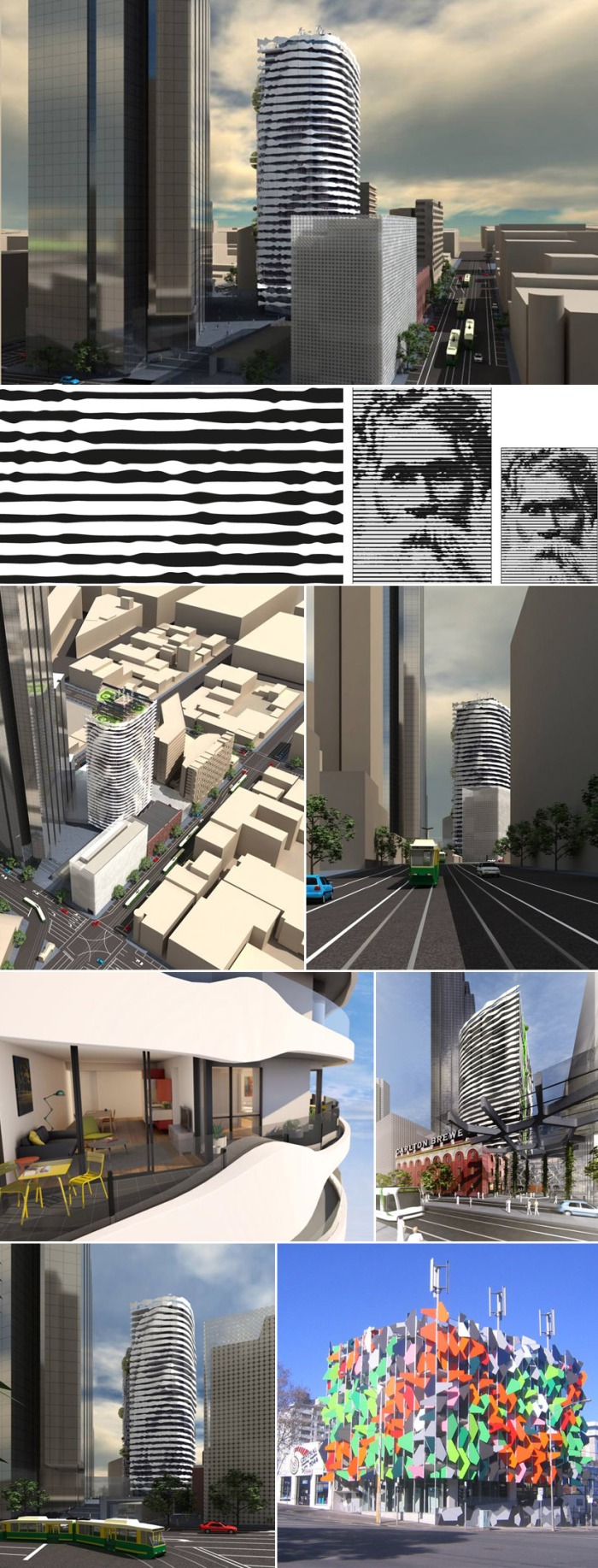
Nope, it’s not the latest Chuck Close painting. Instead, it’s the very cool Portrait Building designed by ARM architects in Melbourne, Australia and scheduled to be completed by 2014.
Part of construction group Grocon’s plan to transform the former Carlton Brewery site at the top end of Swanston Street into Melbourne’s newest urban living precinct, Portrait is a 32-story residential tower paying homage to Victoria’s indigenous heritage and first Australians. The façade features a portrait of indigenous leader, William Barak. The artwork for the Barak image was done by sculptor Peter Schipperheyn. The idea behind this, apart from the general coolness? To unite the city’s modern heritage with its ancient history.
It should be noted that Grocon completed construction on, and has since moved its offices to, yet another unique looking building, the Pixel Building (designed by Melbourne firm Studio 505), part of the same former Carlton Brewery site, and the country’s first carbon neutral office building. (See bottom right photo.) Impressively forward-thinking!
Jim Denevan: Sand Art
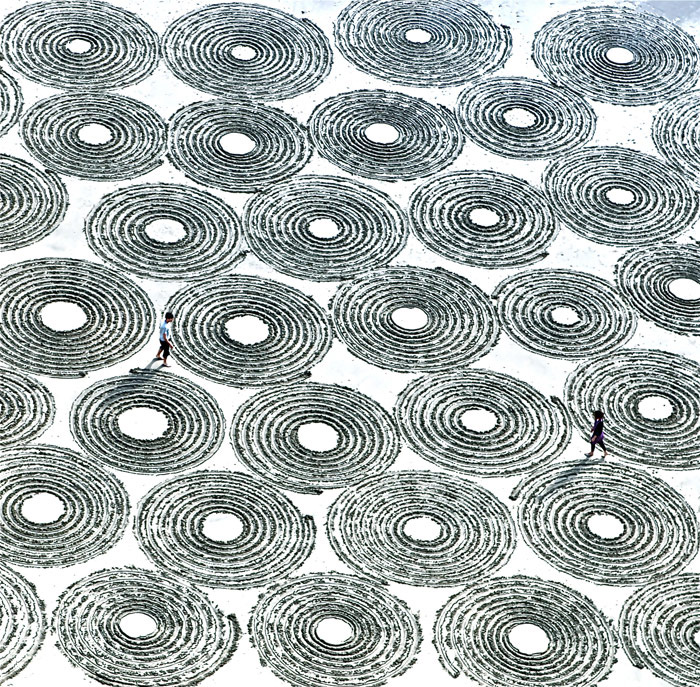
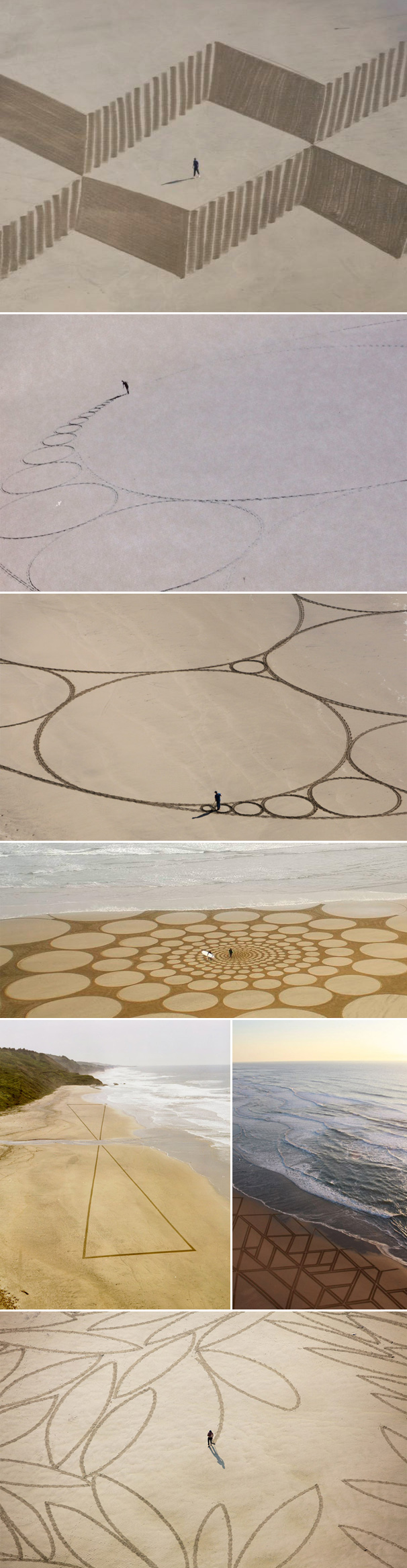 Jim Denevan, a California surfer and artist, makes temporary drawings on sand, earth, and ice that are eventually erased by waves and weather, often in less time than they took to create.
Beautiful and amazing!
via Colossal
 CollabCubed