Rosa Verloop: Nylon Sculptures

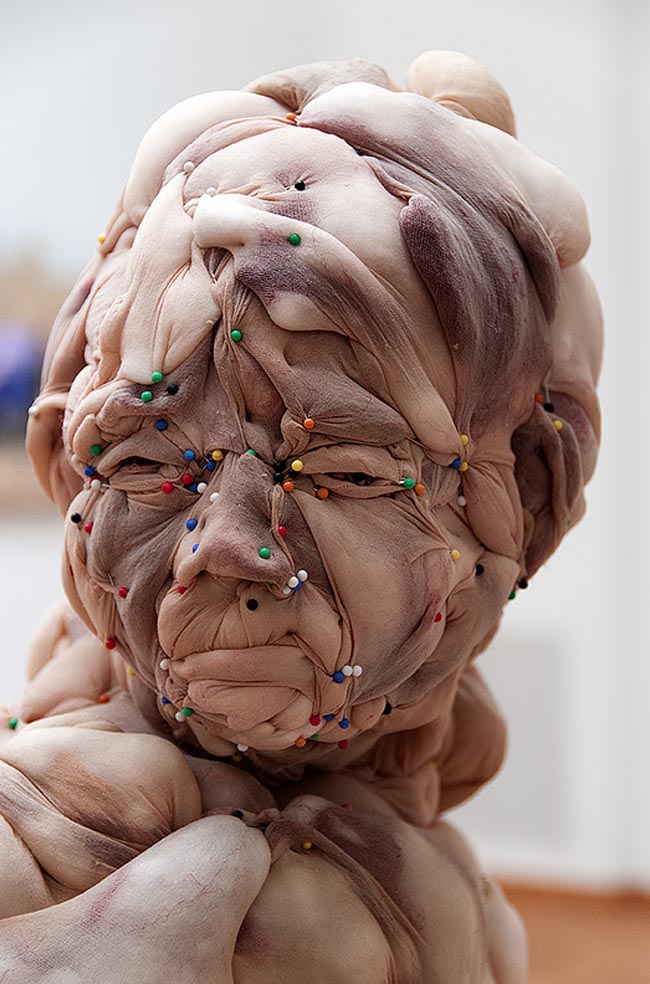
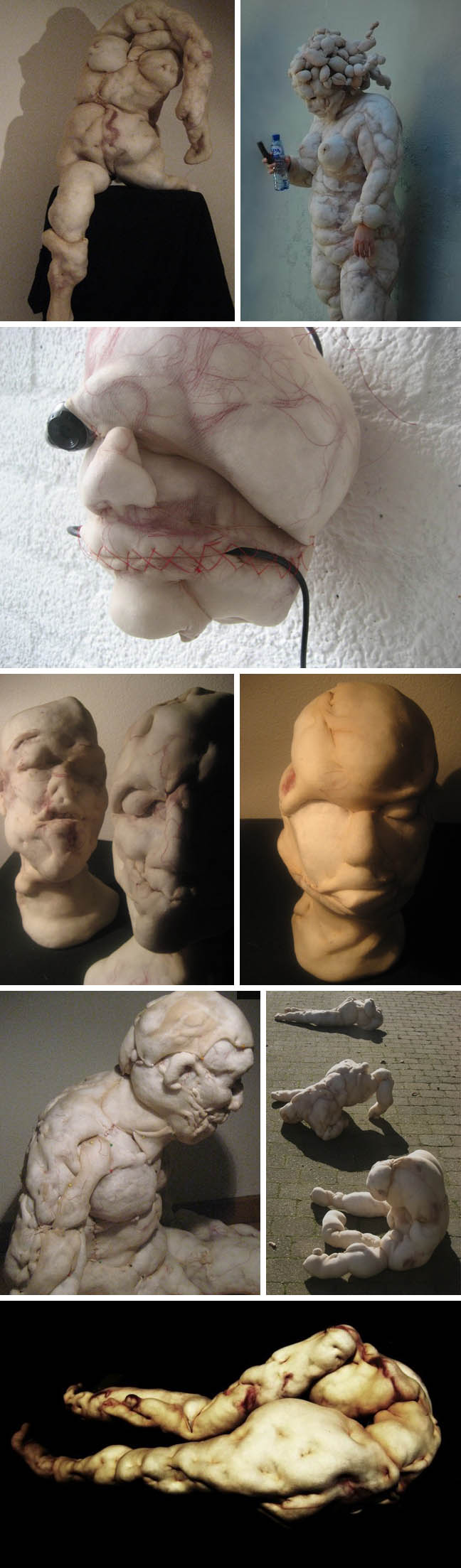
Rosa Verloop, Dutch contemporary art, creepy sculptures, nylon stocking soft sculptures, monstrous sculpturesRosa Verloop, Dutch contemporary art, creepy sculptures, nylon stocking soft sculptures, monstrous sculpturesNylon soft sculptures, Dutch contemporary art, Rosa Verloop, Creepy portraits, disturbing cabbage patch doll like sculpturesClick to enlarge

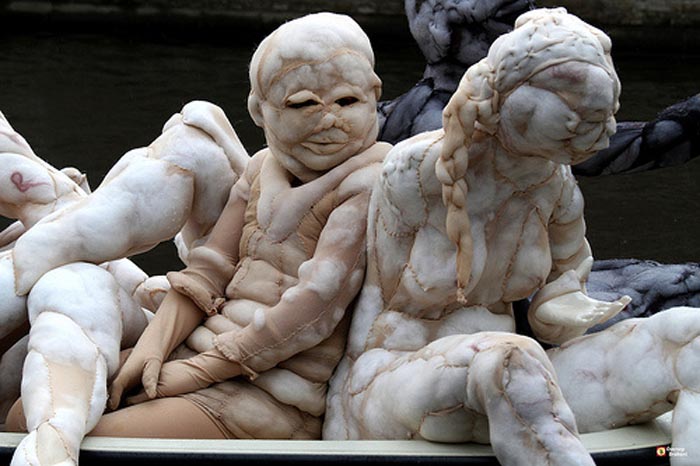
I would be lying if I said that I love these sculptures. They actually creep me out a bit. They have a Cabbage Patch Doll with Proteus syndrome quality that’s, well, for lack of a better word, disturbing. Nevertheless, I find Dutch artist Rosa Verloop’s nylon soft sculptures fascinating, as well as a great way to recycle ripped stockings. The third photo down on the right is the artist herself wearing one of her pieces as a costume at the Boschparade 2010 (in The Netherlands), and the one below that, which looks like a deformed skull (or Frankenstein-ish monster) with a built-in camera is just great.

Photos: courtesy of the artist, except for second from top by Ed Jansen at Zomer Expo 2012.

via Ed Jansen’s flickr

Ottó Vincze: Identified Flying Objects

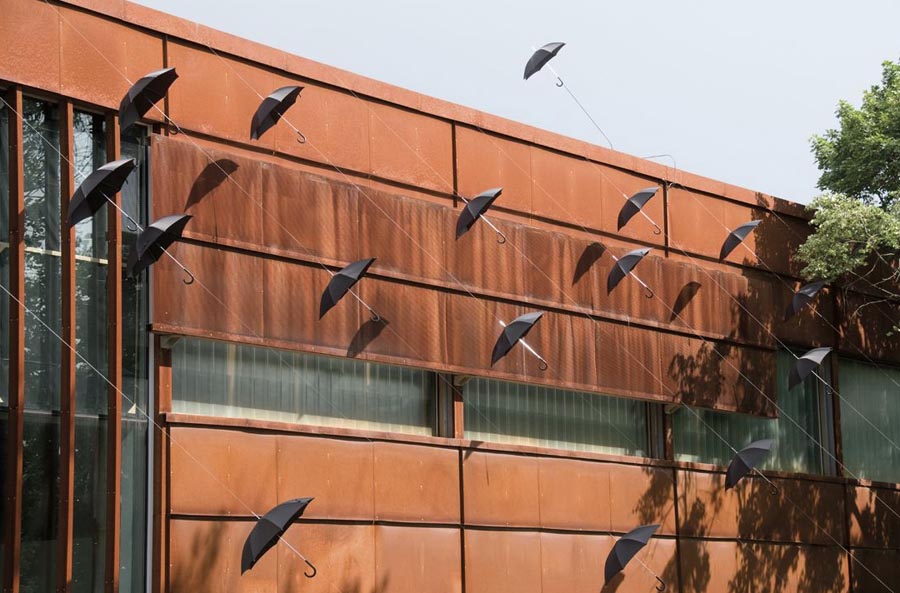
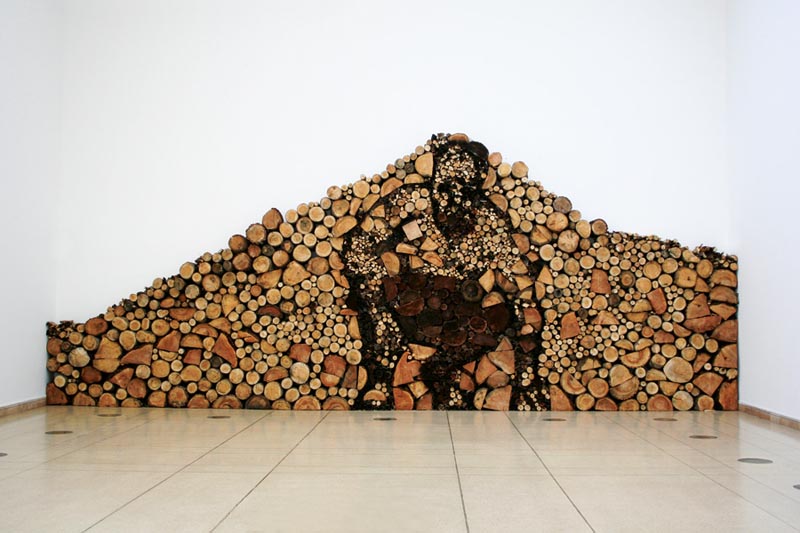
Ottó Vincze, Hungarian contemporary Art, Installations with flying umbrellas, Facade Make-up for the OccasionOttó Vincze, Hungarian contemporary Art, Installations with flying umbrellas, Facade Make-up for the OccasionOttó Vincze, Hungarian contemporary Art, Installations with flying umbrellas, Life preservers, balloons, cool installationsClick to enlarge

Hungarian artist Ottó Vincze lives and works in Szentendre. Most of his works are installations, some with movement, others static. Many give the illusion of objects flying, and at least three of them involve umbrellas.

From top to bottom, the four installations above are:
Facade-Makeup for the Occasion
Sinking Centres of Gravity
Cognitive Save
Pioneer Progress

via molnar ani galeria

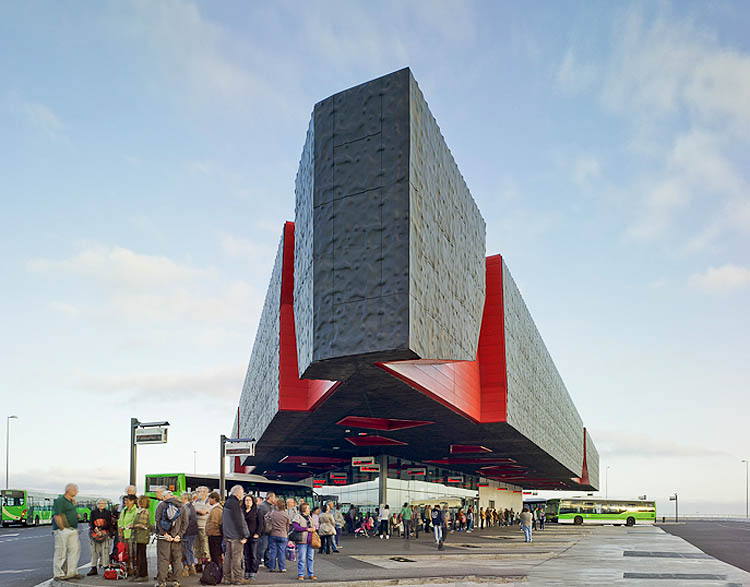
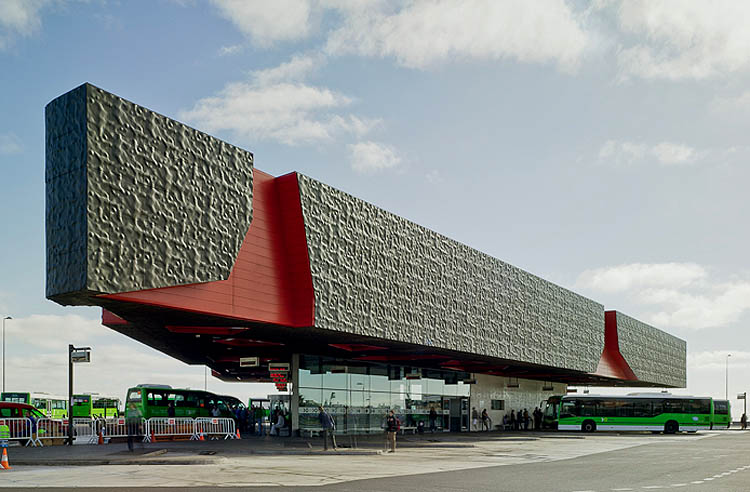
Interchange Station Padre Anchieta

intercambiador Padre Anchieta, San Cristóbal de La Laguna (Santa Cruz de Tenerife), Eustaquio Martinez Architect, Contemporary architecture from SpainBus Interchange station Padre Anchieta, San Cristóbal de La Laguna (Santa Cruz de Tenerife), Eustaquio Martinez Architect, Contemporary architecture from Spainintercambiador Padre Anchieta, San Cristóbal de La Laguna (Santa Cruz de Tenerife), Eustaquio Martinez Architect, Contemporary architecture from SpainClick to enlarge

Now here’s a pretty singular bus station. Spanish architect Eustáquio Martínez completed the Intercambiador Padre Anchieta (Interchange Station Padre Anchieta) in Santa Cruz de Tenerife, Spain, this past February. The unique structure looks more like a massive sculpture than your average bus transfer station. The top-heavy quality makes for dramatic protective overhangs with interesting irregular geometric red cavities excavated from beneath. Those green buses complement nicely as well, don’t you think?

Photos by David Frutos.

A Memorial Bowing: Snarkitecture

Typographic Installation, Typography as sculpture, Orange Bowl Type as memorial, Miami, SnarkitectureTypographic Installation, Typography as sculpture, Orange Bowl Type as memorial, Miami, SnarkitectureTypographic Installation, Typography as sculpture, Orange Bowl Type as memorial, Miami, SnarkitectureClick to enlarge

Last month when I was on Snarkitecture’s website getting information on their recent Odin Pop-Up Shop project, I noticed this project earlier in 2012. Alex Mustonen and Daniel Arsham, the Snarkitecture duo, reconstructed the 10-foot letters from the old Miami Orange Bowl and whimsically scattered around the east plaza of the new Marlins Ballpark. Created as a sort of memorial to the stadium that was demolished in 2008, A Memorial Bowing feels like a mix of ruins and renewal, with some of the letters submerged and others standing tall.

The alignments of the letters spell out new words and are a nice complement to the new stadium, which can be viewed through the type at different points.. Really, you can’t go wrong with monster-large type.

Photos by Noah Kalina

Haegue Yang: Venetian Blinds Art

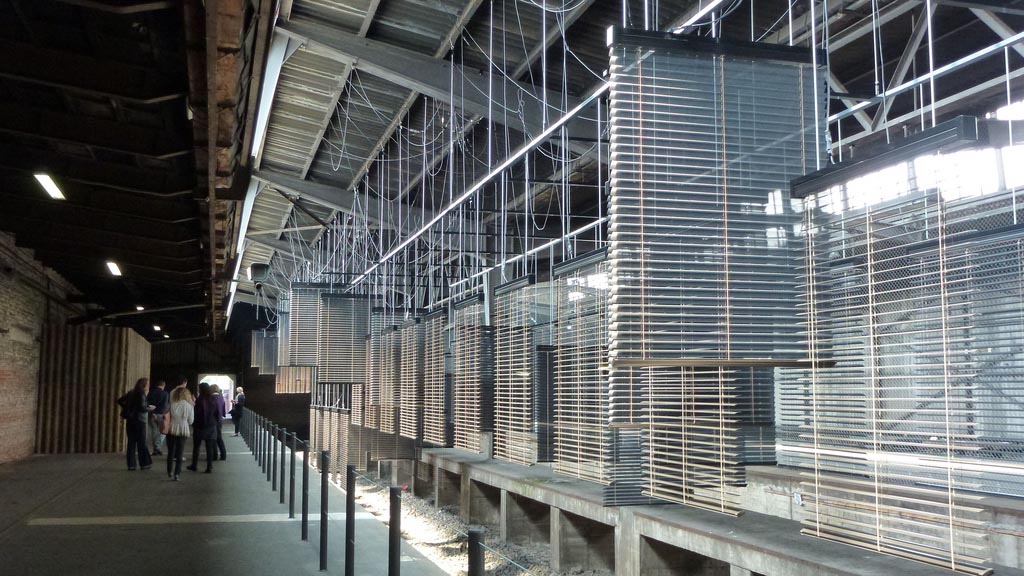
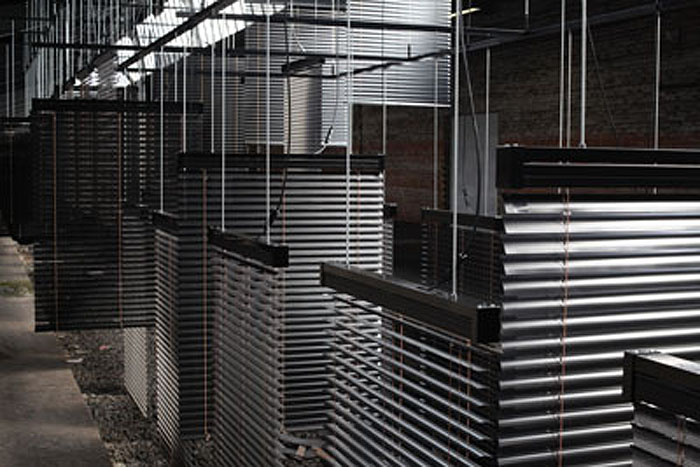
Korean Contemporary art, Venetian Blind art installations, Haegue Yang, Heike Jung, Documenta13Korean Contemporary art, Venetian Blind art installations, Haegue Yang, Heike Jung, Documenta13Korean Contemporary art, Venetian Blind art installations, Haegue Yang, Heike Jung, Documenta13Click to enlarge

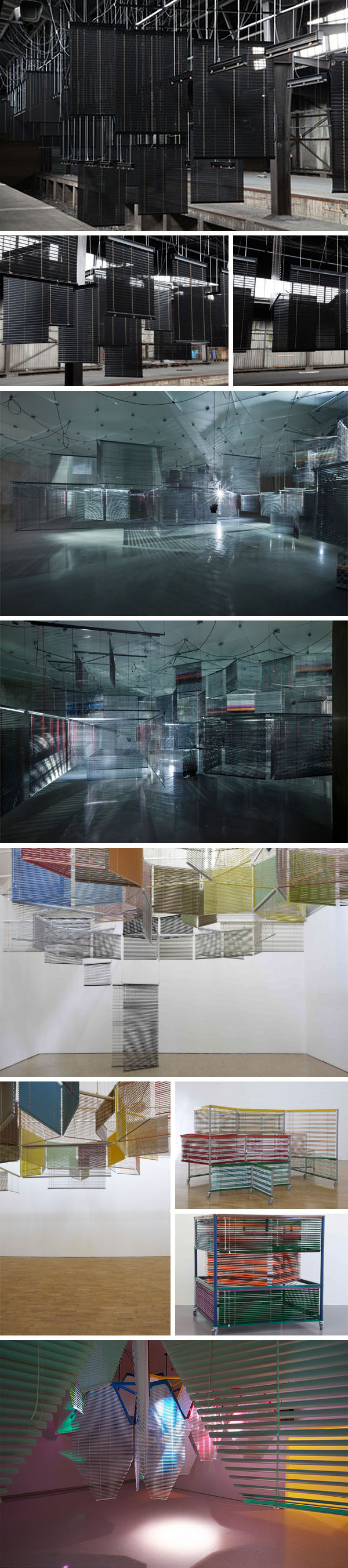
South Korean artist Haegue Yang (aka Heike Jung), living and working in in both Berlin and Seoul, believes that there is “a mysteriousness and spirituality in the most banal things.” Her use of window shades in many of her installations seems to be proof of this. Presently, Yang has an installation titled Approaching: Choreography Engineered in Never-Past Tense (top five photos) as part of documenta (13) in Kassel, Germany through September 16, 2012. These artfully hung and motorized clusters of Venetian blinds have appeared in some of her previous works, but this block-long installation and its choreography must certainly be fun to experience. Earlier aluminum blinds works include: Citadella; Manteuffelstrasse 112; Escaping Transparency; Three Kinds; Yearning Melancholy Red and others.

Haegue Yang’s fascination with domestic items doesn’t limit itself to blinds. She uses foldable laundry racks, cans, cups and cup cosies, just to name a few, in her other more sculptural works.

Photos courtesy of the artist; Carnegie International; and Camila y el Arte.

via wsj

Sean Hart: Street Poetry

Typographic Street Art, French Street art, Sean Heart, existentialism, Shine, Yes FutureTypographic Street Art, French Street art, Sean Heart, existentialism, Shine, Yes FutureTypographic Street Art, French Street art, Sean Heart, existentialism, Shine, Yes FutureClick to enlarge

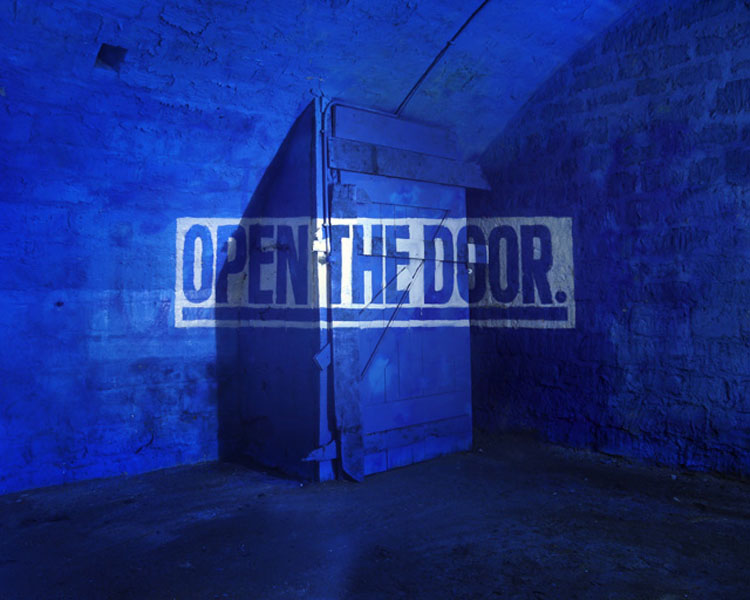
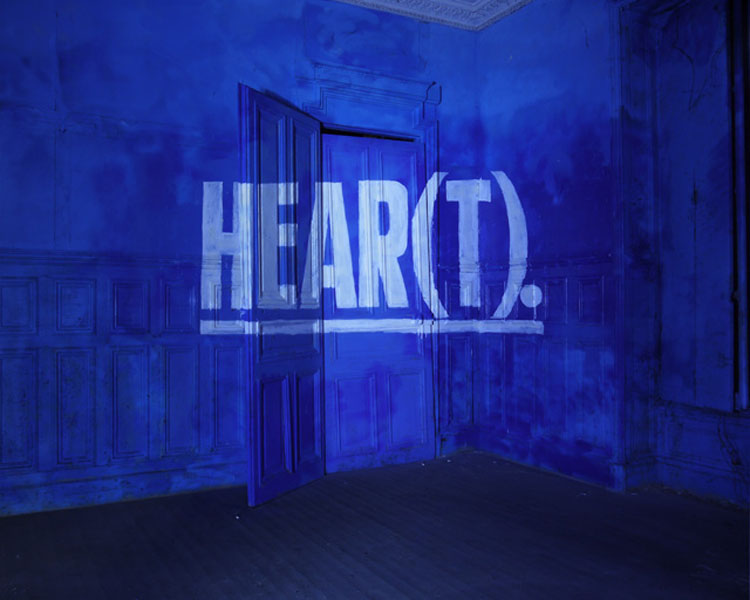
French street artist Sean Hart considers himself a poet (among many other things) and his poetry “is a weapon loaded with the future.” He paints large, existential-style statements in a condensed typeface on surfaces all over the world. His most recent series Shine (the blue and white photos at top) have an anamorphic quality, allowing his phrases to be read despite right angles and open doors in the center of the image. According to Hart all his works consist of paint, a camera, time and himself. No photoshop. No special effects. The works below Shine are from his series Yes Future from 2011, and the bottom image of a stabbed Tintin is from his series Parce Que!

UPDATE: One of Sean Hart’s recent interventions spotted on the streets of Madrid is over here on Escrito en la Pared.

via vandalog

Lumen 2012: Atlantic Salt, Staten Island

Lumen 2012, Staten Island, light and performance festival, Atlantic Salt piles in New Brighton, Staten Island, NYCLumen 2012, Staten Island, light and performance festival, Atlantic Salt piles in New Brighton, Staten Island, NYCLumen 2012, Staten Island, light and performance festival, Atlantic Salt piles in New Brighton, Staten Island, NYCClick to enlarge

This past weekend was one of those spectacular New York City summer weekends, with clear blue skies, hot but dry air, and more interesting fun events taking place than time to see them all. We opted for the very colorful Mermaid Parade on Coney Island (30th anniversary, no less), the Renegade Craft Fair in Williamsburg, the Gay Pride Parade in the Village, and the play “Slow Girl” at the lovely new (and quite affordable) Claire Tow Theater with a beautiful terrace offering up some of the nicest views of Lincoln Center. Saturday night was our biggest dilemma: free concert at Bryant Park? Lumen Festival in Staten Island? However, after bopping around multiple subway lines in Brooklyn during the day, we went for the low-key option of the new Woody Allen film in the neighborhood.

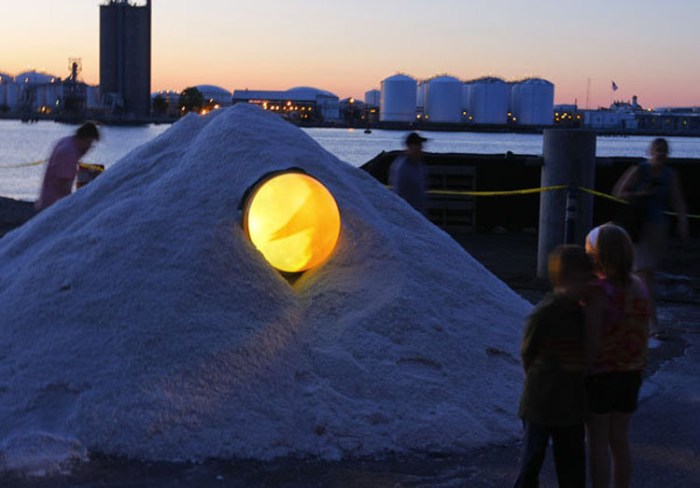
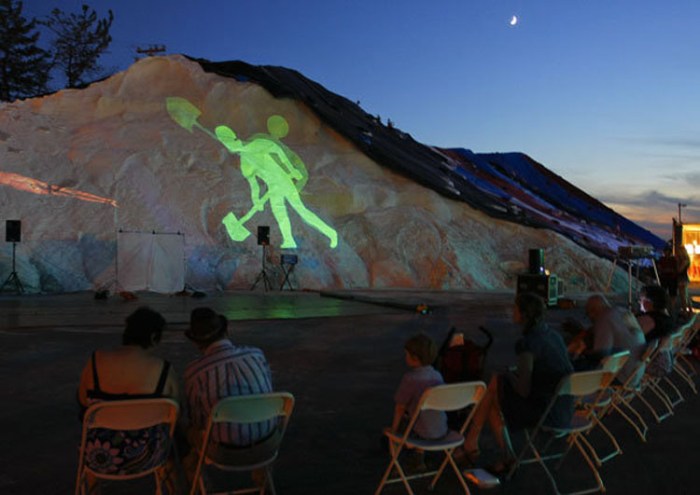
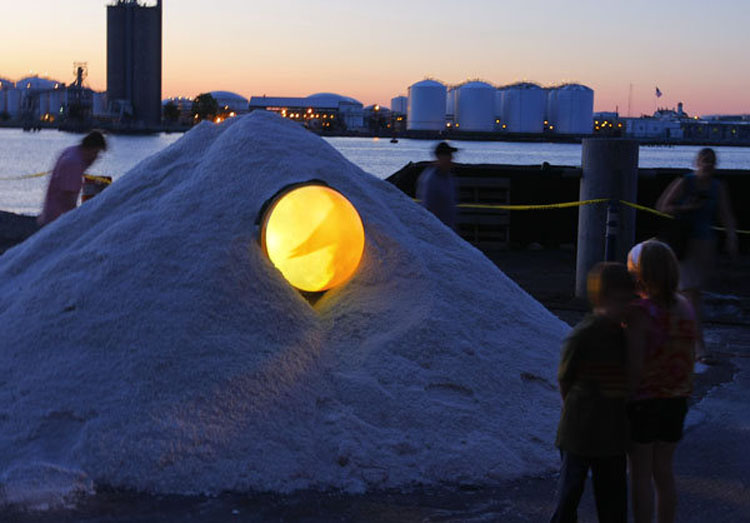
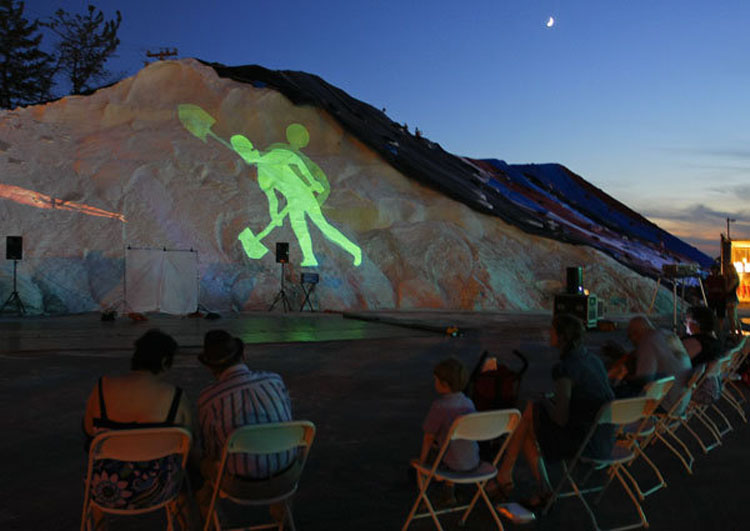
BUT, back to the topic of this post: Lumen 2012. Over on the industrial waterfront property of Staten Island, more specifically, the Atlantic Salt Company—the company that supplies road salt to the city during its snowy winters—all sorts of light-related exhibits took place. Due to an almost snowless winter in NY this year, the piles at the New Brighton company are still high with over 150,000 tons of salt, some piles as high as 5 stories. Roughly 50 artists, projected and performed their works on and around the mounds of salt, which (at least in the photos) looks very cool and in some cases Felliniesque. I wasn’t able to match many of the works with their artists, but here are the ones I found, followed by a link to a list of all the participating artists.

Top photo: Brendan Coyle’s piece titled “Mr. Canard”; second photo: Jeanne Verdoux’s “Woman Working” animation; Marco Brambilla’s “Sea of Tranquility,” a recreation of a lunar expedition; Phillip David Stearns neon light installation; and here’s the link to the list of artists (we welcome any additional information, if anyone knows the other works)
Photos: Garret Ziegler; Rocco S. Cetera; Eric Norcross; and Anthony DePrimo.

Shakespeare Machine: Ben Rubin

Multimedia sculpture, Chandelier of text from Shakespeare Plays, Public Theater, NYC, Ben RubinMultimedia sculpture, Chandelier of text from Shakespeare Plays, Public Theater, NYC, Ben RubinMultimedia sculpture, Chandelier of text from Shakespeare Plays, Public Theater, NYC, Ben RubinClick to enlarge

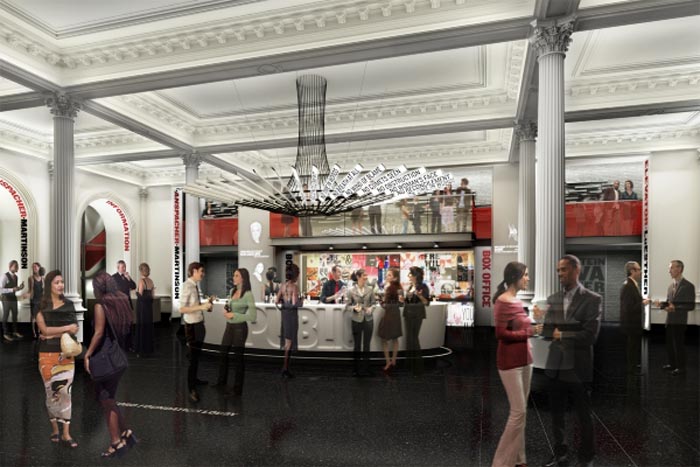
When I heard designer Paula Scher speak a couple of weeks ago at the Reasons to be Creative conference, she mentioned the current renovation at the Public Theater in NYC and the new graphics that she and her team at Pentagram are working on. She also mentioned a very interesting piece acting as a sort of centerpiece chandelier in the main lobby: a Shakespeare Machine designed by Ben Rubin (previously here and here.) The work is described in the Public Theater’s press release as follows:

A large-scale multimedia sculpture, “Shakespeare Machine,” has been commissioned from Ben Rubin for The Public’s lobby. Suspended from the ceiling and serving as the lobby’s chandelier, the work features 37 display screens on which fragments of Shakespeare’s plays appear and dance, creating an unfolding kaleidoscope of language in motion. The installation is part of New York City’s Percent for Art initiative, which ensures that a portion of construction project budgets are dedicated to site-specific artworks.

Upon further research I came across several Shakespeare Machines that Rubin has worked on in the past few years, as a way of working out concepts and algorithms for the Public Theater sculpture. The top three images are from the latest, and presumably final, renderings for the actual piece due to debut this coming fall. The fourth image is a previous rendering from 2009, while the fifth image is from A Shakespeare Accelerator: Experiments in Kinetic Language, a piece that is currently being exhibited at the Experimental Media and Performing Arts Center (EMPAC) at RPI in Troy, NY through the end of July. The final image is an iteration from 2009 included in the group show Textual Landscapes: Real and Imagined at Bryce Wolkowitz Gallery.

The final piece that will hang in the Public Theater’s lobby will cycle continuously through the text of Shakespeare’s plays organized as a repeating series of compositions, recombining the small linguistic molecules to form new poetic visual combinations. The nature of the algorithms ensures that no composition will repeat.

I’m looking forward to checking this out. In the meantime, you can take a peek at the animated rendering here.

Images courtesy of Ben Rubin, EMAC, Bryce Wolkowitz, and The Public Theater.

Mirador del Palmeral: Joaquin Alvado Bañon

Lookout Tower in Alicante Spain, Sustainable structure, cool spiral promenade, Joaquin Alvado, Contemporary Spanish ArchitectureLookout Tower in Alicante Spain, Sustainable structure, cool spiral promenade, Joaquin Alvado, Contemporary Spanish ArchitectureMirador del Palmeral, Daya Vieja Spain, Joaquin Alvado Architect, sustainable structure,Click to enlarge

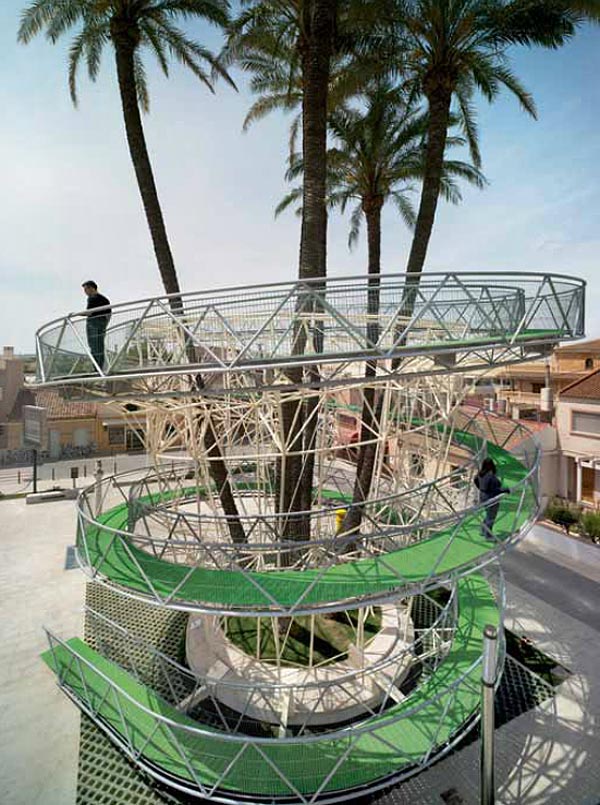
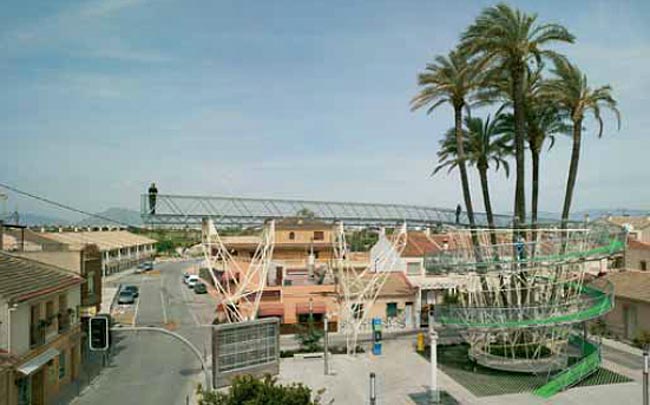
Triggered by the collapse of one of the palm trees in the center of town in Daya Vieja, Spain, architect Joaquin Alvado Bañon created El Mirador del Palmeral with the excuse of a structural support for the tree. A lookout tower with a spiraling promenade that culminates in a spectacular narrow overpass that jutts out and over a major town thoroughfare, El Mirador del Palmeral offers stunning views of the Vega Baja, Rojales and La Marina. In addition to the nice views and fun structure, the idea of making the trees a focal point and working with them is an example of the sustainable thinking that infiltrates much of today’s architecture.

Here’s a video to appreciate the structure from all angles:

Photos: David Frutos and Joaquin Alvado Bañon

via treintaycuatro

Salon Urbain: Sid Lee and Ædifica

Montreal parking garage converted into post -concert gathering space, event space, cafe. Very cool ceiling and barMontreal parking garage converted into post -concert gathering space, event space, cafe. Very cool ceiling and barMontreal parking garage converted into post -concert gathering space, event space, cafe. Very cool ceiling and barSalon Urbain, Montreal lounge and event space with cool bar.Click to enlarge

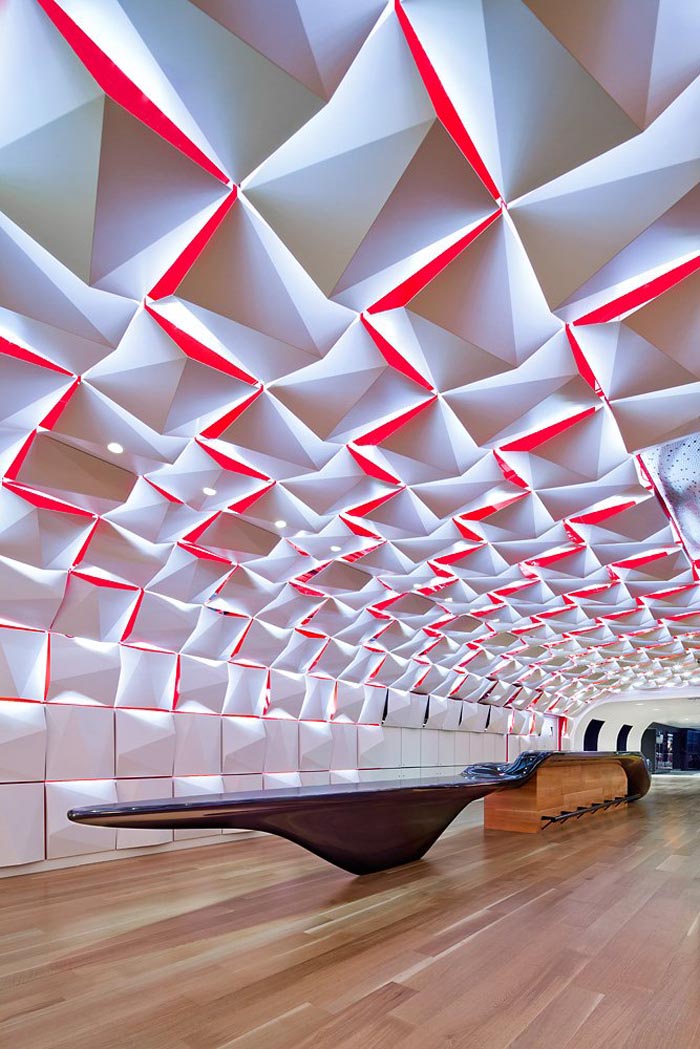
The former parking lot at the Place des Arts in Montreal, has been transformed into a cool urban lounge and event space: Salon Urbain by Sid Lee Architecture and Ædifica. Adjacent to a new concert hall, the space is meant to be a meeting place pre- and post-concert or exhibit. The central focal point of the space, under the spectacular ceiling, is the bar shaped as a sound wave in physical form. The goal of the architects was to create a space that would continue the magical feeling that comes with attending a concert.

Pretty darn cool.

Photos by Stéphane Brugger

John Grade: Inspired by & Interactive with Nature

Large scale sculptures inspired by and interactive with nature. Biodegradable, dissolve and wash away with waterLarge scale sculptures inspired by and interactive with nature. La Chasse - The HuntLarge scale sculptures inspired by and interactive with nature. La Chasse - The HuntLarge scale sculptures inspired by and interactive with nature. La Chasse - The Elephant Bed, seeps of winter Click to enlarge
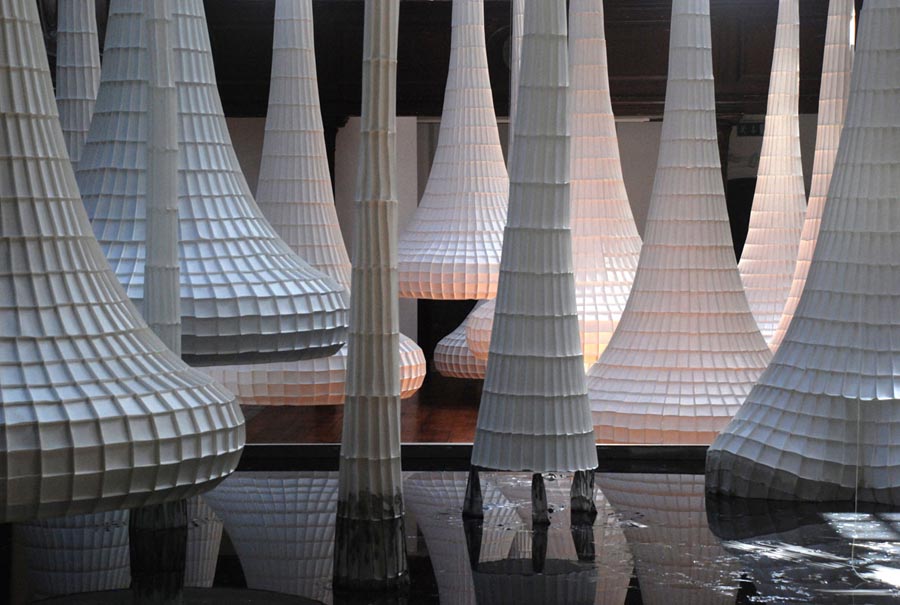
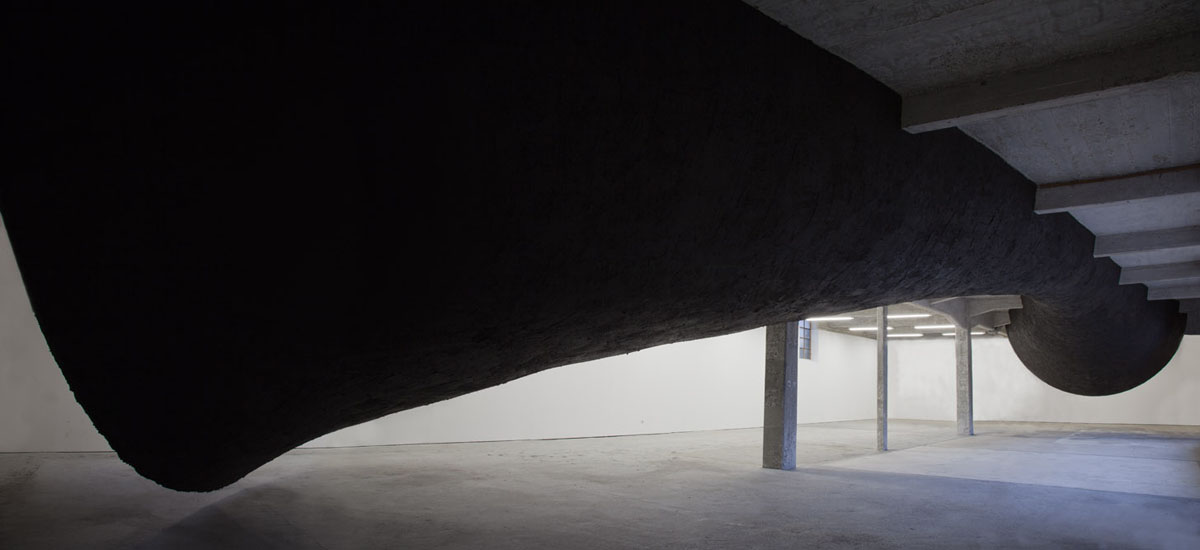
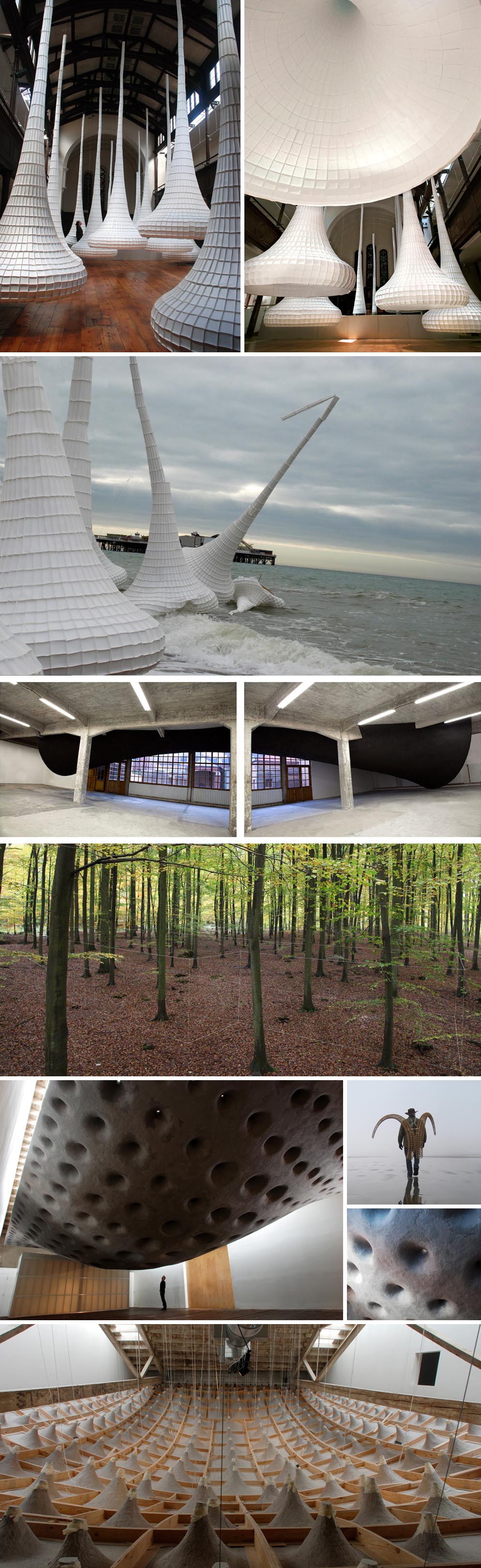
Originally from Minneapolis and now living and working in Seattle after receiving his MFA from Pratt in Brooklyn, NY, artist John Grade creates giant sculptures that are inspired by, as well as interactive with, nature. After spending several years traveling the world and sketching nature, one can see the influence, even if only indirectly, in Grade’s work. Grade thrives on the landscapes and elements that surround him. His art, in many cases, is made with recycled materials and is always biodegradable and environmentally friendly. His sculptures are meant to safely devolve, disintegrate, or dissolve in nature and are usually transported to a specific location after being exhibited for this process to take place. For example, his Elephant Beds (first, fourth, and fifth rows of photos) are made of paper that has no binder which allows them to fall apart and disintegrate as soon as they touch, or are touched by, water. His Seeps of Winter (bottom photos) are reminiscent of a whale but are based on the bogs of Ireland. The gray paper pulp surface along with the rest of the enormous work is meant to devolve in desert, forest and alpine landscapes. Pretty incredible.

via art ltd.

Ben Jackel: War & Emergency Tools

Warrior sculpture, War, Soldiers, Syntagma, Compliance Solutions, Ben Jackel, LA artistWarrior sculpture, War, Soldiers, Syntagma, Compliance Solutions, Ben Jackel, LA artistFire Hydrant sculpture, standpipe sculpture, emergency tools, Ben Jackel, LA artist, Zero Percent ContainedFire Hydrant sculpture, standpipe sculpture, emergency tools, Ben Jackel, LA artist, Zero Percent ContainedClick to enlarge
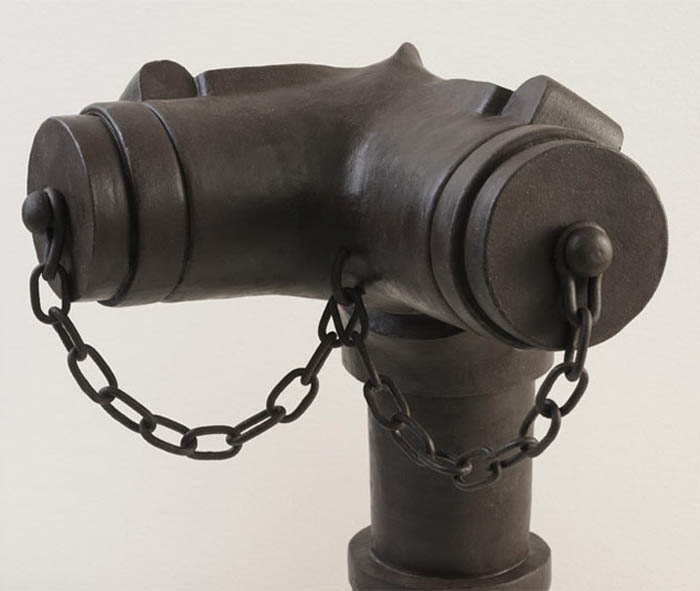
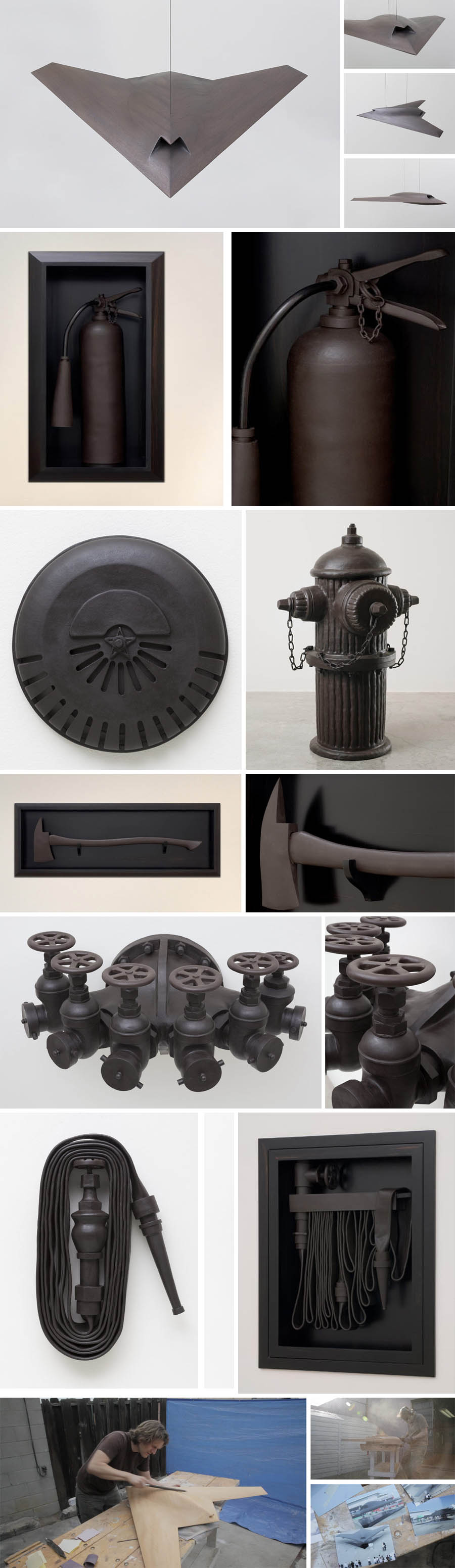
Los Angeles-based artist Ben Jackel uses primitive materials and old traditions to look at the contemporary world. He is interested in the history of warfare and its tools, from 15th Century halberds to present day spy planes, and has recreated versions of them in mahogany coated in graphite. As a counterpart to these, Jackel has made a series of emergency tools using stoneware and beeswax that include fire hydrants, standpipes, alarms, axes, and fire hoses. These tool sculptures both contrast and complement the war-themed ones; they, too, represent powerful forces at the ready.

Jackel’s latest solo exhibit Zero Percent Contained is on view through the end of June at LA Louver in Venice, California.

You can see Jackel’s process in the video below:

Photos courtesy of the artist; artslant; and la louver

Sandy Carson: Paradise Has Relocated

Striking photographs documenting post-hurricane Ike destruction in Galveston, Texas. Sandy Carson PhotographyStriking photographs documenting post-hurricane Ike destruction in Galveston, Texas. Sandy Carson PhotographyStriking photographs documenting post-hurricane Ike destruction in Galveston, Texas. Sandy Carson PhotographyClick to enlarge

Scottish photographer Sandy Carson, now based in Austin, Texas, examines a specific segment of American life in a humorous and simultaneously poignant way. In his series titled Paradise Has Relocated, Carson captures the remains of post-Hurricane Ike (2008) Galveston. There’s a ghostliness in his shots of abandoned everyday objects and fractured structures. I love them all.

You can see the rest of this series on Carson’s website as well as his other projects; Obstructed Blandscapes being another series I especially liked.

via okay mountain

Subodh Gupta: Utensil Sculptures

contemporary sculpture from India, Subodh Gupta, Gas Mask, Sculpture made with pots, pans and utensilscontemporary sculpture from India, Subodh Gupta, Gas Mask, Sculpture made with pots, pans and utensilscontemporary sculpture from India, Subodh Gupta, Gas Mask, Sculpture made with pots, pans and utensilsClick to enlarge
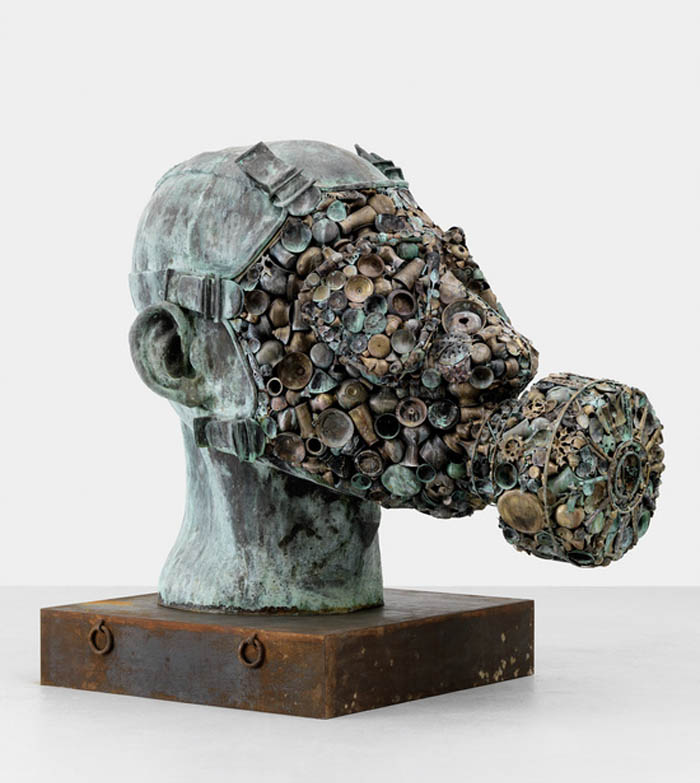
Internationally acclaimed artist Subodh Gupta, living and working in New Delhi, India, takes the ready-made and converts it into sculpture. Using signature Indian stainless steel tiffin-tins and other utensils, Gupta creates monumental installations ranging from soldier’s heads and water buckets that are spilling over to eggs in their carton and a giant mushroom cloud (Line of Control) that was first exhibited at the Tate Triennial a few years back.

Photos courtesy of Arario Gallery; Saatchi Gallery; and Hauser & Wirth

Zach Lieberman: Interactive Artist

interactive art, computer graphics, human-computer interaction, very cool, art meets science and technologyinteractive art, computer graphics, human-computer interaction, very cool, art meets science and technologyinteractive art, computer graphics, human-computer interaction, very cool, art meets science and technologyinteractive art, computer graphics, human-computer interaction, very cool, art meets science and technologyClick to enlarge

Another of the amazing speakers at Reasons to be Creative last week was Brooklyn-based digital artist and programmer Zach Lieberman. He uses technology in a playful way breaking down the fragile boundary between the visible and invisible. His main goal is to surprise. Lieberman has collaborated on numerous impressive projects, many of which have rightfully won awards and been exhibited at, among other places, MoMA’s Talk to Me exhibit last year.

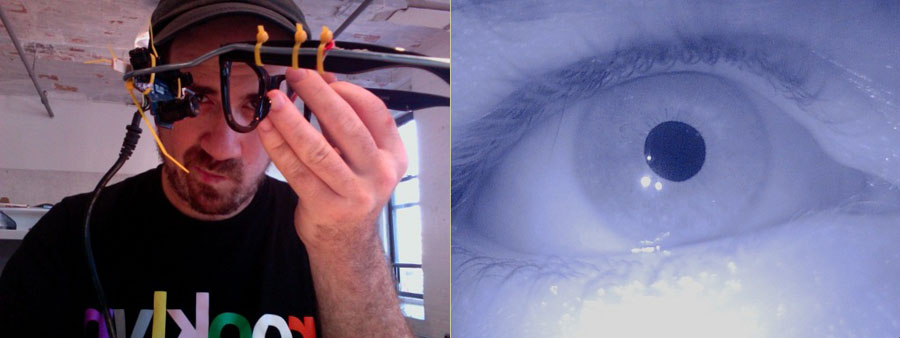
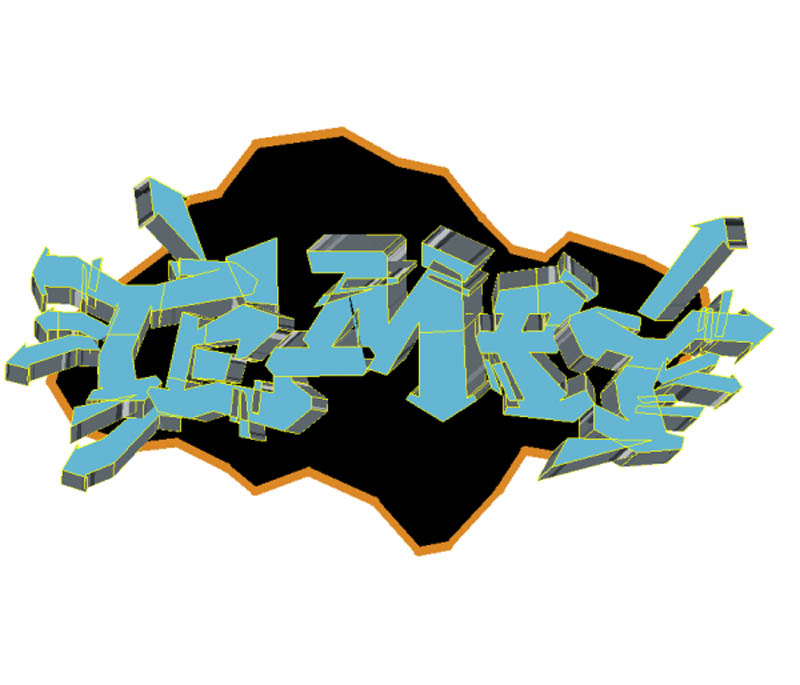
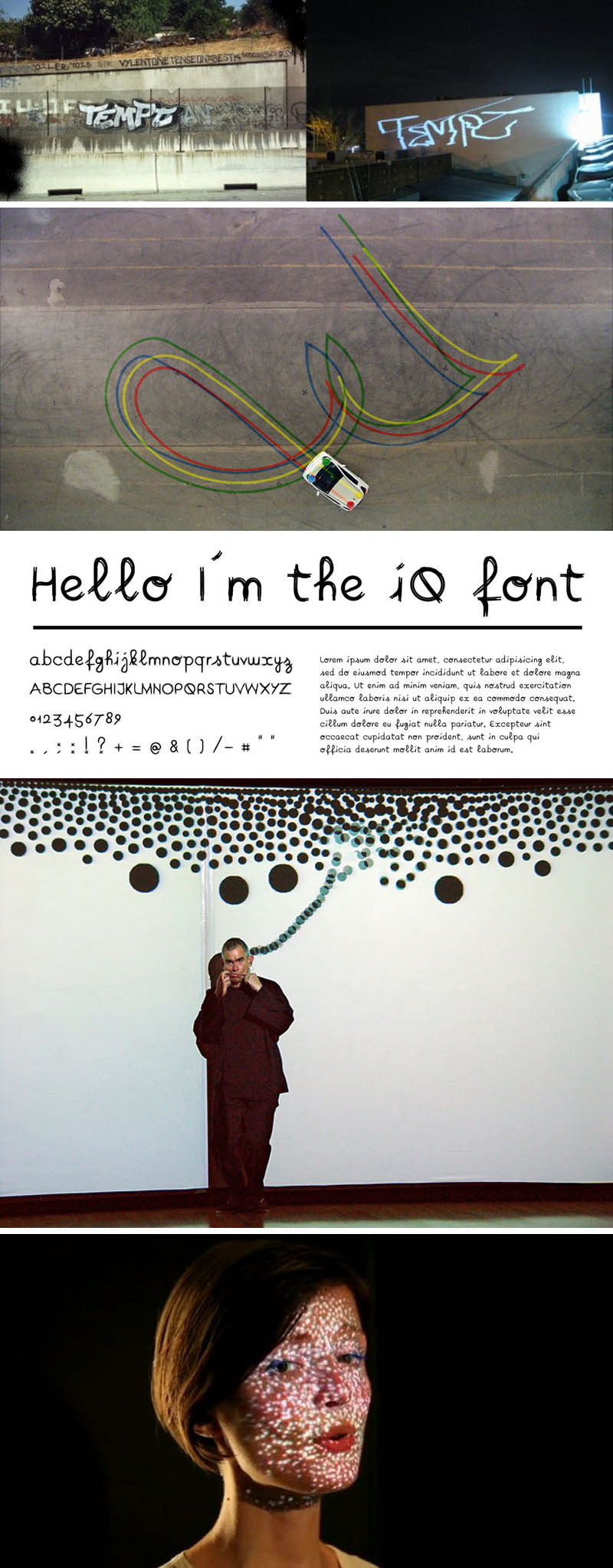
One of his impressive projects—in conjunction with the Graffiti Research Lab—is a project initially created to allow TEMPT1 — a pioneering artist in the 1980s and 90s California graffiti scene who has since been afflicted with ALS, a degenerative neuromuscular disorder leaving him completely paralyzed except for the use of his eyes and mind — to draw using an eyetracking system. Lieberman was able to keep the cost very low, and with incredible ingenuity created Eyewriter. See the video below to watch it in action and for more details. Truly incredible and so heartwarming.

Another interesting project Lieberman collaborated on with two typographers and a professional stunt driver is IQ font for Toyota. Tracking the car’s movements using custom software designed by Lieberman, they created a font which is unique and can be downloaded for free.

Other projects include voice activated graphics in Messa Di Voce, an audiovisual performance collaboration with Golan Levin, and a music video for BELL using FaceTracker code with fun effects happening on the singer’s face in real-time. (See second video below.)

CupNoodles Museum

Cup Noodles Museum, fun, interactive museum in Yokohama, Japan, make your own cup noodles, factory, park, museum, history, momofuku andoCup Noodles Museum, fun, interactive museum in Yokohama, Japan, make your own cup noodles, factory, park, museum, history, momofuku andoCup Noodles Museum, fun, interactive museum in Yokohama, Japan, make your own cup noodles, factory, park, museum, history, momofuku andoCup Noodles Museum, fun, interactive museum in Yokohama, Japan, make your own cup noodles, factory, park, museum, history, momofuku andoClick to enlarge

Just back a few days from their amazing trip to Japan, Em and Dan had lots to report. High on their list in terms of cool fun was the CupNoodles Museum in Yokohama, about 30 minutes from Tokyo. Opened last fall, the interactive museum chronicles the history of the instant ramen noodle created by Momofuku Ando in 1958. Included in the museum is a Design-your-Own Cup Noodle from content to package design, a replica of the shed where the instant ramen was invented, A Noodles Bazaar Food Court, and a theme park. Oh, and of course, a gift shop selling all things ramen, including the lovely set of chopsticks that they brought back for me, which I might just have to frame instead of actually use. When I questioned the relevance of the fun graphic logo, Em and Dan immediately responded with “No, it’s perfect. That’s exactly the feeling you experience the minute you step through the door.” ’Nough said.
Update: I just noticed that the exclamation points refer to the decorative border on the CupNoodle cup, so there’s that too…

All photos by collabcubed except second from top and second from bottom by Yuriko Nakao/Reuters.