Rivane Neuenschwander: Continent Cloud

cool art installation, continent cloud, MOCA Sydney, Rivane Neuenschwander, contemporary artcool art installation, continent cloud, MOCA Sydney, Rivane Neuenschwander, contemporary artcool art installation, continent cloud, MOCA Sydney, Rivane Neuenschwander, contemporary artClick to enlarge

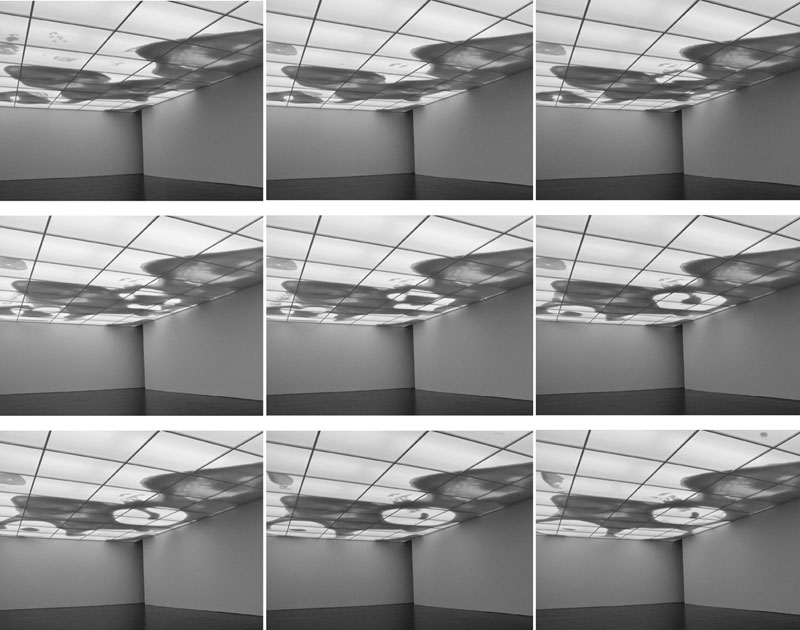
Brazilian artist Rivane Neuenschwander is known for her poetic-styled installations. Currently on display at the Museum of Contemporary Art in Sydney, is her previously exhibited piece titled Continent-Cloud. Composed of a polypropylene lining that supports small styrofoam balls which occupy the entire gallery ceiling, the balls are moved around by hidden fans creating changing forms in constant movement. The way these forms rearrange themselves is evocative of clouds moving across the sky, while at the same time some of the solid masses are also reminiscent of land formations on the globe, hence its title.

Neuenschwander’s installation will be up at MCA as part of their Marking Time exhibit until June 3, 2012.

Photos: Reuters: Daniel Munoz; MCA; and Stephen Friedman Gallery


Nuovo Teatro dell’Opera Firenze: ABDR

New Florence Opera House, ABDR architects, contemporary architecture in Italy, TravelNew Florence Opera House, ABDR architects, contemporary architecture in Italy, TravelNew Florence Opera House, ABDR architects, contemporary architecture in Italy, TravelClick to enlarge

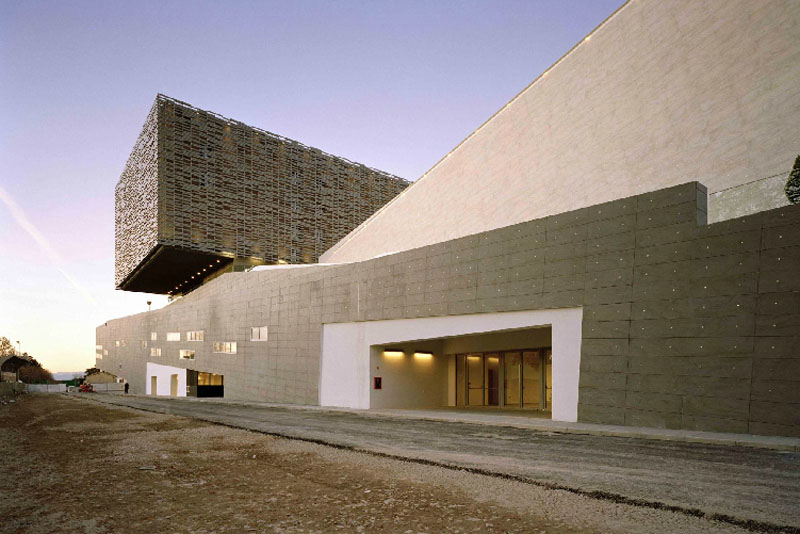
Well, if Michelangelo’s David, Botticelli’s Venus or Tuscan cuisine wasn’t enough of a lure to get you to Florence, as of this past December there’s a new opera house, as well. Designed by the Italian architecture firm ABDR, il Nuovo Teatro dell’Opera di Firenze is only one of the projects included in a new music and cultural district linking the city with Cascine Park referred to as Parco della Musica.

The 1800-seat opera house also includes a smaller hall that seats 1100 and will be used for concerts and recitals. The design intertwines many outdoor terraces and spaces with the interior ones, using pathways to connect these areas. There is a 2000- seat open air facility as well. The large complex is decidedly modern with dramatic angles and curves, with a nocturnal glow caused by the dramatic lighting that shines through the woven exterior. The interior includes smooth geometric lines and warm wood panels.

via floornature

Javier Siquier: Graffiti Removal

Javier Siquier, Spanish Street Art, Graffiti, Graffiti removal, OA, collabcubedJavier Siquier, Spanish Street Art, Graffiti, Graffiti removal, OA, collabcubedJavier Siquier, Spanish Street Art, Graffiti, Graffiti removal, OA, collabcubedSpanish graphic designer, illustrator and street artist Javier Siquier seems intrigued by reversal. Recently, he created a series of work on the streets titled Graffiti Removal where he whites out graffiti, leaving blocks of (mostly) white paint, as if redacting the words from the streets.

In the works above, which I really like, he neatly whites out the surrounding area exposing just enough graffiti, making it neat and graphic. Almost like a patterned appliqué. Love it! Conversely, in his exhibit presently up at the SC Gallery in Bilbao, Siquier frames photos of his Graffiti Removal works and paints the gallery walls to overlap the frames. A nice effect.

via vandal hostel via escrito en la pared

Matt McVeigh: Shopping Cart Sculptures

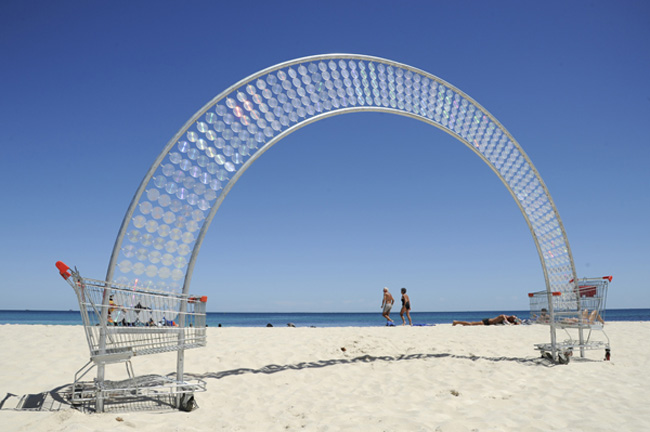
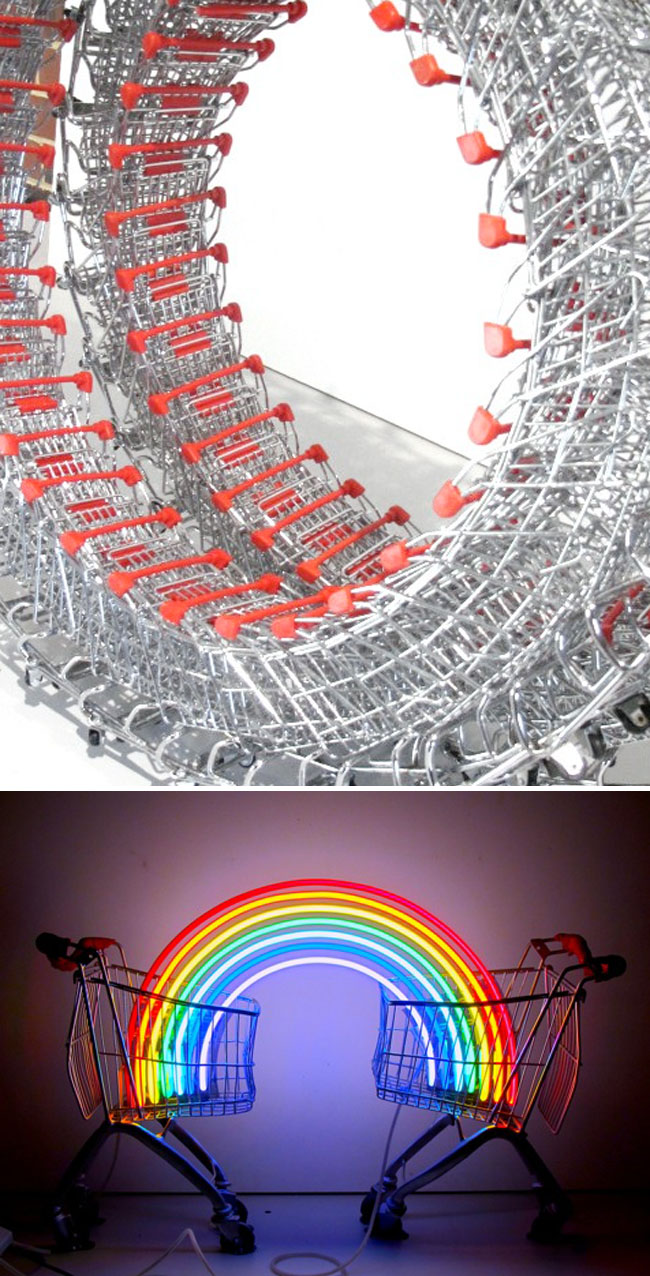
Shopping cart sculpture, Sculpture by the Sea cottesloe, Australia, cool contemporary sculptureShopping cart sculpture, Sculpture by the Sea cottesloe, Australia, cool contemporary sculptureShopping cart sculpture, Sculpture by the Sea cottesloe, Australia, cool contemporary sculptureThe multi-talented Matt McVeigh is an Australian set designer, painter, costume designer, puppet-maker, and sculptor. Most recently he has created a series of sculptures involving both life-size shopping carts and miniature ones. In these sculptures McVeigh explores consumerism and its resulting social issues by referencing the instability of our culture and the endless pursuit of more.

Last month in Cottesloe’s 8th annual Sculpture by the Sea, McVeigh had both an outdoor (top photo is The New Covenant) and indoor (bottom photo: Covenant Under Question?) sculpture exhibited.

You might also like last year’s submission, Ascension, as well as his kinetic piece Stentor.

via sculpture by the sea

Good Design Lasts

2804 Pencils to create signage, typography, signage design, office design, Spagnola and Associates2804 Pencils to create signage, typography, signage design, office design, Spagnola and Associates
Click to enlarge

New York design office Spagnola & Associates faced the challenge of designing their new office space. They created a 20′ wide dimensional wall to stimulate ideas and complete the office. 2804 pencils were hammered into pre-drilled holes in the panels. The completed wall reads, in custom designed letters, “good design lasts”. The entire process is documented in the stop motion video above.

Timotheus Tomicek: Video Portraits

Video portraits, moving photographs, contemporary art, Tomicek, Volta 2012, cool artVideo portraits, moving photographs, contemporary art, Tomicek, Volta 2012, cool artVideo portraits, moving photographs, contemporary art, Tomicek, Volta 2012, cool artOne of my favorite exhibits at Volta last month was Viennese artist Timotheus Tomicek’s video portraits or moving photographs. In many cases these seemingly-still images are reminiscent of Renaissance paintings yet all have a subtle indication of modernity. Also, upon closer look, many of these are actually videos, where only the slightest of movement can be detected: a slight breeze, movement of water in a glass, or the shaking of a hand over a precariously balanced stack of dominoes. Though different in style, these works remind me of the wonderful VOOM Portraits by Robert Wilson exhibited five or so years ago, in concept.

You can see two of the moving photographs in action below, and more of Tomicek’s work, both still and moving, here and here. And more of his video portraits here.

Reece Jones: Control Test

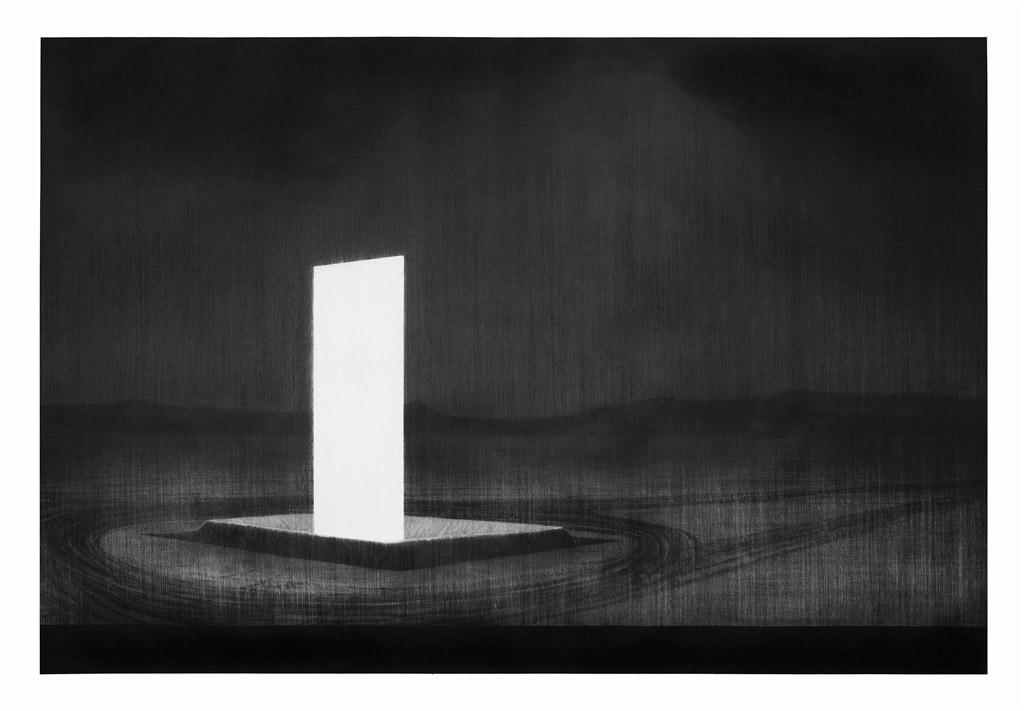
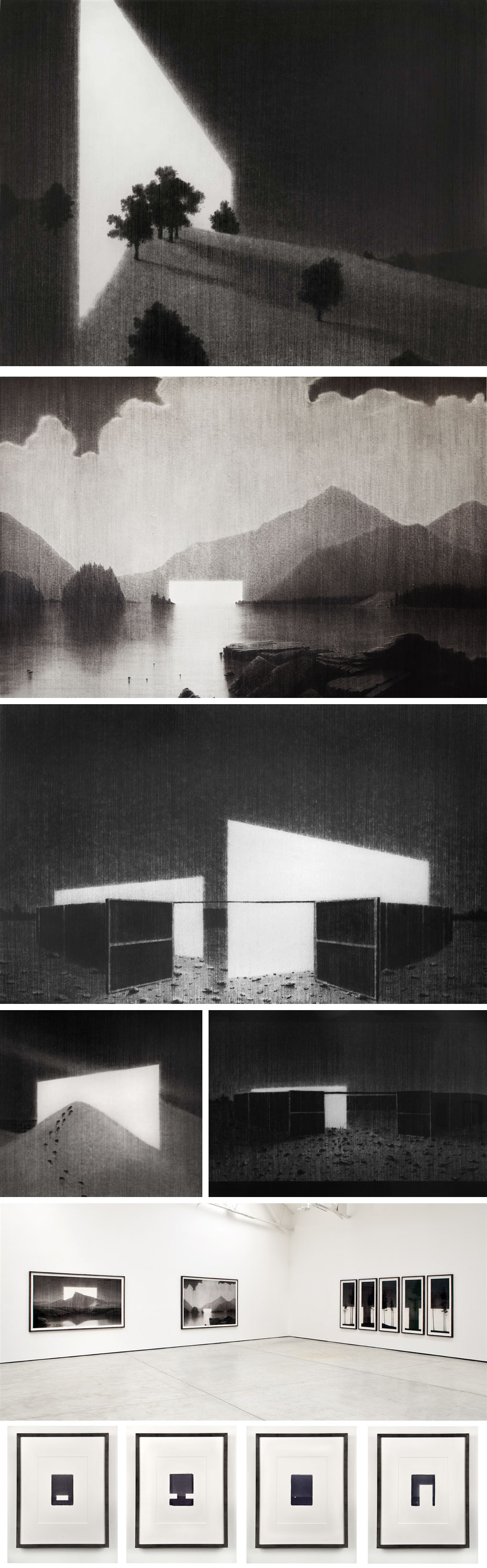
All Visual Arts Gallery, Control Test exhibit, Reece Jones, Charcoal Landscapes, Mythic Visions of forestAll Visual Arts Gallery, Control Test exhibit, Reece Jones, Charcoal Landscapes, Mythic Visions of forestAll Visual Arts Gallery, Control Test exhibit, Reece Jones, Charcoal Landscapes, Mythic Visions of forestClick to enlarge

These charcoal drawings by London-based artist Reece Jones are truly stunning. Having been recently exposed to the challenges of drawing with charcoal via Daniela, I have a newfound appreciation for the medium and these are exemplary examples of it at its best.

Presently, Jones has an exhibit at All Visual Arts in London titled Control Test. These natural landscapes all include a large rectangle of light a la James Turrell or Doug Wheeler. The contrast of the natural forms and the geometric unnatural lightform is very striking, from shape to the glowing white amidst the generally dark and heavy charcoal.

From the text on the gallery’s website by Richard Dyer:
…The rectangle of light hovers in the centre of the pictures, like a ghost of the blank paper before a single mark is made. Optically the intervention of the luminous shape operates as a doorway through the space of the sublime landscape. Doorways, gateways, archways, are transitional spaces, liminal thresholds between one order of existence and another, here abstracted to a featureless geometric shape; the space to which the threshold opens up is free to be populated by the speculative imagination of the viewer. It is at once an opening into a void and a solid object or barrier; it dominates the landscape, an almost sentient presence, like an inversion of the black rectangular ‘sentinel’ in 2001: A Space Odyssey

You can see more of Reece Jones’ work here and here, or visit the London exhibit up through April 21, 2012. The bottom four works are actually watercolor and polymer varnish, not charcoal, but lovely as well.

via all visual arts

Nidos Urbanos: Urban Nests

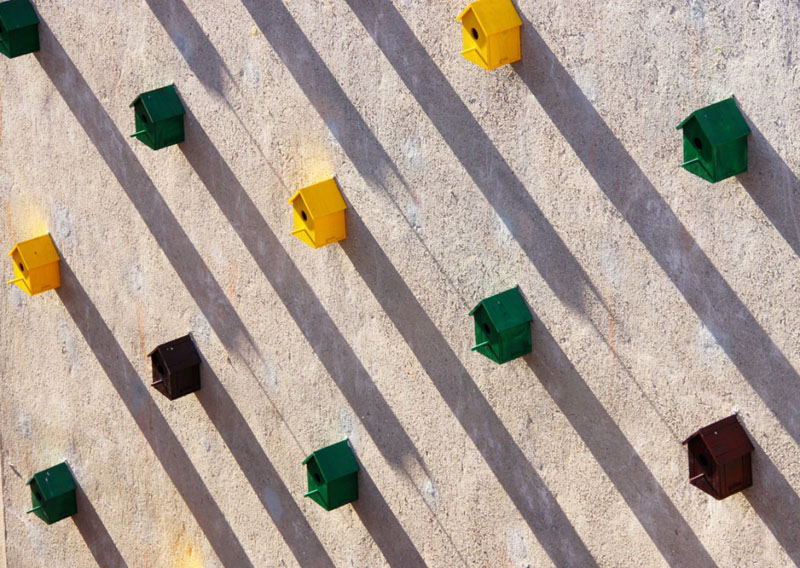
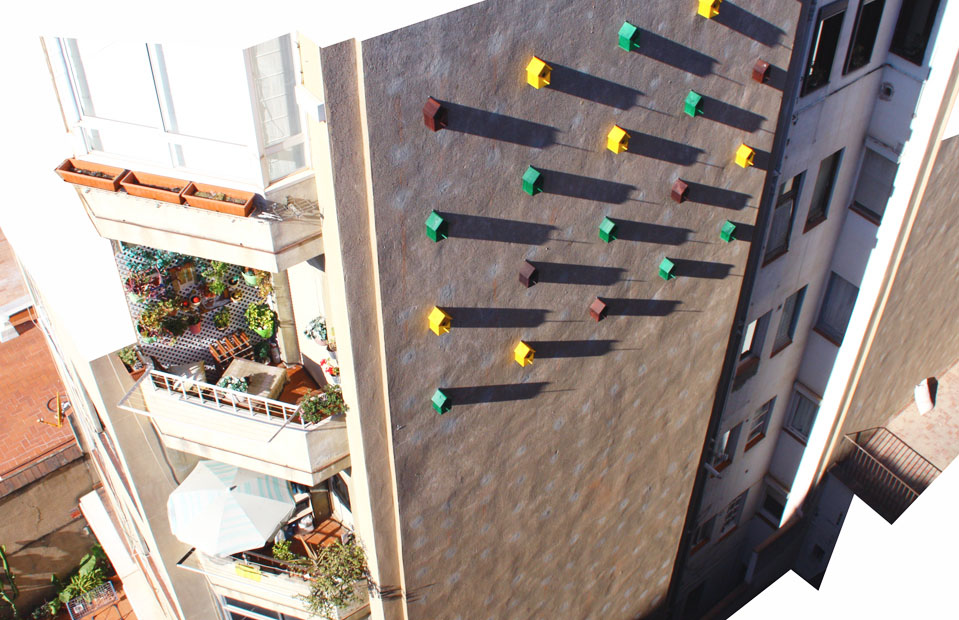
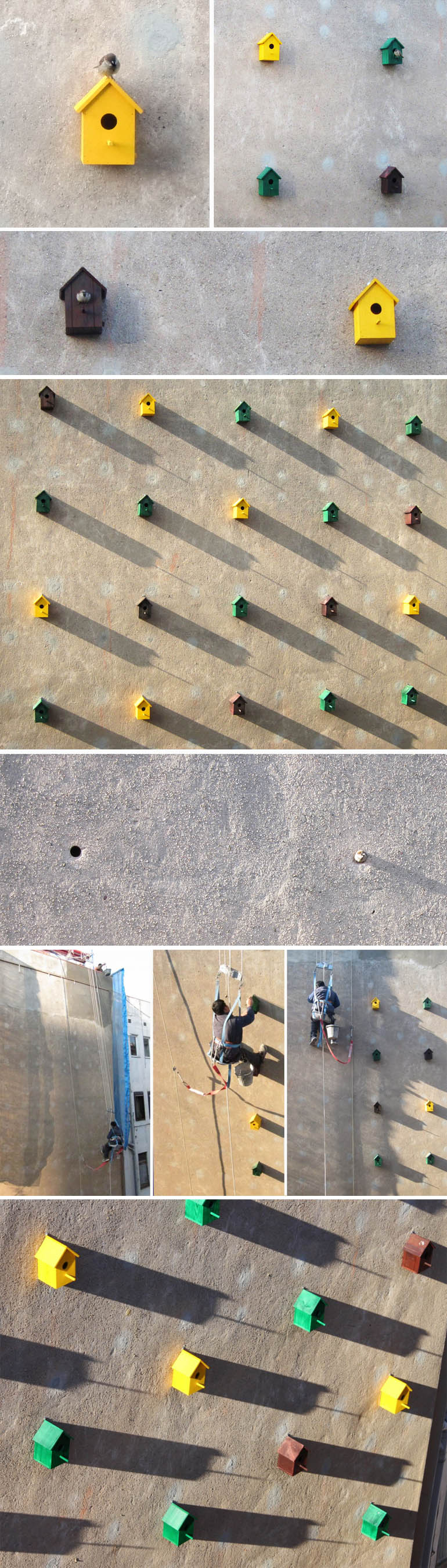
Bird Houses on side of building in Barcelona, Dom Architects, Sparrows come back to nestBird Houses on side of building in Barcelona, Dom Architects, Sparrows come back to nestBird Houses on side of building in Barcelona, Dom Architects, Sparrows come back to nestClick to enlarge

In Barrio de Gracia, Barcelona, a bare concrete wall on the side of a building had been occupied by sparrows, nesting in random holes in the wall. Eventually the wall was repaired, plugging up all the holes, and the sparrows disappeared. In an effort to bring the sparrows back, Dom Arquitectura placed colorful birdhouses equally spaced in rows on the same wall. Not only do the birdhouses bring joyful color to the wall, but the sparrows returned adding life, flight and song to the neighborhood. Nice!

via plataforma arquitectura

Cairns Botanic Gardens Visitors Centre

Sustainable architecture, Australia, Charles Wright Architects, reflective facade, collabcubedSustainable architecture, Australia, Charles Wright Architects, reflective facade, collabcubedSustainable architecture, Australia, Charles Wright Architects, reflective facade, collabcubedcool architecture, sustainable architecture, rainforest, reflective facade, visitor center in AustraliaClick to enlarge

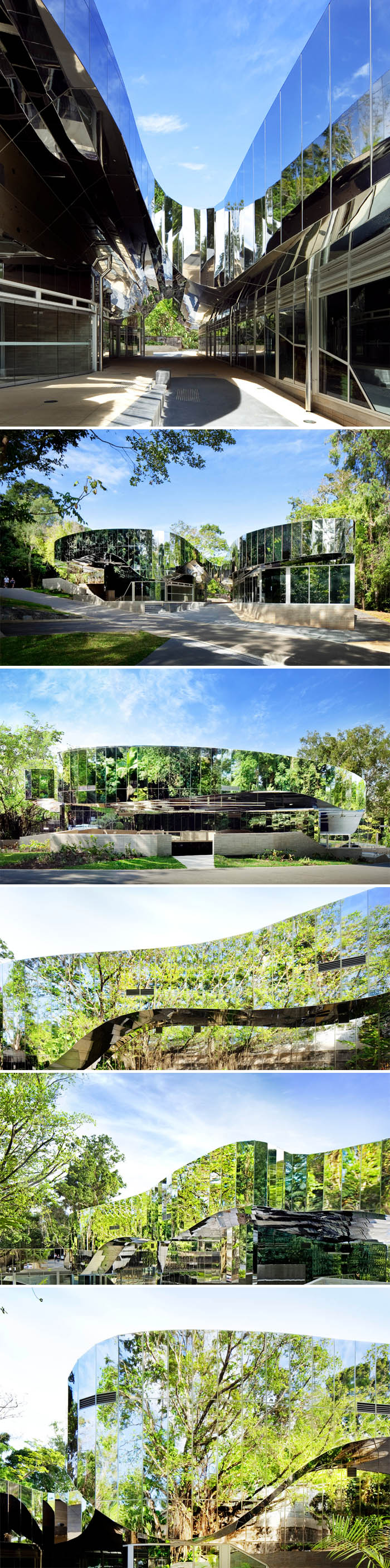
Situated in the midst of the rainforest in Far North Queensland, Australia is the cleverly camouflaged Cairns Botanic Gardens Visitors’ Centre designed by Charles Wright Architects. The mirrored – almost prismatic – façade, walls and soffits of the recently completed building reflect the lush green surroundings adding a coolness to the tropical location.

Met with the challenge of designing an iconic “green” building, Wright Architects responded by producing an ESD canopy as a gateway into the gardens. The structure is a sustainable solution that doesn’t rely on complex technology yet provides thermal convection, water harvesting for reuse, chilled thermal massing for cooling, and renewable energy generation. The Cairns Botanic Gardens Visitors’ Centre is an example of a new progressive direction for tropical design. Plus, it has a very sci-fi look, to boot.

If you like the look of this building, check out Rob Mulholland’s Vestige Installation too.

Photos: Patrick Bingham-Hall

via australian design review

Studio 400: White

Cal Poly San Luis Obispo College of Architecture and Environmental Design, Thesis book show installation, cool and fun art installation, student work, collabcubedCal Poly San Luis Obispo College of Architecture and Environmental Design, Thesis book show installation, cool and fun art installation, student work, collabcubedCal Poly San Luis Obispo College of Architecture and Environmental Design, Thesis book show installation, cool and fun art installation, student work, collabcubedClick to enlarge

Now this looks like a fun class! Design, developed and installed by students in Professor Karen Lange’s Studio 400 class at Cal Poly San Luis Obispo College of Architecture and Environmental Design, White is their recent book show installation. White served as a showcase for Studio 400’s thesis books, filling the gallery with 80,000 square feet of plastic sheeting that was loomed, crocheted, stapled, bent, and tied over a 4-day period. The result was a fun, comfortable net, creating hammock-like reading spaces within which to peruse the hanging books. Must have been a blast.

You can watch the process in the video below:

If you like this you might also enjoy Ernesto Neto’s installations and For Use.

via sinbadesign/archinect

AVPD: Spatial Works

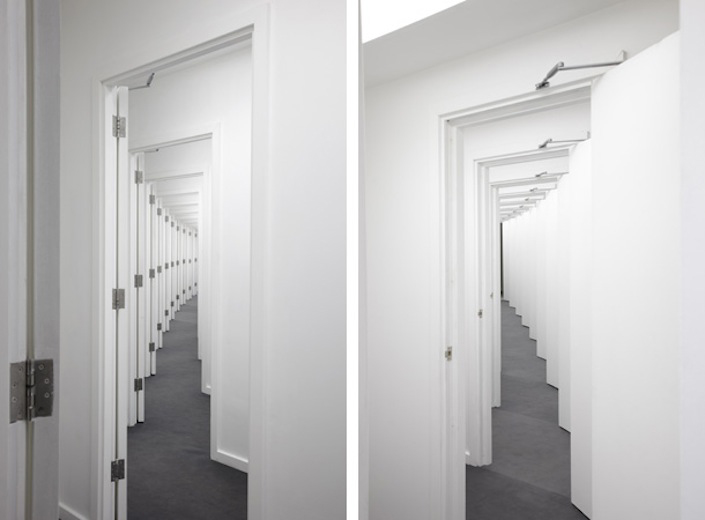
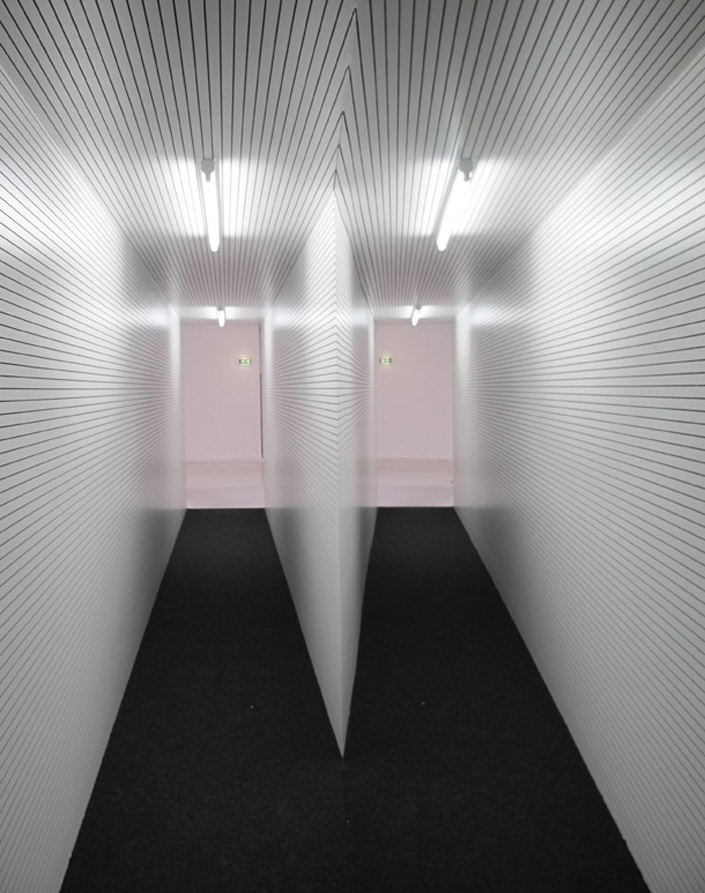
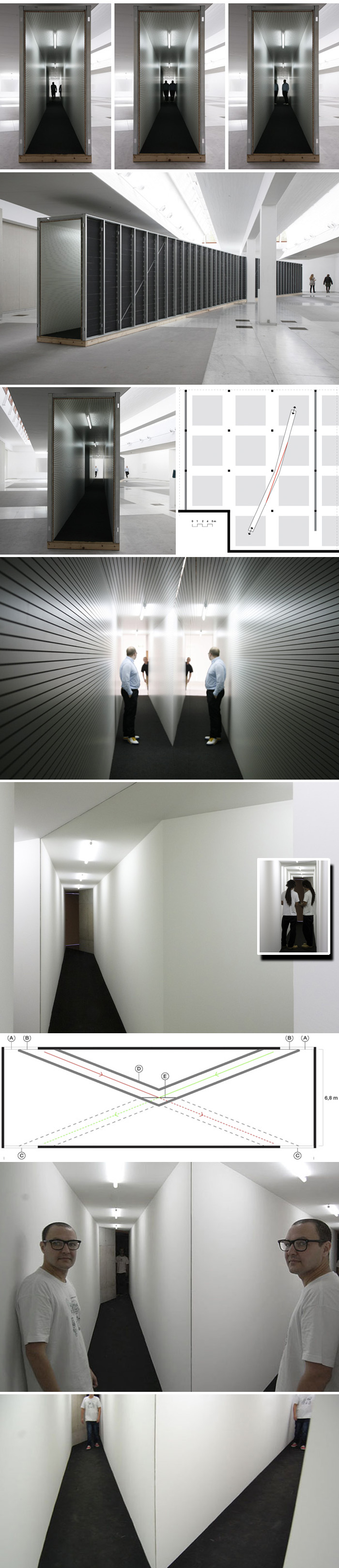
Spatial installations, cool art installations, multiple doors, Aslak Vibæk and Peter Døssing, Hitchcock HallwaySpatial installations, cool art installations, mirrored hallway, Aslak Vibæk and Peter Døssing, Broken View, collabcubedSpatial installations, cool art installations, mirrored hallway, Aslak Vibæk and Peter Døssing, Broken View, collabcubedClick to enlarge

AVPD, a Danish studio created by visual artists Aslak Vibaek and Peter Døssing, unites knowledge from fine arts, architecture, science and the humanities to create works that focus on the perceptual relation between man and space. These installations or spatial works have a fun house quality to them, with their mirrored hallways and infinite doors. The top photo shows their installation aptly named Hitchcock Hallway, while the next five images below are from their Broken View installation where a single corridor appears to become two. The bottom four images are from Diagonal View, which has an equally deceiving hallway.

From AVPD’s website:
We define our spatial works as meta-architectures where the normal perception of the spectator is challenged and displaced and a new experience of space is made possible. In our works, we try to rethink the triangular constellation of the subject, the object and the context. We are interested in how spatial constructions effect the perception of the spectator and how she/he grasps the space in a cognitive, emotional and intellectual way.
Our domain is reality and our artistic praxis is a spatial laboratory.

There are many, many more of these works to be seen on their site as well as videos and plans that explain each one, though I’m quite sure that nothing beats walking through them live.

via galeria leme

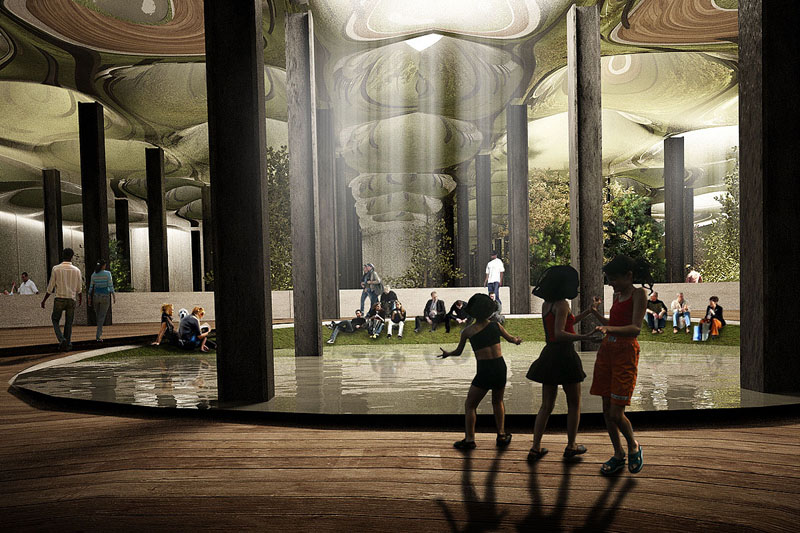
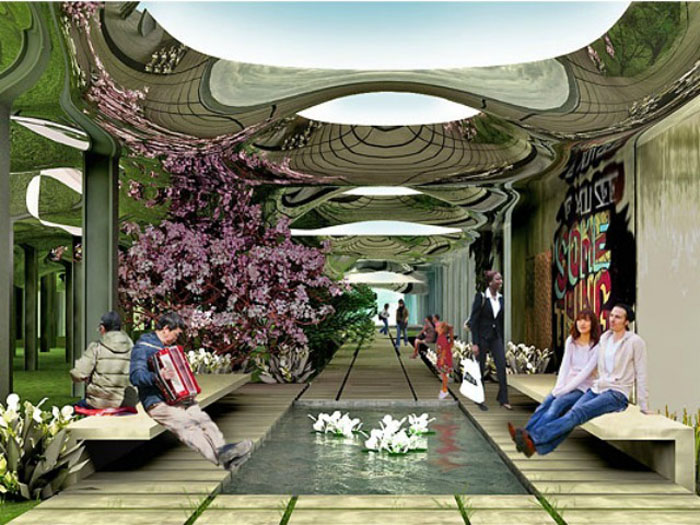
Delancey Underground: the “LowLine”

James Ramsey, RAAD, Dan Barasch, PopTech, Arup Engineers, Lower East Side Underground Park Proposal, Kickstarter Project, Delancey Trolley StationJames Ramsey, RAAD, Dan Barasch, PopTech, Arup Engineers, Lower East Side Underground Park Proposal, Kickstarter Project, Delancey Trolley StationJames Ramsey, RAAD, Dan Barasch, PopTech, Arup Engineers, Lower East Side Underground Park Proposal, Kickstarter Project, Delancey Trolley StationClick to enlarge

This is a project that I’m very excited about. Being a big fan of the High Line, the idea of revitalizing another set of unused train tracks to create an additional public park space in NYC sounds great. The Delancey Underground project (a.k.a. the LowLine) is the brainchild of James Ramsey (RAAD) and Dan Barasch (PopTech). They propose to convert the former Williamsburg Trolley Terminal – opened in 1903 but not in use since 1948 – into a 60,000 square foot underground green space beneath Delancey Street in the Lower East Side. They have found beautiful architectural details in the abandoned space such as cobblestones, vaulted ceilings and crisscrossing train tracks.

Dark and gloomy you say? Well, Ramsey has designed a new technology that would direct sunlight below ground via fiber optic cables. Solar collectors would be placed at street level, collecting sunlight throughout the day which would then be reflected below ground. This light would not emit the ultraviolet harmful rays, but would support photosynthesis enabling the growth of plants and trees.

Arup Engineers are now working with the team on a series of feasibility studies as well as on the sunlight irrigation prototype.

The project has a Kickstarter page with three more days to go and information straight from the creators. They have met their initial goal but, as always, a project like this could use more money. In addition, from now until the end of April, the Mark Miller Gallery on Orchard Street has an exhibit previewing the LowLine Park titled Let there be light, with large renderings, a 3D model of the space, animated video and protoypes of the solar reflectors.

via lowdownny and inhabitat

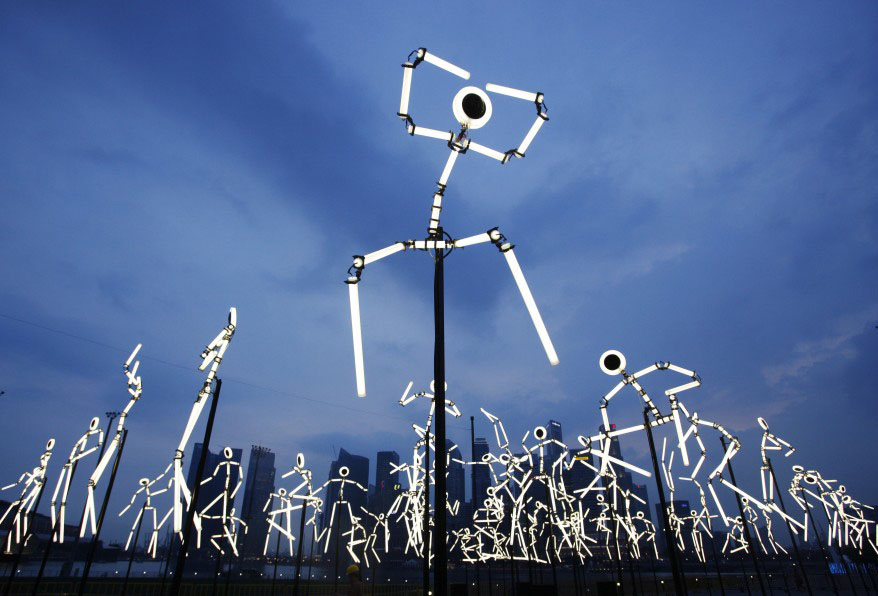
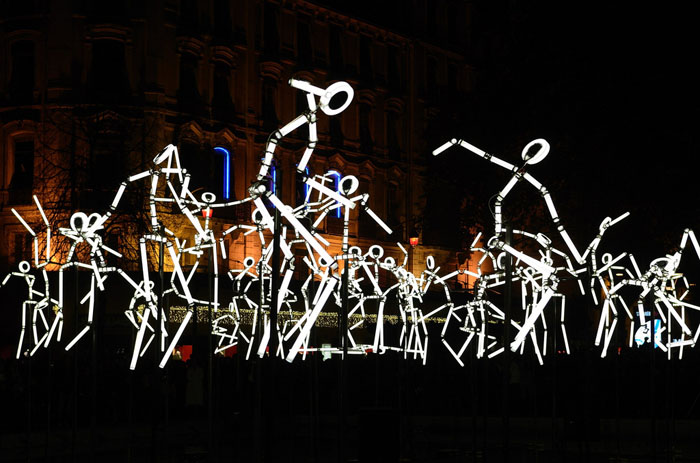
Key Frames: Groupe LAPS

Light installation, static fluorescent bulb stick men that appear to dance, Lumen, iLight Marina Bay, SingaporeLight installation, static fluorescent bulb stick men that appear to dance, Lumen, iLight Marina Bay, SingaporeLight installation, static fluorescent bulb stick men that appear to dance, Lumen, iLight Marina Bay, SingaporeClick to enlarge

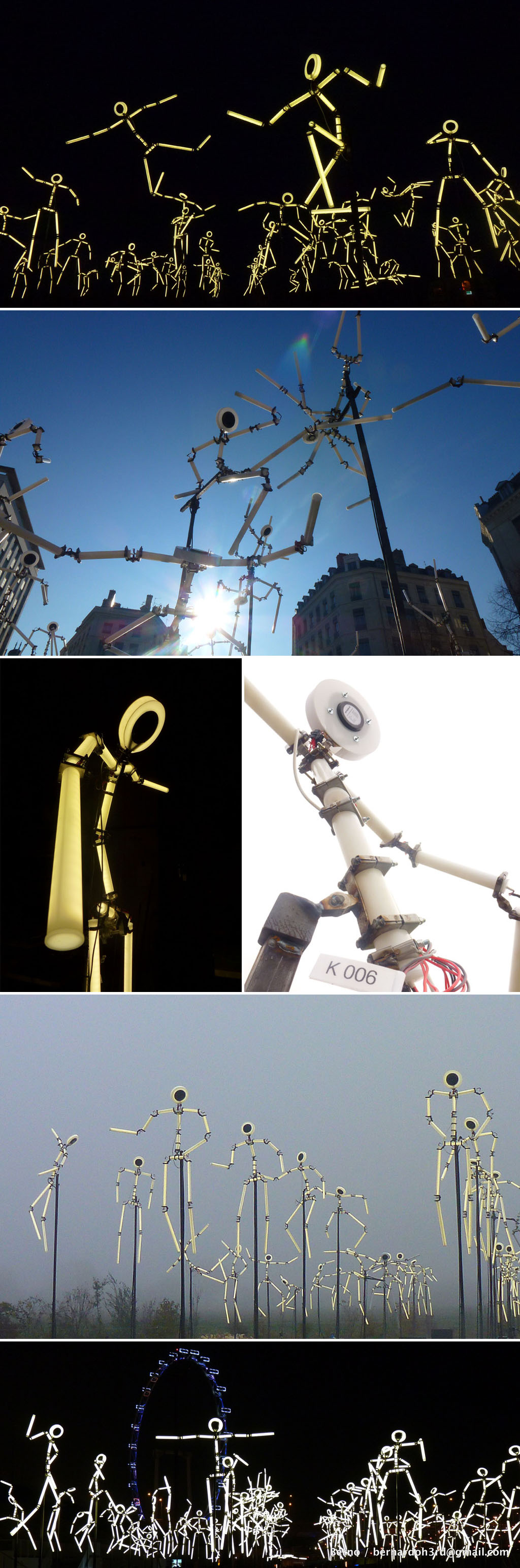
Key Frames is a light installation created by the French design/artist studio Groupe LAPS — six artists and designers with combined expertise and technical know-how who work in film development, light installations, and multimedia applications. Using LED light tubes, Key Frames consists of multiple static stick figures that, when paired with a dance soundtrack, flash on and off in a choreographed display that evokes movement. Totally fun.

Originally designed for the Fête des Lumieres 2011 in Lyon, France, Key Frames was just included as part of the iLight festival at Marina Bay in Singapore.

You can see it in action below:

Photo credits: Reuters; flometal’s flickr; bernardoh’s flickr; and Groupe LAPS.

via voanews

Andreas Von Gehr: Re-Bio-Gehr

Portrait of father made up of 256 framed images, art installation, Scope NY 2012, collabcubedPortrait of father made up of 256 framed images, art installation, Scope NY 2012, collabcubedPortrait of father made up of 256 framed images, art installation, Scope NY 2012, collabcubedClick to enlarge
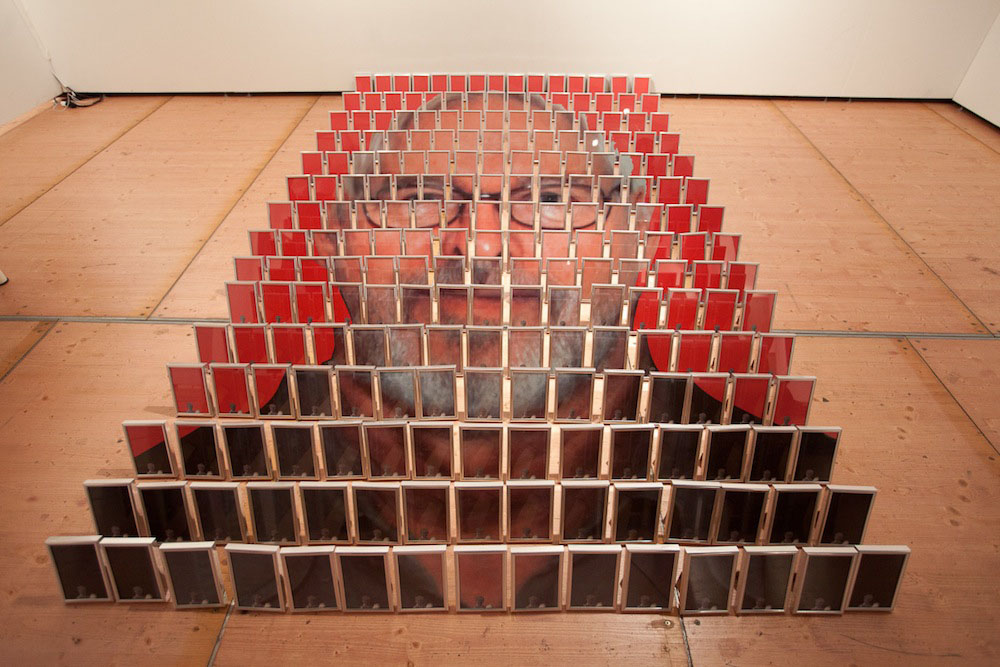
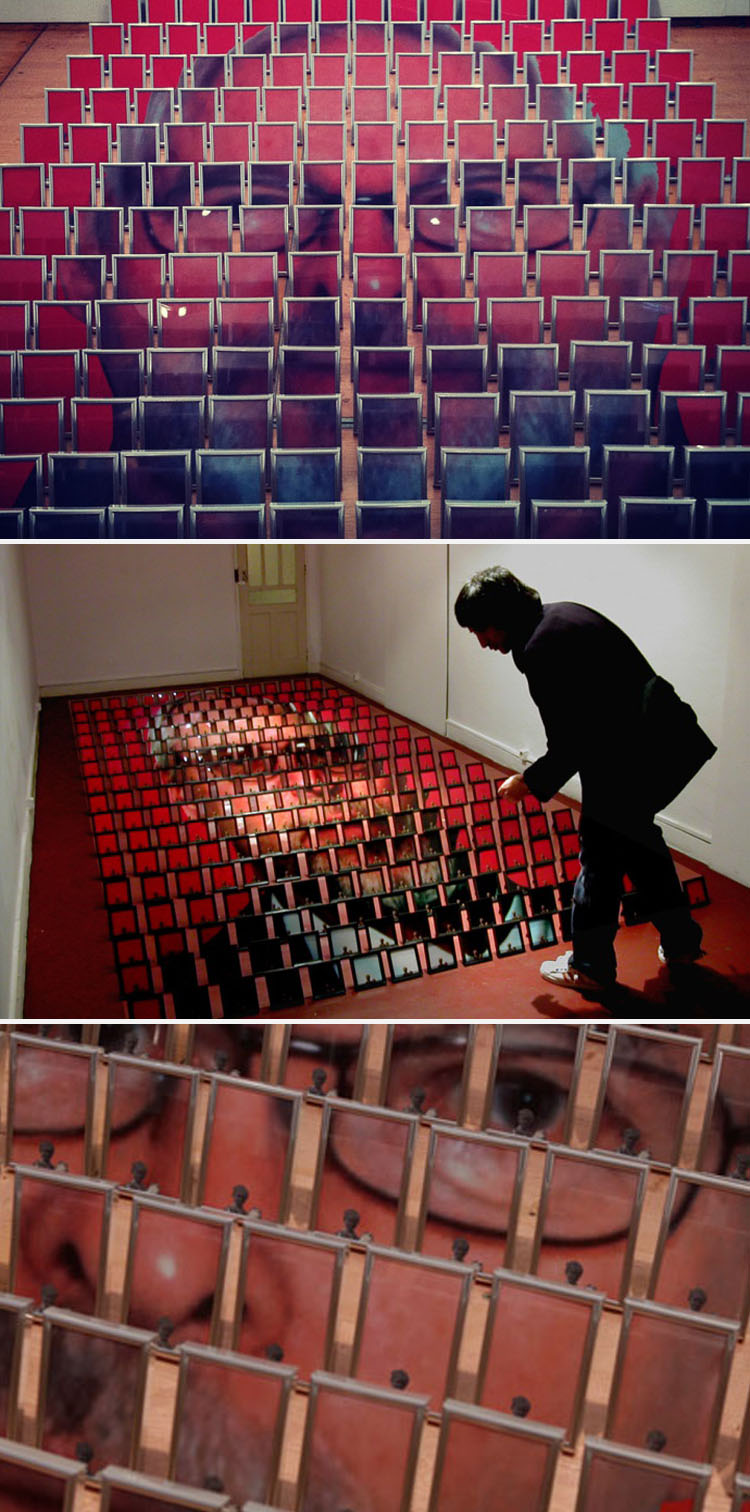
Chilean artist Andreas Von Gehr is interested in the interaction between photography, digital media and painting. Much of his work involves his family and the theme of immigration. His installation Re-Bio-Gehr, which was exhibited at Scope here in NYC last month, is one such piece. Von Gehr fragments the image of his father into 256 separate framed portraits with a young German boy at the center base of each frame, his father in his youth (or maybe a representation of his father – I’m not sure). The larger portrait alludes to immigration in its typical passport or ID photo style.

It’s hard not to think of this as a 3-dimensional Chuck Close portrait. Very cool.

via artists wanted

Bryan Nash Gil: Woodcuts

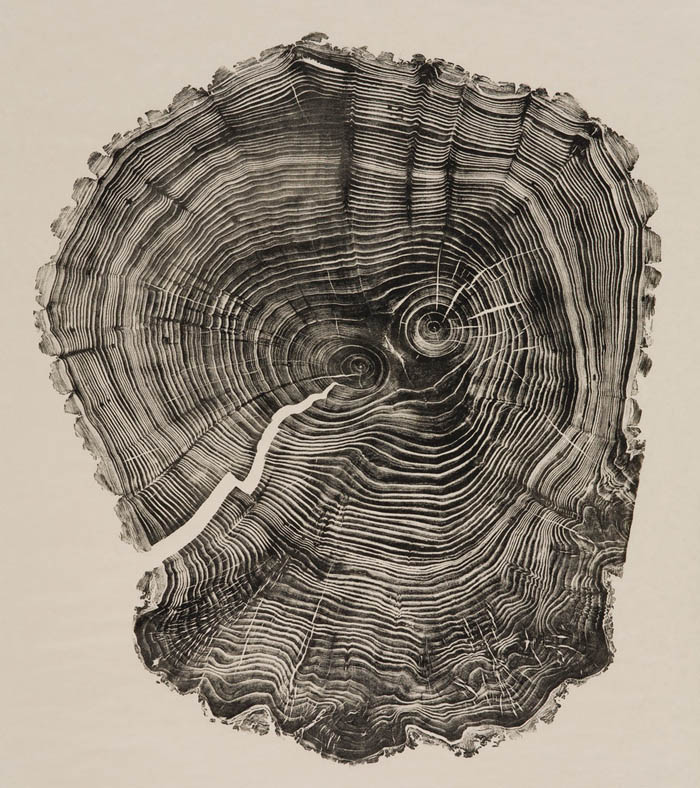
relief prints of tree-trunk cross sections, art from nature and found objects, printmaking, Bryan Nash Gilrelief prints of tree-trunk cross sections, art from nature and found objects, printmaking, Bryan Nash Gilrelief prints of tree-trunk cross sections, art from nature and found objects, printmaking, Bryan Nash GilConnecticut-born and based artist Bryan Nash Gil works with nature and found objects to create sculptures, drawings, and prints. He has just published a book of his relief prints from cross sections of felled trees titled Woodcut.

From Princeton Architectural Press:
Gill reveals the sublime power locked inside their arboreal rings, patterns not only of great beauty, but also a year-by-year record of the life and times of the fallen or damaged logs. The artist rescues the wood from the property surrounding his studio and neighboring land, extracts and prepares blocks of various species—including ash, maple, oak, spruce, and willow—and then prints them by carefully following and pressing the contours of the rings until the intricate designs transfer from tree to paper.

Simply beautiful.

via NYTimes T Magazine

No Longer Empty: “This Side of Paradise”

Bronx Senior Citizens Home revitalized with street artist's site-specific works, No Longer Empty, Andrew Freedman HomeBronx Senior Citizens Home revitalized with street artist's site-specific works, No Longer Empty, Andrew Freedman HomeBronx Senior Citizens Home revitalized with street artist's site-specific works, No Longer Empty, Andrew Freedman Home, Crash, How and Nosm, Daze, Cheryl Pope, Adam Parker SmithClick to enlarge
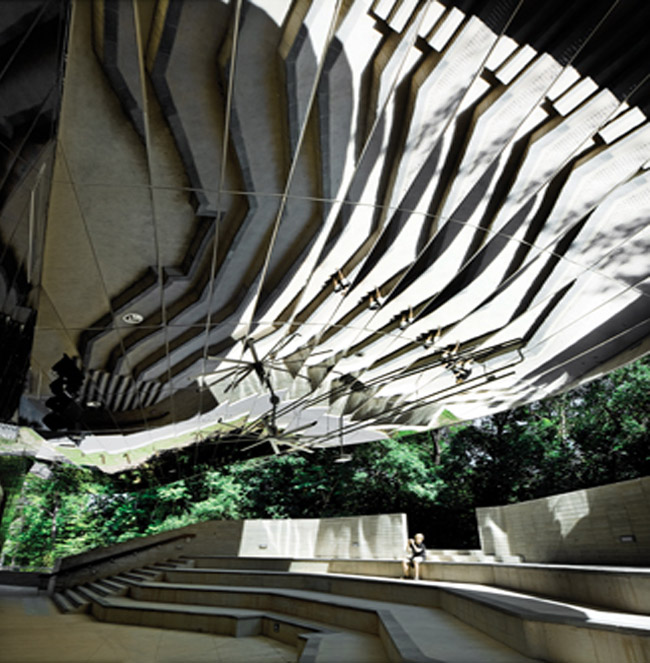
The contemporary public art organization No Longer Empty, is revitalizing the Andrew Freedman Home — a block-long mansion along the Grand Concourse in the Bronx, originally built as a welfare hotel for the retiring wealthy who had fallen on hard times beginning in the 1920s and lasting into the 80s, when it was taken over by the non-profit Mid Bronx Senior Citizens Council — by inviting 32 artists to create site-specific works.

Many of the artists included are well known graffiti artists such as Crash, Daze, and How & Nosm who have each taken one of the rooms and are bringing them to life. There is a bit of irony in the choice to invite street artists to revitalize the grand mansion when its decline coincided with the rise of Bronx graffiti in the 70s and 80s, but there are also parallels which the curator points out: “…the role of the artist rising from the ashes of the burned-out neighborhoods then and an art show in the decay of this home now.”

The exhibit, titled This Side of Paradise, begins the evening of April 4th through June 5th, and will open the gates of the Andrew Freedman Home to the public.

Photos by Jaime Rojo. Top to bottom: How & Nosm Reflections; Crash Connections; Daze; Adam Parker Smith, I Lost All My Money In The Great Depression And All I Got Was This Room; Scherezaede Garcia; Cheryl Pope, Then and There

via Brooklyn Street Art

Zhang Yu: Diffused Fingerprints

Zhang Yu, Chinese Contemporary art, experimental ink painting, fingerprints, fingerpaintingZhang Yu, Chinese Contemporary art, experimental ink painting, fingerprints, cool installationZhang Yu, Chinese Contemporary art, experimental ink painting, fingerprints, fingerpaintingZhang Yu, Chinese Contemporary Art, Fingerprint paintings and installationsClick to enlarge
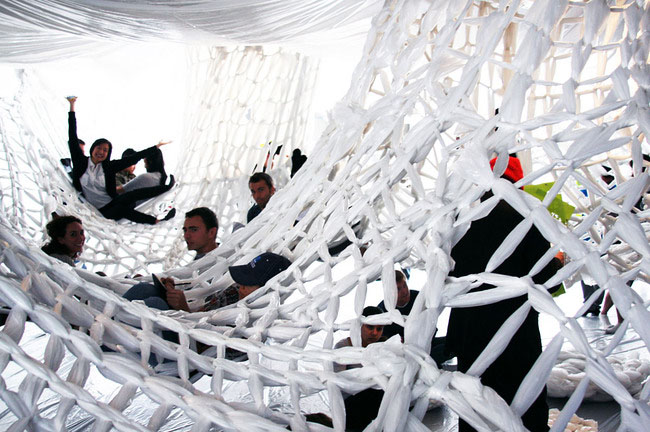
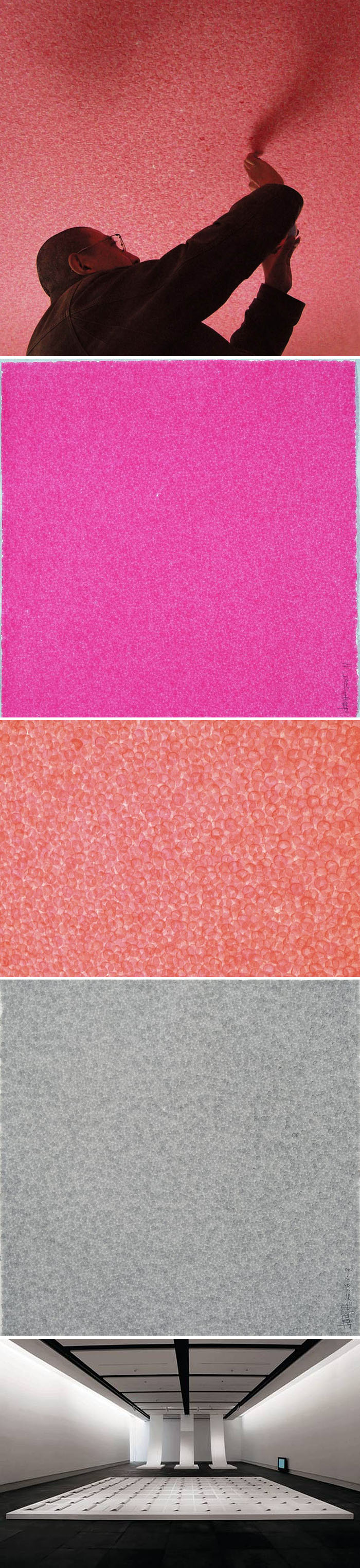
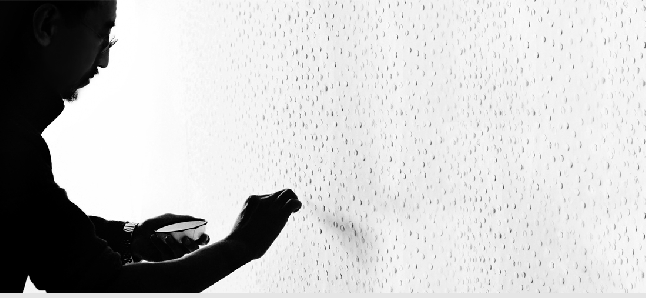
Chinese artist Zhang Yu has been working on his Fingerprint Series, in intervals, since the early 1990s. These paintings become a meditative process by repeatedly pressing his right index finger on rice paper with ink. Zhang limits his colors to shades of red, white and black, leaving thousands of overlapping fingerprints that create a unique infinite visual effect. He has created paintings, installations, books and performances with this process, making him a key figure in contemporary experimental ink painting.

You can see more of Zhang Yu’s work here and here.

via Da Xiang Art Space

Bikeway Belém: P-06 Atelier

Bikeway Belém, Lisbon, Portugal, Typographic bike routes, wayfinding, symbols, collabcubedBikeway Belém, Lisbon, Portugal, Typographic bike routes, wayfinding, symbols, collabcubedBikeway Belém, Lisbon, Portugal, Typographic bike routes, wayfinding, symbols, collabcubedClick to enlarge
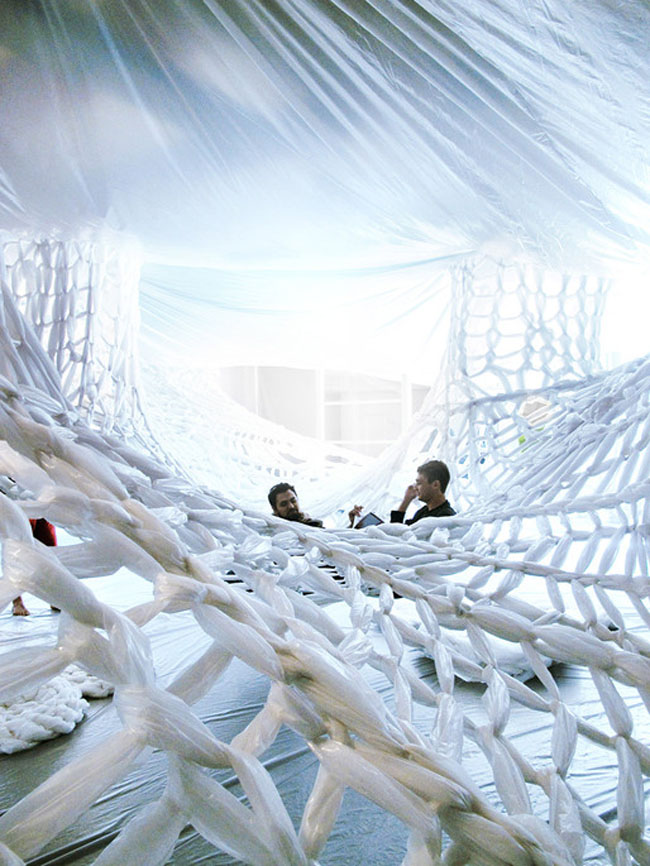
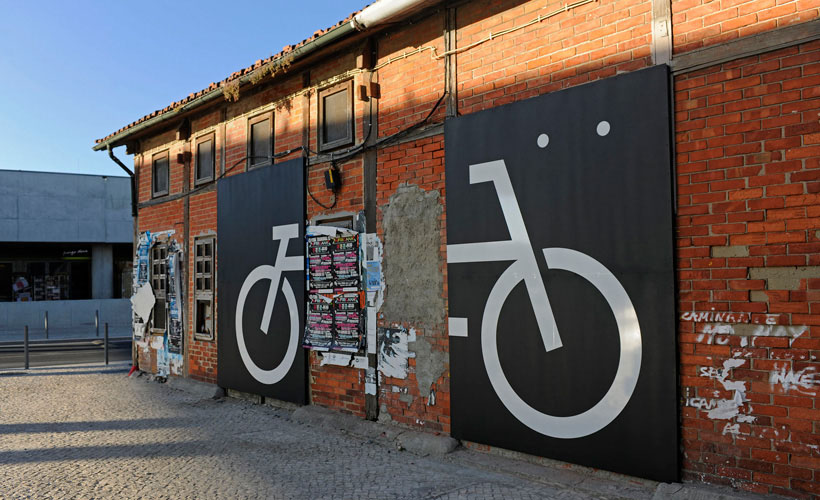
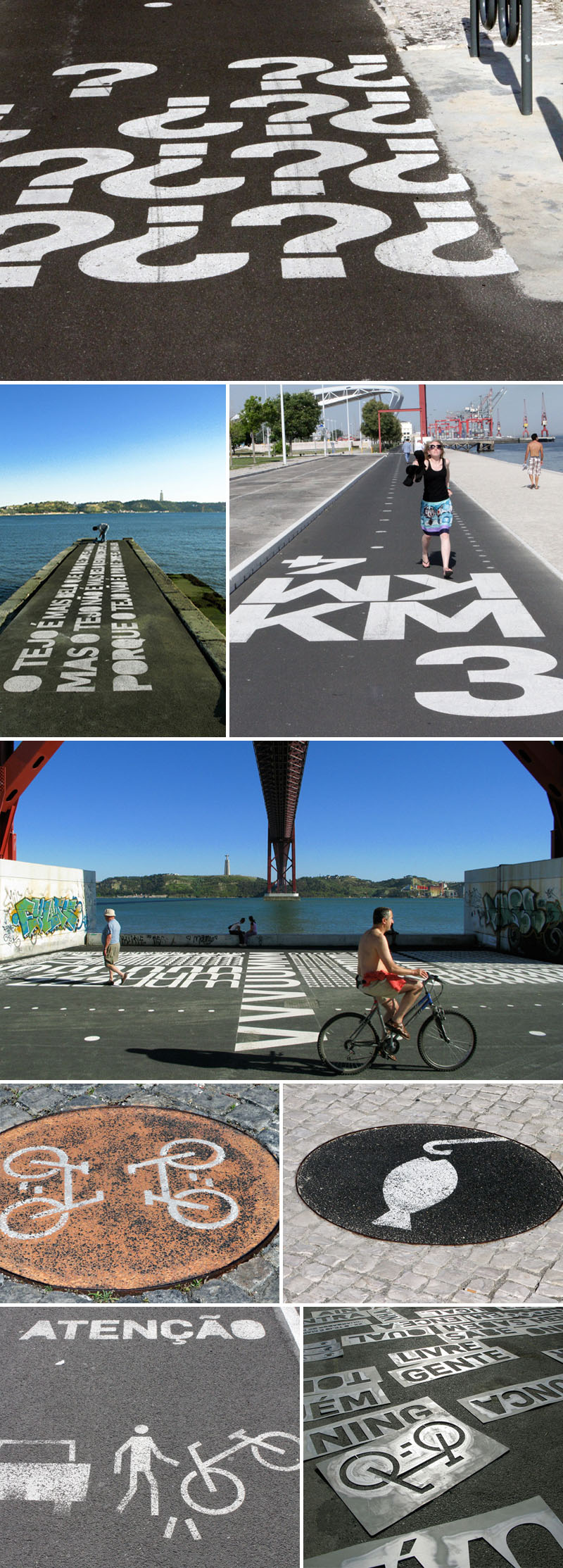
The way I see it, most everything is improved with a little typography. Bicycle paths included. The Bikeway Belém in Lisbon is a prime example. The 7,362-meter bike route along the river Tagus has bold white wayfinding text and symbols painted directly on the pavement which, apart from its practical purposes such as providing direction and measuring distances, is also fun and engaging. There are some ‘zuuuums’ and ‘vuuuums’ printed around as well as arrows and questionmarks that always look good. In addition, along one of the piers, there’s a verse by Portuguese poet Alberto Caeiro about the river Tagus. The project was a collaboration between the Lisbon-based communication and environmental graphics studio P-06 Atelier (previously here) and Global Landscape Architects.

As much as I love the Hudson River bike path, I think a project like this would only enhance it even more.

Photos courtesy P-06 Atelier and Decorating the Duck.

via segd