Meg Hitchcock: Typographic Collages

Typography, collage, texts, hymns, Brooklyn artist, installation, contemporary artTypography, collage, texts, hymns, Brooklyn artist, installation, contemporary artTypography, collage, texts, hymns, Brooklyn artist, installation, contemporary artTypography, collage, texts, hymns, Brooklyn artist, installation, contemporary artTypography, collage, texts, hymns, Brooklyn artist, installation, contemporary artClick to enlarge

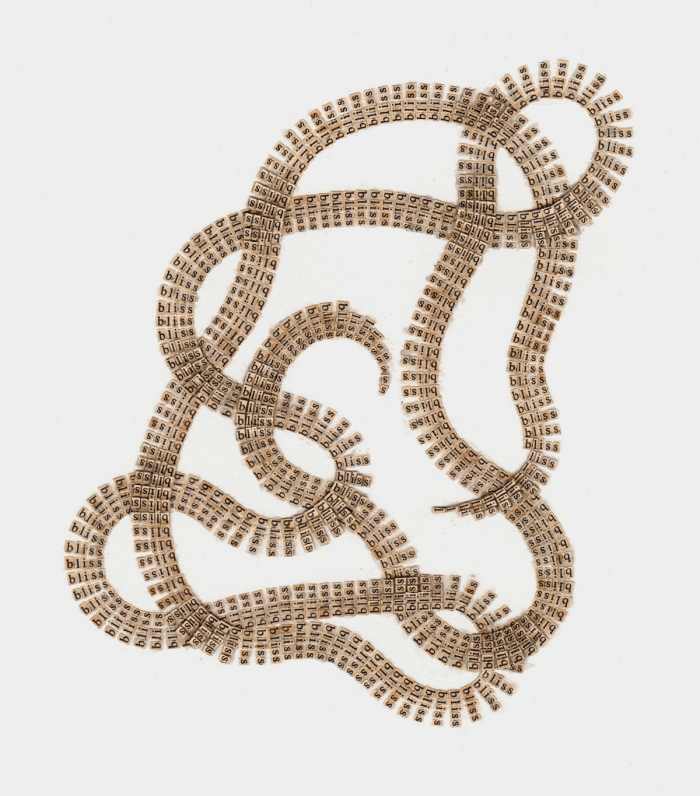
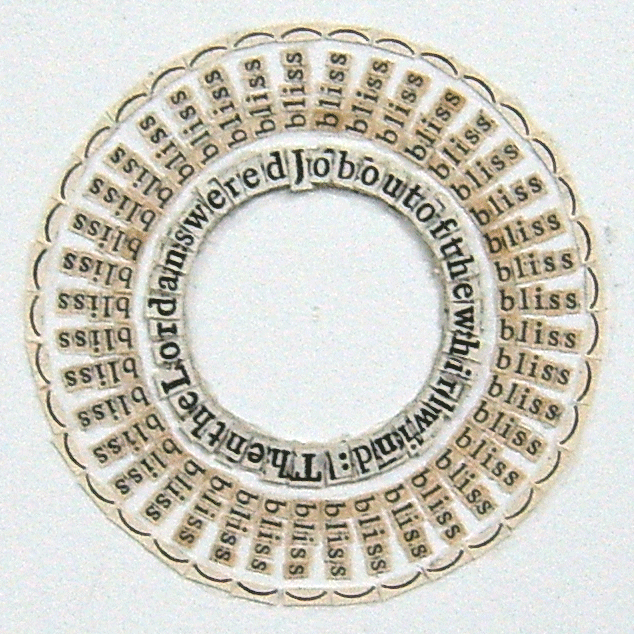
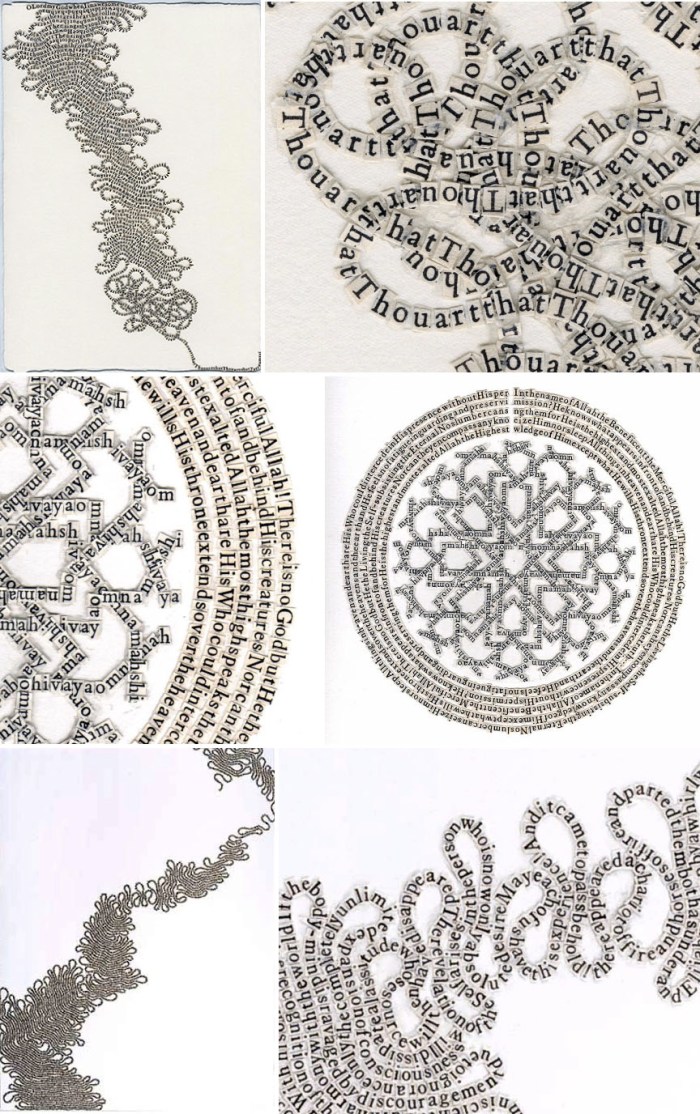
Brooklyn artist Meg Hitchcock creates elaborate type collages using texts from holy books of all religions. Through an incredibly labor-intensive process, Hitchcock painstakingly cuts out individual letters from one text and assembles them to form a different text in a variety of patterns and shapes.

From the artist’s statement:
I select passages from holy books and cut the letters from one passage to form the text of another. For example, I may cut up a passage from the Old Testament of the Bible and reassemble it as a passage from the Bhagavad Gita, or I may use type from the Torah to recreate an ancient Tantric text. A continuous line of text forms the words and sentences in a run-on manner, without spaces or punctuation, creating a visual mantra of devotion. By conceptually weaving together the sacred writings of diverse traditions, I create a multi-layered tapestry of inspired writings, all pointing beyond specifics to the human need for connection with the sacred.

You can click on the images to see more detail. At a distance they almost look like chains. You can see more of Hitchcock’s works here, here, and here. You can see her in action, complete with neck pillow, in the video below, putting up her first installation. It’s a pretty insane process!

via Projective City
Doug Wheeler: SA MI 75 DZ NY 12

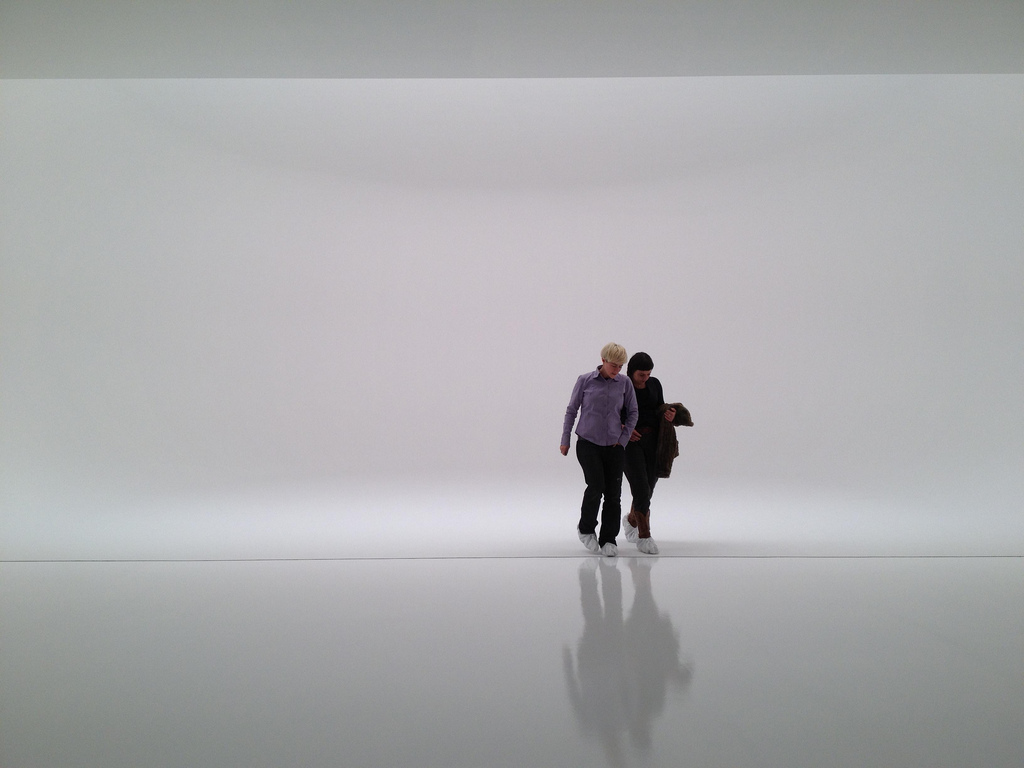
Light art installation, infinity space, cool installation, cool art, Doug Wheeler, NYC, 2012Light art installation, infinity space, cool installation, cool art, Doug Wheeler, NYC, 2012, collabcubedLight art installation, infinity space, cool installation, cool art, Doug Wheeler, NYC, 2012, collabcubedClick to enlarge

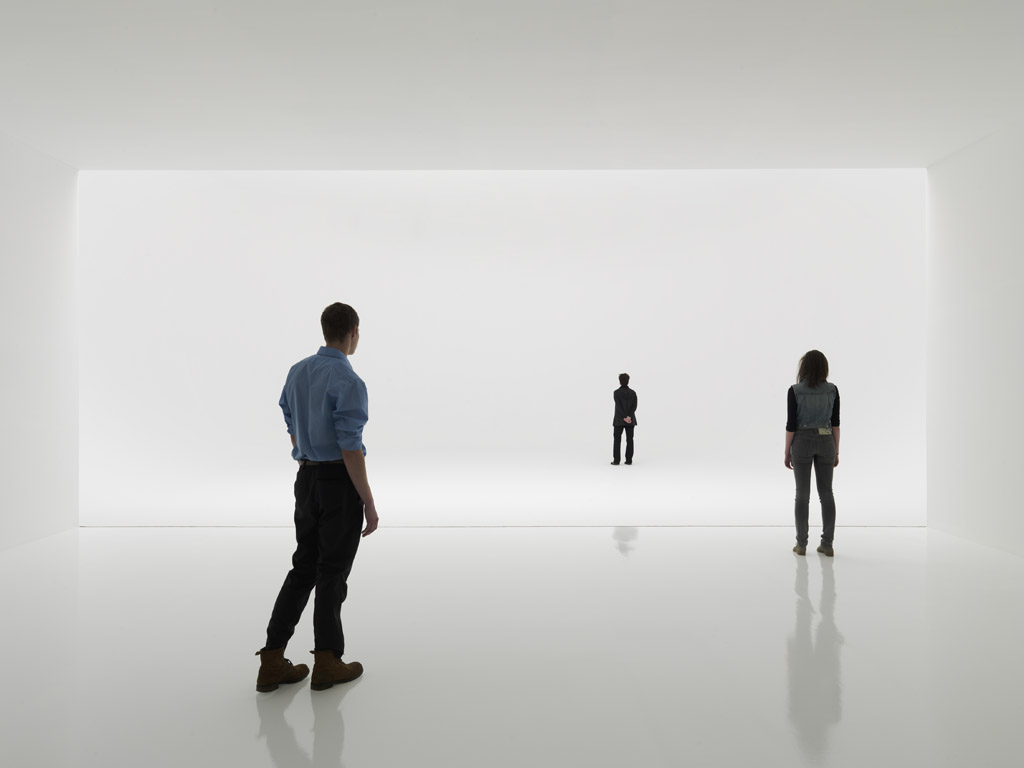
After making a special trip with Em on Saturday, in the snowy cold, to see Doug Wheeler’s light installation titled SA MI 75 DZ NY 12 at the David Zwirner Gallery, we left promptly due to the crowded waiting area we descended upon and the one-hour wait ahead of us — I’m often deluded into thinking that I’m the only one who has these great ideas in NYC…but really, who goes to Chelsea on a frigid, snowy weekend? Apparently: a lot of people. — So, today, a Tuesday afternoon, I thought I’d quickly pop in but, alas, there would be no popping in. There was still a half-hour wait but, seating was available and the musical-chairs-style line kept me active.

Now, back to the exhibit: Amazing. The bright white light installation is the closest thing to what, I imagine, standing in a cloud might feel like. The first impression is that of a flat wall created by light. As one reluctantly steps forward—wearing the white booties provided by the gallery to keep things pristine—it feels as though you’re stepping into the void. The minute the light box is entered, all depth perception disappears. There’s a dense fog-like effect that’s created with light and white paint. The walls have been curved and the lack of hard lines or horizon intensifies the confusing sensation. The result is at first a little unsettling, but the incredible coolness instantly follows. The light in the box fluctuates emulating the light of day, from dawn to dusk, in a 32-minute loop.

If you’re in New York, you might want to check it out. Doug Wheeler’s installation is on view at David Zwirner through February 25, 2012. I recommend a weekday, if possible, for a shorter wait.

Photos courtesy of David Zwirner; Carolina A. Miranda; and soulellis’ flickr.

Brian Tolle: Tempest

Art installation, contemporary sculpture, collins park, Light sculpture, Miami Basel, Brian TolleArt installation, contemporary sculpture, collins park, Light sculpture, Miami Basel, Brian TolleArt installation, contemporary sculpture, collins park, Light sculpture, Miami Basel, Brian TolleClick to enlarge

New York artist Brian Tolle creates sculptures and installations that are iconographic with history or context in mind. The Tempest, located in Collins Park in front of  Miami Beach’s Bass Museum, is one such installation. A sort of maze, made of powder coated aluminum, fiberglass, and LEDs, this permanent, site-specific sculpture appears as an island of tumultuous waves and invites the viewer to participate in the movement by walking through the maze.

The night view is quite spectacular, adding a glowing phosphorescent quality to the fiberglass water.

You can see more of Brian Tolle’s work at his website, including the Irish Hunger Memorial here in NYC and his more recent Simnai Dirdro (Twisted Chimney) in Wales. Coming this year, an installation that looks like two elevated statues on a lamp post that glow at night on Flatbush Avenue in Brooklyn.

Photos courtesy of the artist and wallyg’s flickr

via CRG

Ross Racine: Fictional Aerial Views

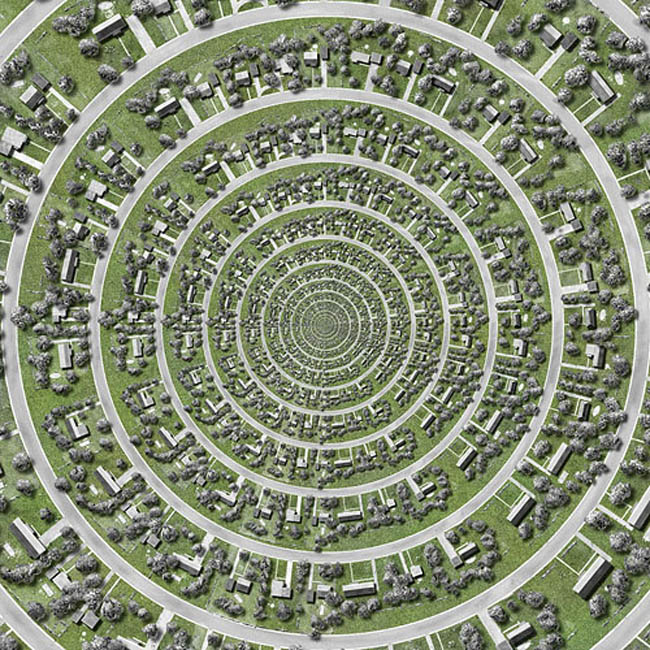
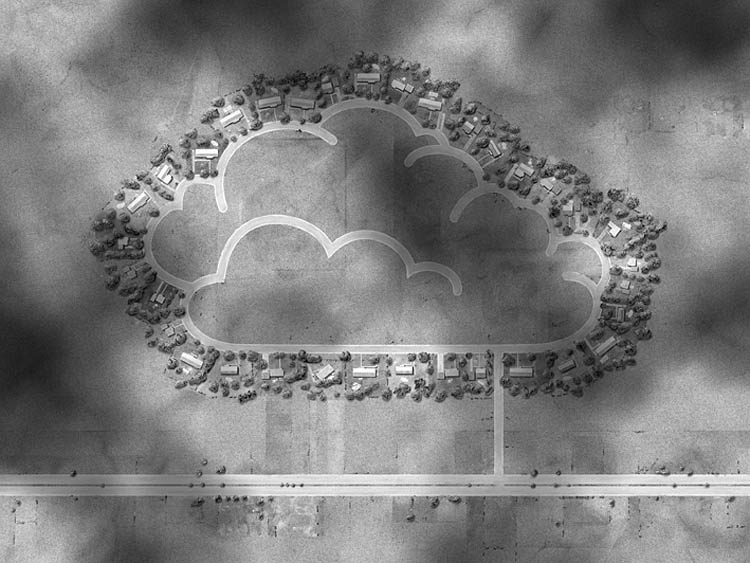
Aerial Views of Fictional suburbs, freehand digital drawings, Ross Racine, maps, artAerial Views of Fictional suburbs, freehand digital drawings, Ross Racine, maps, artAerial Views of Fictional suburbs, freehand digital drawings, Ross Racine, maps, artAerial Views of Fictional suburbs, freehand digital drawings, Ross Racine, maps, artClick to enlarge

Originally from Montreal, but now living and working in New York, Ross Racine creates aerial views of fictional suburbs by drawing freehand directly on a computer. It’s hard to believe, but his works do not contain photographs or scanned material. Racine’s work is full of surprising opposites: handmade and digital, organic and mechanical, physical and virtual. The typically labyrinthine landscapes are super-sized in Racine’s versions, in some cases taking on a humorously monstrous quality, in contrast to the generic naming conventions such as Hummingbird Bend, Heavenly Heights, or Sunshine Acres; a playful way to critique and re-examine urban planning.

You can see more of Ross Racine’s aerial view drawings here and here.

Pod Exhibition Pavilion: Studio Nicoletti

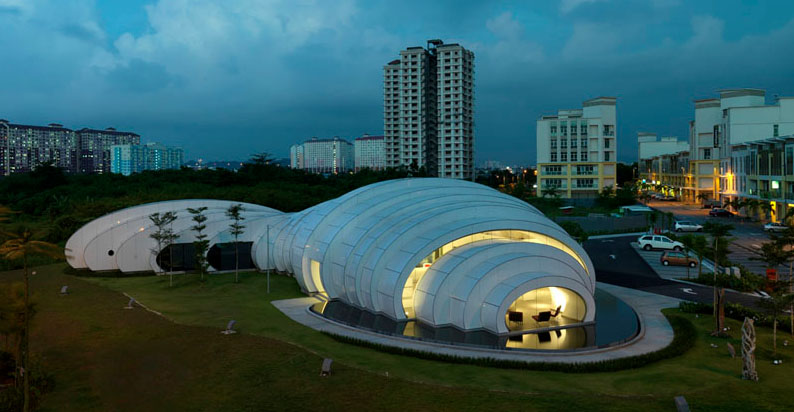
Pod Exhibition Pavilion, 2011 architecture, Studio Nicoletti and Hijjas Kasturi, MalaysiaPod Exhibition Pavilion, 2011 architecture, Studio Nicoletti and Hijjas Kasturi, MalaysiaPod Exhibition Pavilion, 2011 architecture, Studio Nicoletti and Hijjas Kasturi, MalaysiaClick to enlarge

Slightly west of Kuala Lumpur in Malaysia, a large urban development is underway. The developer behind the project wanted the on-site offices and sales showroom to be an iconic structure that would reflect the architectural style of the upcoming development. Studio Nicoletti Associati in Rome in conjunction with Hijjas Kasturi Associates in Kuala Lumpur, came up with The Pod, inspired by water droplets in nature, the spherical structure is formed with a series of elliptical sections of varying width and height.

Inside, the pavilion is divided into two zones: one dedicated to the office space and the other contains the main showroom. Fabricated from tubular steel members the exterior skin is made of reflective aluminum panels causing its color to change depending on the sun or artificial lighting.

via The Archhive

Foster School of Business Art Installations

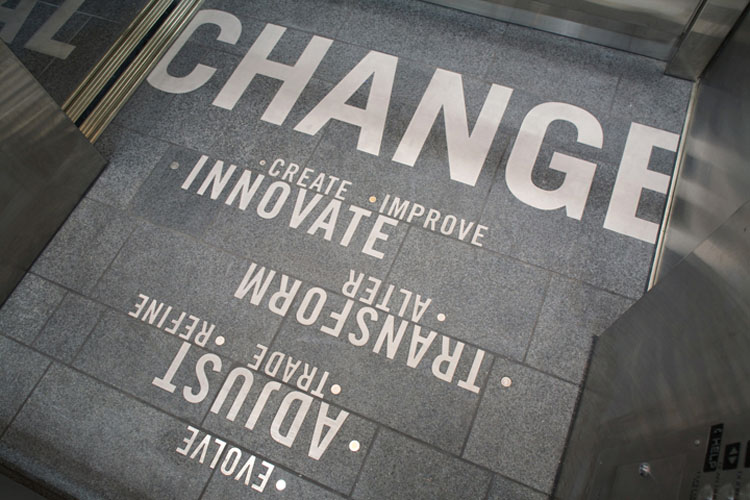
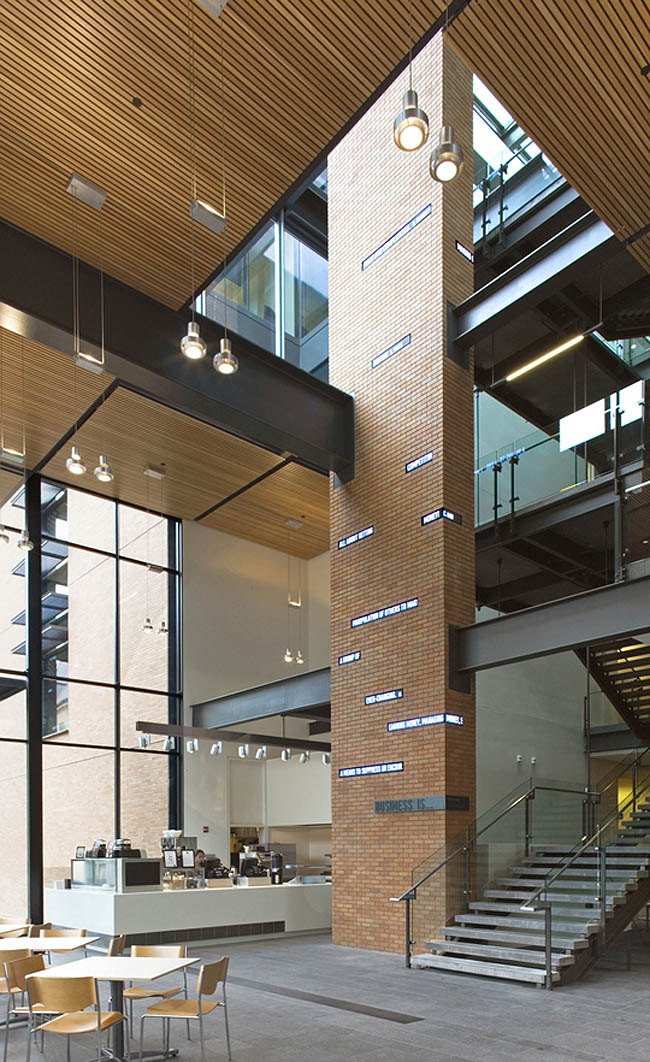
installation, Foster School of Business, Kristine Matthews, Karen Cheng, Type floor in elevatorTypographic wall installation, interactive, Kristine Matthews, Karen Cheng, University of Washingtoninstallation, Foster School of Business, Kristine Matthews, Karen Cheng, Type floor in elevatorBusiness Is..., Interactive art installation by Kristine Matthews, Karen Cheng, LED messages in wallClick to enlarge

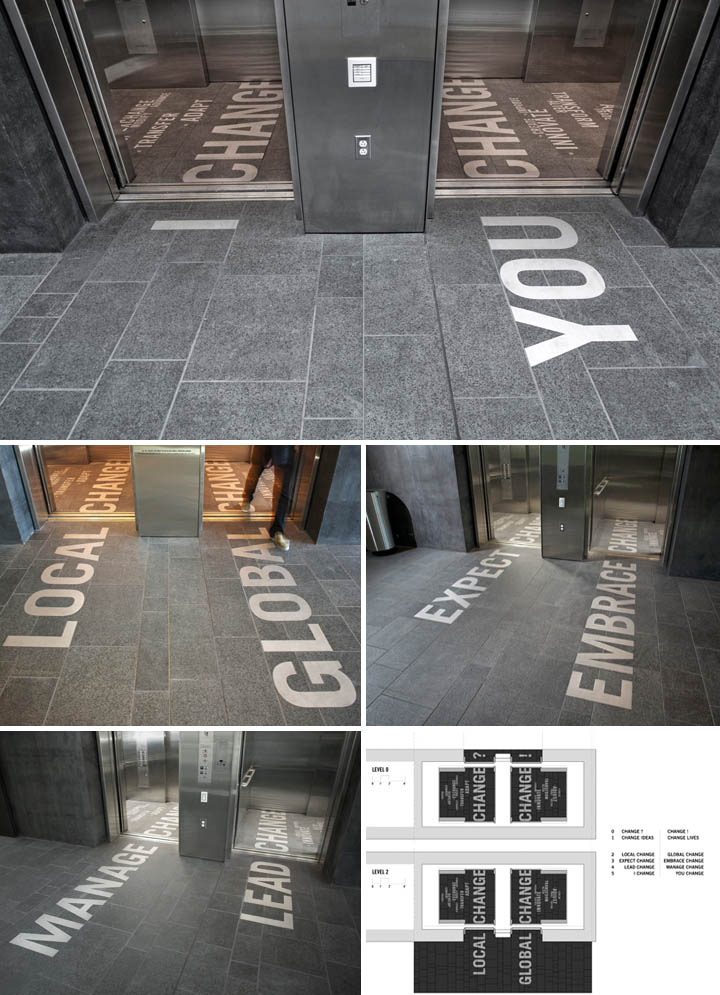
Two interesting permanent typographic art installations were recently created for the Foster School of Business, part of the University of Washington in Seattle. The two installations are collaborations between designers Kristine Matthews and Karen Cheng, both on the faculty at the University’s School of Art.

Change reflects on the dynamic relationship between business and change. The word “change” appears on the floor of each elevator, along with 18 synonyms (adapt, innovate, transform, etc.). The synonyms are each highlighted with actual loose change, international coins that hint at the diversity of the UW Foster Business School as well as the global nature of business.

As the elevator moves from floor to floor, the interior word “change” is modified by another word just outside the elevator, to both the front and back:
Floor 5: I Change/You Change
Floor 4: Lead Change/Manage Change
Floor 3: Expect Change/Embrace Change
Floor 2: Local Change/Global Change
Floor 1: Change Ideas/Change Lives
Floor 0: Change?/Change!

The second installation, Business Is..., asks how do you define ‘business’?

Viewers are asked to respond to the open-ended question “Business is…” on a companion website, www.FosterExchange.com. User responses appear on a series of LEDs that wrap around a four-story-high column. The monitors also display real-time stock market openings and closings, predictions, and even advice for students who meet and study in the atrium below.

Both installations are innovative, interactive, beautifully integrated, totally engaging and fun! I’d say complete successes through and through.

Here’s a video about the projects:

via sedg

Florian Hafele: Contorted Sculptures

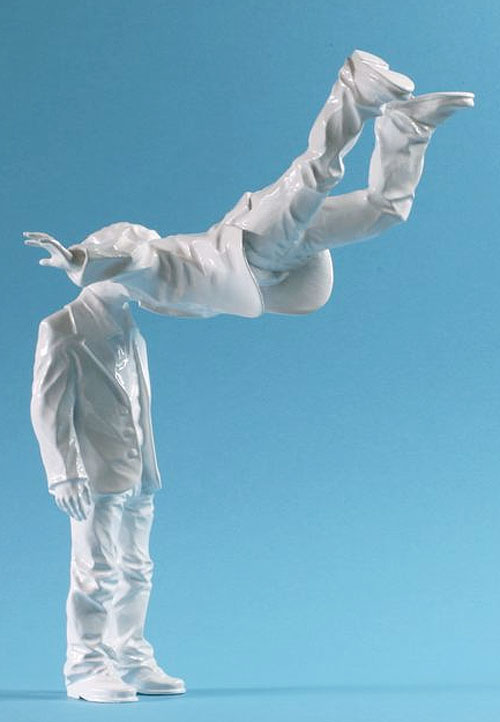
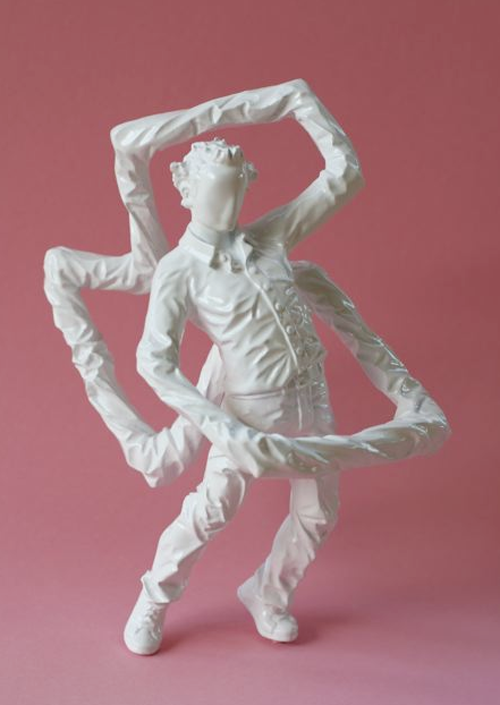
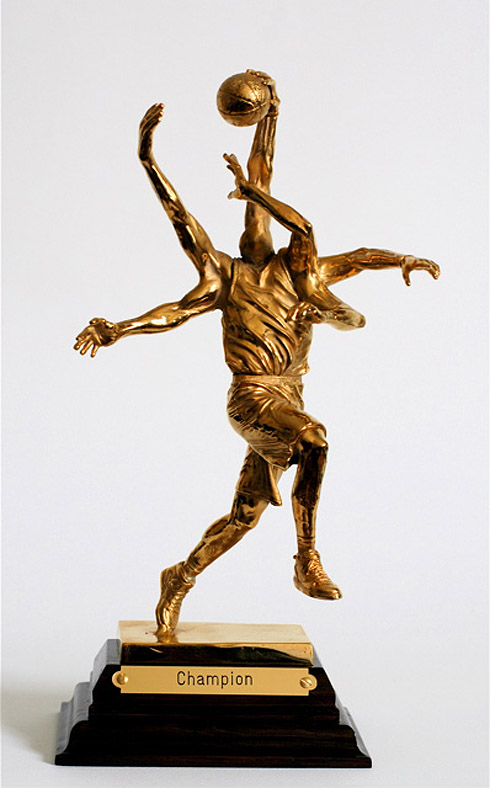
contemporary sculpture, contorted sculpture, Vienna art, contorted statuescontemporary sculpture, contorted sculpture, Vienna art, contorted statuescontemporary sculpture, contorted sculpture, Vienna art, contorted statuescontemporary sculpture, contorted sculpture, Vienna art, contorted statuesViennese artist Florian Hafele creates sculptures using materials that vary from PVC and paint, to wood and plastic, to gilded bronze. What all his sculptures have in common is a contortionist or deformed quality. Focusing on the question of performance in our social environment, Hafele’s works offer multiple perspectives and views on the over-strained human in an achievement oriented society.

via carbon12

The RedBall Project: Kurt Perschke

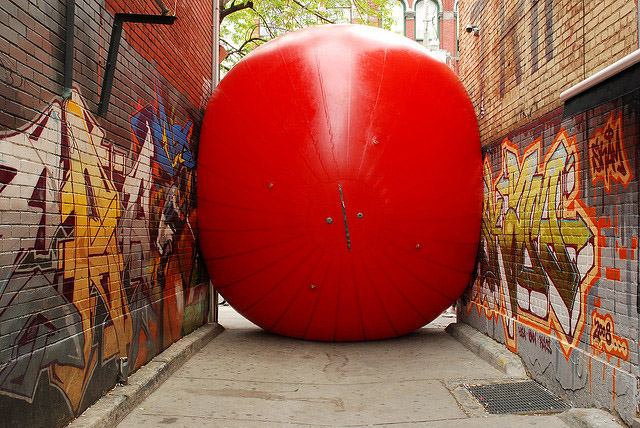
Interactive art, Large Red ball placed in different cities around the world, Fun art installationInteractive art, Large Red ball placed in different cities around the world, Fun art installationInteractive art, Large Red ball placed in different cities around the world, Fun art installationClick to enlarge

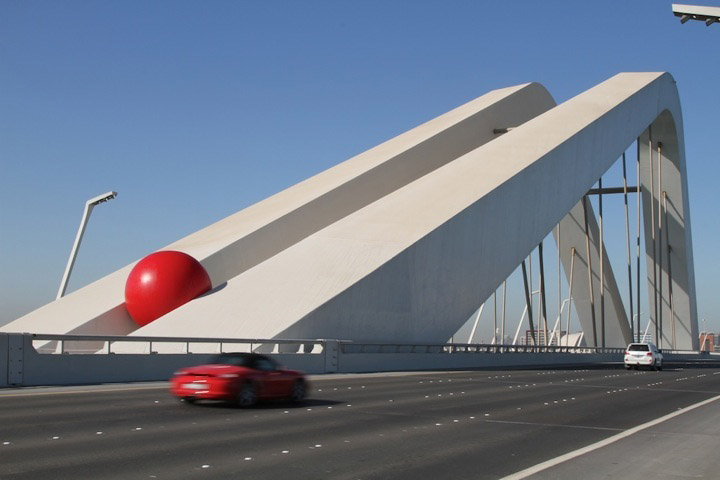
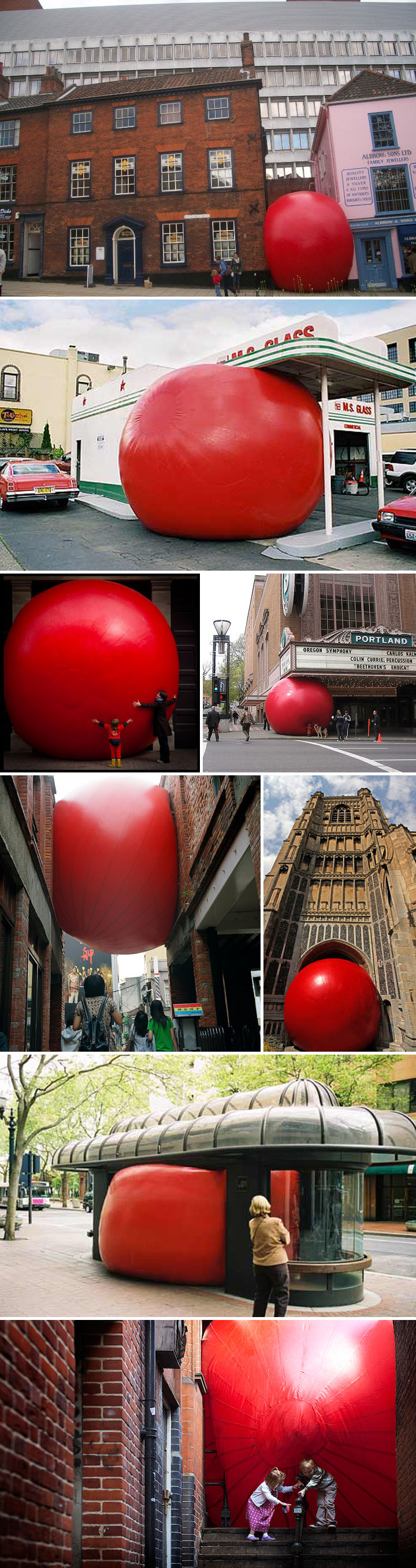
This is such a fun project! Though it’s been traveling the world for a few years, this is the first I’ve heard of it. The RedBall Project by New York based artist Kurt Perschke, consists of a series of temporary installations within a city over a span of a couple of weeks. Perschke finds interesting, and somewhat humorous, locations (though, a giant red ball in any location automatically evokes a certain amount of humor) that are often taken for granted. The previously neglected spaces come to the foreground highlighting the nooks and crannies of urban life.

For Perschke, the core of the project’s goal is the invitation to the public to engage and unleash their imagination. “Every time a passerby says – ‘You know, I know the perfect place to put it!’ – RedBall has succeeded in creating a moment of imagination.”

The project has taken place in many cities including Barcelona, Taipei, Chicago, Toronto, Sydney, Portland and most recently Abu Dhabi. Up next: Perth, from February 10 – March 3rd. Hey Kurt! How about bringing the project home to NYC?! I know the perfect place…

Here’s a short video by Tony Gaddis of the project in Chicago:

Photos are all from RedBall’s Facebook and Flickr Pool (PJ Mixer, PersonnelPeople, Swanky, Leo Reynolds, Duncan Kerridge)

via Huffington Post and MyModernMet

SKIN: Pavilion of Knowledge

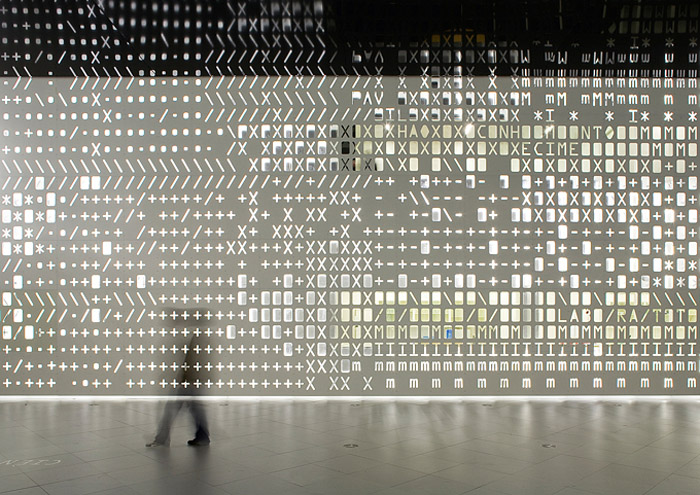
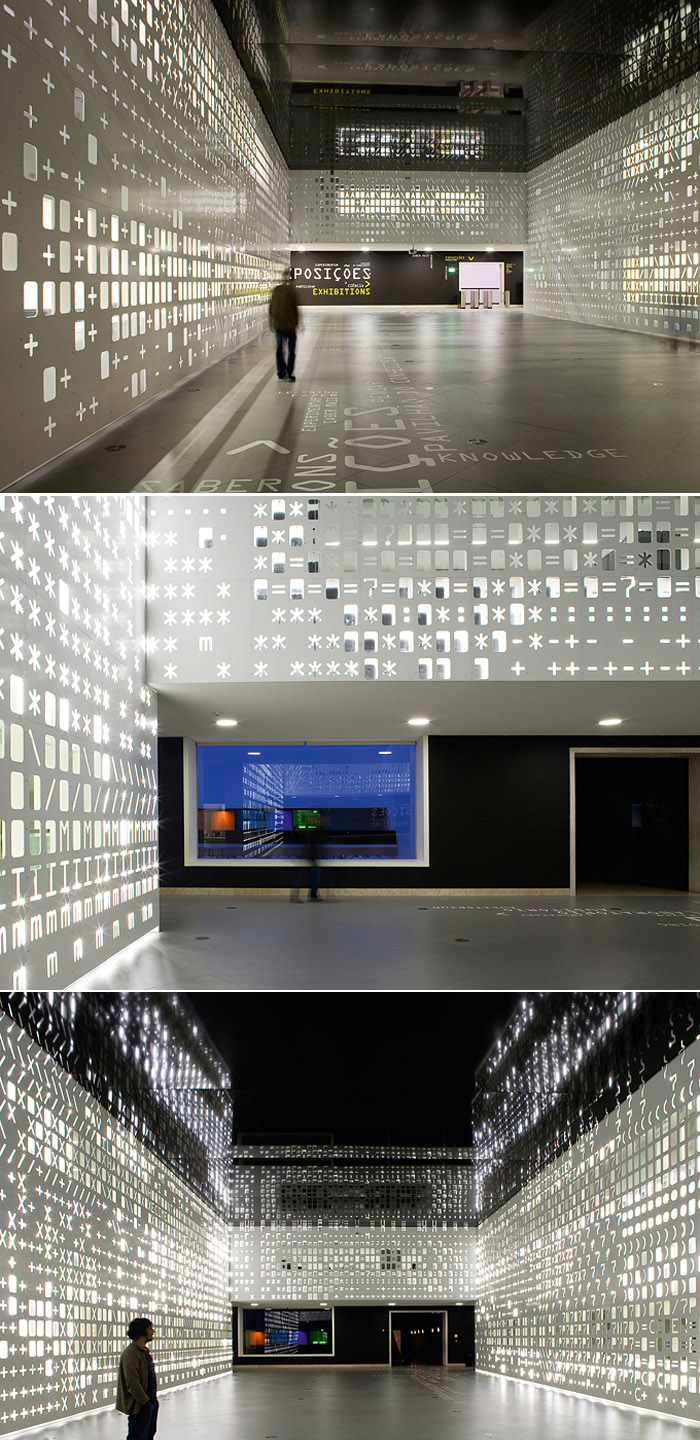
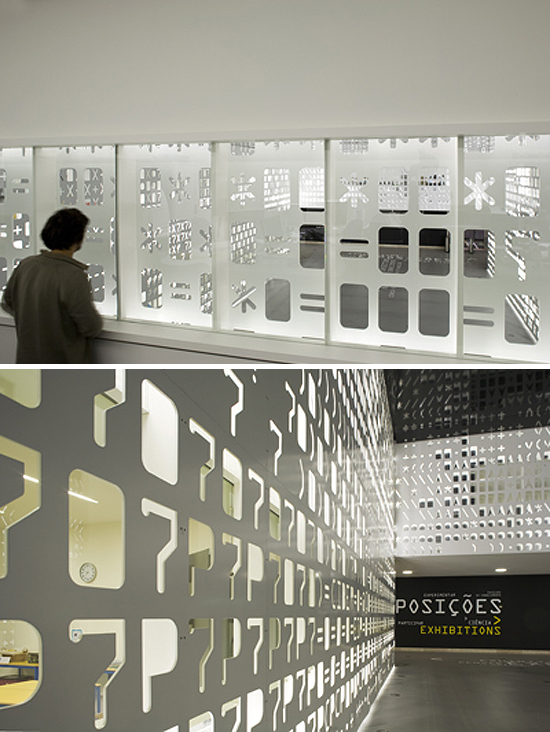
cool exhibit design, Installation in interactive science museum, Lisbon, P-06 Ateliercool exhibit design, Installation in interactive science museum, Lisbon, P-06 AtelierPavilion of Knowledge, enviornmental graphics, Lisbon, P-06 Atelier, typography, installationThe Pavilion of Knowledge in Lisbon is an interactive science and economy museum. The design firm P-06 Atelier, in collaboration with architect João Luís Carrilho da Graça, created a “skin” with a state of the art touch transforming the space into a playful and evocative landscape, employing a perfect mix of bold graphics, tactile patterns and typography.

The moveable walls have the American Standard Code for Information Interchange cut out of them as an analogy for the museum’s intention of sharing information. Through the different sized stencils, both noise and the white LED light are filtered differently at different points of SKIN.

I’d love to see this in person. Looks like a great effect.

via red dot design

Michael Scott: Optical Paintings Plus

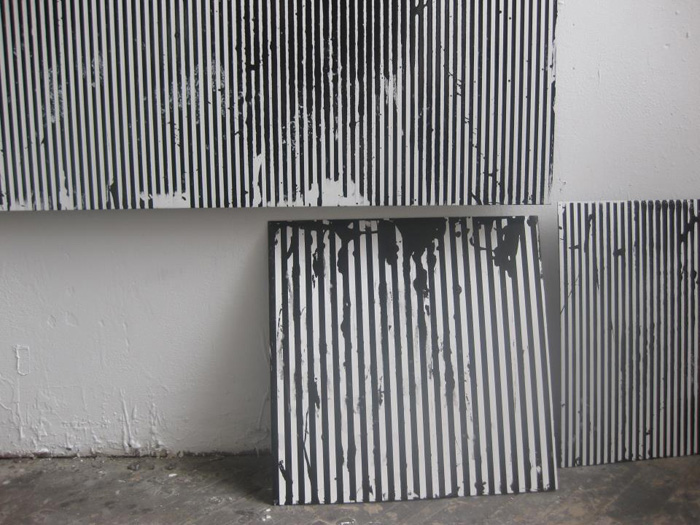
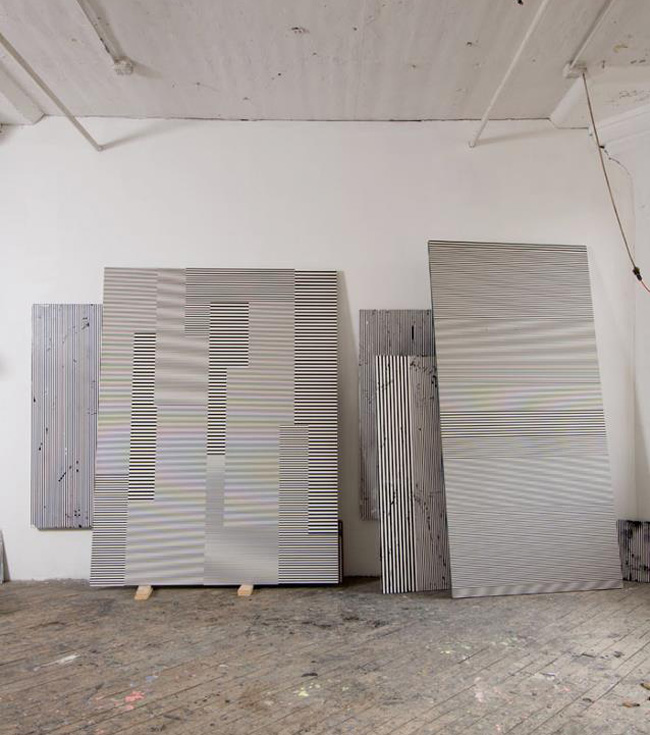
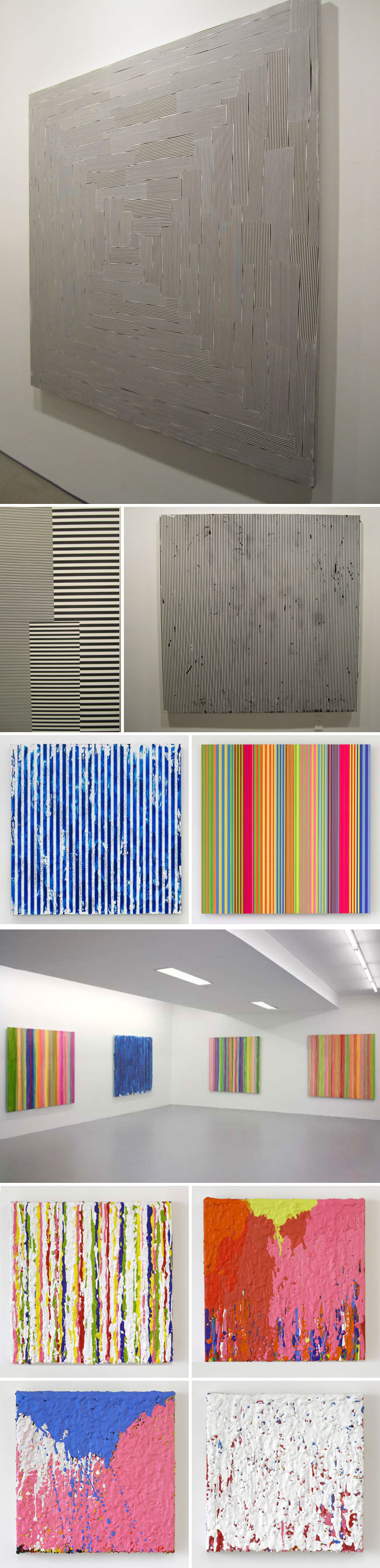
Optical Paintings, black and white line paintings, enamel on aluminum, geometric abstraction paintingsOptical Paintings, black and white line paintings, enamel on aluminum, geometric abstraction paintingsOptical Paintings, black and white line paintings, enamel on aluminum, geometric abstraction paintings, Gering & LopezEm and I stopped by the opening of Michael Scott’s Black and White Line Paintings show last week. Upon entering the gallery, we were greeted by the collection of large enamel-on-aluminum paintings whose lines initially created visual effects such as moiré patterns and the illusion of multiple plains, until our eyes quickly adjusted and could take in these mesmerizing works. Surprisingly, they have a hypnotic and peaceful quality. Some have a sharp precision to them, while others are distressed and bleed. In the back office of the gallery there is even one that looks like the lines were done freehand and offer yet another take on the black and white line theme.

Michael Scott, a New York based artist originally from Pennsylvania, has worked in many mediums over the past twenty-five years, periodically returning to his line paintings. Other works include his multicolor line paintings and his smaller encaustic-on-wood works, one of which was purchased by Sofia Coppola, clearly a fan, who nominated Scott as her contribution to the 100-People-Places-and-Things-You-Need-To-Know in V Magazine’s Spring Preview issue. (You can see the article here.)

Michael Scott’s Black and White Line Paintings 1989-2011 is on view at Gering & López Gallery in NYC through February 18, 2012.

Photos courtesy of the artist, Gering & Lopez, and Triple V Gallery

Roskilde Festival Plywood Dome

plywood dome, cool architecture, hexagonal structure, henrik almegaard, Festival structureplywood dome, cool architecture, hexagonal structure, Festival structure, Danish designplywood dome, cool architecture, hexagonal structure, Festival structure, Danish designInside and out this wooden dome, designed by Danish architect Kristoffer Tejlgaard and engineer Henrik Almegaard, looks great. Made up of 240 plywood hexagons, this geodesic dome was created for the 2011 Roskilde Festival in Denmark and disassembles into sections.

The futuristic shape, as well as those skylights that jut out and add texture, give the structure a very cool look.

You can watch a video of its construction here.

via intoform

Architypeture III

Typography in Architecture, Type, Environmental graphics, Luz exhibit, Architecture with typography, signageTypography in Architecture, Type, Environmental graphics, typotecture, Architecture with typography, signageTypography in Architecture, Type, Environmental graphics, typotecture, Architecture with typography, signage, Clavel Arquitectos, Mitsumoto Matsunami, C+CO4, architects,Click to enlarge
From top to bottom and left to right:
Museo Ibere Camargo, Porto Alegre, Brazil; Condominio P in Cagliari, Italy by C+CO4 Studio; Objekt 10, Zavrtinica Business Center in Croatia interiors by Typotecture, exteriors by Brigada / Damjan Geber (architect), Srđana Alač (designer)(x4 photos); Rocklea Road Warehouses, Jackson Clement Burrows Architects; Cafés Salzillo, Coffee & Literature Week, Mucia, Spain, Clavel Arquitectos (x3 photos); Vigaceros Headquarters, Murcia, Spain, Clavel Arquitectos.

Architecture and typography combined, Buildings with typography, Signage, Sculptural typography, Architypeture, typotectureArchitecture and typography combined, Buildings with typography, Signage, Sculptural typography, Architypeture, typotecture

Click to enlarge
The Number House in Osaka, Japan, Mitsutomo Matsunami Architects; Education Executive Agency Tax Office in Groningen, UNstudio photo by Ron Tilleman; Museum of Modern Art, Santos, Brazil, Metro Arquitetos Associados + Paulo Mendes da Rocha; Pokobar, Zagreb, Croatia, Typotecture (x3 photos); Restaurante LAH!, Madrid, Spain, Ilmio Design; QV Car Park, Melbourne, Australia, Latitude Group; Chips Residential Development, New Islington, Manchester, Alsop Architects.

Here we bring you our third installment of Architypeture: the beautiful combination of architecture and typography. These projects come from Brazil, Spain, Croatia, and the Netherlands, as well as representation from Japan, Australia, and the UK. Click on the credits to link to more images or information, usually on the architect’s site.

If you missed our previous Architypeture posts, Architypeture I is here, and Architypeture II is here.

Website for The King Center: C&G Partners

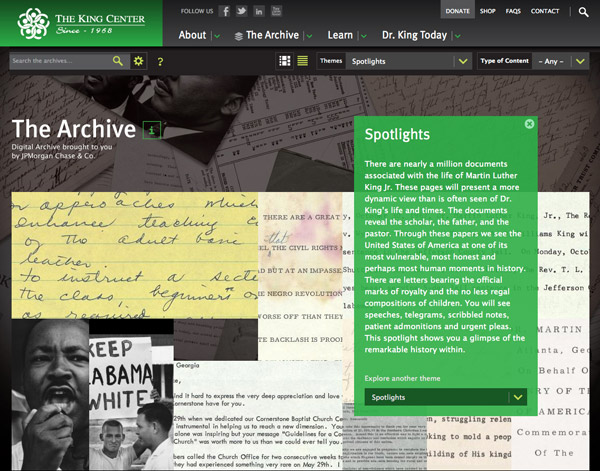
The King Center Imaging Project Website, C&G Partners, Martin Luther King, Jr.The King Center Imaging Project Website, C&G Partners, Martin Luther King, Jr.The folks at C&G Partners, a New York City design firm, have just launched a new website for The King Center Imaging Project, an initiative of JP Morgan Chase with The King Center in Atlanta. On this Martin Luther King, Jr. Day, 200,000 documents including letters, speeches, drafts, notes, photos and more, are now available for free to the general public.
The site builds on the graphic identity established for the project’s related traveling exhibition. There is an overwhelming amount of information which has been impressively organized in a welcoming and user-friendly way. Definitely worth exploring.
Thanks Jonathan!

Peter Emerick: Koan Grids

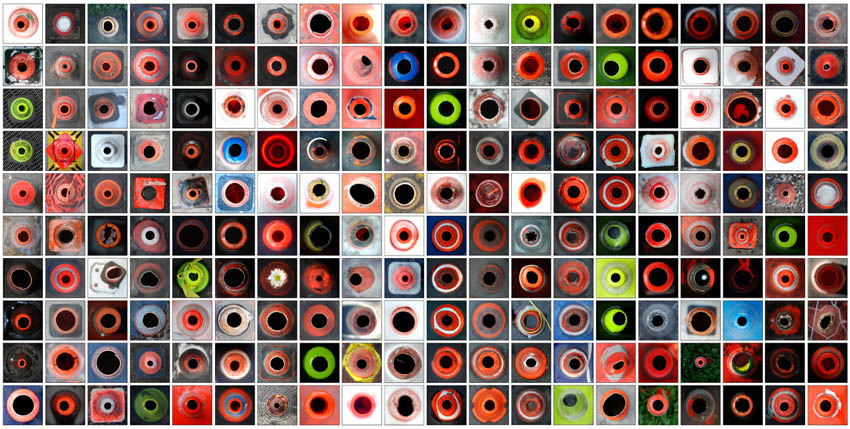
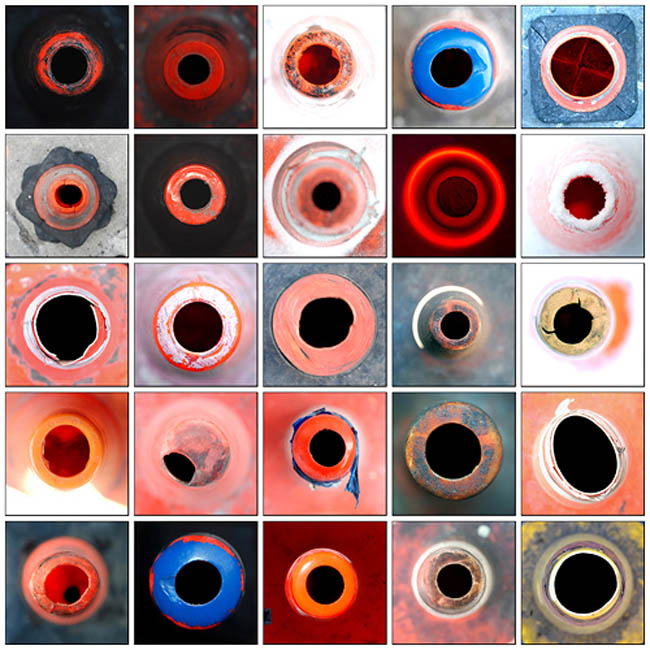
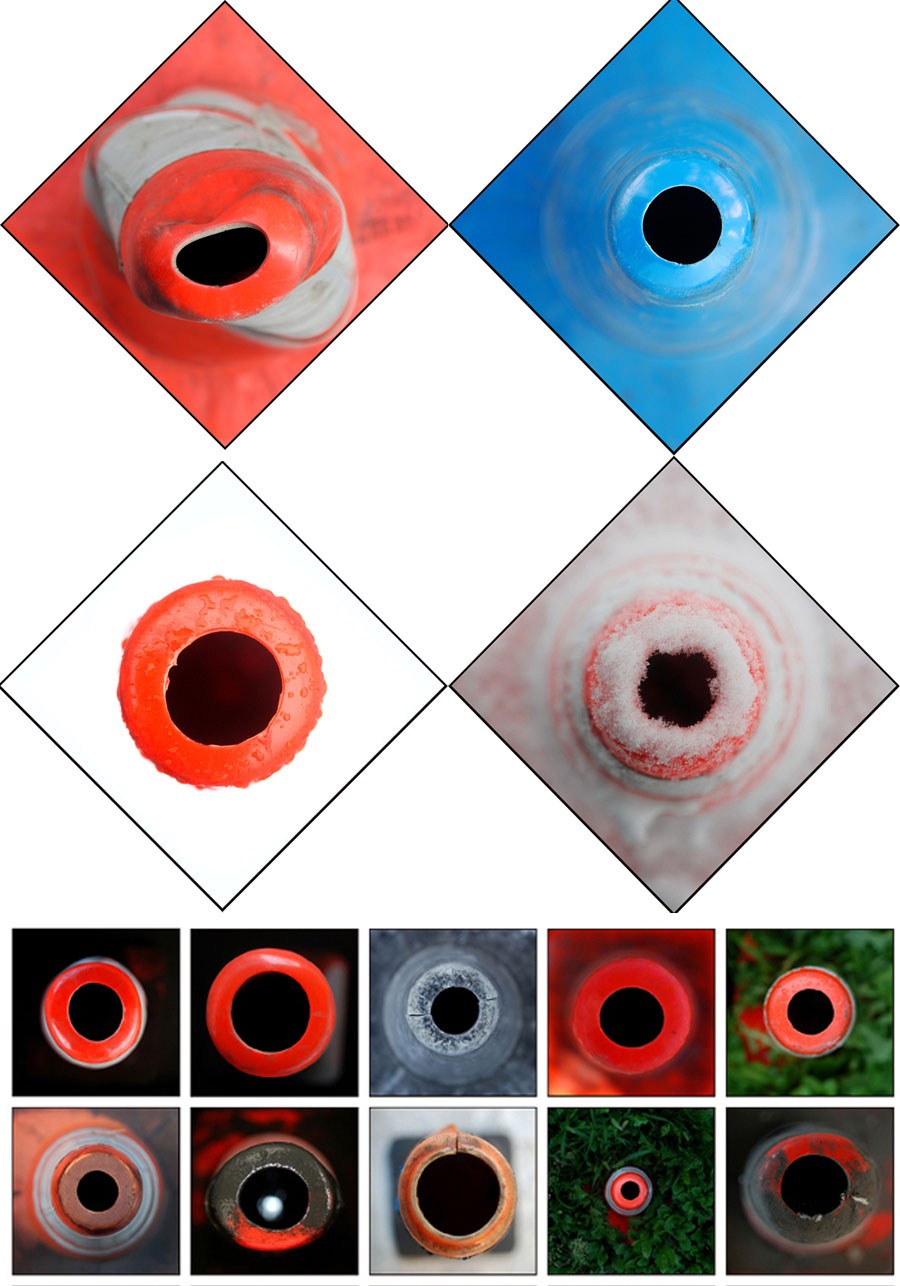
Koan Grids, Peter Emerick, Photographs of traffic cones, traffic cone art, collabcubedKoan Grids, Peter Emerick, Photographs of traffic cones, traffic cone art, collabcubedKoan Grids, Peter Emerick, Photographs of traffic cones, traffic cone art, collabcubedKoan Grids, Peter Emerick, Photographs of traffic cones, traffic cone art, collabcubedClick to enlarge

New Jersey based artist Peter Emerick has been photographing traffic cones for several years. His Koans series encompass grids and single photos of all kinds of traffic cones photographed from a birds eye view. They are surprisingly varied and that particular angle offers up interesting abstractions of the ubiquitous object.

Emerick, together with artist Erik Sanner—who is also fascinated by traffic cones and includes them in his artwork, as well as apparently having given East Village Traffic Cone Viewing Tours a couple of years back—are putting together The Traffic Cone Occasional and are looking for artists who create art with traffic cones. If you are one such artist, you can contact them via one of their websites, here or here.

For more traffic cone art, see our previous post here.

Chaos at Zellig: Philip Watts Sculpture

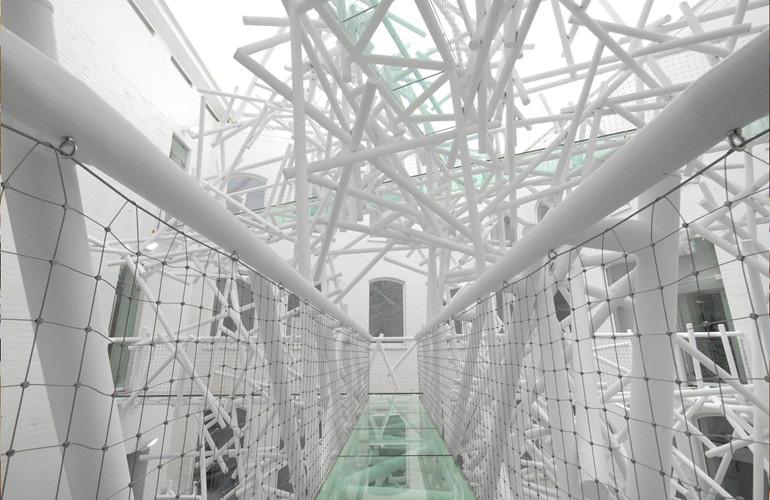
cool installation, 5-story sculpture, Custard Factory, England, collabcubedcool installation, 5-story sculpture, Custard Factory, England, collabcubedcool installation, 5-story sculpture, Custard Factory, England, collabcubedClick to enlarge

This really caught my eye. In the center atrium of Zellig — a building designed to provide space for young creative enterprises and galleries as part of the Custard Factory redevelopment in Birmingham, England — is a unique five-story-high sculpture designed by Philip Watts Design titled Chaos. Though at first glance the piece does give the appearance of a chaotic mass, in actuality it is a functional art installation designed to connect the courtyard at three levels. Made with 2000 meters of steel tubing and containing three glass bridges, it must be quite spectacular to find oneself intertwined in the sculpture.

via knstrct via notcot