Sebastian Mariscal: MCASD Installation

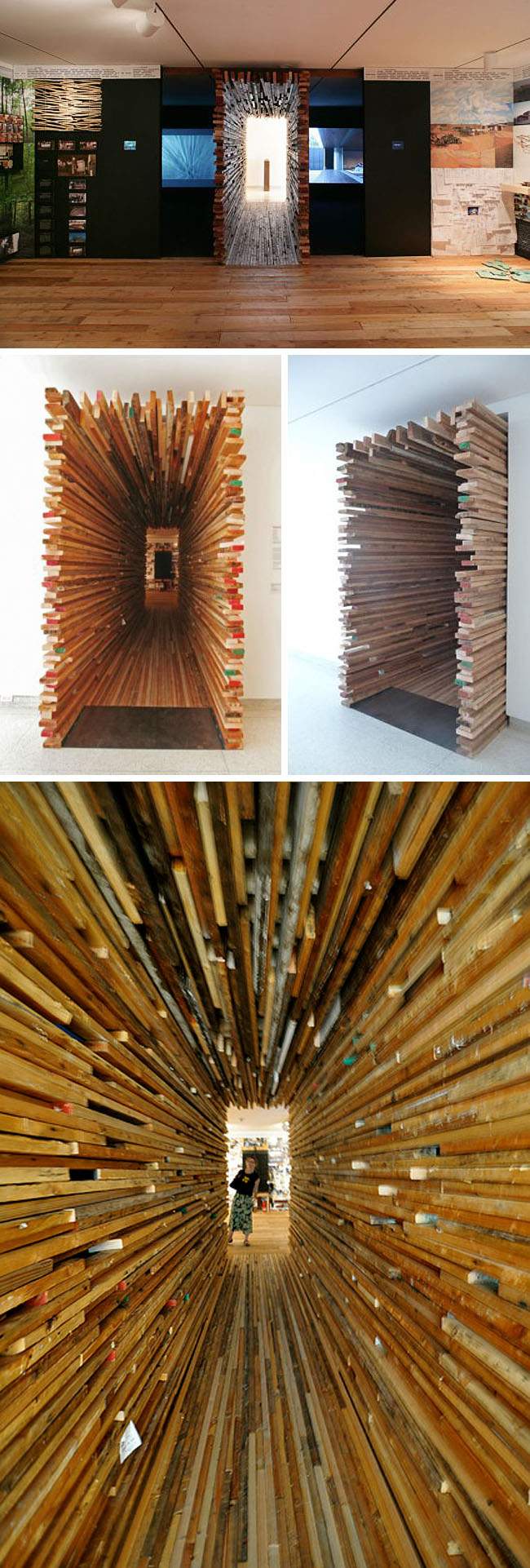
MIX exhibit installation for Museum of Contemporary Art San Diego, Sebastian Mariscal architect, cool wood entrance installationMIX exhibit installation for Museum of Contemporary Art San Diego, Sebastian Mariscal architect, cool wood entrance installationMIX exhibit installation for Museum of Contemporary Art San Diego, Sebastian Mariscal architect, cool wood entrance installationClick to enlarge

Mexican-born architect Sebastian Mariscal, now based in La Jolla and Boston, has a string of AIA awards under his belt along with projects that range from homes to restaurants to hotels and even a winery. He also created this tunnel from plywood that served as the entry to the exhibition Mix: Nine San Diego Architects and Designers at the Museum of Contemporary Art San Diego La Jolla. I love the texture, the varied wood tones, and the red and green flecks throughout on the tips. Nice installation!

Photos: Sebastian Mariscal, A/N, and Chimay Bleue’s flickr

via Arquine

Cabañas Elqui: Rodrigo Duque Motta

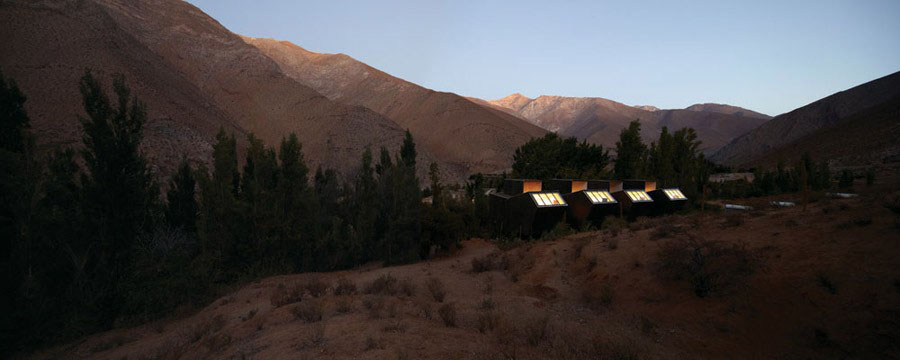
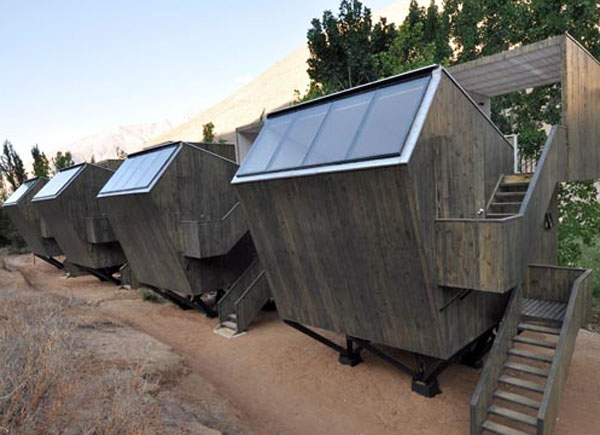
Hotel Elqui Domos new rooms by Rodrigo Duque Motta, Contemporary Chilean Architecture, skylights, Hotel Elqui Domos new rooms by Rodrigo Duque Motta, Contemporary Chilean Architecture, skylights, Hotel Elqui Domos new rooms by Rodrigo Duque Motta, Contemporary Chilean Architecture, skylights, Cabañas Elqui, Elqui Domos, Rodrigo Duque Motta, Observatory-style hotel cabins in Chile, collabcubedClick to enlarge

Chilean hotel Elqui Domos, known for their cool geodesic dome rooms, have just opened a series of cabins designed by architect Rodrigo Duque Motta. These ‘observatories’ as they are referred to, follow their characteristic two-storey style, with the bed on the top floor looking up and out to the sky. Each cabin has its own shaded roof deck integrated into the wooden exterior. Nice!

Photos: Cristobal Palma and Hotel Elqui Domos.

via noticias arquitectura

Mary Miss: FLOW & Broadway: 1000 Steps

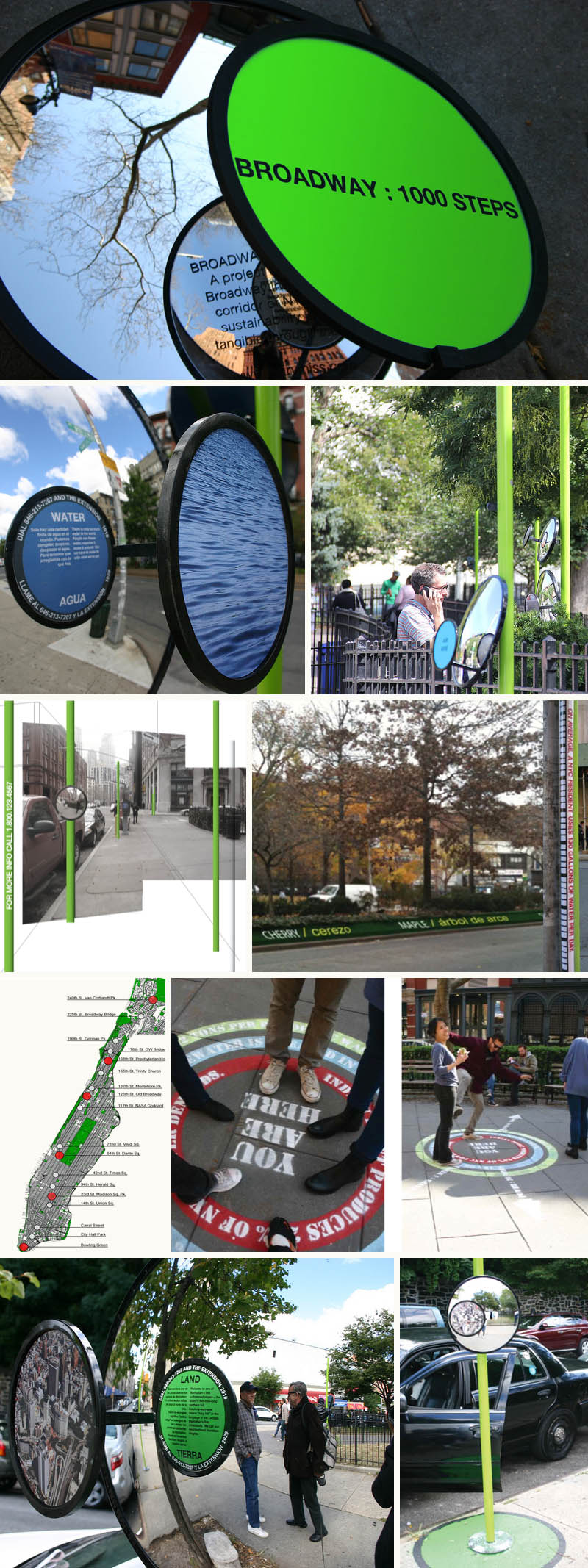
IMA, Mary Miss, Environmental art exhibit, art installation, Nature, sustainability, interactive artIMA, Mary Miss, Environmental art exhibit, art installation, Nature, sustainability, interactive artIMA, Mary Miss, Environmental art exhibit, art installation, Nature, sustainability, interactive artClick to enlarge

In my search for something else, I happened upon Mary Miss’s exhibit at the Indianapolis Museum of Art (IMA) last fall, FLOW: Can You See the River? Mary Miss is a New York based artist who has been combining sculpture, landscape architecture, and installation art with the issues of our time, since the 1970s. Making environmental and social sustainability into tangible experiences is a primary goal. In FLOW, Miss reveals important elements of the White River water system through a series of mirror and red dot installations at stopping points along the river, engaging and educating visitors.

Upon visiting Miss’s website I learned of a similar interesting project coming to NYC in 2013 — Broadway: 1000 Steps.

Interactive environment and social sustainability exhibit on the streets of NYC, 2013, Mary Miss, installation artUsing a similar mirror system to the one used in FLOW, Broadway: 1000 Steps is an initiative to establish Broadway as the new “green corridor” of NYC. Twenty hubs along the length of Broadway will make planned sustainability initiatives tangible to passers-by. A test Hub last September at 137th Street attracted the attention of several universities who are now participating in conducting research that will be included in the future hubs’ contents.:

Undergraduate and graduate students from these schools are conducting research that will inform hub content, mapping each of the hubs, collecting photos and relevant images, and proposing their own solutions to the MM/CaLL challenge. Research, data and visual materials collected by the students can be found at http://www.mmcallpartnership.org/. Student efforts will be completed by spring of 2012, and content development, design, and testing will be advanced during the summer and fall 2012. The goal of installing a majority of the hubs has been set to take place in spring/summer 2013, and it is expected that hubs will be in place for approximately one year.

Additional information on the Broadway: 1000 Steps can be found here.

Photos courtesy of the artist, IMA, and City as Living Laboratory

Combo Colab: Mall-terations and More

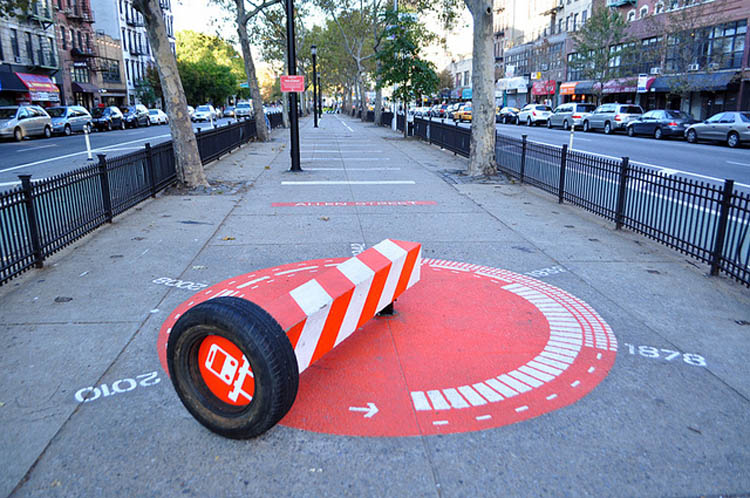
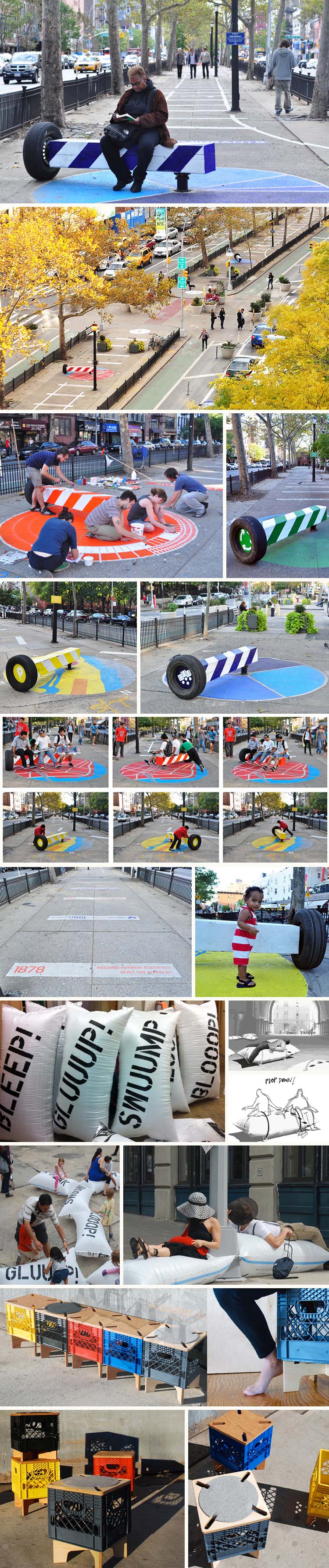
NYC, public urban projects, Allen Street rotating benches, street art, public parksNYC, public urban projects, Allen Street rotating benches, street art, public parkspublic urban projects, Allen Street rotating benches, public art, stools made from crates, stackableClick to enlarge

We are smitten with design duo Combo Colab. Not because we share a similar name (though we think that’s fun), and not because some of us have Argentinean roots (though that’s cool too), but this delightful Venezuelan couple, based in New Jersey, won us over at the designboom mart 2012 with their upcycled, reconceptualized plastic milk crates as stackable indoor/outdoor stools named Xtools (bottom 4 photos), and from there we learned of all their other interesting projects.

Carolina Cisneros and Mateo Pinto are architects and artists whose practice is focused on a design/build approach. Their work ranges from small scale works to temporary public art projects. One of my favorites is Mall-terations: a project on the Lower East Side here in NYC a little over a year ago. In collaboration with Marcelo Ertorteguy and Sara Valente, as well as neighborhood volunteers, Combo Colab created a series of five rotating benches (Compass Benches) down the mall on Allen Street, overlapping circular neighborhood maps. In addition, a timeline celebrating the history of immigration and ongoing revitalization of the Allen Street Corridor ran along the concrete sidewalk from one Compass Bench to the next. These were just great!

More recently, they designed Plop Spots — giant pillows made out of inflatable bags — to generate outdoor seating clusters in and around the Dumbo Arts Festival. All the pillows have fun expressions on them such as “ahhh”, “plop”, and “zzzz”.

There’s much more, too. Seedling, Soundscape, and the upcoming Red Hook Food Vendor Market Food FenceCombo Colab are designers to watch.

All photos courtesy of Combo Colab

TULP: Webguerillas Bathrooms

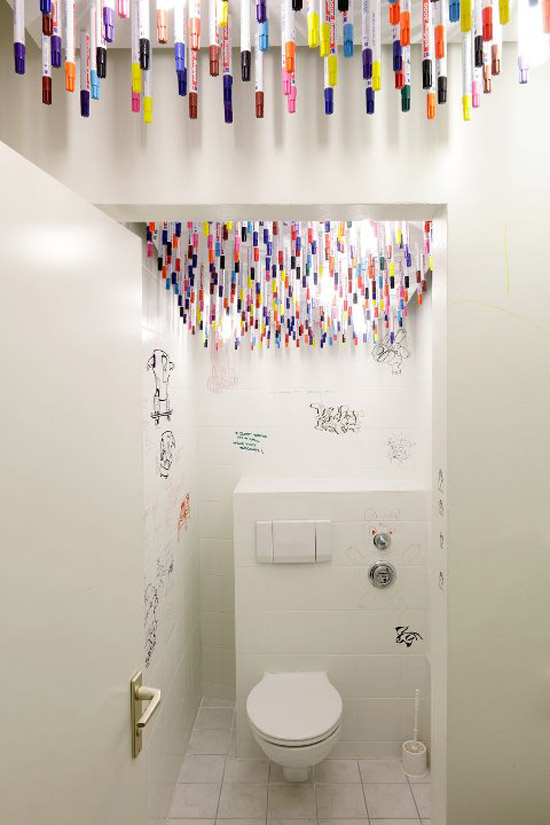
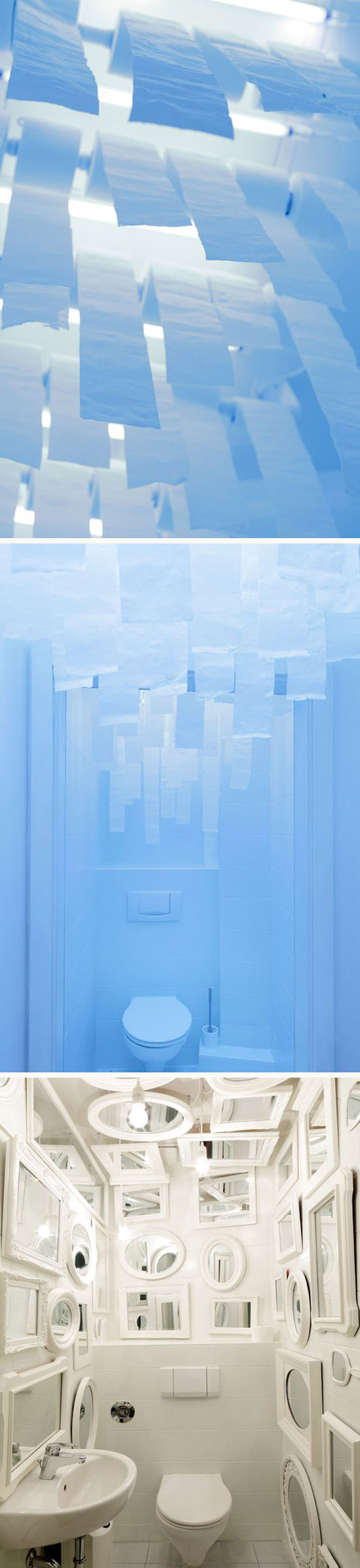
interior design, fun bathrooms, markers in bathroom for graffiti writing, Tulp design, Munich, Webguerillasinterior design, fun bathrooms, markers in bathroom for graffiti writing, Tulp design, Munich, Webguerillasinterior design, fun bathrooms, toilet paper sky in bathroom, mirrors in bathroom, Tulp design, Munich, WebguerillasGerman brand architecture firm TULP created three fun restrooms for Webguerillas’ offices in Munich. The marker installation at top, invited staff and clients to mark up the room as they wished by using the pens (attached by magnets) to draw, graffiti, and decorate the walls. The second bathroom involved lots of toilet paper rolls and blue light, creating a paper sky and easy access to toilet paper replenishment. The third installation included an array of framed mirrors to change the sense of space and play on the idea of vanity.

Photos: Oliver Jung

via flor

Owen Shop NYC: Tacklebox

New highend store in meatpacking with 25000 paperbag installation, Owen, Tacklebox, Juliana SohnNew cool highend store in meatpacking with 25000 paperbag installation, Owen, Tacklebox, Juliana SohnNew cool highend store in meatpacking with 25000 paperbag installation, Owen, Tacklebox, cool store designClick to enlarge

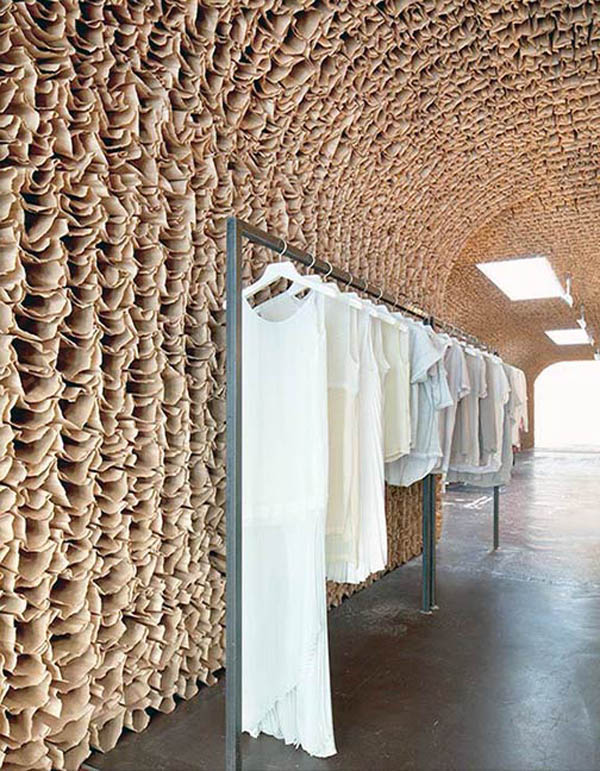
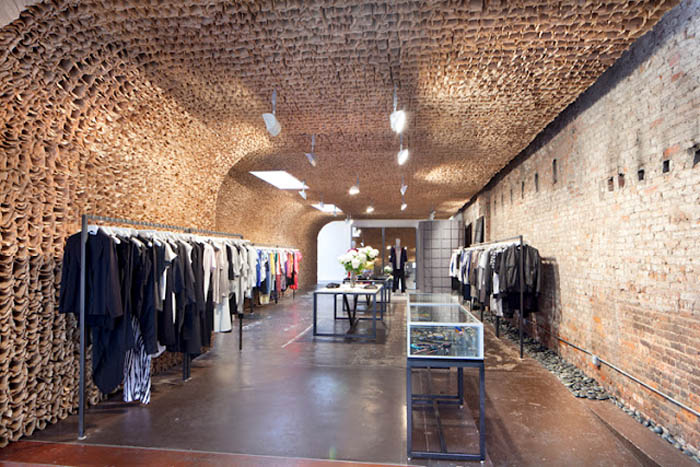
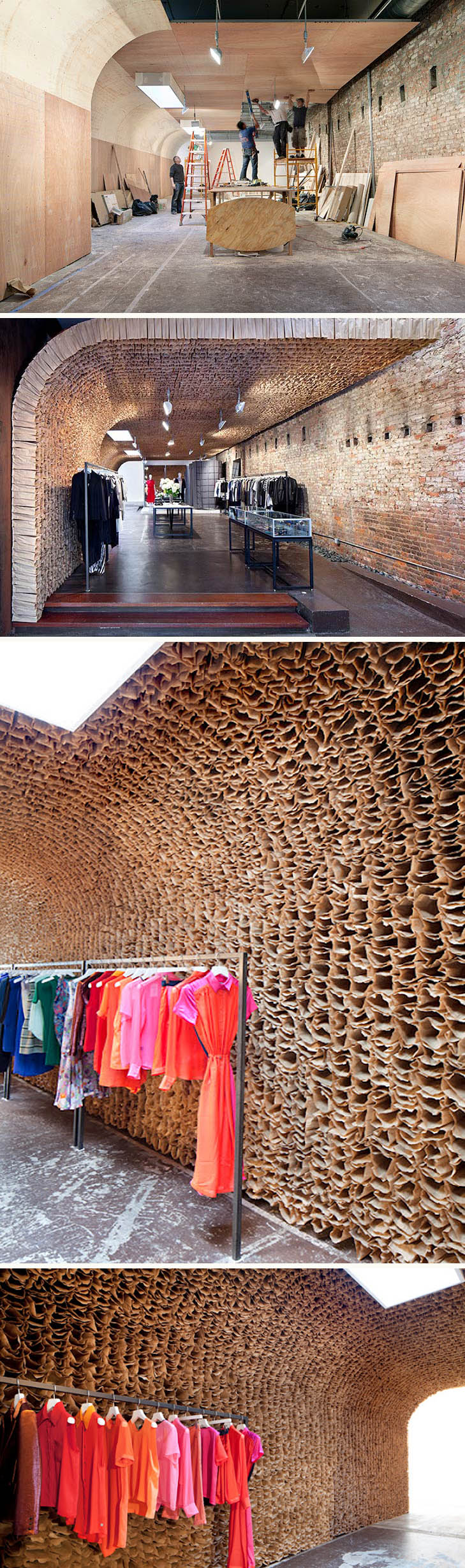
Once again architecture firm Tacklebox uses unique materials in their retail store design (see previous post on Aesop’s kiosk here), this time for the new high end OWEN shop in New York City’s Meatpacking District. A continuous surface hand-built out of 25,000 brown paper bags, arches from floor to ceiling creating a honeycomb effect within the industrial brick and concrete 1,800 square foot space that previously housed a meat storage facility. This project is the first in a series of signature stores for OWEN and serves as a preview of stores to come.

Very cool.

Photos courtesy of Tacklebox by Juliana Sohn.

via NY Times

Typographied Objects IV

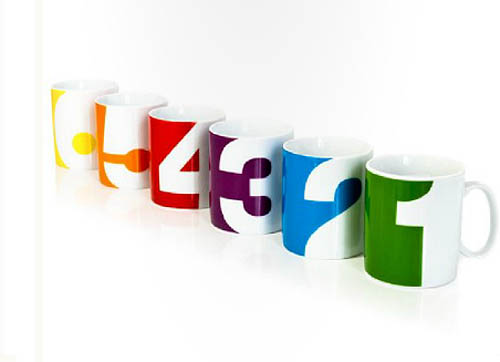
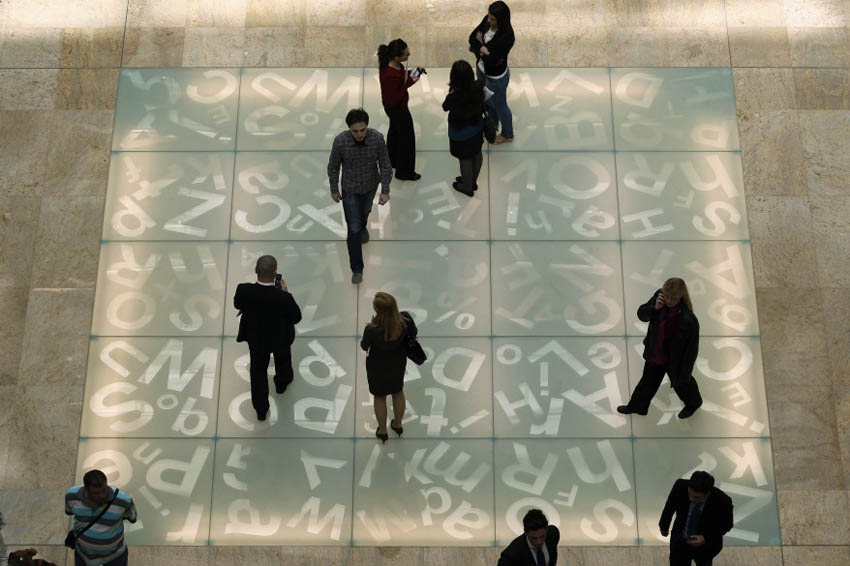
typography on mugs, numbers on mugs, typographic objects, bold numbers, fun itemsTypography on floor of Romanian National Library, Type Installation, Typography in ArchitectureTypography on objects from food to housewares and clothes. Letters, Type, Numbers, typographied objectsClick to enlarge

It’s been a while but here is the latest roundup of typography objects.

From left to right, starting at the top working down
Number Mugs from SuckUK; Floor of the Romanian National Library: Typographic Chessboard; Type Tote (front and back); Vitamin Packaging; Proposed Milk Carton Packaging; Sascha Grewe Letter Stools; Full House by J. Mayer H. for Bisazza SPA with dataprotection patterns; Handwritten Typeface by Lucas Neumann de Antonio; Edible Gelatin Type; Quotation Mark Plate; Typographic Sliding Puzzles; Bathroom Signage Student Project by Daniyil Onufrishyn; Alphatots Potatoes; TarGetBooks Shelf by Mebrure Oral; Dynamo Typocolate; Linus Dean Rugs; Typographic Dress; Urban Dinnerware; Love Your Fellow As Yourself T-shirt; Pablo Lehmann Bookcase; Ouch Quote Quips Bandages; and Anita Shelving by Ricard Mollon

See our previous posts Typographied Objects I, II, and III.

Tivoli Park Sculpture: Rok Grdisa

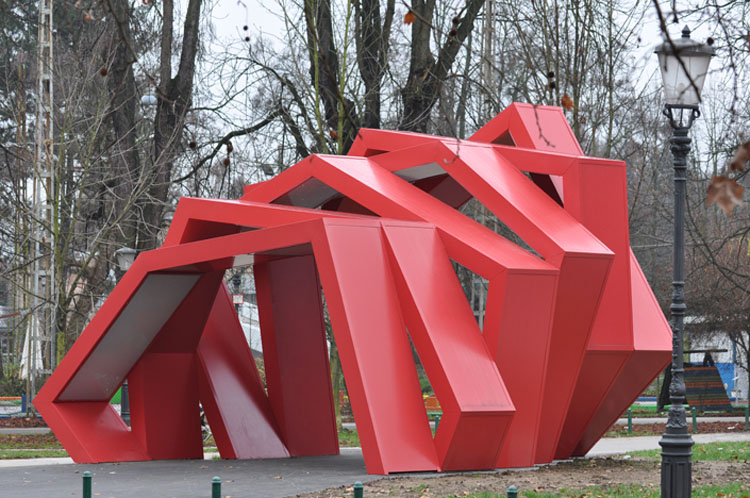
Sculpture, information pavilion, folded metal bars at different angles, archway, dynamicSculpture, information pavilion, folded metal bars at different angles, archway, dynamicSculpture, information pavilion, folded metal bars at different angles, archway, dynamicClick to enlarge

Originally designed for, and a second place winner of, the Trimo Urban Crash competition, this dynamic urban sculpture designed by architect Rok Grdisa has now become a permanent installation in Tivoli Park in Ljubljana, Slovenia. Acting as an information pavilion, this red structure made up of 6 differently folded bright red metal panels, has a sort of blooming effect that is very appealing. The interior panels include lighting, which makes for lovely nighttime illumination.

Photos by Peter Mihelic

via design diffusion and plusmood

NY Design Week 2012

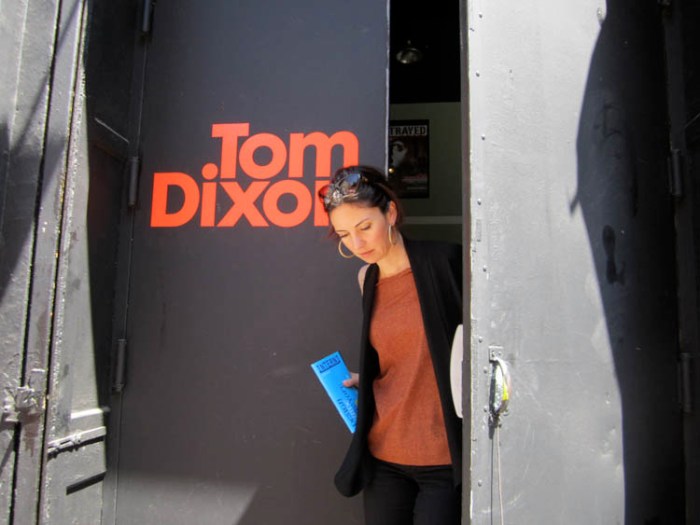
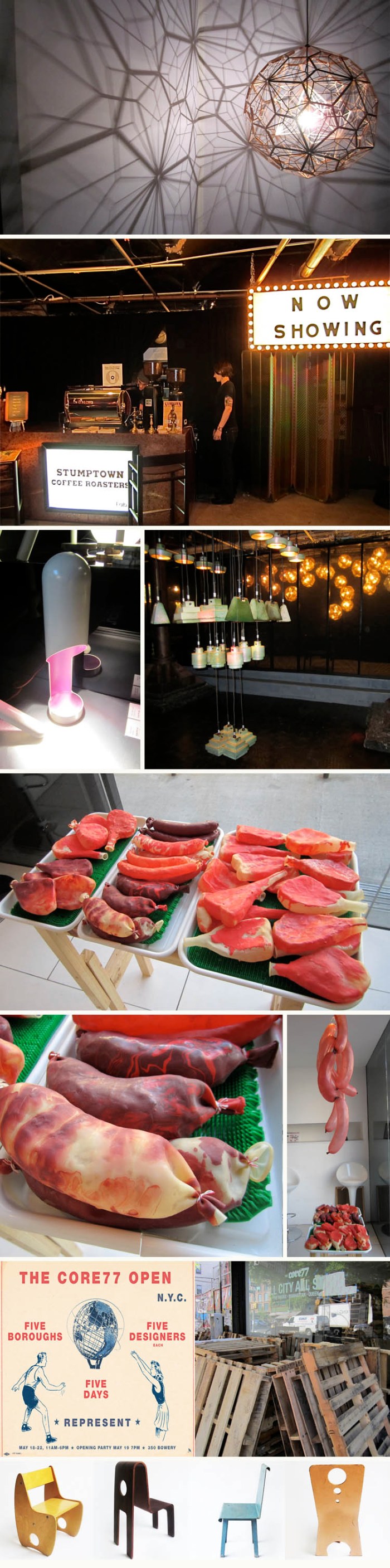
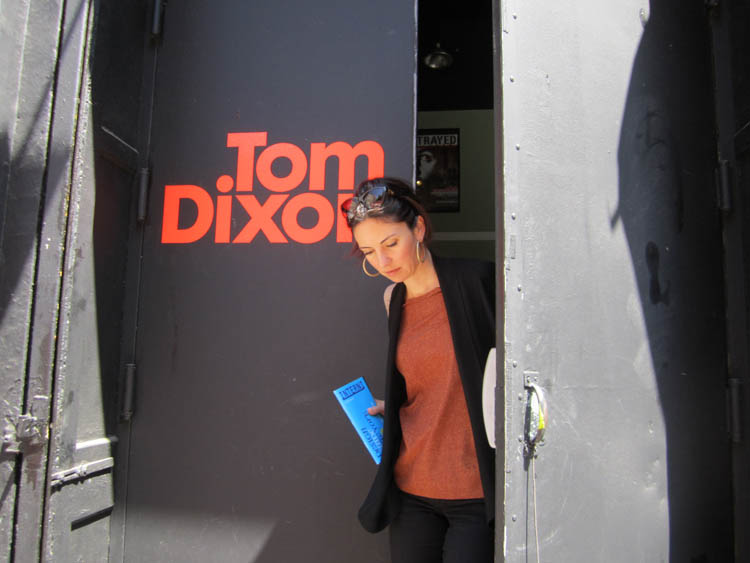
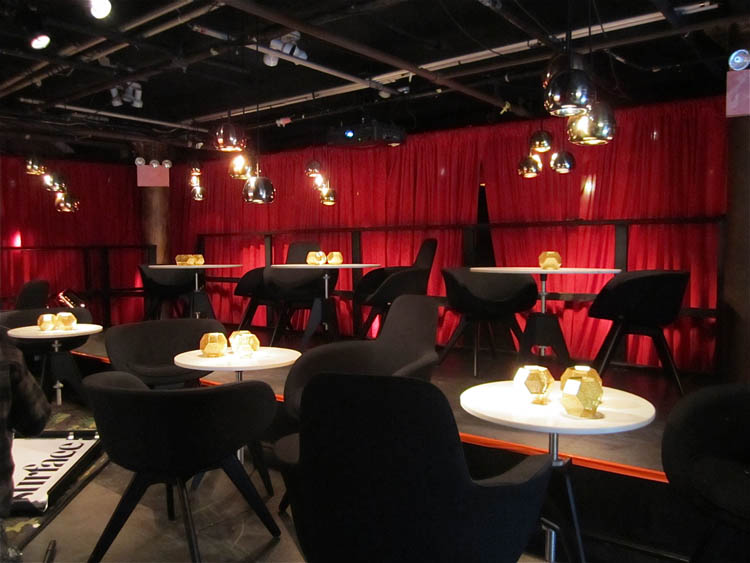
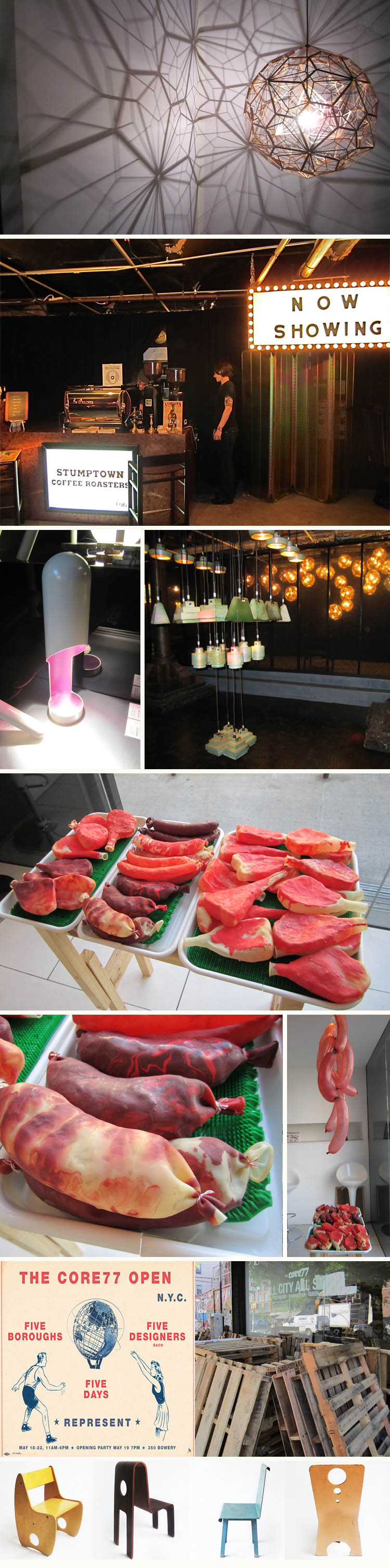
NY Design Week 2012, Noho District, Tom Dixon-Fab Pop Up London UndergroundNY Design Week 2012, Noho District, Tom Dixon-Fab Pop Up London UndergroundNY Design Week 2012, Tom Dixon, London Underground, Japanese Premium Beef, Balloon Factory beef balloons, Core77 Pop-up Gallery, Partners & Spade Children's ChairsClick to enlarge

Well, it looks like the ever-growing NY Design Week 2012 is off to a great start with exceptionally beautiful weather in store for the next three days. Aside from ICFF at the Jacob Javits Center, the event at the core of Design Week (and we – CollabCubed – will be there as part of the designboom mart, but more on that later) there are special design-related events going on all over the city. Too many to list here, but here are a few I ran across today in my travels through NoHo on my way to the East Village.

Tom Dixon along with Fab, Surface Magazine and Stumptown Coffee have teamed up and transformed the basement of the Bleecker Street Theater into a Pop-up shop and café: London Underground. Filled with lamps designed by Dixon, the space has a cool feel with interesting shadows cast upon the walls. My favorites? His new line of industrial looking ceramic lamps due out in September.

Two blocks north on Great Jones Street, Japanese Premium Beef (a unique butcher shop worth visiting anytime for its singular boutique-like quality) has a display of beef and sausage balloons created by Balloon Factory.

On the same block, The Future Perfect looked like they were setting up a special exhibit and across the street at Partners & Spade, Mondocane has an exhibit of historically relevant children’s chairs. Around the corner, Core77 was setting up their First Annual Core77 Open, a Pop-up exhibit featuring 5 designers from the 5 boroughs. The stacks and stacks of wooden flats(!) that they were loading into the shop look like they’ll make for an interesting installation.

More events include: Roll & Hill’s temporary showroom at 2 Cooper Square; Areaware at 22 Bond St.; and Hotel California at The Standard East Village.

You can see more events on the Noho Design District site, as well as Metropolis Magazine’s list, Core77, and WantedDesign for other events outside of Noho.

Enjoy!

All photos collabcubed except for bottom row of chairs courtesy of Mondocane and Partners & Spade.

Kukje Art Gallery: SO-IL Architects

Solid-Objectives – Idenburg Liu, SO – IL Architects, Cool chainlink facade, Kukje Art Gallery, Seoul, KoreaSolid-Objectives – Idenburg Liu, SO – IL Architects, Cool chainlink facade, Kukje Art Gallery, Seoul, KoreaSolid-Objectives – Idenburg Liu, SO – IL Architects, Cool chainlink facade, Kukje Art Gallery, Seoul, KoreaClick to enlarge

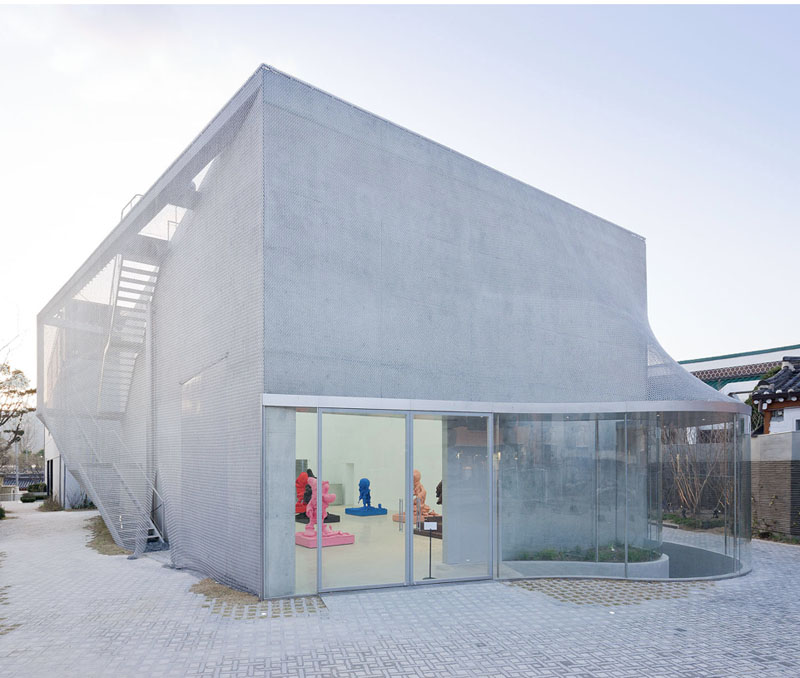
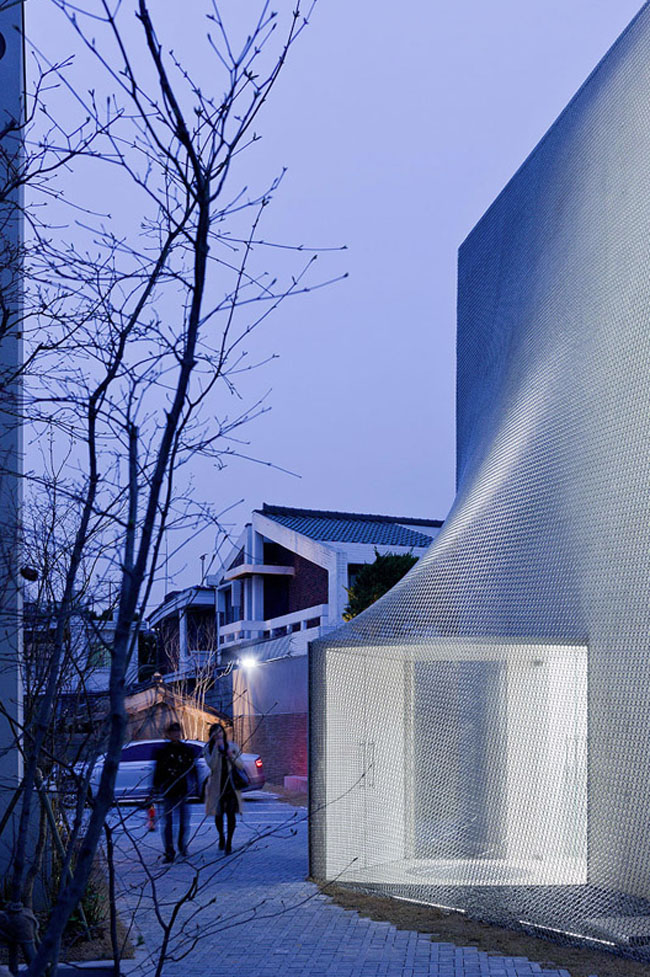
For their recently completed project in the northern part of Seoul, partners Florian Idenburg and Jing Liu of the Brooklyn-based Solid Objectives – Idenburg Liu (SO–IL) architecture studio, diffused the front of their structure for the Kukje Art Gallery with a chainmail veil. As part of their master plan for the gallery’s new “art campus”, SO–IL designed a clear-span art space in the shape of a box to house large contemporary installations. They maintained the pure geometry of the space by pushing the circulation out to the edge of the building. They felt that the white cube was too rigid within the historic environs, so, by enveloping the structure in a steel mesh, they blurred the edges and softened the appearance as a whole, in addition to creating a very cool-looking building.

Working with FrontInc. Engineers, and fabricators in China, to design and manufacture the armor-style mesh, SO–IL oversaw mock-up tests in Southern China for the proper elasticity and geometry before having it transported to the gallery site in Seoul.

The result, needless to say, is very striking.

Photos by Iwan Baan; FrontInc; SO–IL and SO–IL’s facebook.

via afasia and domus

Tomás Saraceno: Cloud City at the Met

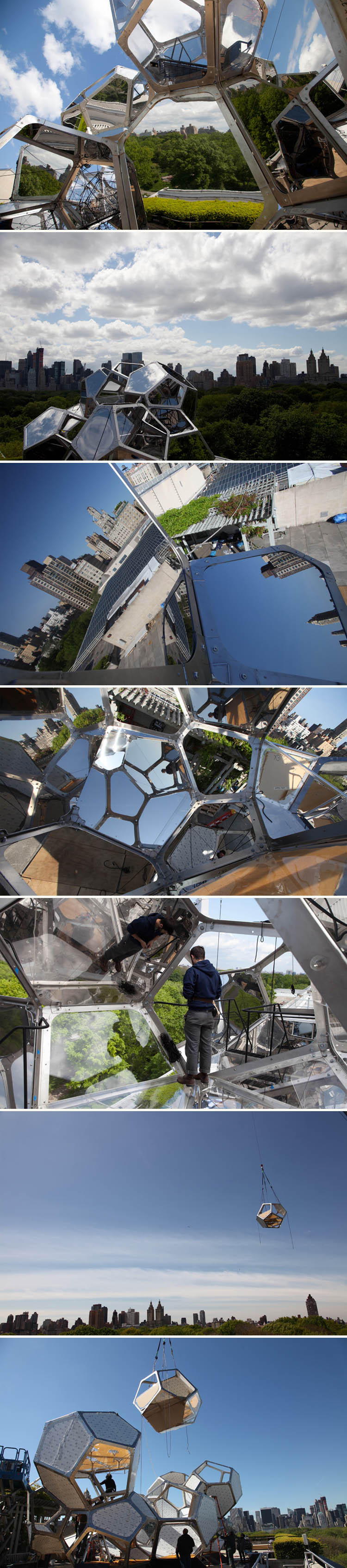
Met Roof Garden installation, Cloud City, Tomas Saraceno, cool installation, contemporary art, collabcubedMet Roof Garden installation, Cloud City, Tomas Saraceno, cool installation, contemporary art, collabcubedMet Roof Garden installation, Cloud City, Tomas Saraceno, cool installation, contemporary art, collabcubedCool installation on roof of the Metropolitan Museum 2012, Tomas Saraceno, Argentine ArtistClick to enlarge

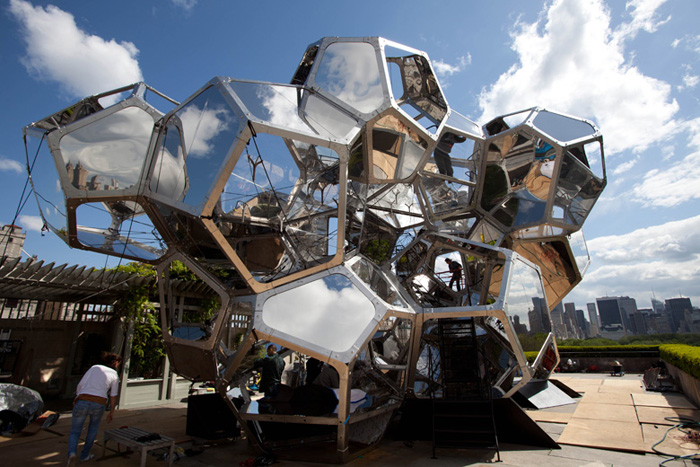
It may not have been the best day to inaugurate Argentine artist Tomás Saraceno’s new installation, Cloud City (his largest in a 10-year-old series Cloud Cities/Air Port City), on the roof of the Metropolitan Museum due to the heavy downpours of rain, but it was the previously determined date. I was looking forward to checking out the installation in person, having been aware of Saraceno’s habitable constructions (previously here) for a while now, but will wait for a sunnier day.

The sculptural/architectural piece atop the Met is made up of interconnected metal and acrylic modules with both reflective and transparent panels. Visitors are able to enter the structure for up to twenty minutes by obtaining a timed-entry ticket. If the regular views from the roof garden weren’t already beautiful enough, I would imagine that both, the views from the additional 20-foot high interior, as well as off of the mirrored panels on its exterior, are even more spectacular, as evident in Saraceno’s photos.

Definitely worth a visit, though there are likely to be long lines to enter, especially on weekends. Luckily, Cloud City will be on the roof of the Met through November 4, 2012, at which point it will travel to Green Box Arts Festival in Colorado where it will be placed in the middle of the forest.

Check out The Met’s site for details.

Photos courtesy of the artist and The Met.

via The Metropolitan Museum and NY Times

Realities United: 2 X 5 (Brothers)

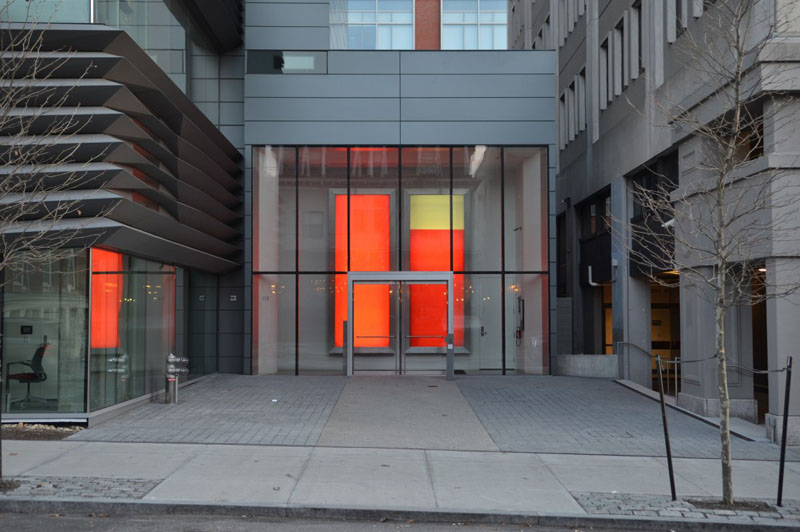
Kinetic Light Installation at Granoff Center at Brown University by Realities UnitedKinetic Light Installation at Granoff Center at Brown University by Realities UnitedKinetic Light Installation at Granoff Center at Brown University by Realities UnitedClick to enlarge
It’s true that we have a soft spot for all things Brown, with Em being up there almost 9 months of the year, but we’ve also been fans of the year-old Granoff Center on campus, designed by DillerScofidio+Renfro, since its opening. And now, I came across the permanent kinetic light installation titled 2×5 (Brothers) by, ironically enough, the two brothers at Berlin-based firm Realities United, which hangs at the entrance of the building as of last month. This colorful installation just adds an extra ‘like’ to all of the above; a little Rothko meets Albers meets Turrell rolled into one that has been beautifully integrated with the window panes and doors of the main ingress.

2×5 is a time-based work with two identical casings containing poster scrollers with full-surface monochromatic colored prints on stretched fabric illuminated from behind.

At the beginning of the academic year, the machines tend to both show the same color equally intensely backlit, and the changes are usually fundamental, i.e., from one color entirely to another. In the course of the year, the probability increases that the two machines will show behavior independent of each other. Then the spatial experience is shaped by up to four different colors of differing intensities at once. With two to four changes per day the frequency of the change is so low that visitors initially experience the installation mostly as static in the respective configuration.

You can see more of Realities United’s work, such as the very cool Bix/Kunsthaus Graz and the more recent mirror installation Transreflex, at their website.

Qzina’s World’s Largest Chocolate Sculpture

Guiness Book of world's records largest chocolate sculpture, Chocolate Pyramid, Chocolate Mayan Temple, Food Art, CoolGuiness Book of world's records largest chocolate sculpture, Chocolate Pyramid, Chocolate Mayan Temple, Food Art, CoolGuiness Book of world's records largest chocolate sculpture, Chocolate Pyramid, Chocolate Mayan Temple, Food Art, CoolClick to enlarge
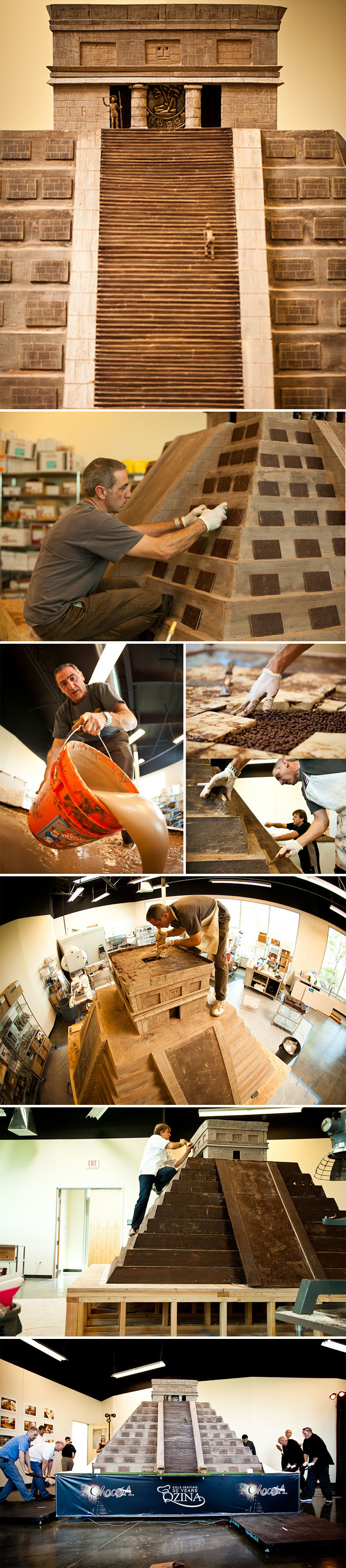
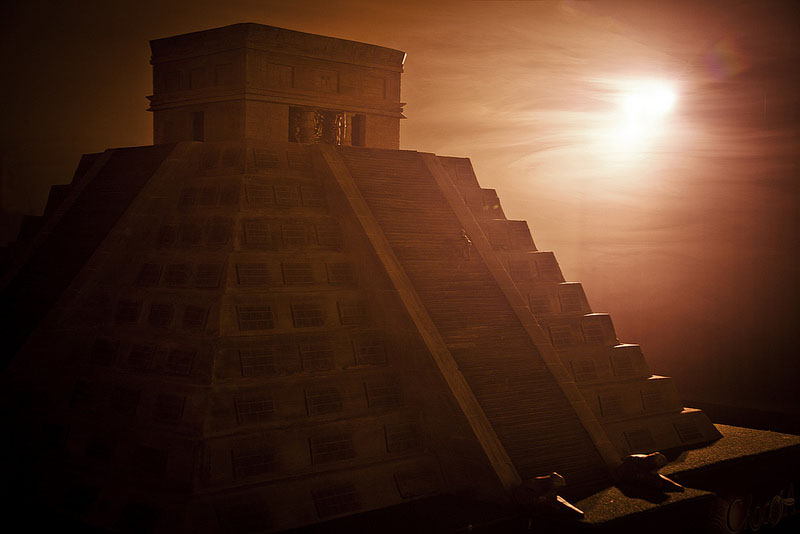
Weighing in at 18,239 pounds (!!), Qzina Specialty Foods chocolate model of an ancient Mayan temple has broken the Guinness World Record for largest chocolate sculpture.

Corporate Pastry Chef Francois Mellet and MOF (Meilleur Ouvrier de France or Best Craftsman in France) Stephane Treand led their team in building the winning work. With a 10ft x 10ft square base, and measuring 6 feet high, the chocolate sculpture—which pays homage to the Mayans’ role in the origins of chocolate—accurately recreates the details of a Mayan temple.

The sculpture will be on display at the Irvine-based Qzina Institute of Chocolate & Pastry from June 4 to December 21, 2012, the end of the Mayan calendar year, when it will be destroyed.

If you like this, you might also like Sonja Alhauser’s work.

Photos courtesy of Qzina

via gothamist

Clearing: Lateral Office

Installation, art installation with threads and strings about ownership of space, Lateral Office, Toronto, Lola Sheppard, Mason WhiteInstallation, art installation with threads and strings about ownership of space, Lateral Office, Toronto, Lola Sheppard, Mason WhiteInstallation, art installation with threads and strings about ownership of space, Lateral Office, Toronto, Lola Sheppard, Mason WhiteClick to enlarge
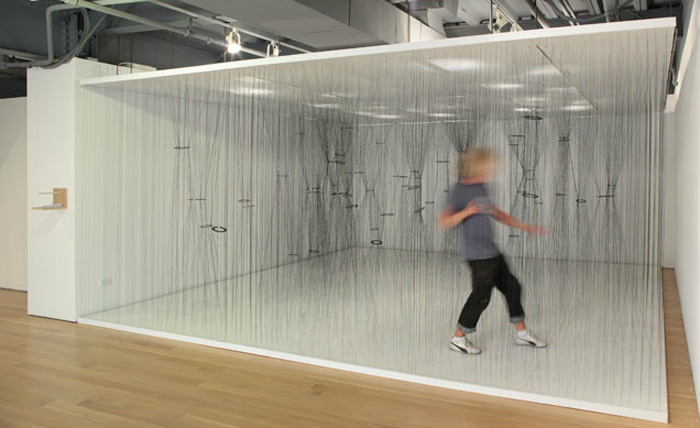
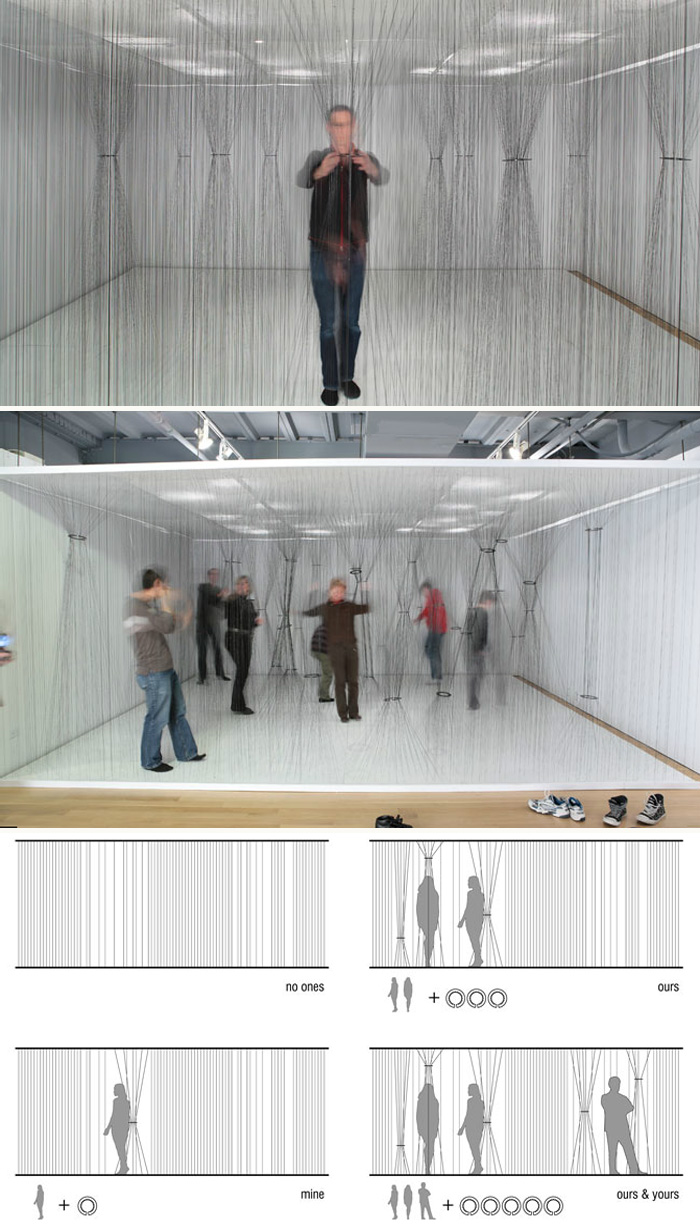
Lateral Office, an architecture firm based in Toronto and founded by Lola Sheppard and Mason White, was commissioned by the Harbourfront Centre to address the theme of ‘personal space.’ They responded by creating an installation — titled Clearing — with a dense field of over 4000 elastomeric strings running vertically along a tight grid. As people entered the space they would be given an acrylic collector tool that would allow them to navigate the field and manipulate the density of the space.

via Canadian Architect

Daniel Buren: Excentrique(s)

Cool installation at the Grand Palais in Paris, by Daniel Buren, Monumenta 2012, collabcubedCool installation at the Grand Palais in Paris, by Daniel Buren, Monumenta 2012, collabcubedCool installation at the Grand Palais in Paris, by Daniel Buren, Monumenta 2012, collabcubedClick to enlarge
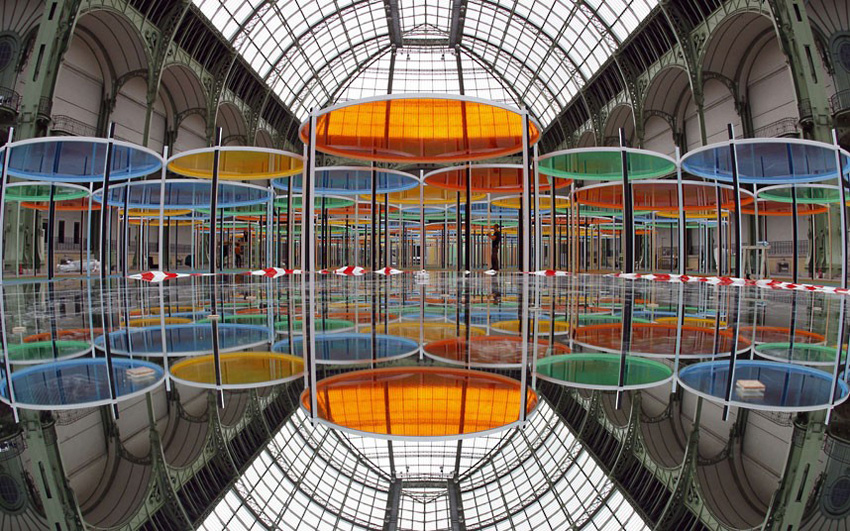
French artist Daniel Buren has unveiled his monumental installation Excentrique(s), Travail in situ, for this year’s Monumenta, the annual art project that’s in its fifth year and challenges an internationally known artist to ‘own’ the 145,000 square foot space of Paris’s Grand Palais.

Buren, a minimalist, has filled the space with primary colored discs horizontally eight feet off the ground, except for the area underneath the nave which has 9 circular mirrors on the floor facing up. Utilizing the sunlight that shines through the space, Buren fills the Grand Palais with color and light that, apparently, is rather breathtaking.

This would be so much fun to see in person…because of the installation and because it’s in Paris!

Photos: Courtesy of Monumenta, Benoit Tessier/Reuters, Francois Guillot/AFP/GettyImages and Francois Mori/AP.

via voanews and the telegraph

Walid Raad: Imaginative Wall Reliefs

Walid Raad, Contemporary Lebanese Art, sculpture, installation, architectural wall reliefs, collabcubedWalid Raad, Contemporary Lebanese Art, sculpture, installation, architectural wall reliefs, collabcubedWalid Raad, Contemporary Lebanese Art, sculpture, installation, architectural wall reliefs, collabcubedClick to enlarge
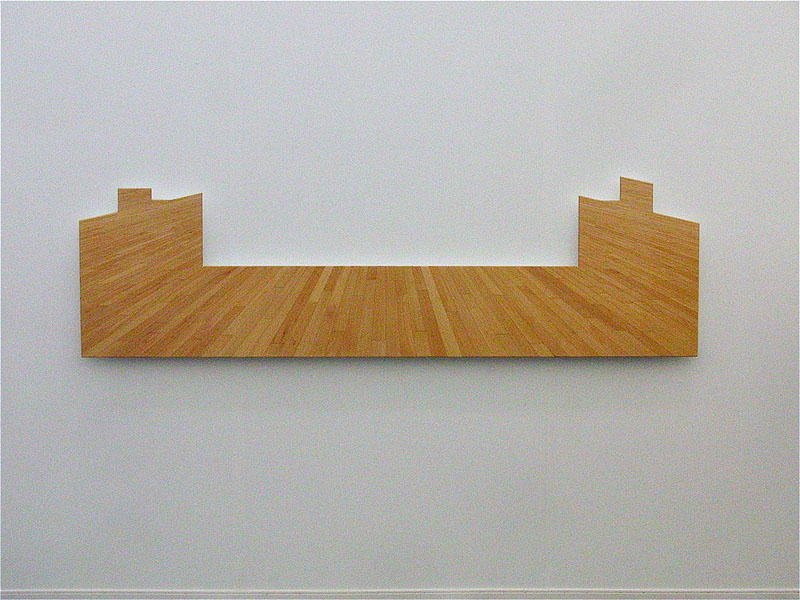
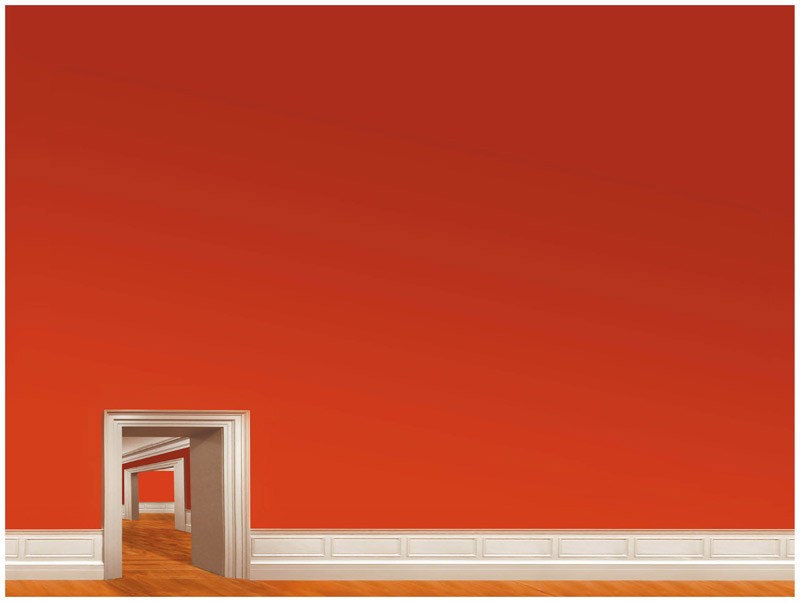
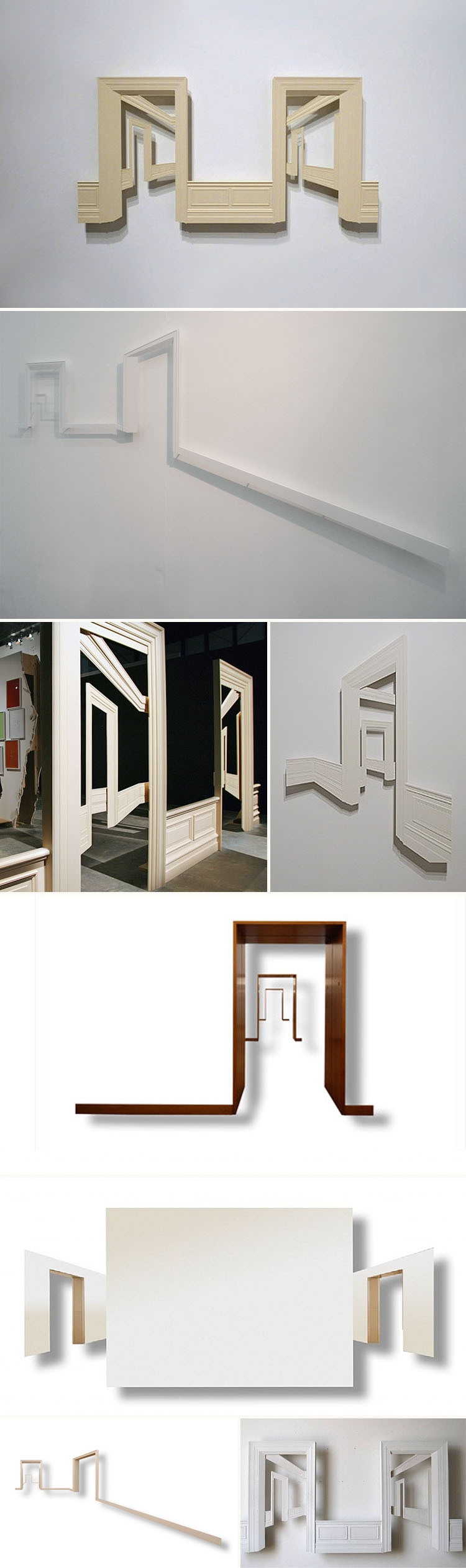
Walid Raad is a contemporary media artist originally from Lebanon and now mostly based in New York. He formed The Atlas Group, an imaginary art collective whose work is exclusively produced by Raad. His works include video, photography, literary essays and these architectural wall reliefs, of which I spotted the top one at the Frieze Fair here in NYC last week.

These sculptural wall hangings have an exaggerated perspective and all seem to be inviting one in through their portals. Concerned with the contemporary history of Lebanon, particularly the wars between 1975 and 1991, Raad’s works are often representation of traumatic events. His work examines the social, political, psychological and aesthetic ramifications of the various wars that have been waged in Lebanon.

In his series of wall reliefs—an ongoing project in part titled Scratching on Things I Could Disavow: A History of Art in the Arab World—Raad literally sets the stage for his upcoming play about art institutions in the Middle East, depicting what the architectural interior of the museum’s gallery spaces would be.

Walid Raad is an associate professor at the Cooper Union School of Art.

Top photo by collabcubed; others courtesy of Paula Cooper Gallery, artnet, and The Atlas Group.

Kuggen (The Cog): Wingårdh Arkitektkontor

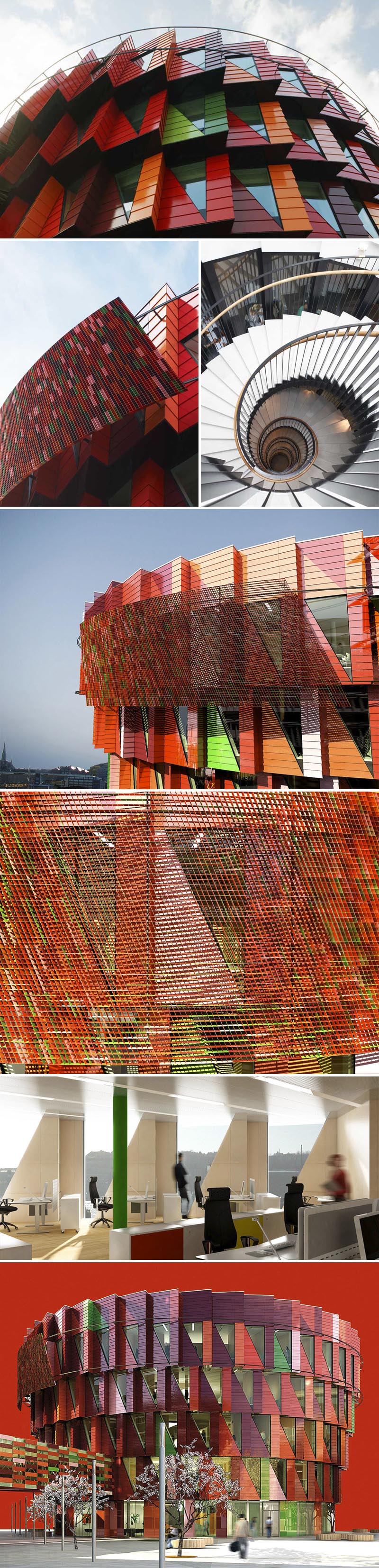
Swedish contemporary architecture, colorful office building. The Cog, Kuggen, Cool building designSwedish contemporary architecture, colorful office building. The Cog, Kuggen, Cool building designSwedish contemporary architecture, colorful office building. The Cog, Kuggen, Cool building designClick to enlarge

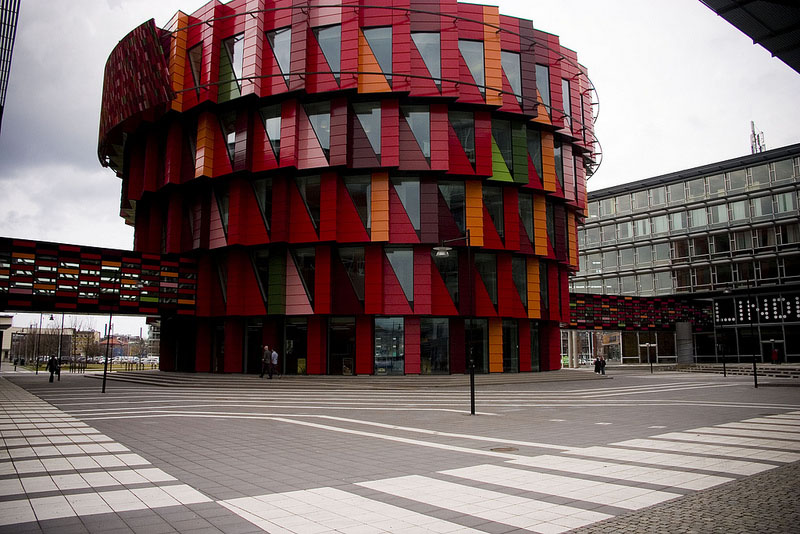
Kuggen (The Cog in Swedish) is a brightly colored sustainable office building, designed by the Swedish firm Wingårdh Arkitektkontor, nestled in among Lindholmen’s other office buildings in Gothenberg, Sweden, in less colorful shades of gray. The newish building acts as a hub for formal as well as informal meetings between the local, and student, community and the business community. The design is not only unique in its aesthetic, but incorporates state-of-the-art solutions for adapted ventilation, lighting, heating and cooling that minimize the environmental impact. Growing by two room units per floor, from bottom to top, creates shading for the windows on the previous floor, as well as a curved screen that rotates around the building—following the sun’s path—providing additional shading. The roof has built-in sun collectors that complete the solar energy system.

The cylindrical shape of the structure allows for lots of floor space, and the triangular windows provide both open-plan and private office spaces with good daylight, reducing the need for artificial lighting.

I find it interesting that they have chosen to keep the interior palette to neutral tones, but then, I guess working in a bright red office space could be a little distracting and, of course, not as energy-efficient.

Top two photos from David Anderson’s flickr; Other photos by Ake E:son Lindman courtesy of the architect.

via daddelicious flickr

Snarkitecture: Odin Fragrance Pop-Up Shop

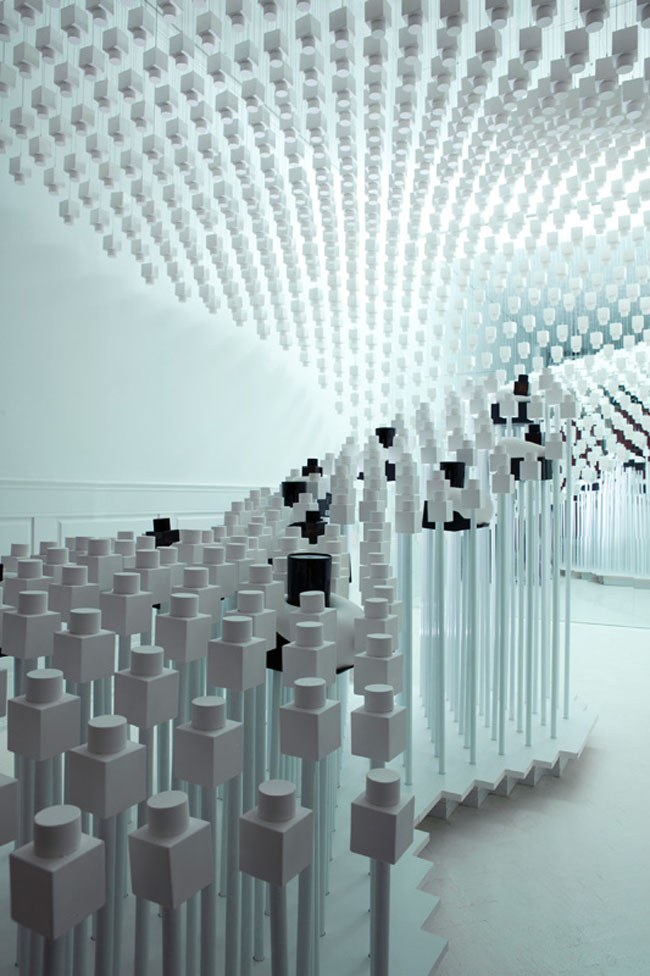
Snarkitecture, Daniel Arsham, Cool retail design for Odin Pop-up shop, NYC, collabcubedSnarkitecture, Daniel Arsham, Cool retail design for Odin Pop-up shop, NYC, collabcubedSnarkitecture, Daniel Arsham, Cool retail design for Odin Pop-up shop, NYC, collabcubedClick to enlarge
Earlier today, I stopped by the new Odin Fragrances Pop-up Shop in the East Village designed by the ever-talented Snarkitecture (previously here and here). The 350-square foot, elongated shop, right next to Odin’s main store, is filled by an installation created with hundreds of white plaster cast pieces in the shape of Odin’s Fragrance bottles. These ‘bottles’, in extreme contrasting white – highlighting the occasional black fragrance bottle within the piece – are both inverted and suspended from the ceiling in a beautiful, flowing pattern, as well as elevated on poles from the floor twisting their way around the space. It’s really quite lovely and unexpected on the East 11th Street block.
The Odin Fragrance x Snarkitecture Pop-Up Shop will be open for five more weeks, from 12pm to 7 pm daily at 330 East 11th Street in NYC.

Top photo courtesy of Snarkitecture; all others collabcubed

via T Magazine via notcot