Doug Wheeler: SA MI 75 DZ NY 12

Light art installation, infinity space, cool installation, cool art, Doug Wheeler, NYC, 2012Light art installation, infinity space, cool installation, cool art, Doug Wheeler, NYC, 2012, collabcubedLight art installation, infinity space, cool installation, cool art, Doug Wheeler, NYC, 2012, collabcubedClick to enlarge

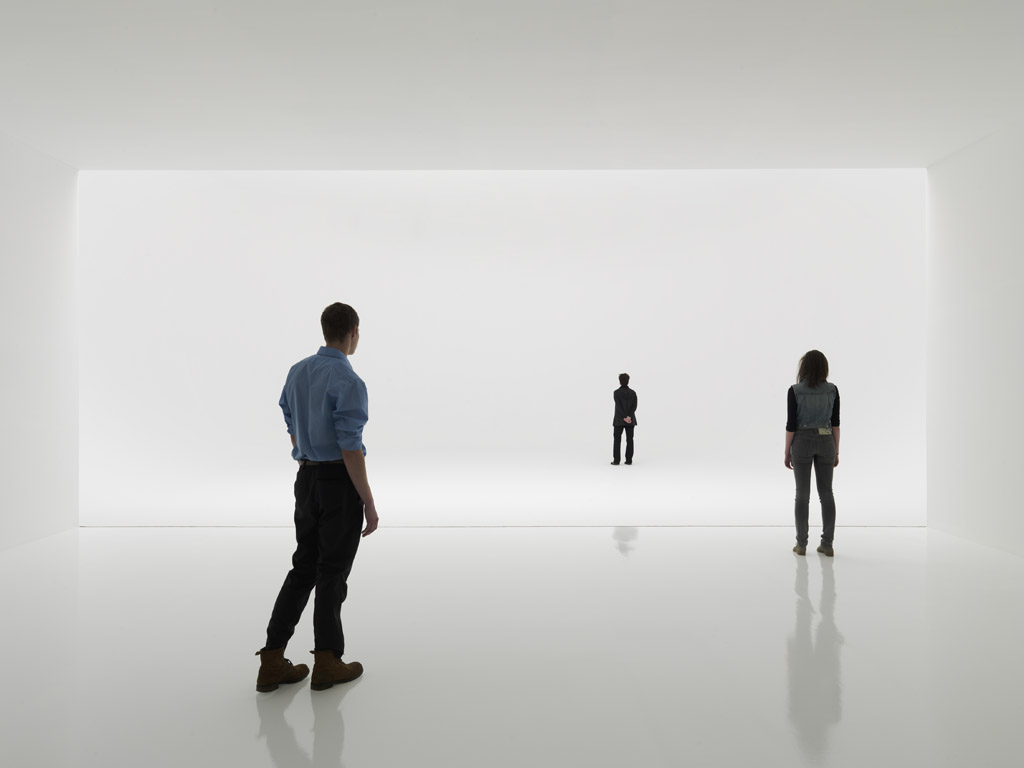
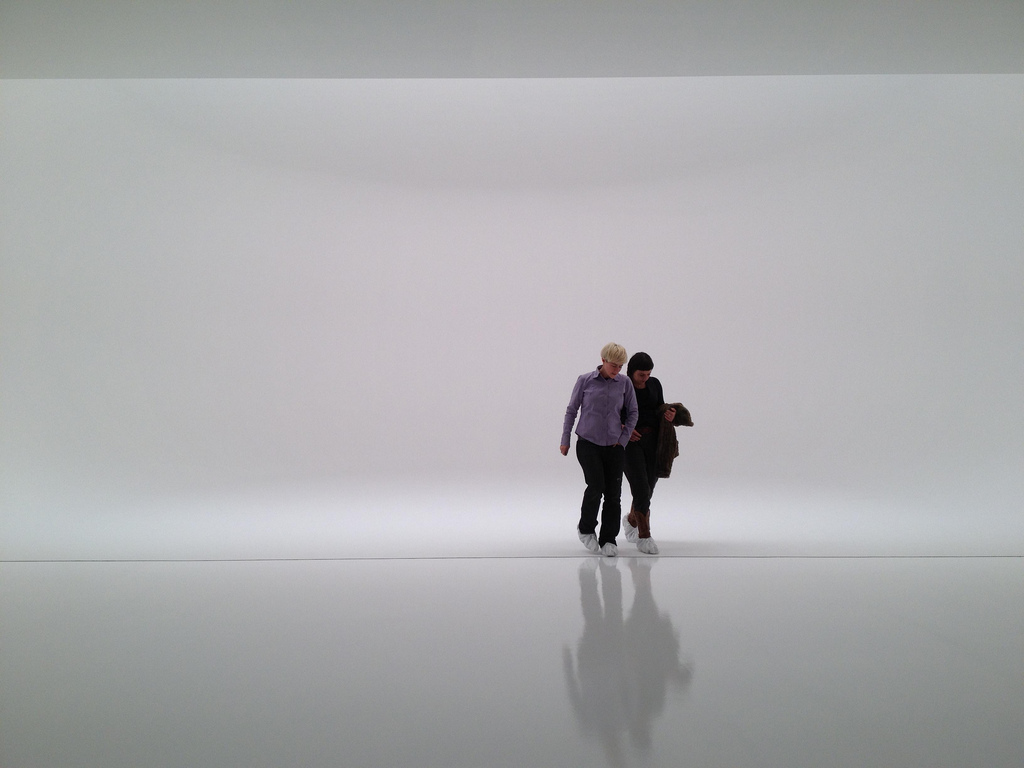
After making a special trip with Em on Saturday, in the snowy cold, to see Doug Wheeler’s light installation titled SA MI 75 DZ NY 12 at the David Zwirner Gallery, we left promptly due to the crowded waiting area we descended upon and the one-hour wait ahead of us — I’m often deluded into thinking that I’m the only one who has these great ideas in NYC…but really, who goes to Chelsea on a frigid, snowy weekend? Apparently: a lot of people. — So, today, a Tuesday afternoon, I thought I’d quickly pop in but, alas, there would be no popping in. There was still a half-hour wait but, seating was available and the musical-chairs-style line kept me active.

Now, back to the exhibit: Amazing. The bright white light installation is the closest thing to what, I imagine, standing in a cloud might feel like. The first impression is that of a flat wall created by light. As one reluctantly steps forward—wearing the white booties provided by the gallery to keep things pristine—it feels as though you’re stepping into the void. The minute the light box is entered, all depth perception disappears. There’s a dense fog-like effect that’s created with light and white paint. The walls have been curved and the lack of hard lines or horizon intensifies the confusing sensation. The result is at first a little unsettling, but the incredible coolness instantly follows. The light in the box fluctuates emulating the light of day, from dawn to dusk, in a 32-minute loop.

If you’re in New York, you might want to check it out. Doug Wheeler’s installation is on view at David Zwirner through February 25, 2012. I recommend a weekday, if possible, for a shorter wait.

Photos courtesy of David Zwirner; Carolina A. Miranda; and soulellis’ flickr.

Brian Tolle: Tempest

Art installation, contemporary sculpture, collins park, Light sculpture, Miami Basel, Brian TolleArt installation, contemporary sculpture, collins park, Light sculpture, Miami Basel, Brian TolleArt installation, contemporary sculpture, collins park, Light sculpture, Miami Basel, Brian TolleClick to enlarge

New York artist Brian Tolle creates sculptures and installations that are iconographic with history or context in mind. The Tempest, located in Collins Park in front of  Miami Beach’s Bass Museum, is one such installation. A sort of maze, made of powder coated aluminum, fiberglass, and LEDs, this permanent, site-specific sculpture appears as an island of tumultuous waves and invites the viewer to participate in the movement by walking through the maze.

The night view is quite spectacular, adding a glowing phosphorescent quality to the fiberglass water.

You can see more of Brian Tolle’s work at his website, including the Irish Hunger Memorial here in NYC and his more recent Simnai Dirdro (Twisted Chimney) in Wales. Coming this year, an installation that looks like two elevated statues on a lamp post that glow at night on Flatbush Avenue in Brooklyn.

Photos courtesy of the artist and wallyg’s flickr

via CRG

Ross Racine: Fictional Aerial Views

Aerial Views of Fictional suburbs, freehand digital drawings, Ross Racine, maps, artAerial Views of Fictional suburbs, freehand digital drawings, Ross Racine, maps, artAerial Views of Fictional suburbs, freehand digital drawings, Ross Racine, maps, artAerial Views of Fictional suburbs, freehand digital drawings, Ross Racine, maps, artClick to enlarge

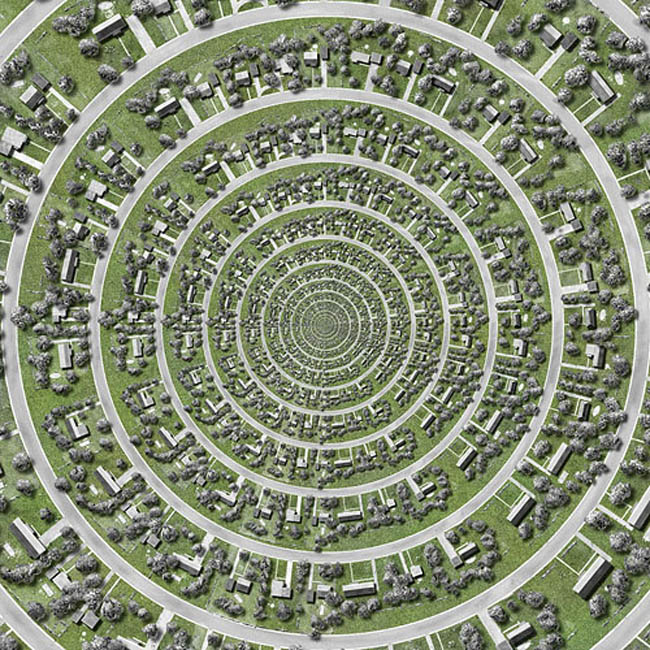
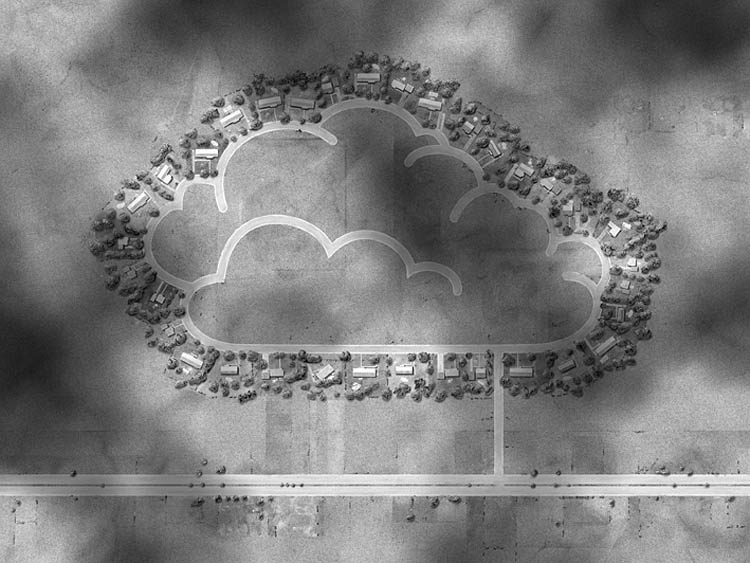
Originally from Montreal, but now living and working in New York, Ross Racine creates aerial views of fictional suburbs by drawing freehand directly on a computer. It’s hard to believe, but his works do not contain photographs or scanned material. Racine’s work is full of surprising opposites: handmade and digital, organic and mechanical, physical and virtual. The typically labyrinthine landscapes are super-sized in Racine’s versions, in some cases taking on a humorously monstrous quality, in contrast to the generic naming conventions such as Hummingbird Bend, Heavenly Heights, or Sunshine Acres; a playful way to critique and re-examine urban planning.

You can see more of Ross Racine’s aerial view drawings here and here.

Foster School of Business Art Installations

installation, Foster School of Business, Kristine Matthews, Karen Cheng, Type floor in elevatorTypographic wall installation, interactive, Kristine Matthews, Karen Cheng, University of Washingtoninstallation, Foster School of Business, Kristine Matthews, Karen Cheng, Type floor in elevatorBusiness Is..., Interactive art installation by Kristine Matthews, Karen Cheng, LED messages in wallClick to enlarge

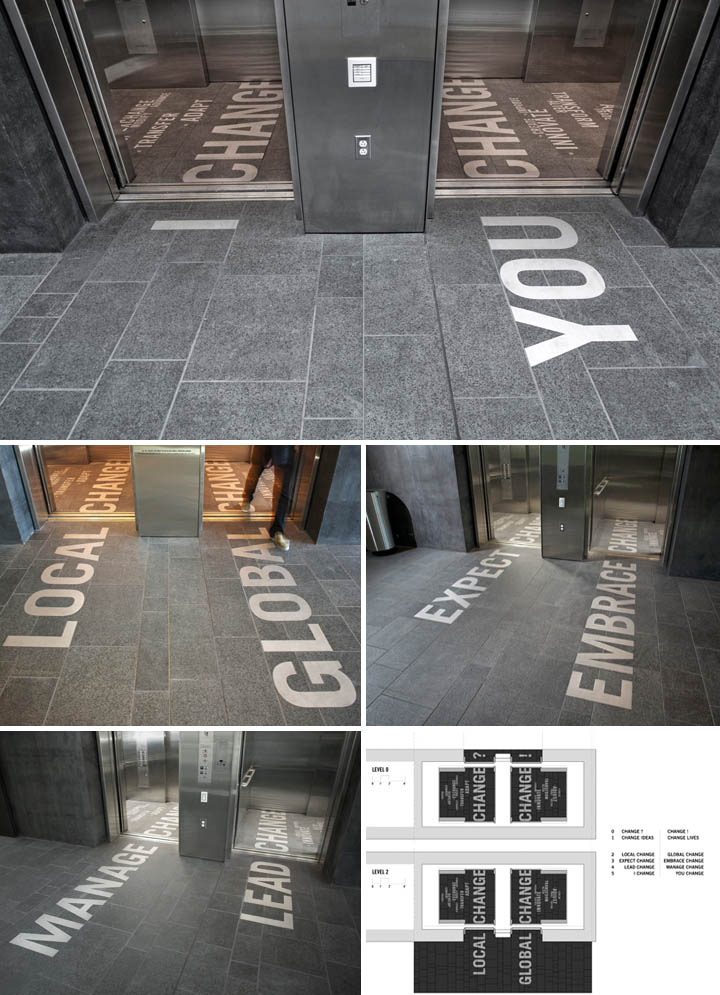
Two interesting permanent typographic art installations were recently created for the Foster School of Business, part of the University of Washington in Seattle. The two installations are collaborations between designers Kristine Matthews and Karen Cheng, both on the faculty at the University’s School of Art.

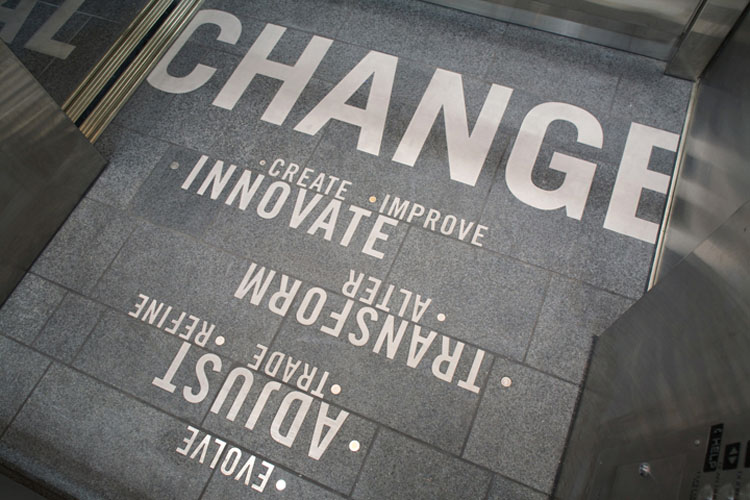
Change reflects on the dynamic relationship between business and change. The word “change” appears on the floor of each elevator, along with 18 synonyms (adapt, innovate, transform, etc.). The synonyms are each highlighted with actual loose change, international coins that hint at the diversity of the UW Foster Business School as well as the global nature of business.

As the elevator moves from floor to floor, the interior word “change” is modified by another word just outside the elevator, to both the front and back:
Floor 5: I Change/You Change
Floor 4: Lead Change/Manage Change
Floor 3: Expect Change/Embrace Change
Floor 2: Local Change/Global Change
Floor 1: Change Ideas/Change Lives
Floor 0: Change?/Change!

The second installation, Business Is..., asks how do you define ‘business’?

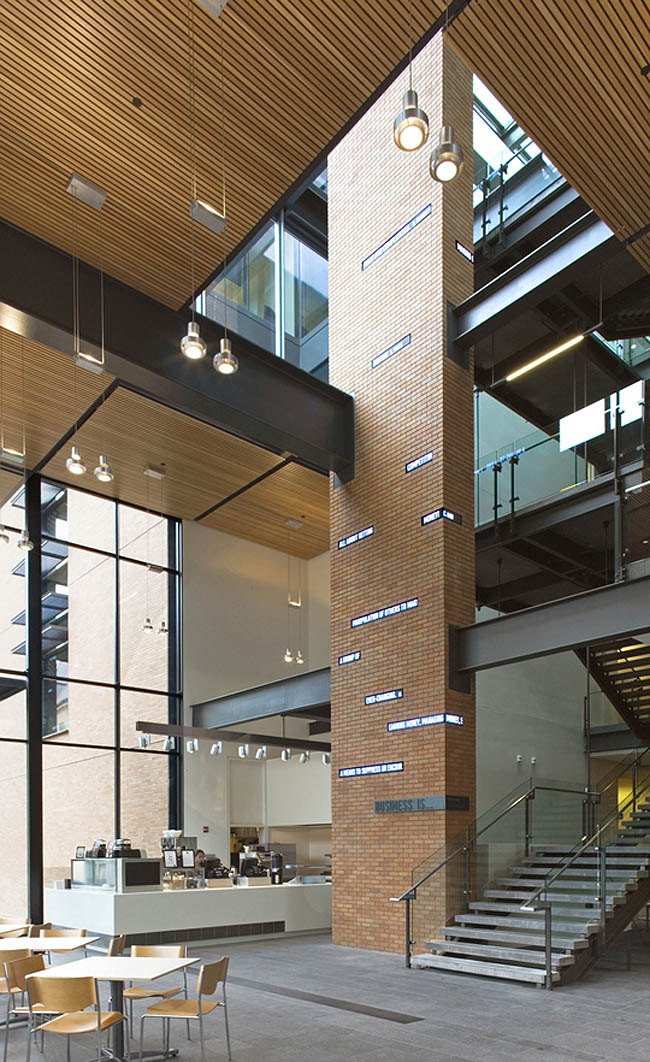
Viewers are asked to respond to the open-ended question “Business is…” on a companion website, www.FosterExchange.com. User responses appear on a series of LEDs that wrap around a four-story-high column. The monitors also display real-time stock market openings and closings, predictions, and even advice for students who meet and study in the atrium below.

Both installations are innovative, interactive, beautifully integrated, totally engaging and fun! I’d say complete successes through and through.

Here’s a video about the projects:

via sedg

Florian Hafele: Contorted Sculptures

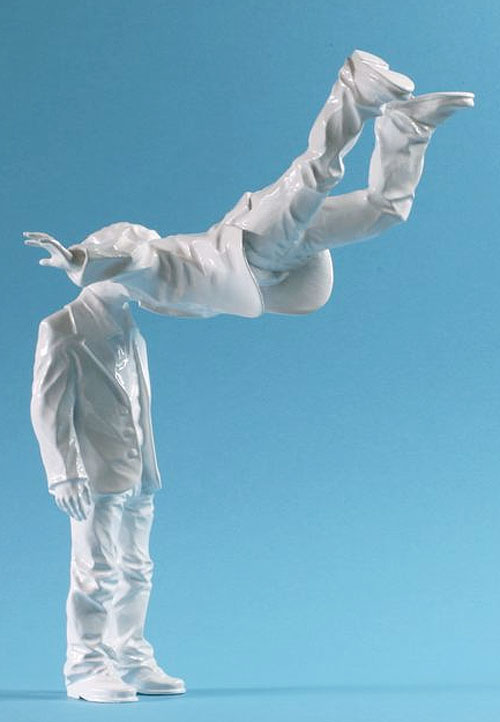
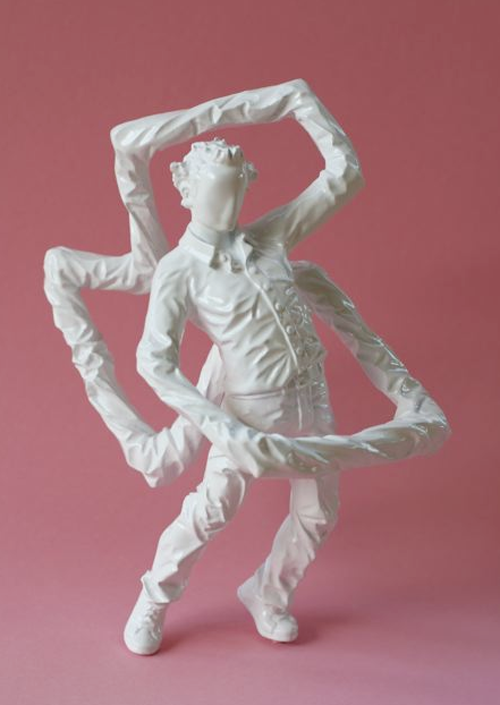
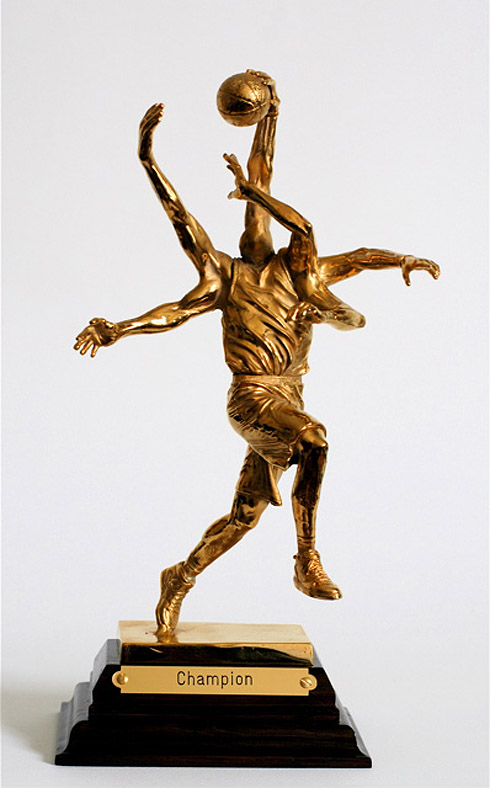
contemporary sculpture, contorted sculpture, Vienna art, contorted statuescontemporary sculpture, contorted sculpture, Vienna art, contorted statuescontemporary sculpture, contorted sculpture, Vienna art, contorted statuescontemporary sculpture, contorted sculpture, Vienna art, contorted statuesViennese artist Florian Hafele creates sculptures using materials that vary from PVC and paint, to wood and plastic, to gilded bronze. What all his sculptures have in common is a contortionist or deformed quality. Focusing on the question of performance in our social environment, Hafele’s works offer multiple perspectives and views on the over-strained human in an achievement oriented society.

via carbon12

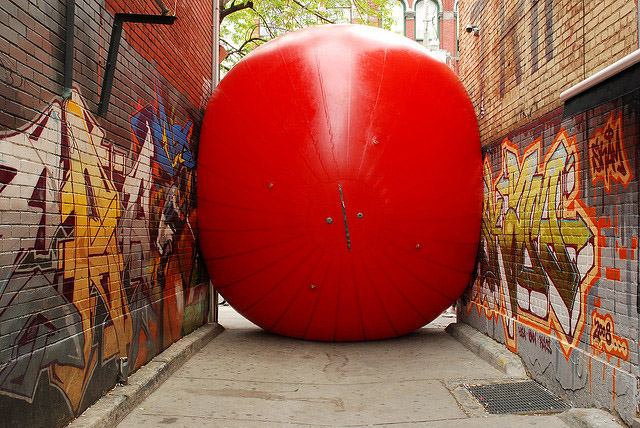
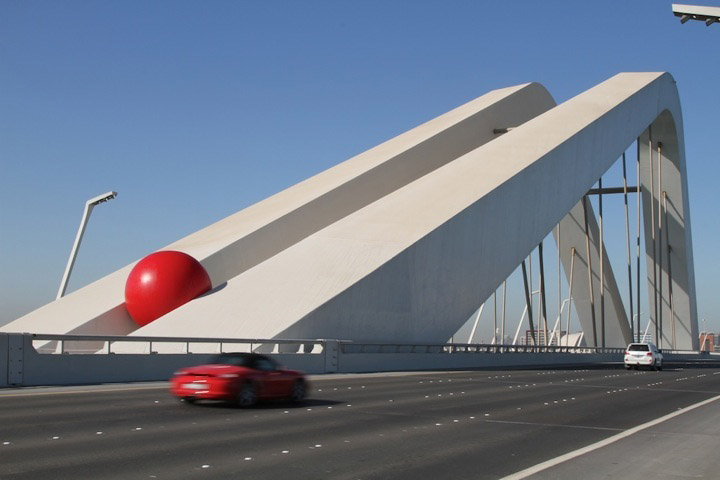
The RedBall Project: Kurt Perschke

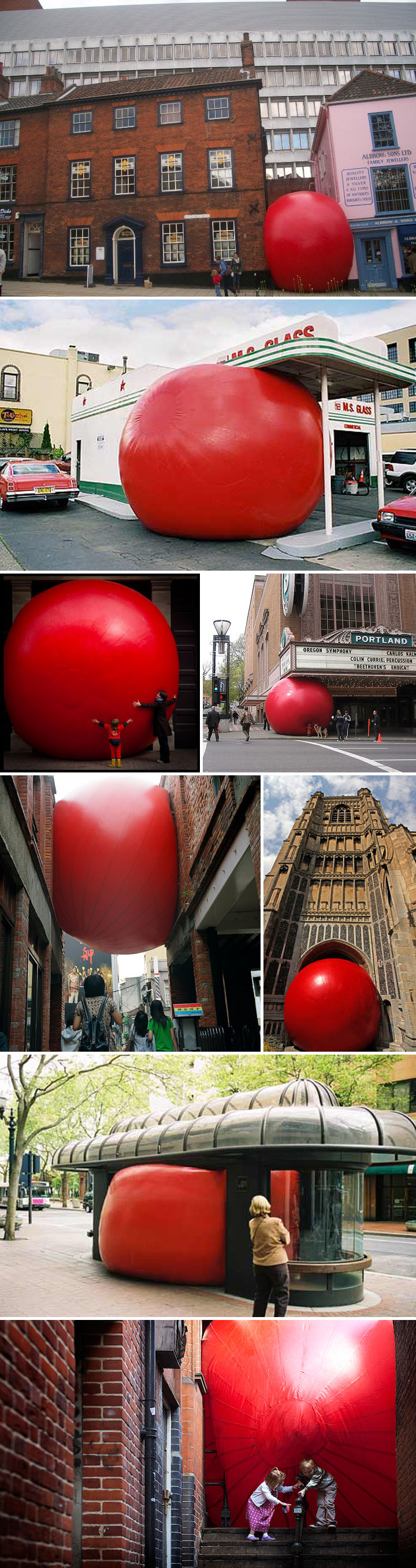
Interactive art, Large Red ball placed in different cities around the world, Fun art installationInteractive art, Large Red ball placed in different cities around the world, Fun art installationInteractive art, Large Red ball placed in different cities around the world, Fun art installationClick to enlarge

This is such a fun project! Though it’s been traveling the world for a few years, this is the first I’ve heard of it. The RedBall Project by New York based artist Kurt Perschke, consists of a series of temporary installations within a city over a span of a couple of weeks. Perschke finds interesting, and somewhat humorous, locations (though, a giant red ball in any location automatically evokes a certain amount of humor) that are often taken for granted. The previously neglected spaces come to the foreground highlighting the nooks and crannies of urban life.

For Perschke, the core of the project’s goal is the invitation to the public to engage and unleash their imagination. “Every time a passerby says – ‘You know, I know the perfect place to put it!’ – RedBall has succeeded in creating a moment of imagination.”

The project has taken place in many cities including Barcelona, Taipei, Chicago, Toronto, Sydney, Portland and most recently Abu Dhabi. Up next: Perth, from February 10 – March 3rd. Hey Kurt! How about bringing the project home to NYC?! I know the perfect place…

Here’s a short video by Tony Gaddis of the project in Chicago:

Photos are all from RedBall’s Facebook and Flickr Pool (PJ Mixer, PersonnelPeople, Swanky, Leo Reynolds, Duncan Kerridge)

via Huffington Post and MyModernMet

Michael Scott: Optical Paintings Plus

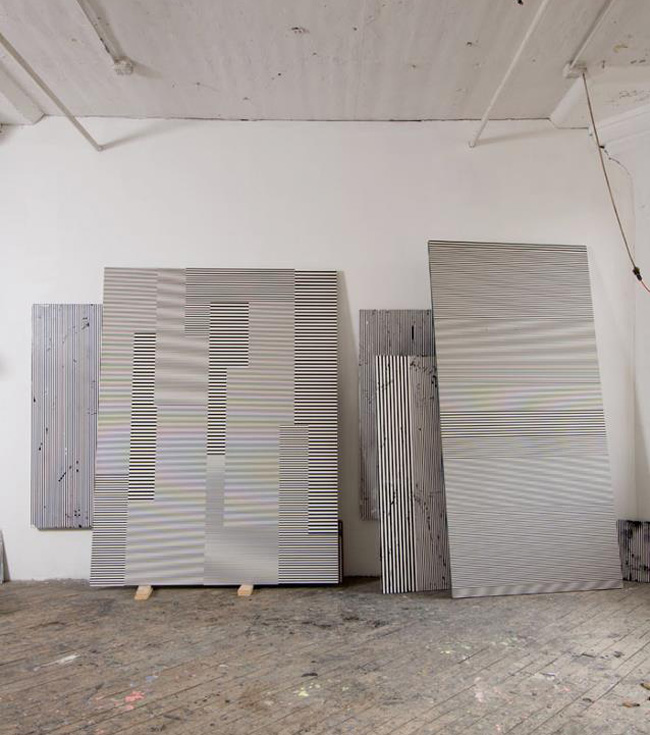
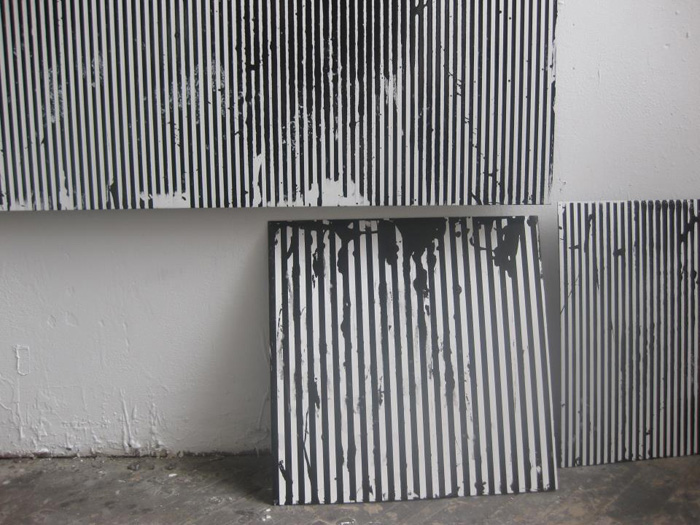
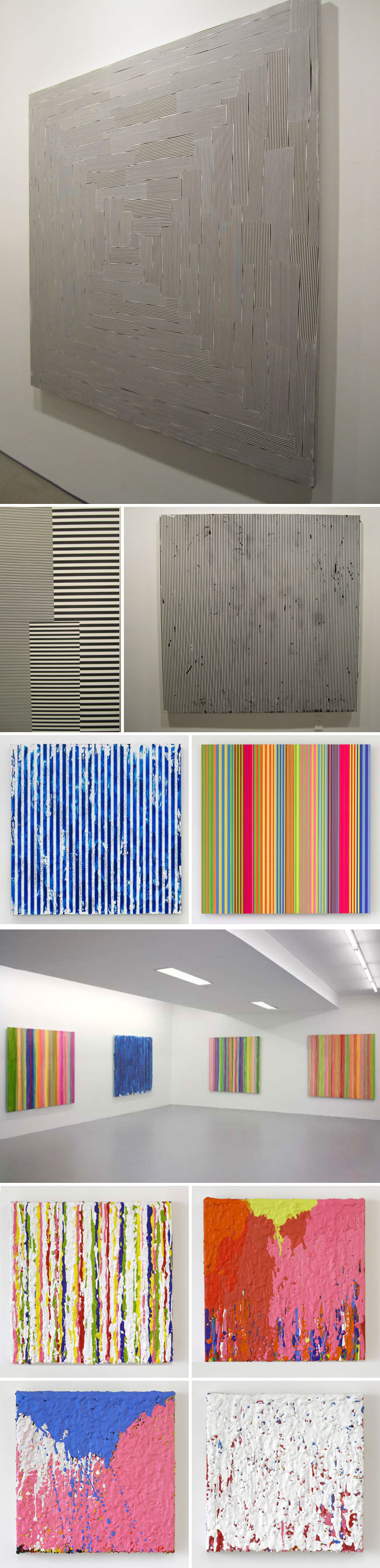
Optical Paintings, black and white line paintings, enamel on aluminum, geometric abstraction paintingsOptical Paintings, black and white line paintings, enamel on aluminum, geometric abstraction paintingsOptical Paintings, black and white line paintings, enamel on aluminum, geometric abstraction paintings, Gering & LopezEm and I stopped by the opening of Michael Scott’s Black and White Line Paintings show last week. Upon entering the gallery, we were greeted by the collection of large enamel-on-aluminum paintings whose lines initially created visual effects such as moiré patterns and the illusion of multiple plains, until our eyes quickly adjusted and could take in these mesmerizing works. Surprisingly, they have a hypnotic and peaceful quality. Some have a sharp precision to them, while others are distressed and bleed. In the back office of the gallery there is even one that looks like the lines were done freehand and offer yet another take on the black and white line theme.

Michael Scott, a New York based artist originally from Pennsylvania, has worked in many mediums over the past twenty-five years, periodically returning to his line paintings. Other works include his multicolor line paintings and his smaller encaustic-on-wood works, one of which was purchased by Sofia Coppola, clearly a fan, who nominated Scott as her contribution to the 100-People-Places-and-Things-You-Need-To-Know in V Magazine’s Spring Preview issue. (You can see the article here.)

Michael Scott’s Black and White Line Paintings 1989-2011 is on view at Gering & López Gallery in NYC through February 18, 2012.

Photos courtesy of the artist, Gering & Lopez, and Triple V Gallery

Peter Emerick: Koan Grids

Koan Grids, Peter Emerick, Photographs of traffic cones, traffic cone art, collabcubedKoan Grids, Peter Emerick, Photographs of traffic cones, traffic cone art, collabcubedKoan Grids, Peter Emerick, Photographs of traffic cones, traffic cone art, collabcubedKoan Grids, Peter Emerick, Photographs of traffic cones, traffic cone art, collabcubedClick to enlarge

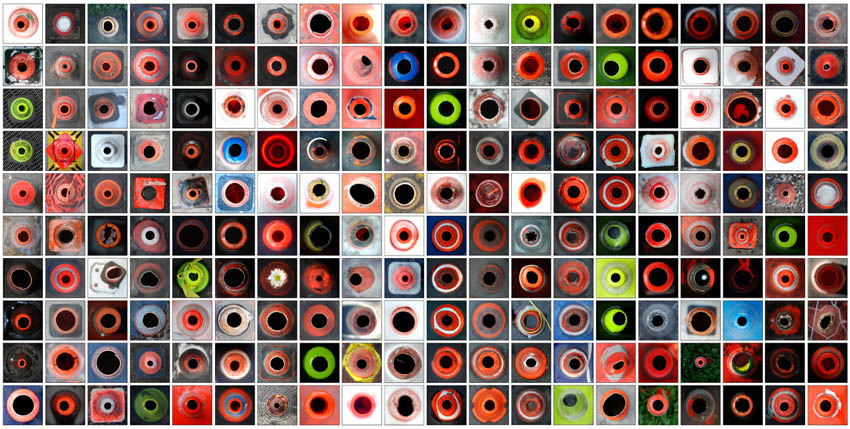
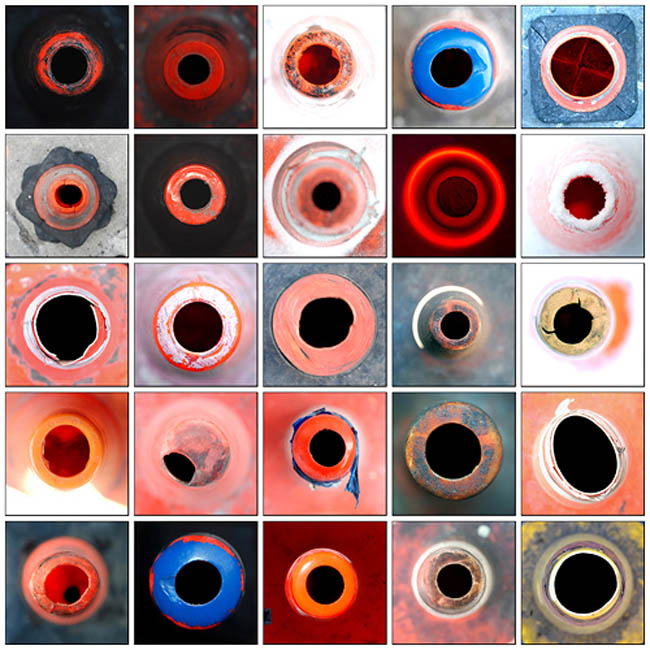
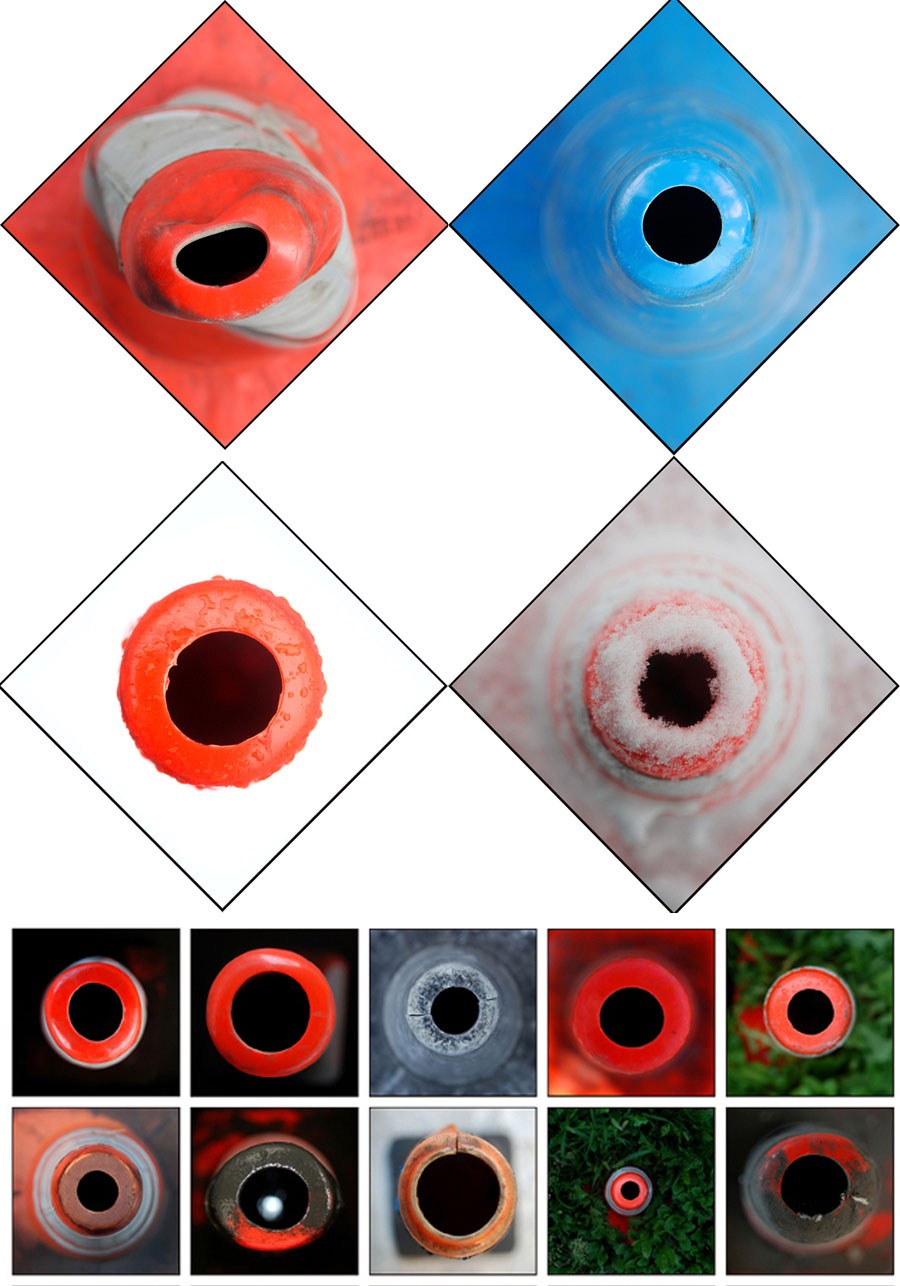
New Jersey based artist Peter Emerick has been photographing traffic cones for several years. His Koans series encompass grids and single photos of all kinds of traffic cones photographed from a birds eye view. They are surprisingly varied and that particular angle offers up interesting abstractions of the ubiquitous object.

Emerick, together with artist Erik Sanner—who is also fascinated by traffic cones and includes them in his artwork, as well as apparently having given East Village Traffic Cone Viewing Tours a couple of years back—are putting together The Traffic Cone Occasional and are looking for artists who create art with traffic cones. If you are one such artist, you can contact them via one of their websites, here or here.
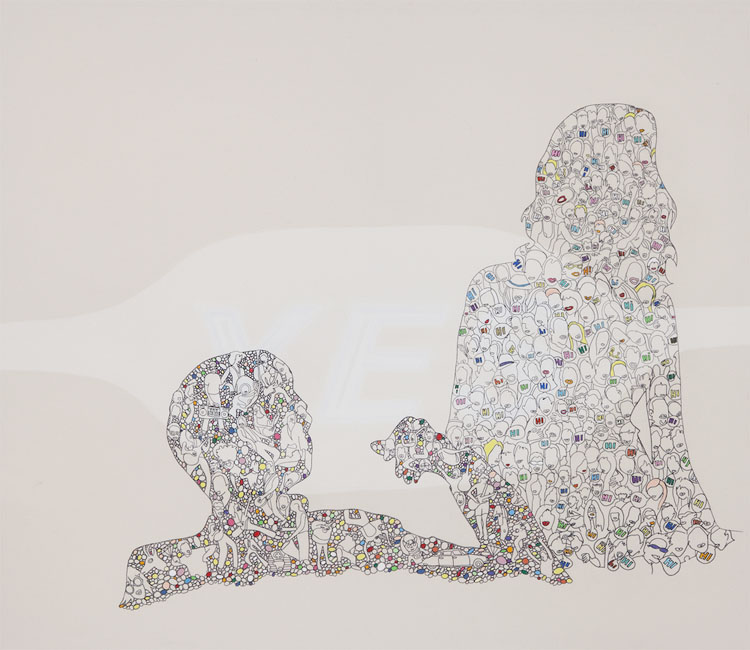
For more traffic cone art, see our previous post here.

Chaos at Zellig: Philip Watts Sculpture

cool installation, 5-story sculpture, Custard Factory, England, collabcubedcool installation, 5-story sculpture, Custard Factory, England, collabcubedcool installation, 5-story sculpture, Custard Factory, England, collabcubedClick to enlarge

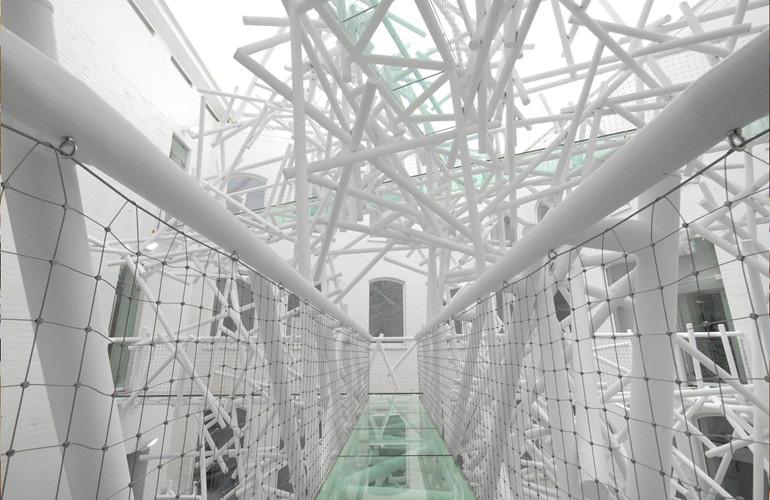
This really caught my eye. In the center atrium of Zellig — a building designed to provide space for young creative enterprises and galleries as part of the Custard Factory redevelopment in Birmingham, England — is a unique five-story-high sculpture designed by Philip Watts Design titled Chaos. Though at first glance the piece does give the appearance of a chaotic mass, in actuality it is a functional art installation designed to connect the courtyard at three levels. Made with 2000 meters of steel tubing and containing three glass bridges, it must be quite spectacular to find oneself intertwined in the sculpture.

via knstrct via notcot

Túlio Pinto: Balancing Acts

Brazilian contemporary sculpture, concrete slabs balanced with cloth, collabcubedBrazilian contemporary sculpture, balloon installation, cool, fun, collabcubedBrazilian contemporary sculpture, cubes balanced with cloth straps, collabcubedBrazilian contemporary sculpture, installation, balancing, balloons, concreteClick to enlarge

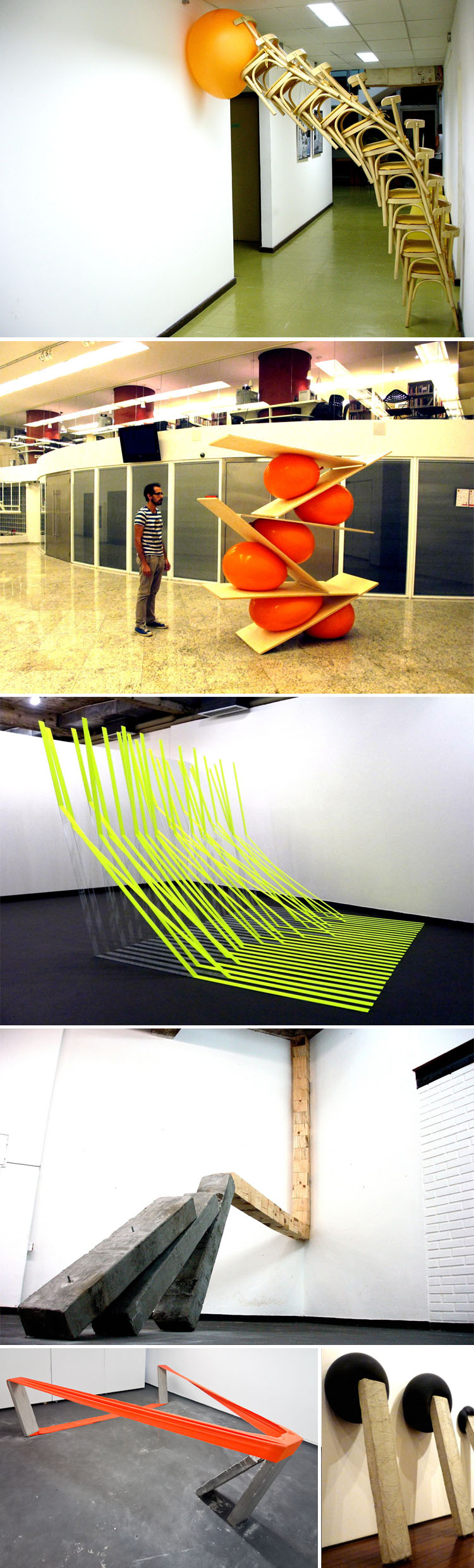
Looking at his work, a person might not want to get too close to one of  Brazilian artist Túlio Pinto’s sculptures or installations. Concrete slabs precariously balanced and held in position by a piece of fabric or balloon doesn’t inspire a lot of confidence, yet they definitely impress.

Pinto lives and works in Porto Alegre where, in addition to his installations, he paints. He co-founded the artist studio Subterrânea and is a curator of Brazilian contemporary art.

Photos courtesy of the artist and Andersonastor.

Social Climber: Theresa Bruno

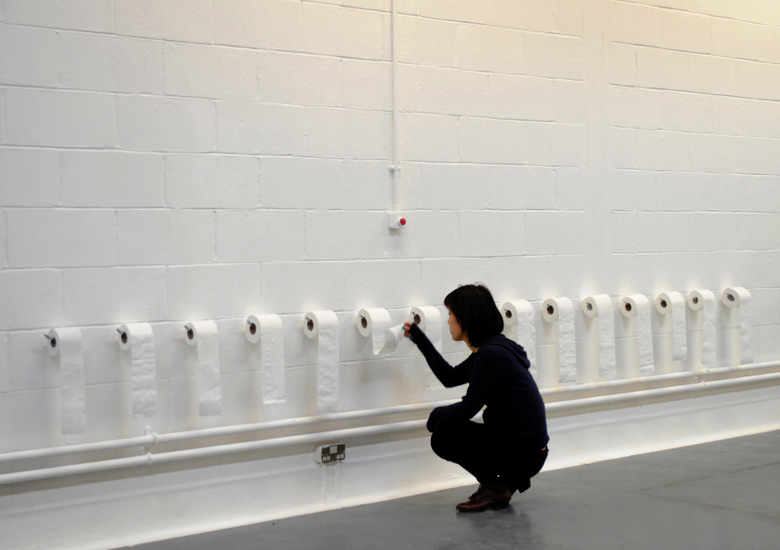
Toilet Paper Art, Conceptual Art, Social classes, Marxism, ConsumerismToilet Paper Art, Conceptual Art, Social class, Marxism, ConsumerismEnglish conceptual artist Theresa Bruno is interested in western consumerism and asks her audience, through her art, to re-examine what and how they consume. She uses found objects and appropriates them for her artwork.

In her piece Social Climber, Bruno placed fifteen toilet roll holders and fifteen assorted toilet paper rolls on a wall. The progression from left to right demonstrates the ascending quality in toilet paper. The installation deals with class consciousness and questions luxury, globalization, and consumption.

via flickr

Jonny Detiger: Groovy Paintings

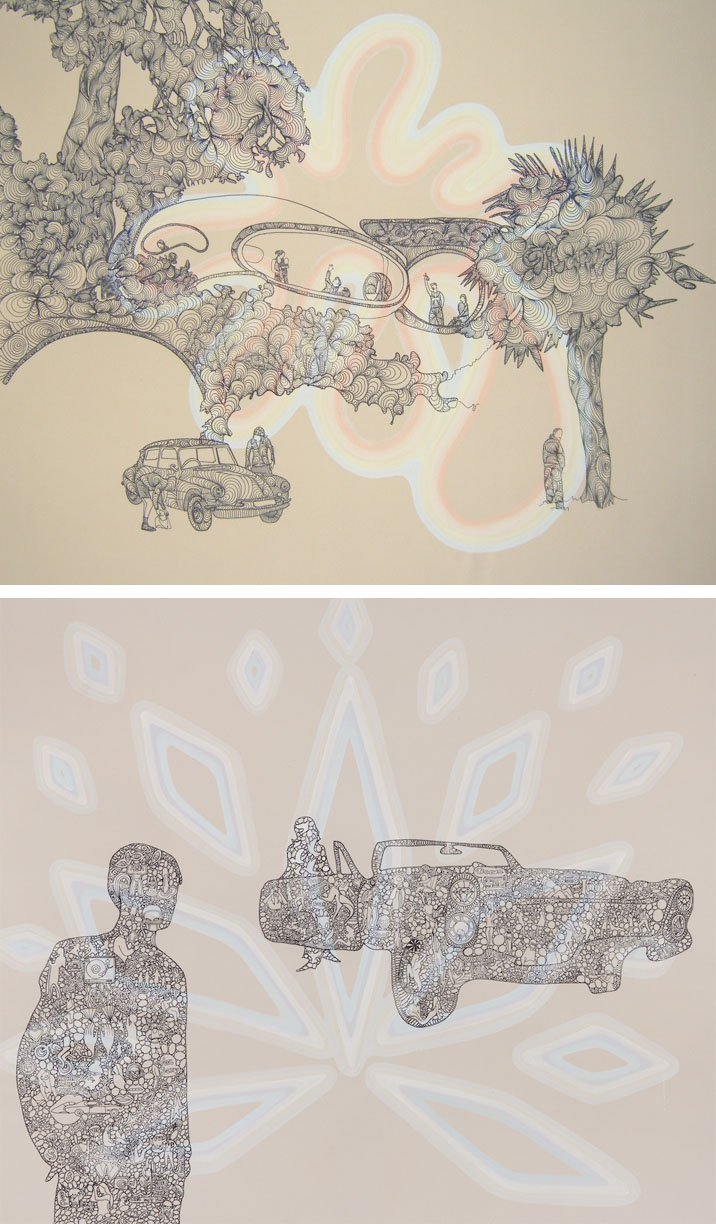
Paintings, 70s aesthetic, kaliedoscopic, stream of consciousness, pop artPaintings, 70s aesthetic, kaliedoscopic, stream of consciousness, pop artPaintings, 70s aesthetic, kaliedoscopic, stream of consciousness, pop art, doodlesClick to enlarge

There’s a lot to look at in these paintings by Jonny Detiger. They’ve got a doodle-y quality that I like mixed in with a 70s vibe. The names of Detiger’s current solo show, as well as his previous one, seem to describe his art perfectly: Stream of Conciousness and Kaliedoscopic Adventures.

And if you like these paintings, you might also like Detiger’s sock and underwear line at Etiquette Clothiers.

via local artists

Cross-stitched Clichés by Lisa Bowen

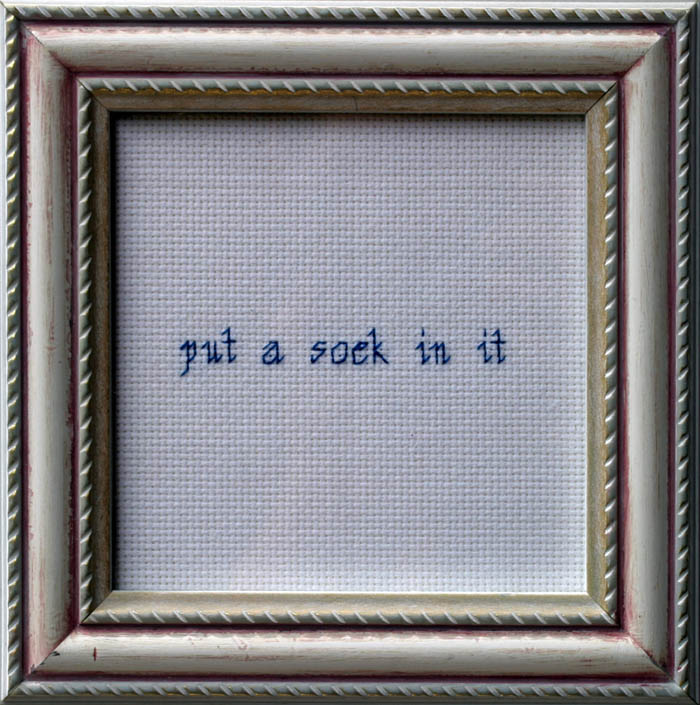
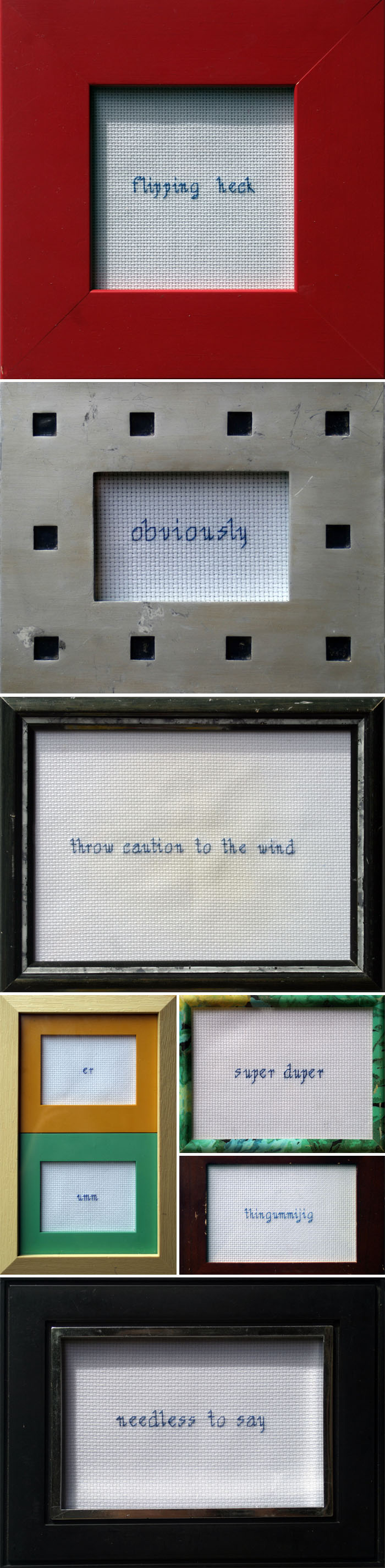
Embroidered words, cliches, expressions, humor, art, tumblr, stitched wordsEmbroidered words, cliches, expressions, humor, art, tumblr, stitched wordsEmbroidered words, cliches, expressions, humor, art, tumblr, stitched wordsI happened upon Lisa Bowen’s delightful tumblr of embroidered clichés and expressions, which made me chuckle. Originally from England but now living near Sydney, Australia, Bowen (who also goes by the alias Jilly Cooper) a mixed media artist has recently started a crafty, cross-stitch series titled ‘How to String a Sentence Together.’

The work came about after Lisa found a copy of The Penguin Book of Clichés and began thinking how often we use them, despite being told to avoid them. She began to collect these expressions and words, carefully cross-stitching each letter and framing each phrase.

In addition to cross-stitching and proudly using these “hackneyed and trite expressions,” Bowen tweets a cliché a day here, and sells her framed clichés here.

Martha Friedman: Rubbers

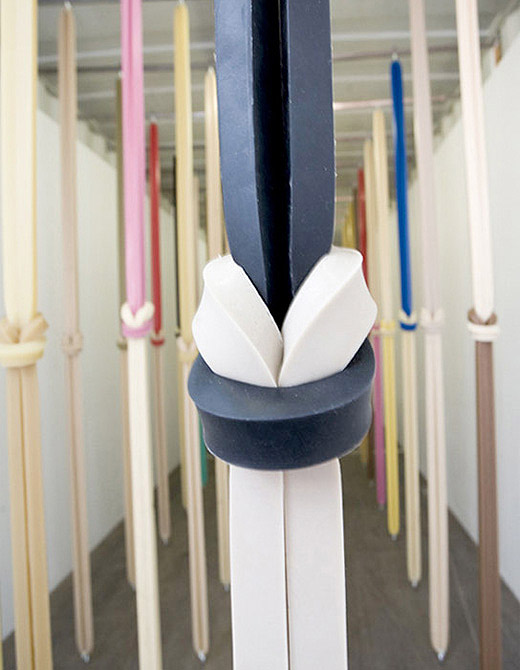
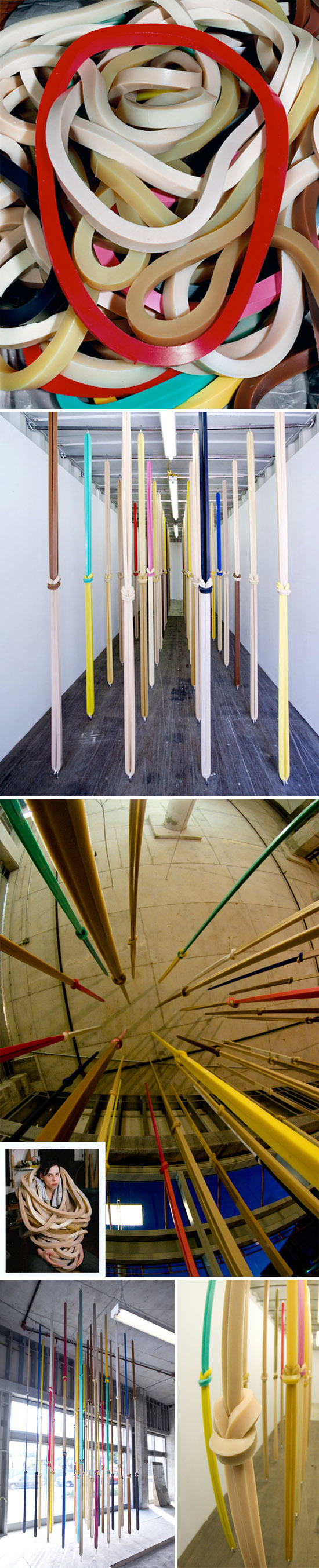
Rubberbands, sculpture, photography, contemporary art, pop art, Brooklyn artistRubberbands, sculpture, photography, contemporary art, pop art, Brooklyn artistRubberbands, sculpture, photography, contemporary art, pop art, Brooklyn artist Martha Friedman, a Brooklyn-based artist originally from Detroit, is interested in locating the point at which common objects slip into abstraction and, in some instances, eroticism. In her series of cast rubber sculptures titled Rubbers—in her double-entendre style—she explores the nature of sculptural and bodily materiality through food as well as the rubber band. Here I’ve included only the rubber bands which are my favorites. From the colorful chromogenic prints of the oversized stationery supply, to her full room installations, these are just a lot of fun. Wouldn’t it be great to have a pair of those interconnected rubber bands extended from floor to ceiling in your home?

You can see Martha Friedman’s rubber tongues here, and some of here waffle sculptures here.

Photos: James Ewing; Andy Pixel; Purple Kiaris and Wallspace Gallery.

via artslant

Seth Wulsin: Animas

Animas, multi-screen installations, Seth Wulsin, Brooklyn artist, collabcubedAnimas, multi-screen installations, Seth Wulsin, Brooklyn artist, collabcubedSculpture, multi-screen, multi-dimensional heads, mesh sheets, Brooklyn artistSculpture, multi-screen, multi-dimensional heads, Buenos Aires street artSeth Wulsin, Installation, Buenos Aires Prison, Windows as pixels, cool art effectClick to enlarge

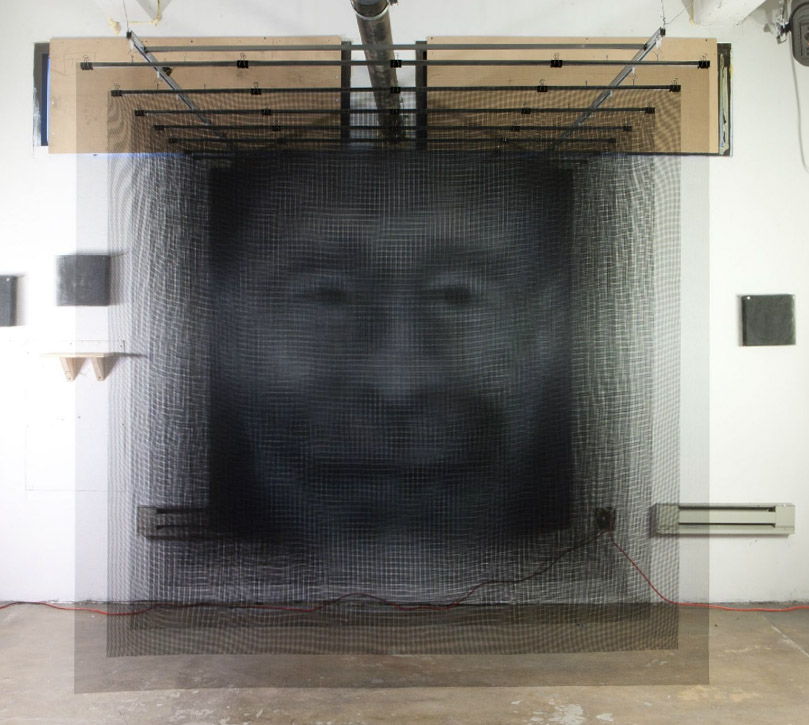
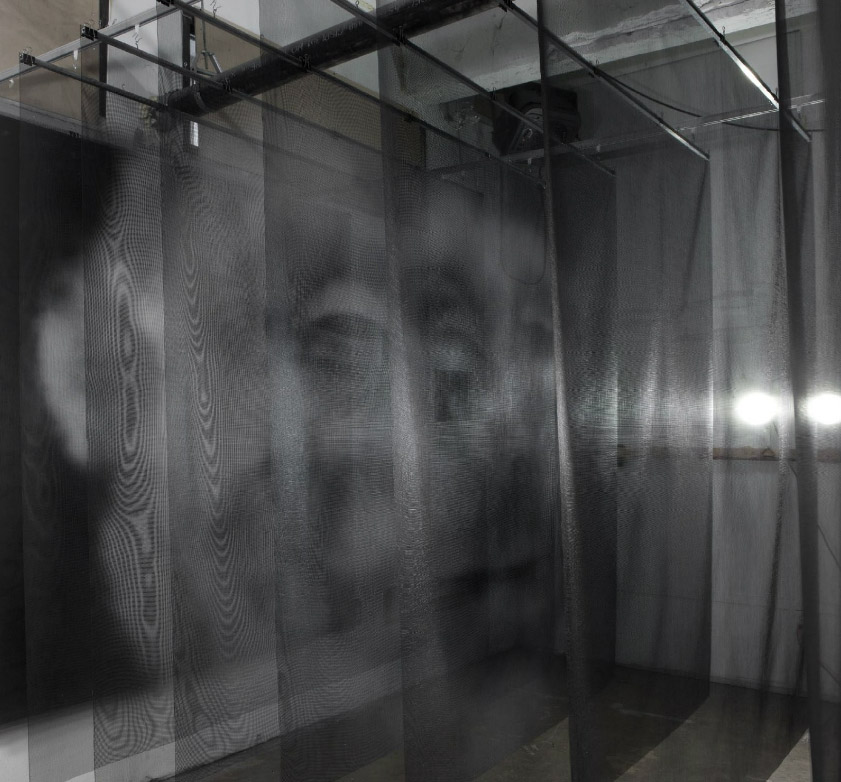
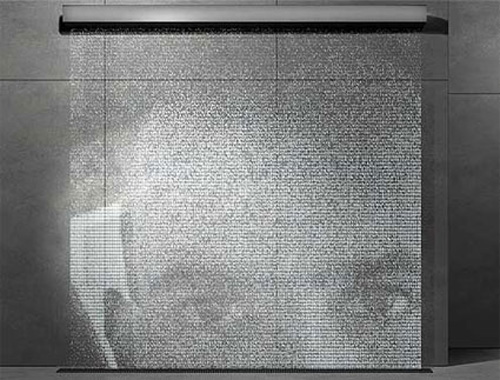
I saw one of Seth Wulsin’s Animas installations a few years ago in his studio as part of the Dumbo Arts Festival in Brooklyn. I was very impressed at seeing these large-scale screens hanging from the ceiling that individually just looked like plain screens, but when seen all together from the front, an almost holographic, three-dimensional, ghost-like head would appear floating on the screens.

Wulsin works primarily with space and light through these large-scale, site-specific, ephemeral sculptural installations. His Animas (soul in Latin) series explores the interior dimensions of mind and soul in the physicality of space. Here is how Wulsin describes his Animas sculptures:

Each sculpture has three kinds of inter-dimensional space that all occupy the same spatial coordinates: the concrete, volumetric space of the screens; the pictorial/volumetric space of the images produced by the paint on the screens; and the optical interference generated between the screen grids when two or more planes overlap (without coinciding) , an optically real, but tactically non-existent space.

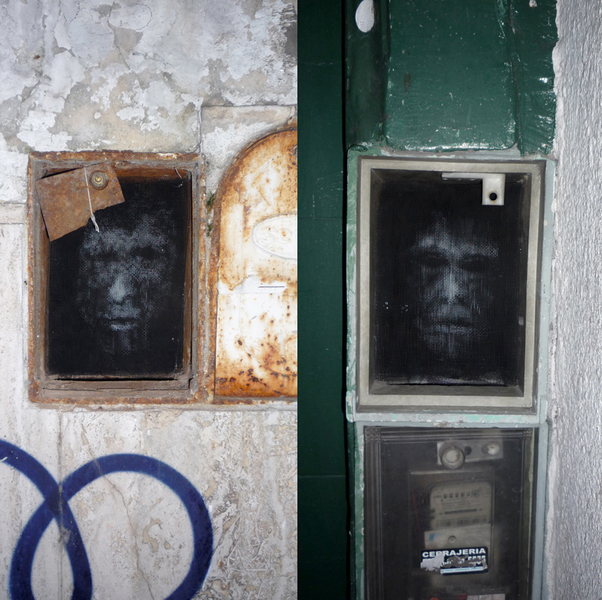
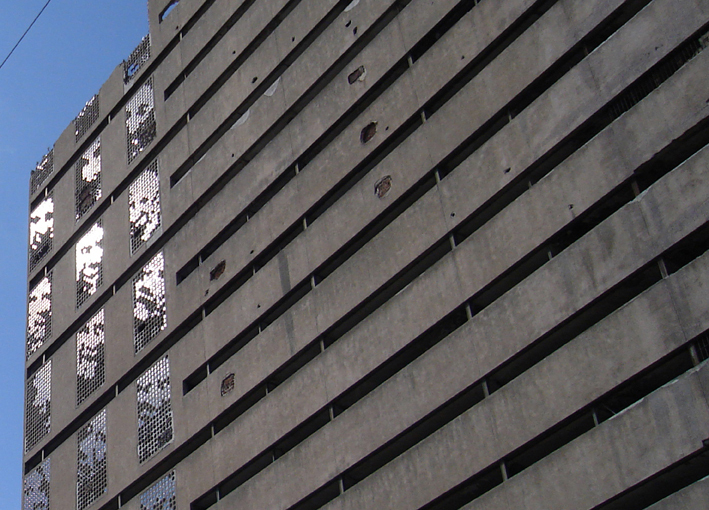
Also very interesting are his works on the streets of Buenos Aires. The photo second from bottom, are two small Animas embedded in a building front, and the bottom photo is from his work 16 Tons, using the prison window grids of a Buenos Aires prison as a pixelated screen. By breaking out certain windows, images of faces appeared reflected in the remaining panes. Very cool and creepy.

Julius Popp: Bit.fall, Bit.flow, Bit.code

Bit.Fall, technology and art, code, waterfall with type and images, contemporary artBit.Flow, technology and art, code, typography, word art, tubes, contemporary artBit.Fall, Bit.code, technology and art, code, waterfall with type and images, contemporary artClick to enlarge

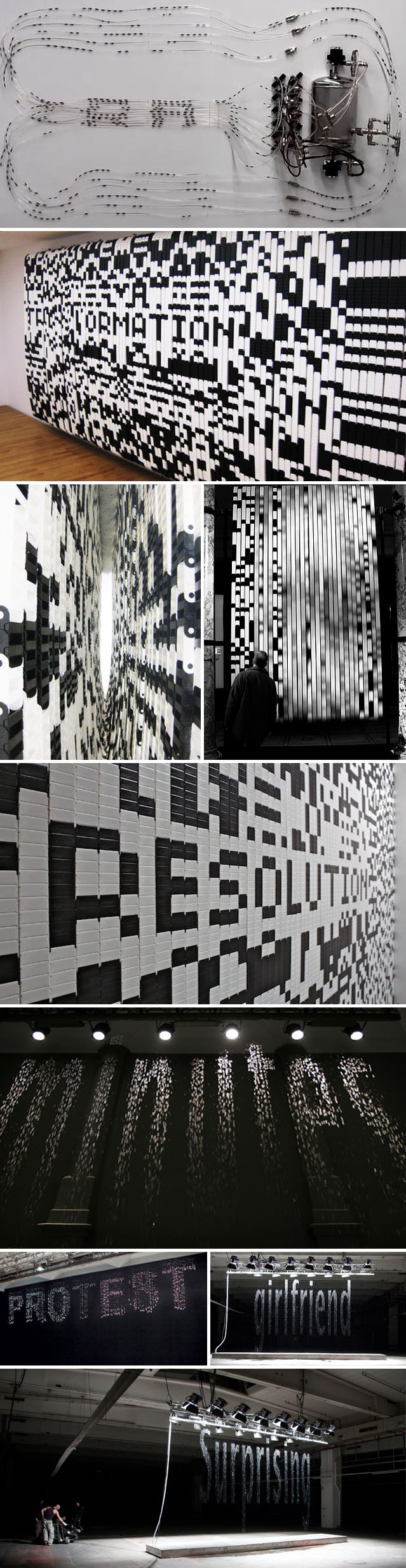
German artist Julius Popp uses technology to create work that reaches across the boundaries of art and science. Three of his works, Bit.fall, Bit.flow, and Bit.code are pictured above. Bit.fall is an installation that in some cases displays images and, in others, words selected from the internet via drops of falling water spurting out from 320 nozzles controlled by computer software and electromagnetic valves.

In Bit.flow Popp pumps liquid into a 45-meter long tube on a wall. A software program sets out a pattern which only at certain points forms readable forms or letters which then disintegrate into chaos again.

Lastly, Bit.code is made up of plastic chains with black and white pieces which act as pixels. Controlled by computer software, the pixels move next to each other displaying frequently used key words, at certain points, taken from recent web feeds.

All three appeal to me, yet are definitely appreciated more in person. The videos of each below are the next best thing, unless you are in Jerusalem, in which case you can see Bit.fall in the current exhibit Curious Minds at the Israel Museum until April, 2012.

Elements of these installations bring to mind Daniel Rozin’s work (see post) and Christopher Baker’s Murmur Study (see post).

Photos: Artnews, Desxigner, Wallpaper, and Onedotzero’s flickr

Lee Boroson: Inflatable Installations

contemporary art installations, balloons, fabric sculpture, Lee Borosoncontemporary art installations, balloons, fabric sculpture, Lee Borosoncontemporary art installations, balloons, fabric sculpture, Lee BorosonClick to enlarge

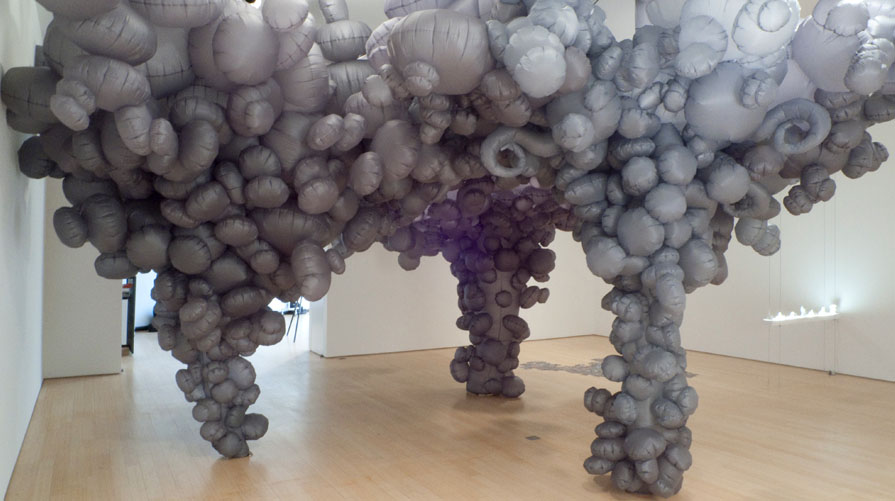
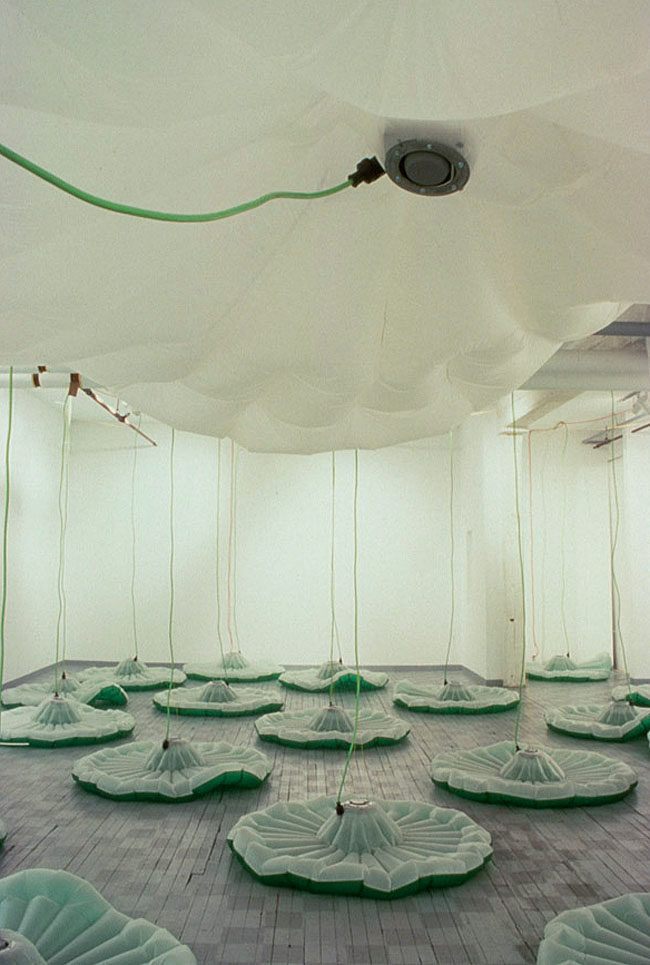
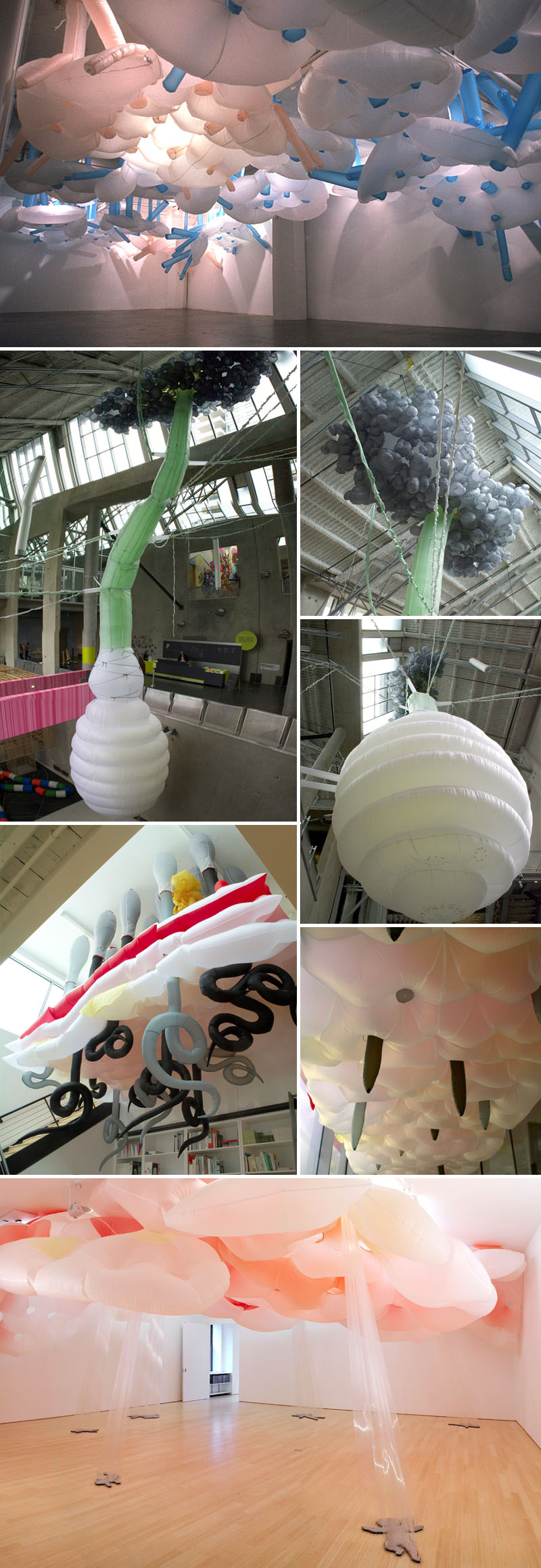
I love these. All of them. Lee Boroson, based in Brooklyn, has been creating these fun large inflatable installations since the 90s. Huge nylon structures filled with air and, for the most part, suspended from the ceiling, Boroson’s skills in engineering as well as his playfulness come together resulting in these very appealing dreamlike works.

From top to bottom:
Canopy, based on images of volcanic eruptions; Pleasure Grounds; Lake Effect; Giant’s Way; Graft; Integument, based on a 3d medical illustration of a cross section of human skin and depicts hair, follicles, pores, veins, arteries and dermis; and Liquid Sunshine.

Boroson currently has an installation titled Lunar Bower at The Phillips Collection in Washington, DC, and will have a large solo project at Mass MoCA in December 2013.