Emily Eveleth: Donut Paintings

contemporary oil paintings of donuts, sensual, jelly donuts, doughnuts, Eveleth, collabcubed contemporary oil paintings of donuts, sensual, jelly donuts, doughnuts, Eveleth, collabcubed contemporary oil paintings of donuts, sensual, jelly donuts, doughnuts, Eveleth, collabcubed A few years back, a friend of mine printed out one of Emily Eveleth’s beautiful oil paintings of a jelly donut and had it hanging by her desk. That was the first time I saw any of Eveleth’s paintings. She has been painting jelly donuts for two decades and the results, I think, are quite spectacular.

In an interview in the Boston Globe by Sebastian Smee, Eveleth responds to the question: “Why donuts?”

“What I immediately found compelling . . . was the appeal of the irony in presenting, in a seriously and formally painted manner and on a monumental scale, an object that was at once so ubiquitous, so ordinary, so everyday. The object of my paintings, is not necessarily the subject. But I do like that it keeps coming back to the object. I’m not trying to negate that.’’

Clearly, the donuts are left open to interpretation: some may see just donuts; others landscapes with boulders; and still others, erotic close-ups of bodily orifices. Regardless, Eveleth’s technique and mastery of oil painting, as well as the luminescence she creates, are there no matter how the viewer interprets them. I imagine that if John Singer Sargent had painted donuts, they might have looked a lot like these.

You can see more of Emily Eveleth’s painting and drawings at her website.
Los Carpinteros

Contemporary Cuban Art, Humor, Sculpture, instruments, quartet, Sean Kelly Contemporary Cuban Art, Humor, Sculpture, 16m, jackets, Sean Kelly Contemporary Cuban Art, Humor, Sculpture, Town Stadium Lights, Sean Kelly Contemporary Cuban Art, Humor, Sculpture, bed, flippers, basketball, oval reading room Click to enlarge

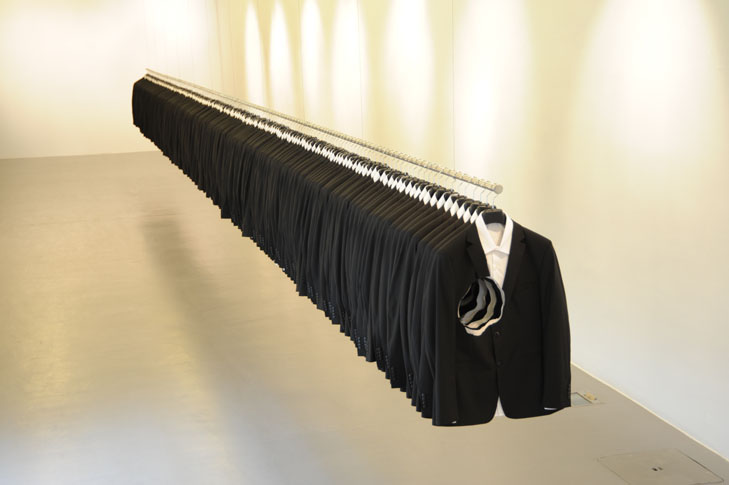
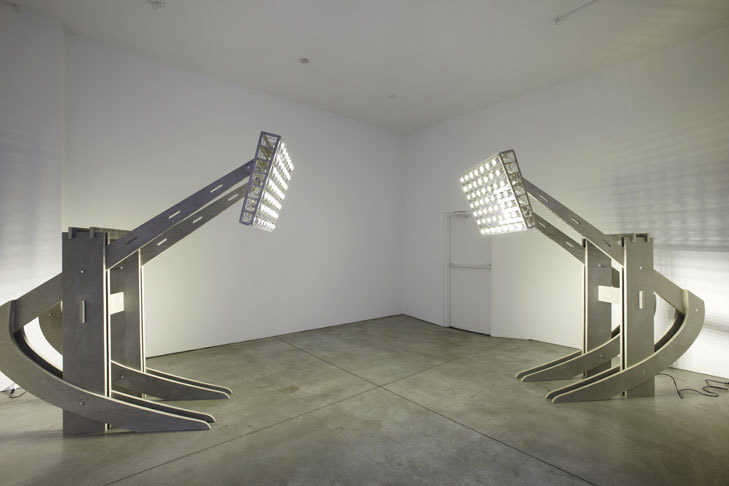
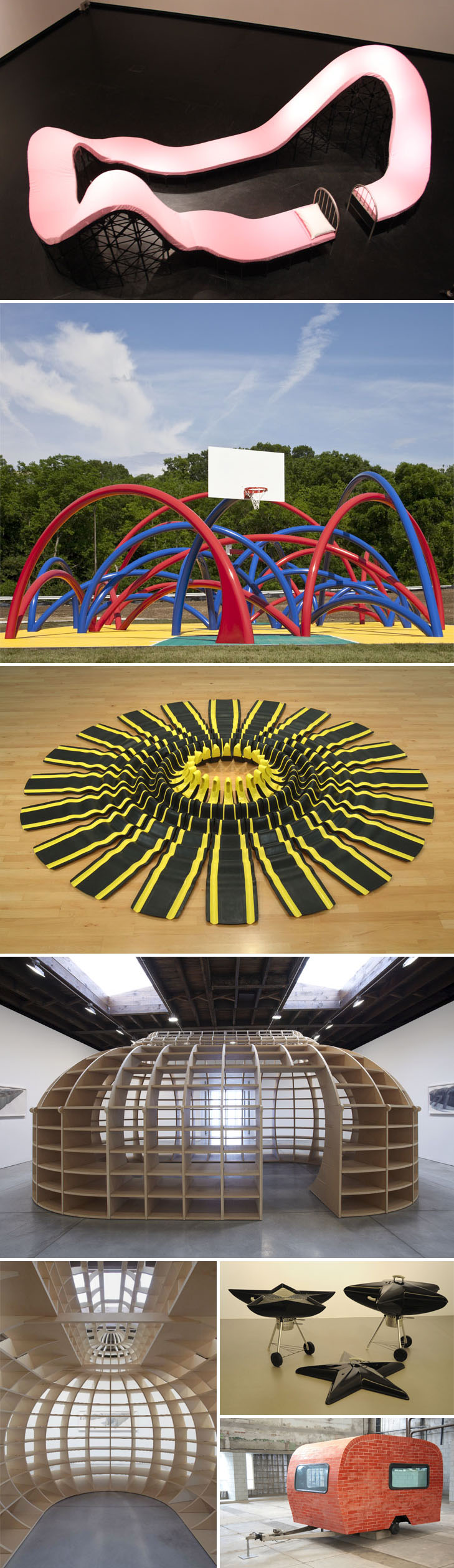
Los Carpinteros are a Havana-based duo consisting of Marco Castillo and Dagoberto Rodríguez. Formed in 1991, originally as a trio that included Alexandre Arrechea (see previous post) until his departure in 2003, the Cuban collective decided to renounce the idea of individual authorship and pay homage to an older tradition of artisans and skilled laborers. They create installations and drawings that merge architecture, design, and sculpture in surprising and humorous ways. Often, their very carefully crafted works set up contradictions between object and function, in addition to practicality vs. uselessness.

From top to bottom:
Cuarteto (Quartet); 16m; Luces del Estadio del Pueblo (Town Stadium Lights); La Montaña Rusa (The Rollercoaster); Free Basket; Patas de Rana Negras (size S) (Black Frogs’ Legs, size s); Sala de Lectura Ovalada (Oval Reading Room); Movimiento de Liberacion Nacional (National Liberation Movement); Casa (Home)

via Sean Kelly

Michelle D. Ferrera: Pencil on Wood Drawings

Pencil drawings, wood, nudes, Ferrera, collabcubedPencil drawings, wood, nudes, Ferrera, collabcubedPencil drawings, wood, nudes, hands, feet, Michelle Ferrera, collabcubedNice pencil drawings by Michelle D. Ferrera, based in California. Originally, Ferrera worked in journals but a few years ago, looking for a larger canvas, she picked up a piece of scrap wood from the garage and the rest is history. I really like the effect; the rustic quality of the wood grain in contrast with the smoothness of her drawings. And those hands and feet…impressive!

via artslant

Dale May: Lego Wars

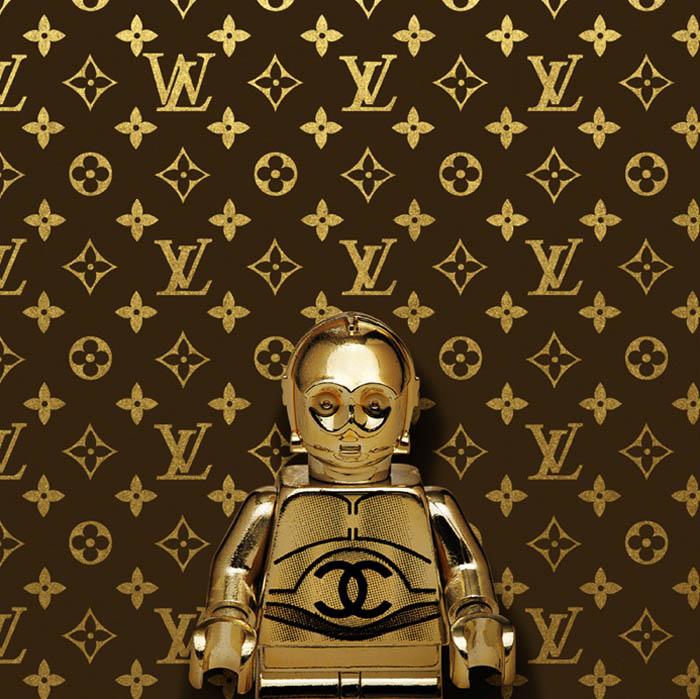
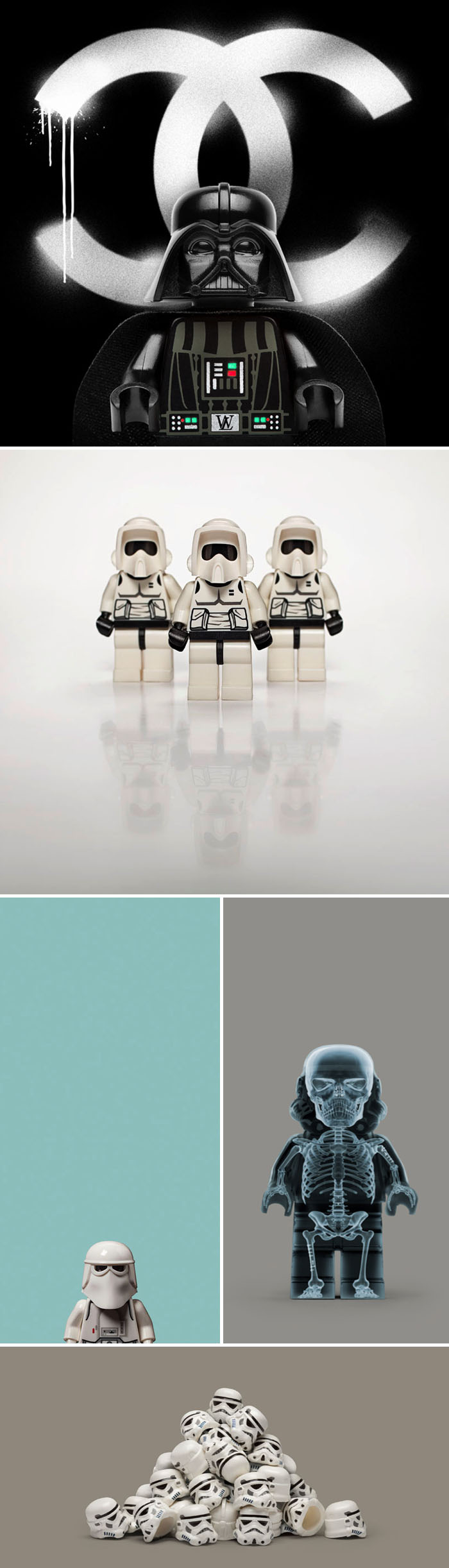
Lego, Photographs, Nostalgia, Star Wars, Stormtroopers, Dale May, C3POLego, Photographs, Nostalgia, Star Wars, Stormtroopers, Dale MayLego, Photographs, Nostalgia, Star Wars, Stormtroopers, Dale May, Darth VaderClick to enlarge

New York based photographer Dale May is internationally renowned for his commercial photography, from celebrity portraits to advertising. His Lego Wars series takes a slight departure from his usual subjects. A photographic study of popular culture combined with commercial branding and a bit of nostalgia, May revisits the tiny plastic Lego toys of his childhood and photographs them to stand tall and demand attention.

These prints are crafted in archival acrylic to give the work a high-polished glossiness reminiscent of the Lego pieces themselves. Very slick.

The Lego Wars are being exhibited at Samuel Owen Gallery in Greenwich, Connecticut starting December 15th through January 19, 2012.

Arthouse at the Jones Center

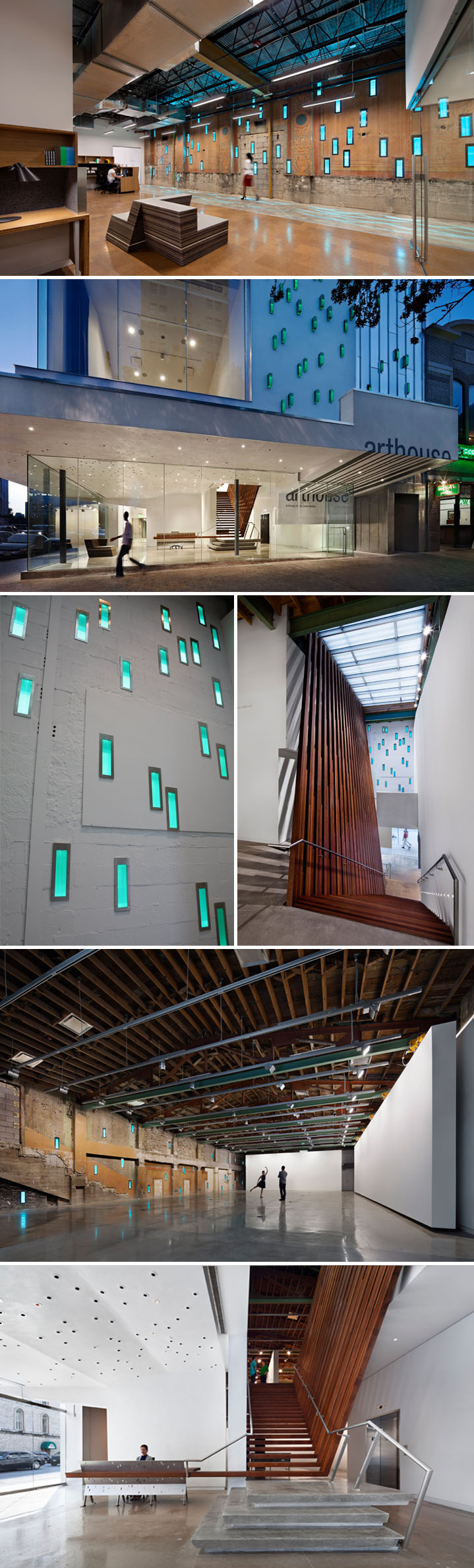
Arts Center, Austin Texas, LTL Architects, Texas Society of Architects AIA AwardArts Center, Austin Texas, LTL Architects, cultural design, collabcubedArts Center, Austin Texas, LTL Architects, Texas Society of Architects AIA AwardArts Center, Austin Texas, LTL Architects, Texas Society of Architects AIA AwardClick to enlarge

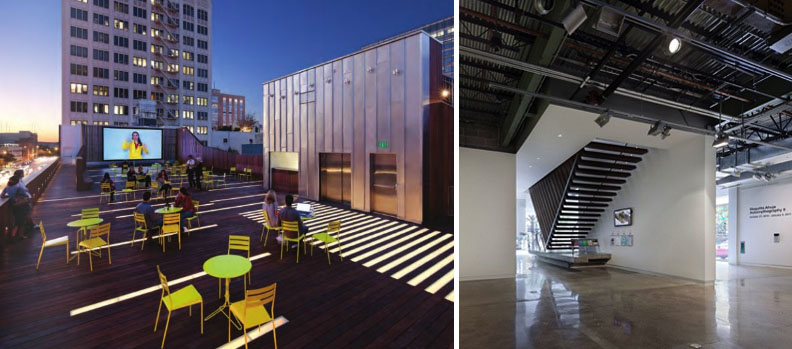
I am consistently drawn, unknowingly, to the work of LTL Architects. The Arthouse at the Jones Center in Austin, Texas is no exception. Looking around for interesting art, I came across the Arthouse’s website and spotted their recent renovation with its protruding, aqua-tinted, translucent glass rectangles that add color and texture to the white façade through to the interior. Illuminated by LED lights at night, the glass units especially animate the street view after dark. An expansion of the existing contemporary art space, and keeping with many of the original architectural qualities of this 160-year-old building (the first 3-story brick building in Austin, that once housed a theater and later a department store) LTL (Lewis.Tsurumaki.Lewis) Architects implemented a series of integrated tactical additions, creating a “visual dialogue between the art and the surrounding urban environment.” The original Queen Theater’s murals are exposed, as well as the wooden ceiling and steel trusses. Historical and contemporary features are cleverly intertwined throughout. The grand central staircase, made of wood, is dramatically suspended 35 feet down from the ceiling. In addition, a beautiful wood roof deck with laminated light boxes provides a movie screen and panoramic views of downtown Austin.

Looks like a lovely space.

All photos ©Michael Moran Studio

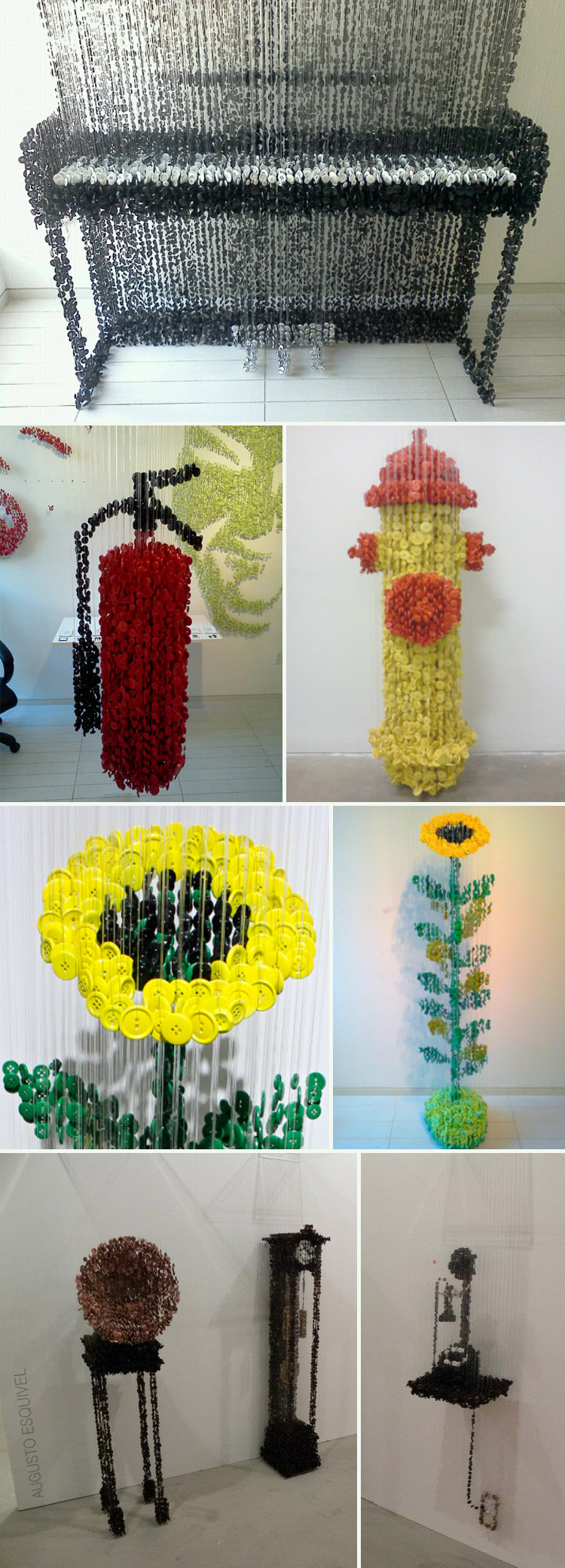
Augusto Esquivel: Button Sculptures

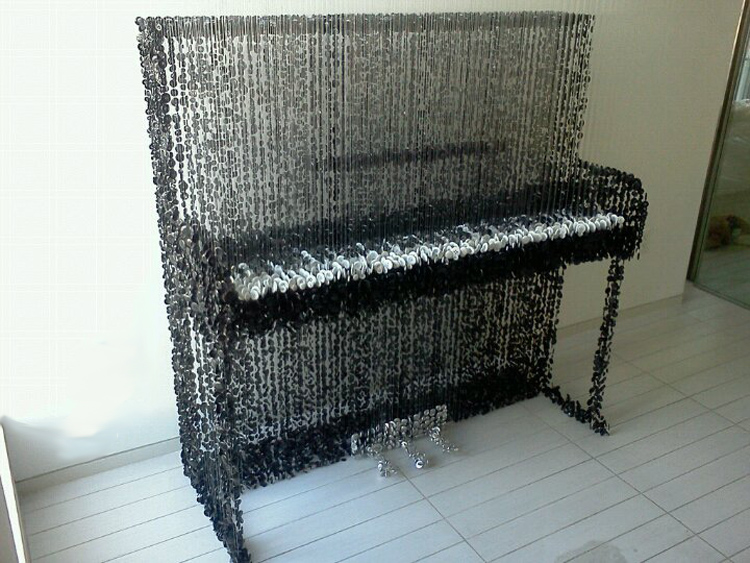
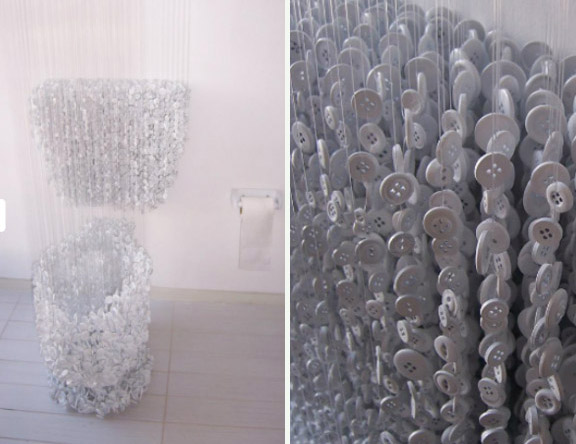
buttons, sculptures, Art Basel Miami, Augusto Esquivel, piano, contemporary art, coolbuttons, sculptures, Art Basel Miami, Augusto Esquivel, piano, fire hydrant, contemporary art, coolbuttons, sculptures, Art Basel Miami, Augusto Esquivel, toilet sculpture, contemporary art, coolClick to enlarge

Miami-based artist Augusto Esquivel is apparently quite a showstopper at Art Basel Miami this year, and it’s no wonder. His impressive sculptures made by  hanging sewing buttons from, what looks like, fishing line to create a piano, harp, gramophone, toilet and more, definitely seem difficult to go unnoticed.

From the artist’s statement:
I realize how insignificant and small a simple sewing button can be as it lays in my grandmother’s sewing box, but at the same time how unique and precious it can become as part of a work of art. Like an atom in a molecule, each button serves and shapes the whole. I hold the button to my ear and it whispers to me, “I want to be…..”

via coolhunting

Love Motel for Insects: NYC

Science, entomology, light installation, art, bugs, insects, teaching, ballengee, collabcubedScience, entomology, light installation, art, bugs, insects, teaching, ballengee, collabcubedClick to enlarge

Both an art installation and a life science project, Love Motel for Insects is an innovative interactive outdoor educational event created by Brandon Ballengée. Since 2001 Ballengée has been exhibiting his Love Motels worldwide including India, Ireland, and Italy, and now, along with Urban Art Projects, he’s hoping to bring Love Motel for Insects to New York City.

Using ultra-violet lights on large black canvases these installations attract insects and create an opportunity for viewers to interact with rarely seen nocturnal arthropods. This event, combined with ancillary educational programming referred to as Bug Love, hopes to inform the general NYC public about important environmental issues as well as inspiring kids and getting them excited about science, art, and the environment.

If this sounds like something you’d like to see or be a part of, head on over to their kickstarter page and watch the video, heck, maybe even make a donation. They have four days to go to reach their goal and are so close to it!

via luminapolis

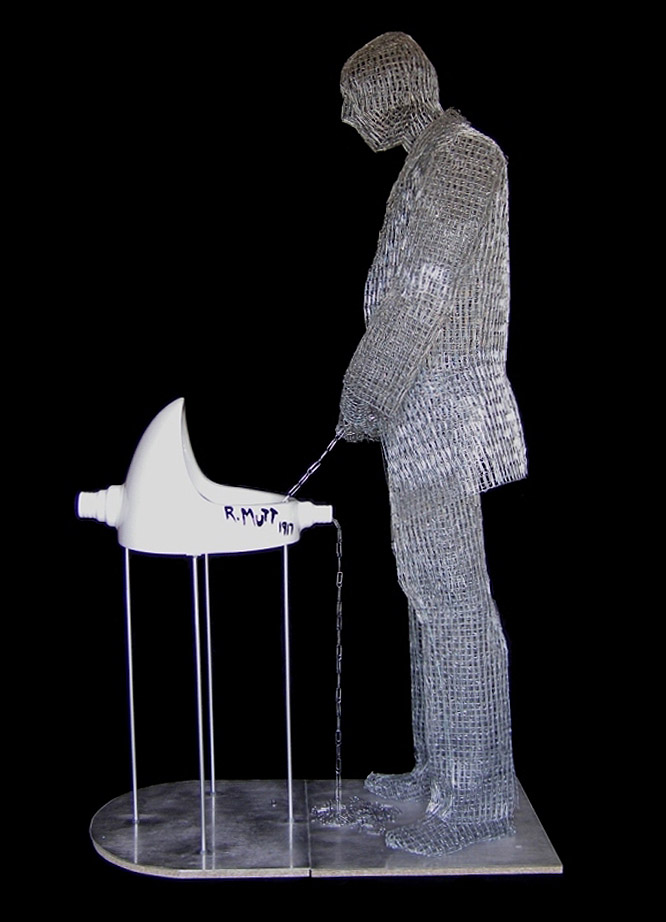
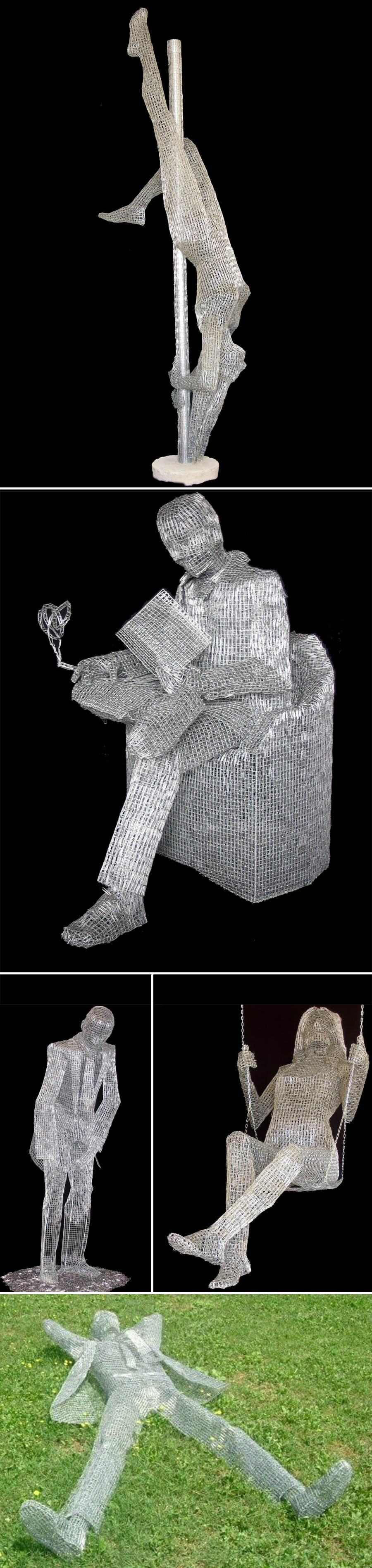
Pietro D’Angelo: Paperclip Sculptures

Wire sculpture, paperclip sculpture, urinal, suited man, Italian artWire sculpture, paperclip sculpture, woman, Italian artWire sculpture, paperclip sculpture, pole dancer, suited man, swing, Italian artWire sculpture, paperclip sculpture, trumpet, pietro d'angelo, Italian artistClick photos to enlarge

Originally from Palermo, Italy, and later studying in Bologna, artist Pietro D’Angelo started his career as a sculptor working in marble and stone. Clearly, a radical change in materials has taken place in more recent years. His life-size sculptures, from what I could gather, are made by creating a wire frame and attaching large quantities of paperclips. They are not only very cool, but full of humor and character as well.

You can see more of D’Angelo’s work here, here, and here.

via ermanno tedeschi gallery

Shoe Christ: Petr Motycka

DOX Center for Contemporary Art, Prague, Sculpture, shoes, Christ, crucifixDOX Center for Contemporary Art, Prague, Sculpture, shoes, Christ, crucifixContinuing with the shoe theme (see previous post) this sculpture titled Shoe Christ: Compulsion to Refuse Something that Has Been Used is made by Czech artist Petr Motycka using approximately 1444 used shoes and sneakers. Measuring more than 6 meters high and weighing over 500kg, Shoe Christ was originally created for a public space on Prague’s riverside (see bottom photo) where it was shown last year. More recently, it was modified and displayed at the DOX Centre for Contemporary Art where it has been since the end of last January.

From the artist:
Shoes can be a vehicle of social status. The simple fact of „owning“ shoes once signified belonging to a higher social class. Contemporary shoes can signify the bearer’s cultural affinity…
The fact that the sculpture is made of shoes that had been used is very important. 1444 worn shoes means that more than 1400 people and their stories are part of the Shoe Christ. Used things and especially shoes often evoke repulsion. There are not many people who buy second hand shoes, who want to wear shoes that have been worn by someone else. Shoes are a very personal property.
Shoes have become consumer goods and through their quantity and signifiers contribute to the overall image of consumer culture. Our cultural values and concepts increase their worth by being used. On the contrary, things produced by the same culture, lose their value the more used they are. We require pure matter and used ideas…
Photos courtesy of EPA/Filip Singer, DOX, and serdzoid’s flickr.

via this isn’t happiness

Shoes of the Very Famous

Famous people's shoes, iconic, Life Magazine, bozo the clown, photographsFamous people's shoes, iconic, Life Magazine, Mario Battali, Dave Eggers, Madonna, photosI just came across this photo gallery on Life magazine’s site by photographer Craig Cutler titled Shoes of the Very Famous. It’s pretty incredible how iconic some of these are and how much personality they exude. After seeing Dave Eggers’s shoes, I can’t believe I was worried about a little hole in mine!

From top to bottom: Bozo the Clown (1960-84); Rudolf Nureyev (1960s); Madonna (1992); Mario Battali (2011); Dave Eggers (2011); James A. Lovell Jr. (command-module pilot Apollo 8); Princess Diana (1986); Dalai Lama (2010).

You can see the rest of the gallery with more information at Life.com. And you might also like Craig Cutler’s Artist Series; portraits of, you guessed it, artists.

Trond Nicholas Perry: Quantum

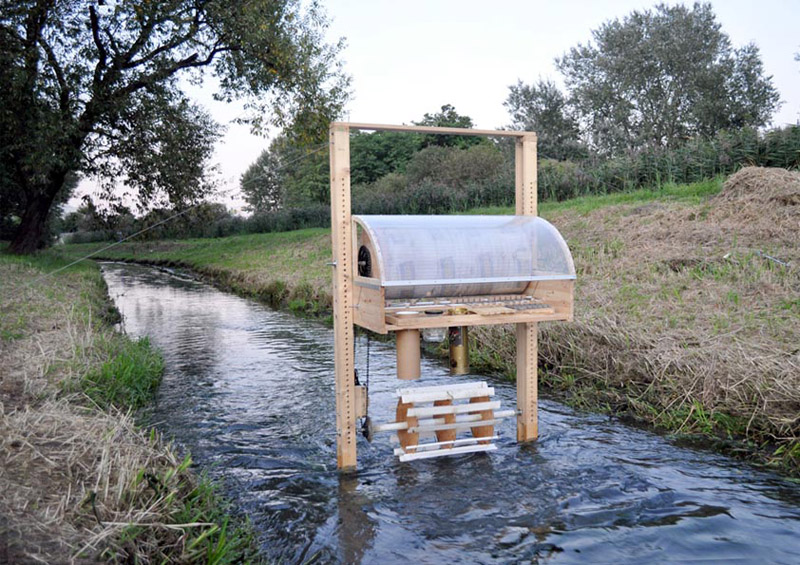
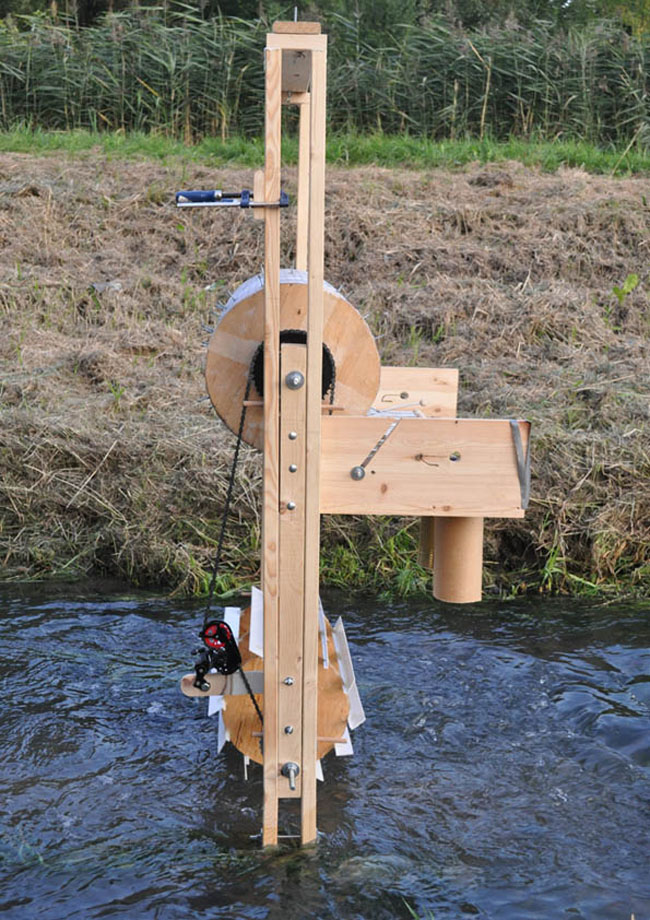
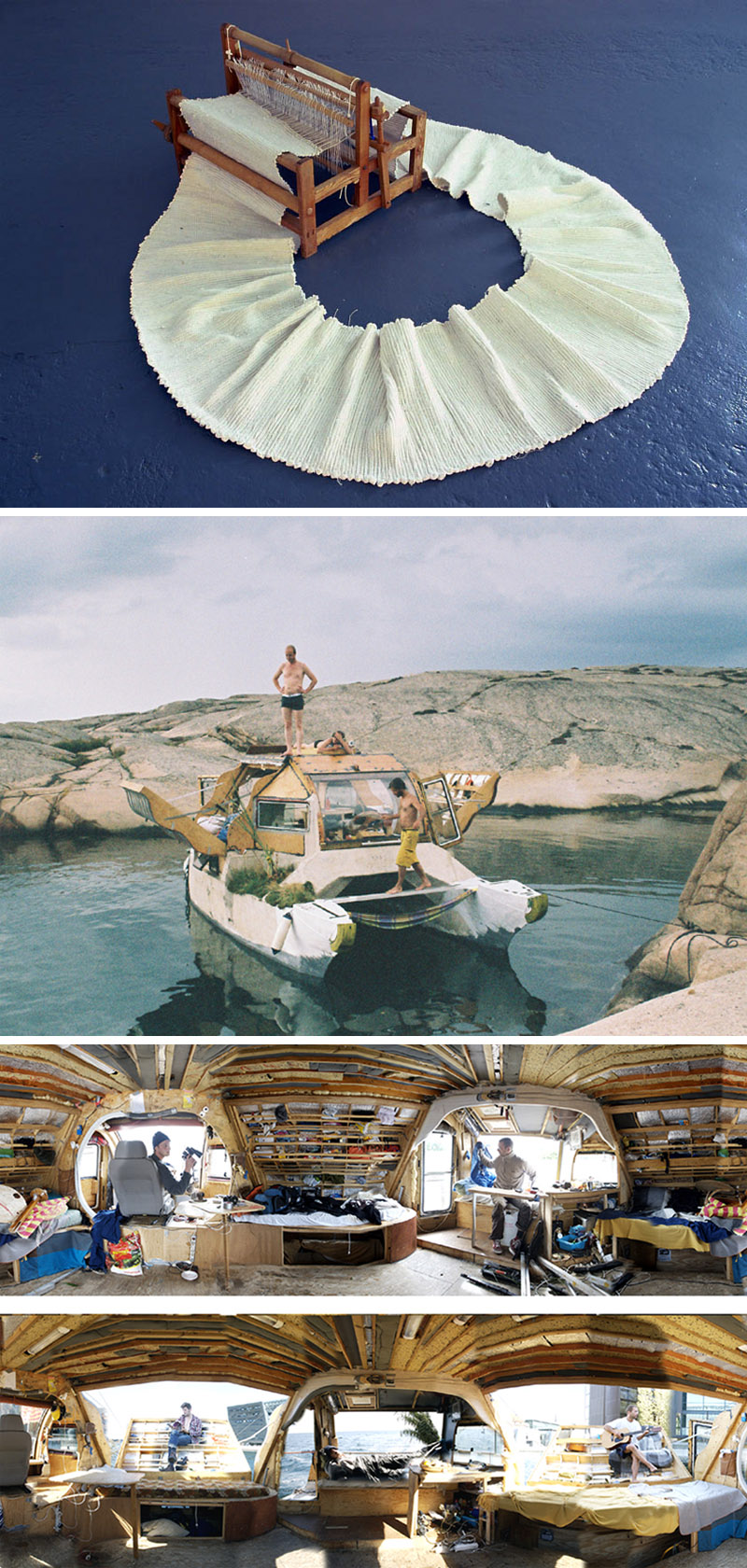
sculpture, avant garde art, diy, music machine, watermill, Warsaw, interactivesculpture, avant garde art, diy, music machine, watermill, Warsaw, interactivesculpture, avant garde art, diy, K.Y.S. Boat, Warsaw, interactivePolish artist Trond Nicholas Perry, based in Warsaw, is fascinated by stream of consciousness thinking, hence a fan of James Joyce, and gets some of his inspiration by halting that stream randomly, or, as he credits William S. Burroughs for questioning: “How random is random?”

His latest project Quantum is a water-driven music machine, a collaboration with his girlfriend architect Agata Sander. A site-specific sculpture, made for a canal in Warsaw, that plays a single song, much in the way a player piano does, but driven by the water’s movement.

Perry’s work is classified as sculptural but there seems to be a performance quality to many of the pieces as well. His K.Y.S. (love, humility, pain) boat project was built in collaboration with artist Eric Piroit. They sailed this uniquely designed boat from Norway to Germany and then the Netherlands. Mostly interested in underlining DIY aesthetics and engaging spectators as well as empowering them by realizing that it is possible to “do it yourself,” putting emphasis on the belief that ‘will’ is more important than technical ability, which Perry feels strongly.

For me, the quirky quality of the sculptures was enough to lure me in.

You can see Quantum in action in the video below:

via vimeo and levart

Ronna Nemitz: The Pull of Gravity

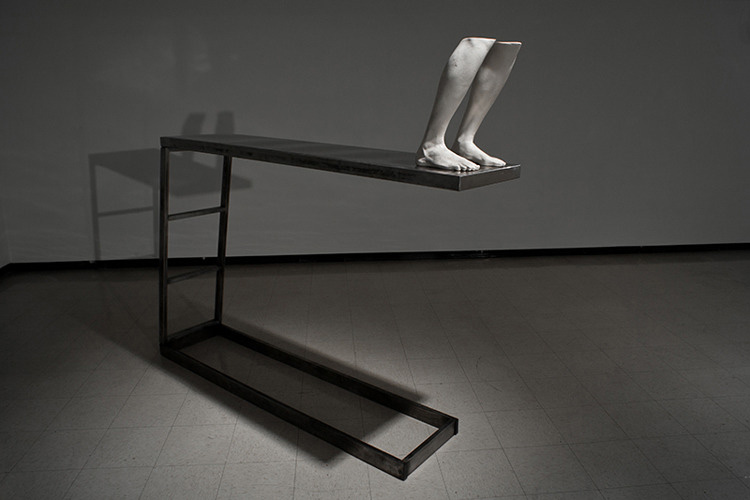
contemporary sculpture, limbs, divingboard, legs, casts, modern artcontemporary sculpture, limbs, divingboard, legs, casts, modern artcontemporary sculpture, limbs, divingboard, legs, casts, modern artWith a mannequin arm adorning each of Em and Dan’s college rooms, one could begin to be concerned with our recent interest in truncated limbs. Not surprising, then, that artist Ronna Nemitz’s sculptures would appeal to us. There’s something about focusing in on the movement and detail of these legs and arms that I find interesting. Using plaster life casts, with steel for certain pieces such as the wire and diving board, Nemitz, from western U.S., created an exhibit titled The Pull of Gravity.

From the artist’s statement:
The pull of Gravity explores ideas of suspension, tension, and isolation through an on going narrative. Amplified and exaggerated moments are suspended in prolonged tension and isolation, pinpointing moments of transition. Truncated limbs replace entire figures. With the impending movement halted, the ephemeral nature of experience is momentarily arrested and able to be examined.
Everyone experiences some form of these moments in their lives and it is my attempt to make something physical that represents the complex and contradictory emotions involved in life’s transitions. Personal meaning takes shape out of these moments. We are the sum of our life’s transitions.

You can see more of Ronna Nemitz’s work on her website.

Hello Wood Festival 2011: Ebéd

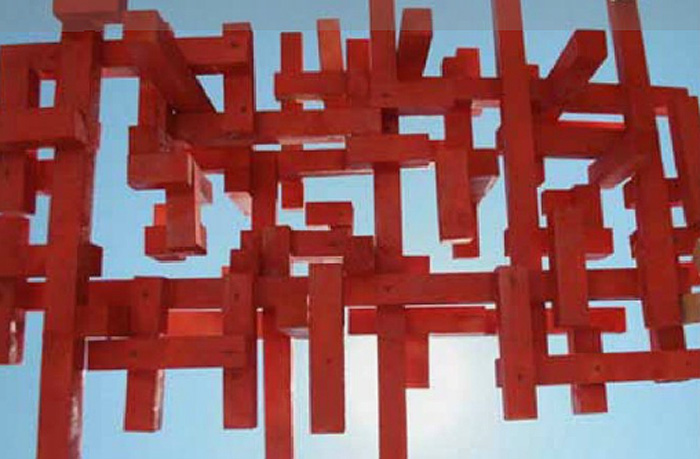
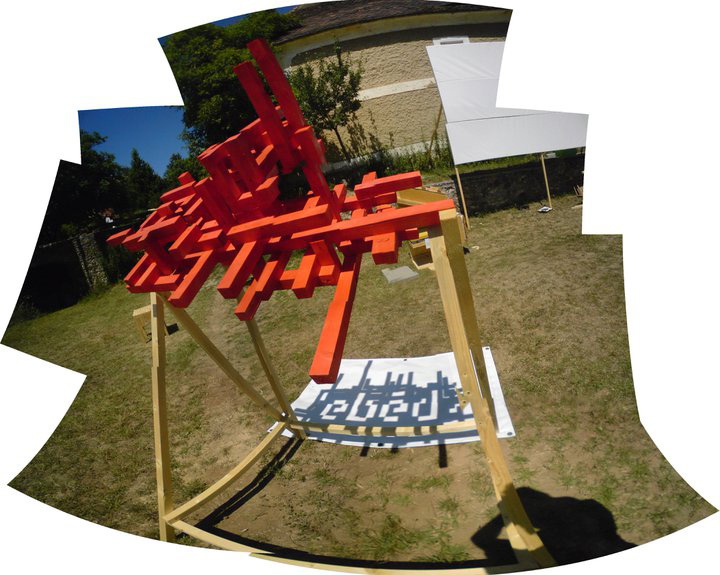
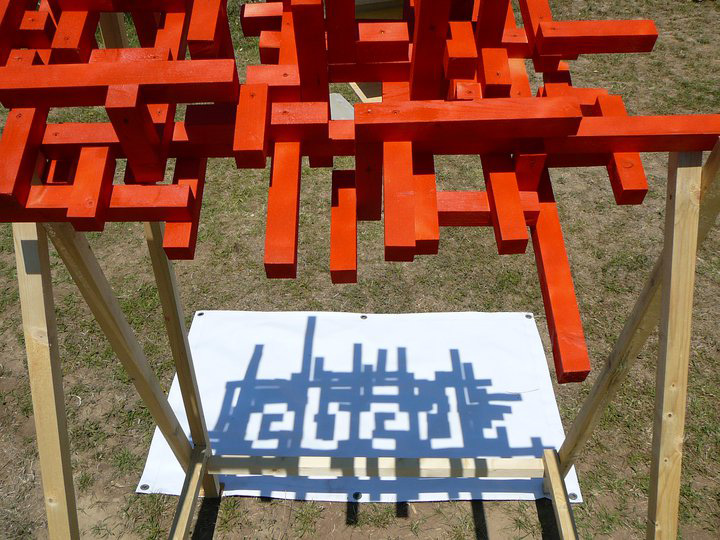
Wood Festival, Budapest, typography, type, lunch, shadowWood Festival, Budapest, typography, type, lunch, shadowWood Festival, Budapest, typography, type, lunch, shadow, sculptureWhat appears to be an abstract wood sculpture made up of a cluster of two-by-fours painted red, is exactly that for 23 hours out of the day. The sculpture, created as part of the Hello Wood Festival in Budapest this past July, was one of the three “typography team” projects (there were architecture teams and film teams too) made by students from Hungarian Universities. Titled Ebéd (‘lunch’ in Hungarian), this structure was designed to form the word ‘ebéd’ in a pixelated font, using the rays of the sun to highlight it in the negative space of the shadow precisely at 1pm: lunchtime! The rest of the day the sculpture showed a random system of shadows. Very clever, I’d say.

The team was led by graphic artist Áron Jancsó, with team members, Krisztina Bogó, Péter Magda, and Gabriella Karácsonyi.

Photos courtesy Hello Wood’s facebook page.

Ever: Argentine Street Artist

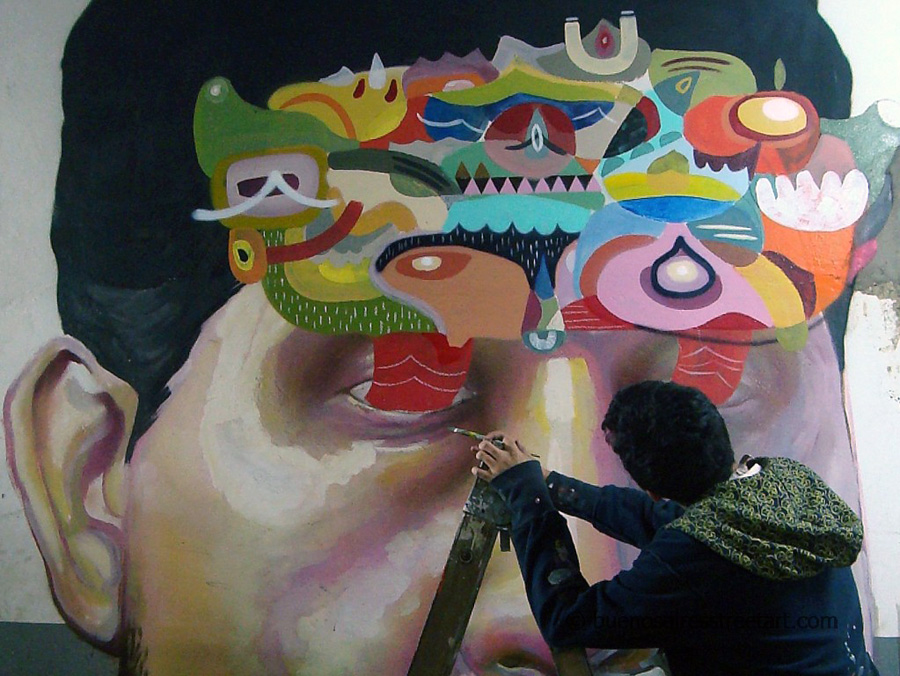
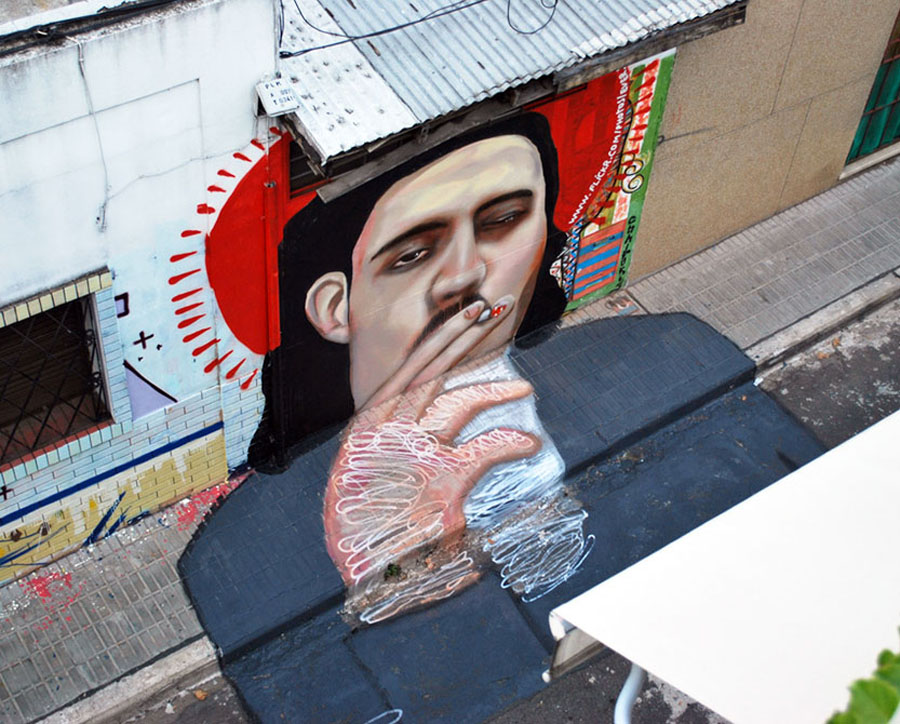
Graffiti, Ever, Siempre, Argentina, murals, portraits, street artGraffiti, Ever, Siempre, Argentina, murals, portraits, street artGraffiti, Ever, Siempre, Argentina, murals, portraits, street artClick to enlarge

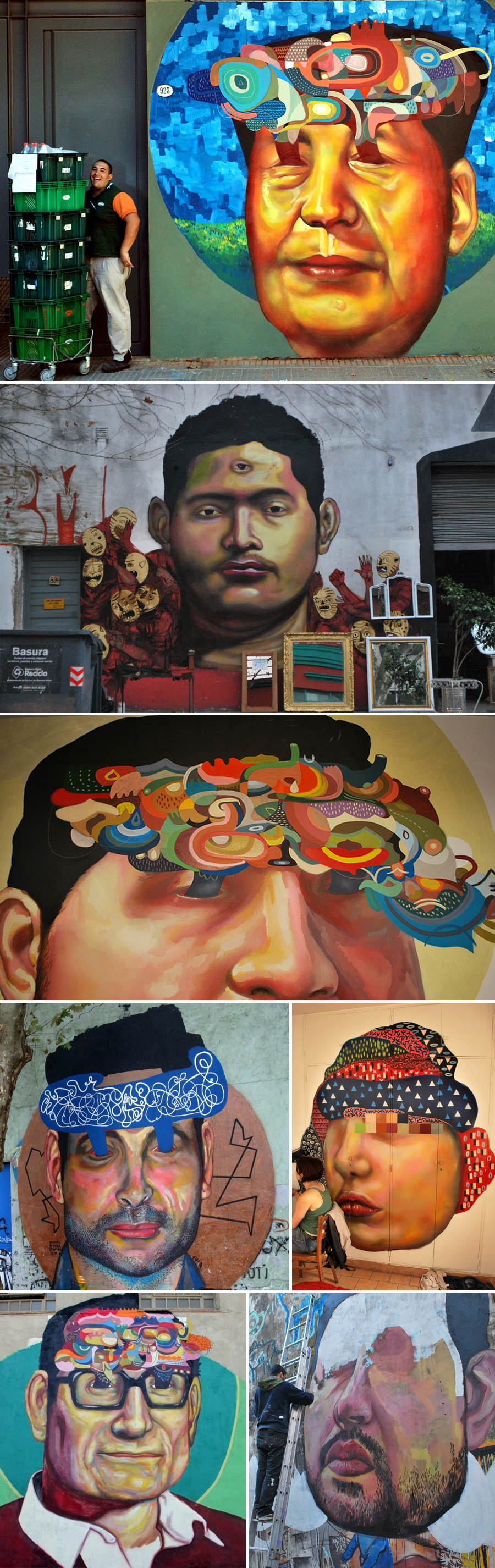
Ever, née Nicolás Romero, is an Argentinean street artist who began painting letter-based graffiti in the streets of Buenos Aires in the 1990s. Since then, his art has evolved into more portrait-based murals. He attributes the shift to a figurative style, in part, on his exposure to, and the influence of, Gustav Klimt, Francis Bacon and Van Gogh.

In Ever’s most recent work, he combines aerosol and brush creating an interesting contrast between the realistic portraits and the colorful, abstract ‘thought clouds’ or sneak-peek-into-the-souls of his subjects (I love those clouds!). His preference is to paint ordinary people (clearly, Mao being an exception), sometimes finding photos on the internet or picking an interesting face out on the street. In some cases, he paints his brother.

You can see more of Ever’s work on his flickr and an interview with him here.

via graffitimundo

Chris Mitton: Revalue

carrara marble, contemporary sculpture, crushed cans, everday objectscarrara marble, contemporary sculpture, crushed cans, everday objectscarrara marble, contemporary sculpture, crushed cans, everday objectscarrara marble, contemporary sculpture, crushed cans, everday objectsClick to enlarge

“revalue: to change the value of something or to consider it again.”

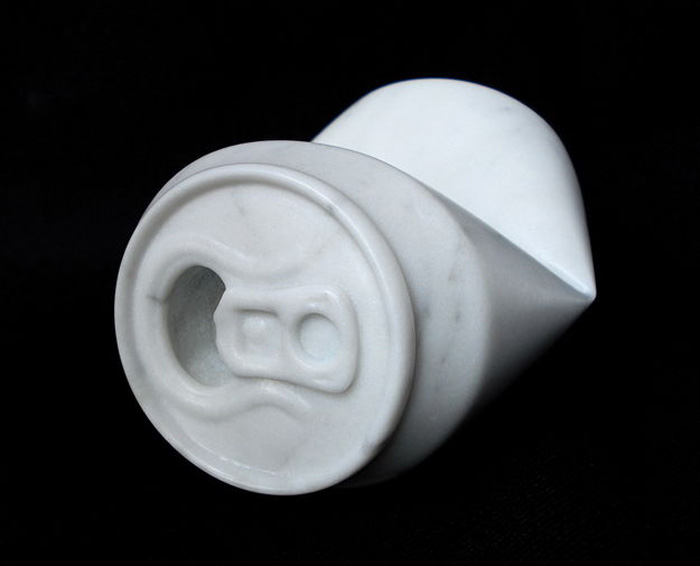
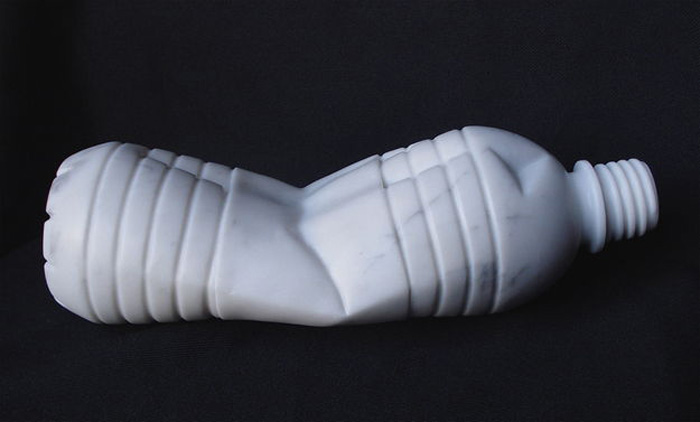
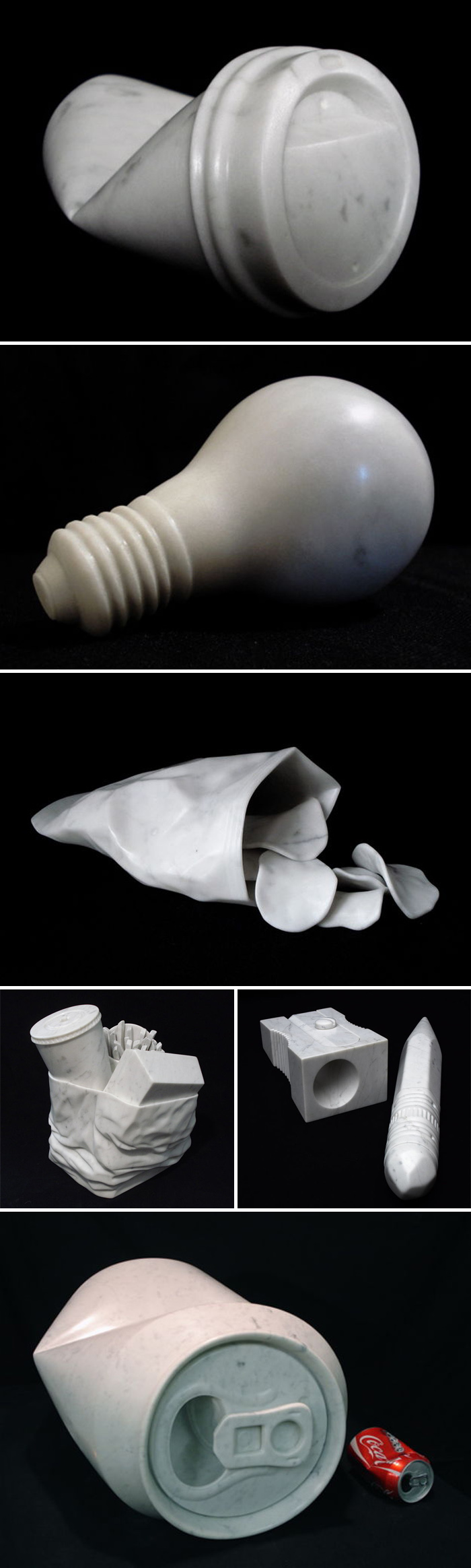
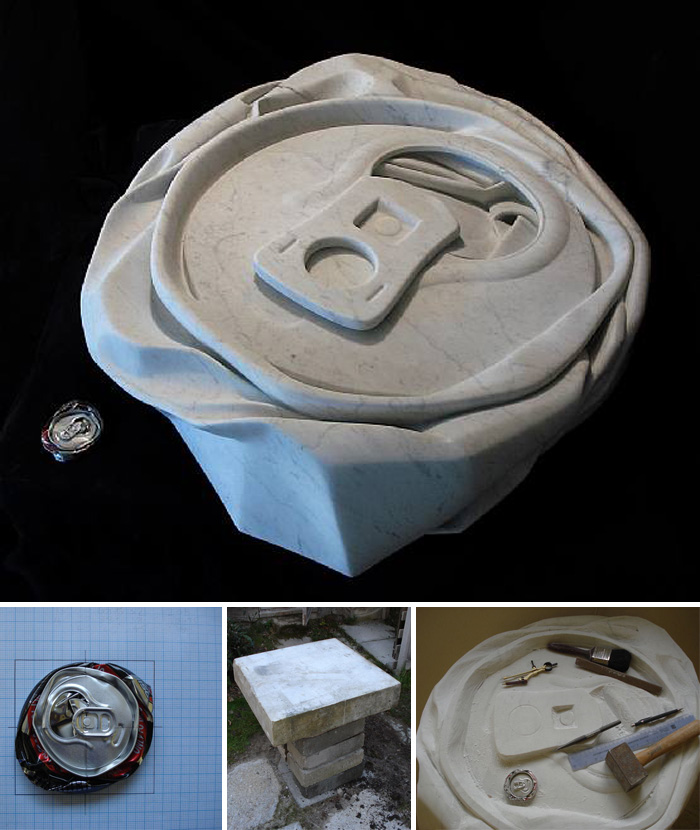
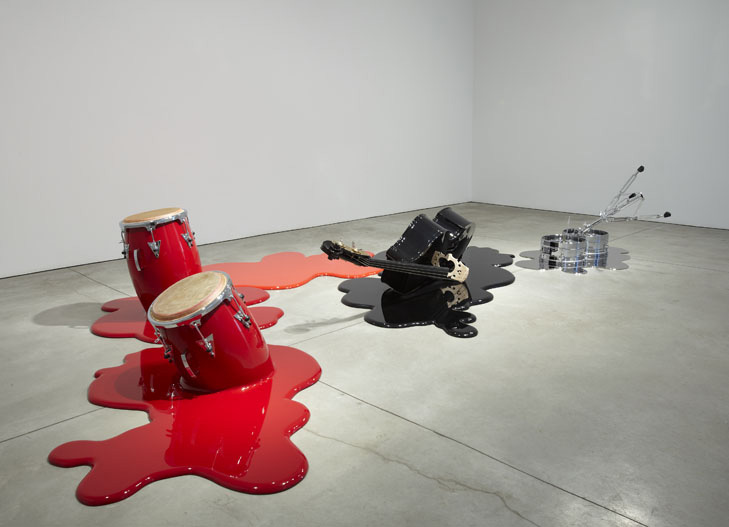
Revalue is the name of this series of sculptures by British artist Chris Mitton. By reinterpreting cultural objects in a contrasting material — in this case, handcarved carrara marble — Mitton’s work emphasizes the subjective nature of their value. From a crushed can to a grenade, Mitton’s “monuments to the mundane” are, for the most part, life size. A few large-scale exceptions above shown with the actual size can in the photo.

With skill and humor Chris Mitton makes us rethink the transitory.

There’s a similar thinking with Vlad Berte.
via TAG Fine Arts

Matthew Picton: Map Sculptures

Map sculptures, maps made from text pages, contemporary artMaps, Map sculpture, maps made from folded book pagesMaps, Map sculpture, maps made from folded book pagesClick for slight enlargement

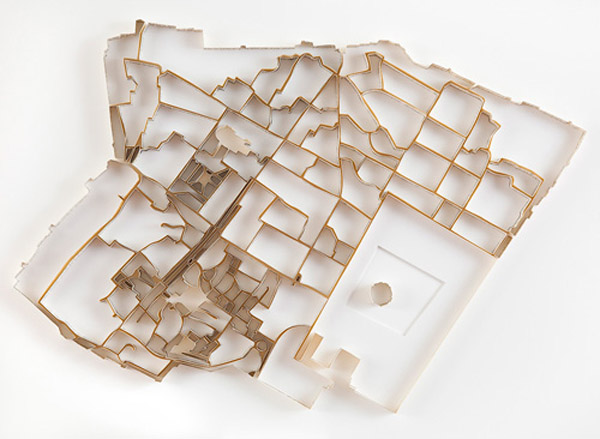
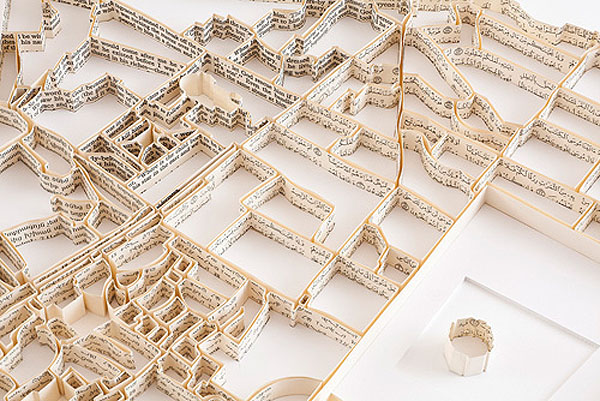
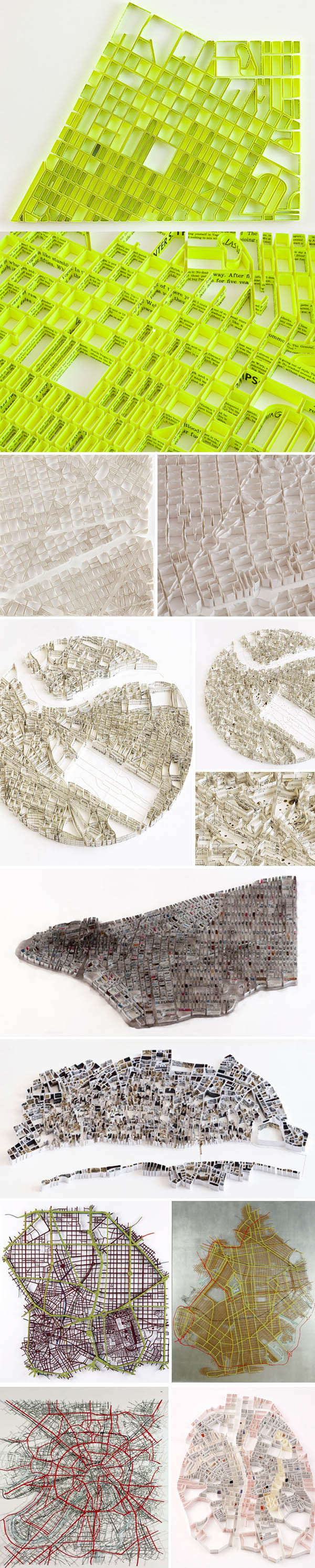
From collages made with maps, to maps made with paper, some of them anyway. British artist Matthew Picton, who presently lives and works in Oregon, creates map sculptures. His most recent works are made of paper; not just any paper, but texts or sheet music that is significant to each city in some way.  A few examples include: Jerusalem created from The New Testament, The Torah, The Armenian Bible and The Koran; Las Vegas in 1972 created from texts from Hunter S Thompson’s “Fear and Loathing in Las Vegas” (and luminescent paint); Dresden in 1945 using sheet music of the score of “The Ring” by Wagner; and Lower Manhattan created from headlines that accompanied the 2001 World Trade center bombing and DVD covers of the film “Towering Inferno” also book covers of the novel “The Plot Against America” by Philip Roth, just to name a few.

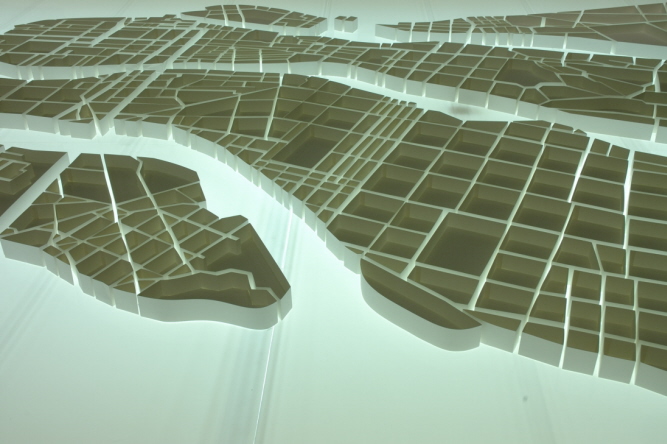
Picton’s earlier city map sculptures are mostly made from duralar, enamel paint, and pins with several layers depicting streets and roads at the micro level in addition to the city’s evolution over time. Each layer showing a layer of history in the city’s transformation. Beautiful on “multiple levels”: cartographically, artistically, and textually.
You can see more of Matthew Picton’s maps here.

via Summaria Lunn Gallery

Peter Clark: Found Vintage Paper Collages

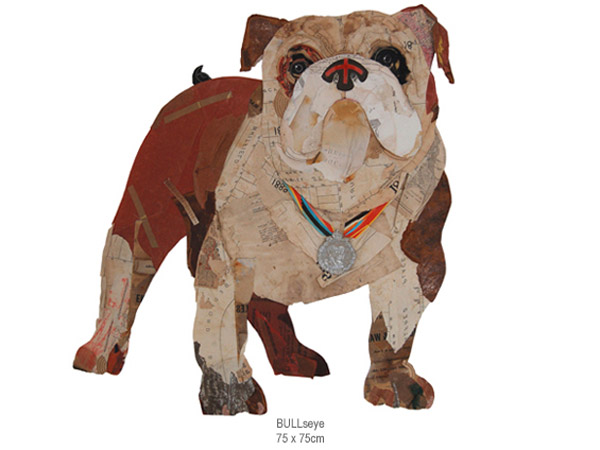
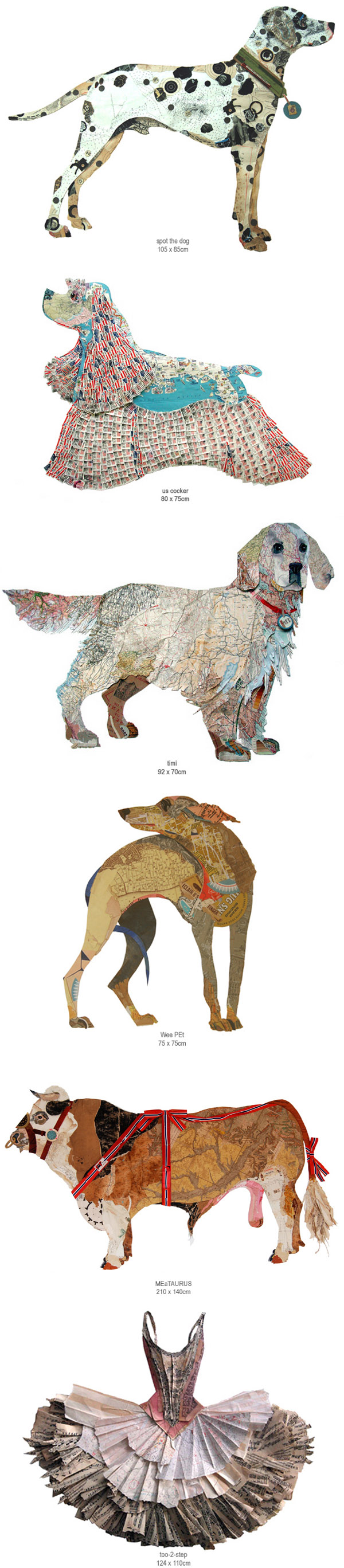
mixed media collage, found vintage paper collage, dog artmixed media collage, found vintage paper collage, hedgehogmixed media collage, found vintage paper collage, dog artA long time collector of ‘things’, English artist Peter Clark uses old stamps, maps, love letters, labels, buttons, sewing patterns, and more that he has collected, to create his somewhat three dimensional collages. He starts by drawing the outline in felt tip and then carefully selects from his paper and fabric stash for the right materials, as well as colors, to define tonal effects and other features in his art objects. Though he has a large array of dog collages, he does also make works based on other animals, objects, faces, and garments too.

via Rebecca Hossack Art Gallery

Pharmacophore: Architectural Placebo

modern dance, inflatable sculpture, storefront for art and architecture, HAt, Silas Reinermodern dance, inflatable sculpture, storefront for art and architecture, HAt, Silas Reinermodern dance, inflatable sculpture, storefront for art and architecture, HAt, Silas ReinerClick to enlarge

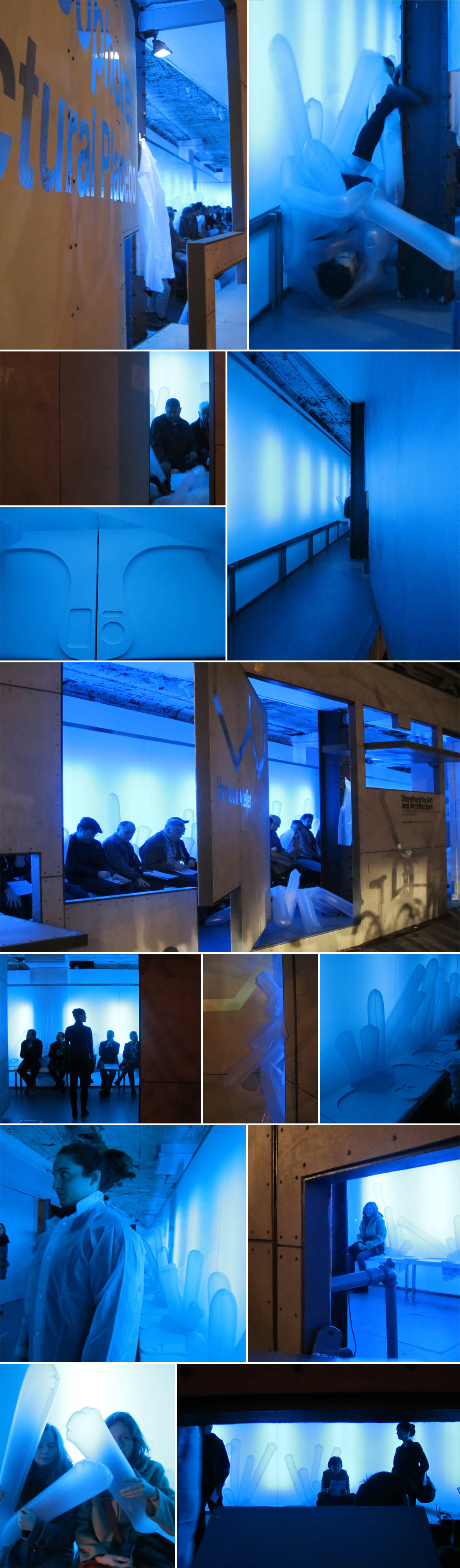
Last night, the three of us strolled over to the Storefront for Art and Architecture here on Kenmare Street in NYC, to catch the last 20 minutes of the sold-out dance performance Pharmacophore: Architectural Placebo from the street. Storefront’s fun cut-out façade, which opens the small sliver of a space to the sidewalk, allowed us to enjoy the rather unique dance performance. A collaboration between designers Seth Harrison and Ariane Lourie Harrison of Harrison Atelier (HAt) and choreographer Silas Riener. The third installment in HAt’s Pharmacophore series, the performance, along with the installation, explore the cultural and philosophical economy that surrounds medicine technology and the human prospect in the 21st century.

From the creators:
The installation at Storefront, incorporating set and costumes, evokes a hybrid pharmaceutical-cultural landscape: both a medical waiting room with inflatable “plants” and a radiological suite in which the audience sits apposed to translucent glass. The installation consists of 24 eight-foot, laminated glass and stainless steel structures, arrayed along the back wall of the gallery. Contoured seats are dotted with inflatable forms that, when unfurled, become spatializations of pharmacophores. The inflatable set pieces are used as costumes and props, and audience members use them as cushions.

Truthfully, we did not see enough of the dance performance to justify an opinion, but what we did see, we liked. The Merce Cunningham dancers pranced, tumbled and gracefully walked with their fun inflatable tubular costumes that match the props and seat cushions in the beautifully glowing blue setting. We loved everything about the installation: the appropriately sterile pharmaceutical feeling evoked by the lighting and plastic inflatables; the clear Muji raincoats that acted as lab coats and were worn by staff; the seats with their mod-waiting-room feel; but most of all, the way it all worked so well together and successfully integrated with the space. And if that wasn’t enough, Baryshnikov was in the small audience!

Pharmacophore: Architectural Placebo will be performed twice a night through this Wednesday, November 30th. Tickets are free, but reservations necessary. And then there’s always the street view, too, if you want to use the stroll-by approach. The installation, sans performance, will continue on view through December 3rd.

For those who can’t attend, below is a short video of the previous performances in the Pharmacophore series: