
Miles Neidinger: Everything We See is Never Enough

art installation, nyc, found objects, contemporary artart installation, nyc, found objects, contemporary artClick on images to enlarge.

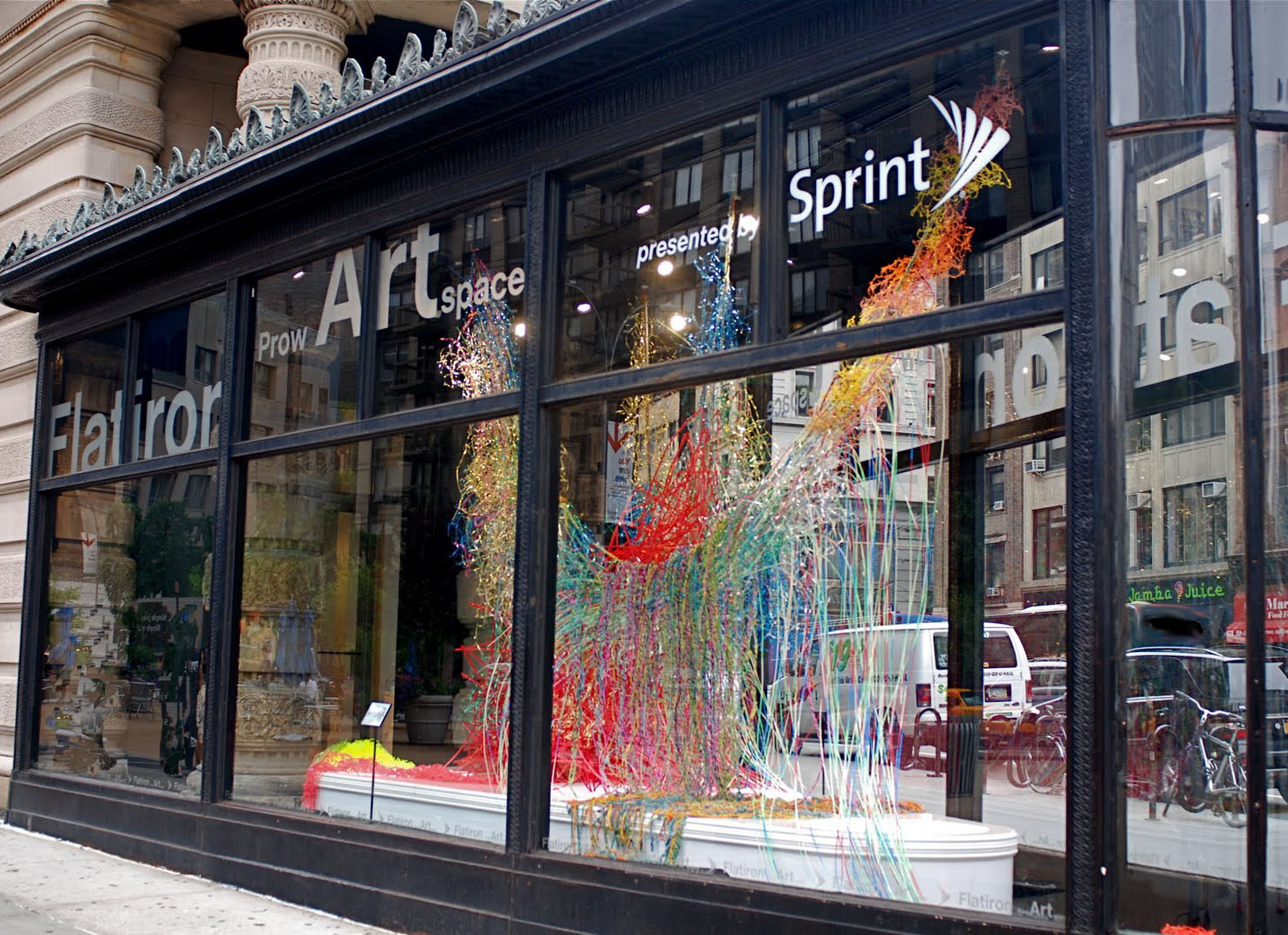
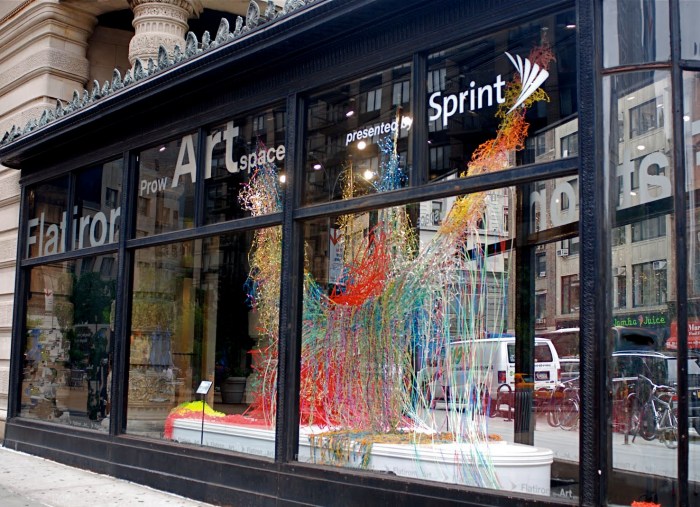
I was walking past the Flatiron building last weekend and came upon this art installation by Miles Neidinger in the Sprint store window at the base of the building. Everything We See is Never Enough is the name of the piece made of twist ties, vinyl tape, yarn, cellophane and tinsel. This is the first of Sprint’s “Art in the Prow” series of installations.

Miles Neidinger, an artist from Missouri, uses — as he states — “the crummiest materials” in his work:

From Neidinger’s website:
The crummiest materials are employed in this work, yet it insists on formal purity; the process of creation is strictly governed as a means of randomizing the final product. I ask the viewer to uplift twist-ties to the realm of architecture and elevate them to the realm of beauty.
Reversals are staged between banality and beauty, synthetic and organic. These concepts are balanced in such a way that the viewer can oscillate between a preconceived utility of an object and, its new found physical state. With this new physicality I enable the viewer to make new concept formations and, associations regarding familiar objects.

I think the newspaper installations are my favorites.

City Leaks: Urban Spaces/Moments

Urban, installation, artUrban, installation, artCity Leaks, a group of artists/street artists that describe themselves as “An Urban Investigation of Inventive Dwelling.” Recently this Melbourne based group created PlayMo (top images) and Hotel Facebook,  (bottom 3 images) both collaborative projects, the second via Facebook photo uploads as “check in”.

They have a sort of manifesto on their facebook page and seem to stick by it.

On PlayMo:

PlayMo was born from the intention of inventing a space that turns into a place where people meet, spend time and play. Its name comes from “playmobil”, a Lego styled child’s creative play toy. Using milk crates was like playing with big Lego pieces.Milk crates are a fantastic material for many reasons; they are structural, light, modular and they have an iconic role in Melbourne’s cafe image and laneways. We believe that familiarity to a material plays an important role in engaging with it.PlayMo uses 3 different types of crates. Black = platforms, Grey= stairs, Green=moveable. The green crates provide the undefined random element; people rearrange their seats or even build small stairs themselves. There hasn’t been a single day where we found them in the same place.
Finally, PlayMo is designed to grow and adapt. People are encouraged to leave things behind and to add to the structure. We found artworks, plants, toys, pillows, new crates and received hundreds of letters. We even found that people had constructed a bin so that it could be kept clean.


via sub-studio

JR in NYC and his Inside Out Project

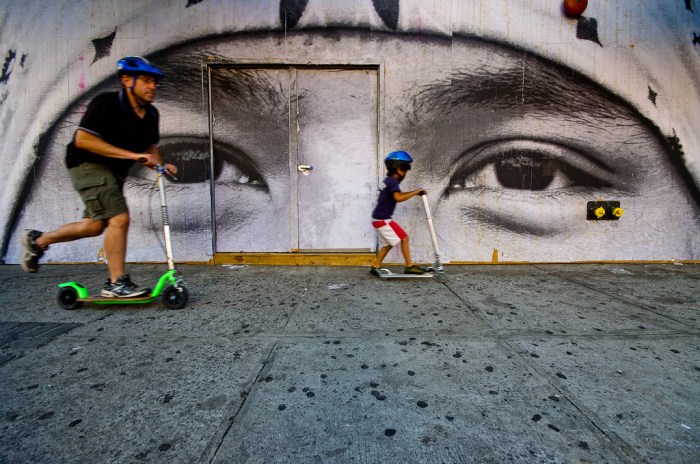
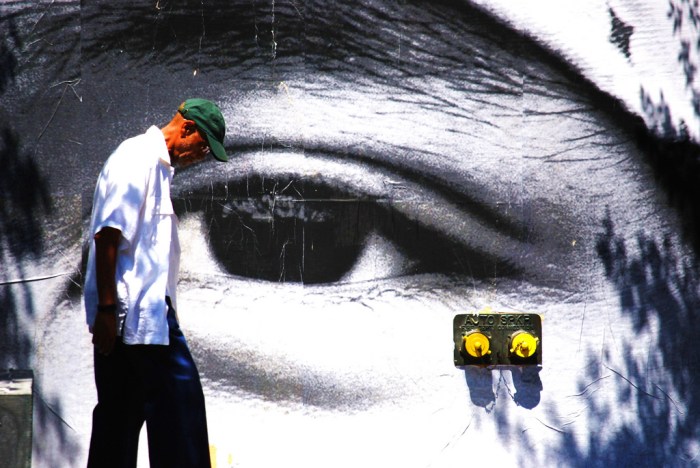
JR in NYC, Houston Street Mural, Street ArtJR in NYC, Houston Street Mural, Street ArtJR in NYC, Soho street art.JR in NYC, Soho Street ArtJR, street art, NYC, Inside Out ProjectFrench street artist JR has hit the streets of New York City in full force this summer. With several murals up in downtown Manhattan and a series of smaller posters up in the Bronx, the closely cropped expressive faces and eyes are a fun surprise to see as you round the corners of NYC.

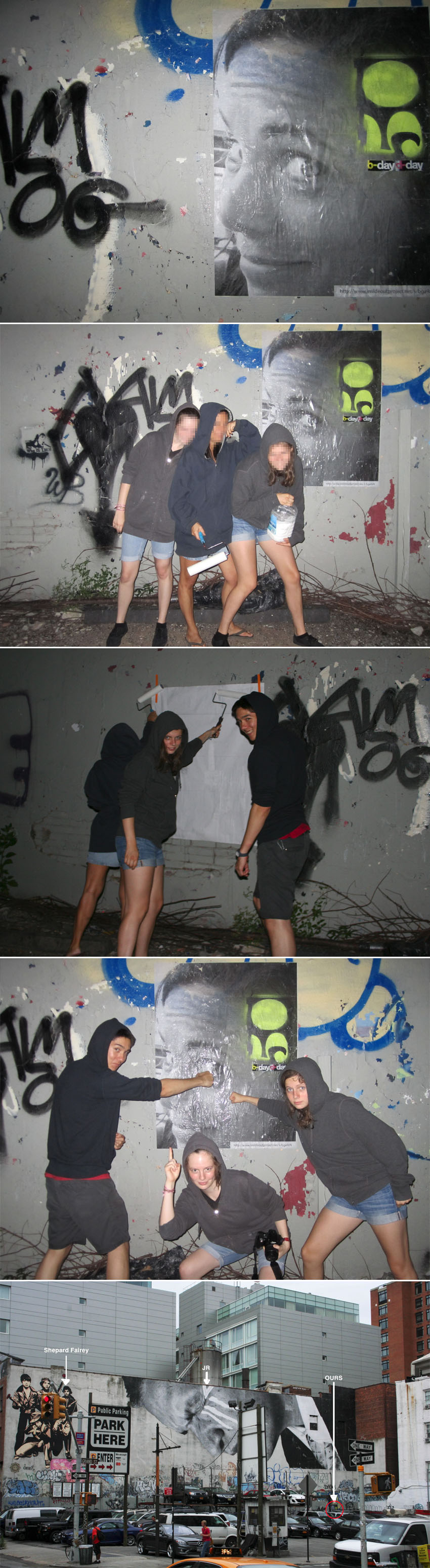
JR’s wish? To use art to turn the world inside out. His Inside Out Project is a “large-scale participatory art project that transforms messages of personal identity into pieces of artistic work.” The three of us participated in this ongoing event, with the help of our buddy Rence, and set out to post our poster under one of JR‘s massive Soho murals. As you can see above, our poster is a mere speck on the wall by comparison (click to enlarge for better view) and clearly no JR but, regardless, we had a blast putting it up and it’s great fun to be a part of this international well-meaning project.

If you’d like to take part in JR’s worldwide project, just upload a photo to the site and you’ll be contacted to make a donation before receiving your poster.

All images are linked to their respective flickr photostream. Those that don’t, were taken by us.

Koen Vanmechelen: CosmoGolem

Art, sculpture, artzuid2011, children of the world, inspirationalArt, sculpture, artzuid2011, children of the world, inspirationalClick to enlarge

Belgian conceptual artist Koen Vanmechelen – possibly best known internationally for his Cosmopolitan Chicken Project where, among other aspects, the artist crossbreeds chickens from different countries as a symbol for global diversity – continues with his Open University of Diversity with the CosmoGolem.

From the artist’s site:
The CosmoGolem, a wooden giant of approximately 4 meters height, aspires to be a helper and savior for all those who are in need of help, hope and courage, especially children. The CosmoGolem is empty and in its shuttered heart, children can deposit their dreams and wishes. This way, the statue ‘accumulates’ diversity. He stimulates intercultural exchange by travelling all around the world, sharing his experiences and bridging the gap between cultures.

Presently there are 26 Golems living in countries such as the Netherlands, India, Pakistan, Tanzania, Chile and Belgium. Several new ones are being prepared to be distributed in Cambodia, Japan, U.S., Nicaragua and more. Over all, a really nice project, I’d say.

Top photo from ArtZuid 2011 in Amsterdam via FaceMePLS’s flickr.

Nuria Mora: Street Art from Spain

Street Art Spain Graffiti Wall muralsStreet Art, Graffiti, Spain, Female Street ArtistClick images to enlarge

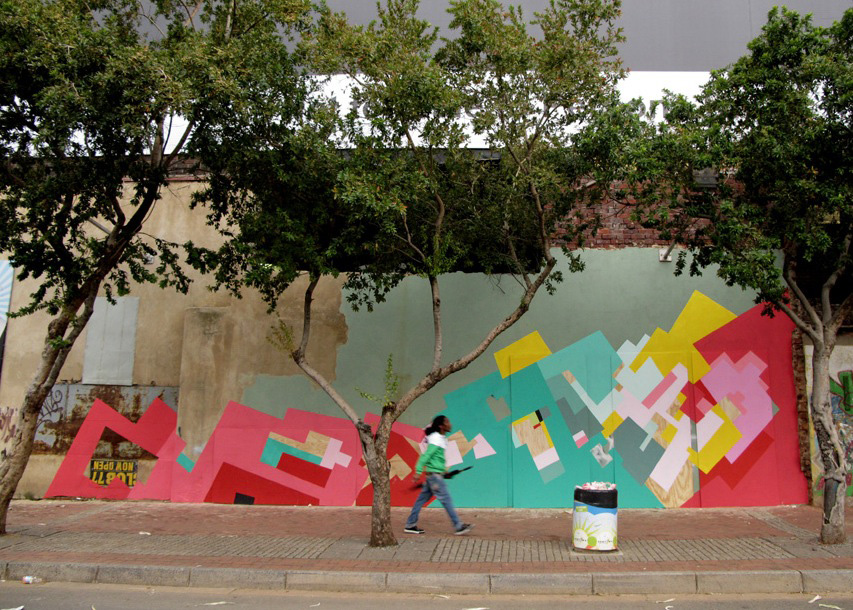
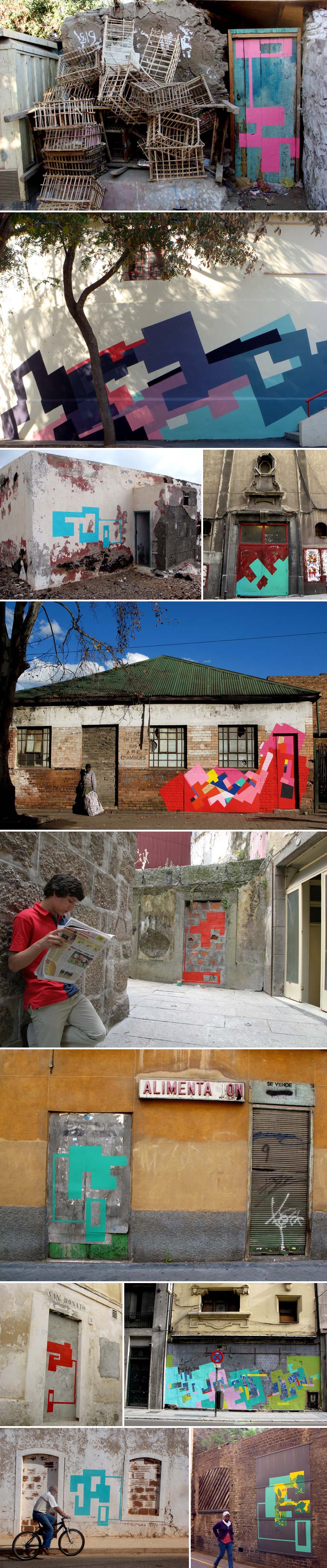
Nuria Mora is a street artist based in Madrid. Not that it should matter, but she is a woman and, as far as I’m concerned, it’s certainly refreshing to come across a female street artist—definitely in the minority.

Colorful and geometric, I imagine coming across any one of her wall murals would brighten one’s day. What I enjoy most about all of these is the contrast of the clean lines on the mostly old or run-down walls they appear on. It’s almost the opposite effect of graffiti way back when the tagging or murals would, many times, deface a newer wall or subway car.

There is plenty more to see on her site.

Ralf Kempken: Stencils to Screens

Art Stencils and Screens Ralf KempkenAustralian artist Ralf Kempken StencilsClick to enlarge

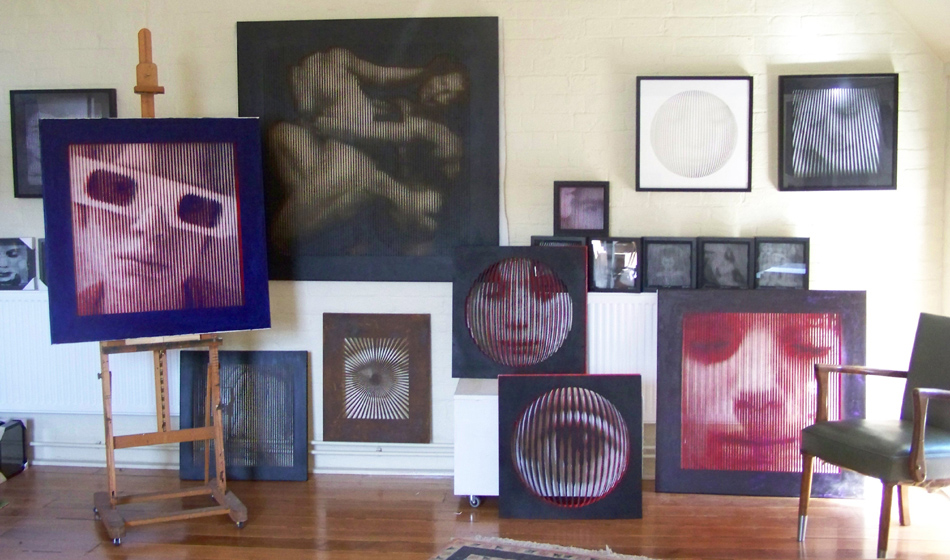
Australian artist Ralf Kempken hand cuts stencils and screens from paper, acetate, canvas, timber, and sometimes even steel. In some cases he layers multiple stencils and in others he spray paints as well.

From his artist statement:
…the stencil is used to spray images in countless variations. The underlying concept has always been that we filter all we see through past experiences and memories. Thus followed the evolution of the stencil, which up until now has been used as the tool to produce the painting, into the artwork itself. We all screen and frame our personal view of the world and with this in mind the stencils have turned into screens. Artwork that can be seen through and create optical illusions.The screens are intended as daily reminders that we have a conscious choice in how to look at the world around us.

You can see more of Ralf Kempken’s incredible X-actoing skills and other work on his site as well as here.

via Abbotsford Convent

e1000ink: Spanish Street Art

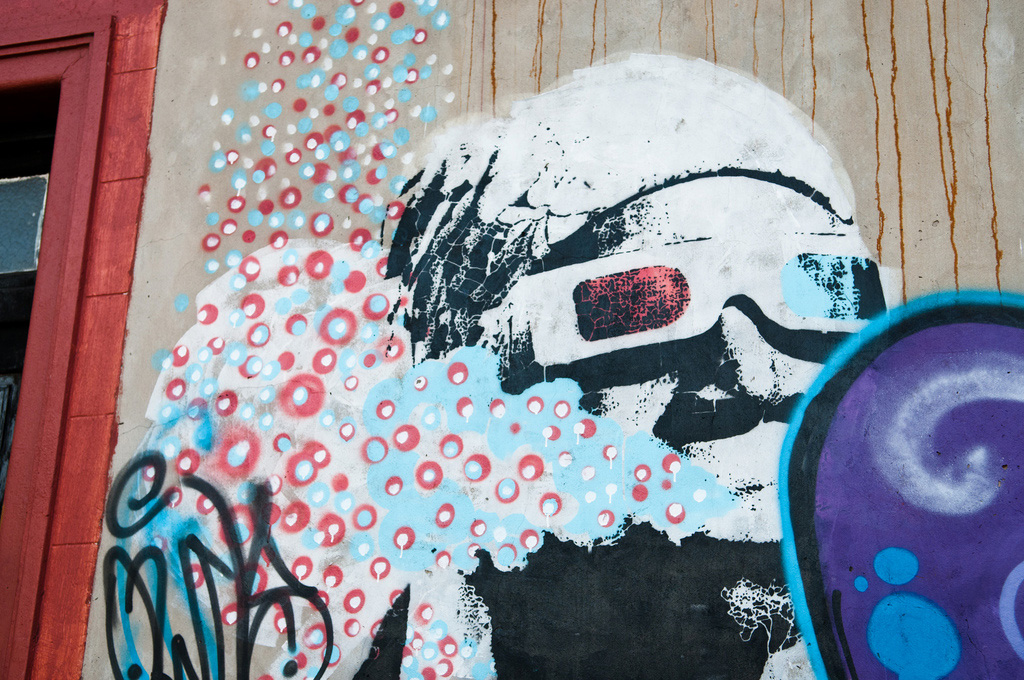
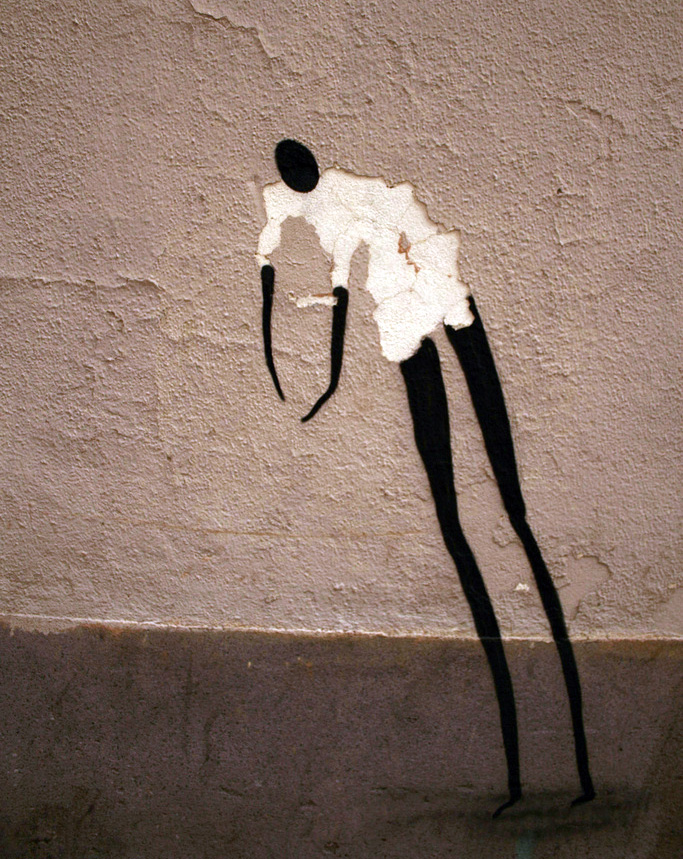
Street Art Graffiti in Spaine1000ink Street Art SpainThere’s something about e1000ink’s ability to convert existing street objects, including abstract shapes caused by peeling paint or crumbling cement, into art that really appeals to me. It takes a special eye and sense of humor which he clearly possesses. The bottom three are from a series he calls 3D without Glasses.

More e1000ink street art here, here and here.

Autone

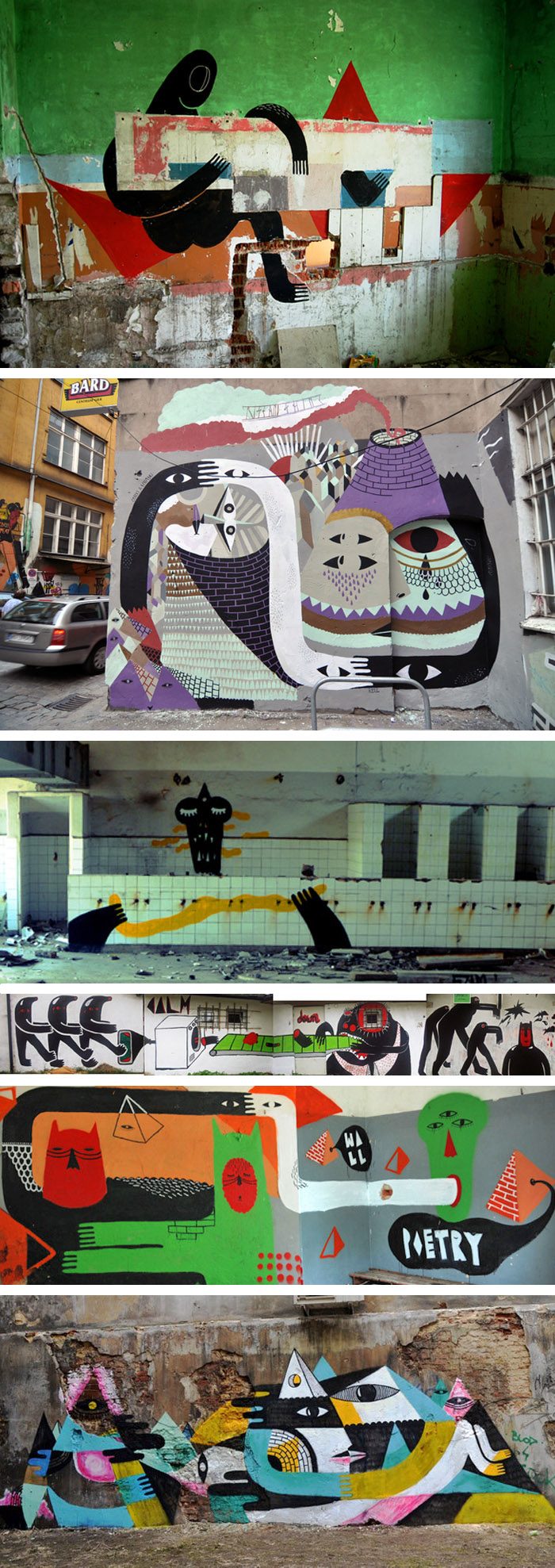
Autone Polish Street ArtAutone is a Polish graffiti artist who paints very detailed murals that, to me, almost have a Northwest American Indian influence to them, but then, maybe that’s just me.

You can see his process in the video below. I like the way he stands back every once in a while to, understandably, look at what he’s done so far. It’s especially cute due to the sped-up quality of the video.

You can see more of Autone’s work here and here.

via outerspaces

Tiritas Malditas (Damned Band-Aids)

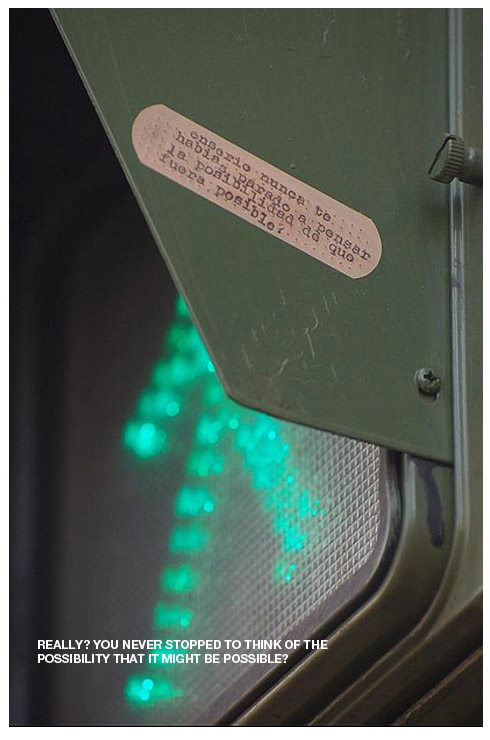
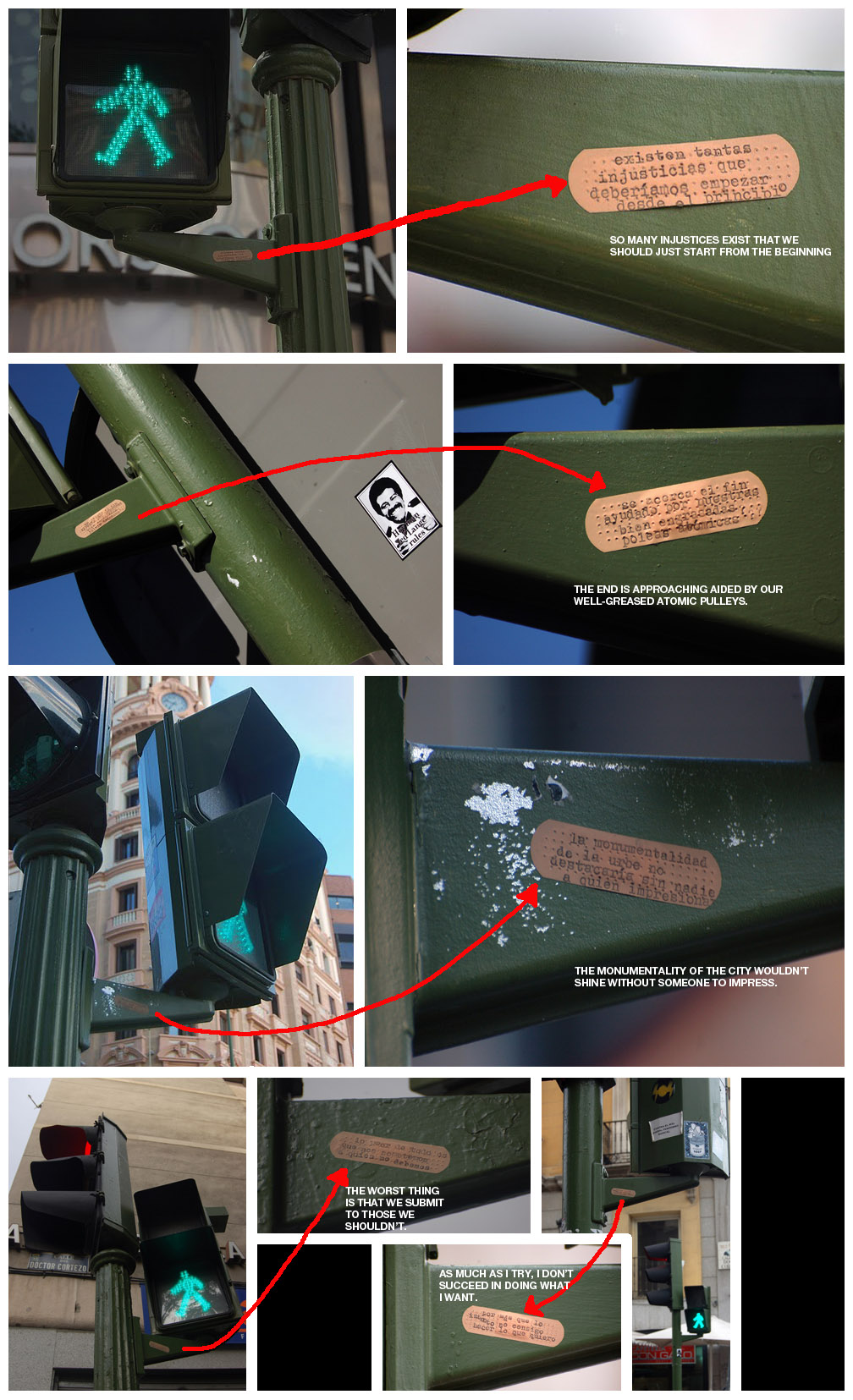
Damned Band-aidsDamned BandaidsIf you happen to be in Madrid and waiting for the light to change at a street corner, you might want to look up and check the closest traffic light for a Tirita Maldita (Damned Band-Aid). Popping up periodically around the Spanish capital are these, sometimes humorous/sometimes political, typed messages on band-aids; one could call them “band-aid tweets.” I like the concept, almost like having someone whisper in your ear at the light. And the thought of the artist inserting band-aids in an old typewriter to create these, well, it makes me smile.

I’ve translated them into English (in white type on the photos) for those who don’t speak Spanish. Click on the images to see larger.

More Tiritas Malditas (in Spanish) here.

via escrito en la pared

NRM Project: New Role Models

When Dan and I entered the ICFF satellite show, Model Citizens, in Chelsea last Saturday, we were greeted by a row of colorfully designed miniature seats. The NRM Project (New Role Models), of which these seats are a part of, is a movement by Mike Seto and David Kim of Click Boom Pow to “empower initiative”. The chairs have been distributed around Manhattan and Brooklyn without permission. The prints on them were donated by a variety of artists and designers including Milton Glaser and DALVA. The idea is to inspire good design as well as giving New Yorkers a place to sit, relax, and enjoy the art.

See more images of the chairs at their site.

Cristina Garrido

Cristina GarridoI don’t know if it was my “Philosophy of Art” class trip to a Vito Acconci exhibit in high school, or a visit to a John Baldessari exhibit later on, or maybe the first time I saw a sketch of a Christo-wrapped building, but somewhere along the way I came to really enjoy and appreciate Conceptual Art. So it’s not a surprise that coming across Cristina Garrido’s work recently, was a nice surprise.

Garrido’s work explores the idea of “visual removal of information through the appropriation of objects and images,” slightly reminiscent of Jennie Holzer’s Redaction Paintings though the target of criticism here is capitalism or materialism rather than the military and government censorship. In her series Removals, Cristina Garrido filmed her subject at an Ikea store in Madrid, covering up all the furniture in a living room display with white bed linens from the store, transforming the space into that of an uninhabited house. In addition to the video, Garrido took Ikea information flyers and veiled (or wrapped) the furniture in the flyers with white-out, forcing the reader to speculate based on the written description what is under the white-out. These, in effect, worked as publicity for her performance piece in the store as well. She continues these white-out “removals” in other catalogues as well, not exclusively Ikea.

Another related series of Garrido’s is called Próximamente (Coming Soon). (See bottom two images; click to enlarge.)

Coming Soon is a project of public intervention which consists in placing several big format billboards on the façades next to demolished buildings in the city of Madrid.

“The billboards would partially cover what is behind them and, at the same time, they would open a “window” to the interior of the building. In them, we could see images of uninhabited domestic interiors, with their furniture covered with bed linens. The images would have a cinematographic aesthetic; which addresses the viewer to those publicity billboards of new premieres. But instead of being an invasive advertisement, which has nothing to do with the place it is located, these billboards tell us about these absent houses, about their possible history.The title of the project, Coming Soon…,  announces something which is about to come (a new construction, the arrival of new inhabitants…), which might or might never happen.”

You can see more of Cristina Garrido’s work on her site.