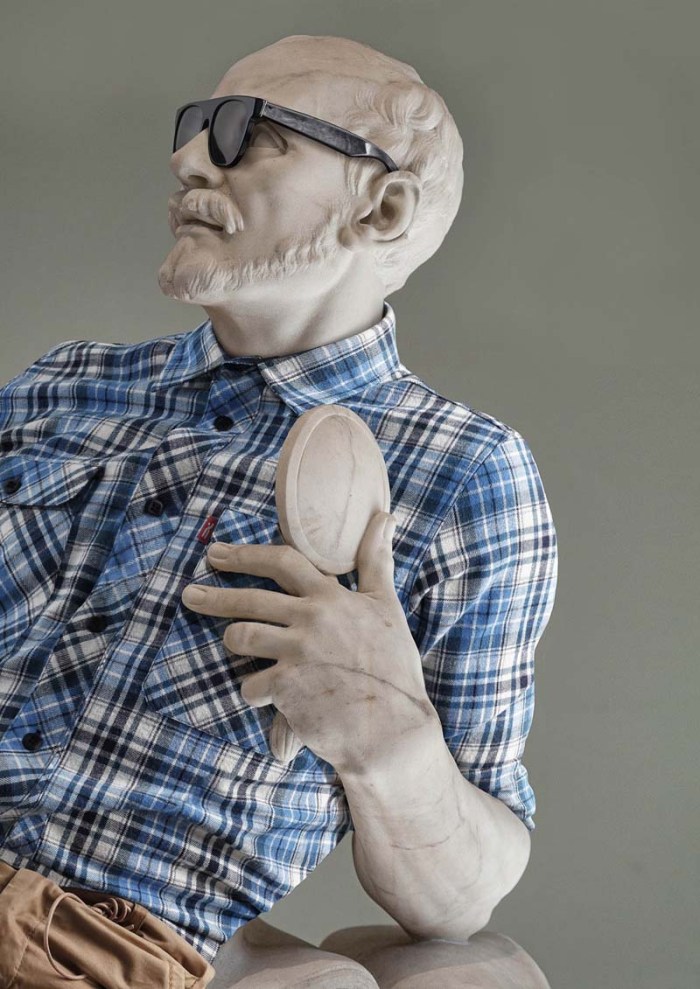
Street Stone: Léo Caillard & Alexi Persani

classic stone statues dressed in contemporary hip clothing, leo caillard photographer, Alexis Persani retoucherclassic stone statues dressed in contemporary hip clothing, leo caillard photographer, Alexis Persani retoucherclassic stone statues dressed in contemporary hip clothing, leo caillard photographer, Alexis Persani retoucherClick to enlarge

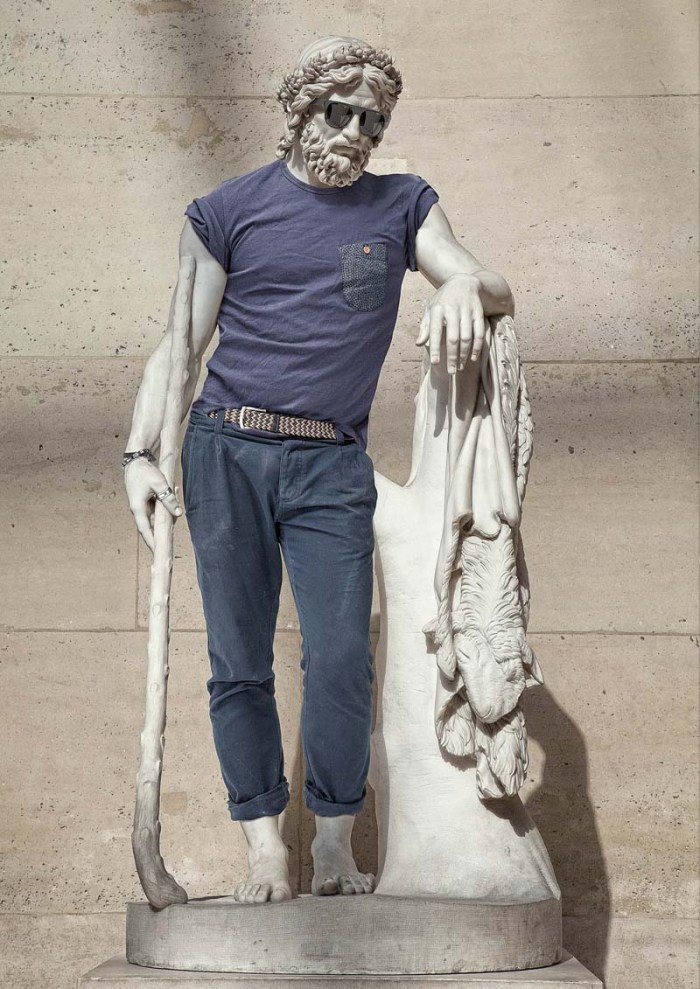
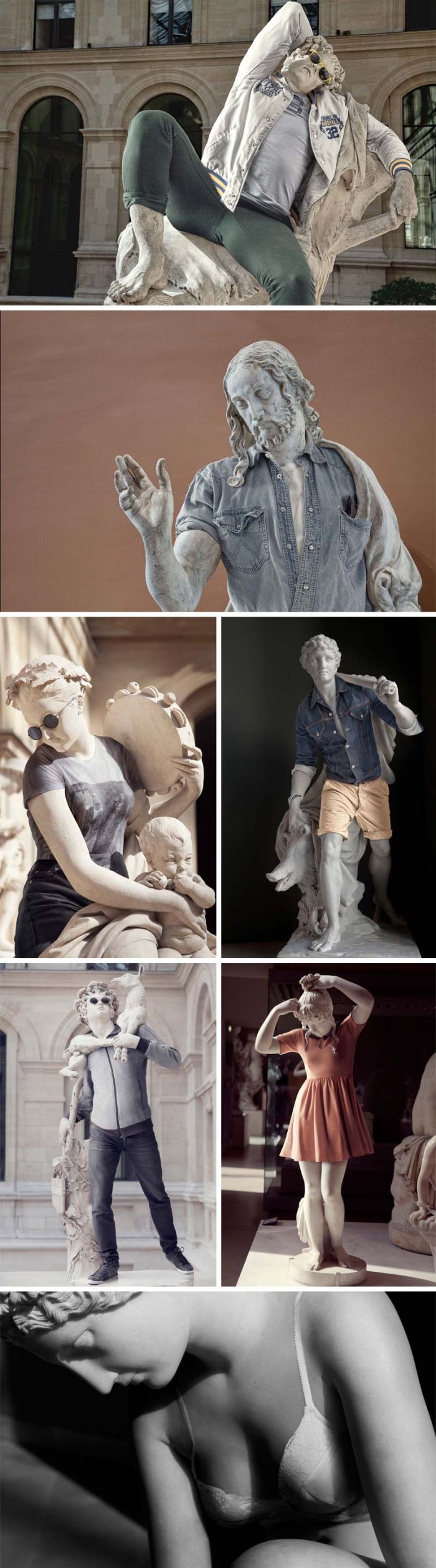
I’ve seen modern-day people dress up as classical statues both on Las Ramblas in Barcelona and, occasionally, here in NYC, but I’ve never seen classical statues dress up as modern-day people. French photographer Léo Caillard came up with the humorous concept. He didn’t actually dress these stone sculptures but instead had retoucher Alexis Persani masterly ‘enrobe’ them using photoshop, converting them into the most unassuming hipsters…well, maybe a little stiffer. How no one has come up with this concept before (talk about perfect models!) for a clothing company catalog (I can just see Victoria’s Secret’s Fall catalog now…) is a mystery to me. Very clever, Léo.

You can see the “making of” in the video below. Those are some mad skills (cue daughters’ eyerolls and cringing here.)

via radiolab

Richard Woods: A Maze for Yorkshire

Richard Woods, A Maze for Yorkshire, the Orangery, Wakefield, Faux cartoon stone wall mazeRichard Woods, A Maze for Yorkshire, the Orangery, Wakefield, Faux cartoon stone wall mazeRichard Woods, A Maze for Yorkshire, the Orangery, Wakefield, Faux cartoon stone wall mazeClick to enlarge

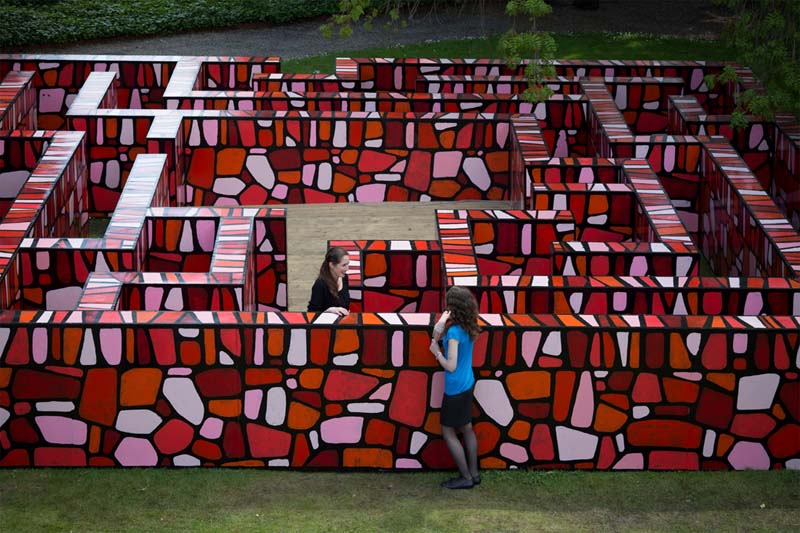
I’ve come across artist Richard Woods’ work over the years, but I don’t think I ever quite put it all together until now. The London-based Woods likes to substitute colorful faux cartoon-y textures for the real ones. Beginning about a dozen years ago replacing wooden floor slats in a house with their colorful cartoon counterparts, Woods has since made aluminum siding homes look like tudors, revamped brick homes with larger cartoon-like faux brick exteriors, and now, at the Orangery in Wakefield, Yorkshire, he’s created a maze titled A Maze for Yorkshire in shades of pinks and reds in what he describes as a ‘cartoon Yorkshire dry stone wall.’ The temporary labyrinth measures 10 meters square with an intimate performance space at its center. The maze has an accompanying soundscape as well.

A Maze for Yorkshire will be up at The Orangery through September 29, 2013.

Photos of maze by Jonty Wilde. Other photos courtesy of the artist.

via wallpaper

Olson Office: Gensler

Cool Typographic Environmental Graphics and signage by Gensler for Olson, Minneapolis Cool Typographic Environmental Graphics and signage by Gensler for Olson, Minneapolis Cool Typographic Environmental Graphics and signage by Gensler for Olson, Minneapolis Click to enlarge

Rapidly expanding Olson, the largest advertising agency in Minneapolis, enlisted Gensler to design their 125,000 sq. ft. offices within Minneapolis’s historic Ford Center building, while maintaining the industrial character of the space. All elements were considered: from work flow to brand rooms to client-focused food and beverage service system. However, it is the treatment of the environmental graphics that I am focusing on here. They support and further the architectural concept, becoming an essential part of the design. Innovative use of super graphics enliven the building’s public spaces, yet continue to respect the building’s original character. The type treatment is bold, fun, and super creative, with giant floor numbers made out of colored string and nails, as just one example. The firm’s name is boldly and amorphously displayed on the ceiling of the top four floors creating an optical illusion, clearly read from the street looking up. The staircases and bathrooms continue with large painted signage and even the wall graphics and colorful furniture scream bold, assertive, and fun.

Photos by Pete Sieger

via segd

One Thousand Speculations: Michel de Broin

World's Largest Disco Ball, One Thousand Speculations by Michel de Broin for Luminato Festival, TorontoWorld's Largest Disco Ball, One Thousand Speculations by Michel de Broin for Luminato Festival, TorontoWorld's Largest Disco Ball, One Thousand Speculations by Michel de Broin for Luminato Festival, TorontoClick to enlarge

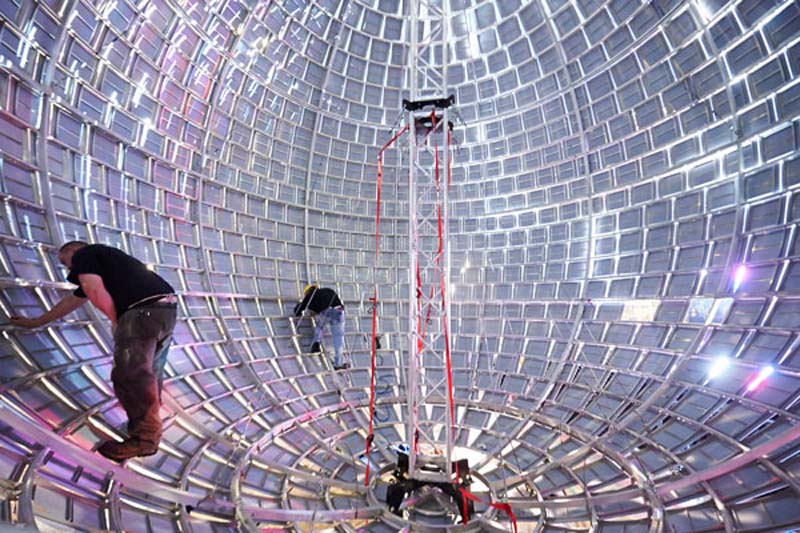
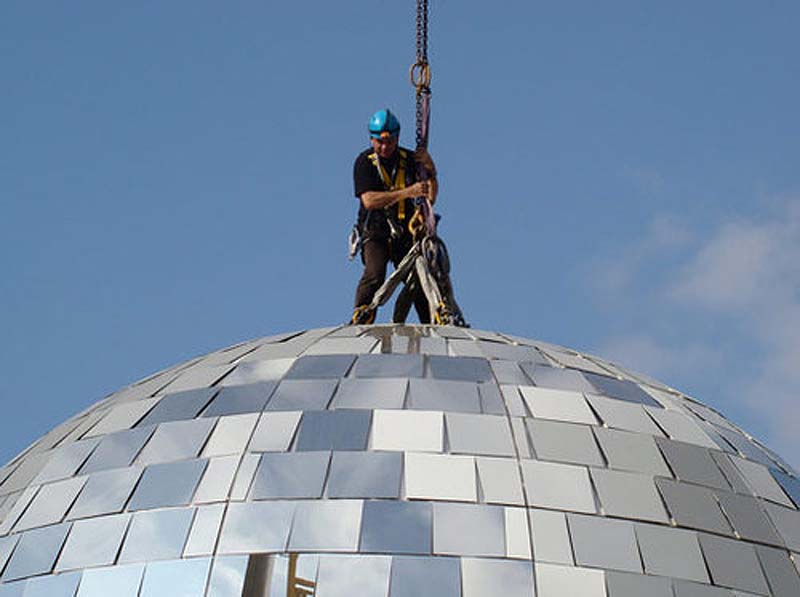
Canadian artist Michel de Broin adopts a critical and playful attitude towards common objects and ideas. For the Luminato Festival, going on currently in Toronto, Broin created his installation One Thousand Speculations, a 7.9 metre in diameter ball made up of 1000 mirrors that will be lifted 80-feet above the ground of David Pecaut Square each night of the Festival. The largest disco ball in the world will spin, twinkle, and reflect against the buildings around the square for the duration of the festival. Fun!

Photos courtesy Luminato Festival and Damn Cool Pictures.

Grimanesa Amoros: The Mirror Connection

The Mirror Connection, Light installation in Museum of China Central Academy by Grimanesa AmorosThe Mirror Connection, Light installation in Museum of China Central Academy by Grimanesa AmorosThe Mirror Connection, Light installation in Museum of China Central Academy by Grimanesa AmorosClick to enlarge

Peruvian-born, NYC-based artist Grimanesa Amoros uses sculpture, video, and light to create works that “illuminate our notions of personal identity and community.” Light is one of her primary materials because it creates “presence without physicality.” Earlier this month Amoros unveiled her latest site-specific commission at the China Central Academy of Fine Arts Museum in Beijing. The work, titled The Mirror Connection, consists of a huge waterfall-like scribble of LEDs that pulsate in their white and yellow colors giving a sense of liquid flowing through tubes. The lights bounce off the walls and reflect off the metal domes they emanate from as well as intermittently casting shadows around the space. The sheer scale of the piece at a height of 33 feet—evident by the minute size of the people wandering the museum gallery in the photos—must be breathtaking. You can see the piece in action on the top left corner on this page.

Photos courtesy of the artist and news.cn

via global times

UBC Buchanan Courtyard: Public Design

UBC Buchanan Courtyard Renewal by Public Design in Vancouver, British Columbia. Cool seating and plaza area, with type circles in fountain emulating logo.UBC Buchanan Courtyard Renewal by Public Design in Vancouver, British Columbia. Cool seating and plaza area, with type circles in fountain emulating logo.UBC Buchanan Courtyard Renewal by Public Design in Vancouver, British Columbia. Cool seating and plaza area, with type circles in fountain emulating logo.Click to enlarge

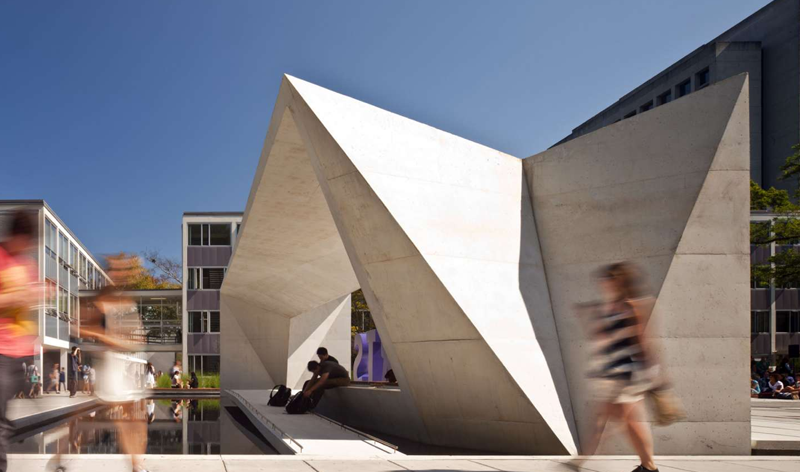
The University of British Columbia (UBC) invited Vancouver-based architecture and design firm Public together with landscape architects Phillips Farevaag Smallenberg to revitalize the courtyards between the existing Buchanan buildings, home to the Faculty of the Arts. Their solution: two dynamic spaces; one for contemplation and relaxation and the other for gathering and performances. At its center is a striking and twisty concrete pavilion, a sculpture in itself, which rests in a reflecting pool that contains typeset quotations in radiating rings mimicking the logo for The Arts whose identity was also designed by Public. In addition to being a visually pleasing place to spend time, by including the new reflecting pool the designers solved a chronic storm water management problem that plagued the space.

Photos courtesy of Public. Second photo by Stephan Pasche for Fast+Epp

Fragile Invasion: Hidemi Nishida Studio

Fragile Invasion, Hidemi Nishida Studio, Norway, Cool wood structure through gallery roofFragile Invasion, Hidemi Nishida Studio, Norway, Cool wood structure through gallery roofFragile Invasion, Hidemi Nishida Studio, Norway, Cool wood structure through gallery roofClick to enlarge

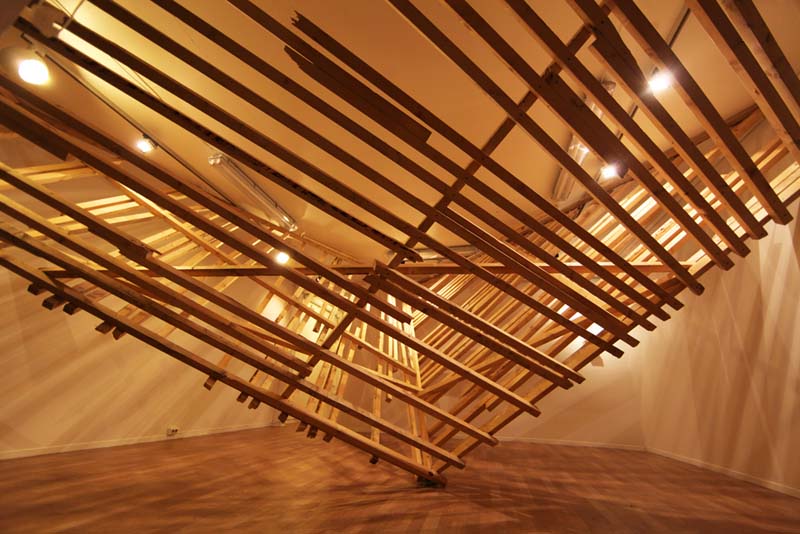
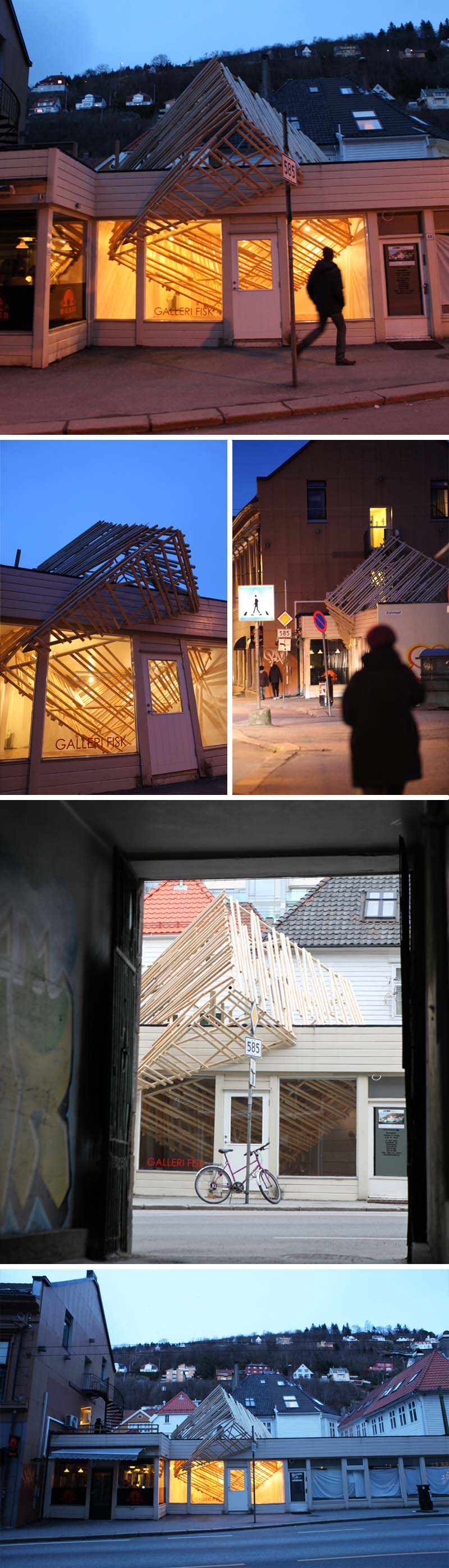
This past March, during an ordinary week, a giant wooden cube seemingly crashed through the roof of Galleri Fisk in Bergen Hordaland, Norway, with the largest part of the cube occupying the building’s interior, and approximately one quarter of it sticking out from the rooftop. Then, after three days, it suddenly disappeared. There was no actual crash but, instead, environmental artist Hidemi Nishida’s installation Fragile Invasion took over the gallery. Nishida creates temporary shelters to make people aware of their surrounding environment, often organizing happenings in these shelters. In the case of Fragile Invasion, the happening seems to have been the installation itself.

via jeroenapers

Rockaway Beach Signage: Pentagram

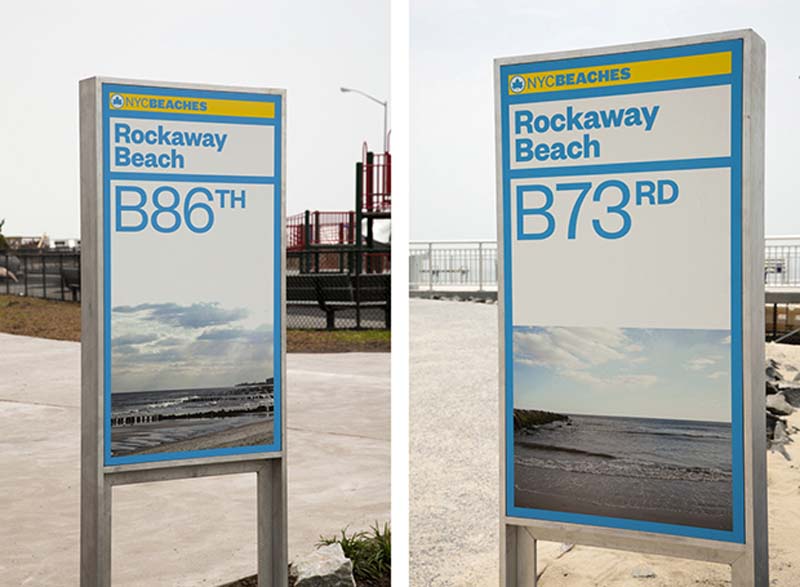
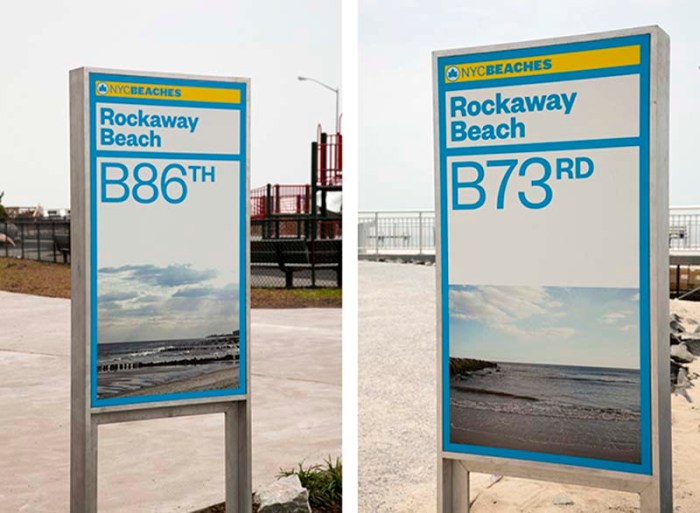
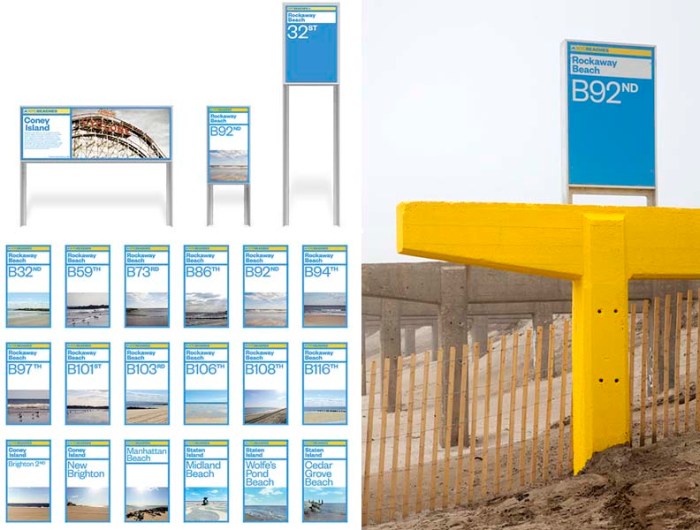
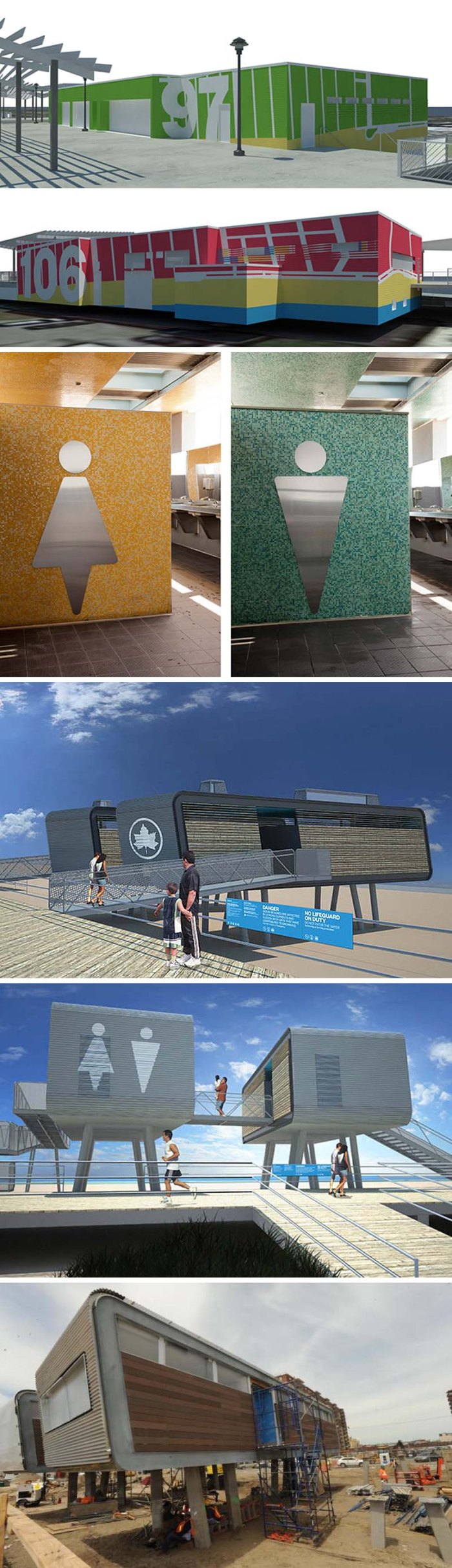
NYC Beaches - Signage   Location:  Rockaway Beach    Graphics:  Pentagram DesignNYC Beaches - Signage   Location:  Rockaway Beach    Graphics:  Pentagram DesignNYC Beaches - Signage   Location:  Rockaway Beach    Graphics:  Pentagram Design, Rockaway by Garrison ArchitectsClick to enlarge

A couple of weeks ago I went out to Rockaway Beach for the first time since last fall/winter when the post-Sandy ravaged beach looked like it would never quite bounce back with its boardwalk blown to bits, its playgrounds’ asphalt erupting like lava from a volcano, and the large parking lot near 105th St. practically invisible under the mounds of sand that had made its way two blocks in from the shore. But bounce back it has—though not quite 100%—clearly through an amazing amount of effort, work, and expense by countless numbers of people and organizations.

The boardwalk is still MIA but right away I noticed new, crisp signage clearly marking each beach name and street, as well as temporary concrete islands (designed by Sage and Coombe Architects) emblazoned with colorful supergraphics also displaying the corresponding beach numbers. Not surprisingly, I have since found out, perusing the Pentagram website, that the environmental graphics are the handy work of Paula Scher and her team of designers. Scher previously developed the identity and signage standards for the New York City Department of Parks and Recreation, which manages and maintains the city’s beaches, and the beach graphics are an extension of that program, utilizing the logo but changing the fonts and colors.

In addition, the graphics have been applied to the mod ‘pods’ designed by Garrison Architects that contain the lifeguard and comfort stations . These look a little more futuristic and slick in the renderings than in reality, but in truth, they weren’t completely finished when I was there.

Impressive work all around, from clean-up, to graphics and architecture. By July 4th weekend it should all be in full-swing again, with many concession stands opening then. New Yorkers are a pretty invincible bunch.

Photos and renderings courtesy of Pentagram & Garrison Architects.
Recycled Paper Theater: Studio Andrew Todd

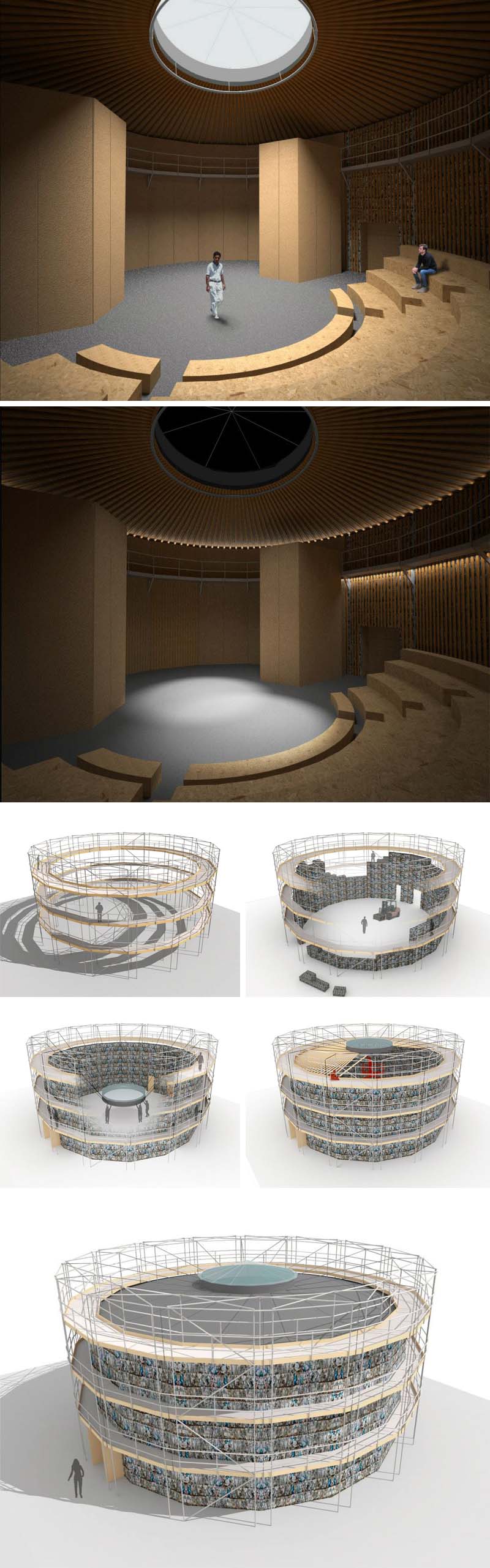
Theater made of recycled paper, 2013 World Stage Design, Cardiff, Studio Andrew ToddTheater made of recycled paper, 2013 World Stage Design, Cardiff, Studio Andrew ToddClick to enlarge
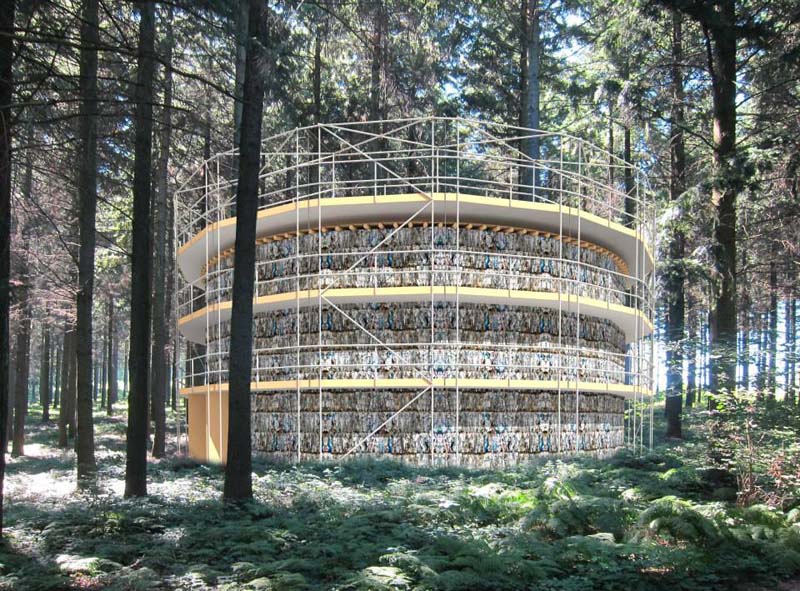
Imagine a theater made almost exclusively made of recycled paper and other recycled materials. That’s what Paris-based architecture and scenography practice Studio Andrew Todd did. Their design has been selected for exhibition at the 2013 World Stage Design event in Cardiff, opening in early September. The exterior scaffolding structure is used to erect and brace a massive wall of paper bales. The center oculus gets pulled up via cables and bamboo purlins are fixed at the top. A double layer of recycled circus tent roofing is then placed on top of the bamboo and the interior is finished with bamboo and cardboard with natural light streaming through the roof’s center. Should be very cool, not to mention sustainable.

All images ©Studio Andrew Todd.

Sylvie Fleury: Scratch

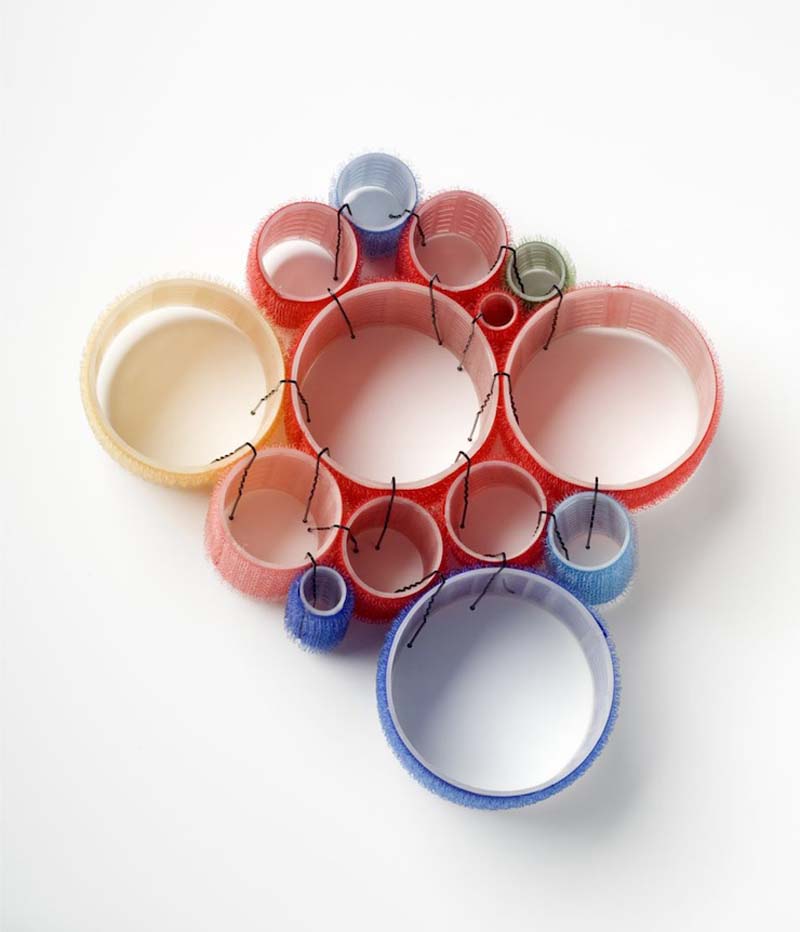
Sylvie Fleury, Scratch, Sculpture made with rollers and hair pins, curlers and bobby pins, frieze ny 2013Sylvie Fleury, Scratch, Sculpture made with rollers and hair pins, curlers and bobby pins, frieze ny 2013Sylvie Fleury, Scratch, Sculpture made with rollers and hair pins, curlers and bobby pins, frieze ny 2013Click to enlarge
Last month at the Frieze Art Fair, I came across Swiss artist Sylvie Fleury’s piece Scratch, a small sculpture made with rollers and hairpins (or curlers and bobby pins) and the simplicity, as well as the fun choice of objects, made me smile. Fleury, based in Geneva, typically uses fashion and luxury products in her work. Her art, at first glance, may seem like an affirmation of our consumerist society but, if you look closer, it’s quite the opposite. Her series of Scratch sculptures is no exception, playfully using objects, in this case hair rollers, that focus on superficial beauty.

Photos courtesy of the artist and Frieze.

Sonos Playground Deconstructed

Sonos Playground Deconstructed an immersive interactive installation at the Museum of Moving Image, Red Paper HeartSonos Playground Deconstructed an immersive interactive installation at the Museum of Moving Image, Red Paper HeartSonos Playground Deconstructed an immersive interactive installation at the Museum of Moving Image, Red Paper HeartClick to enlarge
Sonos Playground Deconstructed, an immersive and interactive installation by Red Paper Heart (previously here) — currently at the Museum of Moving Image here in NYC in conjunction with Spectacle: The Music Video exhibition — brings minimalist art to life using five detached walls suspended above a reflective floor. Each of the walls has been painted with 27 1-inch wide white lines and 26 2-inch wide black lines. By mapping the white lines set between black lines the studio was able to create a more immersive and surreal environment. Visitors are able to select any song from an iPad and watch a visualization of the music projected onto the surrounding walls. Through motion-capture technology, they can interact with and manipulate the animation through movement.

Take a look at it in motion in the video below:

Sonos Playground Deconstructed (deconstructed because it was originally installed in a 250 sq. ft shed at the Sonos Studio at the 2013 SXSW festival) is on view at the Museum of Moving Image until June 16, 2013.

Photos courtesy of Red Paper Heart and MoMI

Ctrl-Alt-Del: Yossi Wallner

Yossi Wallner, Tel Aviv Street art, Control Alt Delete keys, Escape keys placed on random exterior walls Yossi Wallner, Tel Aviv Street art, Control Alt Delete keys, Escape keys placed on random exterior wallsYossi Wallner, Tel Aviv Street art, Control Alt Delete keys, Escape keys placed on random exterior wallsClick to enlarge

What if the keyboards that we use incessantly all day would work in reality? If you could escape something by a push of a button? Delete anything by a flick of a finger? Or format your surroundings to your liking? These are the questions that Israeli designer Yossi Wallner is posing with his recent street art project around Tel Aviv. He has placed these function keys in random locations surely piquing the curiosity of those who come across them. I’ve never seen a ‘Sleep’ or ‘Wake’ key (must be a pc thing) but those make for interesting messages too. You can see more images of the project on his flickr page.

Chema Madoz: Virtual Reality

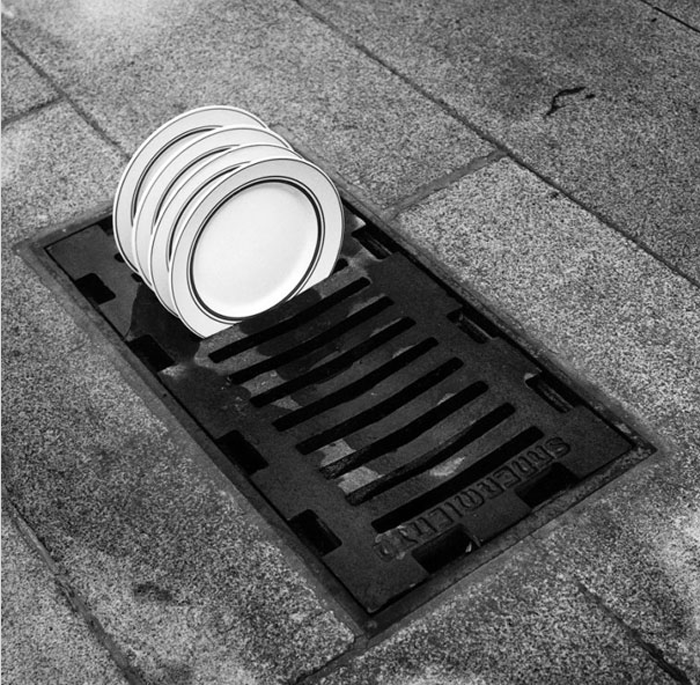
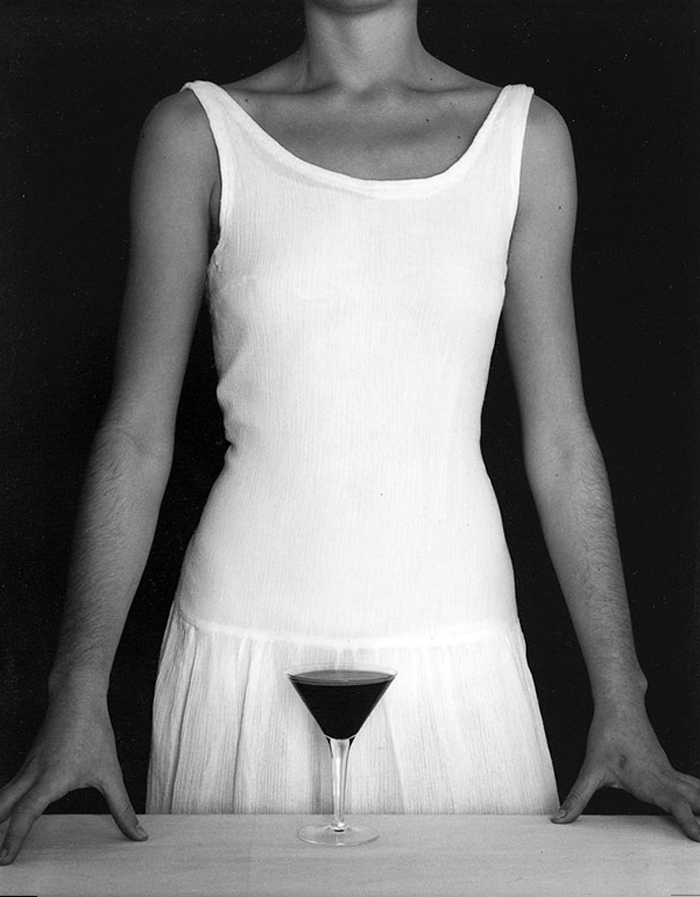
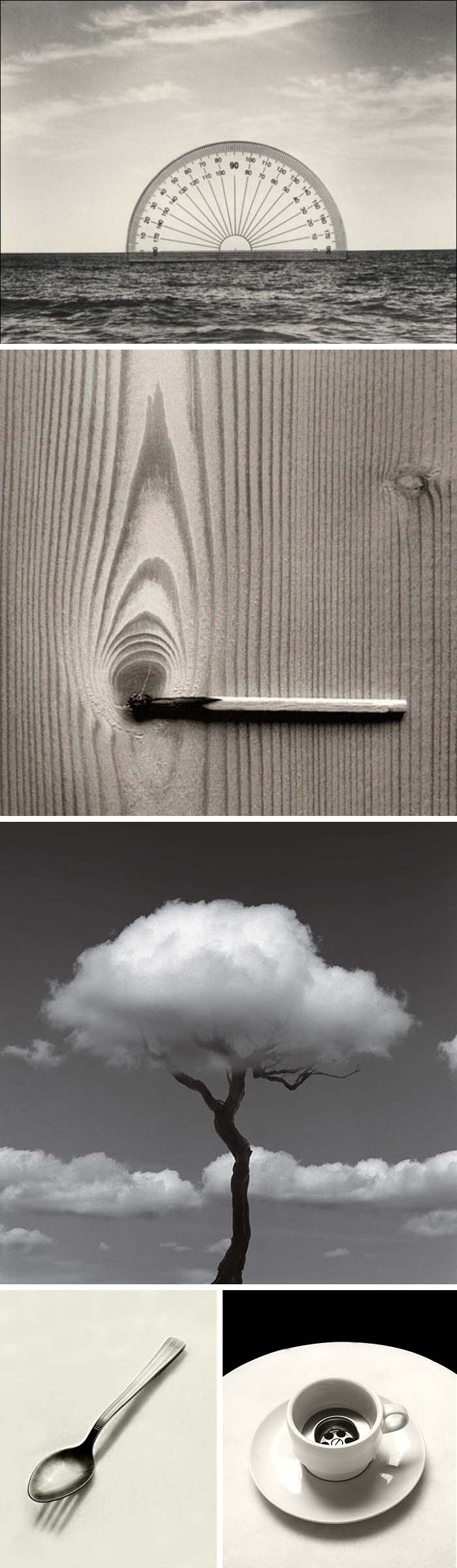
Chema Madoz, Surrealy photographs, Contemporary Spanish PhotographyChema Madoz, Surrealy photographs, Contemporary Spanish PhotographyChema Madoz, Surrealy photographs, Contemporary Spanish PhotographyClick to enlarge
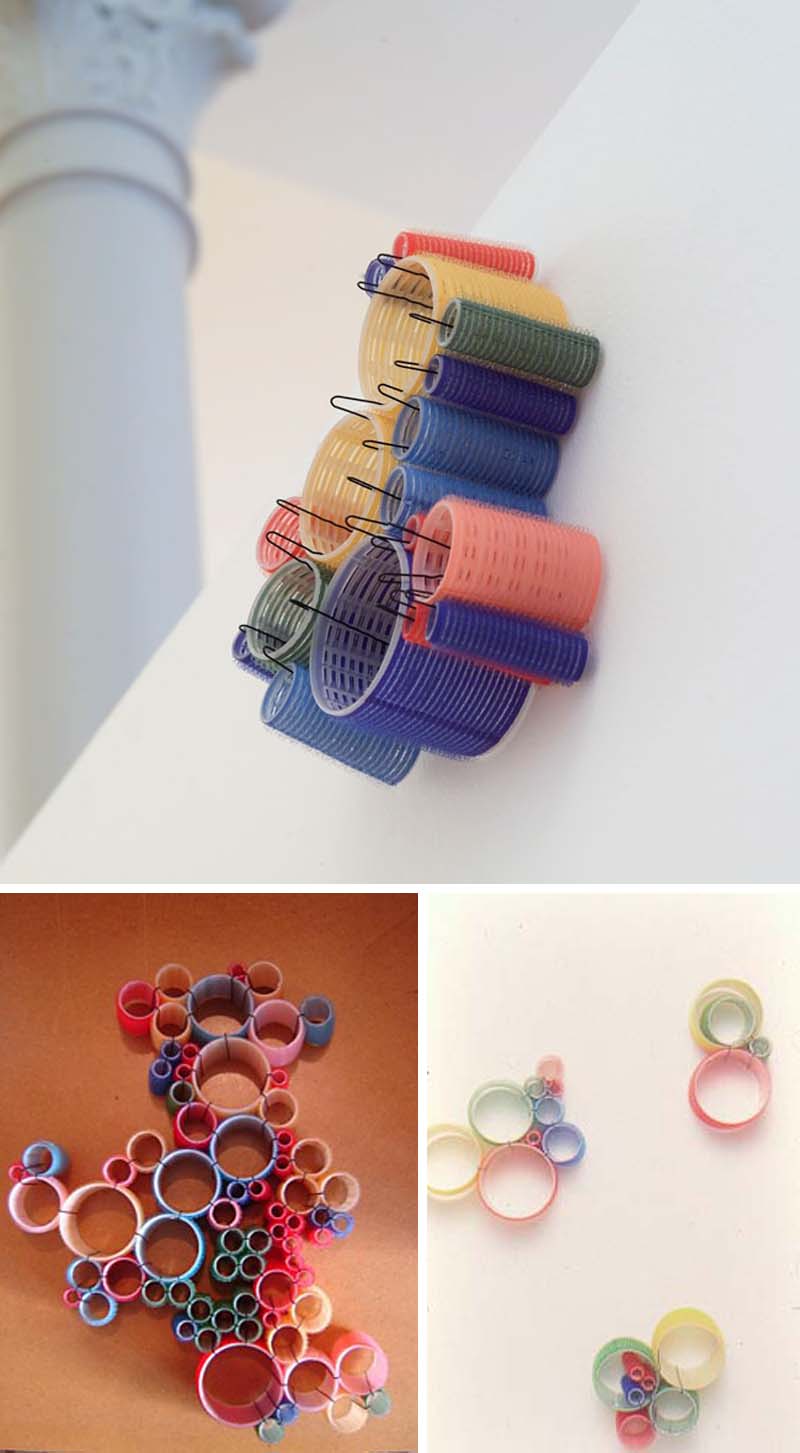
Photographer Chema Madoz finds the surreal in the everyday. Not suprisingly Madoz is from Spain, where surrealism seems to run thick in the veins with predecessors like Dali and Buñuel setting a similar tone and sensibility years back. Madoz’s photographs make you do double-takes, with seemingly unrelated objects he fuses together in the most surprising ways that somehow make sense and often make you smile. All in black and white, with each one more clever than the next.

You can see many more of his photographs on his website.

via lost at e minor

Iconoclashes: Berglin & Valla

Iconoclashes Erik Berglin and Clement Valla, ArtHack Day, Metropolitain Museum of Art public web archive, Mulherin+PollardIconoclashes Erik Berglin and Clement Valla, ArtHack Day, Metropolitain Museum of Art public web archive, Mulherin+PollardIconoclashes Erik Berglin and Clement Valla, ArtHack Day, Metropolitain Museum of Art public web archive, Mulherin+PollardClick to enlarge

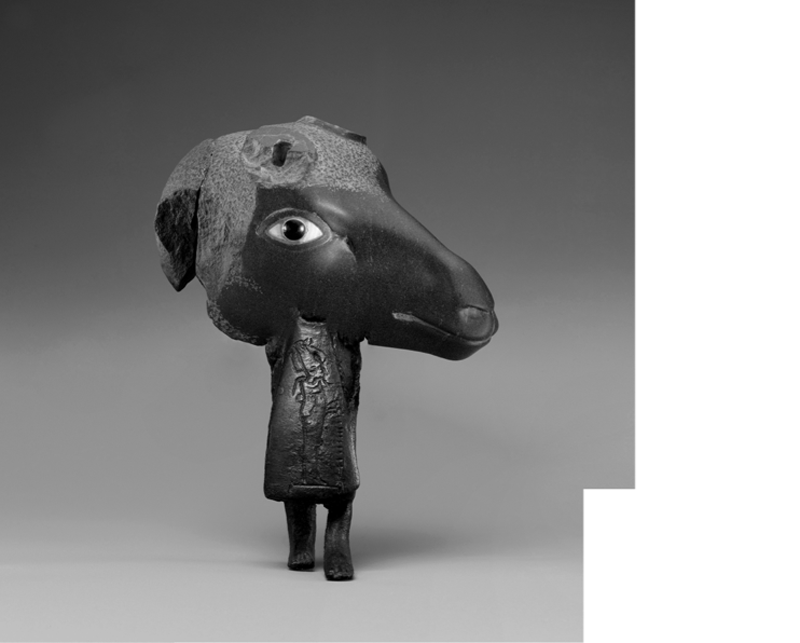
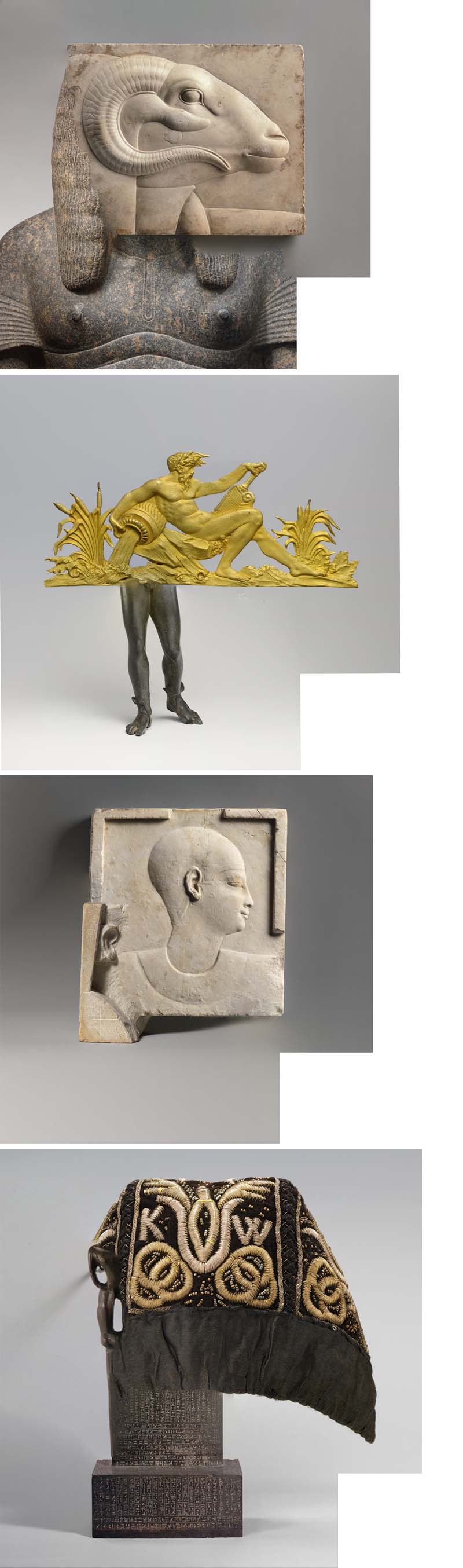
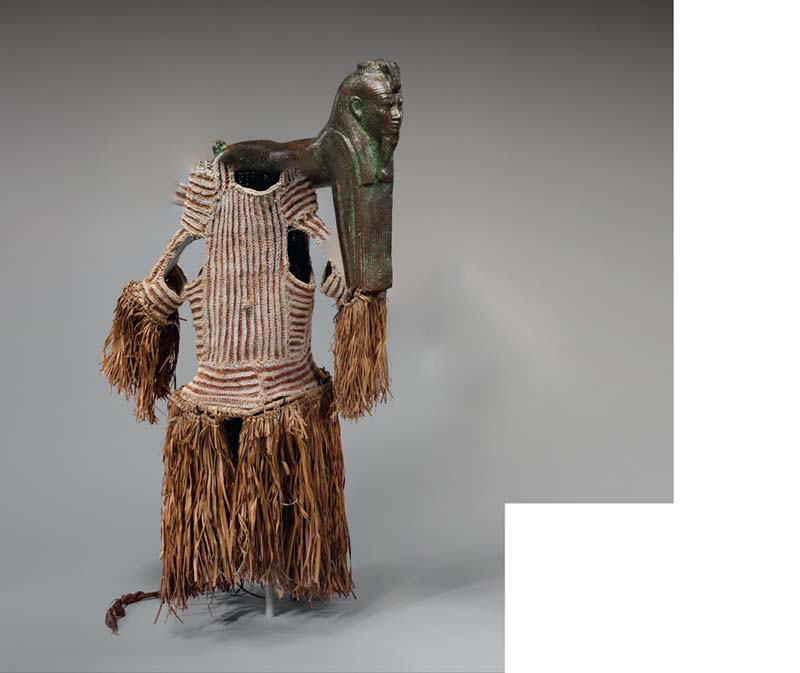
I went to galleries on the Lower East Side this weekend here in NYC, and had it not been for my friend Eric, I would have definitely walked on by the Mulherin + Pollard gallery having glanced through the window quickly and seen a room full of oversized photographs of classic sculpture. Once inside, there was something a little off about these photos. Fortunately, one of the gallery owners came over explained the process behind the images, which I ended up really liking. Iconoclashes, as this series of works is called, was created by artists Erik Berglin and Clement Valla at Art Hack day (an event that had intrigued me at the time) a few months back. Berglin and Valla used images from the Metropolitan Museum of Art’s public web archive that were tagged with the keywords ‘God’ or  ‘Religion’. Using an algorithm in Photoshop, the works were randomly grouped and digitally merged, resulting in surprisingly odd, and in some cases surreal, statues. Because the Met shoots all of its art with the same background and lighting, the melding of the objects is more believable. The clashing of these objects from various time periods and cultures make for some very interesting and unlikely artworks. Even the white space on the right of the images is a result of a clash between vertical and horizontal images, confusing photoshop into leaving an irregular edge.

I found the whole concept fun, as well as technically curious, and, at least that top image, makes a nice sculpture in its crazy combination.

Iconoclashes showed  at Mulherin + Pollard through June 9th, but you can see many more of these visual mash-ups here and here.

NYC Culture on the Cheap

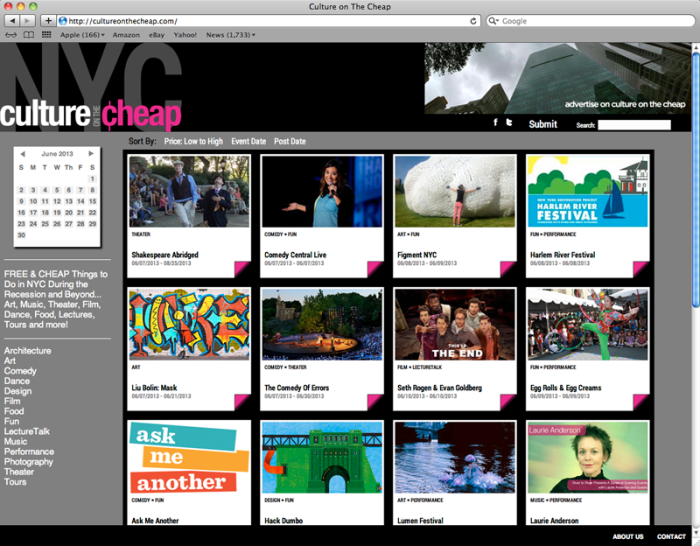
Culture on the Cheap, NYC, Free and Cheap things to do in NYC, New Site, AnnouncementIf you’re here looking for our regular NYC Culture on the Cheap post, we have exciting news for you. Starting today, Culture on the Cheap will be its own separate site offering links to free and cheap things to do in NYC in art, music, design, film, theater, dance, food, architecture, talks, tours, and general fun. It won’t focus specifically on weekends anymore, though most activities may still be weekend-centric. So go take a look! You can sort by Event Date, Price, Genre, or even a specific date on the calendar.

If you like what you see, please share it with you friends and lovers! Sisters and brothers! Like our page on facebook or follow us on twitter.

It’s just up today, so please bear with us if any glitches should arise.

Liu Bolin: Hiding in New York

Liu Bolin, Hiding in New York, Hiding in the City, Mask Exhibit at Eli Klein GalleryLiu Bolin, Hiding in New York, Hiding in the City, Mask Exhibit at Eli Klein GalleryLiu Bolin, Hiding in New York, Hiding in the City, Mask Exhibit at Eli Klein GalleryClick to enlarge

In preparation for his 5th solo exhibit at New York’s Eli Klein Gallery titled MaskLiu Bolin (previously here and here) had a live performance where visitors could witness the creation of a new photograph in his Hiding in New York series. Emma and Daniela went over to check it out with some friends and took a few photos of the process. The performance started with Bolin wearing a pre-painted suit with matching images of the rifles and peg holes on the wall behind him. With assistants all around him busy at work for the whole two-hour period, Bolin’s suit was touched up and perfectly positioned to blend in with his backdrop before they moved on to his vaseline-covered (or so it appeared) face where they painted each detail for the final disappearance.

The show Mask opens today at the Eli Klein Gallery in Soho and runs through July 21, 2013. We assume the in-progress rifle photo will be included in the show along with many more of his Hiding in the City series and the JR collaboration that took place last year.

Photos of Liu Bolin by Ana Slade. All other photos courtesy of the artist and Eli Klein Fine Art.

Paulius Nosokas: SPAMspace

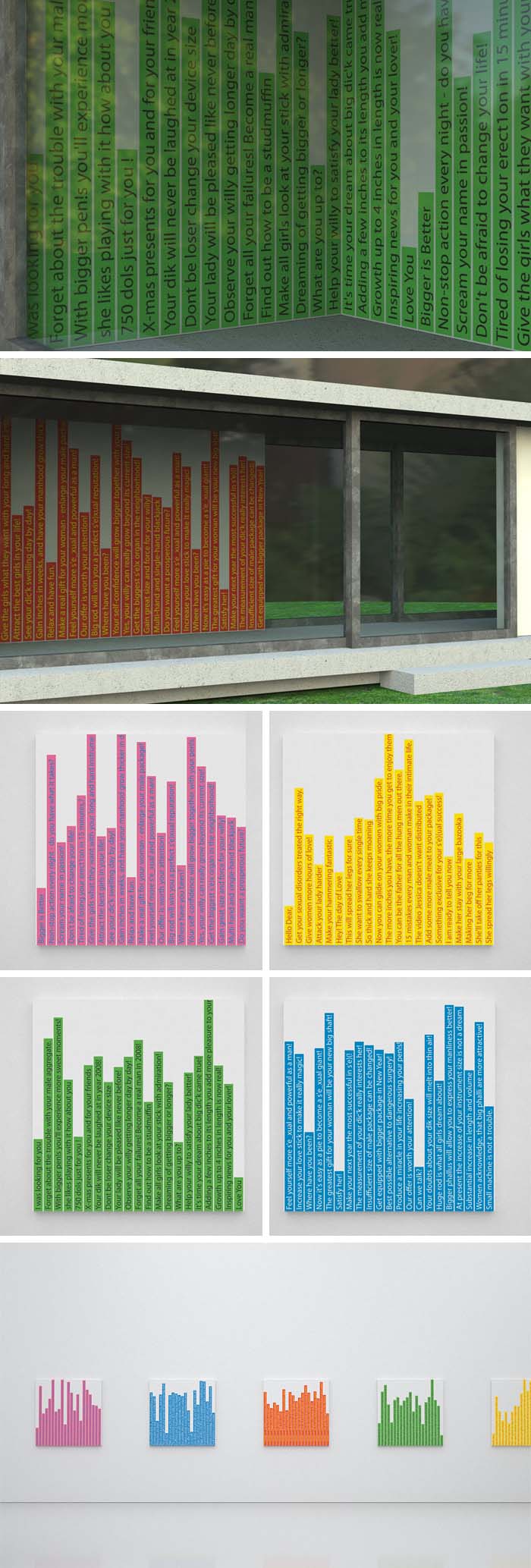
SpamSpace by Paulius Nosokas, lines of spam converted to graph-like images and installations.SpamSpace by Paulius Nosokas, extracted lines of spam converted to graph-like images and installations.SpamSpace by Paulius Nosokas, extracted lines of spam converted to graph-like images and installations.Click to enlarge

Currently Berlin-based, Lithuanian-born artist Paulius Nosokas has a touching and inspiring childhood story, braving it independently from an early age and coming to the US at the age of 18 where he worked in, and learned on the job, graphic design and screen design. He combines these skills in his art being a firm believer that behind every good work of fine art is good design.

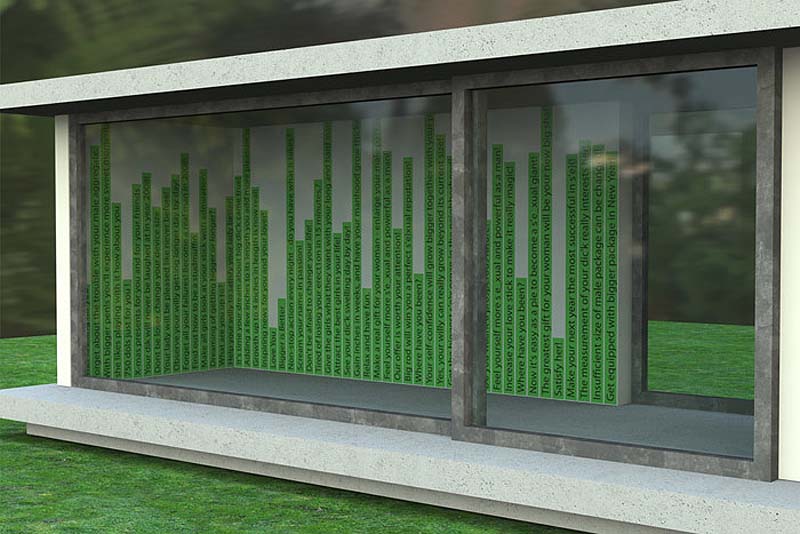
In his series of works titled SPAMspace, Nosokas collected 3-year’s worth of actual spam subject heads that appeared in his 5 email inboxes. He took a small fraction of them and designed them into stripes of color, dividing them into 7 sets — one for each day of the week — placing each line on its side, taking on a graph-like appearance. Together, they tell a story of the power of the written word to seduce, and become a clear representation of the internet and its invasion of privacy. Nosokas chose sexual spam, but could have just as easily  chosen non-sexual lines. SPAMspace is designed to fit in the space at hand, traveling up and across walls. I’d like to see this as a wallpaper selection. Maybe in the pastel tones of pink and blue. Maybe even in a baby’s room! Just kidding…

You might want to check out the rest of Paulius Nosokas’s work that ranges from light drawing to beautifully animated geometric shapes.

All photos courtesy of the artist.

Penn Station: Diller Scofidio + Renfro

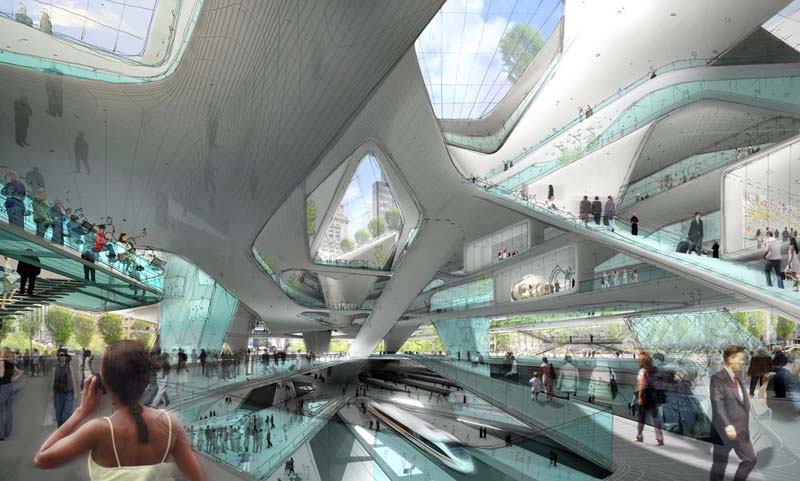
Proposal for new Penn Station by Diller Scofidio + Renfro for Municpal Arts Society. One of four architects asked to submit designs
Proposal for new Penn Station by Diller Scofidio + Renfro for Municpal Arts Society. One of four architects asked to submit designsClick to enlarge

Since visiting the ICA in Boston; the redesign of Lincoln Center in NYC; and all parts of the High Line both past and future, it’s hard for me not to be excited about any project that Diller Scofidio + Renfro are involved with. So, it’s no surprise that when four architecture firms – Diller Scofidio & Renfro, SHoP Architects, Skidmore, Owings & Merrill and H3 Hardy Collaboration Architecture — were asked by the Municipal Arts Society to reimagine an ideal Penn Station and Madison Square Garden, though appreciating all four proposals, the one that really won me over was theirs.
The design envisions the new Penn Station as a city within a city, a porous and light-filled civic structure filled with things to do. Apart from being downright spectacular in that multi-layered way that incorporates dramatic angles and lots of glass, the design transforms waiting into a fun event with spas, restaurants and other venues, making it more of a destination than simply a gateway to New York. In this plan, MSG will be located to the west end of the Farley building on Ninth Avenue, with access to Eighth Avenue.

Really, all four proposals are quite interesting and beautiful and definitely worth a look here, but Diller Scofidio & Renfro have my vote.

Images courtesy Diller Scofidio + Renfro

via NYTimes