IXXI: Photo Walls

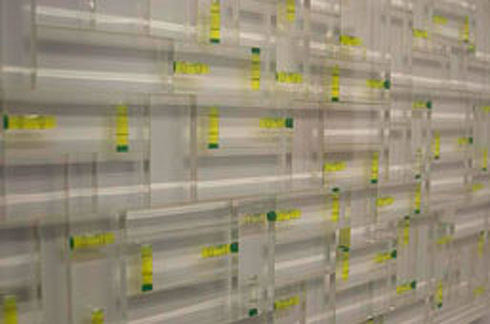
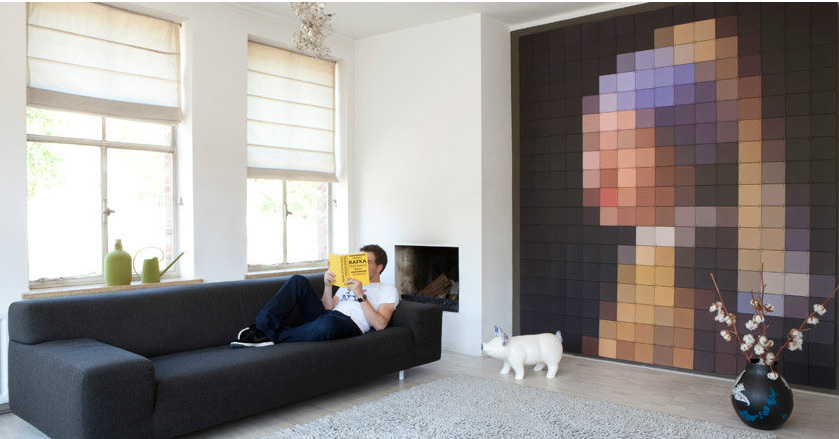
pixelated wall images, photo wall, modular photo system, ixxipixelated wall images, photo wall, modular photo system, ixxiDeveloped by Dutch designers Eric Sloot, Paulien Berendsen and
Roel Vaessen, ixxi is a modular wall-hanging system made up of square photo cards connected by plastic x’s and i’s. It allows you to make your own photo enlargements, photo collages, pixelated images, or any other creative ideas you can come up with. Oh, the possibilities!

See more on the ixxi site.

via bb

De Tafelwip: Marleen Jansen

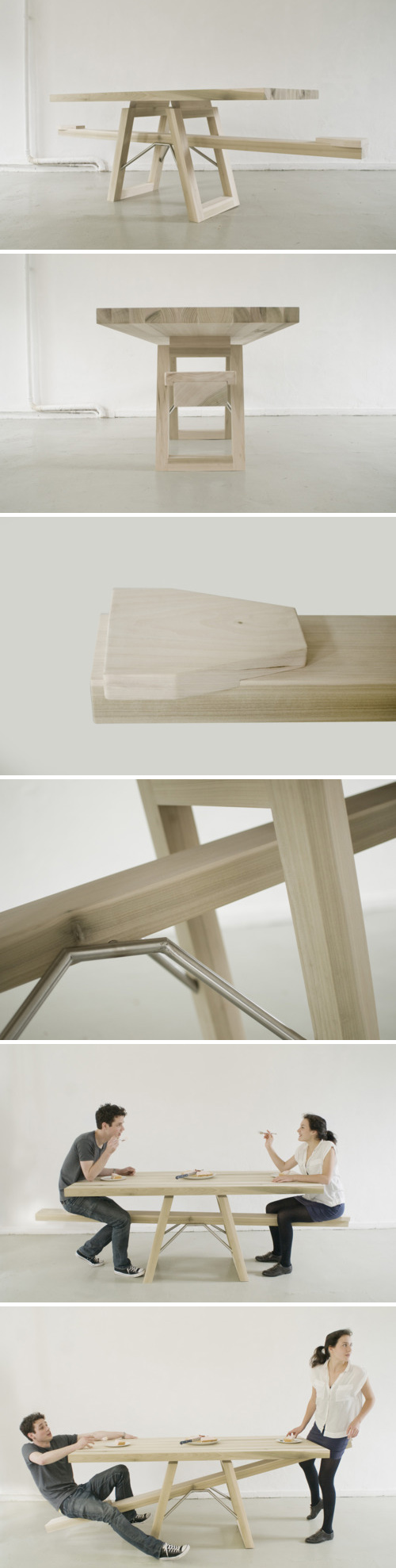
Dutch product design, table, seesaw, DDW, fun furnitureDutch product design, table, seesaw, DDW, fun furnitureThere’s a reason you don’t see many see-saws in playgrounds anymore; it could be safety issues or maybe just a complete loss of faith in see-saw partnerships. After all, there’s a lot of trust involved on the see-saw. One person gets off unexpectedly and the other one can go flying…or more accurately, crashing.

Dutch designer Marleen Jansen clearly still has faith in the see-saw and the unspoken contract that is entered when both parties mount one. De tafelwip, a project developed after her dissertation entitled ‘Being Forced Voluntarily’ (Ongedwongen moeten) on the subject of table manners, prevents people from walking away from the table during dinner. The see-saw seating forces the two people to stay at the table because, as she points out: “If one leaves the table, the other diner ends up on the floor! Definitely not a charming thing to do!”

Emily Post would be proud.

via ddw

J. Mayer H.: Rapport

Berlin, J. Mayer H. Installation, Berlinishe Galerie, collabcubedBerlin, J. Mayer H. Installation, Berlinishe Galerie, collabcubedClick to enlarge

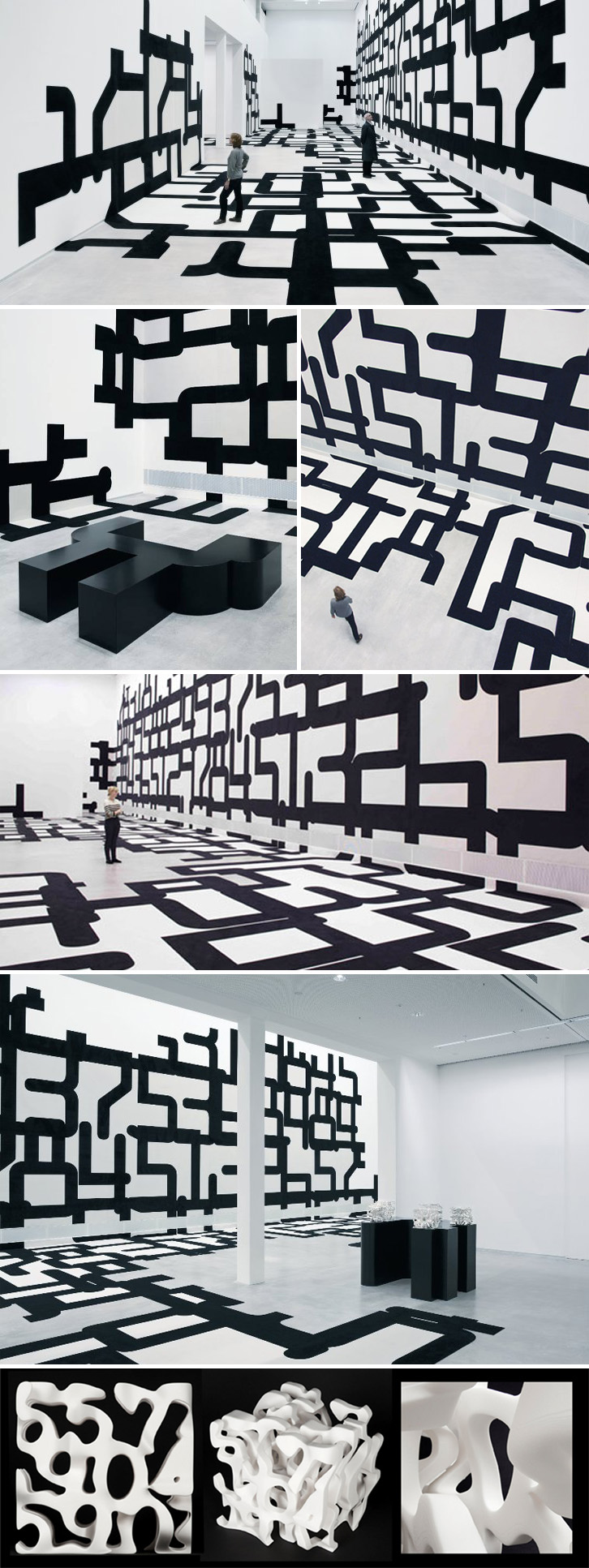
The German architectural firm J. MAYER H., founded by Juergen Mayer H., has designed an installation for the Berlinische Galerie titled Rapport: Experiments with Spatial Structure. Data security patterns have been printed in an unimaginably large point size on carpeting which adorns both the floor and walls of the museum’s 10-meter high entrance hall. The large, somewhat abstract shapes created by the oversized numbers, results in a flickering impression and transforms the rigid white cube into a playful scenario negating its strict geometry.

The word “Rapport” has multiple interpretations and is meant to be ambiguous.

From the architects:
As a specialist German-language term from textile manufacturing, it refers to the serial pattern of the installation. On the other hand, in the military field the term “Rapport” means a “dispatch”, while in psychology it describes a human relationship in which those involved convey something to the others. In this sense it also refers to the starting material of the installation: data security patterns, which are used, for example, on the inside of envelopes. In this case, they stand for confidential communication between two parties.

The installation will be up through April 9, 2012 at the Berlinische Galerie, in Berlin, of course.

via city vision

Tsang Kin-Wah: The Seven Seals

Dynamic projected type installations, Mori Art MuseumDynamic projected type installations, Mori Art MuseumClick to enlarge

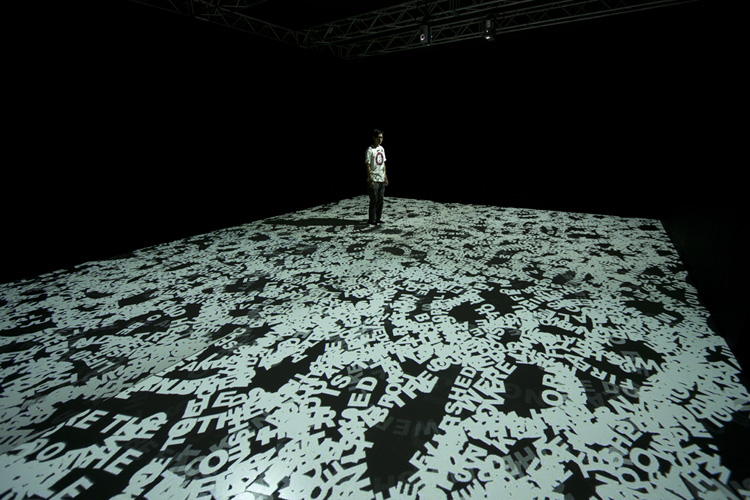
Oh yes, this is right up my alley. Hong Kong based artist Tsang Kin-Wah incorporates text and type to create dynamic installations. From painted floral-like wall patterns that upon closer inspection are made up of letters and Chinese characters, to his ongoing video installation series titled The Seven Seals, Kin-Wah envelops the viewer in type. The texts formed by that type pose questions on existence drawing from biblical, political and philosophical writings, in many cases meant to provoke a range of feelings from the spectator reminding us of issues like war, terrorism, revolution, death, murder, suicide, self-denial, etc.

Presently the latest installation in The Seven Seals, The Fifth Seal – HE Shall Deliver You Up To Be Afflicted And Killed As HE Was, is being shown at the Mori Art Museum in Tokyo through January 15, 2012.

via Mori Art Museum

Flow by Carlo Viscione

installation, Heathrow Terminal 5, contemporary art, Boarding Passinstallation, Heathrow Terminal 5, contemporary art, Boarding Pass

Click on images to enlarge

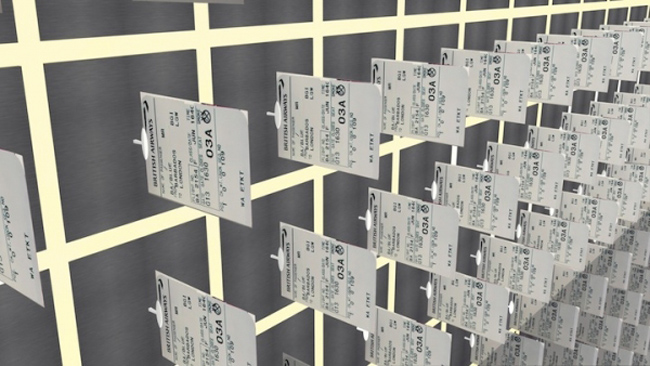
London based spatial designer Carlo Viscione proposed a design, in collaboration with Amy Harris, for an interactive installation, titled Flow, to be placed in Terminal 5 at Heathrow airport. Made up of 4,000 ‘pixels’ measuring 10 sq cm each with a discarded boarding pass ticket stub protruding from the center of each square, the responsive wall reacts to the movement of passers-by. Triggered by ultra-sonic sensors hidden in the ceiling, the installation creates flowing motion by moving the ticket stubs in a synchronized movement across the wall.

From the artist:
The idle state represents a coral reef movement; flow swinging softly left and right. When people are passing by, it reacts to speed, group size and proximity and tracks the people along the 20m length of the installation. The computer assessing the information triggers different algorithms that create different responses to the people passing – from a simple wave to repeating patterns.

We hoped that this little intervention creates a little smile on people’s faces and creates an experience that positively links back to visiting London.

Watch the video above for the full effect. And visit Carlo Viscione’s website to see more of his work.

m_lab: Espluga + Associates

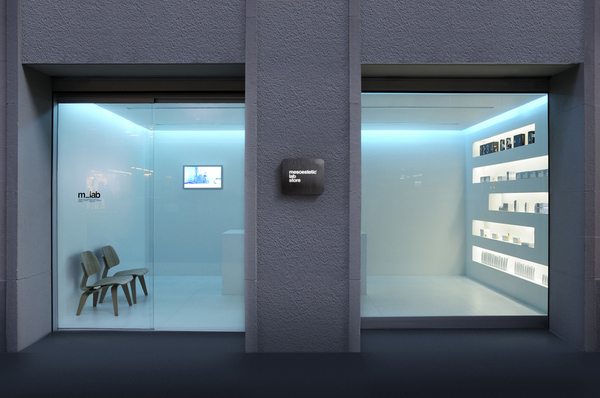
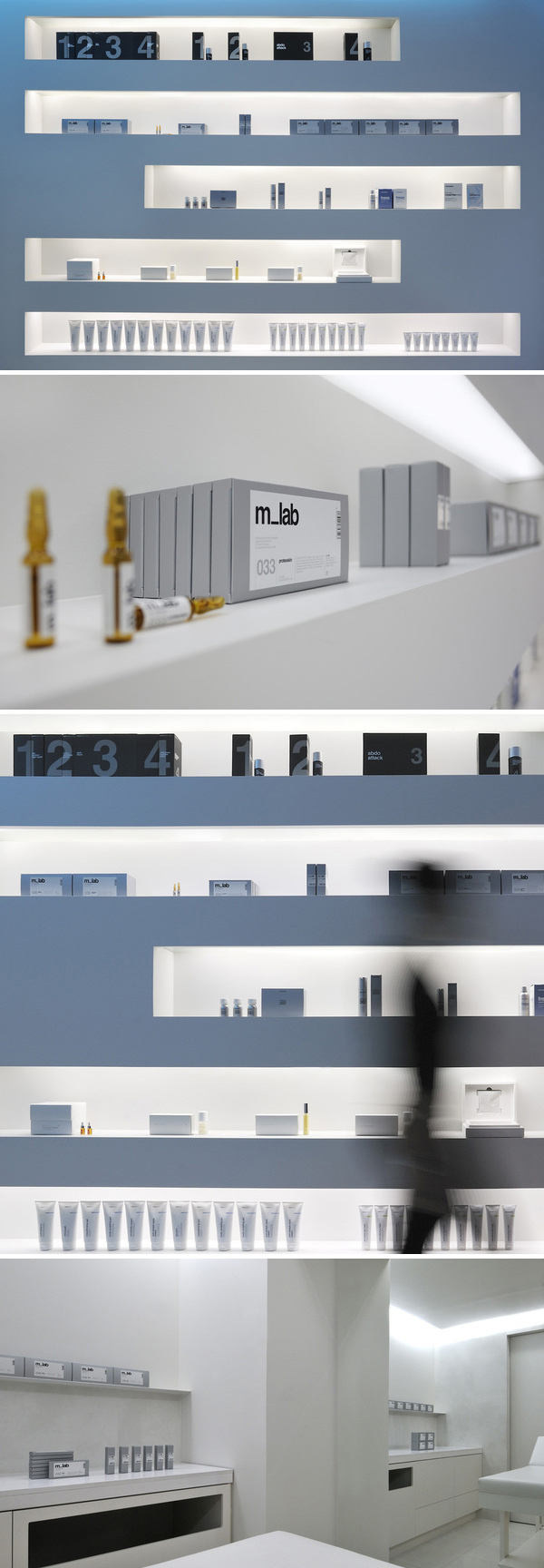
interior design, naming, packaging, retail design, espluga+associates, collabcubedinterior design, naming, packaging, retail design, espluga+associates, collabcubedinterior design, naming, packaging, retail design, branding, collabcubedThe Spanish design firm Espluga + Associates, based in Barcelona, is one of those companies that does it all: graphic design, branding, advertising, naming, and, as they say on their website, lots of other things that end in ‘ing’.

One of their recent projects involved several of these capabilities rolled into one. m_lab, Mesoestetic’s ( a company/laboratory specializing in the development of products for the treatment and care of skin) first lab store in Europe, includes interior design, naming, visual id, and packaging by Espluga + Associates. The white, minimalist design with its recessed blue-tinted lighting along with the Helvetica-driven signage and packaging creates the perfect cool and sterile lab-like feel. Nice!

You can see more of Espluga + Associates work here.

And stay tuned for our next post on a completely different project by this talented studio.

Paul Caporn: Level Compositions

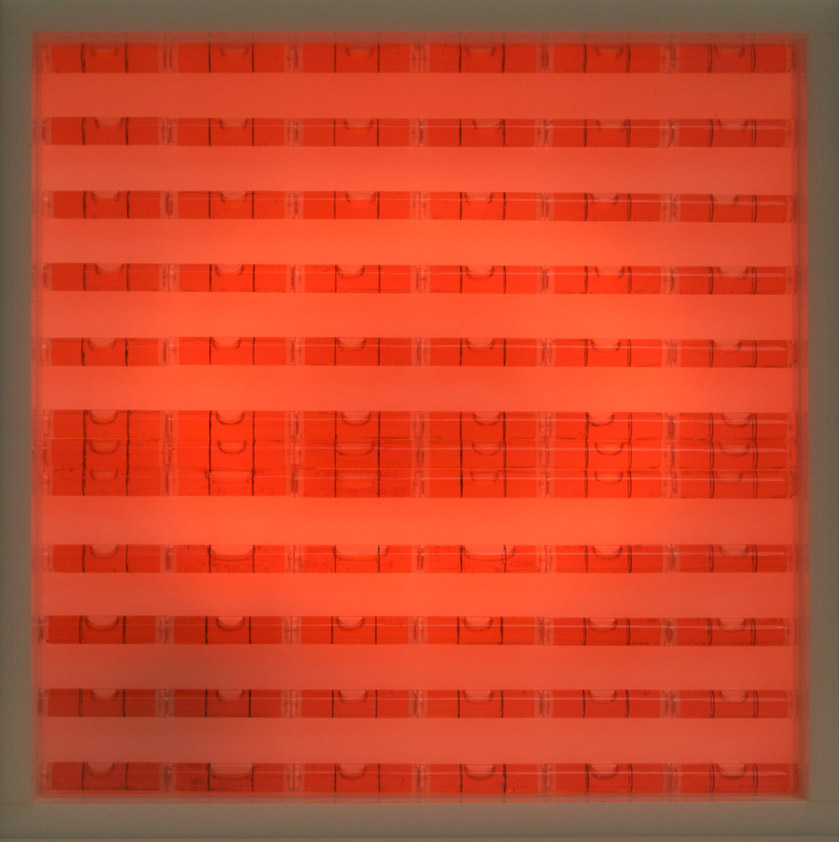
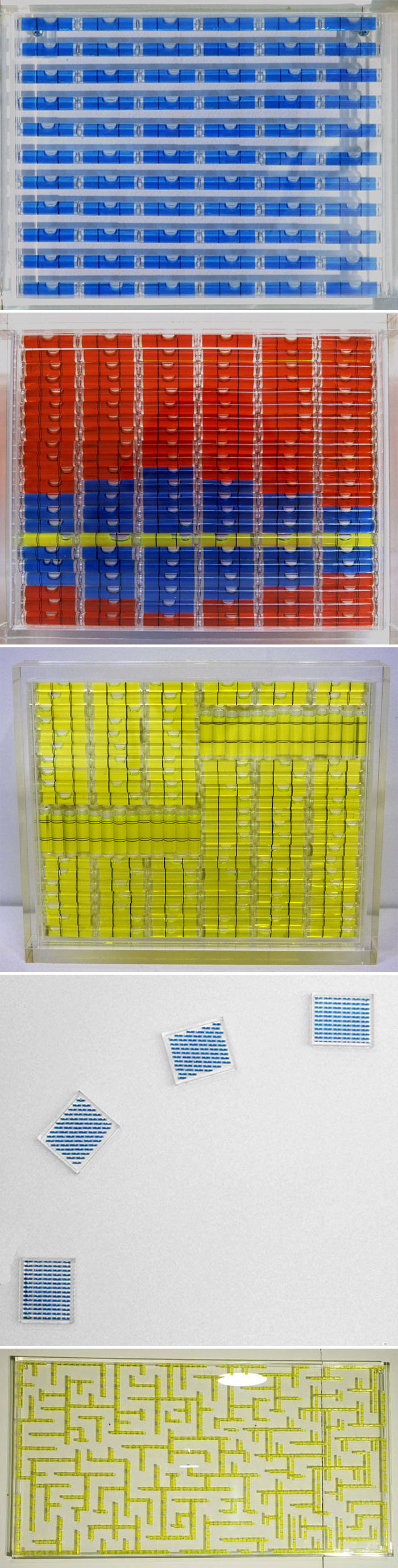
Levels, contemporary art, abstract, australian artist, neon, level compositionslevels, contemporary art, Perth, Turner galleries, Australian art, color, lightLevels, contemporary art, abstract, australian artist, neon, level compositionsPaul Caporn is a Perth, Australia based artist who creates sculptural and installation works, some of which incorporate light. The objects used are familiar but he pushes them in new directions. In his Level Composition Series, Caporn takes an ordinary construction measuring tool – the level – along with light and color, sometimes neon, and makes these contemporary tableaux. I’ve always found levels with their moving, and ideally centered, bubbles to be beautiful objects in themselves, so these pieces really appeal to me.

You can see more of Paul Caporn’s work here.

Images courtesy of Turner Galleries and the artist.

Appau Jnr Boakye-Yiadom

conceptual art, humor, video, installation, photography, contemporary artconceptual art, humor, video, installation, photography, contemporary artClick to enlarge

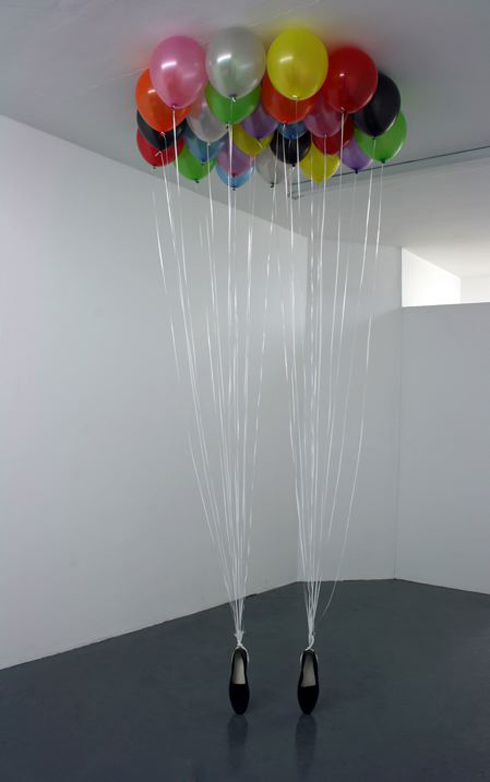
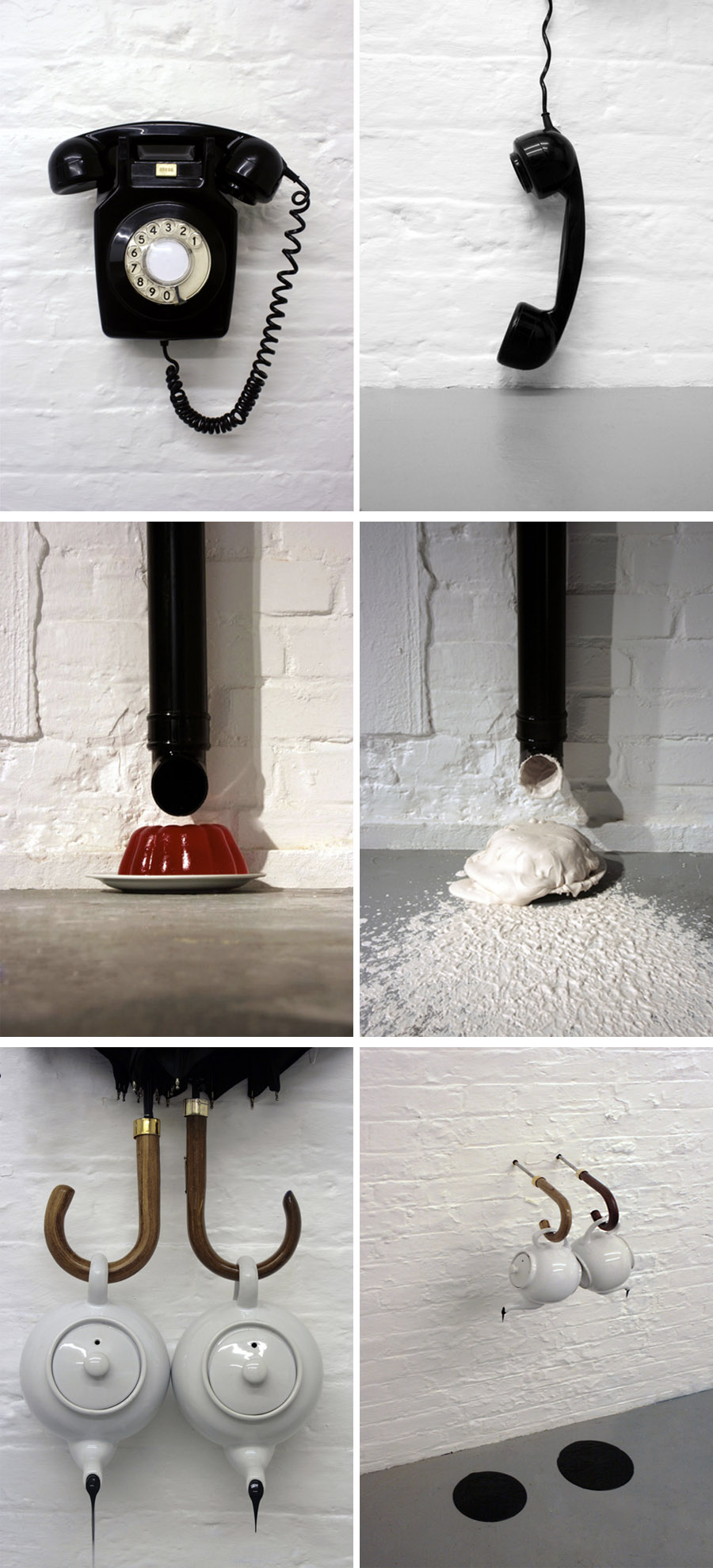
These photos and videos by London born and based artist Appau Jnr Boakye-Yiadom made me chuckle. Using everyday objects as characters, Boakye-Yiadom creates performance environments in his studio. Essentially creating humorous/absurd experiments, Boakye-Yiadom then documents the (very brief) acts through film, photography and installation. It’s worth watching a few of the short videos below to get the full effect.

via the future can wait

Scott Jarvie: The Clutch Project

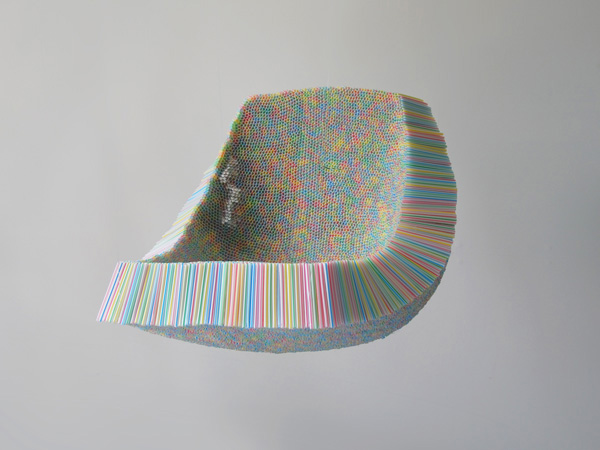
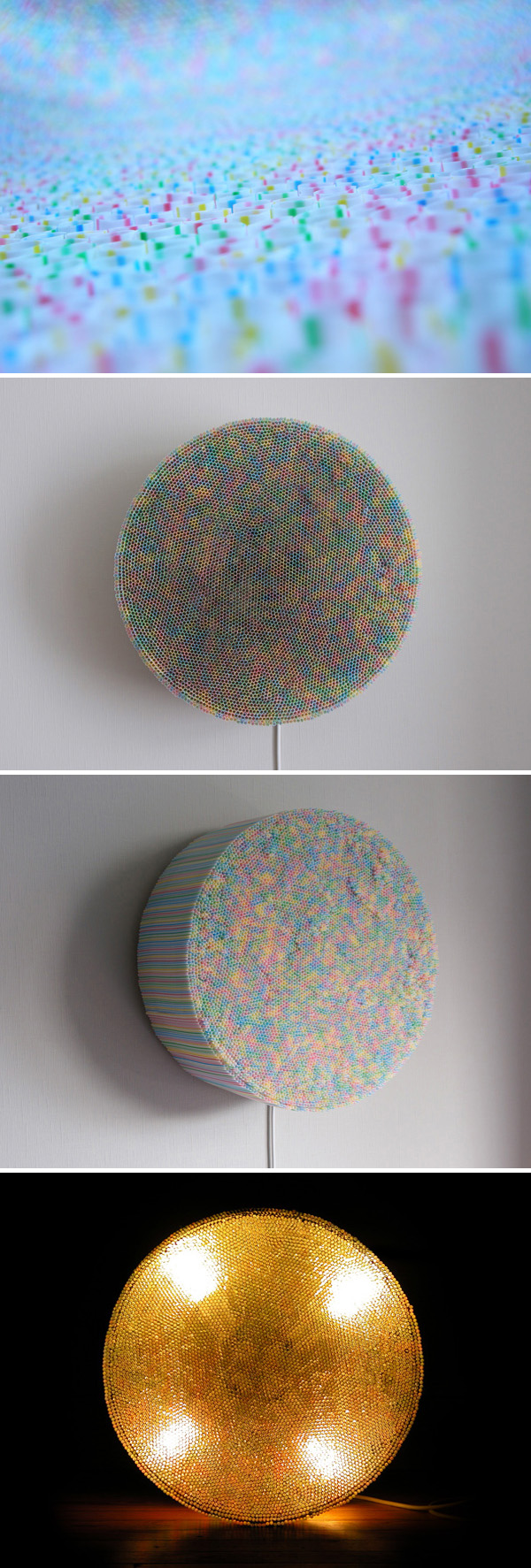
straws, drinking straws, chair, research piece, Noise Festivalstraws, drinking straws, chair, research piece, lamp, cool designI happened upon Scottish designer Scott Jarvie’s website and his Clutch Project. The Clutch Chair is an experimental research project made from 10,000 drinking straws. In the Clutch Lamp, the straws are grouped together and transformed into a spot light. The inner surface of the straws reflect the light in a jewel-like manner creating a unique effect.

Instantly reminded me of one of my favorite artists, Tara Donovan’s Haze installation: thousands of clear drinking straws stacked on a wall creating an effect that doesn’t even look like the straws that it’s made up of.

You can see more of Scott Jarvie’s interesting work here.

Jonathan Brilliant: “Have Sticks Will Travel”

cool art installations, coffee stir sticks, coffee sleeves, coffee covers, amorphic, collabcubedcool art installations, coffee stir sticks, coffee sleeves, coffee covers, amorphic, collabcubedClick to enlarge

I have, coincidentally, come across several artists working with coffee-related objects in the past two weeks. First Christian Ducharme’s cool lamps, then Matthew Parker’s coffee filter window installation, and now Jonathan Brilliant’s incredible coffee stir sticks installations. Totally living up to his name, Brilliant creates enormous, and amorphous,  site-specific installations using thousands of coffee stir sticks woven in place and held together only by tension! This series of installations is collectively known as Have Sticks Will Travel. Brilliant likes to activate the gallery space as part of the work, usually creating the work onsite hoping to dissolve the boundary between the space where the art is created and displayed.

In addition to using the coffee stir sticks, Jonathan Brilliant utilizes the coffee cup sleeves to create the tube formations, as well as the coffee cup covers for yet other, wall-mounted, works.

Living and working in Columbia, South Carolina Brilliant started working with these materials in 2006 with his Goldsworthy of the Coffee Shop Project, taking his cue from the British artist Andy Goldsworthy who gathers materials from his natural environment and uses them in his site-specific installations. Brilliant’s natural environment? The coffee shop, of course, with the take-out coffee cup and all its accessories!

For the Have Sticks Will Travel World Tour, Jonathan created multiple installations, entirely in situ, during the course of 8 to 10 days at each location. You can watch the video below for a sample installation.

You can see more of Brilliant’s amazing work on his website.
Mark Wagner: Currency Collages

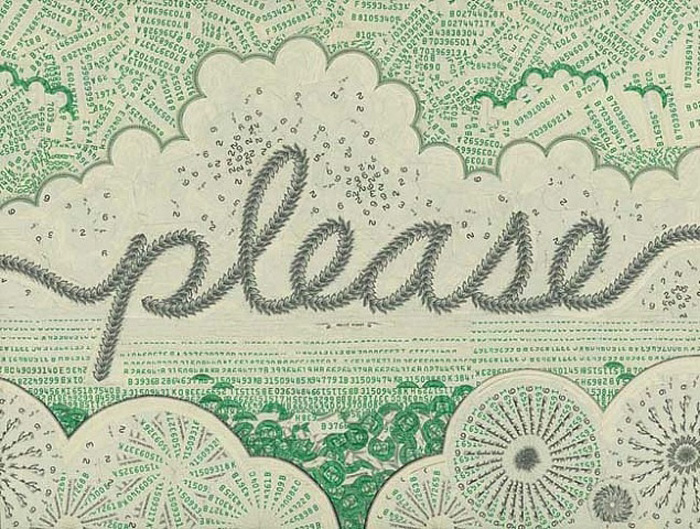
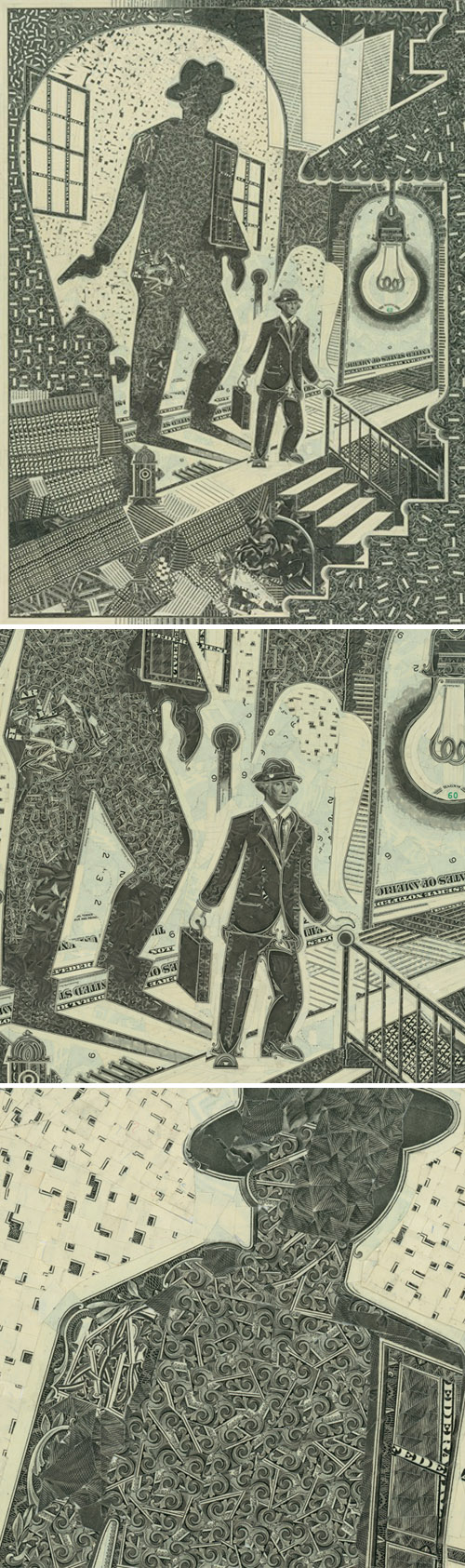
art, collage, currency, dollar bill, art and economy, paper art, moneyart, collage, currency, dollar bill, art and economy, paper art, moneyart, collage, currency, dollar bill, art and economy, paper art, moneyClick to enlarge for detail

My friend Eric introduced me to Mark Wagner’s currency collages a few years ago in Chelsea. It seems to me that today’s economic climate is a perfect time to share them. These collages, made exclusively with the U.S. Dollar, speak to the cultural, social and political roles that money plays in our society.

Mark Wagner, originally from the Midwest, is a Brooklyn based artist who writes and makes books in addition to his collages. His statement on his currency collages is as follows:

The one dollar bill is the most ubiquitous piece of paper in America. Collage asks the question: what might be done to make it something else? It is a ripe material: intaglio printed on sturdy linen stock, covered in decorative filigree, and steeped in symbolism and concept. Blade and glue transform it-reproducing the effects of tapestries, paints, engravings, mosaics, and computers-striving for something bizarre, beautiful, or unbelievable… the foreign in the familiar.

The detail on these collages is amazing. The second and third collages above also show zoomed-in sections to appreciate even the tiniest image.

All images courtesy of Mark Wagner and Pavel Zoubok Gallery.

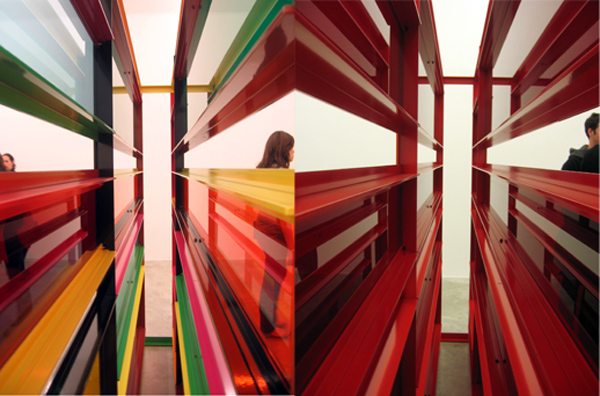
Liam Gillick: Type, Color & Light …Trifecta!

color art installation, contemporary art, typographycolor art installation, contemporary art, typographyYes siree, three of my favorite elements all combined by one artist: Liam Gillick. The British artist is based both in London and New York. He has published a number of texts that function in parallel to his artwork, and the artwork itself often incorporates typography. In addition to Gillick‘s installations, he has collaborated with architects on the façades and interiors of many buildings including the Fairmont Pacific Rim Hotel in Vancouver, Canada (see our Architypeture II post) and the Marsham Street Home Office in London.

Gillick’s installations are at once minimalist, conceptual and ironic. They are often seen as abstract representations of the various social projects that he participates in. Definitely would love to see one of these in person.

via artnet

Rebecca Baumann: Automated Colour Field

Art installation, Australian artist, flip-clocks, contemporary artArt installation, Australian artist, flip-clocks, contemporary art

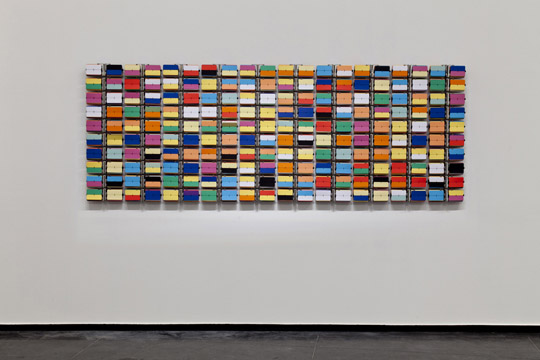
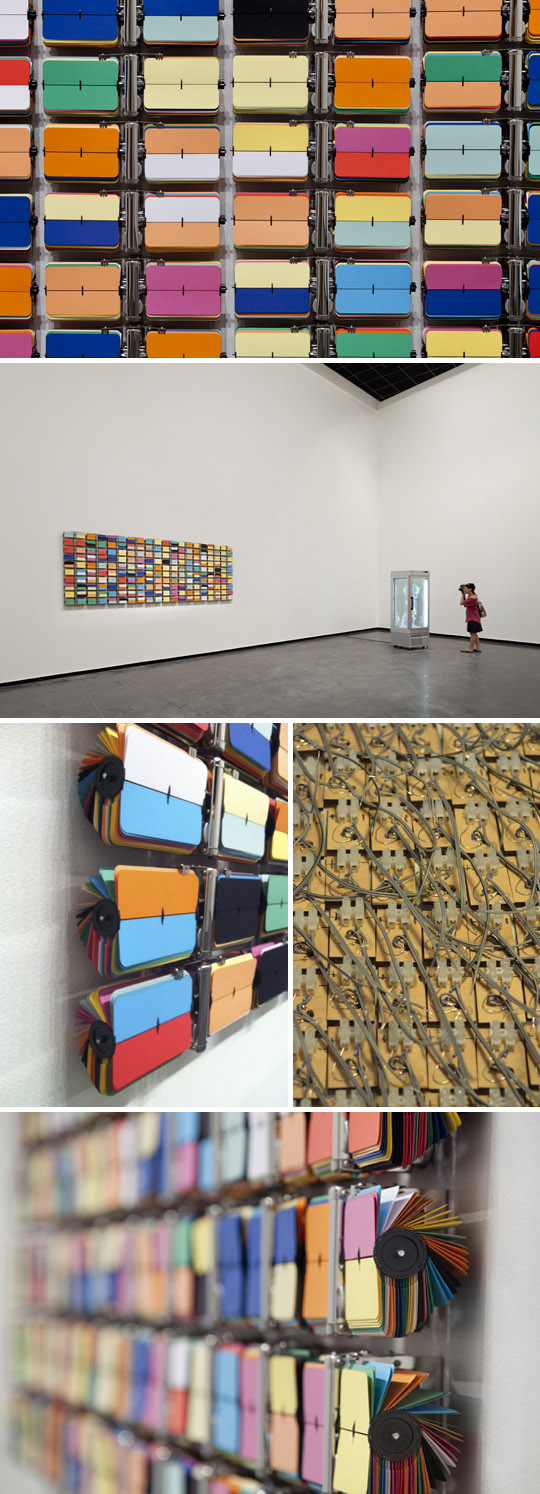
I love this installation by Australian artist Rebecca Baumann. Automated Colour Field, originally commissioned by the Australian Centre for Contemporary Art, is made up of 100 flip-clocks, laser cut colored paper, and batteries (a later version replaced the over 100 batteries with over 100 power regulating circuit boards designed by Cake Industries.) Such a clever and simple concept beautifully executed. Who wouldn’t want one of these in their home?

You can see the piece in action in the video above and you can see it being installed in the video below.

Photos by Andrew Curtis, courtesy of the artist. Circuit Board photo courtesy of Cake.

via acca

Jaume Secondary School: Ramón Esteve

Colorful architecture, Spain, Ramon Esteve, School DesignColorful architecture, Spain, Ramon Esteve, School DesignColorful architecture, Spain, Ramon Esteve, School DesignColorful architecture, Spain, Ramon Esteve, School DesignClick to enlarge

When I started middle school, one of the things I was most excited about were the rows of colorful lockers that alternated between yellow, red and orange. I mean, the concept of just having a locker was pretty exciting too, but the bright colors that lined the walls were part of the appeal.

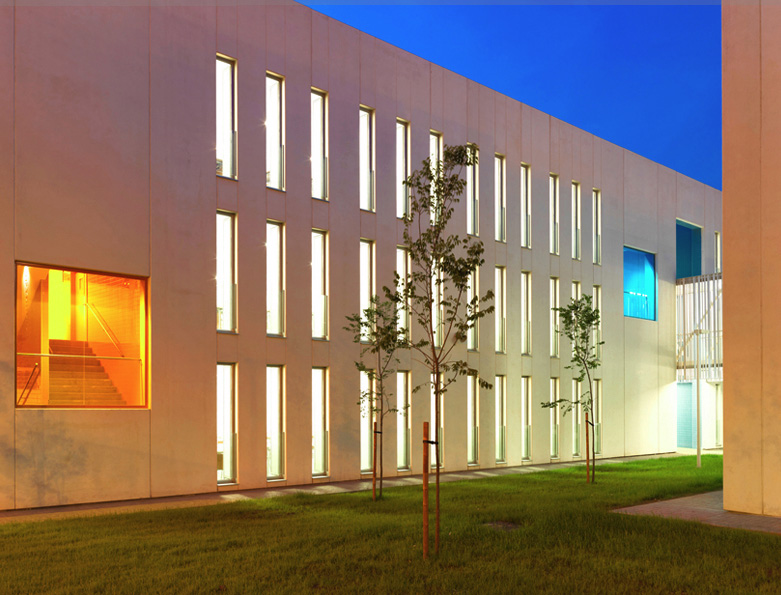
The Jaume Secondary School in Ontinyent, Valencia, Spain takes the color concept way beyond. Designed ever-so-smartly by Ramón Esteve Architects (Estudio de Arquitectura), what could have been a rather straightforward high school is lively and welcoming by contrasting the white, prefabricated concrete panels of the exterior with colored glass and tiles, as well as paint. That combined with the use of light, both natural and artificial, enhance the building scheme and bring relief, brightness and dynamism to the interiors and exteriors.

All four buildings that complete the complex, creating outdoor spaces including the sports ground, garden and parking, enclosing them with the architecture and working harmoniously. The solid volumes are ventilated and lighted through the cut-out openings with different color tiles in each.

Definitely a school I would have enjoyed attending, based on the look anyway.

Photos by Xavi Mollá, courtesy of Ramón Esteve and The Archhive.
via the archhive

Yvette Cohen: Sculptural Paintings

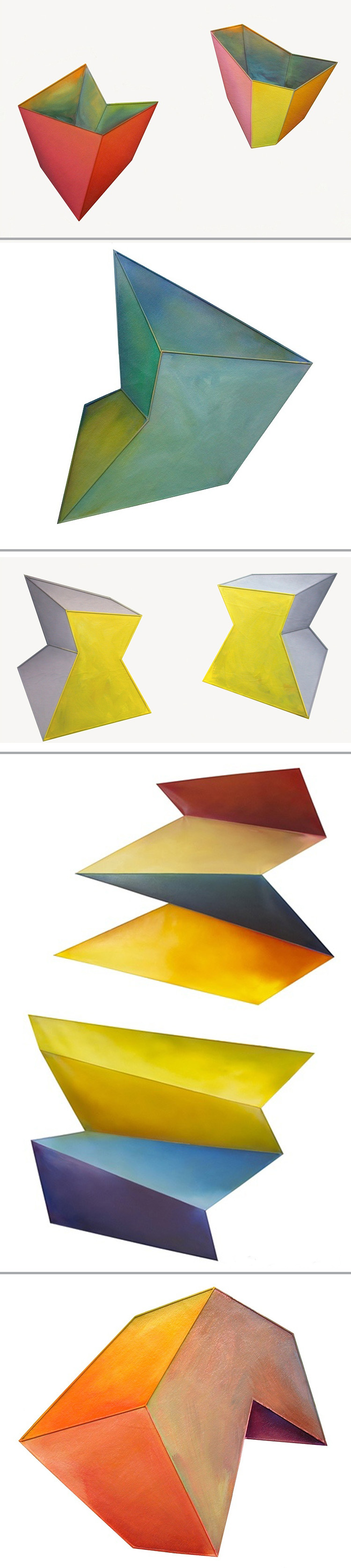
Yvette Cohen, NY artist, 3-D Paintings, Cassina exhibitYvette Cohen, NY artist, 3-D Paintings, Cassina exhibitYvette Cohen, NY artist, 3-D Paintings, Cassina exhibitNew York City based artist Yvette Cohen was born in Cairo, Egypt and grew up in Paris and Montreal. In her art, Cohen seeks to create a balance of calm and intrigue. Her Ara Pacis Series (from the Latin meaning ‘altar to peace’) consists of richly colored oil paintings on shaped canvases with wood dowels. They appear three-dimensional, but in reality mount flat to the wall and sometimes floor. It’s amazing how the illusion of depth is created through her use of geometric shapes and painting technique.
Groupings of two, three or more of these oil paintings seemingly defy gravity and appear to exist in a boundless space, activating entire walls.

Hence the name of Cohen’s upcoming exhibit in NYC: Defying Gravity.

Defying Gravity: Sculptural Paintings will be shown at Cassina in Soho (151 Wooster Street) from November 8 to December 20, 2011. If you can’t make it to the exhibit, be sure to check out the rest of Yvette Cohen’s work on her website.

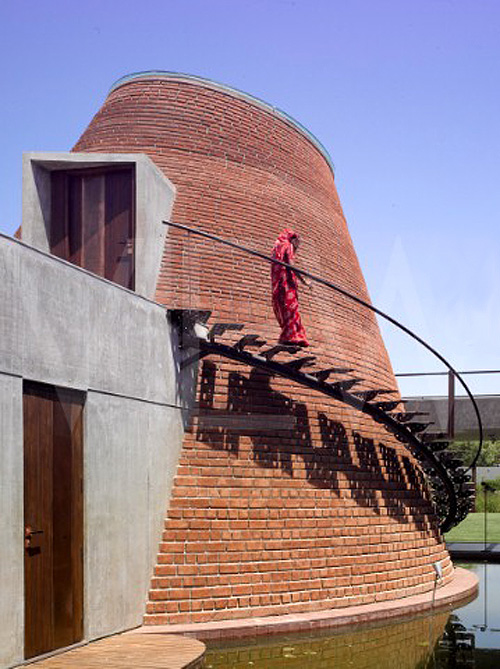
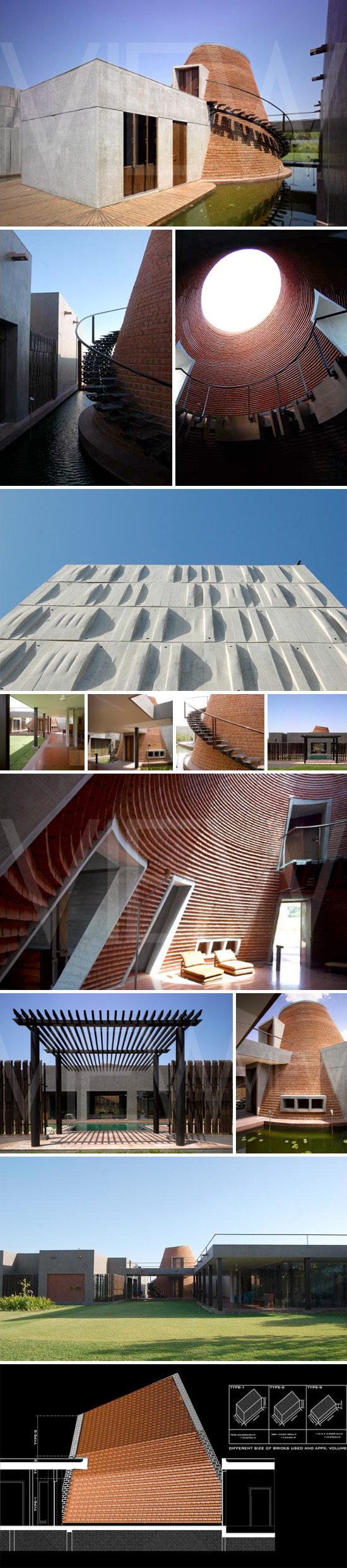
Anekit Bhagwat: The Drum House

Drum House, Ahmedebad, India, Anekit Bhagwat, Bricks, collabcubedDrum House, Ahmedebad, India, Anekit Bhagwat, Bricks, collabcubedThe House with Drum or Drum House designed by Anekit Prabhakar B. Bhagwat is a weekend residence on the outskirts of Ahmedebad in Gujurat, India. Composed of three main sections – the drum, the veranda and the stockade – each space was sited with respect to the larger landscape of the project. Brick was used innovatively, with specially made extra flat styles and different sizes, to create the ‘vault’ that is the main living area. The veranda includes a glass dining pavilion at one end that faces the gardens and the stockade houses two rooms and a pool at the back. Other facilities include a projection room, a shaded deck, a water tank with lilies, and an India garden with an elevated trampoline. Definitely lots to keep a person busy for the weekend.

Photos ©Edmund Sumner via View and Prabhakar B. Bhagwat

Cecilia Vissers: Minimalist Sculpture

minimalism, sculpture, steel, aluminum, contemporary artminimalism, sculpture, steel, aluminum, contemporary artminimalism, sculpture, steel, aluminum, contemporary artClick to enlarge

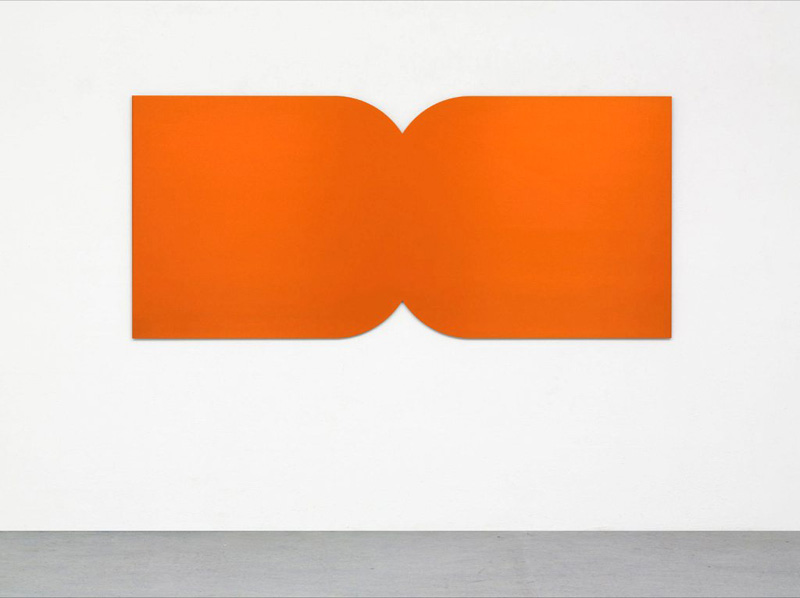
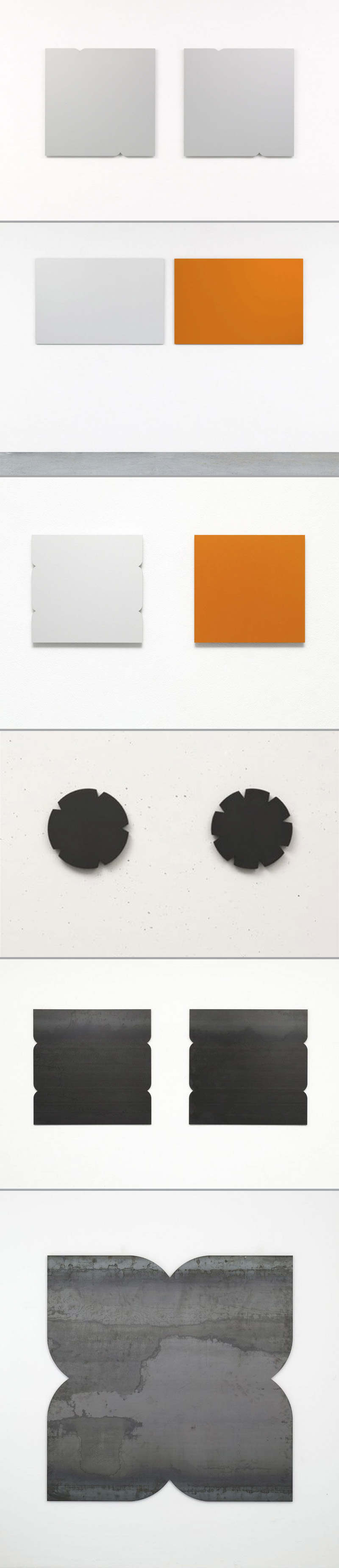
Dutch sculptor Cecilia Vissers’ minimalist steel and aluminum flat sculptures are inspired by the Scottish and Irish landscapes.

From the artist:
I want my sculptures to be entirely simple, to be viewed quickly, the focus is on the smooth and flat surface, my abstractions are grounded in the landscapes of Scotland and Ireland, the remoteness and silence.
From top to bottom: Orange Tide III, aluminum; Very Likely L, two-part, aluminum; Silent Light, two-part, aluminum; Very Likely I, two-part, aluminum; Medardus, aluminum; Blacksod Bay, steel; Follow the River, steel.

Cecilia Vissers’ work will be on exhibit as part of a  group show at Acquire Space in London from November 13-27, 2011 and in a solo show at Masters & Pelavin Gallery in New York, February 23 to April 5, 2012. If you can’t make either of those you can always visit her website to see more of her work.