LAVA

Cool Architecture Installations, Chris BosseCool Architecture Installations, Chris BosseCool Architecture Installations, Chris BosseClick to enlarge

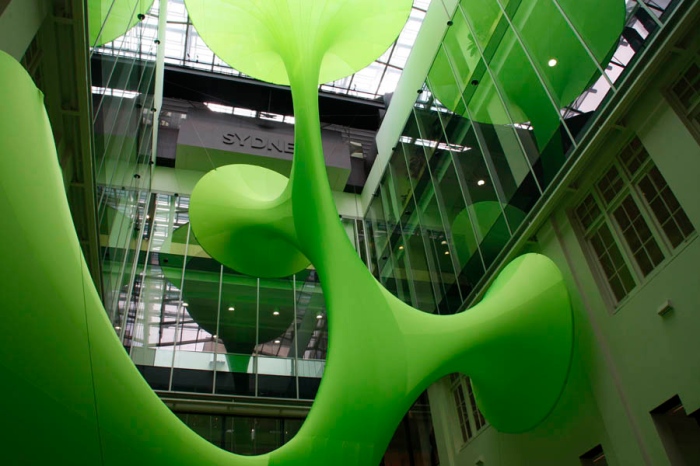
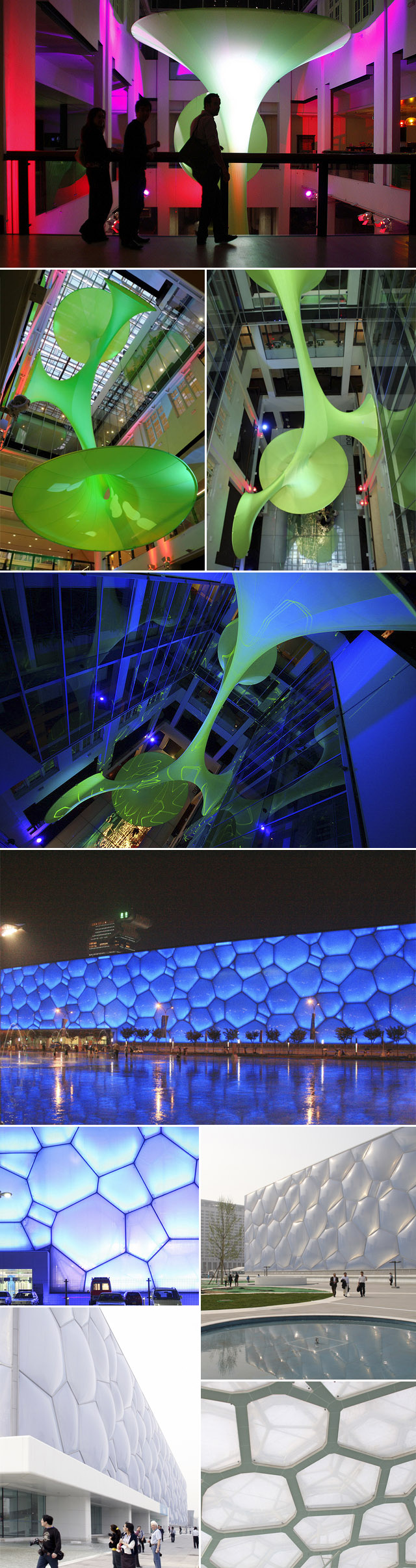
With its two main offices in Sydney and Stuttgart, LAVA – Laboratory for Visionary Architecture – functions as a think tank generating inventive architecture that “bridges the gap between the dream and the real world.” Founded as recently as 2007 by Chris Bosse and Tobias Wallisser, LAVA has already produced an impressive body of work. Using nontraditional methodologies and advanced technology, LAVA’s structures and city planning are part of a new and cutting edge, as well as sustainable, generation of architecture. Here are just three of their projects:

Top to bottom – The Green Void, a tensile fabric installation in the central atrium of the Sydney Customs House.
The Water Cube or National Aquatics Center in Beijing, originally designed for the 2008 Olympics has since been converted into a water park.
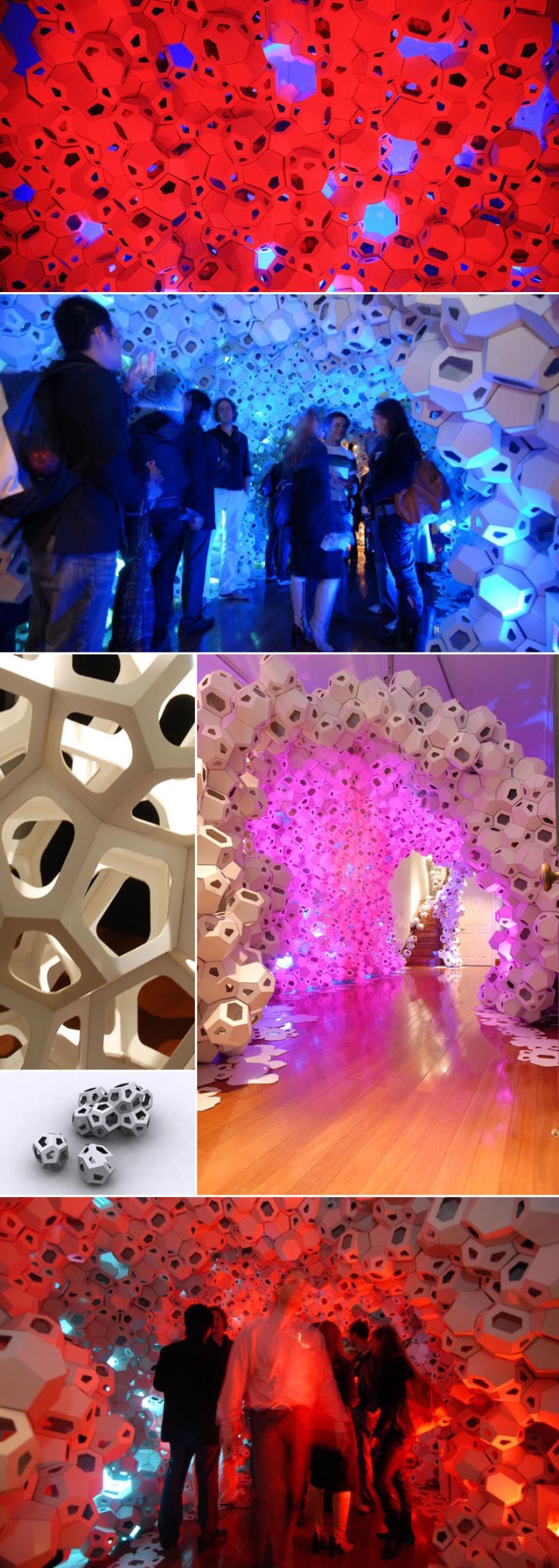
Digital Origami, an installation created in a masterclass taught by Chris Bosse at the University of Technology Sydney. Made from 3500 recycled cardboard molecules of only two different shpaes.

You can see more of LAVA’s amazing work at their website as well as on Chris Bosse’s flickr.
Con la Tipo en la Cabeza:Type on the Brain

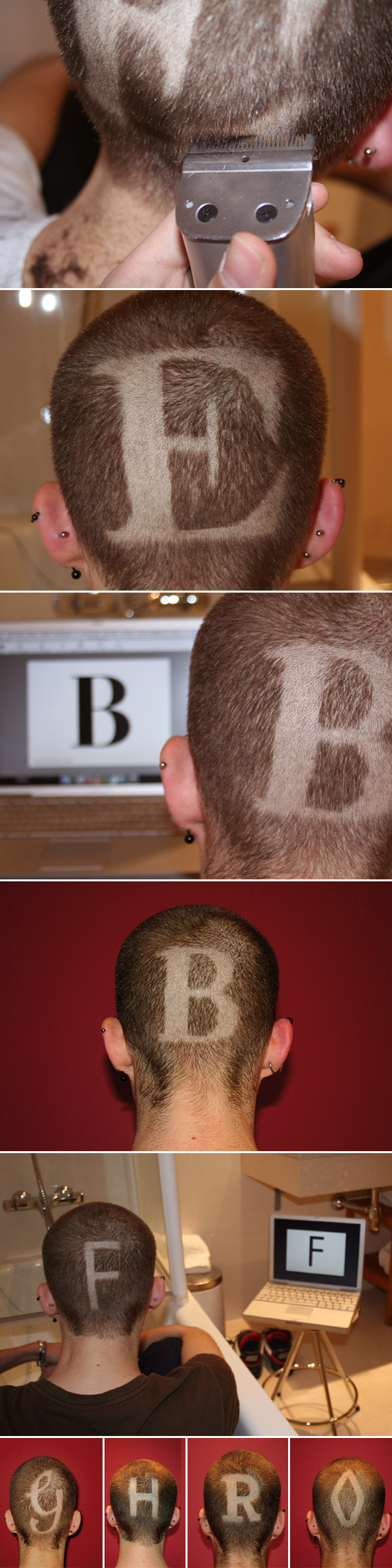
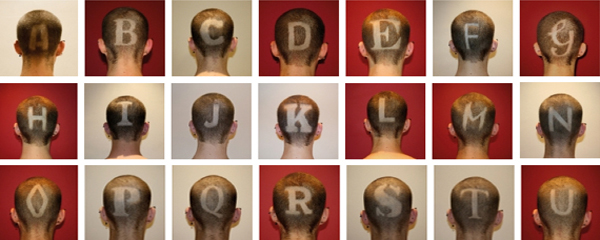
Typography, Type, Fonts, Shaved HeadTypography, Type, Shaved Head process, Alphabet, FontsCon la Tipo en la Cabeza is an ongoing project by Jesus A. Nieto (aka Cucho) a Spanish graphic designer currently based in Leeds, England. Literally, Con la Tipo en la Cabeza means With Type in the Head, but the expression probably translates more accurately (if not a perfect fit with the project) as With Type on the Brain.

Cucho inititated the project in July of 2009 as a typographic experiment to pay homage to different typefaces by initial as he discovered them entering the world of design. The only letters left to go? Y, Z and the trickier Ñ.

The typefaces:  A | Akzidenz Grotesk – B | Bauer Bodoni – C | Cooper Black – D | Din 1451 – E | Engravers – F | Futura – G | Gaseosa – H | Helvetica – I | Italian old style – J | Johnston underground – K | Kandal – L | Lucida Sans – M | Mistral – N | Neutraface – O | OCR-A – P | Palatino – Q | QuaySans – R | Rockwell – S | Stencil – T | Times New Roman – U | Univers – V | Verdana – W | Weidemann – X | Xylo

You can see the Univers ‘U’ in progress in the video below. All the letters are impressively well-rendered, considering the medium, even Mistral!

via Tago

Moderna Museet in Malmö

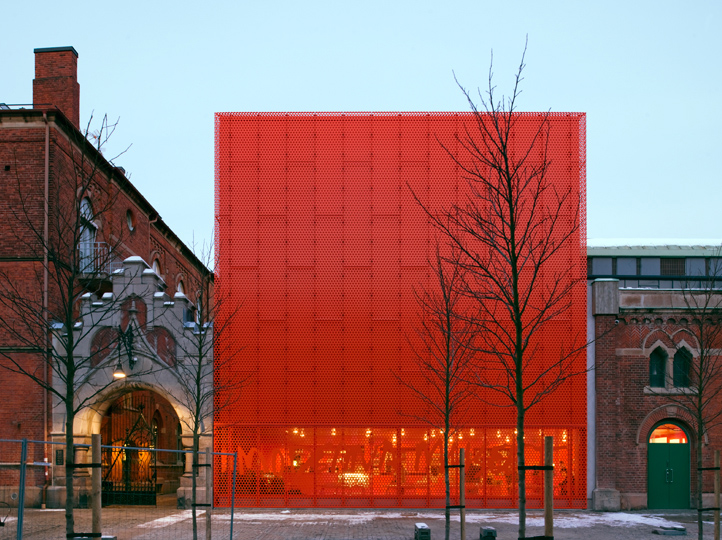
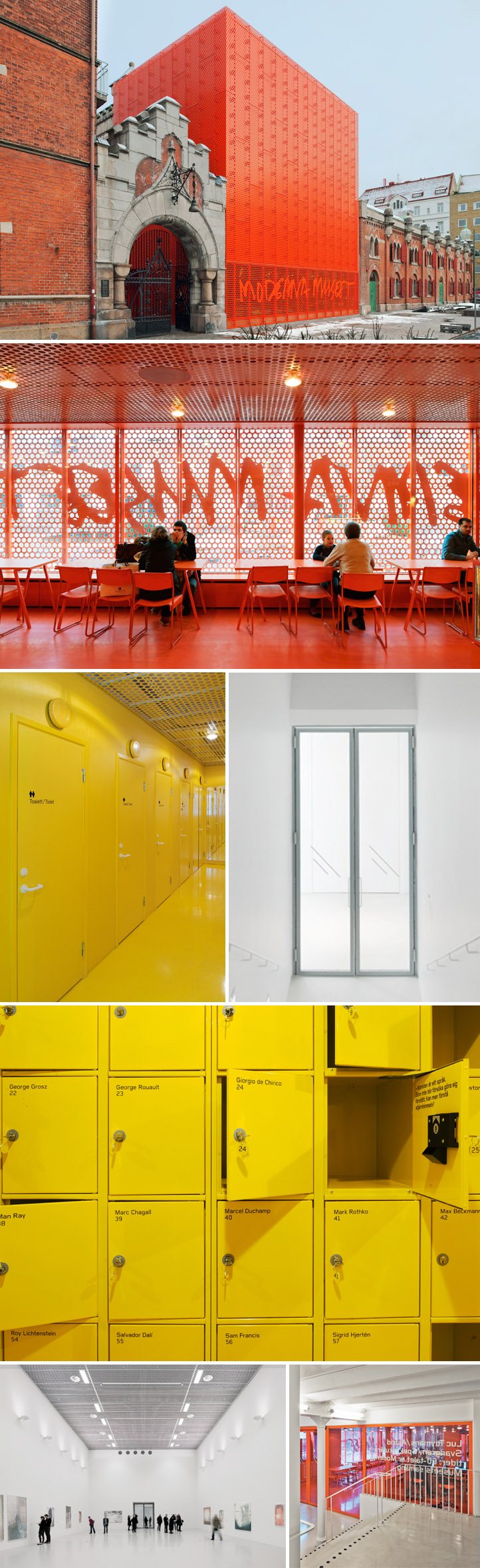
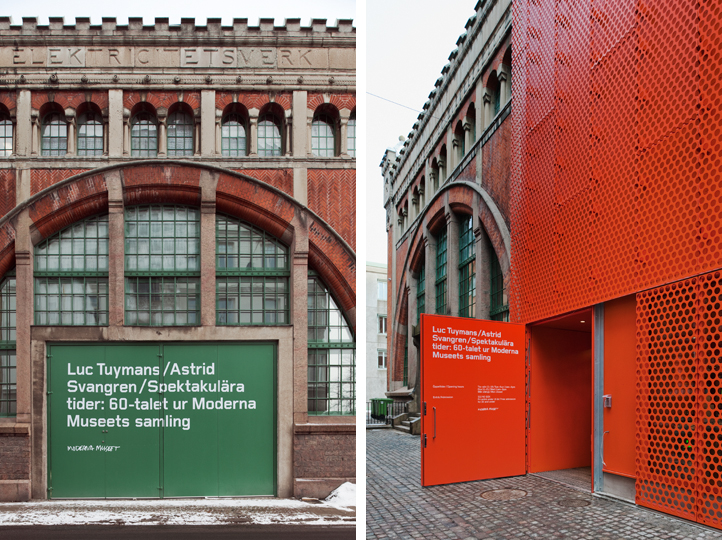
Stockholm art museum, modern architectureStockholm art museum, modern architectureModernaMuseet Malmo, stockholm art museum, architectureOne of the things that I truly enjoy, and gives me a little silly thrill, is seeing new architecture incorporated successfully with old. Coming across photos of the relatively new building for the art museum in Malmö, Sweden, Moderna Museet gave me said thrill.

Designed by Tham & Videgård Arkitekter in collaboration with Henirk Nygren Design and Stockholm Design Lab, the two latter involved in the interior design as well as branding and signage, the bright orange-y red box looks fabulous next to the older, classic brick buildings that seem to be part of the museum as well.

The handwritten logo which works beautifully large across the windows at the base of the box in the same color, is adapted from Robert Rauschenberg’s handwriting and famous signature.

via Stockholm Design Lab

Nuria Mora: Street Art from Spain

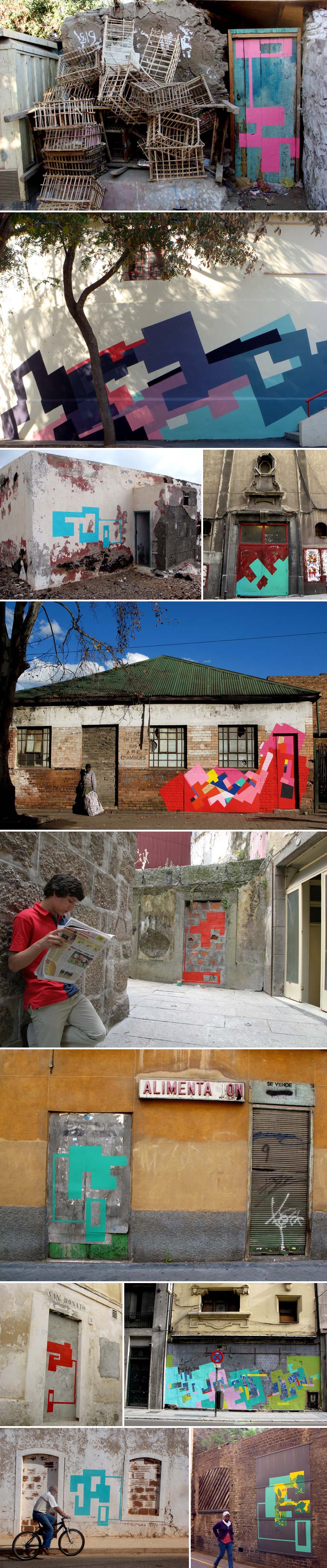
Street Art Spain Graffiti Wall muralsStreet Art, Graffiti, Spain, Female Street ArtistClick images to enlarge

Nuria Mora is a street artist based in Madrid. Not that it should matter, but she is a woman and, as far as I’m concerned, it’s certainly refreshing to come across a female street artist—definitely in the minority.

Colorful and geometric, I imagine coming across any one of her wall murals would brighten one’s day. What I enjoy most about all of these is the contrast of the clean lines on the mostly old or run-down walls they appear on. It’s almost the opposite effect of graffiti way back when the tagging or murals would, many times, deface a newer wall or subway car.

There is plenty more to see on her site.

Typographied Objects II

TypographyType, Letters on objects, TypographyClick to enlarge.

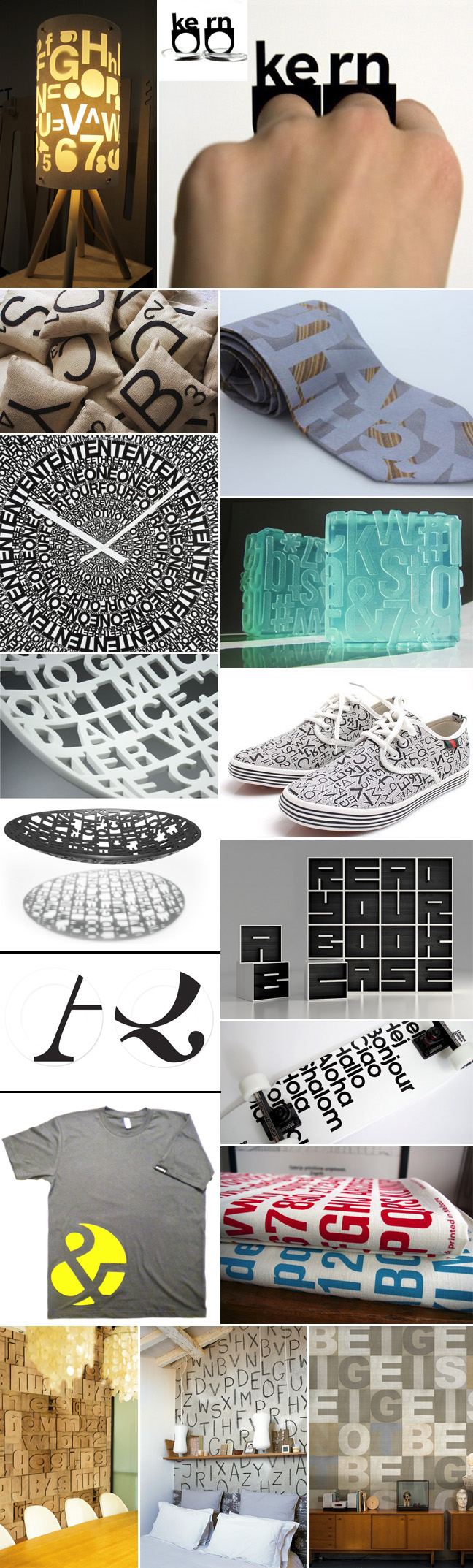
After the first roundup of objects that utilize typography, I’ve come across several more items, so here is a second roundup of typographied objects:

Clockwise from top image:
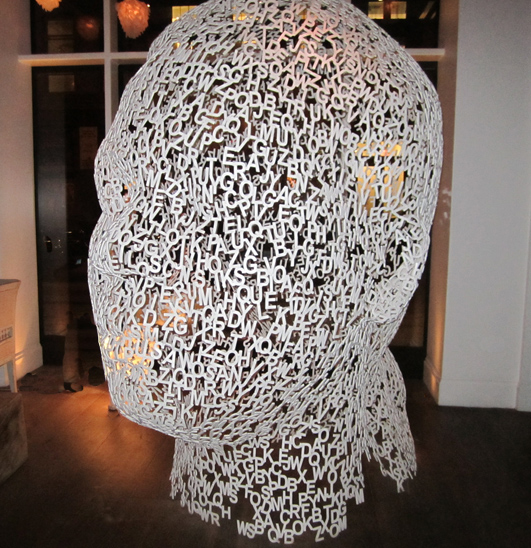
Jaume Plensa sculpture; Kern ring set; Architecture/Art Tie; Typography Soap; Type Sneakers; Saporiti Alphabet Bookcase; Hello Skateboard; Akzidenz Printed Fabric; WD Collections (wallpaper in 3 bottom pics); Ampersand Tee; Typography Tableware; Diego Grandi Lullaby Plate; Type Clock; Scrabble Type Pillows; Keenan Keeley Alphabet Lamp

Rose Nolan: Typographic Art

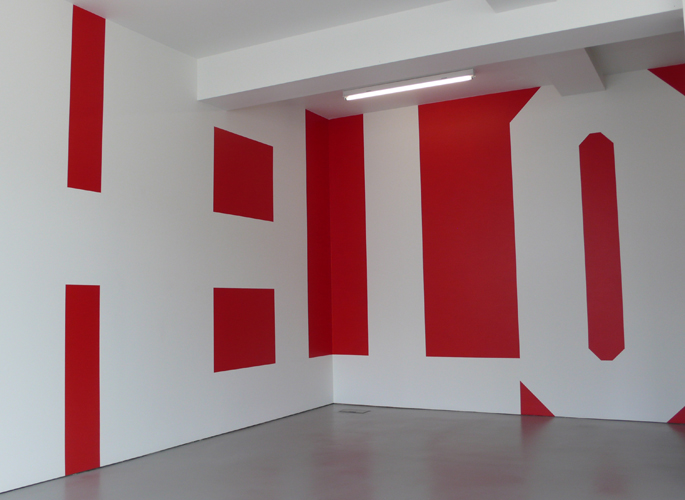
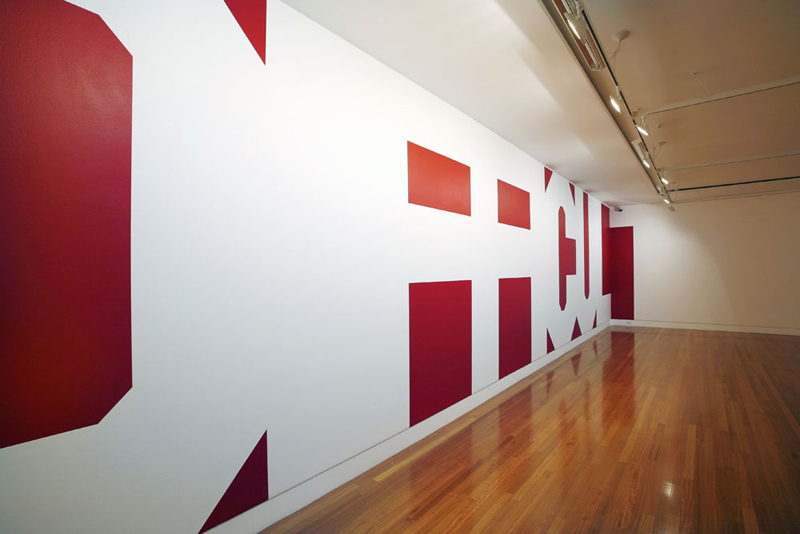
Rose Nolan collabcubed Typography Art InstallationsTypographic Art InstallationsTypographic Art InstallationsClick to enlarge

Australian artist Rose Nolan has been painting words onto walls, pennants, banners, and cardboard for 20 years. Her work is playful and oscillates between confident and self-deprecating, as well as bold and humble. Some seem to refer to herself and her reflections on what is art and what it is to be an artist.

Being a fan of type and especially large, bold type on a wall, this work is right up my alley. The red, Constructivist style only adds to its appeal, though I have to admit that the pennants and their humorous statements are also pretty great.

All photos courtesy the Anna Schwartz Gallery.

Ponte City: Subotzky & Waterhouse

Mikhael Subotzky and Patrick Waterhouse photo light panelsMikhael Subotzky and Patrick Waterhouse photo light panelsClick images to enlarge

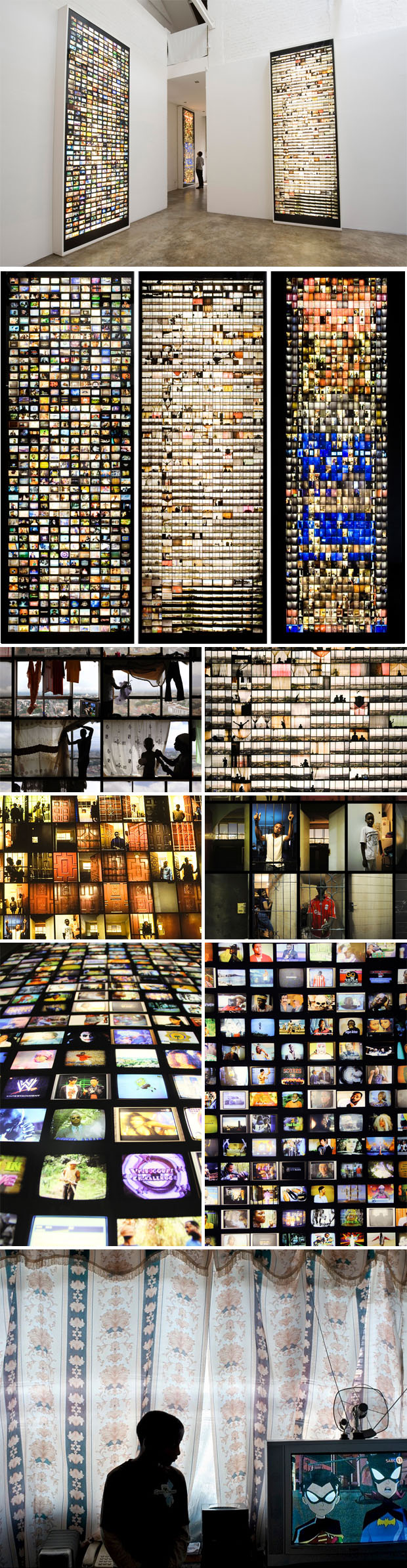
As Wikipedia will tell you, Ponte City is a 54-story cylindrical building, the tallest residential skyscraper in Africa, set in the Hillbrow neighborhood of Johannesburg, South Africa and built in 1975. At the time it was an extremely desirable address due to its views. Starting in the late 80s and into the 90s gang activity in and around the building caused the crime rate to soar in the tower as well as the rest of the neighborhood. Ponte City became symbolic of the crime and urban decay taking over the area.

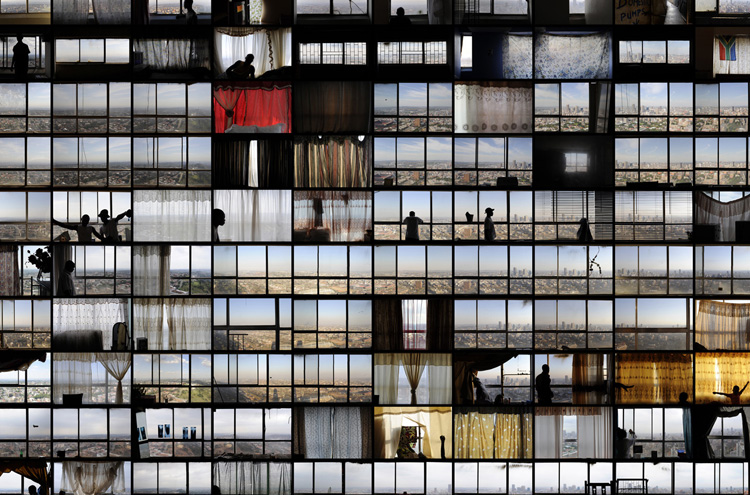
Enter Mikhael Subotzky and Patrick Waterhouse (finally). Together they collaborated (from 2008-2010) on a series of photographic tableaux in the form of contact sheets on lightboxes, depicting the life at Ponte City titled: Ponte City. The three panels are broken down by theme: doors, windows and TVs. Though I like all three, and the individual photos are all very striking, I find the Windows series particularly interesting and beautiful. Maybe in part because it looks most like a traditional building façade in its light box—which isn’t necessarily important, since the abstraction is interesting—or maybe it’s the openness and the light that I’m drawn to, but also, individually the photos are “windows” into the tenants’ lives, where we can see a bit of the apartment along with personal decor and artifacts.

From Mikhael Subotky’s website:
Ponte has always been a place of myth, illusion and aspiration. This is what we seek to evoke in these preparatory pages. Perhaps this task is best left to the images that we have found there – both in the abandoned flats, and in the marketing material and advertising that we have collected from 1976 and 2008. When these documents are seen next to the dystopian appearance of the building and its surroundings, one begins to project an image of this city during this time. It is a place of dust and dreams, befitting the land on which it sits, which has attracted millions of migrants since gold was discovered in the 1880s.

via Goodman Gallery

Carlo Bernardini: Spatial Drawings

art light sculpture cool installationslight sculpture and installationsItalian artist Carlo Bernardini has been working with optic fiber since 1996. He creates light sculptures or, more precisely, spatial drawings using optical fibers and in a sense sculpts the darkness, reconfiguring the space with his light architecture.

He currently has an exhibit at MACRO in Rome called The Corner’s Revenge appearing in the elevator shafts of the building, on different floors, in his trademark style of spatial light drawing.

Bernardini’s work has also appeared at the Milan Trienniale, the Naples Quadriennale, as well as at the Palazzo Bertalazone in Torino, and Domaquarèe, Berlin, just to name a few in the past couple of years.

You can see more of Carlo Bernardini’s work at his site, as well as here, and in these two flickr photostreams: here and here.

Mimolimit: Czech Architects

Architecture, Office Design, Interior Design PragueRestaurant Design, Architecture, PraguePrague Architects, Restaurant and Cafe designClick to enlarge

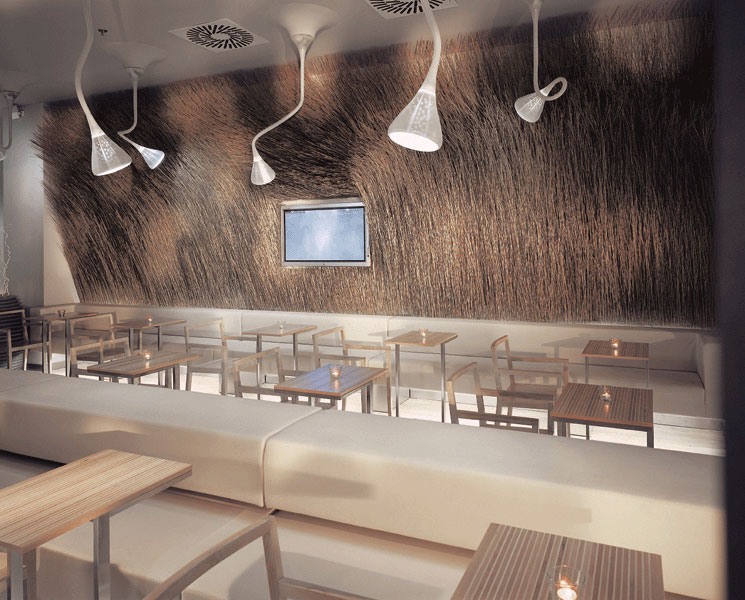
Led by architect-designer Barbora Skorpilova since 2001, Mimolimit is an architecture and interior design firm based in Prague. I really enjoyed viewing all the projects on their site. From cafés and restaurants to residential and office buildings, all their projects have a funky quality to them, combining different materials to create interesting textures and contrasts. Many of the projects have a mod look to them, but the color palettes range from bright colors to muted ones and all equally successfully. Above are but a few of Mimolimit’s cafés and commercial spaces. If you like what you see, be sure to check out their site for more.

DMFD: Furniture Design

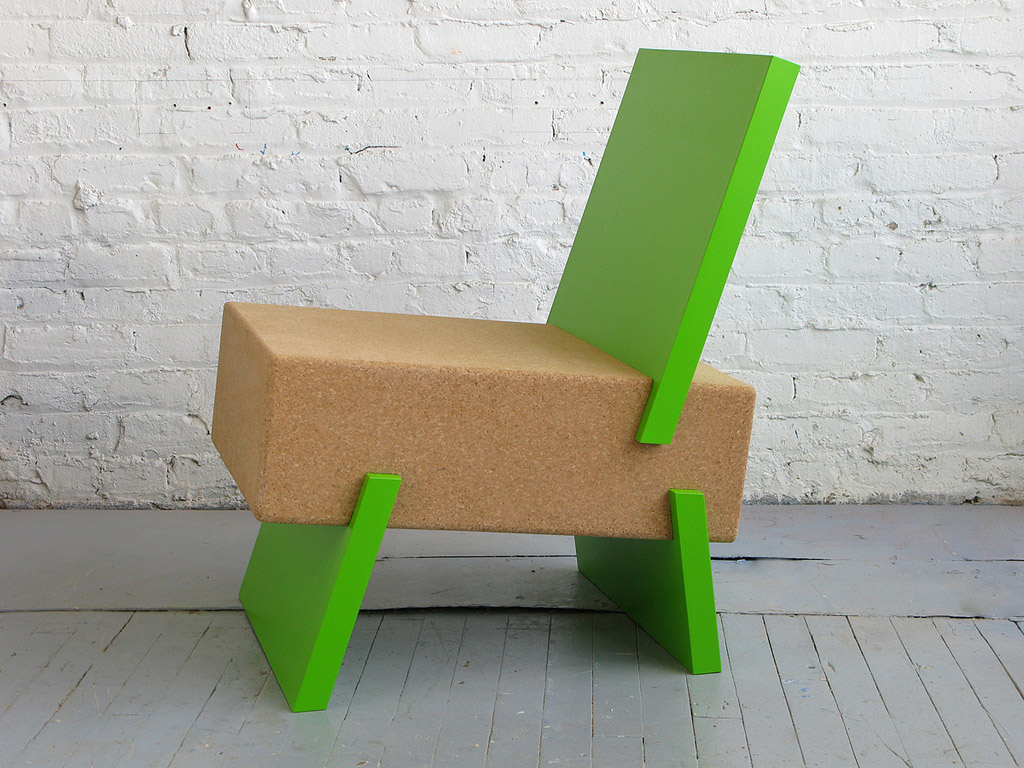
cork furniture and tabelwarecolorful cork furniture and accessoriesWe’ve been noticing DMFD’s (Daniel Michalik Furniture Design) fun cork furniture and tableware designs since NY Design Week a few months back, but we were reminded again when we popped by the Makers Market last weekend (love that logo and really wanted one of the worker’s t-shirts, but, alas, they were not for sale) at Socrates Sculpture Park. DMFD’s pieces really stood out with their bold colors and fun shapes. And though we didn’t lie down on the cork chaise longue, it did look quite striking on the park’s lawn.

From the site:
My work focuses on researching and expanding the uses of underutilized, unconventional material. Investigation of new materials can only lead to innovative methods of production and new ways of interacting with our environment. My recent work taps the rich potential of cork, an engaging, environmentally responsible material which is completely sustainable, recyclable, and plentiful.

You can see more DMFD work on the website.

Camilo Rojas: Consumption

Camilo Rojas Type as Experiment CollabcubedTypography, Art made from cigarettes, fries, nailsClick to enlarge

Camilo Rojas and his Create Studio in Miami presented an installation of typographic messages using nontraditional methods in place of the more classic screen-print-on-paper style. Soda-rusted nails, condoms, cigarettes, and french fries were just some of the materials used to convey powerful statements, as well as raising awareness, about health issues such as obesity, lung cancer and STDs.

You can see the rest of them at his site.

via Quipsologies

Esther Derkx: Raamtekens

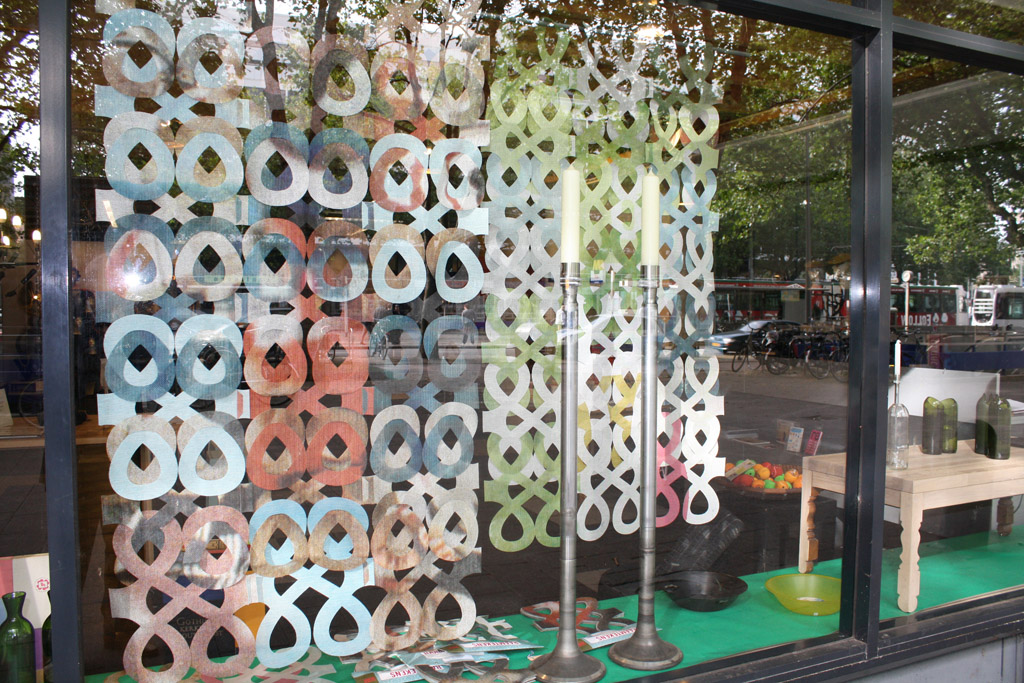
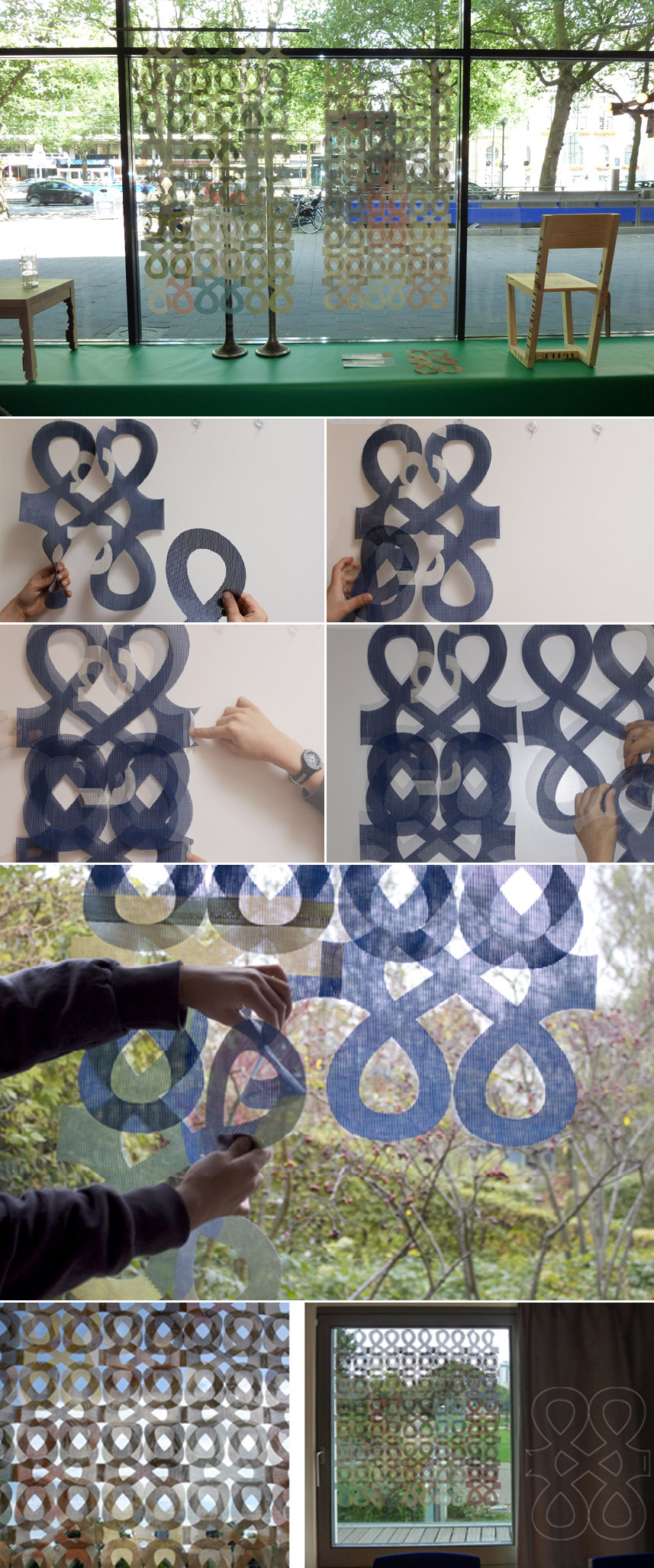
Industrial design, repurposed billboards into curtains Esther Derkxrecycled billboards industrial designRaamtekens (or WindowSigns) are curtains or room dividers that come in cut-up loops that can be intertwined to the width and length of your choice. Because they are made from cast-off advertising canvases or mesh, no two Raamtekens are the same with all their different colors and patterns. The effect in the end is a mostly transparent curtain that obstructs visibility looking in, but still leaves open visibility looking out.

Designed by product designer Esther Derkx in the Netherlands, known for her collage-like ceramics, and most likely available through her site, though not currently in the online shop.

eCLOUD

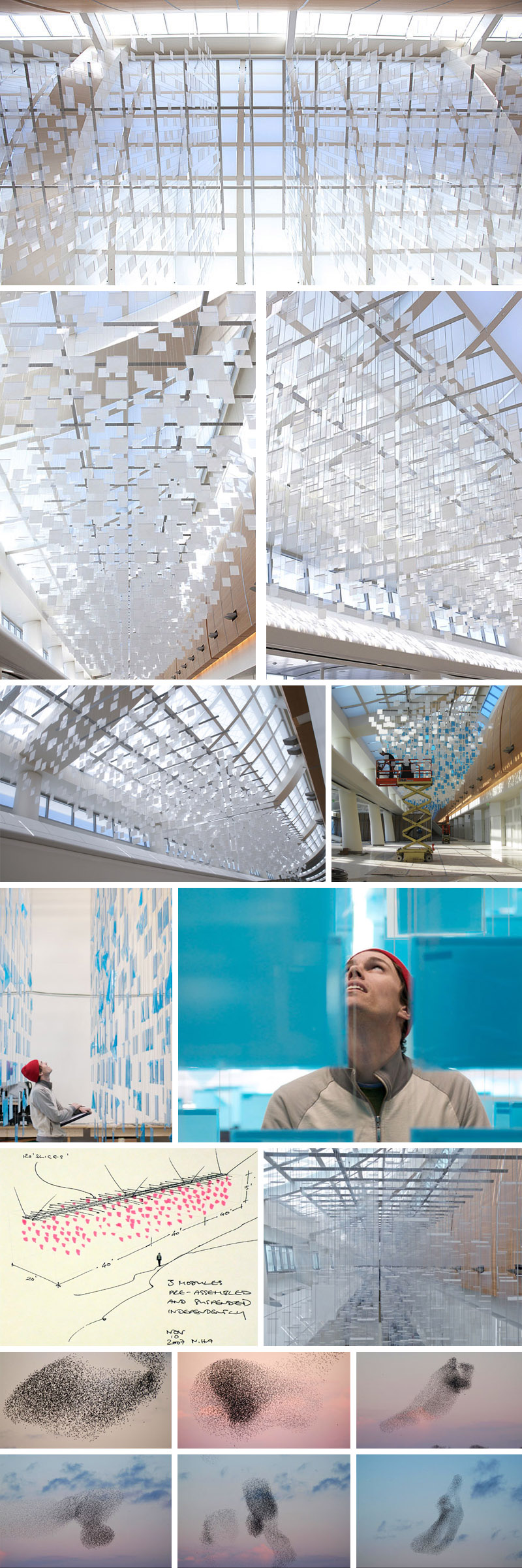
art installation, interactive artart installation, interactive artart installation, interactive artClick to enlarge

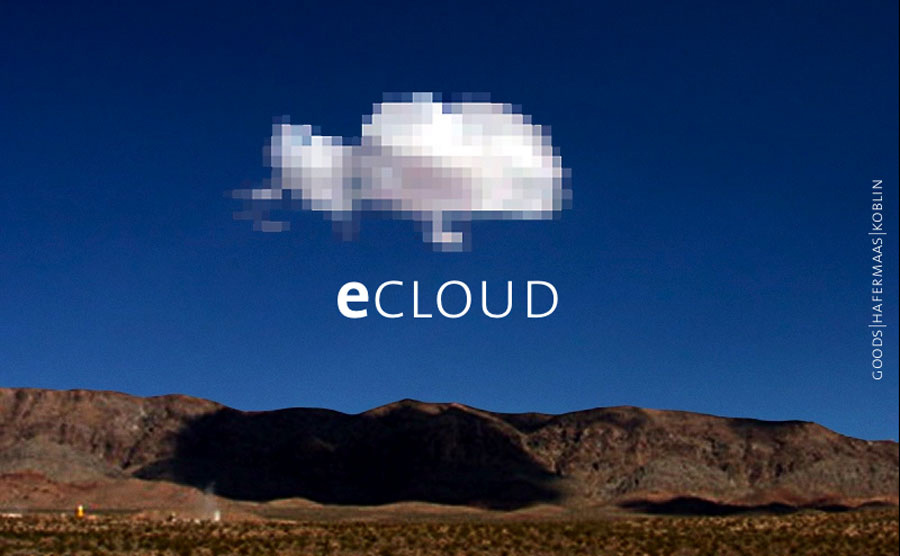
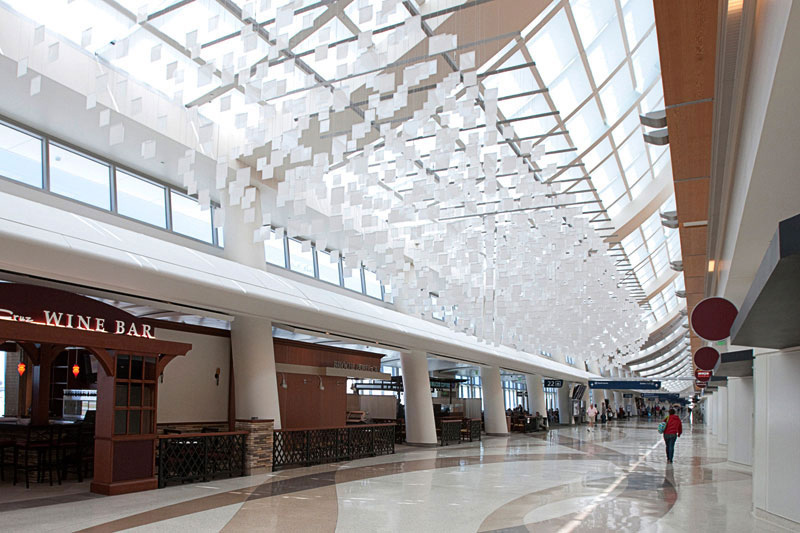
The eCloud is a digital sculpture designed by UeBersee as a permanent installation for the Norman Y. Mineta International Airport in San José, California. The thousands of small square panels of electrically switchable laminated plexiglass act as pixels which imitate the behavior, as well as the volume, of an idealized cloud. The plexiglass (or Smart Glass) has the ability to graduate opacity with the transmission of an electrical charge. The panels are opaque in their neutral state and can become transparent with the charge.

108ft long and 16ft wide, the panels are arranged to simulate a cloud suspended from the ceiling from a tensile structure. The animations that move through the eCloud are based on actual weather data via a live feed of conditions for all airports in the U.S. (see bottom photo.) You can see a video of the eCloud in action below.


(indirectly) via LovelyPackage
Photos: Spencer Lowell