Victor Enrich: Deformed Landscapes

victor enrich, collabcubed, architecture, surreal, photographsvictor enrich, collabcubed, architecture, surreal, photographsSince the age of 10, Victor Enrich has been creating unreal cities; first with pencil on paper, later with computers and 3D software. Using a combination of photography and 3D architectural visualization, the Barcelonian Enrich modifies and deforms existing buildings from Tel Aviv, Barcelona, Helsinki, as well as other locations, with impressive precision so that they fit perfectly into the landscape and picture.

Victor Enrich sells prints of his works on his site.

Iván Navarro: Light Sculpture

Light Sculptures, cool art installationscool light sculptures, art installations, collabcubed, chilean artcool light sculptures, art installations, collabcubed, chilean artClick to enlarge

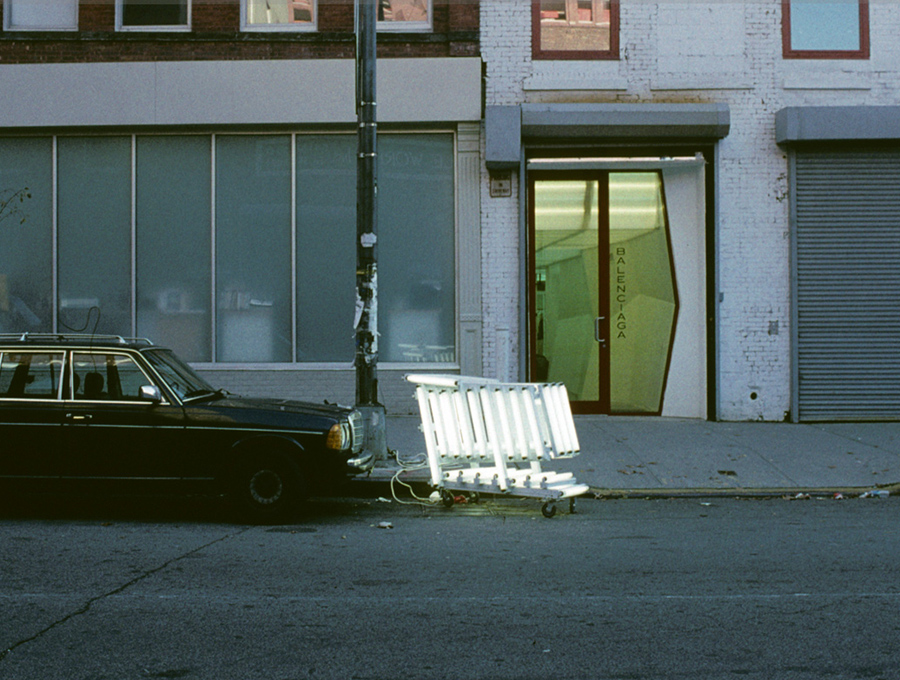
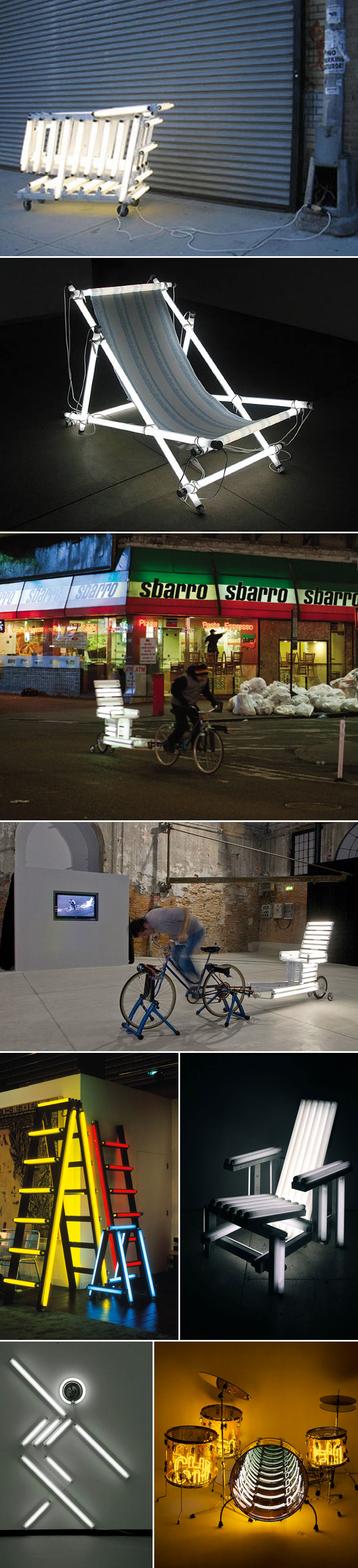
We recently met Ivan Navarro at a couple of end-of-year graduation parties and learned that he is an artist who creates fluorescent light sculptures. After looking up his work, I was excited to see that I recognized some of it from this year’s Armory Show (the Armory Fence) as well as having seen some pieces online. I love all of it.

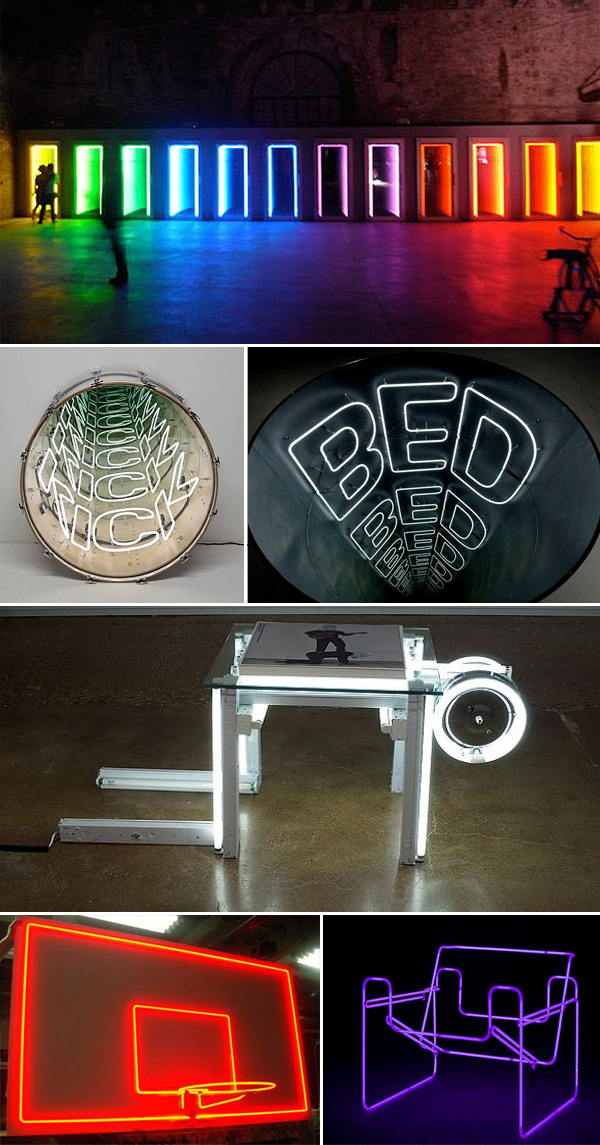
Originally from Chile, Navarro’s work Threshold was presented in the Chilean Pavilion at the 2009 Venice Biennale, consisting of three separate pieces: ‘Resistance’ (the chair attached to a bicycle which illuminates by pedaling the bike); ‘Death Row’ (thirteen doorways with colored neon lights inside repeated or reflected to give an endless appearance); and ‘Bed’ (the circular sculpture with half the word ‘bed’ in neon and reflected to create the full letters as well as repeated to create an infinite tunnel effect.)

This past March, Ivan Navarro had a show at the Paul Kasmin gallery in NYC called “Heaven or Las Vegas” where the light structures were based on the footprint of famous skyscrapers, including the twin towers creating a moving negative effect as infinite holes in the floor. (See video of exhibit below.)

There is an underlying social and political commentary present in Navarro’s work – from capital punishment, and homelessness, to the reign of Pinochet, torture, and more – that makes these sculptures as meaningful as they are beautiful.

From top to bottom, left to right: Homeless Lamp, the Juice Sucker (top two photos); You Sit You Die; Resistance (two photos); Backstage; White Electric Chair; Nowhere Man X; Wail; Death Row; Kick; Bed; Victor; No Dunking; Chair from Concentration Camp.

Ivan Navarro currently lives and works in Brooklyn, NY.

Photos courtesy of Galerie Daniel Templon, Paul Kasmin Gallery, Saatchi Gallery, Artnet, and ArtAlmanac

Aesop’s Grand Central Terminal Kiosk

Architecture, installation, Tacklebox, Grand Central, NYCTacklebox, Jeremy Barbour, Installation, Kiosk, ArchitectureClick to enlarge.

I have to admit that the Australian skincare company Aesop is completely new to me. Not until the plywood went up across the street from our place here in NYC with the “Coming Soon” signs was I aware of its existence. But I’m not here to discuss the company or their products, instead about the very interesting and cool kiosk that they have unveiled in Grand Central Station.

The architect behind the stand – built out of 1,800 back issues of the New York Times – is Jeremy Barbour of Tacklebox. In solidarity with the newspaper-reading commuters, Barbour stacked and pressed the papers into chunky blocks and combined the blocks with complementing powder-coated steel blocks and countertops. Apparently, there will be a similar design in the upcoming Nolita store. It will be interesting to see what they come up with for the third NYC shop that will be going up in our Greenwich Village neighborhood.

You can see more of Tacklebox’s work here and the fabrication process on their blog.

via Racked. Thanks, Scottie!

Jerzy Goliszewski

art installation, sculpture

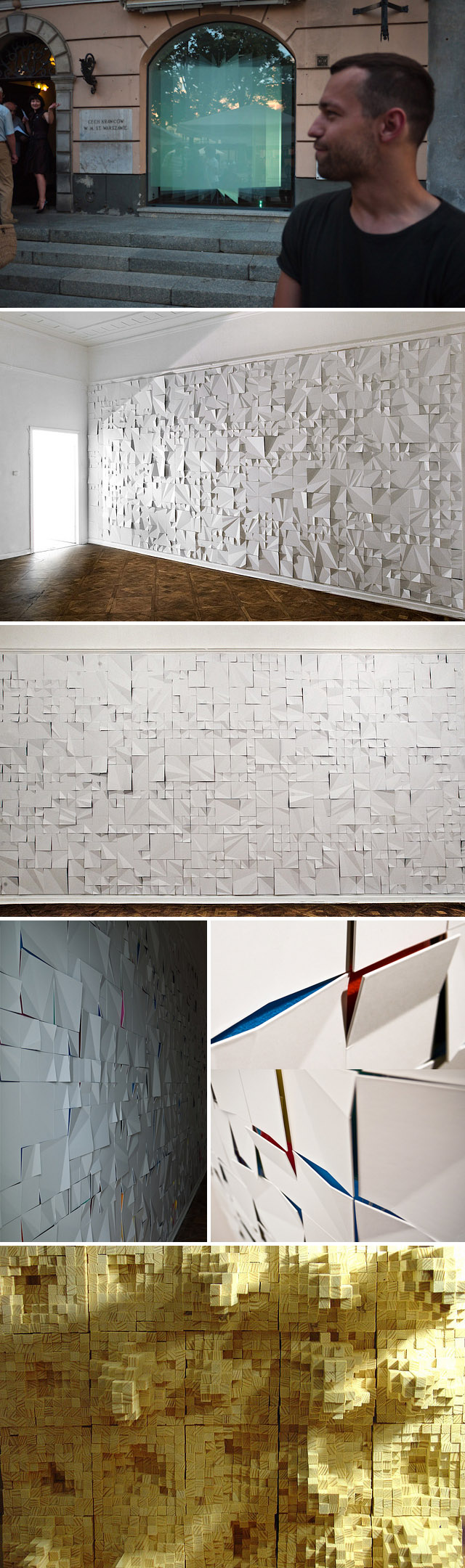
art installation, sculpture, Polish artist, collabcubedart installation, sculpture, Polish artist, collabcubedJerzy Goliszewski is a Polish artist living and working in Warsaw. His body of work is comprised of installations, paintings, drawings and graphics. His focus is on making complex structures using simple and natural materials.

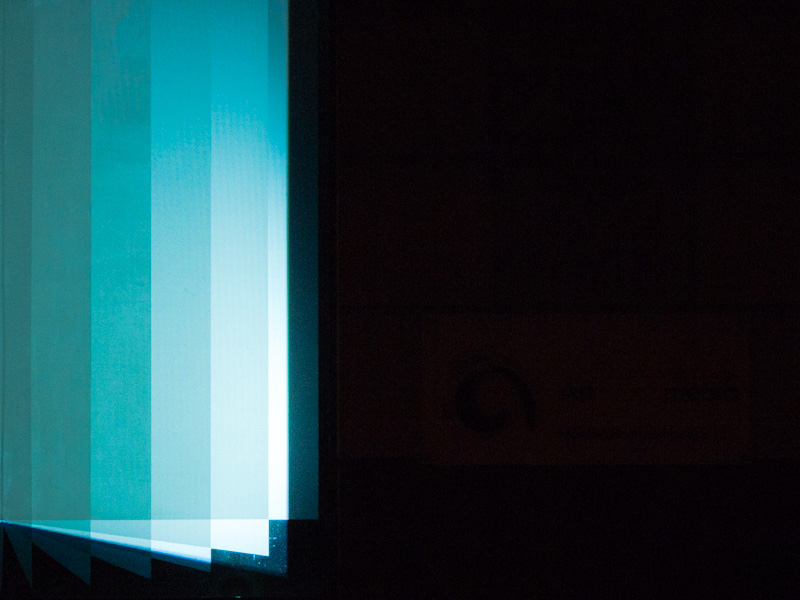
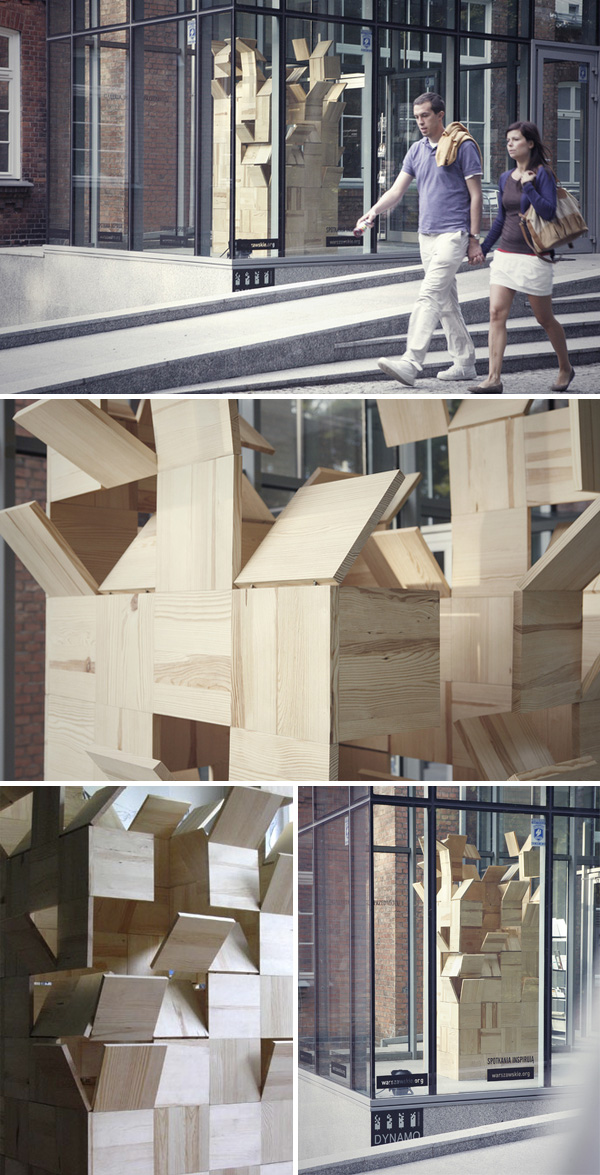
From top to bottom:  We’re Going Out, Jerzy Goliszewski’s newest work made for the closing of a gallery in Warsaw. Using simple means (semi-transparent vinyl and rear projection) Goliszewski created this revolving door style, computerized-looking effect without a computer. To see it in action watch the video.The photo that follows is of the artist in front of the gallery with the artwork in the window. Kai, another installation, takes its cue from the classic fairy tale “The Snow Queen.” Kai was inspired by structures, such as the crumbling sheet of ice, the cracked ground and the cracked mirror which broke into pieces distorting the world, in the story. Next image down is from Lac Bleu 02, a wooden installation made of thousands of bits of wood and, lastly, Dynamo, another wooden installation representing force and power in its name and at the same time the block’s transparency removes the stability and exposes its fragility like a house of cards.

You can see more of Jerzy Goliszewski’s work on his website, as well as his flickr set of installations.

Tunga: Presolaires

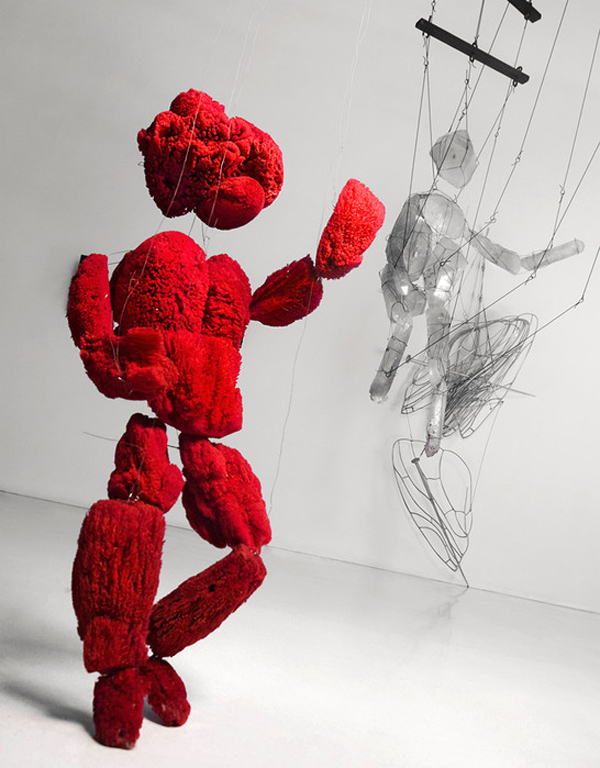
Art, Installation, large puppets, PresolairesArt, Installation, PresolairesArt, Installation, Gallery, PresolairesBrazilian artist Tunga, nee Antonio José de Barros Carvalho e Mello Mourao, has been creating sculptures and installations since the 1970s. Currently he has an exhibit called Presolaires at Galerie Daniel Templon in Paris. As part of the exhibit he has produced a series of marionettes made of iron, bottle glass, and crystal – materials often found in Tunga’s work – as well as pearls, sponge and amber. The puppets are offset by a collection of iron containers housing pieces of resin, silicon and steel.

You can see more of Tunga’s work at the gallery’s site.

Stretch Chairs: Carnevale Studio

Carnavale Studio, Chairs, Industrial DesignChair design, industrial design, cool furnitureWe were reminded of these Stretch Collection chairs by Carnevale Studio the other day when we popped into the Future Perfect. We had seen and liked them last year at the 2010 ICFF.

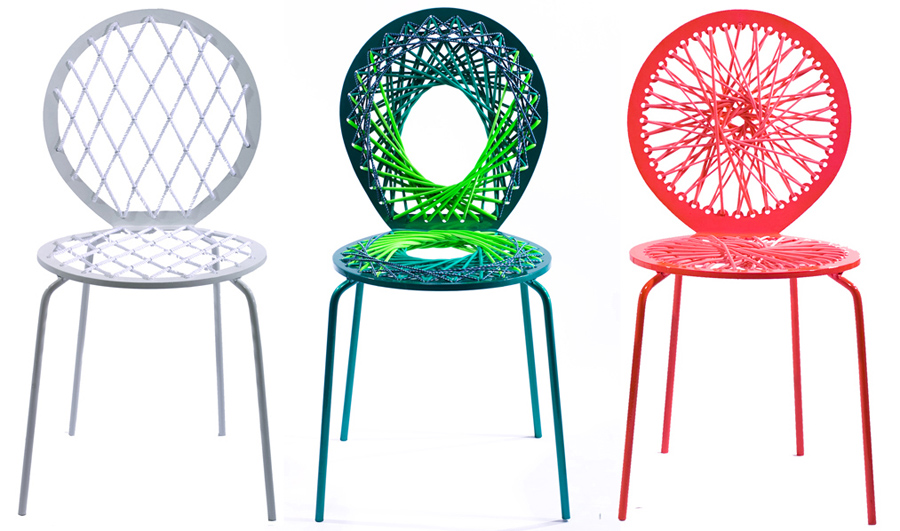
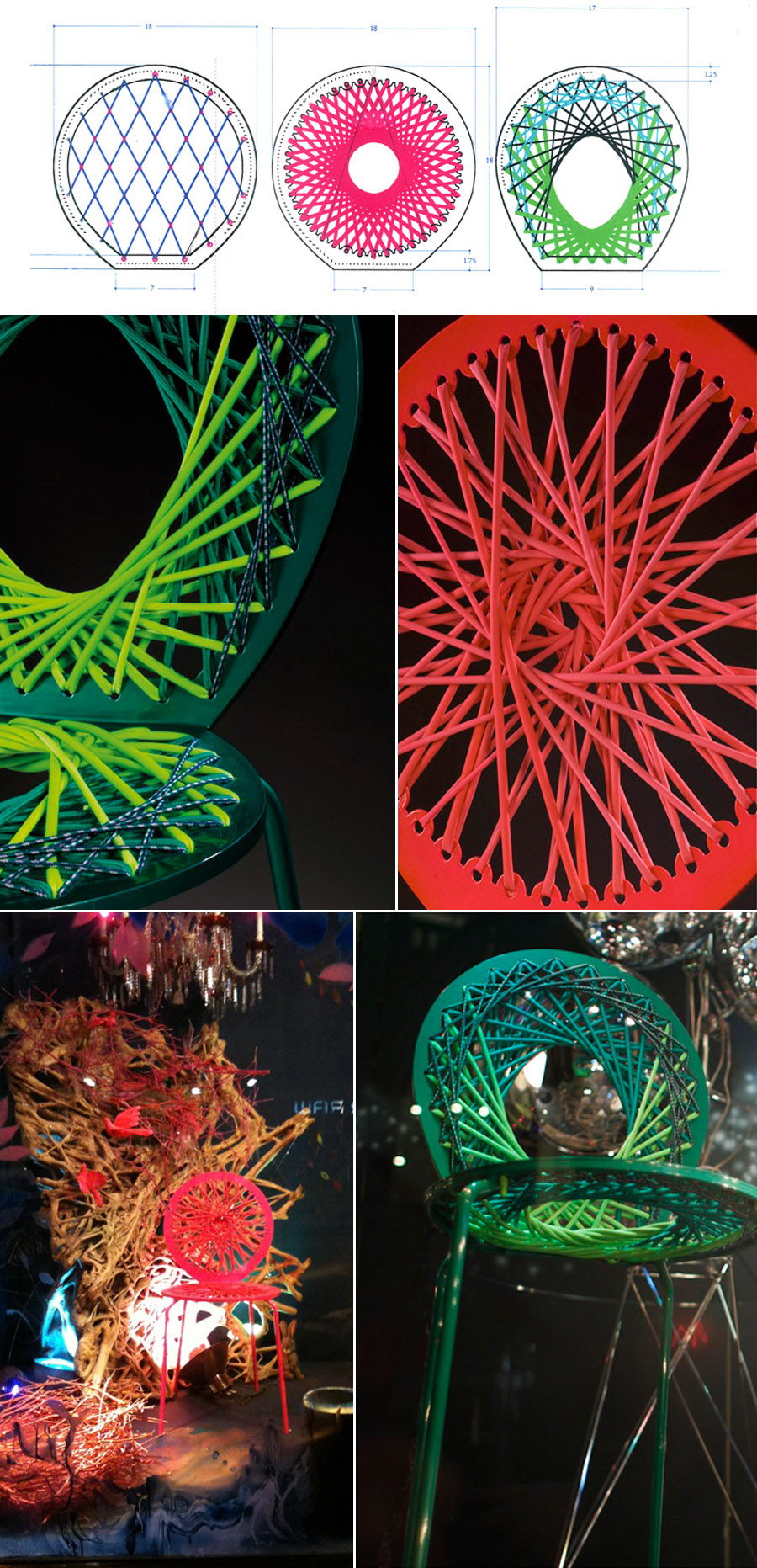
Inspired by the corset-like pieces of the fashion world, Jessica Carnevale used latex, bungee and rope to create these bright colored (our favorite is the hot pink) and fun chairs.

Available at The Future Perfect and ABC Carpet & Home.

Bottom left photo by Louis Filosa. Bottom right photo by Robert Carnevale

Laszlo Rozsnoki: Rope Shelf

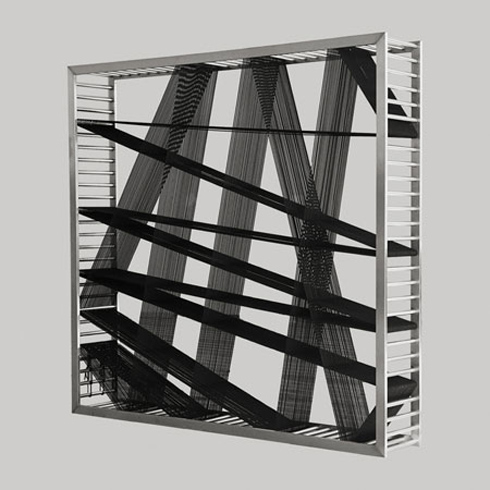
furniture design, industrial design, rope bookshelffurniture design, industrial design, cool bookshelfLaszlo Rozsnoki is a product designer, originally from Budapest, who studied design in the Netherlands. He has designed a series of furniture pieces under the title Questioning the Established, of which this Rope Shelf is a part of. As with the other pieces in the series, the Rope Shelf has a certain twist. Where there are usually solid, horizontal shelves, Rozsnoki has replaced them with diagonal ones made of rope attached to a frame. From certain angles the stretched rope, overlapping another layer, creates a moiré pattern.

I’d love to see what the bookcase looks like with books in it.

James Turrell: Within Without

Skyspace, National Gallery Australia, Art Installation, LightTurrell Skyspace, Light Installation, Art, National Gallery AustraliaClick to enlarge

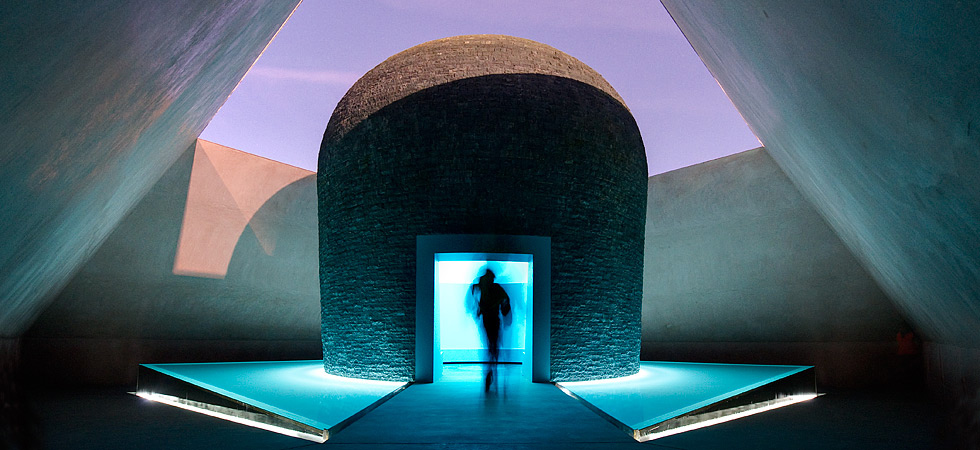
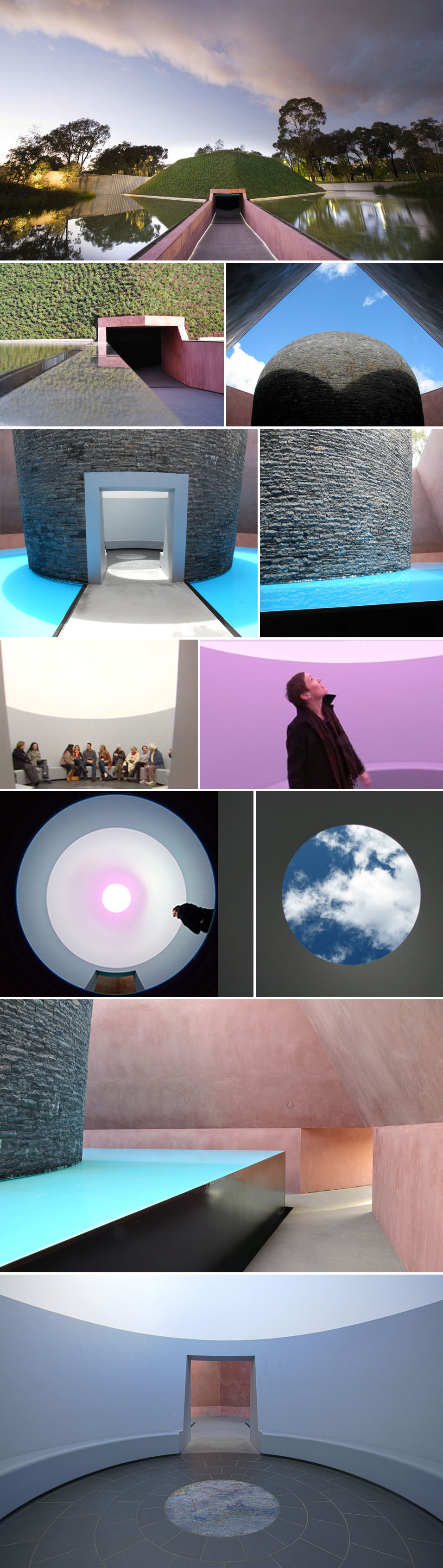
James Turrell’s latest Skyspace, Within Without at the National Gallery of Australia, is one of his largest and most elaborate so far. The Skyspace is entered via a long walkway towards a grass-covered pyramid surrounded by water. Inside, at the center of the pyramid is a domed structure open to the sky, which in turn is surrounded and highlighted by shimmering turquoise water. As in other of Turrell’s Skyspaces, Within Without is most dramatic at dawn and dusk, when there are more changes in light and movement in the sky which are then intensified within the domed space.

You can read more about the exhibit here and see more photos at screenstreet’s and chaoite’s photostreams.

Jacinto Moros: Balletic Sculpture

Art, Sculpture, Spanish Sculptorart, sculpture, wood curves, spanish sculptorart, sculpture, museums, metal scultpureLamp design, curved wood, sculpture lampsClick to enlarge.

The Spanish artist Jacinto Moros, who we had the good fortune of befriending during his years in NYC, takes wood and makes it dance. His ability to bend and curl the material into beautiful sculptures that, while static, are full of movement, is really amazing.

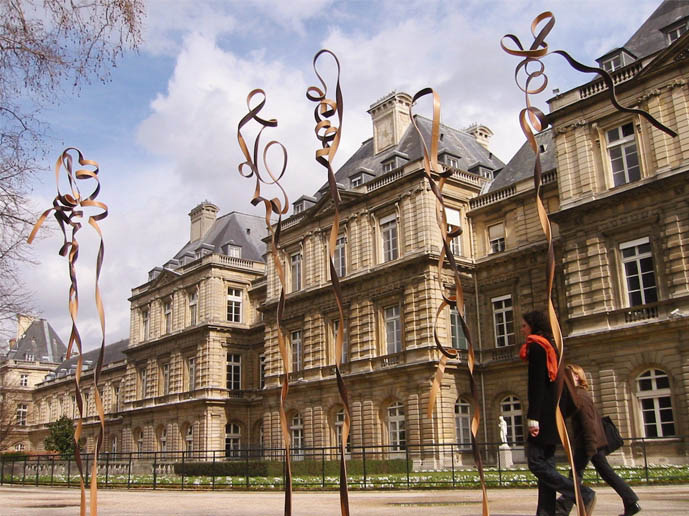
Though a fan of all of his work, I especially like how his Movimientos Liquidos (Liquid Movements) piece worked in its space, this being the Luxembourg Gardens in Paris. As if abstract flowers or trees fitting in perfectly, yet uniquely, into the park landscape. (Top three images.)

His Architecture Series, designed in wood and cast in stainless steel, is inspired by well-known structures, captured using a continuous line to render the buildings as sculpture. (See stainless steel sculptures in photos, clockwise from top left image are: Guggenheim, Bilbao; Guggenheim, NYC; Reina Sofia, Madrid; Pompidou Centre, Paris.) The series is open-ended with more buildings to follow.

Moros has also designed some products in his curved wood method, including lamps and jewelry.

You can see more of Jacinto Moros’s work on his website, as well as at the Victor Lope Gallery, and OA Madrid online shop.


Typographic Wine Labels (Mostly)

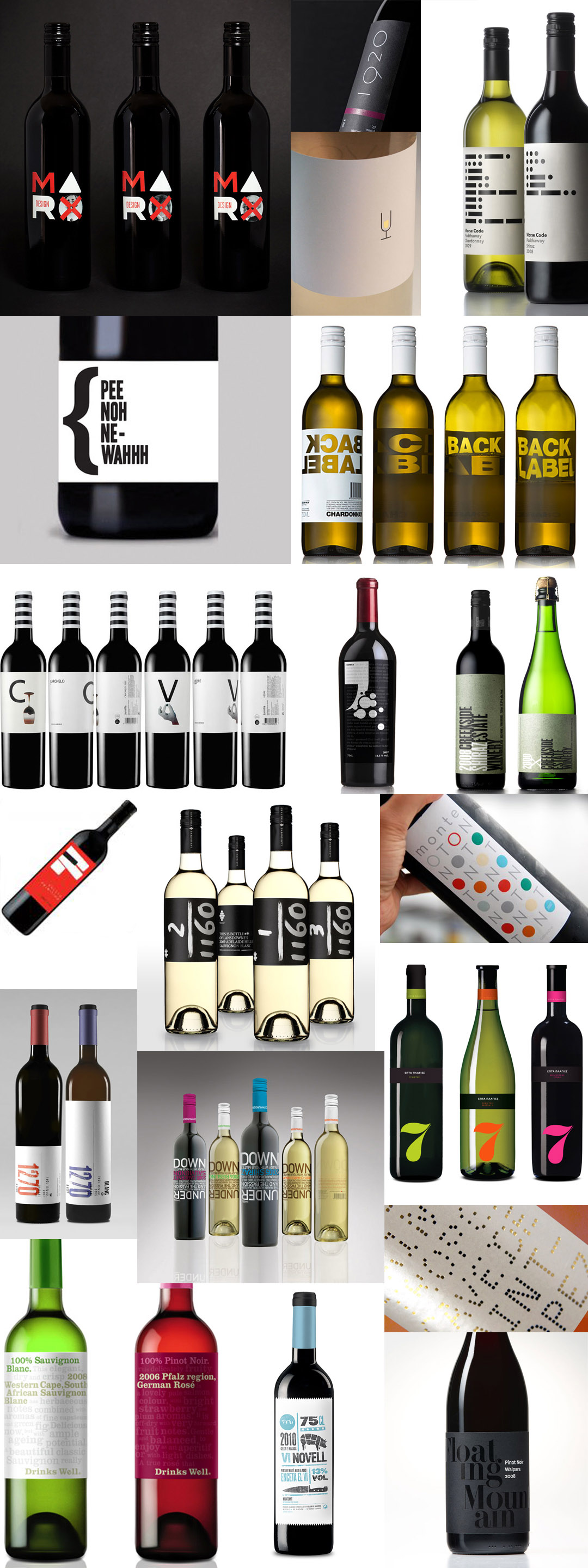
Graphic Design, Package Design, TypographyTypography, Packaging, Graphic DesignClick images to enlarge

I know it’s not wise, but I am definitely prone to choosing a wine based on its label rather than its vintage, mostly due to ignorance on the subject of fine wine, but also because as a graphic designer I am apt to go for the nicely designed label. And within the nicely designed label category, I am most likely to be lured by a nicely designed, typography-driven label.

Here is a small selection of mostly typographic wine labels that caught my eye on Lovely Package, Graphic Exchange, and, of course, FreshDirect.

Knog: Bicycle Locks

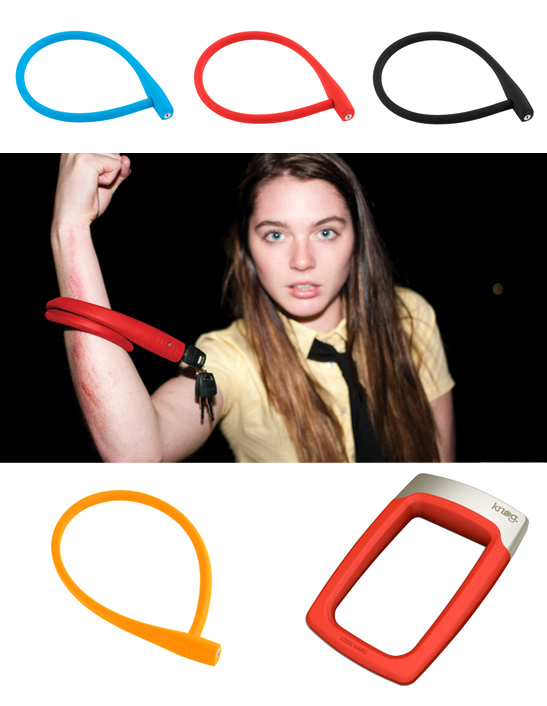
Bicycle Locks, Silicone, Industrial DesignBicycle Locks and accessories, Product designOn a walk through Tribeca yesterday afternoon, here in NYC, the three of us wandered over to Adeline Adeline – as their tag line states: “a very nice bicycle shop” – in search of this bicycle helmet. Though we left empty-handed, we fell in love with these Knog bicycle locks. It may be hard to appreciate how nice these colorful silicone locks are from the photos but, trust us, in person, they’re beautiful design objects. There are different thicknesses and prices, but they’re all really nice. The U-lock on the bottom right is due out in November and we did not actually see that one, but I’m liking the look of it on their site.

Knog is an Australian company that sells all kinds of bike accessories. The lights seem to be very popular, based on my google search of Knog. You can check it all out here.

LAVA

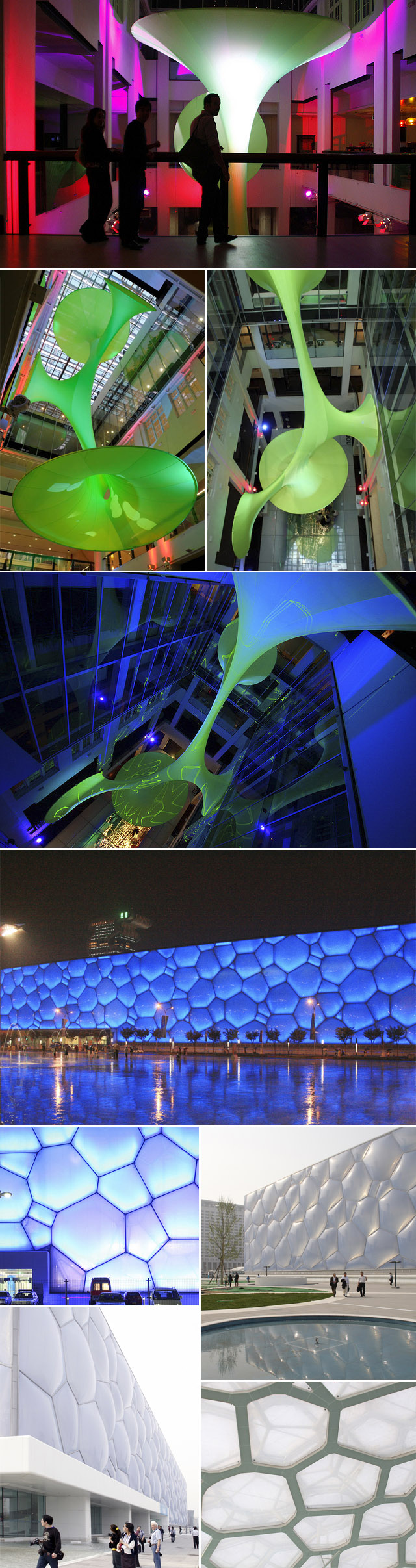
Cool Architecture Installations, Chris BosseCool Architecture Installations, Chris BosseCool Architecture Installations, Chris BosseClick to enlarge

With its two main offices in Sydney and Stuttgart, LAVA – Laboratory for Visionary Architecture – functions as a think tank generating inventive architecture that “bridges the gap between the dream and the real world.” Founded as recently as 2007 by Chris Bosse and Tobias Wallisser, LAVA has already produced an impressive body of work. Using nontraditional methodologies and advanced technology, LAVA’s structures and city planning are part of a new and cutting edge, as well as sustainable, generation of architecture. Here are just three of their projects:
Top to bottom – The Green Void, a tensile fabric installation in the central atrium of the Sydney Customs House.
The Water Cube or National Aquatics Center in Beijing, originally designed for the 2008 Olympics has since been converted into a water park.
Digital Origami, an installation created in a masterclass taught by Chris Bosse at the University of Technology Sydney. Made from 3500 recycled cardboard molecules of only two different shpaes.

You can see more of LAVA’s amazing work at their website as well as on Chris Bosse’s flickr.

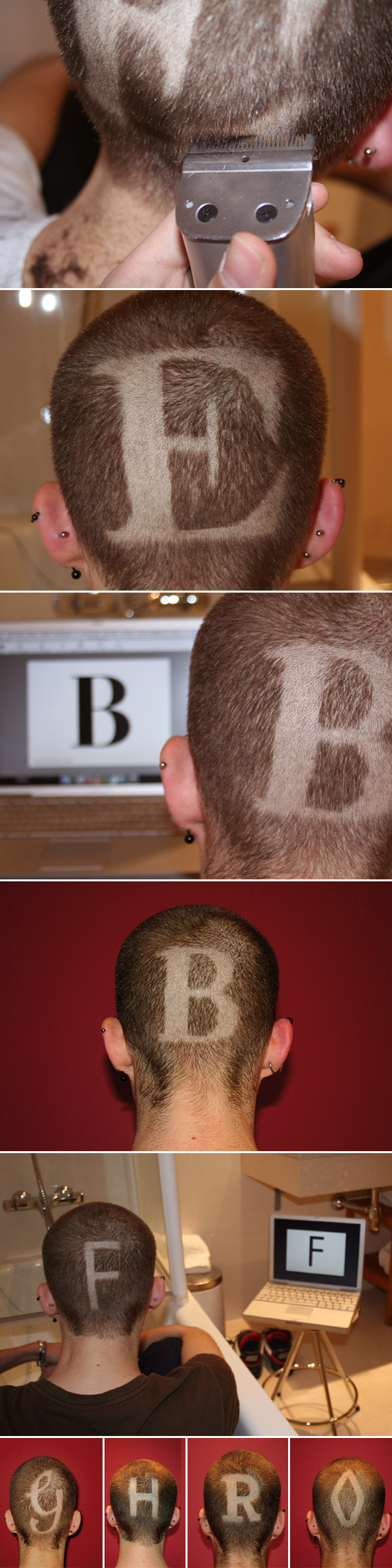
Con la Tipo en la Cabeza:Type on the Brain

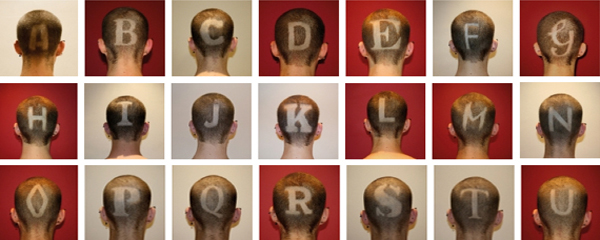
Typography, Type, Fonts, Shaved HeadTypography, Type, Shaved Head process, Alphabet, FontsCon la Tipo en la Cabeza is an ongoing project by Jesus A. Nieto (aka Cucho) a Spanish graphic designer currently based in Leeds, England. Literally, Con la Tipo en la Cabeza means With Type in the Head, but the expression probably translates more accurately (if not a perfect fit with the project) as With Type on the Brain.

Cucho inititated the project in July of 2009 as a typographic experiment to pay homage to different typefaces by initial as he discovered them entering the world of design. The only letters left to go? Y, Z and the trickier Ñ.

The typefaces:  A | Akzidenz Grotesk – B | Bauer Bodoni – C | Cooper Black – D | Din 1451 – E | Engravers – F | Futura – G | Gaseosa – H | Helvetica – I | Italian old style – J | Johnston underground – K | Kandal – L | Lucida Sans – M | Mistral – N | Neutraface – O | OCR-A – P | Palatino – Q | QuaySans – R | Rockwell – S | Stencil – T | Times New Roman – U | Univers – V | Verdana – W | Weidemann – X | Xylo

You can see the Univers ‘U’ in progress in the video below. All the letters are impressively well-rendered, considering the medium, even Mistral!

via Tago

Moderna Museet in Malmö

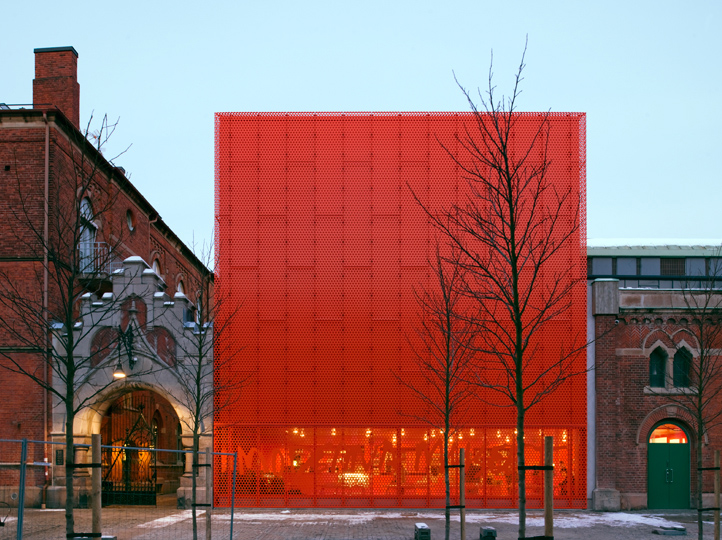
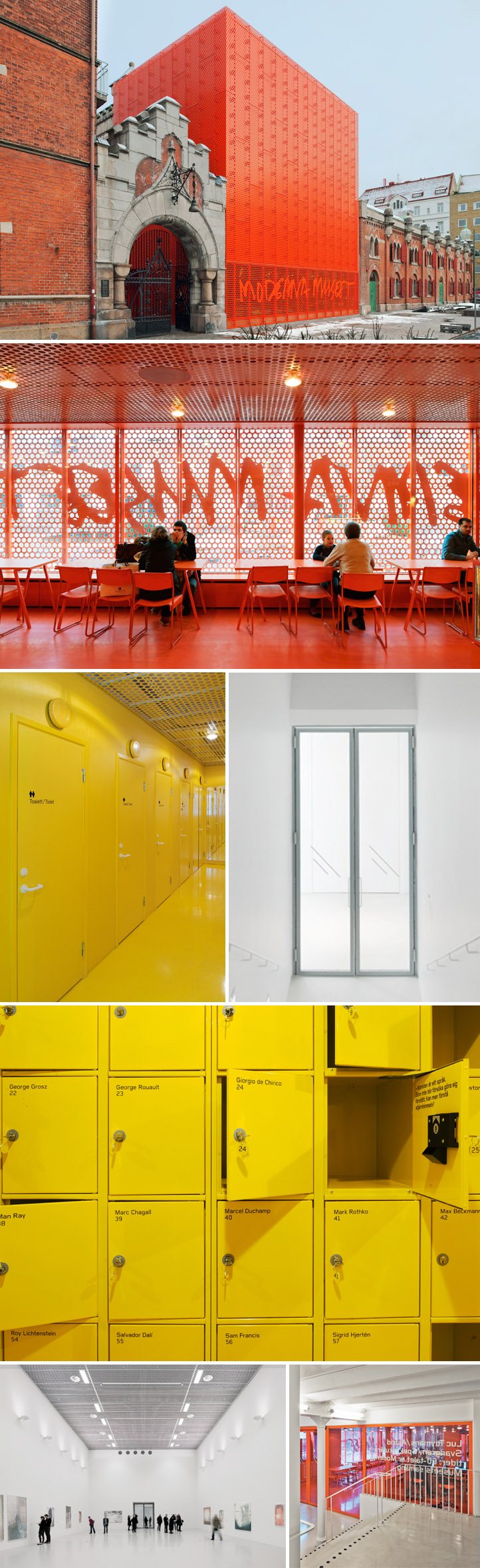
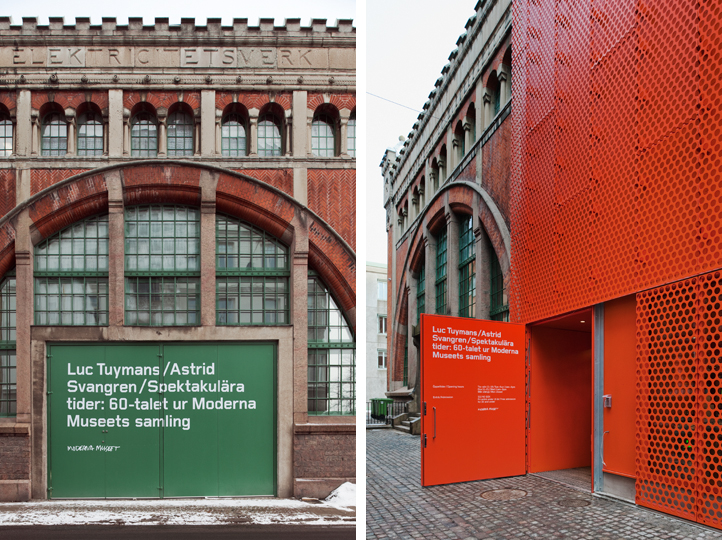
Stockholm art museum, modern architectureStockholm art museum, modern architectureModernaMuseet Malmo, stockholm art museum, architectureOne of the things that I truly enjoy, and gives me a little silly thrill, is seeing new architecture incorporated successfully with old. Coming across photos of the relatively new building for the art museum in Malmö, Sweden, Moderna Museet gave me said thrill.

Designed by Tham & Videgård Arkitekter in collaboration with Henirk Nygren Design and Stockholm Design Lab, the two latter involved in the interior design as well as branding and signage, the bright orange-y red box looks fabulous next to the older, classic brick buildings that seem to be part of the museum as well.

The handwritten logo which works beautifully large across the windows at the base of the box in the same color, is adapted from Robert Rauschenberg’s handwriting and famous signature.
via Stockholm Design Lab

Nuria Mora: Street Art from Spain

Street Art Spain Graffiti Wall muralsStreet Art, Graffiti, Spain, Female Street ArtistClick images to enlarge

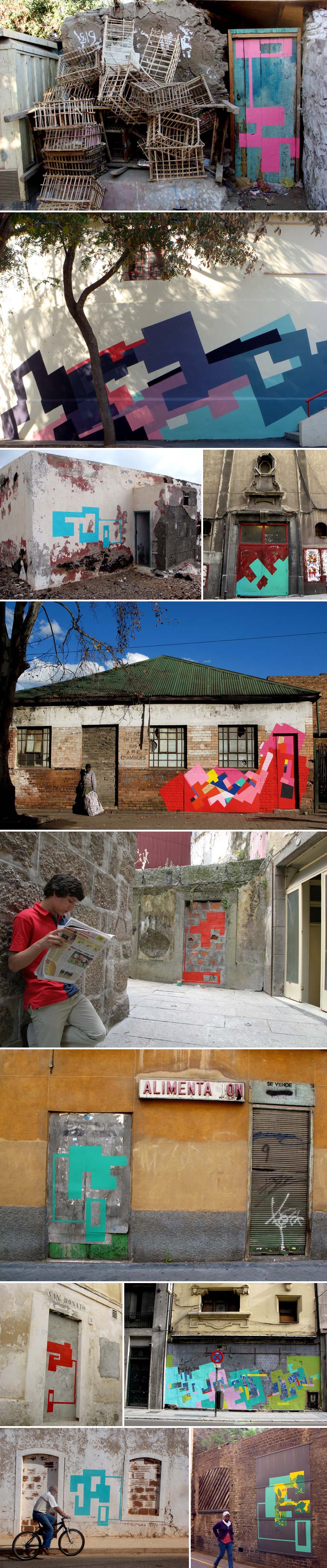
Nuria Mora is a street artist based in Madrid. Not that it should matter, but she is a woman and, as far as I’m concerned, it’s certainly refreshing to come across a female street artist—definitely in the minority.
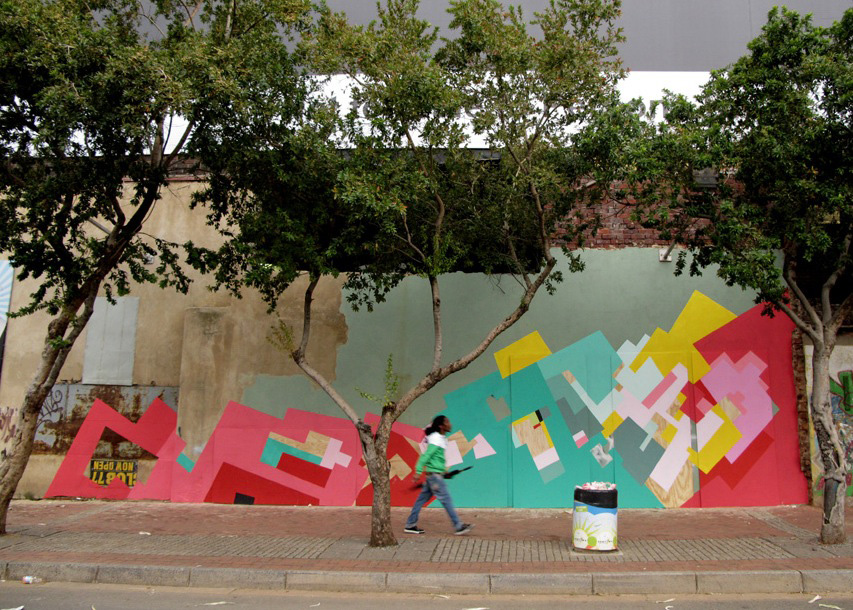
Colorful and geometric, I imagine coming across any one of her wall murals would brighten one’s day. What I enjoy most about all of these is the contrast of the clean lines on the mostly old or run-down walls they appear on. It’s almost the opposite effect of graffiti way back when the tagging or murals would, many times, deface a newer wall or subway car.

There is plenty more to see on her site.