The Kitchen Project

cool, futuristic kitchen design, yoes, sounds, lightcool, futuristic kitchen design, yoes, sounds, lightcool, futuristic kitchen design, yoes, sounds, lightClick images to enlarge.

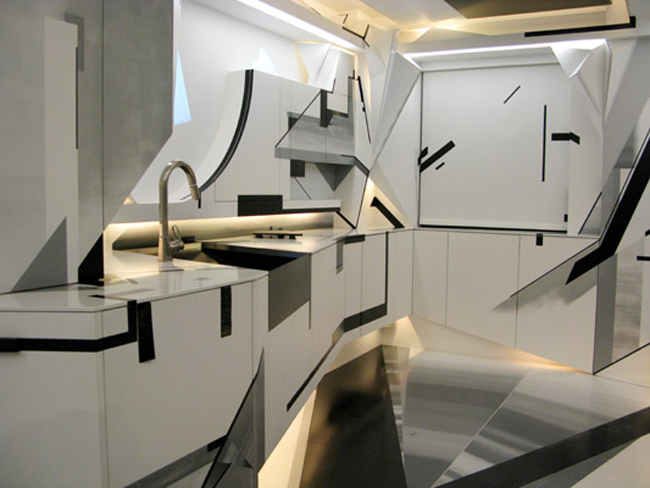
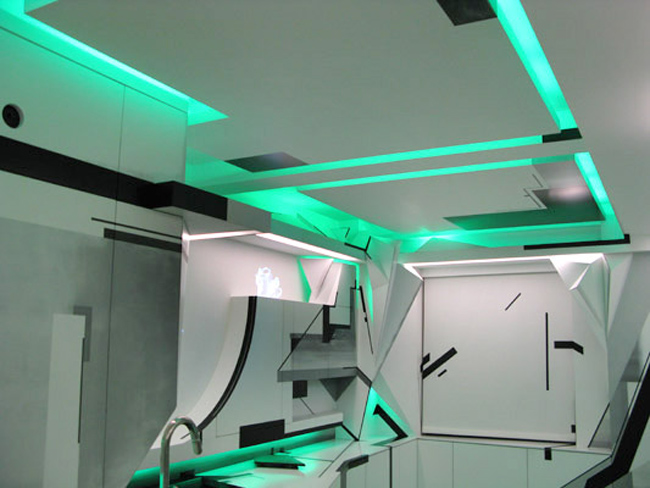
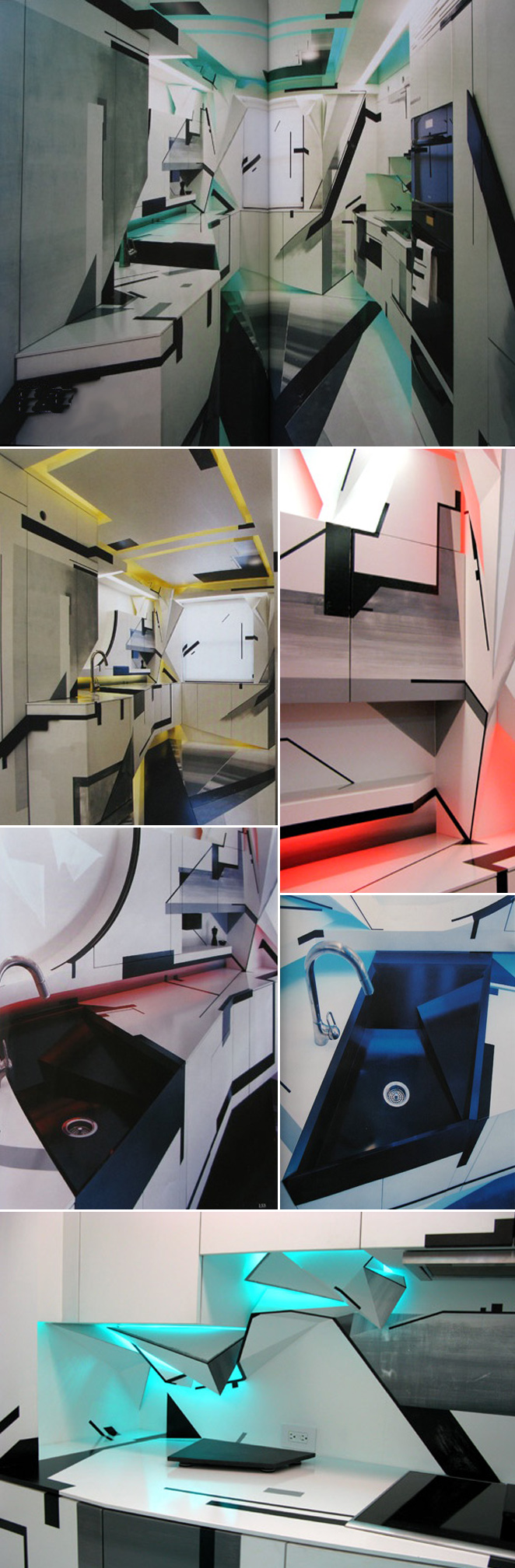
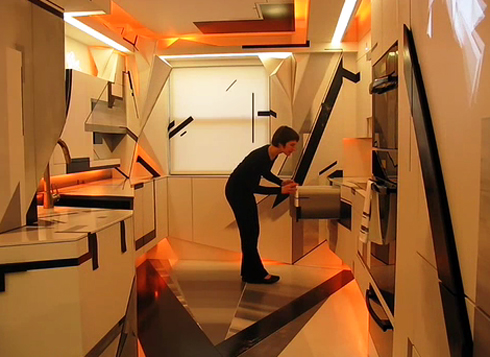
I would imagine that cooking in the Kitchen Project – an actual kitchen in an apartment on West 67th St. in NYC — is a semi-surreal experience. With changing-color lighting, Cubist-feeling cabinets, and varying sound effects upon opening every door, this is not your mother’s (or father’s) kitchen. A collaborative project by artist Amy Yoes (commissioned by the client to create a kitchen that was a work of art and would give them the sense of living inside her video Rear-View Mirror) with Slade Architecture and Bronze Hill Inc.

The kitchen includes: LED lights that are programmed to cycle through the color spectrum at varying speeds; Stop-motion animations projected within the cabinetry; and cabinet doors and drawers that trigger amplified sounds when opened (see this short video to see it in action.)
Photos: Amy Yoes and Annie Schlechter for The World of Interiors

Playtype Concept Store

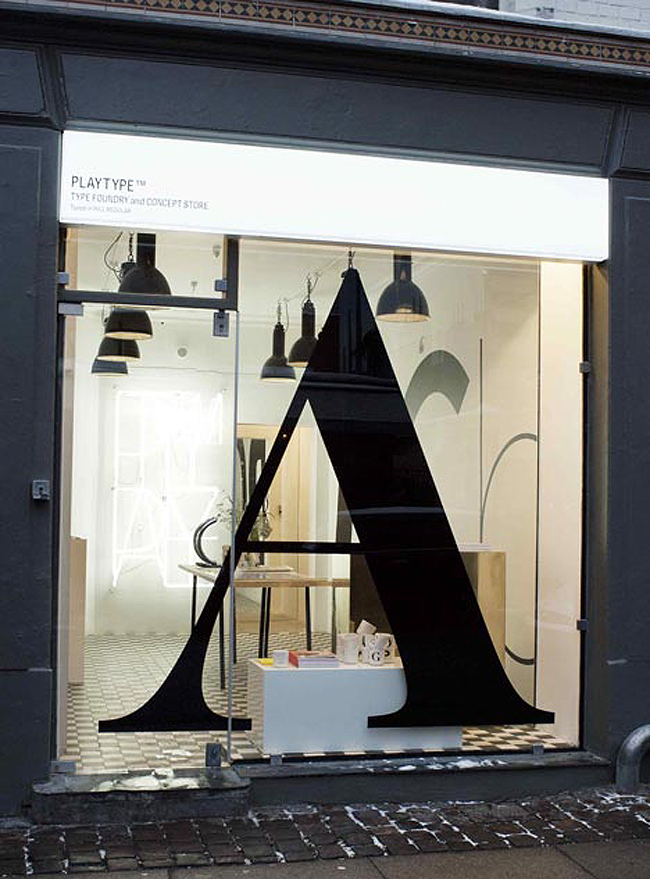
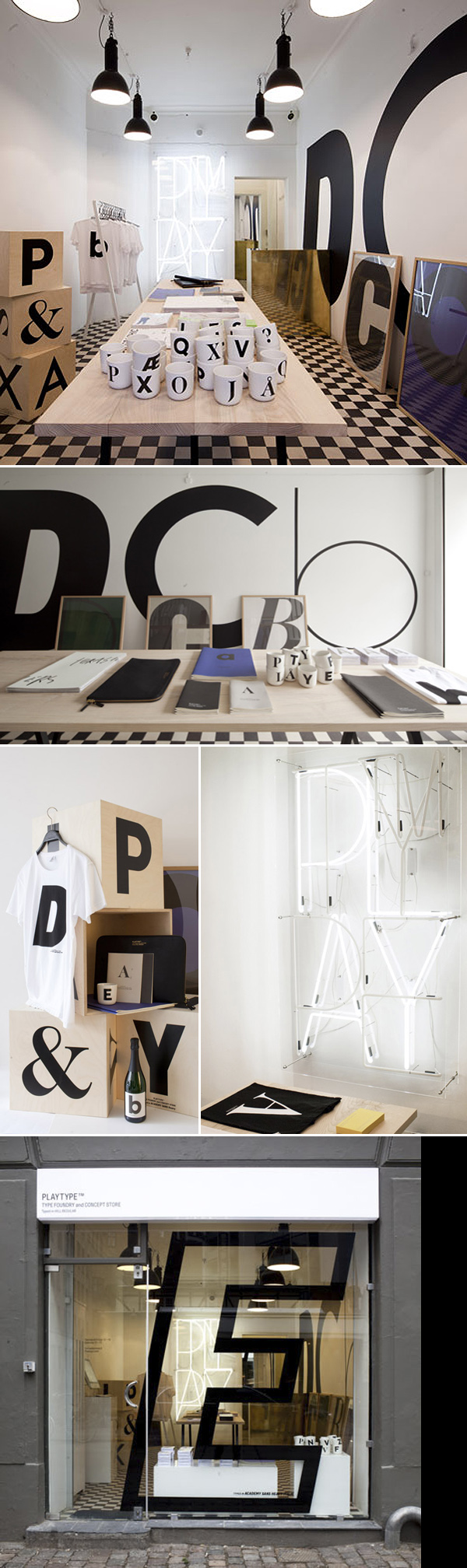
typography store, products with type, copenhagen, design storetypography store, products with type, copenhagen, design storeThis is one of the many reasons I think I’d really like Copenhagen. My impression from afar is that everything there is designy. I mean, a whole store dedicated to type? That’s a graphic designer’s dream come true.

Playtype is an online type foundry established by the Danish design firm e-Types. The Playtype concept store was launched in unison with the redesign of their site back in December. The store is a physical manifestation of the online shop and includes type-themed products such as t-shirts, posters, laptop covers, mugs and, of course, fonts which are loaded onto specially designed USB flash drives that resemble a credit card. The store features oversized type on the window and walls (love that!) as well as a neon sign with Playtype in large lit letters.

If you’re planning a visit to Copenhagen, it definitely looks worth checking out. But hurry because the store is scheduled to close at the end of 2011.

via Typojungle

MIT FAST Light

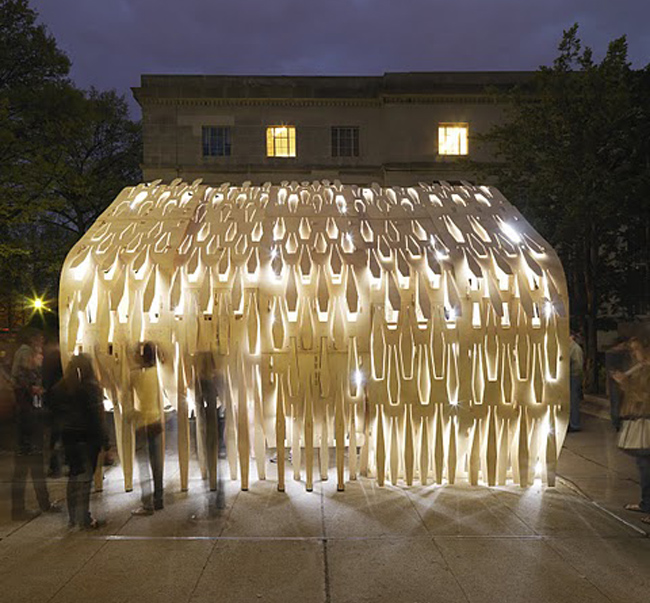
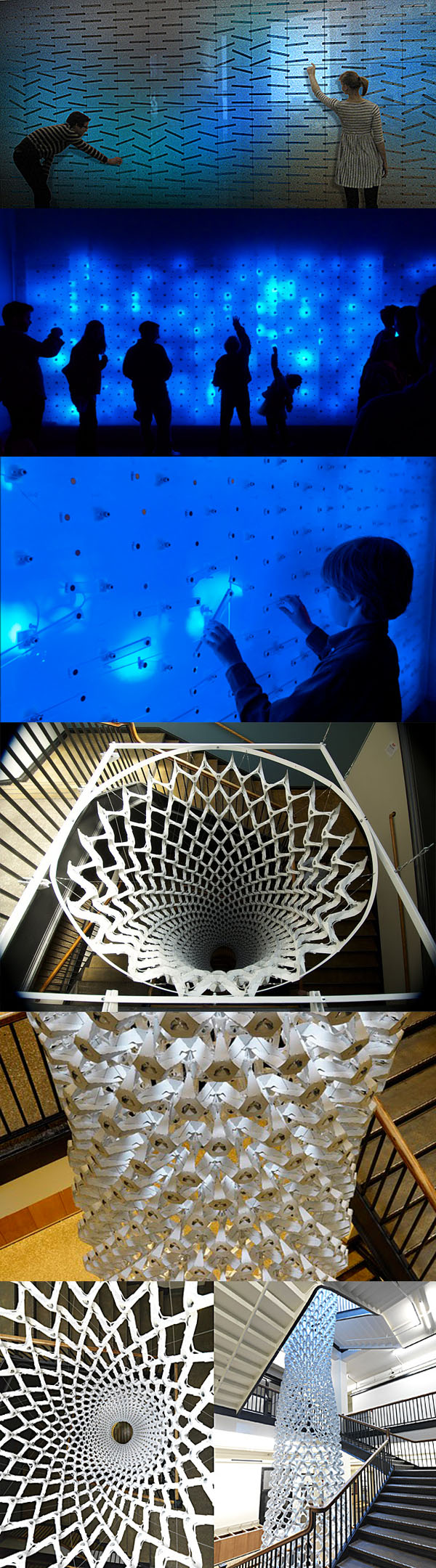
Festival of Art, Science Technology, MIT 2011, Light FestivalFestival of Art, Science Technology, MIT 2011, Light FestivalFestival of Art, Science Technology, MIT 2011, Light FestivalMIT (Massachusetts Institute of Technology) celebrated its 150th anniversary this year with 150 consecutive days of special activities and festivities. A major part of these celebratory events occurred during the Festival of Art, Science and Technology (FAST) which culminated in May with the FAST Light festival. On May 7th and 8th the open house featuring installation projects by faculty and staff took place around the MIT campus. Though all the projects are very interesting and worth checking out, for the purposes of keeping this post a reasonable length, I’m only posting about four of these installations.

From top to bottom:
Unflat Pavilion / Feather-Weight Houseby Nick Gelpi: A pattern cut into flat plywood stock transforms into a three-dimensional, freestanding pavilion. Architectural features appear as flat sheets are bent, unfurling into skylights, columns, buttresses, windows and vents.
Night of Numbers by Anna Kotova and Praveen Subramani: a dynamic lighting installation that tells the story of MIT’s past with projected numbers and phrases (that are relevant and meaningful to MIT students and alumni) on buildings around campus.
Maxwell’s Dream: Painting with Light, by Kaustuv De Biswas and Daniel Rosenberg. On display in the Infinite Corridor Community Lounge: An art installation that allows observers to play with a magnetic field to create patterns in light.
Dis(course)4, by Craig Boney, James Coleman and Andrew Manto: A stairwell transformed by a shimmering conduit designed to inspire delight, wonder and communication between floors.
Photo credits: Arts at MIT; caromk’s flickr; courtesy MIT.

Michael Jantzen: Architecture as Art

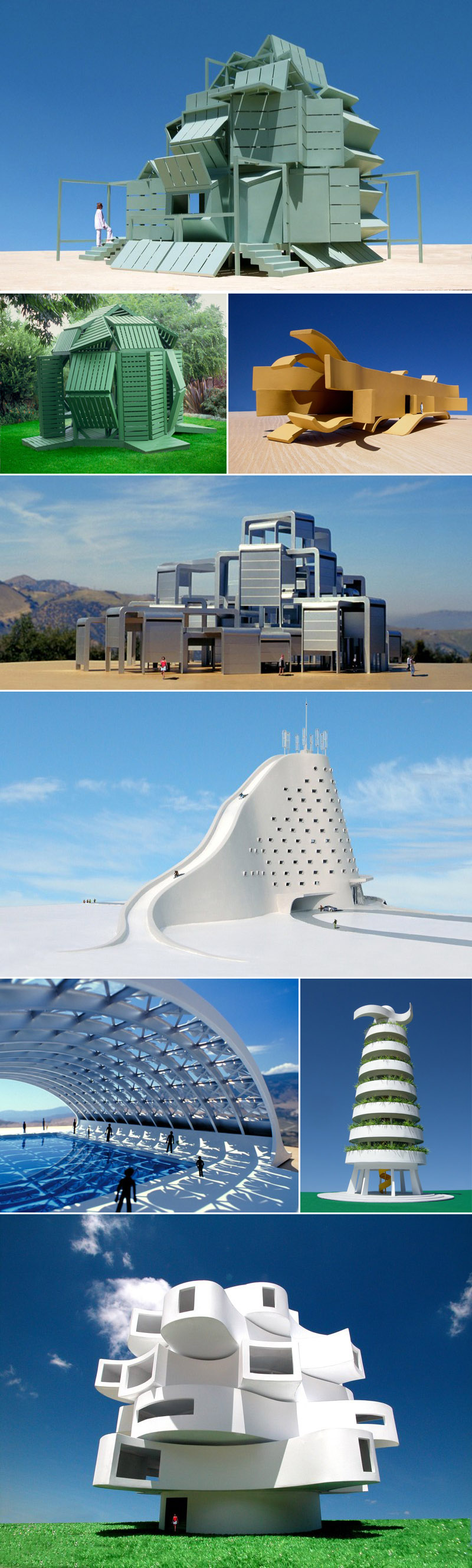
architecture, sustainable designs, mobile structures, conceptsarchitecture, sustainable designs, mobile structures, conceptsClick to enlarge.

Michael Jantzen, an artist and designer based in California, uses architecture as an art form. By combining art, architecture, technology and sustainability, he proposes new ways of living and considers himself an inventor and problem-solver.

Jantzen has a particular interest in exploring public gathering centers using sun and wind as energy sources and in turn sharing that energy with the community where the center is built.

From top to bottom, and left to right:
M-house (recently sold to an art collector in Korea); M-2; First M-velope; Contemplation Pavilion; Garage Door Pavilion; North Slope Ski Hotel; Wind Shade Roof; Eco-Tower; Wind-shaped Pavilion.

You can see many more of Michael Jantzen’s designs here.

via designmilk

Ark Nova: Kapoor & Isozaki

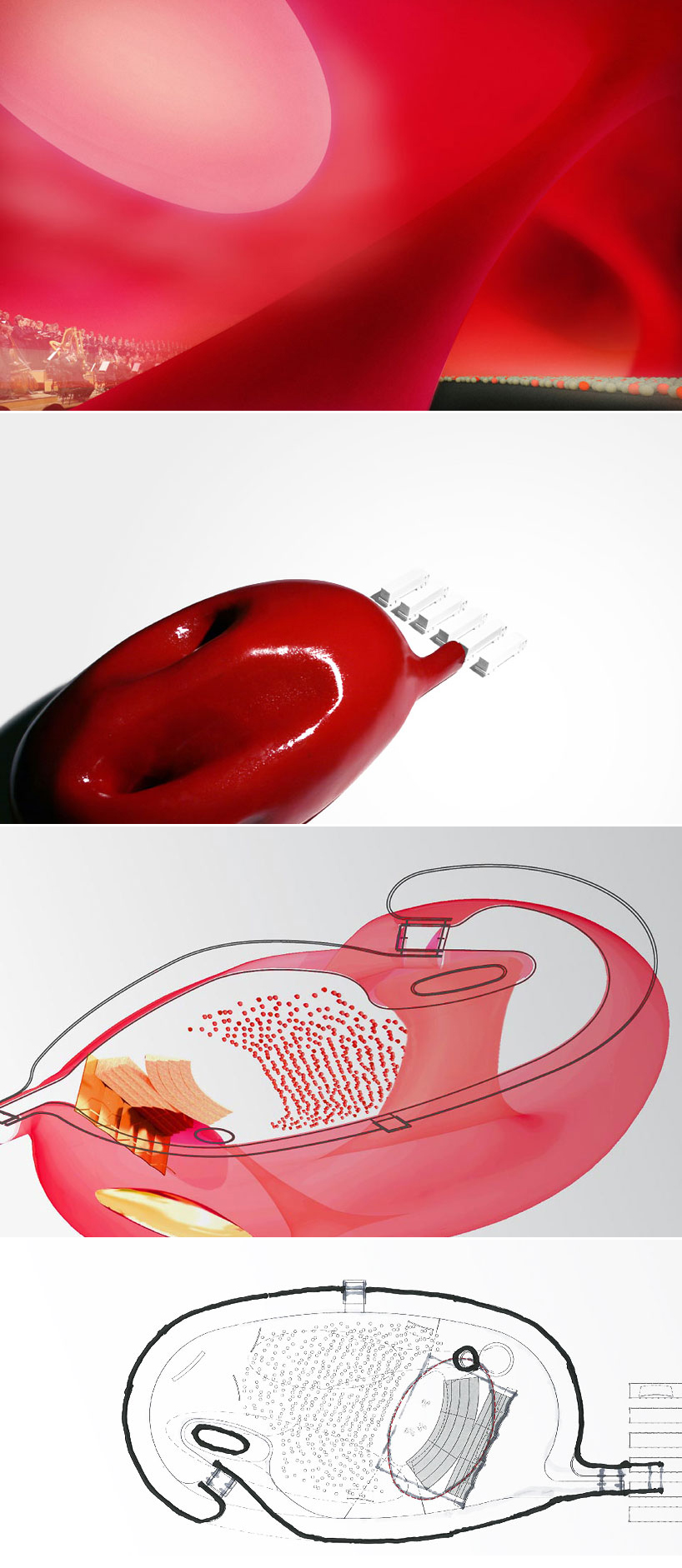
art, sculpture, cool architecture, kapoor, isozaki, japan concert hallart, sculpture, cool architecture, kapoor, isozaki, japan concert hallClick to enlarge

This looks quite spectacular! World renowned artist and architect Anish Kapoor and Arata Isozaki, respectively, have teamed up to create Ark Nova, a mobile concert hall. An initiative of the Lucerne Festival and Kajimoto Music, the idea behind the unit is to bring hope through music to those who are living with the after effects of the earthquake and tsunami in Japan this year.

The concert hall can be easily transported, making it possible to visit many locations within the devastated area. The structure, designed by Kapoor, will be inflatable and made of elastic material. The concert hall will bring many kinds of music and dance performances associated with the Lucerne Festival and will be supported by sponsors making it free for all.

via designboom

The Architecture of Ruy Ohtake

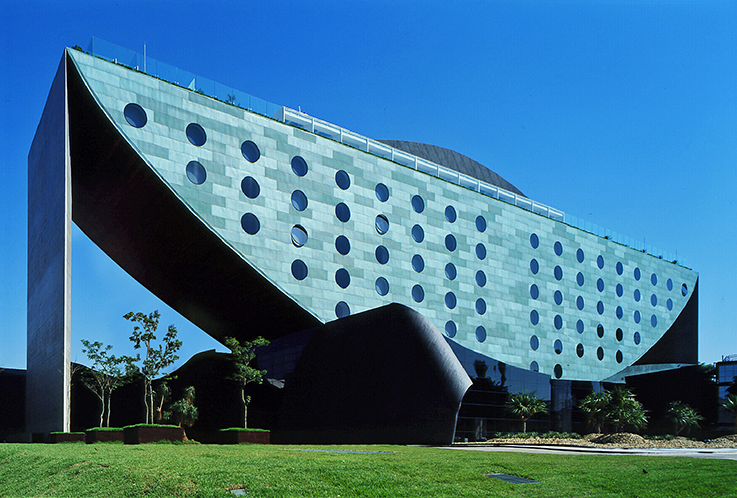
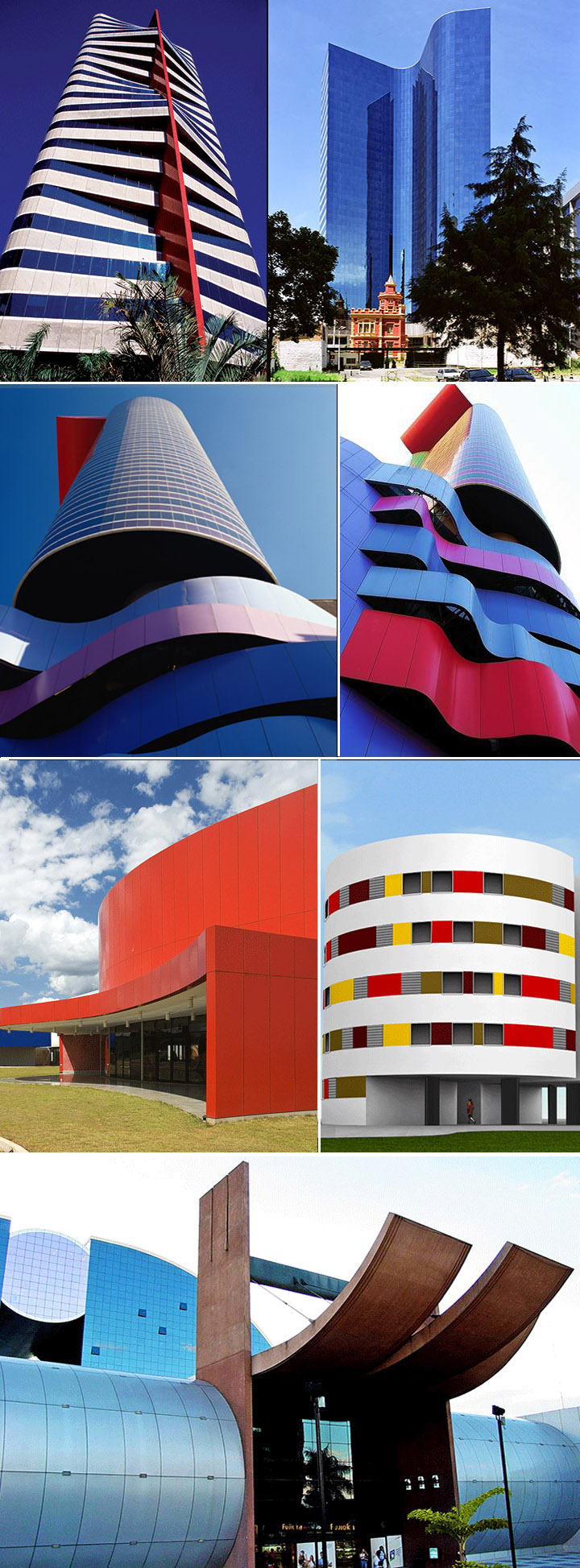
Cool architecture, buildings, sao paolo, Brazilarchitecture, cool buildings, sao paolo, BrazilRuy Ohtake, a Brazilian architect and son of Japanese artist Tomie Ohtake, is known for his dynamic and unique building designs.

From top to bottom, left to right:
Unique Hotel, São Paulo; Berrini 500, São Paulo; FCC, São Paolo; Ohtake Cultural, São Paulo; Laboratório União Química, Brasilia; Conjunto Habitacional Heliópolis, São Paulo; Brasilia Shopping and Towers, Brasilia.

Equally spectacular inside as out, a visit to his website is well worth the time to see all the projects documented from the beautifully simple concept sketches through to completion.

City Leaks: Urban Spaces/Moments

Urban, installation, artUrban, installation, artCity Leaks, a group of artists/street artists that describe themselves as “An Urban Investigation of Inventive Dwelling.” Recently this Melbourne based group created PlayMo (top images) and Hotel Facebook,  (bottom 3 images) both collaborative projects, the second via Facebook photo uploads as “check in”.

They have a sort of manifesto on their facebook page and seem to stick by it.

On PlayMo:

PlayMo was born from the intention of inventing a space that turns into a place where people meet, spend time and play. Its name comes from “playmobil”, a Lego styled child’s creative play toy. Using milk crates was like playing with big Lego pieces.Milk crates are a fantastic material for many reasons; they are structural, light, modular and they have an iconic role in Melbourne’s cafe image and laneways. We believe that familiarity to a material plays an important role in engaging with it.PlayMo uses 3 different types of crates. Black = platforms, Grey= stairs, Green=moveable. The green crates provide the undefined random element; people rearrange their seats or even build small stairs themselves. There hasn’t been a single day where we found them in the same place.
Finally, PlayMo is designed to grow and adapt. People are encouraged to leave things behind and to add to the structure. We found artworks, plants, toys, pillows, new crates and received hundreds of letters. We even found that people had constructed a bin so that it could be kept clean.


via sub-studio

Scaffoldage

Architecture, photography, tumblr, construction, buildingsArchitecture, photography, tumblr, construction, buildingsBeing related to a structural engineer, we probably notice scaffolding more than most. We even have the occasional vacation photo that includes a close-up of some unique type of scaffolding, though we’d have to confess to some eye-rolling on our part.

That said, I was so surprised at how much I loved the site Scaffoldage.com maintained by Shaun Usher. Fantastic! All the images are amazing and interesting for different reasons. Some for the sheer beauty of the photo; others for the incredible feat of the workers actually positioning themselves on the precarious structures; and still others for the unique abstract designs and patterns they create. Such an original idea and a bit addictive.

Check it out here.

via My Modern Met

15 Alice Lane Towers: Paragon Architects

Architecture, South Africa, Paragon Architects, cool buildingsArchitecture, South Africa, Design, cool buildings, collabcubedArchitecture, South Africa, Paragon Architects, cool buildingsClick to enlarge.

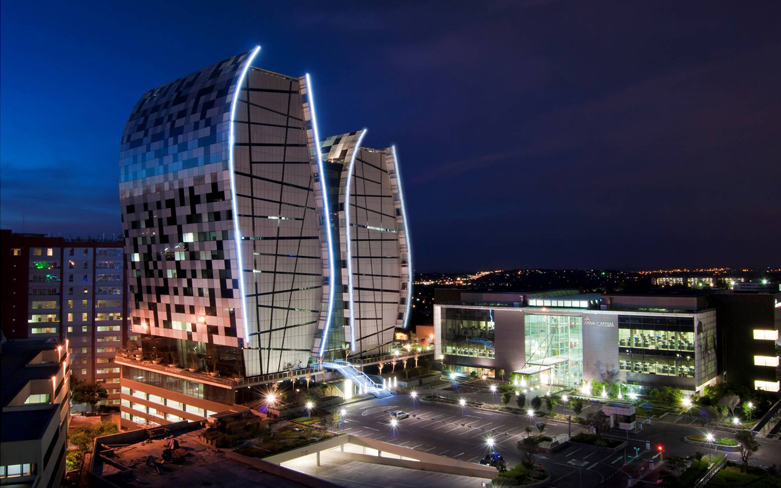
Paragon Architects in Johannesburg, South Africa, have dramatically changed the skyline of the Sandton section of town with the new 15 Alice Lane Towers. The 17-story (hard to believe it’s not taller) corporate offices for a major law firm is incredibly striking with its curved facades and its neon-lit silhouette in the dark. The two towers are linked by a narrow, vertical atrium which houses walkways and bridges that spiral upwards and allow skylights to fill the space with light. The towers are clad with glass and aluminum, the latter used as an energy-saving measure to reduce direct sunlight, as well as add the sculptural element.

The abstract surfaces create changing effects throughout the day, depending on the light. Paragon Architects not only pushed the boundaries in the visual aspect of the towers, but in the environmental aspect as well, in their selection of materials and positioning of the building.

Paragon has definitely “raised the bar” in South African commercial architecture, as their website proudly touts.

For Use: Packing Tape Installations

Cool packing tape installations, art, numen, Austria, Croatia Cool packing tape installations, art, numen, Austria, Croatia Cool packing tape installations, art, numen, Austria, Croatia Numen/For Use was formed by Sven Jonke, Christoph Katzler, and Nikola Radeljkovic, with offices in Vienna and Zagreb. Among their many projects, For Use has several impressive packing tape installations; elevated tubes created by winding tape around columns and extending it to create passageways strong enough for people to enter and interact with the structures. In some views they look like monster cobwebs.

The top installation was created for a 20-artist exhibit at the Schirn Kunsthalle Gallery in Frankfurt. The installation was completed in approximately 200 hours using 50km of transparent packing tape.

The second structure above was createdas part of the International Design Festival DMY in Berlin, at the Tempelhof Airport, out of 700 rolls of tape (38km) in 240 hours (4 days).

The last project above, represented the Vienna Design Week at the Mikser Design Expo, Belgrade.

via Juxtapoz

Hakone Open Air Museum Pavilion

Hakone Open Air Museum, architecture, wood constructionHakone,Tetsuka, architecture, wood construction, cool playgroundClick to enlarge.

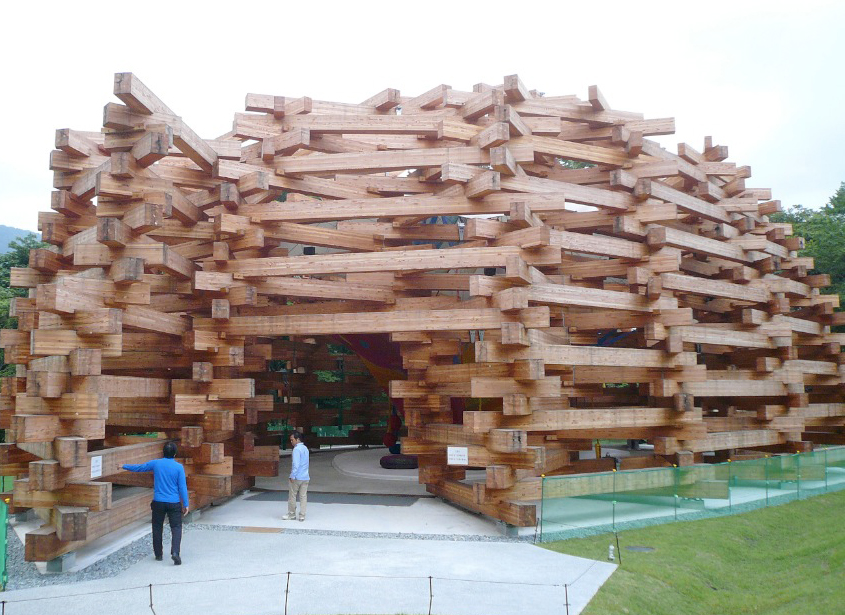
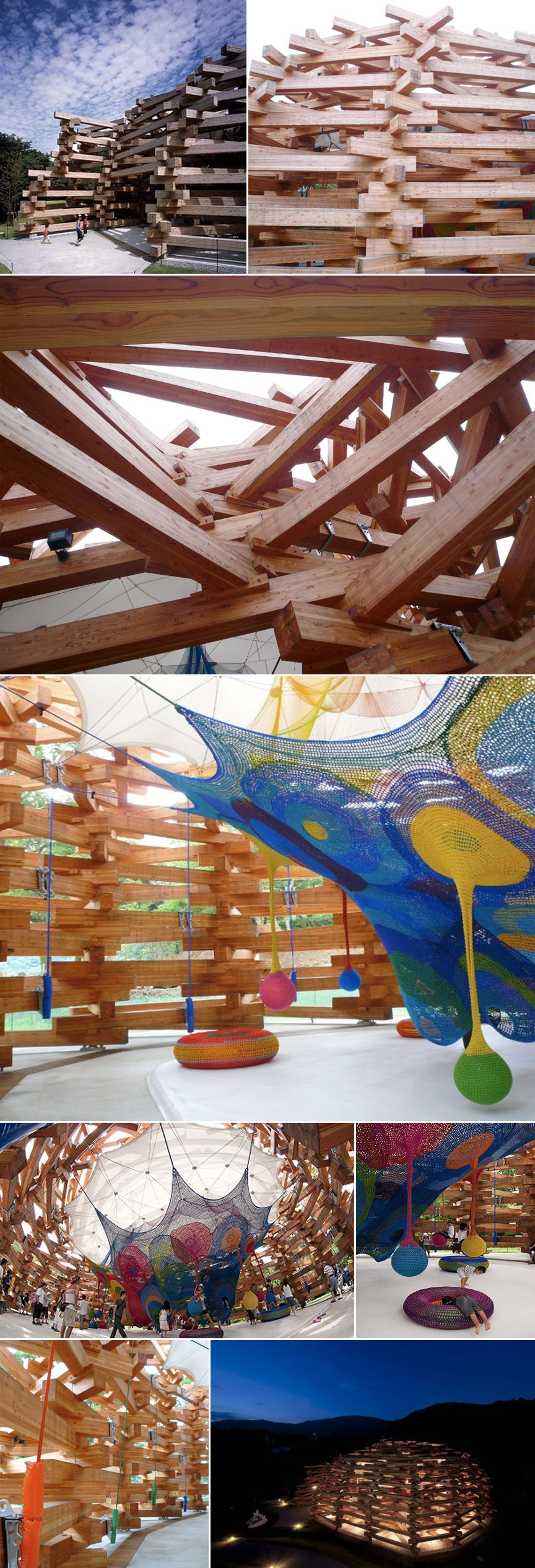
The Timber Pavilion, or Woods of Net, at the Hakone Open Air Museum was designed by Tezuka Architects in Tokyo. Composed entirely of wooden beams without any metal parts, the structure is built with 589 pieces of timber using ancient temple construction techniques to build this, ironically, futuristic form. The total floor area measures 528 square meters. Dramatically hanging from the interior is a huge colorful climbing net reminiscent of Ernesto Neto’s art installations, designed by artist Toshiko Horiuchi Macadam.

Inside and out, a very cool structure.

via Spot Cool Stuff.

Victor Enrich: Deformed Landscapes

victor enrich, collabcubed, architecture, surreal, photographsvictor enrich, collabcubed, architecture, surreal, photographsSince the age of 10, Victor Enrich has been creating unreal cities; first with pencil on paper, later with computers and 3D software. Using a combination of photography and 3D architectural visualization, the Barcelonian Enrich modifies and deforms existing buildings from Tel Aviv, Barcelona, Helsinki, as well as other locations, with impressive precision so that they fit perfectly into the landscape and picture.

Victor Enrich sells prints of his works on his site.

Aesop’s Grand Central Terminal Kiosk

Architecture, installation, Tacklebox, Grand Central, NYCTacklebox, Jeremy Barbour, Installation, Kiosk, ArchitectureClick to enlarge.

I have to admit that the Australian skincare company Aesop is completely new to me. Not until the plywood went up across the street from our place here in NYC with the “Coming Soon” signs was I aware of its existence. But I’m not here to discuss the company or their products, instead about the very interesting and cool kiosk that they have unveiled in Grand Central Station.

The architect behind the stand – built out of 1,800 back issues of the New York Times – is Jeremy Barbour of Tacklebox. In solidarity with the newspaper-reading commuters, Barbour stacked and pressed the papers into chunky blocks and combined the blocks with complementing powder-coated steel blocks and countertops. Apparently, there will be a similar design in the upcoming Nolita store. It will be interesting to see what they come up with for the third NYC shop that will be going up in our Greenwich Village neighborhood.

You can see more of Tacklebox’s work here and the fabrication process on their blog.

via Racked. Thanks, Scottie!

James Turrell: Within Without

Skyspace, National Gallery Australia, Art Installation, LightTurrell Skyspace, Light Installation, Art, National Gallery AustraliaClick to enlarge

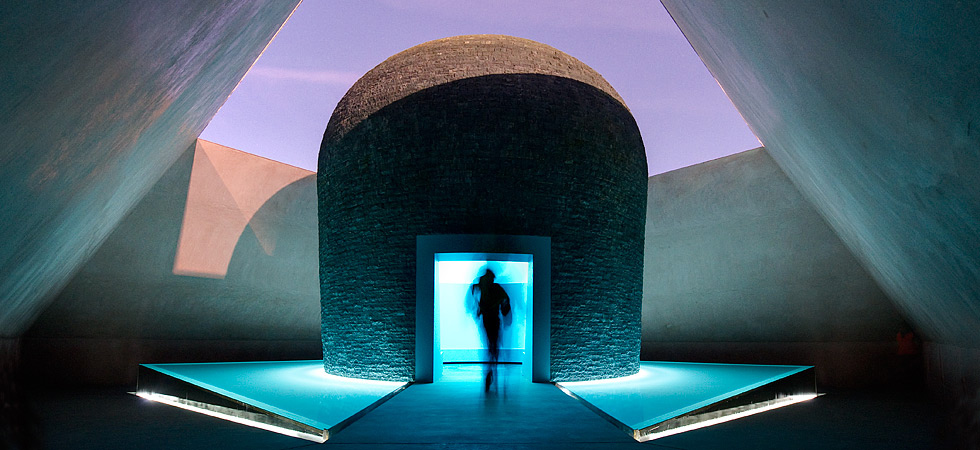
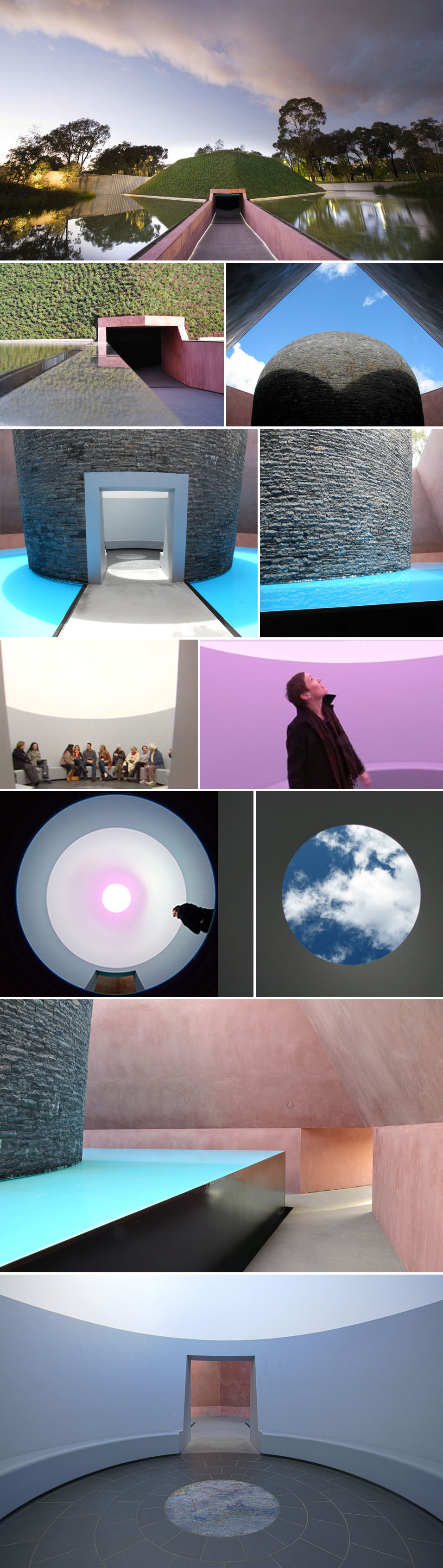
James Turrell’s latest Skyspace, Within Without at the National Gallery of Australia, is one of his largest and most elaborate so far. The Skyspace is entered via a long walkway towards a grass-covered pyramid surrounded by water. Inside, at the center of the pyramid is a domed structure open to the sky, which in turn is surrounded and highlighted by shimmering turquoise water. As in other of Turrell’s Skyspaces, Within Without is most dramatic at dawn and dusk, when there are more changes in light and movement in the sky which are then intensified within the domed space.

You can read more about the exhibit here and see more photos at screenstreet’s and chaoite’s photostreams.

Jacinto Moros: Balletic Sculpture

Art, Sculpture, Spanish Sculptorart, sculpture, wood curves, spanish sculptorart, sculpture, museums, metal scultpureLamp design, curved wood, sculpture lampsClick to enlarge.

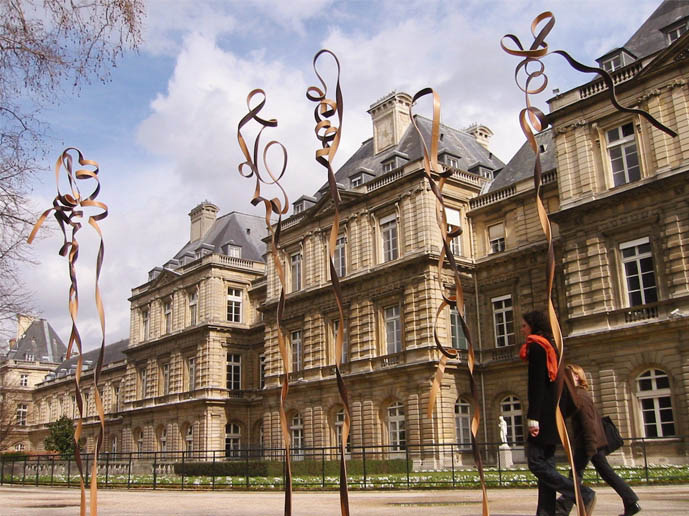
The Spanish artist Jacinto Moros, who we had the good fortune of befriending during his years in NYC, takes wood and makes it dance. His ability to bend and curl the material into beautiful sculptures that, while static, are full of movement, is really amazing.

Though a fan of all of his work, I especially like how his Movimientos Liquidos (Liquid Movements) piece worked in its space, this being the Luxembourg Gardens in Paris. As if abstract flowers or trees fitting in perfectly, yet uniquely, into the park landscape. (Top three images.)
His Architecture Series, designed in wood and cast in stainless steel, is inspired by well-known structures, captured using a continuous line to render the buildings as sculpture. (See stainless steel sculptures in photos, clockwise from top left image are: Guggenheim, Bilbao; Guggenheim, NYC; Reina Sofia, Madrid; Pompidou Centre, Paris.) The series is open-ended with more buildings to follow.
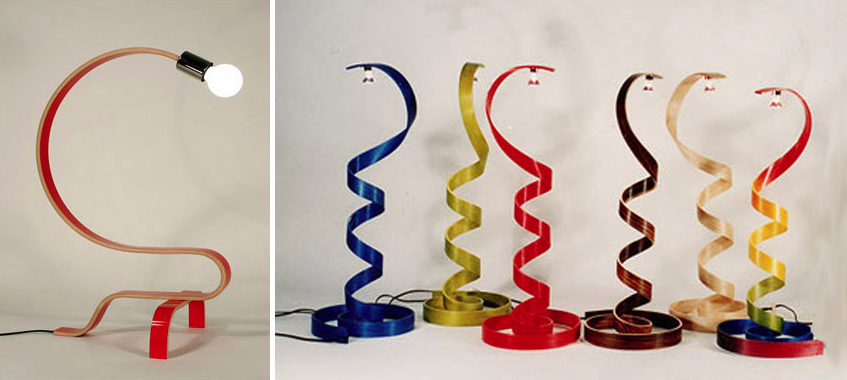
Moros has also designed some products in his curved wood method, including lamps and jewelry.

You can see more of Jacinto Moros’s work on his website, as well as at the Victor Lope Gallery, and OA Madrid online shop.