
Chameleon Cabin: White Arkitekter

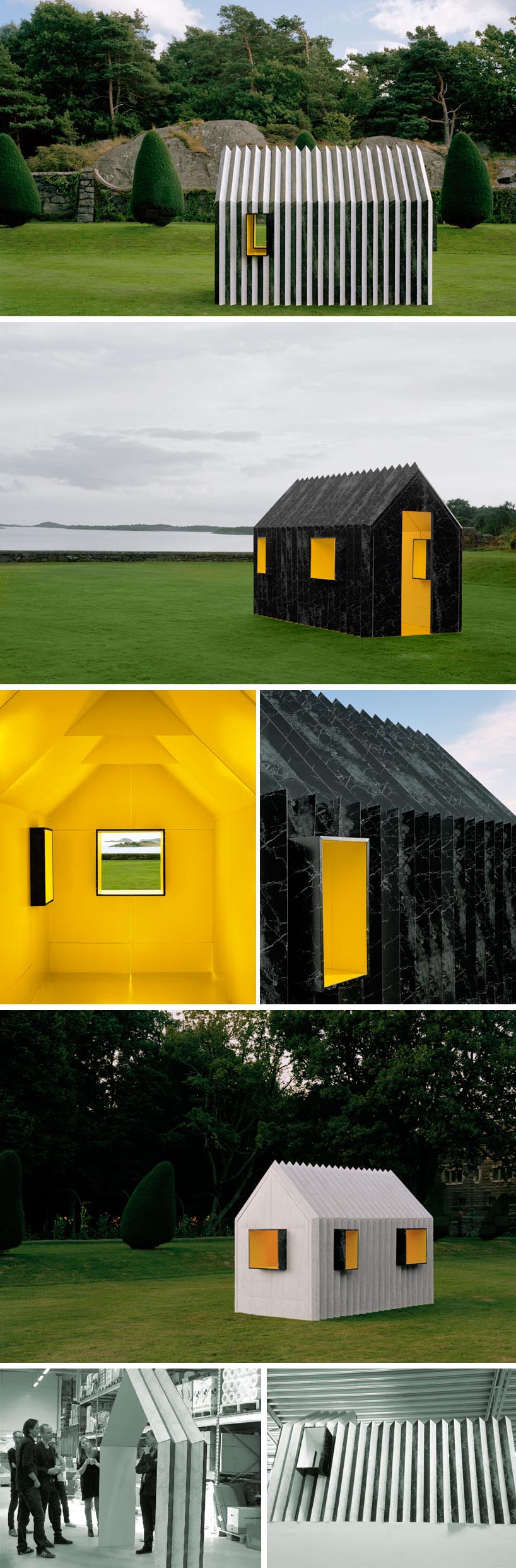
Chameleon Cabin, White Architects, Sweden, reversible paper cabin, white marble from one side, black marble opposite sideChameleon Cabin, White Architects, Sweden, reversible paper cabin, white marble from one side, black marble opposite sideChameleon Cabin, White Architects, Sweden, reversible paper cabin, white marble from one side, black marble opposite sideThe Scandinavia-based architecture firm White Arkitekter has created a tricky all-paper cabin titled Chameleon Cabin. Made of corrugated paper and weighing roughly 100 kilos, looks like white marble from one angle and black marble from the opposite one. Using a simple system of tabs and slots, 95 paper modules—printed in white on one side and black on the other—were attached to form a cabin the proportions of which were based on those of a Swedish friggebod, a shed that can be built without planning permission. The modular system could be used to create longer structures as well. The bright yellow interior is a great glowing touch.
Photos by Rasmus Norlander

via designboom

Hello Wood: 365-Sled Christmas Tree

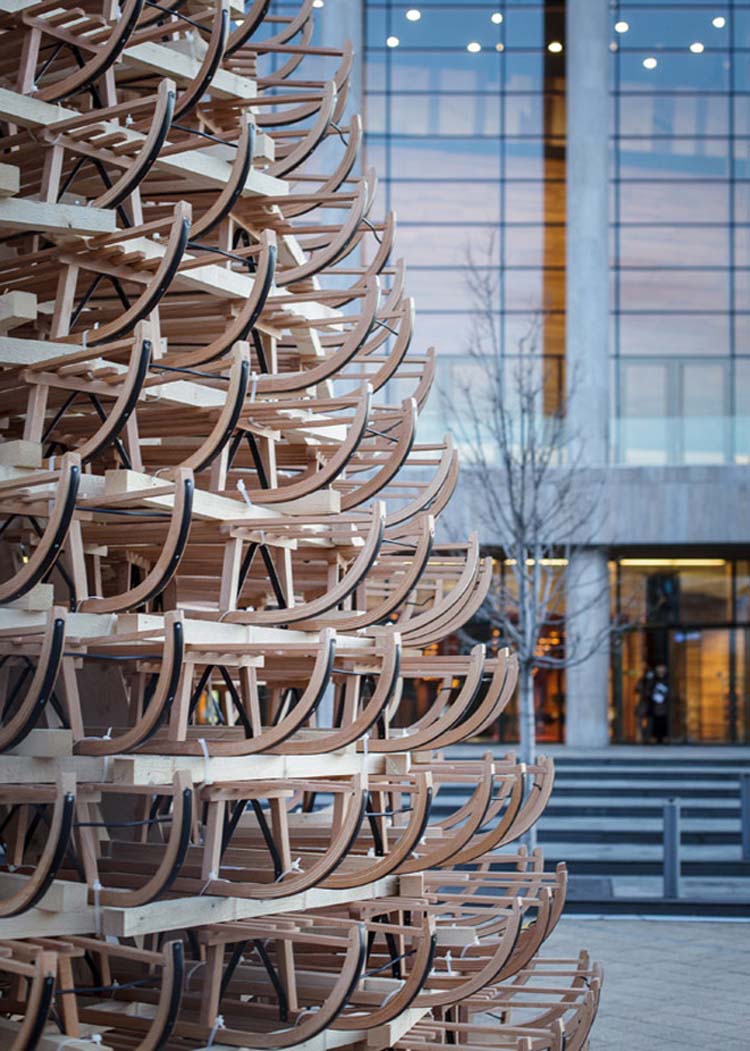
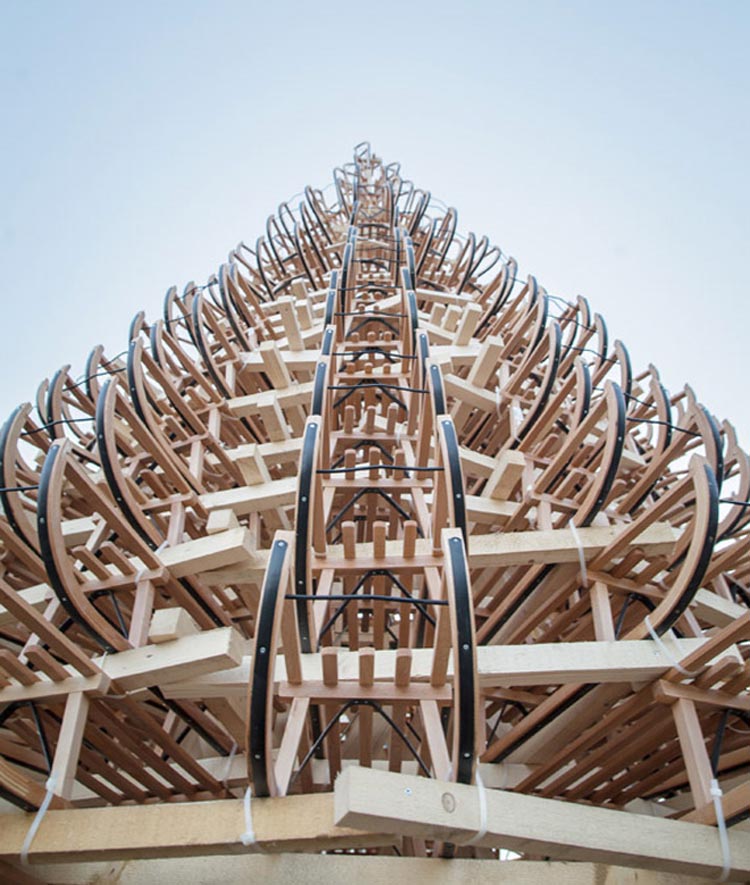
Christmas Tree made with 365 Sleds (sleighs) by Hello Wood in Budapest, HungaryChristmas Tree made with 365 Sleds (sleighs) by Hello Wood in Budapest, HungaryChristmas Tree made with 365 Sleds (sleighs) by Hello Wood in Budapest, HungaryClick to enlarge

Imagine 365 wooden sleds stacked in the form of a Christmas tree. Now imagine each of those sleds going to a child in need once the structure is dismantled. Nice, right? Well, that’s just what architecture/design studio Hello Wood (previously here) is doing at the Palace of Arts in Budapest. In the span of one week, they built an 11-meter tall tree that can be viewed from inside as well, giving the impression of being in the middle of a giant snowflake. The base is made of steel to keep things safe in case of strong winter winds. A tall wooden frame was built with the help of a crane and some welding, in which the sleds were fixed upon. Once the temporary installation comes down, Hello Wood will donate the sleds to the children at SOS Children’s Villages, keeping things reusable and charitable as the holidays should be.

Here’s a video of the installation process:

Photos: Daniel Dömölky

via architect

Zvi Hecker: Ramot Housing

Ramot Housing, Jerusalem, Zvi Hecker, 1970s archictecture, dodecahedronsRamot Housing, Jerusalem, Zvi Hecker, 1970s archictecture, dodecahedronsRamot Housing, Jerusalem, Zvi Hecker, 1970s archictecture, dodecahedronsClick to enlarge

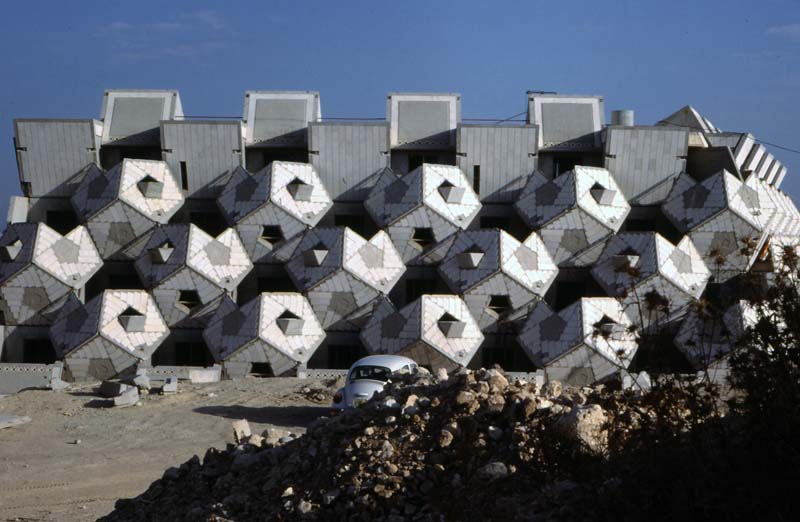
This is one crazy-looking housing complex, and yet the logic behind the hivelike building is, well, just that: logical. Completed in the 1970s, Ramot Polin housing project in Jerusalem was designed by Zvi Hecker. The Polish-born Israeli architect spent much of his career exploring cubes and dodecahedrons in his work. Hecker used the unique structure’s form to adapt to—as well as fit in with—the surrounding irregular terrain. By using the dodecahedrons and pentagon-shaped walls, he was able to enclose a large volume with less surface area; there’s a compactness to these units that makes them pack tightly and nicely together. Apparently, at this point (almost 40 years later) all of the 700+ original structures have been transformed to some degree, without a single one left in its originally designed state. Understandable, yet it would have been interesting to see.

Top photo from domus. All others by the architect.

via dwell

Gingerbread & Candy Art Museums

Gingerbread and Candy Art Museums, Louvre, Henry Hargreaves and Caitlin LevinGingerbread and Candy Art Museums, Guggenheim, Henry Hargreaves and Caitlin LevinGingerbread and Candy Art Museums, Guggenheim, Henry Hargreaves and Caitlin LevinClick to enlarge

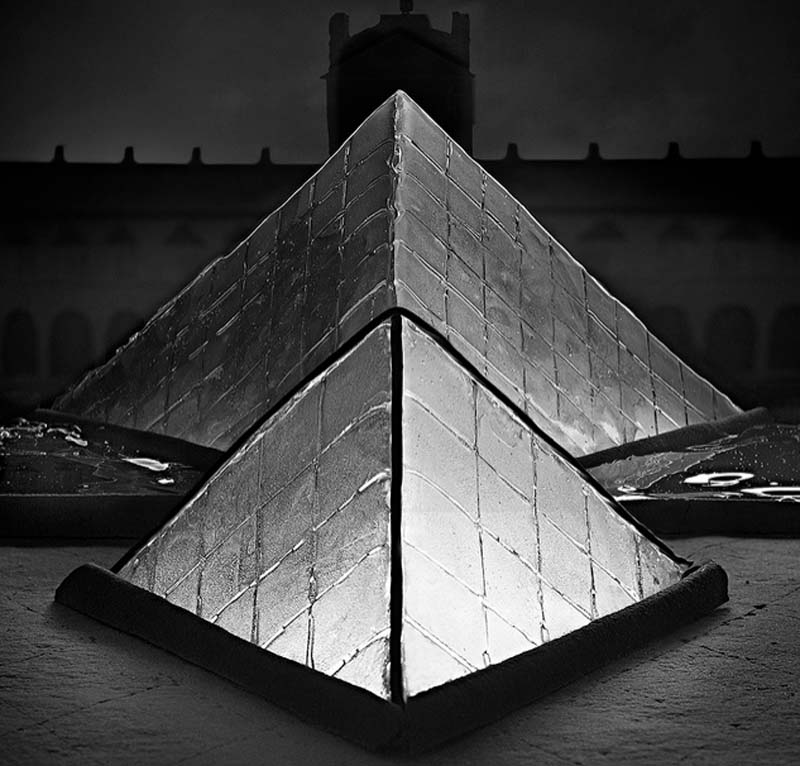
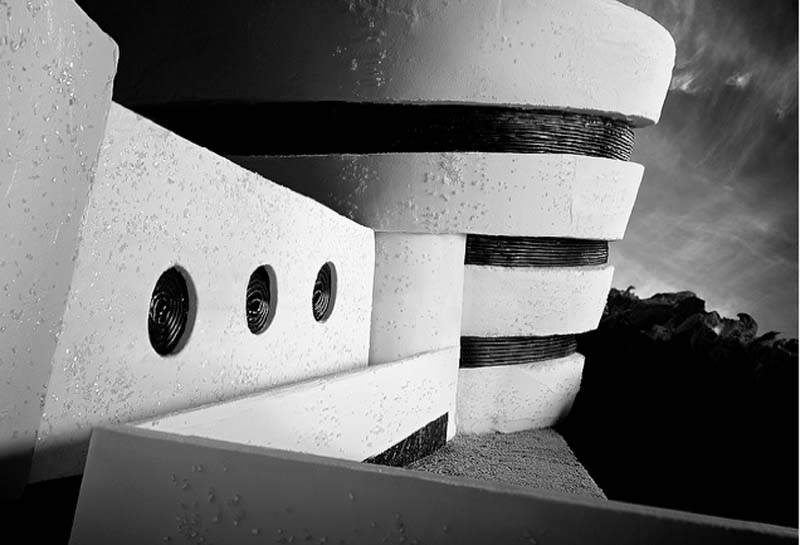
Sure, it’s that time of year when visions of sugar plums dance in your head, and gingerbread houses abound. But New Zealand-born artist/photographer Henry Hargreaves based in Brooklyn and stylist/chef Caitlin Levin took their holiday creations to new heights. The two have collaborated on several projects in the past (Deep Fried Gadgets being a largely recognizable one,) but their latest collaboration took the form of Gingerbread and Candy Art Museums & Galleries for ArtBasel/Miami. These amazing models of the iconic institutions were made using gingerbread, hard candy, chocolate, licorice, and many other tasty sweets. Hargreaves and Levin made tabletop-size replicas of the Louvre, Guggenheim, Maxxi, Tate Modern, Karuizawa Gallery, MAS, and Soumaya and then cleverly lit and photographed each one.

You can see more of the process here.

via grit and neatorama

Moving Icon: Kalhöfer-Korschildgen

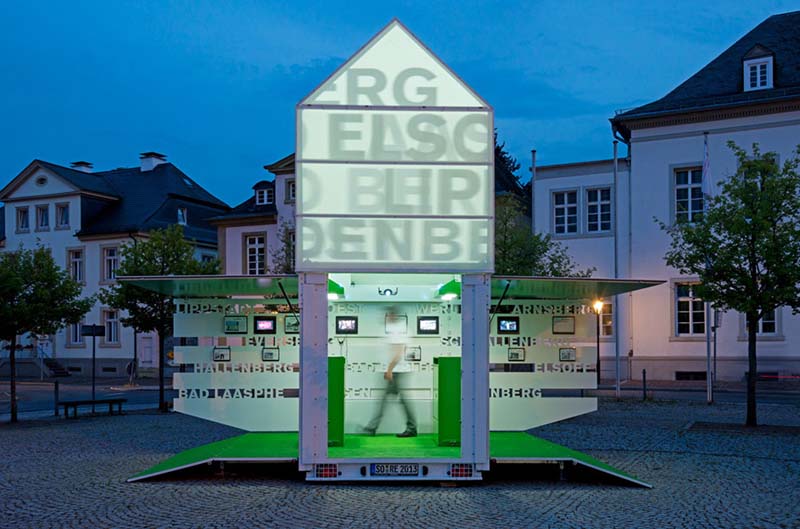
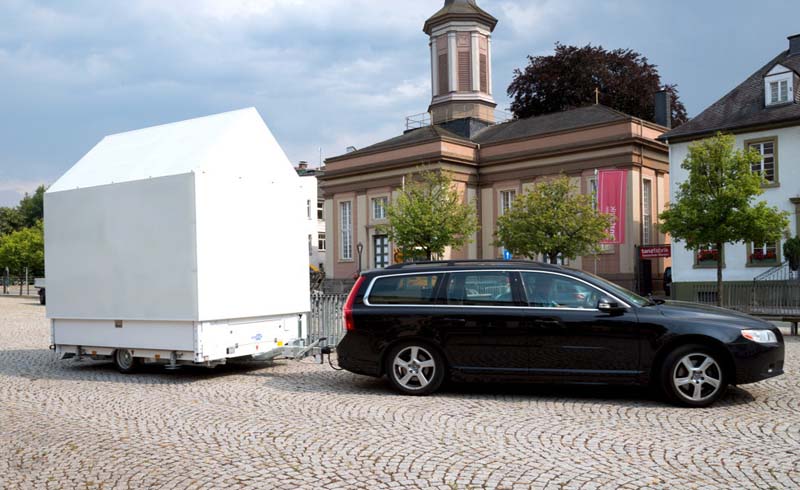
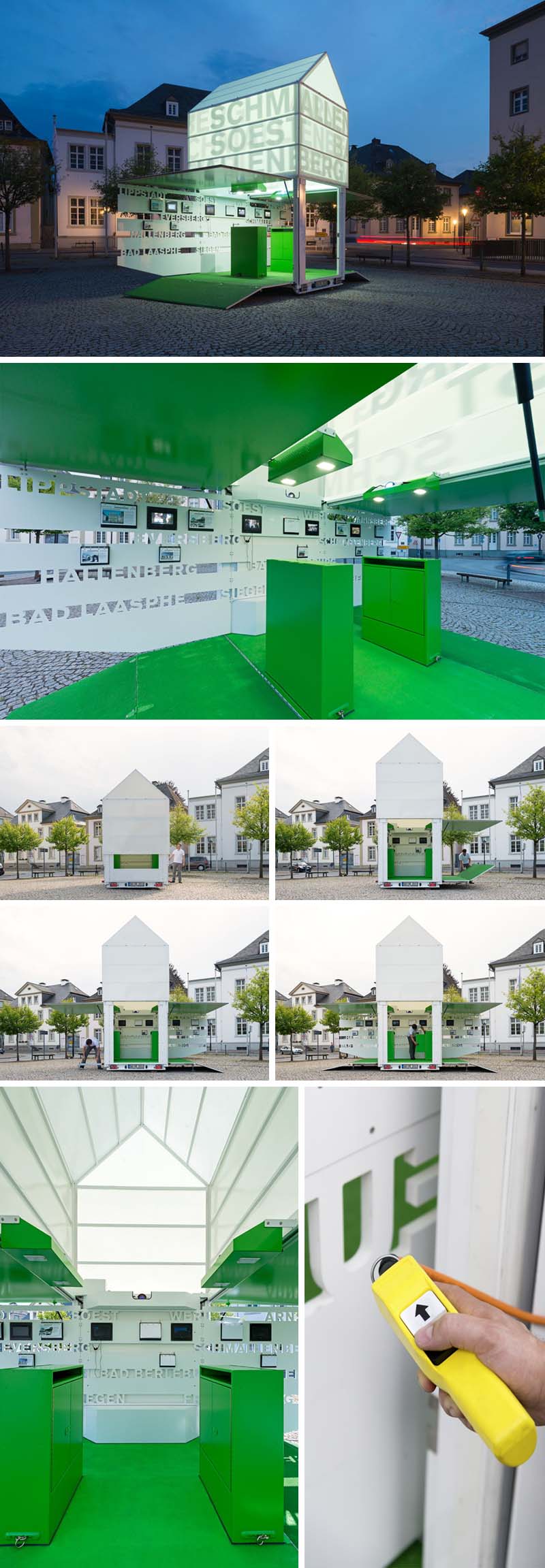
Moving Icon Pop-Up Pavilion in Westphalia, Germany by Kalhöfer-Korschildgen. Pavilion communicates HistoryMoving Icon Pop-Up Pavilion in Westphalia, Germany by Kalhöfer-Korschildgen. Pavilion communicates HistoryMoving Icon Pop-Up Pavilion in Westphalia, Germany by Kalhöfer-Korschildgen. Pavilion communicates HistoryClick to enlarge

Moving Icon is a mobile pop-up pavilion designed by Cologne-based Kalhöfer-Korschildgen that travels around the Westphalian region of Germany providing its visitors with information on local architectural history. The compact house-like mini-museum attaches to the back of a car and, with the click of a remote control, literally ‘pops’ open transforming into a lovely illuminated pavilion. The exhibit includes both analogue and digital displays and incorporates typography into its structure and signage in a clever and designy manner. The display is interactive and can be customized for any location.

Photos by Jörg Hempel

Boy Scouts Sustainability Tree House

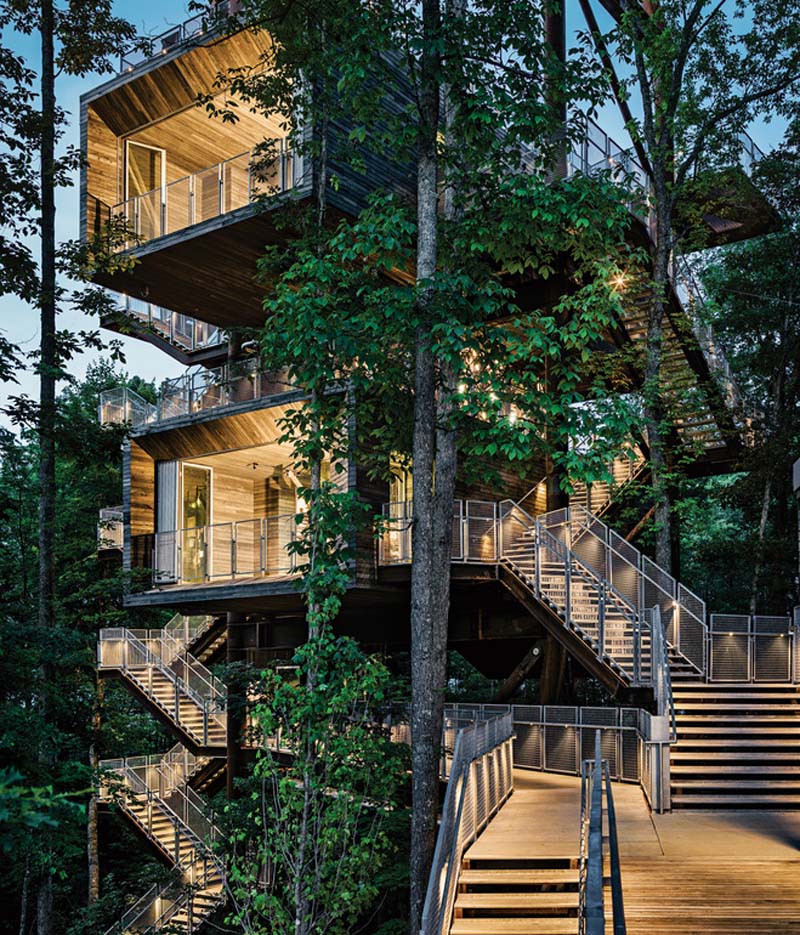
sustainability Treehouse for the Boy Scouts of America; Mithun ARchitects

sustainability Treehouse for the Boy Scouts of America; Mithun ARchitectssustainability Treehouse for the Boy Scouts of America; Mithun ARchitects

Click to enlarge

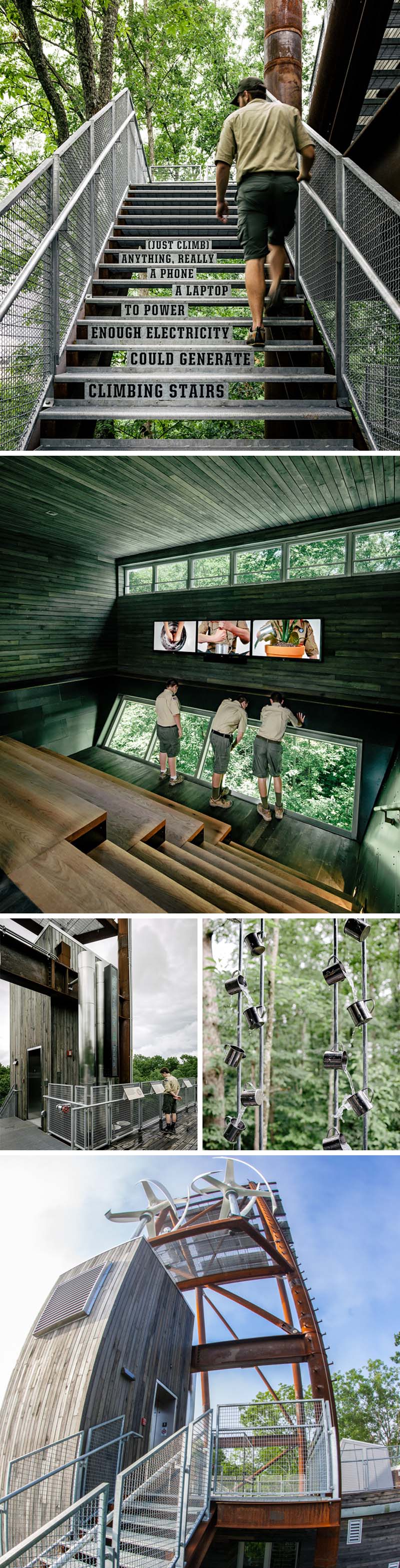
Seattle-based architecture firm Mithun created a sustainable tree house for the Boy Scouts of America that functions as an educational center in West Virginia. Sitting among the trees within the forest the structure, that follows the rigorous set of standards of the Living Building Challenge as a guide, has a set of outdoor staircases that go from the forest floor to the 125 ft-high rooftop. At the top a 4,000-watt wind turbine and 6,500-watt photovoltaic array offers lessons about renewable energy. The structure’s mission is to teach visitors about the environment and sustainability, including water conservation, energy use, recycling and more.

Photos by Joe Fletcher

via dwell

Mike Hewson: Deconstruction

Mike Hewson, The Crossing, Trompe l'oeil, Christchurch, New Zealand, street artMike Hewson, The Crossing, Trompe l'oeil, Christchurch, New Zealand, street artMike Hewson, The Crossing, Trompe l'oeil, Christchurch, New Zealand, street artClick to enlarge

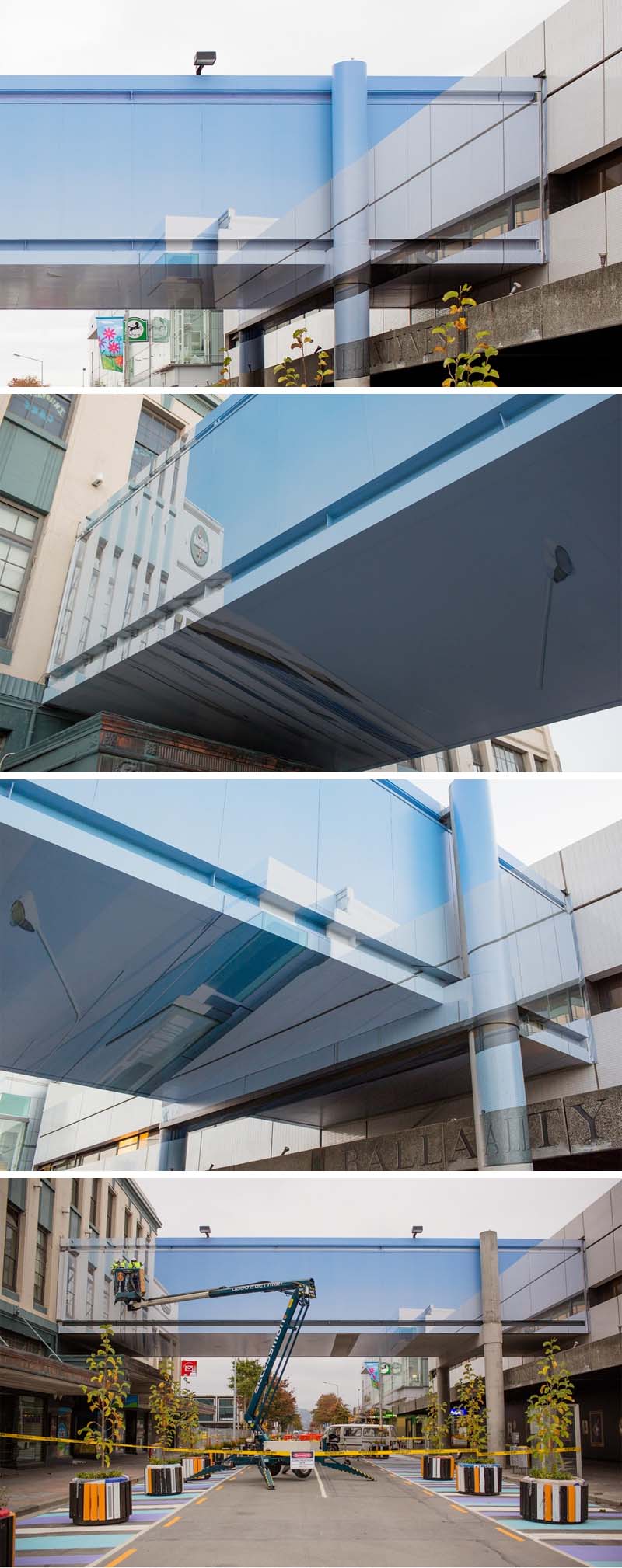
New Zealand artist Mike Hewson (previously here) is playing with people’s minds again. This time the trompe l’oeil specialist has has covered an elevated walkway in Christchurch, NZ over its main thoroughfare, Colombo Street, with anamorphic large-scale digital prints of the two buildings connected by the walkway. When standing at a particular vantage point on the street below, the art visually deletes the overpass. When viewed from other spots the work looks distorted. Hewson’s objective in this post-earthquake affected area is to paradoxically reconstruct the site through a process of deconstruction, reflecting Christchurch’s recovery process of adding new development through the “deletion” of crumbled buildings.

via inhabitat

Sam Falls: Tuileries Colored Sculpture

Tuileries Colored Sculpture, Sam Falls, Untitled, Hors les murs, Balic Hertling Gallery  Tuileries Colored Sculpture, Sam Falls, Untitled, Hors les murs, Balic Hertling Gallery  Tuileries Colored Sculpture, Sam Falls, Untitled, Hors les murs, Balic Hertling Gallery  Click to enlarge

Los Angeles artist Sam Falls created an Untitled sculpture for Hors les Murs, a public art event in Paris, made up of colored metal boxes. The exterior of these multi-color windowed pieces was coated in a UV-protected pigment. The inside of the same boxes were treated with an unprotected paint. Though each respective panel appears to be the same color on both sides, the sides facing inwards will all fade in the sun. The form that each sculpture takes is dictated by the shadows that fall on the inside of the sculpture and the gradient of sunlight is revealed over time, burned into the sculpture like a photograph. Unlike most outdoor sculptures usually designed to stand the test of time as well as the elements, Falls’ Untitled (Tuileries Colored Sculpture) is meant to age the way we do. But, there’s a final twist! Once the interior panels fade through their top coat, the bottom coat from the exterior will start to emerge, reversing the aging effect, and revealing the bright saturated color once again. Not so much what we as humans go through, though maybe if we exfoliate enough….
Photos: Courtesy Balice Hertling (Paris) et Eva Presenhuber (Zürich); FdN77’s twitter; Miami Herald; le banc moussu; and dalbera’s flickr.

via fiac

Net Blow-Up Yokohama: Numen/For Use

Numen/For Use, inflatable net blow-up in Yokohama, for playNumen/For Use, inflatable net blow-up in Yokohama, for playNumen/For Use, inflatable net blow-up in Yokohama, for playClick to enlarge

The Numen/For Use (previously here and here) guys are at it again. Known for their fun, playful, interactive structures, the Croatian-Austrian collective has recently gone inflatable. Their latest installation in Yokohama (home of the also fun CupNoodles Museum) looks like a carnival Moonwalk gone wild. The stylized cloud-like object has nets inside connected to its inner lining that expand and become taut as the blob is blown up. The exterior membrane is sheer enough that when lit from within, it acts as a projection screen for the activity inside. The nets provide climbing and tumbling surfaces on multiple levels. Looks like a blast.

via vizkultura via notcot

NEXT Architects: Meixi Lake Bridge

Cool pedestrian bridge design by NEXT Architects for Meixi Lake, Dragon King Harbor River, Mobias strip designCool pedestrian bridge design by NEXT Architects for Meixi Lake, Dragon King Harbor River, Mobias strip designCool pedestrian bridge design by NEXT Architects for Meixi Lake, Dragon King Harbor River, Mobias strip designClick to enlarge

Amsterdam-based studio NEXT Architects was awarded first prize in an international competition for their design of a pedestrian bridge to span more than 150 meters and connect a diversity of routes across the Dragon King Harbor River and Meixi Lake in Changsha, China. The undulating, multilevel design is based on the principle of the Möbius strip as well as referring to a decorative knot seen in ancient Chinese folk art. And, though it’s not mentioned, I find it hard to believe that no one was thinking of a serpentine dragon when coming up with this wildly unique structure. It also looks like the architects decided to push the limits on their impressive and elegant recent project The Impossible Stair, completed last June in Carnisselande, The Netherlands.

Construction for the new bridge is scheduled for next year. Add this to your list of reasons to visit China.

via designboom

Three Architecture Firms Design with New Lego

Snohetta Architects participate in Wired's Lego Architecture Studio Set challengeSOM Architects participate in Wired's Lego Architecture Studio Set challengeSOM Architects participate in Wired's Lego Architecture Studio Set challengeClick to enlarge

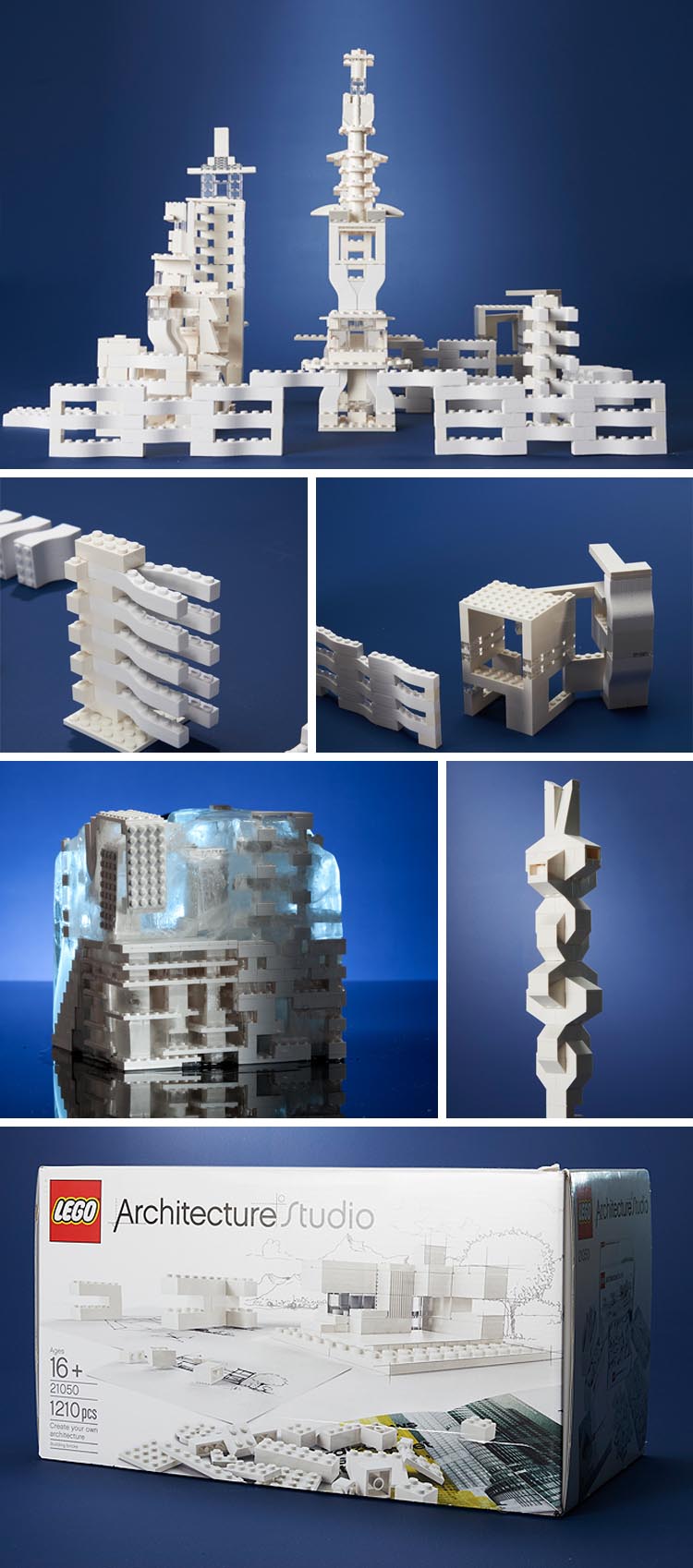
I certainly would have enjoyed Lego’s new Architecture Studio Set as a kid. I loved building minimalist houses (okay, so they were more like cubes or rectangular blocks with a door, but I felt like the future Mies Van der Rohe) using all the white and gray pieces, and snatching the few translucents included in our set from my brother.

Wired Magazine had the fun idea of asking three world-class architecture firms to ‘go crazy’ with the new Legos. And crazy they did. Norway-based firm Snøhetta created a striking boomerang-shaped tower, playing with equilibrium. Skidmore, Owings and Merrill (SOM) inspired by the wintry environs of their Chicago office, cleverly froze their multi-level structure in a block of ice, slowly revealing its interior intricacies as it melted. And finally, SHoP Architects in NYC, created a futuristic cityscape going as far as 3D printing some curved pieces of their own to create undulating walls.

You can see more photos of the above projects here, and you can buy Lego Architecture Studio here.

via wired

Gooyesh Language Institute: Ali Karbaschi

Gooyesh Language Institute, Contemporary Iranian Architecture, Typographic exterior facade and gates, Ali Karbaschi architect, Cool building exterior with alphabet cutoutsGooyesh Language Institute, Contemporary Iranian Architecture, Typographic exterior facade and gates, Ali Karbaschi architect, Cool building exterior with alphabet cutoutsGooyesh Language Institute, Contemporary Iranian Architecture, Typographic exterior facade and gates, Ali Karbaschi architect, Cool building exterior with alphabet cutoutsClick to enlarge

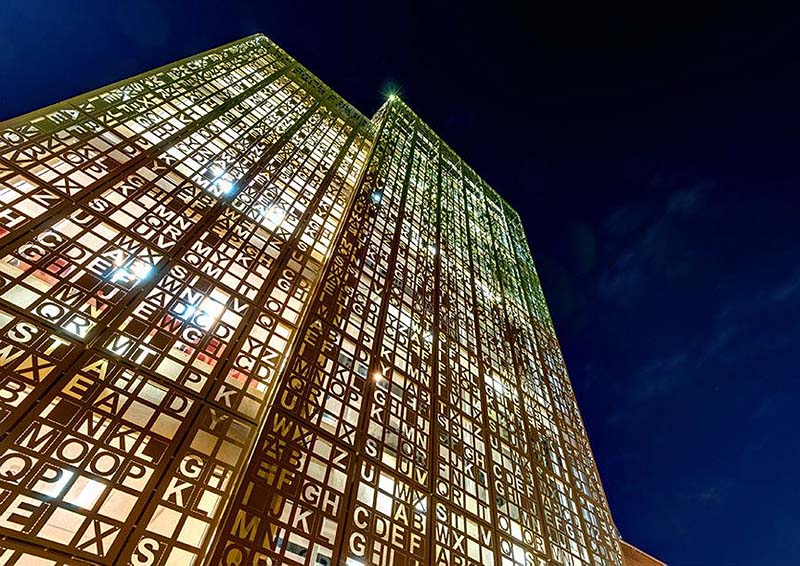
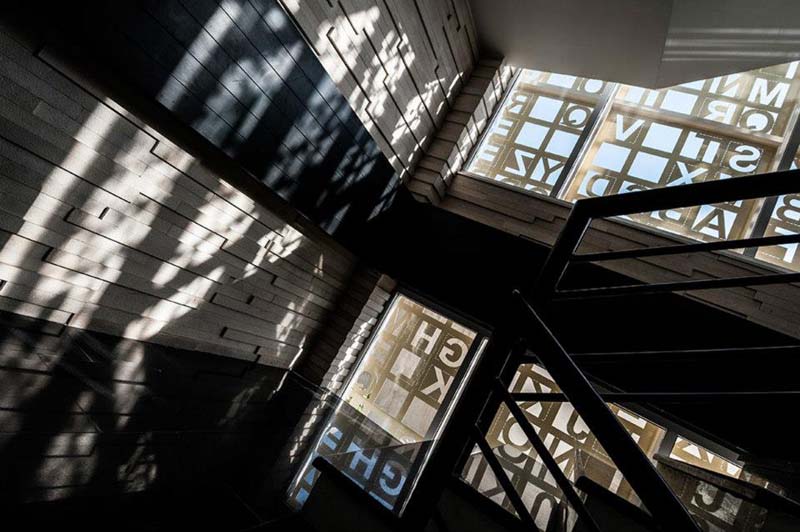
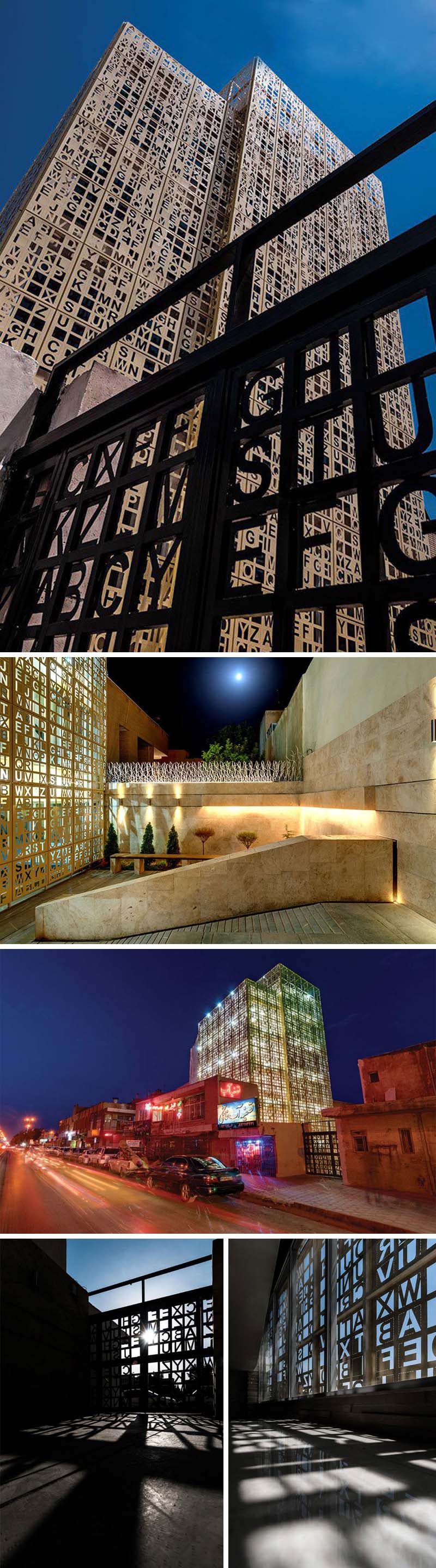
I definitely get a kick out of seeing typography integrated into architecture (hence the multiple Architypeture posts) and this building in Isfahan, Iran is no exception. Designed by architect Ali Karbaschi, the Gooyesh Language Institute’s curtain wall is clad with almost a crossword-y look of, ironically (or not so ironically, being a language institute), Latin letters on all sides as well as cut out of its steel entrance gates. As far as I can tell, the letters are purely decorative and don’t spell anything out, but I wasn’t able to find any information on the project, other than its location, architect, and that it was built a little over a year ago. Looking closely, it would appear that in some areas the oreder of the letters in the rectangular panels adhere to the alphabet, but then suddenly a ‘W’ appears sandwiched between an ‘E’ and a ‘G’, so there goes that theory. In any case, it looks particularly attractive lit up at night, wouldn’t you say?

via Contemporary Architecture of Iran

Ross Sawyers: Dismantled Rooms

Ross Sawyers, Cool Photographs of dismantled homes, homes and walls with cracks and lightRoss Sawyers, Cool Photographs of dismantled homes, homes and walls with cracks and lightRoss Sawyers, Cool Photographs of dismantled homes, homes and walls with cracks and lightClick to enlarge

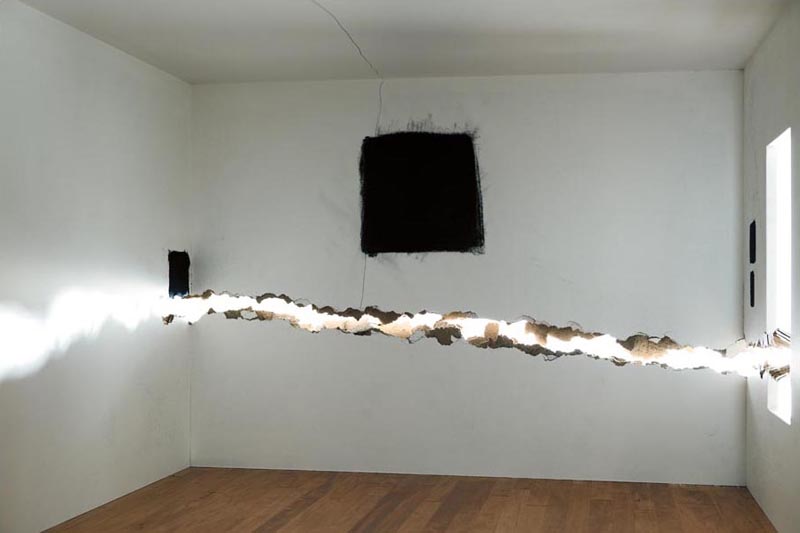
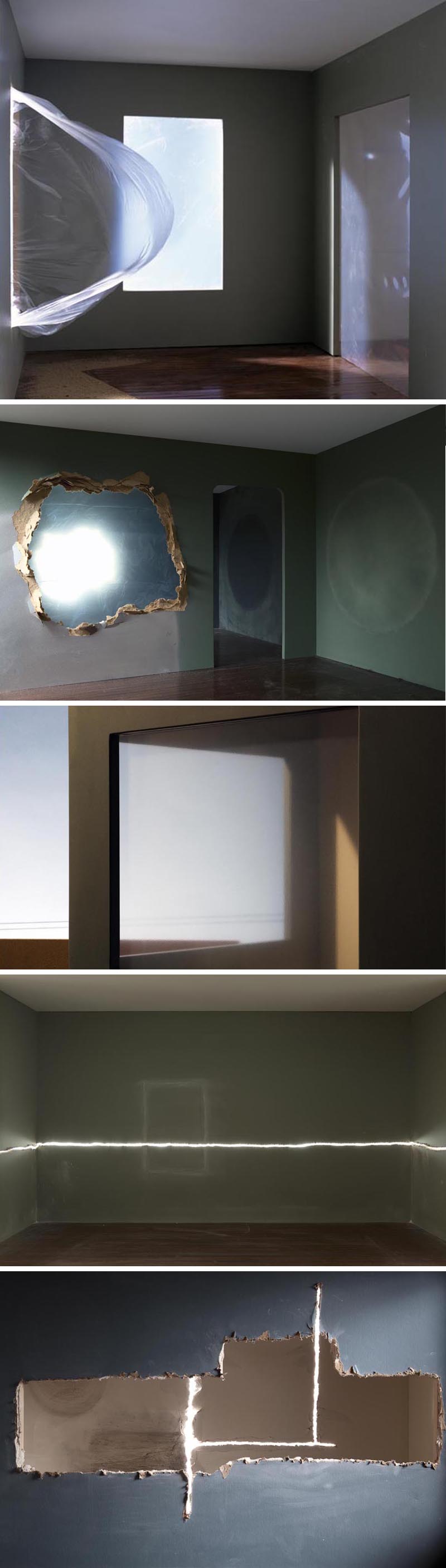
Photographer Ross Sawyers builds models of construction-site-like homes and photographs them as full-scale eerie environments. Sawyer is interested in the home and the relationships we have with our own. His most recent photos contain drawings and markings on the walls of the spaces which are related to hobo signs—a language that was developed during the Depression by transients to inform each other about neighborhoods, houses and people. Sawyer states in an interview with the Seattle Met:

…one of the things that led me to it was when foreclosures were really commonplace in maybe 2009 or 2010. A lot of people, as they were foreclosed on, would just destroy the house—whether that was through vandalism or just pure destruction—and so that got me interested in the kinds of marks and destructive actions people were inflicting upon the spaces. Through research on that, I sort of stumbled across information about hobo signs. And the relationship between those two things became really interesting to me.

Some of them have a magical feel, no? Love them.

via seattlemet

Gateshead Millenium Bridge: WilksonEyre


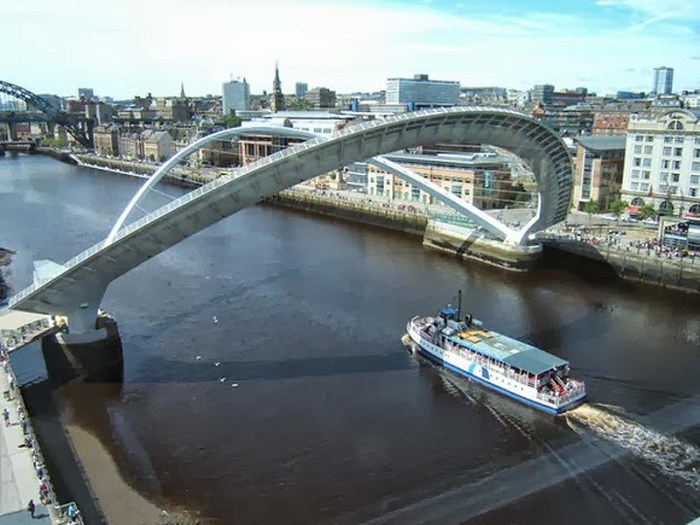
WilksonEyre Architects, Gateshead Millenium Bridge, Winking Eye Bridge, Blinking Eye Bridge, cool movable bridge
WilksonEyre Architects, Gateshead Millenium Bridge, Winking Eye Bridge, Blinking Eye Bridge, cool movable bridgeWilksonEyre Architects, Gateshead Millenium Bridge, Winking Eye Bridge, Blinking Eye Bridge, cool movable bridge
Click to enlarge

It’s been a while since I’ve posted a bridge, and though this one isn’t quite new, it really is a spectacular one. Designed by London-based WilkinsonEyre Architects, the Gateshead Milennium Bridge in the UK is quite an impressive sight. Spanning 105 meters across the River Tyne, the pedestrian movable bridge is nicknamed the “Blinking Eye” or “Winking Eye” bridge due to its innovative rotational movement—providing clearance for boats to pass under—that resembles that of an opening eyelid. This strikingly elegant bridge looks stunning in movement or still, day or night. Here it is in motion:

via presurfer

Ark Nova: Inflatable Concert Hall

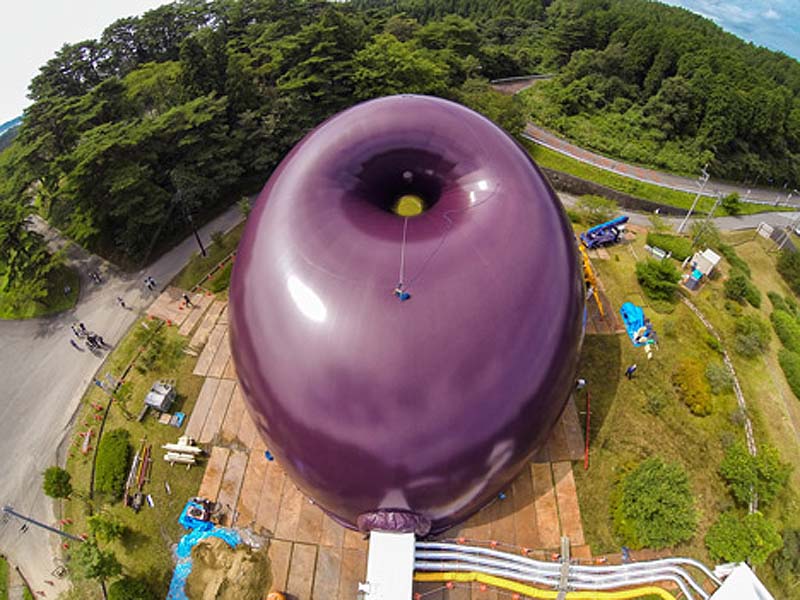
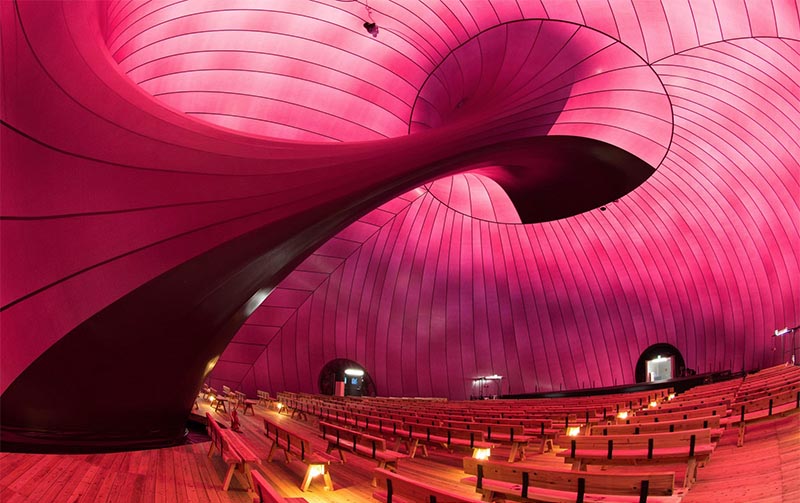
Lucerne Festival, Anish Kapoor and Arata Isozaki collaboration, inflatable concert hall Ark NovaLucerne Festival, Anish Kapoor and Arata Isozaki collaboration, inflatable concert hall Ark NovaLucerne Festival, Anish Kapoor and Arata Isozaki collaboration, inflatable concert hall Ark NovaClick to enlarge

A little over a year ago I posted about a project in the works called Ark Nova, an inflatable, mobile, concert hall, and now, suddenly, it’s a reality. A beautiful one at that. I suppose it’s not surprising when two extremely talented creative professionals—in this case artist Anish Kapoor and architect Arata Isozaki—collaborate along with the Lucerne Festival. This unique structure made of purple parachute material inflates in approximately two hours and seats 500. Starting October 14th, the theater will open to the public hosting concerts and other events around the tsunami-stricken areas of Japan.

Photos courtesy of the Lucerne Festival.

via colossal

Disco Volante: Lukas Galehr

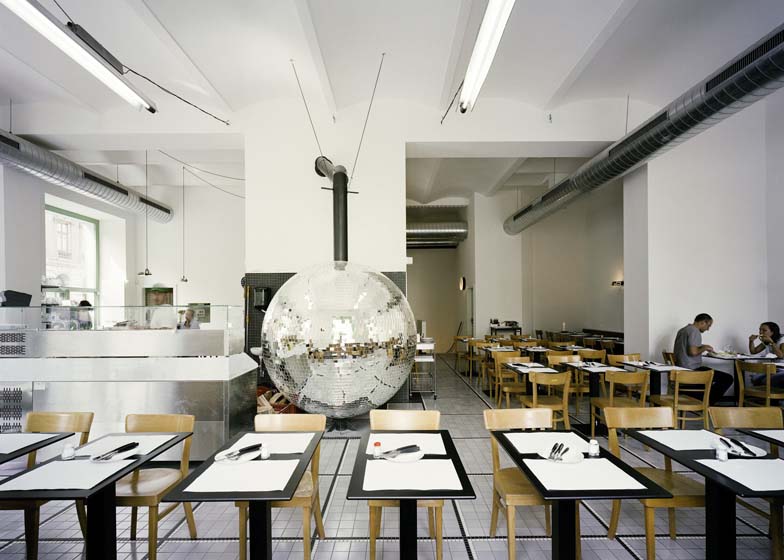
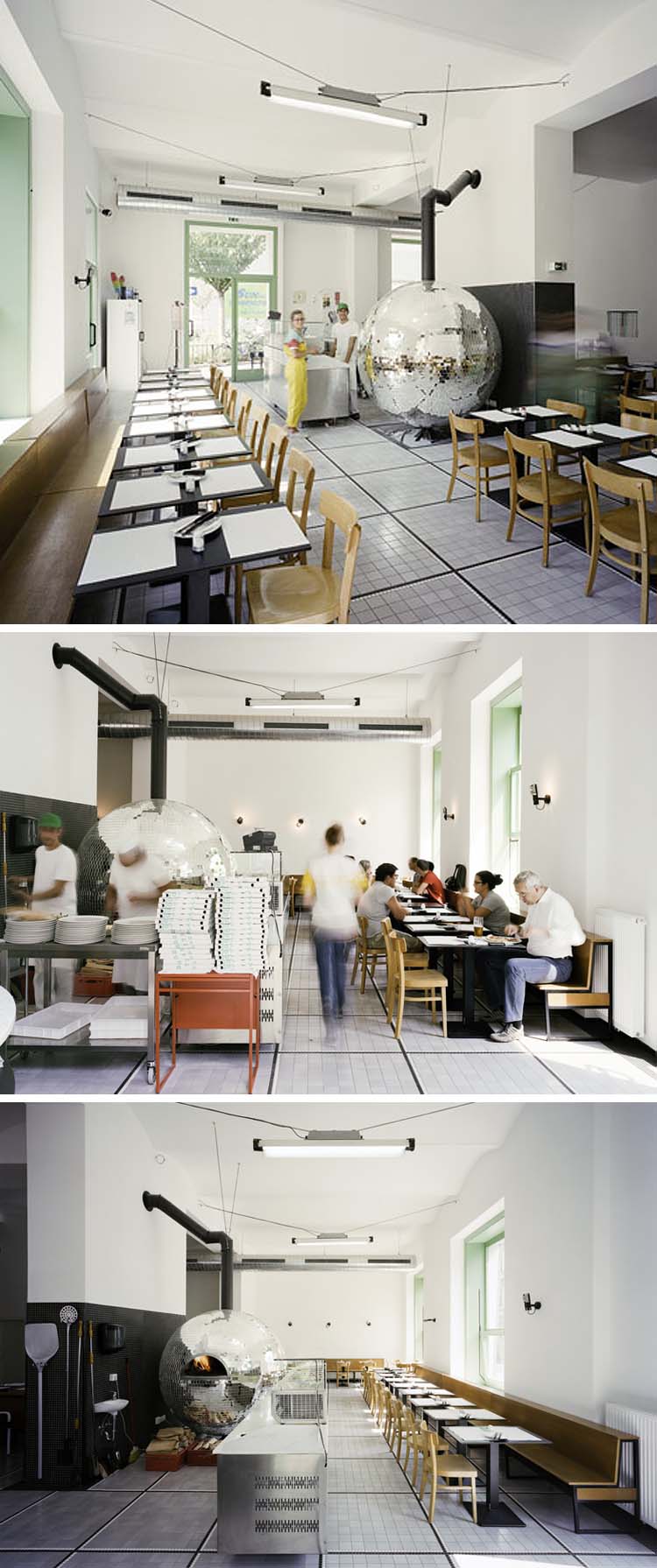
Disco ball pizza oven at Disco Volante in Austria by Lukas Galehr. Cool pizza oven.Disco ball pizza oven at Disco Volante in Vienna by Lukas Galehr. Cool pizza oven.Disco ball pizza oven at Disco Volante in Vienna by Lukas Galehr. Cool pizza oven.Click to enlarge

Austrian architect Lukas Galehr  (also part of the design collective Madame Mohr) designed the Viennese pizzeria Disco Volante including its centerpiece: a unique oversized rotating disco ball oven that glitters against the walls in the dark. Covered in hundreds of tiny mirrored tiles, the spherical pizza oven is positioned within the dining room and is anchored to a central chimney that allows it to pivot from its center. Here it is in action:

via dezeen

Topographic Rest Stops: Büro Uebele

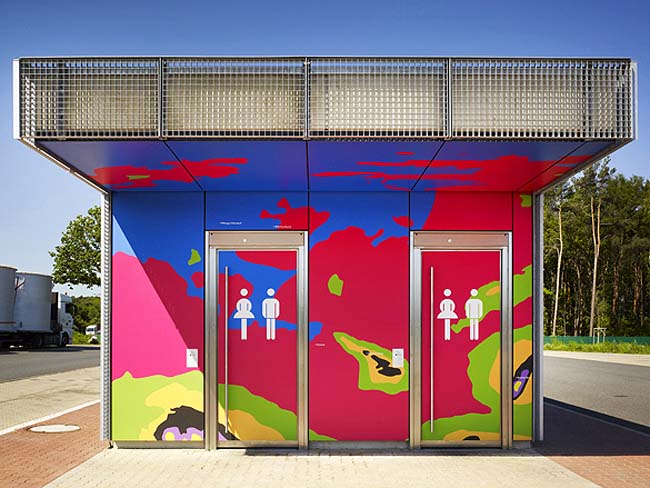
Colorful topographic Rest stop bathrooms in Saxony Germany by Büro Uebele, Motorway Toilets, Map-clad reststopsColorful topographic Rest stop bathrooms in Saxony Germany by Büro Uebele, Motorway Toilets, Map-clad reststopsColorful topographic Rest stop bathrooms in Saxony Germany by Büro Uebele, Motorway Toilets, Map-clad reststopsStuttgart-based visual communications firm Büro Uebele (previously here) has designed a series of colorful rest stops/motorway toilets for the Lower Saxony region of Germany. These bright objects that seemingly glow by the roadside, not only relieve the monotony of the highway landscape, but do so using topographic maps of the area that have been digitized, assigning different colors to the varying altitudes of that specific location. The results are cheerful, abstract-looking patterned façades that would deter the best of graffiti artists.

Photos by Christian Richters, courtesy of Büro Uebele.

via segd

Empire Drive-In: NY Hall of Science

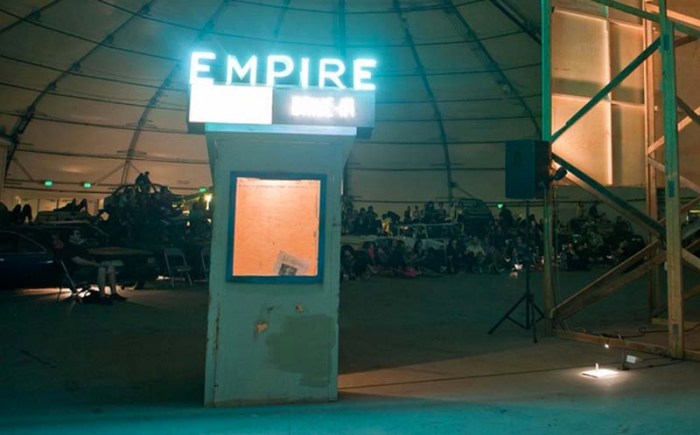
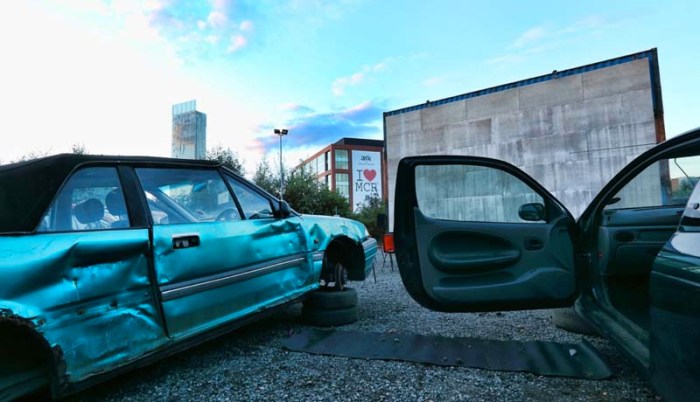
Empire Drive-In at the New York Hall of Science in Corona, Queens. Jeff Stark, Todd Chandler, Junkcar Drive-in, Upcycling, re-use, film, NYC eventEmpire Drive-In at the New York Hall of Science in Corona, Queens. Jeff Stark, Todd Chandler, Junkcar Drive-in, Upcycling, re-use, film, NYC eventEmpire Drive-In at the New York Hall of Science in Corona, Queens. Jeff Stark, Todd Chandler, Junkcar Drive-in, Upcycling, re-use, film, NYC eventClick to enlarge

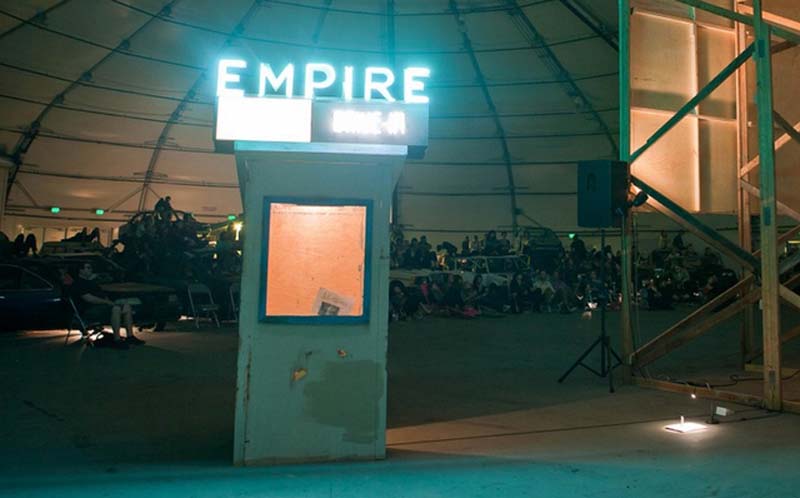
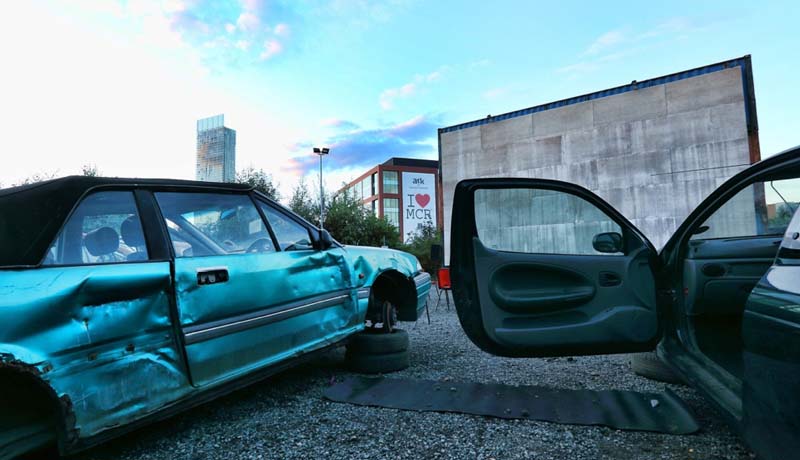
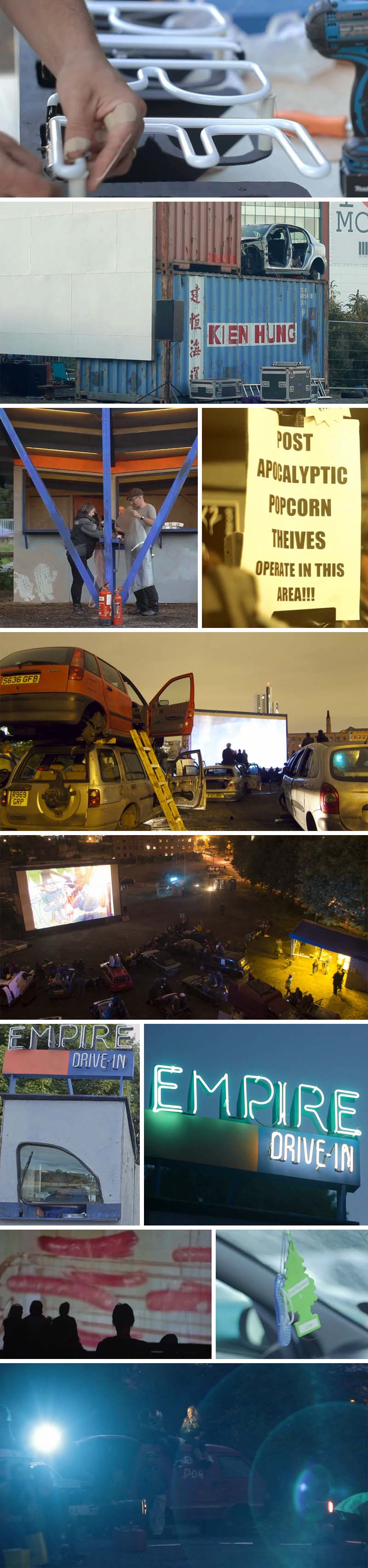
Lately, each consecutive summer in NYC seems to top the last in offerings of outdoor film screenings. Locations range from parks, to restaurant backyards, to rooftops and even beaches. And now, the concept is extending into the fall with an additional twist: a drive-in. Not just your usual run-of-the-mill drive-in, which in itself would be cool and intriguing enough, but Empire Drive-In is a junk car drive-in, upcycling wrecked cars rescued from junkyards and repurposing them as seats for audience members to climb into, and onto, while watching films projected on a 40-foot screen made of salvaged wood. The masterminds behind the project—which will be held outside the New York Hall of Science in Corona Park, Queens, starting October 4th and running though the 20th—are Jeff Stark (whose name seems to be associated with many an interesting NYC event) and Todd Chandler. The two Brooklyn-based artists have previously created other Empire Drive-Ins, most recently last year at the Abandon Normal Devices Festival in Manchester, UK. Stark and Chandler, along with a team of other artists and craftspeople have set out, in this age of consumerism, to create a sense of possibility  by focusing on re-use, designing something new and special while salvaging and repurposing waste. In cleaning up the cars, which will have stereo audio transmitted via radio directly to each car, the crew found all kinds of interesting personal artifacts from car deodorizers to letters, which they have chosen to keep in the cars to “create a story”. The audience is urged to explore.

Opening night promises to be fun with a 30-Pianists-on-Casio-keyboards performance, in addition to a stellar line-up of films from Buster Keaton, Charlie Chaplin, and Oliver Hardy, to Jim Jarmusch’s Night On Earth. You can see the rest of the schedule here.

All photos & video courtesy of Empire Drive-In

via gothamist