Roskilde Festival Plywood Dome

plywood dome, cool architecture, hexagonal structure, henrik almegaard, Festival structureplywood dome, cool architecture, hexagonal structure, Festival structure, Danish designplywood dome, cool architecture, hexagonal structure, Festival structure, Danish designInside and out this wooden dome, designed by Danish architect Kristoffer Tejlgaard and engineer Henrik Almegaard, looks great. Made up of 240 plywood hexagons, this geodesic dome was created for the 2011 Roskilde Festival in Denmark and disassembles into sections.

The futuristic shape, as well as those skylights that jut out and add texture, give the structure a very cool look.

You can watch a video of its construction here.

via intoform

Peter Emerick: Koan Grids

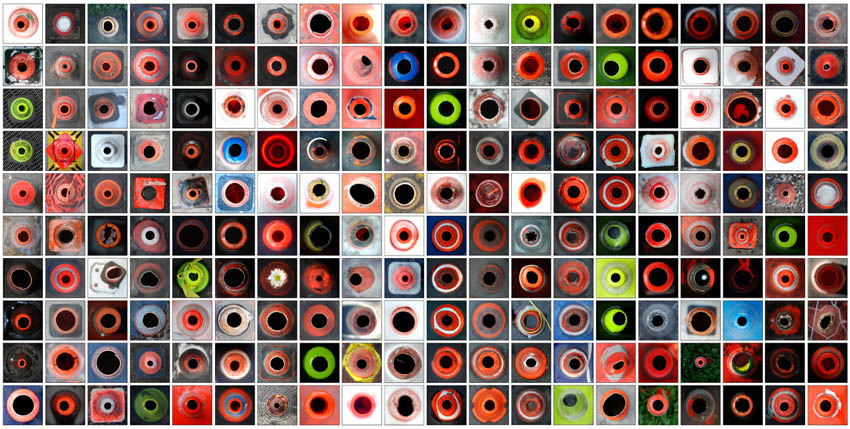
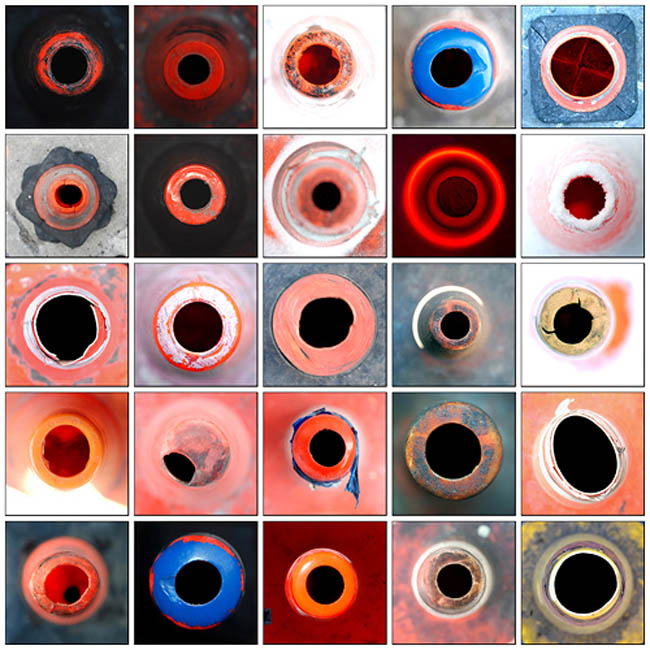
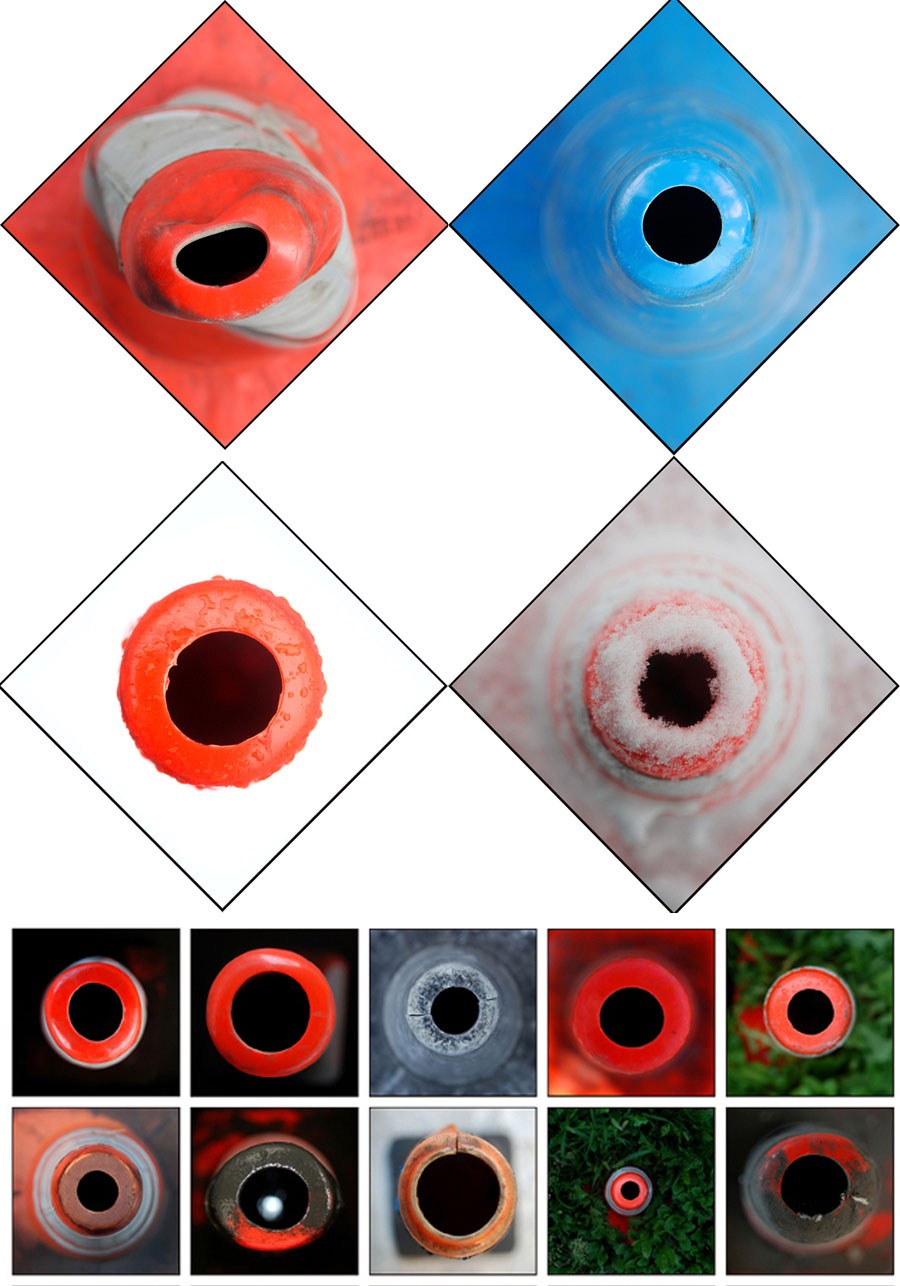
Koan Grids, Peter Emerick, Photographs of traffic cones, traffic cone art, collabcubedKoan Grids, Peter Emerick, Photographs of traffic cones, traffic cone art, collabcubedKoan Grids, Peter Emerick, Photographs of traffic cones, traffic cone art, collabcubedKoan Grids, Peter Emerick, Photographs of traffic cones, traffic cone art, collabcubedClick to enlarge

New Jersey based artist Peter Emerick has been photographing traffic cones for several years. His Koans series encompass grids and single photos of all kinds of traffic cones photographed from a birds eye view. They are surprisingly varied and that particular angle offers up interesting abstractions of the ubiquitous object.

Emerick, together with artist Erik Sanner—who is also fascinated by traffic cones and includes them in his artwork, as well as apparently having given East Village Traffic Cone Viewing Tours a couple of years back—are putting together The Traffic Cone Occasional and are looking for artists who create art with traffic cones. If you are one such artist, you can contact them via one of their websites, here or here.

For more traffic cone art, see our previous post here.

Cross-stitched Clichés by Lisa Bowen

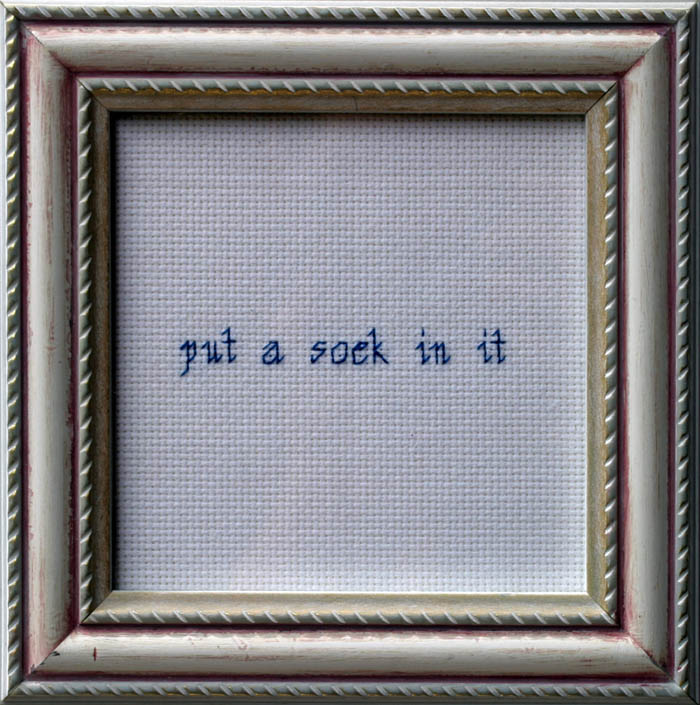
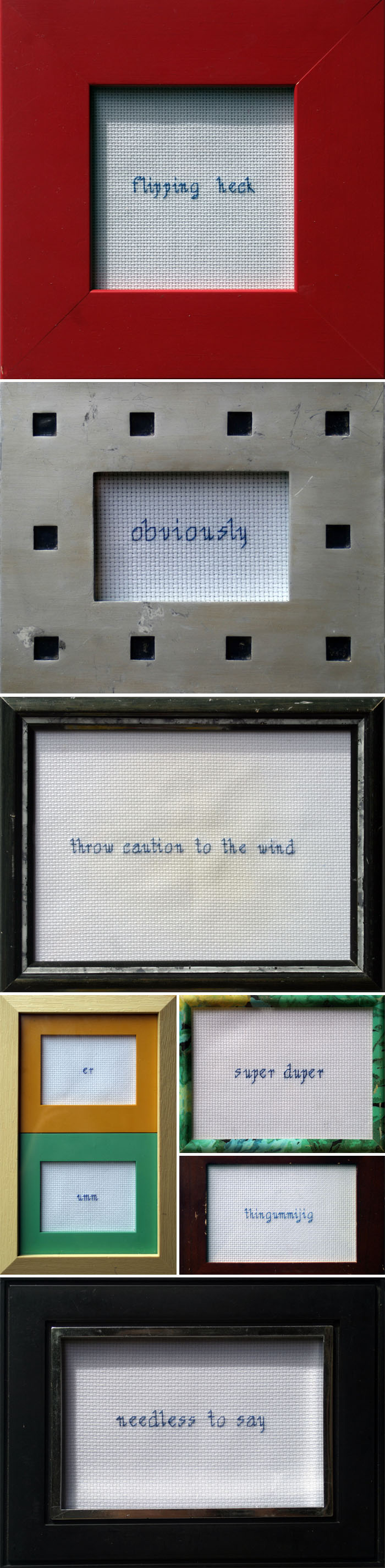
Embroidered words, cliches, expressions, humor, art, tumblr, stitched wordsEmbroidered words, cliches, expressions, humor, art, tumblr, stitched wordsEmbroidered words, cliches, expressions, humor, art, tumblr, stitched wordsI happened upon Lisa Bowen’s delightful tumblr of embroidered clichés and expressions, which made me chuckle. Originally from England but now living near Sydney, Australia, Bowen (who also goes by the alias Jilly Cooper) a mixed media artist has recently started a crafty, cross-stitch series titled ‘How to String a Sentence Together.’

The work came about after Lisa found a copy of The Penguin Book of Clichés and began thinking how often we use them, despite being told to avoid them. She began to collect these expressions and words, carefully cross-stitching each letter and framing each phrase.

In addition to cross-stitching and proudly using these “hackneyed and trite expressions,” Bowen tweets a cliché a day here, and sells her framed clichés here.

Eternal Chair: Shinobu Koizumi

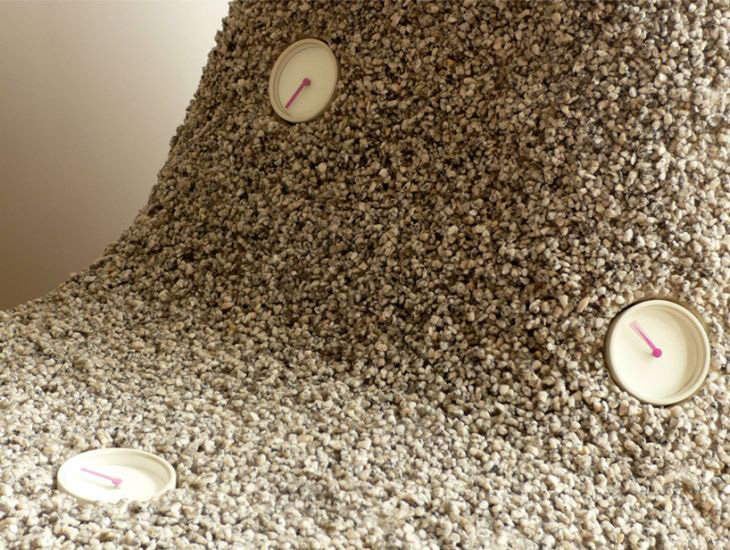
Contemporary stone chair, contemporary furniture, japanese design, embedded clocksContemporary stone chair, embedded clocks, contemporary furniture, japanese designContemporary stone chair, embedded clocks, contemporary furniture, japanese designTokyo-based designer Shinobu Koizumi describes himself as someone who “Proposes unique ‘experiences’ as spaces, furniture, and products.” His most recent creation is the Eternal Chair, made of stone and embedded with multiple glow-in-the-dark clocks with a single second hand each that tick away. As everything decays with time, the decorative clocks are there to remind us that nothing is eternal…not even a stone chair.

via designspotter

Lee Boroson: Inflatable Installations

contemporary art installations, balloons, fabric sculpture, Lee Borosoncontemporary art installations, balloons, fabric sculpture, Lee Borosoncontemporary art installations, balloons, fabric sculpture, Lee BorosonClick to enlarge

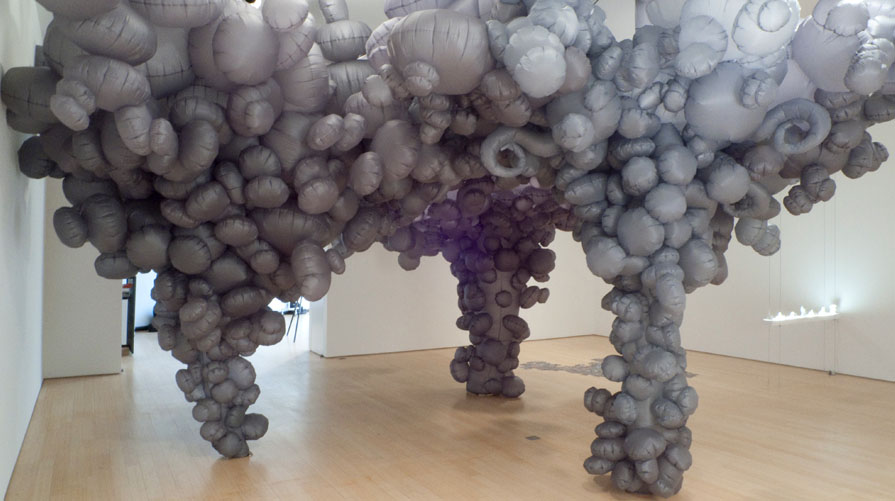
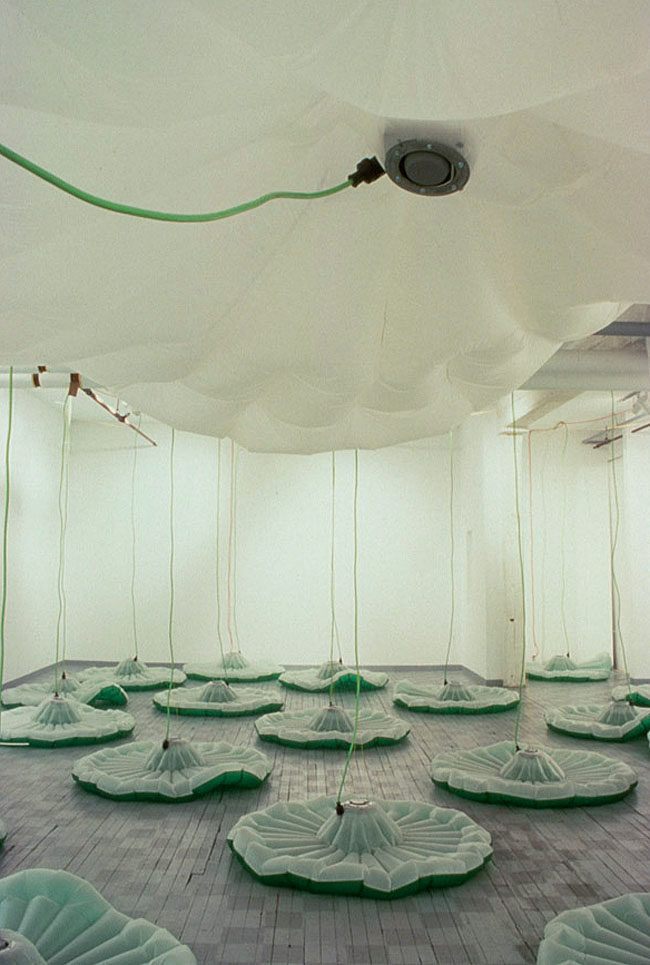
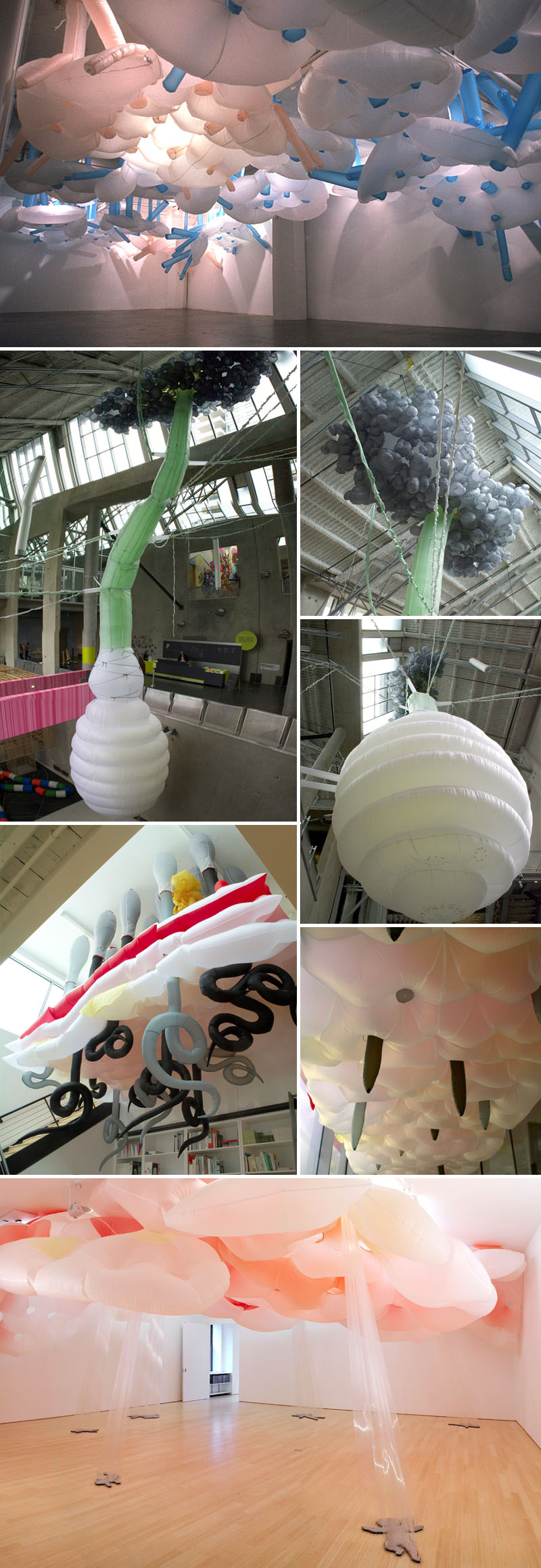
I love these. All of them. Lee Boroson, based in Brooklyn, has been creating these fun large inflatable installations since the 90s. Huge nylon structures filled with air and, for the most part, suspended from the ceiling, Boroson’s skills in engineering as well as his playfulness come together resulting in these very appealing dreamlike works.

From top to bottom:
Canopy, based on images of volcanic eruptions; Pleasure Grounds; Lake Effect; Giant’s Way; Graft; Integument, based on a 3d medical illustration of a cross section of human skin and depicts hair, follicles, pores, veins, arteries and dermis; and Liquid Sunshine.

Boroson currently has an installation titled Lunar Bower at The Phillips Collection in Washington, DC, and will have a large solo project at Mass MoCA in December 2013.

Roof Top Lights

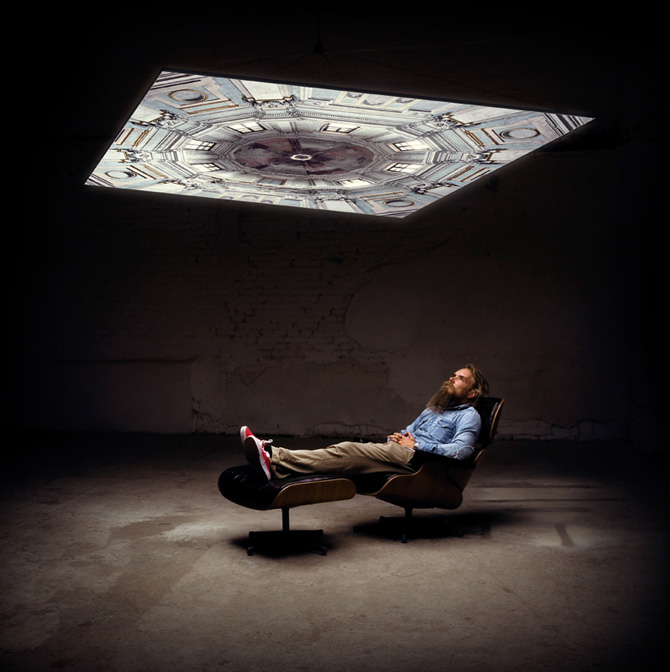
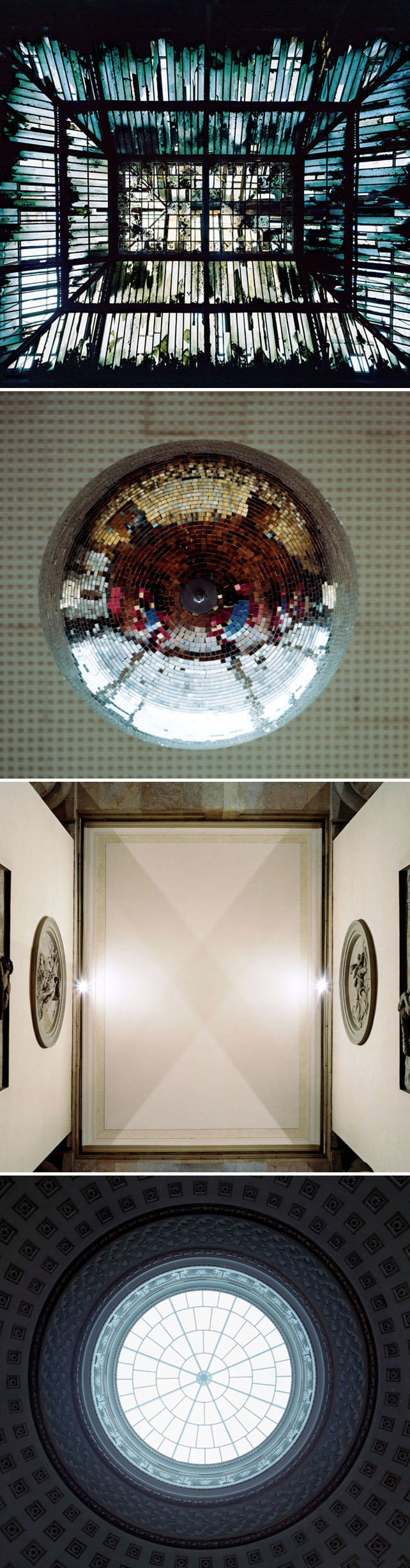
ceiling light, projected photo, illuminated photo of church dome, skylight, disco ballceiling light, projected photo, illuminated photo of church dome, skylight, disco ballceiling light, projected photo, illuminated photo of church dome, skylight, disco ballThis is such a clever idea, especially ideal for the many dark New York City apartments out there. Roof Top Lights, by Lightboys, are large-format illuminated photographs mounted on an ultra-thin housing that contains LEDs. Suddenly, you not only have an overhead light, but a skylight or church dome or treetops, even a disco ball, right over your head, as well! To quote their website “These are images which not only open up rooms, but also hearts and minds…”

Lightboys also make Lightwalls and Polaboys (backlit large-scale photos with the look of a Polaroid).

Very cool, if a bit pricey.

via bb

Footbag

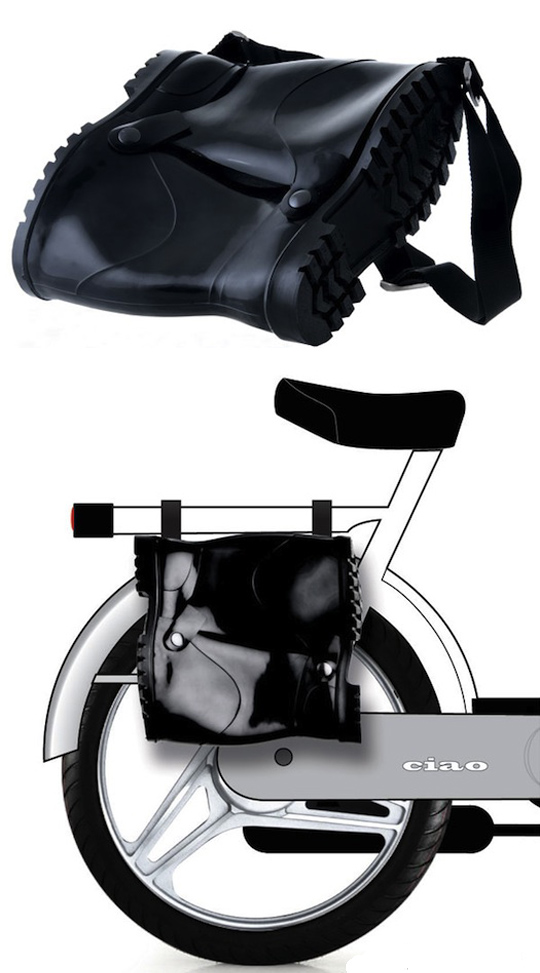
Rubber boot shoulder bag by Marco Scuderi, fun design, messenger bagRubber boot shoulder bag by Marco Scuderi, fun design, messenger bag, bike bagHere’s a fun idea that has both of my daughters written all over it. Footbag, designed by Italian designer Marco Scuderi, repurposes pairs of old rubber boots into elegant and sturdy shoulder bags. I would imagine this could really take off after the current rain boot craze subsides a bit in a year or two. So many possibilities with all the fun rain boots that are on the market these days.

via coroflot

The Insinuated Furniture Project

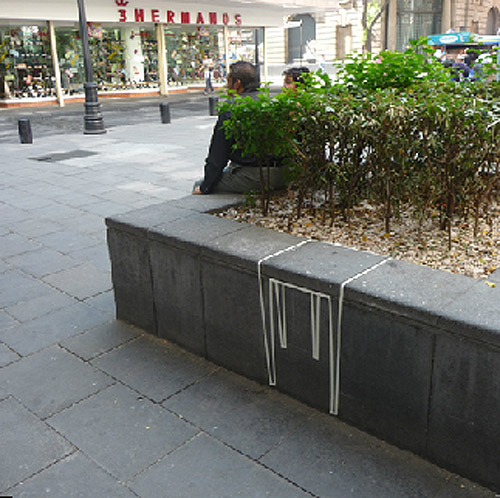
The insinuated furniture project, Ludens, Urban Prosthetics, Mexico City, street artThe insinuated furniture project, Ivan Hernandez-Quintela, Urban Prosthetics, street artLudens,Ivan Hernandez-Quintela, Urban Prosthetics, street art, Mexico cityThe insinuated furniture project, Ivan Hernandez-Quintela, Urban Prosthetics, street artThis concept made me smile. The Insinuated Furniture Project is the creation of Mexican artist/architect Ivan Hernandez-Quintela who started a design collective called Ludens. Hernandez-Quintela considers his designs spatial gags and enjoys invading Mexico City with his ‘Urban Prosthetics’. All his projects are about how people share space and how the objects that surround us affect the way we share it. He believes that each of us has the power to impact a city, one gesture at a time and that could have a contagious effect creating larger impacts from these small gestures. On his Insinuated Furniture Project, Hernandez-Quintela has this to say:

When one live in a city where urban furniture is not a priority, one finds that its inhabitants get creative and improvise by using different constructive surfaces as furniture. Insinuated furniture project is an attempt to call attention to these potential surfaces by drawing silhouettes of recognizable furniture over them.

Insinuated Furniture is a task for people and/or designers to go around the city with masking tape and draw silhouettes on these surfaces. Not to necessarily add objects to the city, but to recognize how existing objects are used, or misused. To help visualize the potential of the city.

via tarp

David Mach: Matchheads

sculptures made of matches, sculptures that are lit and burned, heads made up of matchessculptures made of matches, sculptures that are lit and burned, heads made up of matchessculptures made of matches, sculptures that are lit and burned, heads made up of matchesClick to enlarge

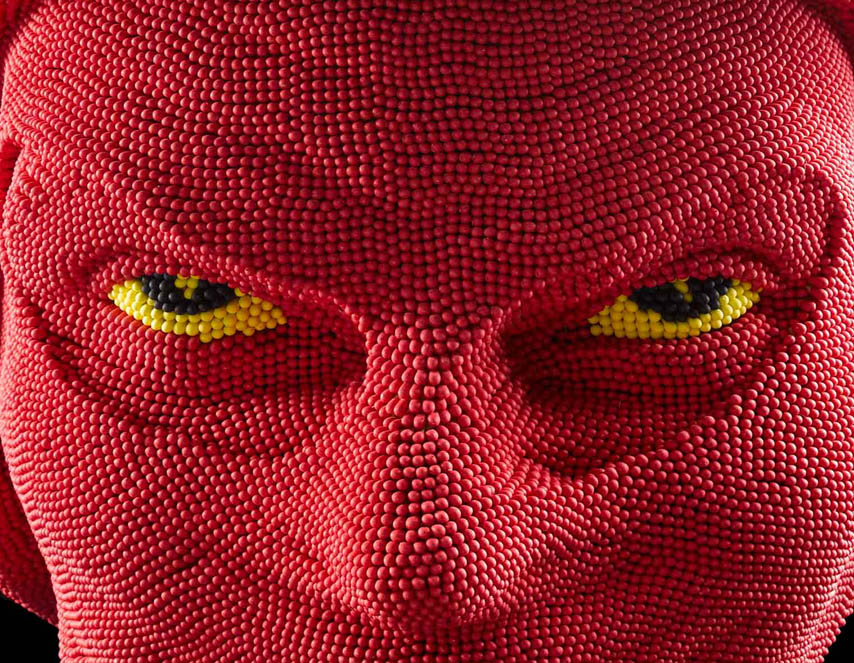
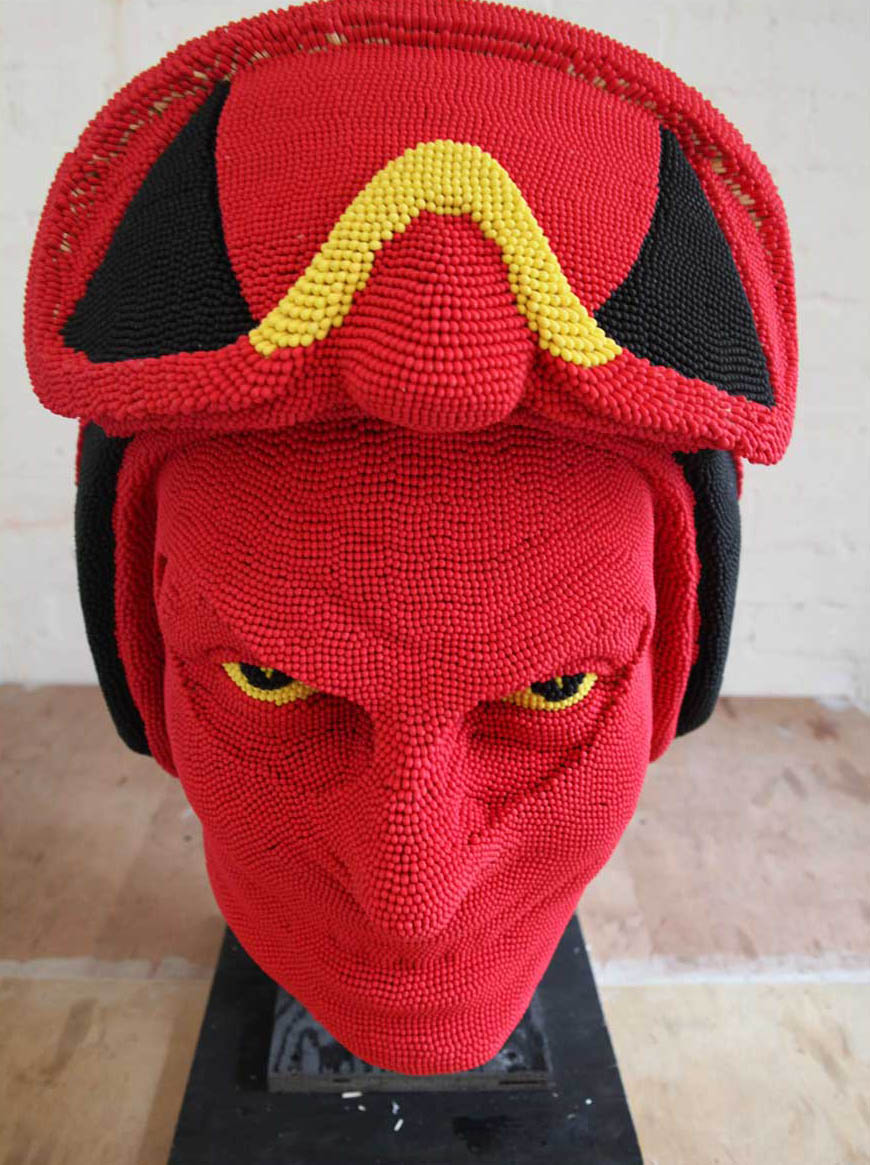
Yes, I just finished posting about David Mach’s coat hanger sculptures, but this artist has so many incredible works that it merits two consecutive posts, and still there is so much more to see! In his Matchheads, Mach uses thousands of live matches to create heads of famous people, not-so-famous people, busts in the style of Roman sculptures, Asian and African style masks, Picassoesque and Warholian influenced heads as well as many animal heads. Some are monochromatic and others use multiple colors. And if these aren’t  impressive enough in their non-lit form, David Mach also lights them on fire resulting in a charred blackish-gray hue.

Photos from the artists’s site, piglicker’s flickr, Opera Gallery, and Galerie Jerome de Noirmont.

There is so much of David Mach’s work worth checking out. You can see his postcard collages here, his amazing brick train sculpture here, and even more installations here. Oh, and there’s a dominatrix made of dominoes here!

David Mach: Coat Hanger Sculptures

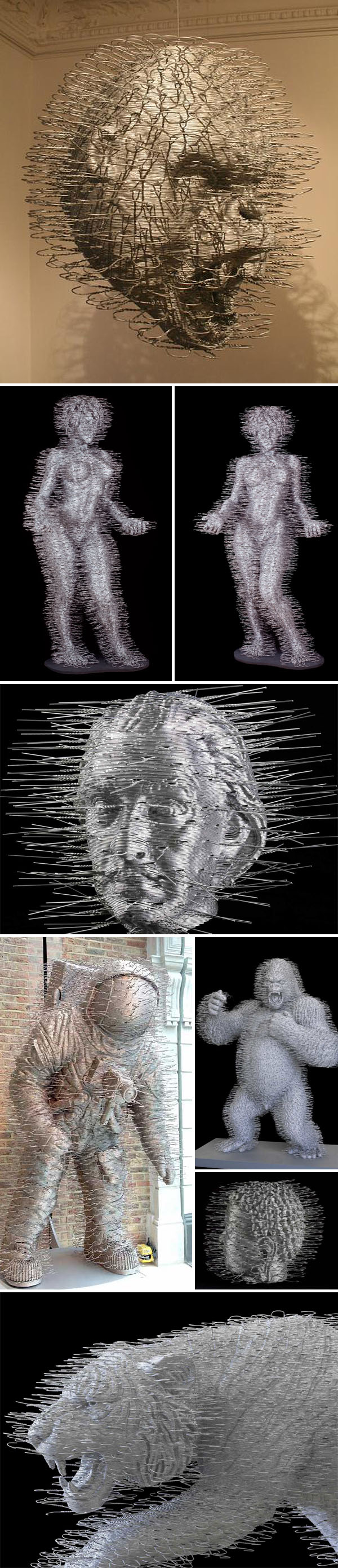
cool sculptures made of wire coat hangers, David Mach, Scottish artistcool sculptures made of wire coat hangers, David Mach, Scottish artistcool sculptures made of wire coat hangers, David Mach, Scottish artistClick to enlarge

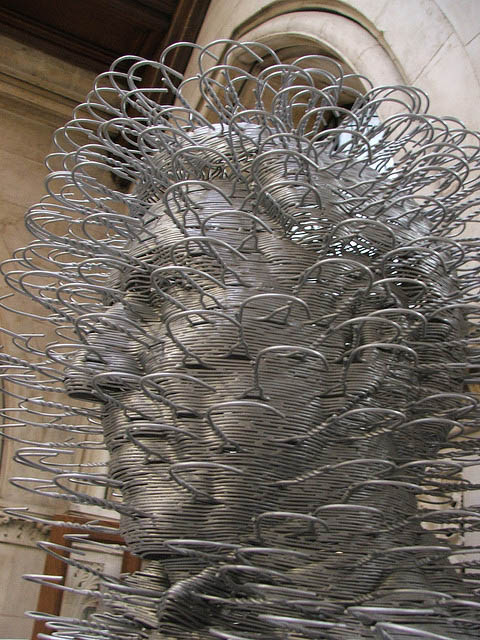
Scottish sculptor David Mach is a master at creating assemblages of mass-produced objects such as magazines, bricks, books, dominoes, matches, and, as illustrated in this post, wire coat hangers. Though new to me, Mach has received major honors and recognition for his work since the 80s including a nomination for the Turner Prize in 1988 as well as being a Fellow of the Royal Academy of the Arts.

His coat hanger sculptures range from busts to large scale animals. The detail on these pieces is incredible. I wish I knew what the process was like.

Photos from the artist’s site, Malcolm Edward’s flickr, Galerie Jerome de Noirmont, and Aaron Sweeney.

via flickrhivemind

Fan Chon Hoo: The Blue and White Collection

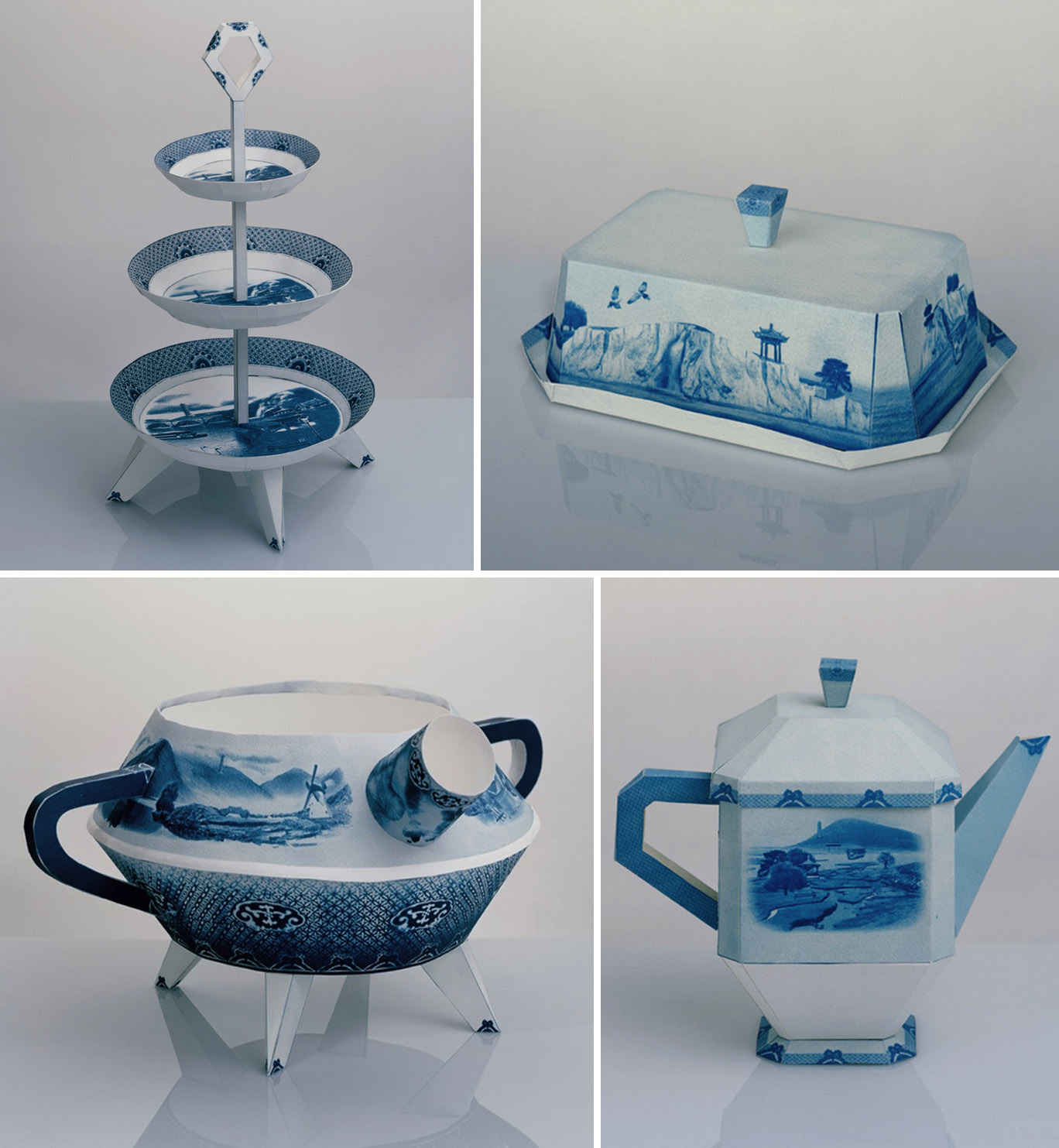
Willow Earthenware, The Blue and White Collection, Paper dishes, Fan Chon HooWillow Earthenware, The Blue and White Collection, Paper dishes, Fan Chon HooWillow Earthenware, The Blue and White Collection, Paper dishes, Fan Chon HooClick to enlarge

Look closely at these paper dishes. Malaysian artist Fan Chon Hoo, who studied and, I believe, lives in London, is interested in the process of cultural translation within the context of postcolonialism. In his series of works titled The Blue and White Collection, Chon Hoo responds to the traditional English Willow Pattern from the late eighteenth century by creating a set of paper earthenware printed with cyanotype imaginary landscapes using Asian architectural structures found in the UK.

From the artist’s website:
I am interested in how a foreign culture can be appropriated and translated into a form of exotic collectibles, subconsciously tucked into the local culture….This process challenges cyanotype’s association with blueprint by posing the question of origin and the sense of fluidity of culture.

via saatchionline

Jim Hake: Sculptural Portraits
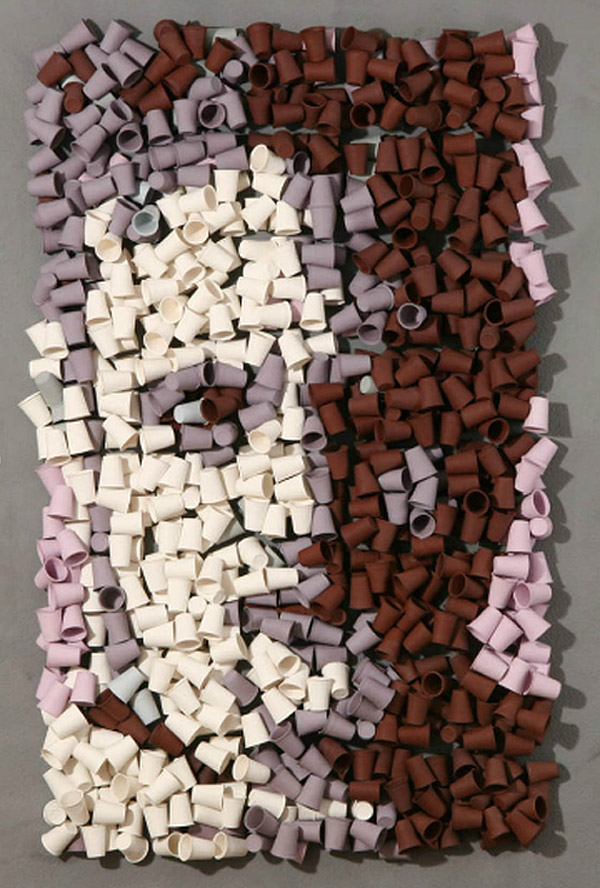
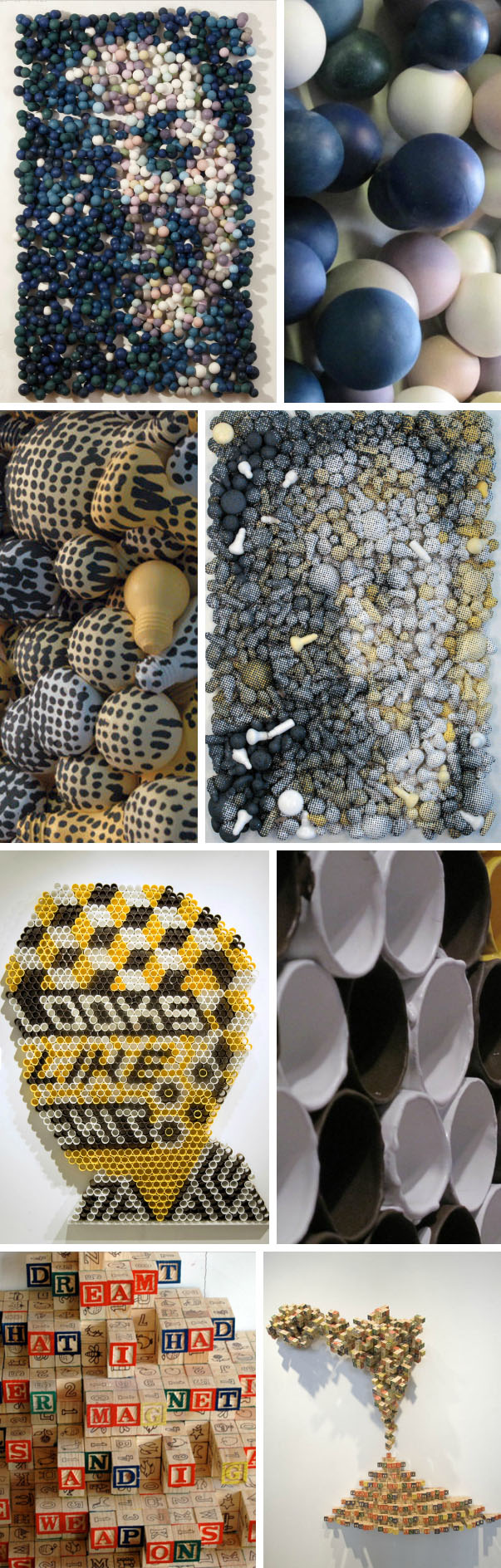
Portrait made of cups, cool art, contemporary sculpturePortrait made of cups, cool art, contemporary sculpturePortrait up of tiny photos, cool art, contemporary sculpture, collabcubedPortrait made of small photos, cool art, contemporary sculpture, collabcubedPortrait made of cups, light bulbs, balls, cool art, contemporary sculptureArtist Jim Hake has bounced around from east coast to west coast in the States, as well as living in Turin where he became an Italian citizen, and more recently is living in Toronto.

Though considered a sculptor, many of Hake’s sculptures hang in the same way two dimensional art typically does. Included here are portraits made up of cups, photos, balls, light bulbs and, not a portrait but, a volcano made of building blocks. Cool stuff.

via Head Bones Gallery

Will Nolan: Everything is Melting

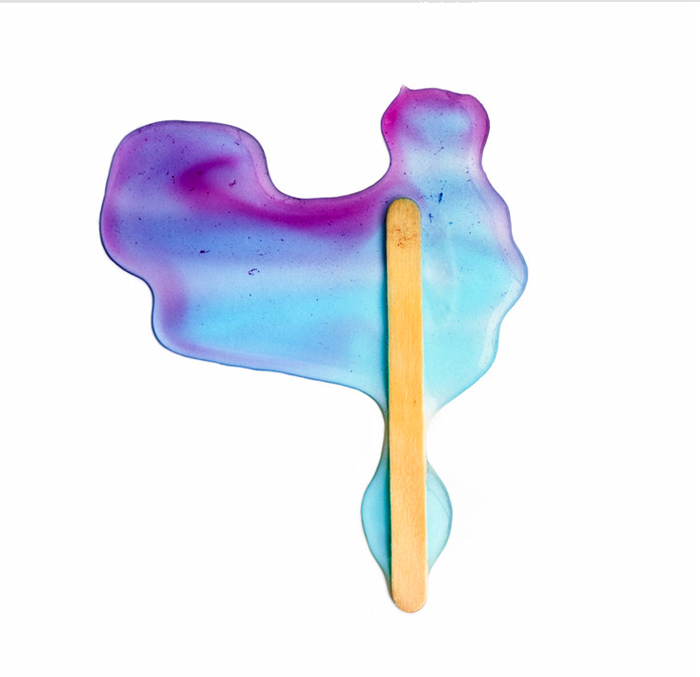
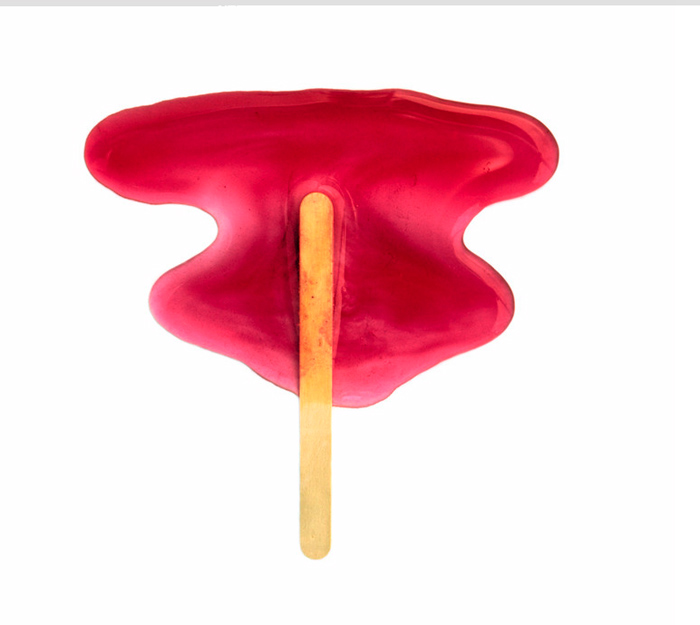
Contemporary photography, popsicles, melting, australian contemporary artContemporary photography, popsicles, melting, australian contemporary artContemporary photography, popsicles, melting, australian contemporary artI find this series of photos, titled Everything is Melting, by Australian artist Will Nolan quite lovely. Nolan likes to explore the impermanent nature of found objects, in this case: melting ice blocks or popsicles.

From the exhibit catalogue:
“Everything is Melting, and its depiction of melting iceblocks, evokes the nostalgic memory of childhood but remains as a quiet reminder of the inescapable future of decay and death. The work explores the essence of transformation, harking back to the various incarnations of the evertold allegory of death and rebirth…

via saatchionline

Google Earth Carpets

carpets, google, google earth, worldwide carpets, David Hanauercarpets, google, google earth, worldwide carpets, David Hanauercarpets, google, google earth, worldwide carpets, David HanauerClick to enlarge

These have been out a few months, but somehow I missed them. German designer David Hanauer came out with WorldWide Carpets; using satellite imagery (from Google Earth), he creates carpets that emulate the patterns of classic Persian carpets with contemporary landscapes from a bird’s eye view. From area rugs to wall-t0-wall flooring where the patterns are endlessly repeated.

I’m not sure I’d want one in my home, but it’s a clever concept and I certainly like the way it works at the Sacramento International Airport (bottom photo).

via SpotCoolStuff

E1000: Tagging the Grates of Madrid

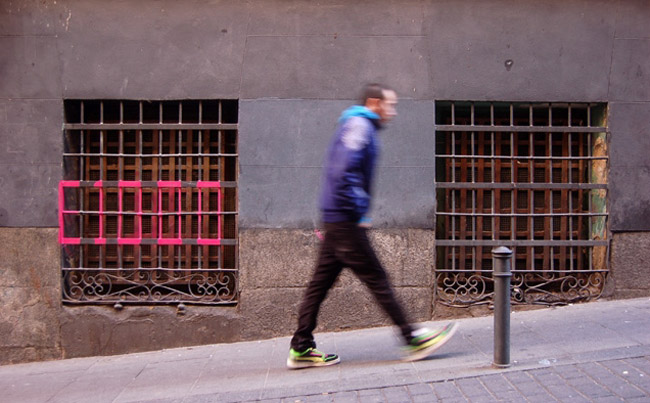
street art in Madrid, e1000, tags on grates, gates, vents, collabcubedstreet art in Madrid, e1000, tags on grates, gates, vents, collabcubedstreet art in Madrid, e1000, tags on grates, gates, vents, collabcubedSpanish street artist E1000, (previously here), has taken to tagging the streets of Madrid in a cryptic manner, taking advantage of the horizontal and vertical lines of gates, grates, shutters, vents, and manhole covers to paint the five characters of his signature. Guillermo de la Madrid has found, photographed and documented a bunch of them on his blog Escrito en la Pared. Above are most of them.

It’s kind of like finding the “Ninas” in a Hirschfeld illustration. Okay, so not exactly…

Sebastian Martorana: Marble Sculpture

contemporary marble sculpture, towels, NYU Steinhardt. 80WSEcontemporary marble sculpture, towels, NYU Steinhardt. 80WSEcontemporary marble sculpture, Martorana, Baltimore artist, LEGO, pillow, shirtClick to enlarge

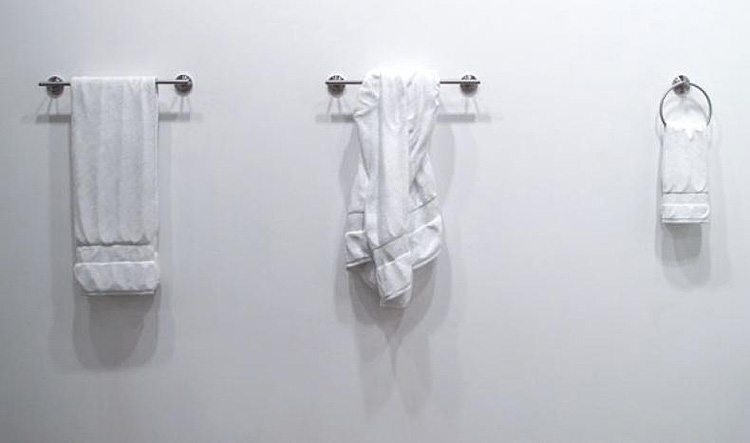
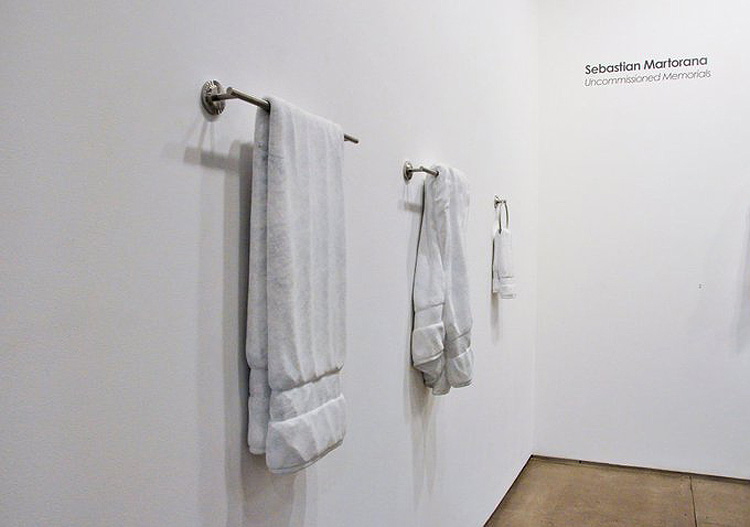
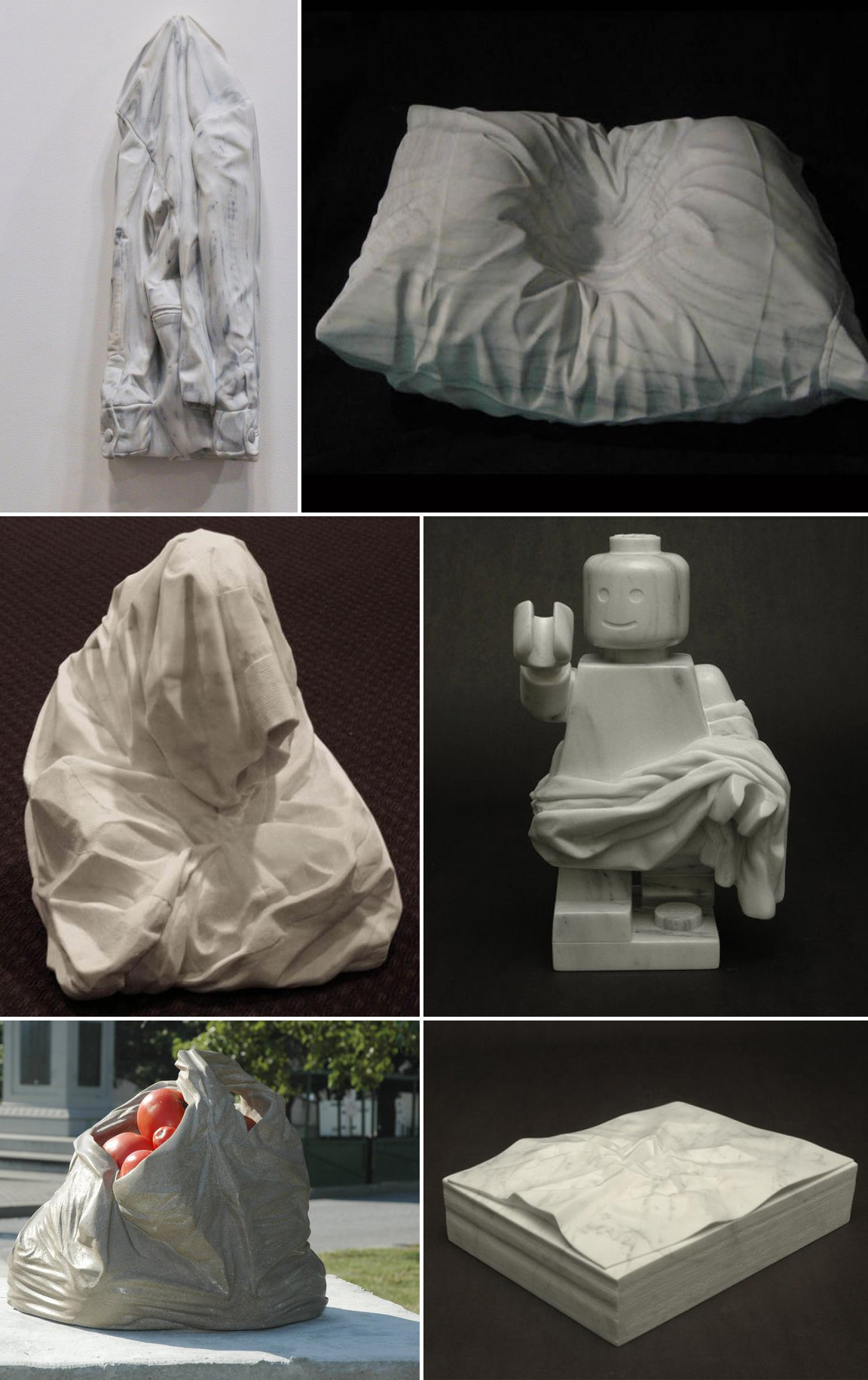
If you follow this blog you may be thinking “MORE realistic stone sculpture??” And the answer is “Yes.” What can I say, I get a kick out of it and am impressed by the skill. I was walking by Washington Square Park today and happened to spot these marble towels through the window of 80WSE a New York University gallery. They made me smile. The draping is so well done and having placed them on towel racks made them all the more trompe l’oeil-ish. I went in, got the artist’s name and googled him out.

Sebastian Martorana is a stone carver and illustrator based in Baltimore, Maryland. His work was recently featured in the 40 Under 40 40th Anniversary exhibit of Renwick Gallery of the Smithsonian.

From top to bottom, left to right:
Yours, Mine, Ours; Shed; Impressions; Homeland Security Blanket; (couldn’t find name of Lego figure or bag); Frustration 81/2 x 11. Photos courtesy the artist and Contemporary Wing.

Sebastian Martorana’s work is part of a group show currently at 80WSE through December 22, 2011.

If you like these sculptures you might also enjoy Chris Mitton and Vlad Berte.

Antonio Cos: Déjà Vu Glassware

Glassware, contemporary combined with traditional, Italian, Antonio Cos, collabcubedGlassware, contemporary combined with traditional, Italian, Antonio Cos, collabcubedGlassware, contemporary combined with traditional, Italian, Antonio Cos, collabcubedGlassware, contemporary combined with traditional, Italian, Antonio Cos, collabcubedClick to enlarge

Originally from Strasbourg, designer Antonio Cos lives and works in Milan. As an industrial designer he has designed everything from door handles, to kitchenware, to lamps and furniture. In his glassware collection titled Déjà Vu he experiments with traditional glass techniques and shapes, giving it that already-seen-it-before quality but adding a contemporary twist by piecing those familiar components together in an unconventional way, giving them new life and creating imaginative shapes that are beautiful, modern, and fun.

Photos: Antonio Cos, At Casa and Interni

via rua confettora 17