CellBag: Le Laboratoire

Cellbag by Mathieu Lehanneur & David Edwards, La Laboratoire, industrial design, canteen, Cellbag by Mathieu Lehanneur & David Edwards, La Laboratoire, industrial design, canteen, water storageCellbag by Mathieu Lehanneur & David Edwards, La Laboratoire, industrial design, canteen, water storageClick to enlarge

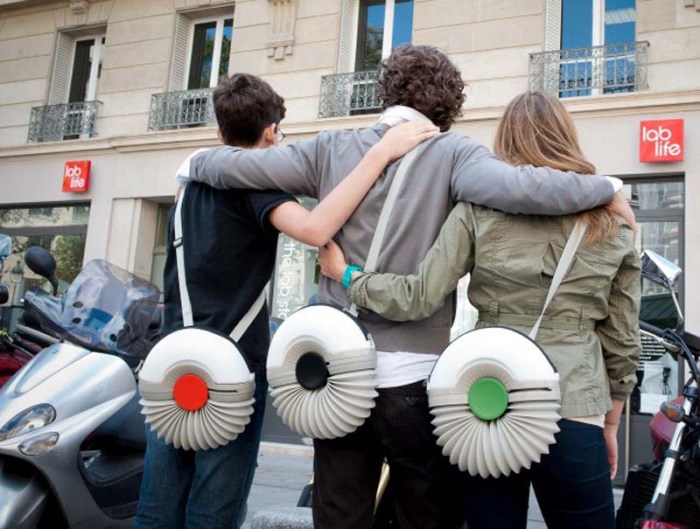
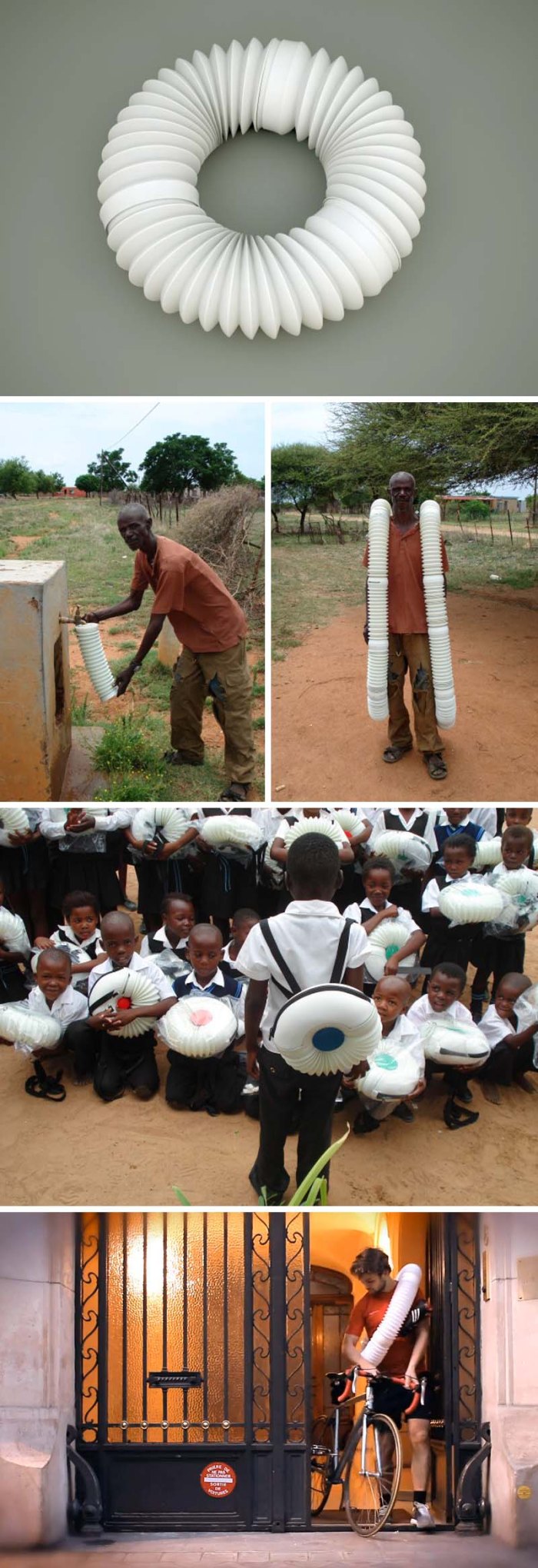
Not only is this a fun-looking bag, but it’s an innovative approach to water transport and profits from its sales go towards funding a humanitarian initiative in South Africa to provide sanitary water transportation solutions. The CellBag is the brainchild of industrial designer Mathieu Lehanneur (previously here) and David Edwards (and his students) who came up with a concept for water transportation at Harvard University’s Wyss Institute. Inspired by the way in which biological cells transport water and nutrients, the CellBag divides into two parts: a rounded zippered pouch for snacks or lunch and an accordian-style bottle that holds up to a liter of water. These tubes can be strung together for larger quantities of water and can carry several days’ worth of liquid.

The bags were originally only available to the Moretele community in South Africa but now are sold in four different colors at the Paris-based Lab Store. I would definitely consider one of these as an alternative to a canteen or water bottle, but I’m not really buying the guy biking with the huge water hose at the end of the video below.

via anonymousd

SEAT: E/B Office

SEAT a chair installation by E/B Office SEAT_e-b-office_collabcubedSEAT a chair installation by E/B OfficeClick to enlarge

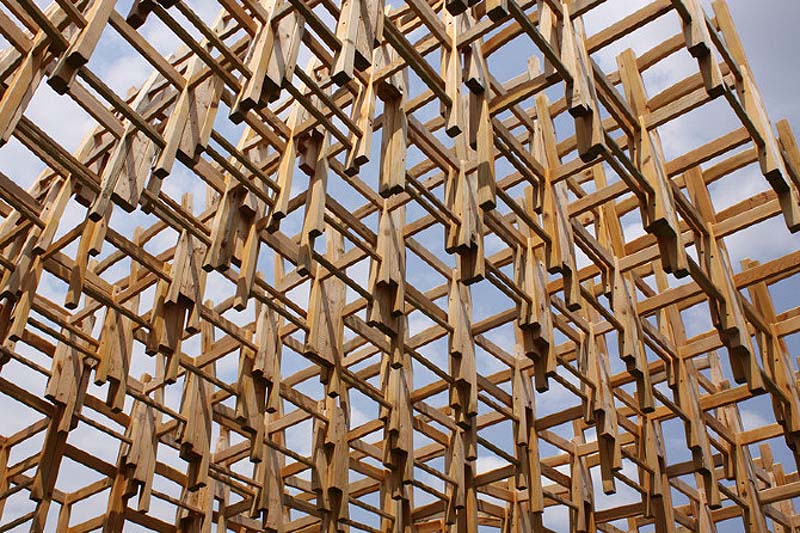
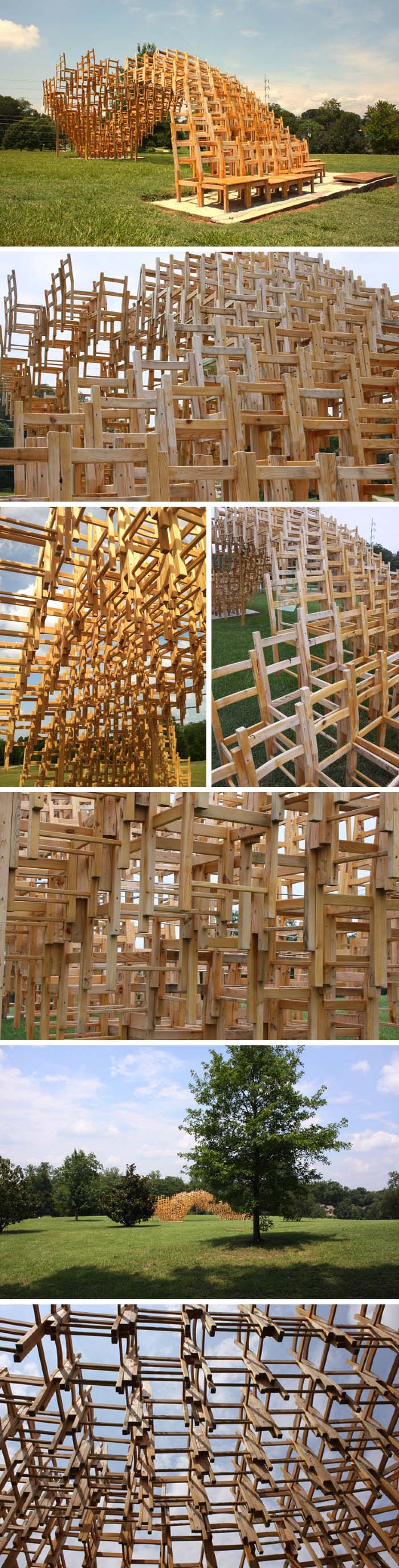
SEAT is an installation by NYC-based E/B Office (previously here). Composed of approximately 300 simple wooden chairs arrayed and stacked in a sine wave surface drawn into an agitated vortex rising from the ground, chairs are transformed from detached useable objects into structural and spatial components of an ambiguously occupiable edifice. It’s intended to be legible as a collection of individual seats, but when approached, visitors realize that sitting down in any one of them amounts to a deliberate act of occupation; a temporary social contract to redefine their perception of sitting embodied as architecture. Chairs around the immediate periphery are rotated for outward observation of the city and the surrounding neighborhood. At the base of the vortex, chairs turn inward to create an intimate, compressive space for visitors to converse and regard the upward flow of chairs transcending their function. Chairs suspended above ground between these zones re-constitute the role of the seated object as one that can also play as structure, decoration, and enclosure.
The chairs are additively assembled through a modified “corbelling” process achieved by sequentially attaching chairs beginning at the edges and corners working towards the center. The chairs are resiliently connected to each other via simple lag bolts, clamps, and screws that are hidden from view. Nice!

Pae White: Typography Yarn Installation

Cool Typography Installation using 48km of thread by Pae White at South London GalleryCool Typography Installation using 48km of thread by Pae White at South London GalleryCool Typography Installation using 48km of thread by Pae White at South London GalleryClick to enlarge

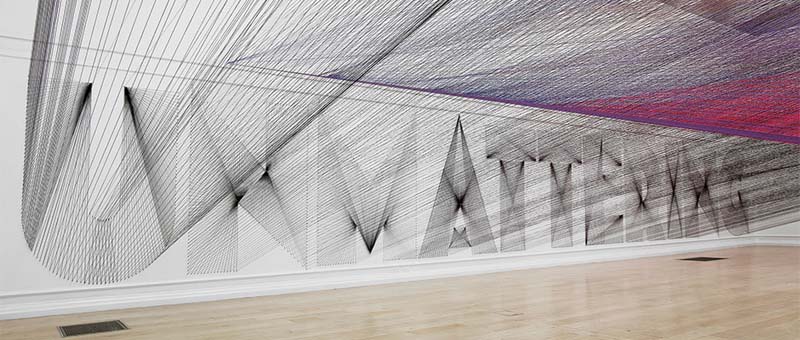
Los Angeles artist Pae White creates site specific installations merging art, design, and architecture. Presently at the South London Gallery you can find her latest installation titled Too Much Night, Again where 48km of yarn is interwoven and criss-crossed into connecting supergraphic letterforms spelling out the words “Unmattering” on one wall and “Tiger Time” on the opposite one. The work was inspired by a period of insomnia which is hinted at in its name. Depending on your location within the space, the words emerge and fade. Pretty spectacular.

You can see the exhibit being mounted in the video below as well as White being interviewed about her process. And if you’re in London before May 12th, you can see it at the South London Gallery.

Photos courtesy greengrassi by Andy Keate.

via it’s nice that

Filament Mind: Teton County Library

Filament Mind, data visualization installation at Teton County Library, Wyoming, by E/B Office, information graphics, optical fibreFilament Mind, data visualization installation at Teton County Library, Wyoming, by E/B Office, information graphics, optical fibreFilament Mind, data visualization installation at Teton County Library, Wyoming, by E/B Office, information graphics, optical fibreClick to enlarge

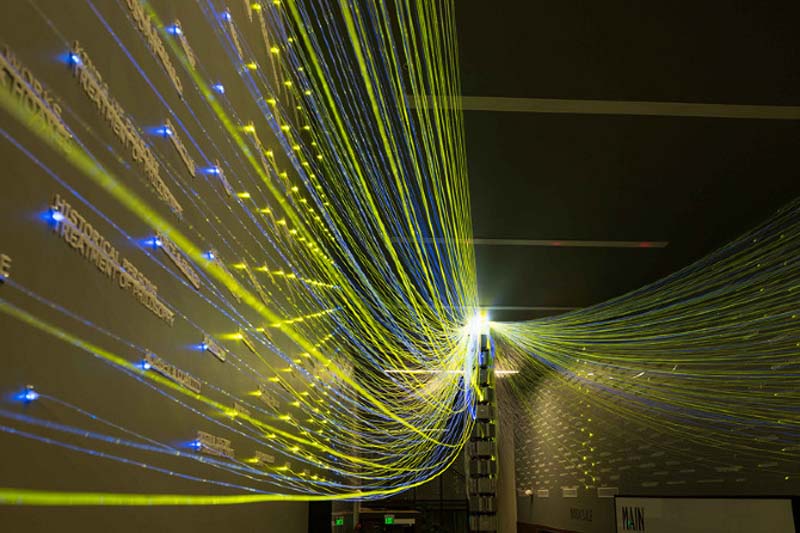
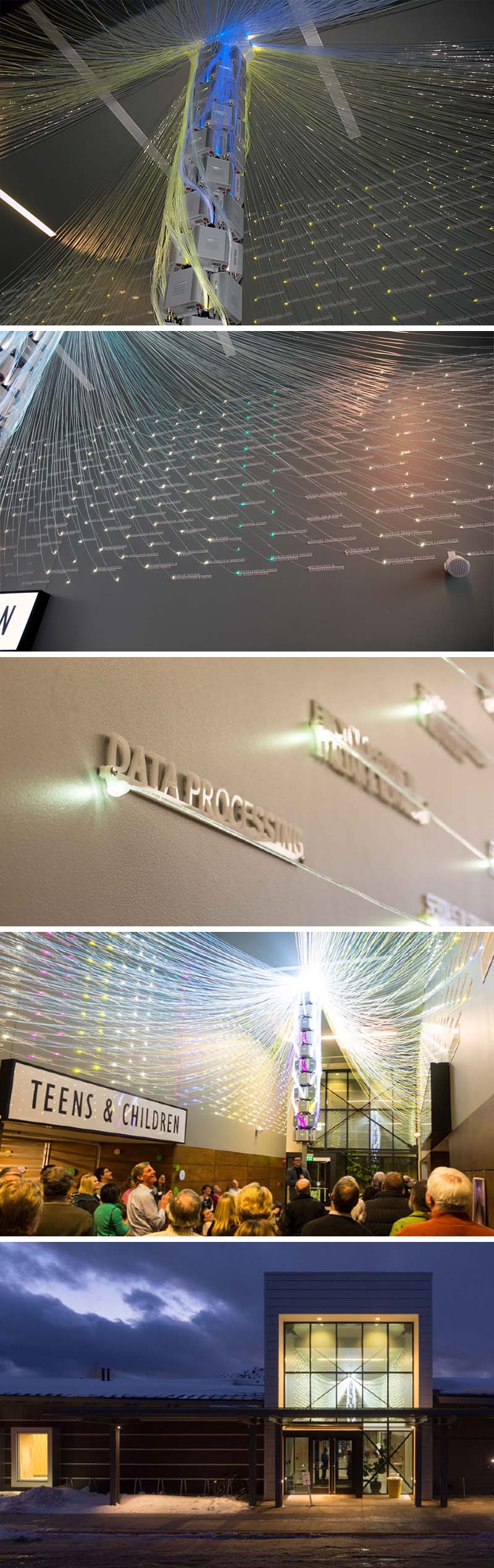
Filament Mind is an information-driven installation at the Teton County Library in Wyoming, designed to visualize the collective questions of library visitors through an interactive and dynamic spacial sculpture. Designed by Brian W. Brush and Yong Ju Lee of E/B office, Filament Mind illuminates searches in a flash of color and light through glowing bundles of fiber optic cables. Whenever any Wyoming public library visitor anywhere in the state performs a search of the library catalog from a computer, each of the 1000 fiber optic cables hanging above (totaling over 5 miles of cable) corresponds to a call number in the Dewey Decimal System, which organizes the library’s collection into approximately 1000 categories of knowledge. These category titles are displayed in text on the lobby’s south and north walls at the termination points of the fiber optic cables. For further clarification how the installation works watch the video below:

via onesmallseed

Zhu Jinshi: Boat

Chinese Contemporary Art, cool art installation made with rice paper and bamboo by Zhu Jinshi titled Boat, Art13 LondonChinese Contemporary Art, cool art installation made with rice paper and bamboo by Zhu Jinshi titled Boat, Art13 LondonChinese Contemporary Art, cool art installation made with rice paper and bamboo by Zhu Jinshi titled Boat, Art13 LondonClick to enlarge

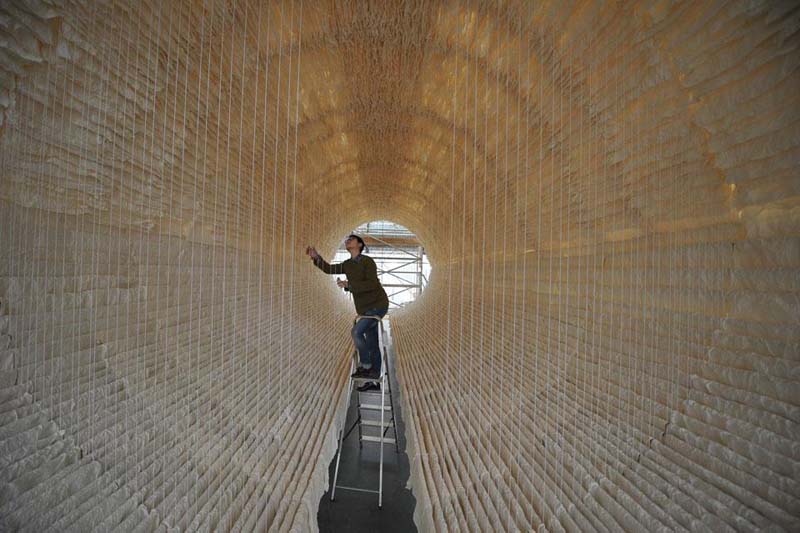
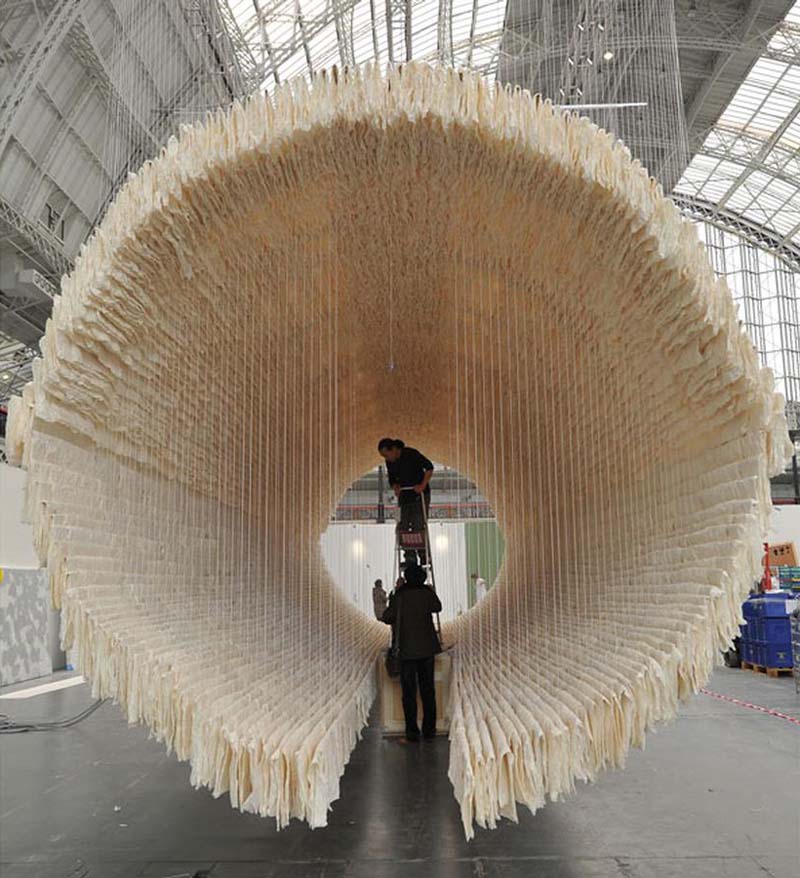
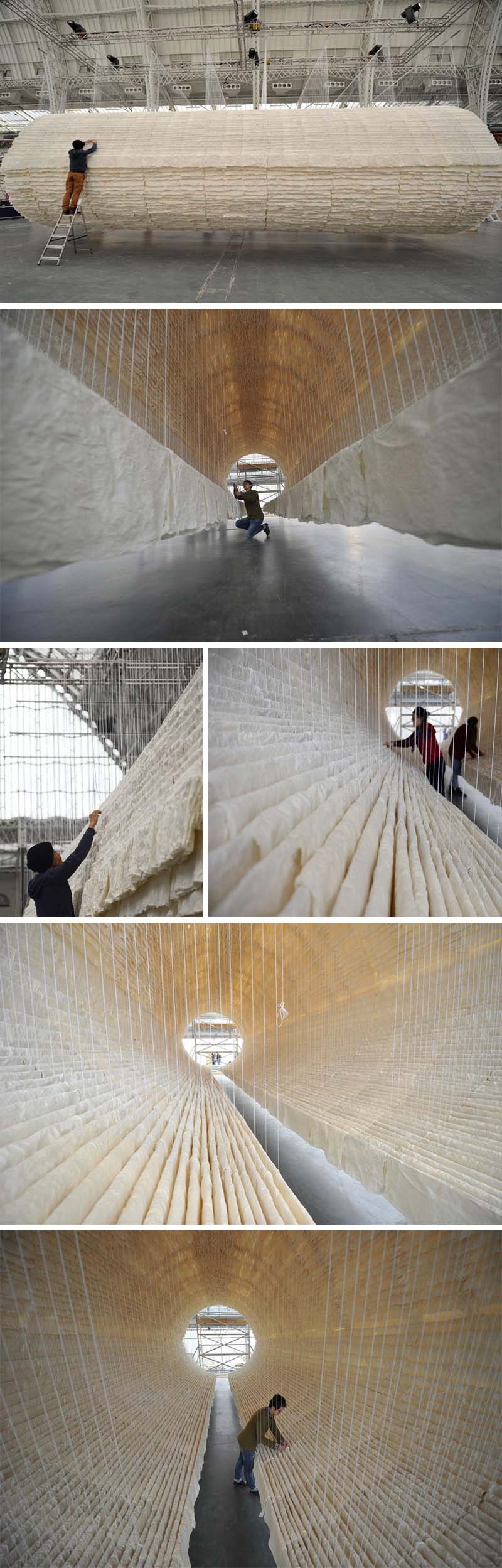
Consisting of 8,000 sheets of rice paper, 800 shafts of bamboo, and cotton, the 12-meter long structure titled Boat was presented last month at Art13 London by Chinese abstract artist Zhu Jinshi. The impressive installation was assembled over a three-day period by a crew of workers from Hong Kong who delicately layered the historically- and culturally-relevant paper onto the bamboo poles. The Boat acts as a metaphor with both western and eastern significance: the artist’s personal voyage from east to west; as well as honoring the dead’s passage from living to afterlife, something that Chinese viewers would recognize from the meaning of the Chinese character for ‘boat’. Even time travel could be insinuated by the spaceship quality of the interior.

Photos: Domus and wallpaper

via domus

Alice Hope: Ball Chains & Magnets

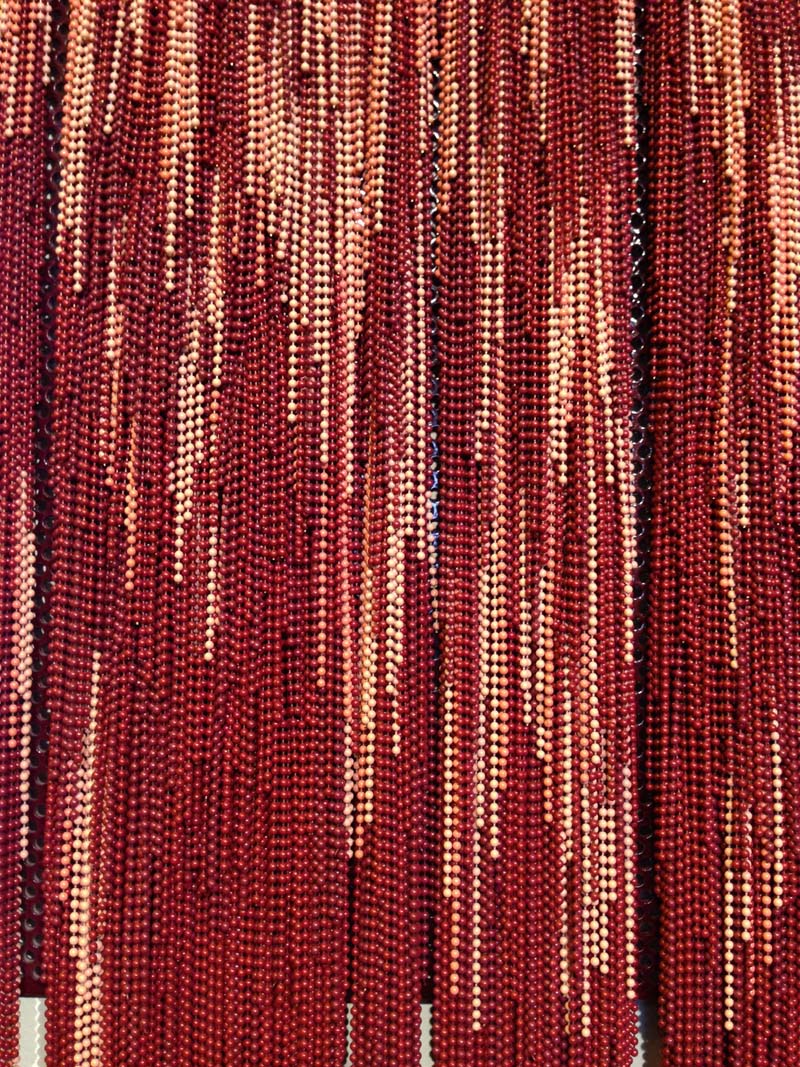
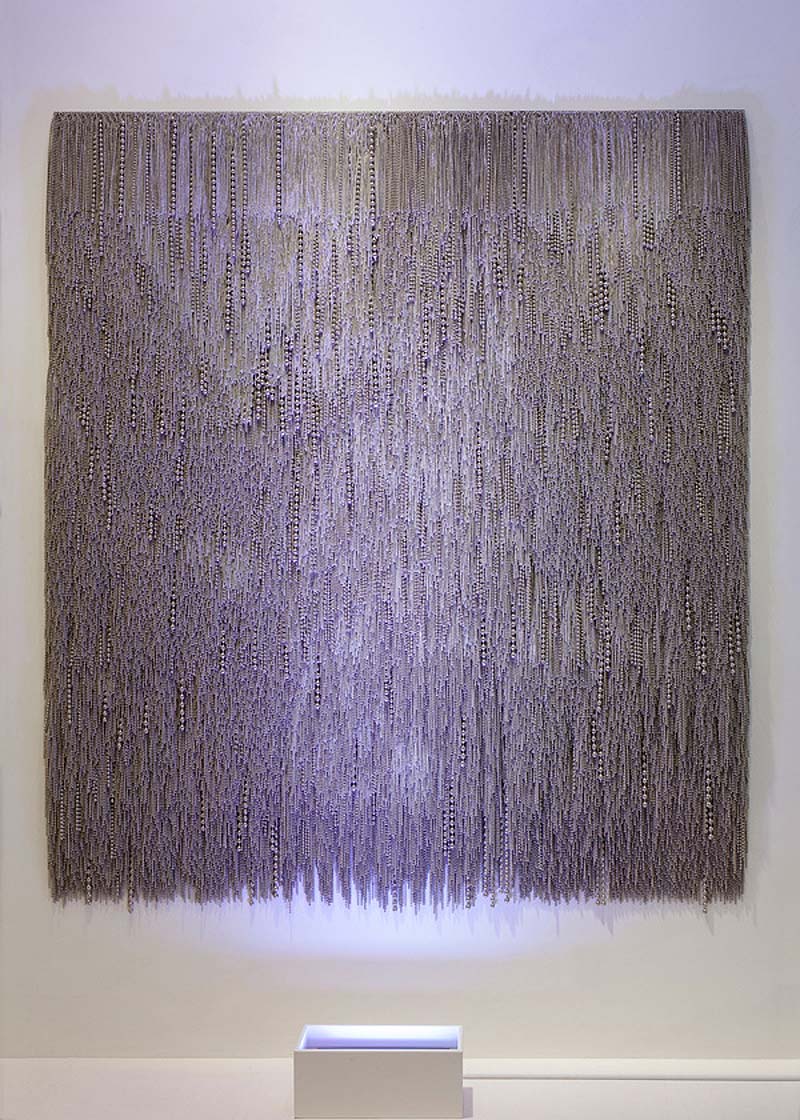
wall pieces made with ball chains and magnets by Alice Hopewall pieces made with ball chains and magnets by Alice Hopewall pieces made with ball chains and magnets by Alice Hopewall pieces made with ball chains and magnets by Alice HopeClick to enlarge

From a distance it’s hard to tell if New York based artist Alice Hope’s works are paintings, tapestries, or even hanging shag rugs. But, as you get closer the source of the curious colors and textures is revealed as long strands of aluminum ball chains, some painted, others in their natural metal state. Hope painstakingly places each one of these ball chains manually (I know because I saw her finishing one up at the Armory Show earlier this month) onto a perforated steel panel, using magnets. Though it could seem that the process is random, in reality Hope has a process that often relies on numeric patterns. The repetition and monotony of the process is a significant part of the work, as is the gradual deterioration of the work that occurs through dropped chains and magnets.

Currently you can see one of Alice Hope’s pieces at the Greene Space in NYC. The video below shows her process installing it.

Photos courtesy of the artist and collabcubed.

Infinity Bridge: Stockton-on-Tees

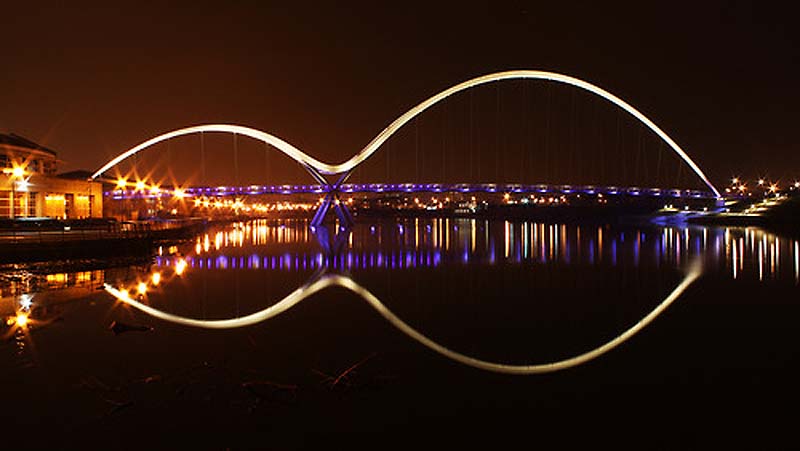
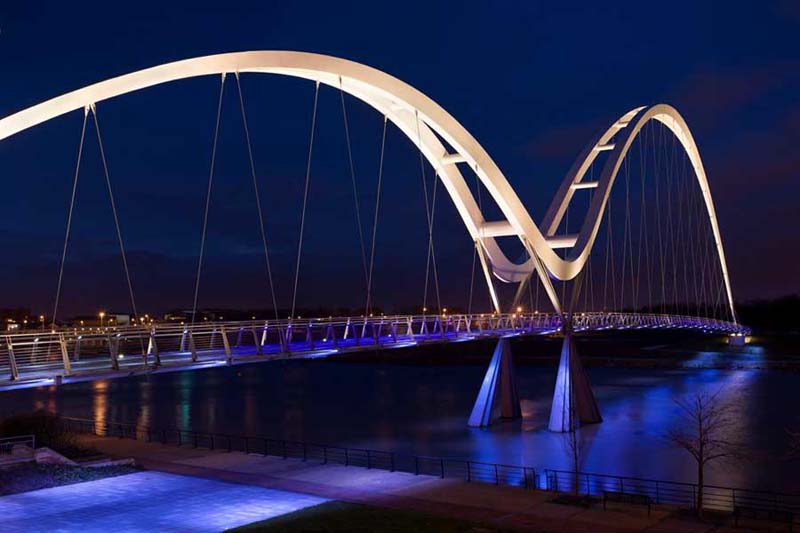
Infinity Bridge in Stockton-on-Tees, UK designed by Expedition Engineering and interactive lighting by Speirs and Majors. Infinity Bridge in Stockton-on-Tees, UK designed by Expedition Engineering and interactive lighting design by Speirs and Majors. Infinity Bridge in Stockton-on-Tees, UK designed by Expedition Engineering and interactive lighting design by Speirs and Majors. Click to enlarge

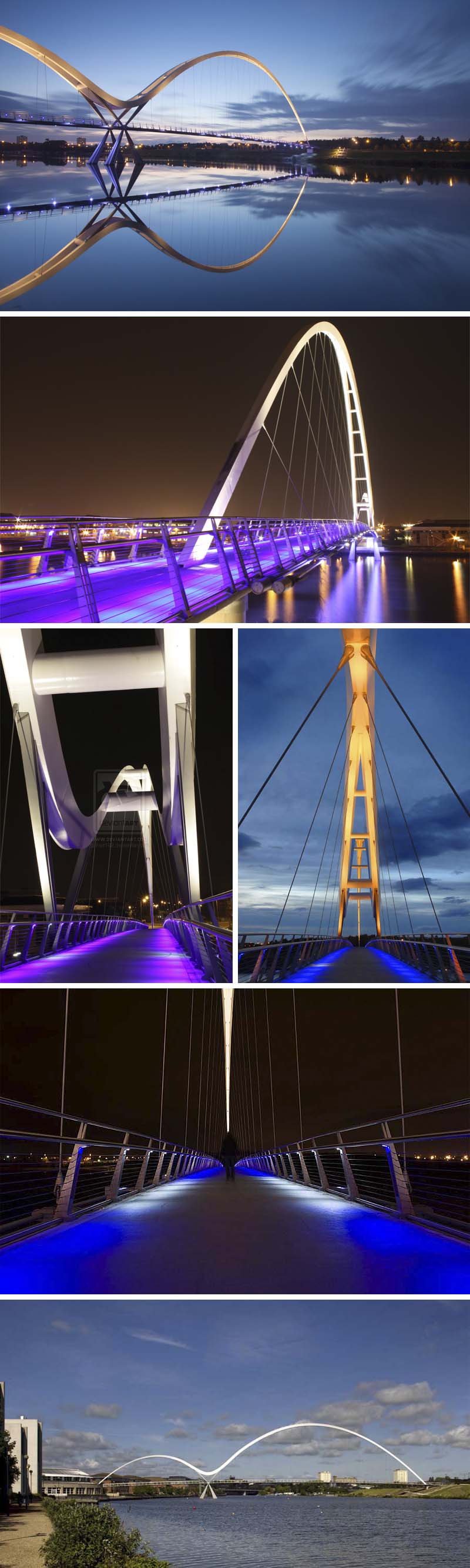
The Infinity Bridge, a pedestrian bridge in Stockton-on-Tees in the UK, is suspended from a pair of beautiful asymmetrical bowstring arches that, when reflected in the water, look like the flowing double loop of the infinity symbol, hence the name. Designed by Expedition Engineering and Spence Associates, not only are the shape and reflection striking and interesting, but the lighting design by Speirs & Major makes the bridge an interactive kinetic experience. The deck of the footbridge is cloaked in a blue glow that shifts to a white light that moves along with you as you cross, much like a protective spotlight. You can see it in action in the video below.

Photos: Brian Swales and Morley von Sternburg.

via e-archtitect

Long-Bin Chen: Sculpted Books & Magazines

Long-Bin-Chen_Sculptures-made-from-carved-books-and-magazinesLong-Bin-Chen_Sculptures-made-from-carved-books-and-magazinesLong-Bin-Chen_Sculptures-made-from-carved-books-and-magazinesLong-Bin-Chen_Sculpturesmadeofbooks_collabcubedClick to enlarge

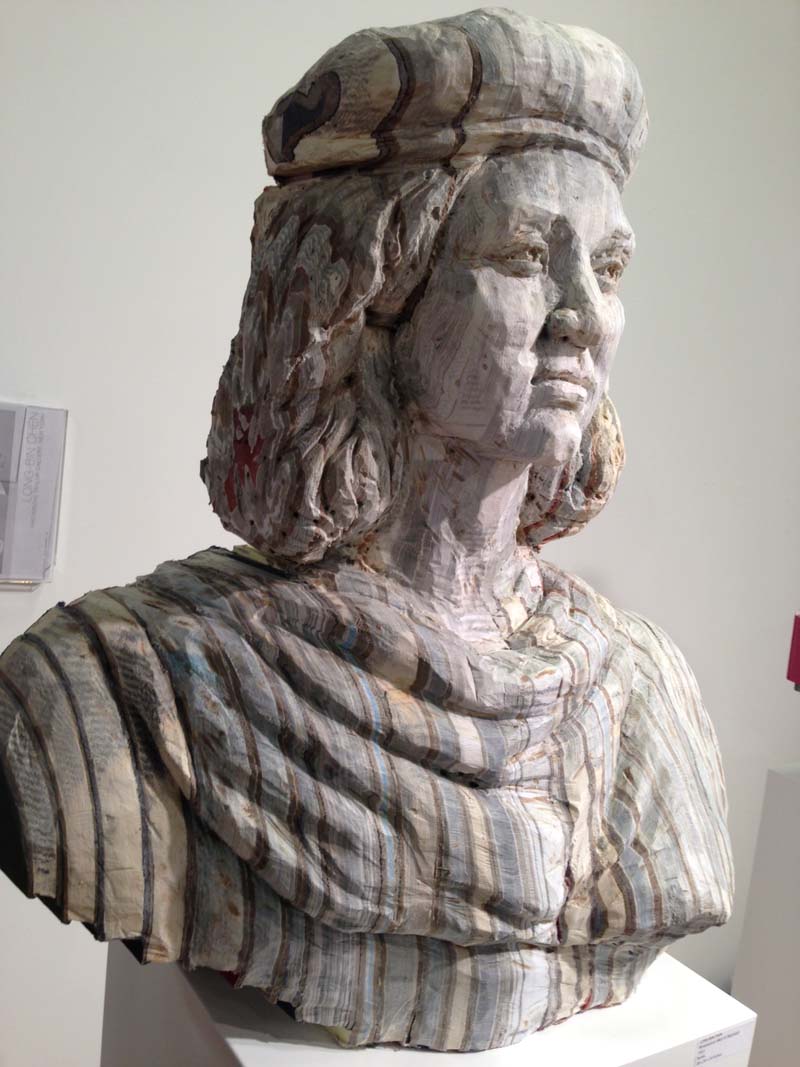
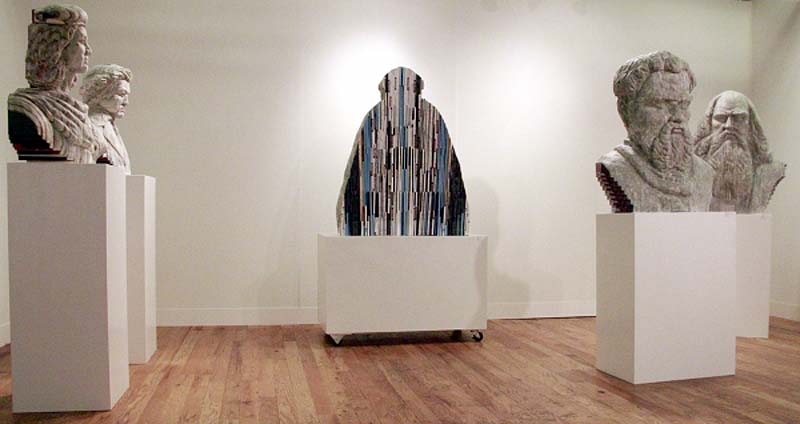
Taiwanese artist Long-Bin Chen works with books, magazines, and phone books using traditional sculpting techniques to carve them into works that resemble classic stone busts of both Eastern and Western icons. I saw several of these in person at this year’s VoltaNY Show and even seeing the front and backs up close, and knowing that they’re made with printed matter, they are still amazingly convincing.

Photos: collabcubed; MAD; and artnet

Academie MWD Dilbeek: Carlos Arroyo

Academie MWD Dilbeek, Belgium, Music, Dance, & Theater Academy designed by Carlos Arroyo. Cool optical illusion facade.Academie MWD Dilbeek, Belgium, Music, Dance, & Theater Academy designed by Carlos Arroyo. Cool optical illusion facade.Academie MWD Dilbeek, Belgium, Music, Dance, & Theater Academy designed by Carlos Arroyo. Cool optical illusion facade.Click to enlarge

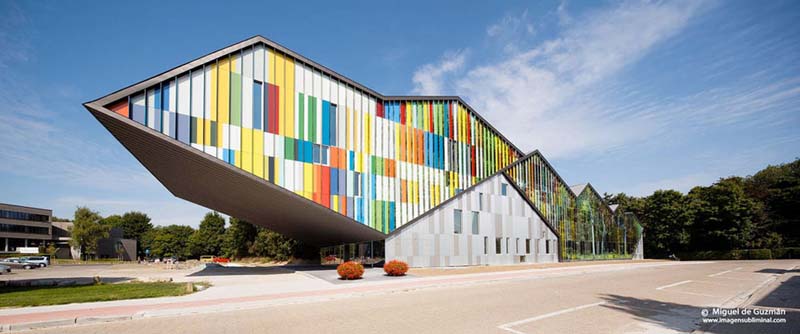
The Academie MWD (Music, Words, Dance) in Dilbeek, Belgium opened this past fall. The Spanish firm Carlos Arroyo Architects faced the challenge of integrating the new building on the boundary of city and forest, with low-rise single-family homes and the imposing Westrand Cultural Center designed by Flemish architect Alfons Hoppenbrouwers in its immediate surroundings, all the while maintaining the delicate balance with the natural green landscape. Arroyo and his team came up with an ingenious solution: a dynamic façade that gives the optical illusion of changing as you move along the street. In one direction the reflection of the trees is seen, in the other a series of blues, grays and whites from the sky and the facing cultural center. Looked at straight on, the building becomes a burst of color, in homage to a painting by the aforementioned Alfons Hoppenbrouswers where he transcribed a piece of music by a Flemish composer from 1497 into colors and visual rhythms. The color continues on the floors of the interior spaces. The result is a combination of kinetic sculpture, contemporary architecture, and nature. Nicely done, especially for a music and arts institute.

Photos: Miguel de Guzman

via europaconcorsi

Jérémy Laffon: Hollywoodoscopies

Jeremy Laffon, structures and sculptures made with chewing gum sticks, hollywoodoscopies, French contemporary artJeremy Laffon, structures and sculptures made with chewing gum sticks, hollywoodoscopies, French contemporary artJeremy Laffon, structures and sculptures made with chewing gum sticks, hollywoodoscopies, French contemporary artClick to enlarge

French artist Jérémy Laffon uses chewing gum sticks to create precarious structures and installations. Whether placing the gum in the style of a house of cards, or stacking them in spiraling columns, or creating a parquet pattern with them in a floor installation, Laffon’s pieces have an unstable and ephemeral quality that the artist plays up at times, forcing collapse by bending or heating the sticks, ultimately swinging into a different dimension.

Laffon’s work is being shown at the Association Limousin Art Contemporain in Limoges (his hometown) through March 23, 2013.

Photos courtesy of the artist; documentsdartistes; and galerie gounod

via junkculture & designboom

Algaculture: Michael Burton & Michiko Nitta

Algaculture, Michael Burton and Michiko Nitta, Alternative way to fuel the body, After Agri, The Algae OperaAlgaculture, Michael Burton and Michiko Nitta, Alternative way to fuel the body, After Agri, The Algae OperaAlgaculture, Michael Burton and Michiko Nitta, Alternative way to fuel the body, After Agri, The Algae OperaClick to enlarge

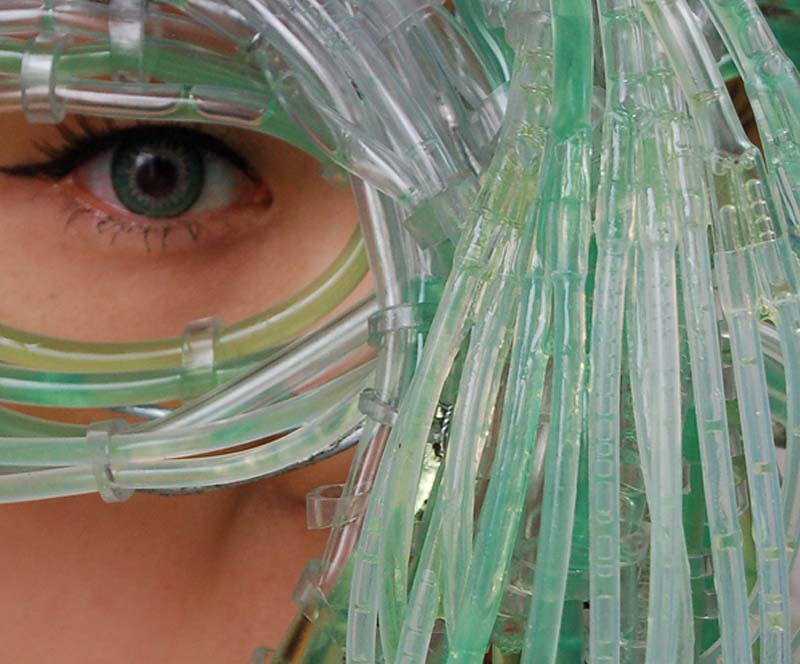
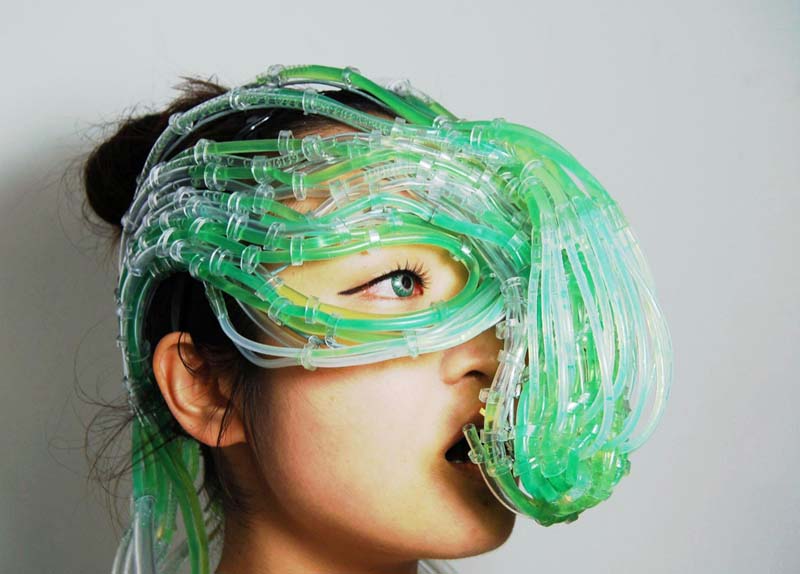
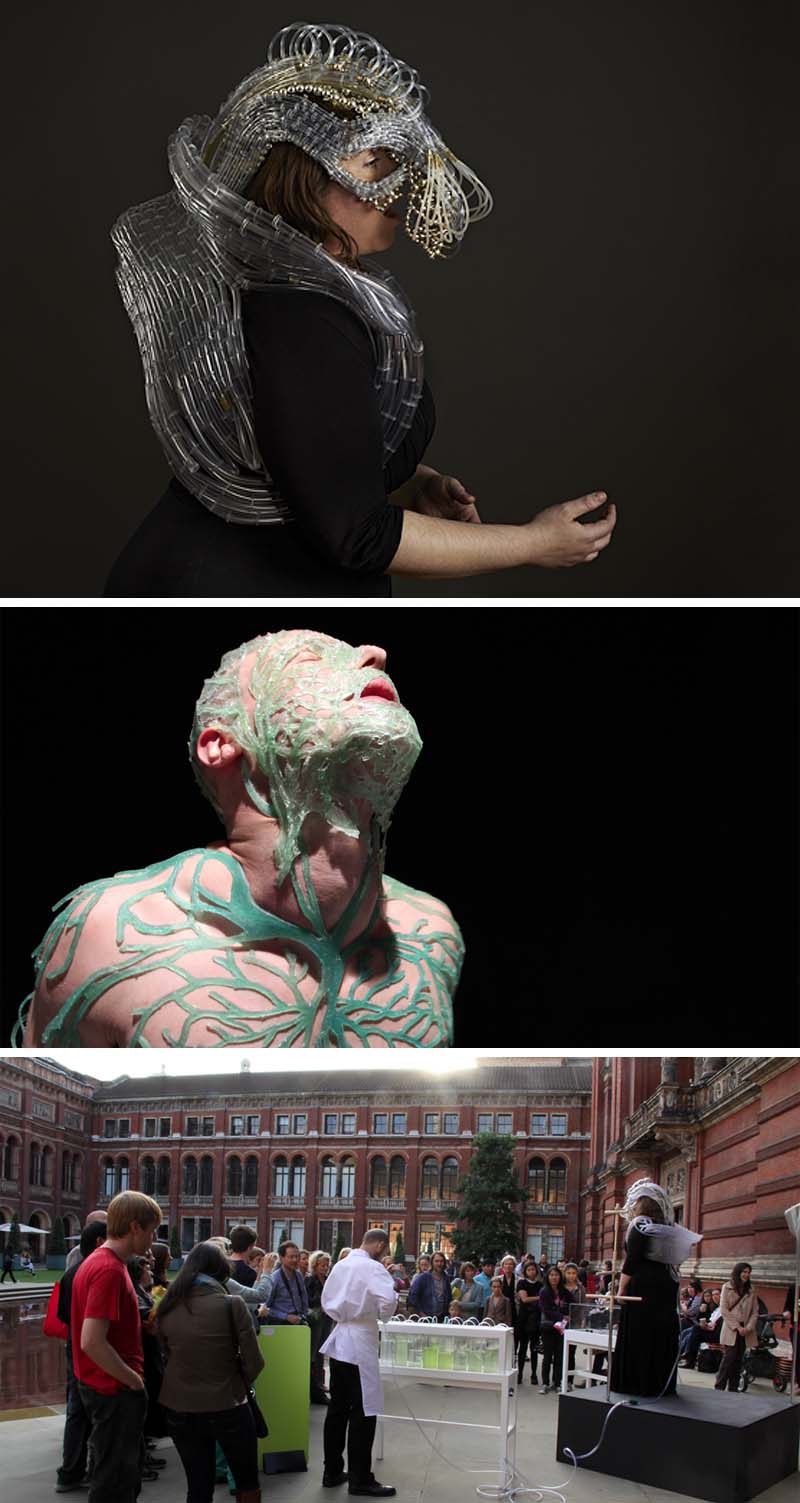
Will humans be compared to lichen, sea slugs and salamanders in the future? With the future in mind, U.K.-based designers Michiko Nitta and Michael Burton study and design alternative ways to fuel the body. Algaculture offers a symbiotic relationship between humans and algae. It proposes humans to be semi-photosynthetic allowing us to gain food from light, the way plants do and, apparently, lichen, sea slugs and salamanders. Burton and Nitta have come up with an Algaculture Symbiosis Suit enabling the mutually beneficial relationship with algae to occur. Last September, one of these suits was used in The Algae Opera at the V&A in London. An opera singer sang using her large lung capacity to produce high-quality algae-product. The photosynthetic plant-like organisms fed on the carbon dioxide from the singer’s breath, creating a sample of the future food source. The audience was not only invited to appreciate her music, but also to savor her unique blend of algae. If you think this sounds unappealing, think again; Burton & Nitta’s Republic of Salivation is much harder to swallow.

via DesignSaint-Etienne

Attendant: Urinal-Turned-Sandwich-Shop

London cafe, Attendant, turns old urinal into sandwich shop, repurposing, upcycling, Food, CoolLondon cafe, Attendant, turns old urinal into sandwich shop, repurposing, upcycling, Food, CoolLondon cafe, Attendant, turns old urinal into sandwich shop, repurposing, upcycling, Food, CoolClick to enlarge

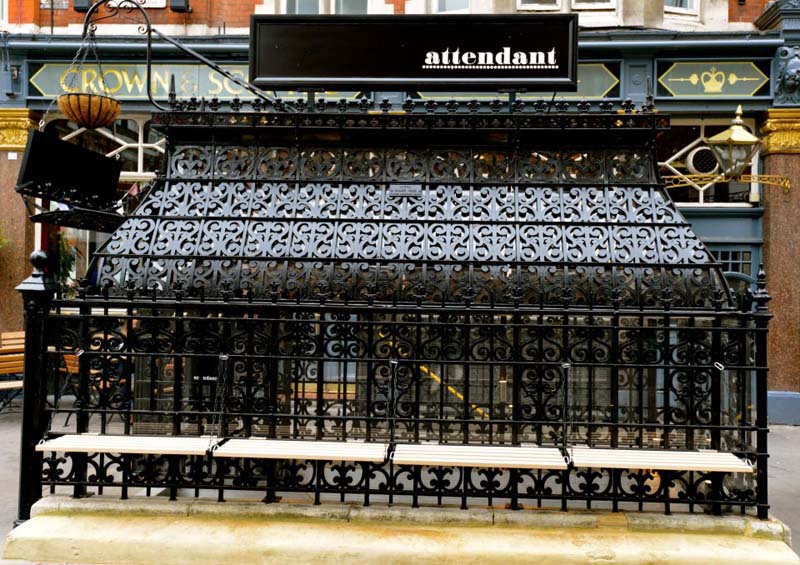
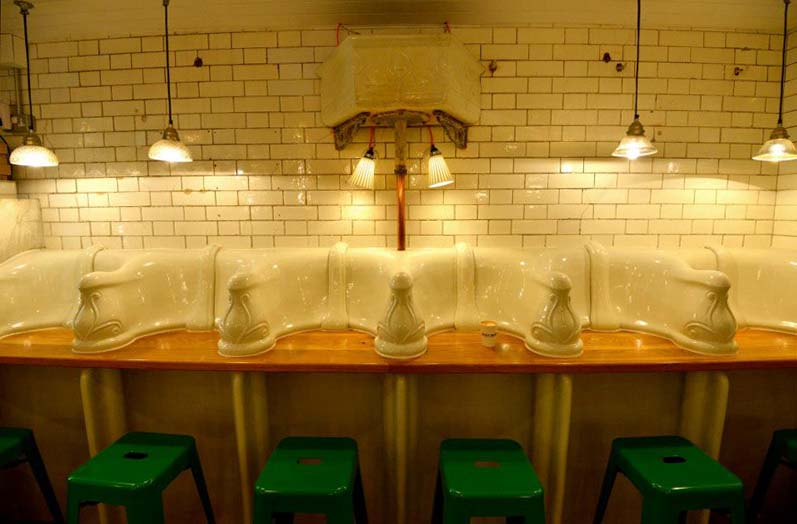
I’ve heard of sandwich shops with cool bathrooms (i.e. the now defunct Bar 89) but a bathroom-turned-sandwich shop? More specifically, an 1890s men’s urinal in London. That’s what partners Peter Tomlinson and Ben Russell did with their new cafe Attendant. After removing 12 layers of paint dating back to 1890 from the wrought iron entrance, cleaning up the stairs, and removing just a single wall from the downstairs space (see the before photos above), as well as investing $150,000 in the renovation including polishing up the urinals and inserting a wooden bar connecting them all, Attendant was born, with the kitchen taking over the old Attendant’s office space, hence the name. Definitely original, if a little strange.

Photos: Attendant’s facebook

via huffington post

Windchimes: Reinventing NYC Payphones

NYC Digital, Reinventing Payphones Challenge, Windchimes, environmental sensor stationsNYC Digital, Reinventing Payphones Challenge, Windchimes, environmental sensor stationsNYC Digital, Reinventing Payphones Challenge, Windchimes, environmental sensor stations

Click to enlarge

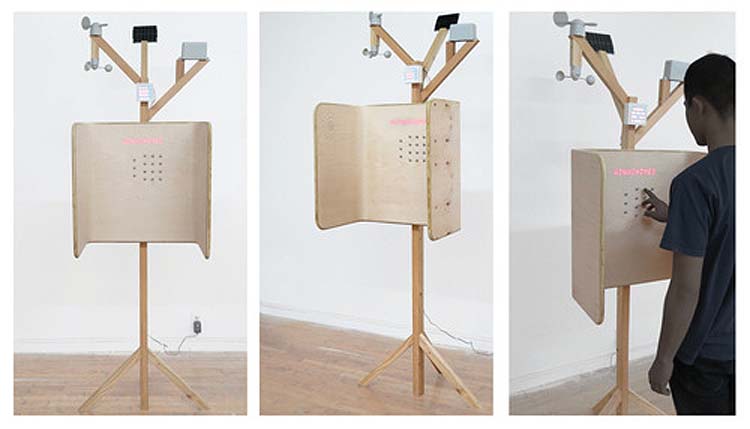
A few months back NYC launched a Reinvent Payphones Challenge for ideas on how to upgrade and/or replace the existing 11,000+ payphones around the city. Among the six finalists is Windchimes a distributed sensor network providing real-time and hyper-local records of the city’s rain levels, pollution and other environmental conditions. Created by a group of students and recent grads from Parsons, NYU-ITP and Cooper Union, the goal behind Windchimes is to empower the city with data which has never been readily available before. Scientists, city officials, urban farmers, techies, educators and the general public would have open access to the information enabling and impacting future environmental legislation, helping us work towards building a more sustainable city.

Why are we voting for Windchimes, besides the fact that we know one of the students on the team? Well, Windchimes is the only project with an actual functioning prototype, proving that it works and that the engineering has been tested and worked out. Windchimes could be deployed today; simply plug it into a telephone jack and watch as it instantly collects data and sends it to a database on the Internet. Windchimes is cost-effective with an estimated cost of $100 to $200 per unit and uses the existing payphone structures throughout the city, plus being energy-efficient as well.

Take a look at all the projects here (you may have to ‘like’ the group to view and vote) and vote for your favorite, though we hope you’ll consider Windchimes!

Oh, and here’s a video:

Pendulum Choir: Cod.Act

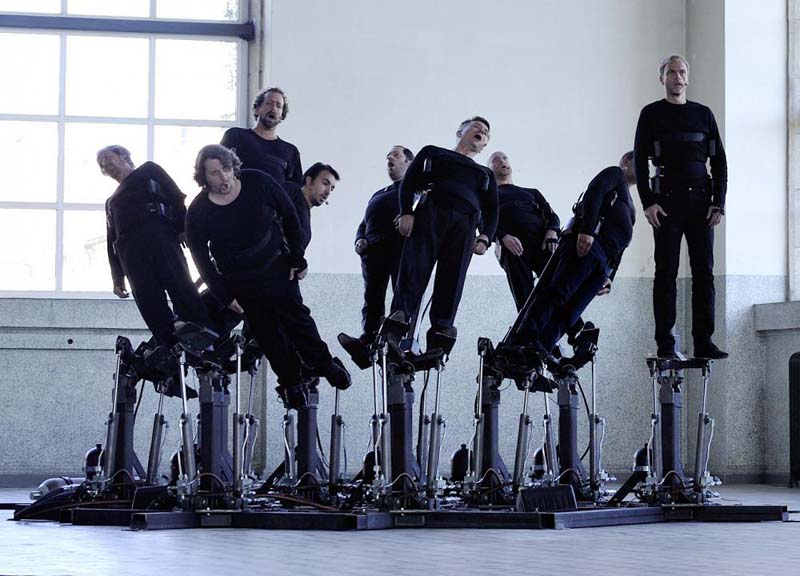
Human Pendulum, mechanical installation that moves singers as they sing, Pendulum Choir, Cod.ActHuman Pendulum, mechanical installation that moves singers as they sing, Pendulum Choir, Cod.ActHuman Pendulum, mechanical installation that moves singers as they sing, Pendulum Choir, Cod.Act
Click to enlarge

Swiss artists André and Michel Décosterd who make up Cod.Act combine their talents of music composition and architecture in their artistic performance and interactive installations. Their devices translate physical movement into sound.

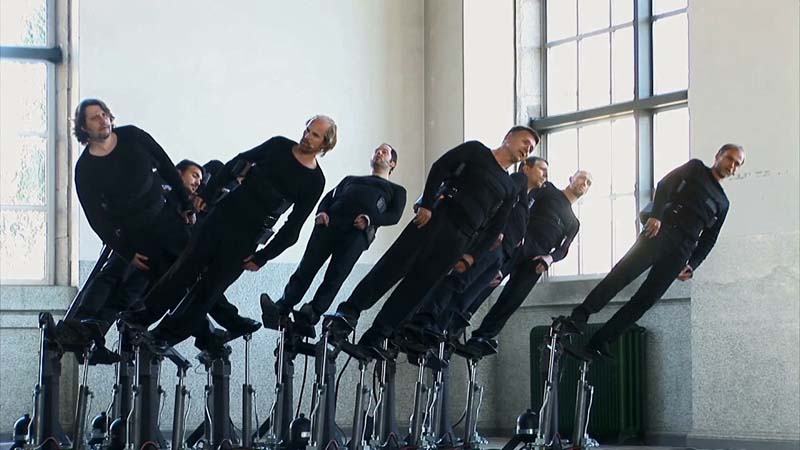
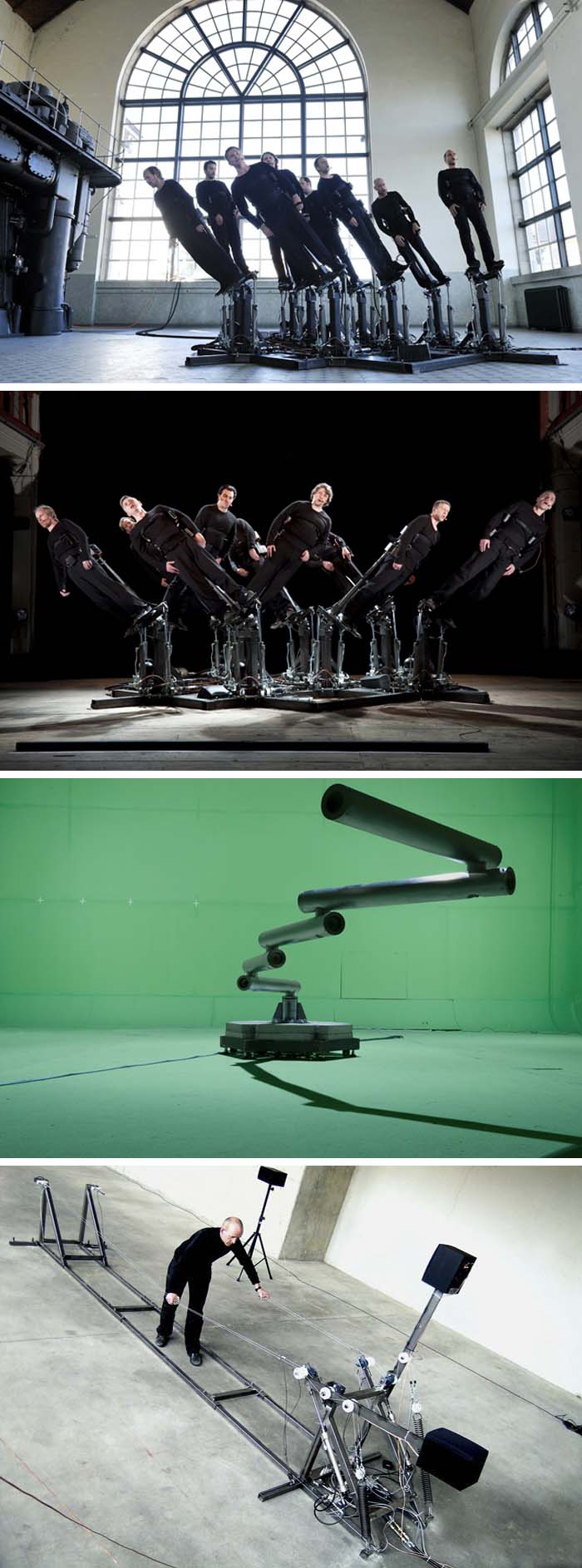
Their Pendulum Choir is probably the most surprising. A choir of nine men is harnessed onto hydraulic jacks that react to their voices. The swinging and rotating singers seem to hang by their toes while leaning at what look to be close to 45-degree angles, coming very close to each other yet designed to never collide. Kind of zany, funny, and at the same time a little creepy.

Cod.Act have many other creations including the Cycloid-E—a pendulum of metallic tubes equipped with sound sources and with measuring instruments capable of making them resonate according to their rotations—and the Ex-Pharao, a mechanical apparatus composed of cables and hydraulic levers that allows the visitor to modify an opera by Schoenberg in real time. Much more to see on their site.

via spoon & tamago

Hamer Hall: ARM Architecture

Contemporary Australian Architecture, Hamer Hall, ARM architects, Melbourne, concert hallContemporary Australian Architecture, Hamer Hall, ARM architects, Melbourne, concert hallContemporary Australian Architecture, Hamer Hall, ARM architects, Melbourne, concert hallContemporary Australian Architecture, Hamer Hall, ARM architects, Melbourne, concert hallClick to enlarge

Many of ARM Architects‘ structures (previously here and here), have unconventional lines and a surreal quality, breaking beyond the boundaries of traditional architecture, and the recently completed Hamer Hall in Melbourne is no exception. ARM designed the redevelopment of the concert hall integrating it with new public spaces and the riverfront. They retained some of John Turscott’s original interiors but there certainly is a spectacular use of concrete in the redesigned foyer and exterior as well as state of the art acoustics and contemporary theater technology in the main hall. All around, pretty stunning.

Photos: John Gollings and Peter Bennett for ARM; and MarshallDay

Moto Waganari: Real Virtuality

contemporary sculpture, surreal sculpture working with polymide and shadows, virtuality, Lutz Wagner, Moto Waganari, Fictioncontemporary sculpture, surreal sculpture working with polymide and shadows, virtuality, Lutz Wagner, Moto Waganaricontemporary sculpture, surreal sculpture working with polymide and shadows, virtuality, Lutz Wagner, Moto Waganari

Click to enlarge

German artist Moto Waganari, aka Lutz Wagner, creates intricately networked polyamide and wire sculptures that in themselves are quite striking but then takes the three dimensional objects to another level by lighting them and having them interact with their very dramatic two dimensional shadows. The result is somewhat surreal and often surprising revealing a sort of alter ego of the individual figures. And if that’s not interesting enough, Waganari has a website that lets you manipulate these figures, changing their shapes and somehow having them created. He calls it Real Virtuality. Here’s a video with more details:

Photos: Heitsch Gallery & Moto Waganari’s facebook.

via art karlsruhe

PAS House: Pierre-André Senizergues

PAS House, Casa PAS,  Pierre-André Senizergues, Gil Le Bon Delapointe, Francois Perrin, skatepark housePAS House, Casa PAS,  Pierre-André Senizergues, Gil Le Bon Delapointe, Francois Perrin, skatepark housePAS House, Casa PAS,  Pierre-André Senizergues, Gil Le Bon Delapointe, Francois Perrin, skatepark houseClick to enlarge

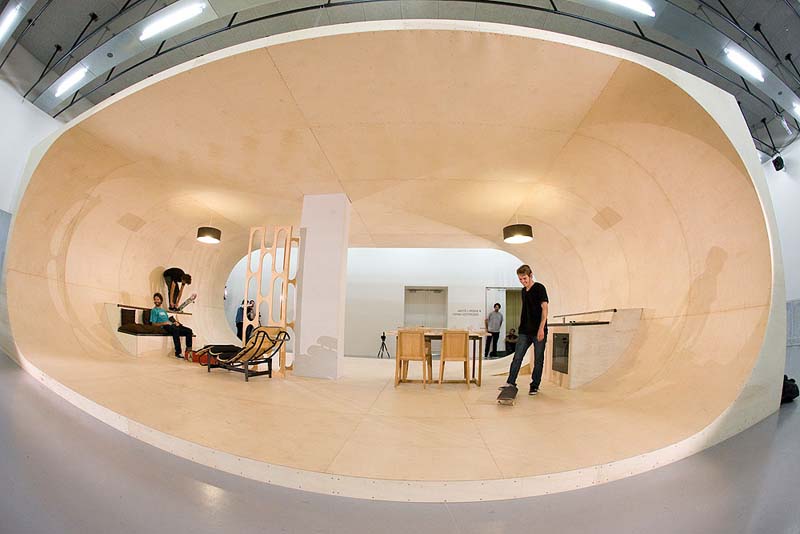
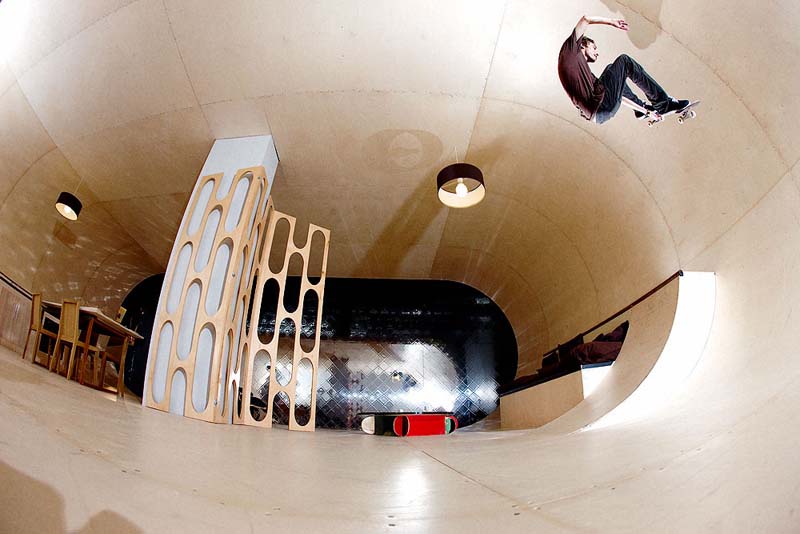
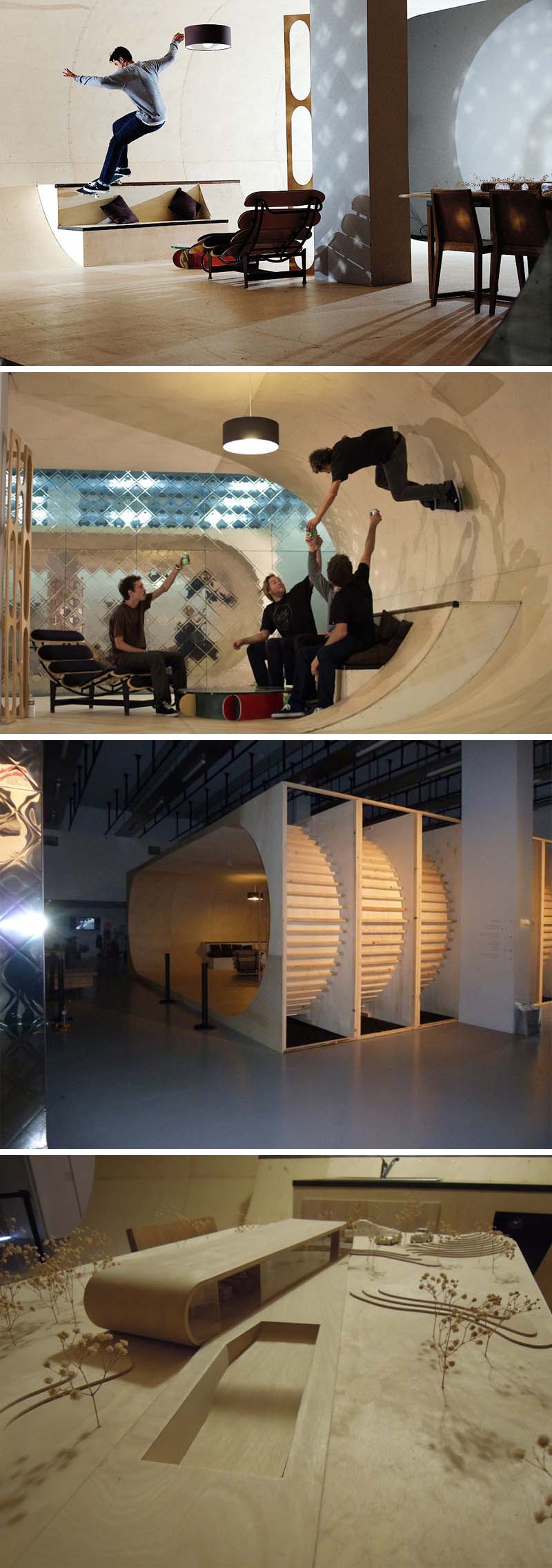
Imagine a home in which you could skateboard to the dining room table, or, for that matter, on it. That’s just what ex world champion pro-skater Pierre-André Senizergues (PAS) turned Sole Technology founder envisioned when he came up with PAS House or Casa PAS. Senizergues created the concept, but Gil Le Bon Delapointe is responsible for the cool design of the full-scale 753 sq. foot version that includes a sofa, bed, and even kitchen appliances. The skateboard ramp-style structure allows the inhabitants to skate or bike on virtually every surfaces. The prototype was made with a Malibu location in mind, overlooking the ocean, with three separate living areas connected by a continuous ribbon-like skateable surface. The execution of the actual house will be overseen by architect François Perrin.

Check out the video:

via plataforma arquitectura via anA

Daniella Mooney: Parquetry

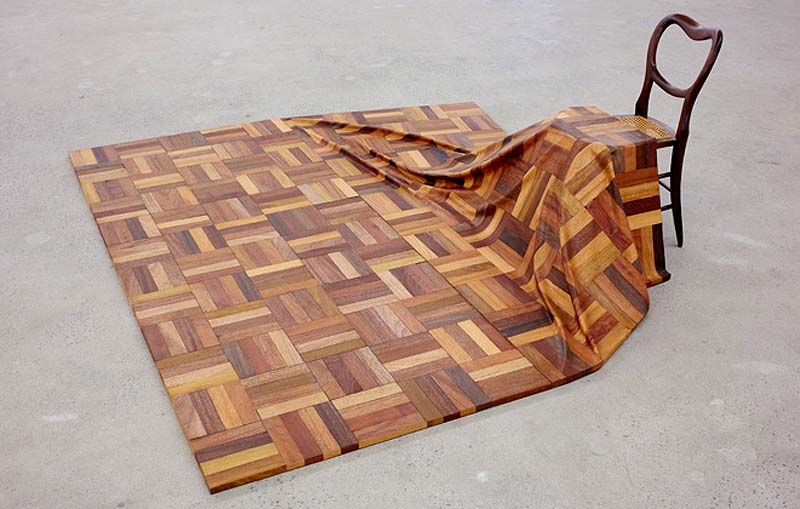
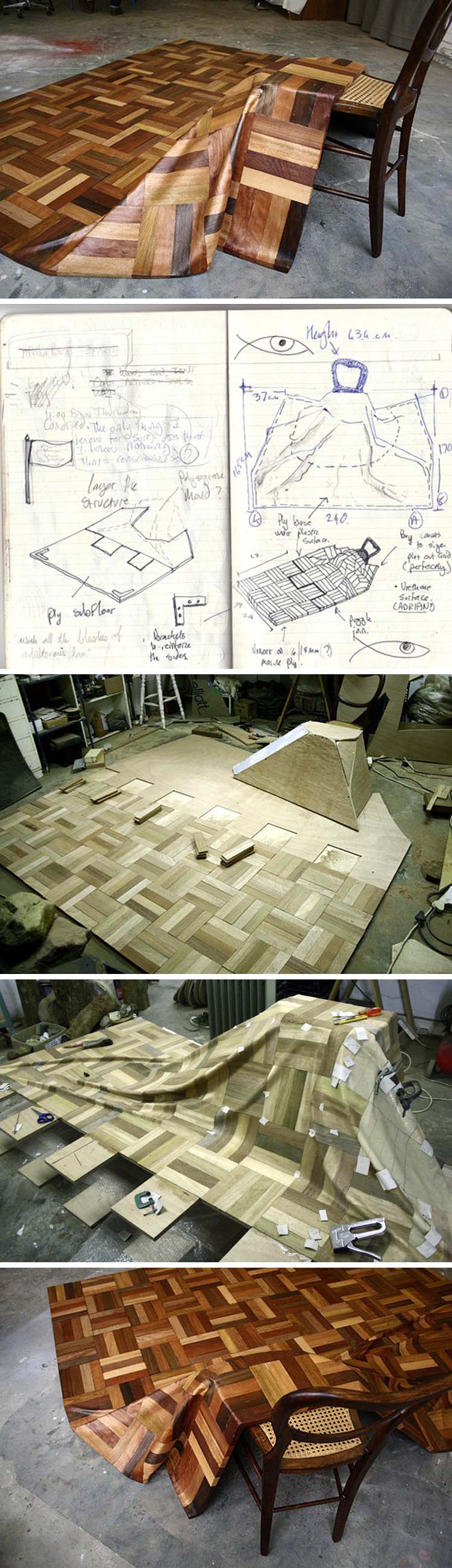
Parquetry, cool wood sculptural installation of a draped parquet floor over a chair by Daniella MooneyParquetry, cool wood sculptural installation of a draped parquet floor over a chair by Daniella MooneyParquetry, cool wood sculptural installation of a draped parquet floor over a chair by Daniella MooneyClick to enlarge

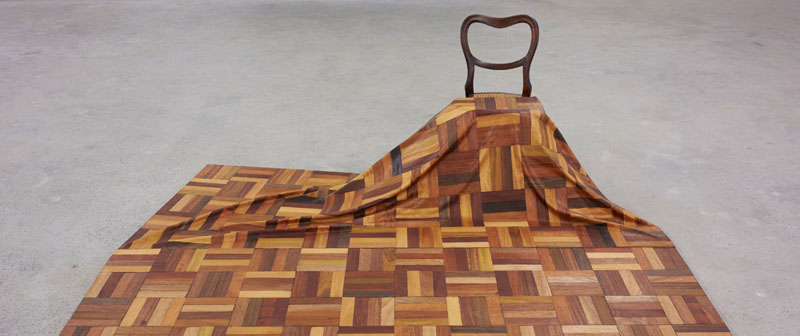
It’s probably hard for Daniella Mooney’s wooden (or is it?) sculpture Parquetry not to illicit some sort of reaction from a viewer, whether it be a smile or an expression of confusion. The South African artist’s sculptural work consists mostly of natural materials such as wood, stone, moss and crystals, with meticulous detail in their crafting as can be seen above in the process photos of Parquetry and in more detail here. Mooney tends to explore themes of alchemy, magic and natural phenomena and I’d say this piece is pretty magical.

via lustik