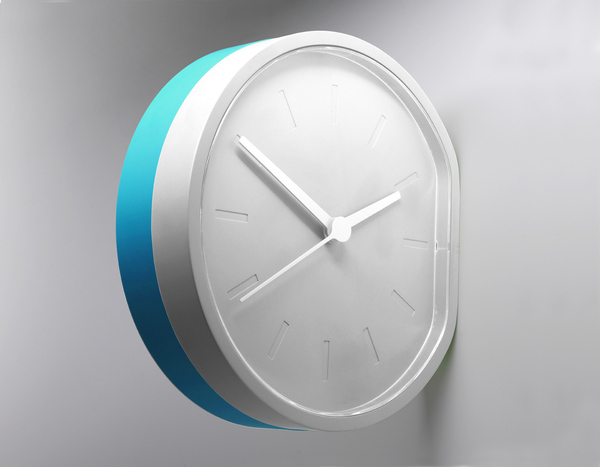
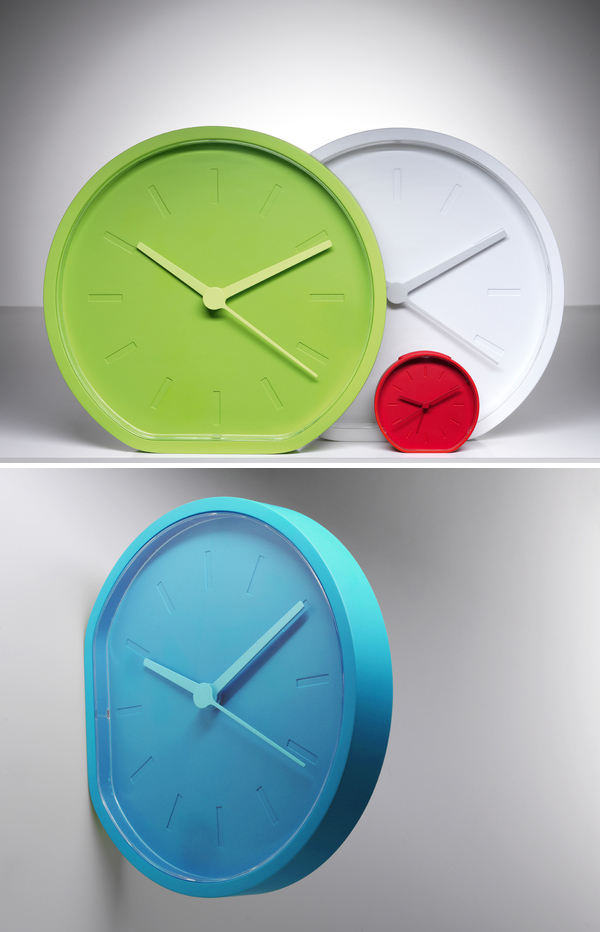
 Really love the smushed side of the Side/Beside Clock designed by Ludovic Roth and Alexandre Dubreuil.
via Muuuz
Really love the smushed side of the Side/Beside Clock designed by Ludovic Roth and Alexandre Dubreuil.
via Muuuz
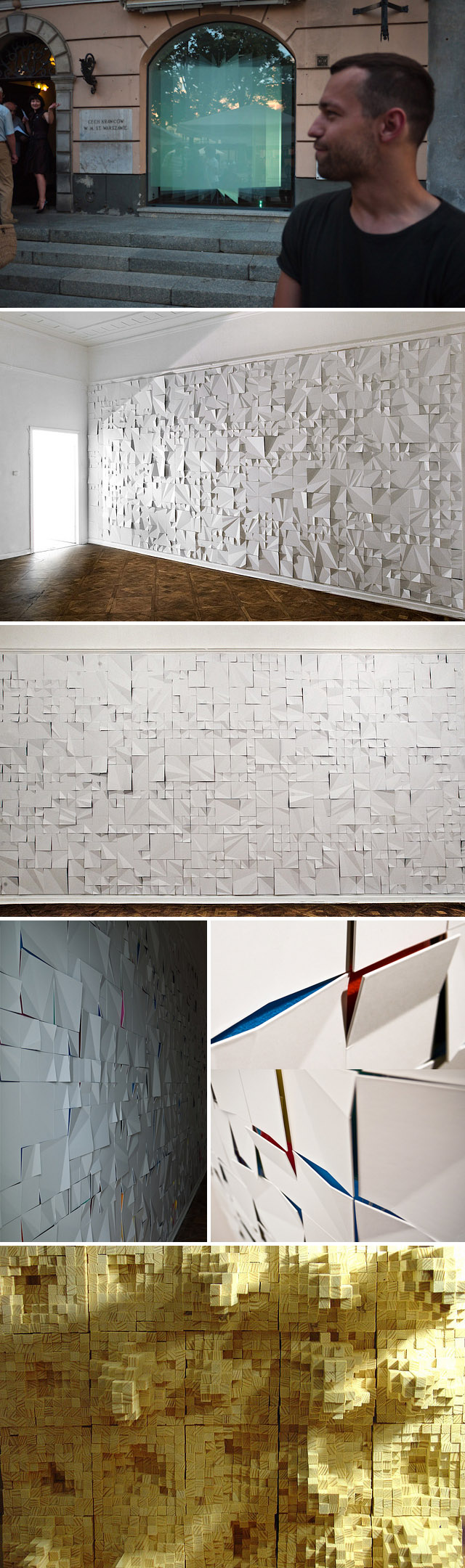
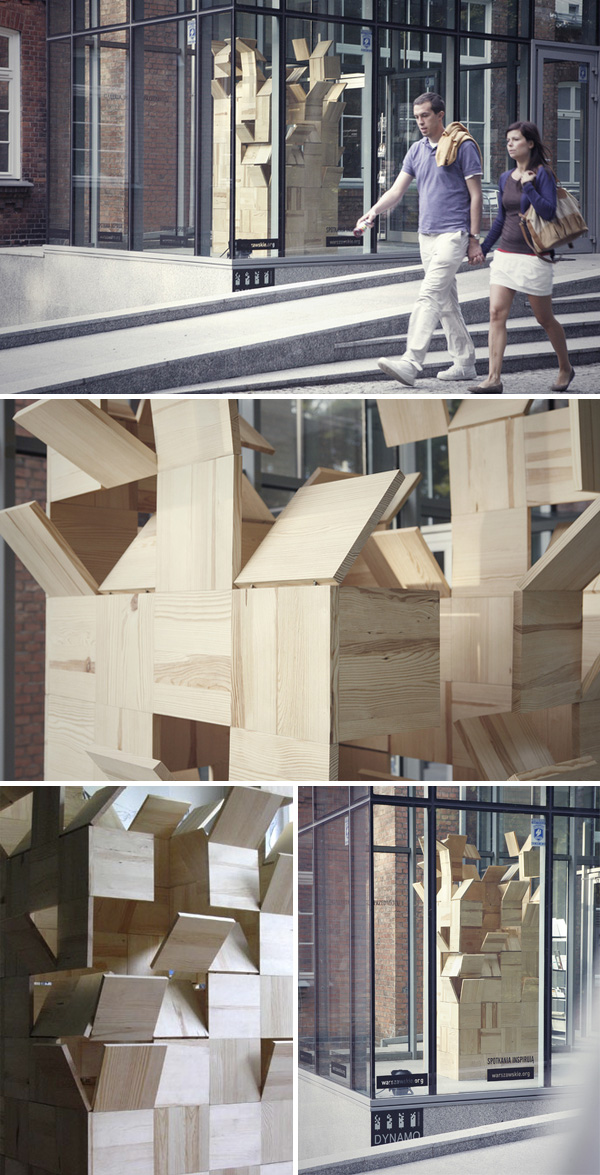 Jerzy Goliszewski is a Polish artist living and working in Warsaw. His body of work is comprised of installations, paintings, drawings and graphics. His focus is on making complex structures using simple and natural materials.
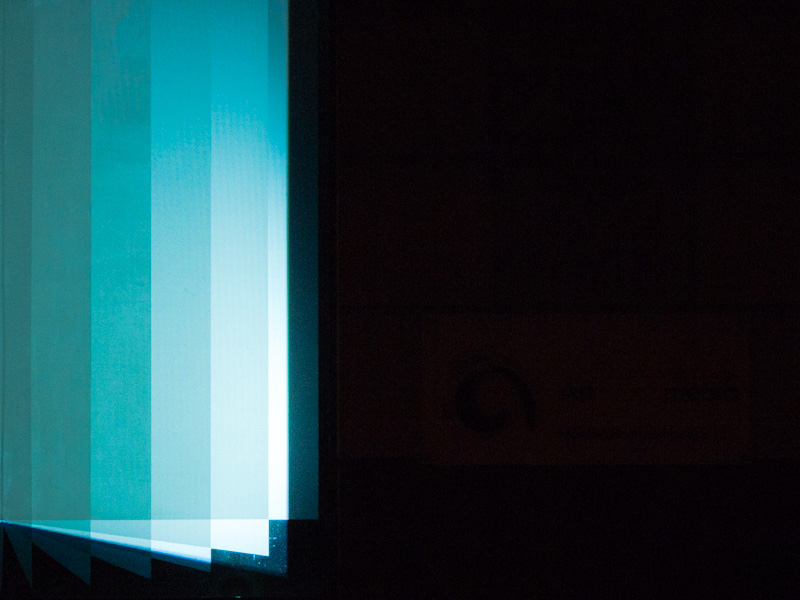
From top to bottom: We’re Going Out, Jerzy Goliszewski’s newest work made for the closing of a gallery in Warsaw. Using simple means (semi-transparent vinyl and rear projection) Goliszewski created this revolving door style, computerized-looking effect without a computer. To see it in action watch the video.The photo that follows is of the artist in front of the gallery with the artwork in the window. Kai, another installation, takes its cue from the classic fairy tale “The Snow Queen.” Kai was inspired by structures, such as the crumbling sheet of ice, the cracked ground and the cracked mirror which broke into pieces distorting the world, in the story. Next image down is from Lac Bleu 02, a wooden installation made of thousands of bits of wood and, lastly, Dynamo, another wooden installation representing force and power in its name and at the same time the block’s transparency removes the stability and exposes its fragility like a house of cards.
You can see more of Jerzy Goliszewski’s work on his website, as well as his flickr set of installations.
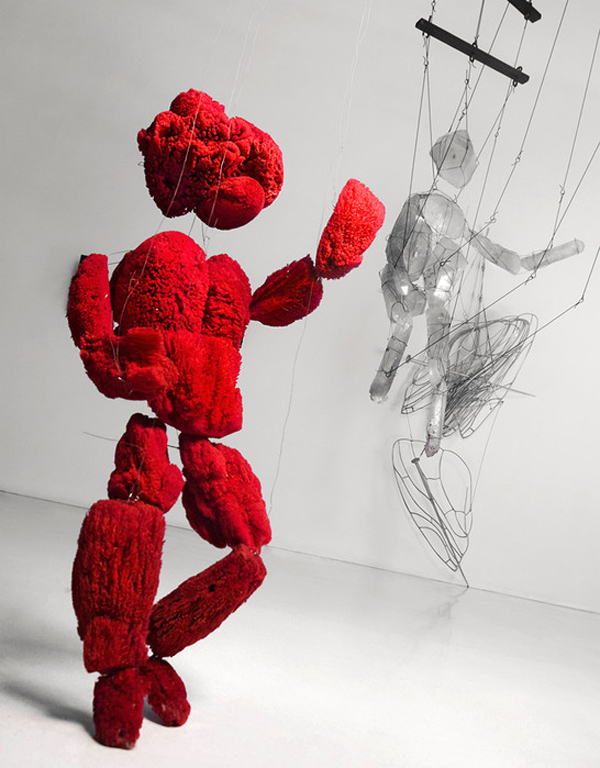

 Brazilian artist Tunga, nee Antonio José de Barros Carvalho e Mello Mourao, has been creating sculptures and installations since the 1970s. Currently he has an exhibit called Presolaires at Galerie Daniel Templon in Paris. As part of the exhibit he has produced a series of marionettes made of iron, bottle glass, and crystal – materials often found in Tunga’s work – as well as pearls, sponge and amber. The puppets are offset by a collection of iron containers housing pieces of resin, silicon and steel.
You can see more of Tunga’s work at the gallery’s site.
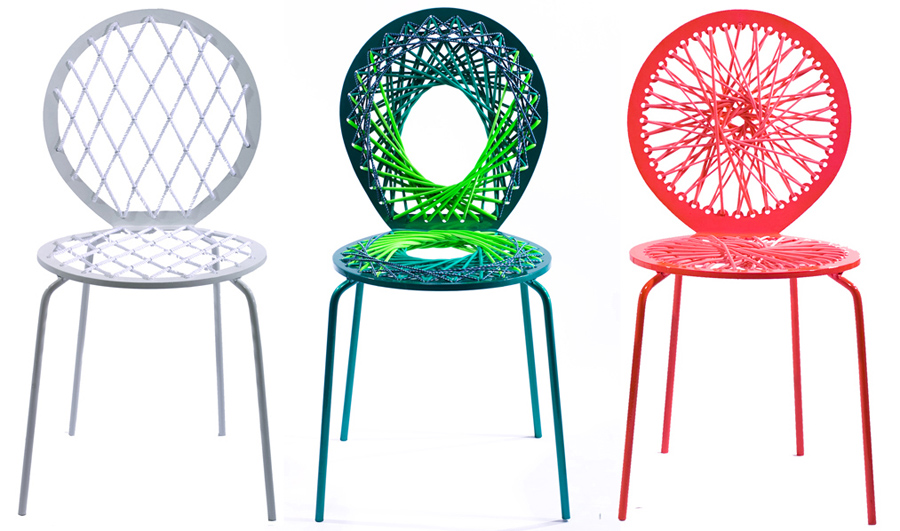
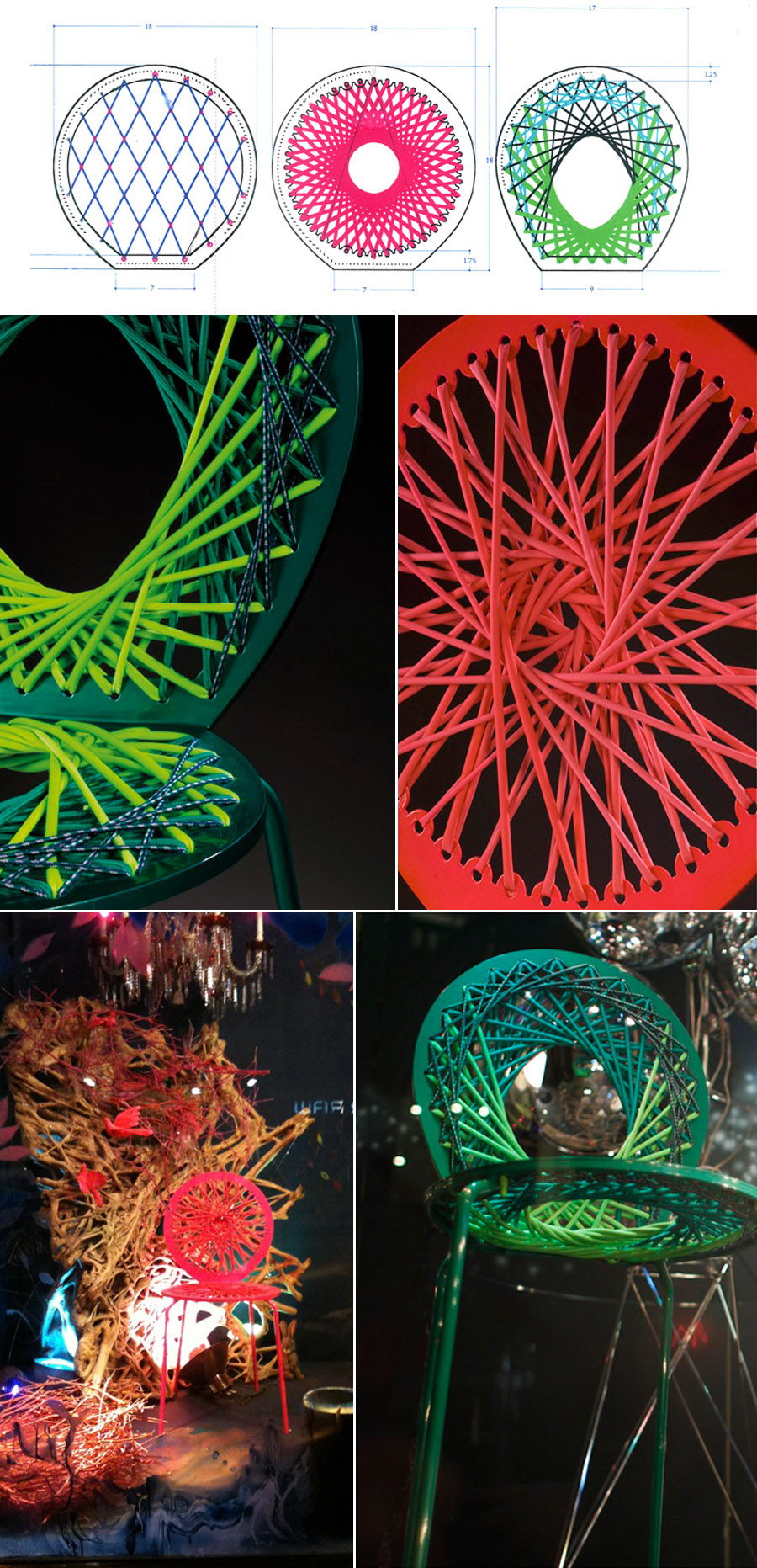 We were reminded of these Stretch Collection chairs by Carnevale Studio the other day when we popped into the Future Perfect. We had seen and liked them last year at the 2010 ICFF.
Inspired by the corset-like pieces of the fashion world, Jessica Carnevale used latex, bungee and rope to create these bright colored (our favorite is the hot pink) and fun chairs.
Available at The Future Perfect and ABC Carpet & Home.
 Click to enlarge
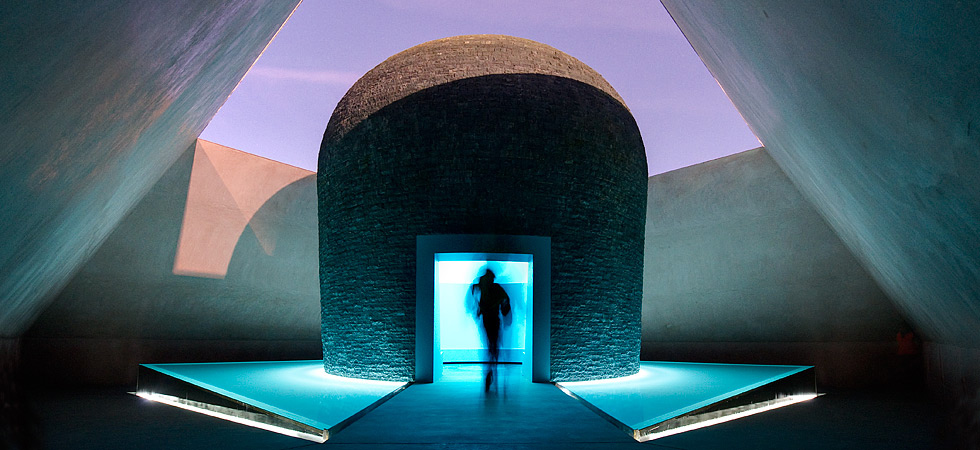
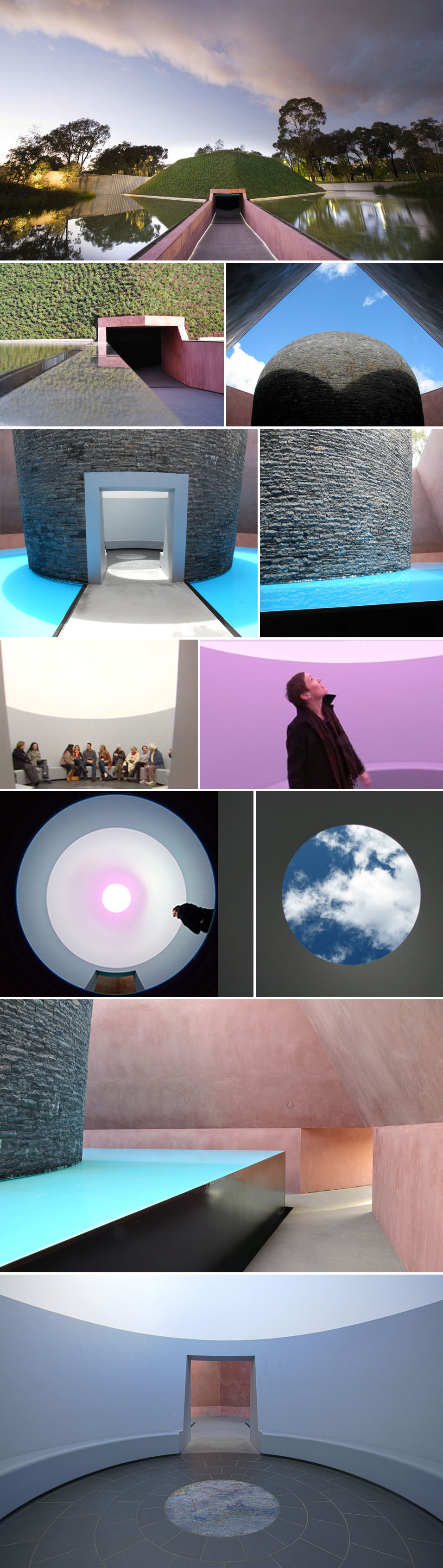
James Turrell’s latest Skyspace, Within Without at the National Gallery of Australia, is one of his largest and most elaborate so far. The Skyspace is entered via a long walkway towards a grass-covered pyramid surrounded by water. Inside, at the center of the pyramid is a domed structure open to the sky, which in turn is surrounded and highlighted by shimmering turquoise water. As in other of Turrell’s Skyspaces, Within Without is most dramatic at dawn and dusk, when there are more changes in light and movement in the sky which are then intensified within the domed space.
You can read more about the exhibit here and see more photos at screenstreet’s and chaoite’s photostreams.

 Click to enlarge.
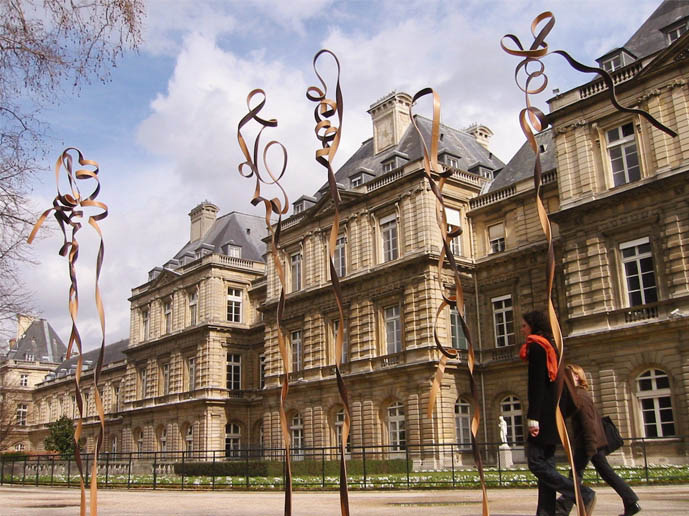
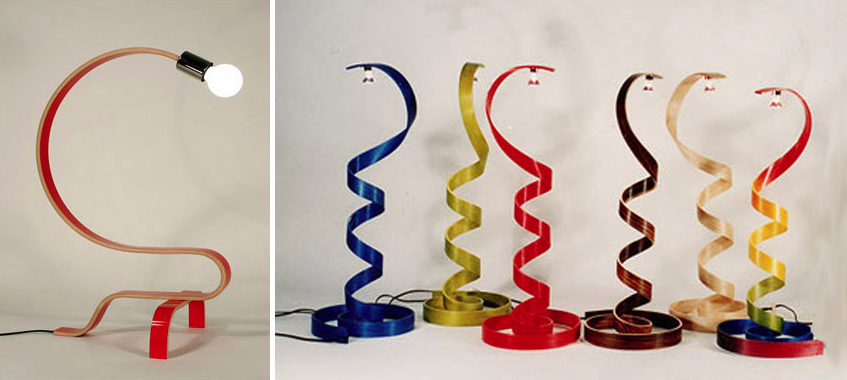
The Spanish artist Jacinto Moros, who we had the good fortune of befriending during his years in NYC, takes wood and makes it dance. His ability to bend and curl the material into beautiful sculptures that, while static, are full of movement, is really amazing.
Though a fan of all of his work, I especially like how his Movimientos Liquidos (Liquid Movements) piece worked in its space, this being the Luxembourg Gardens in Paris. As if abstract flowers or trees fitting in perfectly, yet uniquely, into the park landscape. (Top three images.)
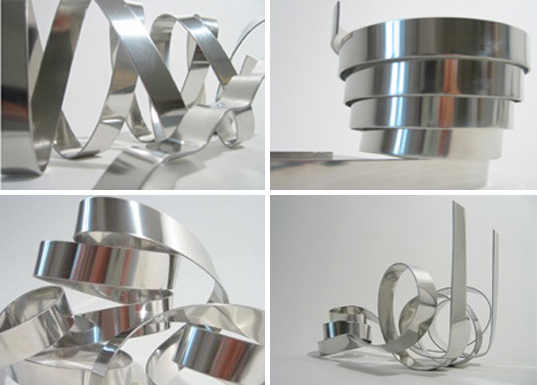
His Architecture Series, designed in wood and cast in stainless steel, is inspired by well-known structures, captured using a continuous line to render the buildings as sculpture. (See stainless steel sculptures in photos, clockwise from top left image are: Guggenheim, Bilbao; Guggenheim, NYC; Reina Sofia, Madrid; Pompidou Centre, Paris.) The series is open-ended with more buildings to follow.
Moros has also designed some products in his curved wood method, including lamps and jewelry.
You can see more of Jacinto Moros’s work on his website, as well as at the Victor Lope Gallery, and OA Madrid online shop.

 Click images to enlarge
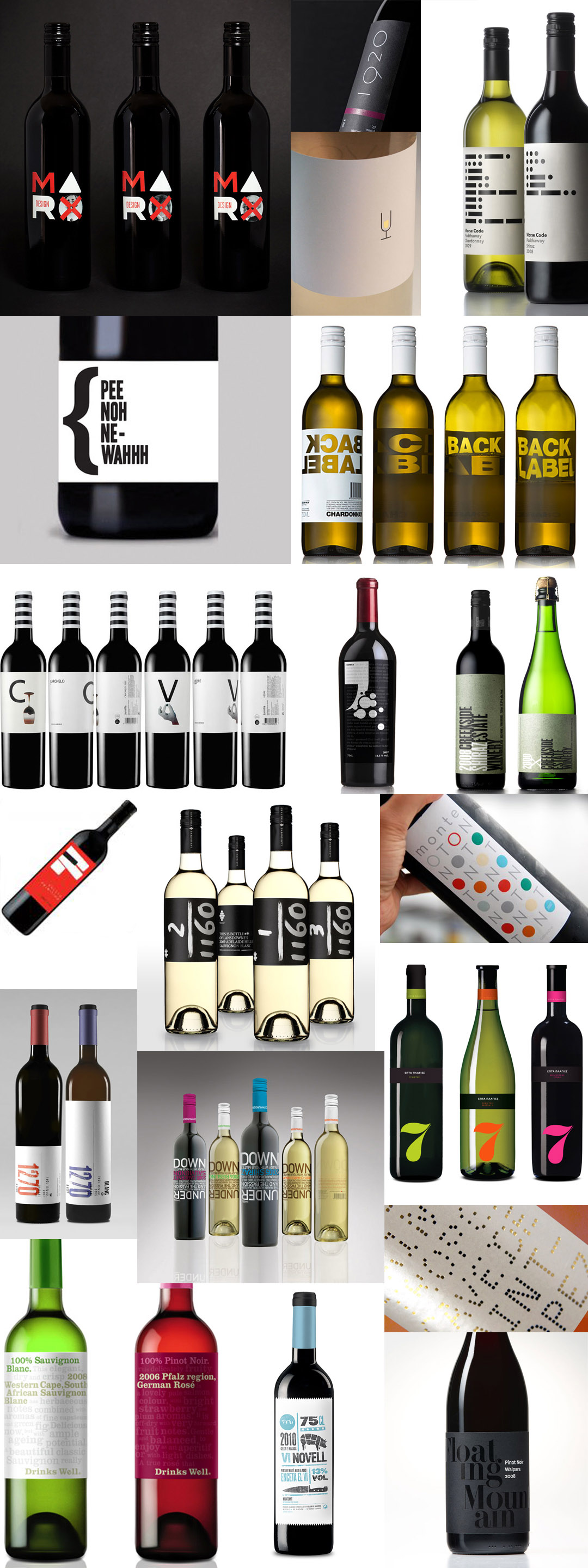
I know it’s not wise, but I am definitely prone to choosing a wine based on its label rather than its vintage, mostly due to ignorance on the subject of fine wine, but also because as a graphic designer I am apt to go for the nicely designed label. And within the nicely designed label category, I am most likely to be lured by a nicely designed, typography-driven label.
Here is a small selection of mostly typographic wine labels that caught my eye on Lovely Package, Graphic Exchange, and, of course, FreshDirect.

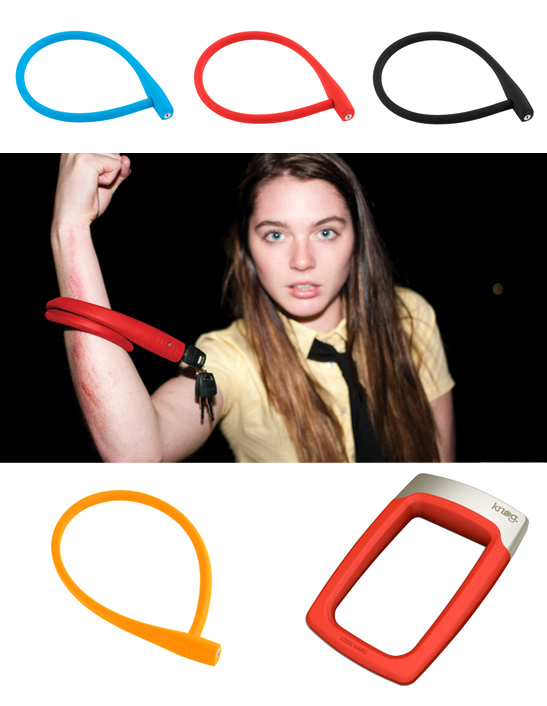 On a walk through Tribeca yesterday afternoon, here in NYC, the three of us wandered over to Adeline Adeline – as their tag line states: “a very nice bicycle shop” – in search of this bicycle helmet. Though we left empty-handed, we fell in love with these Knog bicycle locks. It may be hard to appreciate how nice these colorful silicone locks are from the photos but, trust us, in person, they’re beautiful design objects. There are different thicknesses and prices, but they’re all really nice. The U-lock on the bottom right is due out in November and we did not actually see that one, but I’m liking the look of it on their site.
Knog is an Australian company that sells all kinds of bike accessories. The lights seem to be very popular, based on my google search of Knog. You can check it all out here.

 Click to enlarge
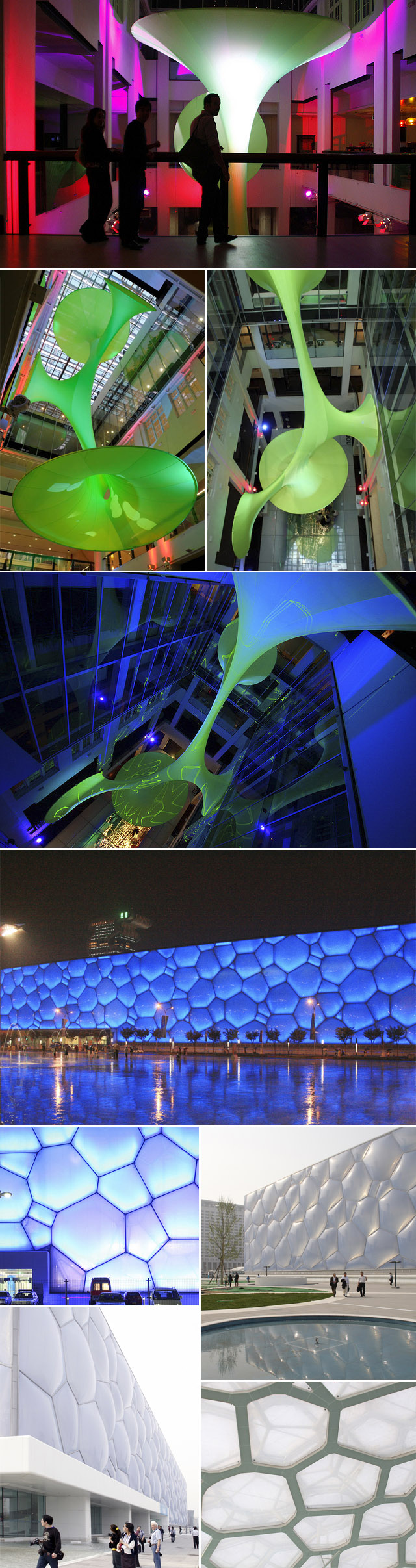
With its two main offices in Sydney and Stuttgart, LAVA – Laboratory for Visionary Architecture – functions as a think tank generating inventive architecture that “bridges the gap between the dream and the real world.” Founded as recently as 2007 by Chris Bosse and Tobias Wallisser, LAVA has already produced an impressive body of work. Using nontraditional methodologies and advanced technology, LAVA’s structures and city planning are part of a new and cutting edge, as well as sustainable, generation of architecture. Here are just three of their projects:
Top to bottom – The Green Void, a tensile fabric installation in the central atrium of the Sydney Customs House.
The Water Cube or National Aquatics Center in Beijing, originally designed for the 2008 Olympics has since been converted into a water park.
Digital Origami, an installation created in a masterclass taught by Chris Bosse at the University of Technology Sydney. Made from 3500 recycled cardboard molecules of only two different shpaes.
You can see more of LAVA’s amazing work at their website as well as on Chris Bosse’s flickr.
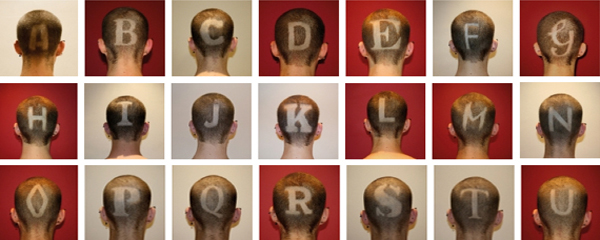
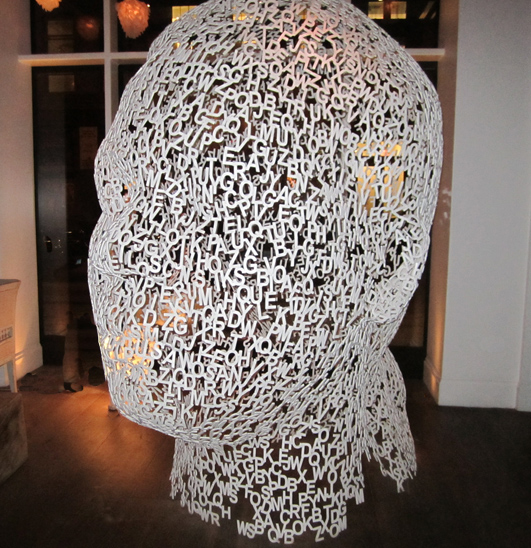
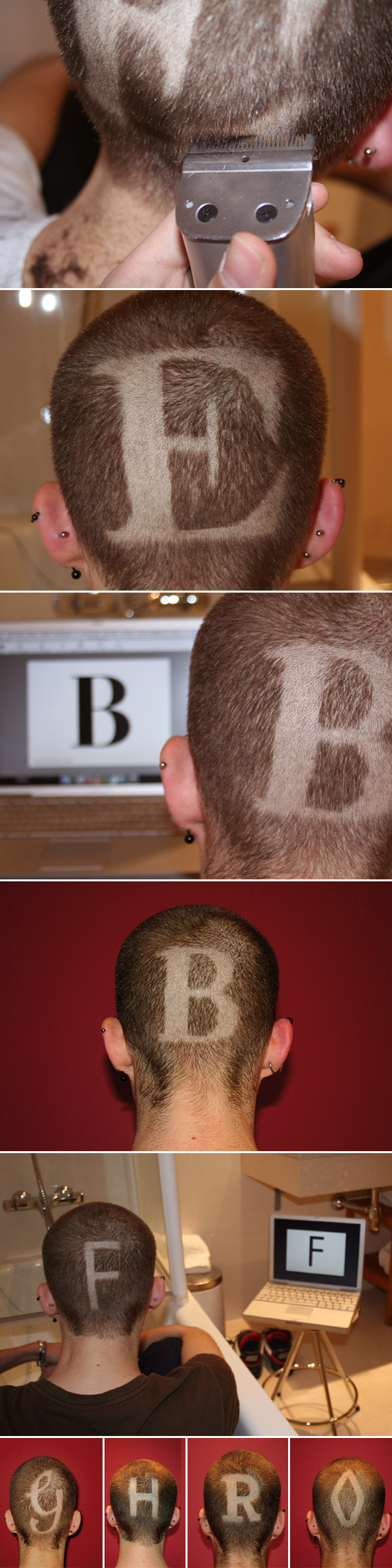 Con la Tipo en la Cabeza is an ongoing project by Jesus A. Nieto (aka Cucho) a Spanish graphic designer currently based in Leeds, England. Literally, Con la Tipo en la Cabeza means With Type in the Head, but the expression probably translates more accurately (if not a perfect fit with the project) as With Type on the Brain.
Cucho inititated the project in July of 2009 as a typographic experiment to pay homage to different typefaces by initial as he discovered them entering the world of design. The only letters left to go? Y, Z and the trickier Ñ.
You can see the Univers ‘U’ in progress in the video below. All the letters are impressively well-rendered, considering the medium, even Mistral!
via Tago
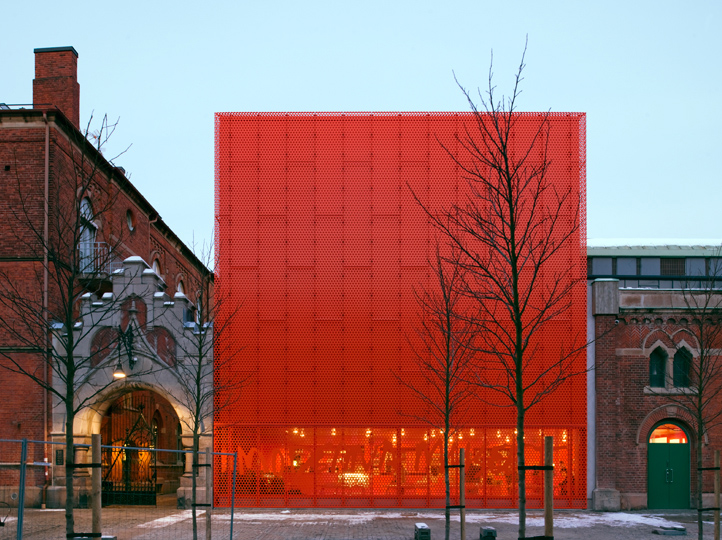
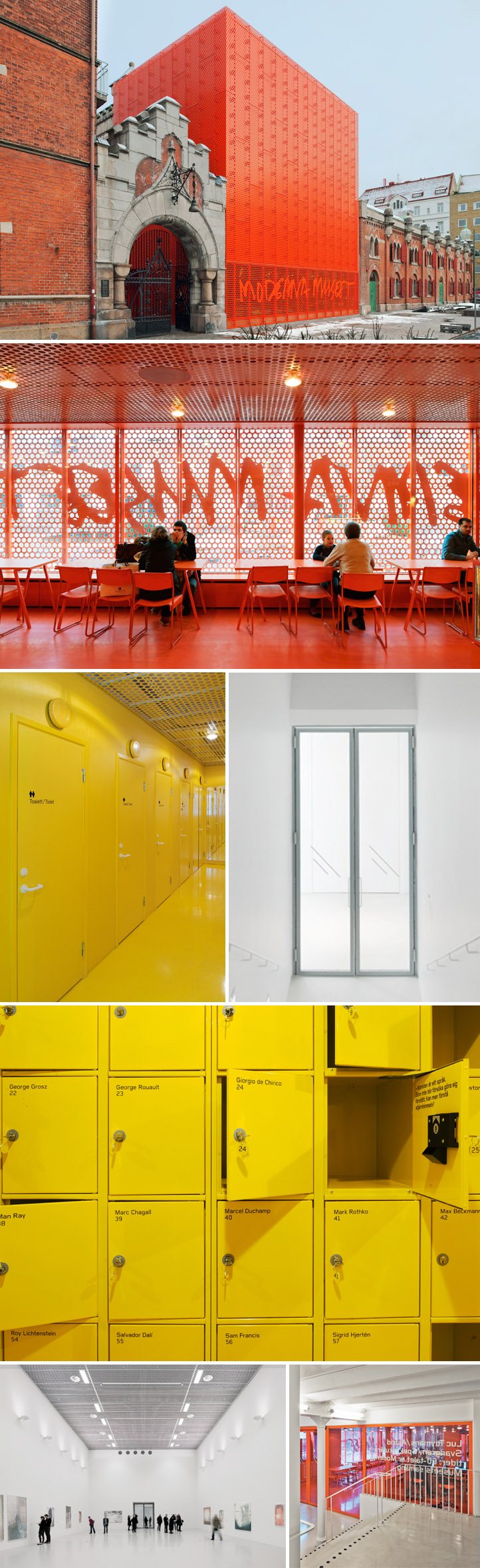
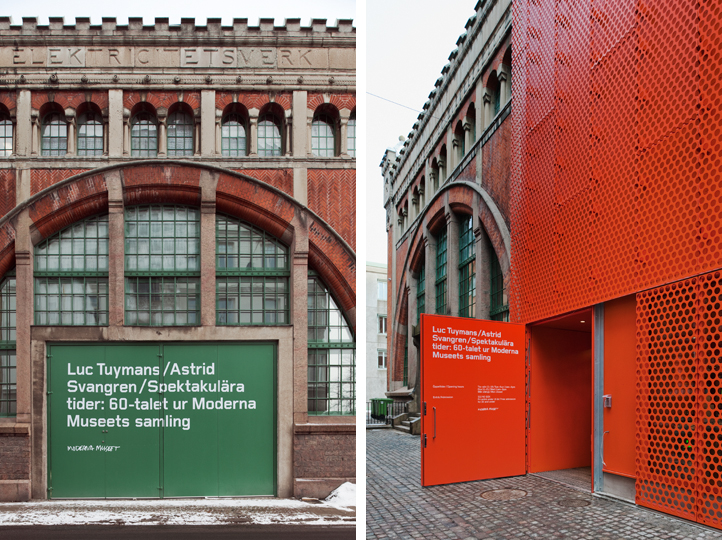 One of the things that I truly enjoy, and gives me a little silly thrill, is seeing new architecture incorporated successfully with old. Coming across photos of the relatively new building for the art museum in Malmö, Sweden, Moderna Museet gave me said thrill.
Designed by Tham & Videgård Arkitekter in collaboration with Henirk Nygren Design and Stockholm Design Lab, the two latter involved in the interior design as well as branding and signage, the bright orange-y red box looks fabulous next to the older, classic brick buildings that seem to be part of the museum as well.
The handwritten logo which works beautifully large across the windows at the base of the box in the same color, is adapted from Robert Rauschenberg’s handwriting and famous signature.
 Click images to enlarge
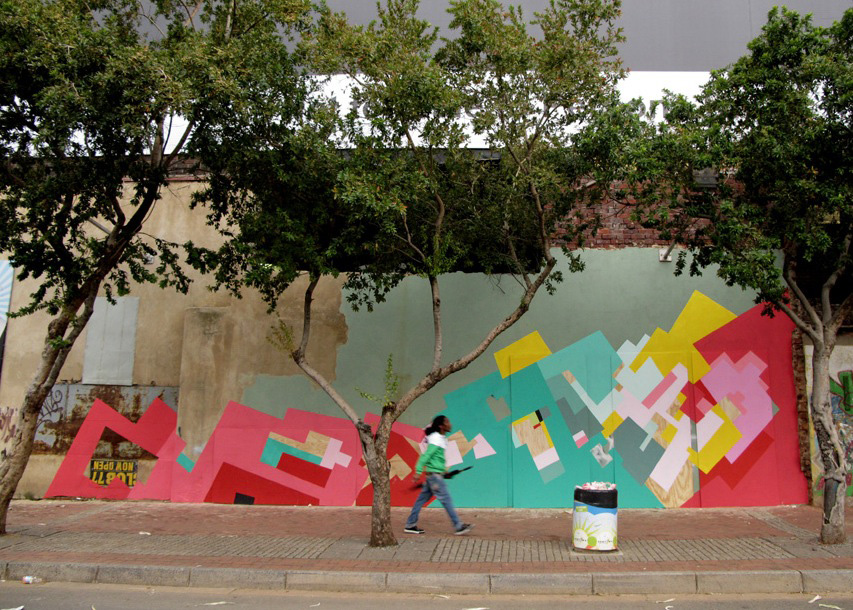
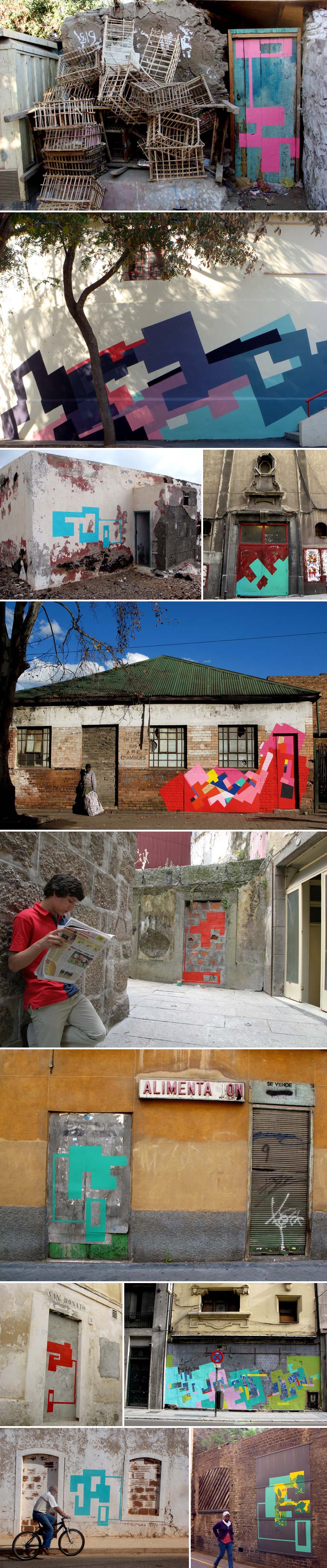
Nuria Mora is a street artist based in Madrid. Not that it should matter, but she is a woman and, as far as I’m concerned, it’s certainly refreshing to come across a female street artist—definitely in the minority.
Colorful and geometric, I imagine coming across any one of her wall murals would brighten one’s day. What I enjoy most about all of these is the contrast of the clean lines on the mostly old or run-down walls they appear on. It’s almost the opposite effect of graffiti way back when the tagging or murals would, many times, deface a newer wall or subway car.
There is plenty more to see on her site.
 Click to enlarge.
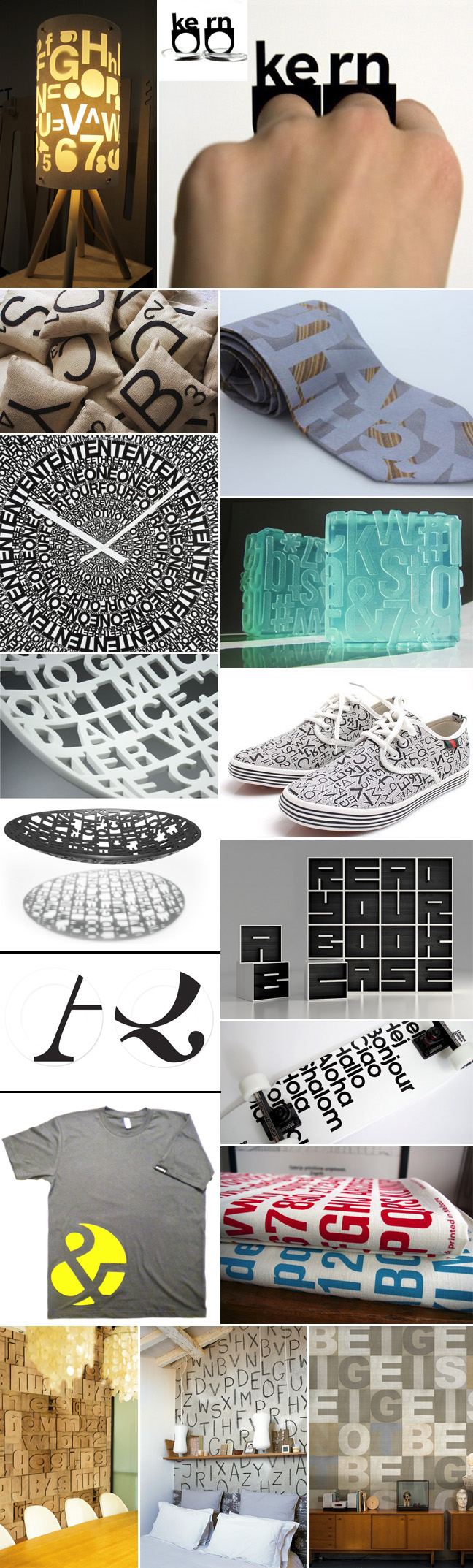
After the first roundup of objects that utilize typography, I’ve come across several more items, so here is a second roundup of typographied objects:
 Click to enlarge
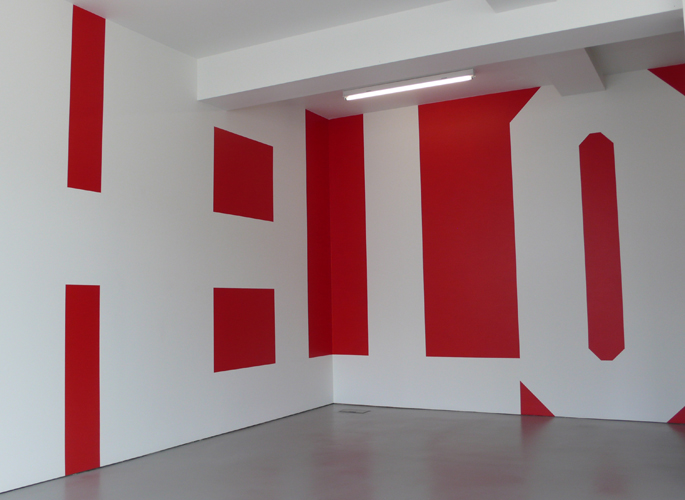
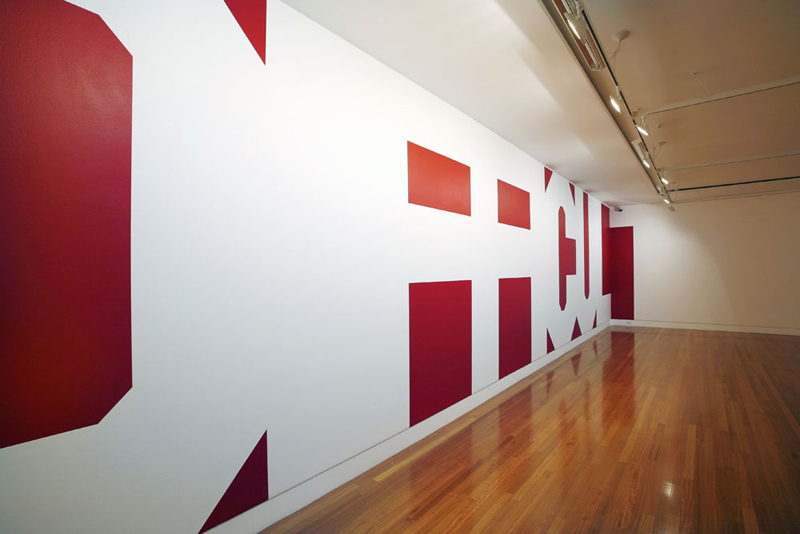
Australian artist Rose Nolan has been painting words onto walls, pennants, banners, and cardboard for 20 years. Her work is playful and oscillates between confident and self-deprecating, as well as bold and humble. Some seem to refer to herself and her reflections on what is art and what it is to be an artist.
Being a fan of type and especially large, bold type on a wall, this work is right up my alley. The red, Constructivist style only adds to its appeal, though I have to admit that the pennants and their humorous statements are also pretty great.

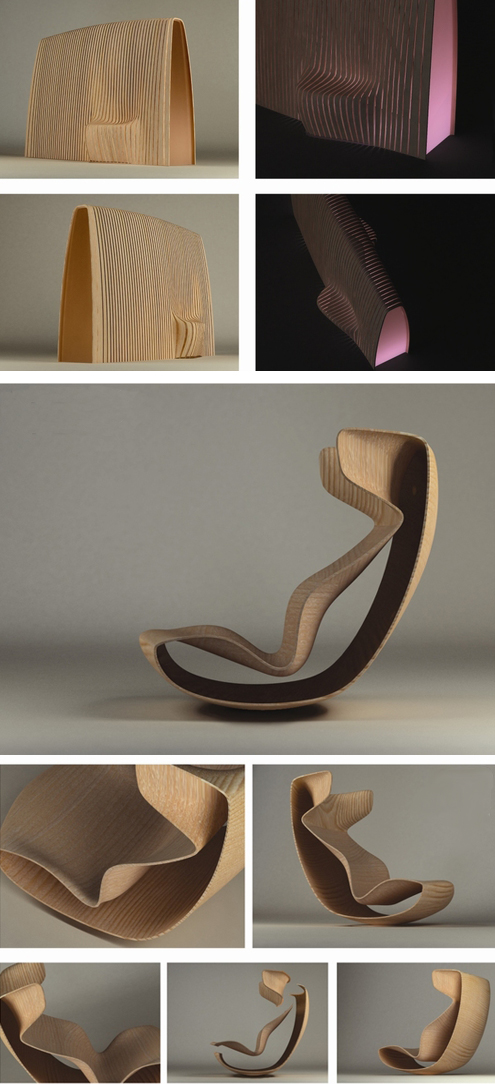 Diego Gutierrez Hermosillo is an industrial designer with several nice pieces in his portfolio. Two of these are the Zebra room divider and the Uno lounge chair. Both designed to be sculpted in wood.
 Click images to enlarge
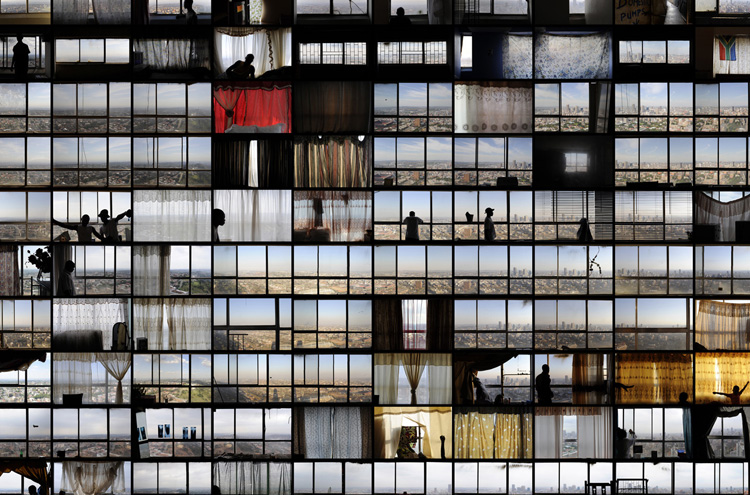
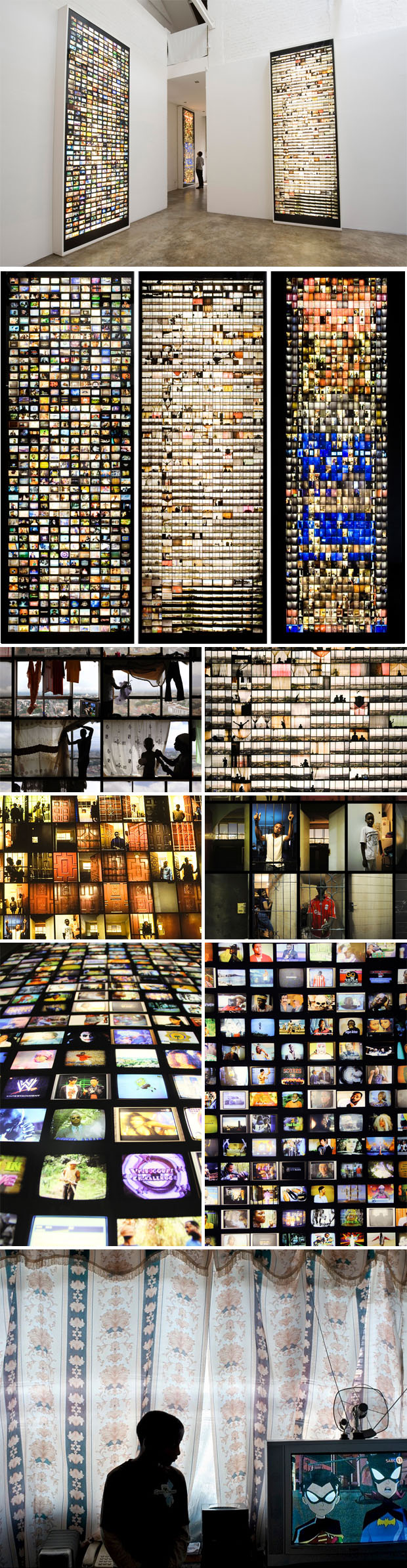
As Wikipedia will tell you, Ponte City is a 54-story cylindrical building, the tallest residential skyscraper in Africa, set in the Hillbrow neighborhood of Johannesburg, South Africa and built in 1975. At the time it was an extremely desirable address due to its views. Starting in the late 80s and into the 90s gang activity in and around the building caused the crime rate to soar in the tower as well as the rest of the neighborhood. Ponte City became symbolic of the crime and urban decay taking over the area.
Enter Mikhael Subotzky and Patrick Waterhouse (finally). Together they collaborated (from 2008-2010) on a series of photographic tableaux in the form of contact sheets on lightboxes, depicting the life at Ponte City titled: Ponte City. The three panels are broken down by theme: doors, windows and TVs. Though I like all three, and the individual photos are all very striking, I find the Windows series particularly interesting and beautiful. Maybe in part because it looks most like a traditional building façade in its light box—which isn’t necessarily important, since the abstraction is interesting—or maybe it’s the openness and the light that I’m drawn to, but also, individually the photos are “windows” into the tenants’ lives, where we can see a bit of the apartment along with personal decor and artifacts.
via Goodman Gallery

 Italian artist Carlo Bernardini has been working with optic fiber since 1996. He creates light sculptures or, more precisely, spatial drawings using optical fibers and in a sense sculpts the darkness, reconfiguring the space with his light architecture.
He currently has an exhibit at MACRO in Rome called The Corner’s Revenge appearing in the elevator shafts of the building, on different floors, in his trademark style of spatial light drawing.
Bernardini’s work has also appeared at the Milan Trienniale, the Naples Quadriennale, as well as at the Palazzo Bertalazone in Torino, and Domaquarèe, Berlin, just to name a few in the past couple of years.
You can see more of Carlo Bernardini’s work at his site, as well as here, and in these two flickr photostreams: here and here.

 Click to enlarge
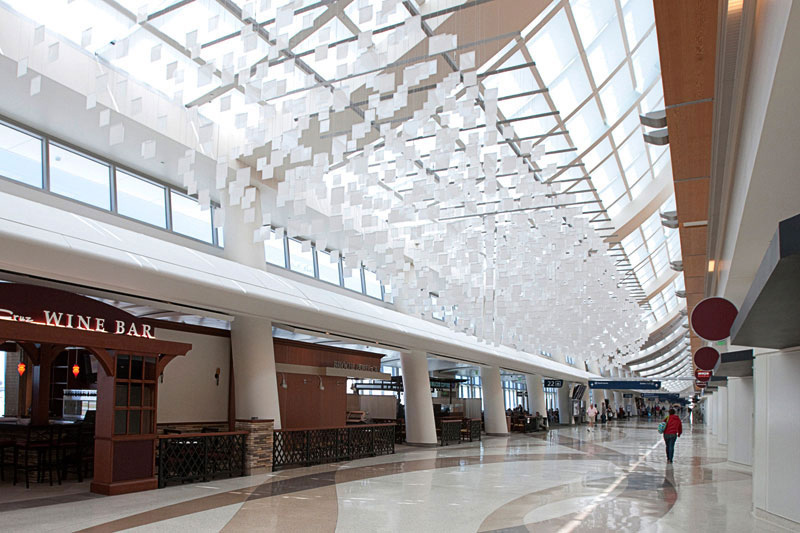
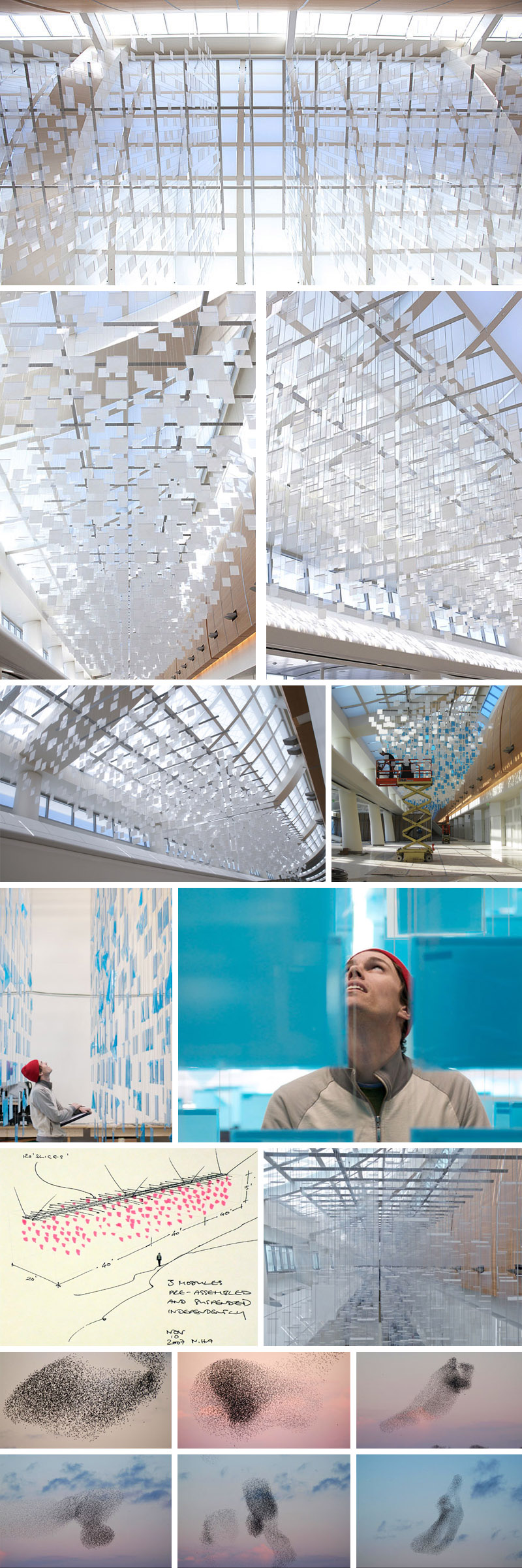
The eCloud is a digital sculpture designed by UeBersee as a permanent installation for the Norman Y. Mineta International Airport in San José, California. The thousands of small square panels of electrically switchable laminated plexiglass act as pixels which imitate the behavior, as well as the volume, of an idealized cloud. The plexiglass (or Smart Glass) has the ability to graduate opacity with the transmission of an electrical charge. The panels are opaque in their neutral state and can become transparent with the charge.
108ft long and 16ft wide, the panels are arranged to simulate a cloud suspended from the ceiling from a tensile structure. The animations that move through the eCloud are based on actual weather data via a live feed of conditions for all airports in the U.S. (see bottom photo.) You can see a video of the eCloud in action below.
 CollabCubed