Tomas Saraceno

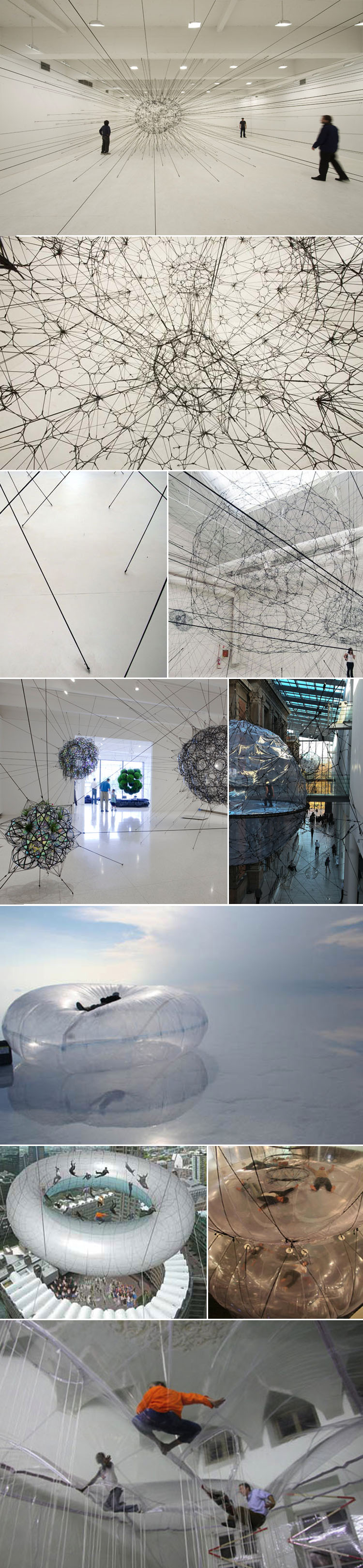
Cool Art InstallationsTomas Saraceno, an Argentinean-born artist living and working in Frankfurt, combines sculpture, science, and installation-based art to create unique spaces. Much of his work is experimenting with solutions for airborne habitation and ecological sustainability, as well as other alternatives for living.

From Andersens Contemporary Gallery website:
…For many years the natural was seen as the antithesis of the constructed, but according to Saraceno we may have to alter this view and understand that whatever is handmade is also a part of nature because we are a part of nature….Saraceno is conceiving objects, images, and installation, in order to communicate and anticipate this possibility. Imagine, living in the sky in a bubble shaped city that floats around. There are no boundaries of place nor nationality…He creates grand scale airborne balloons sometimes with their own eco-system.

Installations from top to bottom and left to right:

14 Billions (Working Title), Elastic black rope and hooks. Photo: Bonniers Konsthall.
(2nd – 4th rows): Galaxies Forming along Filaments, Like Droplets along the Strands of a Spider Web. Photos©Tanya Bonakdar
Installation View
, Walker Art Center.
Installation View
Statens Museum Kunst, Copenhagen.
Transparent Soil and the Gardens of Tomorrow

Airborne photo: don’t know source.
How to Live Together
, Sao Paolo Biennale
Installation View
, Pinksummer Gallery, Genoa.

Saraceno just showed at the arteBA 2011 fair in Buenos Aires last month, and has several upcoming solo exhibitions, including one at the Kemper Museum of Contemporary Art in St. Louis this year and another one in Tokyo in 2012.

More of Tomas Saraceno’s work can be seen here, here, and here.

via arteBA 2011
cartónLAB

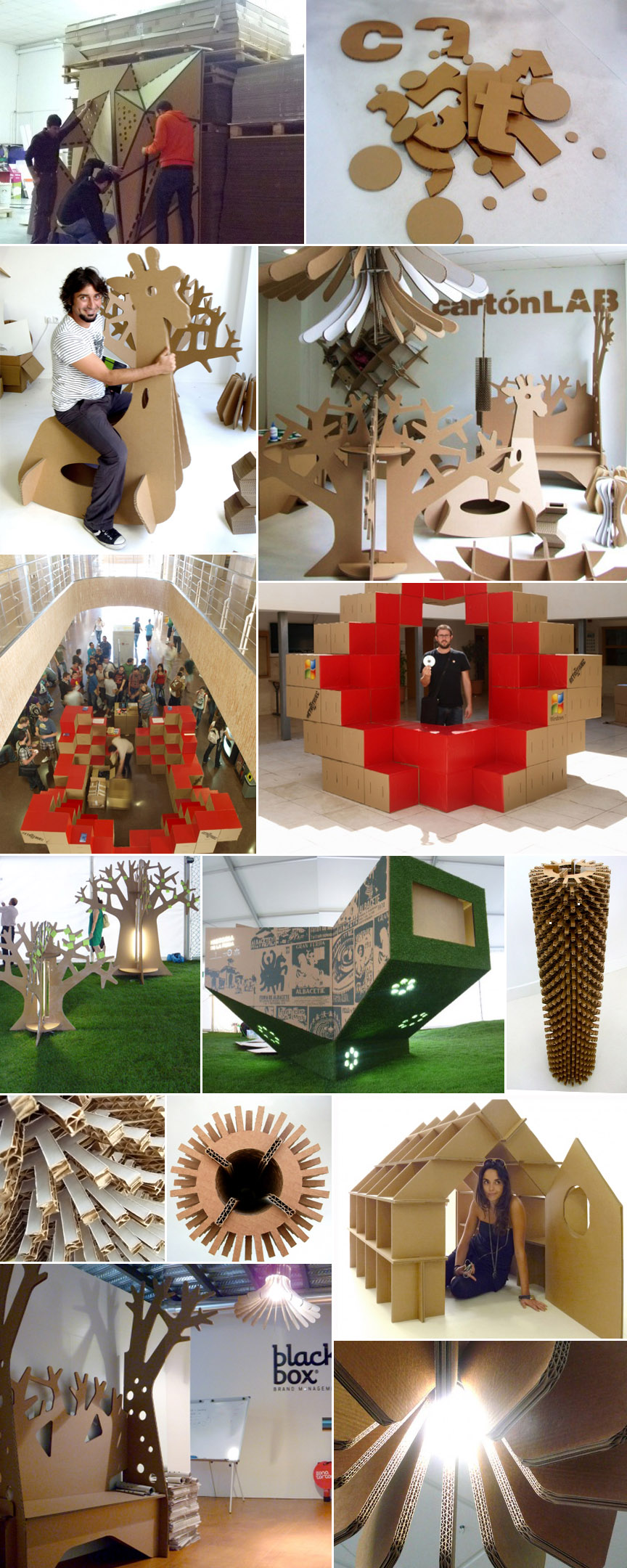
cardboard exhibit design and industrial designcardboard exhibit design furniture designClick to enlarge

We have secretly been following (and admiring) the work of cartonLAB for a while now. This ongoing workshop, run by the team at Moho Architects in collaboration with Ability Graphic Design, (both in Spain) has apparently grown into a permanent subdivision of Moho’s studio. Creating everything from exhibit displays for trade shows and stores, to furniture, kids’ play objects, club dj stands, lamps and more, all out of cardboard; these guys impress. Each design somehow seems to top the last, both in beauty and complexity. In addition, many of their displays and stands are designed with multiple configuration options.

From the Moho website:
Cardboard is a material that has always been linked to artistic creativity and craftsmanship. The new design possibilities (digital cut, large print, cad, 3d modeling, etc) along with the latest patents in the production of cardboard (reboard, cardboard reinforced, flame retardant coatings, water repellent, etc) makes this material in a fantastic alternative at the time of generating new exhibition spaces, media and all types of custom cheap, lightweight and recyclable furniture. Working with contemporaneously cardboard creation process allows almost no intermediaries between the designer and the final piece through traditional interfaces (previous models) or digital.

cartonLAB’s constructions typically pack flat for easy transport, are relatively simple to assemble and, as we know, cardboard is not only economical but recyclable. The result: great, green design that won’t break the bank.

You can see more of cartonLAB’s work here, and more of Moho’s architecture work (including their beautiful entry for a dormitory building) here.

Come a Little Bit Closer: Droog Bench

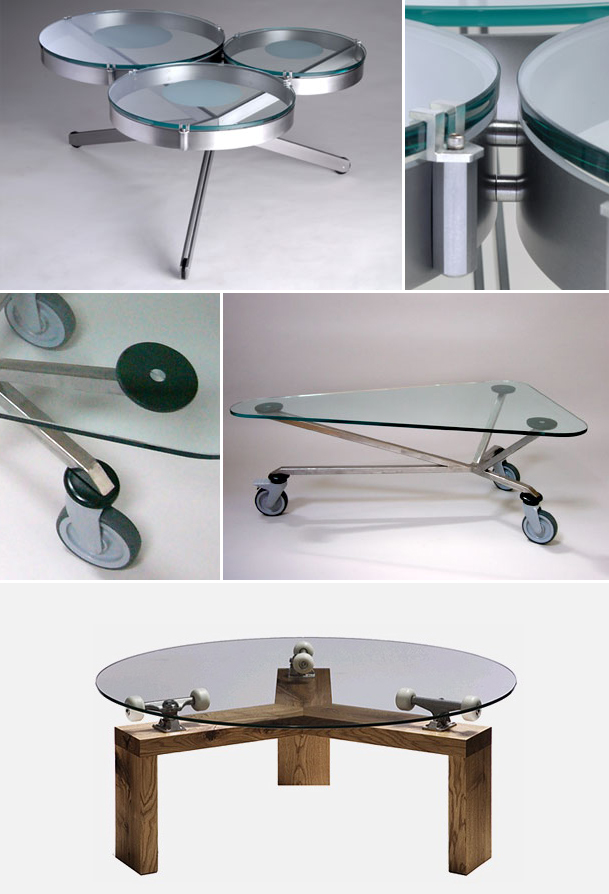
Droog Come a Little Bit Closer Bench FurnitureDroog Come a Little Bit Closer Bench DIYClick to enlarge

The three of us, over the past 6 years, have individually come across (and loved) the Come a Little Bit Closer bench by Droog. Little did we know that eventually we would have one of our very own! Well, actually it’s Em’s, but being that it will be placed in our living room, it feels very all-in-the-family. And we have the wonderful Rence (aka Richard) to thank for this: future architect; expert craftsman; and amazing friend.

Rence made the bench (top photo) based on Droog’s design (second photo) using leftover steel from his architecture classes. Hard to tell them apart, no? Are you as impressed as we are? This heavy and long (8ft!) finished bench was transported down from Ithaca, then carried across town a few days later (with a quick refueling stop midway), where the 60lbs of marbles were finally added and the gliding began. If you’re not familiar with the original design, the three discs act as seats that roll smoothly over the marbles. It’s surprisingly comfortable and definitely lots of fun! Thanks again, Rence, for the generous and beautiful gift. I mean for Em, of course…

Now, if we could only find someone to take the piano off our hands to make room for the bench.

Here’s a quick video of the bench in action.

e1000ink: Spanish Street Art

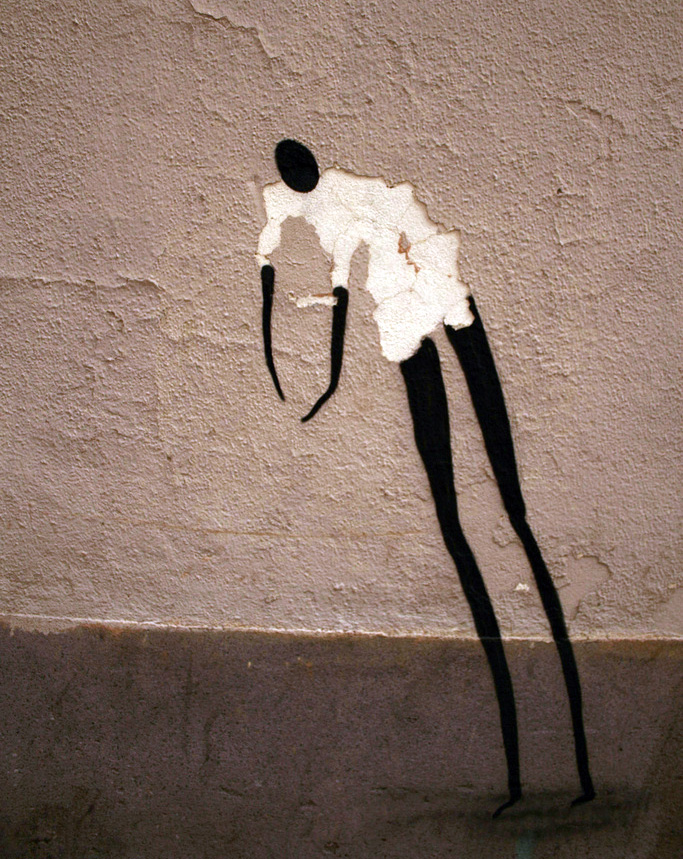
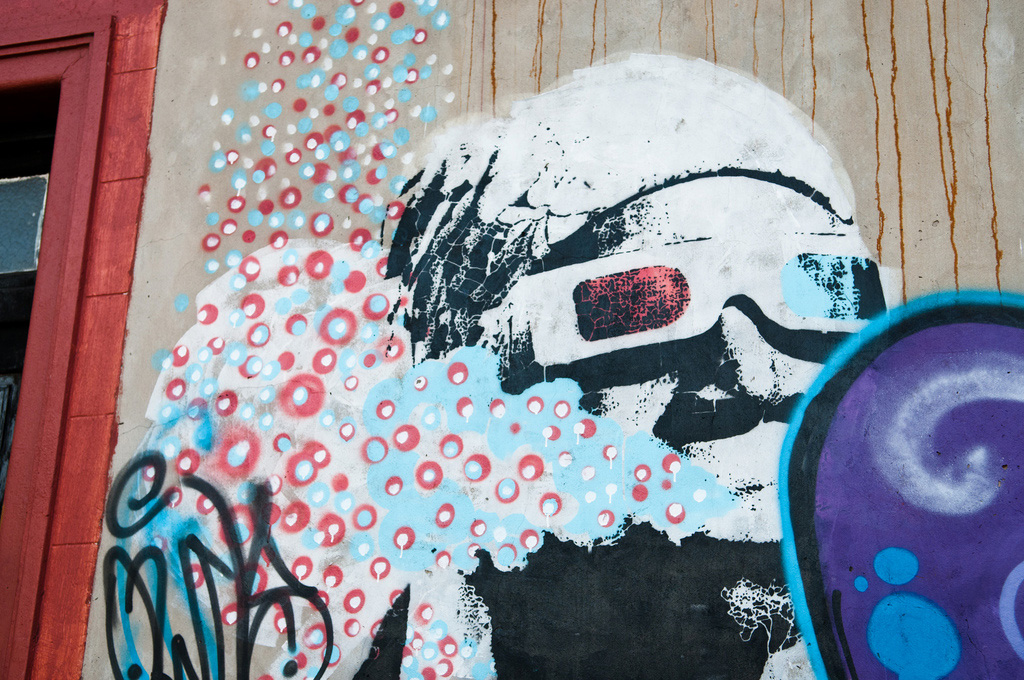
Street Art Graffiti in Spaine1000ink Street Art SpainThere’s something about e1000ink’s ability to convert existing street objects, including abstract shapes caused by peeling paint or crumbling cement, into art that really appeals to me. It takes a special eye and sense of humor which he clearly possesses. The bottom three are from a series he calls 3D without Glasses.

More e1000ink street art here, here and here.

The Portrait Building

Cool Architecture Portrait Facade AustraliaCool Architecture Melbourne AustraliaClick images to enlarge

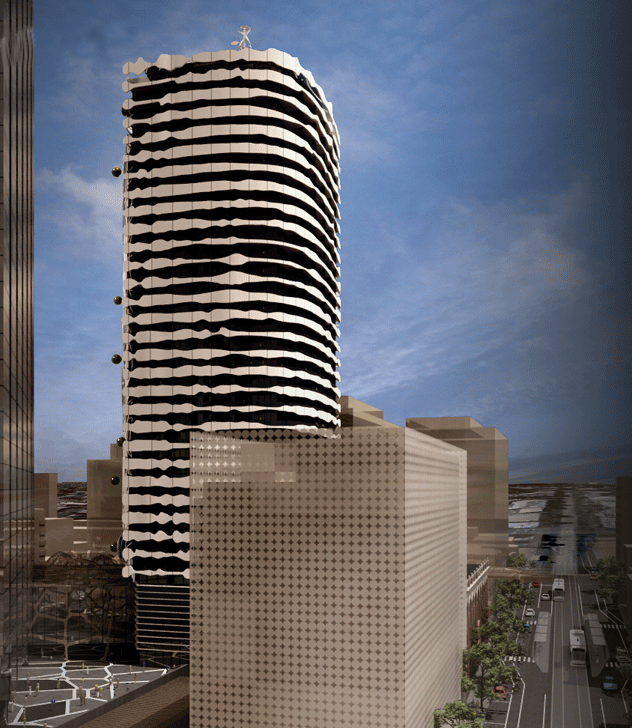
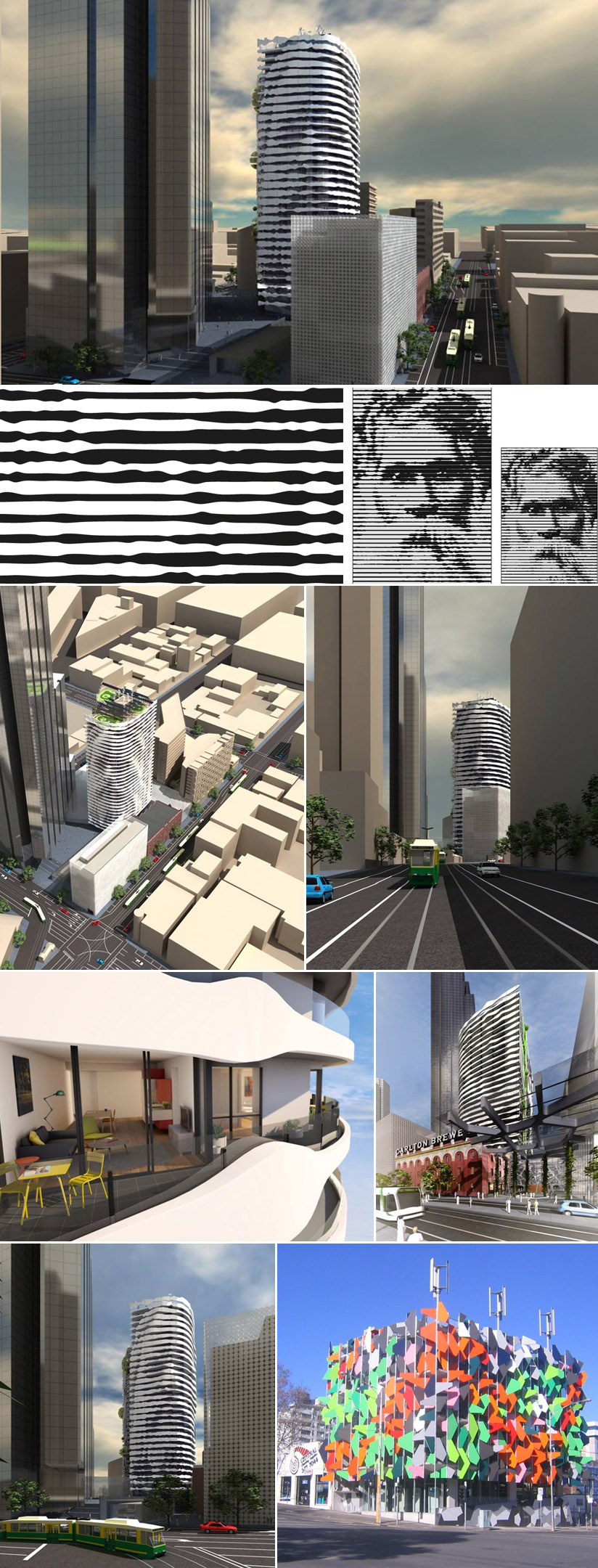
Nope, it’s not the latest Chuck Close painting. Instead, it’s the very cool Portrait Building designed by ARM architects in Melbourne, Australia and scheduled to be completed by 2014.

Part of construction group Grocon’s plan to transform the former Carlton Brewery site at the top end of Swanston Street into Melbourne’s newest urban living precinct, Portrait is a 32-story residential tower paying homage to Victoria’s indigenous heritage and first Australians. The façade features a portrait of indigenous leader, William Barak. The artwork for the Barak image was done by sculptor Peter Schipperheyn. The idea behind this, apart from the general coolness? To unite the city’s modern heritage with its ancient history.

It should be noted that Grocon completed construction on, and has since moved its offices to, yet another unique looking building, the Pixel Building (designed by Melbourne firm Studio 505), part of the same former Carlton Brewery site, and the country’s first carbon neutral office building. (See bottom right photo.) Impressively forward-thinking!

The Cube by Electrolux

Cool Restaurant Pop-Up_Architecture_EuropeCool Restaurant Pop-Up_Architecture_DesignClick to enlarge

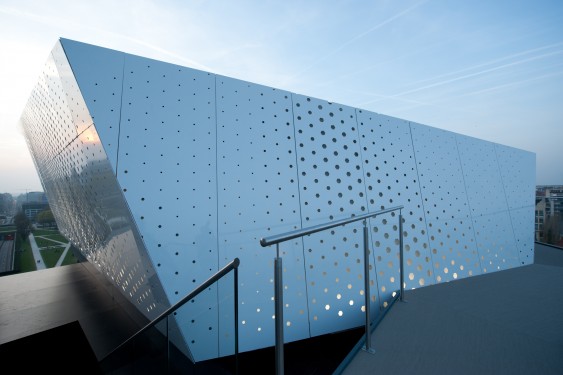
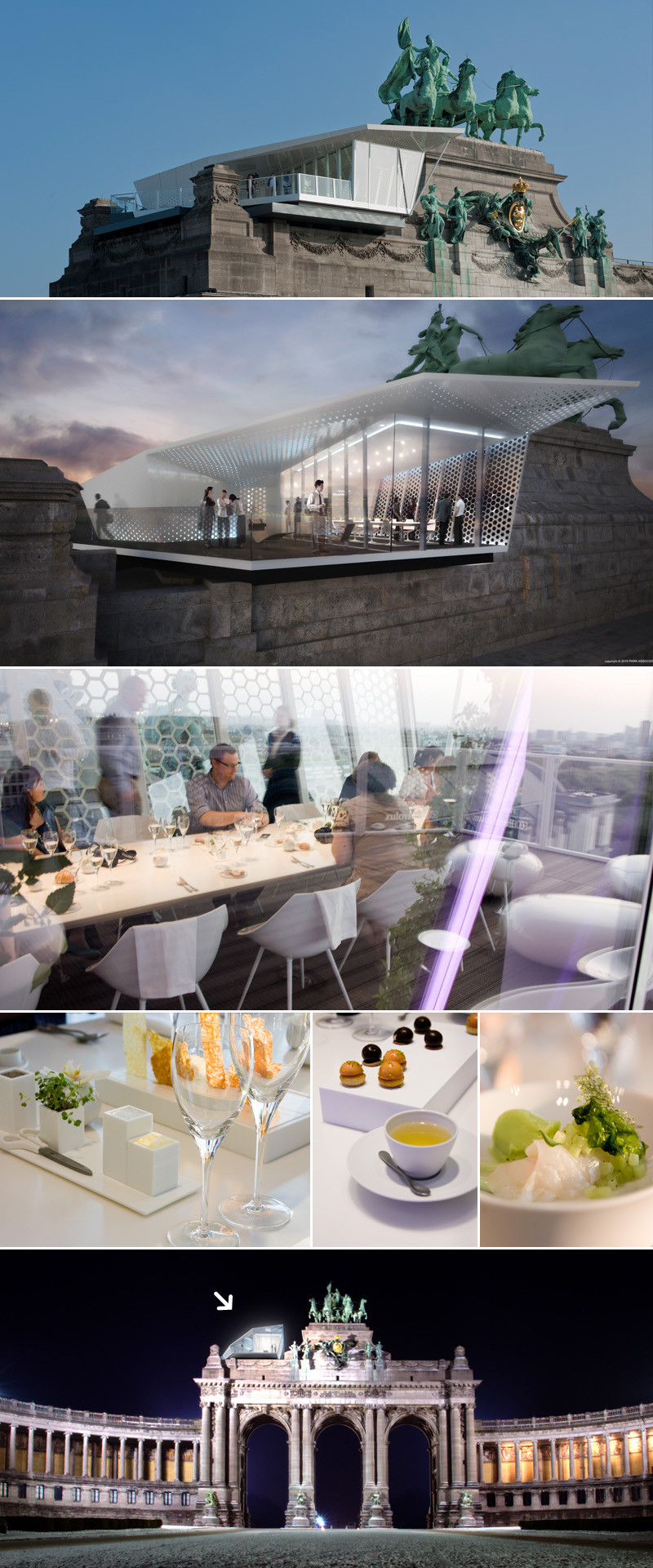
I’ve always enjoyed the combination and contrast of contemporary architecture with older, more classic structures, so coming across this pop-up restaurant — sponsored by Electrolux and designed by the Italian design firm Park Associati — was pretty exciting for me. The Cube by Electrolux will be popping up at some of Europe’s most famous landmarks from Belgium to Sweden, to Russia, Italy and Switzerland as well.

Presently, The Cube is in Brussels atop the grand Arc de Triomphe overlooking the Parc du Cinquantenaire. It will stay there through July 3, 2011 (though all reservations are sold out at this point) and then move on to Stockholm, followed by Moscow. The Cube will rest at each location for three months, making the complete tour in one year.
From the Electrolux website:
The aim is to create an experience that surprises and inspires with fantastic tastes, gastronomic hints and tips from some of the world’s greatest chefs and never-before-seen views, ultimately stimulating guests to explore their own creative boundaries next time they entertain friends or family at home.

Certainly takes Pop-ups to a whole new level!

You can book reservations here, and see more photos here and here.

Table and food photos by Photo&Coffee. All other photos from Electrolux.

Iguazu Neon System

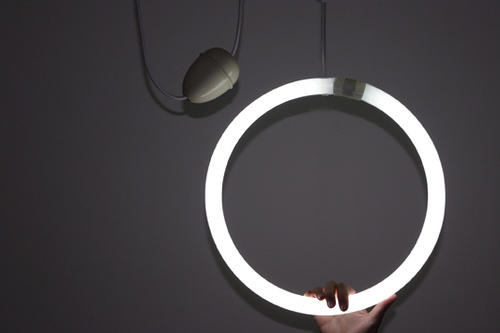
Iguazu Neon Cool Lamp DesignNeon Hanging Lamp Cool Design IguazuThe other night I walked into my friends’ new apartment and hanging over the dining room table was this very unique and striking lamp which I had never seen before. I have to say that these product photos don’t really do it justice. Granted, it may not be for everyone, and it’s a little bright to look at straight on, but there’s something very simple and yet almost sculptural about it. The Iguazu Neon System is designed by the Iris Design Studio. The lamp incorporates an energy-saving fluorescent circline bulb which, being cold neon light, makes it easy to touch and reposition as necessary.

Available here.

Architypeture: Part II

Typography in Architecture Lowther Children's CentreTypography in Architecture Multiple ExamplesClick to enlarge
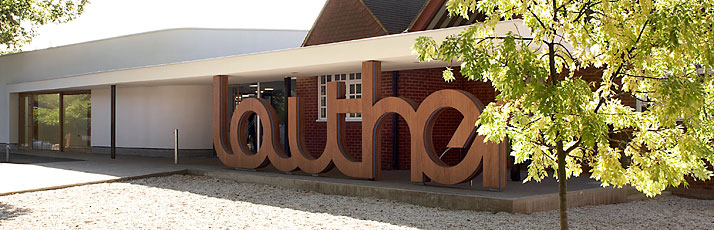
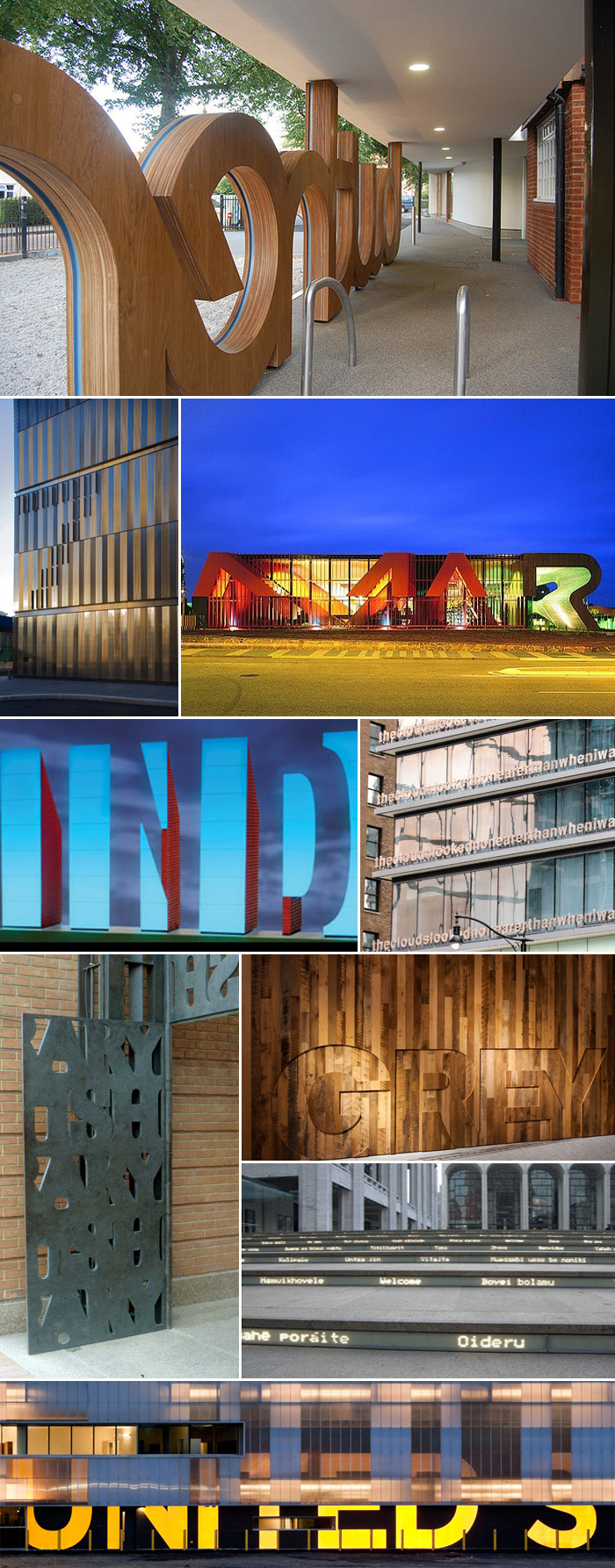
Row by row; left to right: Lowther Children’s Centre, London, Patel Taylor Architects. 7 World Trade Center, NYC, Michael Gericke, Pentagram. The Marion Cultural Centre by ARM + Phillips/Pilkington. Artwork for the Indianapolis Airport, Indiana, Joe C. Nicholson. Fairmont Pacific Rim Hotel, Vancouver, Canada, Liam Gillick; words say “Lying on top of a building, the clouds looked no nearer than when I was lying in the street.” British Library main gates, Cambridge, UK, Cardozo Kindersley Workshop. Grey Group, NYC, Paula Scher, Pentagram. Lincoln Center steps, “Welcome” in multiple languages, Diller Scofidio + Renfro. U.S.-Canada border crossing station at Massena, NY, Michael Bierut, Pentagram (has since been taken down.)

Typography in Architecture Pentagram Design

Click to enlarge
Row by row; left to right: New York Times Building Signage, NYC, Michael Bierut, Pentagram. Symphony Space, NYC, Paula Scher, Pentagram. 770 Broadway awning, Paula Scher, Pentagram. Harley Davidson Museum, Milwaukee, Wisconsin, Michael Bierut, Pentagram. Bloomberg Building, NYC, Paula Scher, Pentagram. Container Mall (proposed design) NYC, LOT-EK. APAP Open School, Korea, LOT-EK. Bohen Foundation, NYC, LOT-EK. Lignan Studio renovation, LOT-EK. PS1 Museum of Art, Queens, NY (not sure of designer.) Museum Tower, Dallas, Texas, Scott Johnson, Johnson Fain Architects, photo from williamedia’s photostream. Wales Millenium Centre, Cardiff, South Wales, Jonathan Adams, Capita Architecture, photo from iwouldstay’s photostream.

As promised, here is a second roundup of architecture and typography merged into one (see Part I). Pentagram has a large representation here, as does Lot-ek, possibly because many of their projects are in NYC and I am personally familiar with them, but it’s more likely because their websites happen to be chock-full of these beautiful projects. Lot-ek’s use of type and color on their projects feel a little like Freitag bags on steroids. I love it.

Jess Dunn

Cool Art Installation by Jess DunnInstallation Art Human-to-Oil ProjectJess Dunn is a sculptor and installation-based visual artist and landscape designer living in Albuquerque, New Mexico. As stated on the alumni page of the University of New Mexico:

Her [Dunn’s] art focuses on ecological sustainability–generating conversations where the familiar opposition of nature and culture is reworked in fragile, hybrid, and intensely corporeal ways. Her three-dimensional and installation projects speak to how historically and culturally specific human populations intersect and transect natural worlds…She continues to create awareness about environmental sustainability through public art.

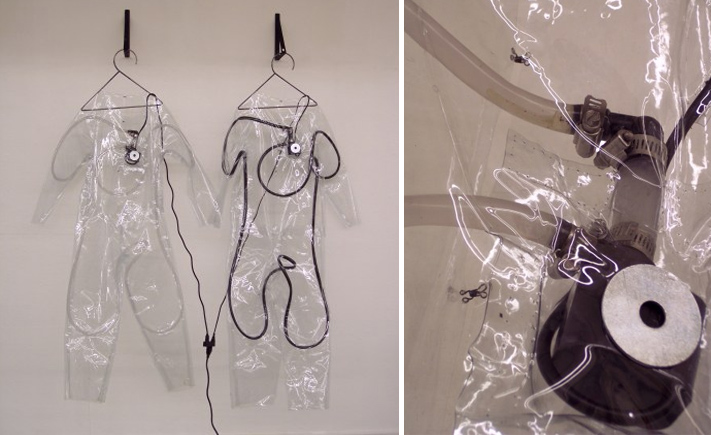
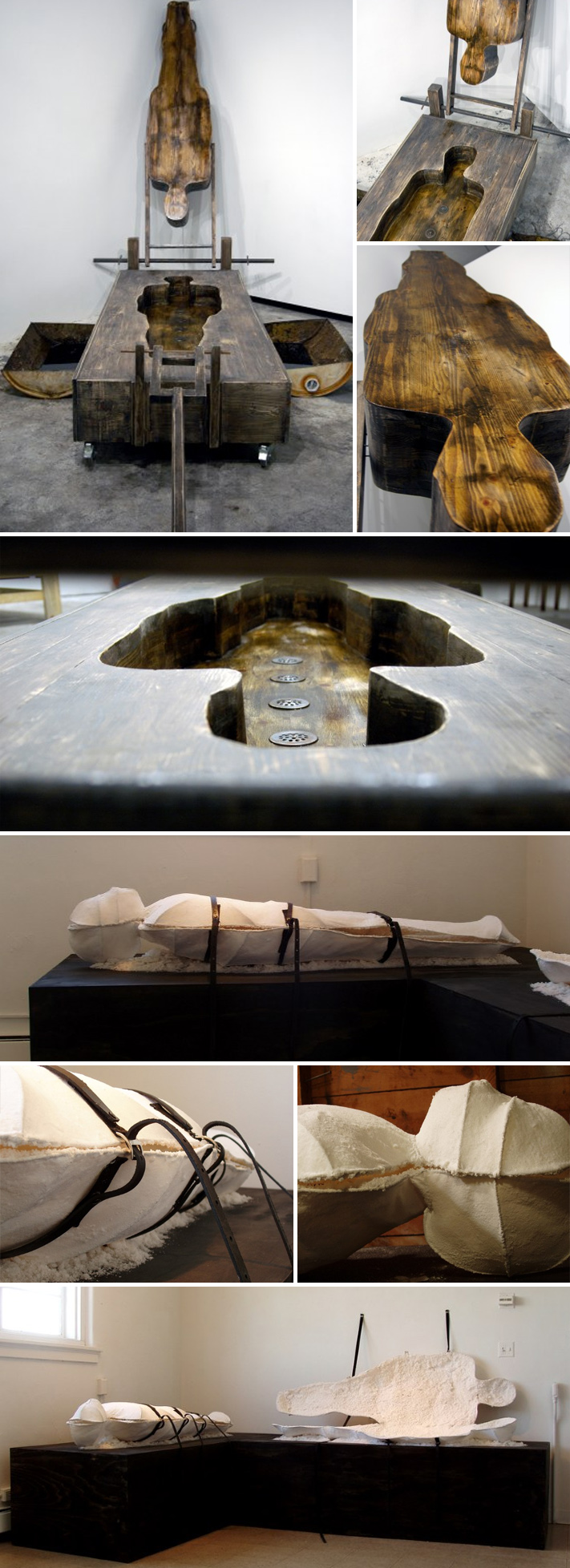
The top two images are from Dunn’s Diagram for Substance Transferal project, where the suits were created for the study of thermal depolymerization (the process by which any organic material can be turned into oil) in The Human-to-Oil Project (which is the project in the photos below it.) The instrument, in the latter, can be used to transform donated human organic matter into oil; faucets on the sides emit the liquefied matter into collection barrels paralleling the press.

The final project shown here are the Salt Preservation Skins. Designed to be grown over water canals, these suits serve a dual purpose: to preserve donated organic matter until a Human-to-Oil Press is ready for use; and to reserve processed, liquefied organic matter until needed for energy.

Apart from being conceptually intriguing, I find these projects visually interesting, if a little morbid. See more of Jess Dunn’s work here.

Architypeture: Part I

Architecture Typography Lentos Art MuseumClick images to enlarge
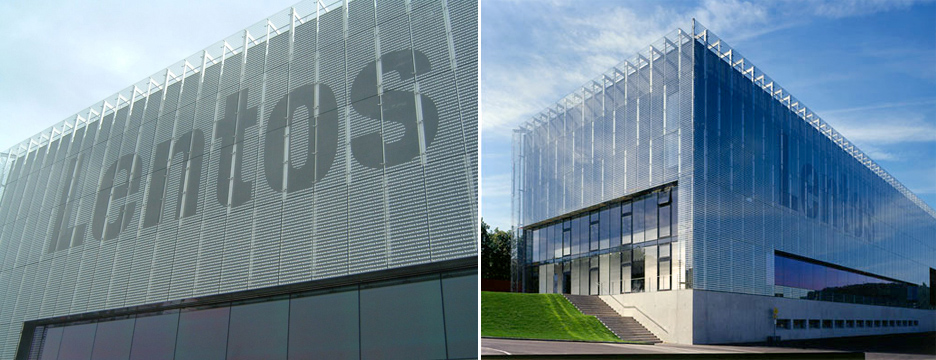
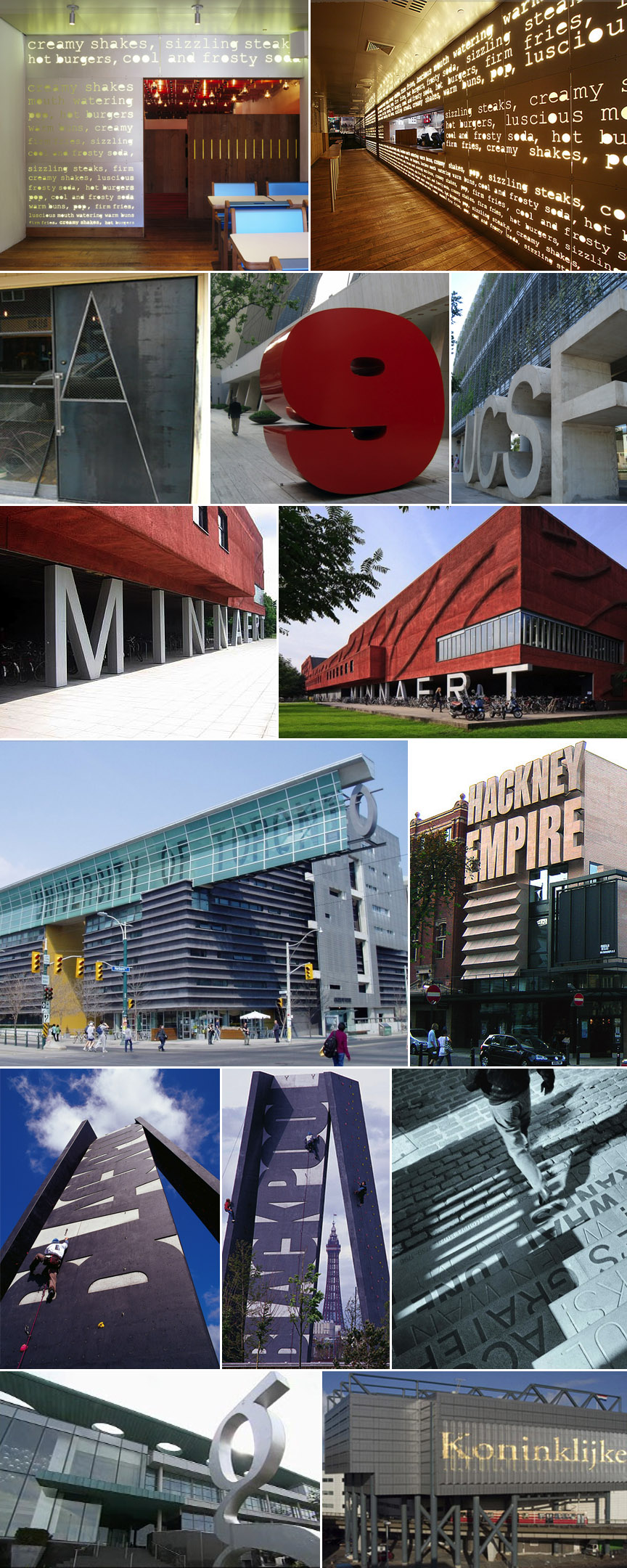
Left to right, row by row: Lentos Art Museum, Linz, Austria, Weber & Hofer Architects. Caltrans District 7 Headquarters, LA and Cooper Union, NYC, both Thom Mayne, Morphosis, typography on Cooper Union was done in collaboration with Abbott Miller, Pentagram. Parsons The New School for Design, NYC, Lyn Rice Architects; exterior awning photo: Michael Moran. Interior auditorium acoustic graphic photo: Noah Sheldon.

Architecture Typography Ali Tayar Thom Mayne Why Not Associates Chermayeff & Geismar

Click images to enlarge
Left to right, row by row: PopBurger, NYC, Ali Tayar, Parallel Design. The Alembic door, Oliver DiCicco. 9 West 57th St. sculpture, Chermayeff & Geismar. UCSF, University of California, San Francisco. Minneart Building, Utrecht University, The Netherlands, Neutelings Riedijk Architects. University of Toronto, Graduate Student Housing, Thom Mayne, Morphosis. Hackney Empire theater extension, London, Tim Ronalds Architects. Blackpool Climbing Tower, Blackpool, England, Why Not Associates with Gordon Young. Tam O’ Shanter Pub Steps in Ayr, Verse from Burns’ Whisky, Why Not Associates with Gordon Young. G Hotel, Ireland, Philip Treacy Architects. Koninklijke Bibliotheek (Library in The Hague, Netherlands), designed by Wim Quist (?).

Nothing really comes up when you google “architypeture” other than the recently scooped up domain name, but I’ve decided to use it here as the fusion of architecture and typography, especially when successfully and beautifully rendered. I don’t think there is a designated term for this, but there should be. Architypeture is possibly one of my favorite things, and I don’t do favorites lightly. This is Part 1 of two posts (the second will follow shortly) showing examples of typography wonderfully incorporated into architecture; in some cases on the exteriors of the buildings and in other cases, the interiors. All names and credits that I was able to find (mostly of the projects and architects, a few of the photographers) have been listed with their corresponding links. If someone knows any credits that have been omitted, please feel free to let me know in the comments.

(See Part II here)

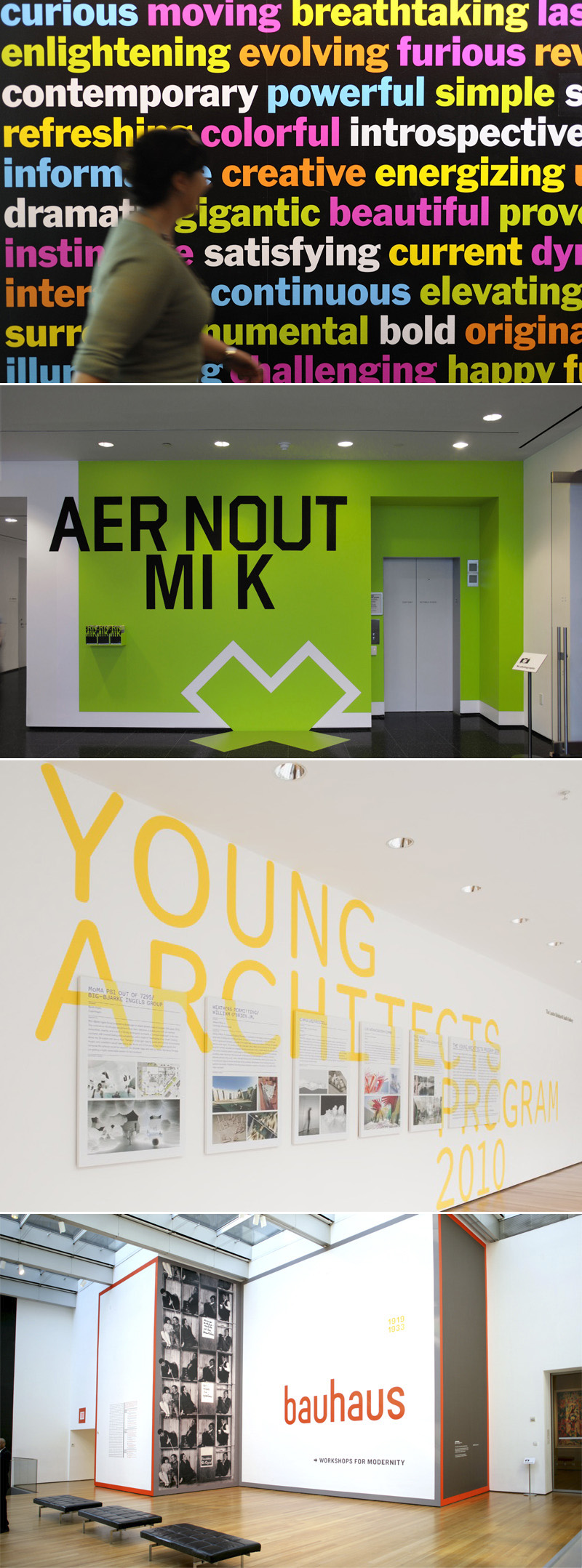
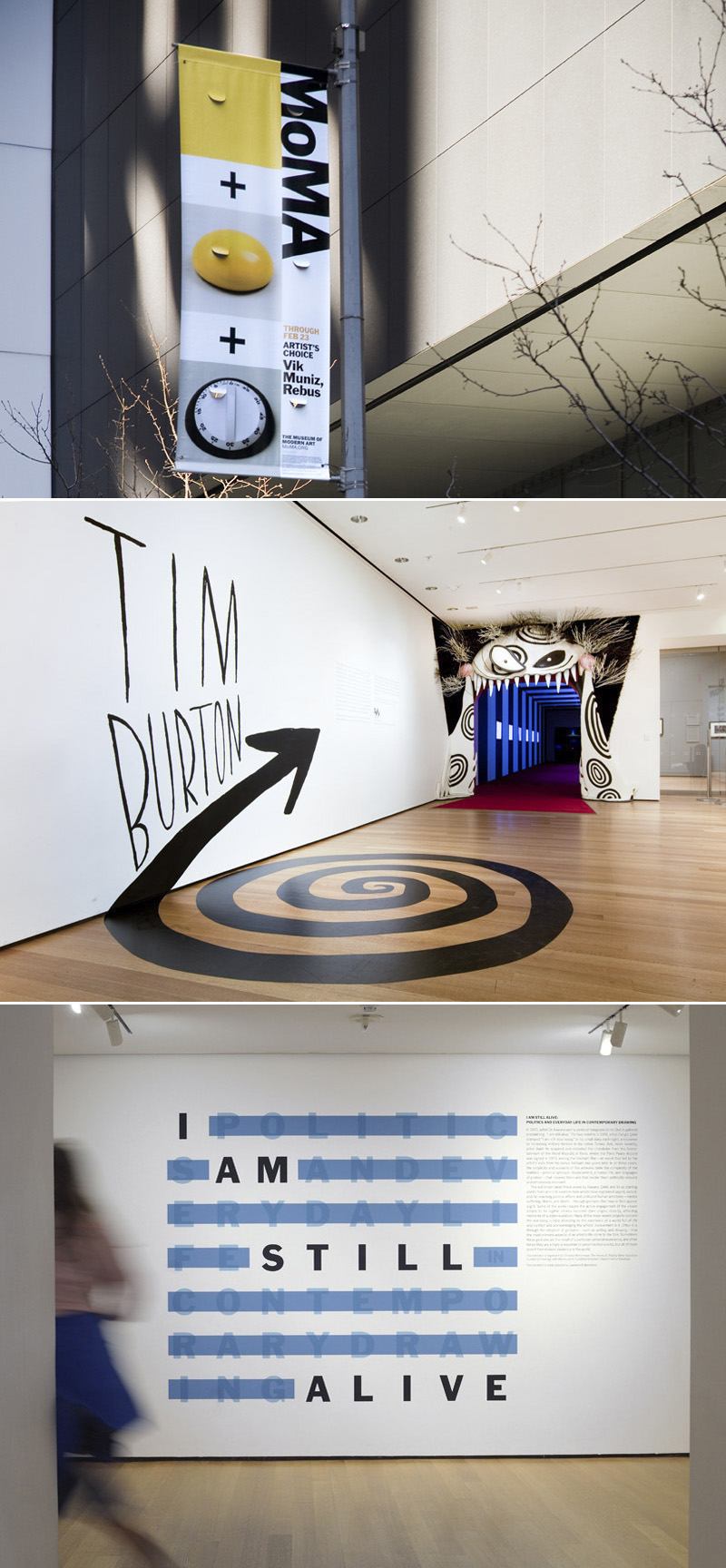
MoMA Design Studio

MoMA Design Studio Typography Super GraphicsMoMA Design Studio Typography GraphicsMoMA Design TypographyLiving in NYC and loving art and design makes the Museum of Modern Art (MoMA) a natural frequent destination for us. I have always appreciated the graphics in the museum but noticed in the past few years that they have become more prominent with a boldness and emphasis on typography that is hard to ignore in a good way. I have to admit to having been lured into the occasional exhibit based on the beautiful supergraphic on the wall outside, much in the way that I would pick up a book based on its beautiful cover.

The team behind the graphics is the MoMA Design Studio with Julia Hoffmann (who previously worked at Pentagram with Paula Scher) as the creative director, and whose work I’ve admired for years. Her presence along with the rest of the designers is definitely felt, from the museum’s walls to its printed materials. You should check out the studio’s site to see more of their fabulous work.

via swissmiss

Hans Kotter

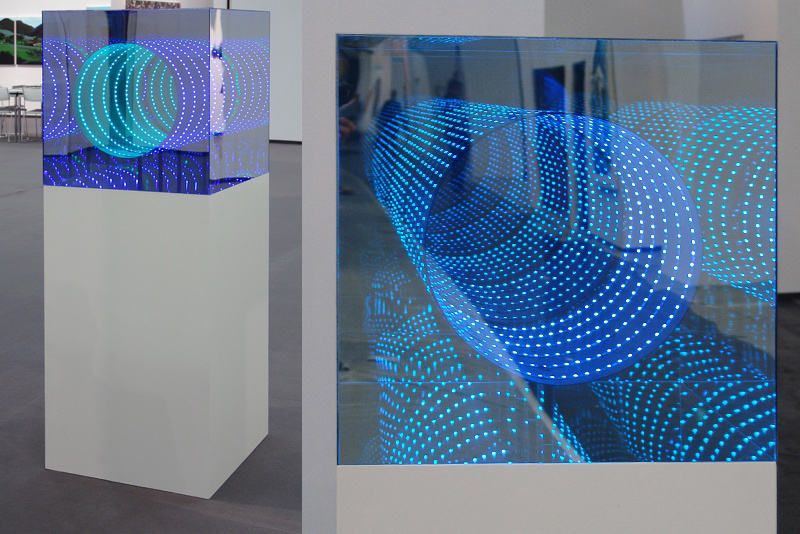
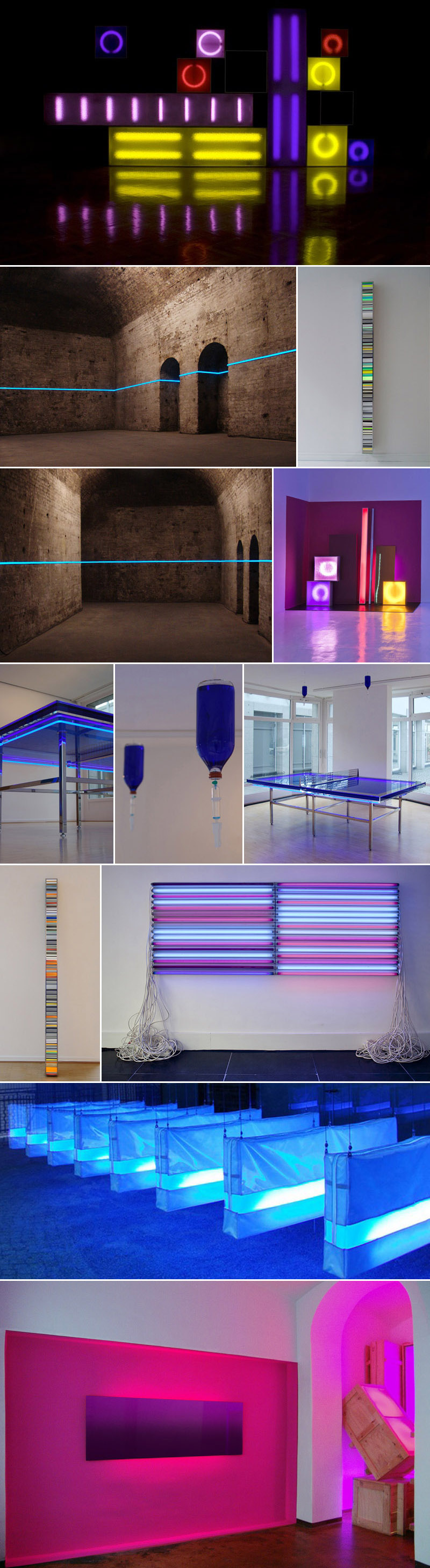
Hans Kotter Light Sculptures The TunnelHans Kotter Light Sculptures LEDs Cool installationsClick to enlarge

Yes, it’s true. I’m consistently drawn to art that uses colored light, light bulbs, or LEDs. I’ve liked it for as long as I can remember. When I was younger the big attraction was neon, and I dreamed of having a neon sign on the wall of my room. Later, the discovery of Dan Flavin’s colored fluorescent bulb sculptures was very exciting and in the last ten years or so I’ve become a big fan of James Turrell’s work. So it’s not all that surprising that I should post about other artists working in the same medium as I come upon their work. And, just like paint, these artists all create quite different effects and artworks.

Hans Kotter, a German artist, falls in this group of light sculpture artists. Really nice work. It appears from his site that he will be exhibiting work next week at Design Miami Basel and he was recently a part of the Kinetica Art Fair in London where he exhibited his Tunnel View piece (top photo).

You can see more of Hans Kotter’s work here and here.