Kamppi Chapel: K2S Architects

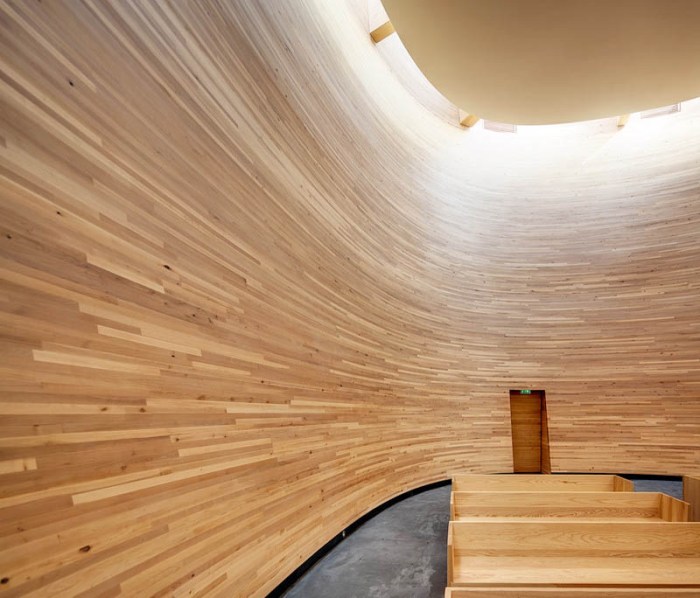
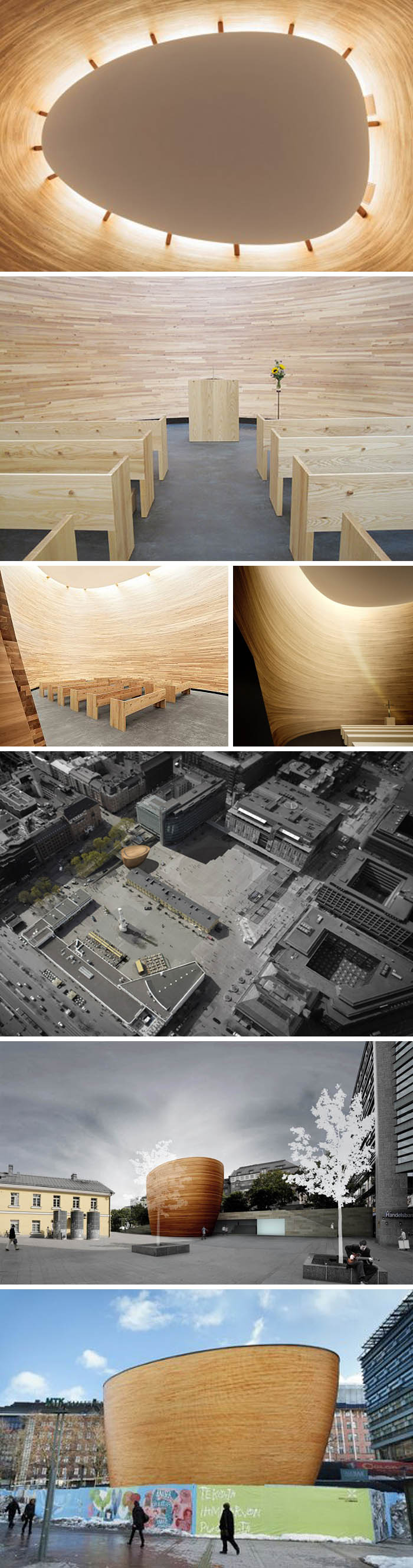
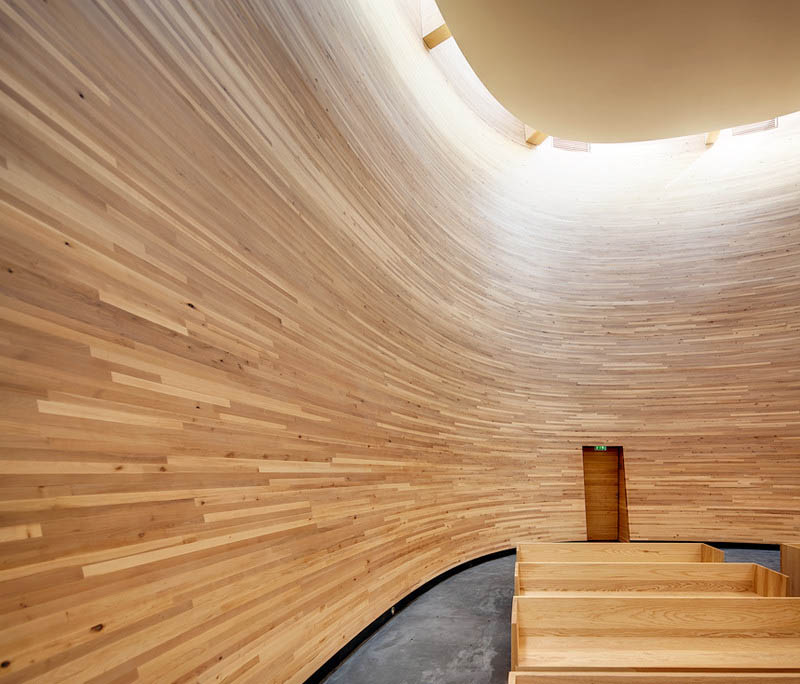
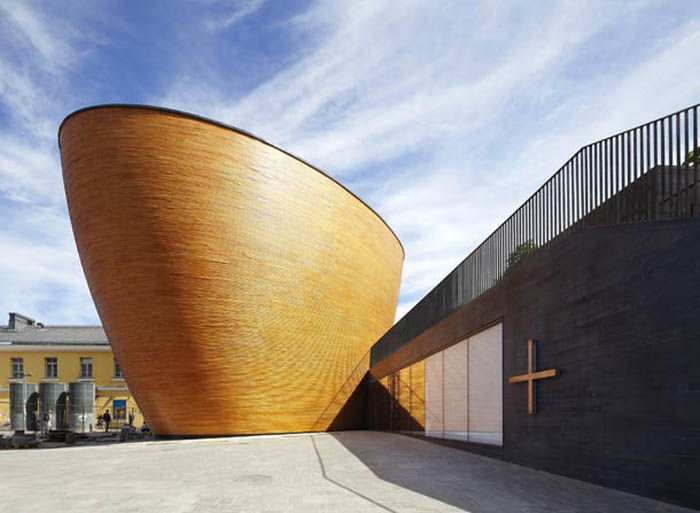
Cool Chapel design in Helsinki, Finland. Wood design architecture, K2S Architects, Kamppi ChapelCool Chapel design in Helsinki, Finland. Wood design architecture, K2S Architects, Kamppi ChapelCool Chapel design in Helsinki, Finland. Wood design architecture, K2S Architects, Kamppi ChapelClick to enlarge

Well, this is certainly an interesting design for a chapel. The Kamppi Chapel of Silence, designed by Finnish studio K2S Architects, is a small wooden tub of a structure supplying a bit of silence and peace from its urban surroundings in Helsinki’s commercial center. The wood tones in this sculptural volume exude a natural warmth which is only amplified by the indirect sunlight that enters through the top.

Images: Tuomas Uusheimo, Marko Huttunen, Mika Huisman, and K2S Architects.

via A10

Kris Kuksi: Intricate Art of Gods & Monsters

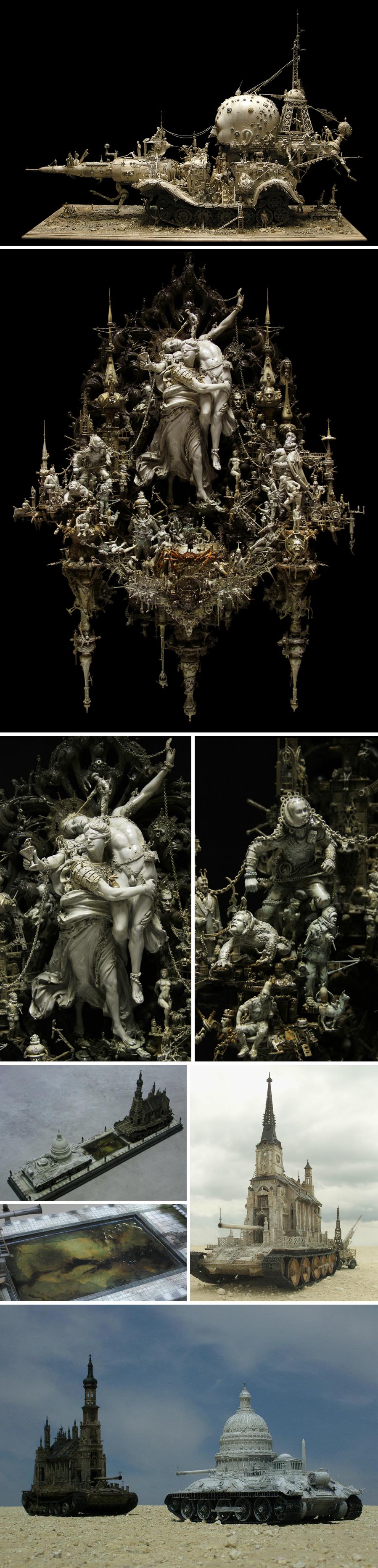
Incredibly intricate sculptures of gods, goddesses, monsters, and war, sacred cow, Kris Kuksi, Incredibly intricate sculptures of gods, goddesses, monsters, and war, sacred cow, Kris Kuksi, Incredibly intricate sculptures of gods, goddesses, monsters, and war, Kris Kuksi, baroque, rcococoClick to enlarge

Artist Kris Kuksi had a difficult and solitary childhood growing up in Kansas, leaving him to keep to himself and his active imagination. Fascinated with the grotesque and macabre from a young age, it’s no wonder that his sculptures are elaborate intricately detailed mixed-media works depicting the historical rise and fall of civilization, with tortured Gods and soldiers along with millions of other things going on in every nook and cranny. There’s a hellish quality to them, reminiscent of Bosch’s Garden of Earthly Delights.

From the artist’s website:
Each sculpture embodies the trademarks of his philosophy and practice, while serving as a testament to the multifaceted nature of perception – From timeless iconic references of Gods and Goddess, to challenging ideas of organized religion and morality, to the struggle to understand, and bend, the limits of mortality. None is complete without a final and brilliant touch of satire and rebuke all conceived in the aesthetic essence of the Baroque fused with the modern day industrial world. In personal reflection, Kris feels that in the world today much of mankind is oftentimes frivolous and fragile, being driven primarily by greed and materialism.
From top to bottom, left to right:
Dharma Bovine; Dharma Bovine detail; Auto-Cephalic Supplicating Vehicle; A Heroic Abduction; two details of A Heroic Abduction; Church vs. State; below Church vs. State detail Map of the US with a line drawn through the top 11 most religious cities submersed in resin for water effect. Oil from both tanks spill into the mix; Churchtank Type 8; Church vs. State.

There are so many more of these sculptures, as well as paintings and drawings, on Kuksi’s website and facebook page. Definitely check them out.

Photos © Kris Kuksi

via Joshua Liner Gallery

Interchange Station Padre Anchieta

intercambiador Padre Anchieta, San Cristóbal de La Laguna (Santa Cruz de Tenerife), Eustaquio Martinez Architect, Contemporary architecture from SpainBus Interchange station Padre Anchieta, San Cristóbal de La Laguna (Santa Cruz de Tenerife), Eustaquio Martinez Architect, Contemporary architecture from Spainintercambiador Padre Anchieta, San Cristóbal de La Laguna (Santa Cruz de Tenerife), Eustaquio Martinez Architect, Contemporary architecture from SpainClick to enlarge

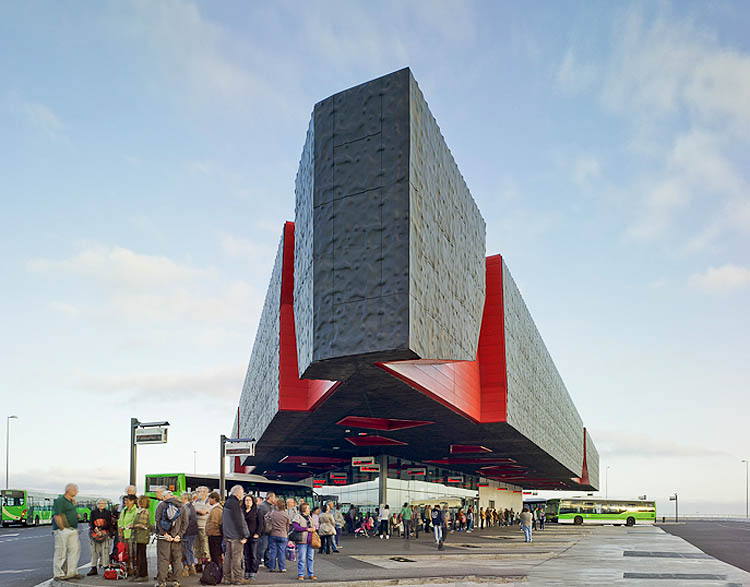
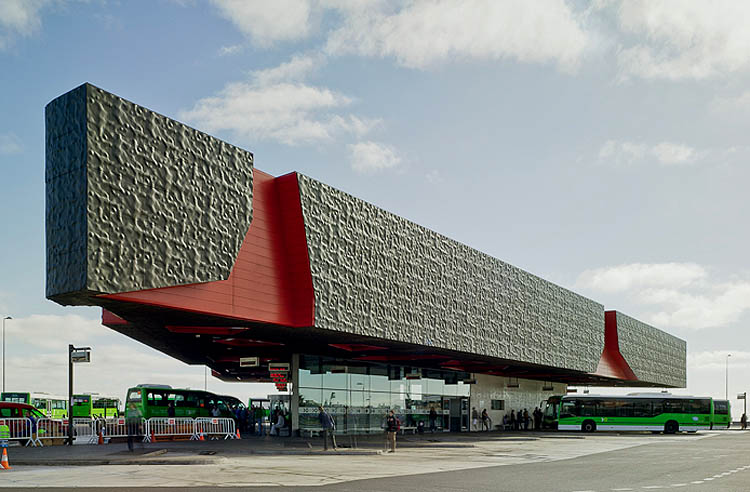
Now here’s a pretty singular bus station. Spanish architect Eustáquio Martínez completed the Intercambiador Padre Anchieta (Interchange Station Padre Anchieta) in Santa Cruz de Tenerife, Spain, this past February. The unique structure looks more like a massive sculpture than your average bus transfer station. The top-heavy quality makes for dramatic protective overhangs with interesting irregular geometric red cavities excavated from beneath. Those green buses complement nicely as well, don’t you think?

Photos by David Frutos.

Lumen 2012: Atlantic Salt, Staten Island

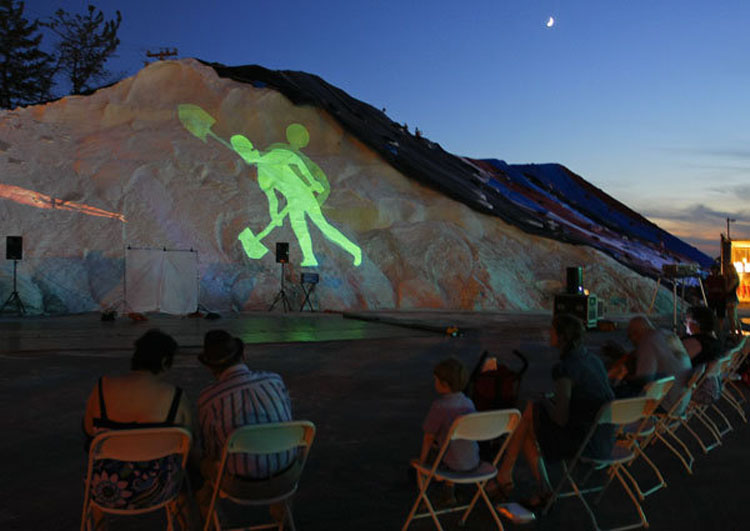
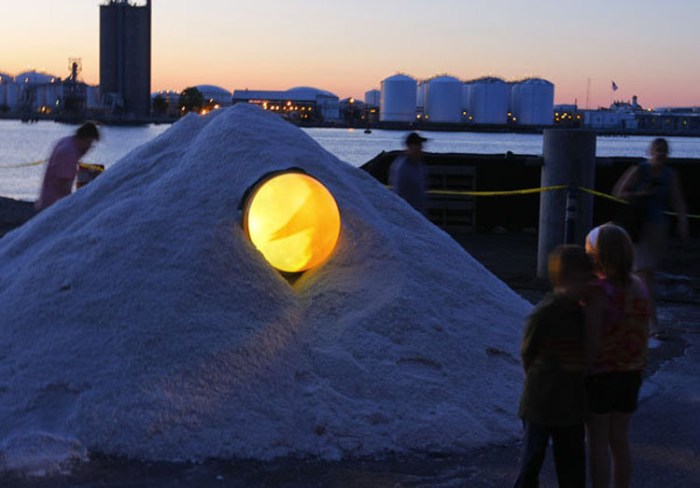
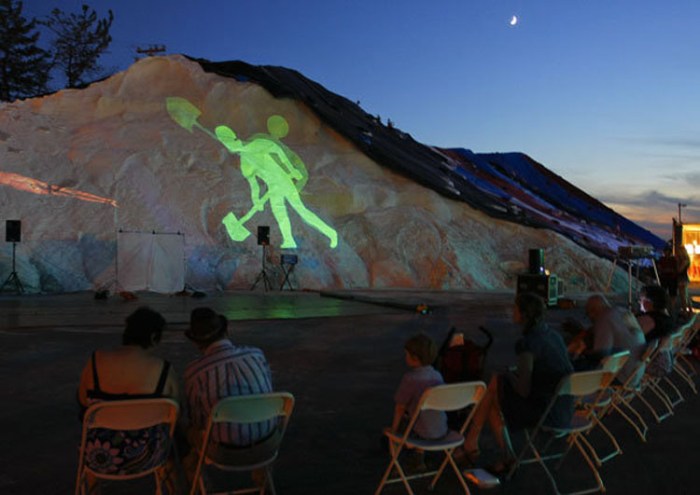
Lumen 2012, Staten Island, light and performance festival, Atlantic Salt piles in New Brighton, Staten Island, NYCLumen 2012, Staten Island, light and performance festival, Atlantic Salt piles in New Brighton, Staten Island, NYCLumen 2012, Staten Island, light and performance festival, Atlantic Salt piles in New Brighton, Staten Island, NYCClick to enlarge

This past weekend was one of those spectacular New York City summer weekends, with clear blue skies, hot but dry air, and more interesting fun events taking place than time to see them all. We opted for the very colorful Mermaid Parade on Coney Island (30th anniversary, no less), the Renegade Craft Fair in Williamsburg, the Gay Pride Parade in the Village, and the play “Slow Girl” at the lovely new (and quite affordable) Claire Tow Theater with a beautiful terrace offering up some of the nicest views of Lincoln Center. Saturday night was our biggest dilemma: free concert at Bryant Park? Lumen Festival in Staten Island? However, after bopping around multiple subway lines in Brooklyn during the day, we went for the low-key option of the new Woody Allen film in the neighborhood.

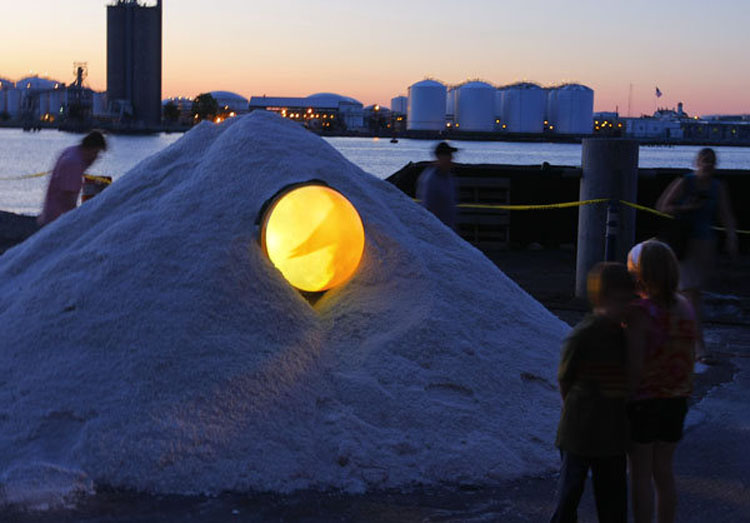
BUT, back to the topic of this post: Lumen 2012. Over on the industrial waterfront property of Staten Island, more specifically, the Atlantic Salt Company—the company that supplies road salt to the city during its snowy winters—all sorts of light-related exhibits took place. Due to an almost snowless winter in NY this year, the piles at the New Brighton company are still high with over 150,000 tons of salt, some piles as high as 5 stories. Roughly 50 artists, projected and performed their works on and around the mounds of salt, which (at least in the photos) looks very cool and in some cases Felliniesque. I wasn’t able to match many of the works with their artists, but here are the ones I found, followed by a link to a list of all the participating artists.

Top photo: Brendan Coyle’s piece titled “Mr. Canard”; second photo: Jeanne Verdoux’s “Woman Working” animation; Marco Brambilla’s “Sea of Tranquility,” a recreation of a lunar expedition; Phillip David Stearns neon light installation; and here’s the link to the list of artists (we welcome any additional information, if anyone knows the other works)
Photos: Garret Ziegler; Rocco S. Cetera; Eric Norcross; and Anthony DePrimo.

Shakespeare Machine: Ben Rubin

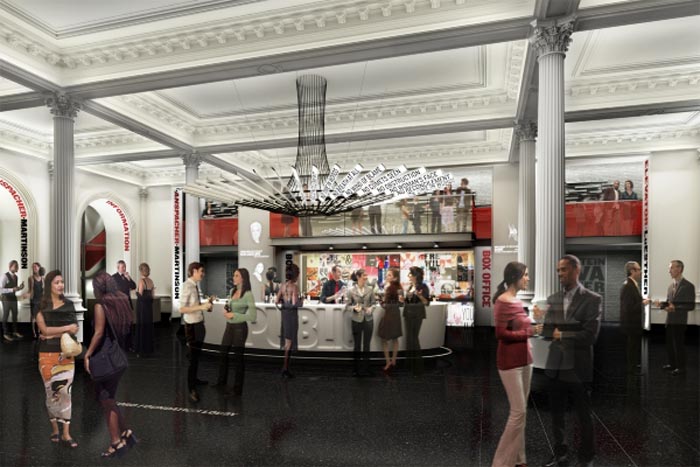
Multimedia sculpture, Chandelier of text from Shakespeare Plays, Public Theater, NYC, Ben RubinMultimedia sculpture, Chandelier of text from Shakespeare Plays, Public Theater, NYC, Ben RubinMultimedia sculpture, Chandelier of text from Shakespeare Plays, Public Theater, NYC, Ben RubinClick to enlarge

When I heard designer Paula Scher speak a couple of weeks ago at the Reasons to be Creative conference, she mentioned the current renovation at the Public Theater in NYC and the new graphics that she and her team at Pentagram are working on. She also mentioned a very interesting piece acting as a sort of centerpiece chandelier in the main lobby: a Shakespeare Machine designed by Ben Rubin (previously here and here.) The work is described in the Public Theater’s press release as follows:

A large-scale multimedia sculpture, “Shakespeare Machine,” has been commissioned from Ben Rubin for The Public’s lobby. Suspended from the ceiling and serving as the lobby’s chandelier, the work features 37 display screens on which fragments of Shakespeare’s plays appear and dance, creating an unfolding kaleidoscope of language in motion. The installation is part of New York City’s Percent for Art initiative, which ensures that a portion of construction project budgets are dedicated to site-specific artworks.

Upon further research I came across several Shakespeare Machines that Rubin has worked on in the past few years, as a way of working out concepts and algorithms for the Public Theater sculpture. The top three images are from the latest, and presumably final, renderings for the actual piece due to debut this coming fall. The fourth image is a previous rendering from 2009, while the fifth image is from A Shakespeare Accelerator: Experiments in Kinetic Language, a piece that is currently being exhibited at the Experimental Media and Performing Arts Center (EMPAC) at RPI in Troy, NY through the end of July. The final image is an iteration from 2009 included in the group show Textual Landscapes: Real and Imagined at Bryce Wolkowitz Gallery.

The final piece that will hang in the Public Theater’s lobby will cycle continuously through the text of Shakespeare’s plays organized as a repeating series of compositions, recombining the small linguistic molecules to form new poetic visual combinations. The nature of the algorithms ensures that no composition will repeat.

I’m looking forward to checking this out. In the meantime, you can take a peek at the animated rendering here.

Images courtesy of Ben Rubin, EMAC, Bryce Wolkowitz, and The Public Theater.

Mirador del Palmeral: Joaquin Alvado Bañon

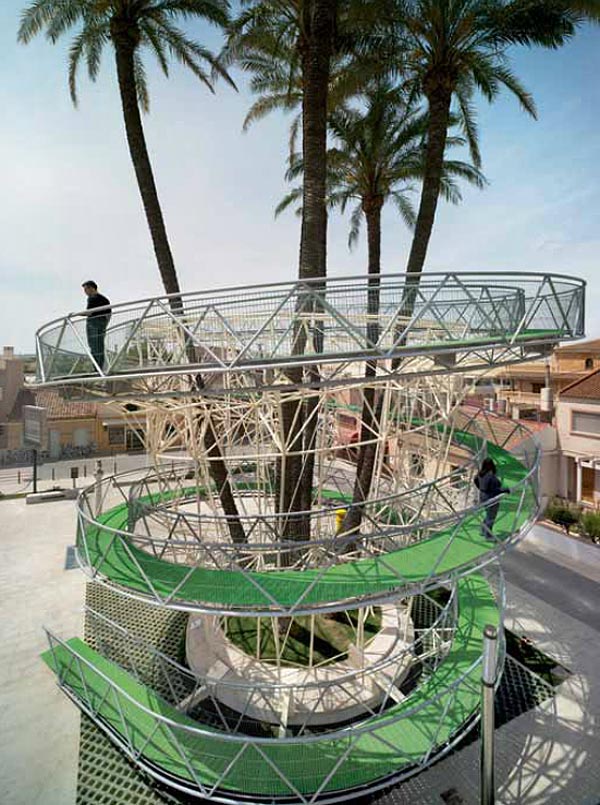
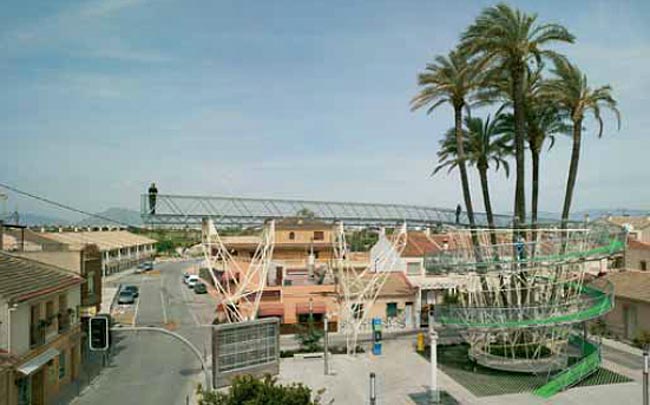
Lookout Tower in Alicante Spain, Sustainable structure, cool spiral promenade, Joaquin Alvado, Contemporary Spanish ArchitectureLookout Tower in Alicante Spain, Sustainable structure, cool spiral promenade, Joaquin Alvado, Contemporary Spanish ArchitectureMirador del Palmeral, Daya Vieja Spain, Joaquin Alvado Architect, sustainable structure,Click to enlarge

Triggered by the collapse of one of the palm trees in the center of town in Daya Vieja, Spain, architect Joaquin Alvado Bañon created El Mirador del Palmeral with the excuse of a structural support for the tree. A lookout tower with a spiraling promenade that culminates in a spectacular narrow overpass that jutts out and over a major town thoroughfare, El Mirador del Palmeral offers stunning views of the Vega Baja, Rojales and La Marina. In addition to the nice views and fun structure, the idea of making the trees a focal point and working with them is an example of the sustainable thinking that infiltrates much of today’s architecture.

Here’s a video to appreciate the structure from all angles:

Photos: David Frutos and Joaquin Alvado Bañon

via treintaycuatro

Salon Urbain: Sid Lee and Ædifica

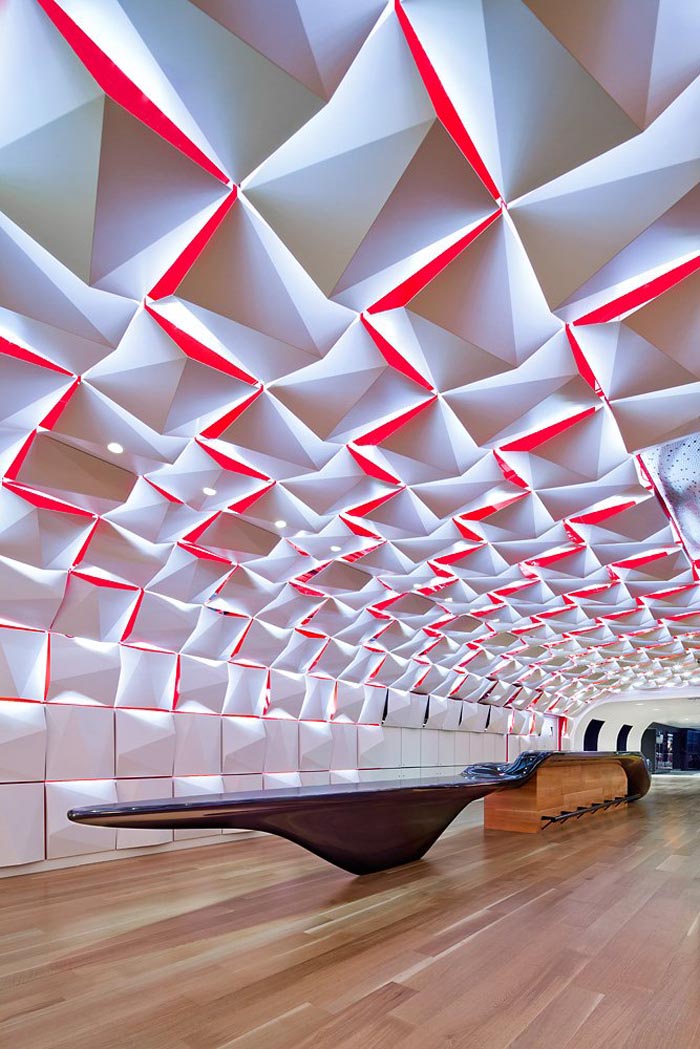
Montreal parking garage converted into post -concert gathering space, event space, cafe. Very cool ceiling and barMontreal parking garage converted into post -concert gathering space, event space, cafe. Very cool ceiling and barMontreal parking garage converted into post -concert gathering space, event space, cafe. Very cool ceiling and barSalon Urbain, Montreal lounge and event space with cool bar.Click to enlarge

The former parking lot at the Place des Arts in Montreal, has been transformed into a cool urban lounge and event space: Salon Urbain by Sid Lee Architecture and Ædifica. Adjacent to a new concert hall, the space is meant to be a meeting place pre- and post-concert or exhibit. The central focal point of the space, under the spectacular ceiling, is the bar shaped as a sound wave in physical form. The goal of the architects was to create a space that would continue the magical feeling that comes with attending a concert.

Pretty darn cool.

Photos by Stéphane Brugger

John Grade: Inspired by & Interactive with Nature

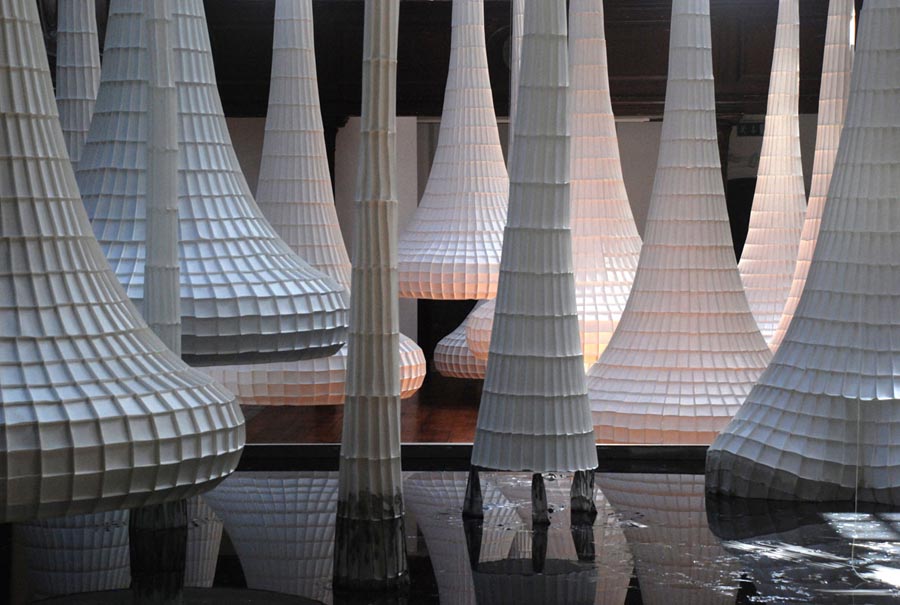
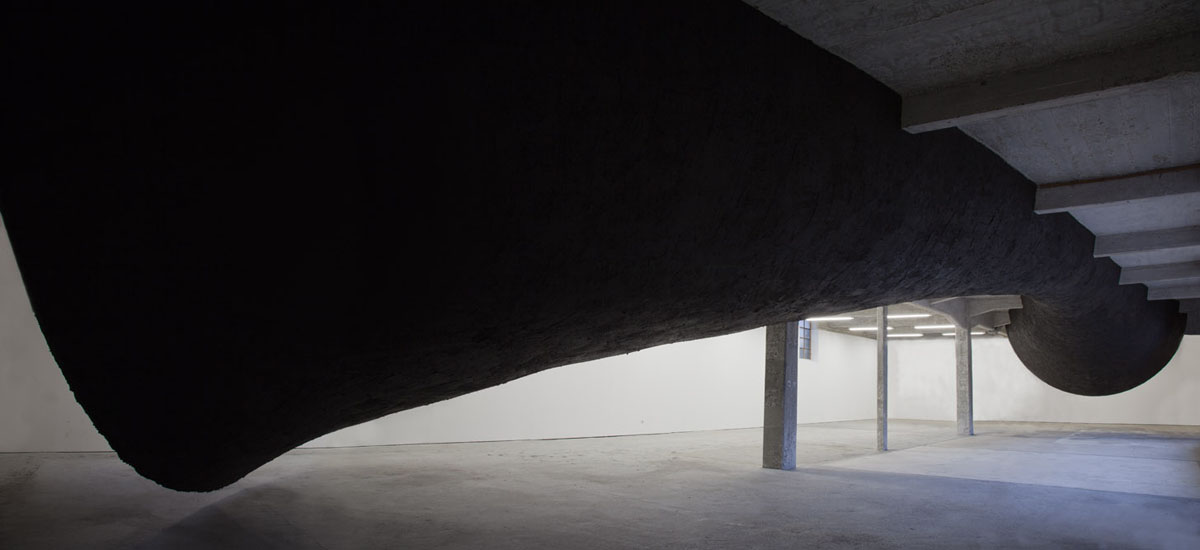
Large scale sculptures inspired by and interactive with nature. Biodegradable, dissolve and wash away with waterLarge scale sculptures inspired by and interactive with nature. La Chasse - The HuntLarge scale sculptures inspired by and interactive with nature. La Chasse - The HuntLarge scale sculptures inspired by and interactive with nature. La Chasse - The Elephant Bed, seeps of winter Click to enlarge

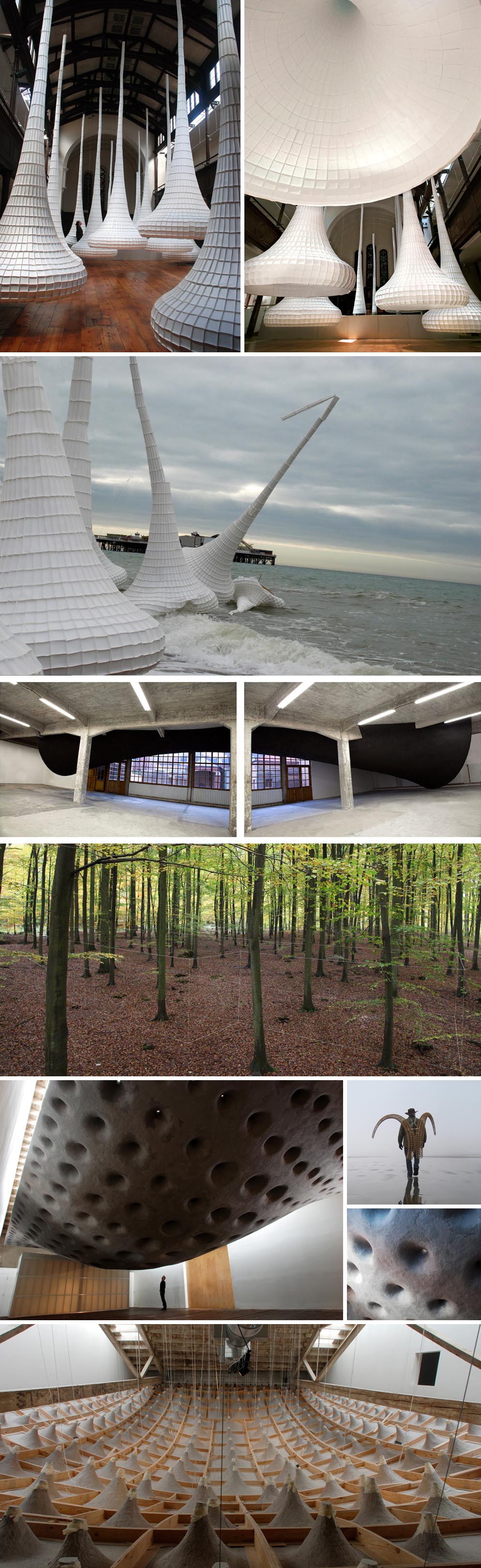
Originally from Minneapolis and now living and working in Seattle after receiving his MFA from Pratt in Brooklyn, NY, artist John Grade creates giant sculptures that are inspired by, as well as interactive with, nature. After spending several years traveling the world and sketching nature, one can see the influence, even if only indirectly, in Grade’s work. Grade thrives on the landscapes and elements that surround him. His art, in many cases, is made with recycled materials and is always biodegradable and environmentally friendly. His sculptures are meant to safely devolve, disintegrate, or dissolve in nature and are usually transported to a specific location after being exhibited for this process to take place. For example, his Elephant Beds (first, fourth, and fifth rows of photos) are made of paper that has no binder which allows them to fall apart and disintegrate as soon as they touch, or are touched by, water. His Seeps of Winter (bottom photos) are reminiscent of a whale but are based on the bogs of Ireland. The gray paper pulp surface along with the rest of the enormous work is meant to devolve in desert, forest and alpine landscapes. Pretty incredible.

via art ltd.

Zach Lieberman: Interactive Artist

interactive art, computer graphics, human-computer interaction, very cool, art meets science and technologyinteractive art, computer graphics, human-computer interaction, very cool, art meets science and technologyinteractive art, computer graphics, human-computer interaction, very cool, art meets science and technologyinteractive art, computer graphics, human-computer interaction, very cool, art meets science and technologyClick to enlarge
Another of the amazing speakers at Reasons to be Creative last week was Brooklyn-based digital artist and programmer Zach Lieberman. He uses technology in a playful way breaking down the fragile boundary between the visible and invisible. His main goal is to surprise. Lieberman has collaborated on numerous impressive projects, many of which have rightfully won awards and been exhibited at, among other places, MoMA’s Talk to Me exhibit last year.

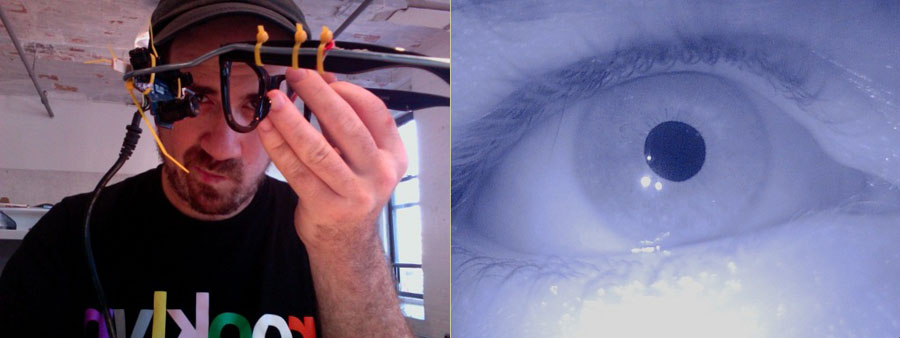
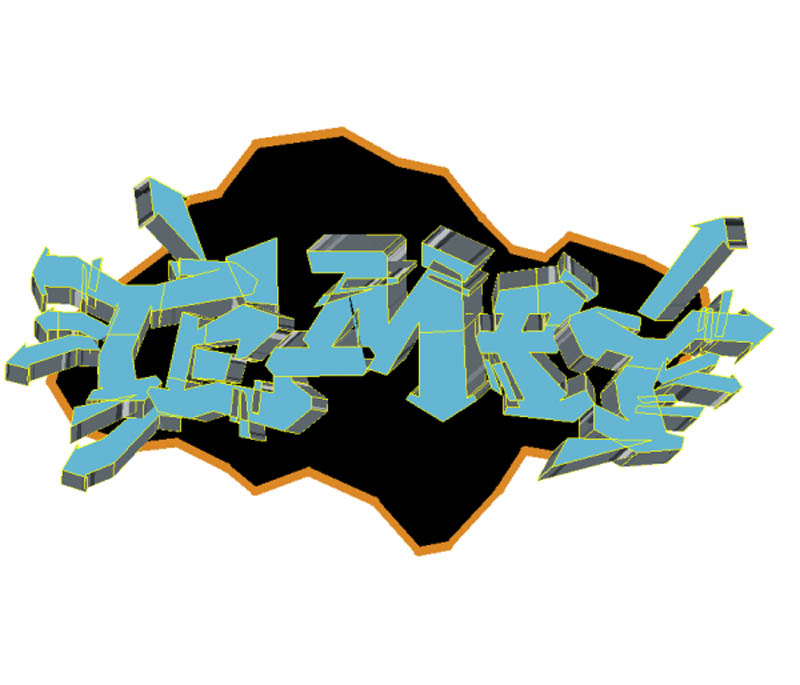
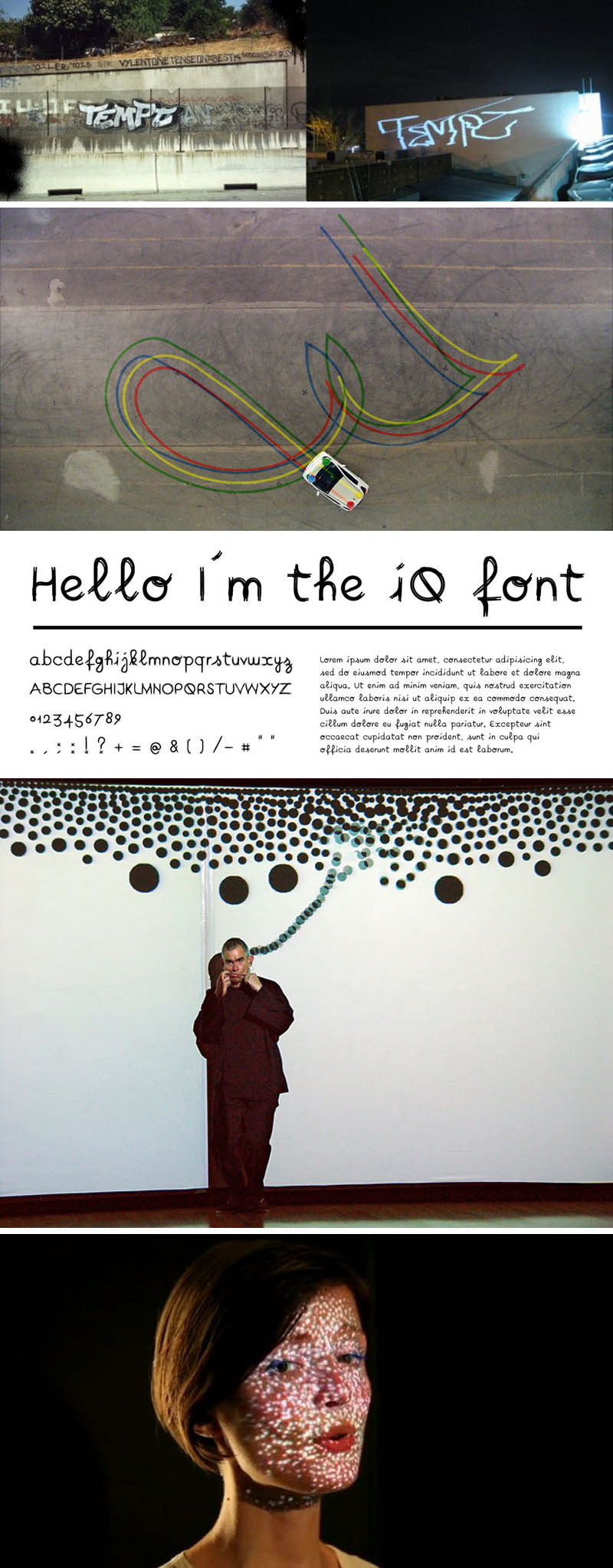
One of his impressive projects—in conjunction with the Graffiti Research Lab—is a project initially created to allow TEMPT1 — a pioneering artist in the 1980s and 90s California graffiti scene who has since been afflicted with ALS, a degenerative neuromuscular disorder leaving him completely paralyzed except for the use of his eyes and mind — to draw using an eyetracking system. Lieberman was able to keep the cost very low, and with incredible ingenuity created Eyewriter. See the video below to watch it in action and for more details. Truly incredible and so heartwarming.

Another interesting project Lieberman collaborated on with two typographers and a professional stunt driver is IQ font for Toyota. Tracking the car’s movements using custom software designed by Lieberman, they created a font which is unique and can be downloaded for free.

Other projects include voice activated graphics in Messa Di Voce, an audiovisual performance collaboration with Golan Levin, and a music video for BELL using FaceTracker code with fun effects happening on the singer’s face in real-time. (See second video below.)

CupNoodles Museum

Cup Noodles Museum, fun, interactive museum in Yokohama, Japan, make your own cup noodles, factory, park, museum, history, momofuku andoCup Noodles Museum, fun, interactive museum in Yokohama, Japan, make your own cup noodles, factory, park, museum, history, momofuku andoCup Noodles Museum, fun, interactive museum in Yokohama, Japan, make your own cup noodles, factory, park, museum, history, momofuku andoCup Noodles Museum, fun, interactive museum in Yokohama, Japan, make your own cup noodles, factory, park, museum, history, momofuku andoClick to enlarge

Just back a few days from their amazing trip to Japan, Em and Dan had lots to report. High on their list in terms of cool fun was the CupNoodles Museum in Yokohama, about 30 minutes from Tokyo. Opened last fall, the interactive museum chronicles the history of the instant ramen noodle created by Momofuku Ando in 1958. Included in the museum is a Design-your-Own Cup Noodle from content to package design, a replica of the shed where the instant ramen was invented, A Noodles Bazaar Food Court, and a theme park. Oh, and of course, a gift shop selling all things ramen, including the lovely set of chopsticks that they brought back for me, which I might just have to frame instead of actually use. When I questioned the relevance of the fun graphic logo, Em and Dan immediately responded with “No, it’s perfect. That’s exactly the feeling you experience the minute you step through the door.” ’Nough said.

Update: I just noticed that the exclamation points refer to the decorative border on the CupNoodle cup, so there’s that too…

All photos by collabcubed except second from top and second from bottom by Yuriko Nakao/Reuters.

Supermachine: Bangkok University Projects

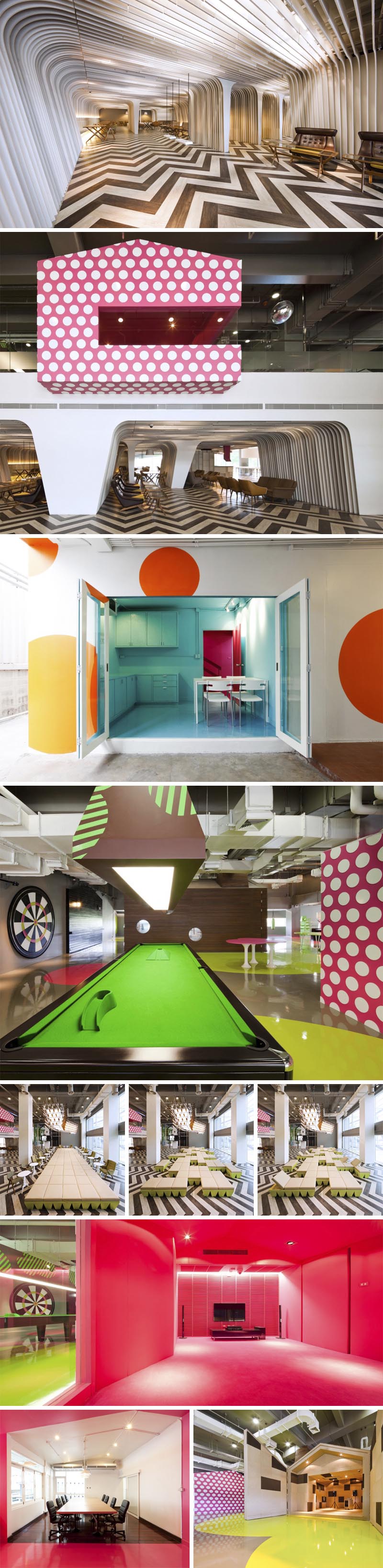
Student Lounge, fun architecture and interior design, colorful design, furniture design, Bangkok University, ThailandStudent Lounge, fun architecture and interior design, colorful design, furniture design, Bangkok University, ThailandStudent Lounge, fun architecture and interior design, colorful design, furniture design, Bangkok University, ThailandSupermachine Studio, Thai contemporary architecture and interior design, Bangkok University, BUCCClick to enlarge

Thai multidisciplinary design studio Supermachine based in Bangkok has been working on a several projects for Bangkok University, including their BU Creative Center, BU Lounge, and, most recently completed, BU Brand Unit. They are all fun, colorful, and clever designs that complement each other, yet each with different challenges and budgets. The BU Brand Unit was the most low-budget of the projects, and Supermachine was able to convert the space into a fun creative office, mostly by adding paint; the splashes of colors and circles, while not expensive, made for a complete transformation. The other two projects, with larger budgets had every aspect of the projects designed by Supermachine, including a unique pool table, shelving system and chandelier in the Lounge project, to a pixel wall in the Creative Center.

Fun all the way around.

Photos: courtesy of Supermachine and Wison Tungthunya

via the coolhunter

Air Lair: Pod Business Class Seats

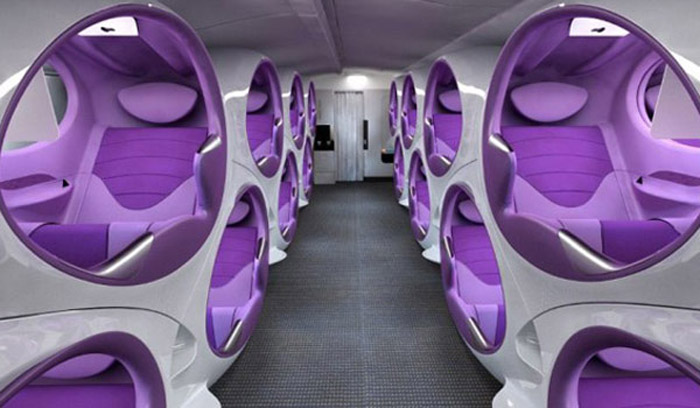
Air Lair, Concept Pod Entertainment seating for Business Class flying, Factory Design, Contour Aerospace, collabcubed Air Lair, Concept Pod Entertainment seating for Business Class flying, Factory Design, Contour Aerospace, collabcubed Air Lair, Concept Pod Entertainment seating for Business Class flying, Factory Design, Contour Aerospace, collabcubed Click to enlarge

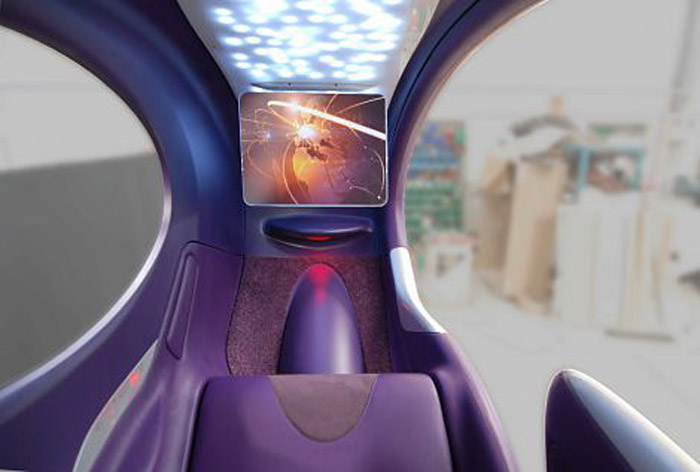
Are private pods the next step in Business Class airline seating? British product design consultants Factory Design and aircraft seat manufacturer Contour Aerospace seem to think so. Their Air Lair concept seating consists of a series of hard-shell capsules providing a whole environment for each passenger; semi-private spaces with a flat bed, mood lighting, and individual screens for in-flight entertainment. The pods stack on two levels (I’d love to see the suited businessmen hop in and out of the ‘upper bunks’) in a 1-2-1 configuration. The goal? For each person to feel like they’re in their own private jet.

First capsule hotels, now capsule airline seats. Very 21st century. And: very purple.

Here is a video with more details:

Photos courtesy Factory Design and Contour Aerospace

via the ticket

Sabi van Hemert: Childlike Creatures

Sculptures with childlike characteristics yet animal-looking, made with leather, synthetic materials andtoothpicksSculptures with childlike characteristics yet animal-looking, made with leather, synthetic materials andtoothpicksSculptures with childlike characteristics yet animal-looking, made with leather, synthetic materials andtoothpicksClick to enlarge
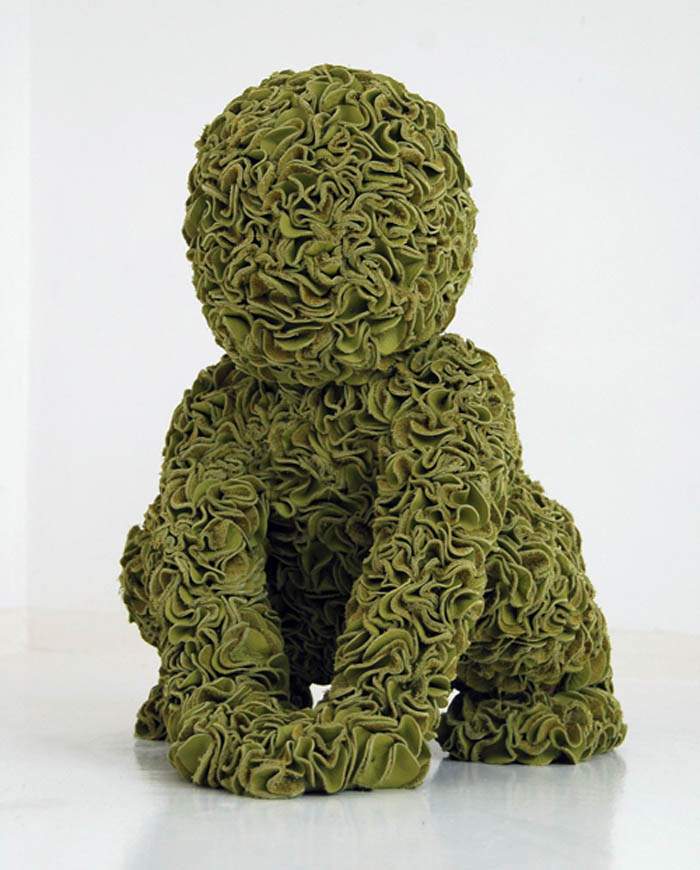
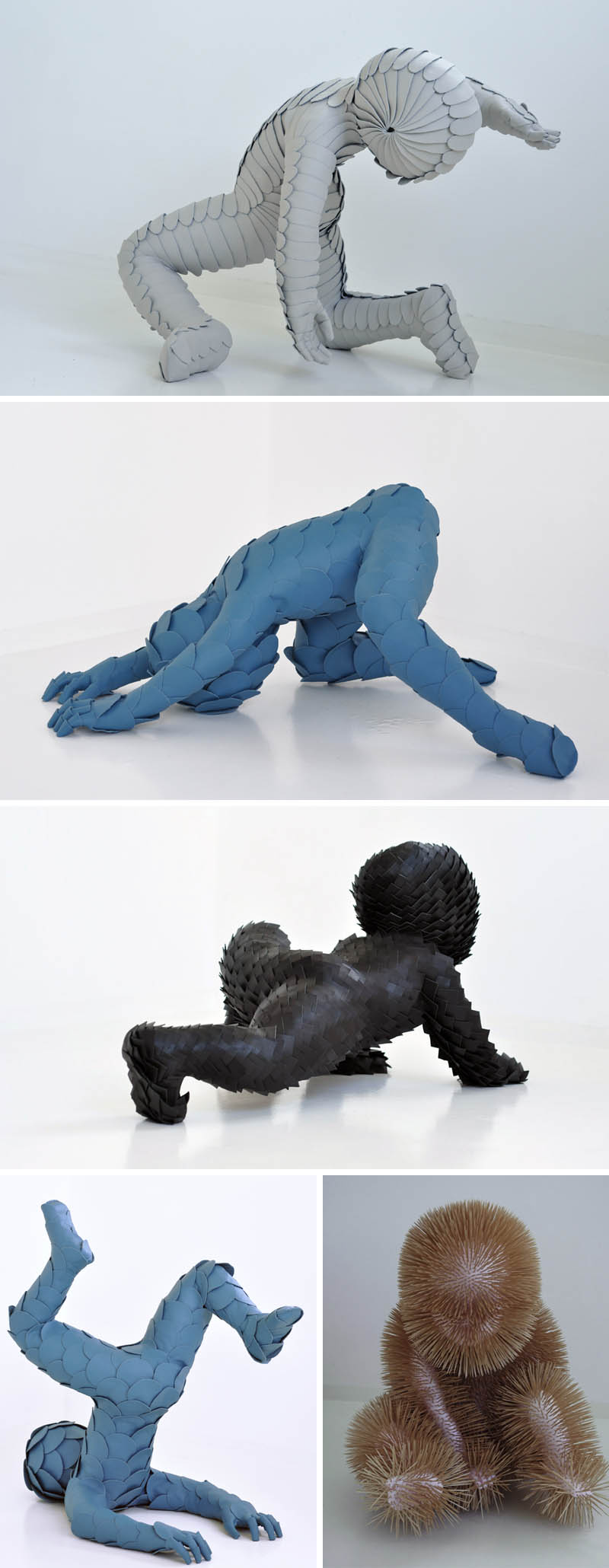
Dutch artist Sabi van Hemert creates sculptures of figures that combine childlike poses with alien looks.

From the artist:
I create an image from synthetic material or clay, letting myself be led by thoughts, associations and emotions. What do I see in the shape, what sort of feeling do I get, what does it remind me of, what am I saying with this? And, is this what I want to make? Once the image is finished, I cover it either partially or entirely with a “skin” of a different material. The choice of skin depends on the image. In contrast to the spontaneity at the beginning of the work process, when I make the skin I work in a very structured manner. For weeks, with great patience and discipline, I cut, paste or prick, following self-imposed rules such as, “all forms in the same rhythm” or “all lines continue onward”.

You can see much more of van Hemert’s work on her website.

Three Studio: Melted Manga Figurines & More

Melted Manga Anime Figurine sculptures, Three Studio, Contemporary Japanese Art, Cool SculpturesFish soy sauce container sculptures, Three Studio, Tokyo Baby, Contemporary Japanese Art, Cool SculpturesMelted Manga Anime Figurine sculptures, Three Studio, Contemporary Japanese Art, Cool Sculpturesthousands of Japanese fish-like soy sauce containers form cool sculptures, Three StudioClick to enlarge

Japanese art collective Three Studio, based in Tokyo, create contemporary colorful sculptures using Manga Anime figurines and fish-shaped soy sauce containers. The Melted Manga Anime Figure Sculptures are, well, just that. Three Studio melts thousands of the figurines together creating sculptural blocks, tableaus, and figures that include bodies. From a distance, the bunched up pieces become abstract, but up close the decapitated heads, loose torsos, eyeballs and feet become apparent for a humorous and, at the same time, slightly creepy effect.

Three Studio’s series of sculptures created with thousands of fish-shaped soy sauce containers filled with colored water, range in form from geometric shapes to a mobius strip and even a Tokyo Baby. Fun stuff!

via Slanted and Gradient

Luzinterruptus: Plaza de la Cebada Pool

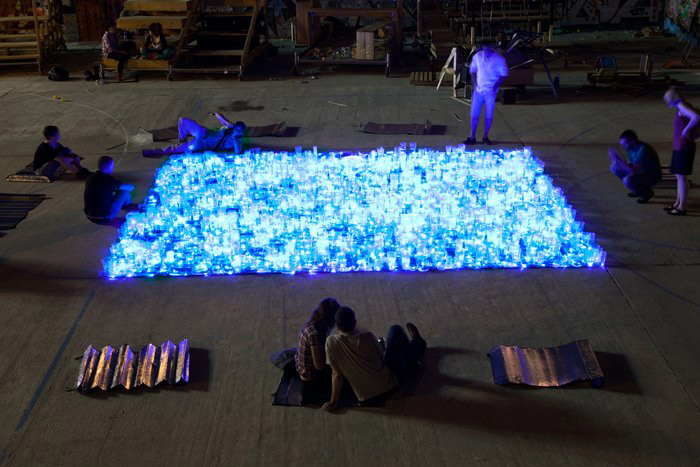
Protest and celebration of pool in Madrid, light installation, luzinterruptus, guerilla art collective, street artProtest and celebration of pool in Madrid, light installation, luzinterruptus, guerilla art collective, street artProtest and celebration of pool in Madrid, cool light installation, luzinterruptus, guerilla art collective, street artClick to enlarge
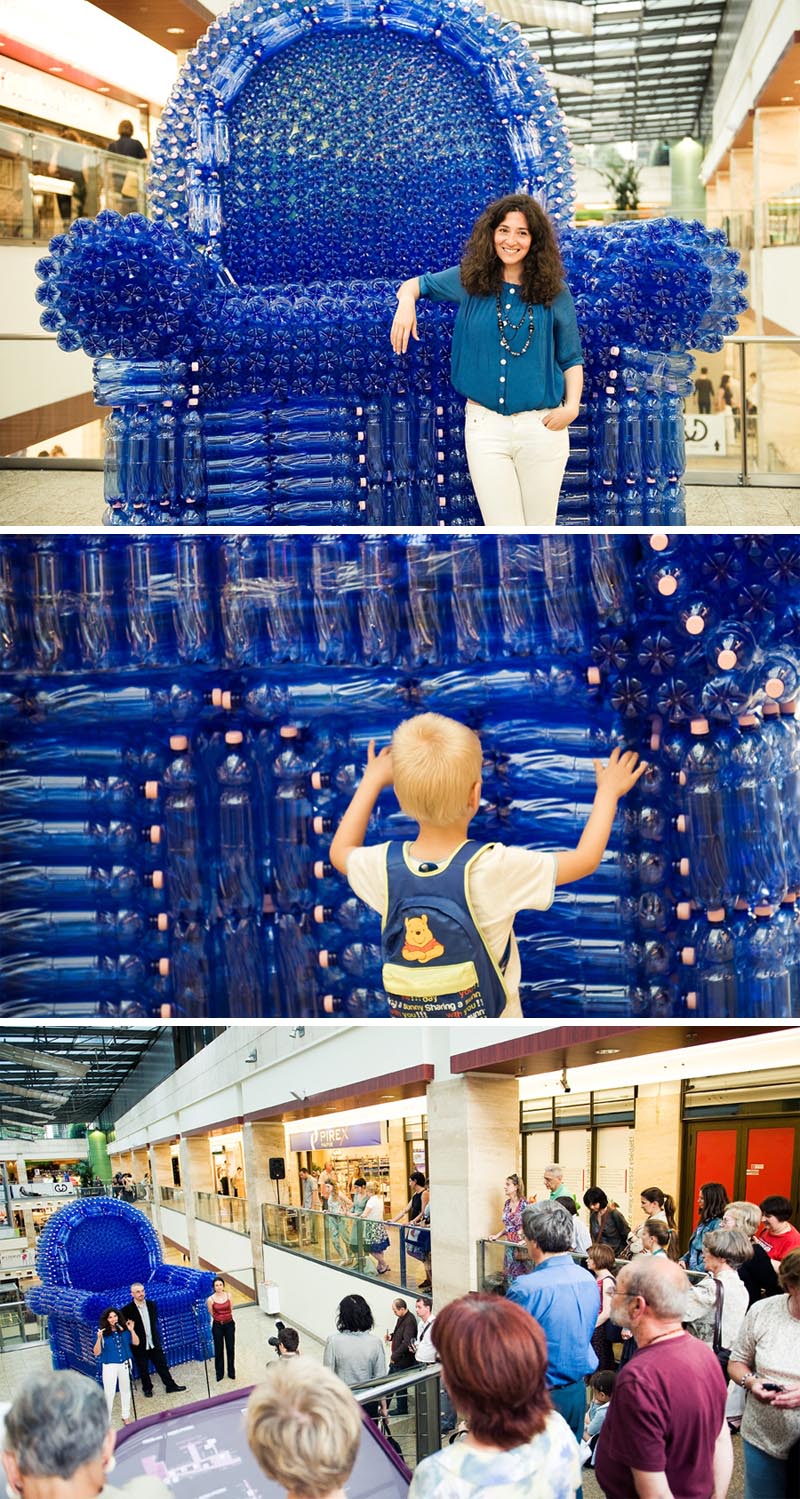
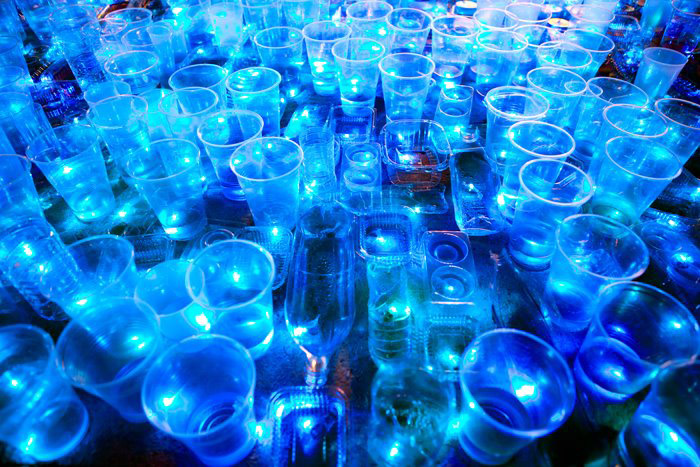
The Spanish guerilla art collective Luzinterruptus (previously here) is at it again. Their latest intervention took place on May 15th at Plaza de la Cebada in Madrid. Collecting over 2,000 used plastic cups and containers in the previous month, the artists filled them each with blue water, placed them in a 6 x 4 meter rectangle and lit them. This was to represent the community public swimming pool that had been demolished by the city in 2008 with the promise of building a new and improved pool. Four years later, still no sign of a pool, while plans are now evolving into a high-end entertainment center and gourmet food marketplace which will be too pricey for the people of the neighborhood.

The light installation in the shape of a swimming pool was a reminder of what the space once was and what it should rightfully be once again in the not-too-distant future.

via Luzinterruptus’ facebook

Andrea Juan: Antarctic Installations & Photos

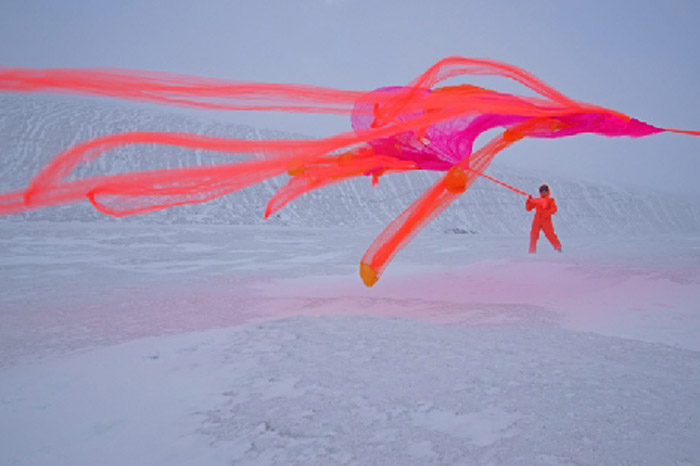
neon mesh fabric on antarctic landscape, Andrea Juan, Contemporary Photography, Argentinean art, Climate Change Concernsneon mesh fabric on antarctic landscape, Andrea Juan, Contemporary Photography, Argentinean art, Climate Change Concernsneon mesh fabric on antarctic landscape, Andrea Juan, Contemporary Photography, Argentinean art, Climate Change Concernsneon mesh fabric on antarctic landscape, Andrea Juan, Contemporary Photography, Argentinean art, Climate Change ConcernsClick to enlarge
Argentinean artist Andrea Juan works with photography, digital video and installations. Since 2004 her work has revolved around Antarctica and scientific research related to climate change. She has used the ice-fields both as a screen for slide projections of the contrasting warm and sunny sunflowers from the northern Argentina that eventually convert to flames and burn out as a warning to the viewer, and, more recently, as the backdrop for her bright-colored fabric installations and performances.

Her latest series of photographs are titled New Species and New Eden, both of which are on view at Praxis gallery here in NYC.

Following the meltdown of ice shelves which caused important changes in glaciers in the Antarctic Peninsula, an extraordinary wealth of new specimens has been found. An unknown world of possibilities and new life has emerged and it is the core of the series New Species (2011). The striking images depict the newly discovered ecosystem that had remained unnoticed under the ice in playful scenes where gleaming shapes take over the immeasurable setting.
This series also sparked the latest site-specific project which is titled New Eden (2012). This performance/installation took place in Antarctica last January and February. Large pieces of mesh in neon colors flow over large expanses of ice without touching the ground.  The translucent material casts diaphanous shadows on highly reflective areas which become covered with pink and orange light. Like soft and delicate living organisms, the sheer net moves between the shapes of ice blocks in the land and clouds in the sky, while changing the perception of an otherwise frosty landscape.
There’s a Christo quality to these latest installations that I love. The whiteness of the snow and ice as a canvas makes these spectacularly bright colors and shapes all the more dramatic.

New Species New Eden is on view at Praxis until July 14, 2012.

Photos courtesy of the artist; Praxis; and artnet

via Kaia