JIA: Contemporary Chinese Tableware

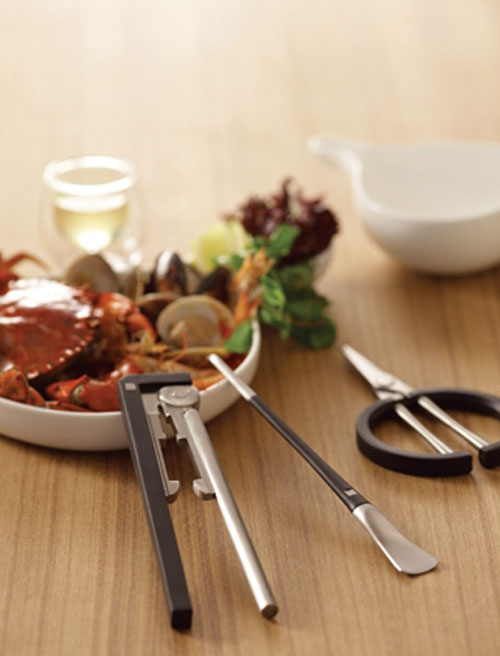
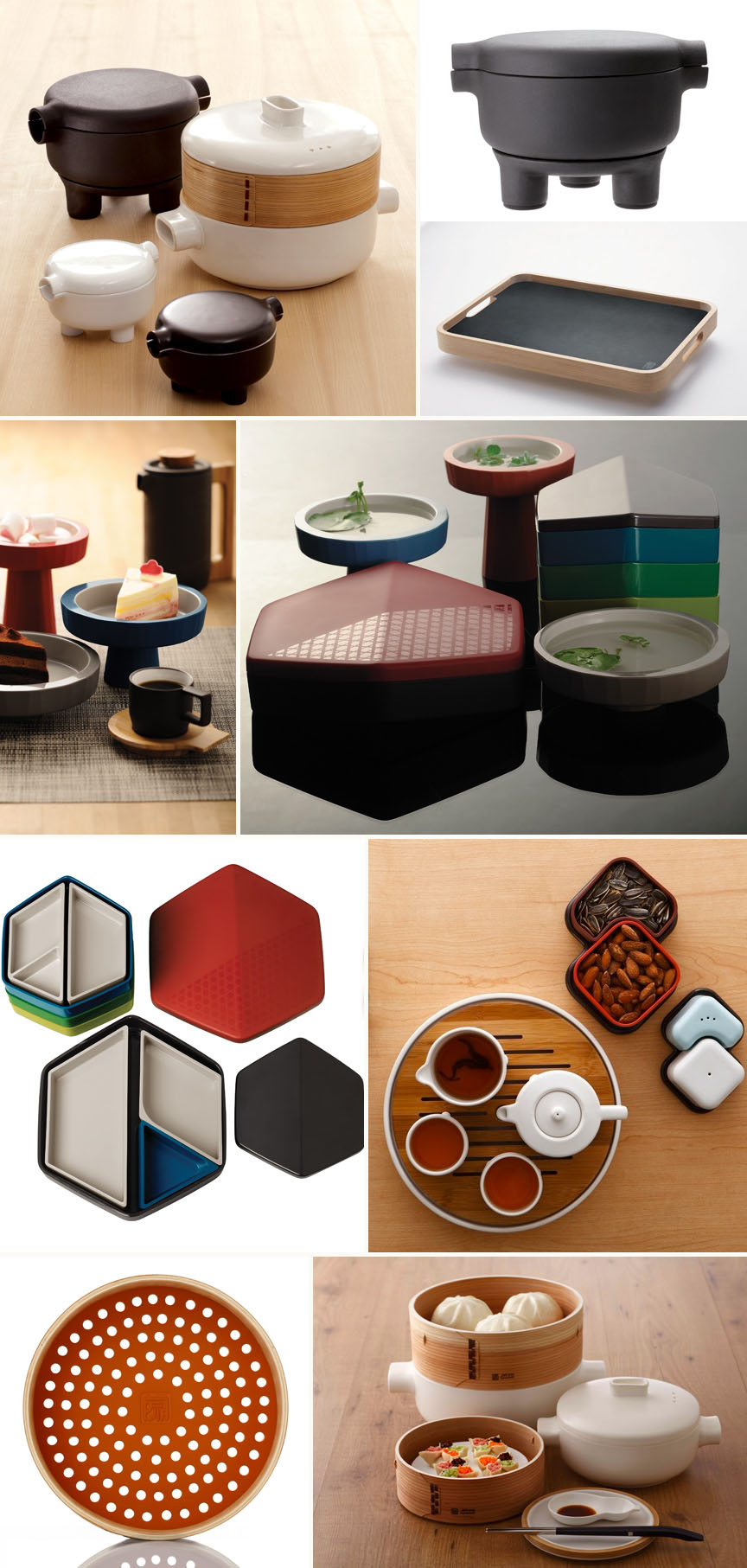
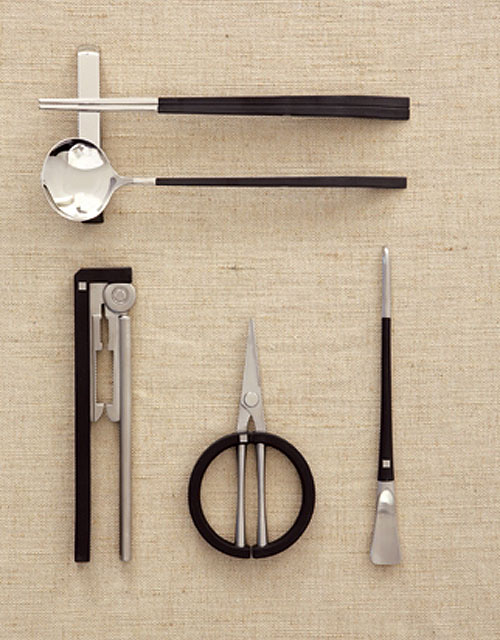
Contemporary chinese tableware, utensils, seafood, beautiful design, JIA, flatwareContemporary Chinese tableware, JIA, industrial design, product design, beautiful flatware designContemporary Chinese tableware, JIA, industrial design, product design, beautiful kitcheware, stylish kitchewareI’d have to say that I pretty much love everything on the JIA kitchen and tableware site. JIA, based in Hong Kong, means ‘home’ in Chinese. The company has invited international designers with different cultural backgrounds to re-interpret Chinese object culture and its traditional craftsmanship for a new and modern housewares market relevant to both the Asian and Western dining tables.

From the seafood set up top, (how beautiful are those tools, eh?) to the chunky Ding casserole and salt & pepper shakers, it’s all just lovely.

Daniel Buren: Excentrique(s)

Cool installation at the Grand Palais in Paris, by Daniel Buren, Monumenta 2012, collabcubedCool installation at the Grand Palais in Paris, by Daniel Buren, Monumenta 2012, collabcubedCool installation at the Grand Palais in Paris, by Daniel Buren, Monumenta 2012, collabcubedClick to enlarge

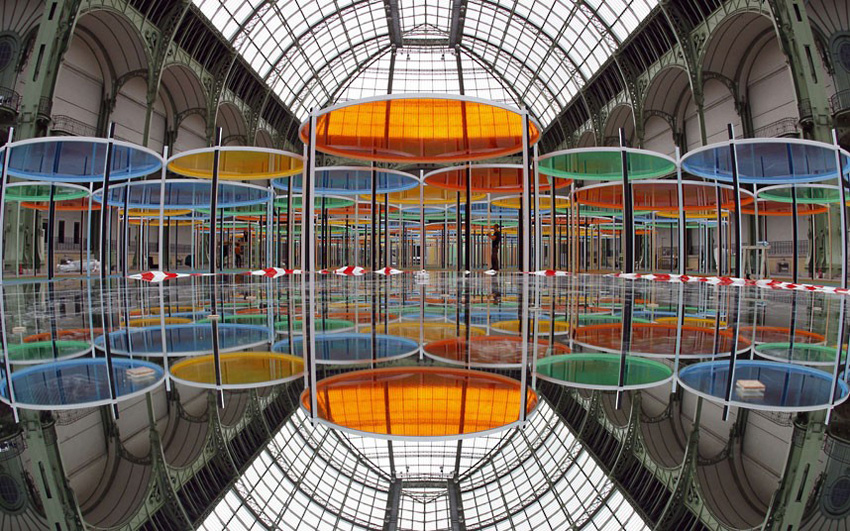
French artist Daniel Buren has unveiled his monumental installation Excentrique(s), Travail in situ, for this year’s Monumenta, the annual art project that’s in its fifth year and challenges an internationally known artist to ‘own’ the 145,000 square foot space of Paris’s Grand Palais.

Buren, a minimalist, has filled the space with primary colored discs horizontally eight feet off the ground, except for the area underneath the nave which has 9 circular mirrors on the floor facing up. Utilizing the sunlight that shines through the space, Buren fills the Grand Palais with color and light that, apparently, is rather breathtaking.

This would be so much fun to see in person…because of the installation and because it’s in Paris!

Photos: Courtesy of Monumenta, Benoit Tessier/Reuters, Francois Guillot/AFP/GettyImages and Francois Mori/AP.

via voanews and the telegraph

Walid Raad: Imaginative Wall Reliefs

Walid Raad, Contemporary Lebanese Art, sculpture, installation, architectural wall reliefs, collabcubedWalid Raad, Contemporary Lebanese Art, sculpture, installation, architectural wall reliefs, collabcubedWalid Raad, Contemporary Lebanese Art, sculpture, installation, architectural wall reliefs, collabcubedClick to enlarge

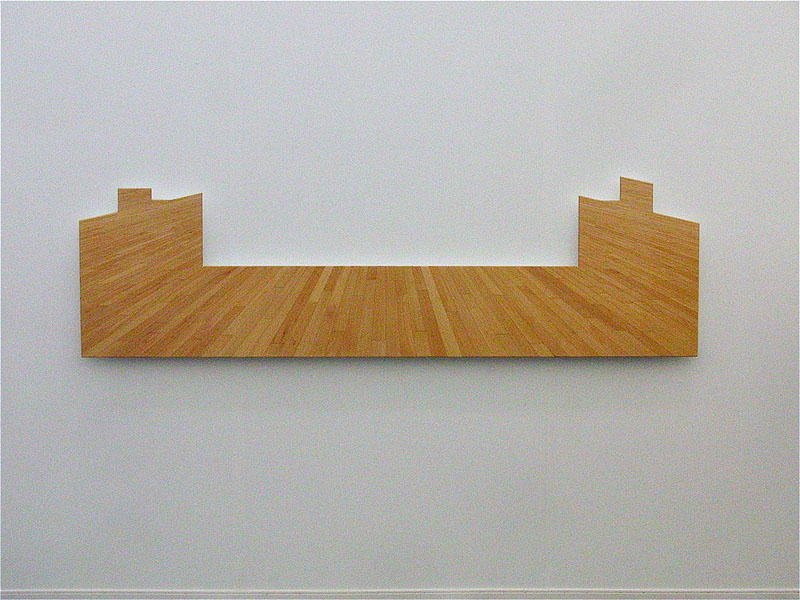
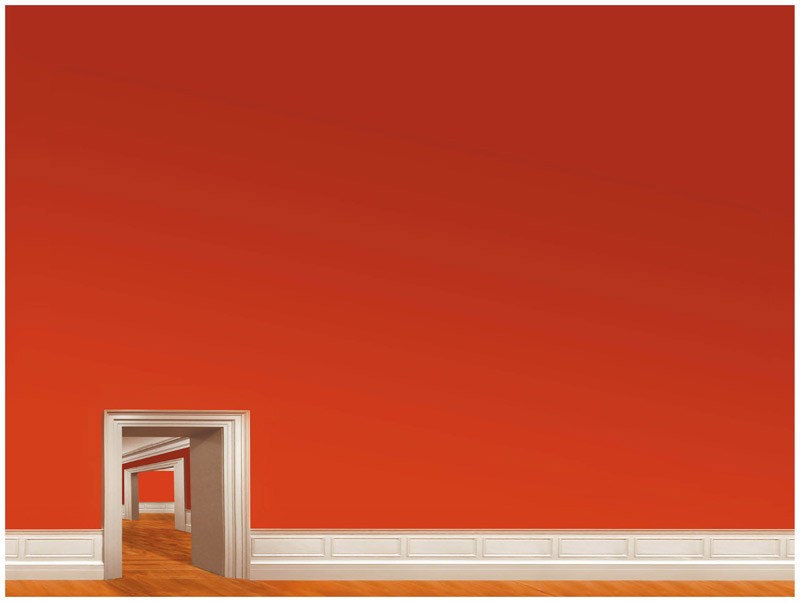
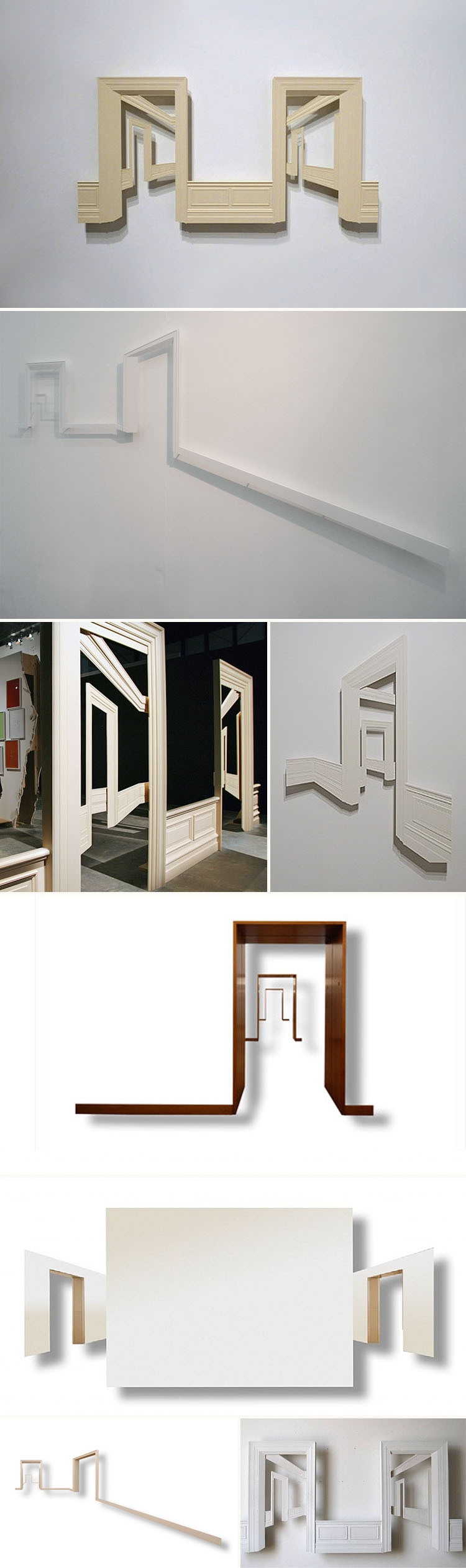
Walid Raad is a contemporary media artist originally from Lebanon and now mostly based in New York. He formed The Atlas Group, an imaginary art collective whose work is exclusively produced by Raad. His works include video, photography, literary essays and these architectural wall reliefs, of which I spotted the top one at the Frieze Fair here in NYC last week.

These sculptural wall hangings have an exaggerated perspective and all seem to be inviting one in through their portals. Concerned with the contemporary history of Lebanon, particularly the wars between 1975 and 1991, Raad’s works are often representation of traumatic events. His work examines the social, political, psychological and aesthetic ramifications of the various wars that have been waged in Lebanon.

In his series of wall reliefs—an ongoing project in part titled Scratching on Things I Could Disavow: A History of Art in the Arab World—Raad literally sets the stage for his upcoming play about art institutions in the Middle East, depicting what the architectural interior of the museum’s gallery spaces would be.

Walid Raad is an associate professor at the Cooper Union School of Art.

Top photo by collabcubed; others courtesy of Paula Cooper Gallery, artnet, and The Atlas Group.

Kuggen (The Cog): Wingårdh Arkitektkontor

Swedish contemporary architecture, colorful office building. The Cog, Kuggen, Cool building designSwedish contemporary architecture, colorful office building. The Cog, Kuggen, Cool building designSwedish contemporary architecture, colorful office building. The Cog, Kuggen, Cool building designClick to enlarge

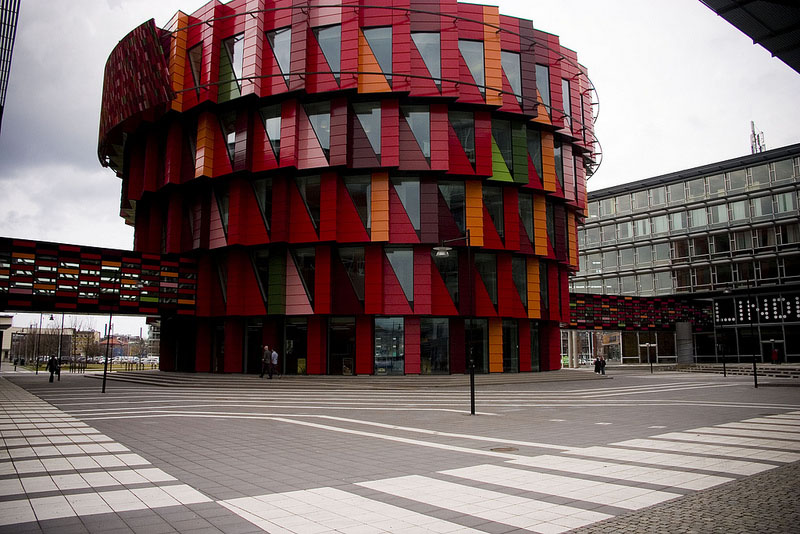
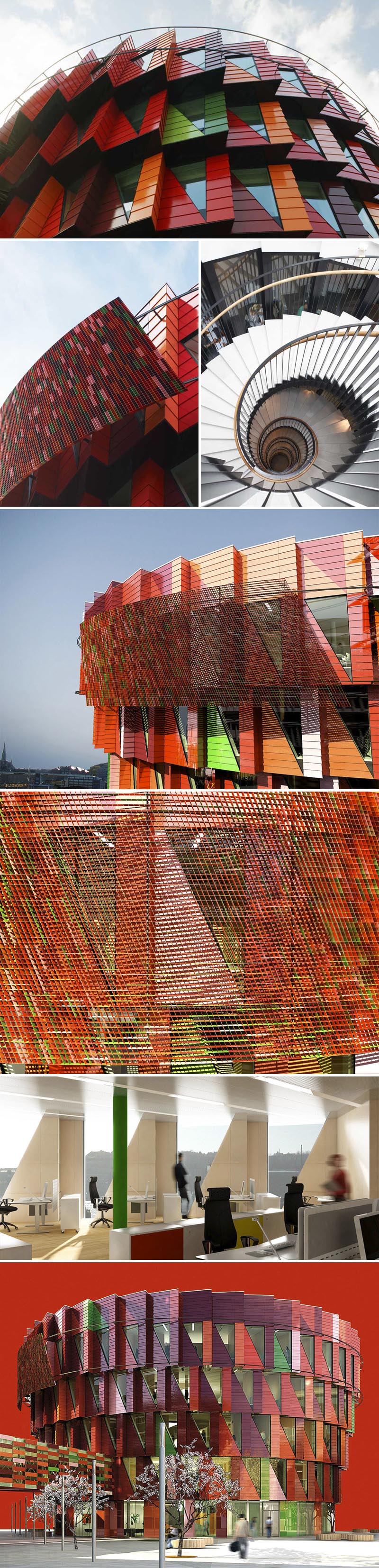
Kuggen (The Cog in Swedish) is a brightly colored sustainable office building, designed by the Swedish firm Wingårdh Arkitektkontor, nestled in among Lindholmen’s other office buildings in Gothenberg, Sweden, in less colorful shades of gray. The newish building acts as a hub for formal as well as informal meetings between the local, and student, community and the business community. The design is not only unique in its aesthetic, but incorporates state-of-the-art solutions for adapted ventilation, lighting, heating and cooling that minimize the environmental impact. Growing by two room units per floor, from bottom to top, creates shading for the windows on the previous floor, as well as a curved screen that rotates around the building—following the sun’s path—providing additional shading. The roof has built-in sun collectors that complete the solar energy system.

The cylindrical shape of the structure allows for lots of floor space, and the triangular windows provide both open-plan and private office spaces with good daylight, reducing the need for artificial lighting.

I find it interesting that they have chosen to keep the interior palette to neutral tones, but then, I guess working in a bright red office space could be a little distracting and, of course, not as energy-efficient.

Top two photos from David Anderson’s flickr; Other photos by Ake E:son Lindman courtesy of the architect.

via daddelicious flickr

Chris Mason: Social Climbing

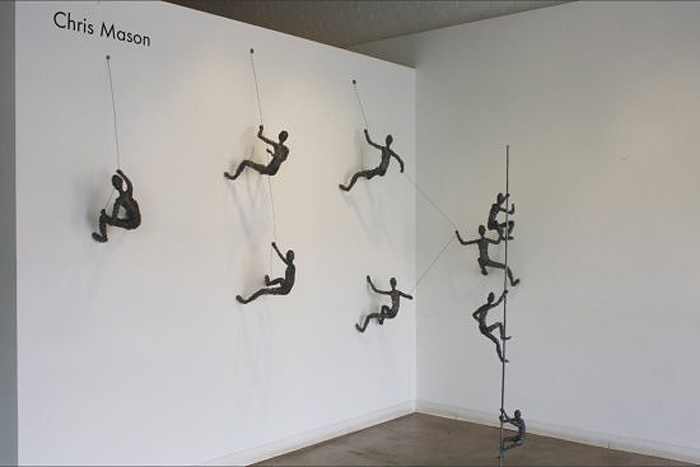
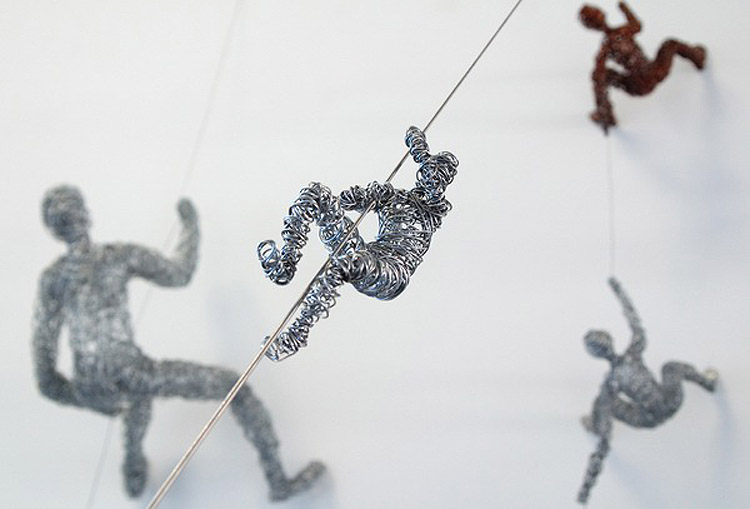
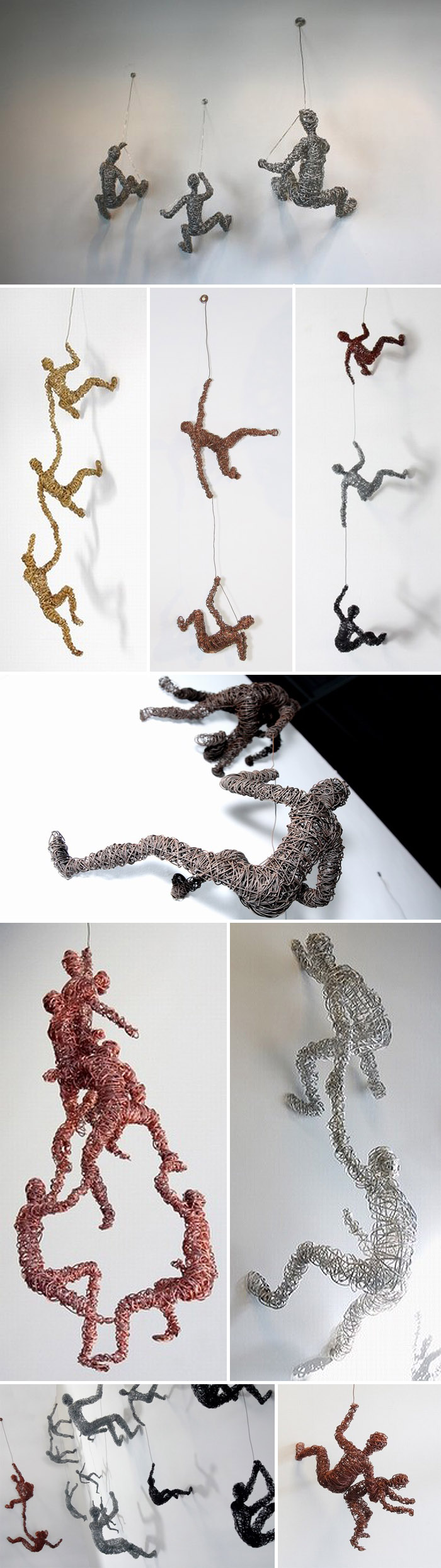
Contemporary wire sculpture, Chris Mason, social climbing and rewired, hanging sculptures made of wireContemporary wire sculpture, Chris Mason, social climbing and rewired, hanging sculptures made of wireContemporary wire sculpture, Chris Mason, social climbing and rewired, hanging sculptures made of wirecontemporary wire sculpture, hanging figures, spiderman-like, Chris MasonClick to enlarge

Originally from New York, but now living in California, artist Chris Mason started as a muralist before he began working extensively with wire. As a sculptor, Mason attributes the two biggest influences on his work to High Renaissance Figurative Art and comic books. The latter might explain the Spiderman quality to his climbing wire sculptures.

From the artist:
I’ve always found the human form to be the most compelling subject to render in any medium. The action of climbing provides an opportunity to look at the figure suspended in space, to be able to see from angles less seen in most traditional sculpture.

Mason has humorously titled his wired sculpture series as Social Climbing and Rewired. I think walking into a gallery filled with these little guys would be a fun experience.

via craighead green gallery

Lomography: La Sardina Beach Edition

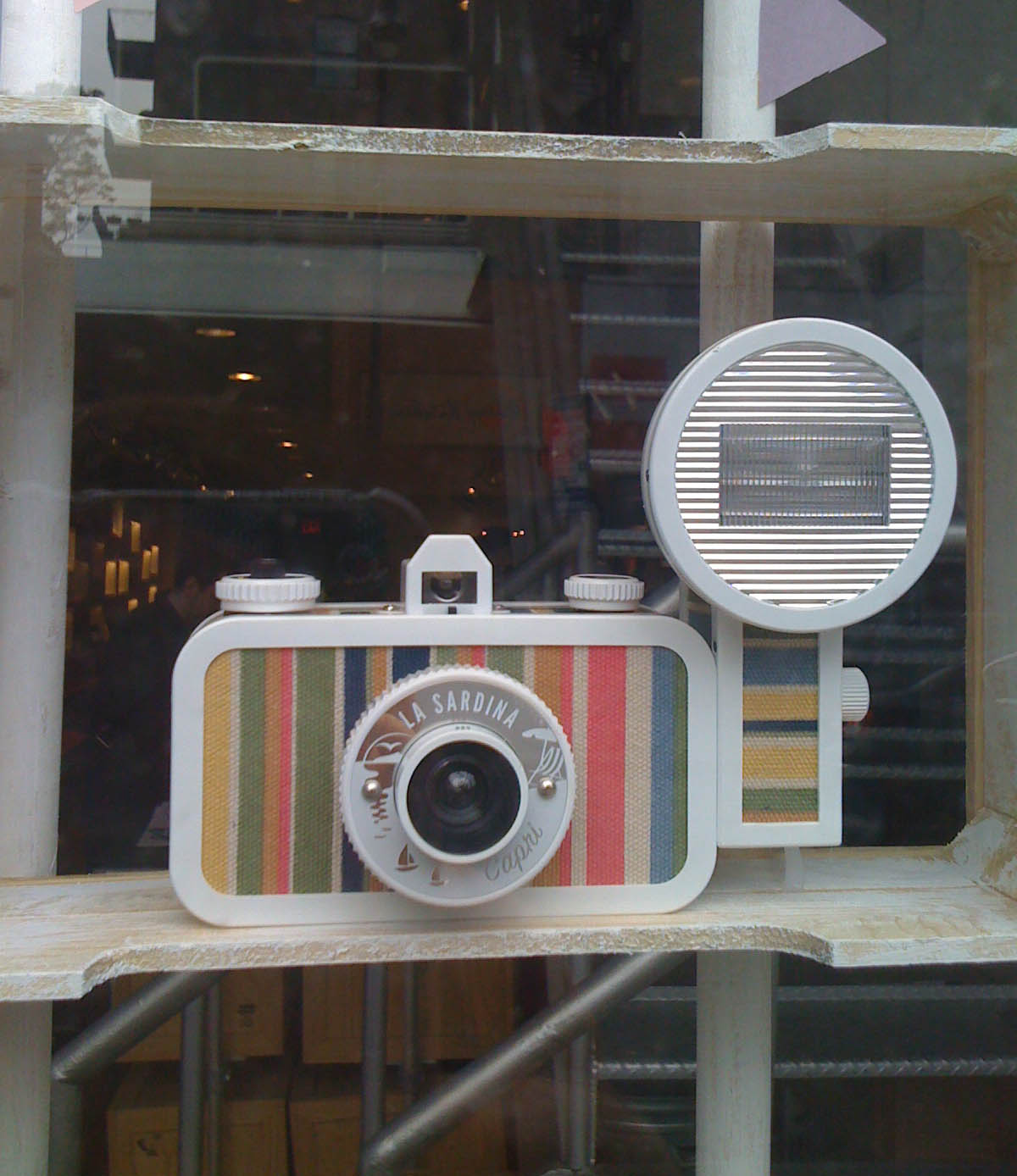
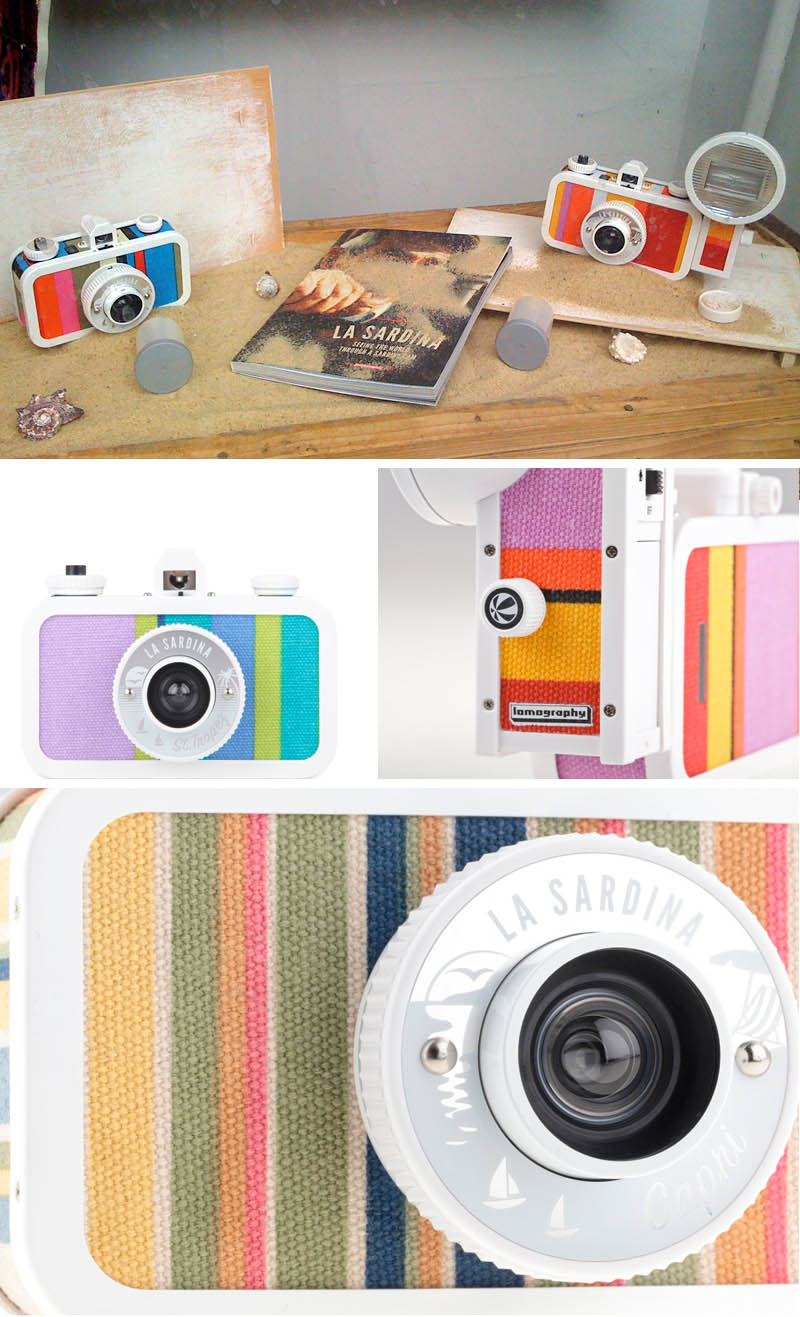
Cameras, 35mm camera, sardina, lomography, fun design, beach canvas, flash camera, collabcubedCameras, 35mm camera, sardina, lomography, fun design, beach canvas, flash camera, collabcubedCameras, 35mm camera, sardina, lomography, fun design, beach canvas, flash camera, collabcubedClick to enlarge

I probably walk by the Lomography store a few blocks from my apartment about once a week, but this past weekend I stopped in my tracks when I spotted these fun cameras in the window and stepped inside to see them up close. La Sardina Beach Edition cameras, as they are called, take their inspiration from the sardine tin—in their shape and size—and come in all sorts of fun colors and patterns which, in this edition, are printed on canvas. These 35mm film cameras (yes, film!) are super cute and cost between $75 and $110 and according to reviews, take a pretty decent photo in the Lomography style.

You can see more designs and purchase them here.

Guildor: Write on the Water

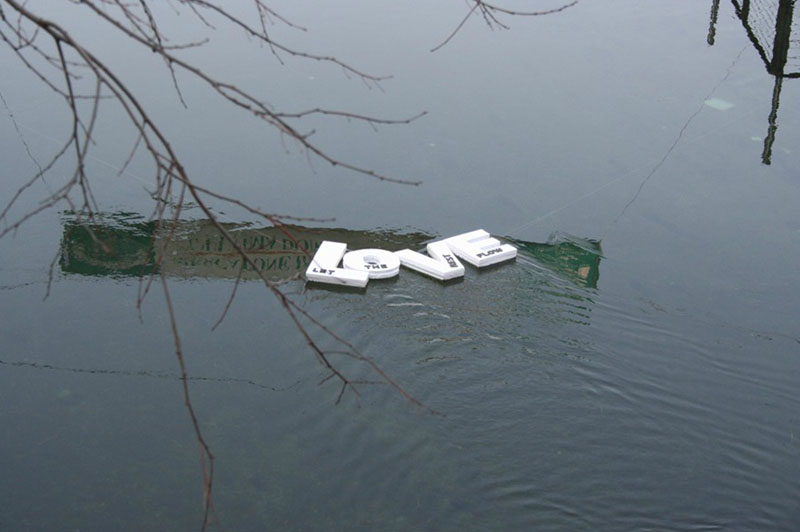
Typography, Typographic installation in Milan, Amsterdam, Words floating on water, Guildor, Street artTypography, Typographic installation in Milan, Amsterdam, Words floating on water, Love, Guildor, Street artTypography, Typographic installation in Milan, Amsterdam, Words floating on water, Guildor, Street artClick to enlarge

I can just imagine the smiles provoked by coming upon Milan-based street artist Guildor’s floating phrases. Write on the Water (love the punniness) is a series of installations created by the artist in several cities including Amsterdam, Milan, and Venice. Linking foam letters together to create words and statements such as “Clap First”, “Happiness Happens”, “Think Once and a Half”, “Pensa Spensierato (Think Carefree)”, and “Love; Let the Rest Flow” and floating them on water – from fountains to rivers and canals – is simply a happy and nice concept.

From the artist:
Writing on water is like writing down a thought in order to keep it secure even when it is shaken by the course of life, to distinguish the important things from those you should just let flow by.

If you like this you’d probably enjoy Nicole Dextras’ Ice Typography installations, too.

Top photo by Nicole Blommers; Once and HA photos by Andrea Bertolotti; all others by Thomas Pagani.

via flickr

Snarkitecture: Odin Fragrance Pop-Up Shop

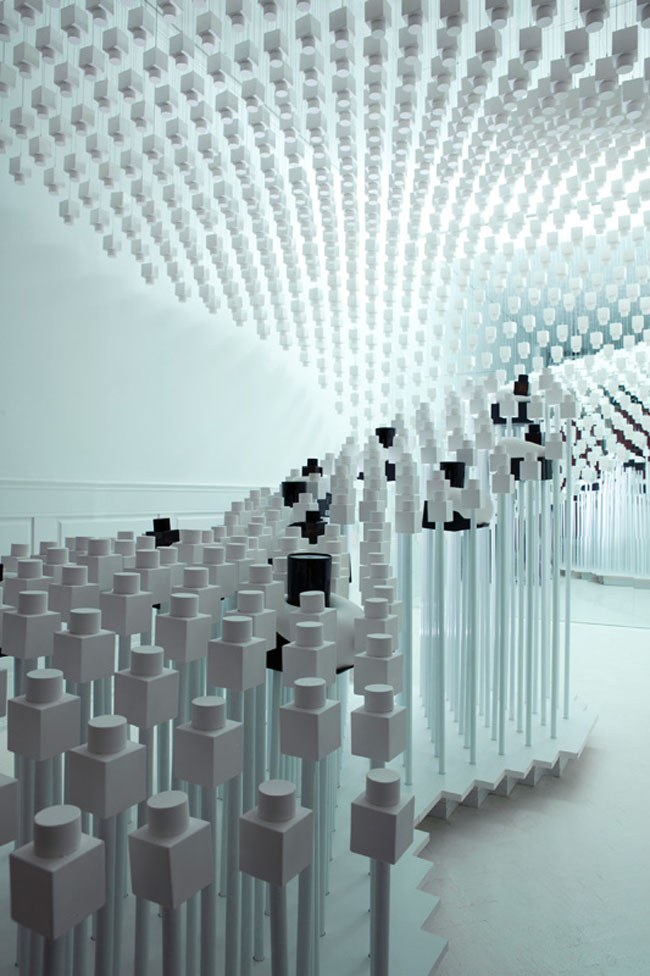
Snarkitecture, Daniel Arsham, Cool retail design for Odin Pop-up shop, NYC, collabcubedSnarkitecture, Daniel Arsham, Cool retail design for Odin Pop-up shop, NYC, collabcubedSnarkitecture, Daniel Arsham, Cool retail design for Odin Pop-up shop, NYC, collabcubedClick to enlarge

Earlier today, I stopped by the new Odin Fragrances Pop-up Shop in the East Village designed by the ever-talented Snarkitecture (previously here and here). The 350-square foot, elongated shop, right next to Odin’s main store, is filled by an installation created with hundreds of white plaster cast pieces in the shape of Odin’s Fragrance bottles. These ‘bottles’, in extreme contrasting white – highlighting the occasional black fragrance bottle within the piece – are both inverted and suspended from the ceiling in a beautiful, flowing pattern, as well as elevated on poles from the floor twisting their way around the space. It’s really quite lovely and unexpected on the East 11th Street block.

The Odin Fragrance x Snarkitecture Pop-Up Shop will be open for five more weeks, from 12pm to 7 pm daily at 330 East 11th Street in NYC.

Top photo courtesy of Snarkitecture; all others collabcubed

via T Magazine via notcot

Multipraktik: TapeArt

Street art from Slovenia, Murals made with colored tape, graphic designers, multipraktikStreet art from Slovenia, Murals made with colored tape, graphic designers, multipraktikStreet art from Slovenia, Murals made with colored tape, graphic designers, multipraktikClick to enlarge

The Slovenian, multi-disciplinary, design collective Multipraktik organized a series of street TapeArt actions – with different artists across Slovenia – as part of the new campaign for Orto, a cellphone carrier company. Aside from the resulting wonderful murals, it looks like these guys had a lot of fun. Take a look at one of the many stop-motion videos below.

via urban pride

Kay Rosen: Wordplay

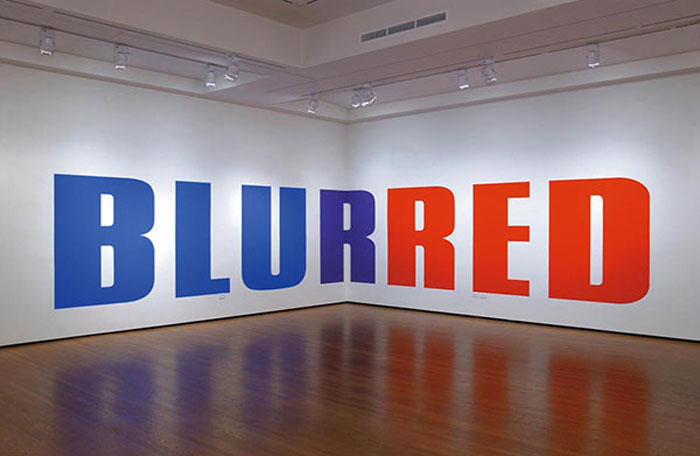
Typographic Installations, Words, Type as art, Kay Rosen, play with wordsTypographic Installations, Words, Type as art, Kay Rosen, play with wordsTypographic Installations, Words, Type as art, Kay Rosen, play with wordsThese are fun. Texas-born artist Kay Rosen, who teaches at SAIC in Chicago, loves type. The shapes. “They are the architecture of text.” Her typographic art installations are playful and fun to figure out, but just to make it a little less challenging, I’ll list the titles from top to bottom here:

Blurred
Deep Beep
Wideep
Tent
Pendulum
MañanaMan
Overbite
Go Do Good

Many more on her website!

via IdN

Guillermo Álvarez Charvel & Héctor Falcón

Book art, Book sculptures, Héctor Falcón Guillermo-Alvarez Charvel esto-(no)-es-un-libro-de-artistaBook art, Book sculptures, Héctor Falcón Guillermo-Alvarez Charvel esto-(no)-es-un-libro-de-artistaClick to enlarge

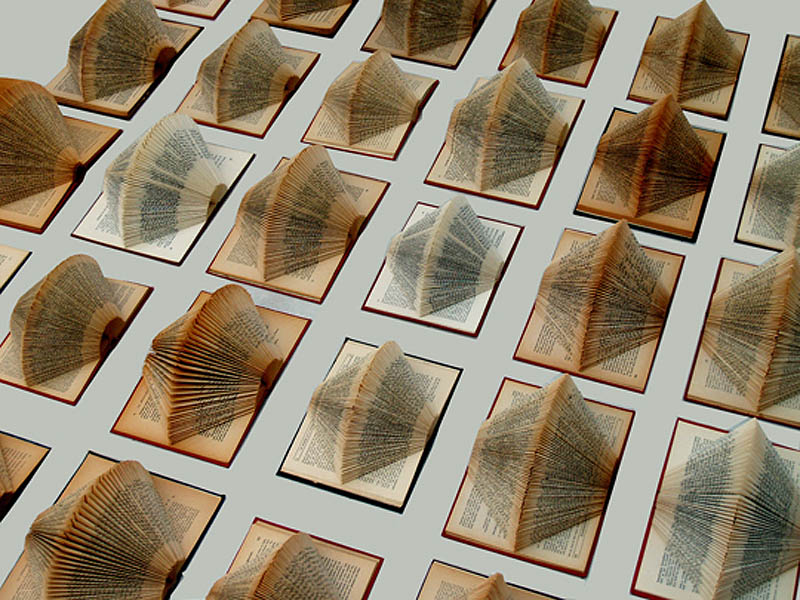
Just ending this past weekend at the MACG (Museo de Arte Carrillo Gil) in Mexico City, was an exhibit titled Esto (no) es un libro de artista (This is (not) an artist book) which included the book sculpture works of Guillermo Álvarez Charvel and Héctor Falcón. Yes, the amount of art revolving around books these days is both overwhelming and a little depressing, but at least these soon-to-be-extinct objects will live on as sculpture and installations.

It’s interesting to see both these artists side by side and, in some cases, collaborating. While Álavarez Charvel uses paper folding to create his book sculptures and works up from the original volume, Falcón’s works are more topographic, where he will stack books but then cut them into pieces or carve into them.

via espacio blanco

Peace Bridge: Santiago Calatrava

Santiago Calatrava, Peace Bridge, Helix, Contemporary Bridge Design, Calgary, CanadaSantiago Calatrava, Peace Bridge, Helix, Contemporary Bridge Design, Pedestrian Bridge,Calgary, CanadaSantiago Calatrava, Peace Bridge, Helix, Contemporary Bridge Design, Pedestrian Bridge,Calgary, CanadaClick to enlarge

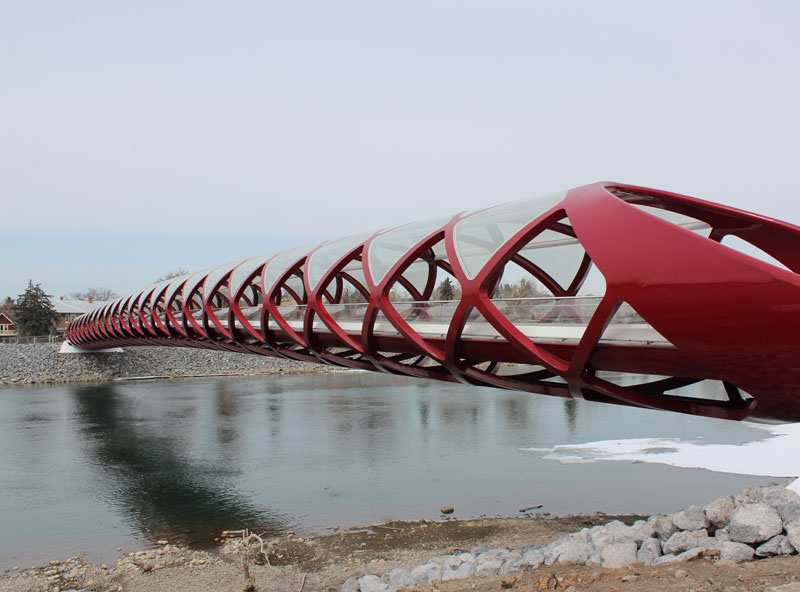
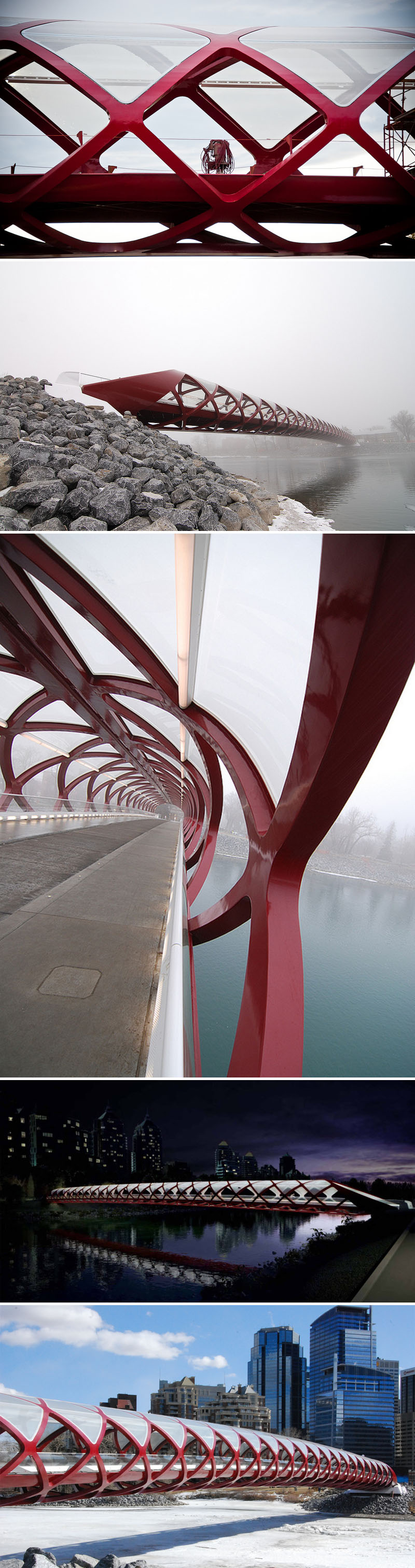
Not a typical design for Spanish architect Santiago Calatrava, the Peace Bridge in Calgary, Canada, was inaugurated at the end of this past March. A red twisting helix-shaped pedestrian bridge, the Peace Bridge is a low single-span bridge without Calatrava’s usual soaring vertical accents because of a no-fly zone above due to a nearby heliport. In addition, to minimize impact on the local environment, the bridge was constructed without supporting piers in the riverbed. The result is a striking tubular steel-truss bridge, with enough coverage to protect against the winter elements, yet open enough to keep cool in the summer. Beautiful!

Photos: Robert Coxwell; City of Calgary; CarlCarl; and Incremental Photo’s flickrs, as well as Santiago Calatrava.

via Canadian Architect

Aldo Rojas: Social Conflicts

Homeless person's cup, Starbucks coffee cup, Mexican Contemporary art, collabcubedHomeless person's cup, change cups, Mexican Contemporary art, Aldo Rojas, collabcubedSocioeconomic art, popular culture, Mexican Contemporary art, Aldo Rojas, collabcubedClick to enlarge

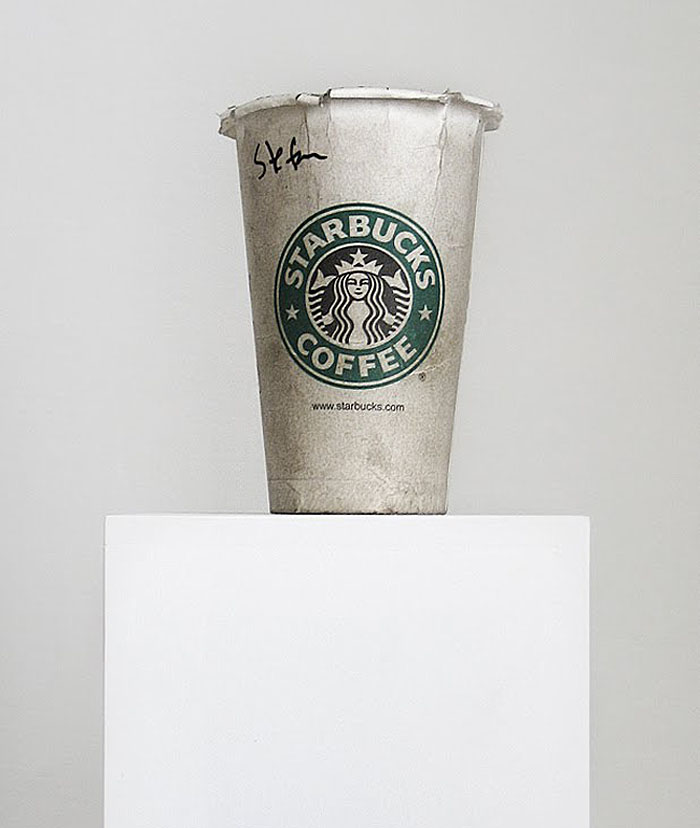
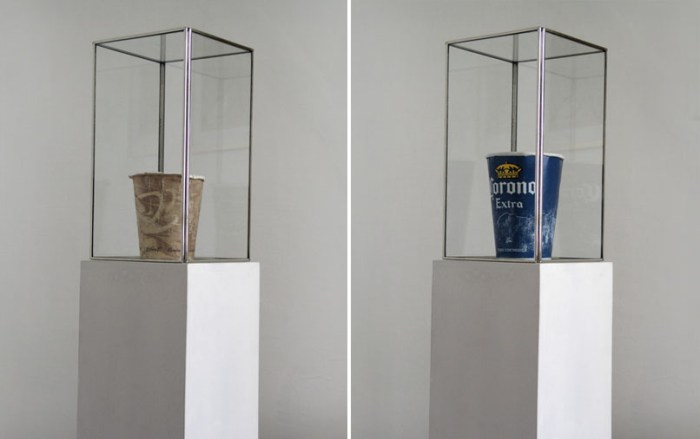
I stumbled across Mexican artist Aldo Rojas’ work and really like the thinking behind it. Rojas is a conceptual artist who is interested in social conflicts and popular expression. His art deals with socioeconomic disparities. He likes to shake things up by bringing these quotidian examples of contrasts in economic levels from the streets to the interiors of art world institutions.

For his Vasos de Lismoneros (Panhandlers’ Cups) Rojas, along with Alfredo Wigueras, bought used cups from several panhandlers. They enjoyed the irony in these corporate brand cups starting as a tool for commercial consumption, subsequently converted to garbage, then rescued by the homeless panhandler and converted into a working tool once again, of a different sort, with the final twist in the artists buying these cups again and making them into ‘art’, exhibiting them in galleries, once again converting them into merchandise but in a completely different circle and social class.

Rojas’ other projects make similar statements and poke a bit of fun at the art world as well. His Mexico a Traves de sus Paletas (Mexico as seen through its Lollipops) is a collection of different style lollipops from different sections of Mexico City. Mobiliario Urbano Informal: Mingitorios Personales (Informal Urban Furniture: Personal Urinals) are a collection of bottled urine (from Evian water intake) in PET bottles, representing the bottles left around Mexico City by bus, truck and taxi drivers due to the lack of public toilets.

Lastly, Rojas’ Colecta de Conos (Cone Collection) depicts the lack of quality control in the cheap brand of cones typically dispensed to lower income families by ice cream cone carts in the parks of Mexico City, displaying them as a chromatic palette.

You can see more of Aldo Rojas’ work on his blog and in his Behance portfolio.

via Behance
Evol: Repeat Offender

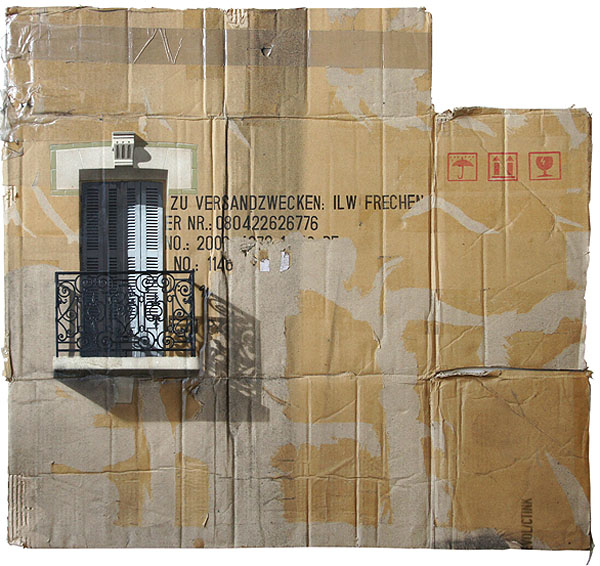
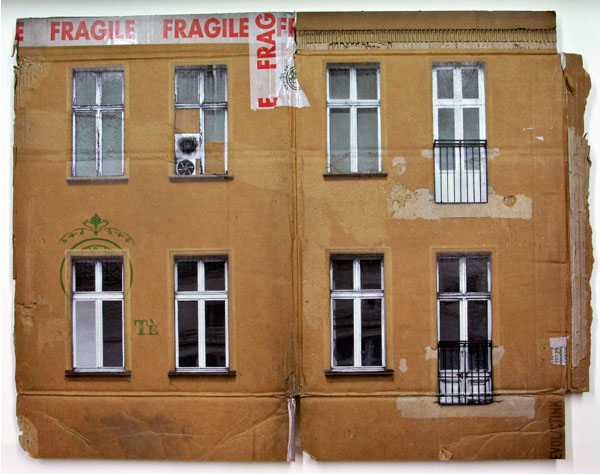
Cardboard paintings of buildings in Berlin, spray paint on cardboard, EVOL, Repeat Offender exhibit at Jonathan Levine GalleryCardboard paintings of buildings in Berlin, spray paint stenciled on cardboard, Evol, Repeat Offender exhibit at Jonathan Levine GalleryCardboard paintings of buildings in Berlin, spray paint stenciled on cardboard, Evol, Repeat Offender exhibit at Jonathan Levine GalleryBerlin-based artist Evol – known best for his street art interventions of scale models of abandoned and decaying buildings left on electrical boxes and cement blocks in cities around the world – currently has his first solo show in the United States at the Jonathan LeVine Gallery in Chelsea. Repeat Offender, as the exhibition is titled, is a collection of Evol’s recent work of multi-layered stencil paintings on used and flattened cardboard boxes, as well as other paintings on scrap metal. These works continue to convey general urban decay and, more specifically, the walls and façades of pre-gentrified East Berlin. Incredibly realistic (I thought they were photo-silkscreened), these spray-painted pieces work beautifully on their chosen canvases. The combination of the painted façades with the type, tape, and icons on the original boxes gives them a wonderful texture. Though they photograph well, seeing these in person, as with most art, adds another dimension.

Repeat Offender will be at the Jonathan LeVine Gallery through this Saturday, May 5th.

You can watch a video of Evol’s process here.

Photos courtesy Jonathan LeVine Gallery.

Henrique Oliveira: Labyrinthine Installations

Amazing bursting labyrinthine wood installations, Brazilian contemporary art installations by Henrique OliveiraAmazing bursting labyrinthine wood installations, Brazilian contemporary art installations by Henrique OliveiraAmazing bursting labyrinthine wood installations, Brazilian contemporary art installations by Henrique OliveiraClick to enlarge

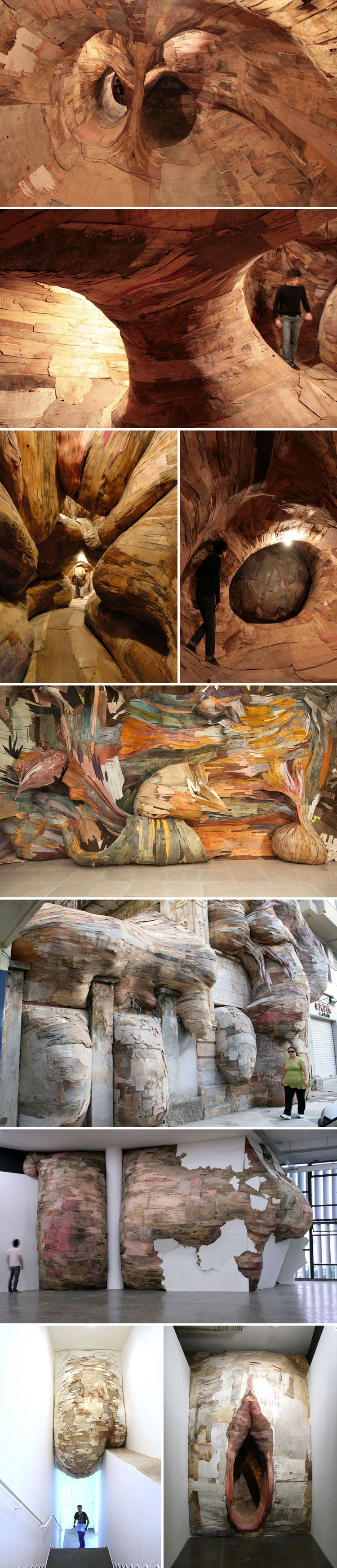
Brazilian artist Henrique Oliveira, based in São Paulo, started as a traditional painter, but after some time he started experimenting with scraps of wood found in his father’s woodworking shop as well as on the streets. In many ways his installations are seen as his own unique style of painting. With these splintered  scraps of wood as his pictorial material, Oliveira evolved from a painter and sculptor to simply an artist.
His large-scale, labyrinth-like installations burst through walls and façades in a sculptural, painterly, and collagey way. Inside, these works resemble the interiors of caves and, in some ways, the inside of the human body as entered through a vaginal-like entrance. The gigantic and jammed quality of these ‘paintings’ sprawl out of exhibition spaces and buildings in a beastial and amazing manner.

Oliveira’s most recent exhibit just closed yesterday at the Offenes Kulturhaus in Linz, Austria, but coming up in July he will be having another show in Galeria Millan in São Paulo.

via ok-centrum

Design-y Sushi: Lasercut Nori

design nori, patterned nori, lasercut, pretty sushi rolls, designy sushidesign nori, patterned nori, lasercut, pretty sushi rolls, designy sushidesign nori, patterned nori, lasercut, pretty sushi rolls, designy sushi, katagami styleClick to enlarge

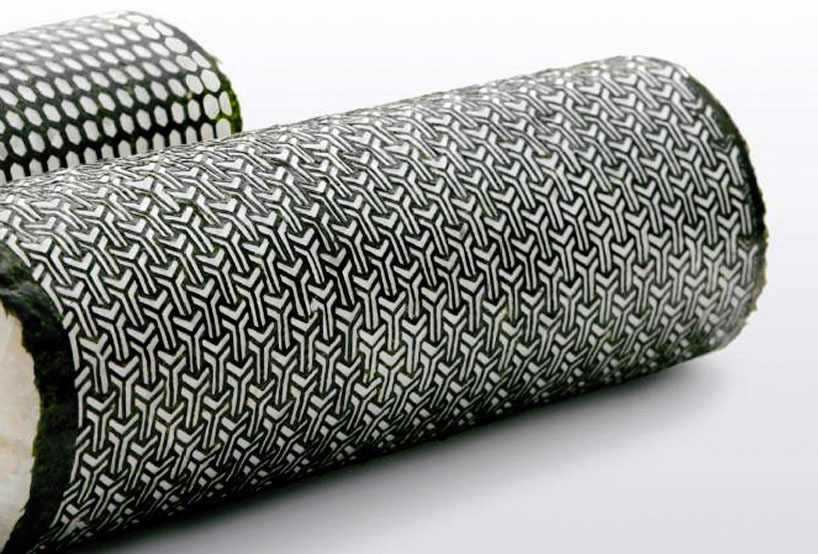
This has been posted all over the place, but I just love it so, here it is! The Umino Seaweed Shop commissioned creative agency I&S BBDO, who developed this laser-cut nori, to respark the sale of nori. This could do the trick. Design Nori is intricately patterned laser-cut seaweed for sushi rolls. Such a simple idea and yet so brilliant! Not that sushi needed much prettying-up, but it certainly does add a little more pizazz to the already appealing rolls.

The lasercut seaweed designs are on exhibit at the Mitsubishi Ichigokan Museum in Tokyo as part of the Katagami Style show on view through May 27, 2012.

via swissmiss and designboom

Liu Wei: Cityscape Installations

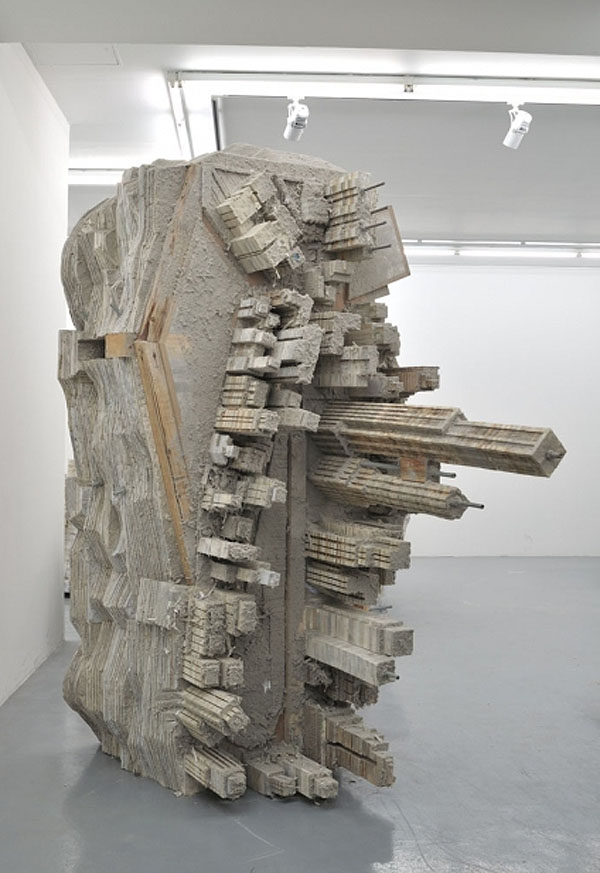
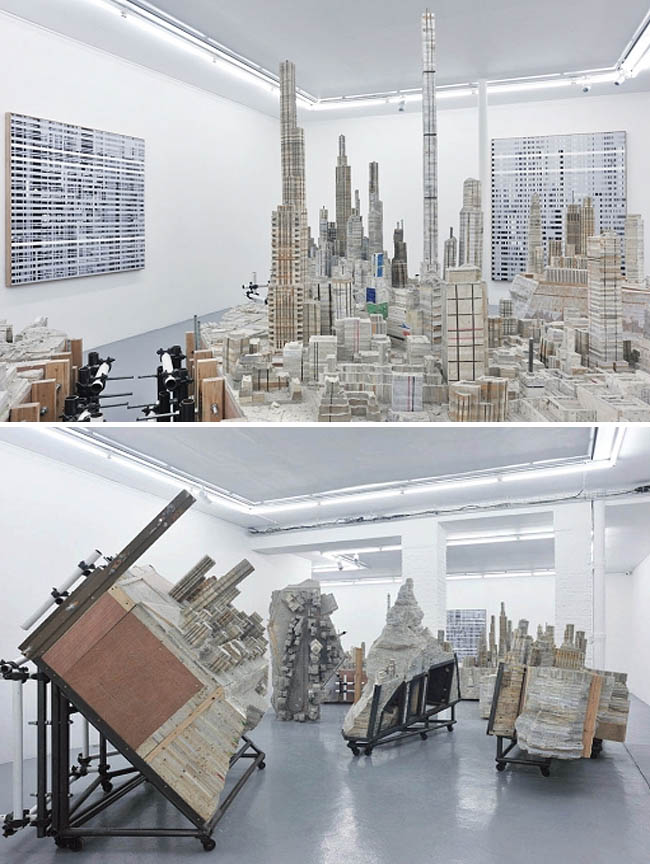
sculptures of cities made from books, steel and wood, Foreign, Almine Rech Gallery, Liu Weisculptures of cities made from books, steel and wood, Foreign, Almine Rech Gallery, Liu Weisculptures of cities made from books, steel and wood, dog chews, Foreign, Almine Rech Gallery, Liu WeiChinese artist Liu Wei is a man to watch in the new Chinese art scene. He creates installations, paintings and videos oscillating between order and disorder. His installations/cityscape sculptures are at times sprawling and depict cities in a state of metamorphosis, something he can relate to in the development of his native city, Beijing.

Presently, Liu Wei has his first solo exhibit, Foreign, at the Almine Rech Gallery in Paris. The installations in this exhibit are, once again, cityscapes made from stacks of schoolbooks, held together by steel rods and wood clamps. These are unidentifiable skylines, including a range of iconic buildings from the Pentagon to Saint Peter’s Basilica.

His hanging installation above, is titled Don’t Touch and was exhibited at the Farschou Foundation in Beijing last year. That work is made of oxhide, wood, and metal. His earlier work Love It! Bite It! was made of edible dog chews.

Liu Wei’s exhibit at Almine Rech Gallery will be on view through May 16, 2012.

via saatchi gallery

Boa Mistura: Order is Intangible

Typographic installation, Boa Mistura, Louis Kahn Poem, cool type installation, collabcubedTypographic installation, Boa Mistura, Louis Kahn Poem, cool type installation, collabcubedTypographic installation, Boa Mistura, Louis Kahn Poem, cool type installation, collabcubedThe Spanish art collective Boa Mistura (previously here) composed of five self-proclaimed ‘graffiti rockers’ created this cool anamorphic typography installation for the interior design fair Interiorissimo Decoracción 2011. Inspired by the poem “Order is” by Louis I. Khan, the words “El Orden es Intangible” (Order is intangible) were painted on an abstract furniture composition that is only legible from one specific angle. This sort of thing always blows my mind.