Sonja Alhaüser: Food Art

Food art, sculpture made out of butter, chocolate sculptures, sonja alhauserFood art, sculpture made out of butter, chocolate sculptures, sonja alhauserSonja Alhauser, food art, contemporary art, edible art, performance art, BerlinGerman artist Sonja Alhaüser at times makes food her subject matter, as in many of her watercolor paintings, and other times makes it her choice of material. She has created sculptures from butter, chocolate, and marzipan, as well as performance pieces using milk and melted chocolate.

Taking food, a major part of our everyday lives, and using it in art converts it into a new medium that departs from its normal associations. It becomes about the process and about the relationship between art and other aspects of life. In many cases, Alhaüser’s works are edible, encouraging the viewer to eat them, as in the green pedestals made of chocolate (pictured above) included in the Eat Art exhibit at Harvard some years back.

Alhaüser will be part of an upcoming group show at Galerie Gesellschaft in Berlin this year.

Photos courtesy of the artist; Georg Kolbe Musem; and Galerie Michael Schultz

via Harvard Gazette

Tiger & Turtle – Magic Mountain

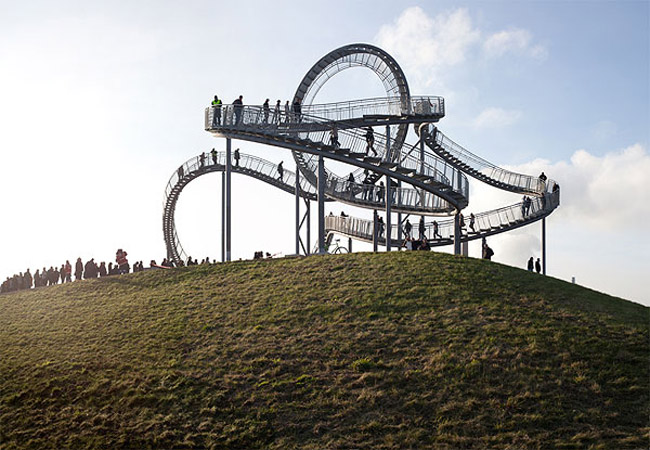
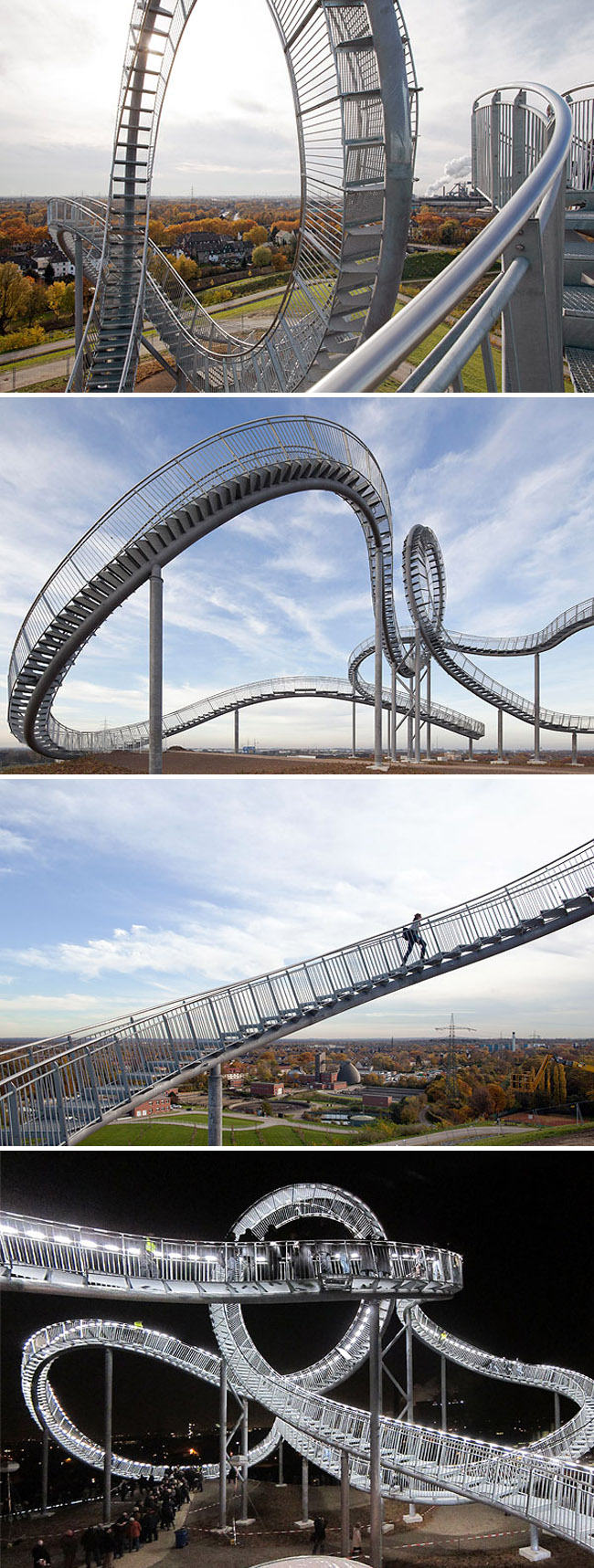
walkable rollercoaster, interactive sculpture, Heike Mutter, Ulrich Genth, Duisberg, Germanywalkable rollercoaster, interactive sculpture, Heike Mutter, Ulrich Genth, Duisberg, Germanywalkable rollercoaster, interactive sculpture, Heike Mutter, Ulrich Genth, Duisberg, GermanyThis seems to have made the rounds a couple of months back, but I hadn’t seen it till now. Tiger and Turtle – Magic Mountain is a site-specific, large-scale, walkable rollercoaster designed by Heike Mutter and Ulrich Genth positioned at the highest peak of the Heinrich-Hildebrand-Höhe in Duisburg, Germany. Visitors are invited to walk up the zinc-plated steel sculpture, which soars to 21 meters at its highest point, and, add to that the height of the artificial mountain that it sits upon, and a person gets a view of the Rhine from 45 meters above the landscape. Unfortunately, for the more adventurous types, you can’t actually climb on the center loop past a certain point.

Mutter and Genthe collaborated with Arnold Walz who did the parametric 3-D planning and stairway system, as well as Prof. Micahel Staffa who did the planning of structural framework, and architects Sonja Becker and Rudiger Karzel of bk2a architecture.

The interactive sculpture is lit up by LEDs under the handrails at night, making it accessible in the dark as well. My kind of rollercoaster.

Photos by Thomas Mayer

via radiolab

Remon de Jong: Tremor Laquearia

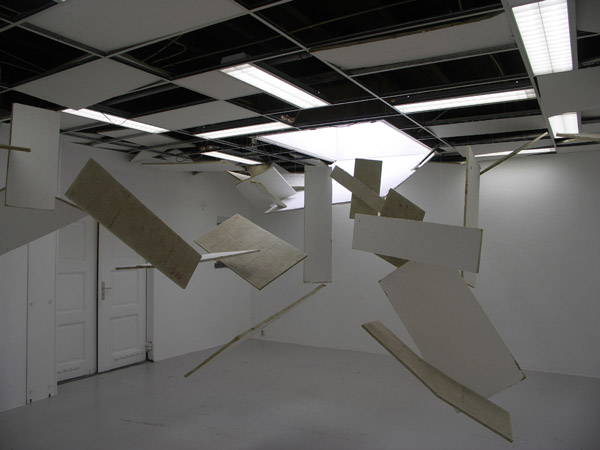
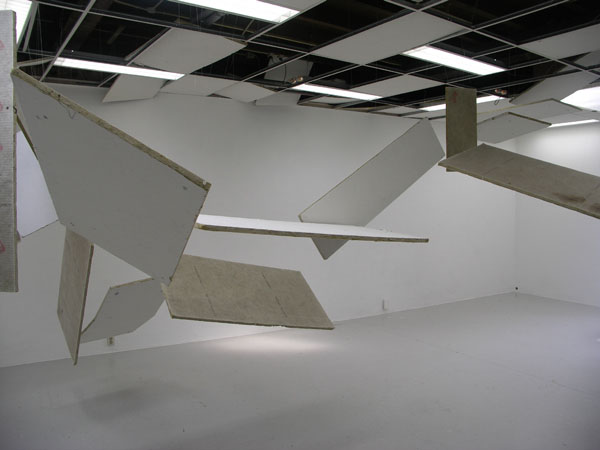
Dutch art installation, collapsing ceiling, tremor laquearia, remon de jong, collabcubedDutch art installation, collapsing ceiling, tremor laquearia, remon de jong, collabcubedDutch art installation, collapsing ceiling, tremor laquearia, remon de jong, collabcubedDutch artist Remon de Jong created this collapsing ceiling art installation titled Tremor Laquearia. Fixing time in the way a photograph does, the installation takes the familiar and turns it upside down.The chaos completely changes the perspective of the gallery space.

De Jong, who makes paintings, music, sculpture, and videos in addition to his installation work, often references the theme of man and his relationship with the environment.

Below you can see the creation of the installation in progress.

via lost painters

Buff Diss: Taped Hands and more

Australian street art, Buff Diss, taped graffiti, taped hands, collabcubedAustralian street art, Buff Diss, taped graffiti, taped hands, collabcubedAustralian street artist, Buff Diss, taped graffiti, taped hands, collabcubedAustralian street artist, Buff Diss, taped graffiti, red stripe mural, londonClick to enlarge

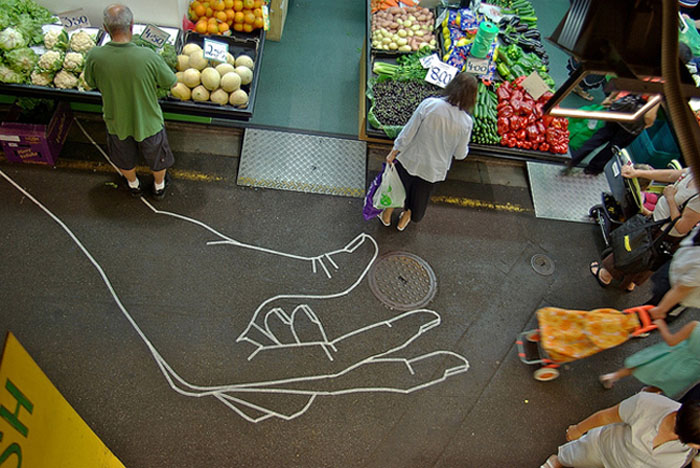
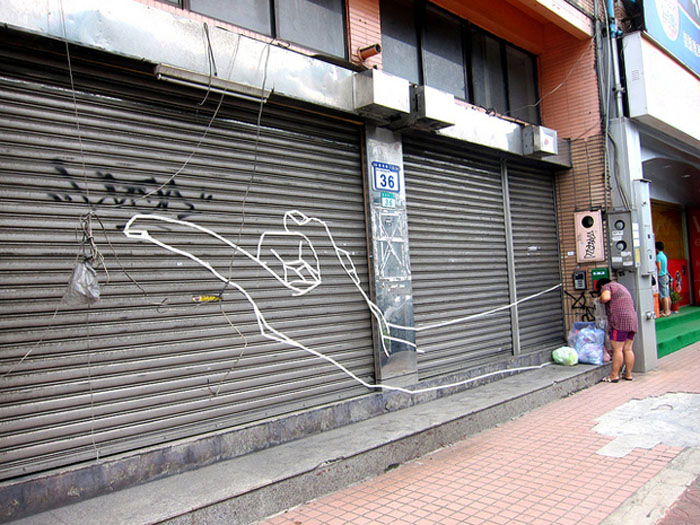
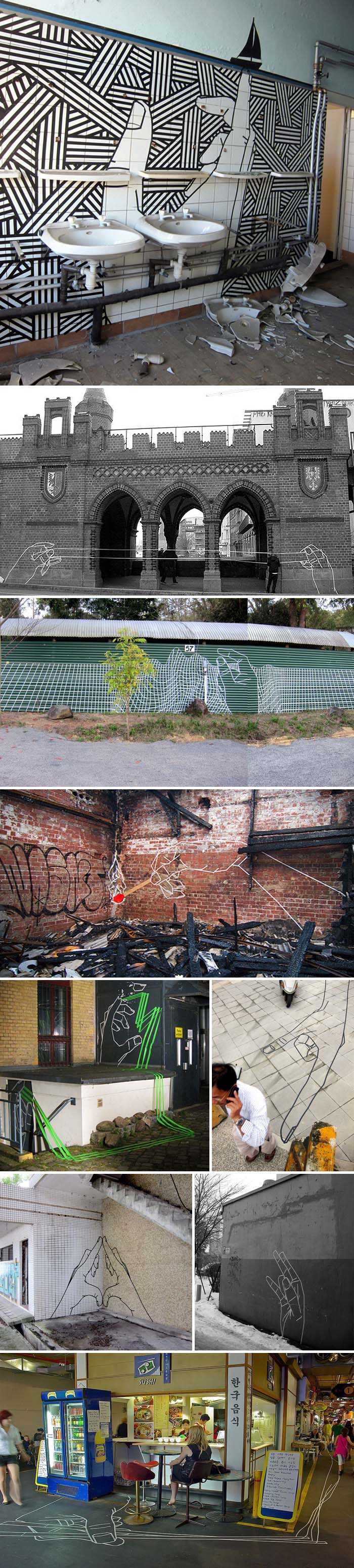
Buff Diss, an Australian street artist from Melbourne, has been using tape instead of paint for the past six or seven years. Though he “tape paints” all kinds of images from abstract to skulls, there seems to be a strong hand theme. Diss cleverly integrates the elements and variations of the street to his advantage, at the same time adding humor to many of his pointing and pinching taped fingers.

The bottom three images are from one of his most recent works: a mural for Red Stripe in London.

Photos from Buff Diss’ flickr and blog.

via Brainstorming

Eka Sharashidze: Wall People

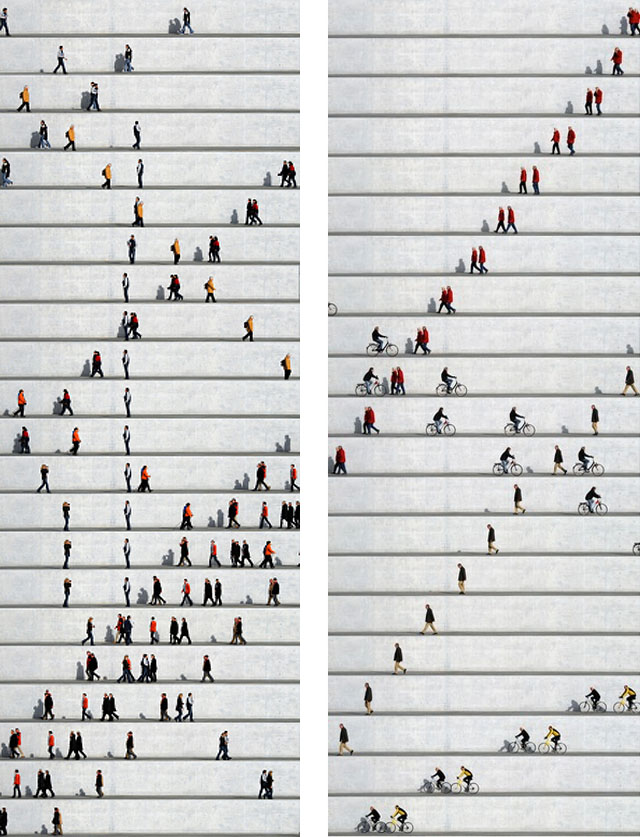
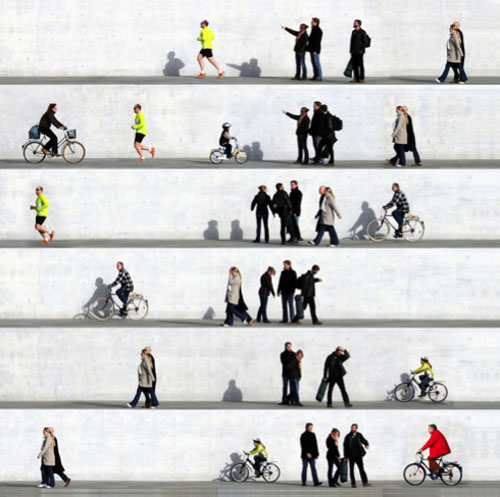
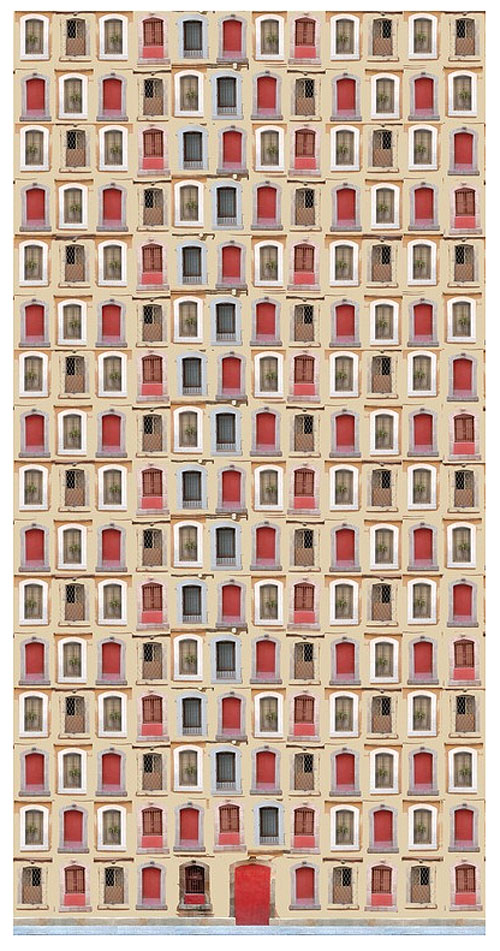
Photo collages, panels, alu dibond, Wall People by Eka SharashidzePhoto collages, panels, alu dibond, Wall People by Eka SharashidzePhoto collages, panels, alu dibond, Wall People by Eka SharashidzePhoto collages, panels, alu dibond, Wall People by Eka SharashidzeArchitectural photo collage by Eka SharashidzeOriginally from Georgia, but now living and working in Berlin, Eka Sharashidze creates photo collages. Her series Wall People caught my eye. In these images, the panels almost look like paintings, (though that may not be the case in person) but, if I understand correctly (my Georgian and German are a bit rusty, as in I don’t speak either at all), Eka sets up her camera facing a big white wall and shoots the passersby collecting photographs of people going about their everyday business, from walking to biking, to standing and pointing. She then proceeds to take these images, often repeating many of them, (which makes for an interesting effect), other times placing the images sequentially illustrating the progression of time, and, finally, printing them onto aluminum panels. Sharashidze has some nice architectural photo collages as well.

via artreview

Anemone: Oyler Wu Collaborative

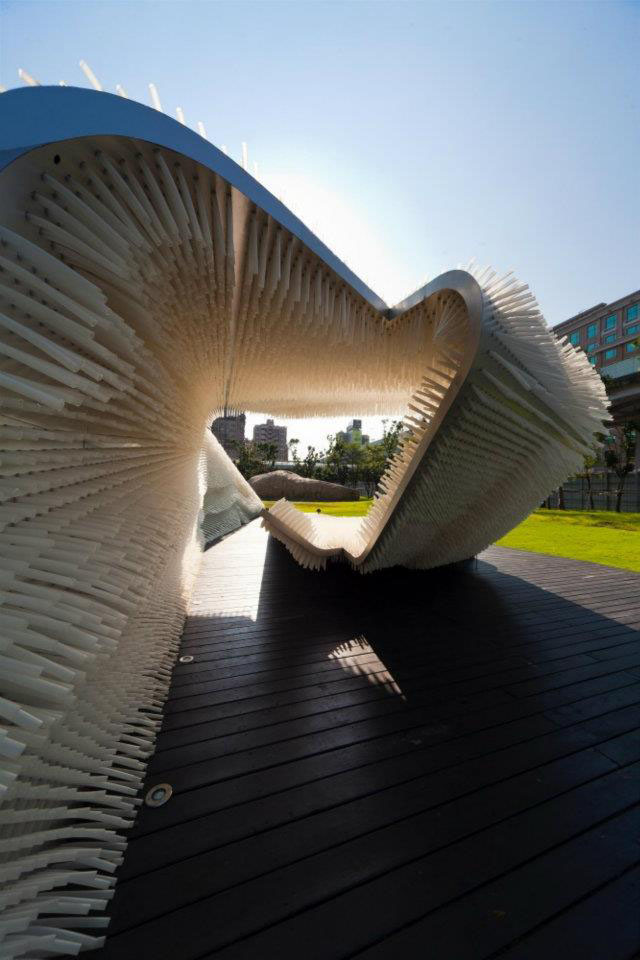
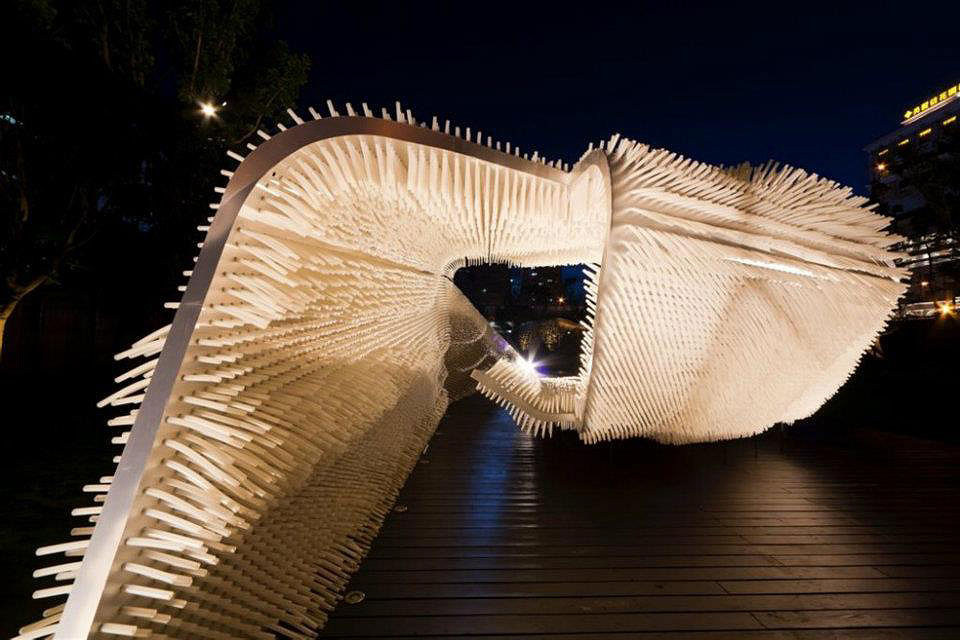
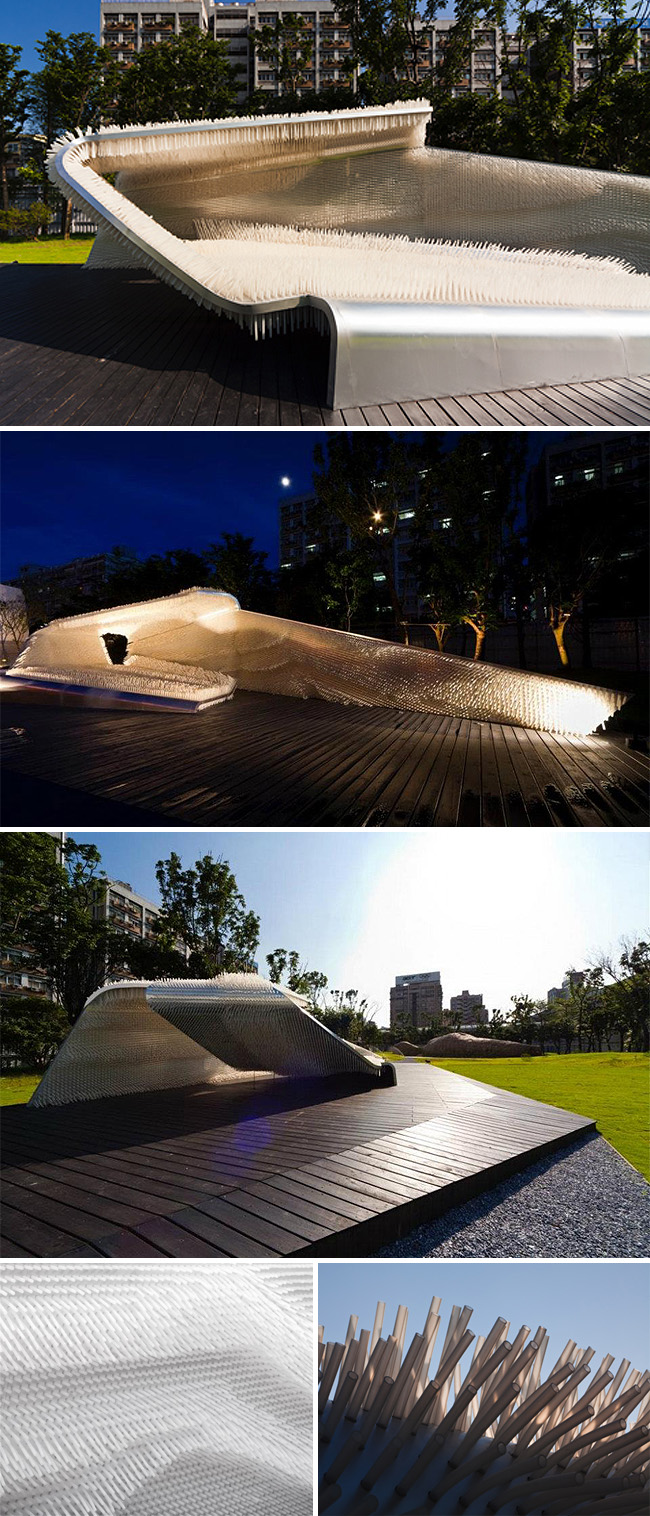
Architectural Installation, tactile, Taipei, Taiwan 2011, cool structure, interactiveArchitectural Installation, tactile, Taipei, Taiwan 2011, cool structure, interactiveArchitectural Installation, tactile, Taipei, Taiwan 2011, cool structure, interactiveAnemone is an art/architectural installation in Taipei, Taiwan designed by Oyler Wu Collaborative based in California. The concept behind Anemone was to create an installation that is not only appreciated for its aesthetic beauty but also allows for interaction through touch. Built using thousands of transparent flexible rods at different depths to add to the undulating feel of the structure, and give the look of bristling tentacles, the shape invites the viewer in and encourages them to feel the the walls as well as sit in the incorporated benches and bed-like elements. The cantilevered canopy adds elegance in addition to protection.

via inspir3d

Lael Marshall: Domestic Assemblages

Contemporary collages, sculptures, paintings using domestic cleaning materials.Contemporary collages, sculptures, paintings using domestic cleaning materials.Contemporary collages, sculptures, paintings using domestic cleaning materials.Contemporary collages, sculptures, paintings using domestic cleaning materials.Click to enlarge

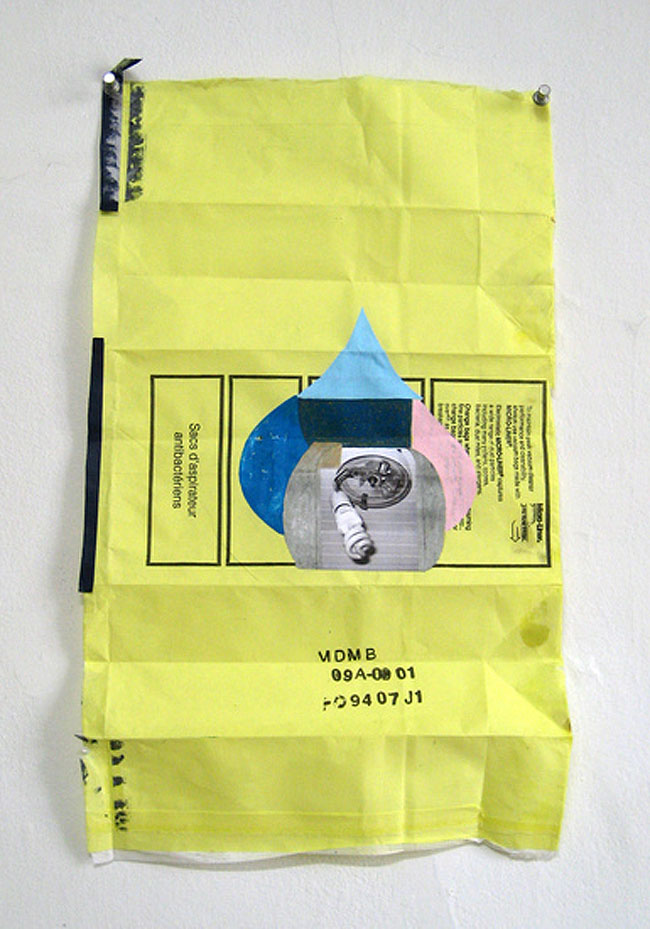
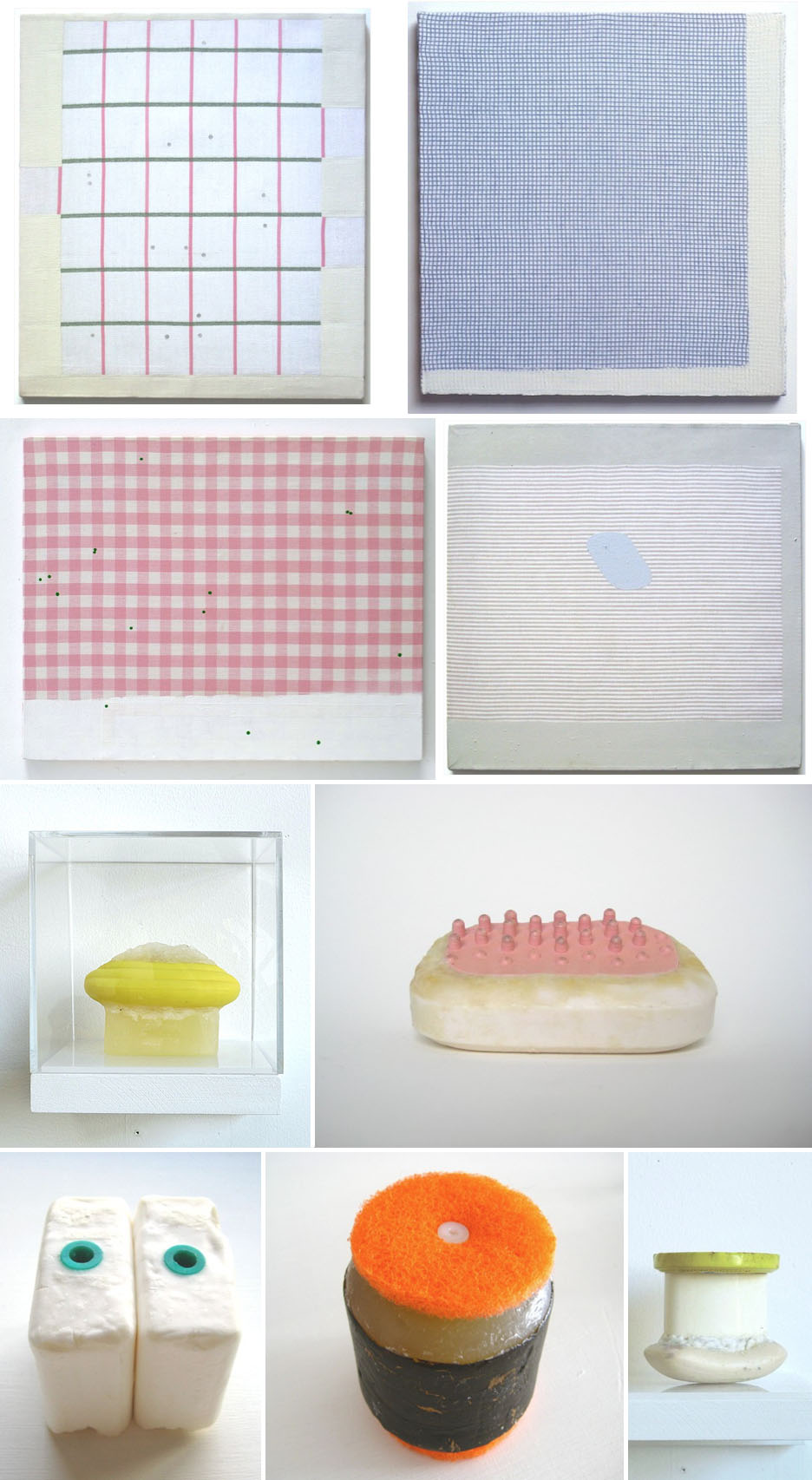
New York City based artist Lael Marshall probably makes more trips to Kmart than the art supply store when making her art. Initially working out of her apartment, Marshall found that the domestic cleaning materials lying around started “creeping into” her work. The result? Mixed media collages, many of which are on vacuum cleaner bags; dish towel paintings; and soap sculptures, including a series of soap cameras.

Playful, fun, and sustainable!

Photos courtesy of the artist and Bric Arts

Li Hongjun: Topographic Paper Sculptures

Amazing paper sculpture of heads, topographic, Chinese contemporary art, rotated headcool paper sculpture of heads, topographic, Chinese contemporary art, distorted headsAmazing paper sculpture of heads, topographic, Chinese contemporary art, rotated headAmazing paper sculpture of heads, topographic, Chinese contemporary art, rotated headClick to enlarge

Li Hongjun lives and works in Beijing, though originally from Shaanxi Province in China. His life has been split between peasant and artist, with a break in the 90s and then returning to his art at middle age in 2006.

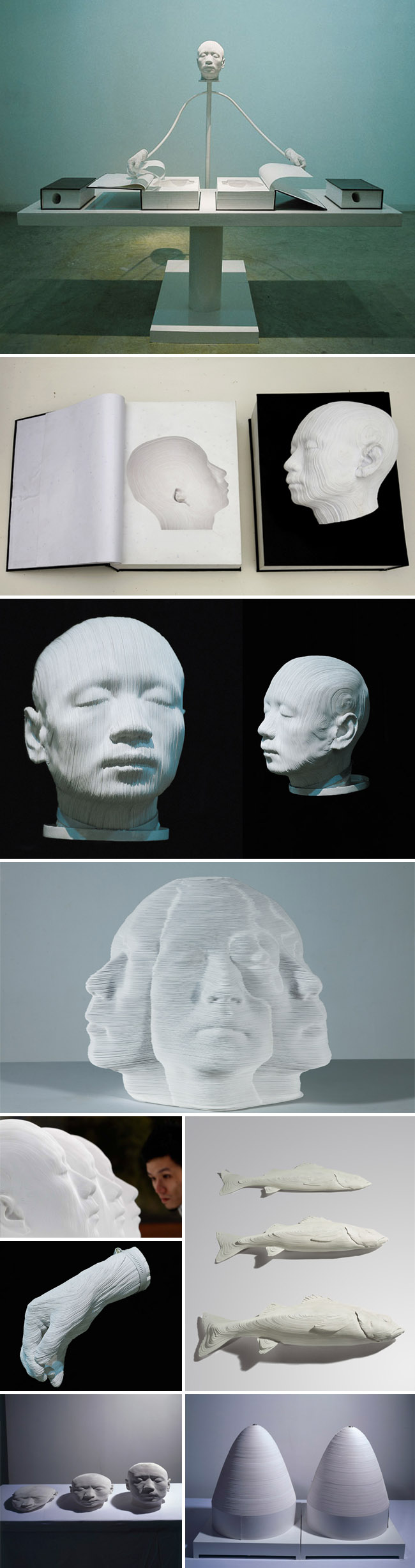
His paper sculptures are almost like architectural or mathematical models with their topographic style. Using layers and layers of paper to create this topology, Hongjun utilizes negative and positive shapes, as well as rotation and skewing, resulting in a very impressive effect. He combines both eastern and western paper cutting methods to create his distortions.

via PIFO Gallery

More Highlights from the NYIGF

There is SO much to see at the NY International Gift Fair that just mentioning a few items doesn’t seem right, but that’s exactly what I’m going to do. Below are some things that caught my eye in a variety of areas, from toys to home.

designy toys, wood toys, fun figurines, hoptimist, oak, cutedesigny toys, wood toys, fun figurines, hoptimist, oak, cute, danish designHoptimists were originally created by furniture designer Hans Gustav Ehrenreich in 1968 and are now designed in new materials and with new expressions, still in Denmark. Super cute and bouncy.

necklaces, bracelets, chains, magnetic jewelry, fun, playful, Uno Magnetic, Luis Pons

Uno Magnetic is an interactive, magnetic jewelry, designed by architect Luis Pons, that can take the form of a necklace, bracelet, or ring, depending on how you choose to wrap the individual colored chains and where you place the magnetic ball that keeps it all together. It comes in cute packaging, too, though I couldn’t find an image.

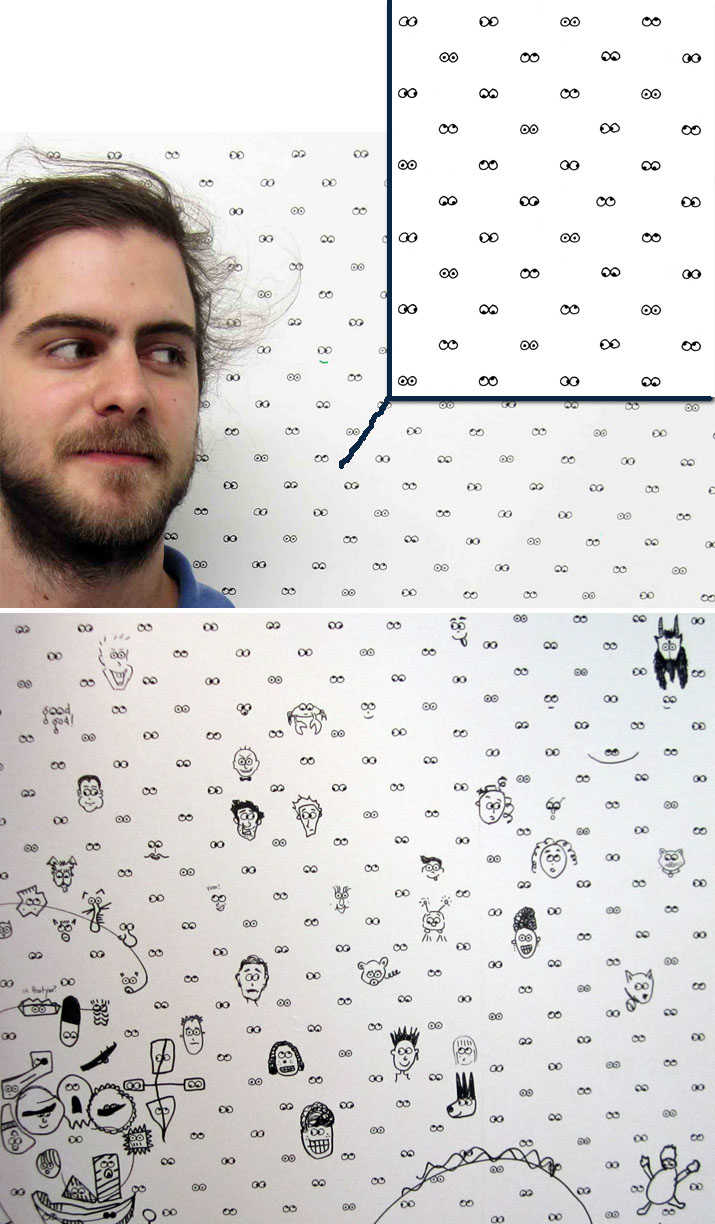
Fun wallpaper, draw on wallpaper, googley eyes, children's wallpaper, Cavern Home

Cavern is a boutique wallpaper design firm with a fun take on wallcoverings. Their hand silkscreened designs take inspirations from natural as well as urban landscapes. The I See You paper, full of googly eyes was set up in their booth with pens for all to draw faces. Especially fun for a kid’s room. Other fun ones include Watertowers and Thesis.

Puzzles, Wood, Trees, Patagonia, Looksur, Argentinean design, games

Time Rings Puzzle from Argentina, is made from the wood of cypress trees that died naturally in Patagonia. There are two designs, one super difficult with the wood grain on both sides, and a slightly easier version that’s painted black on the back. Available through Looksur.

Typographic containers, boxes, House Industries, desk accessories

Amac and House Industries have teamed up and put type on these colorful acrylic boxes of varying sizes. Hard to go wrong when numbers and ampersands are involved.

All Ears iPhone Cases, Fred, EARonic, collabcubed, fun gift, goofy, silly

And, of course, this list would not be complete if we didn’t include our exciting collaboration with Fred on a variation of our EARonic iPhone 4 cases: All Ears, due out in stores in the next month or two.  For those who want more variety, All Ears offers slip in sheets with different his or hers sets of ears. The long-awaited Vulcan ear is now a reality as are other options. But don’t worry, for those who prefer the original EARonics, those are still available at our shop.

New Pantone Home and Office Products

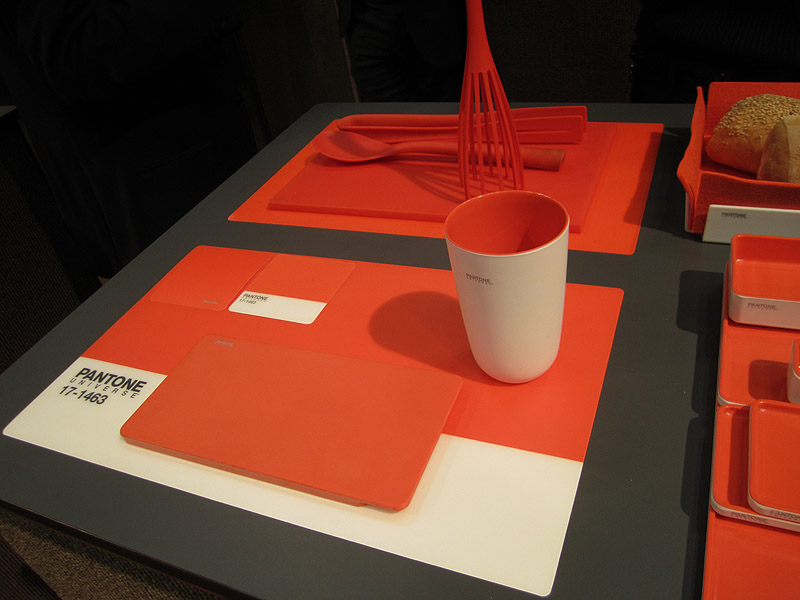
Pantone Universe, Placemats, coasters, cups, kitchenware, cool, fun, NY Gift Show 2012Pantone Universe, Placemats, coasters, cups, kitchenware, cool, fun, NY Gift Show 2012Pantone Universe, Placemats, coasters, cups, kitchenware, cool, fun, NY Gift Show 2012Pantone, tableware, kitchenware, desk accessories, Room Copenhagen, Pantone UniverseClick to enlarge

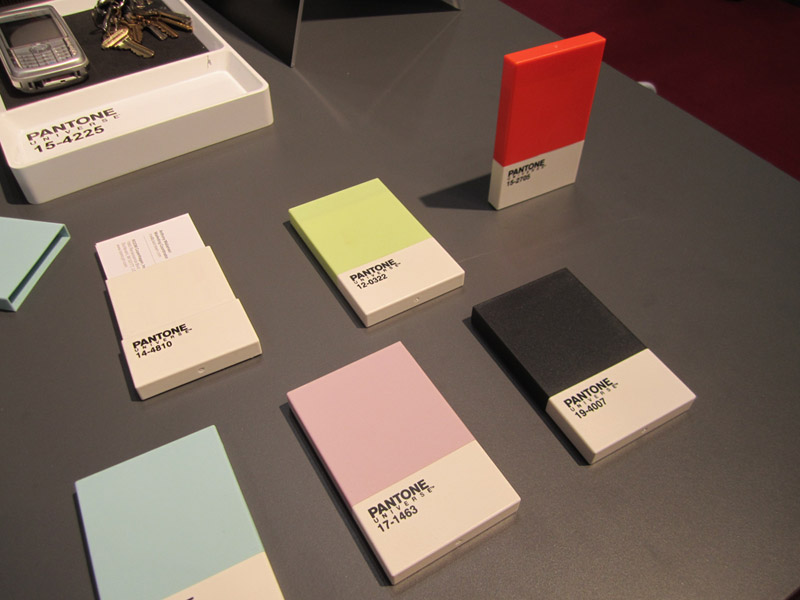
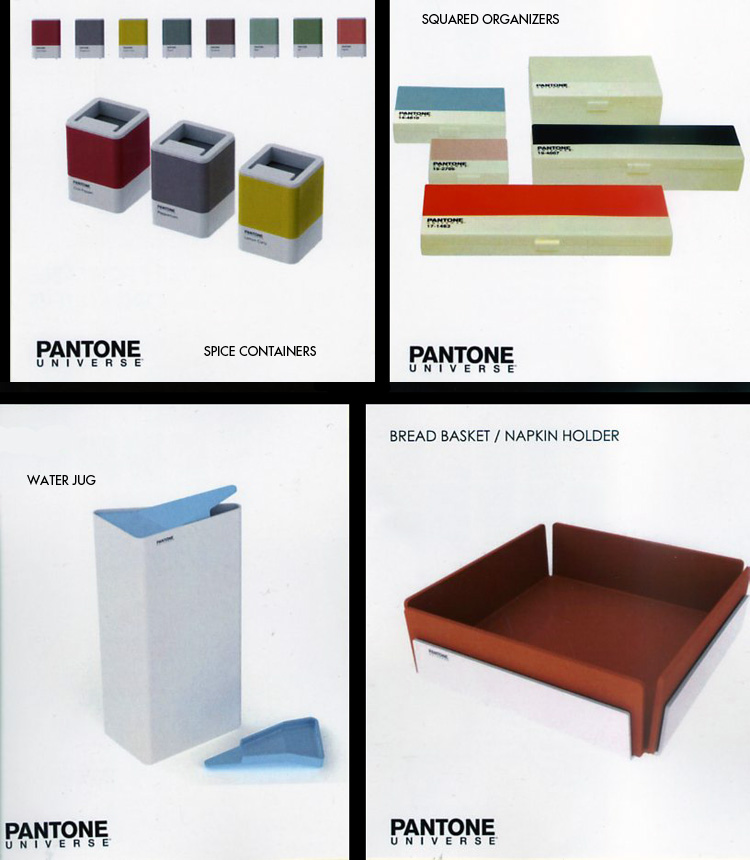
Just when you think there is nothing left to Pantone-ify, ROOM Copenhagen comes out with a new tableware/kitchenware and desk accessories line. I spotted these lovely pieces—the silky matte feel of the polypropylene is hard to resist touching—at the NYIGF yesterday. Sure, the Pantone products are always fun and appealing, but these objects would even be appealing sans the Pantone aspect, that’s how nicely designed they are. The Pantone colors and style are just an added perk!

From the placemats and coasters, to the triangular water jug and stackable boxes, all these pieces are just great. And how is it that no one came out with the business card holders before?!

The new line of products should be online soon, once ROOM Copenhagen gets their site up.

Gift show photos by Collabcubed: catalog images courtesy of ROOM Copenhagen.

Hsin-Chien Huang: Read My Lips

interactive sculpture, interactive installation, contemporary art from Taiwan, Andy Warholinteractive sculpture, interactive installation, contemporary art from Taiwan, Andy Warholinteractive sculpture, interactive installation, contemporary art from Taiwan, Andy Warholinteractive sculpture, interactive installation, contemporary art Taiwan, Listening, Public ArtClick to enlarge

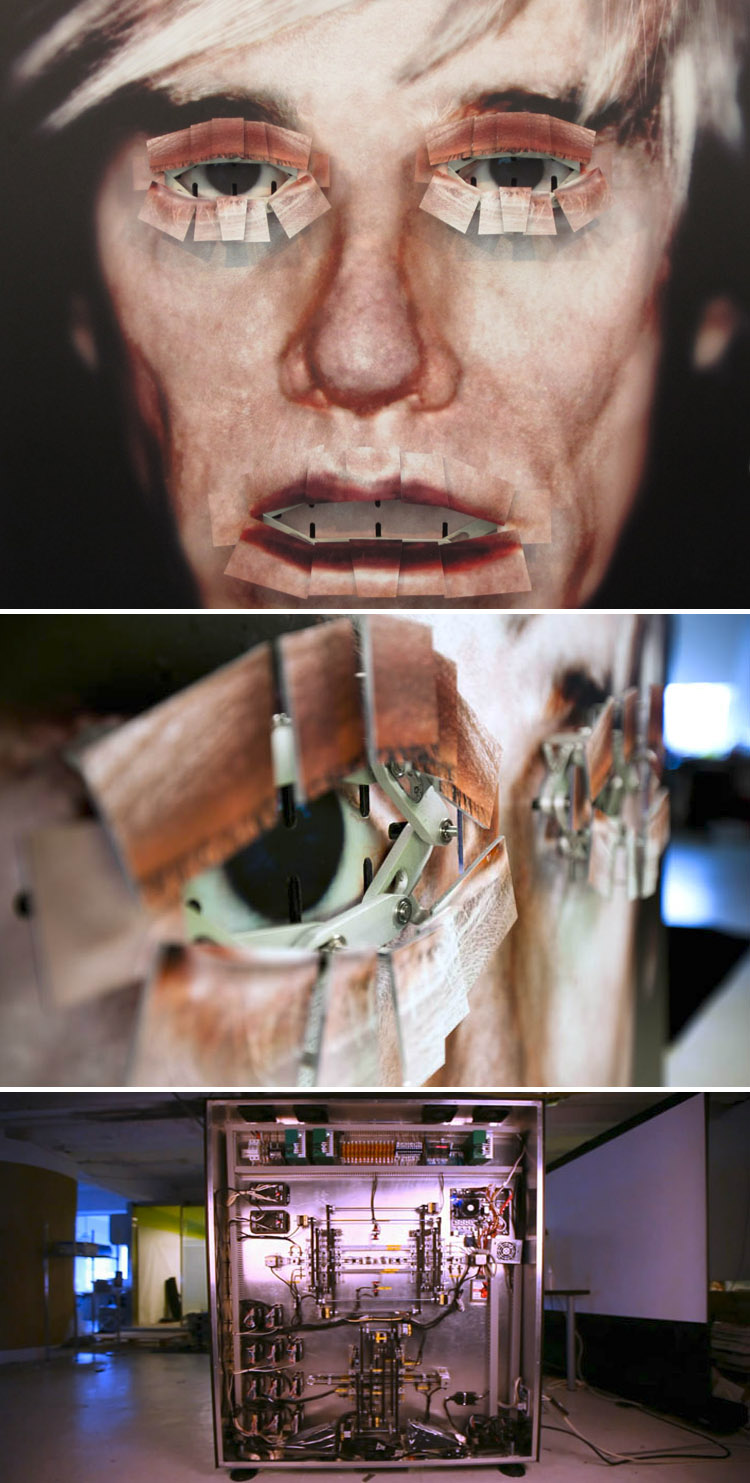
Last year at the Armory Show, here in NYC, I saw this work but didn’t make note of the artist’s name. Thanks to the amazing Google images, I was able to upload my photo and end up on Hsin-Chien Huang’s website. Read My Lips (as the piece is titled) is an interactive sculpture of Andy Warhol’s face with mechanical eyelids and lips. Taiwan-based artist Huang (who has a degree in Mechanical Engineering from the National Taiwan University, in addition to a B.S. from Art Center College of Design in Pasadena and an M.S. from the Illinois Institute of Technology, so he really combines science, technology and art) created this work as an experiment, inspired by the Facebook pages of dead artists and their Facebook “friends”. The computer that controls the eyelid and lip movements is connected to the internet. The work posts questions of artistic relevance and social significance to its Facebook page every week and friends can post responses. Using a text-to-speech engine, the artwork then reads back the responses silently.

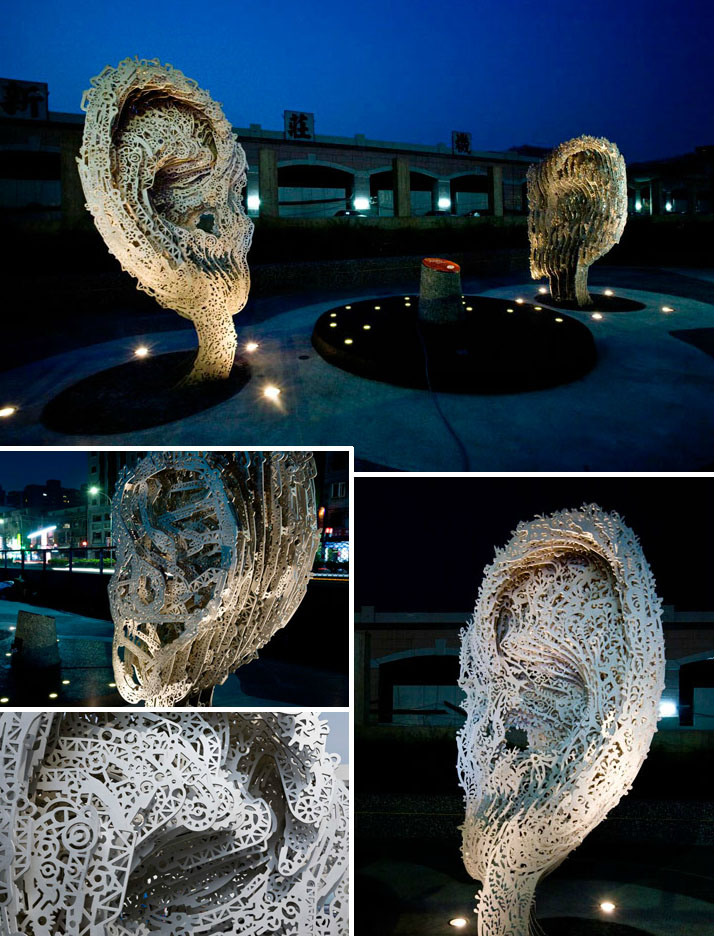
An interactive public art project from 2010 is shown in the bottom group of photos. Listening is located in a Lo-Sheng sanatorium which used to be a leprosy house in 1929. Between the two large ears made of laser cut steel, is a platform in the space representing the brain. Pedestrians can walk onto the platform and reflect on the sounds they used to hear in the location, as well as the current sounds. There are also 15 QR-code labels on the ground which viewers can use to watch videos with their smartphones.

You can see Read My Lips in action in the video below.

Nils Völker: Seventy Five

Inflatable installation, Transjourney Exhibit, Kuandu Museum, Technology, cool contemporary artInflatable installation, Transjourney Exhibit, Kuandu Museum, Technology, cool contemporary artInflatable installation, Transjourney Exhibit, Kuandu Museum, Technology, cool contemporary artInflatable installation, Transjourney Exhibit, Kuandu Museum, Technology, cool contemporary artClick to enlarge

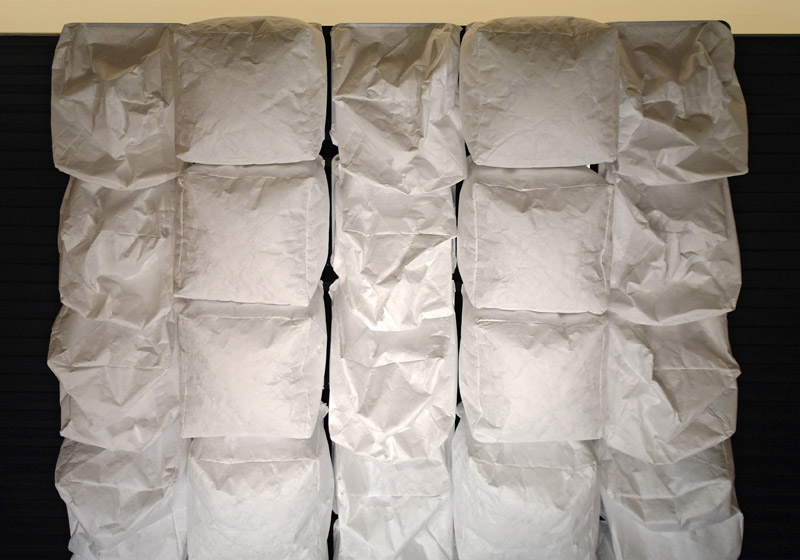
Here is the latest from German artist Nils Völker (previously here and here.) One of his largest pieces to date, Seventy Five measures eight meters in height and traverses three floors at the Kuandu Museum of Fine Arts as part of their Transjourney exhibition going on in Taipei through February 19, 2012. This time the inflatable “cushions” are made of Tyvek, inflated by cooling fans via custom made electronics. You can watch it in action below.

Judy Chicago: Sublime Environment

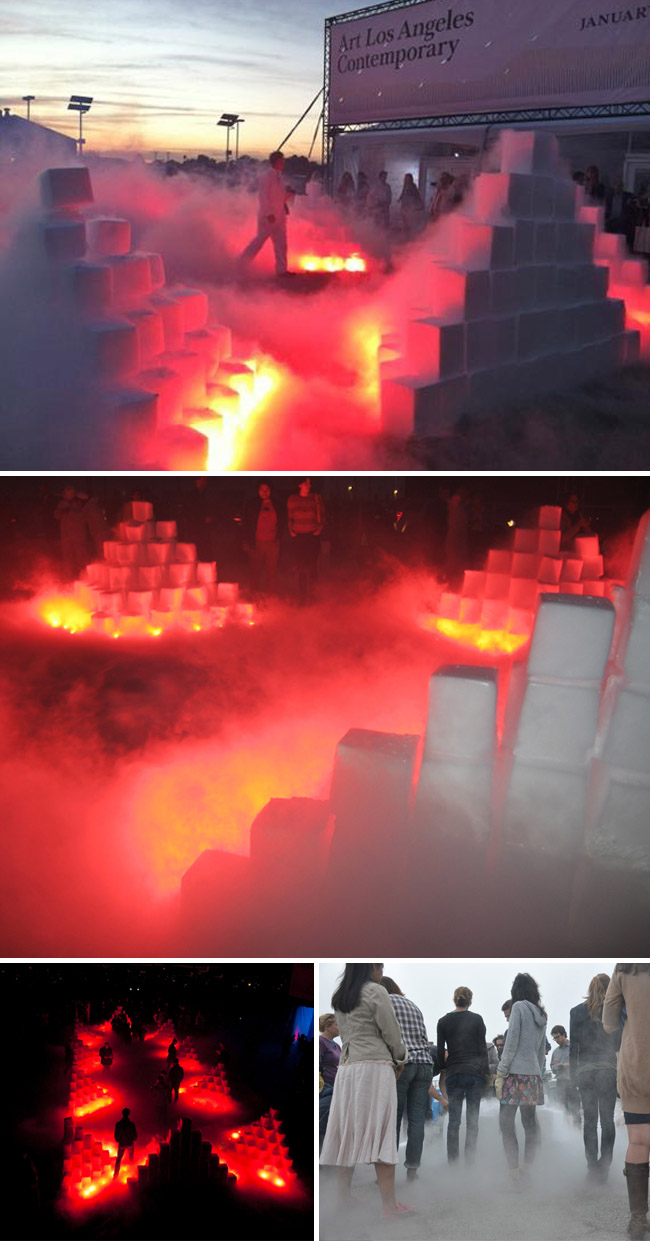
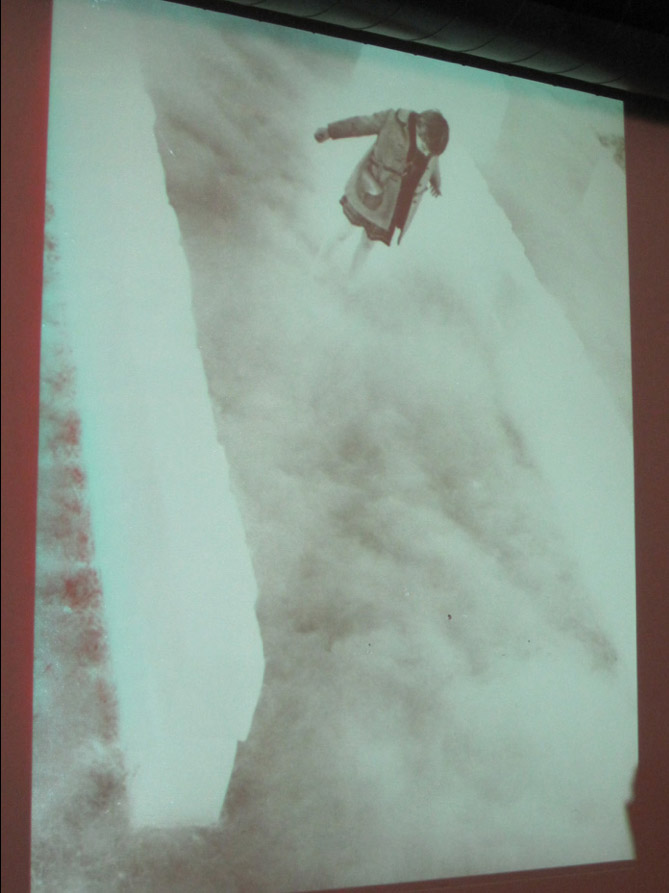
Sublime Environment, art installation, dry ice and flares, cool art, Art Los Angeles Contemporary 2012Sublime Environment, art installation, dry ice and flares, cool art, Art Los Angeles Contemporary 2012PacificStandardTimePerformance_PublicArtFest, Art Los Angeles Contemporary 2012, cool installationJudy Chicago's 1968 performance art installation, disappearing Environment, recreated as Sublime EnvironmentLast Thursday night, as part of the opening party for the Art Los Angeles Contemporary 2012 and Pacific Standard Time Performance and Public Art Festival, activist artist Judy Chicago re-staged her 1968 performance piece Disappearing Environments as Sublime Environment. Using thirty-seven tons of dry ice and red flares the performance was staged outside in a parking lot near Santa Monica’s Barker Hangar. No one knew how long it would take to melt, or when the ice would stop smoking. Apparently, it was still smoking on Saturday night, but by Sunday the installation had, for all practical purposes, “disappeared.”

Judy Chicago’s career now spans over five decades. Throughout, she has been committed to the power of art as a vehicle for intellectual transformation and social change, especially pertaining to women’s rights. The original staging of Disappearing Environments (shown in bottom photo) took place in 1968 when Chicago teamed with artists Lloyd Hamrol and Eric Orr to produce the original installation in, a then still-under-construction Century City, in the shadow of a department store, creating a contrast between a minimalist piece and consumerism in America.

Photos courtesy of Judy Chicago by Donald Woodman; Starkwhite; Michelle Rozic; and UndercoverLA.

via artnet

Meg Hitchcock: Typographic Collages

Typography, collage, texts, hymns, Brooklyn artist, installation, contemporary artTypography, collage, texts, hymns, Brooklyn artist, installation, contemporary artTypography, collage, texts, hymns, Brooklyn artist, installation, contemporary artTypography, collage, texts, hymns, Brooklyn artist, installation, contemporary artTypography, collage, texts, hymns, Brooklyn artist, installation, contemporary artClick to enlarge

Brooklyn artist Meg Hitchcock creates elaborate type collages using texts from holy books of all religions. Through an incredibly labor-intensive process, Hitchcock painstakingly cuts out individual letters from one text and assembles them to form a different text in a variety of patterns and shapes.

From the artist’s statement:
I select passages from holy books and cut the letters from one passage to form the text of another. For example, I may cut up a passage from the Old Testament of the Bible and reassemble it as a passage from the Bhagavad Gita, or I may use type from the Torah to recreate an ancient Tantric text. A continuous line of text forms the words and sentences in a run-on manner, without spaces or punctuation, creating a visual mantra of devotion. By conceptually weaving together the sacred writings of diverse traditions, I create a multi-layered tapestry of inspired writings, all pointing beyond specifics to the human need for connection with the sacred.

You can click on the images to see more detail. At a distance they almost look like chains. You can see more of Hitchcock’s works here, here, and here. You can see her in action, complete with neck pillow, in the video below, putting up her first installation. It’s a pretty insane process!
via Projective City

Doug Wheeler: SA MI 75 DZ NY 12

Light art installation, infinity space, cool installation, cool art, Doug Wheeler, NYC, 2012Light art installation, infinity space, cool installation, cool art, Doug Wheeler, NYC, 2012, collabcubedLight art installation, infinity space, cool installation, cool art, Doug Wheeler, NYC, 2012, collabcubedClick to enlarge

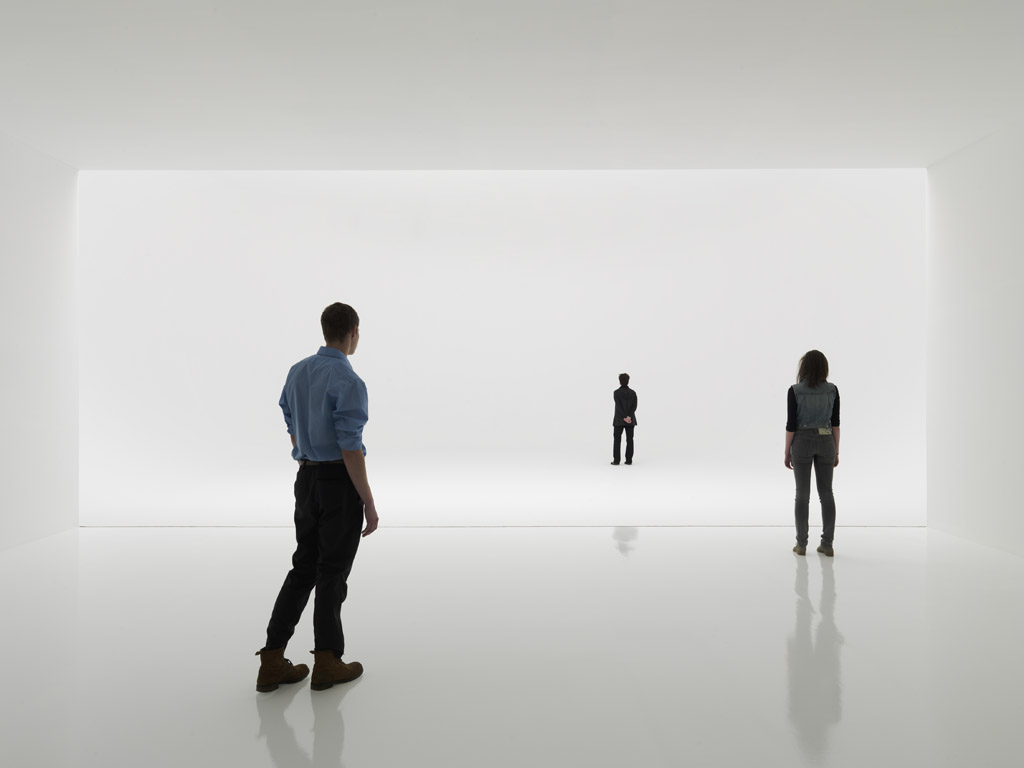
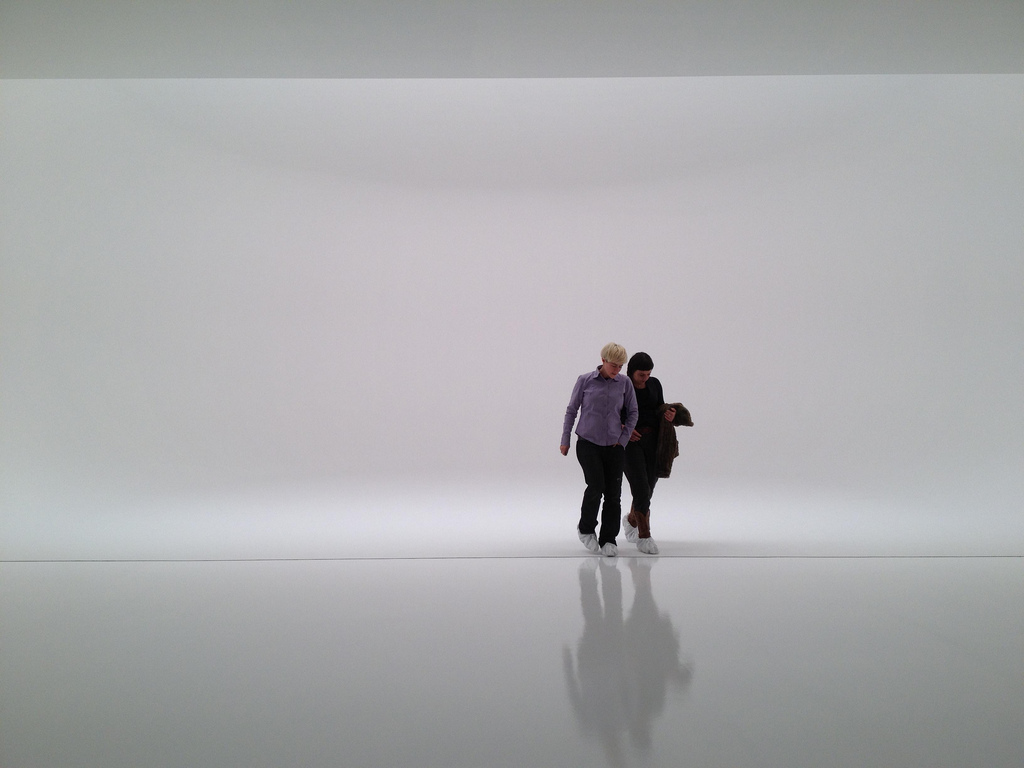
After making a special trip with Em on Saturday, in the snowy cold, to see Doug Wheeler’s light installation titled SA MI 75 DZ NY 12 at the David Zwirner Gallery, we left promptly due to the crowded waiting area we descended upon and the one-hour wait ahead of us — I’m often deluded into thinking that I’m the only one who has these great ideas in NYC…but really, who goes to Chelsea on a frigid, snowy weekend? Apparently: a lot of people. — So, today, a Tuesday afternoon, I thought I’d quickly pop in but, alas, there would be no popping in. There was still a half-hour wait but, seating was available and the musical-chairs-style line kept me active.

Now, back to the exhibit: Amazing. The bright white light installation is the closest thing to what, I imagine, standing in a cloud might feel like. The first impression is that of a flat wall created by light. As one reluctantly steps forward—wearing the white booties provided by the gallery to keep things pristine—it feels as though you’re stepping into the void. The minute the light box is entered, all depth perception disappears. There’s a dense fog-like effect that’s created with light and white paint. The walls have been curved and the lack of hard lines or horizon intensifies the confusing sensation. The result is at first a little unsettling, but the incredible coolness instantly follows. The light in the box fluctuates emulating the light of day, from dawn to dusk, in a 32-minute loop.

If you’re in New York, you might want to check it out. Doug Wheeler’s installation is on view at David Zwirner through February 25, 2012. I recommend a weekday, if possible, for a shorter wait.

Photos courtesy of David Zwirner; Carolina A. Miranda; and soulellis’ flickr.

Brian Tolle: Tempest

Art installation, contemporary sculpture, collins park, Light sculpture, Miami Basel, Brian TolleArt installation, contemporary sculpture, collins park, Light sculpture, Miami Basel, Brian TolleArt installation, contemporary sculpture, collins park, Light sculpture, Miami Basel, Brian TolleClick to enlarge

New York artist Brian Tolle creates sculptures and installations that are iconographic with history or context in mind. The Tempest, located in Collins Park in front of  Miami Beach’s Bass Museum, is one such installation. A sort of maze, made of powder coated aluminum, fiberglass, and LEDs, this permanent, site-specific sculpture appears as an island of tumultuous waves and invites the viewer to participate in the movement by walking through the maze.

The night view is quite spectacular, adding a glowing phosphorescent quality to the fiberglass water.

You can see more of Brian Tolle’s work at his website, including the Irish Hunger Memorial here in NYC and his more recent Simnai Dirdro (Twisted Chimney) in Wales. Coming this year, an installation that looks like two elevated statues on a lamp post that glow at night on Flatbush Avenue in Brooklyn.

Photos courtesy of the artist and wallyg’s flickr

via CRG

Ross Racine: Fictional Aerial Views

Aerial Views of Fictional suburbs, freehand digital drawings, Ross Racine, maps, artAerial Views of Fictional suburbs, freehand digital drawings, Ross Racine, maps, artAerial Views of Fictional suburbs, freehand digital drawings, Ross Racine, maps, artAerial Views of Fictional suburbs, freehand digital drawings, Ross Racine, maps, artClick to enlarge

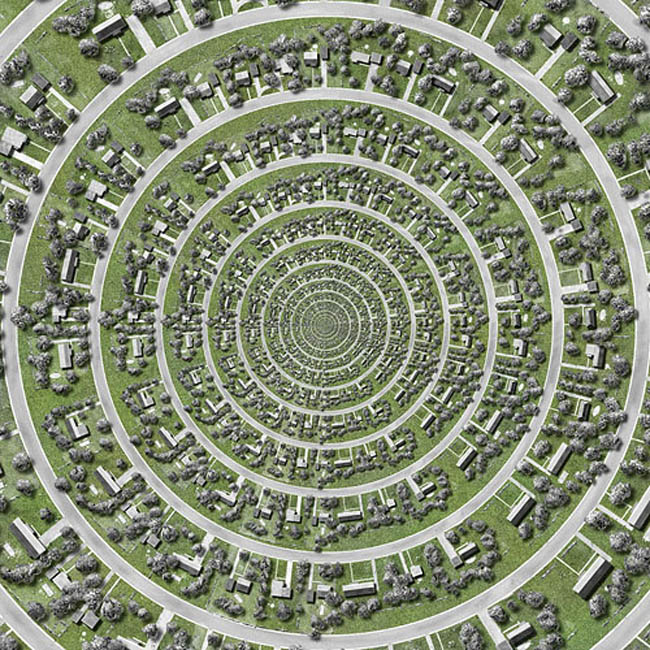
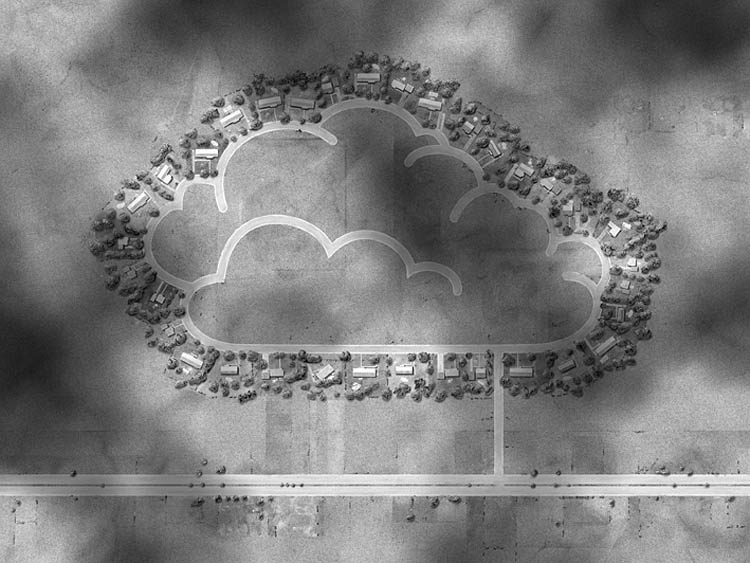
Originally from Montreal, but now living and working in New York, Ross Racine creates aerial views of fictional suburbs by drawing freehand directly on a computer. It’s hard to believe, but his works do not contain photographs or scanned material. Racine’s work is full of surprising opposites: handmade and digital, organic and mechanical, physical and virtual. The typically labyrinthine landscapes are super-sized in Racine’s versions, in some cases taking on a humorously monstrous quality, in contrast to the generic naming conventions such as Hummingbird Bend, Heavenly Heights, or Sunshine Acres; a playful way to critique and re-examine urban planning.

You can see more of Ross Racine’s aerial view drawings here and here.