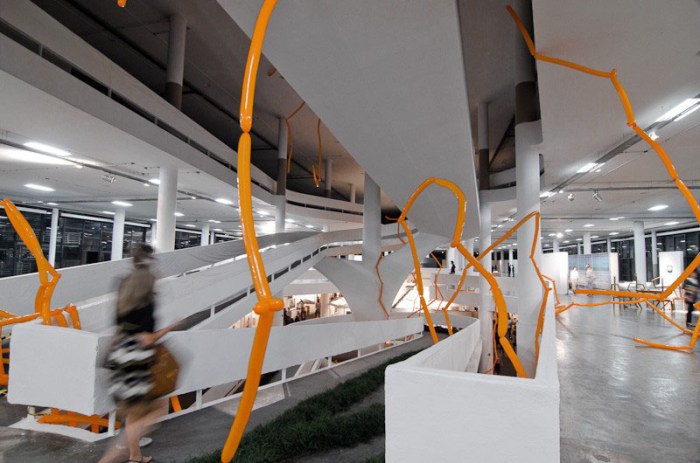
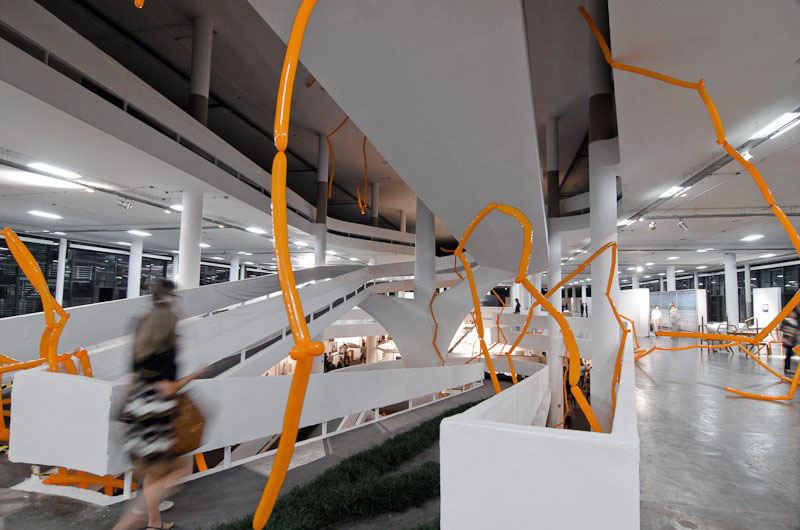
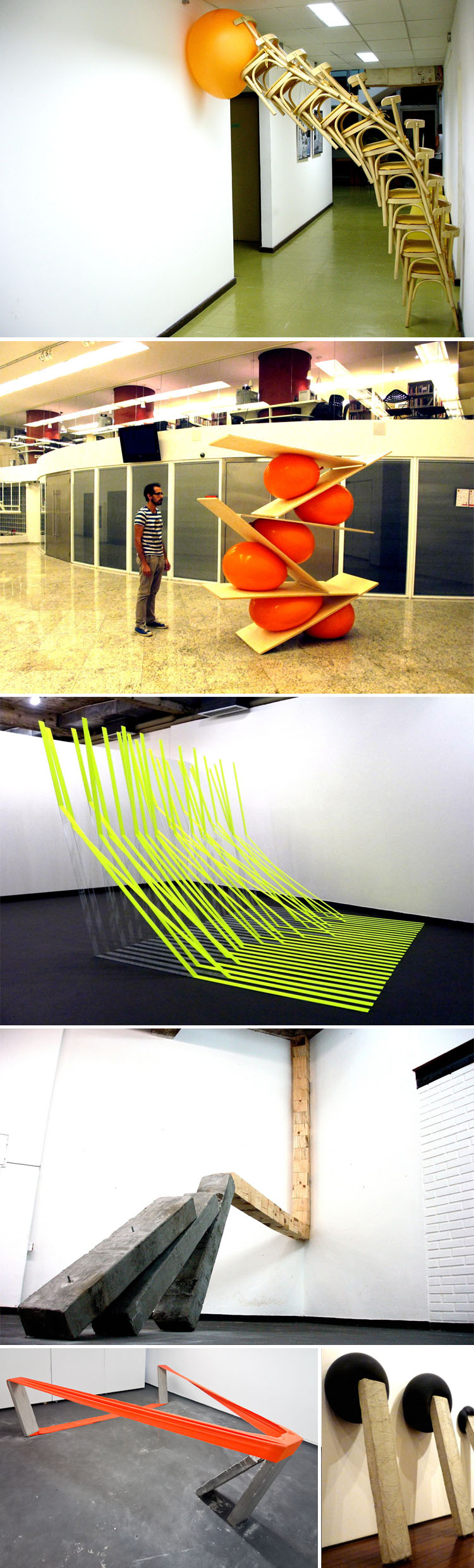
Looking at his work, a person might not want to get too close to one of Brazilian artist Túlio Pinto’s sculptures or installations. Concrete slabs precariously balanced and held in position by a piece of fabric or balloon doesn’t inspire a lot of confidence, yet they definitely impress.
Pinto lives and works in Porto Alegre where, in addition to his installations, he paints. He co-founded the artist studio Subterrânea and is a curator of Brazilian contemporary art.
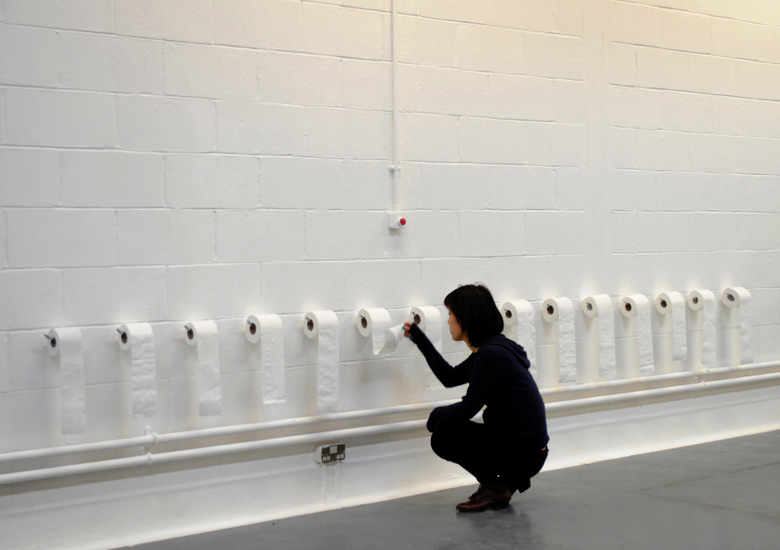
English conceptual artist Theresa Bruno is interested in western consumerism and asks her audience, through her art, to re-examine what and how they consume. She uses found objects and appropriates them for her artwork.
In her piece Social Climber, Bruno placed fifteen toilet roll holders and fifteen assorted toilet paper rolls on a wall. The progression from left to right demonstrates the ascending quality in toilet paper. The installation deals with class consciousness and questions luxury, globalization, and consumption.
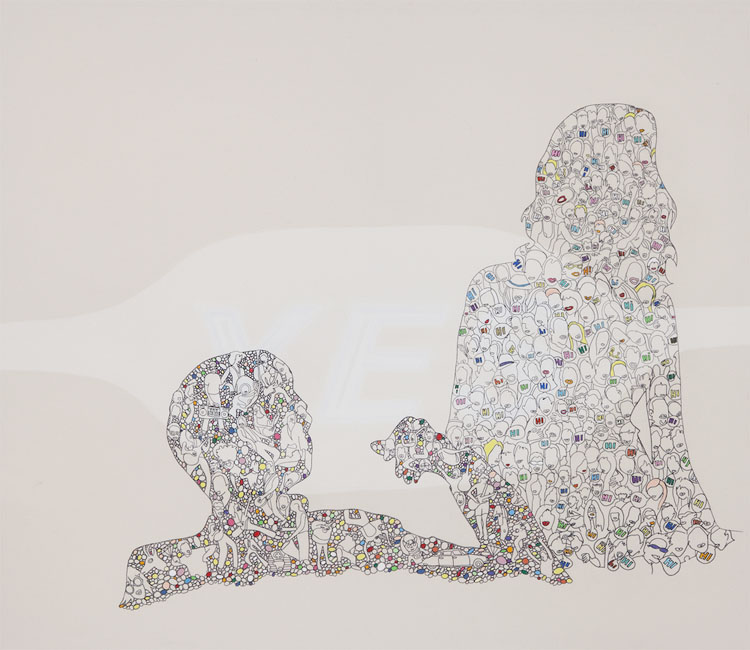
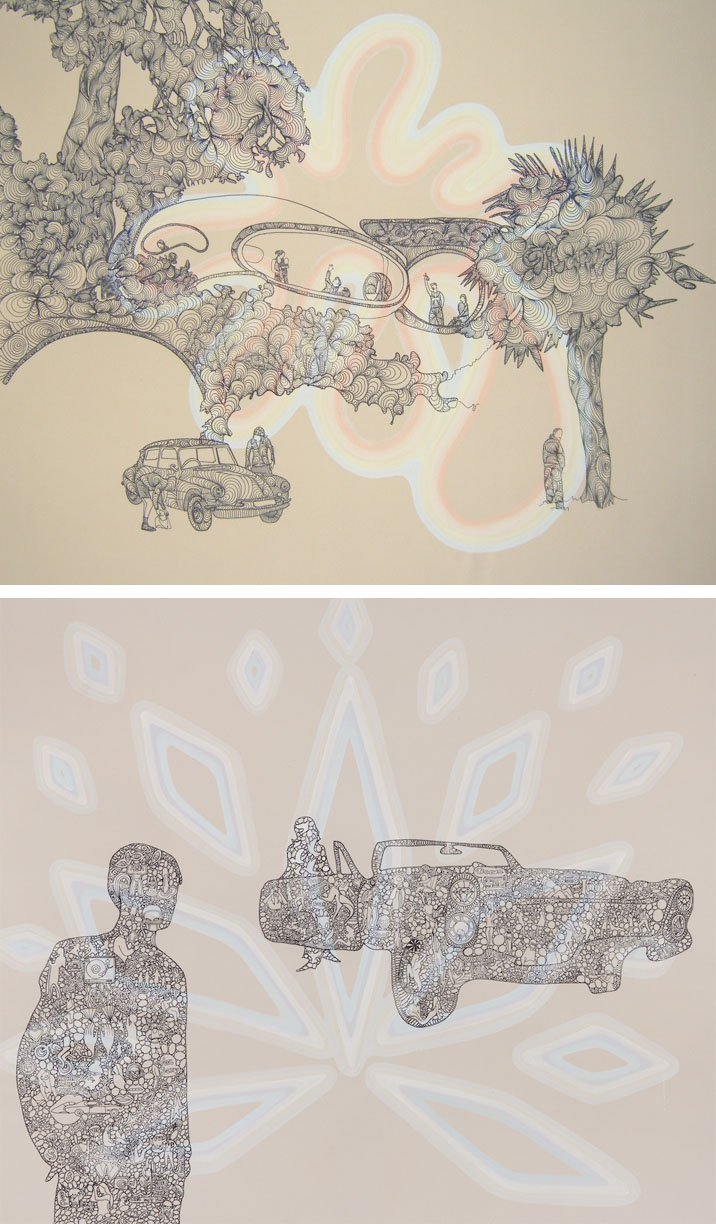
There’s a lot to look at in these paintings by Jonny Detiger. They’ve got a doodle-y quality that I like mixed in with a 70s vibe. The names of Detiger’s current solo show, as well as his previous one, seem to describe his art perfectly: Stream of Conciousness and Kaliedoscopic Adventures.
And if you like these paintings, you might also like Detiger’s sock and underwear line at Etiquette Clothiers.
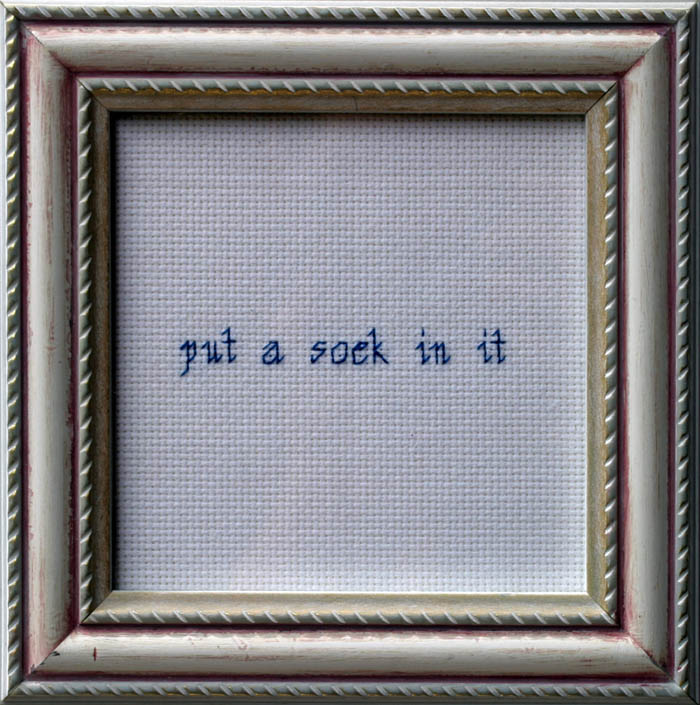
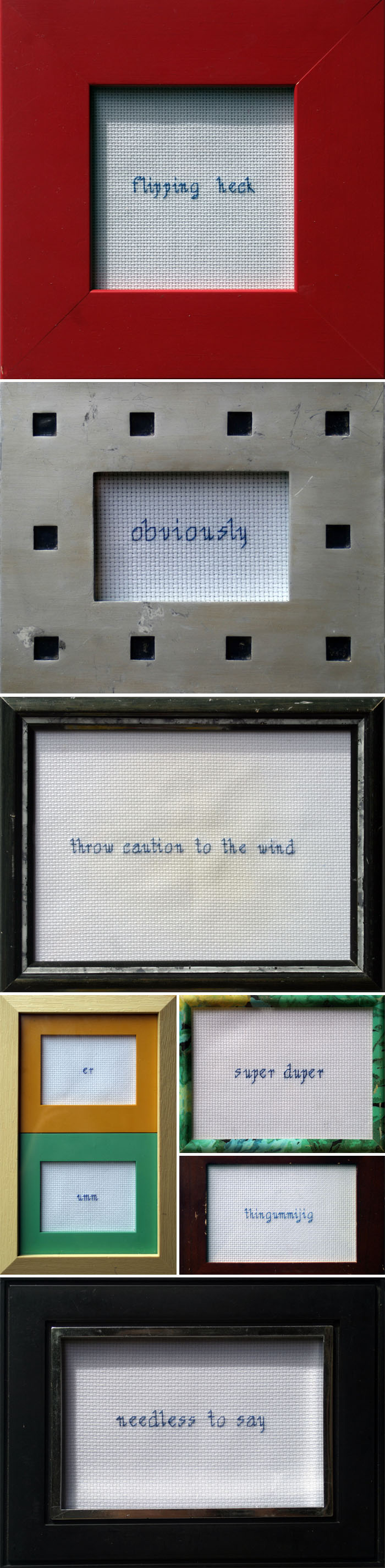
I happened upon Lisa Bowen’s delightful tumblr of embroidered clichés and expressions, which made me chuckle. Originally from England but now living near Sydney, Australia, Bowen (who also goes by the alias Jilly Cooper) a mixed media artist has recently started a crafty, cross-stitch series titled ‘How to String a Sentence Together.’
The work came about after Lisa found a copy of The Penguin Book of Clichés and began thinking how often we use them, despite being told to avoid them. She began to collect these expressions and words, carefully cross-stitching each letter and framing each phrase.
In addition to cross-stitching and proudly using these “hackneyed and trite expressions,” Bowen tweets a cliché a day here, and sells her framed clichés here.
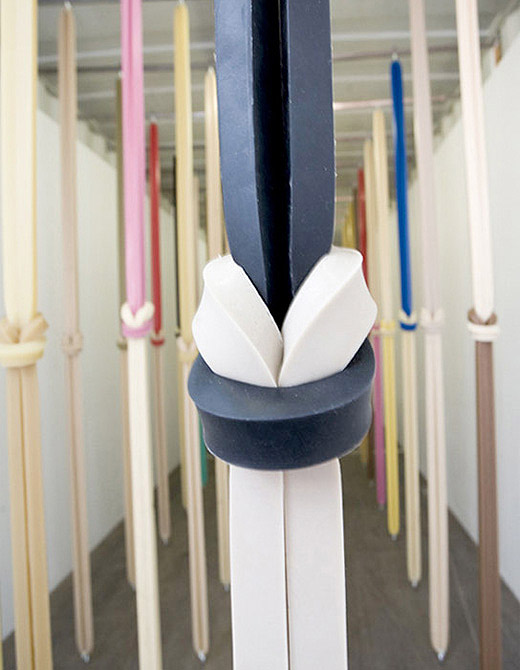
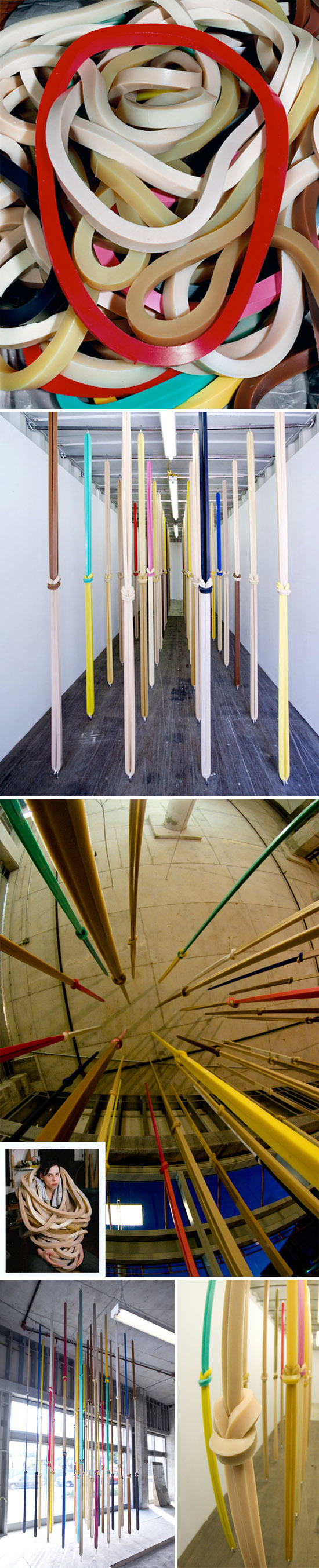
Martha Friedman, a Brooklyn-based artist originally from Detroit, is interested in locating the point at which common objects slip into abstraction and, in some instances, eroticism. In her series of cast rubber sculptures titled Rubbers—in her double-entendre style—she explores the nature of sculptural and bodily materiality through food as well as the rubber band. Here I’ve included only the rubber bands which are my favorites. From the colorful chromogenic prints of the oversized stationery supply, to her full room installations, these are just a lot of fun. Wouldn’t it be great to have a pair of those interconnected rubber bands extended from floor to ceiling in your home?
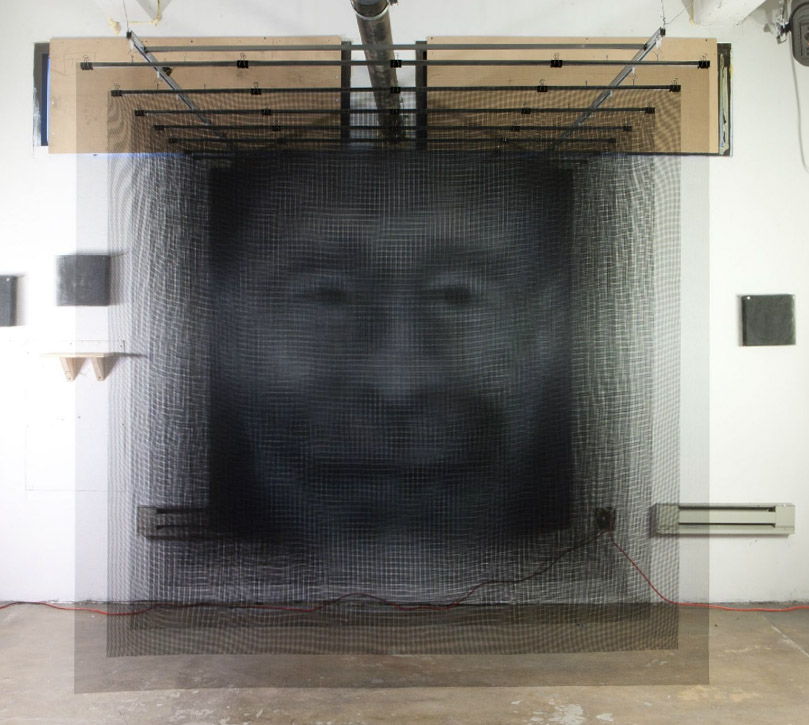
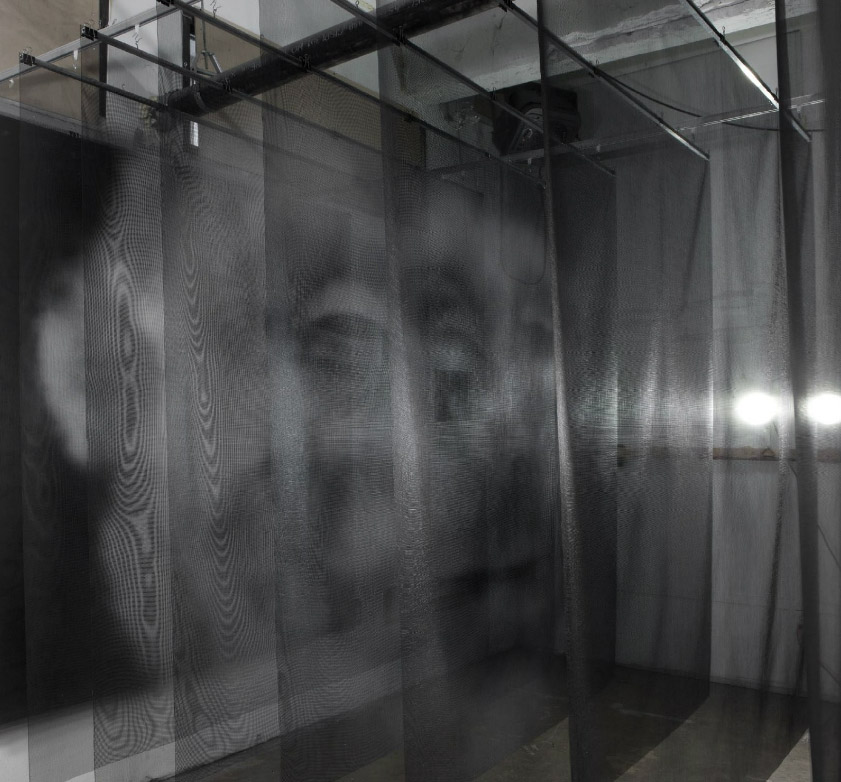
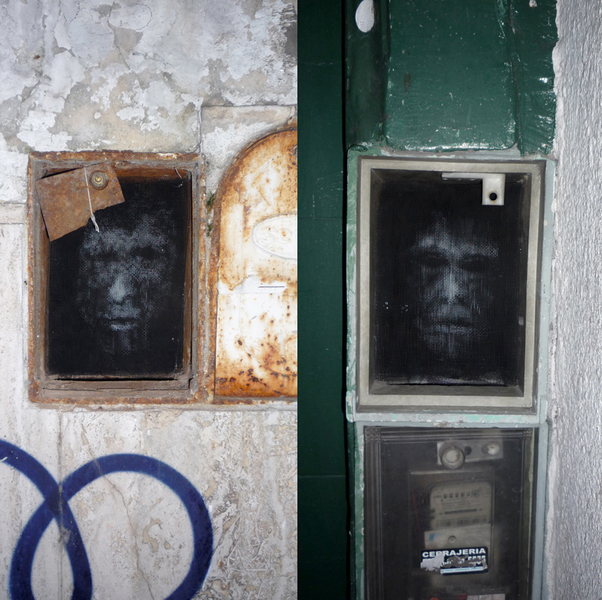
I saw one of Seth Wulsin’s Animas installations a few years ago in his studio as part of the Dumbo Arts Festival in Brooklyn. I was very impressed at seeing these large-scale screens hanging from the ceiling that individually just looked like plain screens, but when seen all together from the front, an almost holographic, three-dimensional, ghost-like head would appear floating on the screens.
Wulsin works primarily with space and light through these large-scale, site-specific, ephemeral sculptural installations. His Animas (soul in Latin) series explores the interior dimensions of mind and soul in the physicality of space. Here is how Wulsin describes his Animas sculptures:
Each sculpture has three kinds of inter-dimensional space that all occupy the same spatial coordinates: the concrete, volumetric space of the screens; the pictorial/volumetric space of the images produced by the paint on the screens; and the optical interference generated between the screen grids when two or more planes overlap (without coinciding) , an optically real, but tactically non-existent space.
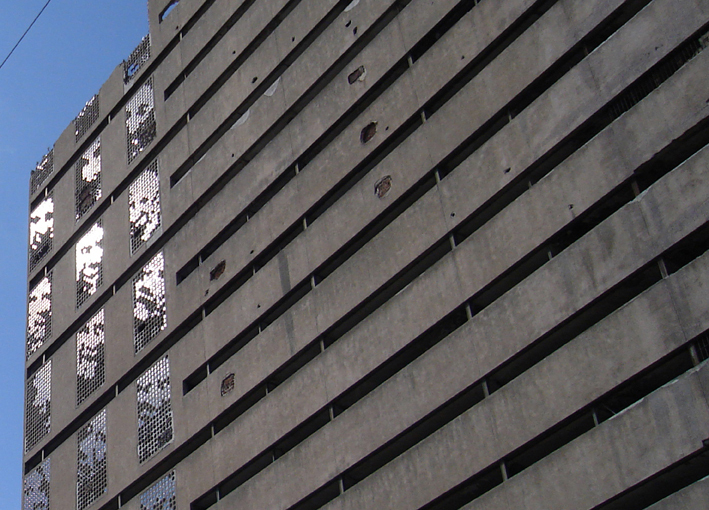
Also very interesting are his works on the streets of Buenos Aires. The photo second from bottom, are two small Animas embedded in a building front, and the bottom photo is from his work 16 Tons, using the prison window grids of a Buenos Aires prison as a pixelated screen. By breaking out certain windows, images of faces appeared reflected in the remaining panes. Very cool and creepy.
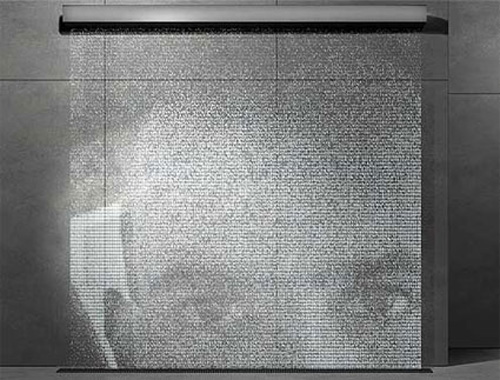
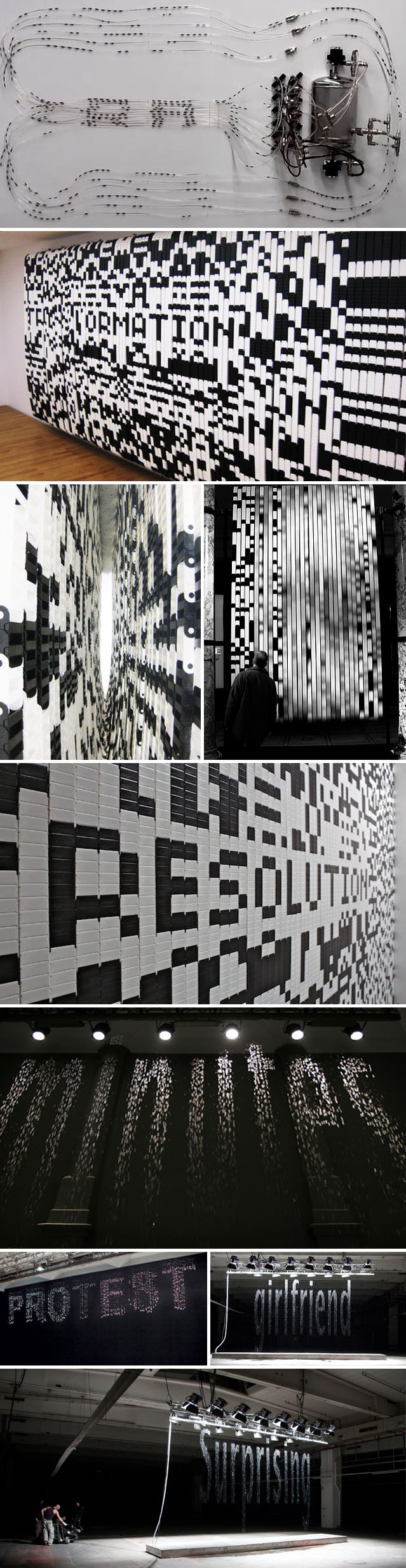
German artist Julius Poppuses technology to create work that reaches across the boundaries of art and science. Three of his works, Bit.fall, Bit.flow, and Bit.code are pictured above. Bit.fall is an installation that in some cases displays images and, in others, words selected from the internet via drops of falling water spurting out from 320 nozzles controlled by computer software and electromagnetic valves.
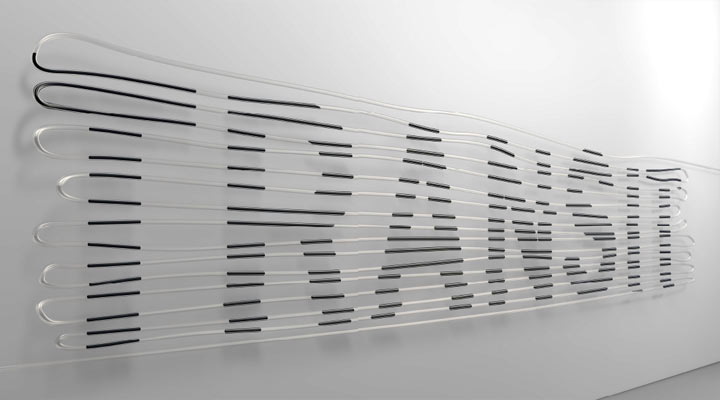
In Bit.flow Popp pumps liquid into a 45-meter long tube on a wall. A software program sets out a pattern which only at certain points forms readable forms or letters which then disintegrate into chaos again.
Lastly, Bit.code is made up of plastic chains with black and white pieces which act as pixels. Controlled by computer software, the pixels move next to each other displaying frequently used key words, at certain points, taken from recent web feeds.
All three appeal to me, yet are definitely appreciated more in person. The videos of each below are the next best thing, unless you are in Jerusalem, in which case you can see Bit.fall in the current exhibit Curious Minds at the Israel Museum until April, 2012.
Elements of these installations bring to mind Daniel Rozin’s work (see post) and Christopher Baker’s Murmur Study (see post).
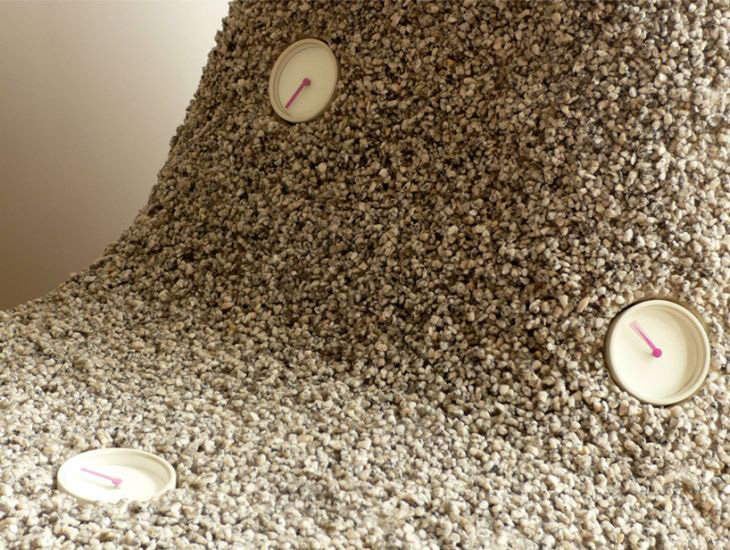
Tokyo-based designer Shinobu Koizumi describes himself as someone who “Proposes unique ‘experiences’ as spaces, furniture, and products.” His most recent creation is the Eternal Chair, made of stone and embedded with multiple glow-in-the-dark clocks with a single second hand each that tick away. As everything decays with time, the decorative clocks are there to remind us that nothing is eternal…not even a stone chair.
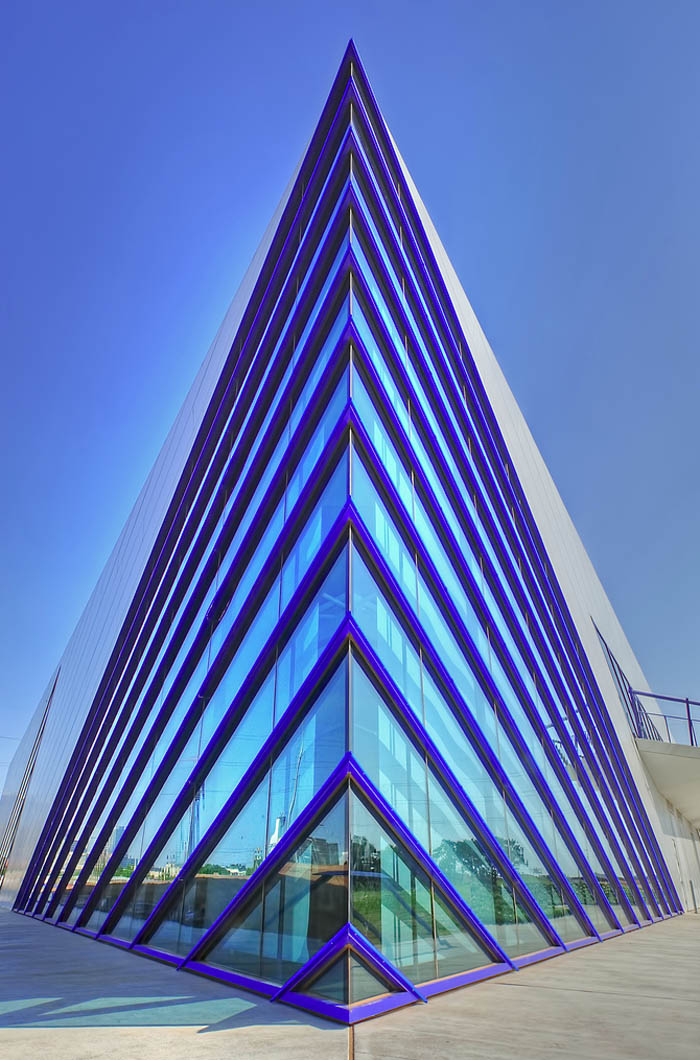
I must confess that I don’t know anything about Oklahoma City, but it seems there is a very nice riverfront district that has been undergoing redevelopment over the past several years with three boathouses and a high-performance center in the Regatta District alone. All architecturally interesting, the newest of these boathouses is the Devon Boathouse completed in 2011. Home to the Oklahoma City University Rowing and Canoe/Kayak teams as well as the headquarters for the OKC National High Performance Center, the Devon Boathouse, designed by Rand Elliott of Elliott + Associates Architects, makes for a striking image against the downtown skyline. Its sharp corner creates the impression of a “prow” breaking against the river’s edge.
Expansive windows make for soaring spaces, created by glass and polycarbonate walls, which are flooded with natural light and views. Blue LED lights light up the boathouse at night, adding another dimension to the already dramatic building.
In its 33,000 sq. feet, the boathouse includes reception, event spaces, catering facilities, high performance fitness center, propulsion rowing tank, endless pool, high altitude training room, weight room and locker rooms as well as boat storage and repair area.
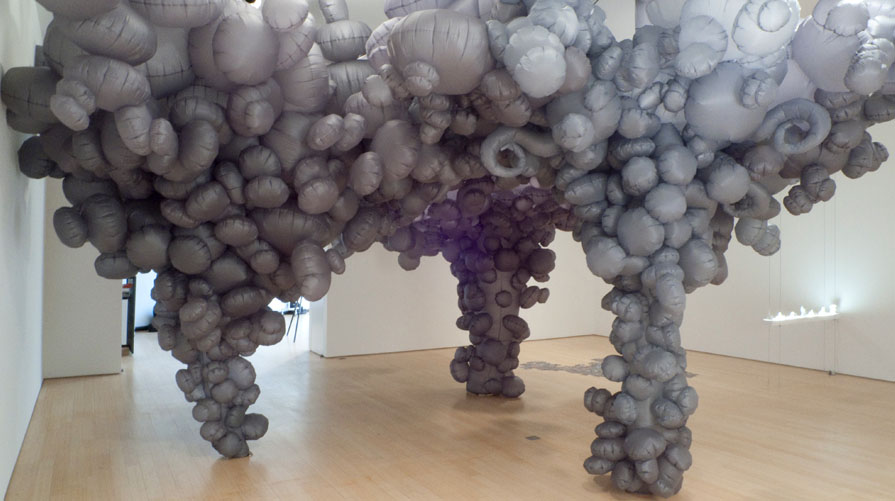
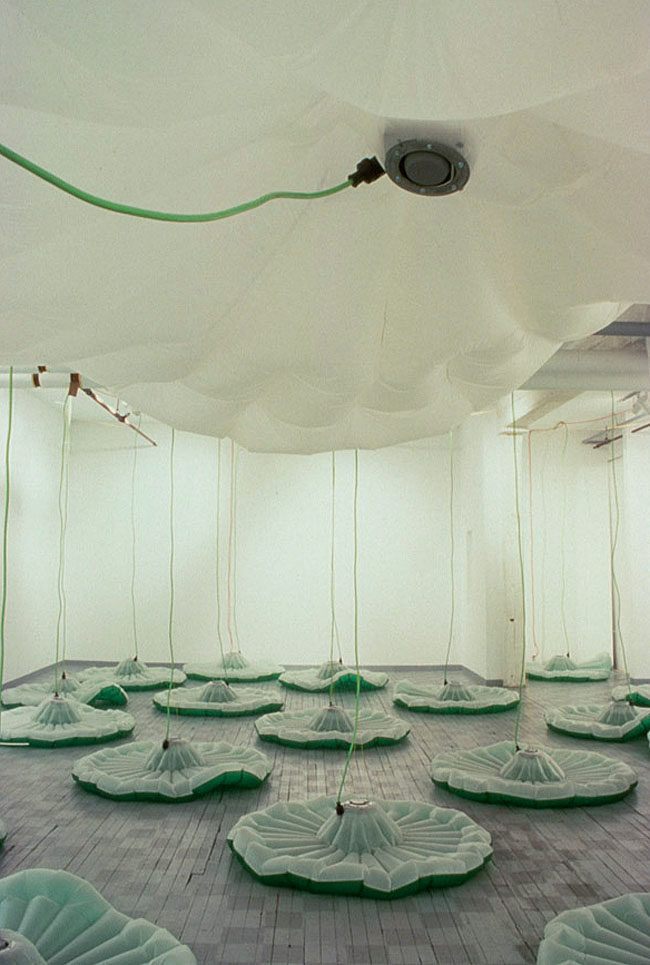
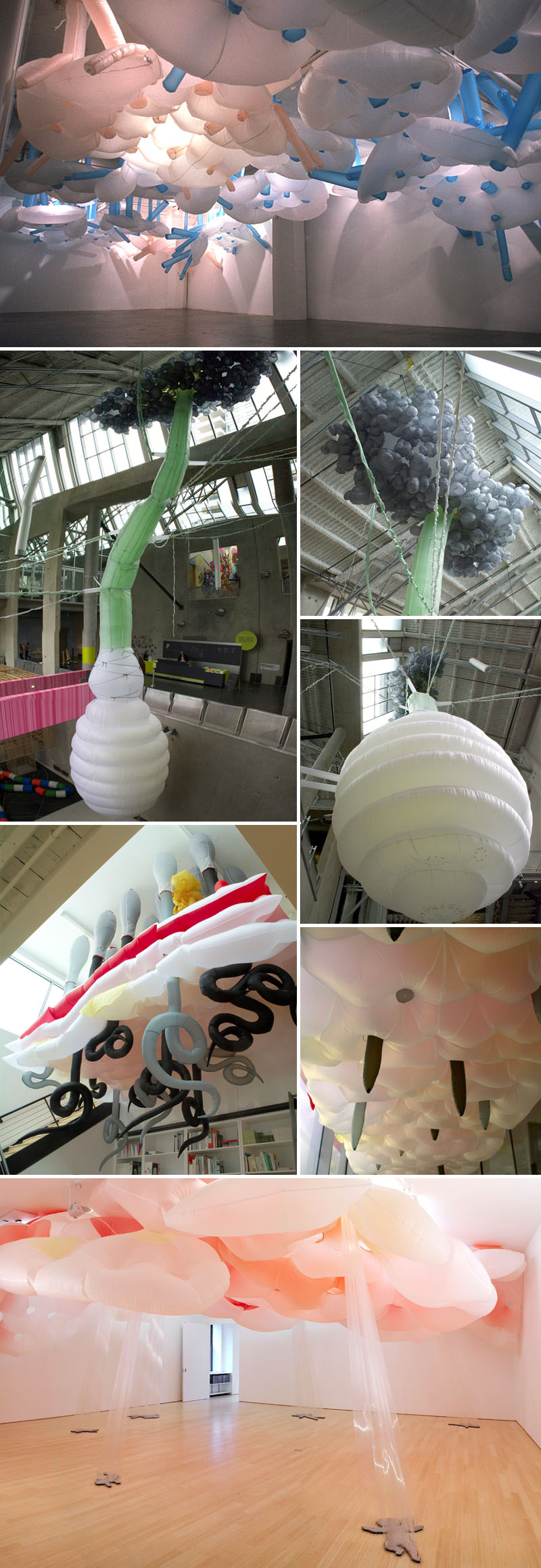
I love these. All of them. Lee Boroson, based in Brooklyn, has been creating these fun large inflatable installations since the 90s. Huge nylon structures filled with air and, for the most part, suspended from the ceiling, Boroson’s skills in engineering as well as his playfulness come together resulting in these very appealing dreamlike works.
From top to bottom: Canopy, based on images of volcanic eruptions; Pleasure Grounds; Lake Effect; Giant’s Way; Graft; Integument, based on a 3d medical illustration of a cross section of human skin and depicts hair, follicles, pores, veins, arteries and dermis; and Liquid Sunshine.
Boroson currently has an installation titled Lunar Bower at The Phillips Collection in Washington, DC, and will have a large solo project at Mass MoCA in December 2013.
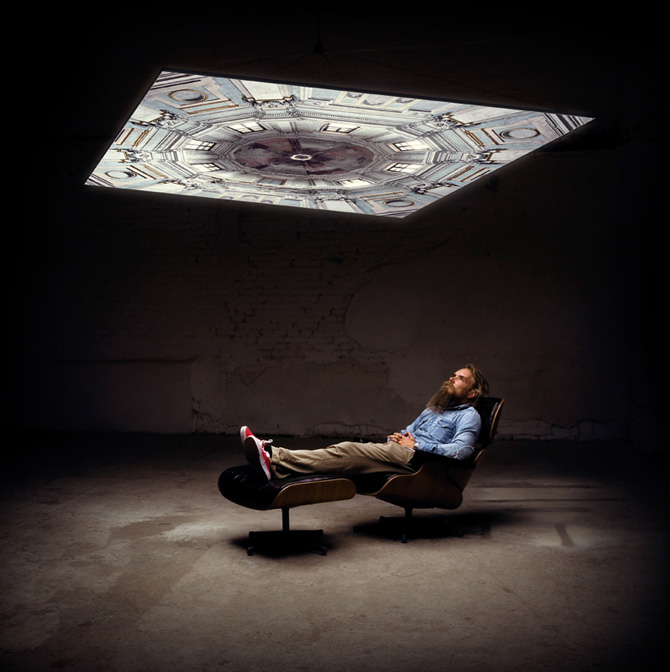
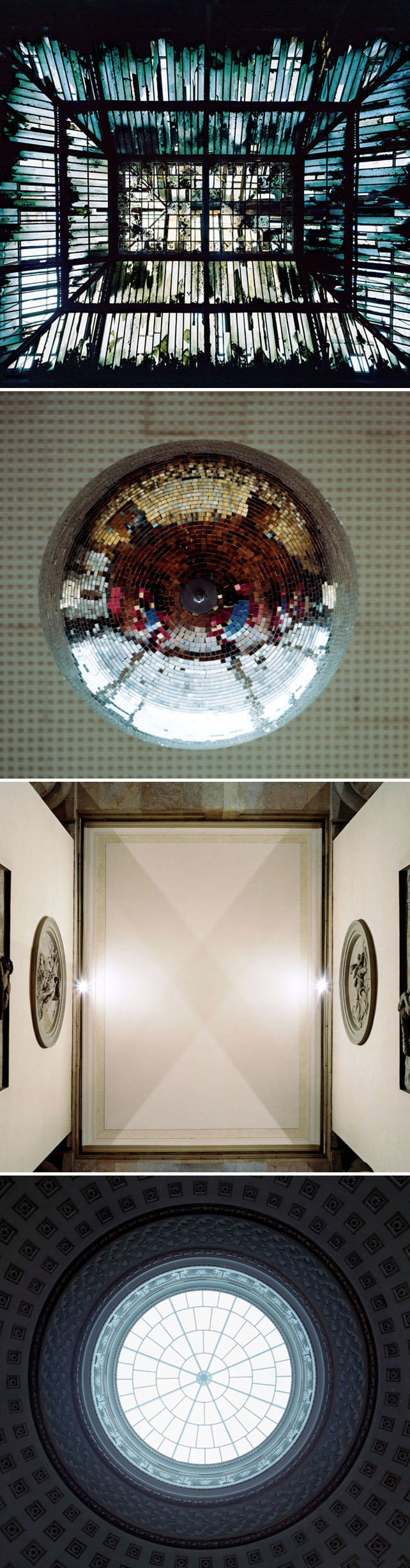
This is such a clever idea, especially ideal for the many dark New York City apartments out there. Roof Top Lights, by Lightboys, are large-format illuminated photographs mounted on an ultra-thin housing that contains LEDs. Suddenly, you not only have an overhead light, but a skylight or church dome or treetops, even a disco ball, right over your head, as well! To quote their website “These are images which not only open up rooms, but also hearts and minds…”
Lightboys also make Lightwalls and Polaboys (backlit large-scale photos with the look of a Polaroid).
Cape Town-based artist Wim Botha is originally from the suburban outer reaches of Pretoria. His work is rooted in the officious pretensions of his nation’s capital using government texts, dictionaries, and bibles to create sculptures based on popular iconography such as trophy mounts and religious icons. In most of these works, the carved text of the piece becomes the physical substance of the work, while the collective text informs the representation of the work as well as providing its social context.
The fourth and fifth photos down from the top are shots of Botha’s recent work, Fuse. which is currently part of a group show at Stevenson Gallery in Cape Town through January 14th, 2012. This piece is made of charred fire-resistant pine while all the other sculptures in this post are made of carved texts.
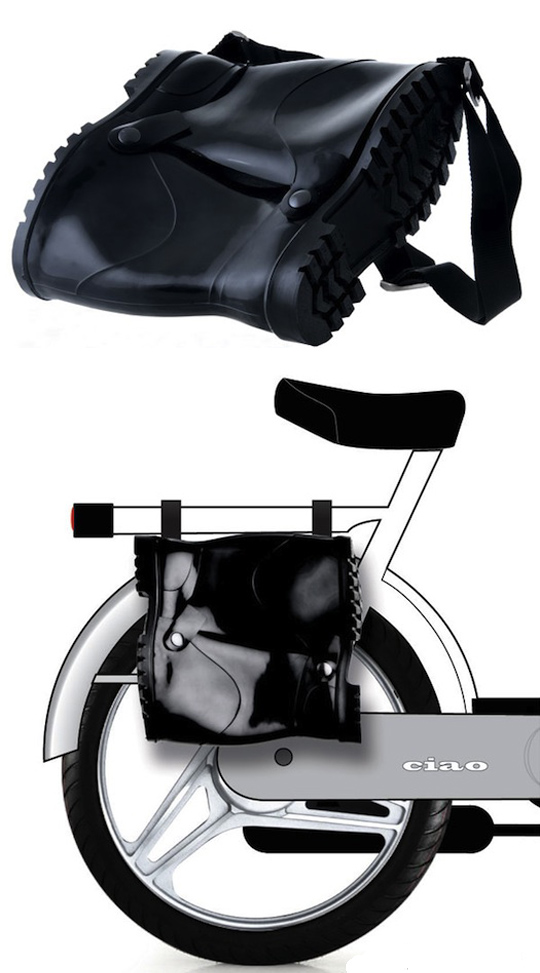
Here’s a fun idea that has both of my daughters written all over it. Footbag, designed by Italian designer Marco Scuderi, repurposes pairs of old rubber boots into elegant and sturdy shoulder bags. I would imagine this could really take off after the current rain boot craze subsides a bit in a year or two. So many possibilities with all the fun rain boots that are on the market these days.
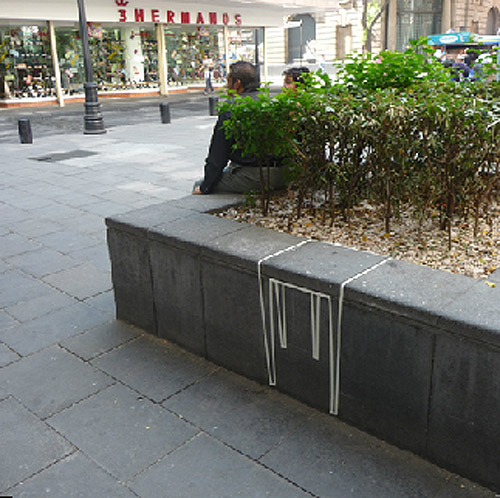
This concept made me smile. The Insinuated Furniture Projectis the creation of Mexican artist/architect Ivan Hernandez-Quintela who started a design collective called Ludens. Hernandez-Quintela considers his designs spatial gags and enjoys invading Mexico City with his ‘Urban Prosthetics’. All his projects are about how people share space and how the objects that surround us affect the way we share it. He believes that each of us has the power to impact a city, one gesture at a time and that could have a contagious effect creating larger impacts from these small gestures. On hisInsinuated Furniture Project, Hernandez-Quintela has this to say:
When one live in a city where urban furniture is not a priority, one finds that its inhabitants get creative and improvise by using different constructive surfaces as furniture. Insinuated furniture project is an attempt to call attention to these potential surfaces by drawing silhouettes of recognizable furniture over them.
Insinuated Furniture is a task for people and/or designers to go around the city with masking tape and draw silhouettes on these surfaces. Not to necessarily add objects to the city, but to recognize how existing objects are used, or misused. To help visualize the potential of the city.
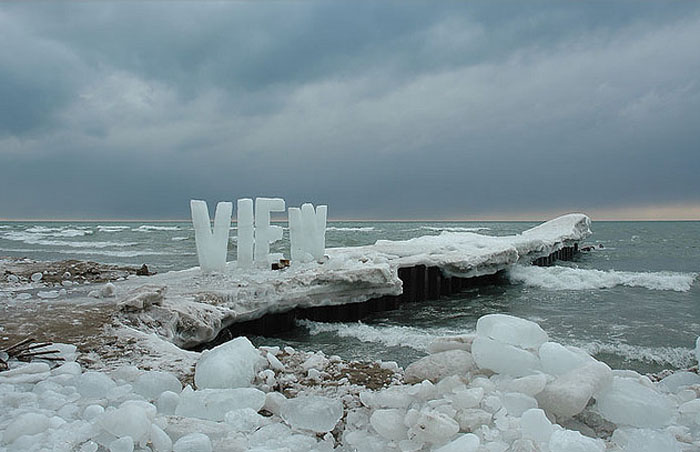
I’m not a fan of the cold or ice or even snow, but if I were to come across one of Nicole Dextras’ Ice Typography installations, I think I could bear the frigid temps a little more.
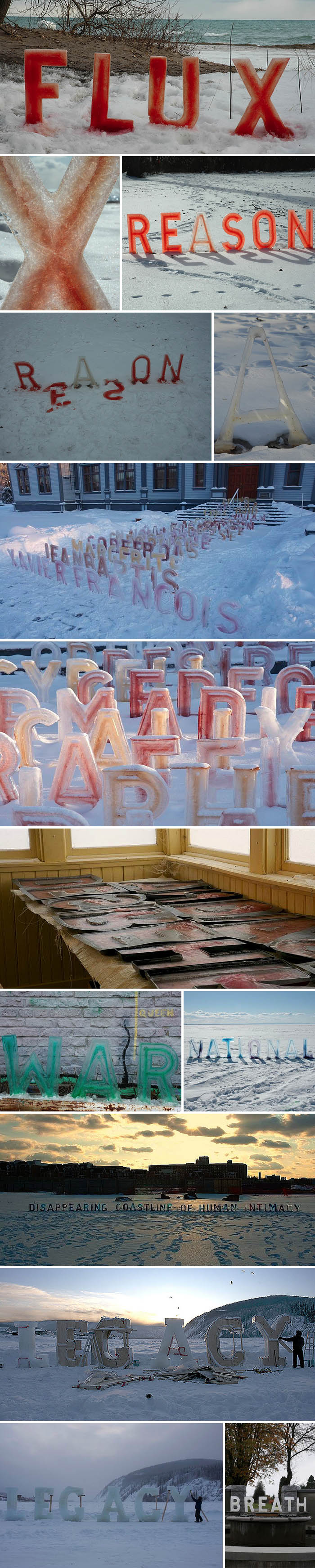
Nicole Dextras is an environmental artist from Vancouver who works in a multitude of media including sculpture, interactive public art and photography. Her Ice Typography series consists of three-dimensional words fabricated in ice ranging in size from 8-foot high letters to 18-inch high. Apart from the striking aspect of these frozen letters standing tall in the outdoors, whether in a rural or urban landscape, is their shifting and transient quality.
From the artist’s statement:
The visual poetry in this series aims to subvert the authority of the English language and the commerce of signage by representing words as vulnerable and shifting. Ice Typography absorbs light, melts and eventually leaves no trace; these words have more in common with dreams and oral stories than linear language. Words cast in ice interrupt our literal narratives, allowing a more integrated reading of the land we inhabit, as opposed to the past and current commodification of land as limitless resource. This fundamental split in perception lies at the crux of our environmental crisis. I therefore choose to create within an ephemeral vernacular to accentuate the collective physical and psychological experience of flux and change.
There are many more of these installations on Nicole Dextras’ site here, and you can see time lapse videos of her Signs of Change series as they melt here.
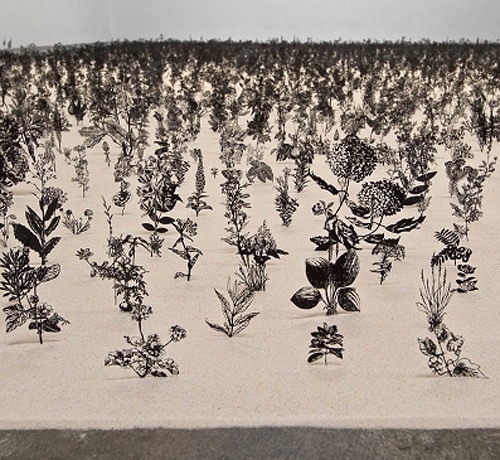
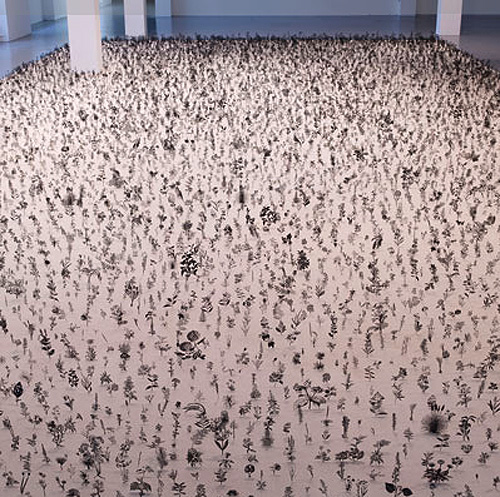
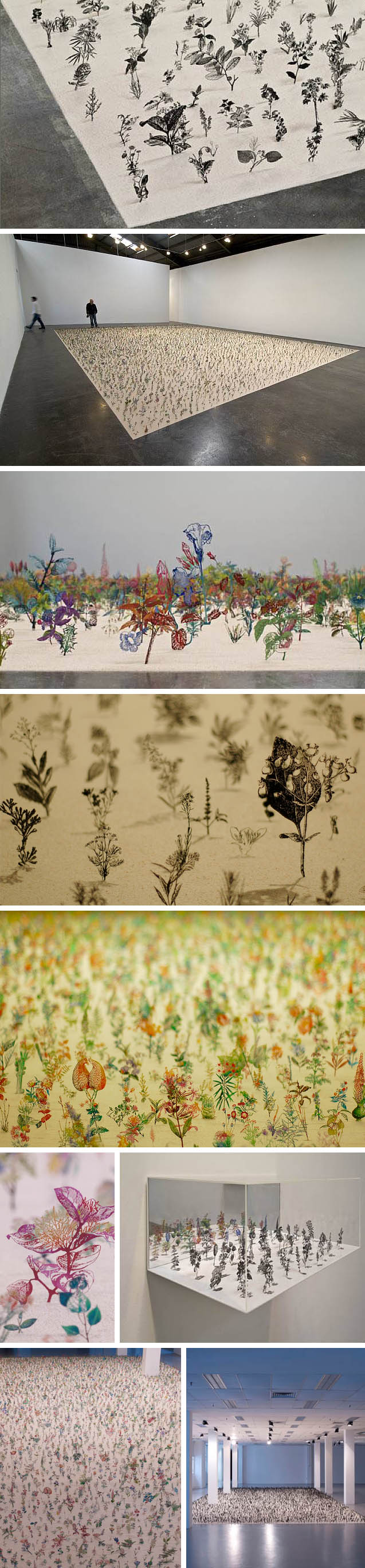
Israeli artist Zadok Ben David, who lives and works in London, created this interesting installation titled Blackfield. Made up of more than 12,000 small steel cut plant sculptures that spring out from a blanket of sand covering the gallery floor, there is a surprise element as one walks around the installation; what initially appears to be all black reveals itself as color on the other side.
Each plant sculpture takes its form from Victorian botanical illustrations which Ben David finds in old text books. The detail on these is quite amazing. The miniature boxed version of the installation, in the next to last row of photos above, shows the two-sided quality of the plants in the mirrored wall.
Here’s a video taken while circumambulating the installation. The effect is even better than I imagined.
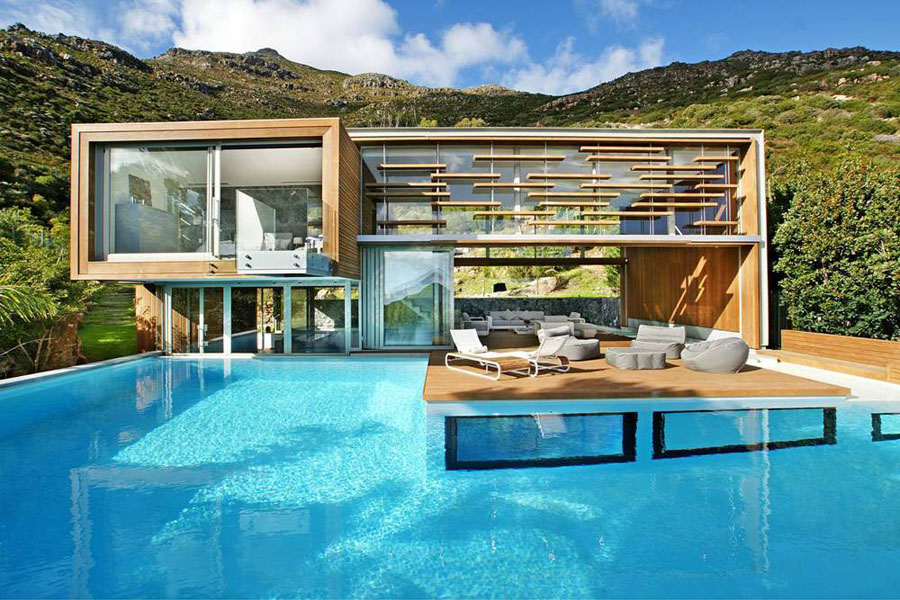
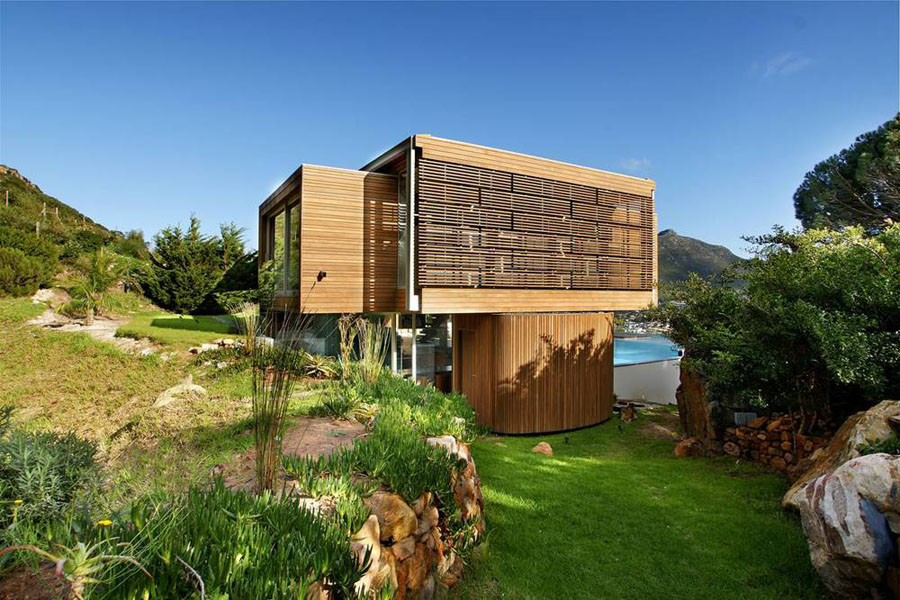
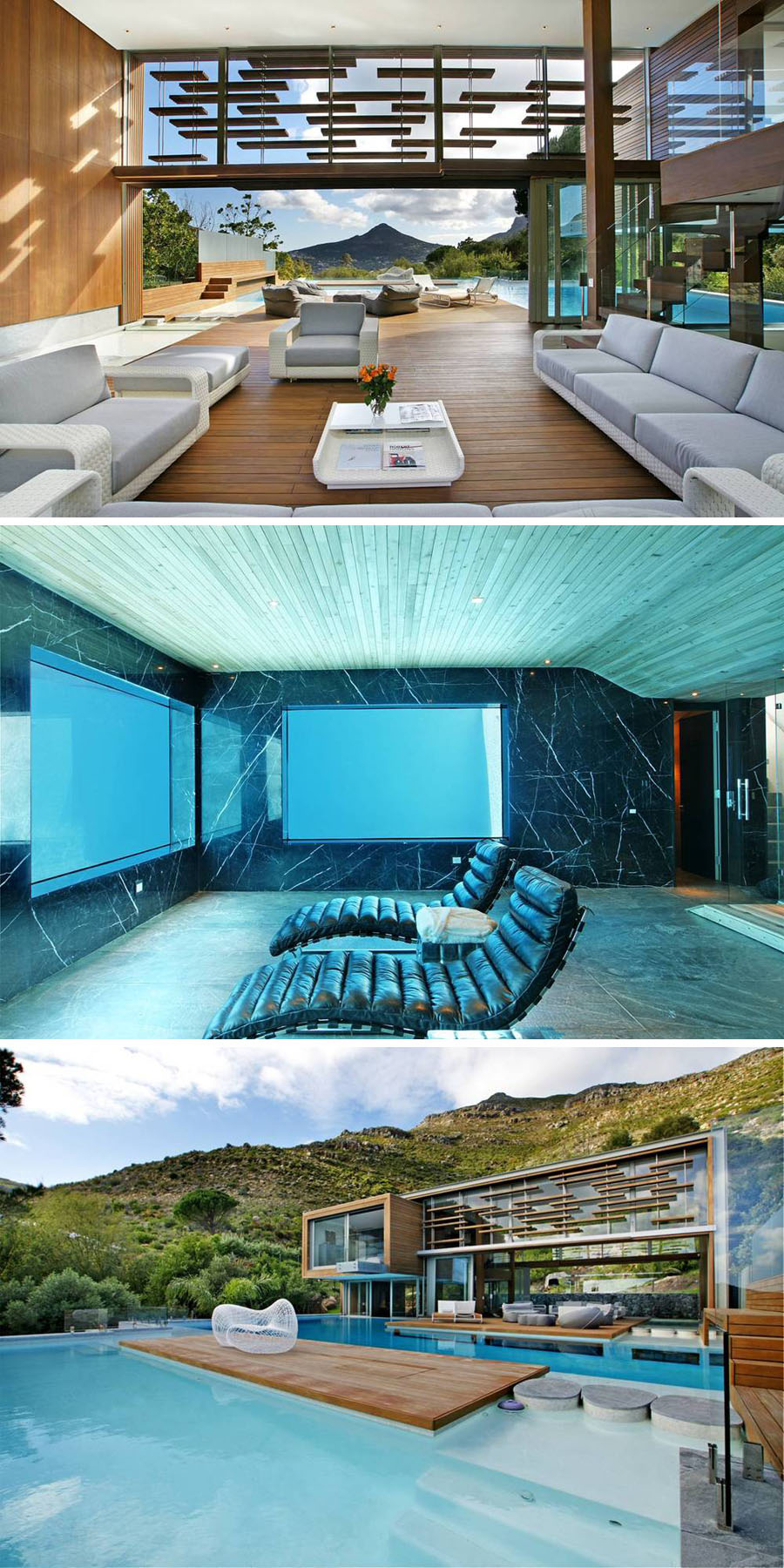
The Spa House designed by Metropolis Design in Cape Town, South Africa, is set on the mountainside on the urban edge of Hout Bay overlooking the bay and harbour, and integrated with the beautiful landscape that surrounds it.
The house functions as the guest house and entertainment facility of a larger house – separated by a hill but connected by footpaths – incorporating swimming pools, spa, and guest accommodations. Let the record show that I, for one, would not mind being a guest. I especially like the room with the underwater views, though I’m sure I would spend much more time on the sunny deck.
The house is quite dramatic, with its separate sculptural forms dynamically combined into one superstructure made of steel construction and clad in afromosia shiplap boards on timber studwork.
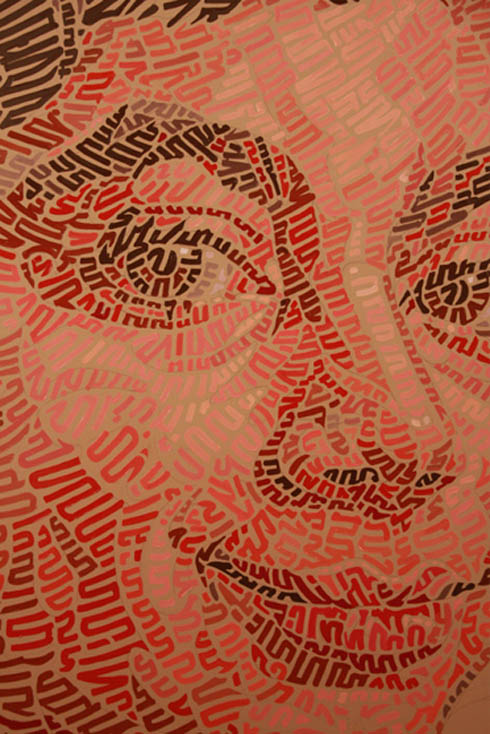
Born in Tehran, Iran, artist Farsad Labbauf moved to the United States with his family at the age of thirteen. Presently he lives and works in New York.
Labbauf’s paintings are influenced by traditional Persian arts such as calligraphy and tapestry, a link to his cultural heritage. They have a distinctive style, made up of segmented sections of color, that in some cases have a maplike quality.
From the artist’s statement:
To describe and depict something that was, is or will be carries the heavy and imposing predicament of time. And so in describing the world, I have found it necessary to create images that exist halfway between completion and dissolution.
Another main and motivating factor in creating and developing the use of lines in my paintings was the unveiling of a desire for manifestation of unity. Following an urge against segmentation of the painting surface into isolated geographies of color and content, I set out to create a method of pictorial depiction which conveys this idea of unity regardless of content.
You can see more of Farsad Labbauf’s work on his site and here.


 Click to enlarge





















 CollabCubed