Christian Partos: E.L.O.

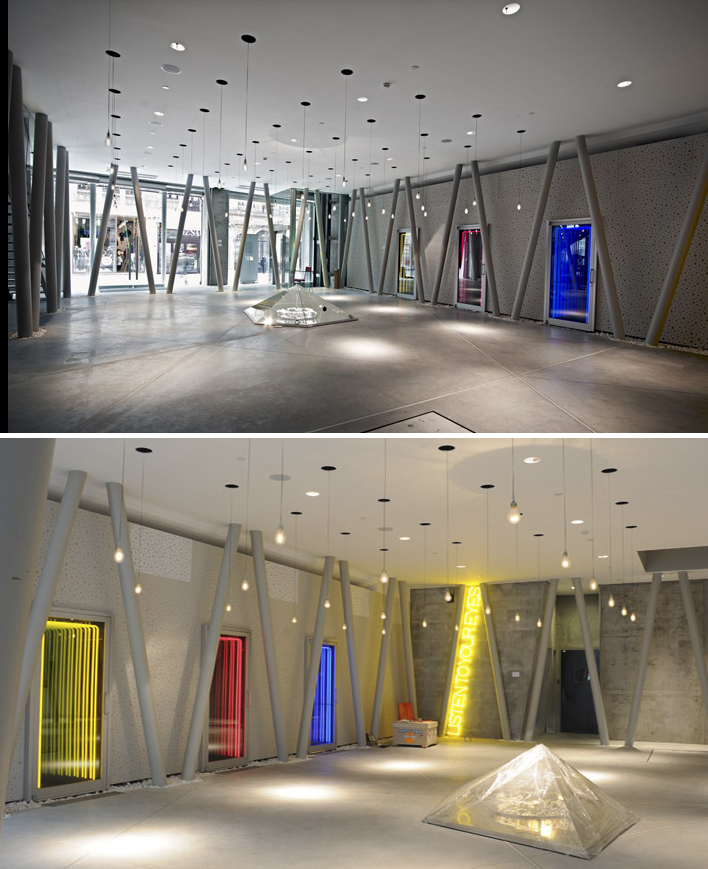
Light art, Light Installation, Istanbul, Borusan Muzik, art installationart installation, lumen, light art, Istanbul, BorusanThis past summer when we visited Istanbul, we popped into a gallery on a stroll down Istiklal Street, mostly because we recognized Ivan Navarro’s piece from the window. The show was Matter-Light 2 at the Borusan Muzik Evi. But this introduction is just to set the stage for the delightful surprise that ensued. While looking around the spare gallery at the various interesting light sculptures in the exhibit, suddenly, almost comically, and completely unexpectedly, a light bulb dipped down quickly and swiftly from the ceiling. And then another; and another. The artist behind this amusing curiosity is Swedish artist Christian Partos. The piece, titled E.L.O. (I am assuming a clever reference to, and/or appropriation of the name, the Electric Light Orchestra) consists of a roomful of light bulbs essentially dancing in the gallery. This is a permanent installation at the Borusan Music House (that’s the translation).

Seeing the stills really doesn’t do it justice, so here are two videos.

You can see more of Christian Partos’ work here, including his installation for a subway station in Malmö, Sweden.
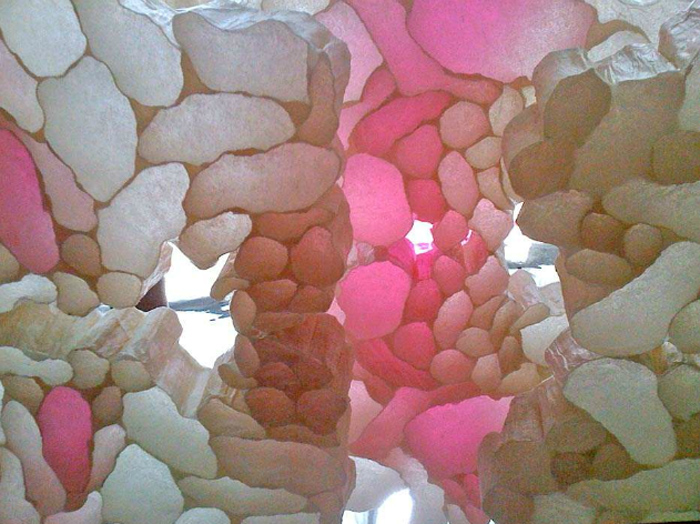
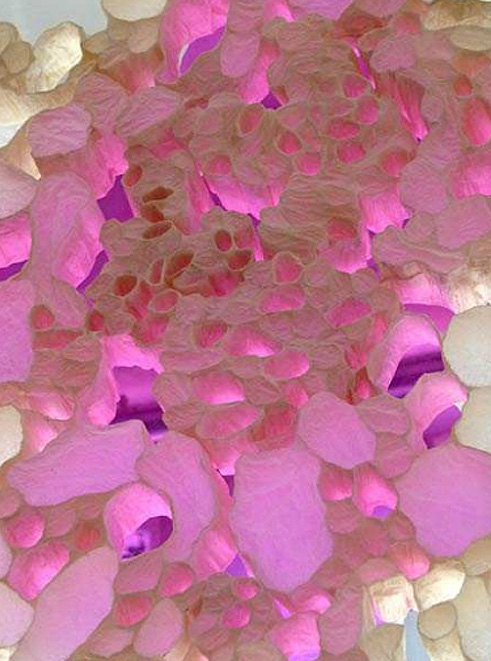
Mary Button Durell: Paper Sculpture

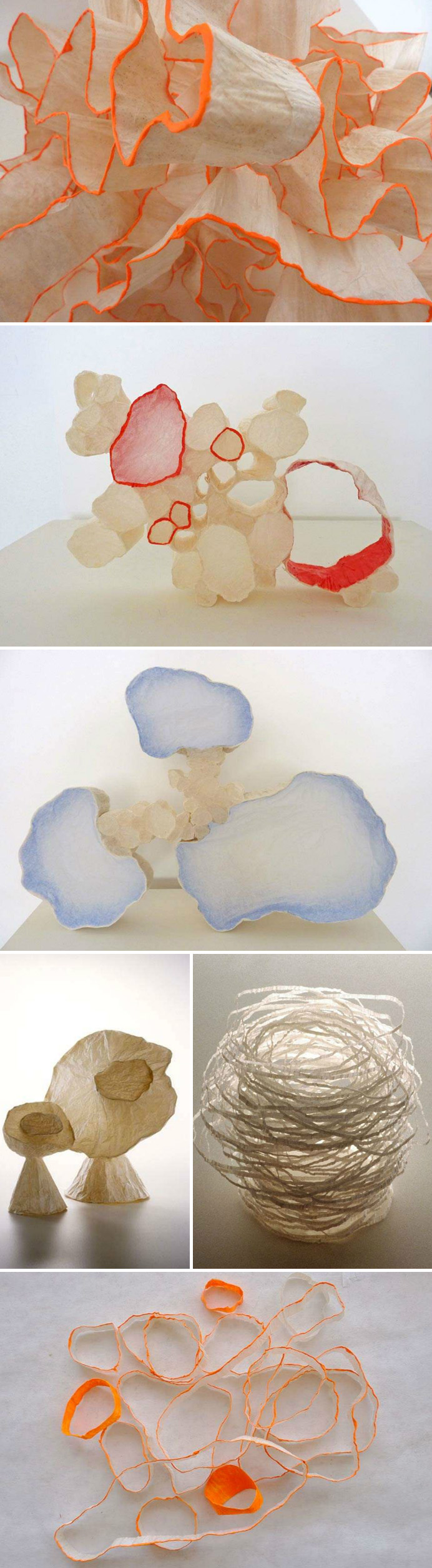
Paper constructions from tracing paper and wheat paste, collabcubedPaper constructions from tracing paper and wheat paste, collabcubedPaper constructions from tracing paper and wheat paste, collabcubedClick to enlarge

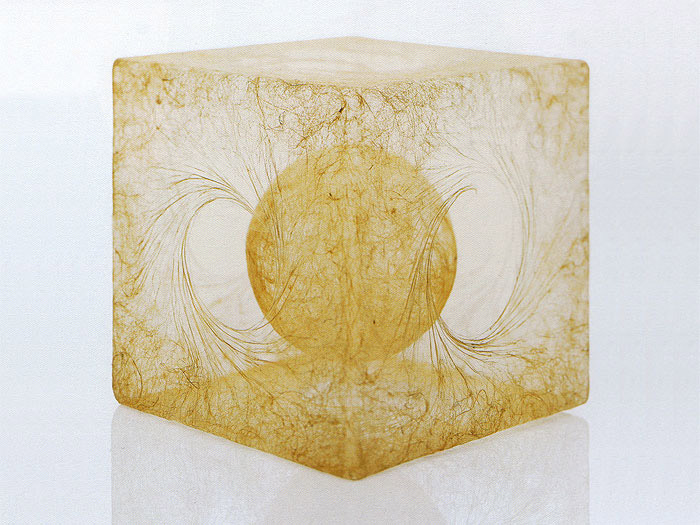
California artist Mary Button Durell creates paper sculptures using only tracing paper and wheat paste. They have been compared to cellular membranes and described as biomorphic abstractions; definitely organic in shape and feel. Though many of the works look as though built on a wire frame, that is not the case. The process involves extensive hand-building by the artist.

From the artist’s statement:
Individual cells or cones that comprise most of the pieces are first formed over molds of various shapes and sizes and then joined together using wheat paste cell by cell. Additional layers of paper and paste are then added for strength and reinforcement which creates the net-like structure around the individual cells.

In addition, the translucent quality of the paper adds another dimension to the pieces.

You can see more of Mary Button Durell’s beautiful work on her site.

Magritte Your World iPhone App

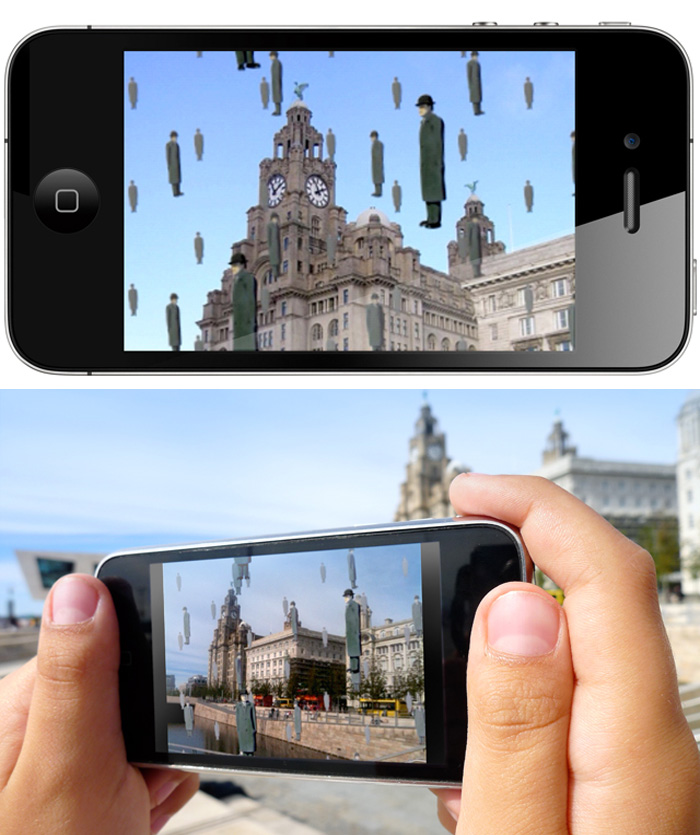
Magritte Your World, App, fun gadget, video app, TateMagritte Your World, App, fun gadget, video app

This app made me laugh. The Magritte Your World iPhone App is the creation of the Dorothy collective in Manchester, England, England. It was released to coincide with the René Magritte exhibit that ended last month at the Tate Liverpool.

From Dorothy’s site:
The ‘Magritte Your World’ camera based app invites people to take pictures of their favourite views or landmarks and ‘Magritte’ them, by overlaying an animation inspired by ‘Golconda’, one of the artist’s most famous paintings. Suited, booted and bowler-hatted businessmen rain from the sky in an interactive and contemporary interpretation of Magritte’s own surreal painting.

Available here.

Leon Keer: Lego Army Chalk Street Art

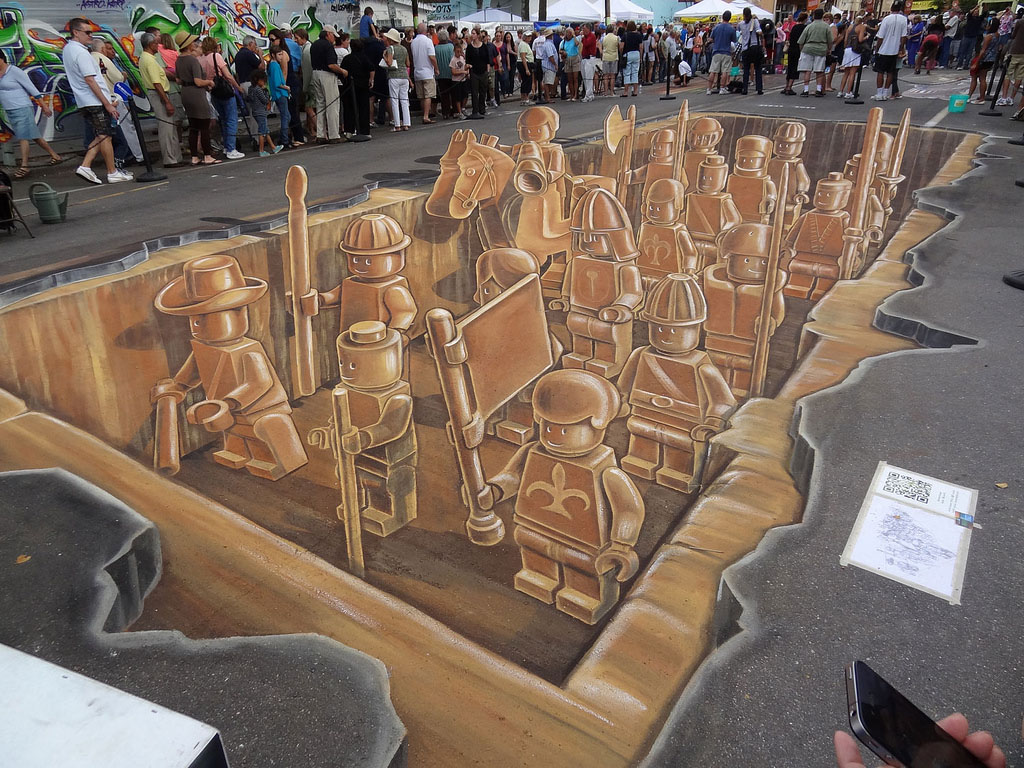
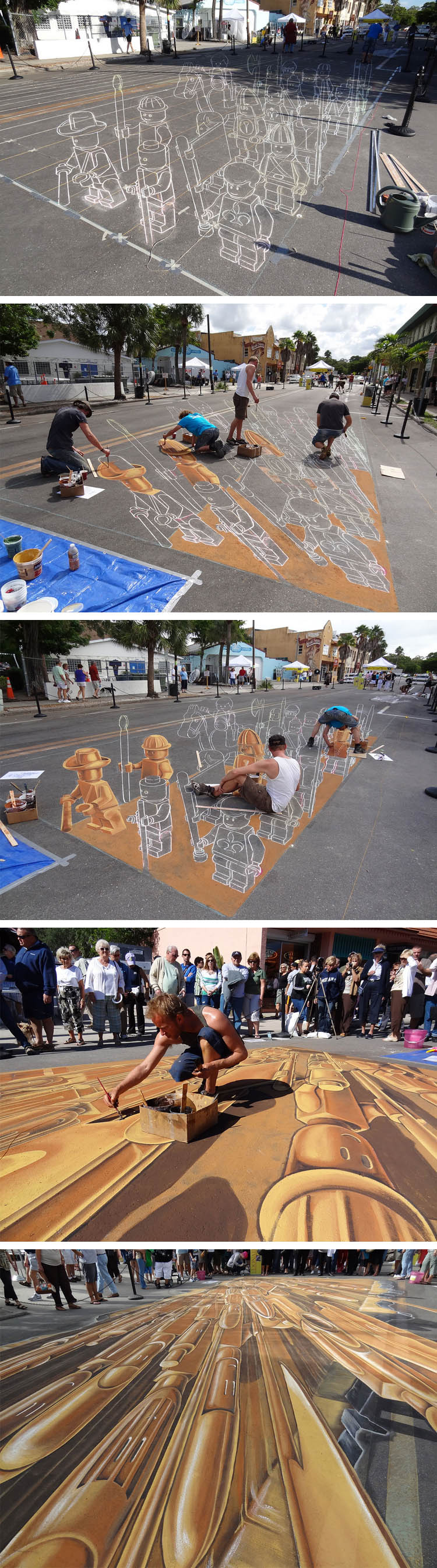
Amazing 3-d Chalk drawing, Lego, Sarasota, Leon Keer, Planet StreetpaintingAmazing 3-d Chalk drawing, Lego, Sarasota, Leon Keer, Planet StreetpaintingAmazing 3-d Chalk drawing, Lego, Sarasota, Leon Keer, Planet StreetpaintingClick to enlarge

This has been making the rounds on facebook but I just came upon a whole set of images from the artist. The amazing Lego Army 3-D chalk drawing is by Dutch artist Leon Keer and the artist collective Planet Street Painting created for the Sarasota 2011 Chalk Festival in Florida. The drawing, based on the famous terracotta sculpture army of Chinese Emperor Qin Shi Huang, measures 30 x 40 feet and is drawn in such a way to fool the eye with depth and perception.
Apparently, there is a link between an 8-foot-tall Lego man that washed up overnight on October 25th at Siesta Key beach and Leon Keer’s drawing. Clever publicity stunt or coincidence? Either way, a very impressive feat.
Photos: Leon Keer’s flickr and Herald Tribune

Maggie’s Centre Nottingham: CZWG

Maggie's Nottingham, CZWG, Paul Smith, Architecture, collabcubedMaggie's Nottingham, CZWG, Paul Smith, Architecture, collabcubedMaggie's Nottingham, CZWG, Paul Smith, Architecture, collabcubedClick to enlarge

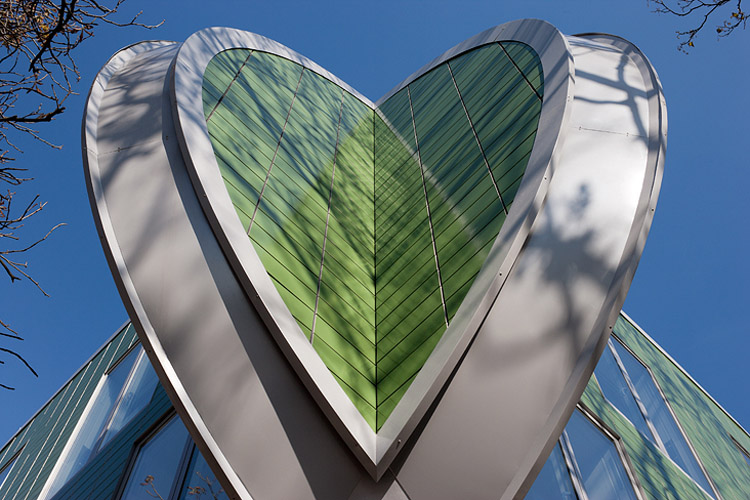
The new Maggie’s Cancer Caring Center in Nottingham, England, was designed by Piers Gough, Partner CZWG Architects with interiors by Paul Smith. Comprised of four interlocking ovals and elevated above the ground to give a floating sensation, the distinctive building is clad in green glazed ceramic tile.

The building is situated on a sloping wooded area, not typical of hospitals, near the main entrance to Nottingham City Hospital. The balconies extend out from the kitchen and sitting room providing pretty and peaceful views of the surrounding landscape. The Paul Smith interiors are colorful, open, and bright, from the blue and green tiled bathrooms to the upholstery on the chairs. An uplifting atmosphere for sure.

Photos: Martine Hamilton Knight; Ercol’s flickr and Living Projects

via e-architect

Ion Zupcu: Works on Paper

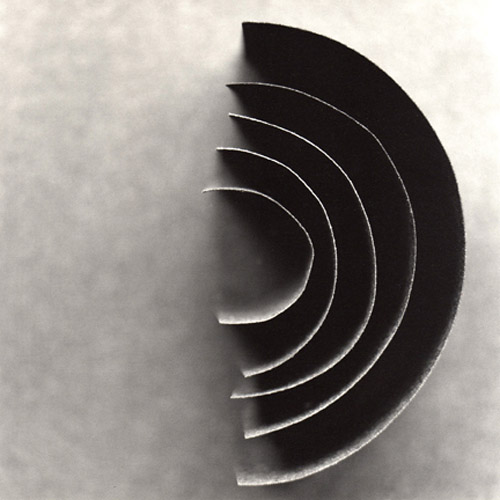
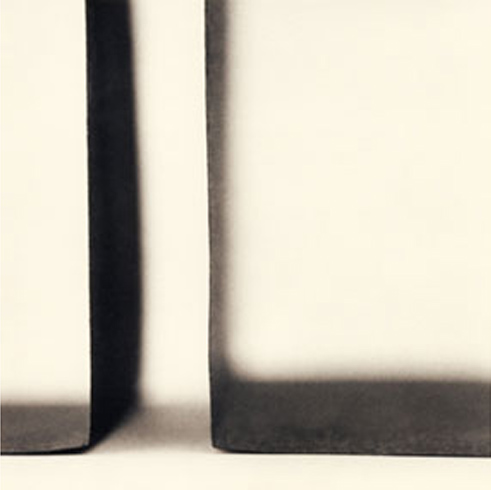
minimalist photographs, sepia, folded paper, Ion Zupcu, Romaniaminimalist photographs, sepia, folded paper, Ion Zupcu, Romaniaminimalist photographs, sepia, folded paper, Ion Zupcu, RomaniaI came across these beautiful photographs by Romanian artist Ion Zupcu, now living in Hopewell Junction, NY. This series titled Works on Paper was initially inspired by his daughter’s paper models for her architecture studies. Zupcu started photographing very small, folded and bent pieces of paper, most barely extending one inch across, using a Hasselblad camera. He enlarges the square-format prints to 15 inches squared, playing with the light and shadows, as well as exposure, creating a dramatic abstract effect. Lovely.

More of Ion Zupcu’s work can be seen on his site, and more of his Works on Paper series can be seen at Drooel and Gallery 339.

via Chonogram Magazine

Typography in Providence

typography, type, rug, Brown University, Pembroke Hall, collabcubedtypography, type, rug, Brown University, Pembroke Hall, collabcubedtypography, type, Brown University, RISD, Rhode Island School Design, collabcubedClick to enlarge

Providence, Rhode Island holds a special place in our hearts being that two out of the three of us are currently living there the majority of the year. Not surprisingly, the importance placed in design on both campuses where Em and Dan attend, is evident from Brown’s new Granoff Arts Center designed by Diller Scofidio + Renfro, to the RISD Museum of Art designed by Jose Rafael Moneo. What are nice as well, are the little surprise design elements you suddenly come upon on both of these adjacent schools. Typography, one of our favorites for example, is nicely incorporated and used decoratively on both campuses. Strolling around on a recent visit we spotted some of these. I wasn’t able to find information on all of the designs, but have included what I did obtain.

From top to bottom:
Typography carpet in Pembroke Hall, Brown;  Decorative type panels on the sides of the bleacher seating area and behind the librarian desk at Rhode Island School of Design (RISD) Library, designed by Office dA; Portfolio Café at RISD; Sciences Library floor numbers at Brown, designed by Warner Burns Toan & Lunde Architects.
All photos by Emma/Collabcubed except two grand hall shots of RISD Library courtesy Office dA.

Julia Kissina: Fairies

Meat wigs, mock renaissance portraits, fairies, kissina, photos, collabcubedMeat wigs, mock renaissance portraits, fairies, kissina, photos, collabcubedRussian-born, and now Berlin-based, artist Julia Kissina photographs, creates actions and documents them as a form of performance art, and makes installations. Her photographic series Fairies gives new meaning to the term ‘meathead’. These photographs feature young girls and women in the style of Renaissance portraits, with all the nobility and grace of the classic paintings but with a twist: replacing their elaborate hairstyles, or even simple ones, is raw meat. The result is a little disarming. A prevalent theme in Kissina’s art deals with the perception of beauty and the changes in that perception as we get closer to freely modifying appearance through genetic experimentation; beauty or monstrosity?

You can see more of Julia Kissina’s work on her site, including her other meat-based series Clouds and Gourmets & Predators.

Photos courtesy of the artist, mutual art, lost at e minor and Lumas.

via Lumas

Diane Landry: Knight of Infinite Resignation

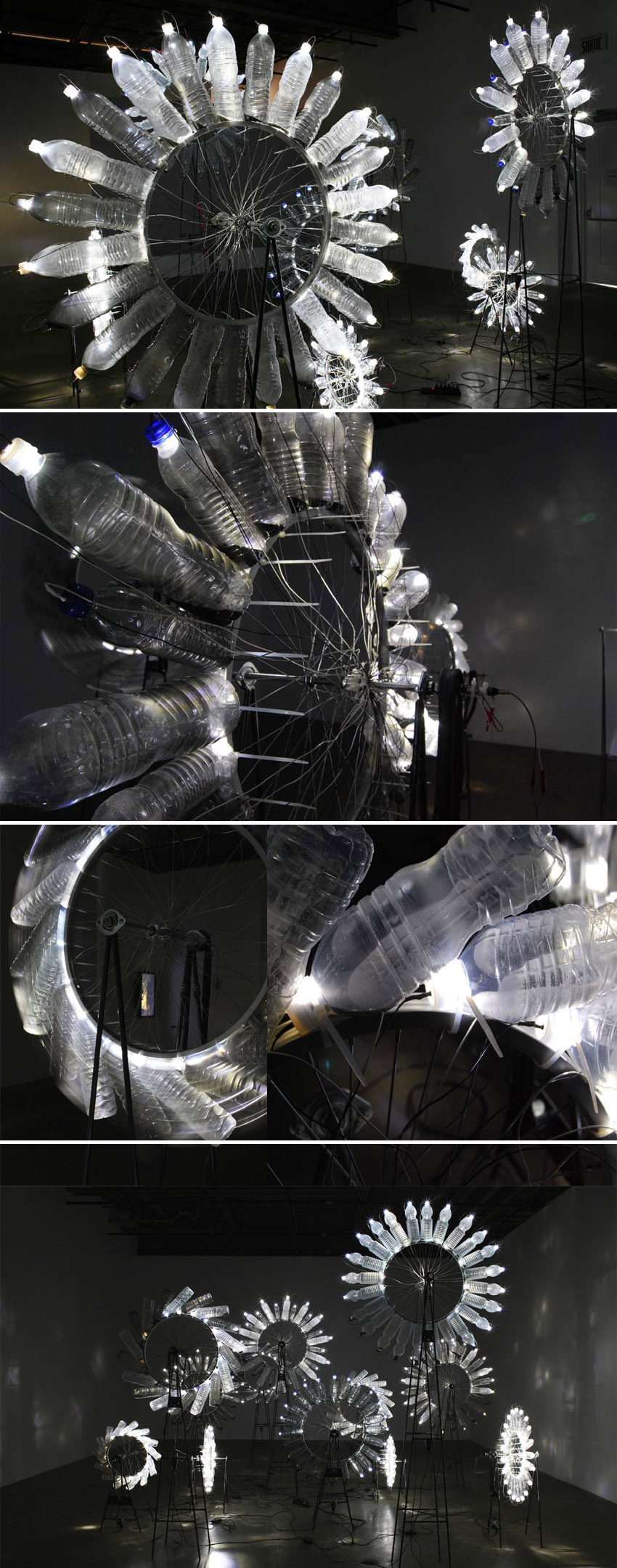
water bottle art, light, motion, installation, cool, Landry, Knight of Infinite Resignationwater bottle art, light, motion, installation, cool, Landry, Diane Landry lives and works in Quebec. Many of her works call attention to the threat on the earth’s clean water supply. In her sound and automation installation Knight of the Infinite Resignation, the 237 bottles used are filled with sand making the bottles dried-up and sterile, at the same time acting as hour glasses. There are allusions to the 12 hours in a day and 12 months in the year, as well as windmills and stars.

From the artist’s site:
The short-sightedness of human management of natural resources is made pitifully obvious by the work’s evocation of cosmic time, in comparison with which the human lifespan and even the existence of the species seem simply irrelevant. And there is something terrifying about this assemblage, which is so cold and serene, so unperturbed by the viewer’s presence.

via asiapacific

Nooka Concept Watch

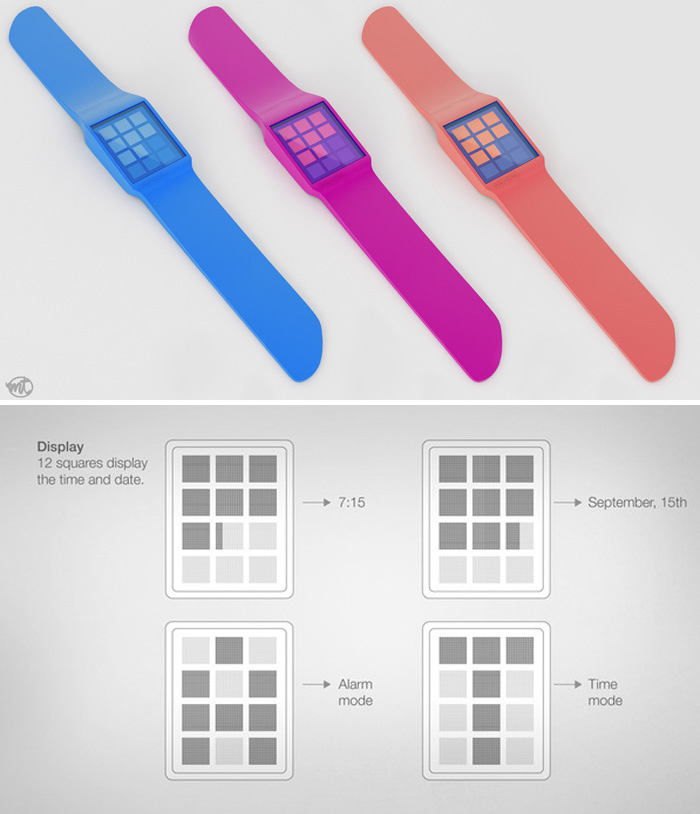
watch design, nooka, magnetic, pixels, mario troisewatch design, nooka, magnetic, pixels, mario troisecool watch design, nooka, magnetic, pixels, mario troiseIt’s been a while since we’ve posted about a watch but, being the watch lovers that we are, it was great to have  one pop up in our inbox. This concept design for a Nooka watch by Brazilian designer Mario Troise seems like it would fit in perfectly with the collection. The minimalist design includes a magnetic band and 12 boxes on the face made up of pixels offering up yet another way to read time.

Micheline Branding by Anagrama

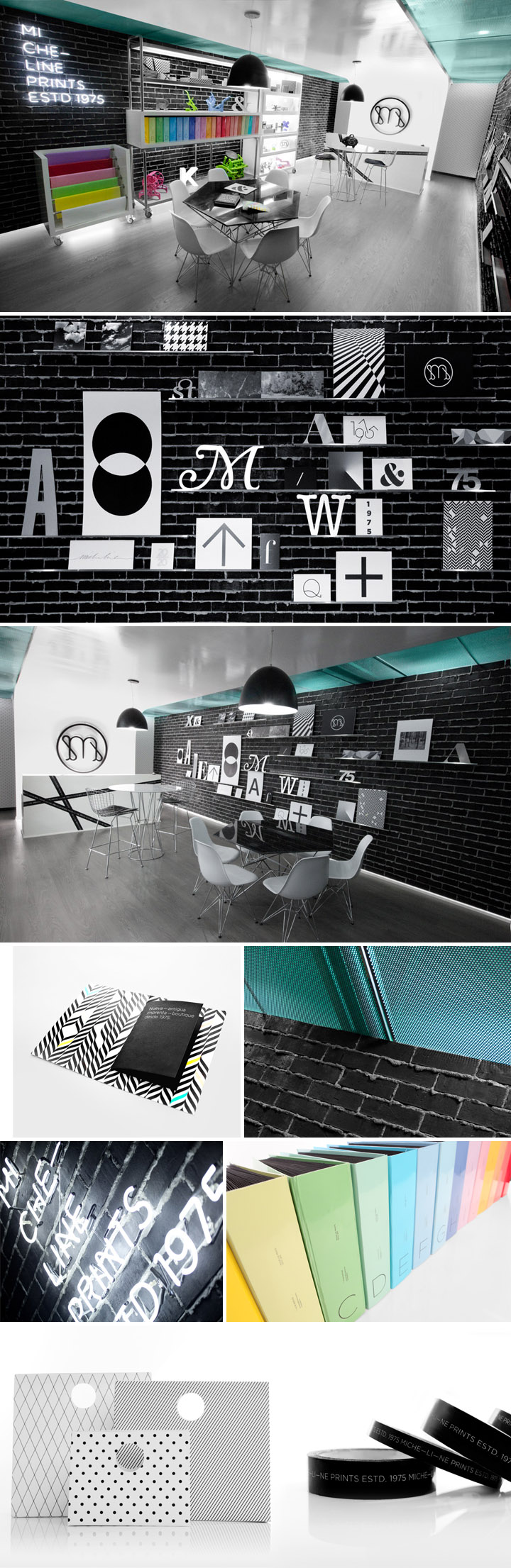
interior design, branding, print shop, Mexico, typographyinterior design, branding, print shop, Mexico, typography, packaginginterior design, branding, print shop, Mexico, typographyMexican design firm Anagrama, specializing in identity and brand consulting, rebranded the boutique print shop Micheline, from their logo and packaging to the interior of their shop. In order to express uniqueness, elegance and modernity and keep the flavor of the mid 70s when Micheline was founded, Anagrama played up the 1975 year typographically in the decor as well as through the furniture and lighting selections. The color palette was kept neutral to contrast with the bright colors of the card catalogues and papers. Nicely done!

via retail design blog

CHIP House: Energy Efficient Prefab

solar power, sustainable housing, energy efficient, Sci-Arc, CaltechSustainability, Sci-Arc, Caltech, Solar Decathlon, prefab houseClick to enlarge

With its insulation on the outside, CHIP (Compacted Hyper-Insulated Prototype) seems to have been a big draw at this year’s Solar Decathlon in Washington DC. Designed by a team of over one hundred Sci-Arc and Caltech students, CHIP is a prefab, net-zero solar-powered house designed to challenge every architectural and engineering preconception regarding the net-zero-energy home. The house includes a full kitchen and bath, as well as an elevated platform as the sleeping area which also provides a nice view of the rest of the house, from above, and a view out the large window. Because the insulation is on the outside—which is apparently an inexpensive and effective way to blanket the house and keep it warm—the interior has its framing exposed and allows for many built-ins and furniture storage.

The puffy, energy-efficient house will be on display at the Sci-Arc Library in Washington DC through December 16, 2011, if you’d like to see it in person. For the rest of us, there’s the video below:

Photos: CHIP, Plataforma Arquitectura, CHIP2011 flickr

via Plataforma Arquitectura

Naoko Serino: Soft Sculpture

Jute, textile, soft sculpture, Japan society, naoko serino Jute, textile, soft sculpture, Japan society, naoko serinoJute, textile, soft sculpture, Japan society, naoko serinoClick to enlarge

Right now through mid-December there’s an intriguing exhibit at the Japan Society, here in New York, called Fiber Futures: Japan’s Textile Pioneers. I’ve yet to see the show, but the images look very interesting; not your average textile design.

One of the artists featured in the show is Naoko Serino whose soft sculptures are quite impressive. She describes her work as fiber art: three-dimensional expression using jute that contains light and air. Some of her works are small individual pieces, while others are large-scale installations. It all looks delicate yet has an imposing presence.

You can see Serino’s installation Generating–8 (third and fourth images down from top) at the Japan Society through December 18, 2011, along with the work of several other Japanese textile pioneers.

via the Japan Society, via my mom

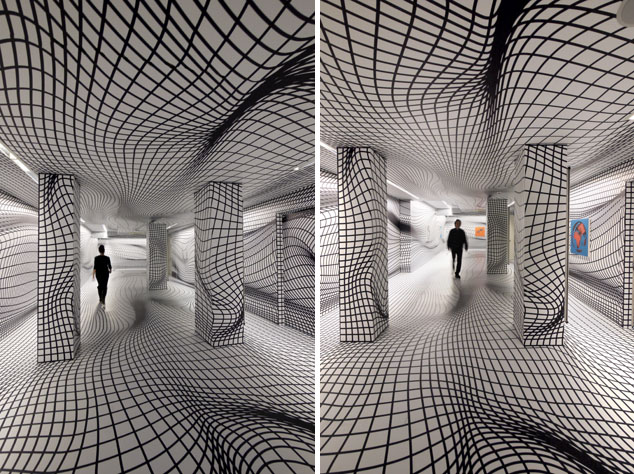
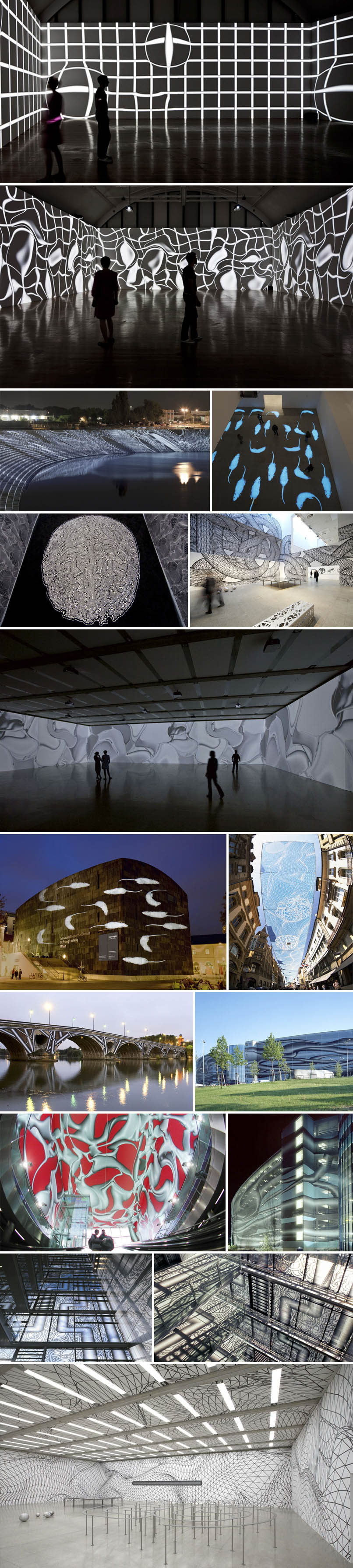
Peter Kogler: Spatial Illusion

light projection art, installation, dirimart, graphic patternslight projection art, installation, dirimart, graphic patternslight projection mapping, cool installation art, graphic patternsClick to enlarge

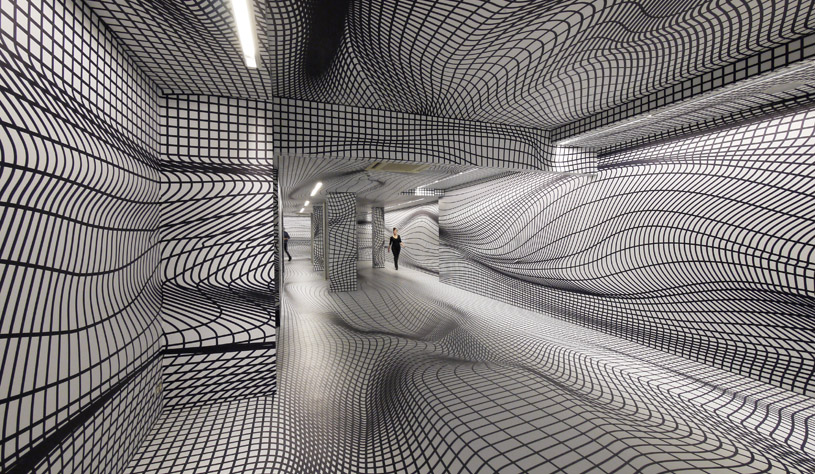
Clearly, one doesn’t necessarily need Upside Down Goggles or a Psycho Tank à la Carsten Höller to experience a trippy effect through art. Austrian artist Peter Kogler has been playing with spatial illusion since the 1980s.

Interested in film architecture and influenced by movies from the 1920s such as The Cabinet of Dr. Caligari and Metropolis where the architecture plays a central role generating emotion from the viewer, Kogler began working with the “illusionism of space”. Initially working with small models made from cardboard, his work evolved into projections of large-scale graphic images onto walls, trying to absorb or change the actual architecture.

Personally, the rats are a tad too freaky, but the rest of it really appeals to me.

Below is a short video of one of Peter Kogler’s video installations in action.

via Dirimart

Yuya Ushida: Sofa_XXXX and Stool

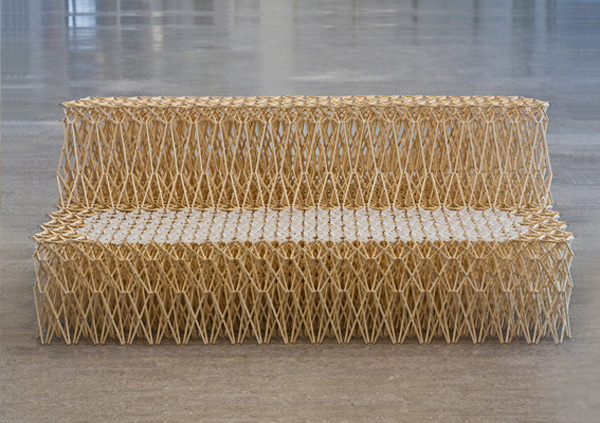
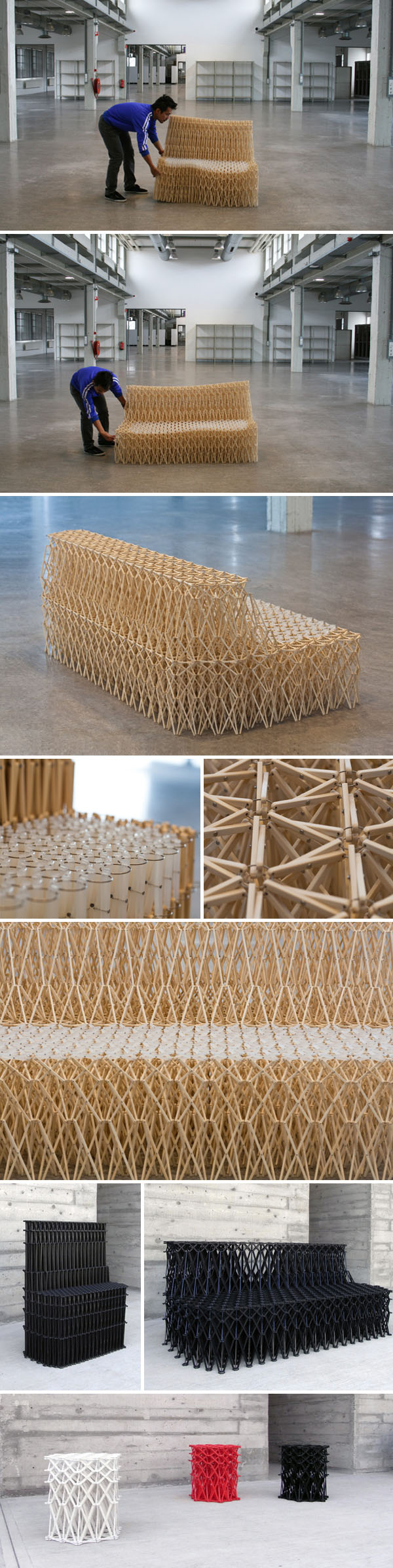
chopsticks, creative furniture, cool sofa, repurposed, chair designchopsticks, creative furniture, cool sofa, repurposed, chair designAs a design student in the Netherlands, Yuya Ushida created the original Sofa_XXXX out of 8,000 recycled bamboo sticks (think chopsticks) for his graduation project in 2010. The expandable and contractible chair/sofa has since been produced using components that are injection-moulded from recycled plastic bottles and available in black or white. This version, available through Royal Ahrend is called XXXX_Sofa. Ushida has also come out with a stool version that only uses 600 parts and comes in a kit, not surprisingly named XXXX_Stool.

I don’t know, but even putting a mere 600 parts together seems like a bit of a challenge…

via the chair blog

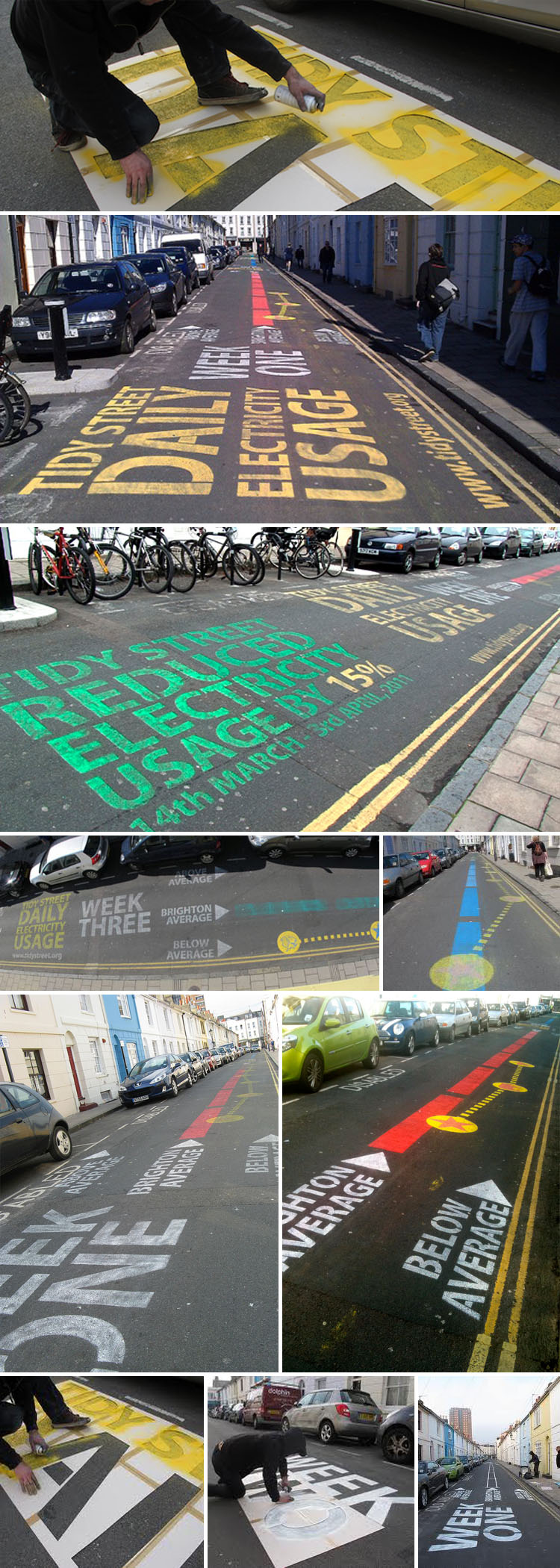
The Tidy Street Project

Energy consumption, info graphic, street art, Urbanized the filmEnergy consumption, info graphic, street art, Urbanized the filmClick to enlarge

I went to see the new documentary Urbanized—the third film in Gary Hustwit’s trilogy starting with Helvetica and followed by Objectified—which looks at city planning issues and stresses the importance of intelligent urban design for the immediate future when 75% of the population is estimated to inhabit cities by 2050. It’s a great film and I highly recommend it. There’s a lot more that could be said about the film, but instead I wanted to share a project that was featured and relates more to art, design, and typography: The Tidy Street Project.

During March and April 2011, participating households on Tidy Street, in Brighton, UK, recorded their electricity consumption. Each day the participants’ electricity usage over the previous 24 hours was marked; and each week participants could choose to add another comparison line that showed how their electricity consumption compared to another region in the UK or even a different country. The residents, in collaboration with the local graffiti artist Snub, produced an engaging street infographic that stimulated the street and passersby to reflect on their electricity use. In Urbanized, several of the participants are interviewed as well as the project creator, Jon Bird from Open University. It was interesting to see the enthusiasm in the project and how the tenants were made aware of which appliances used the most electricity as well as a general awareness on how to lower their consumption, resulting in a 15% usage reduction.

Definitely a fun way to get people involved and interested.

The Tidy Street Project is part of CHANGE, an EPSRC funded research collaboration between The Open University, Goldsmiths, Sussex University and Nottingham University.

Photos courtesy of The Tidy Street Project, Sare, thelastretort’s flickr, Kevan’s flickr, and boxman’s flickr.

Patrick Guns: Sculpture

Sculpture, large, Belgian art, My Own Private HeroSculpture, large, Belgian art, My Own Private Hero, The Fading of Colours, SurpriseClick to enlarge

Patrick Guns is an artist who lives and works in Brussels. In addition to working as a sculptor, he works in photography, illustration and painting.

There’s a heaviness to these sculptures, both physical and emotional. Their toy-like cuteness is betrayed by their size and actions.

From top to bottom:
My Own Private Hero (4 top images); The Fading of Colours; Têtes de Nègre; Surprise! (less milk, more cocoa); Himmelblau.

You can see more of Patrick Guns work here and here.