Zvi Hecker: Ramot Housing

Ramot Housing, Jerusalem, Zvi Hecker, 1970s archictecture, dodecahedronsRamot Housing, Jerusalem, Zvi Hecker, 1970s archictecture, dodecahedronsRamot Housing, Jerusalem, Zvi Hecker, 1970s archictecture, dodecahedronsClick to enlarge

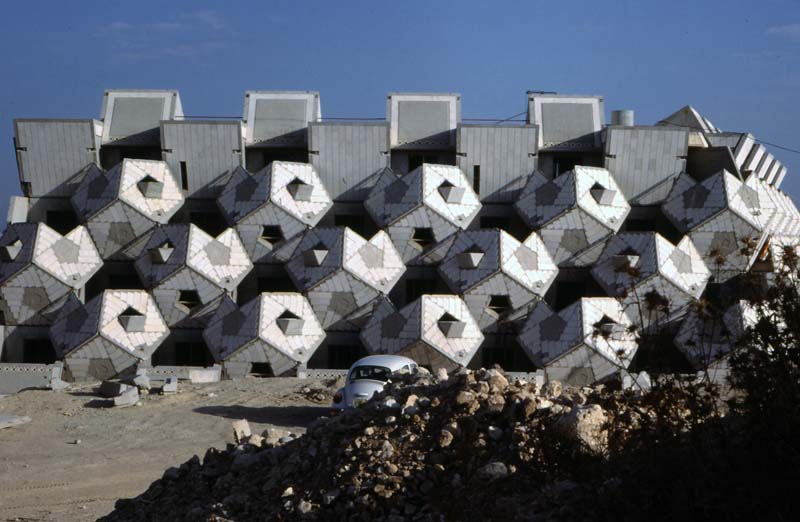
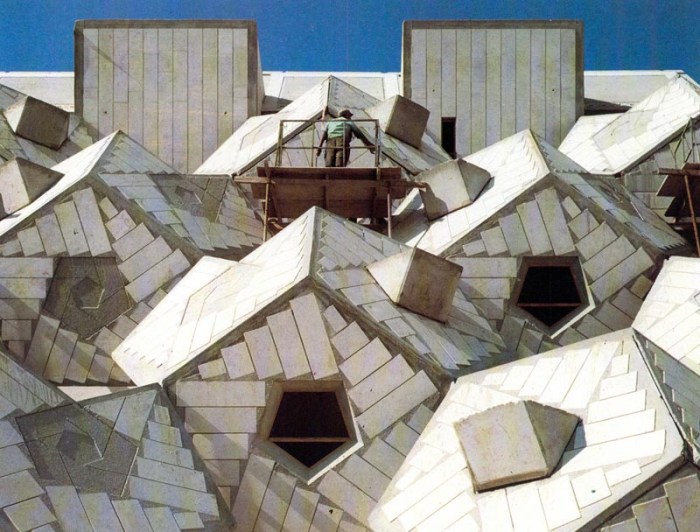
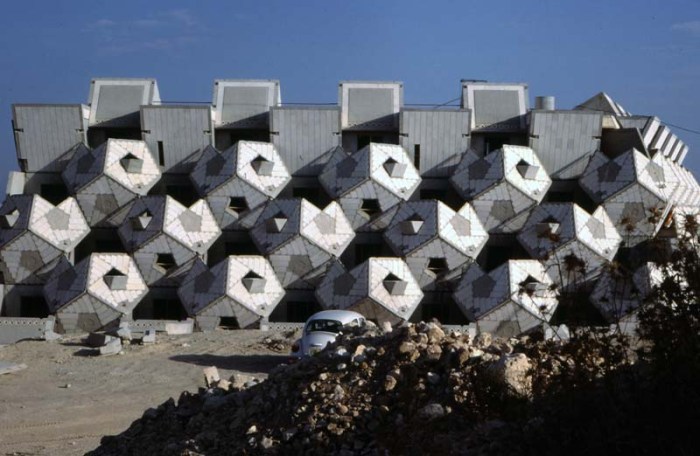
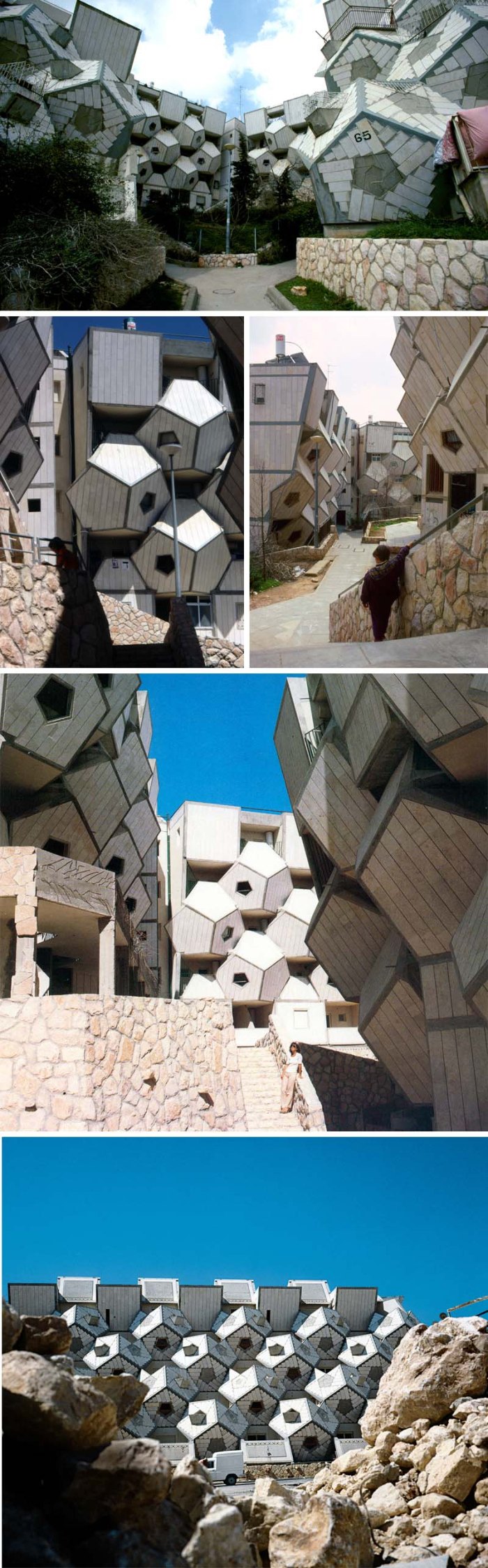
This is one crazy-looking housing complex, and yet the logic behind the hivelike building is, well, just that: logical. Completed in the 1970s, Ramot Polin housing project in Jerusalem was designed by Zvi Hecker. The Polish-born Israeli architect spent much of his career exploring cubes and dodecahedrons in his work. Hecker used the unique structure’s form to adapt to—as well as fit in with—the surrounding irregular terrain. By using the dodecahedrons and pentagon-shaped walls, he was able to enclose a large volume with less surface area; there’s a compactness to these units that makes them pack tightly and nicely together. Apparently, at this point (almost 40 years later) all of the 700+ original structures have been transformed to some degree, without a single one left in its originally designed state. Understandable, yet it would have been interesting to see.

Top photo from domus. All others by the architect.

via dwell
Coloso: DOMA Collective

Coloso, giant robot-shaped electrical tower in Buenos Aires by Doma Collective for TecnopolisColoso, giant robot-shaped electrical tower in Buenos Aires by Doma Collective for TecnopolisColoso, giant robot-shaped electrical tower in Buenos Aires by Doma Collective for TecnopolisClick to enlarge

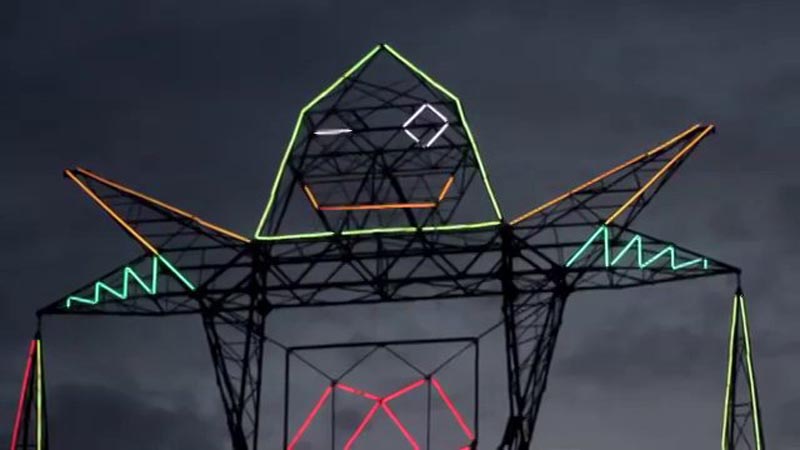
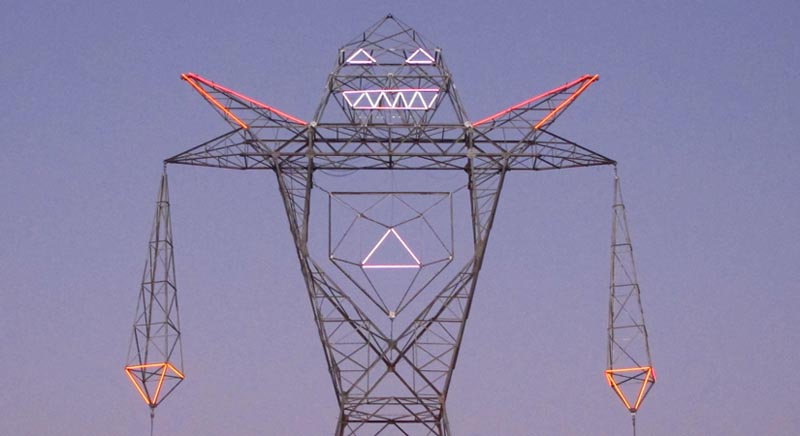
I’ve seen electrical towers disguised as unconvincing trees, but a colossal robot might be the more fun way to go. That’s just what Buenos Aires art collective Doma did for the Tecnopolis, a science and technology art fair in Villa Martelli, Argentina. The converted power tower was aptly named Coloso and its glowing neon hands, heart, and animated face add to the fun of the almost 148 ft tall artistic intervention. The luminous robot puts on quite a show at night highlighting its winking eyes and growing heart. Watch it in action below:

via graffitimundo

Mana Morimoto: Fiber Art

Threaded prints by Mana Morimoto, Fiber Art, Thread through black and white photographs, collage-like, contemporary artThreaded prints by Mana Morimoto, Fiber Art, Thread through black and white photographs, collage-like, contemporary artThreaded prints by Mana Morimoto, Fiber Art, Thread through black and white photographs, collage-like, contemporary artClick to enlarge

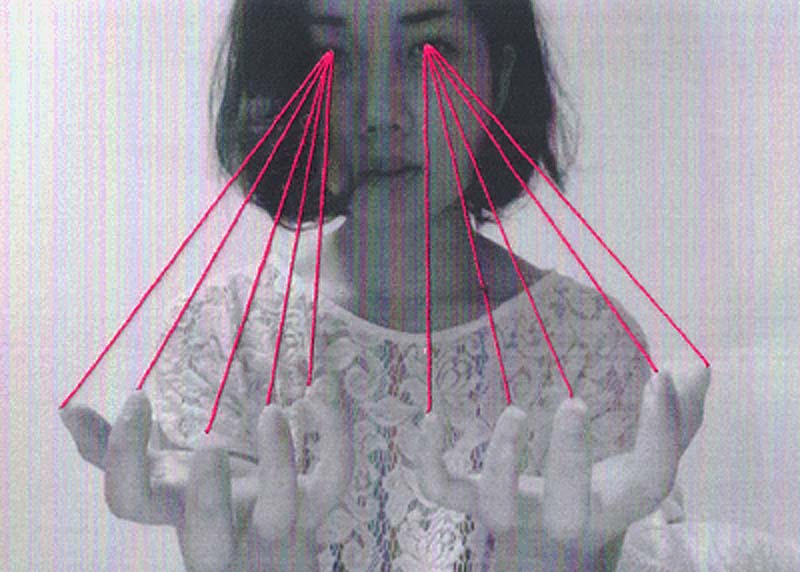
Tokyo-based textile artists Mana Morimoto hand-stitches black and white photographs with colorful thread to create a unique, somewhat surreal effect. Her love of geometric shapes, embroidery, and weaving all come together in a self-described “creepy and funny” contemporary style. Morimoto enjoys the idea of combining digital and analog in her work. She converts all her images to black and white, prints them out, pokes holes through the image with a needle and proceeds to add the colorful threads, often emanating from the subjects’ eyes. There are many more pieces on her MNMRMT tumblr.

via étapes

Mégaphone: Moment Factory

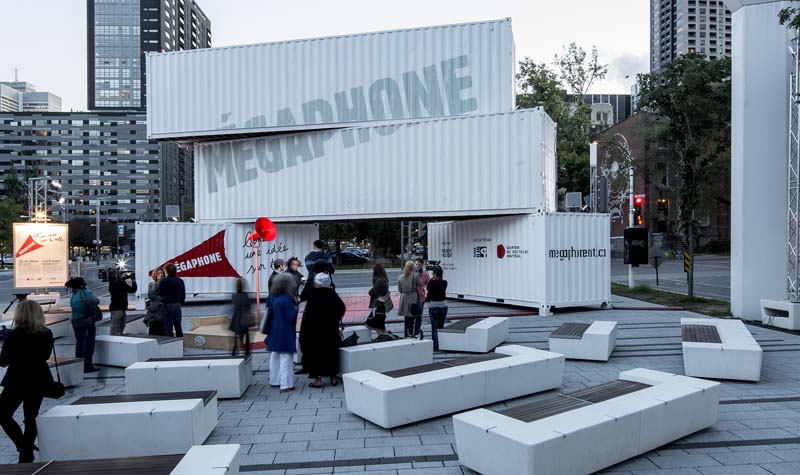
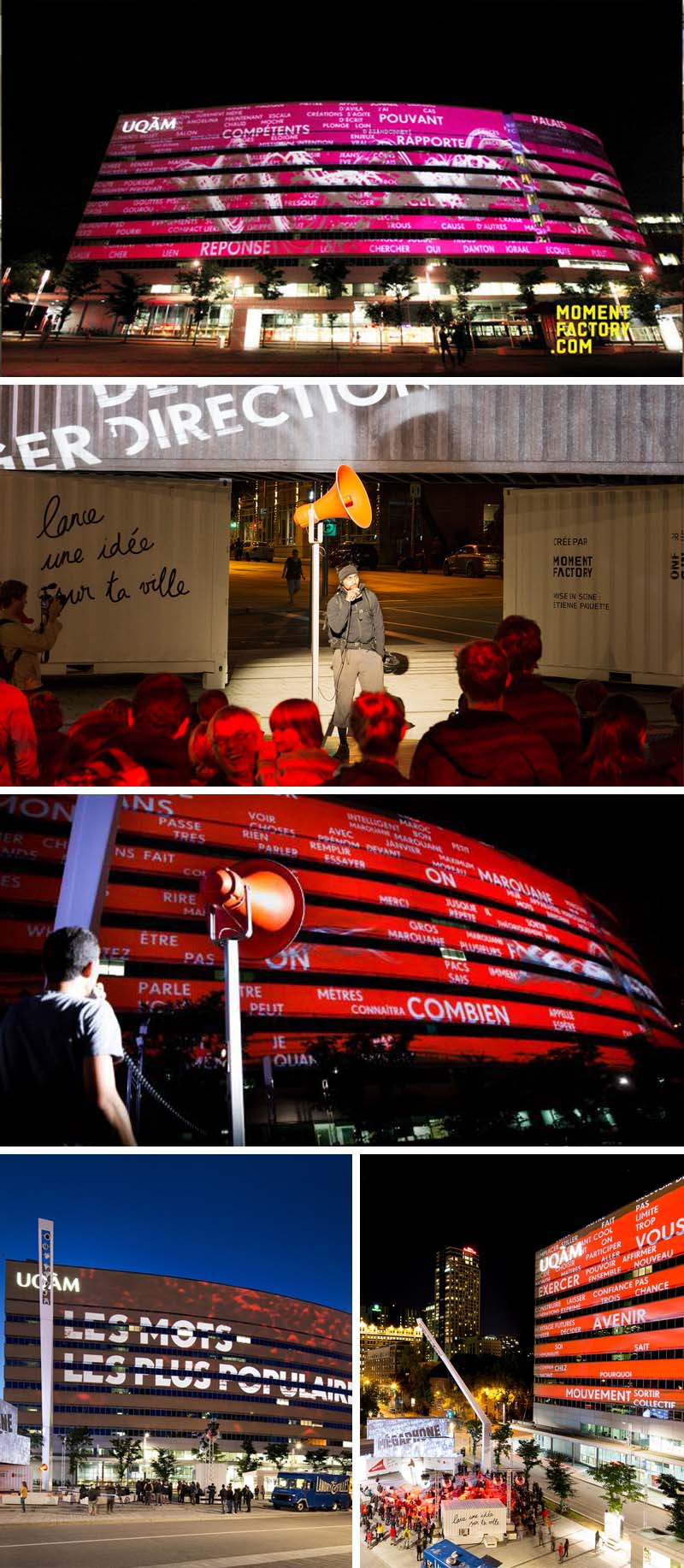
interactive led type facade, Montreal, Megaphone by Moment Factory, typographyinteractive led type facade, Montreal, Megaphone by Moment Factory, typographyinteractive led type facade, Montreal, Megaphone by Moment Factory, typographyClick to enlarge

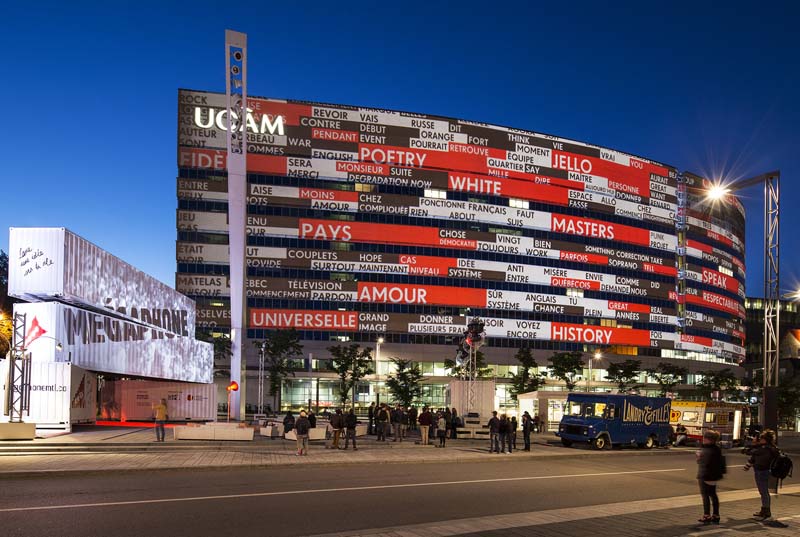
This past fall, up until last month, Mégaphone, an interactive installation, occupied the Promenade des Artistes, in the heart of Quartier des Spectacles in Montreal with the intention of reappropriating public space. The installation, designed by Moment Factory, invited visitors to gather and explore the fun side to public speaking. Using a megaphone participants could speak out, their words transformed in real time into images projected onto the façade of the University of Quebec in Montreal (UQAM), leaving their visual “footprint” on the urban landscape. Inspired by the city’s early 20th-century history of popular assemblies as well as the 19th-century British tradition of the Speaker’s Corner, the installation gives everyone a chance to speak out and air their concerns. Visual effects of waves, scribbles, and distortions were generated by voice recognition software designed by the Computer Research Institute of Montreal. Certainly a crowd pleaser for all ages as seen in the video below:

via eg

Gingerbread & Candy Art Museums

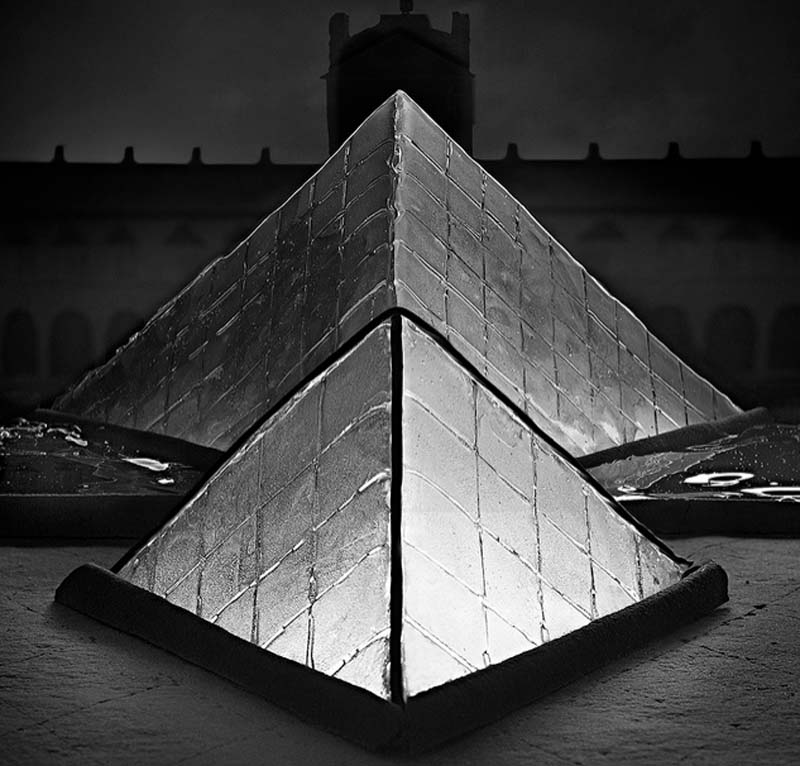
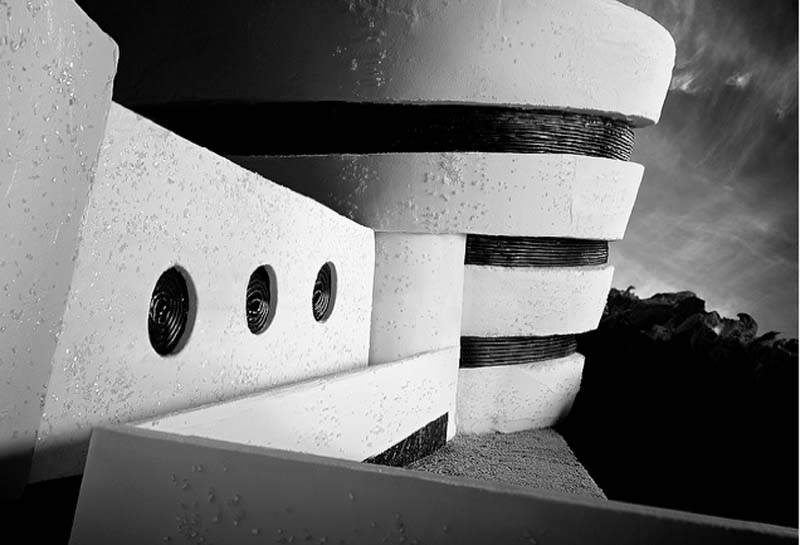
Gingerbread and Candy Art Museums, Louvre, Henry Hargreaves and Caitlin LevinGingerbread and Candy Art Museums, Guggenheim, Henry Hargreaves and Caitlin LevinGingerbread and Candy Art Museums, Guggenheim, Henry Hargreaves and Caitlin LevinClick to enlarge

Sure, it’s that time of year when visions of sugar plums dance in your head, and gingerbread houses abound. But New Zealand-born artist/photographer Henry Hargreaves based in Brooklyn and stylist/chef Caitlin Levin took their holiday creations to new heights. The two have collaborated on several projects in the past (Deep Fried Gadgets being a largely recognizable one,) but their latest collaboration took the form of Gingerbread and Candy Art Museums & Galleries for ArtBasel/Miami. These amazing models of the iconic institutions were made using gingerbread, hard candy, chocolate, licorice, and many other tasty sweets. Hargreaves and Levin made tabletop-size replicas of the Louvre, Guggenheim, Maxxi, Tate Modern, Karuizawa Gallery, MAS, and Soumaya and then cleverly lit and photographed each one.

You can see more of the process here.

via grit and neatorama

Moving Icon: Kalhöfer-Korschildgen

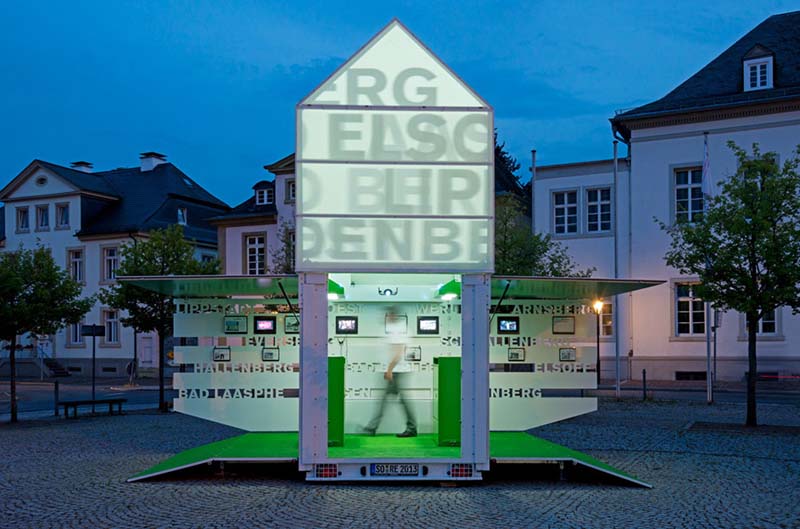
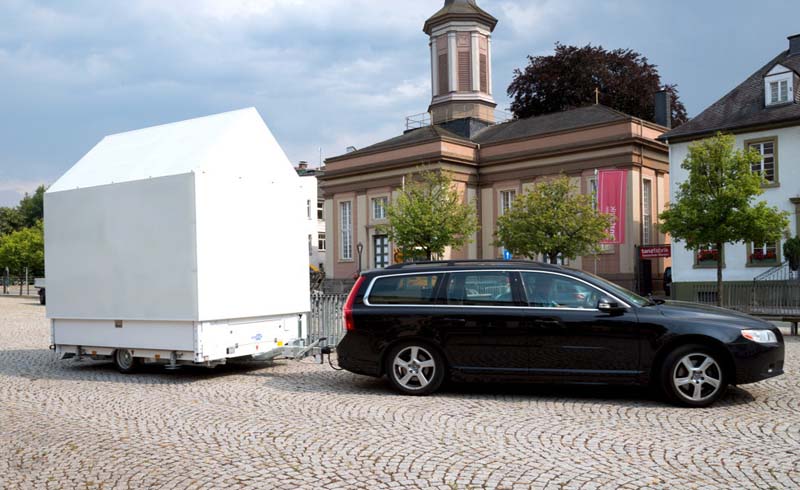
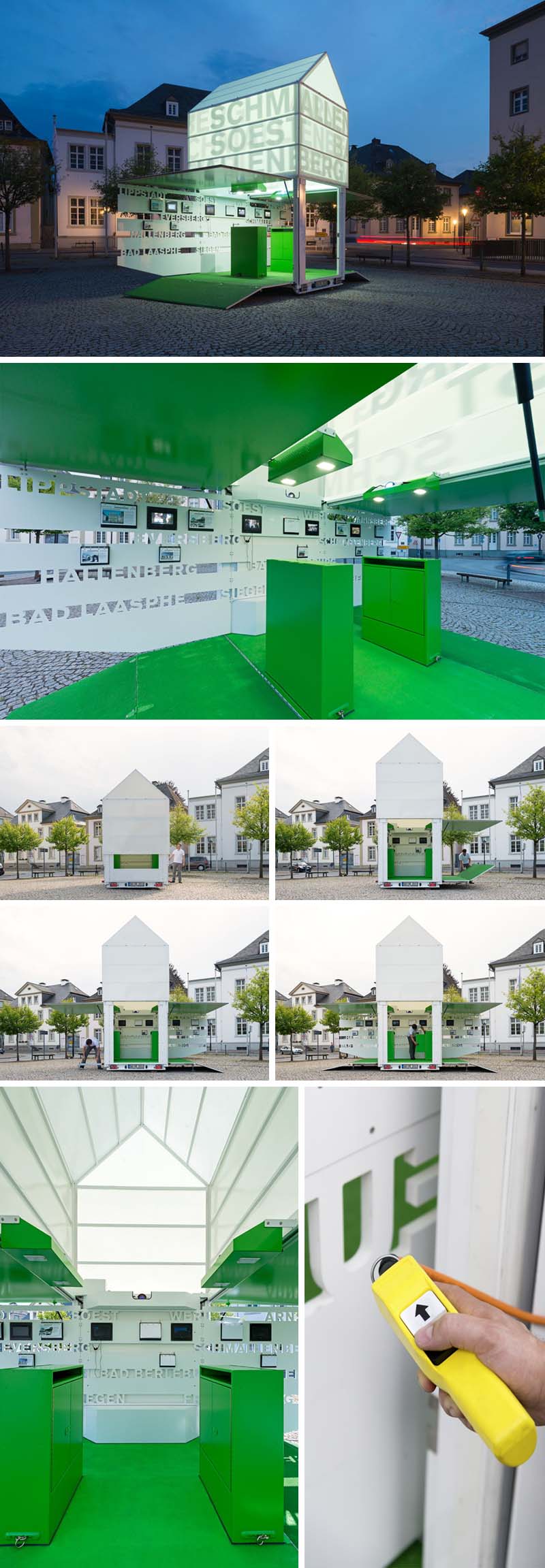
Moving Icon Pop-Up Pavilion in Westphalia, Germany by Kalhöfer-Korschildgen. Pavilion communicates HistoryMoving Icon Pop-Up Pavilion in Westphalia, Germany by Kalhöfer-Korschildgen. Pavilion communicates HistoryMoving Icon Pop-Up Pavilion in Westphalia, Germany by Kalhöfer-Korschildgen. Pavilion communicates HistoryClick to enlarge

Moving Icon is a mobile pop-up pavilion designed by Cologne-based Kalhöfer-Korschildgen that travels around the Westphalian region of Germany providing its visitors with information on local architectural history. The compact house-like mini-museum attaches to the back of a car and, with the click of a remote control, literally ‘pops’ open transforming into a lovely illuminated pavilion. The exhibit includes both analogue and digital displays and incorporates typography into its structure and signage in a clever and designy manner. The display is interactive and can be customized for any location.

Photos by Jörg Hempel

Benjamin Løzninger: C/Loud Project

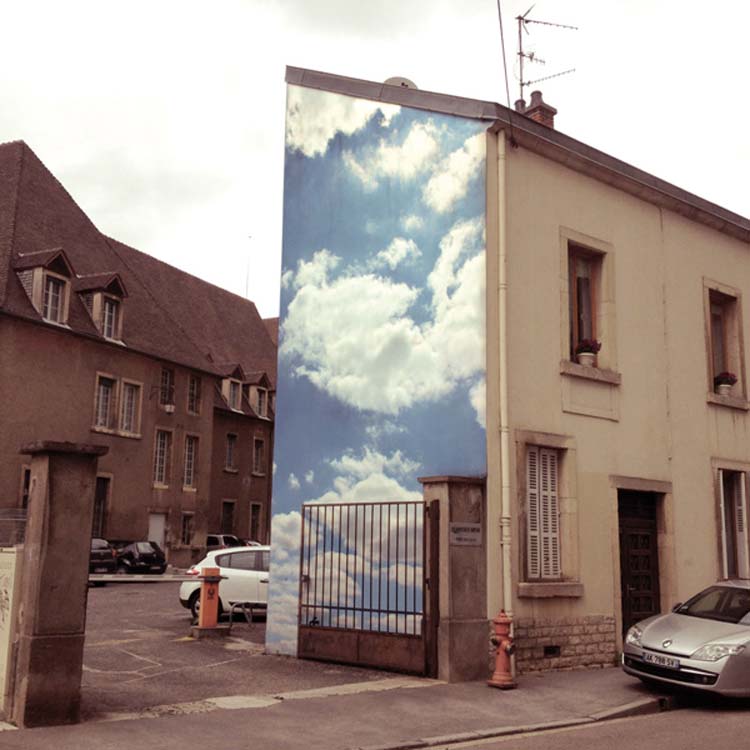
Cloud Project by Benjamin Løzninger, street art, head in the clouds, photography, France, BrooklynCloud Project by Benjamin Løzninger, street art, head in the clouds, photography, France, BrooklynCloud Project by Benjamin Løzninger, street art, head in the clouds, photography, France, BrooklynClick to enlarge

French-born, and now Brooklyn-based, artist/designer/musician Benjamin Løzninger likes to merge digital storytelling with experimental branding. This past summer Løzninger’s C/Loud Project took to the streets of Paris and Brooklyn. With the idea of seeking refuge from some of life’s daily worries or the “dull bluntness of ocular reiteration,” the artist covered the sides of buildings, garage doors, billboards and more, with large digital prints of cloud-filled blue skies, subliminally suggesting a head-in-the-clouds effect. The hope is to provoke a smile, breath, or at a minimum a moment’s pause in the viewer’s day.

via musée

Boy Scouts Sustainability Tree House

sustainability Treehouse for the Boy Scouts of America; Mithun ARchitects

sustainability Treehouse for the Boy Scouts of America; Mithun ARchitectssustainability Treehouse for the Boy Scouts of America; Mithun ARchitects

Click to enlarge

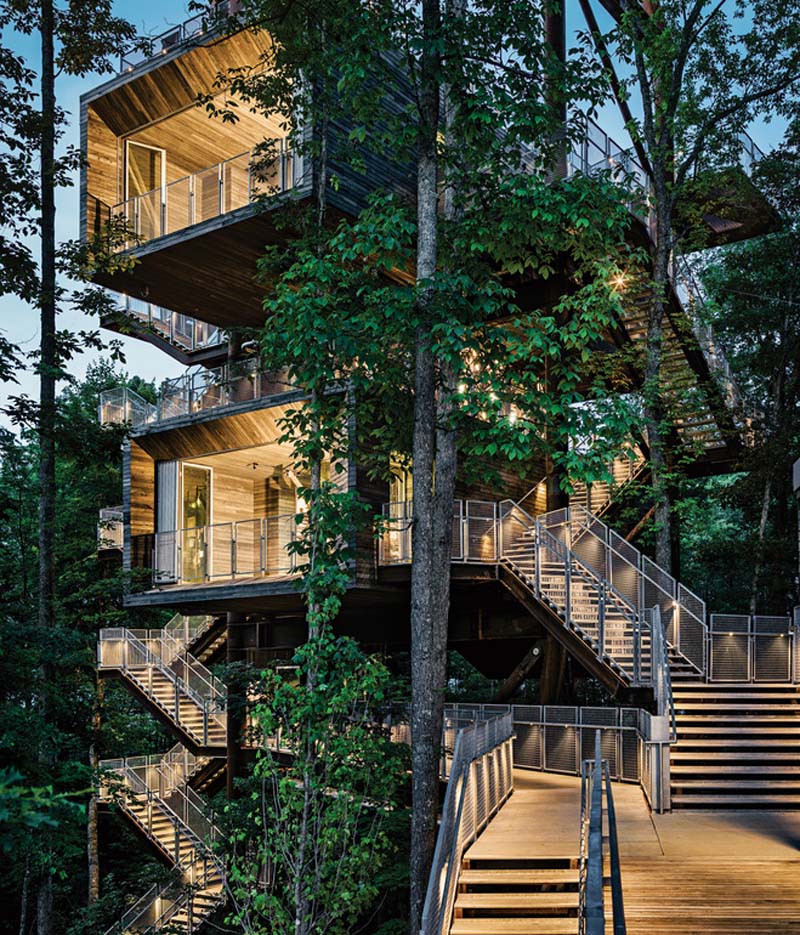
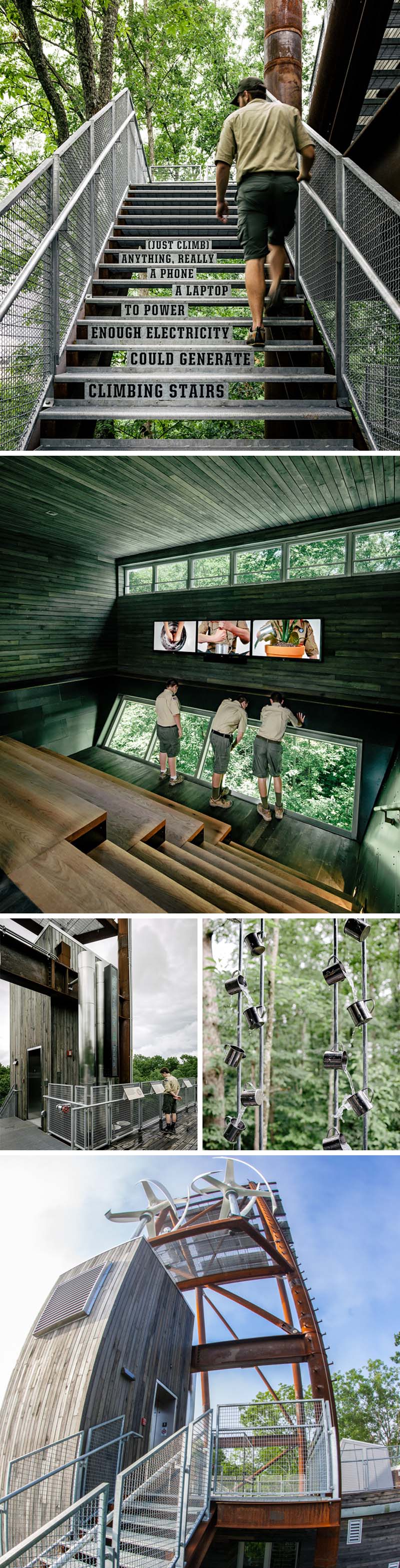
Seattle-based architecture firm Mithun created a sustainable tree house for the Boy Scouts of America that functions as an educational center in West Virginia. Sitting among the trees within the forest the structure, that follows the rigorous set of standards of the Living Building Challenge as a guide, has a set of outdoor staircases that go from the forest floor to the 125 ft-high rooftop. At the top a 4,000-watt wind turbine and 6,500-watt photovoltaic array offers lessons about renewable energy. The structure’s mission is to teach visitors about the environment and sustainability, including water conservation, energy use, recycling and more.

Photos by Joe Fletcher

via dwell
Mike Hewson: Deconstruction

Mike Hewson, The Crossing, Trompe l'oeil, Christchurch, New Zealand, street artMike Hewson, The Crossing, Trompe l'oeil, Christchurch, New Zealand, street artMike Hewson, The Crossing, Trompe l'oeil, Christchurch, New Zealand, street artClick to enlarge

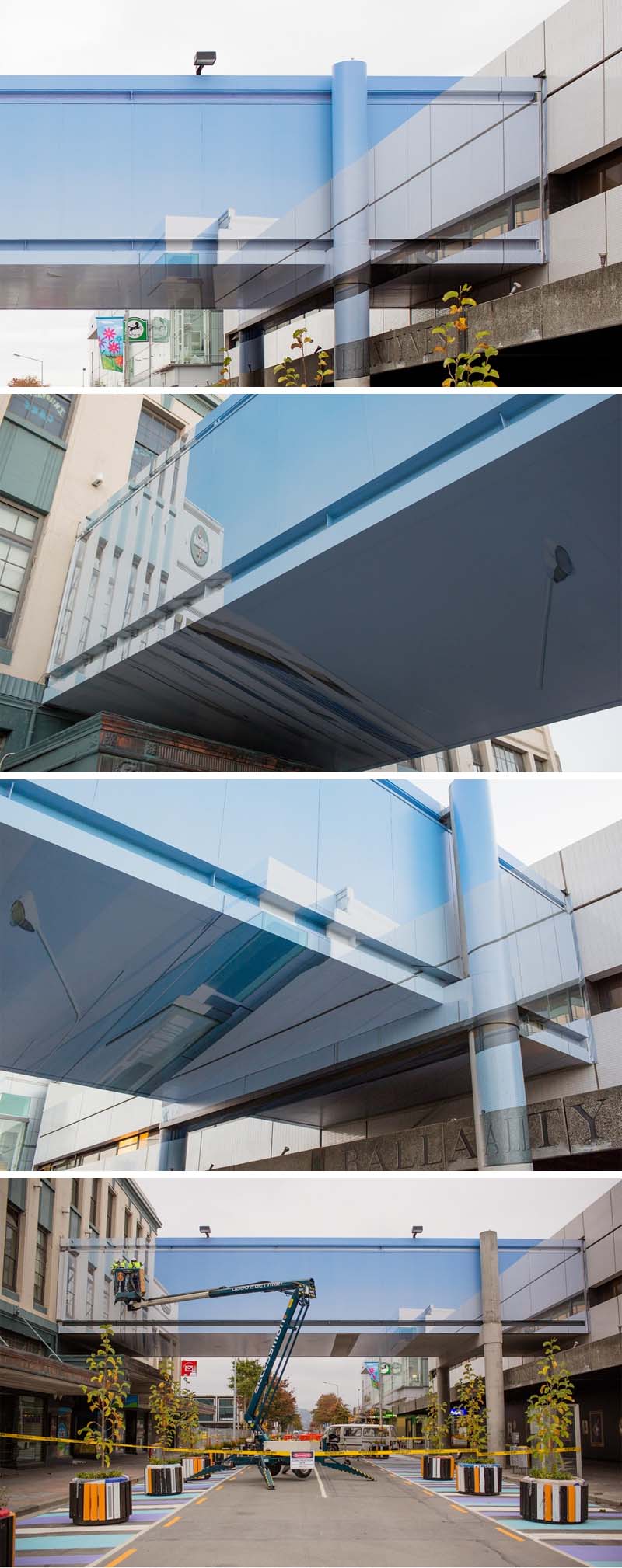
New Zealand artist Mike Hewson (previously here) is playing with people’s minds again. This time the trompe l’oeil specialist has has covered an elevated walkway in Christchurch, NZ over its main thoroughfare, Colombo Street, with anamorphic large-scale digital prints of the two buildings connected by the walkway. When standing at a particular vantage point on the street below, the art visually deletes the overpass. When viewed from other spots the work looks distorted. Hewson’s objective in this post-earthquake affected area is to paradoxically reconstruct the site through a process of deconstruction, reflecting Christchurch’s recovery process of adding new development through the “deletion” of crumbled buildings.

via inhabitat

Sam Falls: Tuileries Colored Sculpture

Tuileries Colored Sculpture, Sam Falls, Untitled, Hors les murs, Balic Hertling Gallery  Tuileries Colored Sculpture, Sam Falls, Untitled, Hors les murs, Balic Hertling Gallery  Tuileries Colored Sculpture, Sam Falls, Untitled, Hors les murs, Balic Hertling Gallery  Click to enlarge

Los Angeles artist Sam Falls created an Untitled sculpture for Hors les Murs, a public art event in Paris, made up of colored metal boxes. The exterior of these multi-color windowed pieces was coated in a UV-protected pigment. The inside of the same boxes were treated with an unprotected paint. Though each respective panel appears to be the same color on both sides, the sides facing inwards will all fade in the sun. The form that each sculpture takes is dictated by the shadows that fall on the inside of the sculpture and the gradient of sunlight is revealed over time, burned into the sculpture like a photograph. Unlike most outdoor sculptures usually designed to stand the test of time as well as the elements, Falls’ Untitled (Tuileries Colored Sculpture) is meant to age the way we do. But, there’s a final twist! Once the interior panels fade through their top coat, the bottom coat from the exterior will start to emerge, reversing the aging effect, and revealing the bright saturated color once again. Not so much what we as humans go through, though maybe if we exfoliate enough….
Photos: Courtesy Balice Hertling (Paris) et Eva Presenhuber (Zürich); FdN77’s twitter; Miami Herald; le banc moussu; and dalbera’s flickr.

via fiac

Hot Tea: Banksy Tribute & More

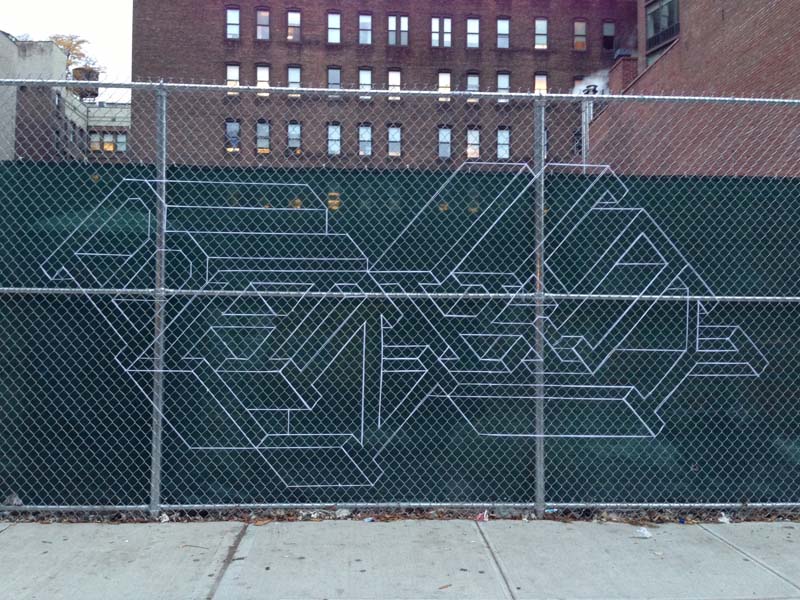
Hot Tea Yarn-bombing Banksy Tribute, East 4th St, NYC, BanksyNYC, street art, typographyHot Tea Yarn-bombing Banksy Tribute, East 4th St, NYC, BanksyNYC, street art, typographyHot Tea Yarn-bombing Banksy Tribute, East 4th St, NYC, BanksyNYC, street art, typographyClick to enlarge

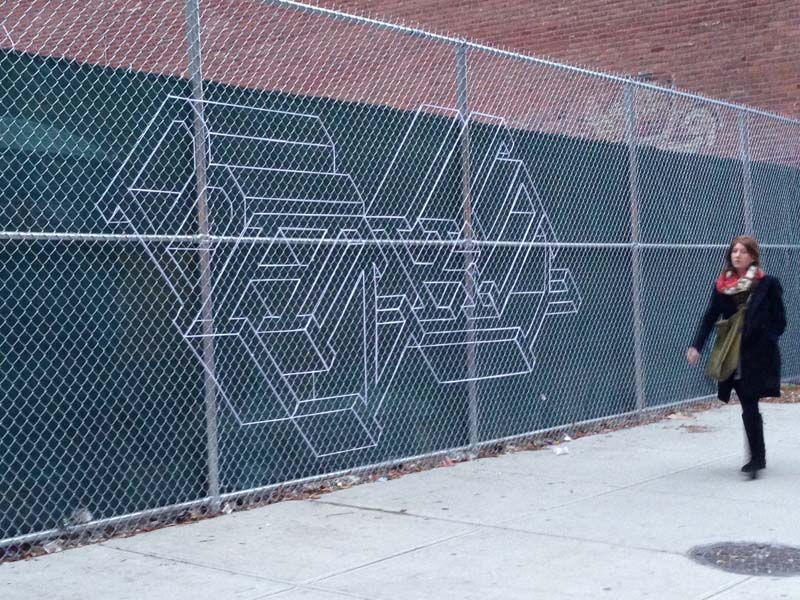
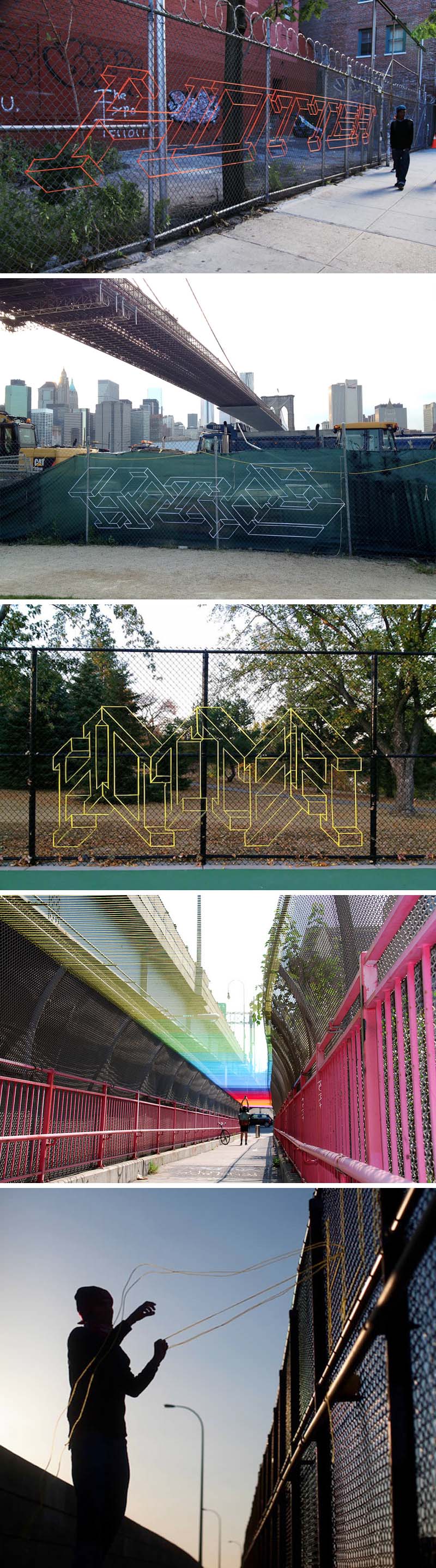
Minneapolis-based street artist—and NYC frequenter—HOT TEA is known for his yarn-bombing typography, usually found on—but not limited to—chain link fences & telephone poles. Most often the words HOT TEA are geometrically spelled out, seemingly interlocked in three dimensions. I’ve run into several of his pieces over the past couple of years around NYC, one in Soho, another Nolita, and DUMBO as well. A couple of weeks ago, shortly after Banksy finished his month-long scavenger-hunt-like show Better Out Than In around the city, I came across a tribute to the reknowned street artist by, I assume, HOT TEA, though this speculation is based soley on style. The piece, which was on East 4th Street, was gone in less than 24 hours replaced with a real estate sign by the owners of the empty lot where the work stood. I’ve looked around to see if this Banksy tribute appeared anywhere online, including HOT TEA’s flickr, but so far nothing. Earlier in the fall, HOT TEA created his largest site specific piece to date with over 1600 knots and 800 pieces of yarn installed on the Williamsburg Bridge walkway. You can see the installation in the video below:

Top two photos: collabcubed. All others courtesy Hot Tea’s flickr.

Lucas Simões: Desretratos

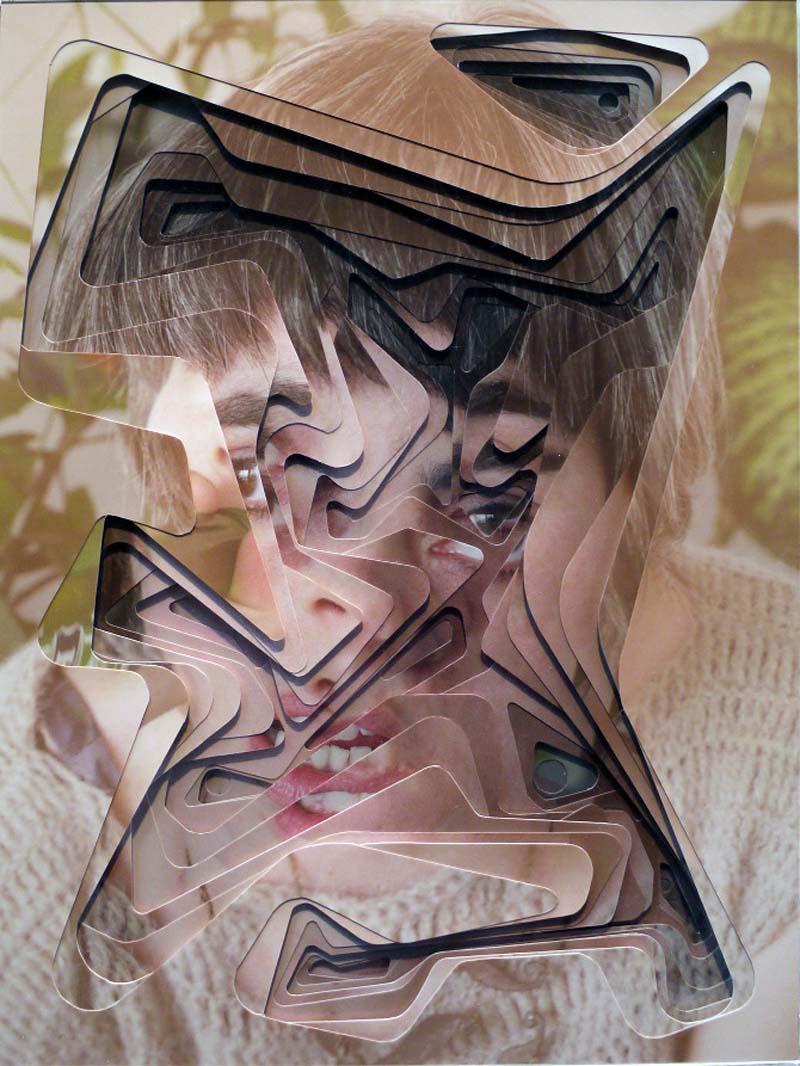
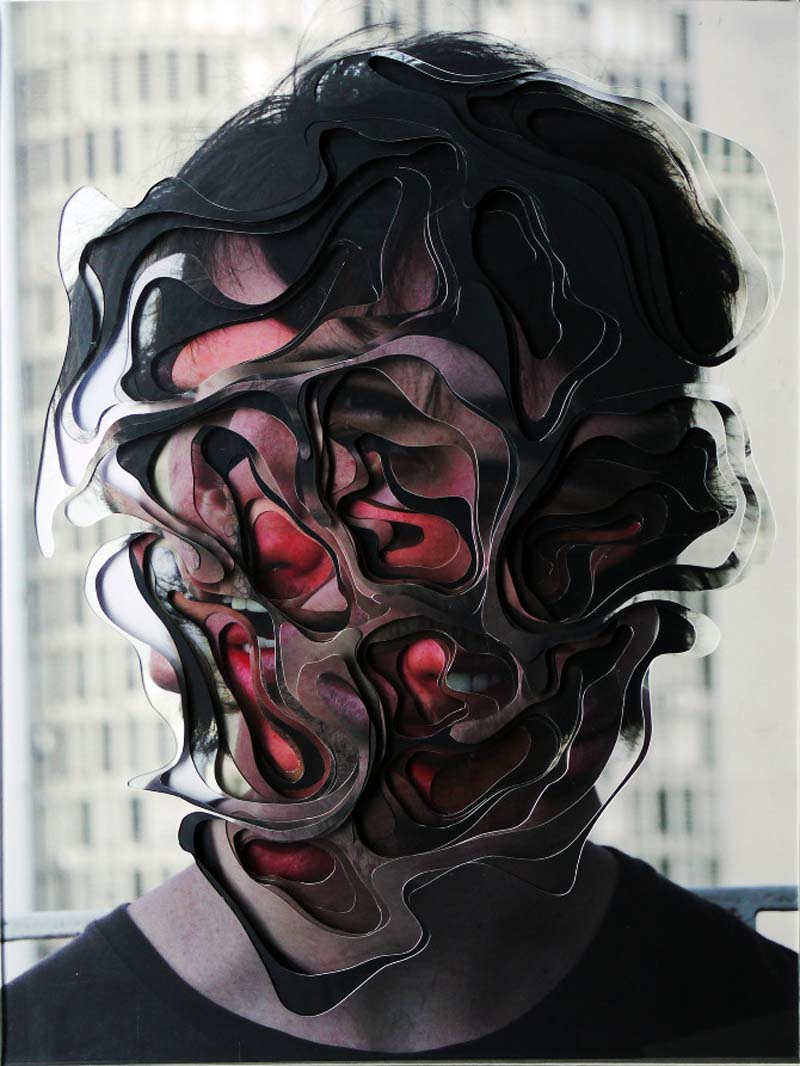
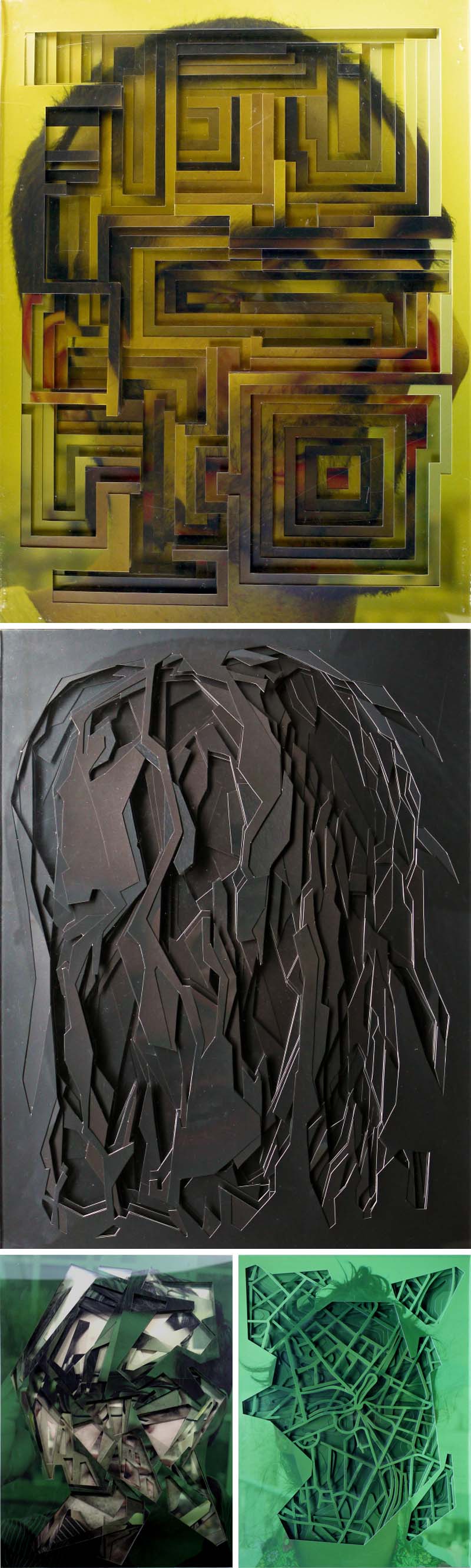
Desretratos by Lucas Simoes; Unportraits. !0 cut and layered photo portraits, Contemporary Brazilian artDesretratos by Lucas Simoes; Unportraits. !0 cut and layered photo portraits, Contemporary Brazilian artDesretratos by Lucas Simoes; Unportraits. !0 cut and layered photo portraits, Contemporary Brazilian art Click to enlarge

Brazilian artist Lucas Simões uses source materials such as maps, books, and photographs which he then folds, cuts, and deconstructs into new forms. In his series of portraits titled Desretatos (Disportraits) Simões invited friends to tell him a secret as he took their portrait. More than listen to the secret, Simões was interested in capturing their expression as they revealed it. He would also listen to a song selected by the subject as he photographed them, and asked them to give their secret a color as well. Combining all these elements as he worked, the artist would then select 10 different portraits from the photo shoot, layer them, cut, and overlap them. As you can see, the results are pretty wild. See more Desretratos here.
via fifty8

Willie Cole: Shoe Sculptures, Masks & More

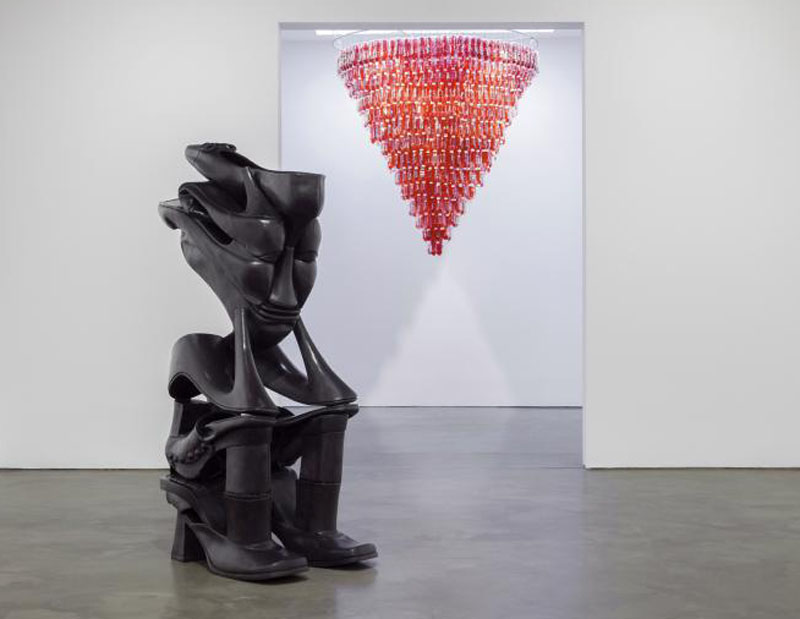
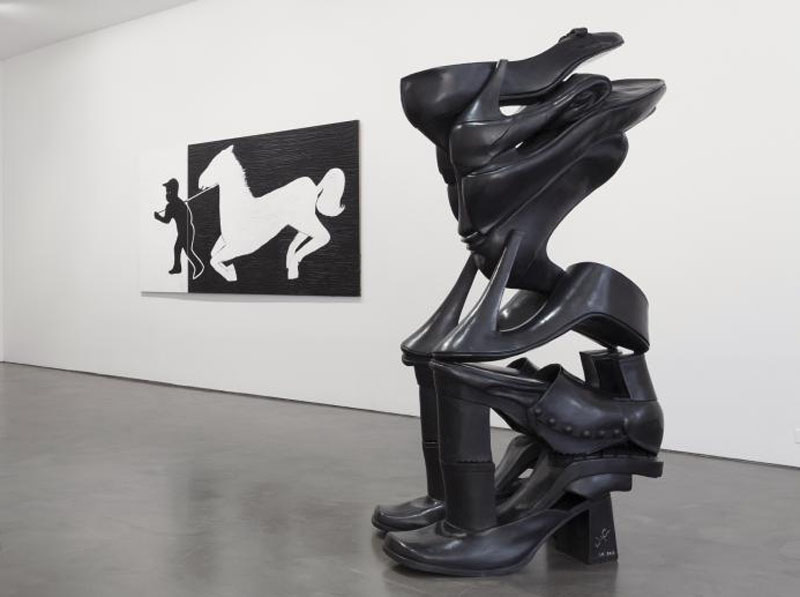
Willie Cole, Sole Sitter, bronze sculpture made with stacked shoes to look like African art, If Wishes Were Horses...exhibitWillie Cole, Sole Sitter, bronze sculpture made with stacked shoes to look like African art, If Wishes Were Horses...exhibitWillie Cole, Sole Sitter, bronze sculpture made with stacked shoes to look like African art, If Wishes Were Horses...exhibitClick to enlarge

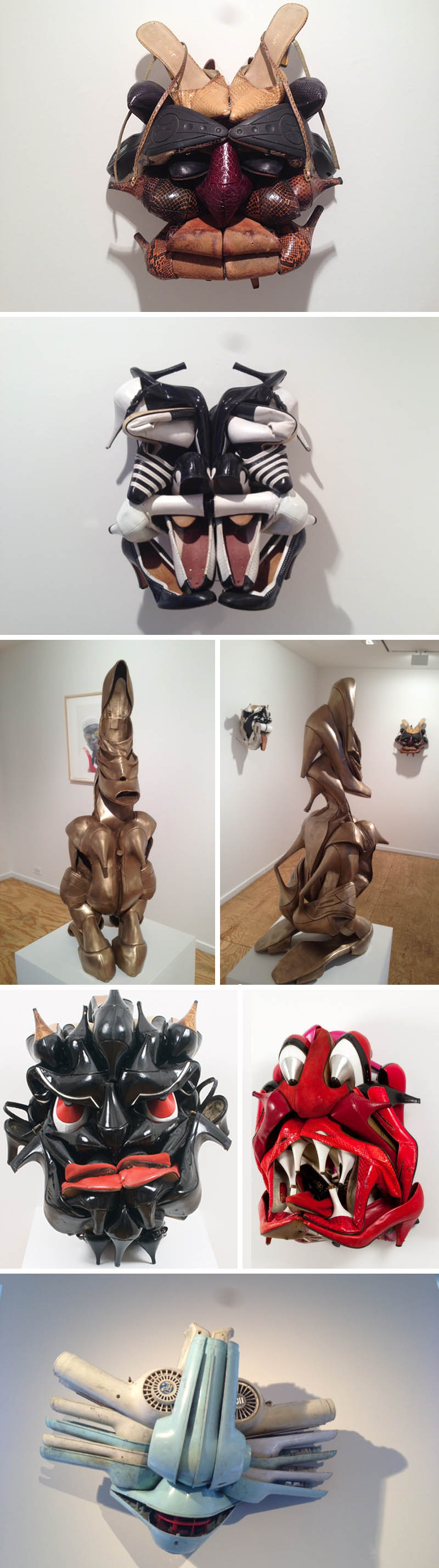
New Jersey-born and based artist Willie Cole creates many of his works by repurposing objects such as irons, hair dryers and, in this case, shoes. His shoe sculptures and masks communicate messages about African history. I happened upon the last day of Cole’s show If wishes were horses… at the Alexander and Bonin Gallery in Chelsea this past weekend which featured a large bronze sculpture in the center of the lower floor titled Sole Sitter. At first glance the seated figure appeared to be just that, but upon closer inspection the oversized stacked shoes became evident and just at that moment all the shoe masks on the walls came into focus as well. Super-cleverly done, these pieces have an African art feel to them. Cole is not new to creating with shoes. A few years back at the same gallery I saw his impressive shoe mandalas, but these more recent sculptures really take the use of shoes to a new dimension.
Top two photos courtesy of Alexander and Bonin; all others collabcubed.

Killy Kilford: Happy Signs

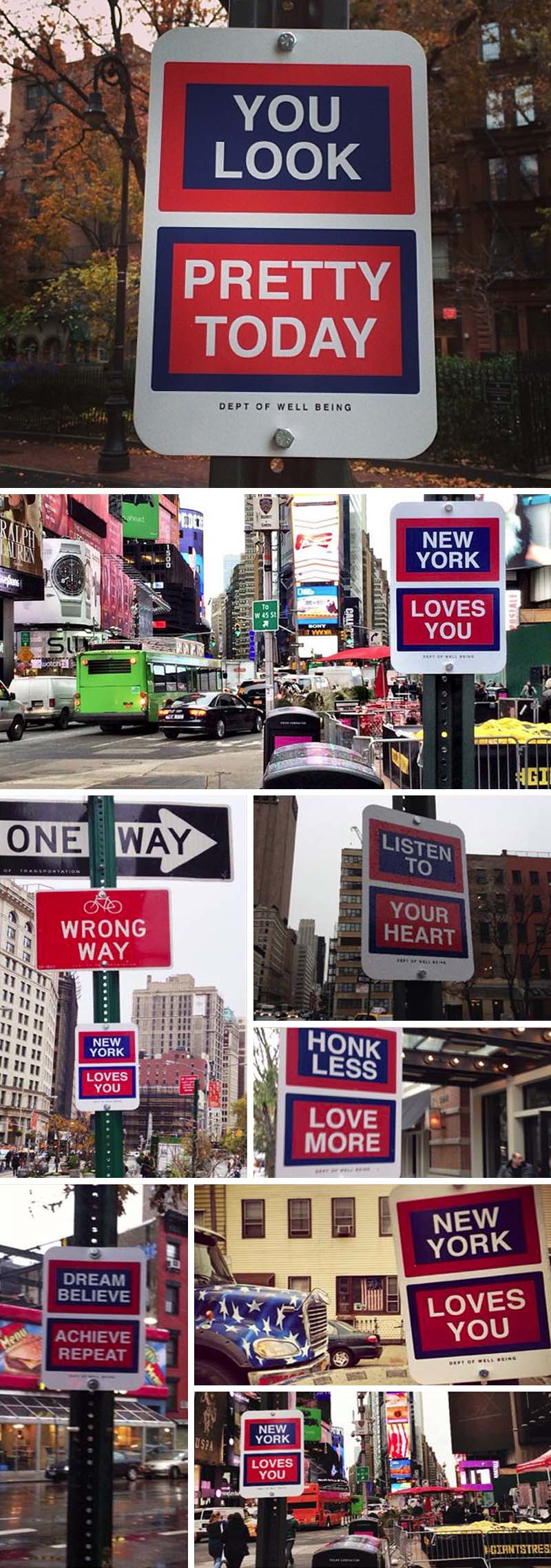
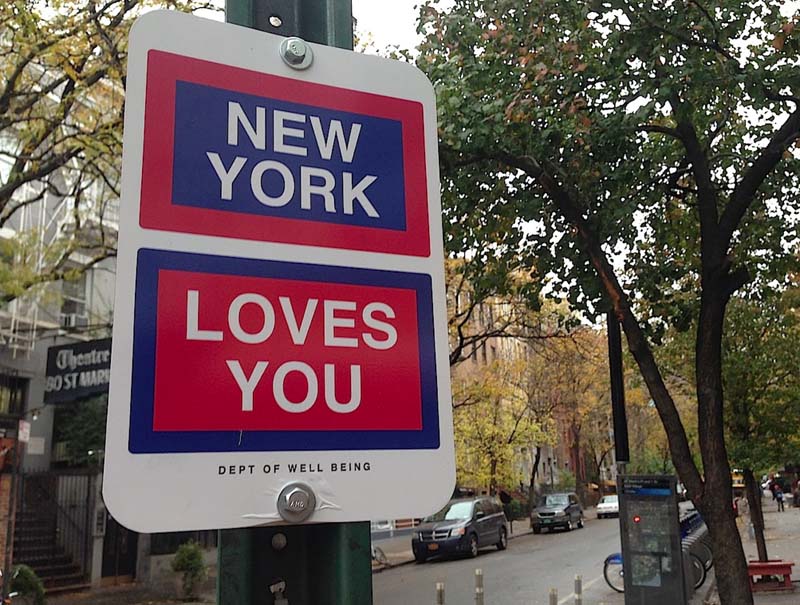
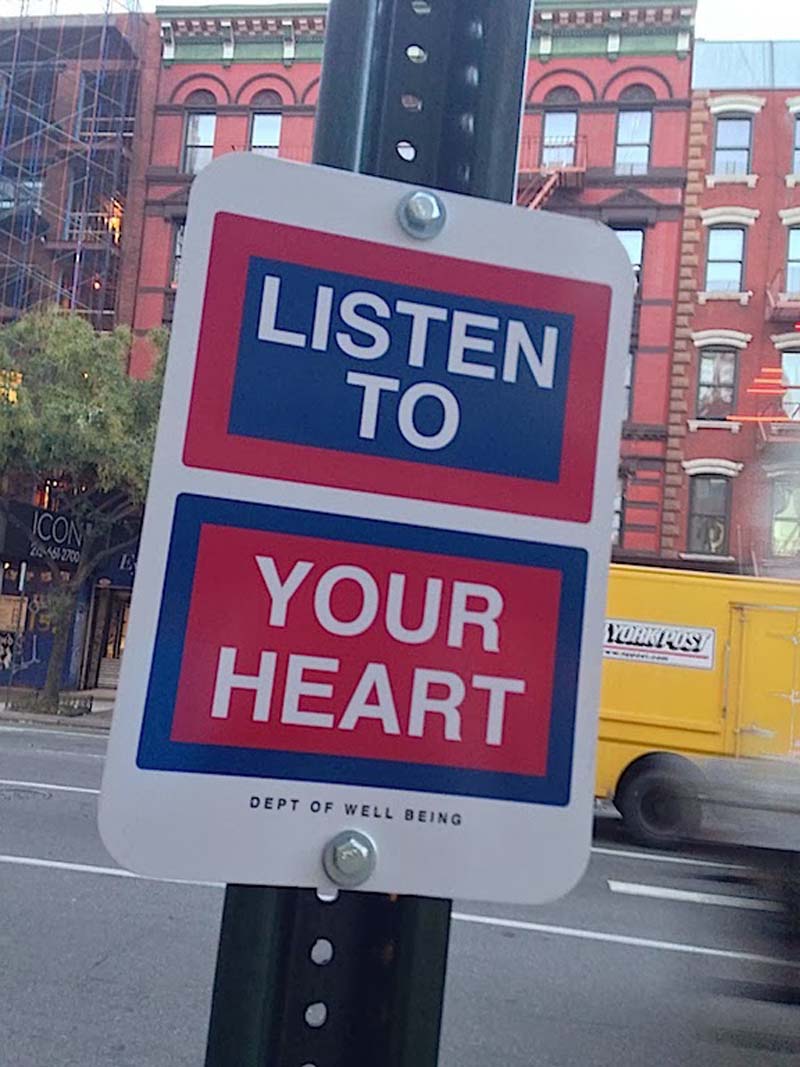
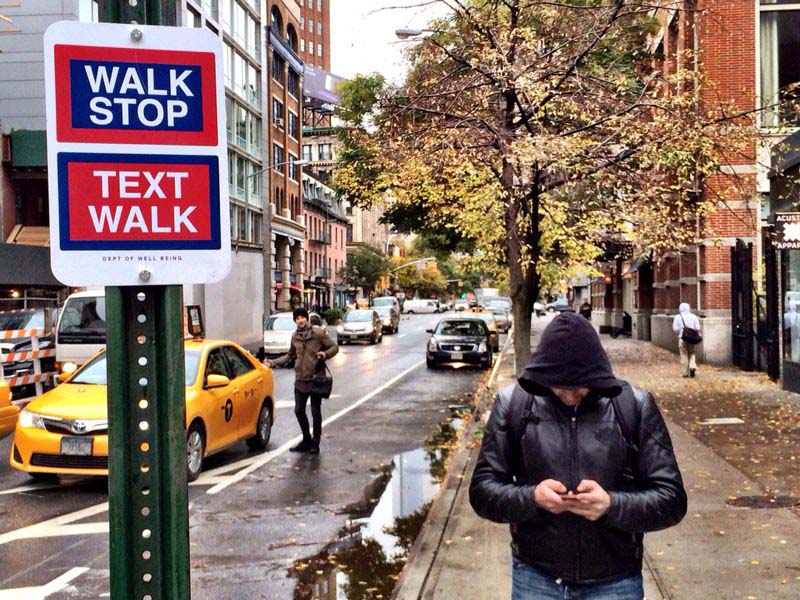
Happy Signs, Killy Kilford, Department of Well Being, Dept of Well Being, Street Art that makes people smile, NYCHappy Signs, Killy Kilford, Department of Well Being, Dept of Well Being, Street Art that makes people smile, NYCHappy Signs, Killy Kilford, Department of Well Being, Dept of Well Being, Street Art that makes people smile, NYCHappy Signs, Killy Kilford, Department of Well Being, Dept of Well Being, Street Art that makes people smile, NYCClick to enlarge

I’m all for things that surprise and delight, and that’s just what British artist Killy Kilford is up to since moving to NYC this past year. Feeling negativity from some of the city’s street signs, Kilford set out to create Happy Signs with upbeat messages and, with the help of volunteers, placed them under the official signs. “Honk Less, Love More” or “You Look Pretty Today” are just two examples of the many slogans aimed at getting a smile from his street audience. Kilford proposes that the city open a Dept of Well Being in addition to their standard agencies. He plans to use his project—currently 200 signs have been installed mostly around lower Manhattan and Williamsburg—to measure happiness using surveys and social media, with the ultimate goal of acting as a model for other cities to adopt a similar concept and their own department of well-being.

If you’re in New York City, keep your eyes peeled for the smile-inducing signage.

Photos courtesy of the artist and evgrieve

Net Blow-Up Yokohama: Numen/For Use

Numen/For Use, inflatable net blow-up in Yokohama, for playNumen/For Use, inflatable net blow-up in Yokohama, for playNumen/For Use, inflatable net blow-up in Yokohama, for playClick to enlarge

The Numen/For Use (previously here and here) guys are at it again. Known for their fun, playful, interactive structures, the Croatian-Austrian collective has recently gone inflatable. Their latest installation in Yokohama (home of the also fun CupNoodles Museum) looks like a carnival Moonwalk gone wild. The stylized cloud-like object has nets inside connected to its inner lining that expand and become taut as the blob is blown up. The exterior membrane is sheer enough that when lit from within, it acts as a projection screen for the activity inside. The nets provide climbing and tumbling surfaces on multiple levels. Looks like a blast.

via vizkultura via notcot

Lauren Tickle Jewelry: Increasing Value

Lauren Vanessa Tickle, Jewelry made with US Currency, brooches & necklaces made with money, Increasing Value Lauren Vanessa Tickle, Jewelry made with US Currency, brooches & necklaces made with money, Increasing ValueLauren Vanessa Tickle, Jewelry made with US Currency, brooches & necklaces made with money, Increasing ValueClick to enlarge

Dan and Em attended the RISD Entrepreneur Mindshare conference in Providence, RI a couple of weeks back and, among the many interesting presentations, they saw artist/jewelry designer Lauren Tickle speak about her work.

The Brooklyn-based RISD Alum has a series of jewelry pieces under the title Increasing Value. In these brooches, necklaces & earrings, Tickle takes US currency of a designated value and cuts it apart, then pieces these delicate and ornate elements together creating a new object of greater value: jewelry. This experiment questioning value, adornment, and materialism is meant to make the wearer reflect on these social constructs in today’s society.

A couple of Tickle’s works, such as the $16.50 Necklace which sells for 100x its original currency value, can be purchased at the MoMA Design Store.

All photos courtesy of the artist.

RAE: Word of Mouth Bodega

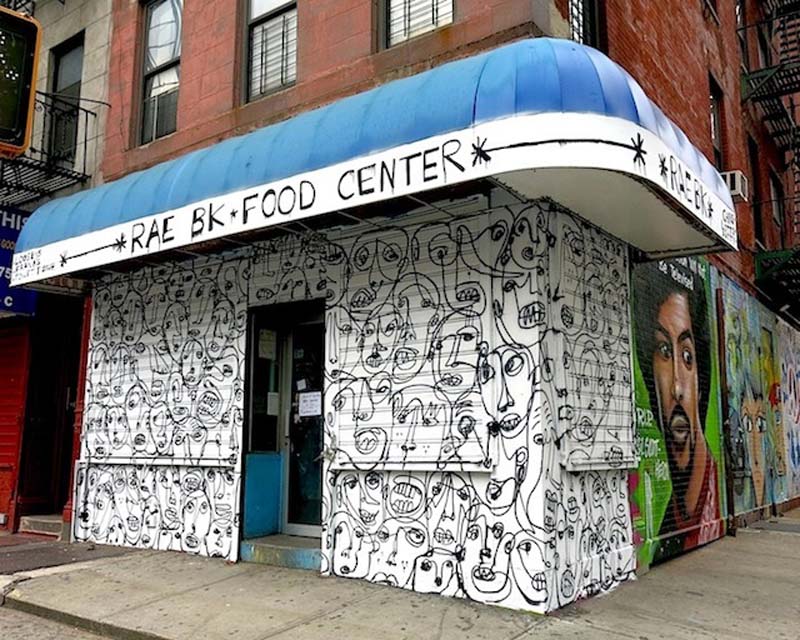
RAE street art, exhibit in East Village Bodega, Word of Mouth, Street Art, GraffitiRAE street art, exhibit in East Village Bodega, Word of Mouth, Street Art, GraffitiRAE street art, exhibit in East Village Bodega, Word of Mouth, Street Art, GraffitiRAE East Village Bodega covered in Street art, graffiti, Word of Mouth exhibitClick to enlarge

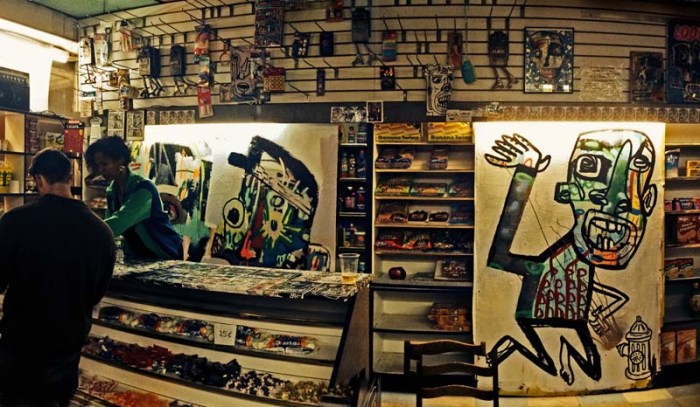
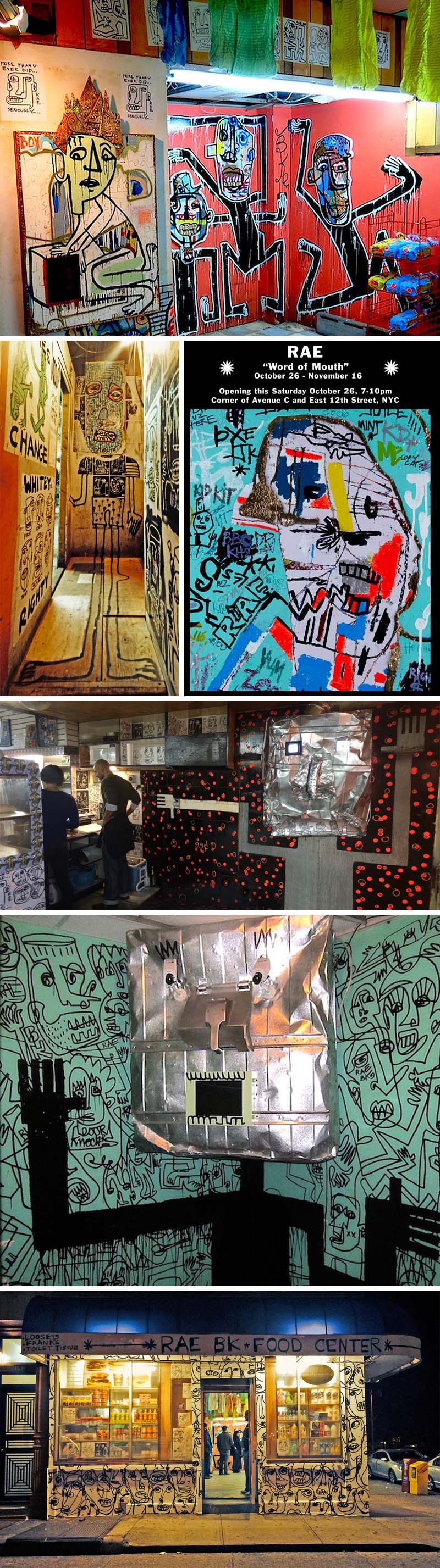
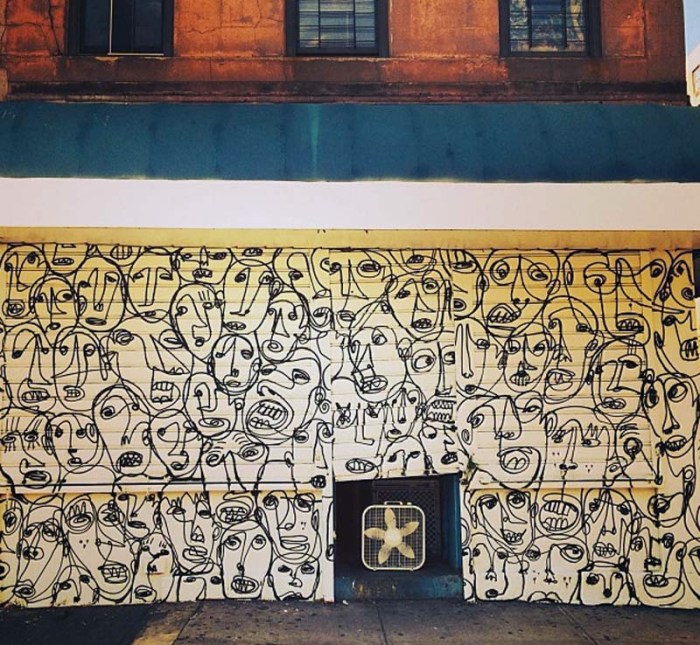
What if your corner bodega didn’t just sell milk, candy and cigarettes, but acted as an exhibit space for beautiful street art, inside and out? Cool, right? Well, that’s exactly what Brooklyn artist RAE has done in the East Village. Finding a former bodega that had to close due to flooding by Hurricane Sandy last year, RAE reopened the shop temporarily for his first solo NYC exhibit Word of Mouth. Covering most every surface in the place—including security cameras—with his drawings, and folky sculptures, the artist has the ‘gallery’ space operating as a functioning bodega as well.

A couple of years back, a friend pointed out RAE’s art on a sign at a now defunct fruit and vegetable stand in SoHo, so it seems that he has a longstanding fascination for the corner food vendor.

Word of Mouth will be on exhibit Thursdays through Saturdays until November 16, 2013, at the corner of East 12th Street and Avenue C.

Photos: changoblanco and vandalog

via vandalog & gothamist

NEXT Architects: Meixi Lake Bridge

Cool pedestrian bridge design by NEXT Architects for Meixi Lake, Dragon King Harbor River, Mobias strip designCool pedestrian bridge design by NEXT Architects for Meixi Lake, Dragon King Harbor River, Mobias strip designCool pedestrian bridge design by NEXT Architects for Meixi Lake, Dragon King Harbor River, Mobias strip designClick to enlarge

Amsterdam-based studio NEXT Architects was awarded first prize in an international competition for their design of a pedestrian bridge to span more than 150 meters and connect a diversity of routes across the Dragon King Harbor River and Meixi Lake in Changsha, China. The undulating, multilevel design is based on the principle of the Möbius strip as well as referring to a decorative knot seen in ancient Chinese folk art. And, though it’s not mentioned, I find it hard to believe that no one was thinking of a serpentine dragon when coming up with this wildly unique structure. It also looks like the architects decided to push the limits on their impressive and elegant recent project The Impossible Stair, completed last June in Carnisselande, The Netherlands.

Construction for the new bridge is scheduled for next year. Add this to your list of reasons to visit China.

via designboom