T. J. Wilcox: In the Air at the Whitney

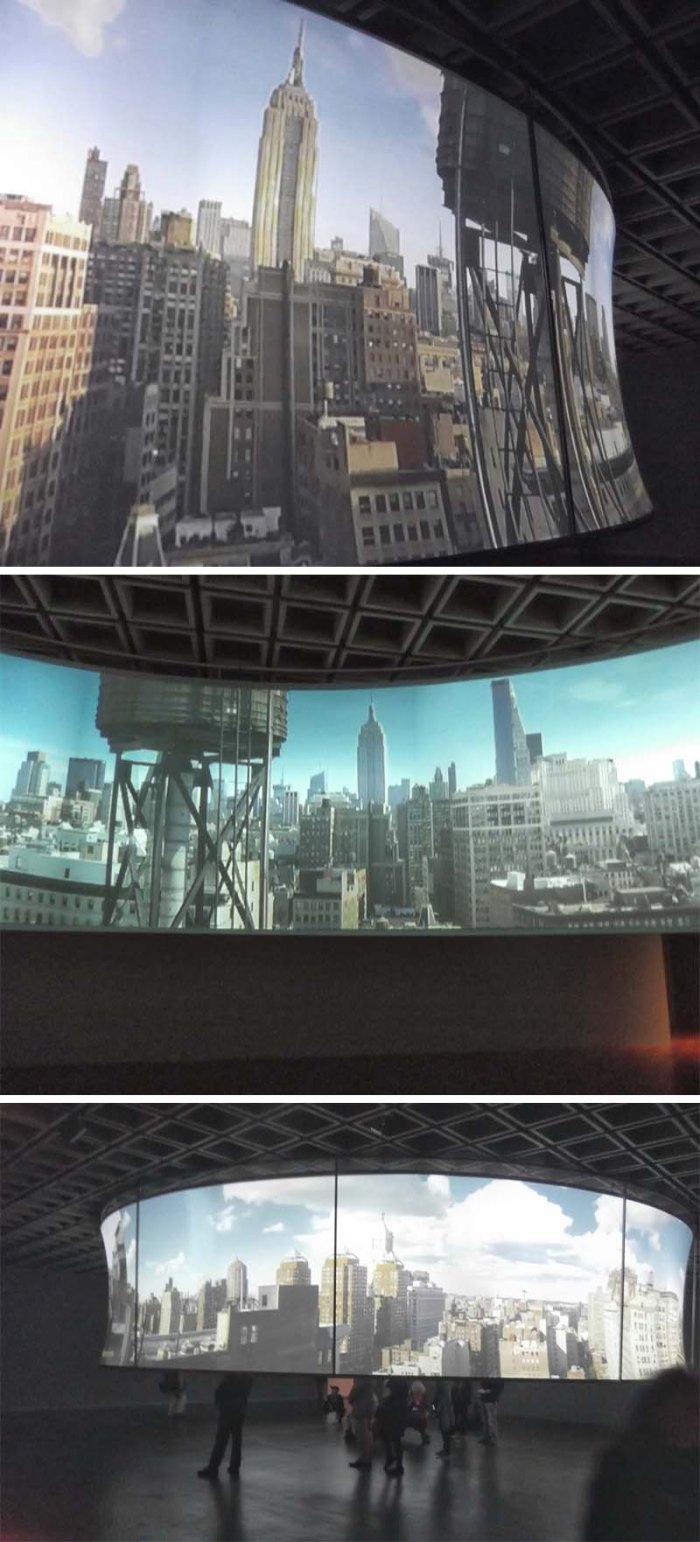
In the Air, A Panoramic Film Installation by T. J. Wilcox. 24hr day in NYC in 30 minutes. Whitney MuseumIn the Air, A Panoramic Film Installation by T. J. Wilcox. 24hr day in NYC in 30 minutes. Whitney MuseumIn the Air, A Panoramic Film Installation by T. J. Wilcox. 24hr day in NYC in 30 minutes. Whitney MuseumClick to enlarge

Currently, the second floor of the Whitney Museum is largely taken up by New York-based artist T. J. Wilcox‘s dramatic 360˚ panoramic film installation titled “In the Air”. The giant circular screen measuring roughly 7 feet high and 35 feet in diameter projects the span of a day in the city, from dawn to dusk, sped up to run in a 30-minute cycle. Inspired by the views from the roof of the building where he has his studio in Union Square, Wilcox filmed, or actually shot 60,000 stills, shot at the rate of one per second, and seamlessly patched together. Superimposed on this vista are six short films that loop, each with a NYC connection. From a documentary/portrait of the Empire State Building to Warhol inflating his silver helium balloons on the roof of his Factory, to Wilcox’s super recounting his personal witnessing of September 11 from that very roof.

I’m looking forward to seeing this exhibit soon—with my newly gifted membership—but, more interestingly, here is Wilcox speaking a bit on the work:

“In the Air” will be up at the Whitney through February 9, 2014.

Top photo by Fred R. Conrad for the NY Times; second photo courtesy of the Whitney; bottom three photos by Clare Henry.

Tour Paris 13: The Paris Tower Project

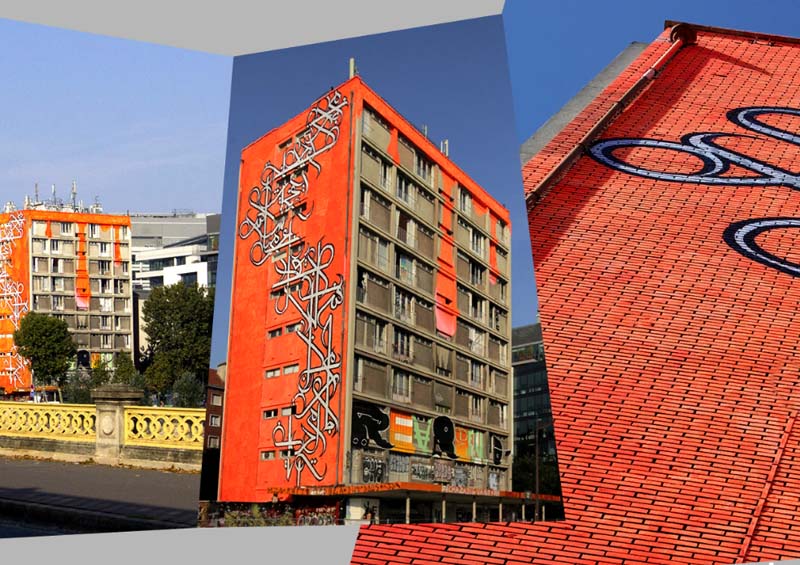
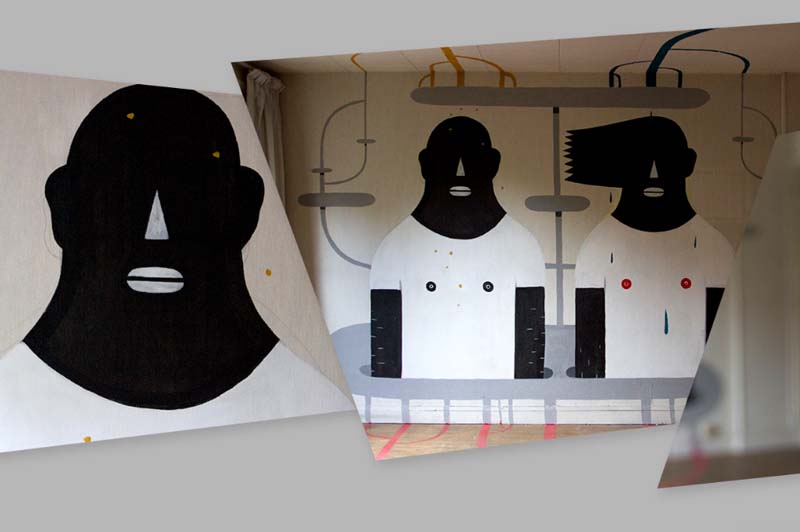
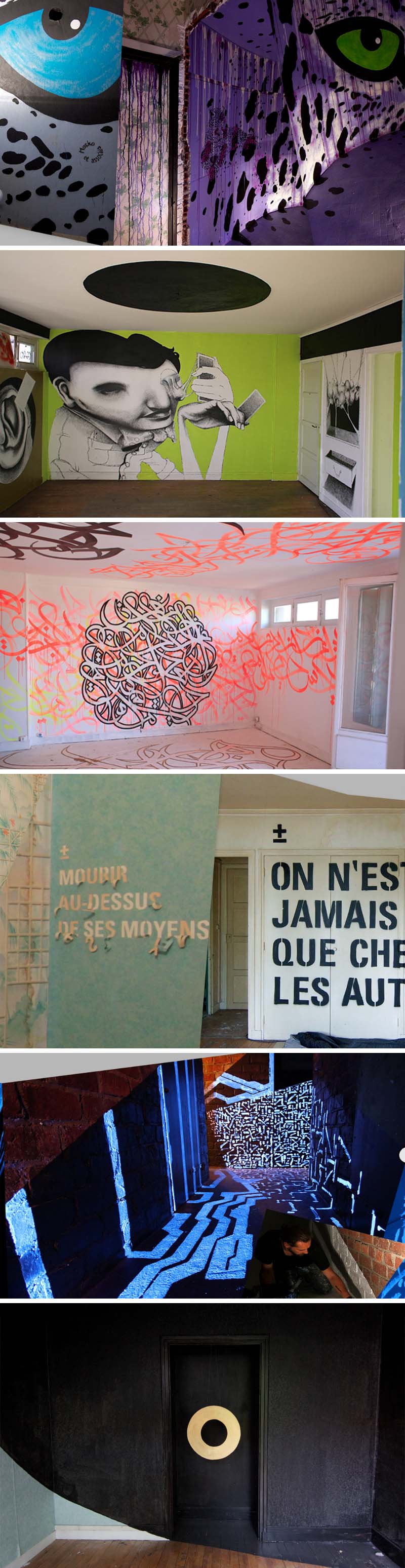
Tour Paris 13, The Paris 13 Tower Project, Largest Group Street Art Exhibit Ever, Apartment building painted inside and out by around 100 international street artists, Galerie ItinerranceTour Paris 13, The Paris 13 Tower Project, Largest Group Street Art Exhibit Ever, Apartment building painted inside and out by around 100 international street artists, Galerie ItinerranceTour Paris 13, The Paris 13 Tower Project, Largest Group Street Art Exhibit Ever, Apartment building painted inside and out by around 100 international street artists, Galerie ItinerranceTour Paris 13, The Paris 13 Tower Project, Largest Group Street Art Exhibit Ever, Apartment building painted inside and out by around 100 international street artists, Galerie ItinerranceClick to enlarge

October has commenced and Street Art is in the air, or, more accurately on the walls. Here in NYC, Banksy has started stenciling the city with his Better Out Than In project, with possibly a work per day, with a phone number you can call to get an in-depth tongue-in-cheek guided tour to each piece.

Meanwhile, in Paris, Tour Paris 13 (Paris Tower Project 13) has launched. Touted as the “largest group Street Art exhibition ever carried out,” a tower in the 13th Arrondissement slated for demolition at the end of the year has been enshrined by over one hundred artists from all over the world before its destruction. Each artist was given a space, wall, apartment, ceiling to create their work on, inside and out the 4,500 sq meter edifice. With the support of City Hall, ICF Habitat La Sabliere, and Galerie Itinerrance, the project remained secret for many months. The list of artists is impressive, and way too extensive to include here…but some names include: Ludo, El Seed, Legz, Sean Hart, Sumo, and Vhils, just to name a very few.

The exhibit will be up for the entire month of October, and then the building will close and prepare for demolition. For anyone that can’t make it to Paris by then, the website is impressively comprehensive and immersive, taking you room by room and floor by floor with 360˚ views.

Here’s a teaser video from galerie Itinerrance:

Ole Martin Lund Bø: Anamorphic Type

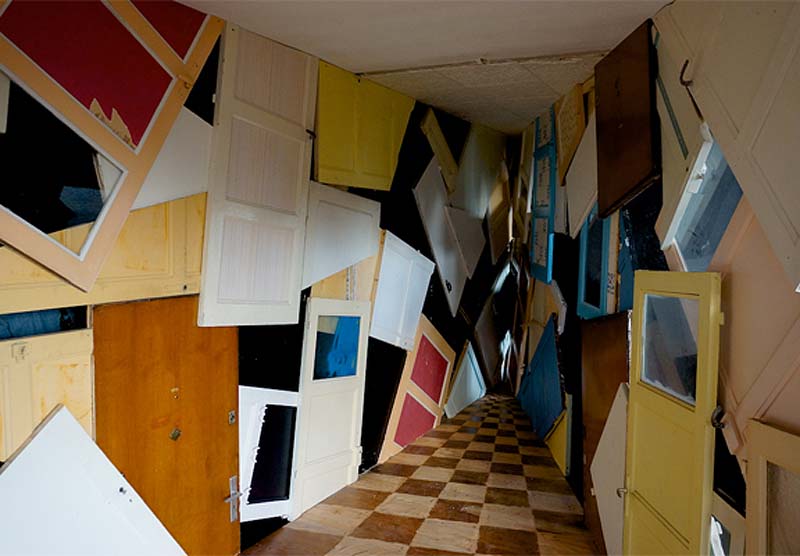
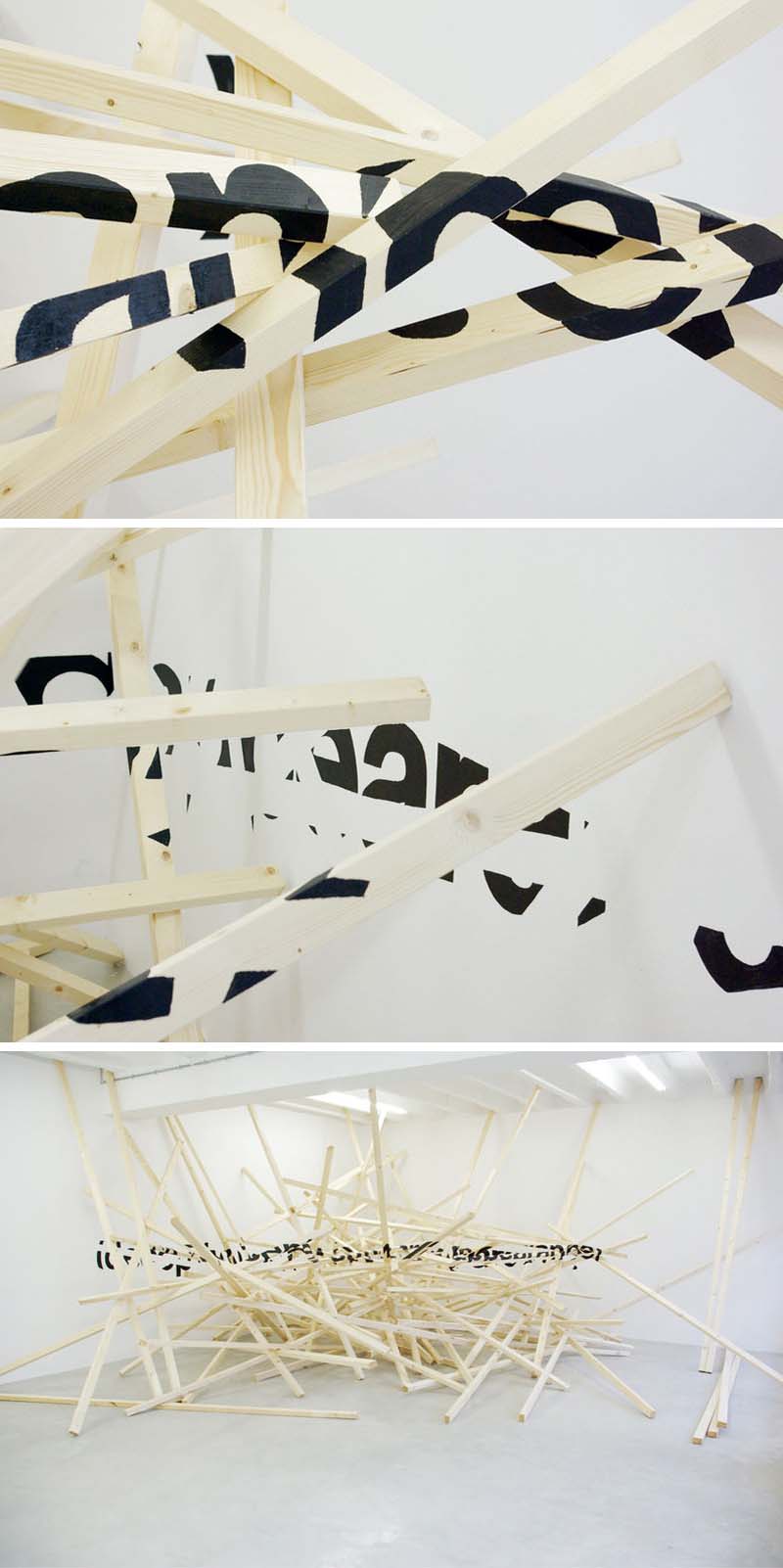
Ole Martin Lund Bø, Anamorphic Typography Sculpture, Deceptive Outward AppearanceOle Martin Lund Bø, Anamorphic Typography Sculpture, Deceptive Outward AppearanceOle Martin Lund Bø, Anamorphic Typography Sculpture, Deceptive Outward AppearanceClick to enlarge

Finnish artist Ole Martin Lund Bø‘s wooden installation Deceptive Outward Appearance uses the technique of anamorphosis as we’ve seen also here and here. Even having seen other works utilizing the similar effect, I’m still always impressed at the ability to create these, as well as interested in the individual components that make up the whole. It’s just that one specific spot in the room that makes the words/image come into focus and go from gibberish, or abstraction, to a specific and clear message. Kind of the way I feel when I put on my reading glasses…

All images courtesy of the artist.

via étapes

Nobutaka Aozaki: Conceptual Smile-Inducing Art

Nobutaka Aozaki, Chips Painting, Chip bags blocked out into abstract art pieces, conceptual art, humorous artNobutaka Aozaki, Children of Duchamp, conceptual art, humorous artNobutaka Aozaki, Children of Duchamp, conceptual art, humorous art, Value_Added, Open Bag, Smiley Bag Project, Portrait Artists ProjectClick to enlarge

I love it when I google something and, instead, wind up finding something different yet wonderful. In this case “rice sculptures” landed me at New York-based, Japanese artist Nobutaka Aozaki’s website, who has, in fact, made rice sculptures, but it was all his other projects that really caught my eye. These works/projects are more about the concept than the final product, but each and every one made me smile with its cleverness. Children of Duchamp is a series of variations on Duchamp’s first Readymade Bicycle Wheel with simple combinations of assorted premanufactured wheels and stools from everything including Ikea furniture to Playmobile and Barbie toys. In Value Added, Aozaki took a can of Del Monte corn to multiple supermarkets and re-bought it. This single can of corn has been re-bought from 105 supermarkets for a total of $113.07 (as of June1, 2013) and both the can and receipts have been kept. I love that! In his project titled Open Bag, the artist walked around the city with his backpack unzipped recording the voices of strangers alerting him to the fact his bag was open with a recorder within the bag. Later, the recording of these interactions is returned to the open bag and played back. Yes, it’s a little nutty, but just great. And there’s plenty more, so if you liked these I recommend you check out the rest.

Ark Nova: Inflatable Concert Hall

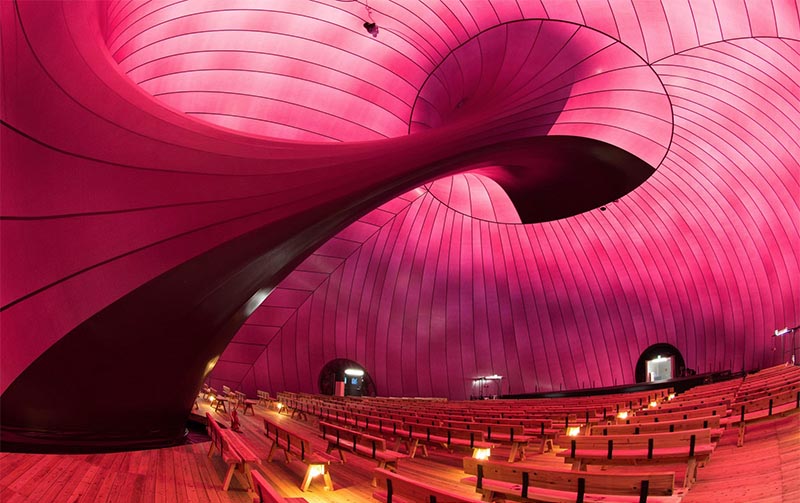
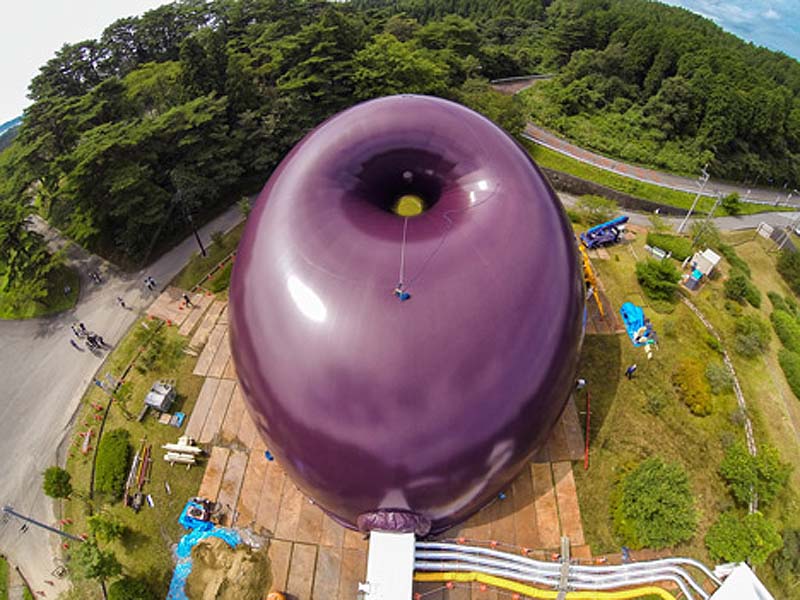
Lucerne Festival, Anish Kapoor and Arata Isozaki collaboration, inflatable concert hall Ark NovaLucerne Festival, Anish Kapoor and Arata Isozaki collaboration, inflatable concert hall Ark NovaLucerne Festival, Anish Kapoor and Arata Isozaki collaboration, inflatable concert hall Ark NovaClick to enlarge

A little over a year ago I posted about a project in the works called Ark Nova, an inflatable, mobile, concert hall, and now, suddenly, it’s a reality. A beautiful one at that. I suppose it’s not surprising when two extremely talented creative professionals—in this case artist Anish Kapoor and architect Arata Isozaki—collaborate along with the Lucerne Festival. This unique structure made of purple parachute material inflates in approximately two hours and seats 500. Starting October 14th, the theater will open to the public hosting concerts and other events around the tsunami-stricken areas of Japan.

Photos courtesy of the Lucerne Festival.

via colossal

Disco Volante: Lukas Galehr

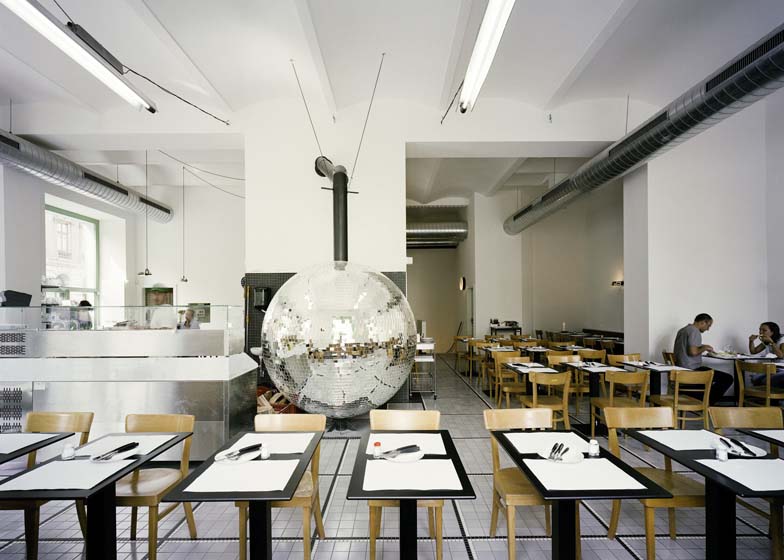
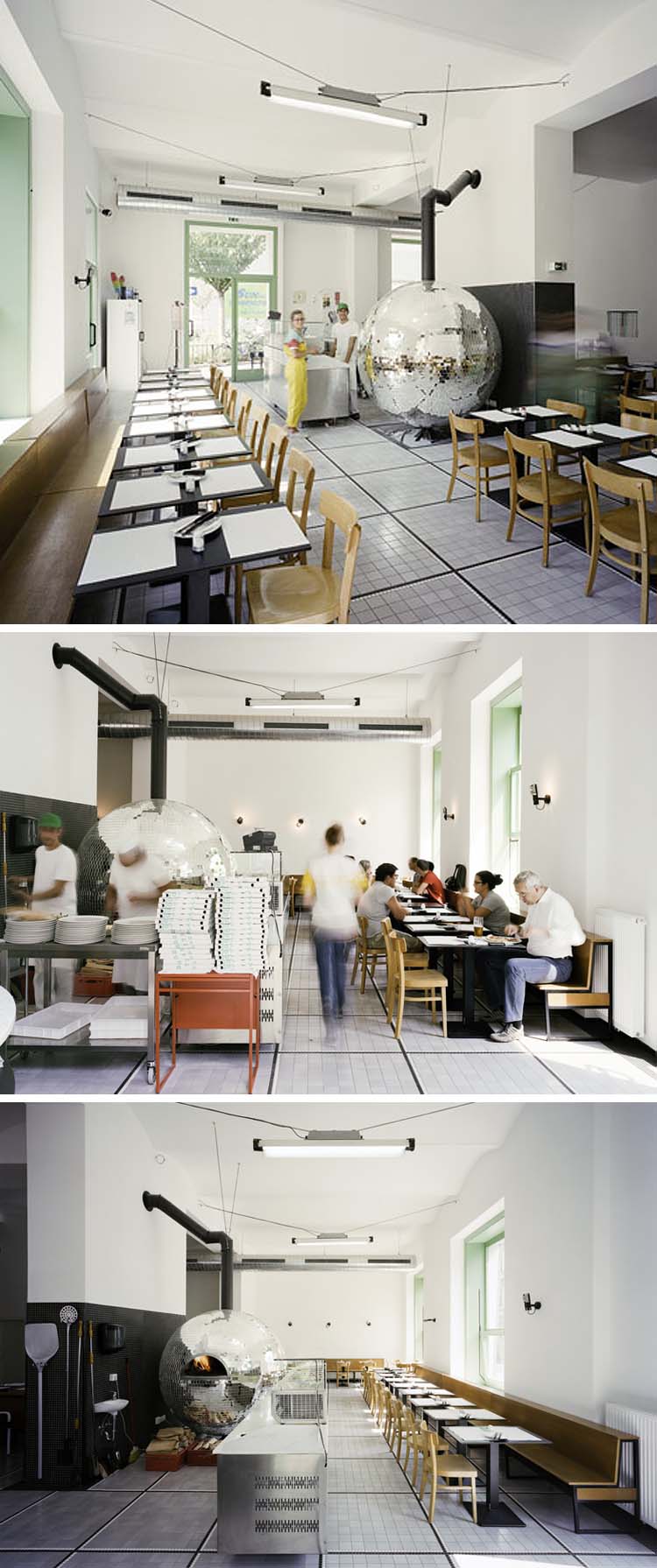
Disco ball pizza oven at Disco Volante in Austria by Lukas Galehr. Cool pizza oven.Disco ball pizza oven at Disco Volante in Vienna by Lukas Galehr. Cool pizza oven.Disco ball pizza oven at Disco Volante in Vienna by Lukas Galehr. Cool pizza oven.Click to enlarge

Austrian architect Lukas Galehr  (also part of the design collective Madame Mohr) designed the Viennese pizzeria Disco Volante including its centerpiece: a unique oversized rotating disco ball oven that glitters against the walls in the dark. Covered in hundreds of tiny mirrored tiles, the spherical pizza oven is positioned within the dining room and is anchored to a central chimney that allows it to pivot from its center. Here it is in action:

via dezeen

Topographic Rest Stops: Büro Uebele

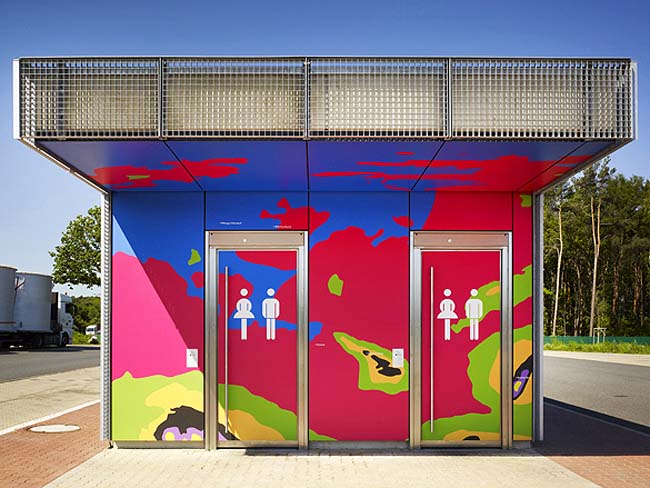
Colorful topographic Rest stop bathrooms in Saxony Germany by Büro Uebele, Motorway Toilets, Map-clad reststopsColorful topographic Rest stop bathrooms in Saxony Germany by Büro Uebele, Motorway Toilets, Map-clad reststopsColorful topographic Rest stop bathrooms in Saxony Germany by Büro Uebele, Motorway Toilets, Map-clad reststopsStuttgart-based visual communications firm Büro Uebele (previously here) has designed a series of colorful rest stops/motorway toilets for the Lower Saxony region of Germany. These bright objects that seemingly glow by the roadside, not only relieve the monotony of the highway landscape, but do so using topographic maps of the area that have been digitized, assigning different colors to the varying altitudes of that specific location. The results are cheerful, abstract-looking patterned façades that would deter the best of graffiti artists.

Photos by Christian Richters, courtesy of Büro Uebele.

via segd

Empire Drive-In: NY Hall of Science

Empire Drive-In at the New York Hall of Science in Corona, Queens. Jeff Stark, Todd Chandler, Junkcar Drive-in, Upcycling, re-use, film, NYC eventEmpire Drive-In at the New York Hall of Science in Corona, Queens. Jeff Stark, Todd Chandler, Junkcar Drive-in, Upcycling, re-use, film, NYC eventEmpire Drive-In at the New York Hall of Science in Corona, Queens. Jeff Stark, Todd Chandler, Junkcar Drive-in, Upcycling, re-use, film, NYC eventClick to enlarge

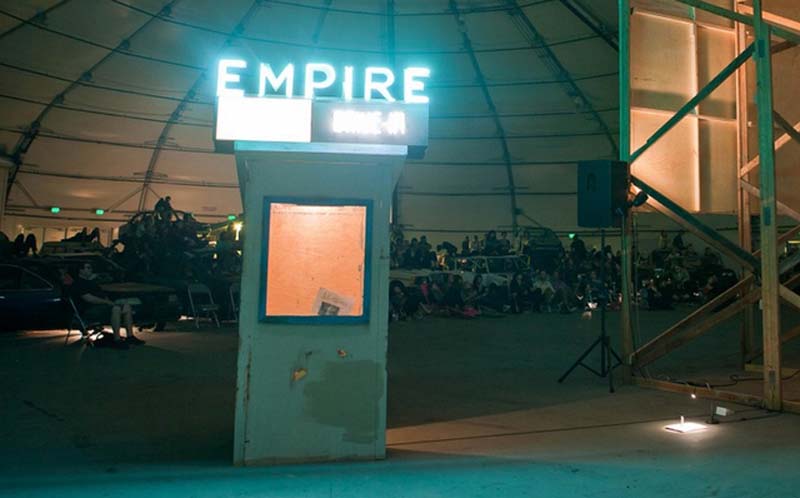
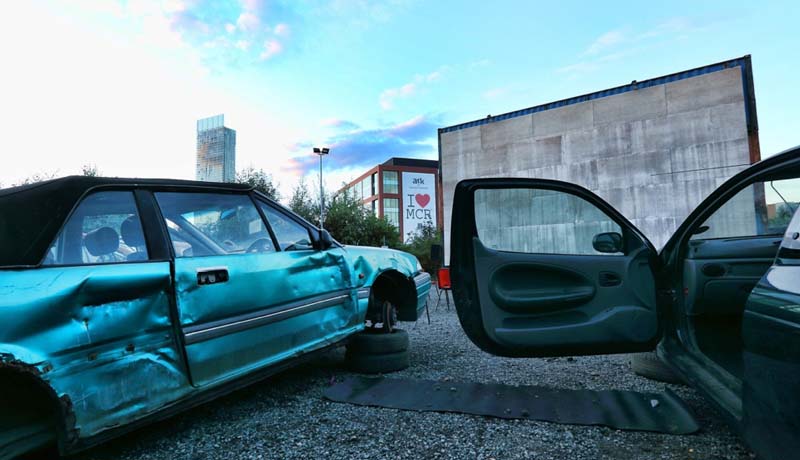
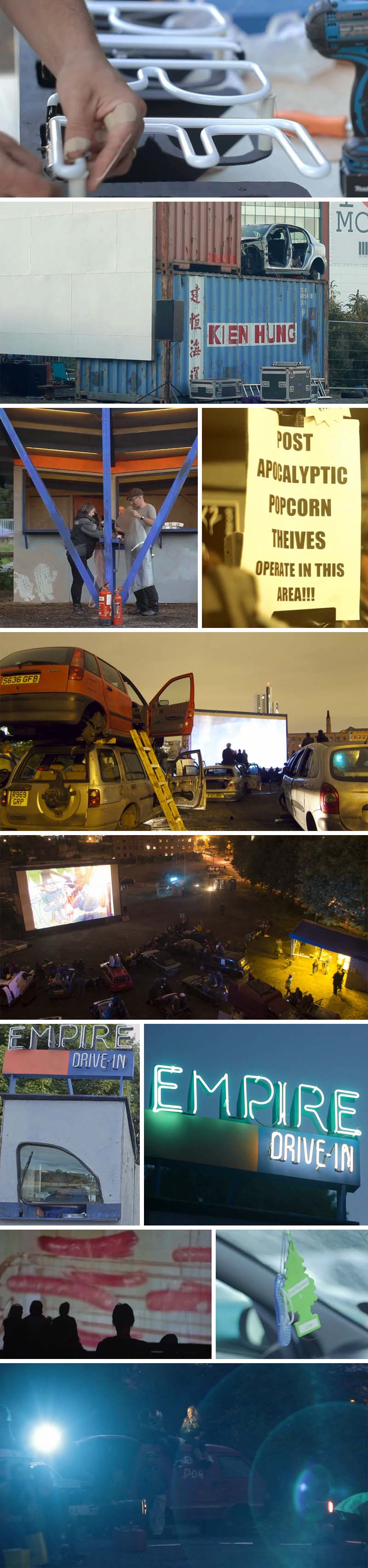
Lately, each consecutive summer in NYC seems to top the last in offerings of outdoor film screenings. Locations range from parks, to restaurant backyards, to rooftops and even beaches. And now, the concept is extending into the fall with an additional twist: a drive-in. Not just your usual run-of-the-mill drive-in, which in itself would be cool and intriguing enough, but Empire Drive-In is a junk car drive-in, upcycling wrecked cars rescued from junkyards and repurposing them as seats for audience members to climb into, and onto, while watching films projected on a 40-foot screen made of salvaged wood. The masterminds behind the project—which will be held outside the New York Hall of Science in Corona Park, Queens, starting October 4th and running though the 20th—are Jeff Stark (whose name seems to be associated with many an interesting NYC event) and Todd Chandler. The two Brooklyn-based artists have previously created other Empire Drive-Ins, most recently last year at the Abandon Normal Devices Festival in Manchester, UK. Stark and Chandler, along with a team of other artists and craftspeople have set out, in this age of consumerism, to create a sense of possibility  by focusing on re-use, designing something new and special while salvaging and repurposing waste. In cleaning up the cars, which will have stereo audio transmitted via radio directly to each car, the crew found all kinds of interesting personal artifacts from car deodorizers to letters, which they have chosen to keep in the cars to “create a story”. The audience is urged to explore.

Opening night promises to be fun with a 30-Pianists-on-Casio-keyboards performance, in addition to a stellar line-up of films from Buster Keaton, Charlie Chaplin, and Oliver Hardy, to Jim Jarmusch’s Night On Earth. You can see the rest of the schedule here.

All photos & video courtesy of Empire Drive-In

via gothamist

Artist’s Face – Balloons: Laurina Paperina

Laurina Paperina, Artists BalloonsLaurina Paperina, Artists BalloonsLaurina Paperina, Artists BalloonsClick to enlarge

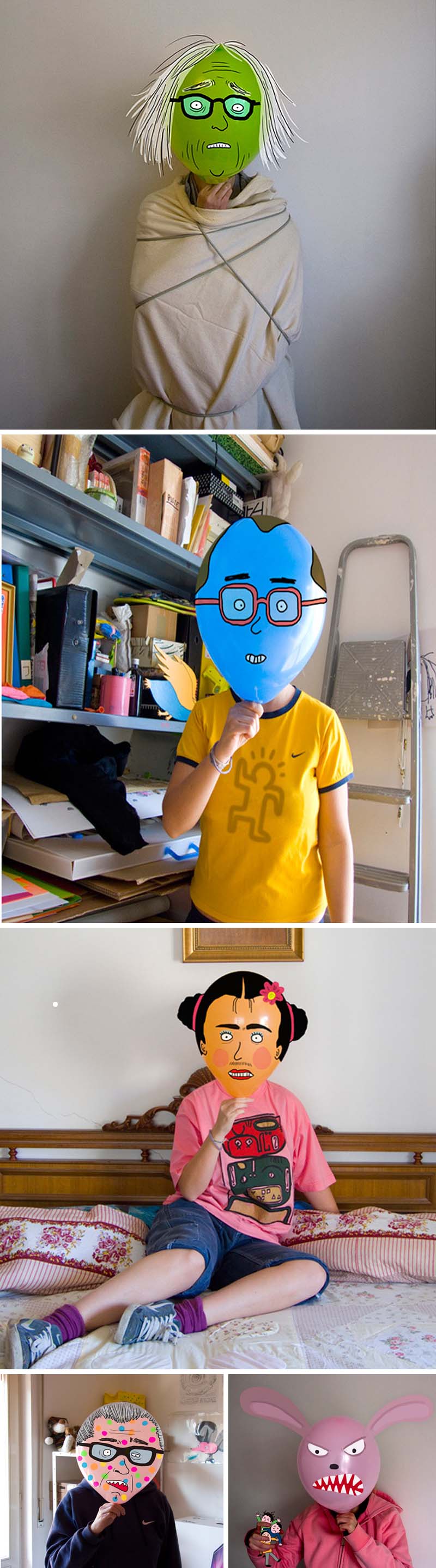
Last Thursday evening I went to Chelsea for the launch of the Fall Season and openings at many of the galleries. At Freight+Volume, as part of a group show titled “The Decline and Fall of the Art World, Part II” is where I had my first look at Italian artist Laurina Paperina‘s humorous work that pokes fun at the art world, including herself. Her short animated episodes titled “How to Kill the Artists” (see a sample below) were making viewers laugh out loud in some cases, and now, looking at her website, I see that she has variations on the theme. Her witty series Artist’s Face – Balloons, charmingly captures these artists and their work style on balloon heads, or, more accurately, on photos of people holding up balloons in front of their heads. From Murakami and Banksy to Keith Haring and  Frida Kahlo. Paperina states in her bio that she “does not want to make serious art.” I think she has met her goal.

Big Fun: Chris March for Target

fun wigs, Big Fun Wigs by Chris March of Project Runway for Target, Halloween Costumes, Goofy wigsfun wigs, Big Fun Wigs by Chris March of Project Runway for Target, Halloween Costumes, Goofy wigsfun wigs, Big Fun Wigs by Chris March of Project Runway for Target, Halloween Costumes, Goofy wigsClick to enlarge

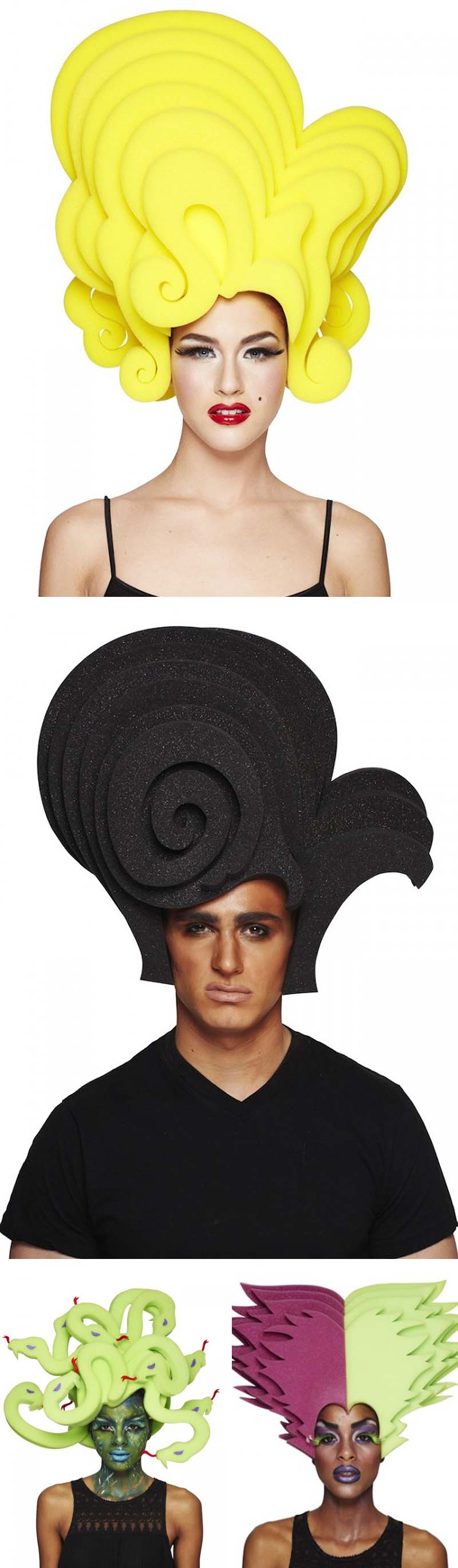
There’s that slight nip in the evening air these days and before you know it Halloween will be upon us. Em sent me a link to a line of fun wigs designed by Project Runway veteran Chris March for this Halloween season at Target. The wigs are aptly called “Big Fun“.  March designed eight styles: Geisha, Greaser, Starlet, Witch, Medusa, Monster Bride, Mohawk and Afro. The limited-time only collection, which debuted yesterday in stores and on Target.com, features fun foam wigs, each for $20 or less. I’d imagine these will be a big hit.

Machine Home: AdHoc MSL

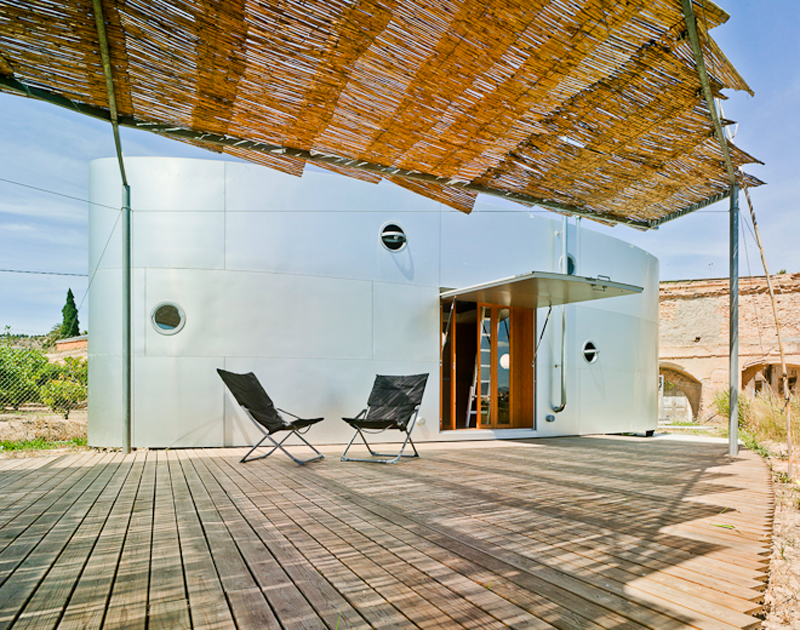
Machine Home by adhoc msl, murcia, spain, david frutos photographer, Machine Home by adhoc msl, murcia, spain, david frutos photographer, Machine Home by adhoc msl, murcia, spainClick to enlarge

The Machine Home  in Murcia, Spain, designed by adhoc ml, can be described as a cross between the traditional dwelling and the caravan. It is easily transportable and can be put up anywhere. All it needs is a minimal foundation and a connection to MEP installations, be these existing urban services or mechanisms making for the module’s total self-sufficiency: potable and irrigation water, plumbing and purifying systems, telecommunications lines and energy-capturing devices.

The Machine Home has three main parts. The central area is for shared household activities. One of the side spaces contains the sanitary utilities on ground level and the other installations above. The other lateral space is a double-height storeroom. The central room has an overhead hole that the inhabitants climb up to, by means of two ladders, to get to the bedrooms.

Once anchored to the ground, the module proceeds to colonize the place and interact with it through a series of added elements constructed on the site: a pergola, a terrace deck, an outdoor kitchen, a pond. They bring the interior domestic space to the exterior environment by means of a double hydraulic door system that helps reinforce the disturbing machine image of the house.

Photos courtesy the architects and David Frutos.

#GettyStation: Chelsea Art Installation

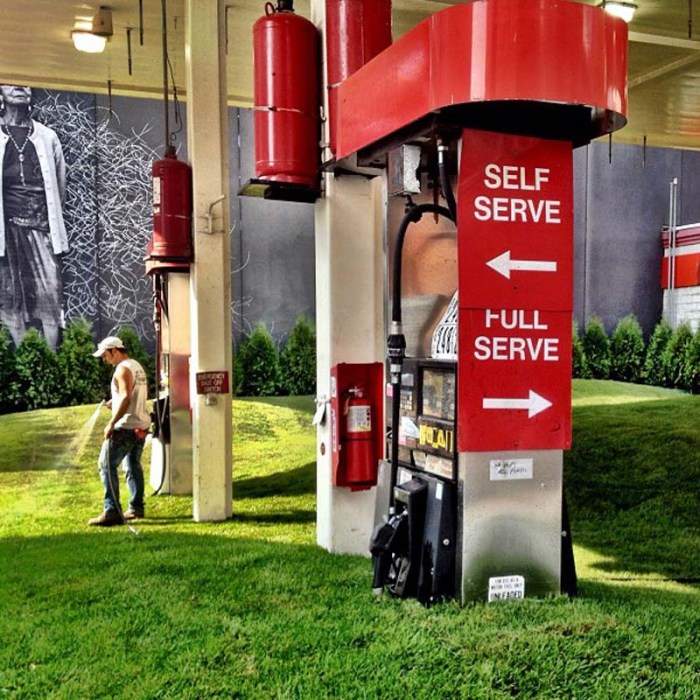
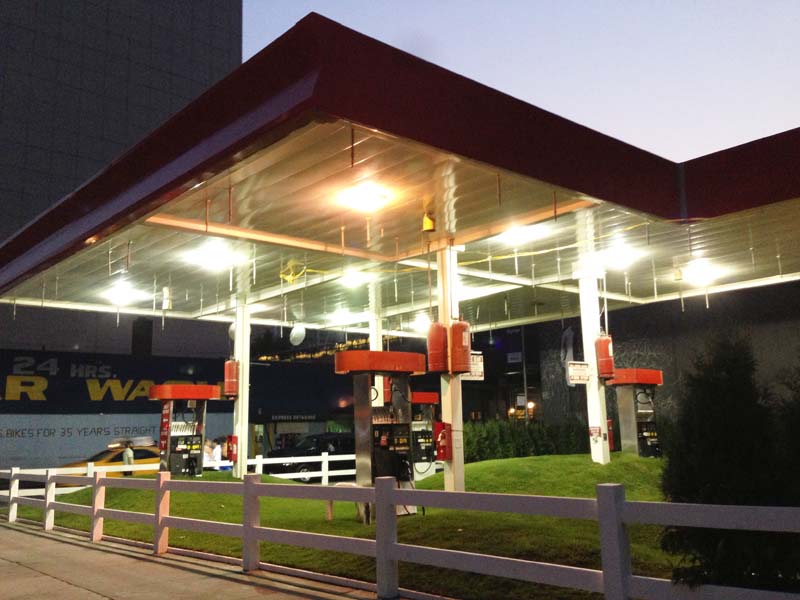
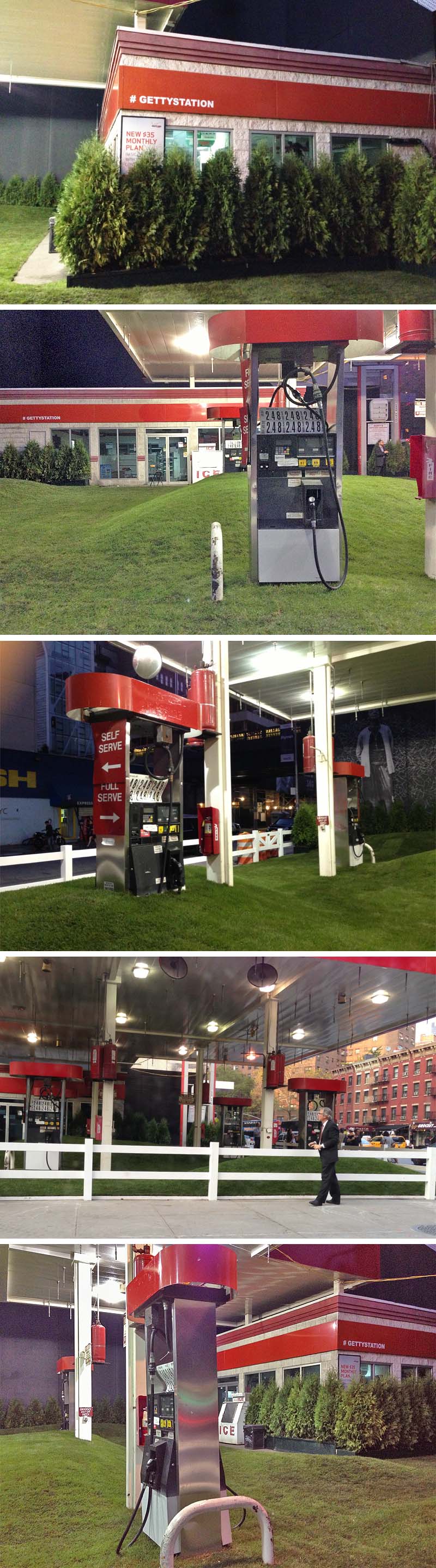
Getty Station art installation in Chelsea, Sheep Station, 239 10th Avenue, Michael Shvo, Francois-Xavier Lalanne's surrealist sculpted sheep, public art, nycGetty Station art installation in Chelsea, Sheep Station, 239 10th Avenue, Michael Shvo, Francois-Xavier Lalanne's surrealist sculpted sheep, public art, nycGetty Station art installation in Chelsea, Sheep Station, 239 10th Avenue, Michael Shvo, Francois-Xavier Lalanne's surrealist sculpted sheep, public art, nycClick to enlarge

Driving uptown (yes, once in a while I have access to a car and actually drive in the city) I noticed, at a red light, a bizarrely rural and bucolic sight in the middle of Chelsea. What used to be a LukOil gas station up until what seemed very recently, was now an impressively landscaped abandoned gas station––complete with a hilly lawn, neatly trimmed bushes, and a white fence––without car access or paved driveway to the pumps. I pulled over to take a look, as well as some photos, and tried to get the scoop from the guard pacing the lawn. All the guard knew, or cared to share, (I imagine the poor man gets bombarded with questions by the minute) was confirmation that, indeed, this was an art installation and he pointed to the sign “#GettyStation” and said “Check twitter.”

I googled instead and discovered that 239 10th Avenue, where the gas station currently resides, was purchased by developer (and art collector) Michael Shvo who will be building yet another apartment building right by the High Line. During construction, Shvo has decided to use the space to showcase public art, with the first exhibit starting Monday, Sept. 16th, titled “Sheep Station” featuring sheep sculptures by the late French artist Francois-Xavier Lalanne grazing on the lawn. Shvo plans to continue with exhibits throughout construction and eventually integrate them into the new building. So keep an eye out on the corner of 24th Street and 10th Avenue in the coming year. For now, “Sheep Station” is due to be on exhibit through October 20th. Not bad for a construction site.

Top photo: Stefan Hengst. All others: collabcubed

Abel Barroso: Satirical Wooden Sculpture

Abel Barroso, Contemporary Cuban Art, Satirical wooden sculptures with themes of social borders and immigrationAbel Barroso, Contemporary Cuban Art, Satirical wooden sculptures with themes of social borders and immigration, pinball machinesAbel Barroso, Contemporary Cuban Art, Satirical wooden sculptures with themes of social borders and immigrationClick to enlarge

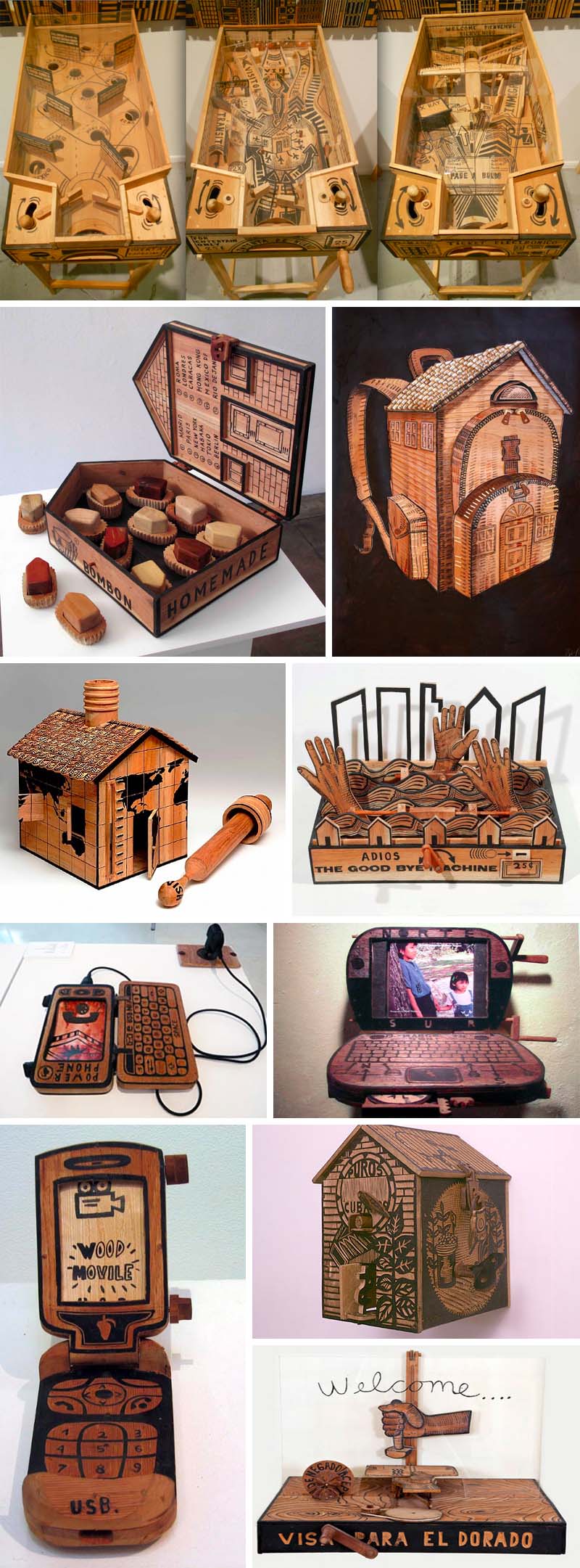
Cuban artist Abel Barroso creates wooden sculptures in the shape of games such as pinball machines, fooseball tables, monopoly boards to birdhouses, backpacks, and numerous technological devices from computers to mp3 players mostly using wood. Though these sculptures have a quirky and playful style to them, upon closer inspection one sees  they dwell on serious themes such as social borders, immigration, and poverty from a satirical point of view. Barroso’s biggest project is likely to be The Emigrant’s Pinball Machine (Pinball del Emigrante), composed of seven interactive games, each offering the hope of entry into a glamorous capitalist city, symbolized by a row of skyscrapers. These wooden creations—eschewing the colors, lights and sounds of traditional pinball machines—depict various methods of getting there, but the illusory nature of the quest is evident.

Photos courtesy of the artist, artslant &  vault.

via vault

Station to Station: Doug Aitken

Station to Station, Doug Aitken's Nomadic Art Happening; Carsten Holler, Urs Fischer, Kenneth Anger, Ernesto Neto, Ariel Pink, No-AgeStation to Station, Doug Aitken's Nomadic Art Happening; Carsten Holler, Urs Fischer, Kenneth Anger, Ernesto Neto, Yurts, Ariel Pink, No-AgeStation to Station, Doug Aitken's Nomadic Art Happening; Carsten Holler, Urs Fischer, Kenneth Anger, Ernesto Neto, Yurts, Ariel Pink, No-AgeStation to Station, Doug Aitken's Nomadic Art Happening; Carsten Holler, Urs Fischer, Kenneth Anger, Ernesto Neto, Yurts, Ariel Pink, No-AgeClick to enlarge

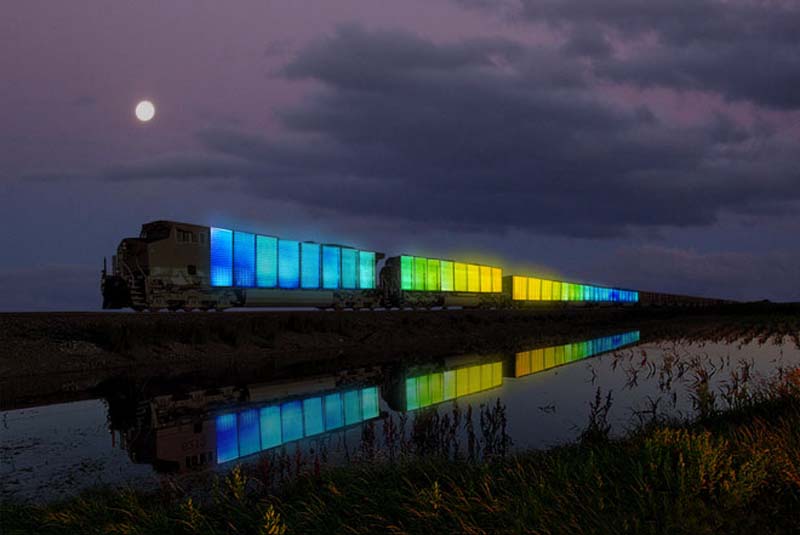
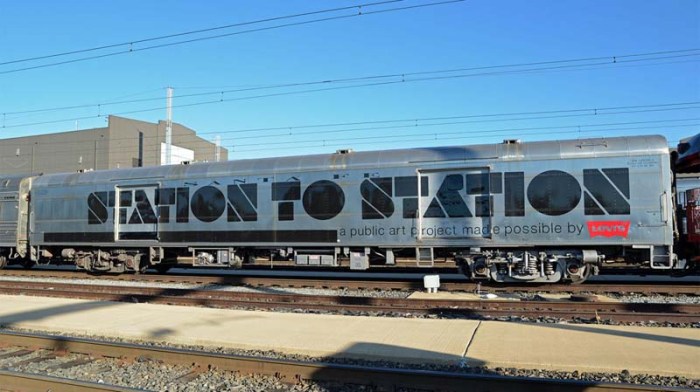
On Friday night, eagerly anticipating the arrival of Doug Aitken‘s (previously here) latest project Station to Station, I went to the first stop and kick-off of this unique multi-city art and music ”nomadic happening“. The pre-event coverage was rather vague, so I was trying to wrap my head around how a train was going to make its way over to the Williamsburg waterfront and, well, the answer is, it didn’t. In fact, the beautiful glowing train exists, but—at least at the New York stop—it wasn’t included in the actual event, but rather, as the means, cool as it may be, of transportation for the artists, musicians, chefs and other participants.

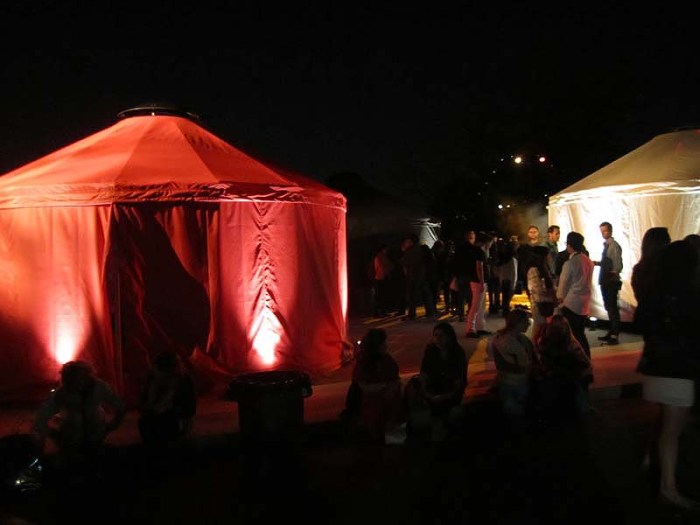
However, despite the lack of train viewing, art and music were definitely supplied in abundance within a festive atmosphere on the most perfect of fall-like nights. Five nomadic sculptures/yurts were set up outside, each designed by a different artist and open for shoeless entry by guests. These installations included an orange-y glowing one by Ernesto Neto; a white, smokey one, with a disco ball by Urs Fischer; Kenneth Anger’s bright red yurt with two video panels screening “Lucifer Rising”; a yellow tensile structure by Carsten Höller; and a completely dark yurt that I was not able to experience properly and not sure of the artist either, sorry. Inside the large Riverfront Studios stood a wooden yurt containing a gift shop. Also inside, is where the music was performed (bands included No-Age, Suicide, Yoshimio, and Ariel Pink.) But, possibly, what I enjoyed most about the whole event were the films screened behind the musicians and between sets. These ranged from Doug Aitken’s own films to Francis Alys, Kate Casanova, Nam June Paik, and Allora & Calzadilla just to name a few. Most of the ones that I saw were truly captivating, and in the most surprising of ways. For example, Kate Casonova’s ”Ornament”, a film showing the back of the artist’s braided head with large hermit crabs crawling on it, was oddly mesmerizing. One of my favorites, however, was a series of kisses from old Hollywood films spliced together as one film, though I wasn’t able to find the name or filmmaker. It was reminiscent of that wonderfully moving scene at the end of Cinema Paradiso (a movie totally worth watching, but if you haven’t yet, then you may want to skip the spoiler-ish link above.)

Back to Station to Station. The event will be traveling all the way to San Francisco within the next three weeks making stops in nine cities and including different artists and performers in each location. If you can’t catch it live, the site is designed in such a way to be able to experience the events virtually. Definitely a great concept filled with great talent with proceeds going to support non-traditional programming at nine partner museums around the country.

Photos of trains, Carsten Höller sculpture, Kenneth Anger sculpture, and Olaf Breuning’s color bombs all courtesy of Station to Station; all other photos by collabcubed

Heart of the District: ZA Architects

Heart of the District by German ZA Architects, cool hotel design, Cut 'n' Paste exhibit MoMA, futuristic architectureHeart of the District by German ZA Architects, cool hotel design, Cut 'n' Paste exhibit MoMA, futuristic architectureHeart of the District by German ZA Architects, cool hotel design, Cut 'n' Paste exhibit MoMA, futuristic architectureClick to enlarge

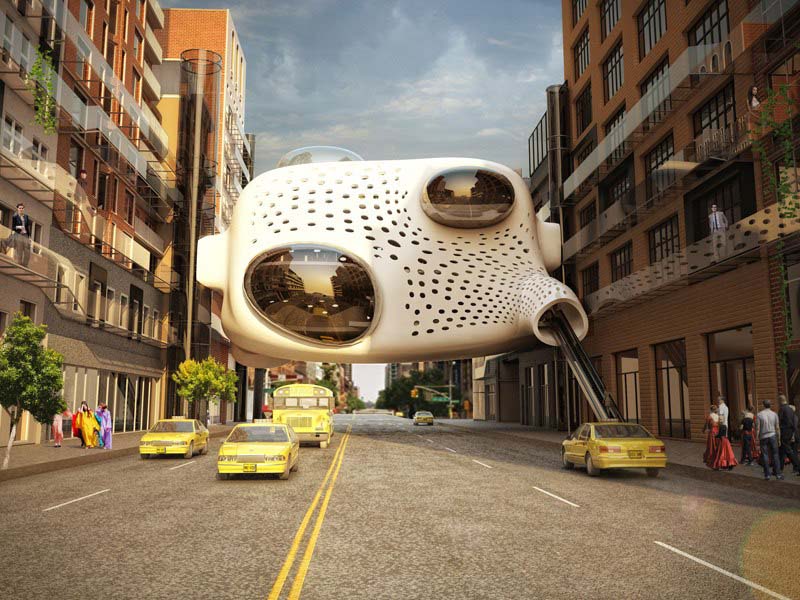
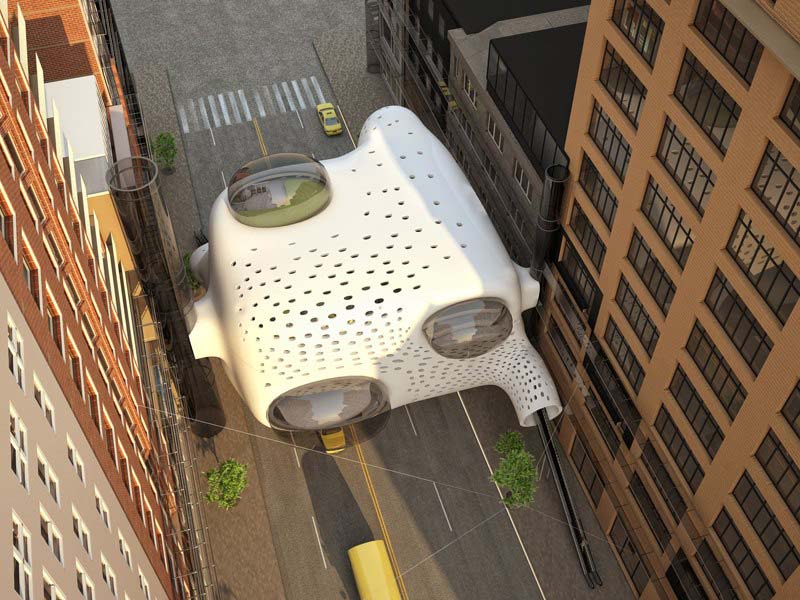
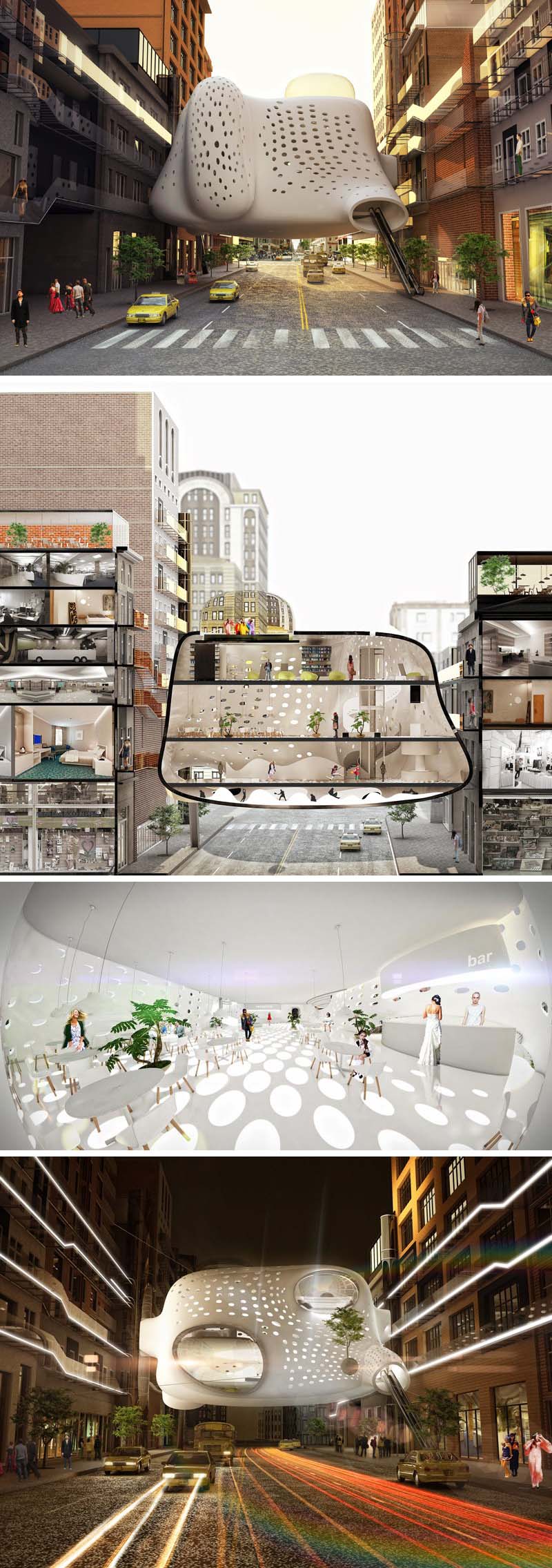
A few weeks ago while taking in several exhibits at MoMA, we came upon a very interesting image as part of a digital slideshow in the architecture Cut ‘n’ Paste exhibit. After running through all the captions on the wall, we finally found what was unmistakably the corresponding one, clued in by the vital organ referenced: Heart of the District by ZA Architects. The Germany-based architecture firm came in second place in an international competition with their futuristic heart-shaped pod-like structure. Their proposal, for a hotel in NYC, integrates the street, the city dwellers, as well as the hotel guests, giving the tourist a more inside experience on their visit. The hotel rooms would reside in the existing adjacent buildings with the heart shape construction acting as a hub to draw people in and mix, acquaint them inside its tight spaces, while they partake in varied activities. The “heart’ itself would contain a playground, shop, exhibition space, café, bar, hotel reception, lounge zone, small cinema, library, conference hall. And, it goes without saying, whether you like it or not, the structure would likely become a NY icon.

All images courtesy of the architects.

Barbara Kruger: Belief+Doubt

Barbara Kruger, Typography Installation, Hirshhorn Museum lower lobby and escalator, Belief and DoubtBarbara Kruger, Typography Installation, Hirshhorn Museum lower lobby and escalator, Belief and DoubtBarbara Kruger, Typography Installation, Hirshhorn Museum lower lobby and escalator, Belief and DoubtClick to enlarge

As part of an initiative to bring art to new sites within and around the Hirshhorn Museum, roughly a year ago the museum installed Barbara Kruger’s Belief+Doubt exhibit to fill the Lower Level lobby and extend into the newly relocated bookstore. The supersized words that have increasingly become Kruger’s trademark, create an environment that surrounds the viewer with language. The walls, floors, and escalators are all wrapped in text-printed vinyl that address themes of consumerism and power. I love when type takes over a space and choosing a highly-trafficked area that includes so many different angles with the stairs is particularly dramatic. The exhibit will continue through December 2014, so if you find yourself in Washington D.C. in the next year and a half, you might want to stop by the Hirshhorn to have a look in person.

Here it is being installed:

Photos by Cathy Carver, courtesy of the artist.

via juxtapozed

Matthew Mazzotta: Open House

Open House, Matthew Mazzotta, Coleman Center for the Arts, Recycled House from private space to public Open House, Matthew Mazzotta, Coleman Center for the Arts, Recycled House from private space to public Open House, Matthew Mazzotta, Coleman Center for the Arts, Recycled House from private space to public Click to enlarge

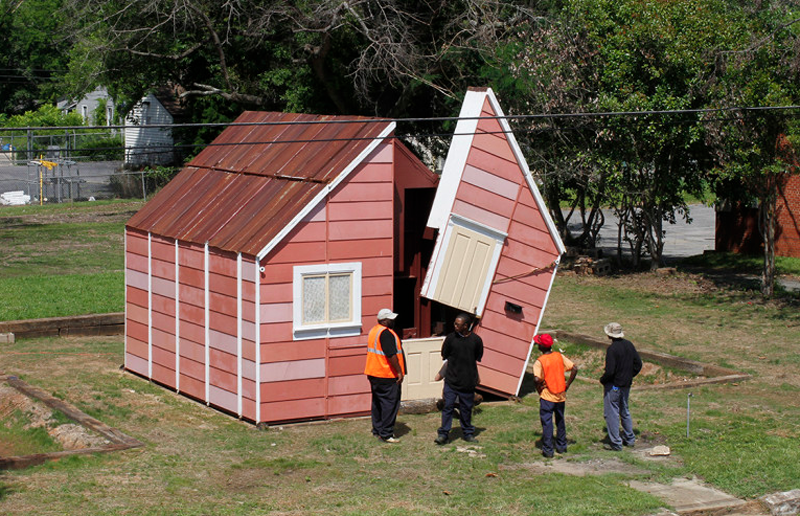
Artist Matthew Mazzotta (previously here) teamed up with Coleman Center for the Arts and the folks of York Alabama to transform one of the town’s most blighted properties into a new public space. Using the materials of an abandoned house as well as the land it stood on, Mazzotta created one of his shape-shifting structures titled Open House. Starting in the shape of a house, the puzzle-like structure is designed to require cooperation. Four people must work together for over an hour to unfold the pieces into a multi-seat theater that can be used for performances or simply a common ground for community dialogue and activities. Everything about this project is ultra-clever and well designed: its construction (and deconstruction); the repurposing of materials; as well as the community-building aspect via the integration of the townspeople. Here’s a video with more background on the project:

Thanks Matthew!