Remon de Jong: Tremor Laquearia

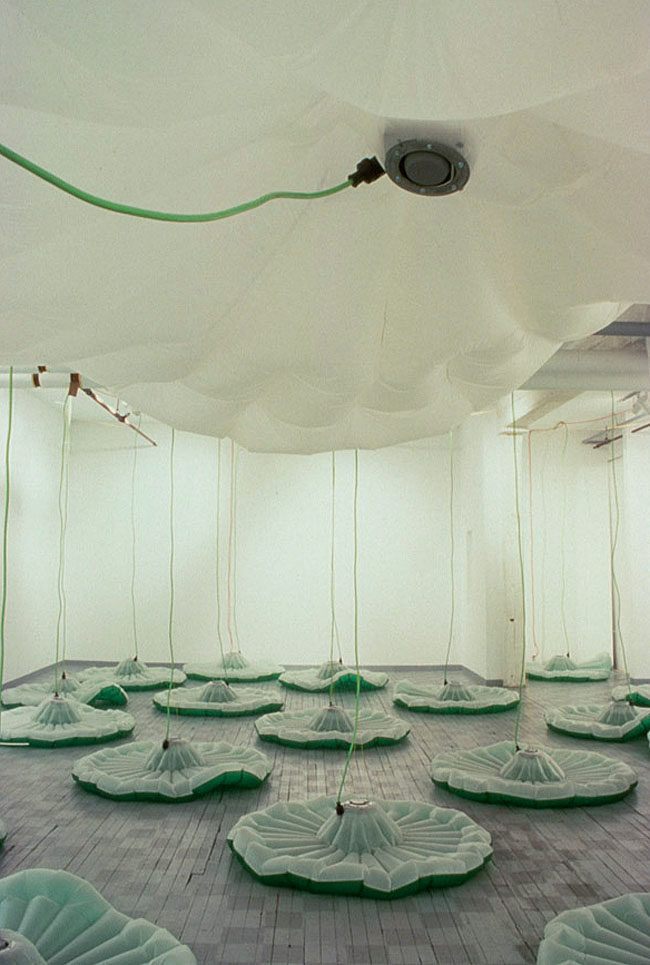
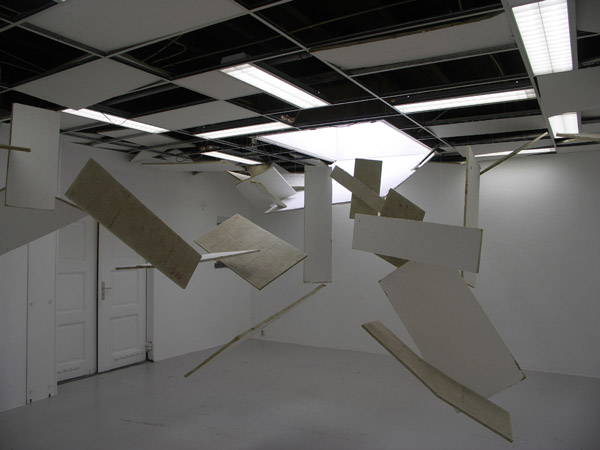
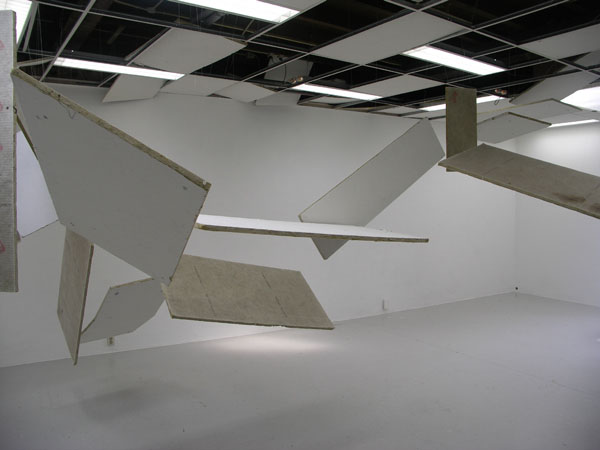
Dutch art installation, collapsing ceiling, tremor laquearia, remon de jong, collabcubedDutch art installation, collapsing ceiling, tremor laquearia, remon de jong, collabcubedDutch art installation, collapsing ceiling, tremor laquearia, remon de jong, collabcubedDutch artist Remon de Jong created this collapsing ceiling art installation titled Tremor Laquearia. Fixing time in the way a photograph does, the installation takes the familiar and turns it upside down.The chaos completely changes the perspective of the gallery space.

De Jong, who makes paintings, music, sculpture, and videos in addition to his installation work, often references the theme of man and his relationship with the environment.

Below you can see the creation of the installation in progress.

via lost painters

Buff Diss: Taped Hands and more

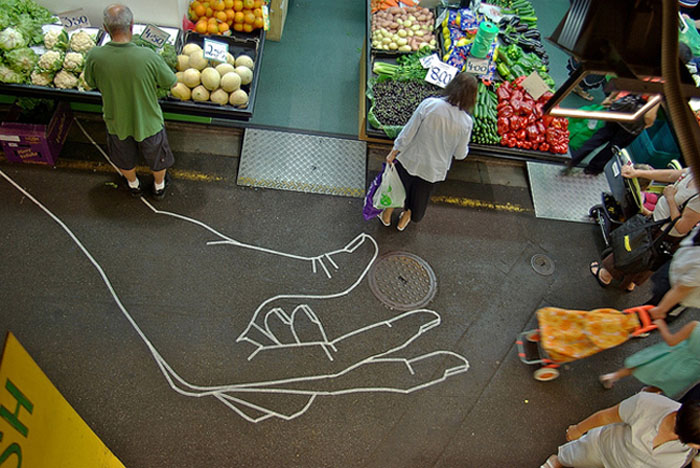
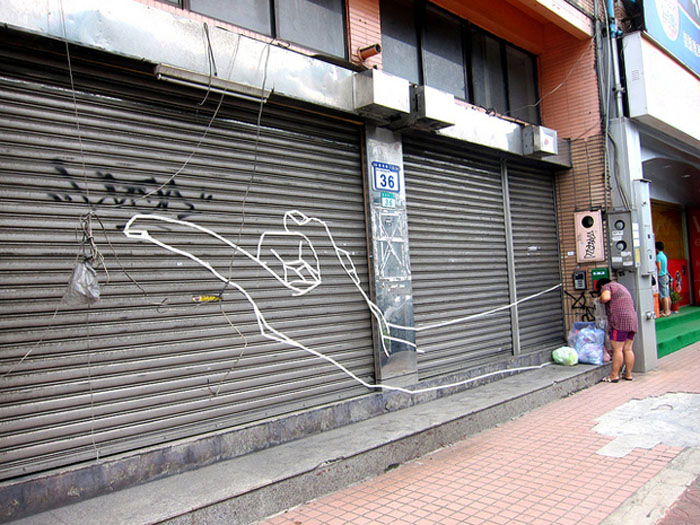
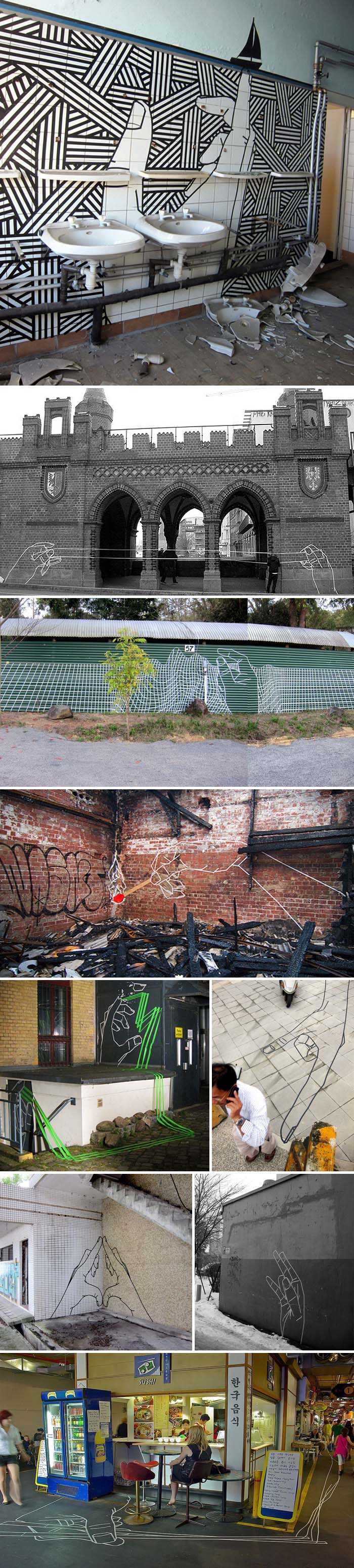
Australian street art, Buff Diss, taped graffiti, taped hands, collabcubedAustralian street art, Buff Diss, taped graffiti, taped hands, collabcubedAustralian street artist, Buff Diss, taped graffiti, taped hands, collabcubedAustralian street artist, Buff Diss, taped graffiti, red stripe mural, londonClick to enlarge

Buff Diss, an Australian street artist from Melbourne, has been using tape instead of paint for the past six or seven years. Though he “tape paints” all kinds of images from abstract to skulls, there seems to be a strong hand theme. Diss cleverly integrates the elements and variations of the street to his advantage, at the same time adding humor to many of his pointing and pinching taped fingers.

The bottom three images are from one of his most recent works: a mural for Red Stripe in London.

Photos from Buff Diss’ flickr and blog.

via Brainstorming

Anemone: Oyler Wu Collaborative

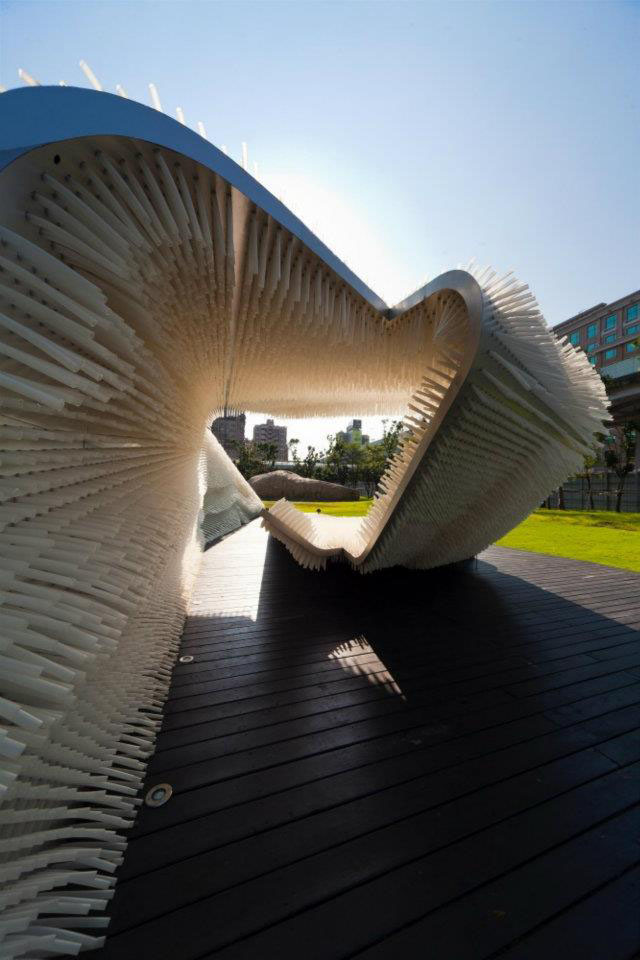
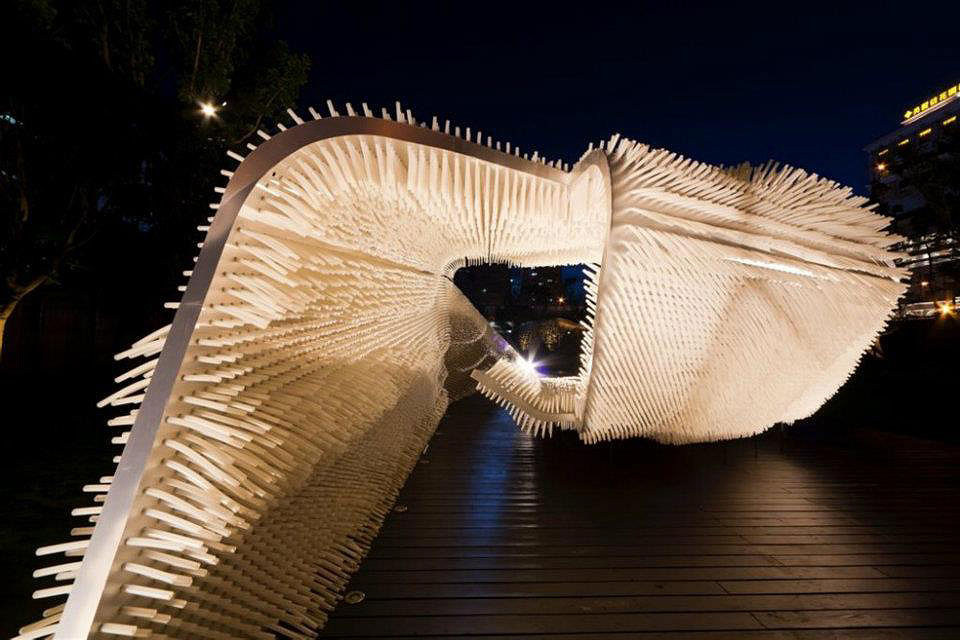
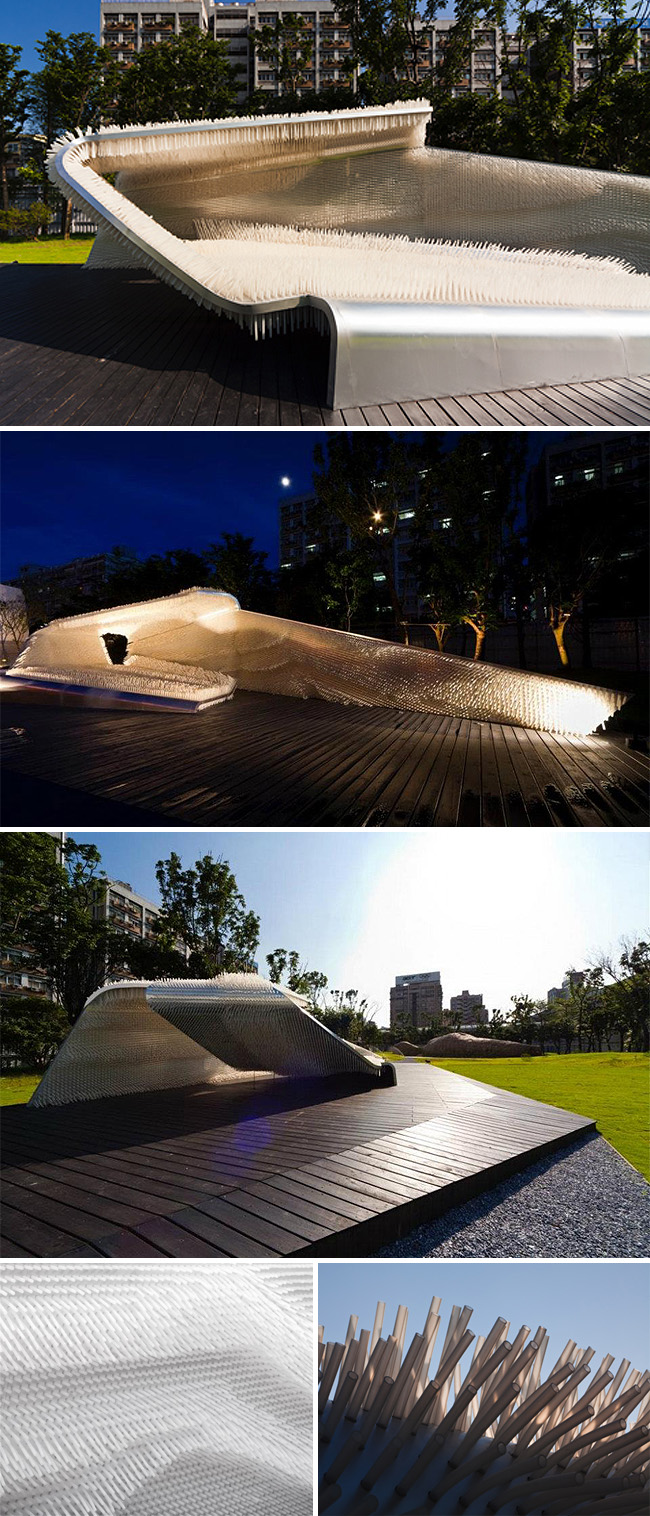
Architectural Installation, tactile, Taipei, Taiwan 2011, cool structure, interactiveArchitectural Installation, tactile, Taipei, Taiwan 2011, cool structure, interactiveArchitectural Installation, tactile, Taipei, Taiwan 2011, cool structure, interactiveAnemone is an art/architectural installation in Taipei, Taiwan designed by Oyler Wu Collaborative based in California. The concept behind Anemone was to create an installation that is not only appreciated for its aesthetic beauty but also allows for interaction through touch. Built using thousands of transparent flexible rods at different depths to add to the undulating feel of the structure, and give the look of bristling tentacles, the shape invites the viewer in and encourages them to feel the the walls as well as sit in the incorporated benches and bed-like elements. The cantilevered canopy adds elegance in addition to protection.

via inspir3d

Li Hongjun: Topographic Paper Sculptures

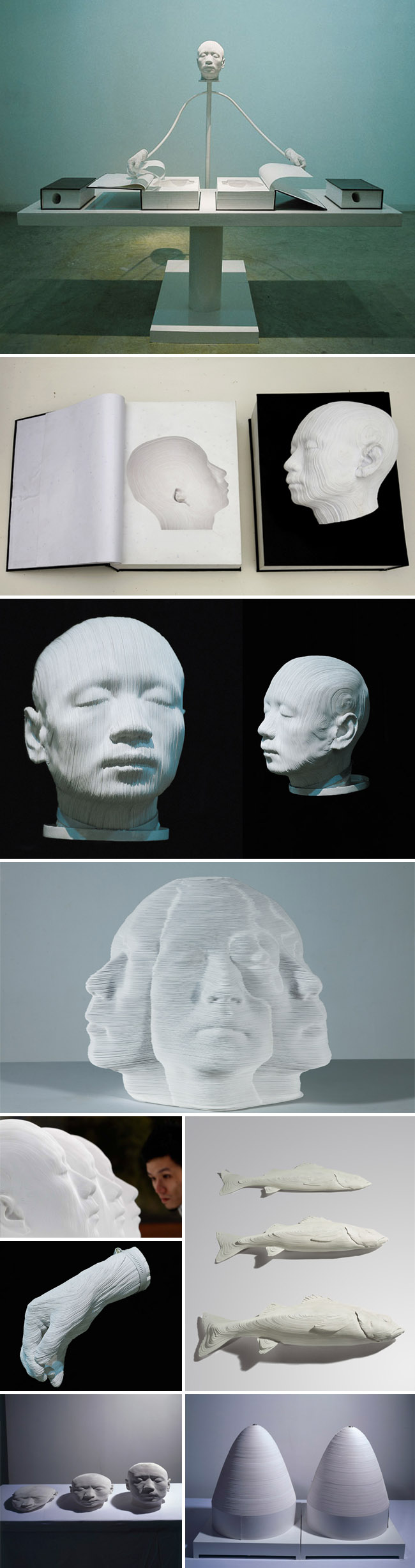
Amazing paper sculpture of heads, topographic, Chinese contemporary art, rotated headcool paper sculpture of heads, topographic, Chinese contemporary art, distorted headsAmazing paper sculpture of heads, topographic, Chinese contemporary art, rotated headAmazing paper sculpture of heads, topographic, Chinese contemporary art, rotated headClick to enlarge

Li Hongjun lives and works in Beijing, though originally from Shaanxi Province in China. His life has been split between peasant and artist, with a break in the 90s and then returning to his art at middle age in 2006.

His paper sculptures are almost like architectural or mathematical models with their topographic style. Using layers and layers of paper to create this topology, Hongjun utilizes negative and positive shapes, as well as rotation and skewing, resulting in a very impressive effect. He combines both eastern and western paper cutting methods to create his distortions.

via PIFO Gallery

Hsin-Chien Huang: Read My Lips

interactive sculpture, interactive installation, contemporary art from Taiwan, Andy Warholinteractive sculpture, interactive installation, contemporary art from Taiwan, Andy Warholinteractive sculpture, interactive installation, contemporary art from Taiwan, Andy Warholinteractive sculpture, interactive installation, contemporary art Taiwan, Listening, Public ArtClick to enlarge

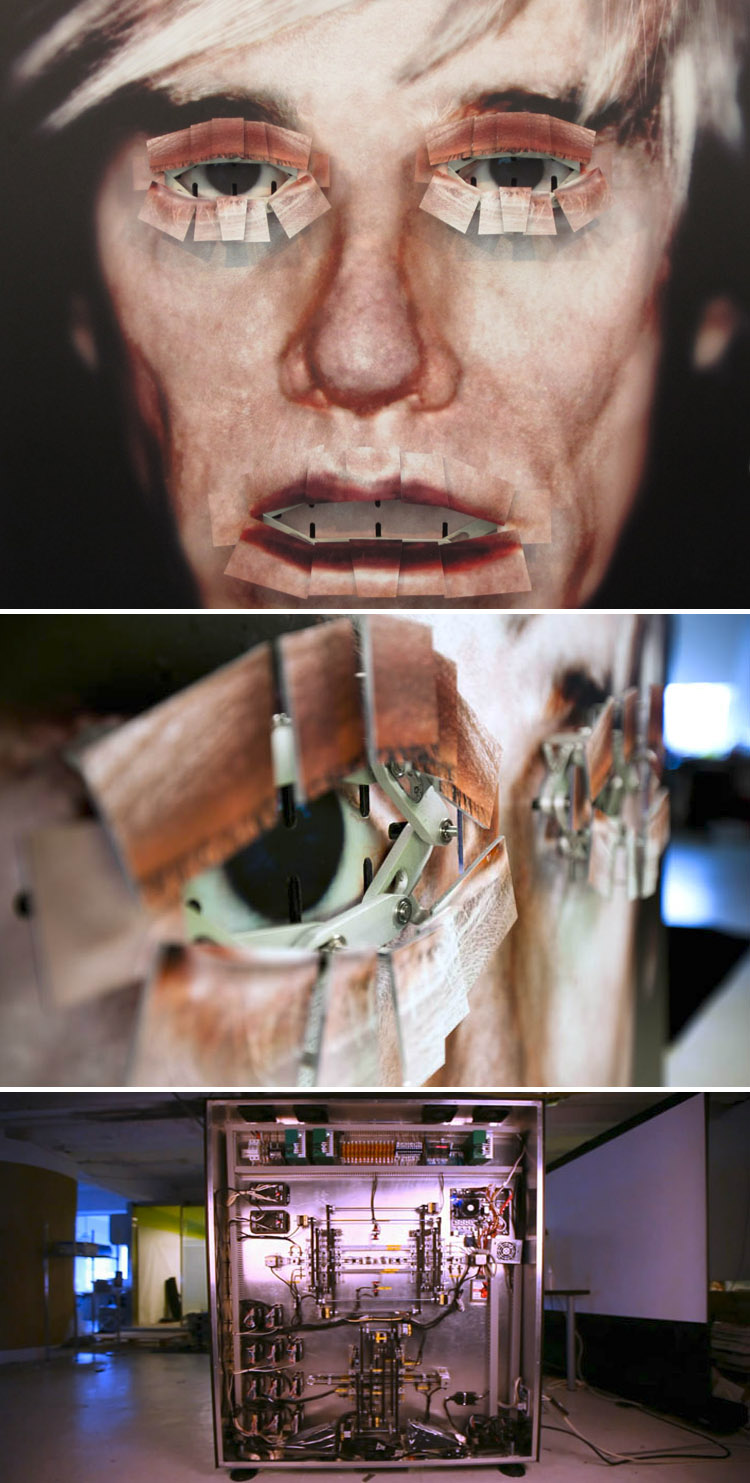
Last year at the Armory Show, here in NYC, I saw this work but didn’t make note of the artist’s name. Thanks to the amazing Google images, I was able to upload my photo and end up on Hsin-Chien Huang’s website. Read My Lips (as the piece is titled) is an interactive sculpture of Andy Warhol’s face with mechanical eyelids and lips. Taiwan-based artist Huang (who has a degree in Mechanical Engineering from the National Taiwan University, in addition to a B.S. from Art Center College of Design in Pasadena and an M.S. from the Illinois Institute of Technology, so he really combines science, technology and art) created this work as an experiment, inspired by the Facebook pages of dead artists and their Facebook “friends”. The computer that controls the eyelid and lip movements is connected to the internet. The work posts questions of artistic relevance and social significance to its Facebook page every week and friends can post responses. Using a text-to-speech engine, the artwork then reads back the responses silently.

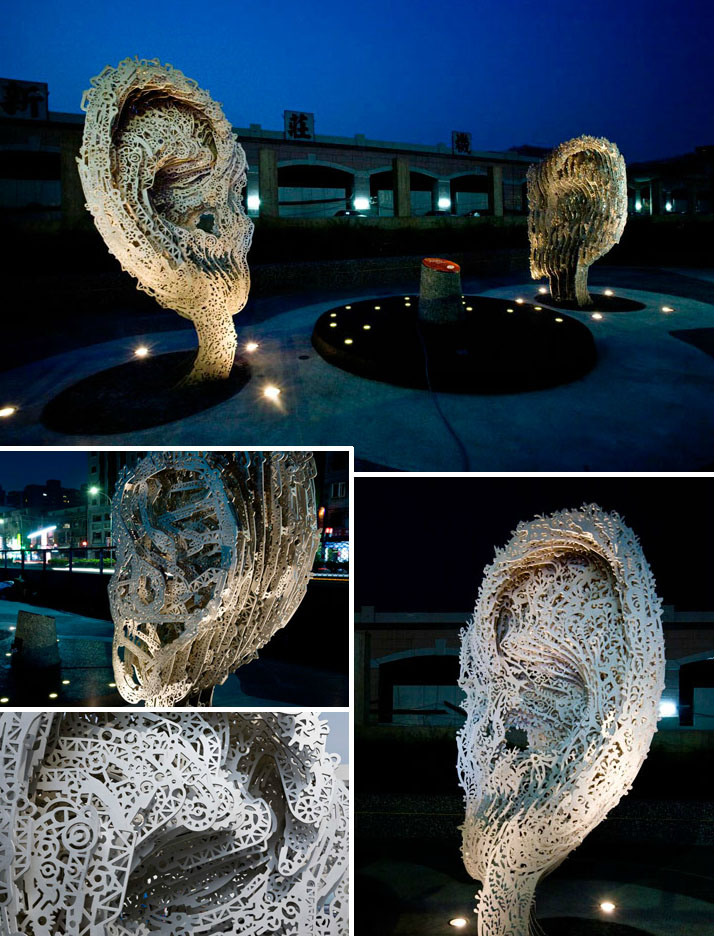
An interactive public art project from 2010 is shown in the bottom group of photos. Listening is located in a Lo-Sheng sanatorium which used to be a leprosy house in 1929. Between the two large ears made of laser cut steel, is a platform in the space representing the brain. Pedestrians can walk onto the platform and reflect on the sounds they used to hear in the location, as well as the current sounds. There are also 15 QR-code labels on the ground which viewers can use to watch videos with their smartphones.

You can see Read My Lips in action in the video below.

Nils Völker: Seventy Five

Inflatable installation, Transjourney Exhibit, Kuandu Museum, Technology, cool contemporary artInflatable installation, Transjourney Exhibit, Kuandu Museum, Technology, cool contemporary artInflatable installation, Transjourney Exhibit, Kuandu Museum, Technology, cool contemporary artInflatable installation, Transjourney Exhibit, Kuandu Museum, Technology, cool contemporary artClick to enlarge

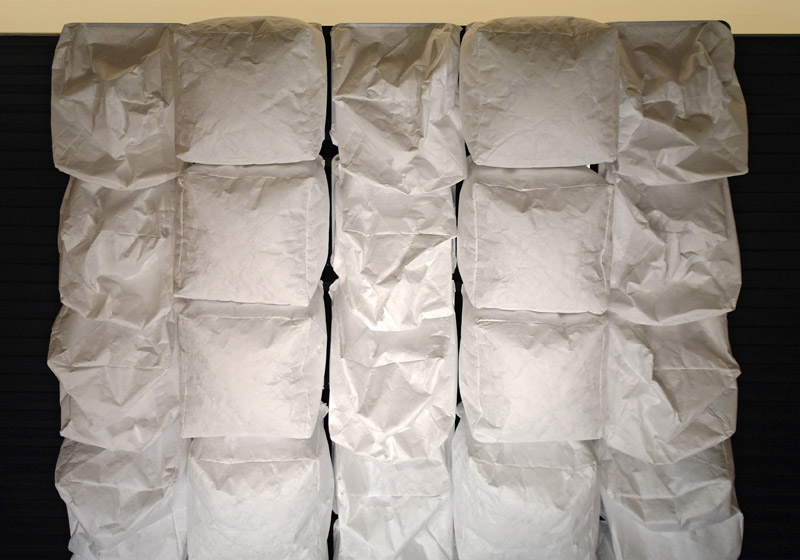
Here is the latest from German artist Nils Völker (previously here and here.) One of his largest pieces to date, Seventy Five measures eight meters in height and traverses three floors at the Kuandu Museum of Fine Arts as part of their Transjourney exhibition going on in Taipei through February 19, 2012. This time the inflatable “cushions” are made of Tyvek, inflated by cooling fans via custom made electronics. You can watch it in action below.

Judy Chicago: Sublime Environment

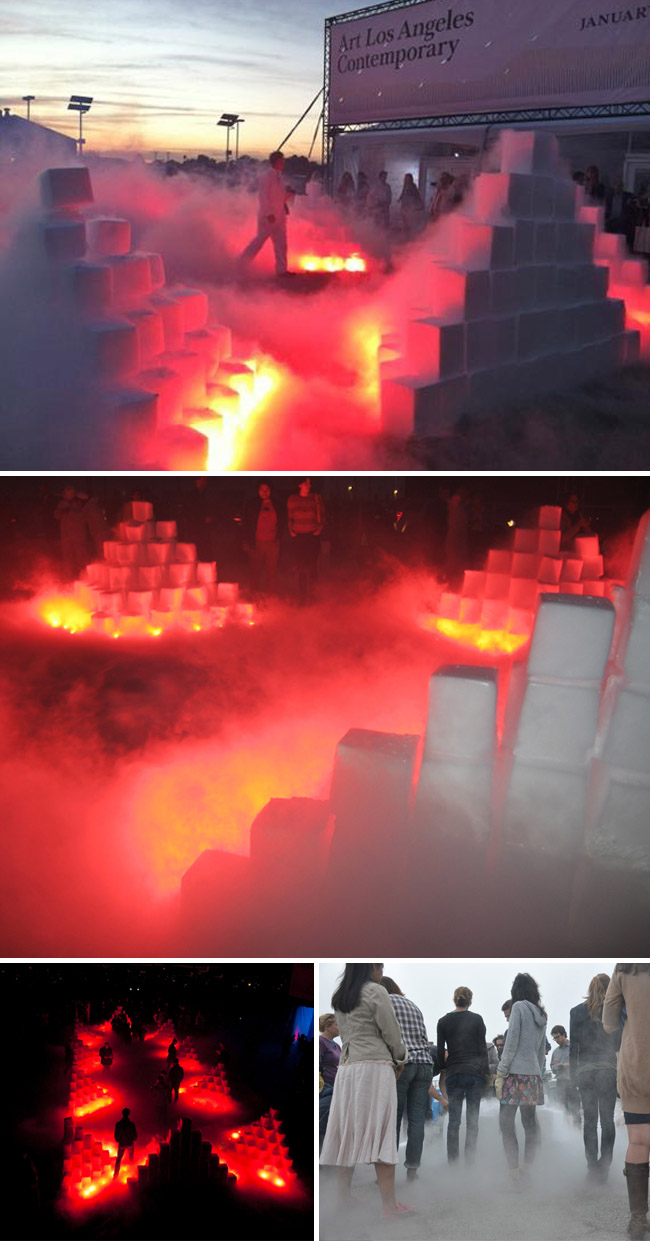
Sublime Environment, art installation, dry ice and flares, cool art, Art Los Angeles Contemporary 2012Sublime Environment, art installation, dry ice and flares, cool art, Art Los Angeles Contemporary 2012PacificStandardTimePerformance_PublicArtFest, Art Los Angeles Contemporary 2012, cool installationJudy Chicago's 1968 performance art installation, disappearing Environment, recreated as Sublime EnvironmentLast Thursday night, as part of the opening party for the Art Los Angeles Contemporary 2012 and Pacific Standard Time Performance and Public Art Festival, activist artist Judy Chicago re-staged her 1968 performance piece Disappearing Environments as Sublime Environment. Using thirty-seven tons of dry ice and red flares the performance was staged outside in a parking lot near Santa Monica’s Barker Hangar. No one knew how long it would take to melt, or when the ice would stop smoking. Apparently, it was still smoking on Saturday night, but by Sunday the installation had, for all practical purposes, “disappeared.”

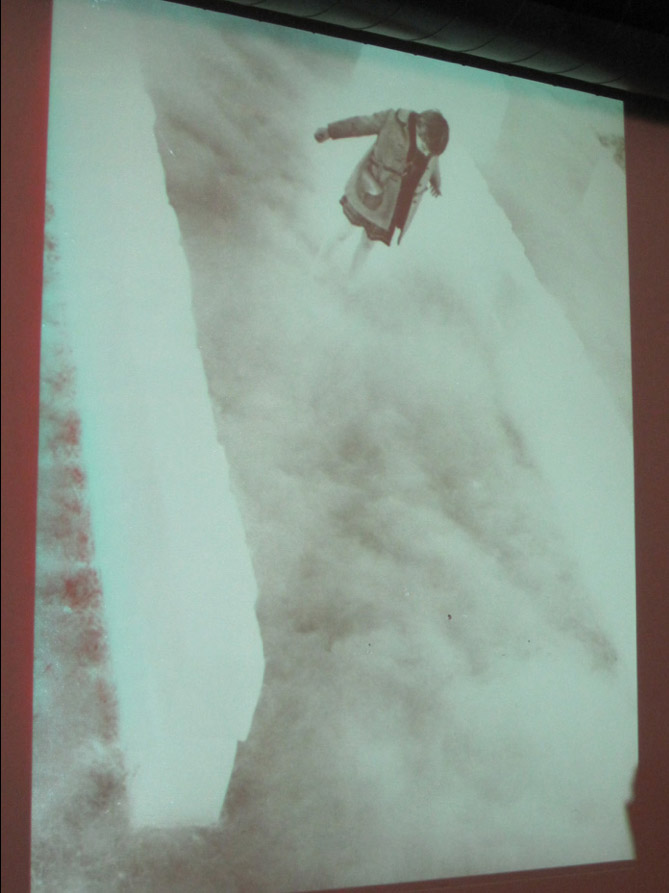
Judy Chicago’s career now spans over five decades. Throughout, she has been committed to the power of art as a vehicle for intellectual transformation and social change, especially pertaining to women’s rights. The original staging of Disappearing Environments (shown in bottom photo) took place in 1968 when Chicago teamed with artists Lloyd Hamrol and Eric Orr to produce the original installation in, a then still-under-construction Century City, in the shadow of a department store, creating a contrast between a minimalist piece and consumerism in America.

Photos courtesy of Judy Chicago by Donald Woodman; Starkwhite; Michelle Rozic; and UndercoverLA.

via artnet

Meg Hitchcock: Typographic Collages

Typography, collage, texts, hymns, Brooklyn artist, installation, contemporary artTypography, collage, texts, hymns, Brooklyn artist, installation, contemporary artTypography, collage, texts, hymns, Brooklyn artist, installation, contemporary artTypography, collage, texts, hymns, Brooklyn artist, installation, contemporary artTypography, collage, texts, hymns, Brooklyn artist, installation, contemporary artClick to enlarge

Brooklyn artist Meg Hitchcock creates elaborate type collages using texts from holy books of all religions. Through an incredibly labor-intensive process, Hitchcock painstakingly cuts out individual letters from one text and assembles them to form a different text in a variety of patterns and shapes.

From the artist’s statement:
I select passages from holy books and cut the letters from one passage to form the text of another. For example, I may cut up a passage from the Old Testament of the Bible and reassemble it as a passage from the Bhagavad Gita, or I may use type from the Torah to recreate an ancient Tantric text. A continuous line of text forms the words and sentences in a run-on manner, without spaces or punctuation, creating a visual mantra of devotion. By conceptually weaving together the sacred writings of diverse traditions, I create a multi-layered tapestry of inspired writings, all pointing beyond specifics to the human need for connection with the sacred.

You can click on the images to see more detail. At a distance they almost look like chains. You can see more of Hitchcock’s works here, here, and here. You can see her in action, complete with neck pillow, in the video below, putting up her first installation. It’s a pretty insane process!

via Projective City

Doug Wheeler: SA MI 75 DZ NY 12

Light art installation, infinity space, cool installation, cool art, Doug Wheeler, NYC, 2012Light art installation, infinity space, cool installation, cool art, Doug Wheeler, NYC, 2012, collabcubedLight art installation, infinity space, cool installation, cool art, Doug Wheeler, NYC, 2012, collabcubedClick to enlarge

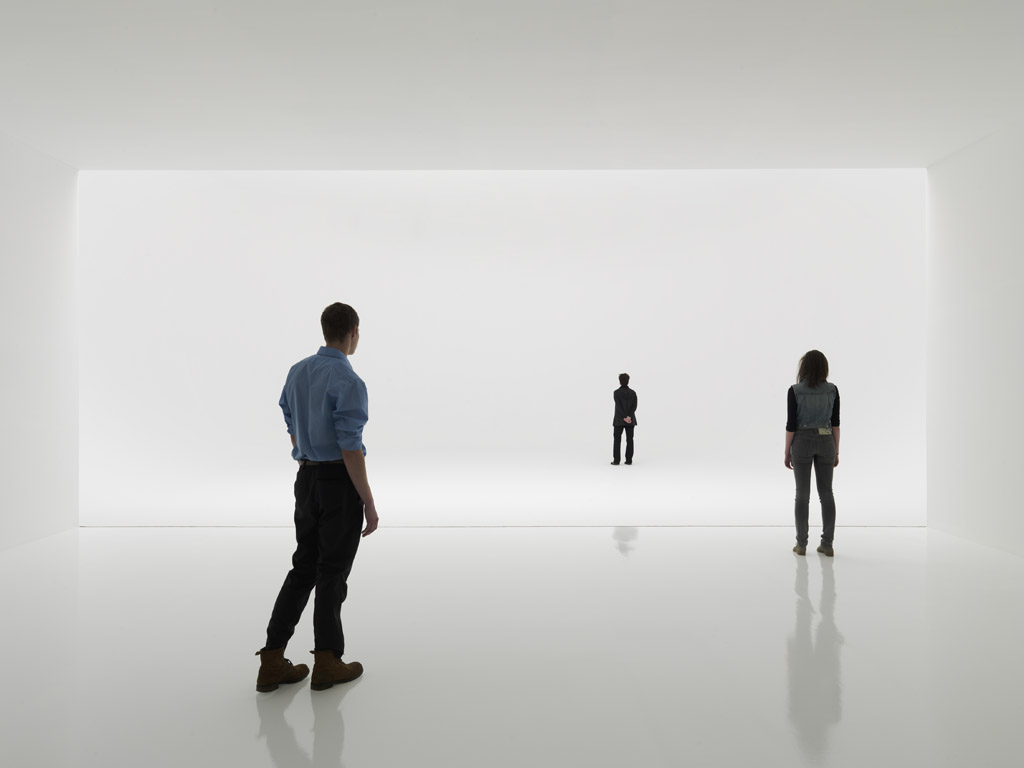
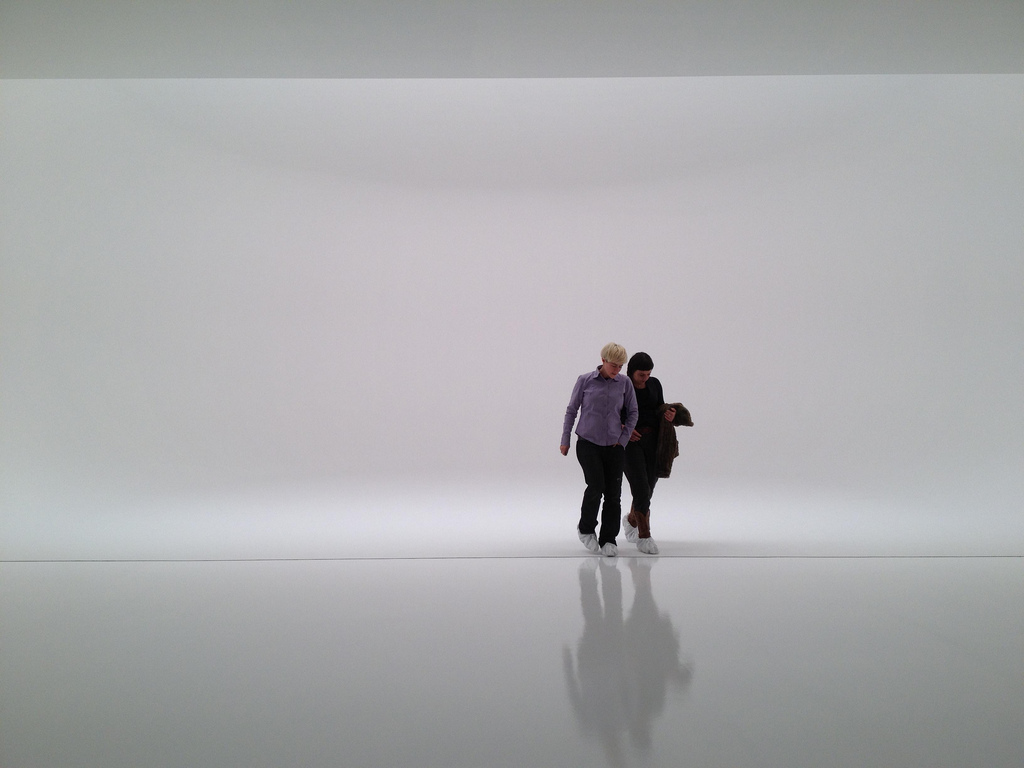
After making a special trip with Em on Saturday, in the snowy cold, to see Doug Wheeler’s light installation titled SA MI 75 DZ NY 12 at the David Zwirner Gallery, we left promptly due to the crowded waiting area we descended upon and the one-hour wait ahead of us — I’m often deluded into thinking that I’m the only one who has these great ideas in NYC…but really, who goes to Chelsea on a frigid, snowy weekend? Apparently: a lot of people. — So, today, a Tuesday afternoon, I thought I’d quickly pop in but, alas, there would be no popping in. There was still a half-hour wait but, seating was available and the musical-chairs-style line kept me active.

Now, back to the exhibit: Amazing. The bright white light installation is the closest thing to what, I imagine, standing in a cloud might feel like. The first impression is that of a flat wall created by light. As one reluctantly steps forward—wearing the white booties provided by the gallery to keep things pristine—it feels as though you’re stepping into the void. The minute the light box is entered, all depth perception disappears. There’s a dense fog-like effect that’s created with light and white paint. The walls have been curved and the lack of hard lines or horizon intensifies the confusing sensation. The result is at first a little unsettling, but the incredible coolness instantly follows. The light in the box fluctuates emulating the light of day, from dawn to dusk, in a 32-minute loop.

If you’re in New York, you might want to check it out. Doug Wheeler’s installation is on view at David Zwirner through February 25, 2012. I recommend a weekday, if possible, for a shorter wait.
Photos courtesy of David Zwirner; Carolina A. Miranda; and soulellis’ flickr.

Pod Exhibition Pavilion: Studio Nicoletti

Pod Exhibition Pavilion, 2011 architecture, Studio Nicoletti and Hijjas Kasturi, MalaysiaPod Exhibition Pavilion, 2011 architecture, Studio Nicoletti and Hijjas Kasturi, MalaysiaPod Exhibition Pavilion, 2011 architecture, Studio Nicoletti and Hijjas Kasturi, MalaysiaClick to enlarge

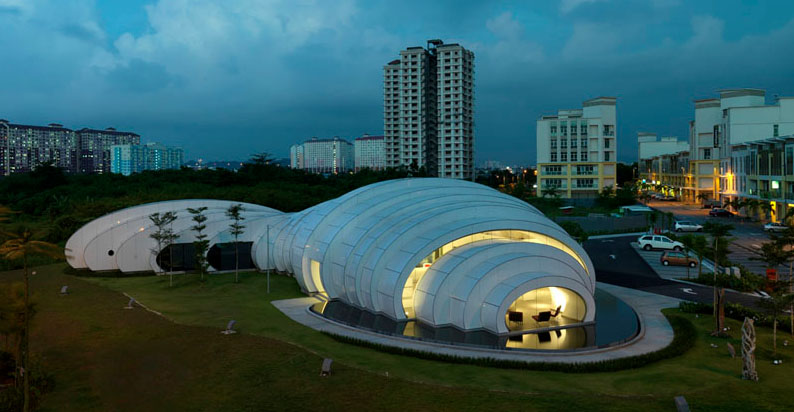
Slightly west of Kuala Lumpur in Malaysia, a large urban development is underway. The developer behind the project wanted the on-site offices and sales showroom to be an iconic structure that would reflect the architectural style of the upcoming development. Studio Nicoletti Associati in Rome in conjunction with Hijjas Kasturi Associates in Kuala Lumpur, came up with The Pod, inspired by water droplets in nature, the spherical structure is formed with a series of elliptical sections of varying width and height.

Inside, the pavilion is divided into two zones: one dedicated to the office space and the other contains the main showroom. Fabricated from tubular steel members the exterior skin is made of reflective aluminum panels causing its color to change depending on the sun or artificial lighting.

via The Archhive

The RedBall Project: Kurt Perschke

Interactive art, Large Red ball placed in different cities around the world, Fun art installationInteractive art, Large Red ball placed in different cities around the world, Fun art installationInteractive art, Large Red ball placed in different cities around the world, Fun art installationClick to enlarge

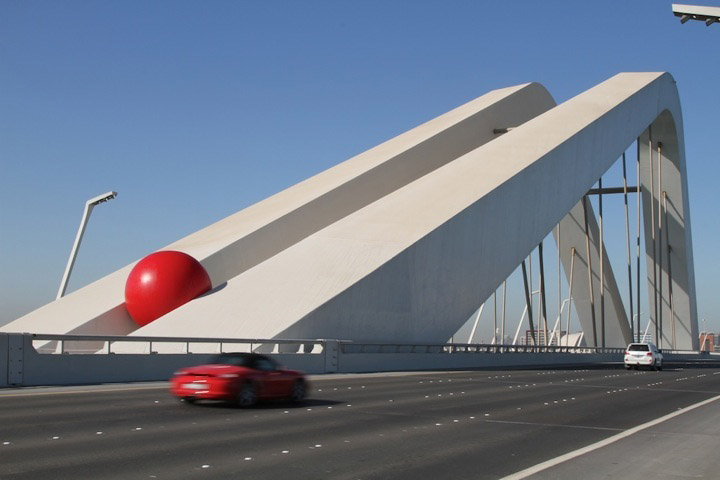
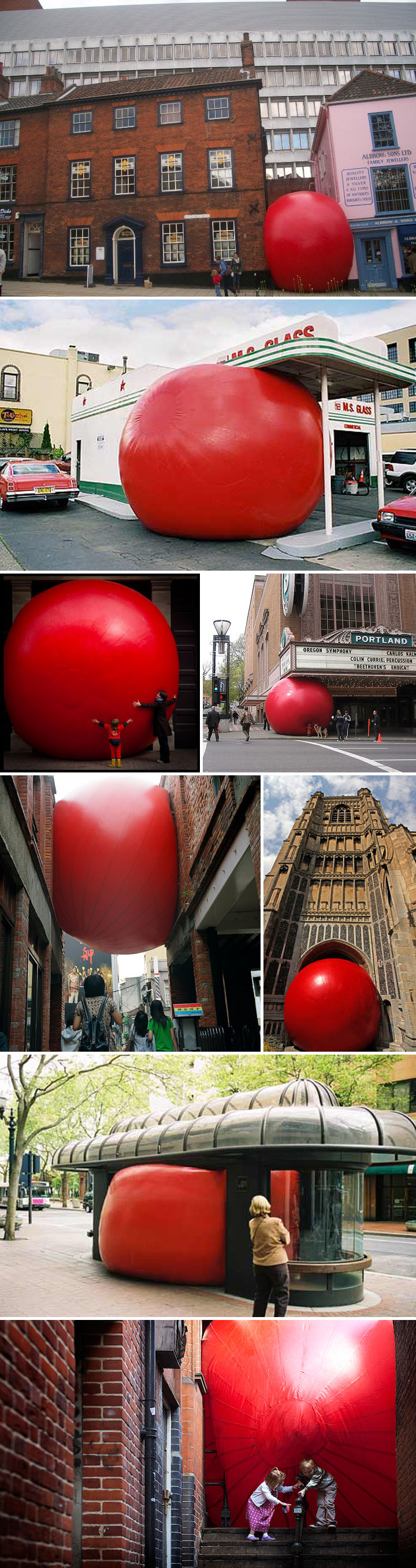
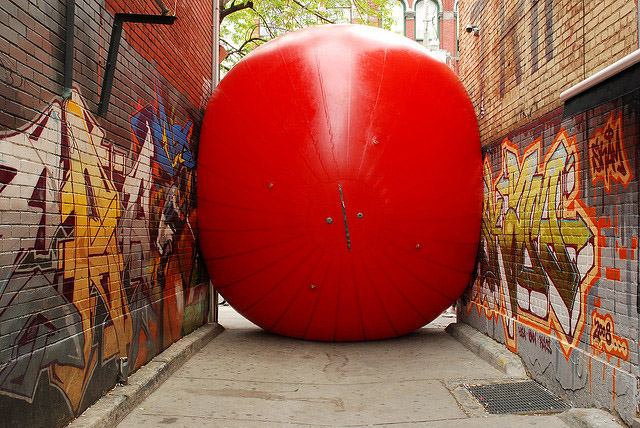
This is such a fun project! Though it’s been traveling the world for a few years, this is the first I’ve heard of it. The RedBall Project by New York based artist Kurt Perschke, consists of a series of temporary installations within a city over a span of a couple of weeks. Perschke finds interesting, and somewhat humorous, locations (though, a giant red ball in any location automatically evokes a certain amount of humor) that are often taken for granted. The previously neglected spaces come to the foreground highlighting the nooks and crannies of urban life.

For Perschke, the core of the project’s goal is the invitation to the public to engage and unleash their imagination. “Every time a passerby says – ‘You know, I know the perfect place to put it!’ – RedBall has succeeded in creating a moment of imagination.”

The project has taken place in many cities including Barcelona, Taipei, Chicago, Toronto, Sydney, Portland and most recently Abu Dhabi. Up next: Perth, from February 10 – March 3rd. Hey Kurt! How about bringing the project home to NYC?! I know the perfect place…

Here’s a short video by Tony Gaddis of the project in Chicago:

Photos are all from RedBall’s Facebook and Flickr Pool (PJ Mixer, PersonnelPeople, Swanky, Leo Reynolds, Duncan Kerridge)

via Huffington Post and MyModernMet

SKIN: Pavilion of Knowledge

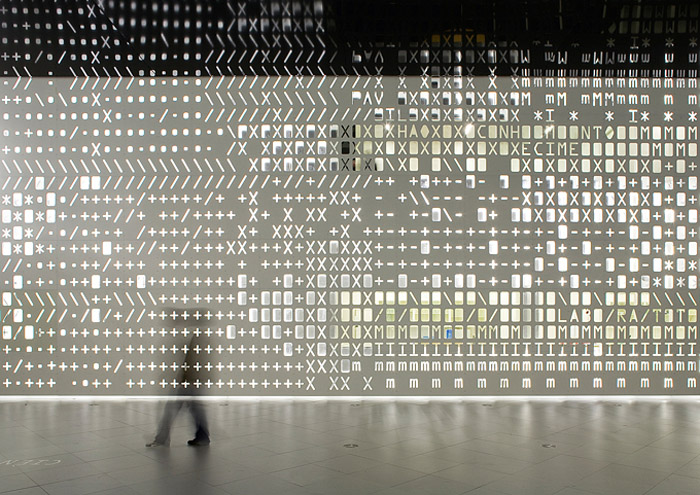
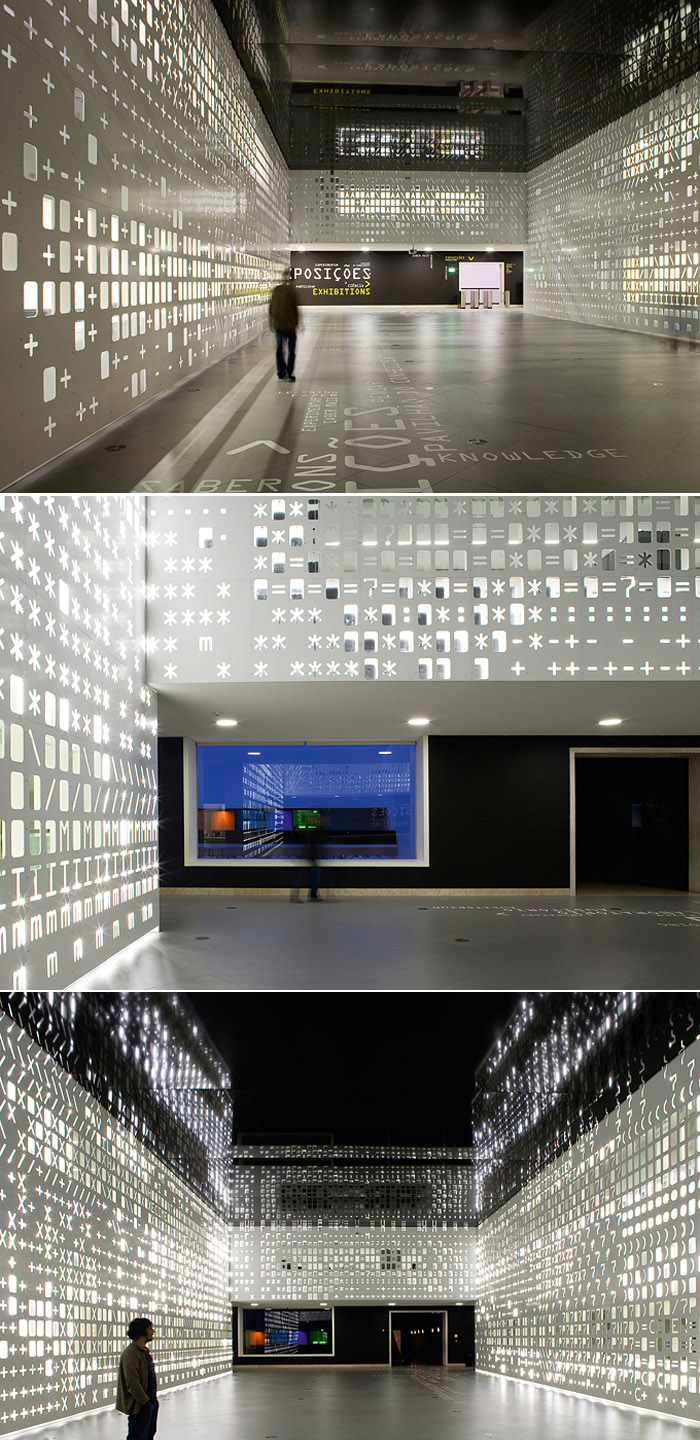
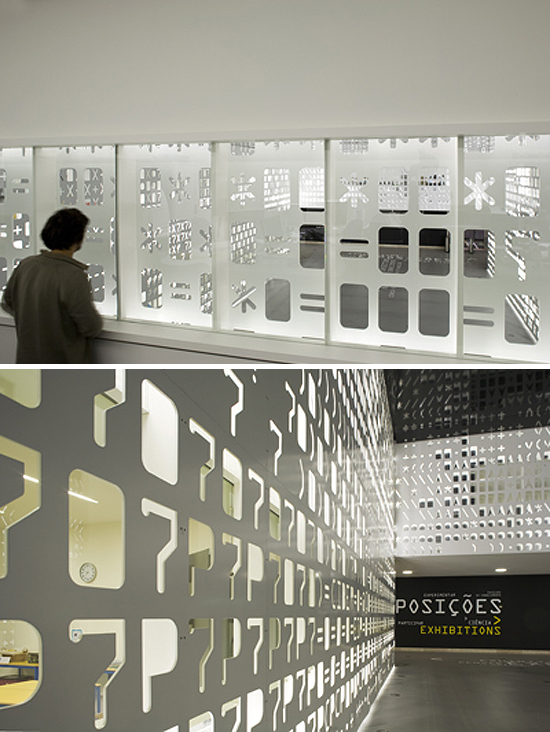
cool exhibit design, Installation in interactive science museum, Lisbon, P-06 Ateliercool exhibit design, Installation in interactive science museum, Lisbon, P-06 AtelierPavilion of Knowledge, enviornmental graphics, Lisbon, P-06 Atelier, typography, installationThe Pavilion of Knowledge in Lisbon is an interactive science and economy museum. The design firm P-06 Atelier, in collaboration with architect João Luís Carrilho da Graça, created a “skin” with a state of the art touch transforming the space into a playful and evocative landscape, employing a perfect mix of bold graphics, tactile patterns and typography.

The moveable walls have the American Standard Code for Information Interchange cut out of them as an analogy for the museum’s intention of sharing information. Through the different sized stencils, both noise and the white LED light are filtered differently at different points of SKIN.

I’d love to see this in person. Looks like a great effect.

via red dot design

Roskilde Festival Plywood Dome

plywood dome, cool architecture, hexagonal structure, henrik almegaard, Festival structureplywood dome, cool architecture, hexagonal structure, Festival structure, Danish designplywood dome, cool architecture, hexagonal structure, Festival structure, Danish designInside and out this wooden dome, designed by Danish architect Kristoffer Tejlgaard and engineer Henrik Almegaard, looks great. Made up of 240 plywood hexagons, this geodesic dome was created for the 2011 Roskilde Festival in Denmark and disassembles into sections.

The futuristic shape, as well as those skylights that jut out and add texture, give the structure a very cool look.

You can watch a video of its construction here.

via intoform

Chaos at Zellig: Philip Watts Sculpture

cool installation, 5-story sculpture, Custard Factory, England, collabcubedcool installation, 5-story sculpture, Custard Factory, England, collabcubedcool installation, 5-story sculpture, Custard Factory, England, collabcubedClick to enlarge

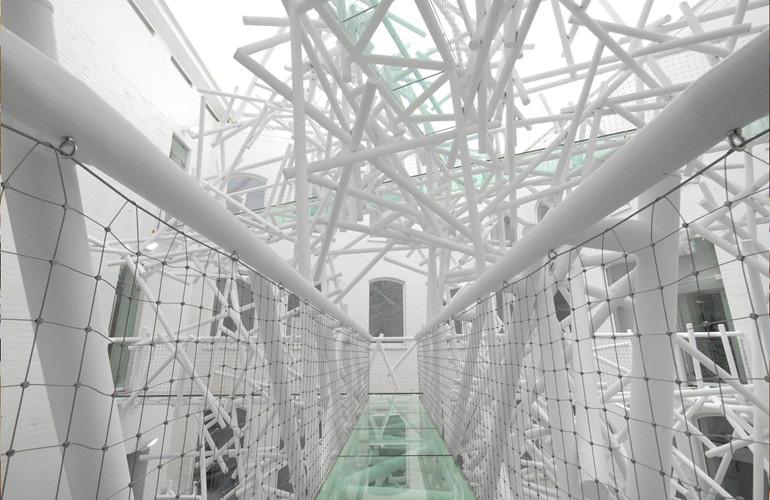
This really caught my eye. In the center atrium of Zellig — a building designed to provide space for young creative enterprises and galleries as part of the Custard Factory redevelopment in Birmingham, England — is a unique five-story-high sculpture designed by Philip Watts Design titled Chaos. Though at first glance the piece does give the appearance of a chaotic mass, in actuality it is a functional art installation designed to connect the courtyard at three levels. Made with 2000 meters of steel tubing and containing three glass bridges, it must be quite spectacular to find oneself intertwined in the sculpture.

via knstrct via notcot

Túlio Pinto: Balancing Acts

Brazilian contemporary sculpture, concrete slabs balanced with cloth, collabcubedBrazilian contemporary sculpture, balloon installation, cool, fun, collabcubedBrazilian contemporary sculpture, cubes balanced with cloth straps, collabcubedBrazilian contemporary sculpture, installation, balancing, balloons, concreteClick to enlarge

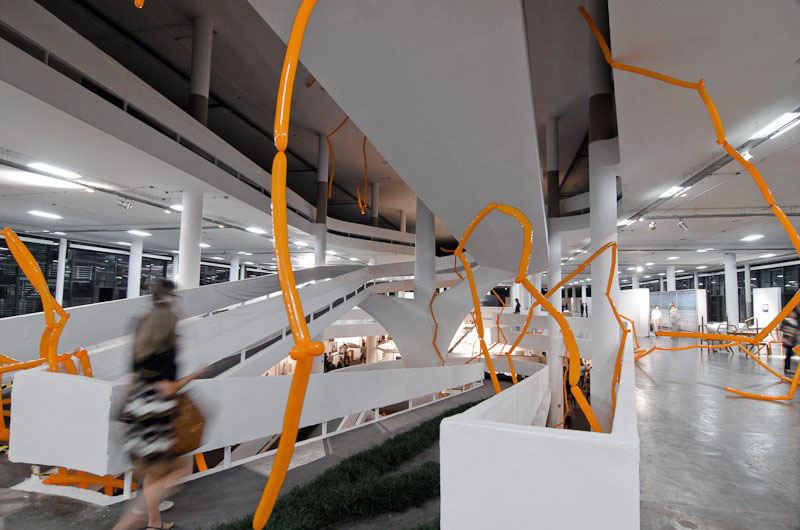
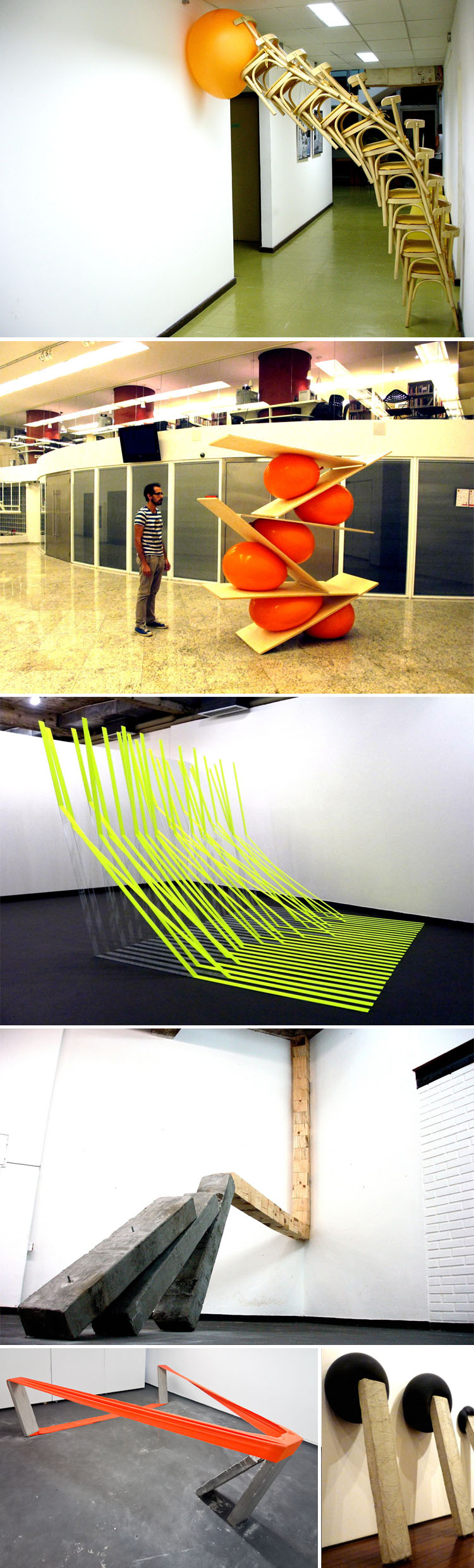
Looking at his work, a person might not want to get too close to one of  Brazilian artist Túlio Pinto’s sculptures or installations. Concrete slabs precariously balanced and held in position by a piece of fabric or balloon doesn’t inspire a lot of confidence, yet they definitely impress.

Pinto lives and works in Porto Alegre where, in addition to his installations, he paints. He co-founded the artist studio Subterrânea and is a curator of Brazilian contemporary art.

Photos courtesy of the artist and Andersonastor.

Seth Wulsin: Animas

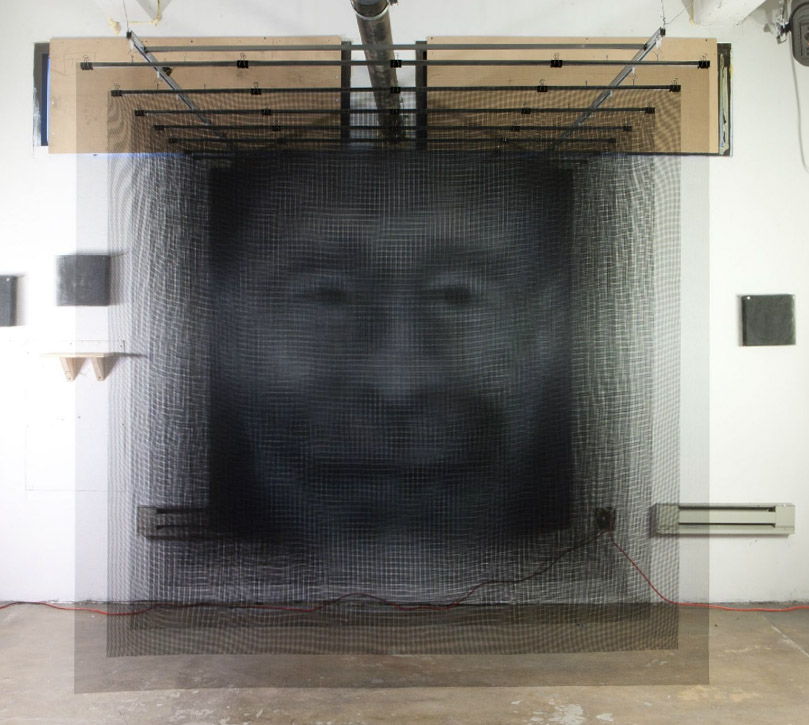
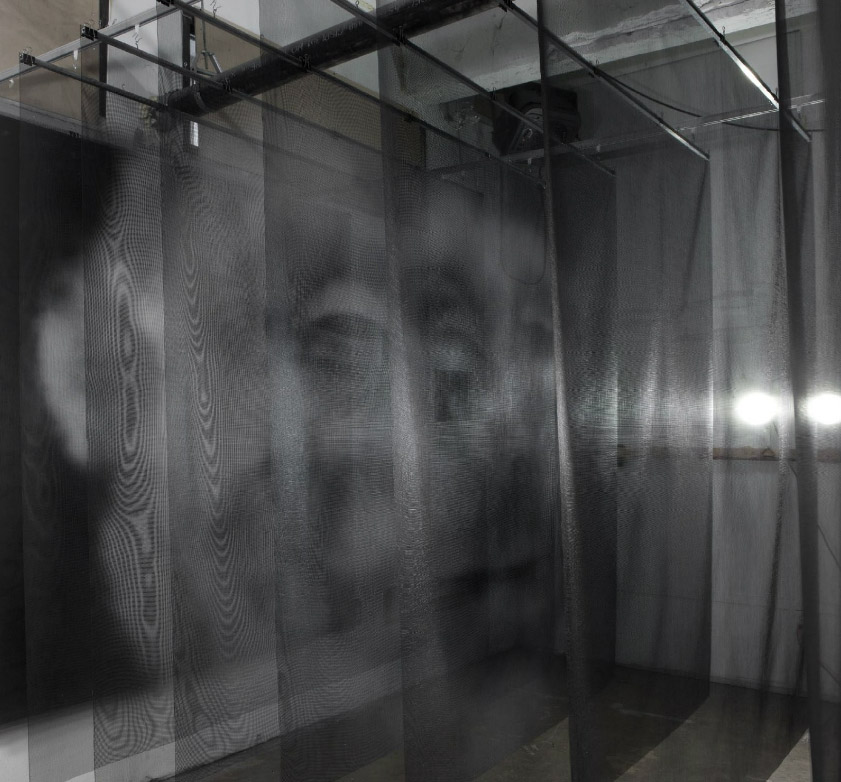
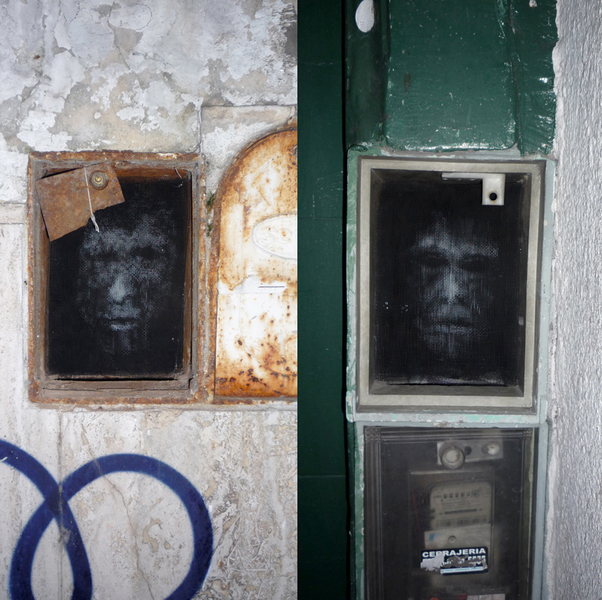
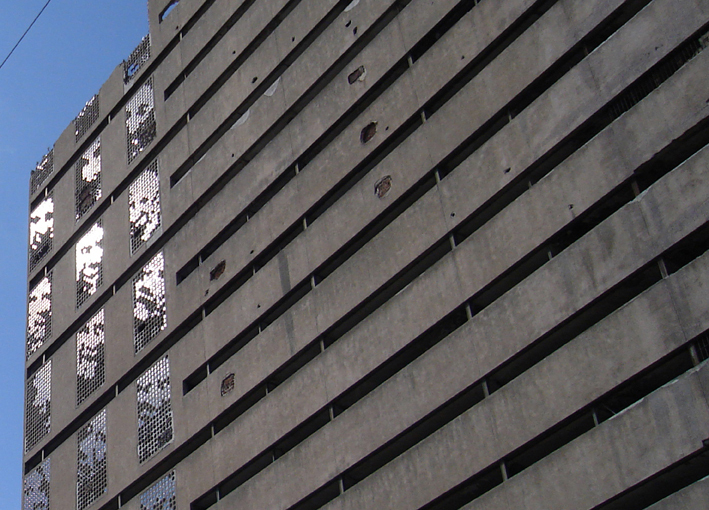
Animas, multi-screen installations, Seth Wulsin, Brooklyn artist, collabcubedAnimas, multi-screen installations, Seth Wulsin, Brooklyn artist, collabcubedSculpture, multi-screen, multi-dimensional heads, mesh sheets, Brooklyn artistSculpture, multi-screen, multi-dimensional heads, Buenos Aires street artSeth Wulsin, Installation, Buenos Aires Prison, Windows as pixels, cool art effectClick to enlarge

I saw one of Seth Wulsin’s Animas installations a few years ago in his studio as part of the Dumbo Arts Festival in Brooklyn. I was very impressed at seeing these large-scale screens hanging from the ceiling that individually just looked like plain screens, but when seen all together from the front, an almost holographic, three-dimensional, ghost-like head would appear floating on the screens.

Wulsin works primarily with space and light through these large-scale, site-specific, ephemeral sculptural installations. His Animas (soul in Latin) series explores the interior dimensions of mind and soul in the physicality of space. Here is how Wulsin describes his Animas sculptures:

Each sculpture has three kinds of inter-dimensional space that all occupy the same spatial coordinates: the concrete, volumetric space of the screens; the pictorial/volumetric space of the images produced by the paint on the screens; and the optical interference generated between the screen grids when two or more planes overlap (without coinciding) , an optically real, but tactically non-existent space.
Also very interesting are his works on the streets of Buenos Aires. The photo second from bottom, are two small Animas embedded in a building front, and the bottom photo is from his work 16 Tons, using the prison window grids of a Buenos Aires prison as a pixelated screen. By breaking out certain windows, images of faces appeared reflected in the remaining panes. Very cool and creepy.

Julius Popp: Bit.fall, Bit.flow, Bit.code

Bit.Fall, technology and art, code, waterfall with type and images, contemporary artBit.Flow, technology and art, code, typography, word art, tubes, contemporary artBit.Fall, Bit.code, technology and art, code, waterfall with type and images, contemporary artClick to enlarge

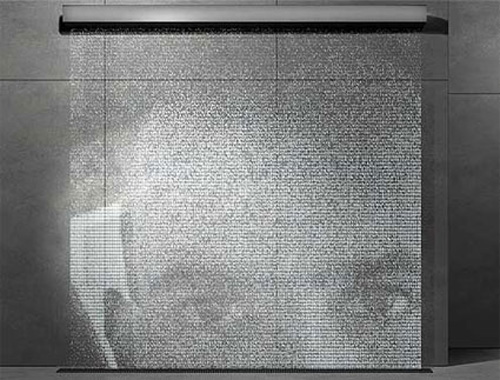
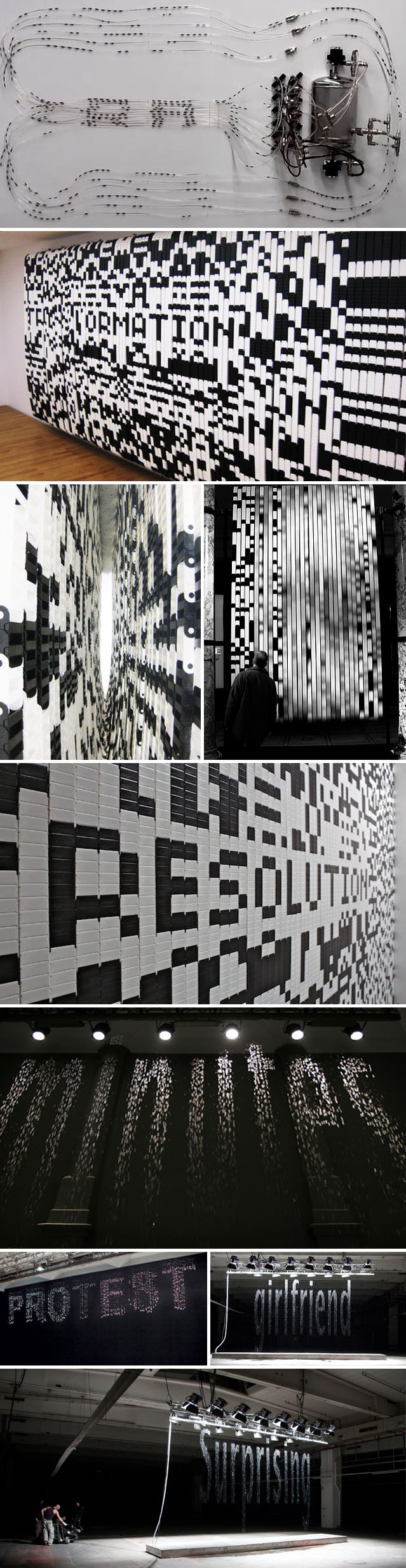
German artist Julius Popp uses technology to create work that reaches across the boundaries of art and science. Three of his works, Bit.fall, Bit.flow, and Bit.code are pictured above. Bit.fall is an installation that in some cases displays images and, in others, words selected from the internet via drops of falling water spurting out from 320 nozzles controlled by computer software and electromagnetic valves.
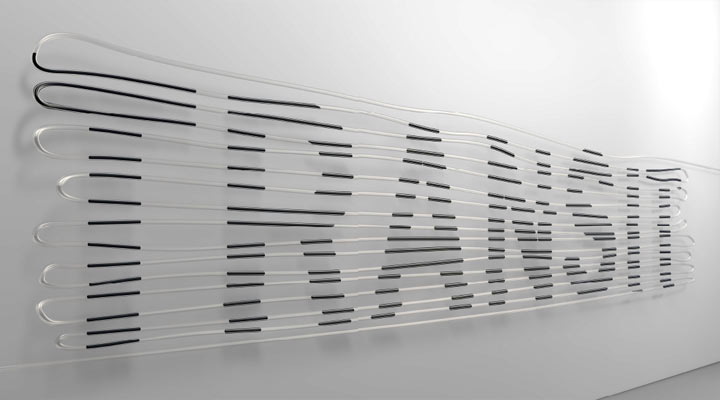
In Bit.flow Popp pumps liquid into a 45-meter long tube on a wall. A software program sets out a pattern which only at certain points forms readable forms or letters which then disintegrate into chaos again.

Lastly, Bit.code is made up of plastic chains with black and white pieces which act as pixels. Controlled by computer software, the pixels move next to each other displaying frequently used key words, at certain points, taken from recent web feeds.

All three appeal to me, yet are definitely appreciated more in person. The videos of each below are the next best thing, unless you are in Jerusalem, in which case you can see Bit.fall in the current exhibit Curious Minds at the Israel Museum until April, 2012.

Elements of these installations bring to mind Daniel Rozin’s work (see post) and Christopher Baker’s Murmur Study (see post).

Photos: Artnews, Desxigner, Wallpaper, and Onedotzero’s flickr

Lee Boroson: Inflatable Installations

contemporary art installations, balloons, fabric sculpture, Lee Borosoncontemporary art installations, balloons, fabric sculpture, Lee Borosoncontemporary art installations, balloons, fabric sculpture, Lee BorosonClick to enlarge

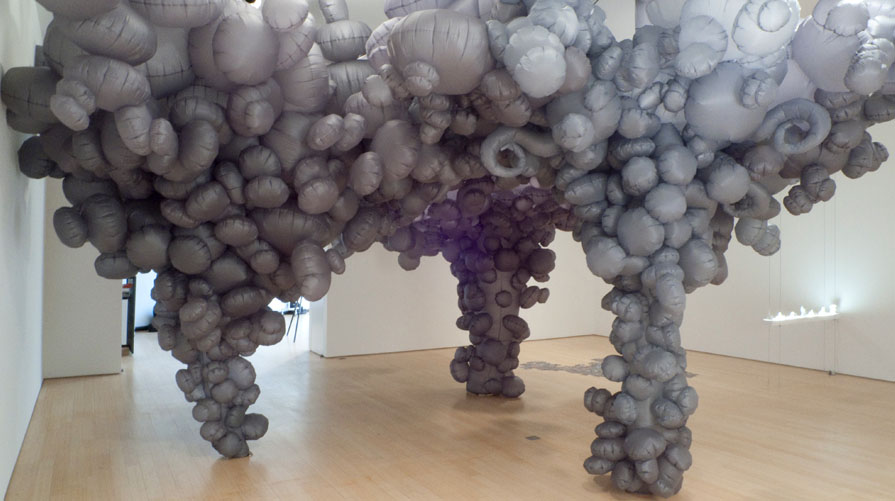
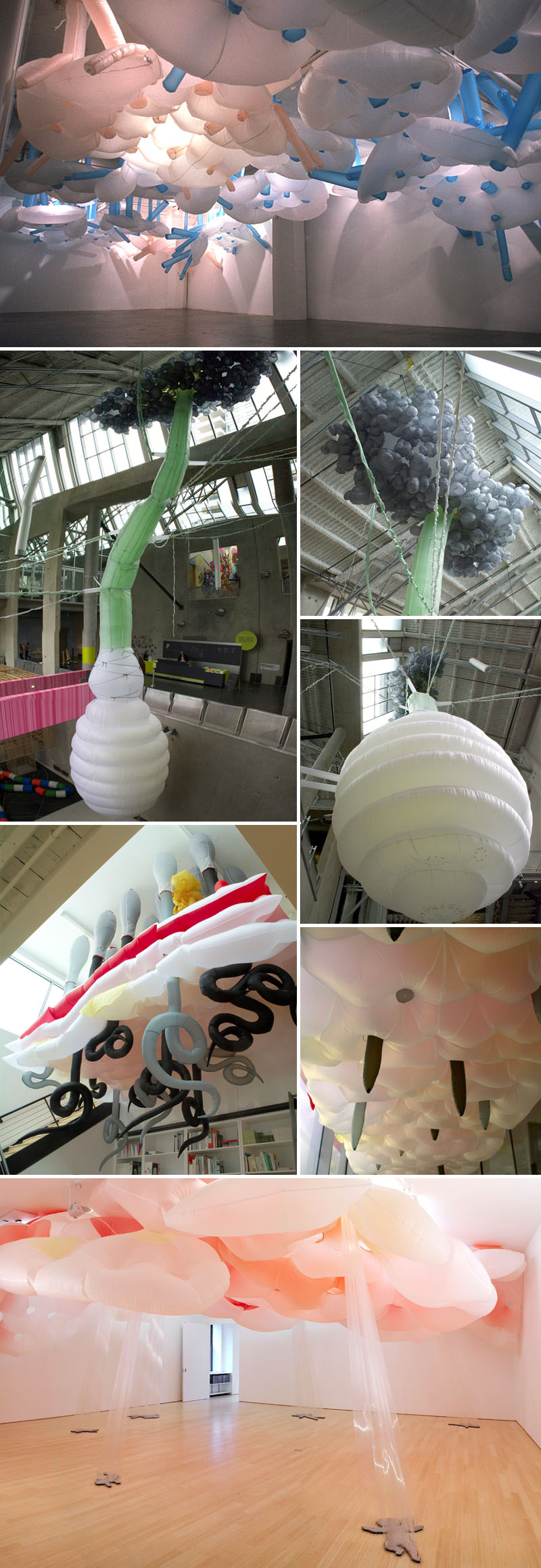
I love these. All of them. Lee Boroson, based in Brooklyn, has been creating these fun large inflatable installations since the 90s. Huge nylon structures filled with air and, for the most part, suspended from the ceiling, Boroson’s skills in engineering as well as his playfulness come together resulting in these very appealing dreamlike works.

From top to bottom:
Canopy, based on images of volcanic eruptions; Pleasure Grounds; Lake Effect; Giant’s Way; Graft; Integument, based on a 3d medical illustration of a cross section of human skin and depicts hair, follicles, pores, veins, arteries and dermis; and Liquid Sunshine.

Boroson currently has an installation titled Lunar Bower at The Phillips Collection in Washington, DC, and will have a large solo project at Mass MoCA in December 2013.