Empty Sky: Jersey City 9/11 Memorial

911 Memorial, New Jersey, Names, Frederic Schwartz Architects, Sculpture, landscape architecture911 Memorial, New Jersey, Names, Frederic Schwartz Architects, Sculpture, landscape architecture911 Memorial, New Jersey, Names, Frederic Schwartz Architects, Sculpture, landscape architecture9/11 New Jersey Memorial, Frederic Schwartz architects, collabcubed, monizaClick to enlarge

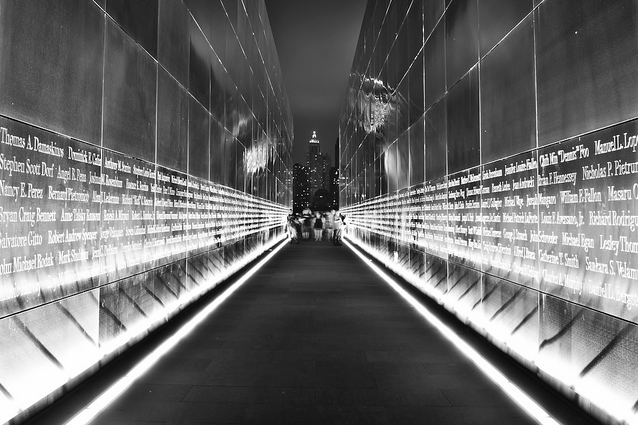
Though I haven’t yet visited the 9/11 Memorial down at the World Trade Center, it has been so thoroughly documented that I am not only aware of its existence, but also have a reasonably good idea of what to expect when I do finally go in person. The same cannot be said of the New Jersey memorial, Empty Sky, on the other side of the Hudson River, honoring the 744 victims from New Jersey who lost their lives at the Twin Towers on September 11th, 2001. That is until now, that I’ve come across its existence.

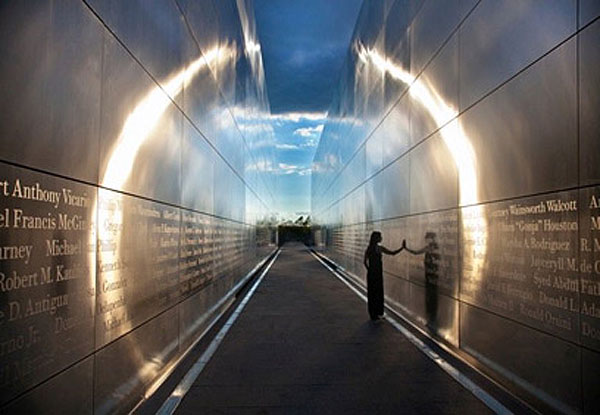
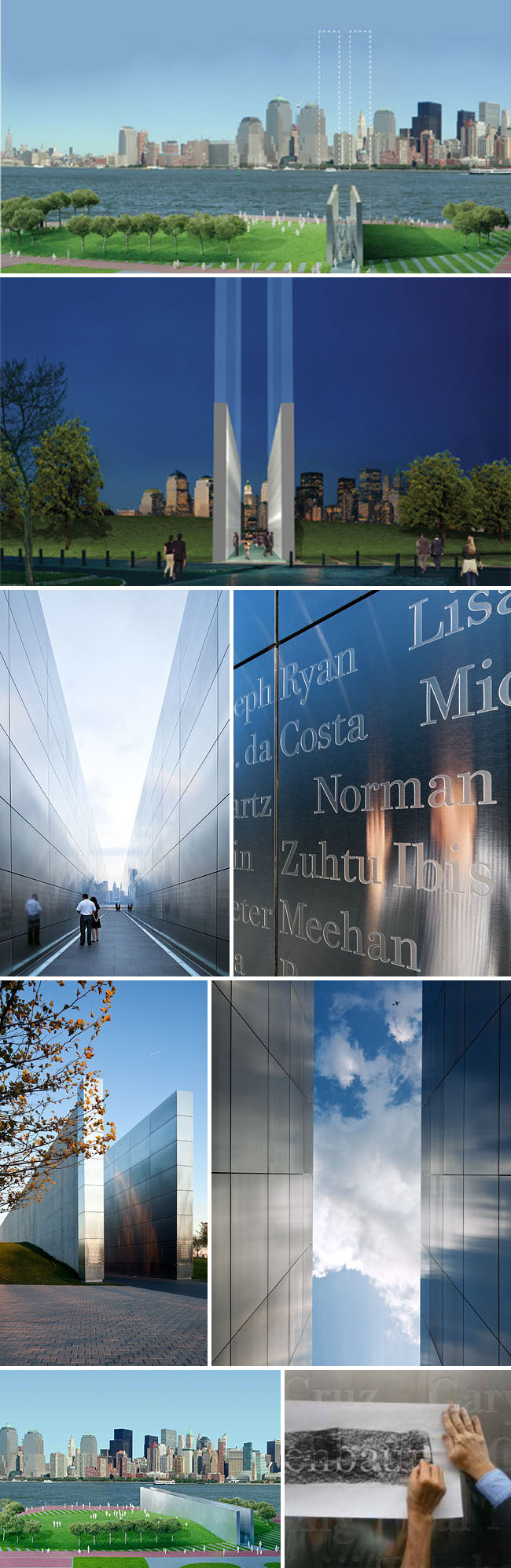
This simple yet striking memorial, designed by Frederic Schwartz Architects, consists of twin cement and stainless steel walls, 12 feet apart, 30 feet high and 210 feet long, that reflect the changing light of day creating a halo effect at dusk and dawn as the sun hits the parallel walls. The corridor created by these two walls dramatically draws the eye to the vacant (empty) space where the towers once stood. Working with graphic designer Alexander Isley, it was decided to engrave the names of the victims in ITC Bodoni 12 in a larger size than is usual in memorials, using a cap height of 3.6 inches, spacing the names out so that none of them are broken, and allowing for the families of the victims to easily create rubbings of their names, if they so choose. Other consultants on the project include Ove Arup & Partners Structural Engineers and Arnold Associates as the landscape architects.

The project was unveiled this past September. I’ll have to pay a visit to this memorial in addition to the inverted fountains downtown.

Photos and images courtesy of the architects; Ari Burling Photography; David Sundberg/Esto; and Moniza’s flickr

via sedg
Sergio Garcia: Tricycles Reinvented

fun sculptures of tricycles, distorted tricycles, Sergio Garcia, Scope Miami, collabcubedfun sculptures of tricycles, distorted tricycles, Sergio Garcia, Scope Miami, collabcubedfun sculptures of tricycles, distorted tricycles, and desks, fun art, collabcubedhumorous signs, billboards, edgy text, Sergio Garcia, Scope Miami, collabcubedClick to enlarge

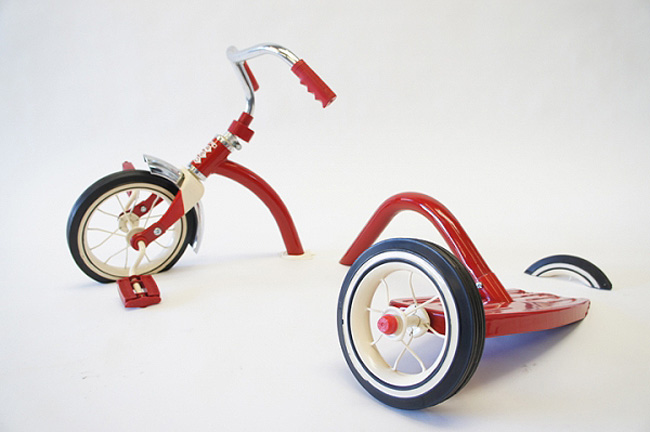
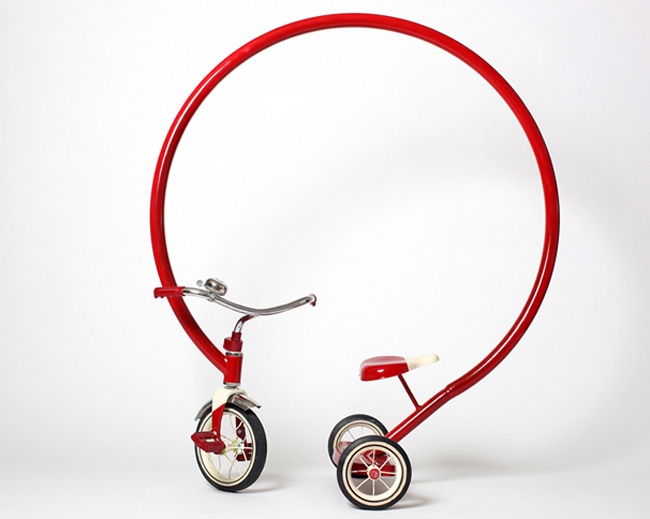
It’s difficult not to smile when looking at Sergio Garcia’s work. His delightfully fun tricycle sculptures play with the viewer’s structural expectations while at the same time stimulating childhood memories. According to Garcia, “Sometimes it’s good to step back and laugh and not take everything so serious.” That lighthearted mentality is evident not only in his sculptures, but in their titles, as well as in his Billboard series (bottom three photos.) Some of the tricycle sculpture titles are: “Its not always easy to tell whats real and whats fabricated” and “And then there were two” (the top photo and third one down, respectively.)

Fun work all the way around.

If you like these, you might also enjoy Dario Escobar’s work and Tulio Pinto’s.

via irreversible

Base Design: They’ve Got it Covered

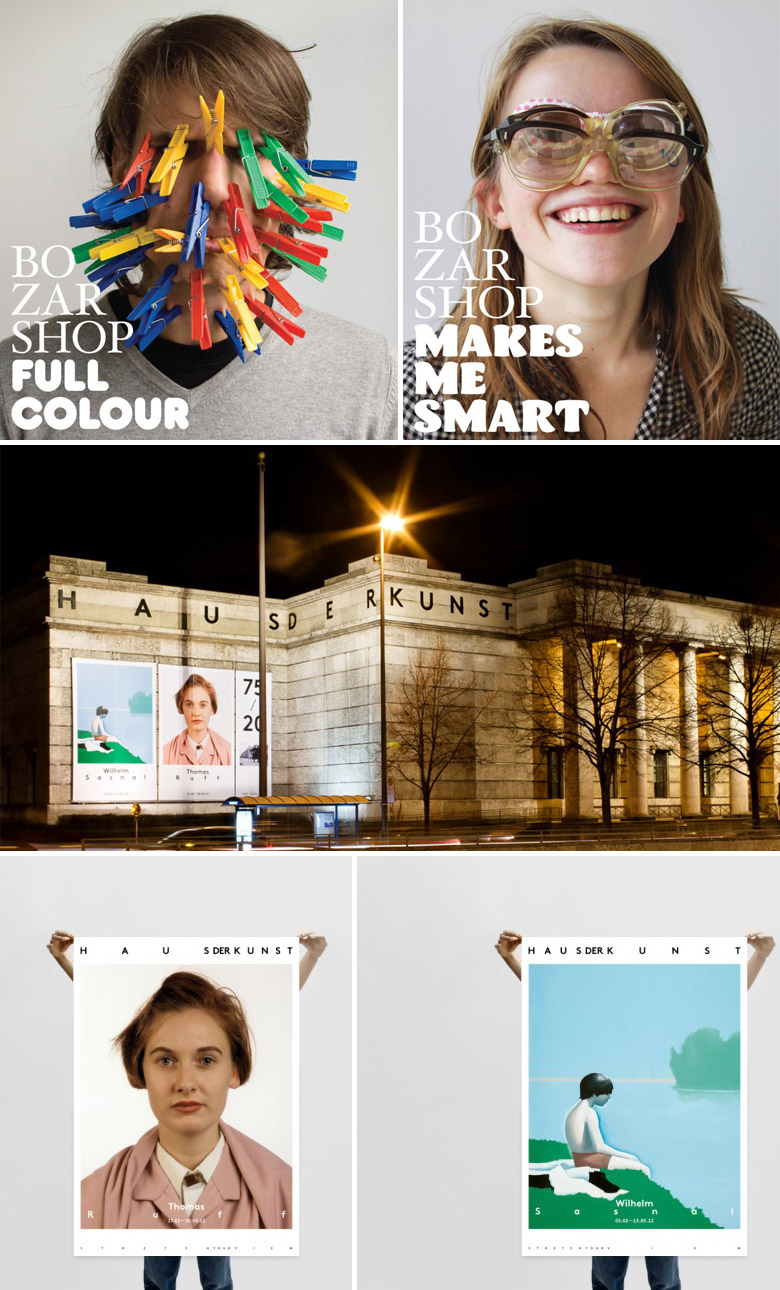
Branding, Graphic Design, Miami Art Musem Logo, Clever logos, Base DesignBranding, Graphic Design, Miami Art Musem Logo, Clever logos, Base DesignBranding, Graphic Design, Museum Logos, Clever logos, Haus der Kunst, Base DesignClick to enlarge

A couple of nights ago I had the pleasure of hearing Thierry Brunfaut and Dimitri Jeurissen, partners at the amazing design firm Base, speak at an AIGA event about their firm’s history, the present, as well as offer 10 pieces of advice for designers and business owners. Originally only in Brussels, Base has now expanded with offices in Barcelona, Madrid, New York and Santiago and more on the way.

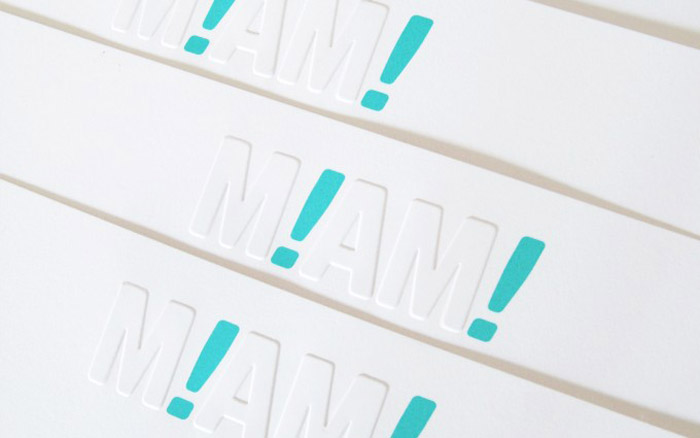
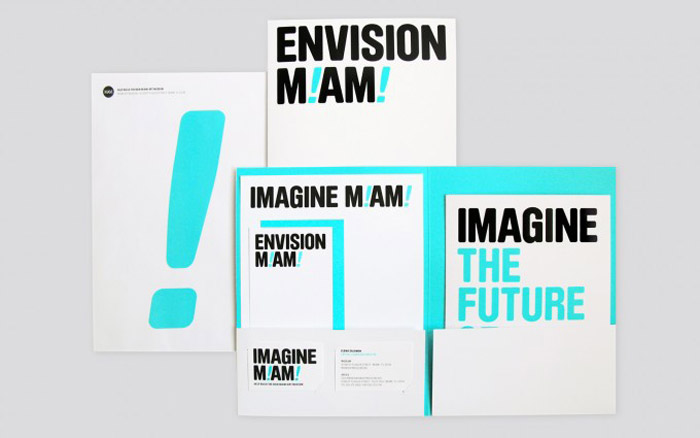
I wasn’t familiar with these guys, though it turns out I did know some of their older projects such as branding for MoMAQNS, The Stand, and Kiki de Montparnasse, but that’s just the tip of the iceberg. Everything they do, and they really DO do everything, is smart, fun, playful, with a strong initial concept that gets driven home from beginning to end in each project. Above are only three examples of branding: M!AM! (The Miami Art Museum), Bozar, Center of Fine Arts in Brussels, and Haus der Kunst, a logo that shows elasticity and flexibility typographically by never being exactly the same in two images; that wraps around the building itself in uneven letterspacing, and that, when animated, the letters slide around horizontally. Incredibly original. And if their talent weren’t enough, they all seem to be having tons of fun. I’m sure everyone in the audience was ready to sign up.

You should definitely take a look at their website for so much more of Base’s work. The site has a very fun—if a little ADD—quality that seems to perfectly represent the studio’s personality. And below are two of a series of humorous videos they created titled Perspectives. The difference between the Spanish-speaking interviewee and English one made me smile.

CollabCubed at 1

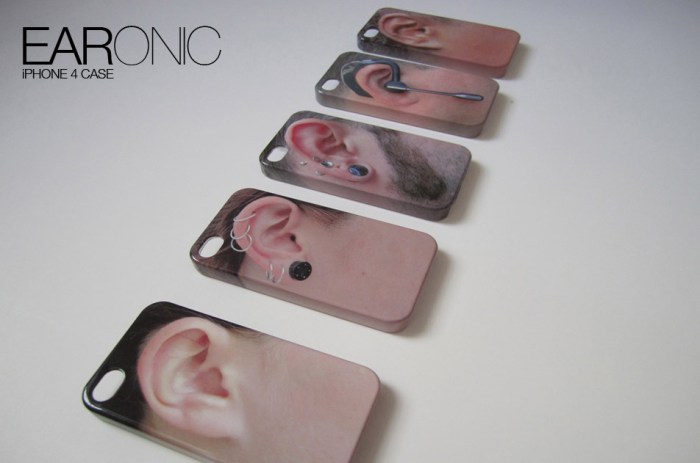
Last week marked our one year anniversary as a blog and, though not an especially remarkable feat in this sea of blogs, it seems like a good time to say of few words and acknowledge some people. It’s been a fun year for us and surprising how this blog, as well as a few related side projects, have been major topics of conversation between the three of us even at a semi-long distance. We’ve had fun trying to come up with somewhat unique content and it’s been really satisfying, and sometimes a little thrilling, to have many of the blogs and sites that we admire pick up some of our posts. Notcot and Rugenius (aka Jean and Justine) over at notcot.org have picked up many of our submissions and have been instrumental in giving us exposure. You can see our collabcubed posts on their pages here. Christopher Jobson at the amazing Colossal has had many kind words for us and been very supportive, as well as picking up several of our posts during the year and kindly linking back to us…this is where the little thrills came in. Same goes for the wonderful thisisnthappiness. And a big thanks to holycool and the always generous swissmiss for being the first ones to post our EARonic phone cases causing them to go viral with buyers cropping up all over the globe and eventually leading to a deal with Fred and Friends who will be distributing a variation on Daniela’s initial concept starting next month but, have no fear, we continue to sell our own EARonic models at our shop.

We’ve got other exciting projects in the works for this year, starting with being selected to exhibit our EARonics and some other designs at the Designboom Mart at the ICFF 2012 in New York this May, which has us super excited, but we’ll talk more about that later.

In the meantime we’ve added a bunch of photos and links to our facebook page – we’ll be adding more in the next few days – making it easier to look at some older posts, so maybe you’d like to ‘like us’ there if you haven’t already, and of course there’s also twitter, or subscribe to our RSS feed or emails.

Below are a few of our most popular posts this past year (in case you missed them the first time around); click on the photo to go to the post. Most importantly, thanks to all of you for following our blog and making it fun for us to keep posting.

Sang Sik Hong Plastic Straw Sculptures

Nicole Dextras Ice Typography

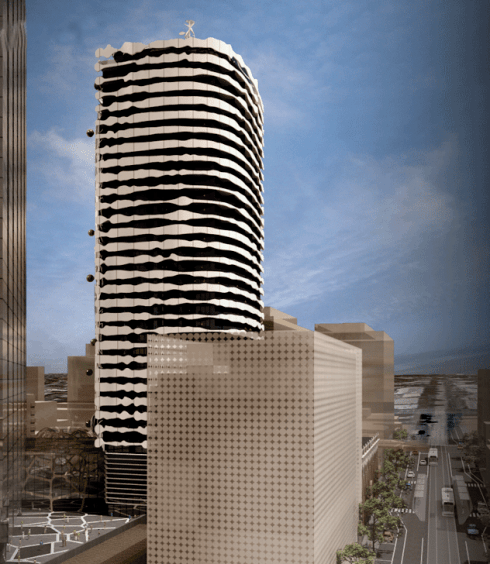
The Portrait Building by ARM Architects

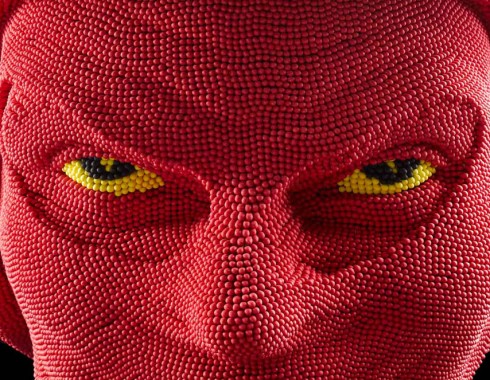
Matchheads by David Mach

Blackfield by Zadok Ben David

The Transfinite: Ryoji Ikeda

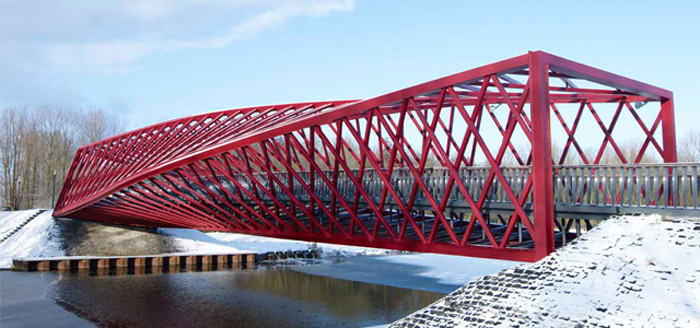
The Twist Bridge

Ana Soler: Causa-Efecto

EARonic iPhone Cases by Daniela Gilsanz

Boa Mistura: Beauty and Pride in a Favela

typography, street art, graffiti, Brazilian Favela, Brasilandia, Pride, color, collabcubedtypography, street art, graffiti, Brazilian Favela, Brasilandia, Sweetness, color, collabcubedtypography, street art, graffiti, Brazilian Favela, Brasilandia, Pride, Beauty, Sweetness,color, collabcubedClick to enlarge

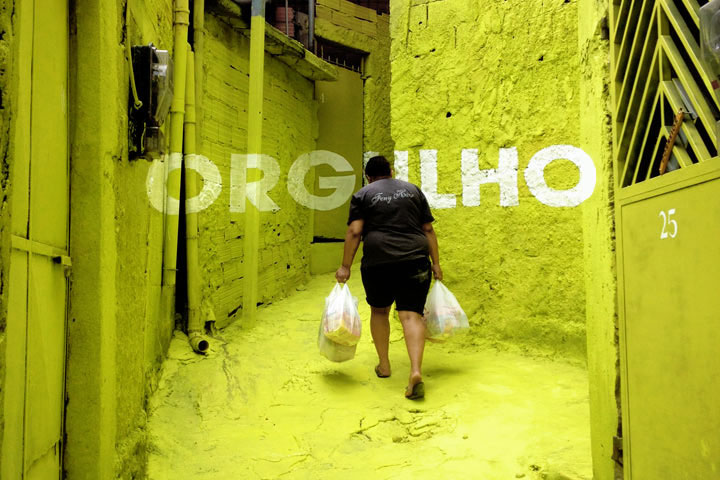
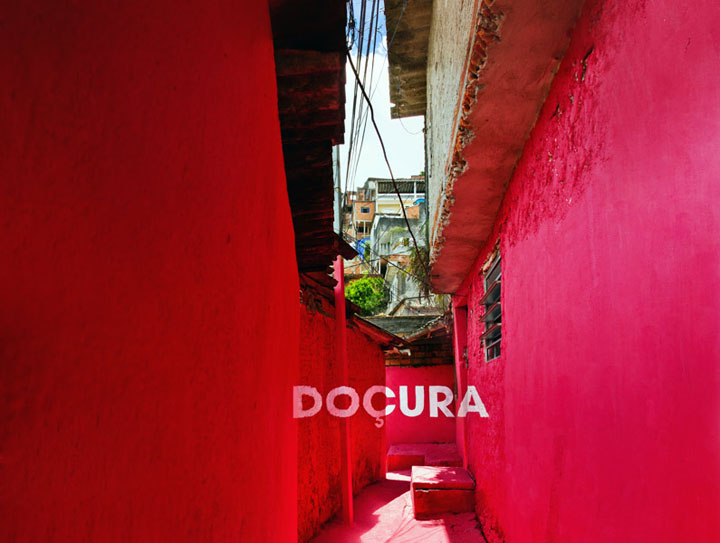
I love everything about this amazing project by the appropriately named Spanish art collective Boa Mistura (good mix): the typography, the color, the participative nature, and most of all the huge heart behind it.

Made up of artists Arkoh, Derko, Pahg, Purone, and Rdick who have developed their work in different fields, Boa Mistura represents a mixture of perspectives combined to create something better. Recently they have started a series of projects in the favelas (slums) of Brazil, starting with Vila Brasilândia near São Paulo where, directly involving the inhabitants, they painted the streets and alleyways with murals using anamorphic typography with pride-inducing words such as, well, ‘pride’ (orgulho), ‘beauty’ (beleza), ‘sweetness’ (doçura), ‘firmness’ (firmeza), and ‘love’ (amor).

As you can see, the result is fantastically joyful. Bravo!

via juxtapoz

Dan Collier: Typographic Links

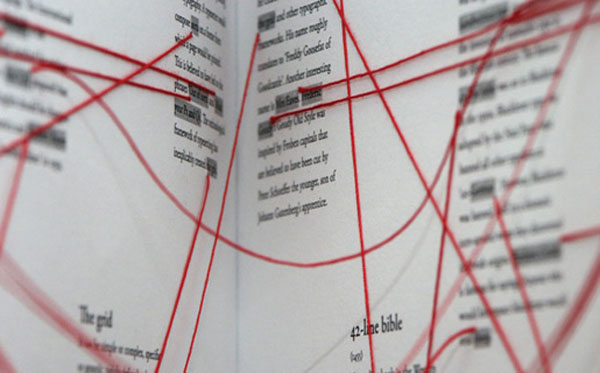
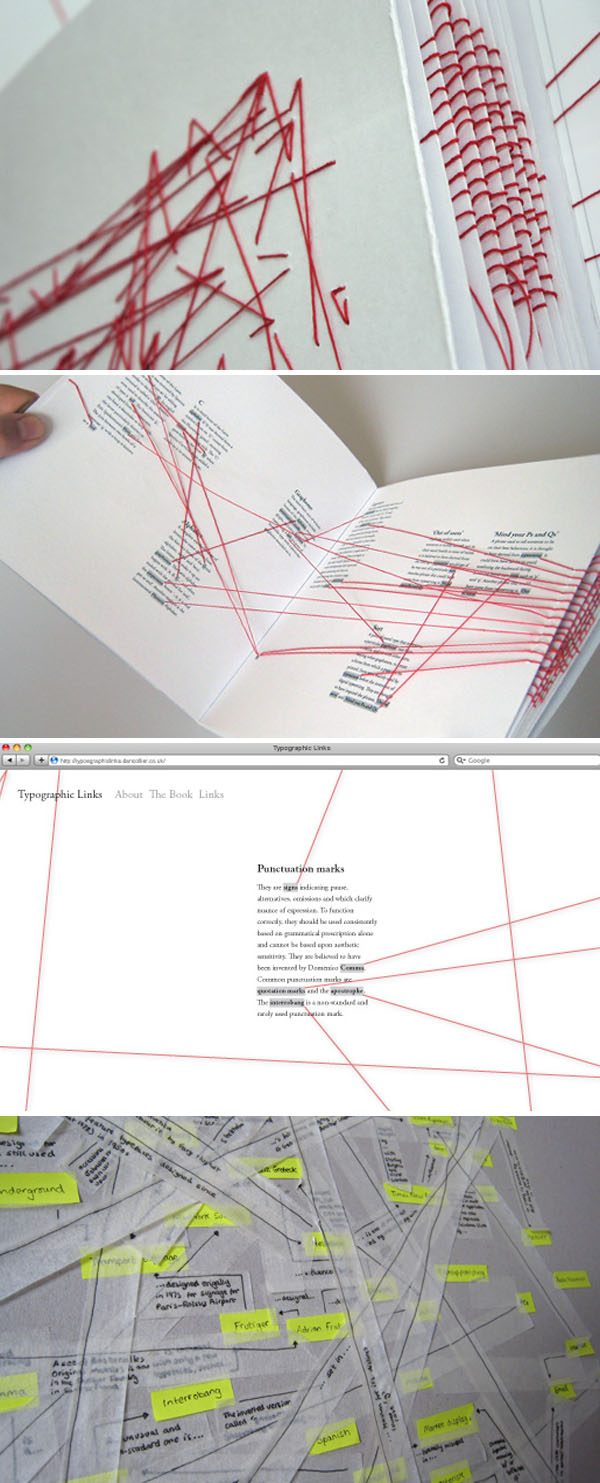
Book design, Typography, embroidered hyperlinks, typographic facts, Talk to Me, MoMABook design, Typography, embroidered hyperlinks, typographic facts, Talk to Me, MoMABook design, Typography, embroidered hyperlinks, typographic facts, Talk to Me, MoMAI saw Dan Collier’s Typographic Links —hand-sewn book—this past summer at the MoMA’s Talk to Me exhibit. This one-off book maps interesting links and connections throughout the world of typography using red threads as three-dimensional ‘hyperlinks’ to guide the reader through the pages. Collier, a London based graphic designer that works with large international brands is currently working on a second edition. If you have an interesting typographic fact or connection, you can contribute it here.

Evergreen: Typographic Garden

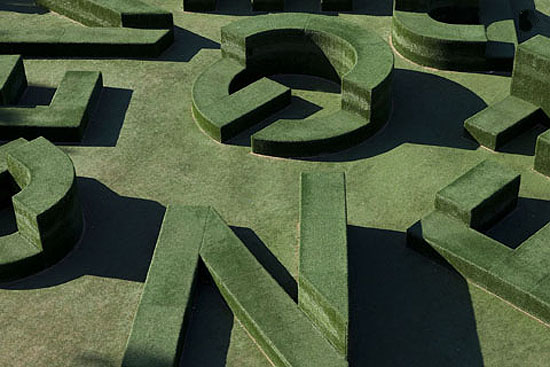
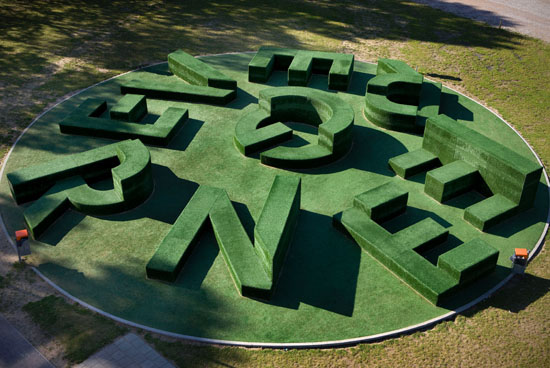
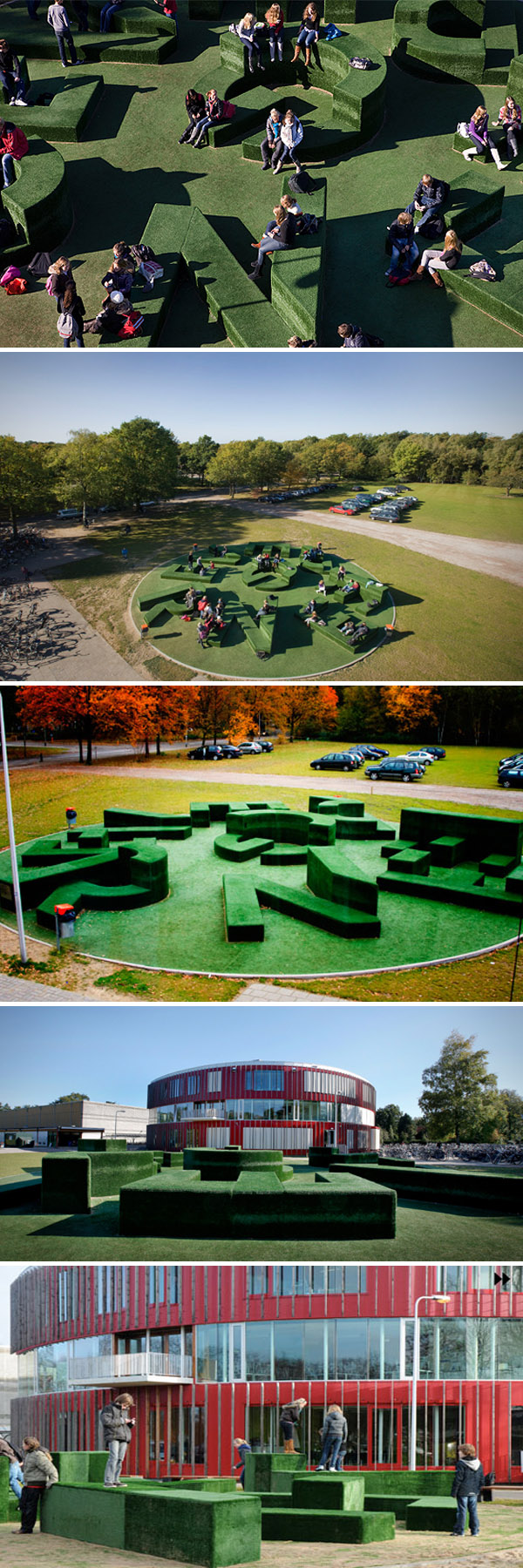
art installation, typography garden, School outdoor structure in Oldenzaal, The Netherlandsart installation, typography garden, School outdoor structure in Oldenzaal, The Netherlandsart installation, typography garden, Twents Carmel College outdoor seating structure in Oldenzaal, The NetherlandsVollaersWart is a Dutch design studio that focuses on the intersection of architecture with public and visual communication, thus creating many projects for exhibitions and festivals as well as sculptures and public art.

Evergreen is a permanent typographic sculptural installation that was designed for the new Twents Carmel College de Thij—a high school in Oldenzaal—to be used primarily as student seating and as a meeting place in a park-like setting. The large, multi-level letters spell out the word ‘Evergreen’ and are grouped in a way that makes the space resemble a labyrinth. The structure is covered with artificial turf and its circular shape echoes the shape of the school building itself.

Photos courtesy of VollaertsWart; TCC de Thij; and Kunst en Bedrijf

More Highlights from the NYIGF

There is SO much to see at the NY International Gift Fair that just mentioning a few items doesn’t seem right, but that’s exactly what I’m going to do. Below are some things that caught my eye in a variety of areas, from toys to home.

designy toys, wood toys, fun figurines, hoptimist, oak, cutedesigny toys, wood toys, fun figurines, hoptimist, oak, cute, danish designHoptimists were originally created by furniture designer Hans Gustav Ehrenreich in 1968 and are now designed in new materials and with new expressions, still in Denmark. Super cute and bouncy.

necklaces, bracelets, chains, magnetic jewelry, fun, playful, Uno Magnetic, Luis Pons

Uno Magnetic is an interactive, magnetic jewelry, designed by architect Luis Pons, that can take the form of a necklace, bracelet, or ring, depending on how you choose to wrap the individual colored chains and where you place the magnetic ball that keeps it all together. It comes in cute packaging, too, though I couldn’t find an image.

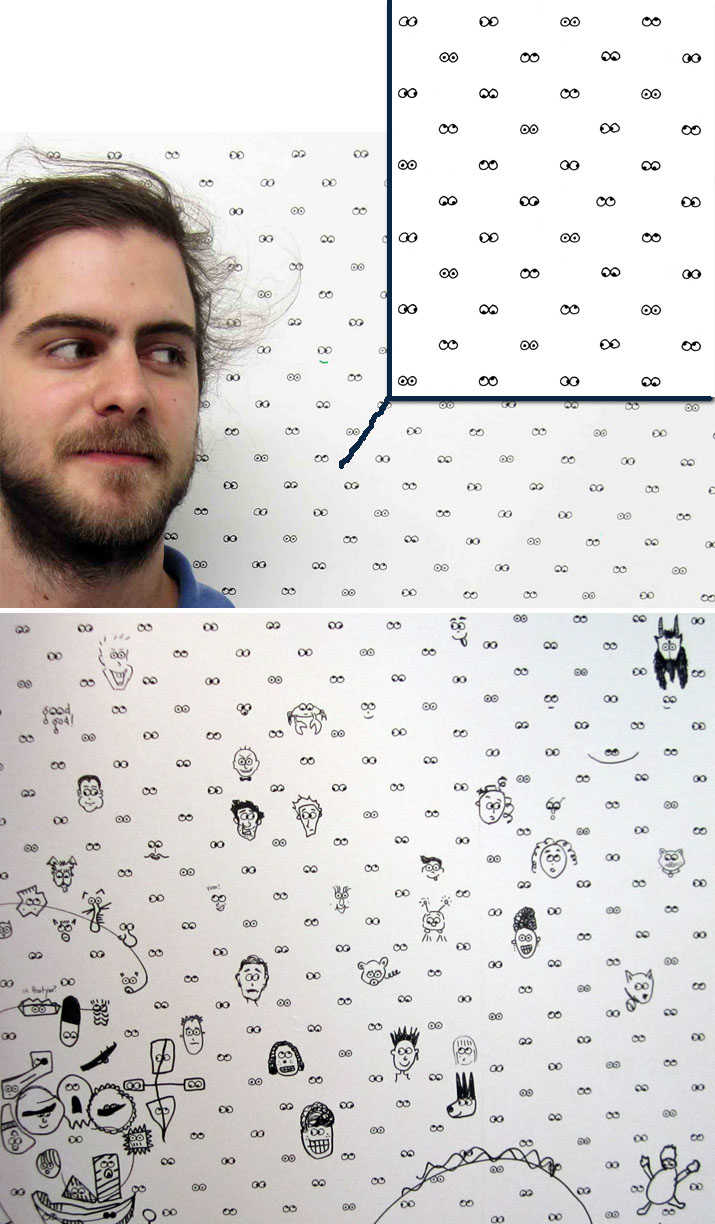
Fun wallpaper, draw on wallpaper, googley eyes, children's wallpaper, Cavern Home

Cavern is a boutique wallpaper design firm with a fun take on wallcoverings. Their hand silkscreened designs take inspirations from natural as well as urban landscapes. The I See You paper, full of googly eyes was set up in their booth with pens for all to draw faces. Especially fun for a kid’s room. Other fun ones include Watertowers and Thesis.

Puzzles, Wood, Trees, Patagonia, Looksur, Argentinean design, games

Time Rings Puzzle from Argentina, is made from the wood of cypress trees that died naturally in Patagonia. There are two designs, one super difficult with the wood grain on both sides, and a slightly easier version that’s painted black on the back. Available through Looksur.

Typographic containers, boxes, House Industries, desk accessories

Amac and House Industries have teamed up and put type on these colorful acrylic boxes of varying sizes. Hard to go wrong when numbers and ampersands are involved.

All Ears iPhone Cases, Fred, EARonic, collabcubed, fun gift, goofy, silly

And, of course, this list would not be complete if we didn’t include our exciting collaboration with Fred on a variation of our EARonic iPhone 4 cases: All Ears, due out in stores in the next month or two.  For those who want more variety, All Ears offers slip in sheets with different his or hers sets of ears. The long-awaited Vulcan ear is now a reality as are other options. But don’t worry, for those who prefer the original EARonics, those are still available at our shop.

Meg Hitchcock: Typographic Collages

Typography, collage, texts, hymns, Brooklyn artist, installation, contemporary artTypography, collage, texts, hymns, Brooklyn artist, installation, contemporary artTypography, collage, texts, hymns, Brooklyn artist, installation, contemporary artTypography, collage, texts, hymns, Brooklyn artist, installation, contemporary artTypography, collage, texts, hymns, Brooklyn artist, installation, contemporary artClick to enlarge

Brooklyn artist Meg Hitchcock creates elaborate type collages using texts from holy books of all religions. Through an incredibly labor-intensive process, Hitchcock painstakingly cuts out individual letters from one text and assembles them to form a different text in a variety of patterns and shapes.

From the artist’s statement:
I select passages from holy books and cut the letters from one passage to form the text of another. For example, I may cut up a passage from the Old Testament of the Bible and reassemble it as a passage from the Bhagavad Gita, or I may use type from the Torah to recreate an ancient Tantric text. A continuous line of text forms the words and sentences in a run-on manner, without spaces or punctuation, creating a visual mantra of devotion. By conceptually weaving together the sacred writings of diverse traditions, I create a multi-layered tapestry of inspired writings, all pointing beyond specifics to the human need for connection with the sacred.

You can click on the images to see more detail. At a distance they almost look like chains. You can see more of Hitchcock’s works here, here, and here. You can see her in action, complete with neck pillow, in the video below, putting up her first installation. It’s a pretty insane process!

via Projective City

Foster School of Business Art Installations

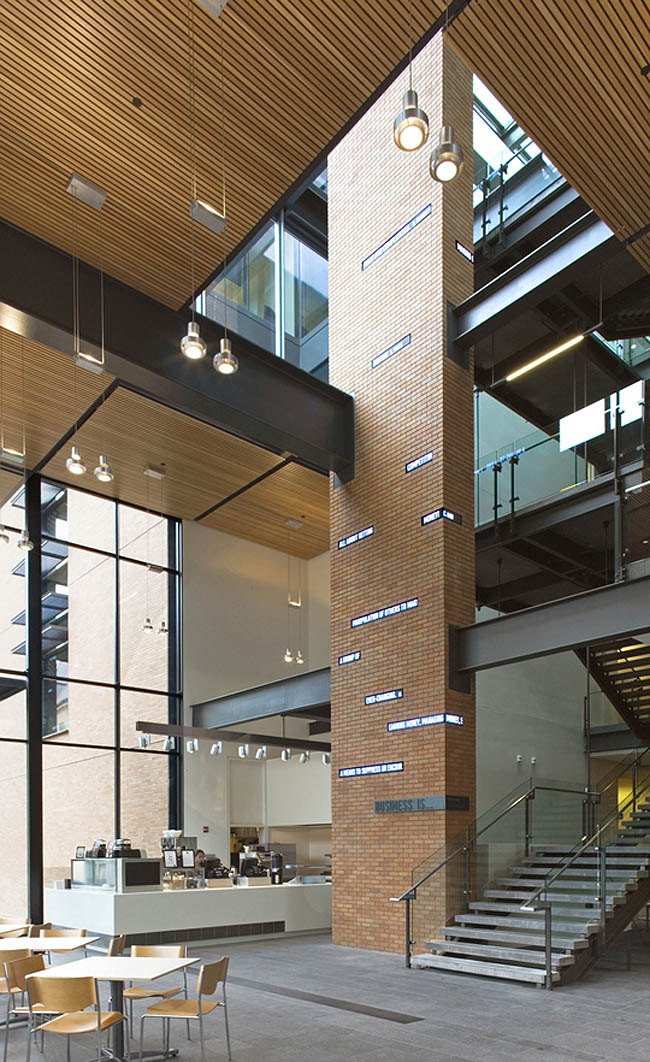
installation, Foster School of Business, Kristine Matthews, Karen Cheng, Type floor in elevatorTypographic wall installation, interactive, Kristine Matthews, Karen Cheng, University of Washingtoninstallation, Foster School of Business, Kristine Matthews, Karen Cheng, Type floor in elevatorBusiness Is..., Interactive art installation by Kristine Matthews, Karen Cheng, LED messages in wallClick to enlarge

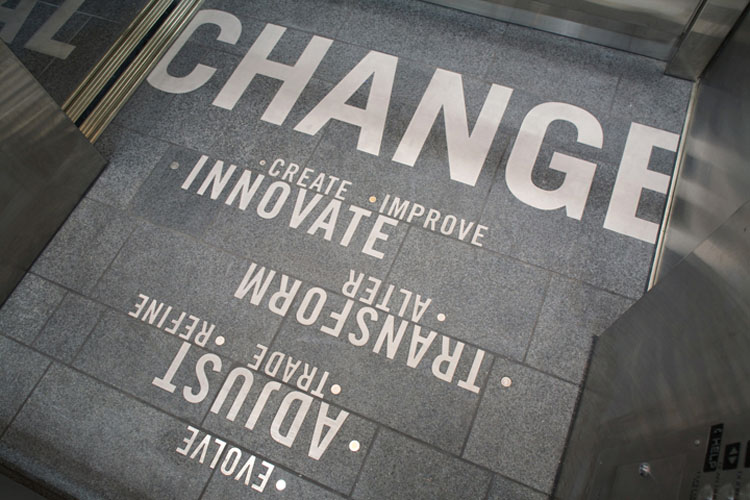
Two interesting permanent typographic art installations were recently created for the Foster School of Business, part of the University of Washington in Seattle. The two installations are collaborations between designers Kristine Matthews and Karen Cheng, both on the faculty at the University’s School of Art.

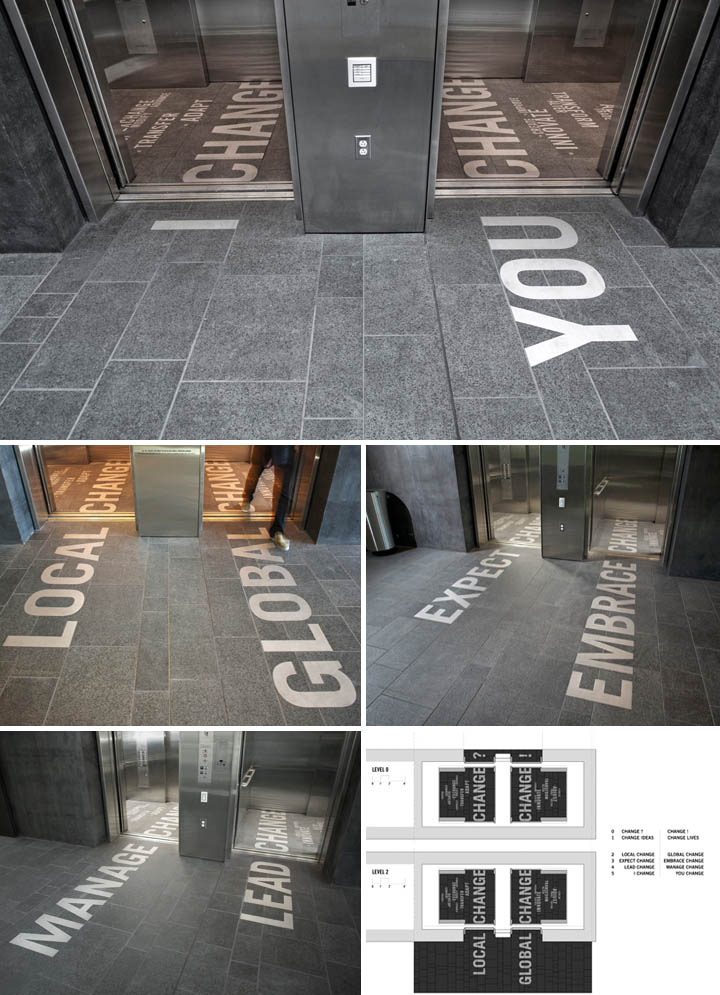
Change reflects on the dynamic relationship between business and change. The word “change” appears on the floor of each elevator, along with 18 synonyms (adapt, innovate, transform, etc.). The synonyms are each highlighted with actual loose change, international coins that hint at the diversity of the UW Foster Business School as well as the global nature of business.

As the elevator moves from floor to floor, the interior word “change” is modified by another word just outside the elevator, to both the front and back:
Floor 5: I Change/You Change
Floor 4: Lead Change/Manage Change
Floor 3: Expect Change/Embrace Change
Floor 2: Local Change/Global Change
Floor 1: Change Ideas/Change Lives
Floor 0: Change?/Change!

The second installation, Business Is..., asks how do you define ‘business’?

Viewers are asked to respond to the open-ended question “Business is…” on a companion website, www.FosterExchange.com. User responses appear on a series of LEDs that wrap around a four-story-high column. The monitors also display real-time stock market openings and closings, predictions, and even advice for students who meet and study in the atrium below.

Both installations are innovative, interactive, beautifully integrated, totally engaging and fun! I’d say complete successes through and through.

Here’s a video about the projects:

via sedg

Architypeture III

Typography in Architecture, Type, Environmental graphics, Luz exhibit, Architecture with typography, signageTypography in Architecture, Type, Environmental graphics, typotecture, Architecture with typography, signageTypography in Architecture, Type, Environmental graphics, typotecture, Architecture with typography, signage, Clavel Arquitectos, Mitsumoto Matsunami, C+CO4, architects,Click to enlarge
From top to bottom and left to right:
Museo Ibere Camargo, Porto Alegre, Brazil; Condominio P in Cagliari, Italy by C+CO4 Studio; Objekt 10, Zavrtinica Business Center in Croatia interiors by Typotecture, exteriors by Brigada / Damjan Geber (architect), Srđana Alač (designer)(x4 photos); Rocklea Road Warehouses, Jackson Clement Burrows Architects; Cafés Salzillo, Coffee & Literature Week, Mucia, Spain, Clavel Arquitectos (x3 photos); Vigaceros Headquarters, Murcia, Spain, Clavel Arquitectos.

Architecture and typography combined, Buildings with typography, Signage, Sculptural typography, Architypeture, typotectureArchitecture and typography combined, Buildings with typography, Signage, Sculptural typography, Architypeture, typotecture

Click to enlarge
The Number House in Osaka, Japan, Mitsutomo Matsunami Architects; Education Executive Agency Tax Office in Groningen, UNstudio photo by Ron Tilleman; Museum of Modern Art, Santos, Brazil, Metro Arquitetos Associados + Paulo Mendes da Rocha; Pokobar, Zagreb, Croatia, Typotecture (x3 photos); Restaurante LAH!, Madrid, Spain, Ilmio Design; QV Car Park, Melbourne, Australia, Latitude Group; Chips Residential Development, New Islington, Manchester, Alsop Architects.

Here we bring you our third installment of Architypeture: the beautiful combination of architecture and typography. These projects come from Brazil, Spain, Croatia, and the Netherlands, as well as representation from Japan, Australia, and the UK. Click on the credits to link to more images or information, usually on the architect’s site.
If you missed our previous Architypeture posts, Architypeture I is here, and Architypeture II is here.

Cross-stitched Clichés by Lisa Bowen

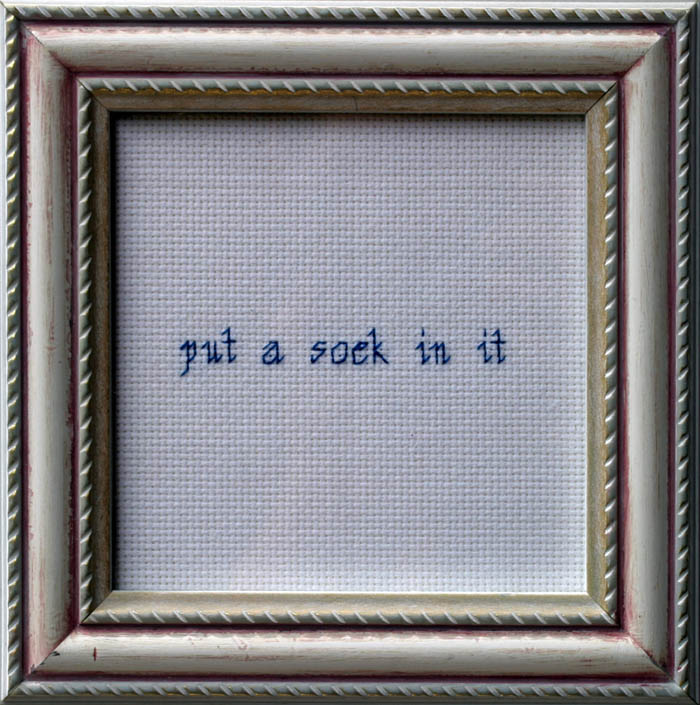
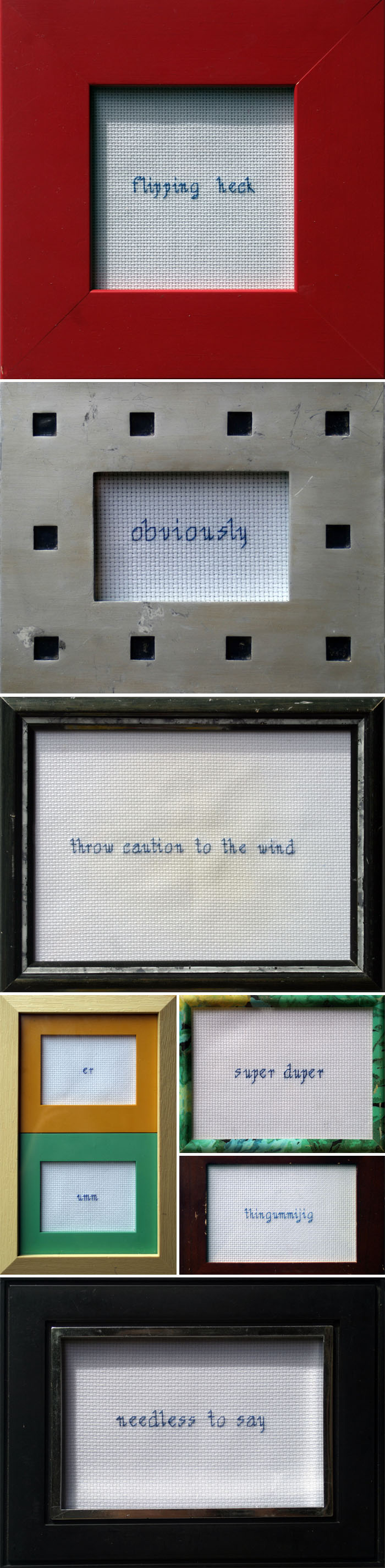
Embroidered words, cliches, expressions, humor, art, tumblr, stitched wordsEmbroidered words, cliches, expressions, humor, art, tumblr, stitched wordsEmbroidered words, cliches, expressions, humor, art, tumblr, stitched wordsI happened upon Lisa Bowen’s delightful tumblr of embroidered clichés and expressions, which made me chuckle. Originally from England but now living near Sydney, Australia, Bowen (who also goes by the alias Jilly Cooper) a mixed media artist has recently started a crafty, cross-stitch series titled ‘How to String a Sentence Together.’

The work came about after Lisa found a copy of The Penguin Book of Clichés and began thinking how often we use them, despite being told to avoid them. She began to collect these expressions and words, carefully cross-stitching each letter and framing each phrase.

In addition to cross-stitching and proudly using these “hackneyed and trite expressions,” Bowen tweets a cliché a day here, and sells her framed clichés here.

Julius Popp: Bit.fall, Bit.flow, Bit.code

Bit.Fall, technology and art, code, waterfall with type and images, contemporary artBit.Flow, technology and art, code, typography, word art, tubes, contemporary artBit.Fall, Bit.code, technology and art, code, waterfall with type and images, contemporary artClick to enlarge

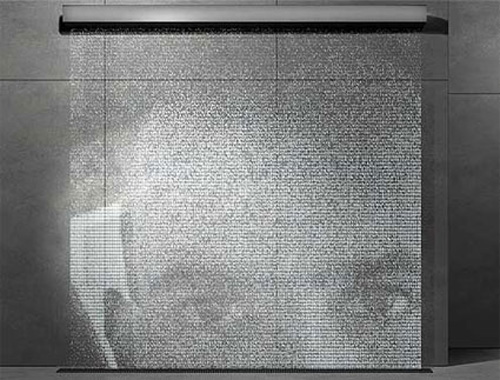
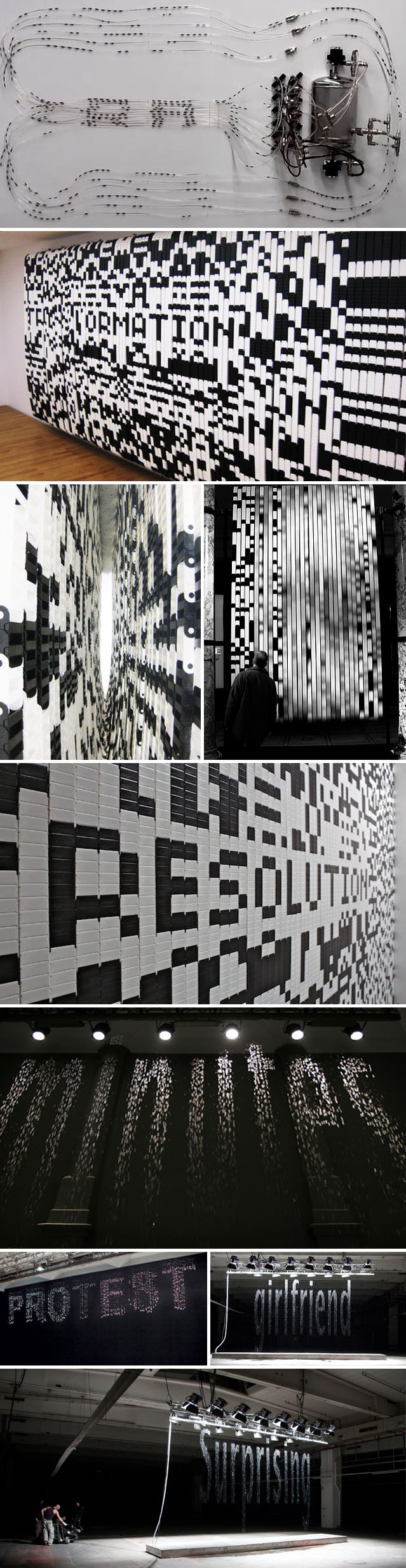
German artist Julius Popp uses technology to create work that reaches across the boundaries of art and science. Three of his works, Bit.fall, Bit.flow, and Bit.code are pictured above. Bit.fall is an installation that in some cases displays images and, in others, words selected from the internet via drops of falling water spurting out from 320 nozzles controlled by computer software and electromagnetic valves.

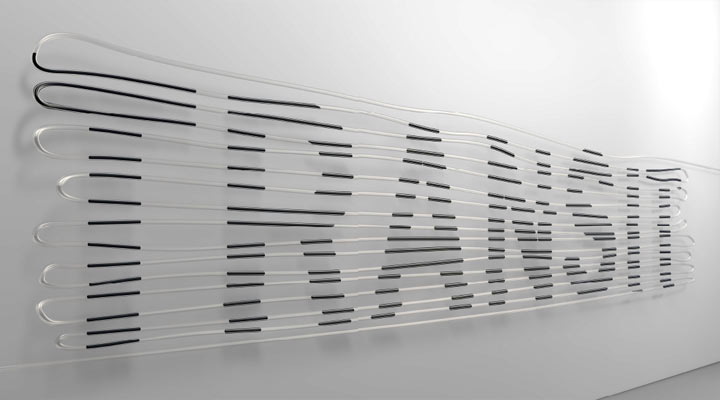
In Bit.flow Popp pumps liquid into a 45-meter long tube on a wall. A software program sets out a pattern which only at certain points forms readable forms or letters which then disintegrate into chaos again.

Lastly, Bit.code is made up of plastic chains with black and white pieces which act as pixels. Controlled by computer software, the pixels move next to each other displaying frequently used key words, at certain points, taken from recent web feeds.

All three appeal to me, yet are definitely appreciated more in person. The videos of each below are the next best thing, unless you are in Jerusalem, in which case you can see Bit.fall in the current exhibit Curious Minds at the Israel Museum until April, 2012.

Elements of these installations bring to mind Daniel Rozin’s work (see post) and Christopher Baker’s Murmur Study (see post).

Photos: Artnews, Desxigner, Wallpaper, and Onedotzero’s flickr

Nicole Dextras: Ice Typography

Ice Typography, letters, Typography installations, Environmental Art, Vancouver, collabcubedIce Typography, letters, Typography installations, Environmental Art, Vancouver, collabcubedIce Typography, letters, Typography installations, Environmental Art, Vancouver, collabcubedIce Typography, letters, Typography installations, Environmental Art, Vancouver, collabcubedClick to enlarge

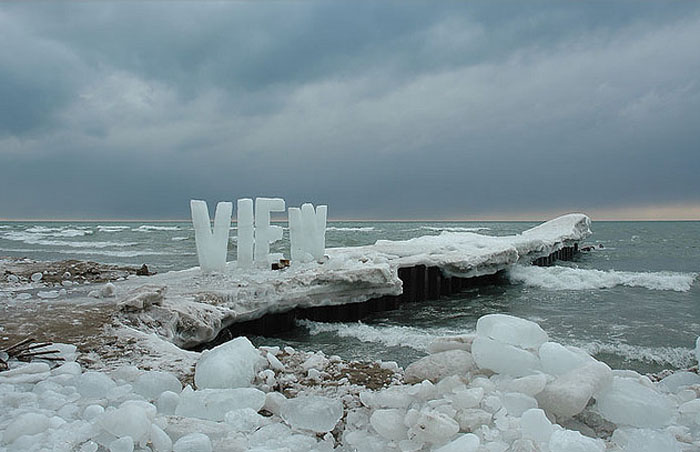
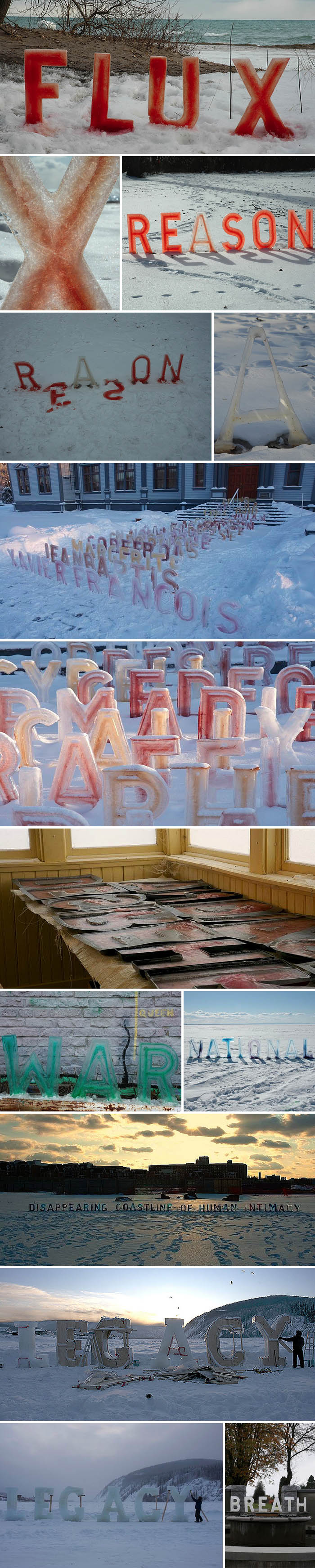
I’m not a fan of the cold or ice or even snow, but if I were to come across one of Nicole Dextras’ Ice Typography installations, I think I could bear the frigid temps a little more.

Nicole Dextras is an environmental artist from Vancouver who works in a multitude of media including sculpture, interactive public art and photography. Her Ice Typography series consists of three-dimensional words fabricated in ice ranging in size from 8-foot high letters to 18-inch high. Apart from the striking aspect of these frozen letters standing tall in the outdoors, whether in a rural or urban landscape, is their shifting and transient quality.

From the artist’s statement:
The visual poetry in this series aims to subvert the authority of the English language and the commerce of signage by representing words as vulnerable and shifting. Ice Typography absorbs light, melts and eventually leaves no trace; these words have more in common with dreams and oral stories than linear language. Words cast in ice interrupt our literal narratives, allowing a more integrated reading of the land we inhabit, as opposed to the past and current commodification of land as limitless resource. This fundamental split in perception lies at the crux of our environmental crisis. I therefore choose to create within an ephemeral vernacular to accentuate the collective physical and psychological experience of flux and change.

There are many more of these installations on Nicole Dextras’ site here, and you can see time lapse videos of her Signs of Change series as they melt here.

via artsy forager

Sculptural Poems by Ragnhildur Johanns

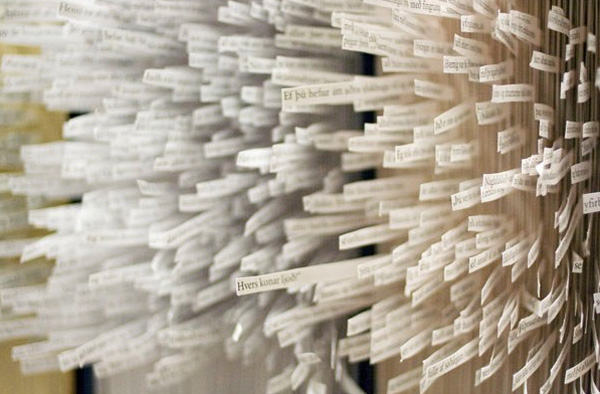
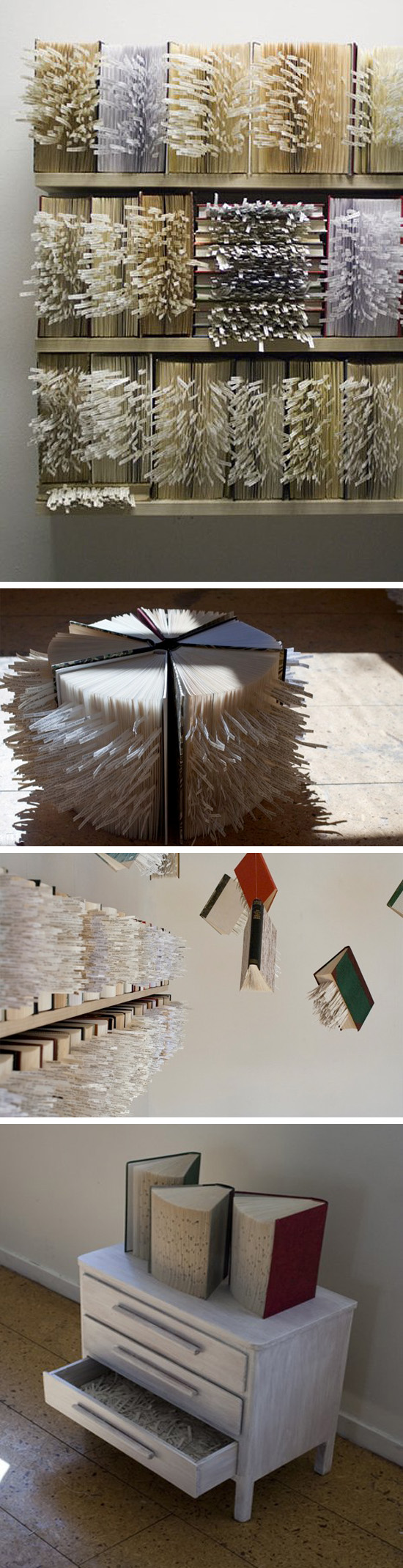
Book art, text, collage, contemporary sculpture, Iceland, Reykyavik, Weird Girls projectBook art, text, collage, contemporary sculpture, Iceland, Reykyavik, Weird Girls projectBook art, text, collage, contemporary sculpture, Iceland, Reykyavik, Weird Girls projectIt’s interesting to note the rise of book- and text-related art taking place during the unfortunate decline of book printing and publishing. As one who has designed many a book, I am very aware of this phenomenon. For the most part, these works seem to be paying homage to books, literature, text, typography, and bookbinding. A repurposing of the objects while highlighting their beauty.

Icelandic artist Ragnhildur Jóhanns is one of these artist. Based in Reykyavik, this young visual and performance artist works books and poetry into most of her work. From text collages to sculptural pieces and performance works that include readings, Jóhanns takes the already beautiful books and makes interesting and beautiful artworks by painstakingly cutting strips of text and extending them past the book pages, or conversely, creating gaps and indents in the pages with the cutouts. The names of two of these series of works are Sculptural Poems and Visual Poetry.

AND if these artworks aren’t quirky enough for you, she’s also one of the Weird Girls from The Weird Girls Project!

E1000: Tagging the Grates of Madrid

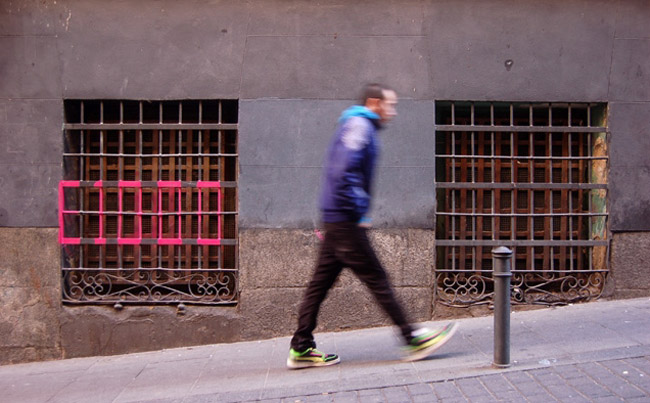
street art in Madrid, e1000, tags on grates, gates, vents, collabcubedstreet art in Madrid, e1000, tags on grates, gates, vents, collabcubedstreet art in Madrid, e1000, tags on grates, gates, vents, collabcubedSpanish street artist E1000, (previously here), has taken to tagging the streets of Madrid in a cryptic manner, taking advantage of the horizontal and vertical lines of gates, grates, shutters, vents, and manhole covers to paint the five characters of his signature. Guillermo de la Madrid has found, photographed and documented a bunch of them on his blog Escrito en la Pared. Above are most of them.

It’s kind of like finding the “Ninas” in a Hirschfeld illustration. Okay, so not exactly…

Cineporto in Lecce: Metamor Architects

Film Center in Lecce, Italy, designed by Metamor Architects, contemporary architectureFilm Center in Lecce, Italy, designed by Metamor Architects, mod architectureFilm Center in Lecce, Italy, designed by Metamor Architetti, mod architectureClick to enlarge

Cineporto in Lecce, Italy is a film center/studio that offers high-definition film screenings, includes production offices and casting studios, and is free to those working on films in the area. Originally an industrial building, Metamor Architects, based in Lecce, were brought in to transform the building and connect the three different areas to meet the requirements of a film facility. Metamor created a main entrance area named Knos to have a welcoming quality and connects to the Cineporto via mod corridors with walls that curve at the floor and ceiling and are beautifully lit. Add to that some fun typography and arrows on the floor, as well as neon signs on the walls, and the industrial melds seamlessly with the contemporary. Nice.

Photos courtesy the architects and g_g75’s flickr.

via europaconcorsi